With Nova Lake, a new generation of Intel desktops is on the horizon for the end of 2026, which appears to focus less on energy efficiency and more on uncompromising peak performance. While the current Arrow Lake family and its refresh models are increasingly focusing on efficiency improvements, recent information suggests that Intel could once […]
A used MSI GeForce RTX 4080 Super Ventus is currently causing a stir on Reddit. In the PCMR subreddit, user TwistedColossus describes how the card reportedly “instantly burst into flames” during a test run – including a burnt hole in the circuit board. This is not a melted 12VHPWR connector, as seen in previous discussions […]
The latest figures from Mercury Research on the x86 CPU market for the fourth quarter of 2025 are more than just a snapshot. They mark a structural shift in the balance of power between AMD and Intel. AMD ends the year with a 41.3 percent share of server sales. This is not a statistical outlier, […]
Microsoft is apparently rethinking the fundamentals of its subscription ecosystem. According to a report by The Verge, Microsoft is in the early stages of testing ways to expand or structurally adjust the Xbox Game Pass lineup. No concrete decisions have been made, but the direction is clear: more bundling, more flexibility, and possibly less fragmentation. […]
With the release of Windows 11 version 26H1, Microsoft is taking an unusual approach. The new edition of the operating system is not available to the general user community, but is intended exclusively for new complete systems with ARM processors. Specifically, Microsoft currently names only one platform, Qualcomm’s Snapdragon X2. Devices with AMD or Intel […]
Samsung Electronics has officially started mass production of its latest high-bandwidth memory generation, HBM4, and delivered the first batches to customers. With this step, the company is positioning itself early in the emerging HBM4 market, which is driven primarily by the rapidly growing demand for AI accelerators, data center GPUs, and specialized ASIC solutions. According […]
Introduction and unboxing Today we are presenting a particularly attractive keyboard from Asus. The ASUS ROG Azoth 96 HE is positioned as a technically sophisticated gaming keyboard in the upper enthusiast segment and combines a compact 96 percent layout with modern Hall effect technology. The aim is to combine the precision and speed of professional […]
Google's YouTube has launched an official visionOS app.
While it was already possible to access YouTube on Apple Vision Pro headsets through the Safari web browser, the new official app offers a streamlined native-feeling interface, support for watching 180° and 360° immersive video (including 3D), and, for YouTube Premium subscribers, the ability to download videos for offline viewing.
The official YouTube visionOS app on Apple Vision Pro.
The player also adapts to the varying aspect ratios of videos on YouTube, avoiding the black-bars problem and revealing more of your real or virtual environment.
On the M5 Apple Vision Pro, the app supports up to 8K, while the original M2 Vision Pro is limited to 4K.
The official YouTube visionOS app on Apple Vision Pro.
YouTube first announced that it planned to build a visionOS app just days after the original headset's launch.
In the two years since, multiple third-party apps have emerged to fill the gap, including firstly and most prominently the $5 app Juno, built by the same developer as the Apollo phone app for Reddit. But in late 2024 YouTube forced Juno off the visionOS App Store.
Other third-party offerings include Tubular Pro, which has advanced features including SponsorBlock integration and its own theater environments.
The official YouTube visionOS app on Apple Vision Pro.
The official YouTube app for Apple Vision Pro is available for free on the visionOS App Store, with offline downloads enabled by a YouTube Premium subscription.
While its arrival on visionOS could be considered surprising by some because of Google's competing Android XR, YouTube operates somewhat independently from Google, and Google has offered iOS versions of its most popular services for almost two decades now.
YouTube is also available on Meta's Horizon OS, including with co-watching support, but the app on Quest is visually less polished compared to visionOS and Android XR.
Meta and EssilorLuxottica sold more than 7 million smart glasses in 2025, and they were the "dominant driver" of the Ray-Ban owner's wholesale growth in H2.
Exactly one year ago, EssilorLuxottica told its investors that the Ray-Ban Meta glasses had sold 2 million units so far, a period spanning from the launch in October 2023 until February 2025.
Now, during its Q4 2025 earnings report, the company announced that it sold 7 million units of Ray-Ban and Oakley smart glasses in 2025 alone – meaning more than triple that of 2024. This suggests that around 9 million have been sold to date since the launch of Ray-Ban Meta two and a half years ago.
For comparison, Quest 2 sold an estimated 20 million units in two and a half years, while Steam Deck sold around 4 million units over the same timespan.
EssilorLuxottica says smart glasses drove significant growth for both its wholesale and retail business, describing the former in North America as "exponential".
What Is EssilorLuxottica?
The French-Italian giant EssilorLuxottica is the largest eyewear company in the world by far. It owns iconic brands like Ray-Ban, Oakley, Oliver Peoples, and Persol, and has exclusive licenses with major fashion companies like Prada, Armani, Burberry, and Chanel. It also owns Sunglass Hut, and has almost 18,000 retail stores in total worldwide.
Meta has so far partnered with EssilorLuxottica for six smart glasses products:
The sales figure comes one month after Bloomberg reported that Meta and EssilorLuxottica were discussing doubling or even tripling smart glasses production capacity.
When announcing the 2 million sales mark a year ago, EssilorLuxottica told investors that it planned to increase annual production capacity to 10 million units by the end of 2026, citing the "great success" of the product. Bloomberg's report suggests that target is being increased to 20 or 30 million.
It's undeniable at this point that smart glasses are an appealing consumer product. The question now is whether Meta will maintain its lead once serious competition from Apple and Google arrives.
Google has repeatedly teased smart glasses with a HUD at events like TED and I/O, and announced last year that it's working with the eyewear companies Gentle Monster and Warby Parker on Gemini smart glasses, and will work with Kering Eyewear in the future. Multiple South Korean news outlets have reported that Samsung plans to launch a Meta Ray-Ban Display competitor this year, powered by Google software, a similar strategy to the Galaxy XR headset.
Meanwhile, in October Bloomberg reported that Apple moved staff off the cheaper and lighter Vision headset project to prioritize shipping smart glasses sooner. Apple's first glasses could be revealed as soon as this year ahead of a release in 2027, the report claimed.
Meta CTO Andrew Bosworth says that, as with all new headsets, the company will "learn from" Steam Frame if it's successful.
During an "ask my anything" session on his Instagram page, when asked whether Meta will be in competition with Steam Frame or "support" it, Meta CTO Andrew Bosworth replied by saying that it's "a little bit of both".
0:00
/0:59
"It is a little bit of both. I have said this before—and I will say it again, because it is really true—every time there is a new headset, we learn from it. We learn how consumers respond to the decisions made regarding architecture, resolution, and cameras. For example, with the Steam Frame, it looks like they included a wireless dongle. We experimented with a dongle many times to make a wireless link work, but we decided it was just too much hassle. They chose to go that route. If consumers love it, maybe there is a bigger market there than we realized.
Every time someone launches something new, it is an experiment that costs me nothing, which is great. Obviously, we do compete with them. Quite a few people use Quest specifically because it is not just standalone, but also capable of PC gaming. I think that is a strong value proposition: being able to use the device both with a PC and without one. However, Steam is trying to build an entire ecosystem, including portable PCs. So, ultimately, it is a little bit of both."
Bosworth has given a relatively similar answer for past VR headsets and accessories, suggesting that Meta will assess it based on how consumers respond, i.e. how well it sells. For example, he once claimed that if the Pico Trackers sold exceptionally well, Meta would "have to" make an equivalent.
"Every time someone launches something new, it is an experiment that costs me nothing, which is great", Bosworth quips in the Steam Frame response.
The Meta CTO specifically points out Steam Frame's included wireless dongle as something his company tried in the past but "decided it was just too much hassle".
In late 2022, Meta partnered with D-Link to ship VR Air Bridge, a $100 official accessory for gaming PCs to directly connect to Quest 2 for Air Link, a somewhat similar concept. But whereas Steam Frame itself creates the hotspot that its dongle seamlessly connects to, and the headset has a dedicated 6 GHz radio for this, VR Air Bridge was a decidedly lower-effort approach, a traditional 5 GHz hotspot with a somewhat clunky setup process.
Is Bosworth right that a dongle is "too much hassle", or as with Quest Pro, is this another example of Meta deciding that a general idea is bad because its specific implementation was poor?
Meta CTO Andrew Bosworth claims that even after the cuts, the company is still investing more in VR content than anyone else, and more than it was 4 years ago.
If you somehow missed it: last month Meta shut down three of its acquired VR game studios, conducted significant layoffs at a fourth, canceled the Batman: Arkham Shadow sequel, and announced the shutdown of Horizon Workrooms and its Quest headsets for business offering. These actions came a month after the company officially confirmed "shifting some of our investment from Metaverse toward AI glasses and Wearables".
Despite this, when asked to provide "the truth" about "doom and gloom" for Quest during an "ask me anything" session on his Instagram page, Bosworth responded by claiming that Meta is still investing more in VR content than any other company – and more than it was in 2022, at the height of the Quest 2 era.
0:00
/2:37
"There is a lot of doom and gloom about it—mostly overwrought, but I understand why it exists. Emotionally, we have to navigate two realities. First, there is a real cause for sadness. We had people doing work we were excited about, whether at the OS layer or great studios delivering great titles. Ultimately, we realized that the integrated vision we were pursuing with Horizon and VR was overwrought, and the investment we put in was larger than the growth of the ecosystem allowed. That is a real loss, and we are allowed to feel sad about those things.
On the other side, Meta remains extremely bullish on VR. Adjusting our investment profile was done specifically so that we could continue to invest. We are still investing more in content than anyone else, and more than we were four years ago. While we have receded from the "high water mark," we are still very much a net positive investor in the ecosystem. Furthermore, these internal changes unblock roadmaps for us on hardware; the next two devices we are looking at are very exciting.
I don't want to take away from the sadness regarding cancelled projects like another Arkham, though I wish there was more appreciation for the fact that we got the first one. Regarding community accountability and my December AMA comments about wearables versus VR: I noted then that these areas are separate and we can do both. That remains true. If VR were growing at the rate we wished, we likely wouldn't have made these changes, but we cannot invest infinitely. Our investment must match the size of the growth. The ecosystem is growing—just more slowly than we hoped—and we are still investing. That is the story."
Oculus and Anduril founder Palmer Luckey made a similar claim last month, but Bosworth saying it serves as an official proclamation from Meta itself.
Still, with most of its acquired VR gaming studios now closed, that "content" investment will not be arriving in the form of first-party blockbusters. Instead, Bosworth is likely referring to investment in third-party VR content.
In an interview with Axios last month, Bosworth said that Meta will now "focus a lot more on the third-party content library, the ecosystem that's developed there".
Whether or not Meta will follow through on this suggestion of continuing to fund third-party VR content remains to be seen.
In an interview with Alex Heath, Meta CTO Andrew Bosworth seemed to confirm the leak that a Quest 4 is still on the roadmap.
Back in June, UploadVR reported that the 2026 candidates for a Quest 4 series, codenamed Pismo Low and Pismo High, had been canceled. Then, in December, internal Meta memos leaked that revealed the company is working on a gaming-focused headset set to be a "large upgrade" over Quest 3, but without subsidization, suggesting a notably higher price.
This, to be clear, is in addition to the widely reported ultralight mixed reality headset with a tethered puck that the memo suggested should launch in the first half of 2027.
Given Meta's recent announcement of "shifting some of our investment from Metaverse toward AI glasses and Wearables", which was followed by the shutdown of three of its acquired VR game studios, significant layoffs at a fourth, the cancelation of the Batman: Arkham Shadow sequel, and the deprecation of Horizon Workrooms and its Quest headsets for business offering, many in the industry have speculated that the new Quest 4 candidate may have already been canceled.
Last month, Meta's CFO Susan Li told investors that the company still has "optimism in the future of VR", and that it's still "building future headsets". While this did spark hope of a Quest 4 still in the works, nothing in the statement confirmed what kind of headsets these were. But a recent statement from Meta's CTO Andrew Bosworth seems to.
When asked during his Davos interview with veteran tech journalist Alex Heath, which you should go watch in full, whether "the metaverse is over", Bosworth's reply included "I think it's officially leaked we've got two devices on the roadmap that we're super excited about coming out over the course of a period of time".
The "leak" Bosworth mentions is clearly the December memos – and by bringing this up now and speaking in the present tense, it strongly suggests that the gaming-focused Quest 4 candidate has not been canceled.
0:00
/0:29
Bosworth's comment from the interview with Alex Heath.
As to when we might expect these future Meta headsets, Bosworth stays tight-lipped. When pressed by Heath on what "a period of time" meant, he simply replied "a period of time - it could be anything, could be tomorrow".
Based on the leaked memos and conversations with sources back in December, UploadVR's understanding is that the ultralight headset should arrive in the first half of 2027, and the more traditional Quest 4 no earlier than the second half of 2027.
Additionally, Horizon OS firmware sleuth Luna reports that one codename floating around for the new Quest 4 is "Griffin".
One codename floating around for Meta Quest 4 is Project "Griffin"
Meanwhile, names for candidates for the ultralight headset with tethered puck have included "Puffin", "Loma", and "Phoenix".
The ultralight headset will be primarily focused on spawning virtual screens for productivity and entertainment, while the Quest 4 would continue the traditional Quest focus on immersive gaming.
Possible Name
"Quest Air"
"Quest 4"
Codenames
Phoenix/Loma/Puffin
Griffin
Form Factor
Tethered Puck
All-In-One
Focus
Virtual Screens
Immersive Gaming
Release
H1 2027
Sometime Later
Keep in mind that Meta's hardware roadmap is constantly shifting, and the company frequently spins up and cancels headsets before they ship. When a specific product gets close to shipping, we'll bring you any reliable rumors of its imminent arrival. Until then, be ready for anything planned to get canceled or delayed.
The PlayStation VR2 port of Titan Isles is coming on February 24th.
When Psytec Games announced last September that their high-mobility action-adventure shooter Titan Isles was coming to PS VR2, they didn't specify a release date. Today, the game's makers have announced that Titan Isles will be swinging onto PS VR2 on February 24th.
Designed to make the most of PS5's hardware, the PS VR2 port runs at a native 90fps on base PS5, boosted to 120fps on PS5 Pro. The game's devs also confirmed that both versions utilize native resolution and eye-tracked foveated rendering for maximum visual clarity.
0:00
/1:09
Psytec Games has also made the most of the PS5 controller's adaptive triggers, giving each weapon its own resistance, plus headset haptics and full bHaptics support.
We reviewed Titan Isles when it debuted on Meta Quest, where we found it to be "a compelling action adventure that's equally enjoyable in co-op and single-player." Furthermore, our reviewer called it "the most fun I've personally had with a VR co-op experience since Dungeons of Eternity."
Titan Isles will be available on the PS VR2 store from February 24, and will cost $24.99. The game is available now on Steam and Quest.
Update Notice
This story was initially published on February 12, 2026, stating that Titan Isles' release date was revealed during Sony's State of Play showcase. However, this was a mistake, as the game did not appear during the stream. We have updated the article to remove mention of Sony's State of Play. All details contained in the article are now correct and accurate.
Intel's Nova Lake-S desktop processors, likely to be branded the "Core Ultra 400" series and expected to launch late this year or early next year, are the topic of significant speculation. The company's current-generation chips have a specific weakness in the area of gaming performance, so DIY-ers have avoided them like the plague, and the
Grand Theft Auto 6 is on the horizon, but players intent on downloading the game may be in for a long wait. The good news is that per an official Take-Two statement to Variety, the physical release of the game will not be delayed, to try to prevent spoilers. The bad news is that if you don't have the physical media, or have a console without
When Apple and Google announced a massive deal that would see Apple use Google’s Gemini AI to train its own models, it seemed like the company was set to finally delivering on the promises it made all the way back in 2024. However, that initial optimism may have been wishful thinking, according to a report by Bloomberg’s Apple insider Mark
Do you sell AI services? Then NVIDIA wants you to buy Blackwell hardware and host those services yourself, even if you already have perfectly functional Hopper machines. According to NVIDIA, the "tokenomics"—a portmanteau of "tokens", the most basic unit of AI intelligence, and "economics"—of running open-source AI models on Blackwell hardware
Highguard has been out for just two weeks and despite an initially strong launch and a year-long content roadmap ahead, player numbers have quickly dropped. Now, the studio behind it is laying off a large portion of the development team.
In an announcement last night, Wildlight Entertainment confirmed that it has made the “incredibly difficult decision to part ways” with a chunk of Highguard's development team. Moving forward, Wildlight will retain “a core group of developers to continue innovating and supporting the game”.
Layoffs are pretty typical in the videogame industry. Studios regularly shed staff shortly after shipping a project, but for live service games, the situation is a little different, as companies need to retain a certain team size to achieve their content roadmap goals.
It is unclear at this time if this firing spree will have any significant impact on the game's planned content roadmap, which involves new maps, weapons, game modes and more in the coming months.
KitGuru Says: Riot also just let go of a large number of developers just two weeks after launching its new fighting game 2XKO. It would seem that expectations for the first two weeks of new projects like this are climbing astronomically high.
Last year, Razer launched its new line of BlackShark gaming headsets with the new V3 line-up. This week, Razer is adding a new addition to the range – the Blackshark V3 for Xbox White Edition.
At the core of the Razer BlackShark V3 is their new HyperSpeed Gen-2 Wireless technology, which promises a responsive connection with a latency as low as 10ms. Communication is handled by a new detachable 9.9mm microphone. While this is marketed as a ‘for Xbox' headset, it does have cross-platform compatibility via 2.4GHz wireless, Bluetooth, USB or 3.5mm jack connections.
Here is the full list of key features:
Razer HyperSpeed Wireless Gen-2
Detachable Razer HyperClear Super Wideband 9.9mm Mic
Razer TriForce Titanium 50mm Drivers
Cross‑Platform Compatibility
The new Razer BlackShark V3 for Xbox White Edition headset is available starting today, directly through the Razer website, priced at £149.99.
AMD has just shared its latest commissioned Q4 2025 processor shipment report, carried out by the analytics experts at Mercury. The new report shows that AMD closed out the year with a record 41.3% server revenue share based on increased adoption of its EPYC series processors.
AMD's desktop revenue share also saw gains, moving up to 42.6%, indicating that AMD is seeing strong sales across both desktop PCs and server / data-centre class systems.
You can see the full breakdown in the table below:
AMD Share Summary
2025 Q4
Unit Share
2025 Q4
Revenue Share*
2025 Q3
Unit Share
2025 Q3
Revenue Share
2024 Q4
Unit Share
2024 Q4
Revenue Share
Q/Q Change
(Unit)
Y/Y Change
(Unit)
Q/Q Change
(Revenue)
Y/Y Change
(Revenue)
Server
28.8%
41.3%
27.8%
39.5%
25.7%
36.4%
+1.0
+3.1
+1.8
+4.9
Desktop
36.4%
42.6%
33.6%
41.0%
26.9%
28.0%
+2.8
+9.5
+1.6
+14.6
Mobile
26.0%
24.9%
21.9%
21.6%
23.8%
21.6%
+4.1
+2.2
+3.3
+3.3
Total Client
29.2%
31.2%
25.4%
28.2%
24.6%
23.8%
+3.8
+4.6
+3.0
+7.4
Total CPU
29.2%
35.4%
25.6%
32.5%
24.7%
28.6%
+3.6
+4.5
+2.9
+6.8
AMD has also made gains in notebook revenue, as more OEMs begin to offer Ryzen-based laptops. Overall for the year of 2025, AMD saw a 6.6 percent growth in revenue.
KitGuru Says: AMD continues to grow. It will be interesting to see what 2026 brings with the increased focus on serving the data-centre market for large-scale AI projects.
Arctic has just launched its latest CPU air cooler, the Freezer 4U-OneX, with enough horsepower to tame even hot-running server-grade processors. It comes in at a surprisingly cheap price too.
The Freezer 4U Series delivers cooling performance for modern data centers with diverse processor architectures and high-performance server CPUs. With the new Freezer 4U-OneX, the series is now also fully compatible with AmpereOne processors on the LGA5964 socket.
The Freezer 4U-OneX not only includes MX-7 thermal paste, but also thermal pads that are placed on the IHS to ensure full thermal coverage.
Thanks to its push-pull fan configuration and large surface, the Freezer 4U-OneX should deliver highly efficient heat dissipation. While it is a powerful cooler, it is still relatively compact, coming in at 151mm tall, and in a single-tower configuration, allowing it to seamlessly fit into 4U server cases and larger.
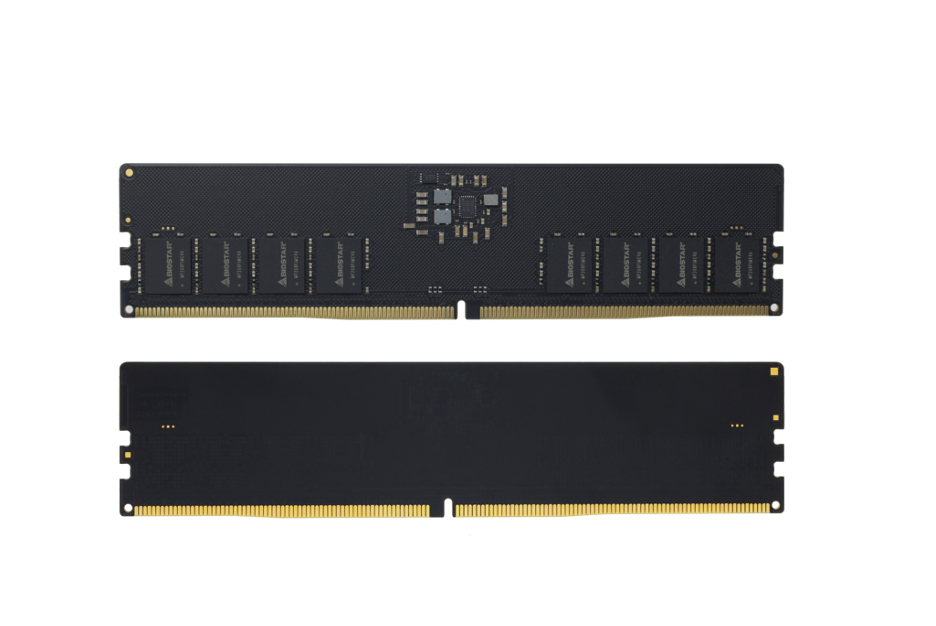
Biostar has new UDIMM memory modules hitting the market. The new 16GB DDR5 kits are now shipping out, available with either 4800MHz or 5600MHz speeds, designed with a focus on stability and efficiency.
Designed to support a wide range of PCs, the Biostar DDR5 16GB UDIMM memory aims to offer a balanced solution for everything from home entertainment to office productivity, NAS systems and HTPCs. As usual with DDR5 memory, these units have a power management IC embedded directly onto the memory module to enable more precise voltage regulation, enhancing efficiency and stability during long-term operation.
These new memory kits also feature a 288-pin non-ECC unbuffered DIMM design and a 32-bank architecture with enhanced bank-group organisation to improve data handling efficiency and parallel processing capability.
We don't have UK pricing information for the 4800MHz or 5600MHz models yet, but we do know that they offer CL40 and CL46 timings respectively. The memory should be widely available in the coming weeks.
KitGuru Says: The memory market is going through a bit of a transformation at the moment due to massive data-centre AI projects, so seeing more options hitting the market is welcome.
Just last week, Activision rolled out the Ranked multiplayer update for Call of Duty: Black Ops 7. While a week has passed since then, the developers have yet to address a growing issue amongst players – the game is locking people out despite having features like TPM enabled.
While in the past, most games did not require users to enable advanced security features like TPM or SecureBoot, nowadays with more intrusive anti-cheat measures, many games now call for these features to be enabled. Normally, this is as simple as enabling a couple of settings in the BIOS, but for this year's Call of Duty, that isn't working for everyone.
Following the ranked multiplayer update for Call of Duty: Black Ops 7, there have been a growing number of players reporting issues, receiving error messages stating that TPM is not enabled, despite the BIOS saying otherwise, or that their TPM module is outdated. This is happening to users with motherboards of various brands, including the likes of MSI, Gigabyte, Asus and others. If the TPM module is indeed outdated, then gamers will have to wait on motherboard vendors to issue BIOS updates to address the issue.
At this point, Activision has not yet acknowledged the complaints. One user managed to work around this by fully reinstalling Windows with a USB stick, but that is far from an ideal solution for most users, as they may risk losing data and may also have to sit through a long queue of downloads to get their games and apps reinstalled. One other person also managed to work around the issue by buying a separate TPM add-in module.
We have seen at least one motherboard vendor's customer support email regarding this problem, but it was not very helpful, directing users to reset their BIOS settings to default and clear the CMOS.
KitGuru Says: Have you had any issues with Black Ops 7 recently after last week's patch? Have you had a TPM error despite the feature being enabled in the BIOS? This all does seem like quite a lot of faff just to play a video game.
The next round of games for GeForce Now has been announced. There are eight new titles joining the cloud gaming library this week, including the Game Pass version of Kingdom Come Deliverance, allowing even more people to experience Warhorse Studio's fantastic and immersive medieval RPG.
There are two titles on the list this week launching day-one on GeForce Now, complete with support for the GeForce Now Ultimate RTX 5080 servers, including Disciples: Domination and REANIMAL, a new horror co-op game from the creators of Little Nightmares.
Here is the full list of new games joining GeForce Now today:
Disciples: Domination (New release on Steam, Feb. 12, GeForce RTX 5080-ready)
REANIMAL (New release on Steam, Feb. 13, GeForce RTX 5080-ready)
Kingdom Come: Deliverance (Xbox, available on Game Pass, Feb. 13)
Capcom Beat ‘Em Up Bundle (Steam)
Capcom Fighting Collection (Steam)
Mega Man 11 (Steam)
Street Fighter 30th Anniversary Collection (Steam)
Torment: Tides of Numenera (Steam and Xbox, available on Game Pass)
KitGuru Says: Will you be playing any of this week's new GeForce Now titles?
 Connexion