Following the release of the 590 driver branch, which formally ended “Game Ready” support for the GTX 900 and 10 series GPUs, Nvidia has been forced to issue a correction regarding its supported hardware list. Initially, the release notes revealed that the Titan GTX and several Pascal-based mobile GPUs were still listed as supported, but that is no longer the case.
Nvidia has since removed all mentions of the MX and Titan GTX GPUs in the list of supported hardware, as noted by VideoCardz. The company has updated its documentation to confirm that all Pascal-based GPUs are indeed moving to legacy status. This correction hits the entry-level laptop segment particularly hard, wiping out almost the entire MX lineup. The only survivor is the MX450, which remains supported solely because it is built on the newer Turing architecture (TU117S), unlike its Pascal-based predecessors.
The transition to the 590 branch also marks the end of an era for the Titan family. With the deprecation of Maxwell, Pascal, and Volta, the support list has been decimated. The Titan X, Titan XP, and Titan V are no longer supported. This leaves the Turing-based Titan RTX as the sole remaining member of the family with active driver support.
Note that, as these GPUs will be moved to legacy, they'll still receive critical security updates via a dedicated branch.
KitGuru says: Do you own a Titan GTX or a mobile MX GPU? Are you planning to upgrade those systems, given they're about to be considered legacy?
Lian Li has introduced the RS Series, a new line of power supplies designed to address the physical constraints often found in compact or dual-chamber PC cases.Available in 1000W and 1200W capacities, the series introduces a unique mechanical feature: a rotating AC inlet.
The rotating inlet found on the RS series allows builders to adjust the orientation of the power cord connection, making it easier to fit the unit into a chassis with limited clearance or unusual mounting brackets. The design's flexibility extends to the modular interface as well, with the RS Series featuring 24-pin motherboard output ports on both the left and right sides of the unit. This dual-port layout ensures the main ATX cable takes the most direct path to the motherboard, regardless of the PSU's orientation, helping declutter the cable management chamber.
Some RS PSUs come with an RS Hub designed to solve the common shortage of internal USB headers in RGB-heavy builds. It provides four USB 2.0 headers capable of supporting up to eight devices. The hub is magnetic and can be placed anywhere in the case or mounted directly onto the PSU. This accessory is included with the 1200W models, but it's also an optional add-on for the 1000W variants.
Under the hood, the units are built using a combination of Japanese capacitors and industrial-grade EPCOS capacitors, which Lian Li claims are smaller yet more durable than traditional components. The platform is rated for high efficiency, carrying 80 Plus Gold, PPLP Gold, and Cybenetics Platinum certifications. Cooling is provided by a 135 mm fluid-dynamic bearing (FDB) fan that supports a Zero RPM mode for silent operation under lighter loads.
The PSUs ship with soft, flat modular cables and magnetic cable ties to further assist with routing. The Lian Li RS Series is available starting December 5th, 2025, in both black and white. The RS1000G Black without a hub is priced at $154.99, while the RS1000G White without a hub is priced at $159.99. If you choose the RS1000G bundled with the RS Hub, the Black version costs $159.99, and the White version is $164.99. Finally, for the RS1200G models, which are available only with the RS Hub, the Black edition is $179.99, and the White edition is $184.99.
KitGuru says: Although a bit pricey, these PSUs' feature set is quite rare in the current market. The only similar alternative is the Corsair RMx Shift, which is priced similarly to these at the same power level.
After completing not one but two GTC events this year, NVIDIA is already looking ahead to what's in store for the next one, which the company confirms is returning to San Jose, California next year. It will run from March 16-19, 2026. For those who are interested in attending, registration is now open, though you can expect a livestreamed
Dell is reportedly preparing to increase its system prices by 15-20% as early as mid-December, driven by a dramatic surge in DRAM costs. Lenovo may follow suit, as industry insiders point to the exploding cost of memory as the cause, specifically DDR5, which has seen year-over-year increases of 70%, with some specific components spiking by a massive 170%.
According to Trendforce, Lenovo is already advising customers that current price quotes will expire on January 1st, with significant increases expected in early 2026 due to AI-driven demand and shortages.Other major OEMs, including HP, Samsung, and LG, are also said to be reassessing their 2026 product roadmaps, particularly for AI tablets and PCs.
TrendForce has consequently downgraded its notebook shipment forecast for 2026 from 1.7% growth to 2.4% decline. With memory accounting for a significant chunk of a PC's cost, 2026 is shaping up to be a challenging year for consumers, likely characterised by higher prices, limited availability, and potentially lower-spec products as brands attempt to maintain price points.
KitGuru says: With all these new reports lately, it seems those planning to buy a laptop are better off getting it ASAP or risk paying a considerably higher price.
After years of anticipation since its initial tease as ‘Project L', Riot Games has confirmed that its League of Legends-based tag fighter, 2XKO, will officially launch on PlayStation 5 and Xbox Series X/S in January 2026.
The console debut will coincide with the launch of Season 1 across all platforms, marking a significant milestone for the title, which has been in PC Early Access since October 2025. This simultaneous rollout ensures that the player base remains unified, with Riot confirming cross-platform progression. Console players will not be left behind, as a catch-up mechanism will allow them to earn or unlock content from the PC-exclusive early access period, including champions, skins, and mastery rewards.
Season 1 is set to bring substantial new content, headlined by the arrival of a new champion to the roster. Additionally, Riot is doubling down on the esports ecosystem with the introduction of the “Frame Perfect” skin line. A portion of the proceeds from these skins will go directly to tournament organisers to support prize pools and production costs.
Riot has also unveiled the 2026 Competitive Series, a global circuit developed in partnership with independent event organisers. The series will feature twenty sanctioned events, including five major tournaments. The competitive calendar kicks off almost immediately after launch, with the first event scheduled for January 29th, 2026, at Frosty Faustings.
KitGuru says: Have you already tried 2XKO, or were you waiting for the console release?
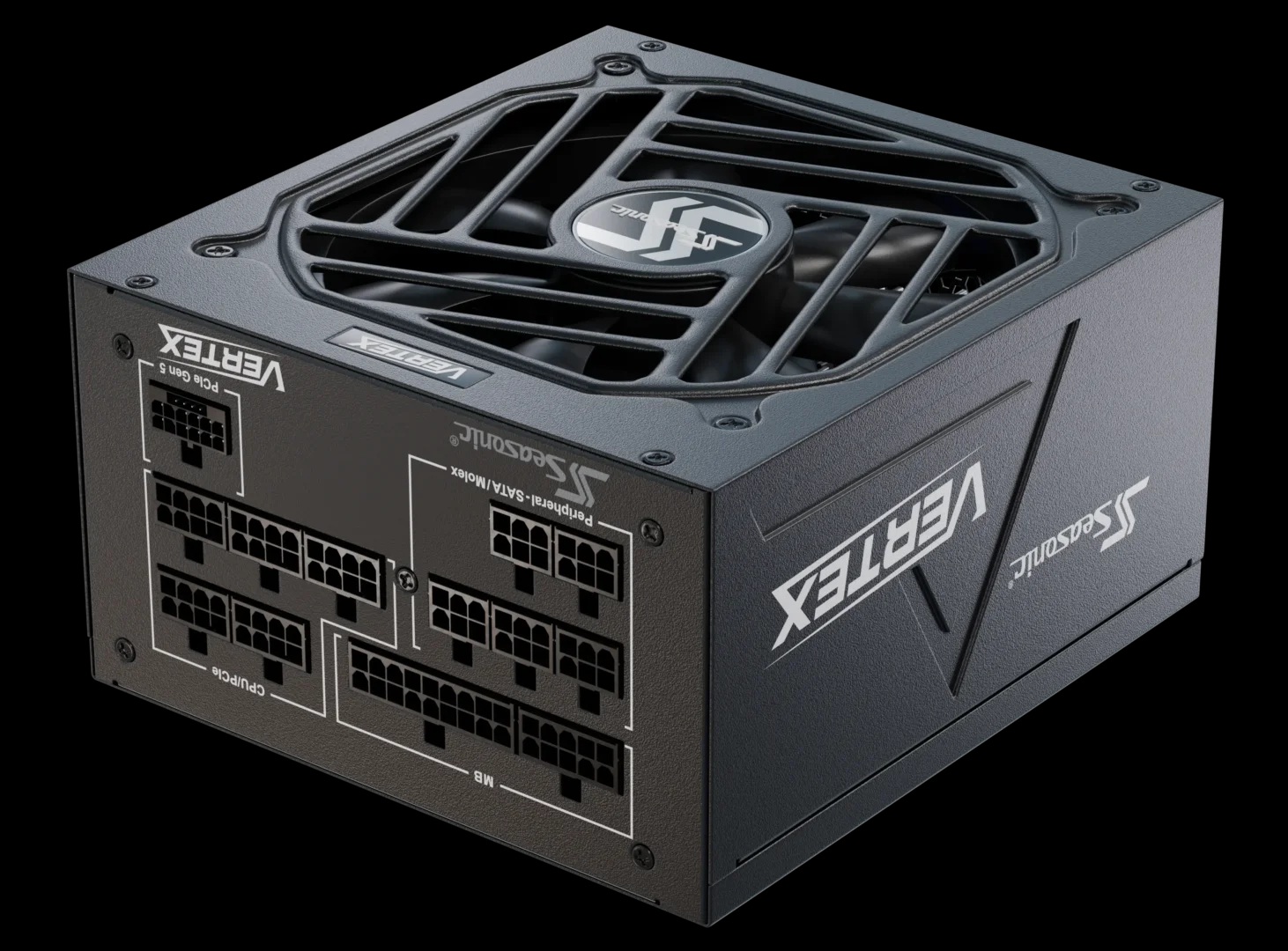
For Day 7 of the KitGuru Advent Calendar we have teamed up with Seasonic to give away not one, not two but THREE prizes. Today's prize list includes the Seasonic GX-850, Vertex PX-1000 and Prime TX-1300 power supplies!
The Power Supply is the beating heart of any high performance gaming PC. Seasonic happens to make some of the best power supplies on the market, One winner will get the 850W model, while another will get the 1000W PSU and a third winner will get the Prime TX-1300, which offers the highest efficiency rating as well.
How to Enter:
To enter this giveaway, all you have to do is head over to our competition announcement post on Facebook, HERE. In the comments, leave an answer to the following question – What is the capacity of your current PSU?
This competition is open in the UK, EU and USA.
The winners will be picked randomly shortly after 11AM GMT December 8th, and a new competition will be announced for Day 8. The chosen winners have 48 hours to respond, if we do not hear from them, a new winner will be picked.
Terms and Conditions: This competition is open UK, EU and USA starting at 11AM GMT on December 7th and ending at 10:59AM GMT on December 8th. Due to the busy Christmas season, prize deliveries could take longer than usual, and some prizes may not ship until January. In compliance with GDPR, we will not collect or store any personal information as part of this competition. Once the winner has been contacted and their prize received, personal details will be deleted from our email servers. Your details will not be shared, we respect your privacy.
KitGuru Says: Good luck to all who enter, we'll be back tomorrow morning to announce a winner and turn the calendar over to Day 8!
Yes, we talked about DDR5 pricing a lot, again. But we also talked about a very special Intel 18A customer, one billion PCs screaming out in pain (it's a metaphor!), AMD CPU…
Intel's Panther Lake processors are due to arrive soon in new notebooks from a wide array of partners. MSI has a refreshed line-up of Prestige machines coming, for example, powered by Intel's latest and greatest mobile chips, flaunting OLED screens up to 16 inches and long battery life. Based on initial disclosures from Intel and some leaked
This might just be the most will-they-or-won't-they GPU release story of all time. Intel's Arc Battlemage was rumored to come in two different versions as soon as we ever heard about it, but the larger "BMG-G31" chip never materialized and was rumored to be canceled. Then it appeared in leaks, and then it was rumored to have been canceled
If you haven't done so already, check out our roundup of excellent deals on several generations of iPhone and Apple Watch devices, with Woot (owned by Amazon) offering massive savings on its Grade-A refurbs backed by a 1-year warranty. Then once you've done that, check out the big discounts from Amazon on more Apple products, all in new condition,
Blink and you'll miss Woot's flash sale on a whole bunch of 'Grade-A' Apple Watch and iPhone devices with hundreds of dollars of savings on tap, and delivery in time for Christmas. And before you dismiss the sale because these are refurbished items, consider that Woot (which is owned by Amazon) is promising "like-new functionality" and battery
Update: This competition is now CLOSED. Our winner today is Chris Reed! If you missed out this time then keep an eye out as we have many more daily giveaways left on the calendar. Today's giveaway can be found HERE.
For Day 6 of the KitGuru Advent Calendar we have teamed up with Sapphire to give one lucky reader a new graphics card and motherboard! Our prizes today include the Sapphire Pure RX 9060 XT 16GB graphics card and a Pure B850M motherboard/
The graphics card being given away today is the 16GB variant of the RX 9060 XT. With this GPU, you'll be able to access the full FSR 4 feature set for improved performance in supported games and thanks to the generous amount of VRAM, you should be able to avoid stutter issues in certain newer titles. To go with the graphics card, the winner will also receive a Sapphire Pure B850M WIFI motherboard, which supports the latest Ryzen AM5 processors in a Mico-ATX form factor.
How to Enter:
To enter this giveaway, all you have to do is head over to our competition announcement post on Facebook, HERE. In the comments, leave an answer to the following question – What GPU are you currently running?
This competition is open Worldwide.
The winners will be picked randomly shortly after 11AM GMT December 7th, and a new competition will be announced for Day 7. The chosen winners have 48 hours to respond, if we do not hear from them, a new winner will be picked.
Terms and Conditions:This competition is open worldwide starting at 11AM GMT on December 6th and ending at 10:59AM GMT on December 7th. Due to the busy Christmas season, prize deliveries could take longer than usual, and some prizes may not ship until January. In compliance with GDPR, we will not collect or store any personal information as part of this competition. Once the winner has been contacted and their prize received, personal details will be deleted from our email servers. Your details will not be shared, we respect your privacy.
KitGuru Says: Good luck to all who enter, we'll be back tomorrow morning to announce a winner and turn the calendar over to Day 7!
Meta is delaying its ultralight headset with a tethered puck to the first half of 2027 and starting work on a gaming-focused Quest 4, leaked memos reveal.
The two internal memos were sent earlier this week. They were first reported by Business Insider a few hours ago, and UploadVR can independently confirm their authenticity.
One was sent by VP of Reality Labs Maher Saba to staff, and mentions delaying the ultralight open-periphery headset with a tethered compute puck running Horizon OS that multiple reports, including our own, have suggested that Meta recently hoped to release next year. Various codenames have leaked for candidates for the product, including Puffin, Phoenix, and Loma.
Saba tells staff that the new goal is to release the ultralight device in the first half of 2027.
The headset will be focused on virtual screens and other seated use cases. Names that Meta has internally floated for the product have included "Quest Air", but it's far from certain what it will decide.
His memo also mentions the release of a new "limited edition" wearable device codenamed Malibu 2 in 2026. It's unclear what this will be, but it might be the rumored Prada Meta Glasses.
The other memo comes from the heads of the Metaverse and Horizon OS groups within Reality Labs, Gabriel Aul and Ryan Cairns.
They suggest that the ultralight headset delay will give staff "a lot more breathing room to get the details right".
"There's a lot coming in hot with tight bring-up schedules and big changes to our core UX, and we won't compromise on landing a fully polished and reliable experience", they say.
Aul and Cairns also mention starting work on a next-generation mainline headset, which UploadVR understands would likely carry the name Quest 4.
This headset will focus on immersive gaming, bring a "large upgrade" over Quest 3, and "significantly improve unit economics". That strongly suggests an end to the strategy of subsidizing low-cost devices. Meta wants to slowly transition Reality Labs into a profitable division, and this will be a key part of that plan.
Work on a Quest 4 comes around six months after the cancellation of the previous candidates for a 2026 Quest 4 and Quest 4S line, a decision Meta made alongside prioritizing the release of the ultralight headset.
The new plans suggest the ultralight headset should land in the first half of 2027, with a traditional Quest 4 following at a later date, perhaps in 2028.
The leaked memos come shortly after Meta officially confirmed "shifting some of our investment from Metaverse toward AI glasses and Wearables". And to be clear, within Meta, Wearables does not include Quest.
That doesn't seem to be stopping the company working on new headsets, but Saba's memo does mention needing to be "focused on making the business sustainable", and not subsidizing Quest 4 seems to be the result of that budget pressure.
He also mentions that teams should not use the ultralight headset delay to "add more features or take on additional work", and instead focus on polishing what they already plan.
Keep in mind that Meta's hardware roadmap is constantly shifting, and the company frequently spins up and cancels headsets before they ship. When a specific product gets close to shipping, we'll bring you any reliable rumors of its imminent arrival. Until then, be ready for anything planned to get canceled or delayed.
Microsoft's efforts to convince people to switch to Windows 11 continues to be spectacularly hilarious, at least for those who still have a working computer. While many of their updates are focused…
This week marks the early access arrival of How to God, a deity simulator that encourages you to nurture your followers – or ruin them emotionally.
I played through the full campaign, taking me through a story of deities building alliances – or facing off against one another. Inspired by the gods of real-world civilizations, How to God is a decent, well-paced entry in the god game genre, though you may want to turn off the AI-generated voicework.
The Facts
What is it?: Become a great deity in the sky, convert humble villagers to devout followers (through faith or fire), and uncover the mysterious powers threatening your lands. Platforms: Reviewed on Meta Quest 3. Also available on Quest 2. Release Date: Out now (coming soon to Steam) Developer/Publisher: Thoughtfish GmbH Price: $29.99
How to God feels similar to Townsmen VR due to its narrative-driven campaign, villager-care mechanics, and ability to drop right into the action – or rule from the heavens. While the two games share a similarly cute, stylized aesthetic, some surprisingly dark themes may emerge from How to God. No spoilers, but I loved the spiciness these surprises added to my playthrough.
How to God also differentiates itself from Townsmen through a couple of more mystical features, such as “miracles” (hand-tracking gestures to create balls of water, or open portals back to your God Room) and Creatures.
You’ll first meet your Creature – a semi-autonomous conduit for your godly intentions – in the Godroom (a fancy term for “main menu”). I chose a cute, fat owl, but there are two other options as well: one looks like a horned, contorted Labubu doll and an off-brand canine Pokémon.
Once you’ve conjured your preferred Creature into existence, it’s time to drop into the world. Literally. Like most other games within the genre, you’re an invisible, omniscient force in the sky, able to see everything at once and interact with anything beneath you. The tutorial is simple but comprehensive – in fact, there’s a whole archipelago dedicated to teaching you, well, how to god, and you don’t stop learning stuff even when you advance to the next location.
You’re helped throughout the tutorial by your divine advisors Good and Evil, who are basically the angel-and-demon-on-the-shoulders trope personified (er, spirit-ified). In later levels, they become drivers of the narrative, too – more on that in a bit.
Interestingly, every post-tutorial level is a real-world location such as Egypt or Paris. This affects both the physical appearance of buildings and what rival/friend gods you might encounter. Poseidon hangs out in Greece, for instance. Nearly half of the levels were clustered in Europe, which is where the “cool” gods originate, I guess, but I would like to see locations like South America or India represented too.
So who are you lording over, anyway? Your world is dotted with hamlets, and you’ll need to build them up, so citizens eventually support you as you go at loggerheads with other spiritual beings and mysterious forces. Turns out there’s truly no such thing as a selfless good deed.
Comfort
You move about by holding and grabbing “the world,” pulling yourself to your desired location. That makes How to God one of those games you can play on your couch – nausea is minimal and no real-world movement (or even standing) is needed.
Accessibility options are limited to selecting left-handed controls and turning on subtitles.
Nobody wants to pray to you while they’re hungry and homeless, and without their worship you’re not going to gain any “faith energy,” which you need to power any action supporting their most basic Maslow needs. In that sense, you can never be 100% evil; you’ll at least need to ensure villagers are fed and housed if you want to get anywhere. Setting fire to their houses may be fun momentarily, but will hamstring your progress.
Crafting is the other main mechanic, and it's one of my favorite parts of How to God. You can combine two elements or materials to form new items. Fire + wood = coal is an early example, but it gets more complex – you’ll even end up combining villagers with, say, iron to create troops for your little army.
Recipes are helpfully stored in your Godbook, a convenient and well-designed compendium of information you’ll collect through your playthrough – from crafting formulas to details on your Creature’s moral alignment. There’s an impressive number of recipes to uncover; I hadn’t even unlocked them all by the time I was done with the campaign.
You’ll also need to build scaffolding for the village’s structures, from farms and lumber mills to new shrines. Think of it like an extremely simple Lego kit: snapping boxes together into vague shapes, like a tall scaffold approximating a silo. It’s nothing challenging by any means, but it’s a cute use of VR that differentiates How to God from god games on other platforms.
You can micromanage your Creature, ordering it to pick berries – or shake a hapless villager for no reason. Mostly, though, it’ll wander about like an errant child, trying to eat rocks or kick logs. There’s a handy brush and spray bottle on your wrist to discipline it in the same way that you would to train a cat; stroke your Creature with the brush to reinforce desired behaviors, or squirt to discourage. Of course, the definition of a “desired behavior” is up to you.
And as for your own behavior… The allure of any god game is being able to lean either way in the good/bad binary. I had good intentions in my first playthrough, vowing to earn my villagers’ respect through noble deeds, but as the campaign’s challenges intensified, I found that it is simply easier to be a bad guy.
For instance, in one situation I faced some aggressive neighbors; as a benevolent god, I could invest time “crafting” some disciples to go over and reason with them…. But it was honestly just easier to smite them with fireballs. Clouds aren’t just cute, by the way: rub them to create some static discharge and carpet-bomb a rival village with lightning. Or squeeze some rain out of them to blanket-water some trees, if you’re feeling more magnanimous.
How to God is heavily narrative-driven, with your advisors Good and Evil playing off each other as they guide you through objectives. The script is promisingly humorous, but numerous characters are dragged down significantly by AI voiceovers. Whatever your thoughts are on AI content, How to God’s characters are distractingly monotonous and emotionless from the very beginning.
Good and Evil are less egregious examples of the AI voicework, but even they often awkwardly emphasize the wrong syllables, forming a very jarring experience. With so many characters shepherding your objectives, this becomes a real bummer – it often feels as though they are simply reciting chores for you to complete, rather than offering engaging challenges and objectives.
It would also be good to at least see these voices more accurately reflect the regions I heard them in. For instance, I only heard one approximation of a Scottish accent in Scotland, with nearly every other speaking character affecting a generic English accent or American drawl.
Mercy or Mayhem: Win Either Way
I didn’t get a sense of how much my choices mattered – or whether there are even alternate endings. Maybe that’s a good thing (finding out adds replayability!) but having been a more neutral deity myself, I didn’t really have much motivation to go back and try leaning more into the naughty-or-nice extremes.
Robot voices aside, How to God is a solid addition to the god game genre across any platform – and a must-buy for VR enthusiasts of the genre especially. I enjoyed my time in the campaign, and I’m especially hoping for some major post-release content updates – bring on Shiva!
UploadVR normally uses a 5-Star rating system for our game reviews – you can read a breakdown of each star rating in our review guidelines. As an early access release, this review is unscored.
Cloudflare CEO Matthew Prince recently spoke out against Google's AI practices, highlighting that while his company has successfully blocked 416 billion unwanted AI scrapers from its customers' content, Google has made opting out of the practice extremely difficult for most companies doing business on the web. Prince spoke strongly in an interview
BIWIN's Black Opal DW100 marks the company's debut in the consumer DDR5 market, setting new standards with its enthusiast-grade timings. Featuring a robust 10-layer PCB and hefty heat spreaders, it is designed to maximize performance. Join us as we evaluate this memory kit and see how it stacks up against the competition!
For the artists who make Walkabout Mini Golf, the path to virtual reality often begins with a pencil and paper to sketch out their ideas before jumping into Gravity Sketch for spatial building.
Now fans with Quest headsets can trace some of that path from home.
0:00
/0:54
A collaboration between Walkabout Mini Golf and Pencil sees Quest-owning fans of the game dropping their putter onto the table to trace the drawings of Don Carson, the lead designer of Alice's Adventures in Wonderland and an art director at Mighty Coconut. The step-by-step lessons available in the app for pencil and paper will teach players how to draw Walkabout's version of the characters Alice meets in Wonderland.
Effectively, Walkabout and Pencil are starting to recreate the Animation Academy attraction from California Adventure at the Disneyland Resort, where visitors learn how to draw Disney's most iconic characters from skilled artists. You just have to switch between two apps on Quest to go from the Alice in Wonderland's Walkabout theme park to Pencil, where you can learn to draw in Carson's style. The characters Alice encounters, from the Cheshire Cat to the Queen, have been re-imagined for VR by Carson and his teammates, pulling inspiration from the original illustrations of John Tenniel.
The tracing lessons are available as a free pack inside Pencil on Quest. The app is also adding a collection of authentic set pieces from Walkabout to play with for inspiration as you draw.
As far as anyone outside AMD knows, Team Red's next processor releases will be the Gorgon Point family, which is a refresh of Strix Point. "Refresh" doesn't necessarily mean "rebadged," though. Sometimes refreshes can come with significant changes, like the clock rate changes from Intel's 13th to 14th generation Core CPUs. If you were hoping
UploadVR is celebrating our Winter Showcase with a new Humble Bundle, featuring nine SteamVR games for $17.
Available for the next three weeks, the UploadVR Winter 2025 Showcase Bundle is now live following today's showcase. This time around, it's split between two separate tiers, with the games individually costing a combined total of $219.
The $10 tier comes with four games: After The Fall: Deluxe Edition, Guardians: Frontline, The Walking Dead: Saints & Sinners, and A Fisherman's Tale 2 (previously known as Another Fisherman's Tale). Choosing the $17 tier then adds the remaining five: Z.O.N.A: Origin, Metal: Hellsinger VR, I Expect You To Die 3: Cog in the Machine, Ghosts of Tabor, and Hellsweeper VR.
Charity proceeds will support the Electronic Frontier Foundation, and you can adjust the revenue split between publishers, Humble and its chosen charities. While the above prices are the minimum you can spend on each tier, you can select how much you pay if you're looking to donate more.
The UploadVR Winter 2025 Showcase Bundle ends on December 26 at 6pm PT.
Puzzles of the World is an immersive puzzle game launching in Early Access on Quest next month.
Reminiscent of the popular VR jigsaw game Puzzling Places, Puzzles of the World lets you piece together intricate 3D miniatures, aiming to immerse you in a variety of soothing, themed environments. Developed by Astral Shores Games, this meditative experience focuses on slowing down while you take in the sights, and you keep your hands busy with its clicky bricks. Revealing its release date during the UploadVR Winter Showcase, you can see gameplay in the trailer below:
0:00
/1:06
The miniatures you snap together are based on locations from around the globe, like the Yasaka Pagoda (Hōkan-ji) in Kyoto, and the famous canals of Venice. As you carefully build, one piece at a time, you'll also learn key facts about the locations, like their history and architecture, through a handy in-world booklet. Those looking to tweak the ambiance can also take advantage of Puzzles of the World's sound controls, which resemble a portable CD player, and choose between a range of ambient soundscapes.
Puzzles of the World will launch in Early Access on Quest on January 8, 2026. If you're looking for more reveals from the UploadVR Winter Showcase, an 'Everything Announced' will be available after the show.
Underwater puzzler Echoes of Mora is launching on SteamVR next year.
Developed by Selkies Interactive, Echoes of Mora is an underwater puzzle game where you swim through dreamy sunken dioramas and unlock curious memories as you uncover its eerie story. Announced today during the UploadVR Winter Showcase, the aquatic mystery is launching on Steam in March next year. You can check out the gameplay in the trailer below:
0:00
/1:21
Echoes of Mora can be played in both PC VR and flatscreen modes, with players able to switch between mediums as they see fit, and their save slot will carry over between them.
During our demo hands-on at Gamescom this year, we found that while it’s by no means a seamless swimming simulator, the worldbuilding underpinning the mystery was more than enough to keep us engaged. We went on to say, “its compelling narrative beats and dreamy world design provide more than enough intrigue to earn it a place on my wishlist.”
Echoes of Mora is launching on Steam in March 2026. All the announcements from today's showcase will be rounded up in a handy 'Everything Announced' format, so be sure to check back in after it's finished.
Sol Protocol is a co-op roguelike coming to Quest early next year, and you can sign up for the closed alpha tests today.
Developed by Singular Perception (Epyka), Sol Protocol sees you and up to two additional players tasked with manning a spaceship as you navigate the dangers of a procedurally generated outer space. There are multiple roles to choose from when organizing and optimizing your crew, including the pilot, the gunner, and the captain. You can check out the announcement trailer below:
0:00
/1:07
On your journey across the stars, you'll run into abandoned space stations and lost tech that can be searched and used to earn resources that can upgrade your ship. Space isn't all loot though, and there are also enemies to contend with, which require careful strategies and a range of high-powered weapons to best.
Sol Protocol is launching on Quest and SteamVR in early 2026, with a flatscreen version also intended for release. Those who want to get stuck in early can sign up for the closed alpha by joining the Sol Protocol Discord. Everything announced during the UploadVR Winter Showcase will be compiled into a wider list, so check back after the show to catch up on all the announcements.
 Connexion