ASUS lowers the entry barrier for a feature that was previously reserved for high-end products. With the new X870-NEO series, NitroPath DRAM technology is making its way into the mainstream segment and is expected to increase effective DDR5 memory clock speeds by up to 400 MT/s. This is not magic or a marketing gimmick, but […]
South Korean memory manufacturer SK hynix is drawing the logical, albeit belated, conclusion from the current AI escalation along the supply chain. In the future, it wants to control key parts of advanced packaging production itself and is investing up to $13 billion in new production lines in Cheongju, South Korea. The move is less […]
The Intel Core Ultra 9 290K Plus, the presumed top model of the upcoming Arrow Lake Refresh generation, has appeared in the first publicly available benchmark data. The current reports are based on entries from Geekbench 6, which indicate a measurable but clearly limited performance increase compared to the previous Core Ultra 9 285K. The […]
An AMD desktop processor that has not yet been officially announced has appeared in an international customs and freight database under the name Ryzen 9 Pro 9965X3D. The entry refers to a processor for the AM5 socket that combines 16 cores based on the Zen 5 architecture with the 3D V-Cache technology known from the […]
NVIDIA is realigning its manufacturing priorities within the current GeForce RTX 50 series and shifting its focus to the RTX 5060 family, according to consistent industry reports. This adjustment comes against the backdrop of sharply rising memory prices and an overall tight supply situation for GDDR memory chips. At the same time, large parts of […]
MSI is bringing back the Lightning series, and it’s not doing so quietly, cautiously, or modestly. With the MSI GeForce RTX 5090 Lightning Z, the manufacturer is not only launching its most technically ambitious custom design in years, but is also linking it directly to a marketing campaign with a clear target audience: overclockers, enthusiasts, […]
The new year has already begun, and I wish all readers a healthy, happy, and successful 2026. CES is already underway, and there are a few things in the monitor sector that I will be taking a closer look at this year. I can already announce that much at this point. Today, however, we’re talking […]
There are quite a few comments on the Steam page for USC: Counterforce and even Rock, Paper, SHOTGUN originally gave up on the game immediately, because the devs decided to make the…
Your enjoyment of Stellar Cafe comes down to two things: how you feel about AI in video games and how good of a conversationalist you are.
I've had some experience with AI-driven NPCs in games before, specifically in Skyrim (with mods) and former-social-VR-turned-MMORPG Riff XR. The difference with these two examples is that those games have much more to offer than said AI NPCs whereas Stellar Cafe lives and dies on the characters and your interactions with them. It makes for a unique experience that rolls credits before the fairly simple premise wears thin.
The Facts
What is it?: A voice-controlled narrative Platforms: Meta Quest 2/3/3S (played on Quest 3) Release Date: December 11, 2025 Developer/Publisher: AstroBeam Price: $14.99
Developer AstroBeam's claim to fame is being helmed by Devin Reimer, one of the co-creators of Job Simulator, and Stellar Cafe feels very much inspired by that VR classic while taking the concept of sentient robot interactions to the next level. You play as, well, yourself, with James, your robot barista, asking your name and using it for the rest of the game. Having played dozens of games where the player can name the main character, only to watch voice-acted NPCs never actually say it, this was surprisingly an immersive touch.
After talking shop with James, you learn that James is throwing a party for Patch Day, an upcoming holiday, but the nine other RSVPs have only replied 'maybe.' James requests your help to find out why each robot is on the fence and convince them to turn that 'maybe' into a 'yes.' The rest of the game plays out like a linear sandbox. You progress through the robots in groups of three across three cycles (days), but how you solve their problems is entirely down to your creativity.
For example, one bot can't attend the party because they have to work at a job they hate and would rather quit. Through a series of prompted responses, you assist this bot in writing a resignation email. After that email is done, it gets sent to the supervisor who replies in short order. I played the first three scenarios in the game twice (including this one), using wildly different approaches each time, and the responses were indeed different. Another example is Captain (one of the few names I remember as I write this review) who needs your help to come up with a story pitch. The sky is the limit since your dialog choices and the responses are not pre-determined. I can see this game being played multiple times to see just how wacky of a response you can get from the robots.
Frankly, these characters felt more realized with better personality traits and voices than I've encountered in most VR games. I enjoy puzzle games in general and it was a trip to have the puzzle actually talk back to you. Having said that, a little goes a long way here. Each encounter can be completed inside 10 minutes and some of them landed better than others. I won't give any more specifics to avoid spoilers, but there were two in particular I could not wait to move on from. Also, there are one or two phrases that every robot says that got old pretty quickly.
Stellar Cafe Screenshots captured by UploadVR
Another unique part of the game is that it is entirely driven by your voice, including the movement. Utilizing your Quest's microphone, you instruct your AI assistant, Visor, to move you from location to location (the counter, the booths, and the tables) and of course you spend the entire time talking. There are physical interactions as well, with some bots having tablets to pick up and view, and of course, plenty of custom drinks from James.
All of the voice interactions work perfectly fine, but the tablets were a bit jittery at times. Stellar Cafe can be played with controllers or hand-tracking and the game suggests using the latter. Unfortunately, my Quest kept detecting my controllers, to the point where I had to turn on hand-tracking. That's not a shortcoming of the game itself but Meta's operating system, though I still wanted to point it out in case other players bump into it. There were also instances where I looked around the cafe during a conversation and the bot registered it as me shaking my head no, forcing me to redo a prompt or response.
Comfort
Stellar Cafe uses a node-based teleportation system triggered by voice commands. 'Take me to the counter' as an example. The game can be comfortably played sitting down either with controllers or hand-tracking. There is no stick-based turning in the game and no motion vignettes since your movement is basically rooted to each node and matches 1:1 with your actual head movements. A great, accessible option for new VR users.
Stellar Cafe's full runtime is about 2 hours, including the ending. However, I can see players who enjoy the live AI interaction toying with the bots for hours on end. There were a few hiccups in the interactions, like sometimes James would make me a drink and deliver it to me, then tell me the drink would be ready soon. To the game's credit, I called James out on this every time it happened and he responded appropriately, apologizing and saying something about his timing circuits misfiring. Nicely done.
Visually, Stellar Cafe isn't exactly pushing the boundaries of standalone VR. If you've played any Owlchemy Labs game (Job Simulator, Vacation Simulator, etc.), it's about that level of visual fidelity. However, take your time and look around the cafe. There are a ton of little touches that show a level of care and sense of humor in the single-level game design. The television above James plays a rotation of news broadcasts, weather reports, a humorous riff on the Home Shopping Network, and more. I got a kick out of the employee of the month plaques too.
Finally, to address the elephant in the room: yes, this is ostensibly an artificial intelligence game. If you are uneasy or outright opposed to the use of AI in video games, Stellar Cafe is not going to change your mind. It's not a revolutionary step forward for the medium, but it is an interesting thought experiment into how this technology can be applied.
Stellar Cafe - The Final Verdict
Stellar Cafe is a lighthearted, relatively short AI experience that wraps up its simple story before outstaying its welcome. I do wish it were longer, but what's here is quite enjoyable and worth a pickup as a glimpse into what feels like an inevitable future for gaming, especially social sim settings like this.
UploadVR uses a 5-Star rating system for our game reviews – you can read a breakdown of each star rating in our review guidelines.
The Model D3 Wireless comes with a swappable battery system, allowing for no charging downtime at all. The right-handed ergonomic, 71 g Model O3 Wireless sports the latest BAMF 3.0 sensor, optical main button switches, 8000 Hz wireless polling, and rich RGB lighting.
ASRock has introduced a new variant of its ASRock Taichi AMD RX 9070 XT. It's functionally similar to the company's existing Radeon RX 9700 XT, but this new card has a white colorway, with an added LCD display. The ASRock Taichi White AMD RX 9070 XT is otherwise clocked the same as the previous version of the card, but the updated looks and
Before we get started here, let's take a moment and explain the headline. You see, Rockstar's in a bit of legal hot water right now for terminating a group of employees in Scotland over purportedly leaking information about GTA VI into a non-company Discord. The only problem is that they were union members speaking in a union Discord. The
One of the bright spots for PC gaming in 2026 is the upcoming release of Valve’s Steam Machine, even if leaked pricing indicates it might not as affordable as many hoped. While official pricing is still unknown, the company shared in an interview with Game Developer that its verification process, which has been a boon for the Steam Deck alongside
CharacterBank set out to work on Knights of Fiona aiming to take what they learned from Ruinsmagus into a more expansive and ambitious role-playing game.
Part of that journey involves making it multiplayer.
“ Ruinsmagus was a full single-player experience when we launched it, and we heard a lot from players about wanting to keep playing and exploring that world, so creating this large world that players could keep visiting was our biggest goal with this experience,” explains Shuto Mikami, the CEO of CharacterBank, on the origins of this new title. “Plus, with that previous game, the actual gameplay is almost more linked to a shooter game in how you played it, and we wanted to create something that felt more like an RPG. Using magic that didn’t feel like shooting bullets, swordplay, bows, introducing these styles that allow the game to feel more like this genre.”
I jumped into Knights of Fiona for the first time in an exclusive demo at the studio’s offices in Kyoto, Japan, looking at their effort to build something that feels like a true, traditional RPG adventure. I can see similarities to the hub world of Ruinsmagus and this title, but this time the hub is one continuous and larger town that feels more alive, even in these early stages. We were still required to warp to some locations of the town, but that should change with further development.
Rather than feeling limited to just you and a very small cast of characters, you have a team of party members and a supporting cast each as visually distinct and personality-driven as the last. The train station, the main starting point for a lot of missions, has moving trains and a large space to explore.
It’s when jumping into the quests themselves that the distinctions and evolution of this experience compared to CharacterBank’s prior work becomes most apparent. As Mikami notes, the first thing that stands out in the gameplay loop compared to Ruinsmagus is just how much additional depth and variety exists in terms of combat. You have bows, swords of all sizes, mage staffs and more at your disposal, and not only does each class feel distinctly unique to one another, weapons within those same classes feel unique and can be further upgraded to improve their strength and suit your style.
Firing an arrow, for example, requires a full-bodied, two-handed pull back of the bow. Aim and fire with the assistance of a guide for the arrow’s flight path, which allows us to attack from a safe distance countered by the slower nature of these weapons. Using swords of all sizes has a distinct feel and heft despite the typical limitations of the virtual form that makes it impossible to differentiate the weight of a virtual object, instead built into how you swing these weapons and approach combat. If magic can feel the closest to the combat of Ruinsmagus, the way you aim and the various spells that differ between staffs allow for a degree of control and variety. Even then, more than just swinging aimlessly, you have multiple actions assigned to various buttons for varied attacks, and everything from positioning to learning attack patterns is important for victory.
The game further encourages you to switch between these weapons, not just because of the weapons themselves but everything to do with upgrades and passive abilities that support your loadout. These come in the form of cards received randomly as rewards after each quest as well as from the in-game shop. These cards will also impact passive abilities that can improve base strength and introduce additional augmentations to your weapon’s abilities. You can further merge weapon cards to improve the level and experience of weapons beyond merely using them in action to essentially craft new weapons, and place passive cards in open slots to give you an edge in battle. The rarity and power of these cards increases based on difficulty chosen for each quest, with encouragement to revisit quests to get these abilities.
Gameplay focuses on fun over realism in combat and mechanic design, he explains. “We brought in the real weapons to try so we had an idea of how we wanted to replicate the feel of them in the game. That being said, one of the things we were considerate about was that, when we were designing for the sword and the bow, was that it wasn’t too technical. We want to make sure this is accessible for casual players and people who just want to jump in and experience this world.”
Which is important when creating a multiplayer experience you can play with friends. Another distinct characteristic of Knights of Fiona is that this is an online game at its core. All quests are taken on as a party, whether CPUs or online with friends, and you can engage in proximity voice chat and explore the hub world together also. Playing the game with just a few of the developers at their offices, lots of the fun of the experience was derived merely by exploring and talking amongst ourselves, just as much as it was fighting through hordes and large boss fights.
How you approach missions varies wildly based on your party and the quest itself. Playing through most of the first chapter including its finale during our session, we experienced the story as we saw off the first major threat, going from fighting early low-level hordes in open fields as we learned to gain the trust of the town to fighting off against the game’s first boss, an angry fire-breathing dragon. This set-piece is a clear statement of intent for the team’s ambition as we rush through waves of enemies and projectiles on the burning bridge that enters the town, only to come across a large bright-red dragon with eyes intent to kill, breathing fire and shaking the world with every attack. With a group you can split duties and distract the dragon, while alone you’re faced with a battle of wits and agility, not just strength.
It’s impressive, but only a small idea of what’s to come. Enemies of world-ending, literally titanic proportions are being teased, to such a scale that simply looking up at them in VR makes you feel like an ant, and I can barely even speculate how you would overcome their might. It’s promised to be longer but varied in setting as you trek out on a globe-trotting adventure in order to save it, even if your home in Gallia remains a hub. All with a rich cast of characters to support you along.
While the core story will have a definitive ending, it’s possible to replay missions on new difficulties for new weapons and ability cards, and while the team haven’t confirmed definitive plans at this stage, they’re open to the idea of much more.
According to the game’s director, HOI, multiplayer and online elements are about more than merely keeping players coming back, but creating something that can stick with people. Talking about their hopes for the game, they noted, “I want people to finish this game and think, I want to spend more time in this world, I want to get to know these characters more, about their relationships, what other adventures they may go on and the like. I want people wanting to learn more about this world. Lately, as soon as a game, a manga or an anime has finished, it’s forgotten by the next weekend, which is a little sad considering the love and work that went into it. Whether on their own or with other players, we want people to keep coming back to experience more in this place.”
In an introductory prologue, we arrived in this place unaware of the dangers it was soon to face in the oncoming war. Its people are losing hope, and that’s where you come in. You end up entrusted with leading the resistance to this fight by the leaders of Gallia, including some of its ruling figures like the large, tree-like Kelnund and Leonhardt, make allies with the knight Geisenberg, and find support from characters in the town like the purple-skinned alchemist Nebulous Babbege.
With characters, each design is as distinct as they are intriguing, soaked in a visual design conveying a history beyond what we are privy to in this adventure. Lots of time was spent on the design process before a line of code was made from design to even assigning characters their own Myers-Briggs-style personality types, HOI explains. “I often find that if you think about the story and create the world before you think about its characters, you end up creating characters that feel like gods in their world, which isn’t a good thing. So the first thing we would consider with every character is what is their personality, what are their motivations, what are their desires, what or who do they love, things like that.
“For example, we’d consider the role that a character is expected to take upon, how they feel about that role, the pressures elsewhere, things like that. The characters would be born from considering their internal emotions based on the life they have around them. Who could they talk to about these things? What are their more immediate problems and concerns? When it came to thinking about the setting, well, Gallia is a very medieval-inspired setting, so we considered philosophies of the time, what would the internal political debates of the location be, what sort of world and ruling would we have here, what does class division look like in this setting, we’d consider all of this from the earliest stages.
“Then we would bring in the designers. Maybe we would have some rough sketches of the settings, characters and ideas, but the designers would help to brush them up and help build them out further, or the designers would create it all from scratch based on the original designs. We also have a bigger cast, which helps. In Ruinsmagus, we had Iris as our main character, but she also had to be a guide for the player, she had a lot of roles to fill. Fiona started in this place, but with more characters we could think more about how she would react to different things and then give her deeper character development from there.”
Another distinct characteristic of Knights of Fiona is that this is an online game at its core. All quests are taken on as a party, whether CPUs or online with friends, and you can engage in proximity voice chat and explore the hub world together also. Playing the game with just a few of the developers at the office, so much fun was derived just by exploring and talking and having fun in this area. While the core story will have a definitive ending, it’s possible to replay missions on new difficulties for new weapons and ability cards, and while the team haven’t confirmed definitive plans at this stage, they’re open to the idea of new stories, time-exclusive skins and more to support the online service and to keep the game as something to return to with friends.
Even in this early stage, the game feels alive. The opening hub town includes lots of areas to explore and create your own fun. While not currently active due to the game not yet launching to the public, community integration in the town hall exists in the form of a notice board to allow fanart shared in Discord with players.
Currently in place of fan art are doodles from the staff, and you can see the love for these characters in all the fun sketches made by the team (with particular love for my own early favorite Nebulous Babbege). You can feel the love for this game, this world, and what it means to the team behind it in all the subtle details in the town and world, the care and refinement in card art for weapons and abilities and in the art in the town, and how much it means. For director HOI creating the story, he mentioned that one of the key inspirations was the challenge and responsibility of creating a new game and the expectations, something that weaves its way into the world and ideas driving Knights of Fiona.
Beyond simply being something new and much fun to play through even at this early stage, you can feel that this is the game that CharacterBank as a studio have been working toward for some time. It brings across ideas from much of their other works, builds beyond what they were able to achieve in Ruinsmagus, and charts ambitious ground for RPGs in VR. To support post-launch additional content the team is launching a Kickstarter campaign.
With everything considered, it's a tall order. If the team can fully deliver on all of its ideas, we could be in for something truly special.
Back when the VR space was beginning to see a renewed rise, Facebook (now Meta) went all-in on the technology, dedicating Billions to the production of VR hardware and software. While the Quest platform has succeeded in many aspects, the platform has failed to make the company mountains of cash and so unfortunately two of the most notable VR studios under their wing (Twisted Pixel and Sanzaru Games) have now been seemingly shut down.
Taking to Twitter, a former designer at the studio Twisted Pixel wrote: “I've just been laid off. It appears the entire @twisted_pixel games studio has been shut down. @SanzaruGames too.”
Sanzaru Games meanwhile were acquired by Meta all the way back in 2020 as part of the company's early VR efforts. The studio was known best for creating Asgard’s Wrath, generally agreed to be one of the best VR titles around.
Both Sanzaru Games and Twisted Pixel were great studios which still had plenty more to offer in the VR space. It’s a shame to see Meta ending these studios before they are able to achieve their full potential.
KitGuru says: What did you think of these two studios? Is Meta completely abandoning VR? Let us know your thoughts down below.
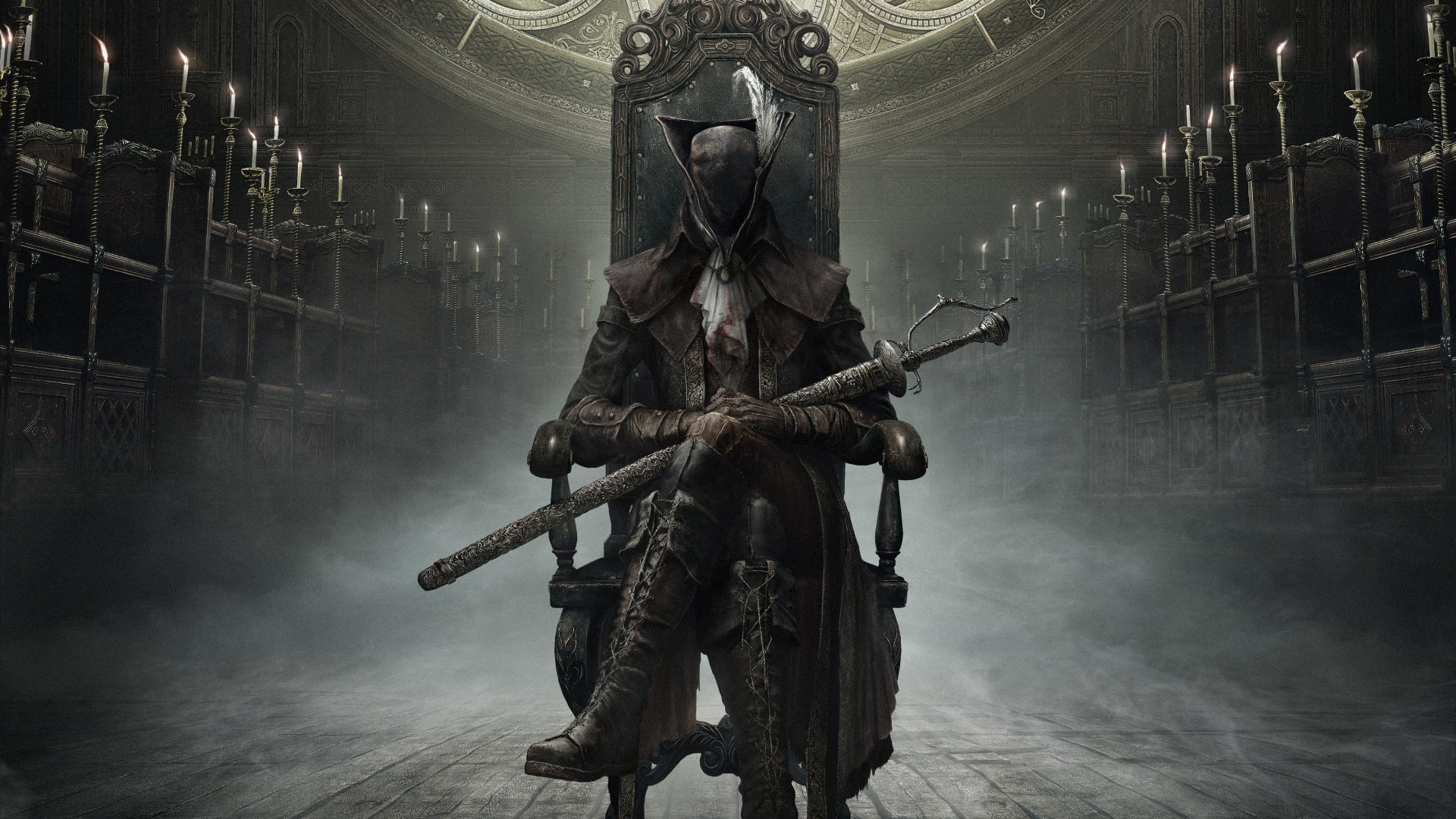
It's been over a decade now since the release of Bloodborne and despite continuous cries from fans to see more from this world – or even a basic 60fps patch – the game remains locked to the specs of the OG PS4’s hardware. While it appears as though more Bloodborne isn’t coming any time soon, the game’s creator Hidetaka Miyazaki has offered updated thoughts on this modern classic, calling it “perhaps the strongest reflection of my type of flavouring of a game that one can experience.”
In an interview with the publication Game Informer (paywalled), FromSoftware’s Hidetaka Miyazaki reflected on his time working on 2015’s PS4 exclusive Bloodborne, claiming it to be “a special game for me” in part due to the fact that “it was probably the most challenging development cycle we've had from a studio perspective.”
The other main reason it remains special is that Miyazaki “imparted a lot of my own ideas into this game, whether it be the story, the world-building component, or even the game mechanics and the game systems that are in place” – ultimately calling Bloodborne “perhaps the strongest reflection of my type of flavouring of a game that one can experience.”
Given the reverence that Miyazaki has for Bloodborne, here’s to hoping that another project set in this highly-interesting world does come to fruition at some point or another in the near or distant future.
KitGuru says: What do you think of Miyazaki’s comments? Is Bloodborne your favourite FromSoftware game? What would you like to see from the series in the future? Let us know down below.
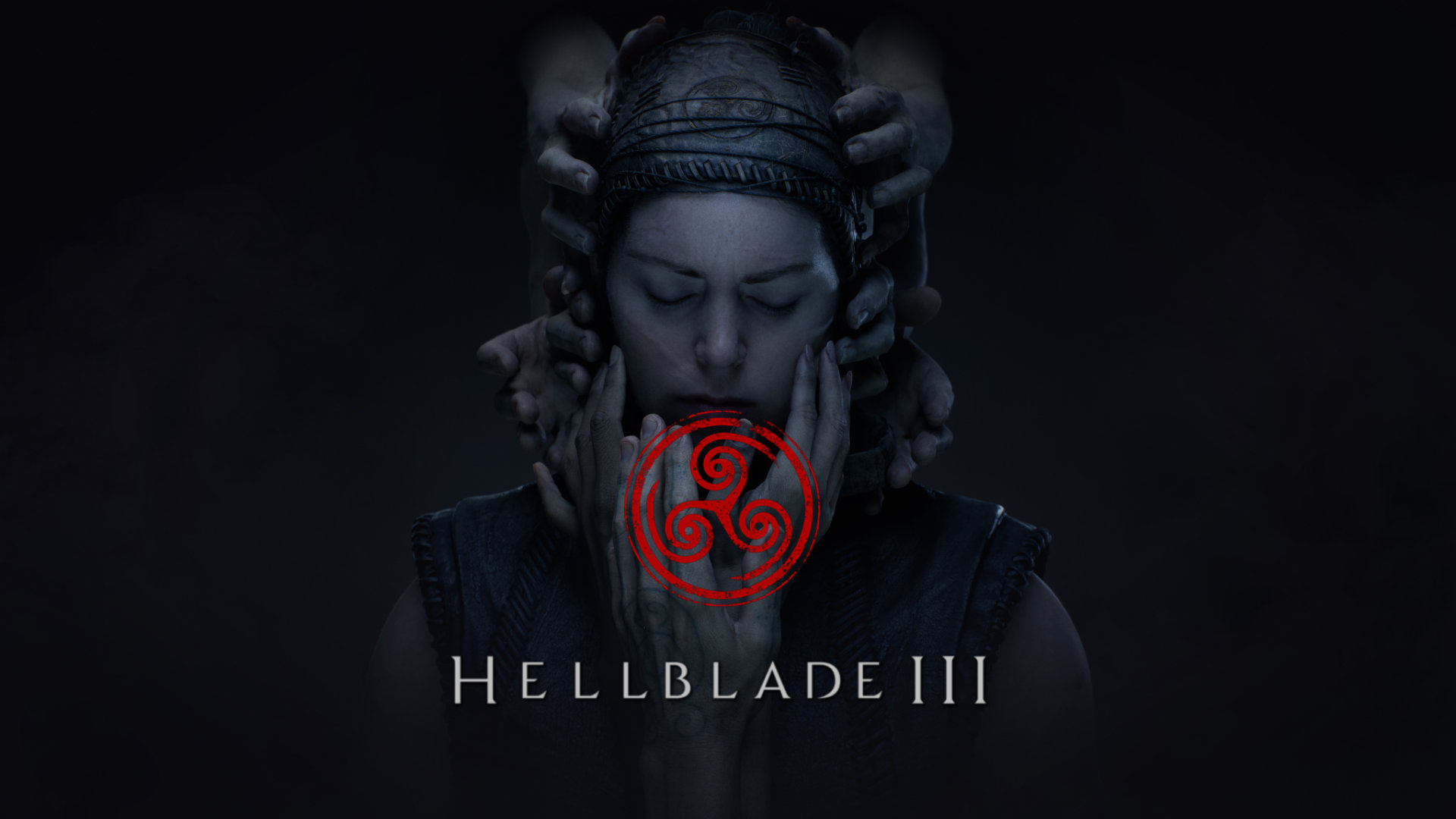
Hellblade: Senua’s Sacrifice released back in 2017 to a ton of praise owing to the game’s narrative, music, and transformative binaural audio design. After years of anticipation, its sequel – Senua’s Saga: Hellblade 2 launched to a more tepid reception, with a core complaint being the game’s relative lack of interactivity. It appears as though Ninja Theory are planning to right their wrongs, with a 3rd Hellblade game reportedly in development with an increased focus on gameplay.
As part of a recent episode of the Xbox Two podcast, known Microsoft leaker Jez Corden offered an update on Ninja Theory and their next project, stating:
“Ninja Theory, from what I understand, the next game is Hellblade 3, and it’s going to be a bit more interactive than Hellblade 1 and 2.”
Corden later clarified that the game in question may not be Hellblade 3 exactly, but it will be “in the Hellblade universe,” adding that “it does sound like they want to make it more of a game.”
Hellblade 1 was already a unique title which offered a memorable experience despite its relative lack of interactivity. That said, its sequel unfortunately doubled down on this aspect a bit too much, leading to it feeling like little more than a tech showpiece.
While there is no expectation for the next Hellblade to turn into a character-action title, having a bit more to do gameplay-wise would be welcome – as long as it doesn’t compromise on the game’s vision.
KitGuru says: What do you think of these early Hellblade 3 claims? What did you think of Senua’s Saga? Was it lacking in the gameplay department? Let us know your thoughts down below.
Another week, another NVIDIA industry rumor—and unfortunately, this one seems likely to be true, even if it may be worse for some end customers. If the reports are indeed true, NVIDIA will be focusing shipments of its GeForce RTX 5060 Ti and 5070 Ti GPUs to the 8GB models in order to maximize cards shipped during the ongoing RAM shortage.
This year’s Consumer Electronics Show (CES) in Las Vegas has officially ended, and with the HotHardware crew back home, it's time to look back on the trip and highlight some of our favorite, stand-out products. As is usually the case, CES 2026 was packed with an array of new technologies, from high-powered AI accelerators to low-power...
Talk about a monumental security lapse: American retail giant Target has found its proprietary source code exposed on the dark web, as current and former employees close to the matter confirm the authenticity of the nearly 900GB data leak that has the company (and not mention the cybersecurity world in general) on high alert.
The breach
NASA and the Department of Energy have officially embarked on an ambitious goal to plant a nuclear reactor on the Moon's surface by 2030, which when completed, will have enough output to power multiple lunar households for up to 10 years.
U.S. Secretary of Energy Chris Wright (left) and NASA Administrator Jared Isaacman (right) meet at
Recent auditing by the folks at market research firm Omdia indicates that the PC market rebounded last year and finished the last quarter of 2025 especially strong. A likely reason for the strong finish is a rush to get ahead of looming price increases caused an AI-driven shortage of memory chips. There's still time to get ahead, though, with
Meta and Ray-Ban owner EssilorLuxottica are discussing doubling or even tripling their smart glasses production capacity, Bloomberg reports.
Just under a year ago, when revealing that 2 million units of Ray-Ban Meta glasses had been sold so far, EssilorLuxottica told investors that it planned to increase annual production capacity to 10 million units by the end of 2026, citing the "great success" of the product.
Then, in its Q3 investor call in October, EssilorLuxottica said that its smart glasses business was doing "exceptionally well", to the point where it now accounted for more than a third of its revenue growth, telling investors that it was accelerating the timeline for the 10 million annual production capacity.
What Is EssilorLuxottica?
The French-Italian giant EssilorLuxottica is the largest eyewear company in the world by far. It owns iconic brands like Ray-Ban, Oakley, Oliver Peoples, and Persol, and has exclusive licenses with major fashion companies like Prada, Armani, Burberry, and Chanel. It also owns Sunglass Hut, and has more than 18,000 retail stores in total worldwide.
Meta has so far partnered with EssilorLuxottica for six smart glasses products:
Now, Bloomberg reports that Meta and EssilorLuxottica are discussing doubling this production target to 20 million annual units, with the possibility of tripling it to 30 million if future demand justifies it.
According to Bloomberg, Meta is hoping to build on its lead in the smart glasses market and expand its footprint before competition from Apple and Google arrives.
Google has repeatedly teased smart glasses with a HUD at events like TED and I/O, and announced last year that it's working with the eyewear companies Gentle Monster and Warby Parker on Gemini smart glasses, and will work with Kering Eyewear in the future. Multiple South Korean news outlets have reported that Samsung plans to launch a Meta Ray-Ban Display competitor this year, powered by Google software, a similar strategy to the Galaxy XR headset.
Meanwhile, in October Bloomberg reported that Apple moved staff off the cheaper and lighter Vision headset project to prioritize shipping smart glasses sooner. Apple's first glasses could be revealed as soon as this year ahead of a release in 2027, the report claimed.
Meta and EssilorLuxottica's reported discussions come as Meta laid off over 10% of Reality Labs, its smart glasses, VR, and "metaverse" division, including the entirety of three of its VR game studios. The company previously confirmed "shifting some of our investment from Metaverse toward AI glasses and Wearables", and reducing spending on VR content to increase investment in smart glasses production capacity seems to be this strategy in action.
 Connexion