It has been just two days since the live broadcast of the latest PCPer podcast and it seems Microsoft and Satya Nadella finally took our advice. We have been stressing the need…
Wenn Elon Musk eines zuverlässig beherrscht, dann ist es das Verschieben von Engpässen. Kaum wird ein Flaschenhals identifiziert, wird er nicht umgangen, sondern gleich in den Orbit verlegt. Im wörtlichen Sinne. Laut Musk wird das derzeitige Expansionstempo der KI-Infrastruktur unausweichlich dazu führen, dass Rechenzentren im Weltraum wirtschaftlich attraktiver werden als auf der Erde. Nicht aus […]
Qualcomm is once again facing a familiar challenge with its upcoming top-of-the-line Snapdragon 8 Elite Gen 6 platform. With each new generation, not only do performance expectations rise, but so do thermal design requirements. Rumors from the supply chain suggest that Qualcomm could focus more on advanced cooling concepts this year to prevent overheating problems […]
Intel has a structural problem, and Panther Lake in the handheld segment is just another symptom of it. Although Intel has officially confirmed that dedicated Panther Lake SoCs for gaming handhelds are coming, the now rumored postponement to the second quarter of 2026 fits conspicuously well into the familiar pattern. Announcement early, delivery later, details […]
Expectations for Nvidia’s next generation of gaming graphics cards have been high for a long time, but new evidence suggests a significantly longer wait. Internal plans and consistent reports from within the company suggest that the upcoming Geforce RTX 60 series, including a possible top-of-the-line RTX 6090 model, could be released in 2028 at the […]
Anthropic hat mit Claude Opus 4.6 eine neue Ausbaustufe seines leistungsstärksten KI-Modells vorgestellt und richtet den Fokus dabei klar auf professionelle Entwicklungs- und Analyseaufgaben. Im Zentrum stehen deutlich verbesserte Coding-Fähigkeiten, ein massiv erweitertes Kontextfenster sowie erstmals sogenannte Agent Teams, die komplexe Aufgaben parallel bearbeiten können. Damit positioniert Anthropic das Modell klar im Umfeld hochautomatisierter Softwareentwicklung […]
What previously felt like regional diversification is now clearly taking on aggressive traits. TSMC apparently plans to significantly upgrade its Japanese operations and also manufacture 3 nm chips in the region in the future. This is not a cosmetic upgrade, but a clear change in strategy. Until now, Japan was intended for more mature processes, […]
As expected, the first contact is with packaging that is more reminiscent of a small piece of furniture than a graphics card. The box stands there with the confident calm of a safe, subtly announcing that this is no middle-of-the-road product. At this point, at the latest, it becomes clear that the real challenge will […]
Valve says it needs to "revisit our exact shipping schedule and pricing" for Steam Frame and Steam Machine amid the global memory and storage shortage.
When announcing the headset and consolized PC back in November, Valve said they would ship in "early 2026". For pricing, it told UploadVR it was "aiming" to sell Steam Frame for less than the $1000 Index full-kit, and suggested that the Steam Machine would be competitive with building a PC with similar parts.
Now, in a blog post on Steam, Valve says that while it had originally planned to share prices and release dates by now, the "limited availability and growing prices" of memory and storage mean it "must revisit" its plan for both.
"When we announced these products in November, we planned on being able to share specific pricing and launch dates by now. But the memory and storage shortages you've likely heard about across the industry have rapidly increased since then. The limited availability and growing prices of these critical components mean we must revisit our exact shipping schedule and pricing (especially around Steam Machine and Steam Frame).
Our goal of shipping all three products in the first half of the year has not changed. But we have work to do to land on concrete pricing and launch dates that we can confidently announce, being mindful of how quickly the circumstances around both of those things can change. We will keep you updated as much as we can as we finalize those plans as soon as possible."
The company says its goal is still to ship in the first half of this year, but has "work to do" to "land on" concrete prices and launch dates.
"We will keep you updated as much as we can as we finalize those plans as soon as possible", Valve promises.
Snap spun its Specs AR glasses into its own subsidiary, and reconfirmed that it plans to launch the consumer product this year.
"Establishing Specs Inc. as a wholly-owned subsidiary provides greater operational focus and alignment, enables new partnerships and capital flexibility including the potential for minority investment, allows us to grow a distinct brand, and supports clearer valuation of the business as we work towards the public launch of Specs later this year", the company behind Snapchat says.
The new Specs Inc subsidiary is currently hiring for nearly 100 open roles globally, it says, in preparation for the launch.
What Are Snap Spectacles & Snap Specs?
The current Snap Spectacles are $99/month AR glasses for developers ($50/month if they're students), intended to let them develop apps for the Specs consumer product the company intends to ship this year.
Spectacles have a 46° diagonal field of view, angular resolution comparable to Apple Vision Pro, relatively limited computing power, and a built-in battery life of just 45 minutes. They're also the bulkiest AR device in "glasses" form factor we've seen yet, weighing 226 grams. That's almost 5 times as heavy as Ray-Ban Meta glasses, for an admittedly entirely unfair comparison.
But Snap CEO Evan Spiegel claims that the consumer Specs will have "a much smaller form factor, at a fraction of the weight, with a ton more capability", while running all the same apps developed so far.
As such, what's been more important to keep track of, to date, is Snap OS, not the developer kit hardware.
Snap OS is relatively unique. While on an underlying level it's Android-based, you can't install APKs on it, and thus developers can't run native code or use third-party engines like Unity. Instead, they build sandboxed "Lenses", the company's name for apps, using the Lens Studio software for Windows and macOS.
In Lens Studio, developers use JavaScript or TypeScript to interact with high-level APIs, while the operating system itself handles the low-level core tech like rendering and core interactions. This has many of the same advantages as the Shared Space of Apple's visionOS: near-instant app launches, interaction consistency, and easy implementation of shared multi-user experiences without friction. It even allows the Spectacles mobile app to be used as a spectator view for almost any Lens.
Snap OS doesn't support multitasking, but this is more likely a limitation of the current hardware than the operating system itself.
Since releasing Snap OS in the latest Spectacles kit in late 2024, Snap has repeatedly added new capabilities for developers building Lenses, and late last year launched Snap OS 2.0, adding and improving first-party apps like Browser, Gallery, and Spotlight to bring the AR platform closer to being ready for consumers.
On Google Pixel 10 devices, Android Quick Share functionality is compatible with Apple's range of AirDrop-enabled devices, including iPhones and Macs. Just months after Quick Share gained that ability, Google is set to spread Android Quick Share-to-AirDrop compatibility across other Android devices, no longer limiting the feature to Google
The Intel Arc A380 is a meager GPU by modern measures. It has just 8 Xe-cores, giving it a smaller GPU than the Core Ultra X9 388H's integrated part. It's based on the original Alchemist architecture, which is considerably less capable than the second-generation Battlemage designs that we're so fond of. And yet, with a little tweaking, this
Arc Raiders, one of the breakout hits of 2025, has managed to keep the momentum going with a steady stream of content drops and updates that have kept its player base engaged. However, the development team at Embark Studios stumbled with its Expeditions feature, which has drawn criticism from players. The developers hope to address these issues
Fractal Design just debuted a successor to its hit series of Fractal Design North cases, the North Series Momentum Edition. Fractal Design North Momentum PC cases offer a similar internal layout to the originals, but with overhauled cooling and aesthetics. The wooden slats up front are now composed blackened oak to blend better with the rest
It appears that both Halo and Gears of War could be returning earlier than expected. According to one proven insider, both Halo: Campaign Evolved and Gears of War: E-Day are targeting a summer 2026 release window.
Tom Warren of The Verge, a Microsoft reporter with proven sources within the company, Microsoft wants all of its games to release well ahead of Grand Theft Auto 6 in November. As a result, Fable will be targeting a September-October launch, while Halo: Campaign Evolved is targeting an earlier release over the summer. Gears of War E-Day is also expected to launch in this timeframe, assuming it does not get delayed to 2027.
We may also be finally due for a Starfield update soon. While the game's first expansion, Shattered Space, performed disappointingly, Bethesda has supposedly been working on a massive 2.0 update for the game, as well as a second expansion and a PS5 port.
The report also claims that a new version of Fallout 3 is now in development, with the goal of hitting a similar quality bar to last year's Elder Scrolls IV: Oblivion Remastered. It is unclear if Fallout 3 Remastered will use similar tech to the Oblivion remaster, which used all the same code from the original game, but used Unreal Engine 5 graphics layered on top, keeping the entire original game and its features in-tact.
KitGuru Says: If everything here is accurate, then Xbox is going to have a very busy time over the summer and autumn months. If any games need more time, they are more likely to be pushed into 2027, than released around the GTA 6 launch in November.
For years, it has been rumoured that a third Wolfenstein game would be coming from Machine Games. Ultimately, those plans were pushed back a bit due to Indiana Jones and the Great Circle, as Machine Games confirmed several months ago. Now though, it appears that the studio is ready to start talking about the next Wolfenstein game for real.
In an interview with GI.biz, Machine Games studio director, Jerk Gustafsson, said: “Our intention has always been to go back to Wolfenstein. We wanted to finish the trilogy. And when we do that, that is something that I don't want to comment on. It can be now, it can be later, but we're not done with it. That's what I can say.”
There is no word on when Wolfenstein 3 will surface but it appears that Machine Games is going to be returning to it soon to wrap up its trilogy. The comments come at an unusual time, as just a few weeks ago, multiple insider sources claimed that Wolfenstein 3 is indeed in development.
Wolfenstein: The New Order and Wolfenstein: The New Colossus were both incredibly well received, but both arrived during the last console generation. So far during the Xbox Series X / PS5 life cycle, Machine Games has only produced Indiana Jones and the Great Circle, which was a fantastic game in its own right.
Gustafsson expects Machine Games to release a new game “every four years”. Considering that Indiana Jones arrived in late 2024, that means we may not see Wolfenstein 3 for another couple of years.
KitGuru Says: Wolfenstein 3 has been rumoured for a long time. While not directly confirmed yet, it does sound like Machine Games is now finally working on it in earnest.
Build a Rocket Boy didn't have the best debut when MindsEye launched last year. The game launched to a flurry of negative reviews due to various technical issues. Shortly after the launch, one of the studio's CEOs alleged that the game had been subjected to a smear campaign online. Now, they are claiming to have ‘caught' those who sabotaged the project.
Insider Gaming managed to get a copy of an internal call at Build a Rocket Boy, in which it is claimed that co-CEO, Mark Gerhard, said that a “very big American company” had spent as much as €1 million to tarnish the game's reputation online. It is also alleged that a UK-based YouTuber & influencer management firm, Ritual Network, and several influencers were also part of the sabotage effort.
In a statement given to Insider Gaming, Ritual Network denied that it had anything to do with the allegations, adding that they are “not aware of any legitimate legal action” at this time.
The report says that those involved are soon to be served with lawsuits and that employees at the studio itself may have also been involved, leading to a rollout of new employee monitoring software across their PCs.
No direct evidence has been provided yet, but should lawsuits go ahead, then eventually some of the evidence will be made public. In the meantime, Build a Rocket Boy may make some of the details public via an upcoming Spy-themed mission within MindsEye.
MindsEye has had a number of updates since its launch to address technical issues with the game and will continue to be updated with new content over 2026. As of right now, the ‘recent reviews' for the game on Steam are positive, although the game's overall user score still sits at mixed.
KitGuru Says: Did you play MindsEye at all last year? What did you think of the game?
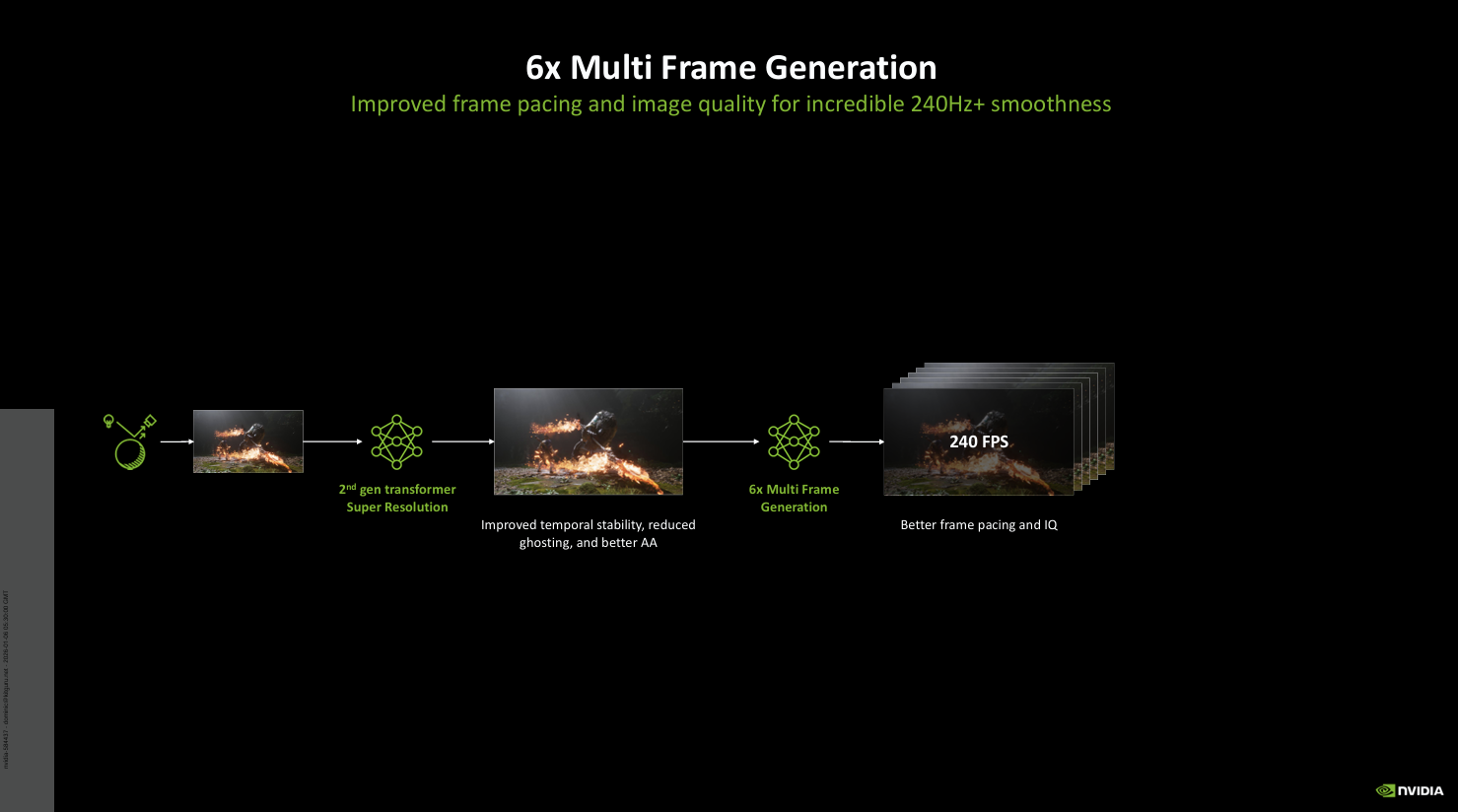
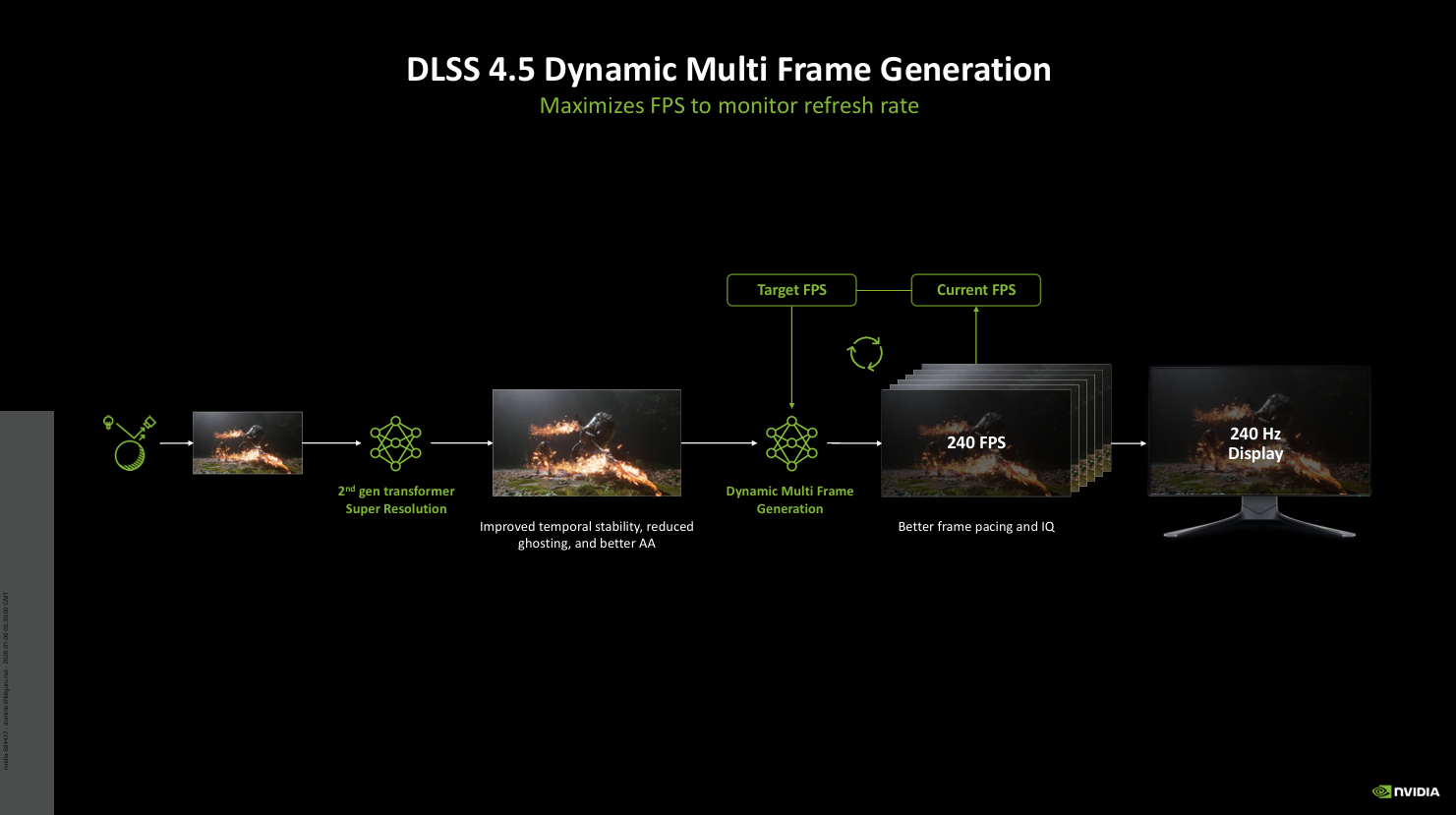
Nvidia announced at CES that it would upgrade its DLSS Multi Frame Generation with two new modes: 6x and Dynamic. The specific release dates for these modes weren't announced when they were revealed; only a vague “spring 2026” was mentioned. However, a new report points to an April 2026 launch.
According to a report from HardwareLuxx (via VideoCardz), both Dynamic Multi Frame Generation (MFG) and the Multi Frame Generation 6x mode are expected to be released publicly within the next two months. However, soon after the information started to spread, VideoCardz was contacted by Nvidia, which stated that the “spring” release remains. Given that April is part of spring, the release date shared by HardwareLuxx remains a possibility.
The Dynamic MFG system represents a shift in how Nvidia approaches frame pacing and overhead. Rather than applying a fixed multiplier, the technology dynamically scales the number of interpolated frames based on real-time scene complexity and current performance overhead. This means the system can scale down to 2x or 3x during combat scenes to preserve input latency, then ramp up to the full 6x multiplier during slower, more cinematic moments. The primary goal is to provide a more fluid experience on high-refresh-rate displays without forcing the GPU to work at maximum capacity when the scene doesn't demand it.
KitGuru says: There's some potential for increased latency when generating five frames for every one rendered, but the existence of this “Dynamic” mode suggests Nvidia is aware of the trade-offs. If the system can truly scale on the fly to match the “feel” of the gameplay, it could make those 500Hz esports monitors a lot easier to drive.
Fractal Design has unveiled the North Momentum Edition, a mid-cycle refresh of its widely acclaimed chassis. While the original North was praised for its aesthetics, there was room for improvement on the stock fans. The new Momentum Edition aims to address this directly by swapping out the standard Aspect 140 mm fans for the company's new Momentum 12 series.
The new fans are the key upgrade of the new Momentum Edition series. They feature a modernised impeller geometry, LCP blades, and fluid-dynamic bearings, which Fractal claims reduce noise by 4 dBA while lowering average GPU temperatures by roughly 2º Celsius.
Visually, the Momentum Edition cases adopt an all-black aesthetic. While the signature wood slats remain, they have been blackened to blend into the dark alloy chassis. The internal layout for the standard mid-tower remains largely unchanged, but the North Momentum XL has received some tweaks. Unlike the original XL, which comes in standard or RC (rear connector) versions, the Momentum Edition comes in a single version that falls between the two in terms of cable routing clearance, with 37 mm, while retaining the “back-connector” motherboard support from the RC variant.
Despite the internal and thermal upgrades, the front I/O remains the same, offering a single USB-C port alongside two USB-A ports. The standard North Momentum Edition is expected to retail for $179, while the larger XL model is positioned at $209.
KitGuru says: The original North was arguably the most influential case of the last few years. By integrating the new Momentum fans as standard, the Momentum Edition looks like the definitive version of an already iconic chassis.
Noctua has achieved a major logistical and environmental milestone, announcing that it has now shipped its 500,000th mounting upgrade kit to customers globally.
This long-standing programme, which first launched in 2006 alongside the introduction of AMD's AM2 socket, is claimed to be a cornerstone of the brand's “compatibility-by-design” philosophy. The initiative allows users to continue using their existing heatsinks, such as the NH-D15 or NH-U12P, across multiple generations of Intel and AMD platforms without needing to purchase a new cooling solution.
According to the Austrian cooling specialist, the primary goal of the service is to treat a CPU cooler as a long-term investment rather than a disposable component. This requires a significant engineering commitment to maintain modularity and standardised mechanical parameters, such as mounting hole spacing and Z-heights, across decades of hardware evolution. The current programme reportedly covers a vast range of modern and legacy sockets. This essentially means that a Noctua owner who bought a premium tower 15 or 20 years ago could still find themselves using the same piece of nickel-plated copper on a high-performance 2026 processor.
The upgrade kits are available free of charge on the official Noctua website, and the company even covers shipping costs from its facilities in Austria and Taiwan. Users must provide proof of purchase for both their cooler and their new motherboard or CPU. For those who might have lost their receipts over the last two decades, Noctua accepts a simple photo of the cooler next to a piece of paper with the user's name as valid verification. For those who require a faster turnaround, the kits are also available from retailers.
KitGuru says: Noctua's commitment to supporting hardware from 2005 is nothing short of exemplary. Reaching half a million kits shipped is a win for consumers' wallets and sustainability, preventing hundreds of thousands of perfectly functional heatsinks from ending up in landfills. It is a rare example of a company standing behind the “buy it for life” mantra, and it's a major reason the brand remains a fan favourite among enthusiasts.
Compared to the original Endgame Gear XM2w 4K, the V2 introduces several improvements. The sensor has been upgraded to a custom variant of PixArt's latest PAW3950, and instead of a TTC "Silver" encoder, the V2 now uses one from Kailh. The weight is 60 g, the Kailh GX main button switches still allow for incredibly low click latency, and 4000 Hz wireless polling continues to be present.
Apple's second-generation AirTag tracker has gone under the knife in multiple teardown videos, giving us a clear view of the redesigned internal structure compared to the first-generation tracker. In case you missed the launch announcement, Apple announced several key changes, including an expanded Bluetooth range, a louder built-in speaker,
Remember the famous meteorite NWA 7034, a.k.a Black Beauty found in Northwest Africa? Researchers using neutron scanning technology have discovered a hidden reservoir of ancient water locked inside the Martian rock and in higher concentration than expected.
The study, led by Estrid Buhl Naver and her team at the Technical University of
We're a little over a month into 2026 and one thing is already abundantly clear—it's going to be a tough year PC gaming upgrades. Hot on the heels of a rumored delay to Intel's not-yet-announced Core G3 and G3 Extreme Panther Lake CPUs for handhelds and Valve's Steam Machine potentially getting a price adjustment before pricing is even announced,
 Connexion