When it's not busy dissecting distant galaxies or creating dark matter maps, the James Webb Space Telescope is also making a name for itself closer to home. To wit, it has produced the first-ever three-dimensional images of upper atmosphere on Uranus, revealing a chaotic and shimmering world of infrared auroras.
By utilizing Webb’s Near-Infrared
For those looking to stay under $250 without sacrificing performance, the ASRock Z890 Steel Legend Wi-Fi is a solid choice. It handles Intel's top-tier CPUs and PCIe Gen 5 SSDs with ease. With a stylish white design and a good range of features, ASRock delivers a compelling option, even if it has some minor drawbacks.
Razer is back with another limited edition run of a popular peripheral for those of you who missed out on the Boomslang 20th Anniversary Edition that sold out on the first day. This time, it's focusing on keyboards with its upcoming Huntsman Signature Edition that is "precision-engineered" and "master-crafted" from CNC aluminum, and once again
California is moving to implement some of the nation’s strictest regulations on 3D printers through Assembly Bill 2047, a legislative effort designed to curb the production of untraceable ghost guns by requiring 3D printers sold in the state to feature Department of Justice-approved restrictive software. California isn't the only state petitioning
AMD can now officially lay claim to the world's fastest overclocked GPU frequency, a feat it achieved in collaboration with professional overclocker Splave on a modest Radeon RX 9060 XT. Using liquid nitrogen (LN2) to keep temps in check, Splave and AMD's own Bill Alverson pushed the card's GPU clock to 4.769GHz to snatch the crown from NVIDIA's
We haven't taken a look at a 3D printer in some time, which is why it's worth a peek at Creality's K2 Pro Combo kit. This generation of kit boasts 600mm/s print…
The musical rhythm climbing game is coming to Meta Quest Early Access on March 5th.
Developed by Zeitlos Interactive, Peak Rhythm is a VR climbing game that challenges players to climb in sync to an exciting soundtrack. Players grab handholds in time with the beat, which is visually denoted by "Timing Rings" which tighten around the various handholds.
Multiple types of grips add variety. Twist grips ask that you twist your wrist like a volume knob, and Double grips demand you grab hold with both hands. Grip and climb at the right moment and you're propelled ever higher; miss the beat and you fall. The higher you climb, the higher your name lands on the leaderboard.
0:00
/0:52
The game is launching in Early Access with original tracks spanning several genres, including Drum & Bass, Dubstep, House, and Disco, with tracks from FEISTLING, Killin' Void, Ion Diary, and funiel.
Also launching in Early Access is a fully functional Beatmap Editor, supporting custom maps and players' own music files. Multiplayer is planned as an Early Access update shortly after launch.
Peak Rhythm launches in Early Access on Quest on March 5, 2026 for $12.99.
Horizon+ crossed over 1 million "active subscribers" in 2025, according to Meta.
If you're unaware, Horizon+ is Meta's $8/month game subscription service for Quest headset owners. Subscribers get access to a Games Catalog of around 50 major VR titles, as well as an Indie Catalog of around 50 smaller titles, for a total of around 100 games.
The Games Catalog has grown to include some of the biggest and best VR games of all time, including Asgard’s Wrath 2, Assassin’s Creed Nexus VR, Cubism, Demeo, Dungeons of Eternity, Eleven Table Tennis, Ghosts of Tabor, Into the Radius, Job Simulator, Kingspray Graffiti, Les Mills Bodycombat, Maestro, Moss, Pistol Whip, Puzzling Places, Real VR Fishing, Red Matter 1 & 2, Synth Riders, The Climb 2, and The Thrill of the Fight.
Subscribers are also offered two specific games each month, pre-selected by Meta. Redeeming them lets you play them while you remain subscribed, or when you resubscribe in future.
One million subscribers would represent just under $100 million revenue per year, assuming they stick around that long.
All new Quest 3 and Quest 3S purchases come with 3 months of Horizon+. While these new users presumably aren't included in Meta's 1 million figure, we've reached out to the company to explicitly ask.
On a purely financial basis, assuming you're not fundamentally against the idea of a subscription, Horizon+ offers excellent value, and so reaching 1 million subscribers isn't particularly surprising.
Back in October, Meta opened enrollment in the Horizon+ Games Catalog and Indie Catalog to any interested developer, providing they meet the strict requirements.
Horizon+ represents a gradual but significant shift in the way many VR headset owners access premium titles since the launch of the original Oculus Quest almost seven years ago. It could have significant upsides for developers enrolled in the program, while bringing reduced spending for those not.
Apple too takes a similar approach on Vision Pro with the $7/month Apple Arcade subscription, but goes further, not offering the ability to outright buy many of the platform's top games.
Hidden IO's latest update to ZIX upgrades the Unity engine to push the game forward while its new free-to-play spinoff aims to grow its player base.
Neon-themed co-op roguelite ZIX was hitting performance ceilings, according to Hidden IO, limiting its abilities to increase enemy counts and the overall pace of the game. The new Foundation update upgrades the Unity engine, bringing "meaningfully better" performance and enabling higher enemy counts and more intense encounters on each run.
In the dev post, Hidden IO also confirmed it is working on Gogo Dojo, a new free-to-play title designed to showcase the best of ZIX's gameplay style in an easier, more accessible setting. Pre-alpha playtesting for Gogo Dojo is said to start 'soon' in Hidden IO's Discord.
Explaining why it is developing a free game, Hidden IO stated "ZIX lives or dies by how many people play it. We can’t sustain development without players, and the current VR landscape is tough. Many studios are struggling, and we’re not immune to that reality."
0:00
/1:23
ZIX VR Game Trailer
The Foundation update is said to set the stage to expand ZIX in the future, including a revamped progression system and expanded build variety.
ZIX is available now in Early Access on Quest 3 and Steam for $19.99.
Slay the Spire is a highly addictive yet rather hardcore deck-building rogue-like. Released back in 2019, the game helped usher in the rise of unique genre-lending rouge-likes while still remaining relevant and popular all these years later. Following the announcement of its sequel back in 2024, Slay the Spire 2 is officially set to launch into Early Access next month.
Releasing an ‘Early Access Trailer’ the team at Mega Crit officially confirmed that Slay the Spire 2 will launch in Early Access on Steam on the 5th of March 2026 – less than two weeks from now.
Featuring “new characters, enemies, environments & more” Slay the Spire 2 adheres quite closely to the first game while still evolving on the formula with the addition of up to 4-player co-op (adding multiplayer specific cards, team synergies and more.
Alongside the release date, Mega Crit released an FAQ, claiming that Slay the Spire 2 will remain in Early Access “until the game feels great” – though they did then offer a bit more of a concrete timeline, suggesting that it could take around 1-2 years (based on the first game’s release schedule at least).
While no price has been provided yet, the team did also confirm that as with many Early Access releases, Slay the Spire 2 will receive a price bump following its 1.0 launch (though as stated above, it likely won’t be for quite some time.
Regardless, Slay the Spire was already an excellent game which felt complete in what it was trying to do. As such, it will be extra interesting to see all the various changes/additions coming with the sequel in order to separate the experience from its predecessor.
KitGuru says: Are you excited for Slay the Spire 2? Will you pick it up day-one, or wait until it leaves Early Access? Let us know down below.
Each month, Sony brings a number of games to its PlayStation Plus Extra / Premium subscription service. Unfortunately, at the same time the console maker removes titles from PS Plus on a monthly cadence. With February’s line-up now available to play, Sony has updated its list of games which are set to depart soon.
In going to the Last Chance to Play section on the PS5’s PlayStation Plus tab, users can find a list of 6 titles set to be removed from the service in March (likely mid-month):
Mobile Suit Gundam: Battle Operation Code Fairy
Circus Electrique
Teenage Mutant Ninja Turtles: Shredder's Revenge
Redout 2
Paradise Killer
Cris Tales
While far from the most disappointing of months, the departing titles include a number of fun and enjoyable indies worth checking out before they are removed.
Paradise Killer is a unique first-person exploration-focused open world detective game in which you must try and solve a murder. With a cast of surreal characters and the ability to accuse anyone (though you will have to prove it in court), Paradise Killer is certainly worth trying out.
Redout 2 meanwhile is a fast-paced arcadey racer in the vein of PlayStation’s Wipeout franchise. Described as “The fastest racing game in the universe” Redout 2 blends vibrant visuals, pretty post-effects and a bumping soundtrack to ensure a constant sense of speed.
TMNT: Shredder’s Revenge is a throwback beat ‘em up inspired by the old school TMNT arcade games, albeit with plenty of modern quality-of-life improvements and gameplay refinements. Played best with a bunch of friends, you might want to give Shredder’s Revenge a run or two before it is removed.
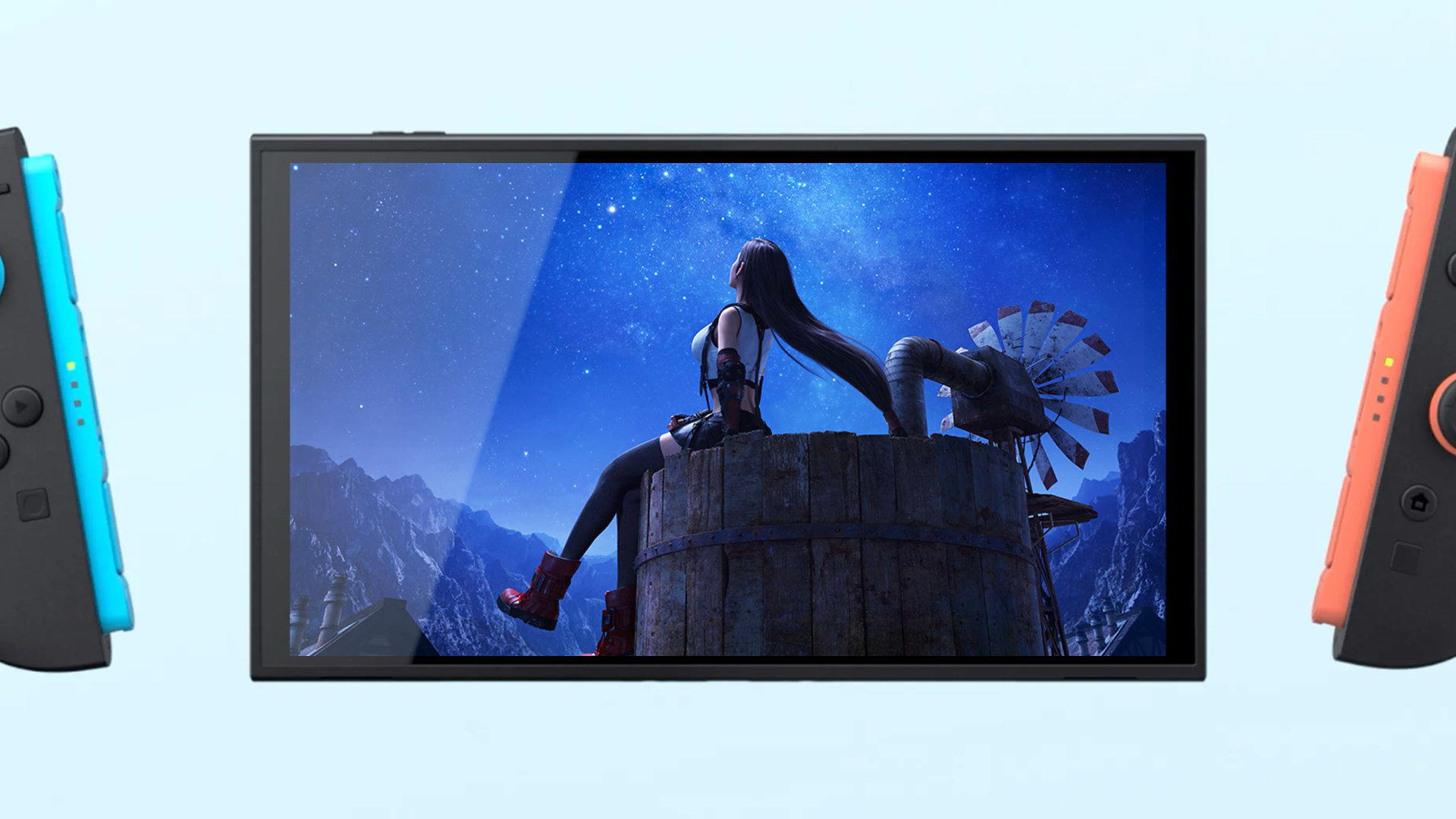
One of the most contentious aspects of the Nintendo Switch 2 is its introduction of Game-Key Cards. Serving somewhat as a bridge between physical and digital media, for many it winds up being the worst of both worlds. That said, some developers have expressed praise towards this latest ‘innovation’, most recently claiming that Final Fantasy VII Remake’s Switch 2 port was only possible due to Game-Key Cards.
Taking part in an interview conducted by the publication Automaton Media, Naoki Hamaguchi – the director of the Final Fantasy VII trilogy – was asked about the team’s decision to go with Game-Key Cards as opposed to a standard cartridge release for the Switch 2 port. According to Hamaguchi:
“There’s simply no way around key cards in certain respects. If you compare loading directly from a game cartridge (containing all game data) to loading from the Nintendo Switch 2’s internal storage, the load speed difference is roughly double.”
The director continued, “Some have expressed concern that multiplatform development may impose constraints not only on graphics, but even on game design itself. However, this is precisely why we didn’t choose a cartridge.”
The full statement can be found HERE, but Hamaguchi made sure to emphasise the reasons behind this decision, adding that “in the past, when faced with practical issues related to load speed and storage capacity we couldn’t resolve, we had to decide not to release on Nintendo systems. However, Nintendo Switch 2’s performance is impressive, and with a key card format like FFVII Remake, releasing the games became possible. I believe the only thing I can do is continue to sincerely communicate that fact to users.”
While there is no denying that Game-Key Cards do have various faults (partly due to Nintendo’s lack of offering many alternatives), it appears as though in this case Square Enix feels truly justified in their decision. Of course, not all games are made the same, and so it is good to continue to question devs’ decisions on such matters.
KitGuru says: What do you think of Game-Key Cards? Has Square Enix justified its use? Let us know your thoughts down below.
The Top.E R1 aims to bring about nothing less than a paradigm shift. Instead of stubbornly building up the component layer by layer along a fixed Z-axis, this printer brings movement into play. Literally. The printing plate can not only be adjusted in height, but also tilted by up to 30 degrees. This is not […]
The Top.E R1 aims to bring about nothing less than a paradigm shift. Instead of stubbornly building up the component layer by layer along a fixed Z-axis, this printer brings movement into play. Literally. The printing plate can not only be adjusted in height, but also tilted by up to 30 degrees. This is not […]
The ever-increasing installation sizes of modern games pose challenges for both players and platform operators. Blockbuster titles have long exceeded the 100 gigabyte mark, major updates consume additional storage capacity, and downloads quickly become a test of patience, especially with slower internet connections. A recently published patent from Sony Interactive Entertainment suggests that the company […]
The global market for video game content reached a new revenue level in 2025. According to current industry data, global content revenues rose to around $195.6 billion, representing growth of just over five percent compared to the previous year. This continues the industry’s long-term upward trend, even though momentum has noticeably normalized compared to the […]
Microsoft has disclosed a security vulnerability in Windows Admin Center that could allow attackers to escalate their privileges within affected environments. The vulnerability is listed under the identifier CVE-2026-26119 and affects the authentication mechanisms of the web-based management interface. According to the manufacturer, this is a case of insufficient authentication, which could allow attackers to […]
NVIDIA has sold its remaining ARM shares, worth around $140 million. This formally ends a chapter that began in 2020 with the ambitious, ultimately failed attempt to acquire Arm Holdings. Strategically, however, this move is not a retreat from the CPU world, but rather a signal: NVIDIA wants to remain flexible as the balance of […]
What has been considered a systemic weakness of 3D printing for decades is being tackled head-on here: time. Traditional additive processes build components layer by layer. This is precise, but slow. A research team at Tsinghua University now claims to have eliminated this bottleneck, at least on a millimeter scale. The process is called Digital […]
Introduction & Unboxing With the ROG Falchion Ace HFX Zywoo Edition, ASUS is launching a limited special edition of its compact esports keyboard, which is uncompromisingly designed for speed and precision. The 65 percent layout is specifically aimed at ambitious gamers who expect maximum performance with minimum space requirements. At its heart are analog Hall-Effect […]
Fitness watches and smartwatches are considered practical everyday aids. They count steps, measure your heart rate, and remind you to move. But behind these seemingly harmless functions lies a highly complex data collection infrastructure that can paint a very detailed picture of a person. The modern smartwatch is no longer just a fitness gadget, but […]
Meta published a blog post for developers wherein it lays out its new strategy for the Quest ecosystem and Horizon Worlds, taking the two in separate directions.
Titled 'Our Renewed Focus in 2026' and written by the VP of Content at Meta Reality Labs, Samantha Ryan, much of the post repeats what CTO Andrew Bosworth has already said in a series of public interviews and Instagram "ask me anything" sessions in recent weeks.
The gist of Meta's new VR and metaverse strategy, according to its executives, is that Horizon Worlds will become "almost exclusively mobile", and the platform will no longer be pushed on Quest owners. Meanwhile, on the VR side, Meta will focus on funding and supporting the third-party developer ecosystem instead of putting out its own blockbuster VR games to compete with them.
Meta is removing individual Horizon Worlds destinations from the in-VR store on Quest, Ryan writes, and "separating worlds from the Store" in the smartphone app.
"We heard your feedback loud and clear, and after a year of collecting data and running experiments, we agree. We’re removing individual worlds from our store shelves in VR, and we’re separating worlds from the Store in our mobile app. This change should result in more impressions for apps on the store."
Last month, Meta also announced that Quest's new 'Navigator' UI will soon become the default and the Horizon Feed will be removed, meaning the headset will boot to a grid of your installed apps. Some Quest owners on the Public Test Channel (PTC) have also received a refreshed Navigator that lacks the 'Worlds' button.
The post also seems to take aim at the gloom and doom discourse around the future of the Quest platform that followed Meta's shutdown of three of its acquired VR game studios, significant layoffs at a fourth, cancelation of the Batman: Arkham Shadow sequel, and deprecation of Horizon Workrooms and Quest headsets for business offering.
As well as noting that Meta has "a robust roadmap of future VR headsets", echoing comments from the CFO and CTO, Ryan claims that VR "is still growing", and that Quest had "a tremendous holiday season that was on par with our 2024 results".
"Total payment volume on the platform remained similar year-over-year in 2025", Ryan writes, also noting that Quest headset sales remain "far ahead of all competitors" while Meta remains "the single biggest investor in the VR industry".
In what seems to be an attempt to reassure developers, Ryan claims Meta is "focused on supporting the third-party developer community" through "strategic partnerships and targeted investments".
Last year multiple new VR games earned millions of dollars of revenue on the platform, Ryan claims, including UG, Hard Bullet and The Thrill of the Fight 2.
"While we’re proud of the world-class work from Oculus Studios over the years, among 1P and 3P apps, 86% of the effective time people spend in their VR headsets is with third-party apps", Ryan notes.
Ryan also claims that in 2025 Meta invested "nearly $150 million in VR developer programs".
Of course, words are cheap, and since acquiring Oculus almost twelve years ago, Meta's VR strategy has constantly shifted under developers' feet. Many will be weary of this instability, and UploadVR will keep a close eye on the Quest platform in the wake of Meta's latest change of direction.
ByteDance's Pico will detail its competitor to visionOS, which will include a shared-space for 2D and spatial apps to run together, set to debut in its next headset.
We first heard that the owner of TikTok's VR platform Pico was working on a high-end headset over two years ago, when The Information reported that Pico 5 had been canceled in favor of a short-term Pico 4 refresh and a longer-term Apple Vision Pro competitor called Project Swan.
Now, Pico has listed a GDC 2026 talk titled 'Bring Your Apps and Games to General Spatial Computing with Project Swan', set to take place on March 12.
The listing says the talk will guide developers through building or porting games to its upcoming "flagship device for general spatial computing", running "Pico OS 6".
Notably, the listing mentions that Pico OS 6 supports "a new paradigm for spatial experiences in which games and apps coexist, allowing a primary experience to run alongside companion applications in a shared environment". Currently, only Apple Vision Pro's visionOS supports this concept of an XR shared space, with both 2D windows and 3D volumes, while Meta's Horizon OS and Google's Android XR are limited to running one spatial experience at a time.
While the listing describes Pico OS 6, it doesn't say anything about the upcoming headset itself, other than calling it a "flagship device". What exactly will it be?
Back in July, The Information reported that Pico was working on an ultralight headset resembling a pair of goggles, with an onboard dedicated image coprocessor and a tethered compute puck, similar to Meta's next headset.
Then, in November, a Chinese news outlet reported that ByteDance's Vice President of Technology said that Pico's 2026 headset will have 4K micro-OLED displays and a dedicated R1-style passthrough chip.
UploadVR's Mike Johnson and Kyle Riesenbeck will be in attendance at GDC 2026, and we've reached out to ByteDance in hopes of going hands-on with Project Swan. We'll let you know if we get a response.
The Exorcist: Legion VR has been forced to rename to Exorcism of the Legion (Last Rites).
Fun Train announced that the license holders for The Exorcist IP chose not to renew the license for the well-regarded horror title. As a result, the game will continue to be available under its new name, Exorcism of the Legion (Last Rites), a name Fun Train fully owns.
This change will take effect when players update the game on their platform of choice. The Steam, Quest, and PlayStation VR2 store listings already show the new name, though the original PlayStation VR version is still listed for sale under the original name, both in a complete set and as individual chapters.
Fun Train's Tarzan VR was delisted from all VR storefronts at the end of January after Fun Train opted out of renewing the license. Additionally, The Twilight Zone VR has also been renamed 'Tales From the Zone' on the Quest and PS VR2 stores.
A sequel, The Exorcist: Legion SIN (Safety In Numbers), with co-op gameplay was announced in late 2021. After an initial delay into 2023, Fun Train announced the game was shelved indefinitely due to the changing VR gaming landscape.
Exorcism of the Legion (Last Rites) is available on Meta Quest and Steam for $24.99, and on PS VR2 and PS VR1, the latter under its original name, for $29.99.
 Connexion
 When it's not busy dissecting distant galaxies or creating dark matter maps, the James Webb Space Telescope is also making a name for itself closer to home. To wit, it has produced the first-ever three-dimensional images of upper atmosphere on Uranus, revealing a chaotic and shimmering world of infrared auroras.
By utilizing Webb’s Near-Infrared
When it's not busy dissecting distant galaxies or creating dark matter maps, the James Webb Space Telescope is also making a name for itself closer to home. To wit, it has produced the first-ever three-dimensional images of upper atmosphere on Uranus, revealing a chaotic and shimmering world of infrared auroras.
By utilizing Webb’s Near-Infrared