At Mobile World Congress 2026, Qualcomm is eagerly showing off its next-gen of "truly personal, always-on, intelligent wearable computing devices" powered by its Snapdragon Wear Elite platform, which includes support for Wi-Fi 8 and a built-in NPU. As Qualcomm notes, Snapdragon Wear Elite is the first NPU-powered wearable platform in the industry,
AMD told us at CES 2026 that it would be bringing its Ryzen AI 400 processors to desktop at some point and the company announced those chips today at Mobile World Congress. Yes, indeed; AMD's bringing its latest mobile silicon to the desktop market, which gets integrated graphics gaming goofballs like me excited. Unfortunately, these new desktop
We’re in the midst of a classic computing revival, with numerous recreations of older hardware, such as THEC64 Mini and the Amiga A1200. This retro goodness isn’t limited to just hardware, though. Enthusiasts are contributing with interesting software projects like The Amiga Workbench Simulator (TAWS) as well.
TAWS has been a labor of love
Arizona Sunshine Remake and The Pirate: Republic of Nassau are the Horizon+ monthly games on Quest for March.
March 2026 brings several new games to the Horizon+ Monthly Games Catalog, including the zombie slaughter-fest Arizona Sunshine Remake, and the swashbuckling adventure The Pirate: Republic of Nassau.
Beat Saber, GOLF+, Spatial Ops, and The 7th Guest VR also make their way to the catalog. Previously redeemed games will remain in your library while subscribed to the service.
Here's what you need to know about this March's offerings.
Arizona Sunshine Remake
0:00
/1:37
Arizona Sunshine Remake is the definitive updated refresh of 2016's Arizona Sunshine, an award-winning VR shooter that debuted even before standalone VR. Arizona Sunshine Remake brings updated high-res textures, co-op multiplayer, delightfully gruesome gore, and includes all of the original game's DLC and updates in one package. Our review said it best. "It’s hard not to recommend grabbing Arizona Sunshine Remake."
The Pirate: Republic of Nassau
0:00
/0:46
In The Pirate: Republic of Nassau, you'll command pirate ships and experience the early 18th century life as a true sea captain. Beginning in Nassau, the heart of pirate culture, you'll engage in naval battles, recruit legendary pirates, explore and expand Nassau, and build your privateering fleet. Our review called it "a worthwhile golden age of piracy fantasy."
Horizon+ continues offering a Games Catalog of Quest titles that any subscriber can access. Meta can add new games to and remove games from the catalog at any time. Here is the current Horizon+ Games Catalog in the US:
Angry Birds VR: Isle of Pigs
Asgard’s Wrath 2
Assassin’s Creed Nexus VR
Beat Saber
Blacktop Hoops
Cubism
Deisim
Demeo
Demeo Battles
Dungeons of Eternity
Final Fury
Fruit Ninja 2
Ghosts of Tabor
GOLF+
Green Hell VR
Grimlord
Human Fall Flat VR
I Expect You To Die 3
iB Cricket
In Death: Unchained
Into Black
Into the Radius
Job Simulator
Kingspray Graffiti
Les Mills Bodycombat: Fitness Workouts
Maestro
Medieval Dynasty New Settlement
Moss
Onward
Pets & Stuff
Pistol Whip
Premium Bowling
Project Demigod
Puzzling Places
Racket Club
Real VR Fishing
Red Matter
Red Matter 2
Spatial Ops
Starship Home
Synth Riders
The 7th Guest VR
The Climb 2
The Light Brigade
The Thrill of the Fight
Thief Simulator VR: Greenview Street
Titans Clinic
Townsmen VR
Walkabout Mini Golf
War of the Worlds
Zero Caliber: Reloaded
Horizon+ Indie Catalog Games
Meta continues to add new games to the separate Indie Games Catalog, and you can see the entire list here.
Alvo
Apex Construct
Arcade Paradise VR
Battlenauts
Bocce Time!
Cactus Cowboy - Desert Warfare
Chess Club
Coffee Quest VR
Crumbling
Cybrix
Darksword: Battle Eternity
DIG VR
Disc Frenzy
Discovery 2
Elysium Trials
Espire 1: VR Operative
Final Overs - VR Cricket
Galaxy Kart
Ghost Signal: A Stellaris Game
Gravity League: Galactic Football
Hide The Corpse
I Am Hamster - Simulator
Innkeeper VR
Ironlights
IRON GUARD
Killer Frequency
LAX VR
Laser Thief
Make It Stable - Kids & Family Fun!
Motion Soccer PRO
Mythic Realms
Noun Town Language Learning
Operation Serpens
Retropolis 2: Never Say Goodbye
Rogue Ascent VR
Rogue Piñatas: VRmageddon
RUNNER
Shooty Fruity
Slot Car VR
Space Elevator
Squingle
Stupid Cars
Sushi Ben
Tactica
Taiko Frenzy
The Curious Tale of the Stolen Pets
The Pirate Queen with Lucy Liu
The Secret of Retropolis
The Wizards
Tiny Archers
Towers and Powers
ULTIMATE SWING GOLF by Clap Hanz
Underworld Overseer
Vibe Punch
We Are One
Windlands 2
Meta Horizon+ is a subscription service that gives players access to a monthly selection of games for $7.99 USD per month, or $59.99 USD a year. New users can give Meta Horizon+ a try for a month.
Raceclub is a made-for-VR love letter to formula racing that has you literally chasing ghosts in a promising, addictive work-in-progress.
I sat down with Raceclub, which just released on Meta Quest in Early Access, intending to only play about two hours. This is first impressions, not a full blown review, so I just need to get a feel for the game. Two dead extra batteries and a fully drained Quest 3 later, Raceclub had pulled off the VR trick of making me forget I was sitting in a chair awkwardly holding my controllers in mid air.
Raceclub main menu captured by UploadVR
The Facts
What is it?: A formula-style racing game Platforms: Meta Quest (played on Meta Quest 3) Release Date: February 26, 2026 (Early Access) Developer and Publisher: Mixer Lab Games Price: $ 12.99
Raceclub offers two types of vehicles: Formula V12 is a more traditional F1 style car and Formula Electric is inspired by Formula E with an electric engine. Past that, cars can be customized with multiple color options and decals and racing has multiple viewing angles. First person views included a traditional cockpit look, the 'snorkel' position just behind the driver, the nose of the car, and one seemingly on the track itself under the car. For those prone to motion sickness, there is a third person view behind the car.
There are two modes available to play. In the time attack mode, there are three ghost cars on the track: the car one space ahead on the global leaderboards, a replay of your personal best lap (after you complete one lap), and a replay of the best lap on the top of the leaderboard. I spent over two hours just in this mode, trying to shave milliseconds off my time to improve.
0:00
/0:22
The other mode is a 1v1 'duel' vs an AI driver. If the AI's lap time is beaten, a new, faster opponent appears on the next lap, consistently ramping the challenge up as your skills improve. A third, eight-car race mode against AI, is currently unavailable.
One important note is Raceclub does not have vehicle collisions, a (missing) feature that may put some players off. It was odd to phase right through a translucent car instead of crashing, but I quickly stopped caring. I just needed a new personal best.
Two views of the electric car in Raceclub captured by UploadVR
One feature I wrote off as immersion breaking when I first saw it, but then realized its purpose is the 'line' visualization. It is a visual marker that runs through the entire track of the perfect racing line to take. Trying to keep my car on that line was part of what kept me playing. Every time I messed up and got off that line, I ran another lap to try again. It is a simple, but remarkably effective mechanic.
This is still an Early Access game though, meaning there is room to grow. Half of the tracks are listed as coming soon along with the eight-car race mode. Visually, the game is decent. Admittedly, there is no time to stop and admire the surroundings when chasing ghosts, but while on straightaways I had a second or two to look around and everything looked fine, but nothing stood out. The most glaring feature missing though, is multiplayer.
Comfort
Raceclub is a high speed racing game with a high sensation of simulated speed. For newer VR users, the third person view, above and behind the car is highly recommended.
There have been a lot of racing games on Quest, from kart racers like Dash Dash World and Galaxy Kart to more serious titles like EXOcars, Downtown Club, and Grid Legends. I've played them all, but nothing has quite pulled me in like Raceclub did. Without the horsepower to run the likes of Gran Turismo 7, Assetto Corsa, or EA's F1 series, this is already a top notch effort on Meta Quest with room to grow.
Raceclub is available now in Early Access on Meta Quest for $12.99.
If the ASUS ROG Crosshair X870E Glacial is a little out of your price range but you still want an ultra high-end motherboard for your AMD CPU. The Crosshair X870E Dark Hero is awash with cutting edge features and a sprinkling of future-proofing, and could be just what you're looking for.
We've believed with confidence for a while now that Intel was bringing out its BMG-G31 "Big Battlemage" GPU as the Arc Pro B70 first, foremost, and possibly exclusively. Now we have explicit proof straight from Intel, in the form of the patch notes for the company's LLM-Scaler-vLLM, which is a containerized, Intel-optimized distribution of
ByteDance's Pico announced the key display and compute specs of its "Project Swan" headset, coming later this year, and detailed the revamped XR operating system it will run.
Project Swan Headset
After years of rumors, ByteDance first officially teased a high-end Pico headset back in November, when its VP of Technology said during a talk in China that it would arrive in 2026 with micro-OLED panels with 4000 pixels per inch (PPI) and a dual-chip architecture with a self-developed coprocessor for computer vision and image processing.
Now, Pico has officially announced these details to the world, and also says that the main processor will have double the CPU and GPU performance of the Snapdragon XR2 Gen 2 in today's Pico 4 Ultra and Meta Quest 3 headsets.
0:00
/0:20
Pico's graphic depicting the "new generation" micro-OLED displays.
Pico says the "new generation" 4000 PPI micro-OLED panels will deliver an average angular resolution of 40 pixels per degree (PPD) and peak of 45 PPD, greater than that of Apple Vision Pro and good enough for text on virtual monitors. That strongly suggests 4K per-eye resolution, though this will depend on the field of view.
Meanwhile, the custom chip that powers computer vision and image processing will deliver "approximately 12 milliseconds of latency", the company says, the same figure Apple gives for the R1 chip in Vision Pro headsets.
Other than these display and compute specs, and confirming that it will feature hand and eye tracking, Pico isn't yet revealing specific details about Project Swan, including who is providing the powerful new primary chipset. It's possible it could be a Snapdragon XR2 Gen 3 from Qualcomm, but there's no direct indication of this.
Pico's graphic depicts the two chips beside each other.
Last year, The Information reported that Pico was working on an ultralight headset a fraction of the weight of typical VR headsets, achieved via the use of a tethered compute puck. But the company isn't yet confirming the form factor, and a graphic during the announcement depicted the primary and secondary chipsets positioned alongside each other, not one separated into a puck. It's possible that report referred to a different in-development Pico headset.
Pico OS 6 & Pico Spatial Engine
While Project Swan is what will draw headlines, Pico's main focus with today's announcement is actually Pico OS 6, the revamped version of its XR operating system that the new headset will run.
We first learned of Pico OS 6 and some of its standout features last month via the listing for a talk the company is set to give next week at GDC 2026. The listing referred to Pico OS 6 supporting "a new paradigm for spatial experiences in which games and apps coexist, allowing a primary experience to run alongside companion applications in a shared environment", and today the company has explained what that means.
0:00
/0:20
Pico OS 6
Like Apple's visionOS, Pico OS 6 features an advanced OS-level compositor with a unified rendering architecture that enables both 2D and 3D apps to run alongside each other, with either a virtual environment or physical reality as the background. The operating system handles rendering and interaction, enabling a cohesive experience where all system-level features are supported and consistent. That includes environmental lighting, dynamic occlusion, spatial audio, physics with real-world surface collisions, and scene understanding.
The company calls this system Pico Spatial Engine, and says it has spent the past two years building it.
This is in stark contrast to Meta's Horizon OS and Google's Android XR, which only support running a single 3D app at a time.
The general architecture of Pico Spatial Engine.
Pico OS 6 features a visionOS-like design language that the company calls Cloud Crystal, and developers will be able to use the Pico Spatial UI system to build interfaces that feel consistent with the OS and adapt to real-world lighting, leveraging Pico Spatial Engine.
0:00
/0:20
A mixed reality game running on Pico OS 6 alongside a 2D app. Note that the 2D app (correctly) displays behind the game's menu panel.
Developers can build apps using Pico Spatial SDK, with support for Android Studio and Kotlin, or continue to use Unreal and Unity, with Pico Spatial Support for both engines providing the key features of the Pico Spatial Engine.
Pico says the OS continues to fully support OpenXR, and that all apps that run on Pico 4 Ultra today will be able to run on Project Swan.
The company also introduced an open-source WebXR framework called WebSpatial, which it calls an "open, minimal extension to HTML, CSS, and JS" that lets web developers easily build spatial experiences.
Global Early Access Program
Pico has opened applications for closed beta access to Pico OS 6 and the Project Swan headset.
The company says it will choose "a select few with deep expertise across XR platforms" to join the program, and wants "rigorous feedback" on the hardware and software before a wider release.
Holy Houdini, if the latest market projections from analyst firm Gartner prove correct, we're only two years away from sub-$500 PCs vanishing from the market entirely. The reason, as you may have already surmised, is a continued strain on memory and storage that will drive up prices even further, which in turn will send PC worldwide PC shipments
Tonight, as well as into early tomorrow morning, a total lunar eclipse will sweep across the globe, plunging the full Moon into the Earth’s shadow for nearly an hour. Visible to over 3 billion people across the Americas, East Asia, and Oceania, this special event won't return for another few years, so be sure to watch it if you can.
For
As expected, Apple has gone and refreshed both its iPhone and iPad Air lineup with new models, though the surprise is that it did not wait until its Apple Experience event that is scheduled for this Wednesday, March 4. Instead, Apple used the start of Mobile World Congress (MWC) 2026 to unveil two relative affordable product additions, both
Running With Scissors, the studio behind the legendary and controversial Postal franchise, has announced its first-ever spinoff title, Flesh & Wire. Revealed during the IGN Fan Fest 2026 showcase, the game marks a dramatic shift away from the series' recent satirical tone, returning instead to the dark, psychological horror and gritty atmosphere of the original Postal from 1997. Scheduled for release in 2027 on PlayStation 5, Steam, and GOG, the title aims to re-establish the brand's roots in the “grotesque nightmare” genre.
Players will not control the infamous “Postal Dude” in the new game. Instead, the story follows Angel, a college student thrust into a violent conspiracy involving the military and an ominous cult. Accompanied by her cat, Solomon, Angel travels across Arizona to hunt down the series' protagonist, the Postal Dude himself, hoping to get revenge for a tragedy that “changed her life forever”. The narrative promises to bridge the gap between Angel's past and the events of the very first Postal game.
The gameplay will centre on the Dreamscape, a surreal, hallucinatory state where Angel's traumas manifest as physical monsters. In this state, the environment warps into a nightmare version of reality, blending her surroundings with otherworldly horrors. Running With Scissors founder Vince Desi noted that while the main series explored satire, Flesh & Wire is a long-discussed internal project aimed at reclaiming the studio's status as a trailblazer in psychological horror.
KitGuru says: While Postal 2 and 4 leaned heavily into “shock-humor” and social satire, the original game was a genuinely disturbing descent into madness. Did you play the original Postal or any other game in the franchise?
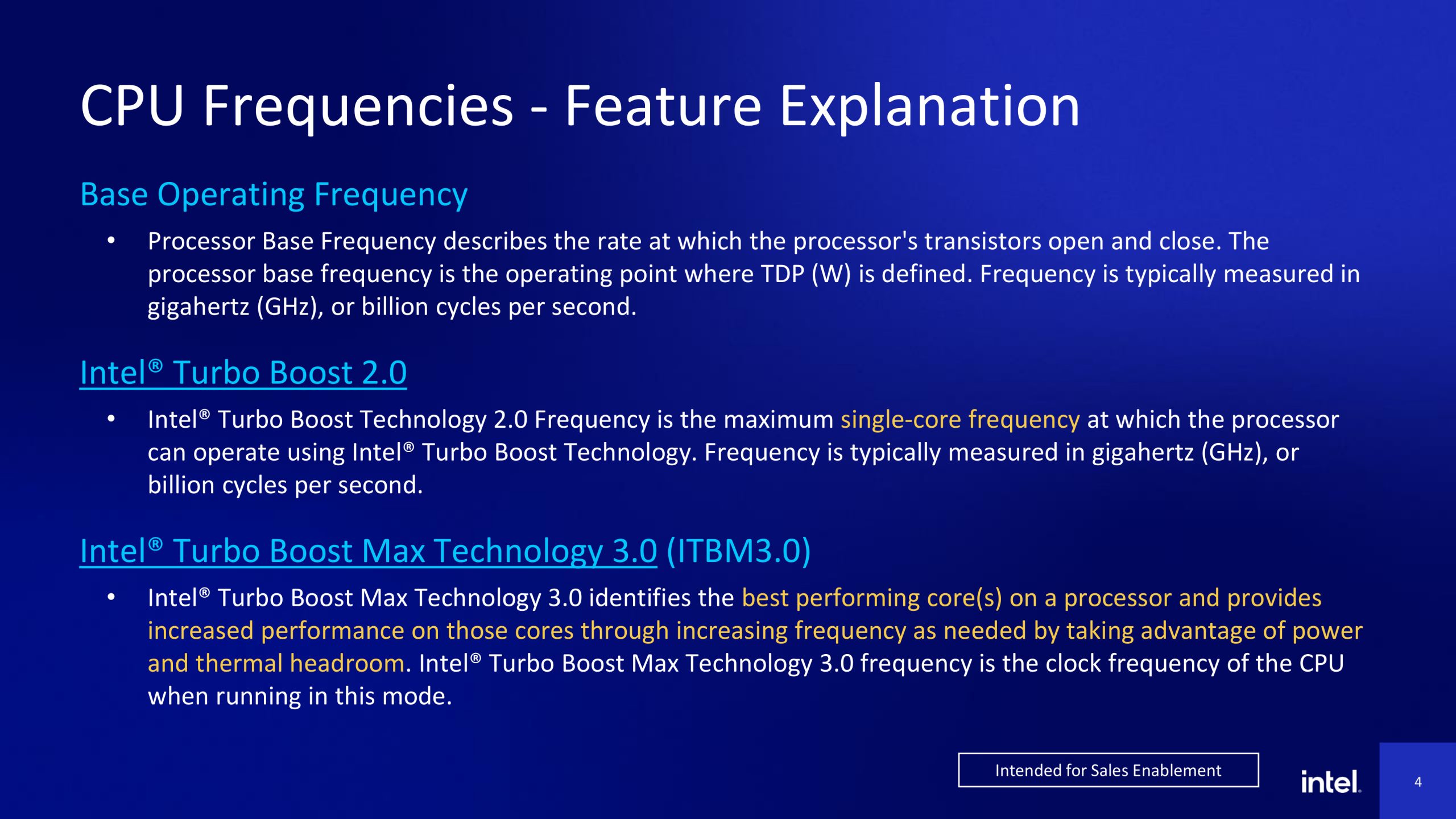
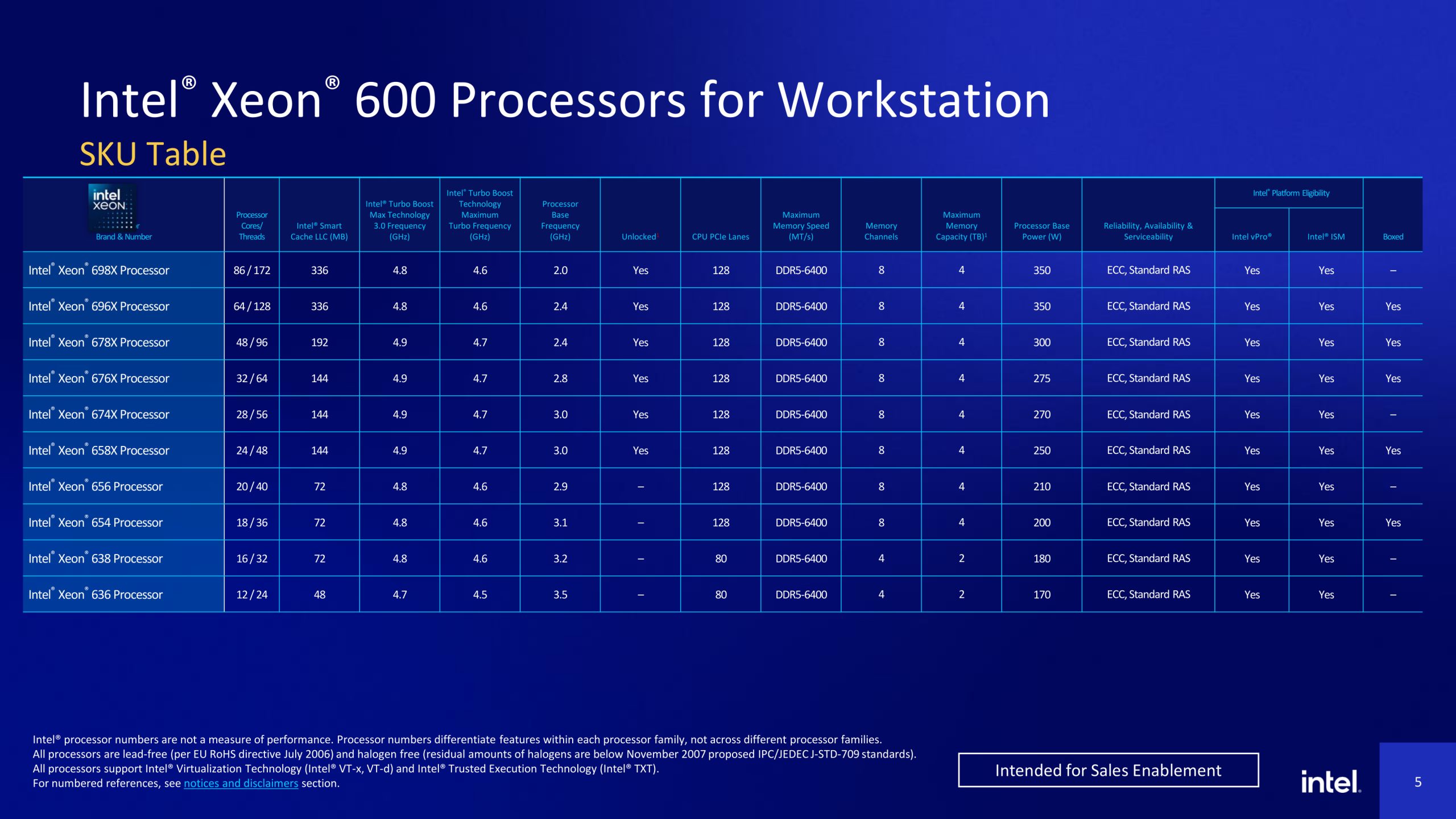
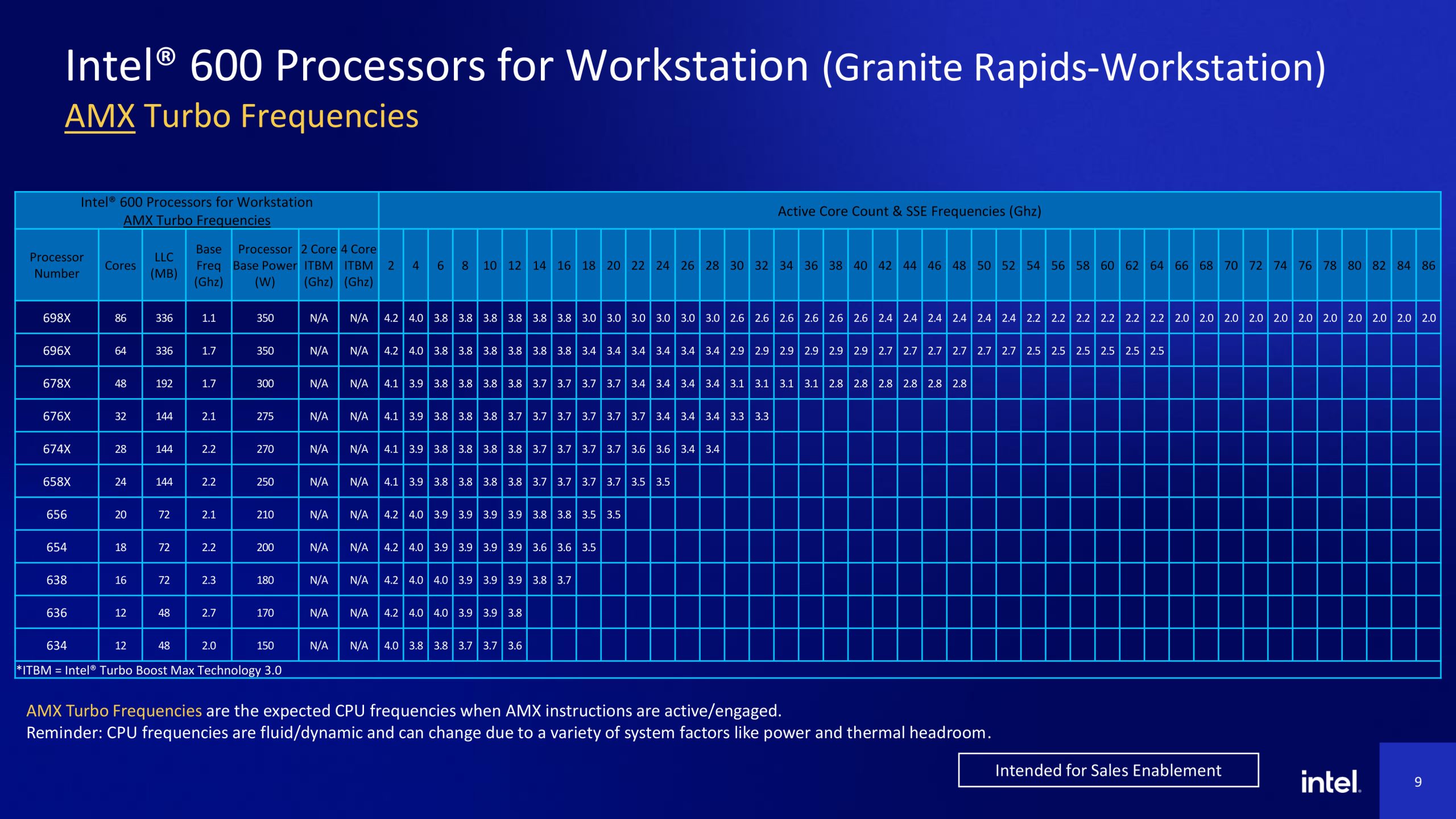
Intel has pulled back the curtain on the frequency behaviour of its new Granite Rapids-WS Xeon 600 workstation series. While marketing materials highlight a peak of 4.9 GHz via Turbo Boost Max 3.0, newly published documentation confirms that sustained speeds are heavily dependent on the instruction set being utilised.
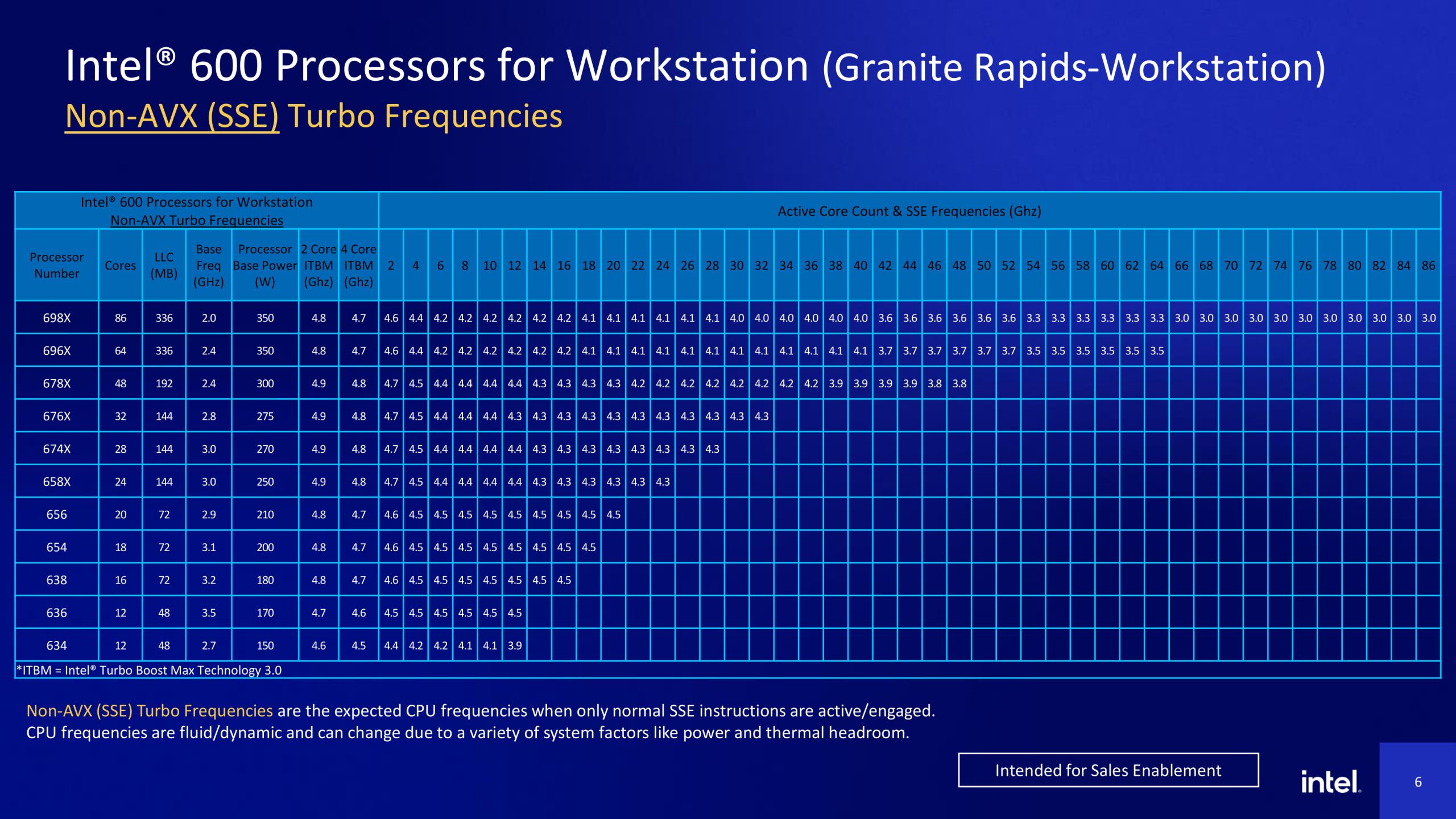
As shared by InstLatX64 (via TechPowerUP), the top-tier SKU in the Xeon 600 Series, the 698X, features 86 cores and 172 threads paired with a massive 336 MB of L3 cache, making it a powerhouse for multi-threaded professional applications. The frequency scaling across different workloads reveals the thermal and power trade-offs required to keep the 86-core silicon stable. In non-AVX workloads, the CPU maintains its peak of 4.8 GHz in single-core mode, but as the active core count increases, the boost frequency can drop to as low as 3.0 GHz. In such workloads, the base frequency is set at 2.0 GHz.
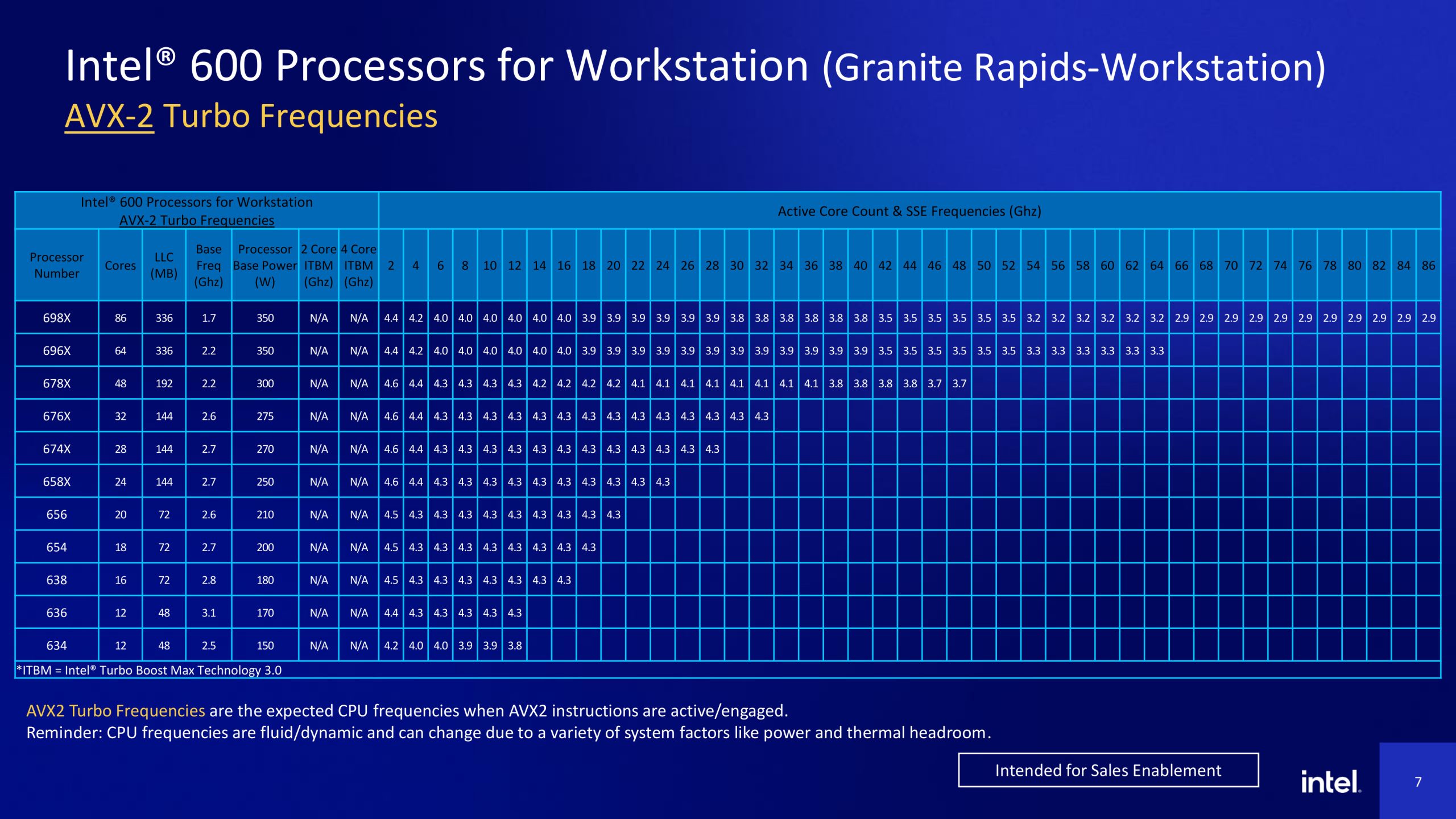
Moving on to the AVX-2 instruction set, the CPU can't boost as high, capping at 4.4 GHz in single-core and dropping to 2.9 GHz as the core count increases. In this case, the base frequency is set at 1.7 GHz. In AVX-512, clock frequencies are even lower, with the maximum turbo frequency ranging from 4.2 GHz to 2.5 GHz and the base frequency dropping to 1.3 GHz. Lastly, we have AMX, where the maximum boost frequency drops even further at the lower end, ranging from 4.2 GHz to 2.0 GHz, and the base frequency goes as low as 1.1 GHz.
KitGuru says: Seeing the Xeon 698X drop to nearly 1.1 GHz under heavy AMX workloads might look alarming, but it is standard for chips of this density. Fortunately, this CPU is unlocked, meaning overclocking is a possibility if you want to bump the clock frequencies.
The Cooler Master Cosmos is back, called the Cosmos Alpha in this iteration of the chassis. It stays true to the DNA of the longest running flagship series in the industry. The Cosmos Alpha blends the latest extremes in terms of size, framing materials and engineering, while looking just as beautiful as ever.
Over at Mobile World Congress 2026, hidden among its honestly plain-Jane FIFA World Cup collaboration phones, Motorola has officially unveiled the Razr Fold. Claiming a class-leading camera package (per preliminary DXOMARK scores), screen brightness, and battery capacity (outside of Chinese phones), the Razr Fold is bound for North America
Lenovo is showing off an army of new products this week at MWC 2026, including a handful of interesting concepts that may or may not see the light of day, such as the ThinkBook Modular AI PC that we already wrote about. The company is not focused on a singular product category, though, as evidenced by its Legion Go Fold concept.
The handheld
Microsoft has officially moved its latest graphics innovations into stable with the release of the DirectX 12 Agility SDK 1.619. This update marks the general availability of Shader Model 6.9. By using the Agility SDK, game studios can now bundle these advanced runtimes directly with their titles, bypassing a full Windows OS update and ensuring that any player with a compatible driver can access the latest features.
DirectX Raytracing (DXR) 1.2's latest update graduates several critical technologies from preview to stable status. Shader Execution Reordering (SER) is now a required feature of Shader Model 6.9, providing a standardised way for GPUs to sort disorganised ray-tracing workloads into coherent, parallel threads dynamically. Simultaneously, Opacity Micromaps (OMMs) have been fully integrated, allowing hardware to skip pixel-level checks for complex, alpha-tested geometry like foliage and chain-link fences. All these additions are designed to reduce the overhead of path tracing and complex lighting in modern AAA titles.
Beyond ray tracing, Shader Model 6.9 introduces Long Vector support, enabling shaders to process vectors with up to 1024 elements without the need for awkward manual packing. This release also makes several previously optional capabilities mandatory, including native 16-bit and 64-bit shader operations. For developers looking even further ahead, Microsoft also launched Agility SDK 1.719-preview, which introduces Fence Barriers for more granular synchronisation and VPblit 3DLUT, a feature that offloads video tone mapping to dedicated hardware, such as a video processing engine.
Hardware support for these features highlights a diverging landscape among the major GPU vendors. Nvidia continues to offer the most comprehensive implementation, with hardware-accelerated OMM and SER support across the RTX 40 series and newer, while maintaining software compatibility for older RTX hardware. Intel has made a massive splash with its Arc B-Series (Battlemage), which features full hardware acceleration for SER. Internal Microsoft testing (via VideoCardz) using a dedicated tech demo showed that SER could boost frame rates by 40% on an RTX 4090 and by a staggering 90% on Intel Arc B-Series hardware. AMD has enabled API support for these features on the Radeon RX 9000 series. However, current drivers reportedly do not perform physical reordering, meaning the performance gains on Team Red may lag behind competitors for now.
KitGuru says: While the 90% performance jump seen on Intel's Battlemage is specific to a Microsoft synthetic demo, it's still quite promising.
For the past many years, Overwatch has been embracing all sorts of crossovers, from anime such as My Hero Academia to other video game IPs including Persona 5 and Diablo IV – to name a few. In a crossover which seemed inevitable, Square Enix’s NieR: Automata is set to collab with Overwatch; arriving next week.
Seemingly announcing the crossover prematurely, Blizzard published and then removed a YouTube Short confirming that “Project YoRHa initiates March 10!” – bringing a number of iconic characters from Automata into Overwatch through the release of new skins.
Based on the image shared, it appears as though 5 skins in total will be offered:
Lifeweaver as Adam
Vendetta as A2
Wuyang as 9S
Kiriko as 2B
Mercy as the Yorha Commander
As of now, little else is known regarding the extent of this crossover. While it will most likely be nothing more than these skins, the game’s recent revamp does present an opportunity for these events to be more substantial.
We will have to wait and see when the Overwatch x NieR Automata crossover goes live on the 10th of March.
KitGuru says: Have you been playing Overwatch since its recent overhaul? What do you think? Who’s your favourite NieR character? Let us know down below.
Warface is an oft-forgotten free-to-play FPS developed by Crytek of Crysis and the CryEngine fame. Launched all the way back in 2013, the title received pretty substantial updates over the years, adding a Battle Royale mode and eventually bringing the title over to the OG Switch (while also undergoing a number of development studio switch-ups). After over a decade of operation however, the current studio ‘MY.GAMES’ have now confirmed that the title will be shutting down.
Taking to their Steam page to make the announcement, the team at MY.GAMES wrote: “Friends! After many years together, we have made the difficult decision to begin the sunset process for Warface: Clutch. This choice was not easy for us — Warface: Clutch has been an important part of our journey, and we are deeply grateful to everyone who has supported the game throughout its long life.”
Said to be sunset in order “to focus on future developments” all in-game purchases have now been disabled. While Warface remains playable for now, servers for PC players will be shut down on the 27th of May, followed shortly by the console version on the 25th of August.
Alongside the announcement, the team shared a lengthy FAQ, discussing the reasons for the game’s closure; refund policies and more, the full version of which can be found HERE.
While Warface launched at a time when it did have the potential to take on the likes of Call of Duty and Battlefield, the industry as a whole has changed substantially in the decade+ since, and so it is not surprising to see Warface finally being sunset.
KitGuru says: What did you think of Warface? Did you check it out back when it first launched? Was there potential for it to be the next big thing? Let us know your thoughts down below.
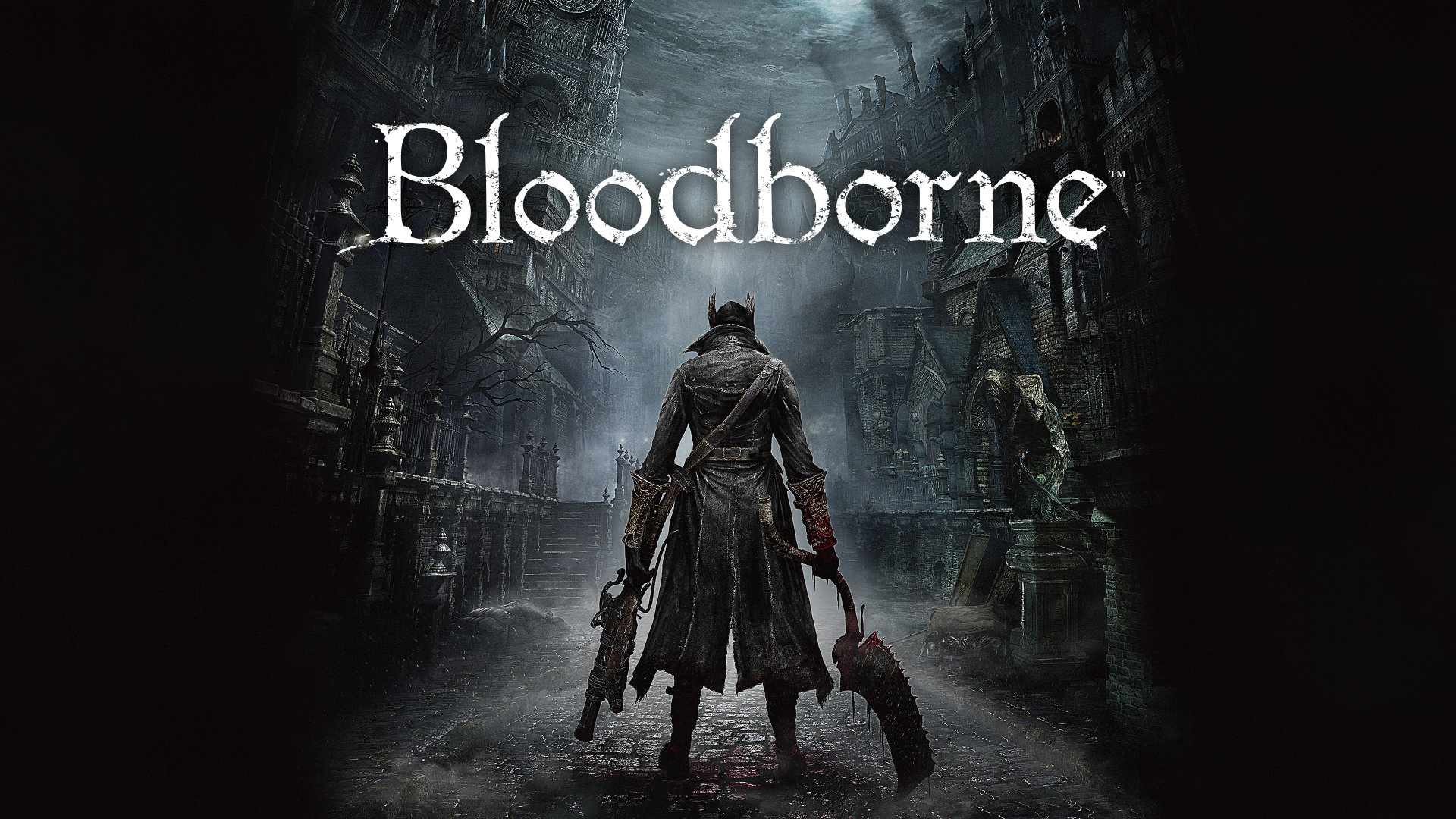
2015’s bloodborne is a beloved title, with the FromSoftware-developed PS4 exclusive being many fans’ favourite game from the studio. Despite this, we’ve seen nothing from the IP since its launch, with the game remaining locked to an uneven 30fps at just 1080p. Unfortunately, despite fan pleas, it seems things aren’t going to change, with insiders revealing that the ill-fated BluePoint Studios pitched Sony a Bloodborne remake before their closure – a pitch which was approved by Sony but rejected by FromSoft.
As reported by known industry insider Jason Schreier (paywalled), following the cancellation of BluePoint Games’ live-service God of War title, the studio pitched Sony a number of other potential projects. One of these was said to have been a remake of Bloodborne.
This would have made sense not only due to the fact that BluePoint Games were known best for their remakes, but also because their most recent remake was literally for Demon’s Souls – the first Soulsborne title developed by FromSoftware.
In a surprise reveal, Schreier claimed that “In early 2025, when Bluepoint again pitched the idea of Bloodborne remake, the studio was told that the numbers made sense but FromSoftware didn't want it to happen, according to people familiar with the process.”
While Sony owns the Bloodborne IP, the 2015 title was the result of a close collaboration between PlayStation and FromSoft. Additionally, Bloodborne as a game is near to Miyazaki’s heart, with the FromSoft head previously stating that the title is “the strongest reflection of my type of flavouring of a game that one can experience.”
Regardless, while a remake wouldn’t have been necessary, it makes little sense that Bloodborne has yet to receive a remaster consisting of a higher frame rate and increased resolution – especially as it would maintain all of Miyazaki’s work. For now, it seems the only way to experience an enhanced Bloodborne will be through emulation on PC.
KitGuru says: What do you think of this latest report? Are you surprised that it was FromSoftware who rejected the pitch? Let us know down below.
For years now, fans have been wondering what Sony Santa Monica’s Cory Barlog has been working on, with previous leaks and rumours suggesting that it would be a new IP in a Sci-Fi setting. As we get closer to the project’s supposed reveal, insiders have claimed that Barlog’s upcoming game is in fact still set in the God of War universe – but will instead focus on Faye as the main character.
As reported by multiple insiders, the next project set to be announced by Sony Santa Monica will in fact be another God of War game; albeit not starring Kratos.
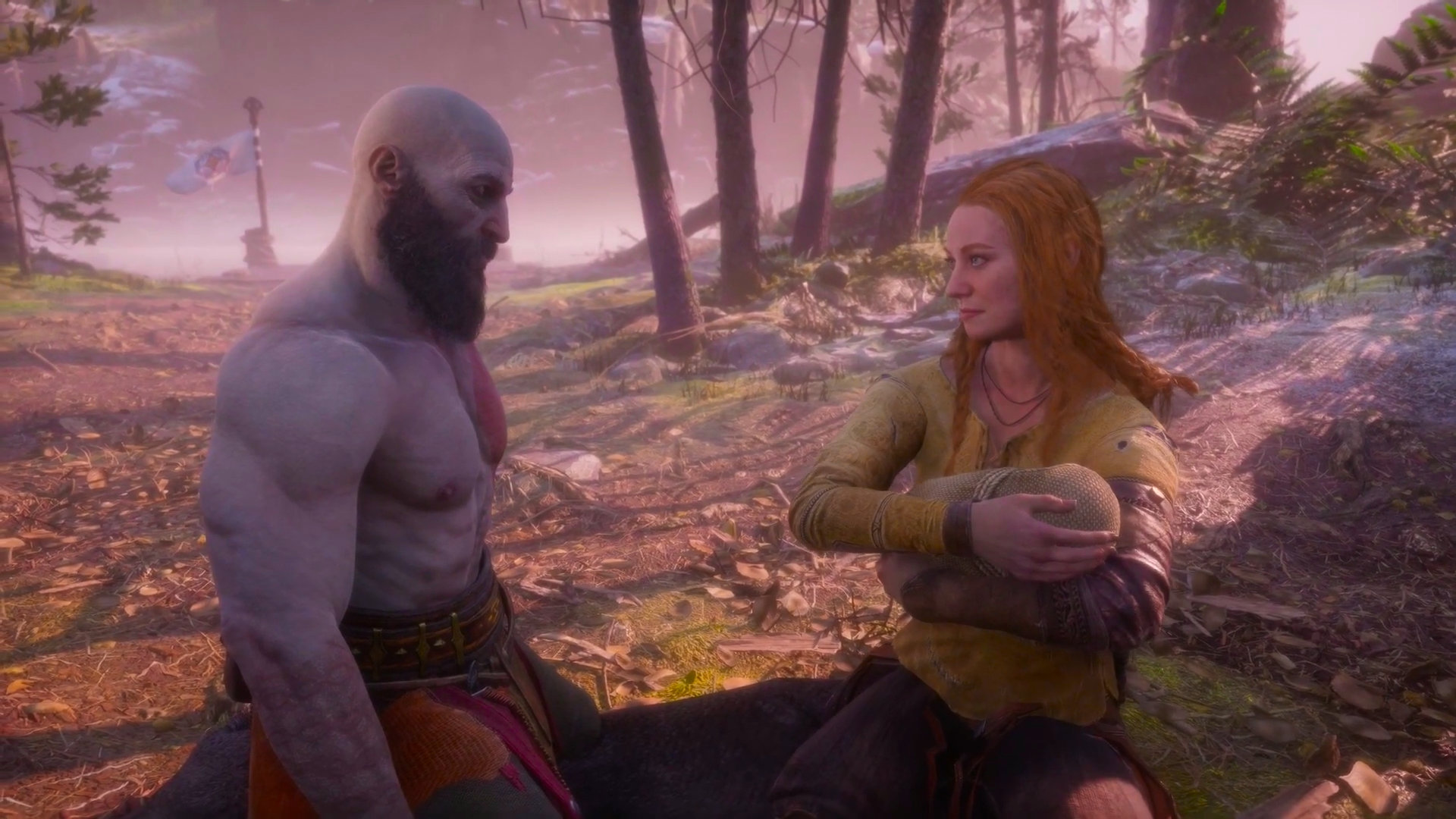
According to Wccftech and NatetheHate, this new project will serve as its own franchise, though will not include Kratos nor Atreus as the lead. Instead, this new franchise will follow Faye – Kratos’ wife and Atreus’ mother – presumably prior to her death.
Narrative-wise, very little has been shared, with Faye herself being a pretty mysterious character throughout the events of God of War Ragnarok. With regards to gameplay however, the insiders have suggested that it would “differ from the Norse God of War games with more of a focus on action.”
While many were hoping to see Sony Santa Monica take a step away from God of War (at least temporarily), Faye as a character presents the team with tons of opportunities to take the series to new and unexpected places.
KitGuru says: What do you think of these leaked details? Does the project excite you? Would you have preferred the game to focus on a different GOW character? Let us know down below.
Following a public dispute between the US Department of Defense and AI company Anthropic, the Pentagon appears to have repositioned itself. OpenAI, the developer of ChatGPT, says it has reached an agreement with the US military that will allow its AI models to be used within a classified Department of Defense network. This gives the […]
With the Communicator, the US start-up is reviving the idea of classic smartphones with physical keyboards and combining it with modern Android hardware. After initially announcing the device exclusively with a QWERTY layout, the company is now responding to high demand from various regions and expanding its range to include localized keyboard variants. The device […]
 Connexion
 At Mobile World Congress 2026, Qualcomm is eagerly showing off its next-gen of "truly personal, always-on, intelligent wearable computing devices" powered by its Snapdragon Wear Elite platform, which includes support for Wi-Fi 8 and a built-in NPU. As Qualcomm notes, Snapdragon Wear Elite is the first NPU-powered wearable platform in the industry,