Valkyrie Surge SL125 Review


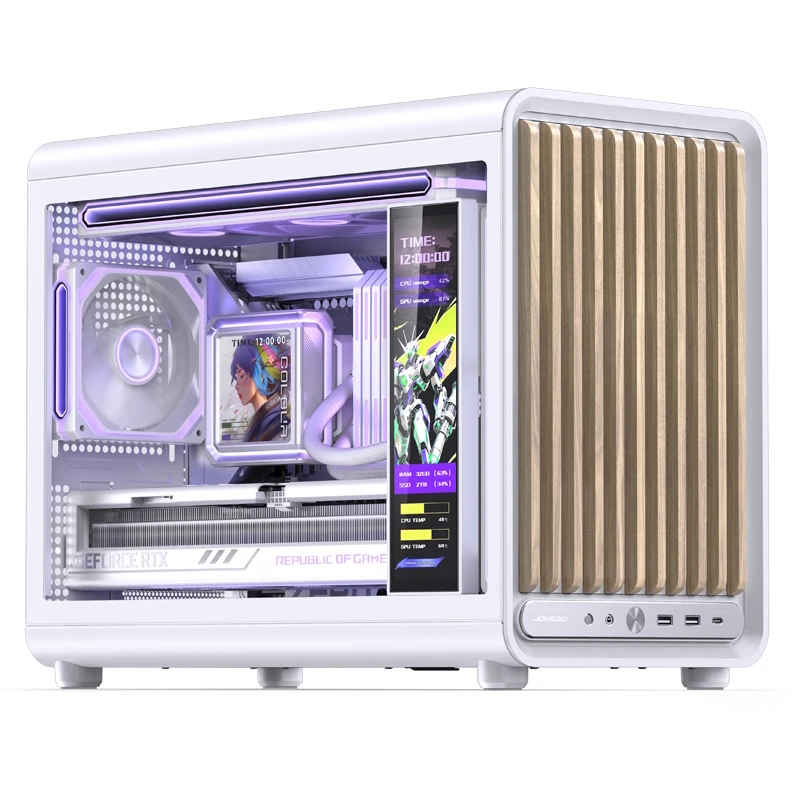
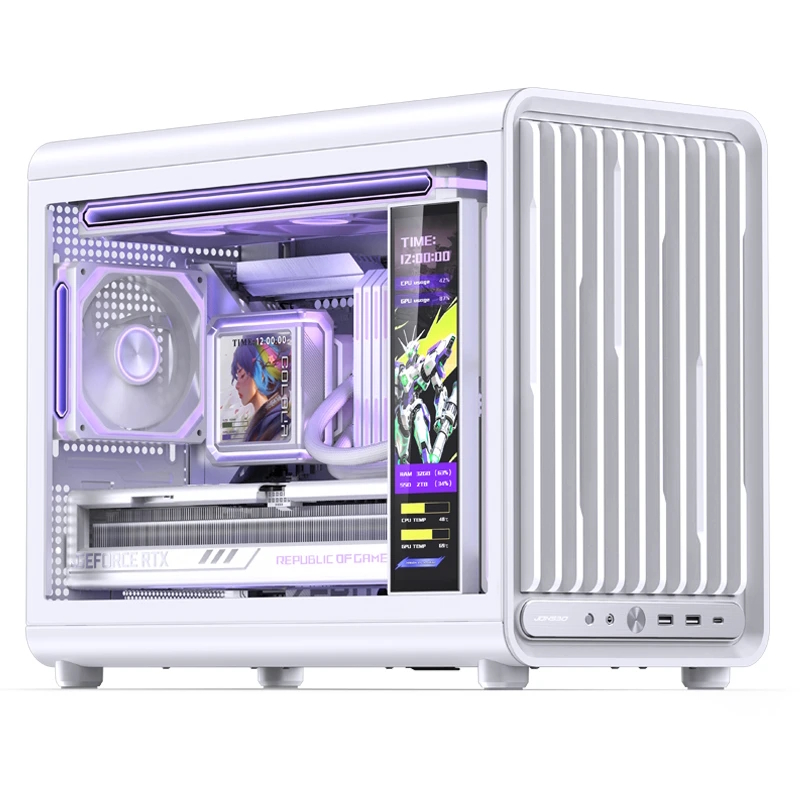
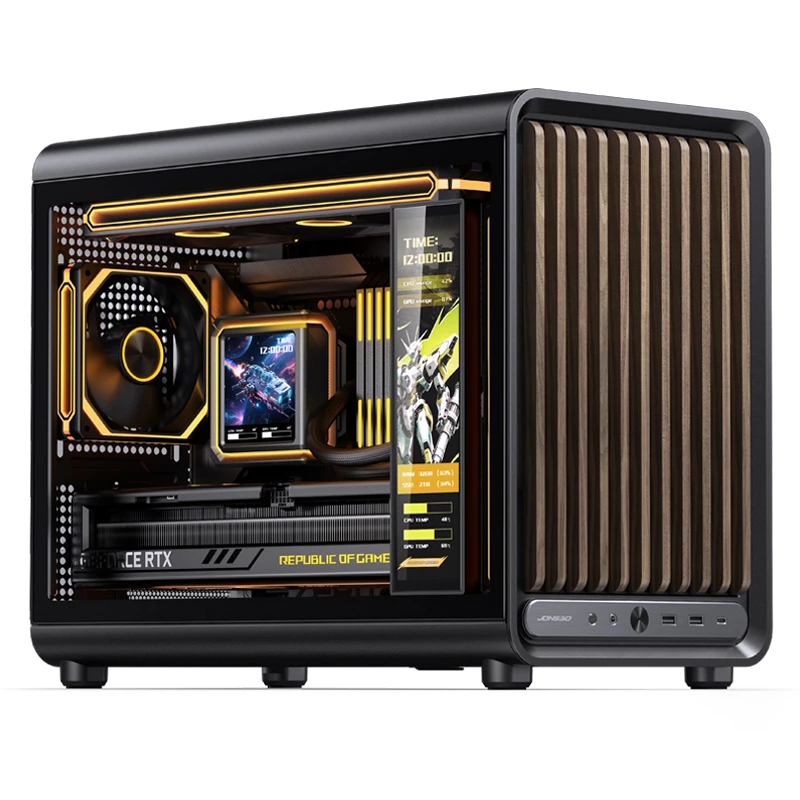
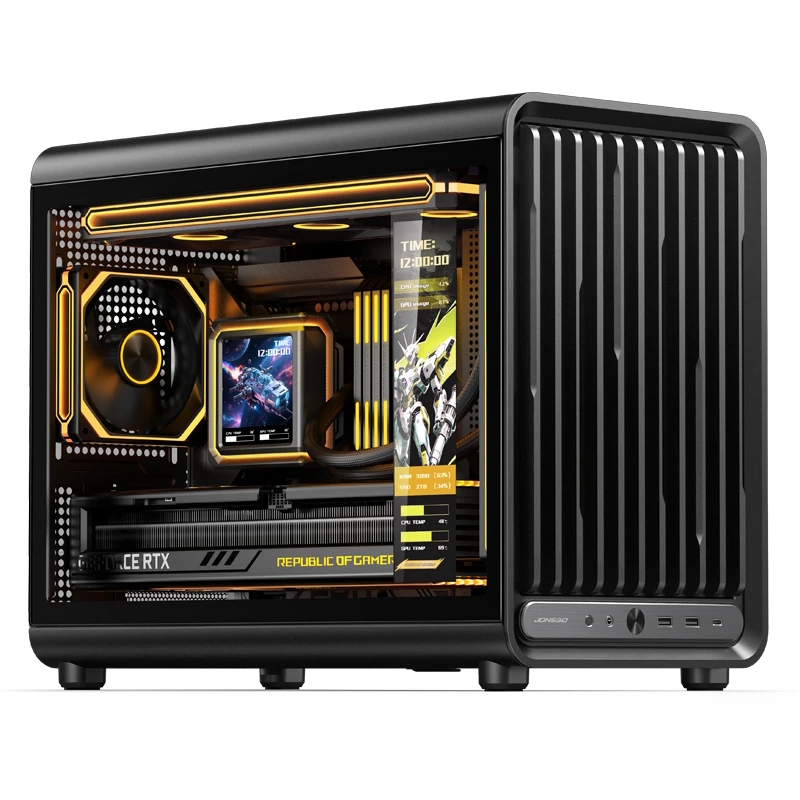
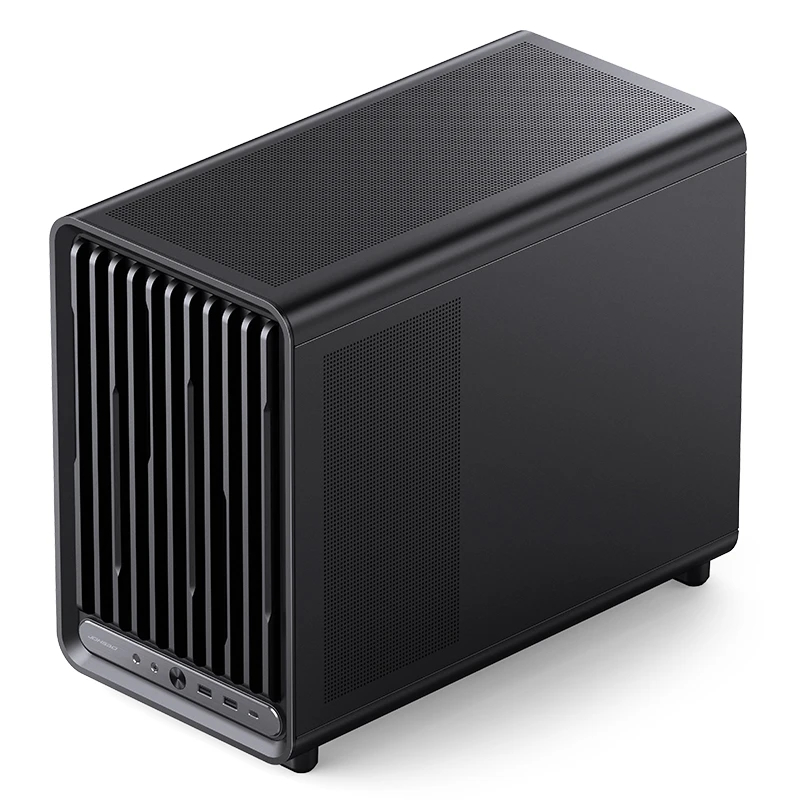
Jonsbo is expanding its case lineup with the launch of the D33 and its wood-accented sibling, the D33 Wood. These Micro-ATX cases are built for enthusiasts who want a “furniture look” without sacrificing the cooling potential required for modern high-end hardware.
Available in black and white across both variants, the D33 series features a compact footprint of 455 x 238.2 x 368.4mm. The standard D33 features a plastic front panel defined by bevelled vertical bars. For the D33 Wood, Jonsbo swaps these for genuine wood slats, utilising a light oak-like wood for the white chassis and a darker walnut-toned wood for the black version. While the wood variant uses straight bars rather than bevelled edges, both models maintain a clean, integrated I/O panel that includes a USB-C port, two USB-A 3.0 ports, and a power button.
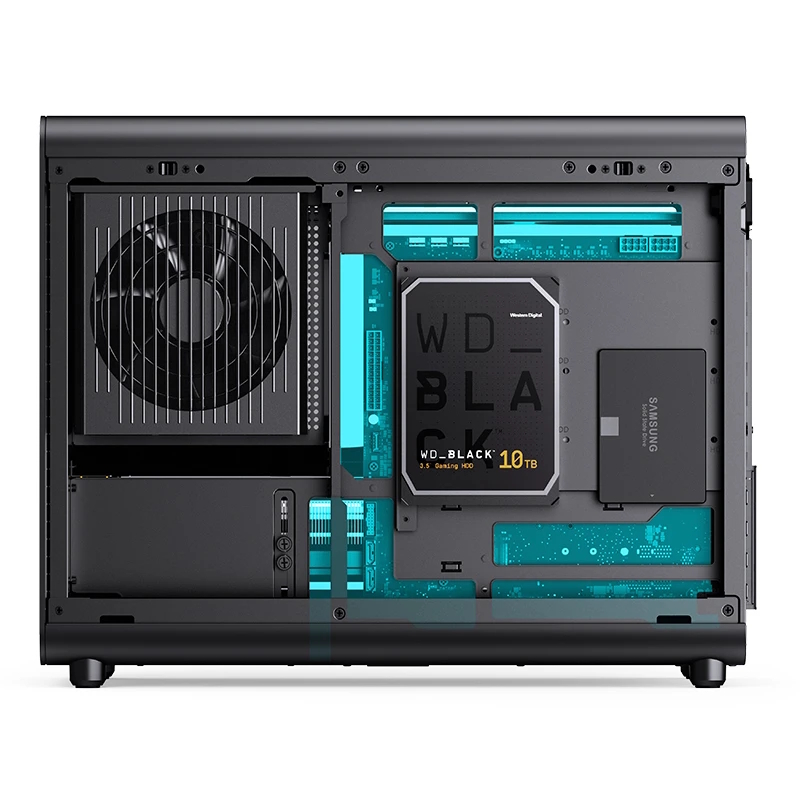
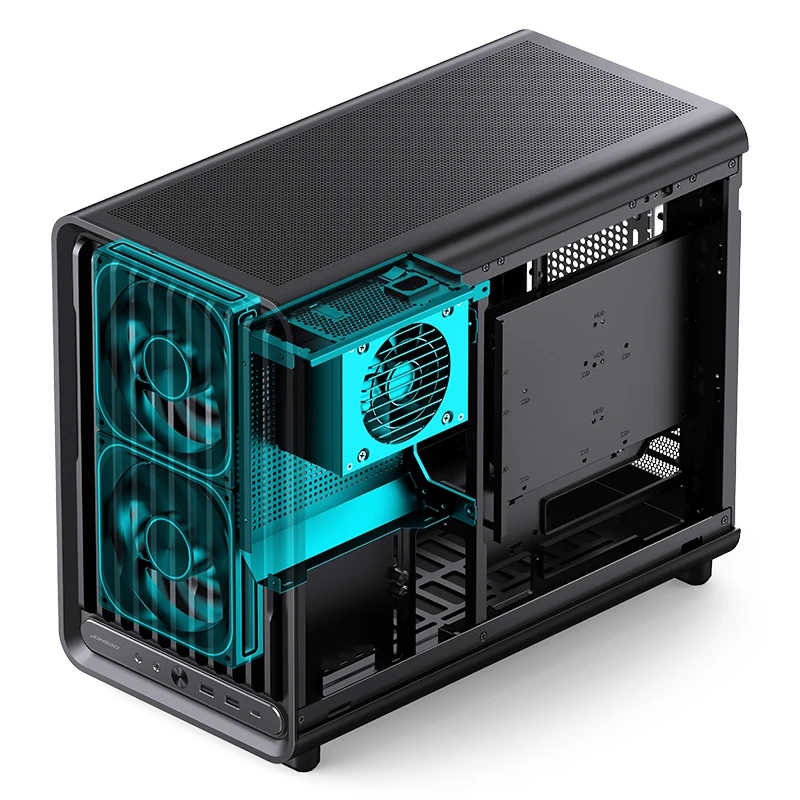
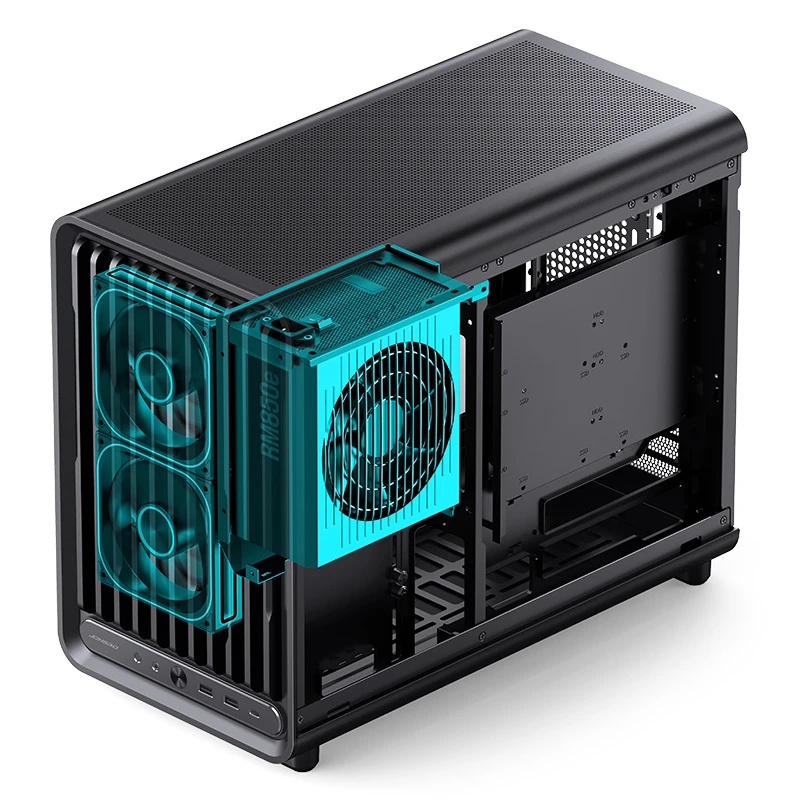
The D33 natively supports motherboards with rear-mounted connectors, such as the MSI Project Zero or Asus BTF series. To accommodate these boards, Jonsbo has engineered a large, component-free zone behind the motherboard tray for routing. This focus on a clean interior does come with a slight trade-off in storage, as the case relies on a single bracket behind the CPU backplate that can hold two 2.5-inch or 3.5-inch drives. However, this layout leaves the bottom of the chassis open for three 120mm intake fans and two 120 or 140mm fans on the front, depending on whether you're using an ATX or an SFX PSU.
Regarding cooling, the cases use a “sandwich” mounting system for top-mounted radiators. Rather than bolting the cooling kit directly to the chassis frame, the fans, mounting plate, and radiator are layered together into a single module that then attaches to the top panel. While this requires a bit more assembly time than a traditional mount, it allows the D33 to support a full 360mm radiator in a Micro-ATX frame. For those who prefer air cooling, the case offers 172 mm of clearance for CPU towers. Lastly, there's space for PSUs up to 160 mm long and cards up to 435 mm long.
KitGuru says: If you're planning to downsize your build, the D33 looks like a potentially good option for a compact case.
The post Jonsbo’s new D33 mATX case series includes two wood variants first appeared on KitGuru.Intel has officially released the XeSS 3.0 Software Development Kit, providing game developers with the latest binaries to integrate its AI-driven upscaling and frame generation technology. This new version arrives as a pre-compiled binary rather than the open-source release many enthusiasts have been waiting for since Intel first discussed the project four years ago.
The definitive feature of XeSS 3.0 (via Phoronix) is Multi-Frame Generation. This technology allows the engine to insert up to three generated frames between every two rendered frames, effectively increasing the total frame count by a factor of 4 on Intel Arc GPU-powered systems. This resembles the aggressive frame-generation strategies seen in Nvidia's latest DLSS versions, marking a significant step for Intel as it attempts to maintain parity in the AI-generated frame-insertion race.
![]()
Moreover, Intel has introduced a change that allows XeSS 3.0 to use external memory heaps. This means the XeSS SDK can now tap into GPU memory already allocated by the game engine. By operating on the same VRAM blocks rather than reserving separate, dedicated memory pools, developers can significantly reduce fragmentation and eliminate duplicate buffers. This gives creators direct control over memory residency and allows for a much cleaner integration into modern rendering pipelines. In an era where VRAM management is becoming increasingly critical for high-resolution 4K gaming, this optimisation helps ensure that the performance overhead of AI upscaling remains as low as possible.
Because the SDK is provided as a DLL file for Windows, Linux users will continue to rely on translation layers to utilise the technology. For gamers looking to test the new version, older XeSS 2.x versions can often be upgraded by simply replacing the existing library files with the newer ones from the XeSS 3.0 package.
KitGuru says: While the technical improvements to memory management and frame insertion are promising, the decision to remain closed-source is a departure from the “open-source” marketing narrative Intel initially used to differentiate itself from Nvidia.
The post Intel launches XeSS 3.0 SDK first appeared on KitGuru.ID-Cooling is expanding its air-cooling portfolio with the Frozn 510, a single-tower heatsink that prioritises surface area and performance. By using a significantly thicker 58mm fin stack composed of 0.4mm fins, the company claims a 30% increase in thermal scale compared to traditional slim-tower designs.
According to ITHome (via Guru3D), the heatsink itself features folded and clipped fin-edge finishing. Heat is transferred via five direct-touch heat pipes arranged in a unique 2+2+1 pattern. Interestingly, ID-Cooling has tuned this layout specifically to align with the decentralised hotspots of modern chiplet-based CPUs. The AMD Limited Edition takes this optimisation a step further by including a 5mm offset mounting bracket designed to centre the heat pipes directly over the compute dies of Ryzen processors. This version features red visual accents and is only supported by AMD platforms, whereas the all-black standard model supports both Intel and AMD sockets.
Image credit: ITHome
To cool the heatsink, ID-Cooling has paired it with the AT-120 fan, a 120mm unit that leans more toward industrial performance than whisper-quiet operation. The fan features dual ball bearings and a rectifier ring structure, boasting a staggering speed range that tops out at 3000 RPM. At full power, it delivers 83 CFM of airflow and 5.04 mmH2O of static pressure. While the peak noise level of 36.5 dB(A) means you'll certainly hear it when pushed, the inclusion of dual ball bearings ensures the fan can handle those high-speed sustained loads for the long haul.
Priced in China at 139 yuan (£15) for the standard model and 159 yuan (£17) for the AMD limited edition, the Frozn 510 enters the market as a major value contender. Although a release date for other regions hasn't been confirmed, like many other ID-Cooling coolers, the Frozen 510 should find its way to European, US, and UK retailers.
KitGuru says: The cooler's beefier construction bridges the gap between budget entry-level coolers and bulky dual-tower units.
The post ID-Cooling reveals thick single-tower Frozen 510 CPU cooler first appeared on KitGuru.The tower defense action slasher gets patched with combat, user-experience, balancing and performance improvements.
Teravision Games has announced a patch for their VR hybrid tower defense/melee combat game Orcs Must Die! By the Blade, which addresses numerous issues in the just-launched title. Among these are improvements to combat, weapons, and traps balancing, overall performance enhancements, and (most notably) the addition of an optional smooth turning control scheme.
Further adjustments have been made to the game's audio and narrative, multiplayer and connectivity improvements, and UI tweaks. The extensive patch notes can be seen in their entirety here.
Developed by Teravision Games, makers of the tower-defense shooter Captain Toonhead vs. The Punks from Outer Space, Orcs Must Die! By The Blade is the first VR release in the Orcs Must Die series. By the Blade builds on the long-running franchise's core gameplay loop for VR. Beyond setting up traps and auto-battling as you try to survive waves of orcs, as in traditional tower-defense, the VR version of Orcs Must Die! will have you physically wielding weapons to defend your base in first person.
Orcs Must Die! By The Blade is available now on Quest 3 and Quest 3S.

NVIDIA is expanding its DLSS 4.5 feature set this month, adding new frame‑generation options and wider game support as part of its next NVIDIA app beta arriving at the end of the month.
The new Nvidia App update introduces DLSS 4.5 Dynamic Multi Frame Generation, a system that adjusts the number of generated frames on the fly to help players hit a target frame rate or match their display’s refresh rate. It will be available as an override option within the app but as has always been the case with Multi-Frame Generation, it is a feature exclusive to RTX 50 series GPUs. Upcoming games like 007 First Light and Control Resonant will launch with ray-traced graphics in the coming months and will support DLSS 4.5 from launch.
Another significant GeForce-related announcement at GDC this week came via RTX Mega Geometry. This technology initially debuted in Alan Wake 2, compressing geometry into clusters to accelerate scene updates and reduce VRAM usage. This means dense foliage and other complex environments can be rendered with full-fidelity Path Tracing. Control Resonant will be adopting this feature when it launches this year and further down the line, CD Projekt Red also plans to implement it in The Witcher 4.
Alongside the DLSS updates, NVIDIA has released a new GeForce Game Ready Driver optimised for Crimson Desert and Death Stranding 2: On the Beach, both of which support DLSS 4 with Multi Frame Generation. The driver also adds support for more than 35 new G‑SYNC Compatible displays. The driver update is available now to download via the Nvidia App and directly through the Nvidia website.
KitGuru Says: What did you think of the new GeForce-related announcements at GDC?
The post Nvidia announces RTX technologies in The Witcher 4, releases new Game Ready driver at GDC 2026 first appeared on KitGuru.At GDC this week, Nvidia is making a few GeForce Now-related announcements a little early. For starters, there are some updates coming to the game library UX to boost game discoverability. On top of that, a number of big upcoming titles have been confirmed as day-one releases for GeForce Now in the coming months.
In a new update to the GeForce Now interface, game discoverability gets a boost thanks to in-app labels for connected services like Game Pass and Ubisoft+. Soon, new platforms like GOG will be available to link with GeForce Now too for even greater access to your library across all devices.
The Install-to-Play feature is also expanding with a list of Xbox titles, including the likes of Brutal Legend from Double Fine and Contrast from Compulsion Games.
Later in the year, major games like Control Resonant from Remedy Entertainment and Samson: A Tyndalston Story will both be day-one additions to GeForce Now when they launch on PC.
KitGuru Says: There will still be another weekly library update for GeForce Now on Thursday, so there is more news to come.
The post GeForce Now will get Control Resonant at launch first appeared on KitGuru.Asus is celebrating 20 years of ROG with a series of giveaways and fan campaigns running over the next couple of months, offering players the chance to win hardware and even a trip to Taiwan.
In the UK, the “ROG Homecoming” campaign invites fans to submit short-form videos sharing their favourite ROG gaming moments. Two winners from the UK and Ireland will be flown to Taiwan for a behind‑the‑scenes visit to ASUS ROG headquarters and a trip to Computex 2026. Entries must be posted on social media using #ROGHomecomingUK and submitted via the official campaign page between March 2nd and March 29th. Global voting follows from April 6th to April 13th.
ROG is also running a worldwide “Dare‑to‑ROG” anniversary campaign with multiple participation tiers. Fans can share video stories, create anniversary‑themed images or artwork, generate AI avatar cards, or sign in as ROG Elite members to unlock reward codes. Two global winners will also receive a trip to Taiwan.
The global prize pool includes ROG Raikiri II controllers, Harpe Ace Mini mice, Falchion Ace 75 HE keyboards, and top‑tier rewards such as the ROG Strix XG32UCWMG gaming monitor and the 2025 ROG Ally X handheld.
Full details on the UK giveaway can be found HERE. Details on the global giveaway can be found HERE.
KitGuru Says: If you enter the giveaway then good luck to you!
The post Asus celebrates 20 years of ROG with multiple giveaways first appeared on KitGuru.Sharkoon is adding another keyboard to its roster this week, the OfficePal KB70W. This is a full-sized mechanical keyboard with soundproofing to make for more comfortable and quiet typing in the office.
The OfficePalKB70W uses a gasket‑mount structure paired with a polycarbonate plate and PU foam damping, aiming to reduce noise and provide a softer, more cushioned key feel without sacrificing responsiveness. As the name suggests, the keyboard is also wireless and if you want an even quieter version, then the KB70W Silent also exists, which ships with a different mechanical switch type for even further noise reduction.
Durability is a focus as well with double‑shot PBT keycaps to resist the build-up of wear and tear. The keyboard also has aesthetically pleasing south-facing ARGB LEDs, providing even illumination across the layout. VIA compatibility allows users to remap keys, adjust lighting, and create macros without additional software.
The OfficePal KB70W and OfficePal KB70W Silent are available now with a recommended retail price of €79.90.
KitGuru Says: Are you after a new keyboard for work?
The post Sharkoon launches wireless, ARGB-lit OfficePal wireless mechanical keyboards first appeared on KitGuru.ASRock has put its mark on the record books. This week, a new overclocking world record was achieved using an ASRock X870E Taichi OCF motherboard, along with an AMD Ryzen 9 9950X3D processor.
Professional overclocker Alex2305 used the hardware to set a new PCMark 10 Express benchmark world record, scoring 14290 points, enough for the 1st Place position.
The ASRock X870E Taichi OCF motherboard was designed with overclocking in mind, with the board including an advanced power delivery system, premium components and an optimised PCB layout to achieve stability under extreme workloads. As you may expect, they are pleased with the world record result.
KitGuru Says: Another impressive world record. We will no doubt see some more records set in the months ahead as we get closer to the OC World Cup at Computex.
The post ASRock X870E Taichi OCF at centre of new overclocking world record first appeared on KitGuru.MSI has announced a collaboration with the anime Frieren: Beyond Journey’s End, releasing a limited‑edition hardware collection themed around the series. The lineup includes a graphics card, keyboard, mouse, and mouse pad, each designed with colours and motifs inspired by the show
The centrepiece of the collection is the GeForce RTX 5070 Ti 16G Frieren Edition OC. Based on MSI's proven Gaming Trio series, the card features the Tri Frozr 4 thermal design with StormForce fans and a nickel-plated copper baseplate. However, this particular model uses heat-reactive thermochromic ink, allowing the backplate to reveal its true colours when the GPU reaches operating temperatures, and revealing an artwork of Frieren with Himmel the Hero.
The Forge GK600 TKL Wireless Frieren Edition keyboard offers a compact tenkeyless form factor that blends performance with acoustics. The keyboard is equipped with linear mechanical switches and a multi-layer sound-dampening system featuring internal gaskets and foam to ensure a satisfying typing feel. Visually, the board is finished in lavender and white, with custom keycaps representing Fern and Stark. It includes a 4000mAh battery for extended wireless use and a dedicated keycap puller, allowing users to further personalise their setup with the themed accents included.
The Versa Wireless Frieren Edition mouse and the Agility GD20 Frieren Edition mouse pad round out the collection. The mouse is an ultra-lightweight 65g peripheral powered by the PixArt PAW3395 optical sensor, delivering a massive 26,000 DPI. It features an illustration of Frieren and Himmel on the primary buttons and uses MSI's exclusive Diamond Lightgrip texture for a secure feel. Complementing the mouse, the Agility GD20 mousepad features a low-friction, silky fabric surface that evokes the legacy of Frieren's old and new party.
KitGuru says: Anime collaborations are becoming increasingly common in the PC hardware space, but MSI’s Frieren lineup stands out for integrating the theme into the design.
The post MSI reveals Frieren-themed hardware collection first appeared on KitGuru.The MacBook Neo is a very different beast from Apple's usual products, instead of packing it full of features and charging a hefty premium they've scaled back the luxury and are selling…
It has been years since the Knights of the Old Republic Remake was first announced. Unfortunately, we haven't had any official news since, but Saber has reassured fans this week that the game is “still in development.
The KOTOR Remake was first announced for PS5 and PC in 2021. Initially, the game was being developed by Aspyr, the same studio responsible for handling modern KOTOR ports and a number of other Star Wars remasters. Somewhere along the way, the project ended up moving over to Saber Interactive and development started over again.
In a recent interview with IGN, Saber CCO, Tim Willits, said that the remake is “still in development” but they couldn't say much more at this time.
LucasFilm reportedly wants remakes of both of the original KOTOR games and may eventually want to make a third game as it looks to re-introduce the Old Republic timeline to fans. Aside from KOTOR Remake projects, original KOTOR director, Casey Hudson, formed a new studio last year to work on a ‘spiritual successor', titled ‘Star Wars: Fate of the Old Republic' – and that game should be out within the next four years.
KitGuru Says: Fans have been waiting a long time for an Old Republic return. We don't know when we'll finally get the KOTOR Remake, but there are multiple projects in the works to look forward to.
The post Saber confirms KOTOR Remake is ‘still in development’ first appeared on KitGuru.