 Connexion
If AI discovers a drug, who gets the money?
17 février 2026 à 12:00
Two intellectual property lawyers on why questions of AI inventorship and profit remain wide open

Chinese launch startup Space Epoch has secured B-round funding as the company moves towards a first orbital launch and recovery attempt late this year.
The post China’s Space Epoch raises new funding, targets 2026 launch and recovery attempt appeared first on SpaceNews.
Electrochemical CO2 reduction converts CO2 to higher-value products using an electrocatalyst and could pave the way for electrification of the chemical industry. A key challenge for CO2 reduction is its poor selectivity (faradaic efficiency) due to competition with the hydrogen evolution reaction in aqueous electrolytes. Rotating ring-disk electrode (RRDE) experiments have become a popular method to quantify faradaic efficiencies, especially for gold electrocatalysts. However, such measurements suffer from poor inter-laboratory reproducibility. This work identifies the causes of variability in RRDE selectivity measurements by comparing protocols with different electrochemical methods, reagent purities, and glassware cleaning procedures. Electroplating of electrolyte impurities onto the disk and ring surfaces were identified as major contributors to electrocatalyst deactivation. These results highlight the need for standardized and cross-laboratory validation of CO2RR selectivity measurements using RRDE. Researchers implementing this technique for CO2RR selectivity measurements need to be cognizant of electrode deactivation and its potential impacts on faradaic efficiencies and overall conclusions of their work.

Maria Kelly is a Jill Hruby Postdoctoral Fellow at Sandia National Laboratories. She earned her PhD in Professor Wilson Smith’s research group at the University of Colorado Boulder and the National Renewable Energy Laboratory. Her doctoral work focused on characterization of carbon dioxide conversion interfaces using analytical electrochemical and in situ scanning probe methods. Her research interests broadly encompass advancing experimental measurement techniques to investigate the near-electrode environment during electrochemical reactions.
The post Challenges in CO<sub>2</sub> Reduction Selectivity Measurements by Hydrodynamic Methods appeared first on Physics World.
Earth observation startup SatVu said Feb. 17 it has raised $41 million in a funding round that included the NATO Innovation Fund, as commercial space-based thermal imagery gains traction with defense and intelligence agencies.
The post SatVu to expand thermal imaging constellation with NATO-backed funds appeared first on SpaceNews.

Space-Comm Expo is one of Europe’s premier space industry events and the largest event in the UK, taking place in just 2 weeks’ time 4-5 March, ExCeL London. Over 5,400 […]
The post Global leaders meet at Space-Comm Expo in London to accelerate future of European space industry appeared first on SpaceNews.
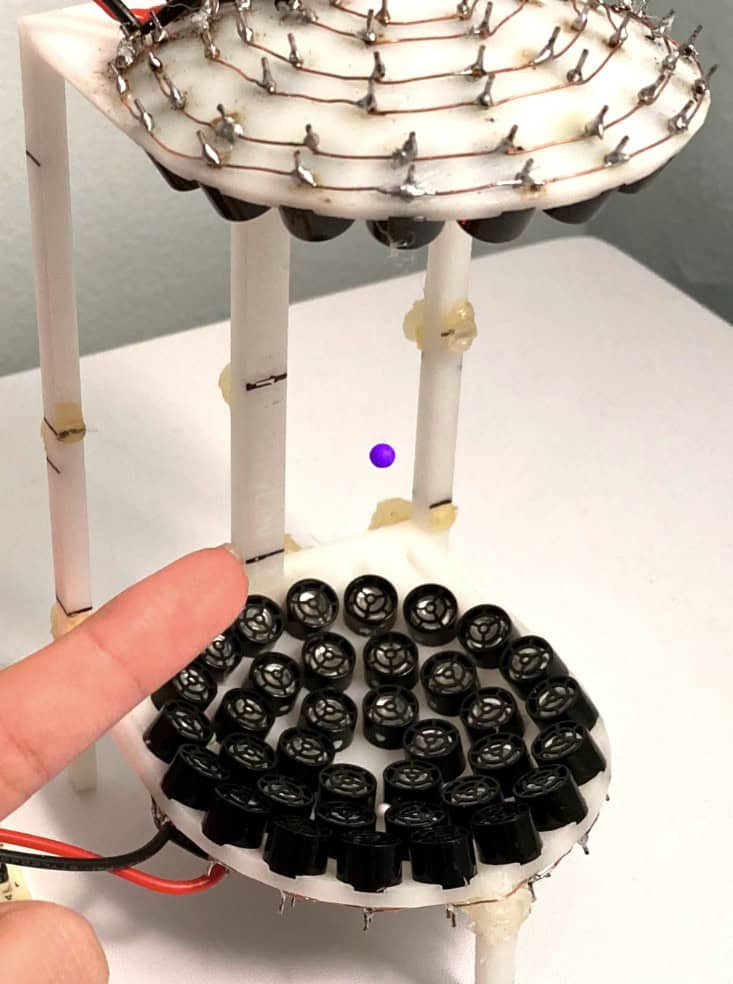
Pairs of nonidentical particles trapped in adjacent nodes of a standing wave can harvest energy from the wave and spontaneously begin to oscillate, researchers in the US have shown. What is more, these interactions appear to violate Newton’s third law. The researchers believe their system, which is a simple example of a classical time crystal, could offer an easy way to measure mass with high precision. It might also, they hope, provide insights into emergent periodic phenomena in nature.
Acoustic tweezers use sound waves to create a potential-energy well that can hold an object in place – they are the acoustic analogue of optical tweezers. In the case of a single trapped object, this can be treated as a dissipationless process, in which the particle neither gains nor loses energy from the trapping wave.
In the new work, David Grier of New York University, together with graduate student Mia Morrell and undergraduate Leela Elliott, created an ultrasound standing wave in a cavity and levitated two objects (beads) in adjacent nodes.
“Ordinarily, you’d say ‘OK, they’re just going to sit there quietly and do nothing’,” says Grier; “And if the particles are identical, that’s exactly what’s going to happen.”
If the two particles differ in size, material or any other property that affects acoustic scattering, they can spontaneously begin to oscillate. Even more surprisingly, this motion appears unconstrained by the requirement that momentum be conserved – Newton’s third law.
“Who ordered that?”, muses Grier.
The periodic oscillation, which has a frequency parametrized only by the properties of the particles and independent of the trapping frequency, forms a very simple type of emergent active matter called a time crystal.
The trio analysed the behaviour of adjacent particles trapped in this manner using the laws of classical mechanics, and discovered an important subtlety had been missed. When identical particles are trapped in nearby nodes, they interact by scattering waves, but the interactions are equal and opposite and therefore cancel.
“The part that had never been worked out before in detail is what happens when you have two particles with different properties interacting with each other,” says Grier. “And if you put in the hard work, which Mia and Leela did, what you find is that to the first approximation there’s nothing out of the ordinary.” At the second order, however, the expansion contains a nonreciprocal term. “That opens up all sorts of opportunities for new physics, and one of the most striking and surprising outcomes is this time crystal.”
This nonreciprocity arises because, if one particle is more strongly affected by the mutual scattering than the other, it can be pushed farther away from the node of the standing wave and pick up potential energy, which can then be transferred through scattering to the other particle. “The unbalanced forces give the levitated particles the opportunity to steal some energy from the wave that they ordinarily wouldn’t have had access to,” explains Grier. The wave also carries away the missing momentum, resolving the apparent violation of Newton’s third law.
If it were acting in isolation, this energy input would make the oscillations unstable and throw the particles out of the nodes. However, energy is removed by viscosity: “If everything is absolutely right, the rate at which the particles consume energy exactly balances the rate at which they lose energy to viscous drag, and if you get that perfect, delicious balance, then the particles can jiggle in place forever, taking the fuel from the wave and dumping it back into the system as heat.” This can be stable indefinitely.
The researchers have filed a patent application for the use of the system to measure particle masses with microgram-scale precision from the oscillation frequency. Beyond this, they hope the phenomenon will offer insights into emergent periodic phenomena across timescales in nature: “Your neurons fire at kilohertz, but the pacemaker in your heart hopefully goes about once per second,” explains Grier.
The research is described in Physical Review Letters.
“When I read this I got somehow surprised,” says Glauber Silva of The Federal University of Alagoas in Brazil; “The whole thing of how to get energy from the surrounding fields and produce motion of the coupled particles is something that the theoretical framework of this field didn’t spot before.”
“I’ve done some work in the past, both in simulations and in optical systems that are analogous to this, where similar things happen, but not nearly as well controlled as in this particular experiment,” says Dustin Kleckner of University of California, Merced. He believes this will open up a variety of further questions: “What happens if you have more than two? What are the rules? How do we understand what’s going on and can we do more interesting things with it?” he says.
The post Time crystal emerges in acoustic tweezers appeared first on Physics World.
It’s taking too long. It costs too much. Yet it’s not being talked about enough. It’s not historic enough. It’s not safe enough. I’m talking about Artemis. Or at least what a goodly portion of the space community is saying privately or online, replete with sensationalist interviews and even vomit emojis. Let’s take a breath, […]
The post Artemis haters, can we have a moment, please? appeared first on SpaceNews.
Sateliot will launch two of its next-generation direct-to-device satellites on a PLD Space rocket in what is billed as the first fully private Spanish mission.
The post Sateliot to launch satellites with PLD Space appeared first on SpaceNews.
Leonardo is funding development of an Earth observation constellation designed to highlight its capabilities while also being a model for larger European initiatives.
The post Leonardo funding development of Earth observation constellation appeared first on SpaceNews.
A new cooling technique based on the principles of dissolution barocaloric cooling could provide an environmentally friendly alternative to existing refrigeration methods. With a cooling capacity of 67 J/g and an efficiency of nearly 77%, the method developed by researchers from the Institute of Metal Research of the Chinese Academy of Sciences can reduce the temperature of a sample by 27 K in just 20 seconds – far more than is possible with standard barocaloric materials.
Traditional refrigeration relies on vapour-compression cooling. This technology has been around since the 19th century, and it relies on a fluid changing phase. Typically, an expansion valve allows a liquid refrigerant to evaporate into a gas, absorbing heat from its surroundings as it does so. A compressor then forces the refrigerant back into the liquid state, releasing the heat.
While this process is effective, it consumes a lot of electricity, and there is not much room for improvement. After more than a century of improvements, the vapour-compression cycle is fast approaching the maximum efficiency set by the Carnot limit. The refrigerants are also often toxic, contributing to environmental damage.
In recent years, researchers have been exploring caloric cooling as a possible alternative. Caloric cooling works by controlling the entropy, or disorder, within a material using magnetic or electric fields, mechanical forces or applied pressure. The last option, known as barocaloric cooling, is in some ways the most promising. However, most of the known barocaloric materials are solids, which suffer from poor heat transfer efficiency and limited cooling capacity. Transferring heat in and out of such materials is therefore slow.
The new technique overcomes this limitation thanks to a fundamental thermodynamic process called endothermic dissolution. The principle of endothermic dissolution is that when a salt dissolves in a solvent, some of the bonds in the solvent break. Breaking those bonds takes energy, and so the solvent cools down – sometimes dramatically.
In the new work, researchers led by metallurgist and materials scientist Bing Li discovered a way to reverse this process by applying pressure. They began by dissolving a salt, ammonium thiocyanate (NH4SCN), in water. When they applied pressure to the resulting solution, the salt precipitated out (an exothermic process) in line with Le Chatelier’s principle, which states that when a system in chemical equilibrium is disturbed, it will adjust itself to a new equilibrium by counteracting as far as possible the effect of the change.
When they then released the pressure, the salt re-dissolved almost immediately. This highly endothermic process absorbs a massive amount of heat, causing the temperature of the solution to drop by nearly 27 K at room temperature, and by up to 54 K at higher temperatures.
Li and colleagues did not choose NH4SCN by chance. The material is a chaotropic agent, meaning that it disrupts hydrogen bonding, and it is highly soluble in water, which helps to maximize the amount present in the solution during that part of the cooling cycle. It also has a large enthalpy of solution, meaning that its temperature drops dramatically when it dissolves. Finally, and most importantly, it is highly sensitive to applied pressures in the range of hundreds of megapascals, which is within the capacity of conventional hydraulic systems.
Li says that he and his colleagues’ approach, which they detail in Nature, could encourage other researchers to find similar techniques that likewise do not rely on phase transitions. As for applications, he notes that because aqueous NH4SCN barocaloric cooling works well at high temperatures, it could be suited to the demanding thermal management requirements of AI data centres. Other possibilities include air conditioning in domestic and industrial vehicles and buildings.
There are, however, some issues that need to be resolved before such cooling systems find their way onto the market. NH4SCN and similar salts are corrosive, which could damage refrigerator components. The high pressures required in the current system could also prove damaging over the long run, Li adds.
To address these and other drawbacks, the researchers now plan to study other such near-saturated solutions at the atomic level, with a particular focus on how they respond to pressure. “Such fundamental studies are vital if we are to optimize the performance of these fluids as refrigerants,” Li tells Physics World.
The post Giant barocaloric cooling effect offers a new route to refrigeration appeared first on Physics World.
Hydrogen is considered a clean fuel because it produces water rather than carbon dioxide when burned, and it is seen as a promising route toward lower emissions. It is especially valuable for replacing fossil fuels in industrial processes that require extremely high temperatures and are difficult to electrify. Although hydrogen itself is not a greenhouse gas like carbon dioxide, methane, or nitrous oxide (gases that trap heat in the Earth’s atmosphere), it can still indirectly contribute to warming. Normally, hydroxyl radicals, which are highly reactive atmospheric molecules made of one oxygen and one hydrogen atom with an unpaired electron, break down methane into carbon dioxide and water. But when hydroxyl radicals react with hydrogen instead, fewer radicals are available to remove methane, allowing methane to persist longer in the atmosphere and increasing its warming effect.
This study examines how hydrogen leakage in hydrogen‑based energy systems could influence the planet. The researchers analysed 23 different U.S. future scenarios, including some that eliminate fossil fuels entirely. They estimated how much hydrogen might leak in each scenario, compared those leaks to the remaining carbon dioxide and methane emissions, and calculated how much additional emissions reductions and/or carbon removal would be needed to offset the warming from hydrogen under low, medium, and high leak rates, and over both short‑term and long‑term warming timescales.
They found that although hydrogen leaks do contribute to warming, their impact is much smaller than the warming from the remaining carbon dioxide and methane in all scenarios. Hydrogen’s warming effect appears much larger over a 20 year period because its short‑lived chemical interactions amplify methane and ozone quickly, even though its long‑term impact remains relatively modest. Only small increases in carbon dioxide removal or small reductions in other emissions are needed to offset the warming caused by hydrogen leaks. However, because estimates of hydrogen leakage rates vary widely in the scientific literature, improved measurement and monitoring are essential.
Estimating the climate impacts of hydrogen emissions in a net-zero US economy
Ansh N Nasta et al 2025 Prog. Energy 7 045001
Hydrogen storage in liquid hydrogen carriers: recent activities and new trends Tolga Han Ulucan et al. (2023)
The post The hidden footprint of hydrogen appeared first on Physics World.
Machine-learning could help us use cosmic muons to peer inside large objects such as nuclear reactors. Developed by researchers in China, the technique is capable of identifying target materials such as uranium even if they are coated with other materials.
The muon is a subatomic particle that is essentially a heavier version of the electron. Huge numbers of cosmic muons are created in Earth’s atmosphere when cosmic rays collide with gas molecules. Thousands of cosmic muons per second rain down on every square metre of Earth’s surface and these particles can penetrate tens to hundreds of metres through solid materials.
As a result, cosmic muons are used to peer inside large objects such as nuclear reactors, volcanoes and ancient pyramids. This involves placing detectors next to an object and detecting muons that have passed through or scattered within the object. Detector data are then processed using a tomography algorithm to create a 3D image of the object’s interior.
Muons tend to scatter more from high-atomic-number materials, so the technique is particularly sensitive to the presence of materials such as uranium. As a result, it has been used to create systems for the detection of illicit nuclear materials hidden in freight containers.
Muon tomography is relatively straightforward when the object is of simple construction – such as a pyramid built of stone and containing voids. Producing useful images of more complex target – such as a freight container full of unknown objects – is much more difficult. The conventional computational approach is to calculate the muon-scattering physics of many different materials and combine these data with muon-tracking algorithms. This, however, tends to require huge computational resources.
Supervised machine learning has been used to reduce the computational overhead, but this requires prior knowledge of the target materials – limiting efficacy when imaging unknown and concealed materials. What is more, many materials in complex objects are coated with other materials and these coatings can affect muon scattering.
Now, Liangwen Chen at the Institute of Modern Physics of the Chinese Academy of Sciences and colleagues have used a technique called transfer learning to improve cosmic muon tomography of objects that contain coated materials. The idea of transfer learning is to begin with knowledge of the muon-scattering parameters of bare, uncoated materials and use machine learning to predict the parameters of coated materials. Chen and colleagues believe that this is the first application of transfer learning to muon tomography.
The team began by creating a database describing how cosmic muons interact with representative materials with a wide range of atomic numbers. This was done by using Geant4 to do Monte Carlo simulations of how muons interact as they pass through materials. Geant4 is the most recent incarnation of the GEANT series of computer simulations, which have been used for over 50 years to design particle detectors and interpret the data that they produce.
Chen and colleagues used Geant4 to calculate how muons are scattered within nine materials ranging from magnesium (atomic number 12) to uranium (atomic number 92). These included common elements such as aluminium, copper and iron. The geometry of the scattering involves incoming cosmic muons with energies of 1 GeV and incident angles that are typical of cosmic muons. After scattering from a material target, the simulation assumes that the muons travel though two successive detectors, which measures the scattering angles. Data were generated for bare targets of the nine materials, as well as the nine materials coated with aluminium and polyethylene. Each simulation involved 500,000 muons passing through a target.
These data were then sampled using an inverse cumulative distribution function, as well as integration and interpolation. This is done to convert the data to a form that is optimal for training a neural network.
To use these data, the team created two lightweight neural-network frameworks for transfer learning: one based on fine tuning; and the other a domain-adversarial neural network. According to the team, both frameworks were able to identify correlations between muon scattering-angle distributions and different target materials. Crucially, this was the case even when the target materials were coated in aluminium or polyethylene.
Chen explains, “Transfer learning allows us to preserve the fundamental physical characteristics of muon scattering while efficiently adapting to unknown environments under shielding”.
Chen and colleagues are now trying to apply their process to more complicated scattering geometries. The also plan to include detector effects and targets made of several materials.
“By integrating simulation, physics, and data-driven learning, this research opens new pathways for applying artificial intelligence to nuclear science and security technologies,” says Chen.
The research is described in Nuclear Science and Techniques.
The post Transfer learning could help muon tomography identify illicit nuclear materials appeared first on Physics World.
NASA Administrator Jared Isaacman said he expects to provide details about several agency priorities, including lunar exploration and commercial space stations, in the coming weeks.
The post NASA work on several programs pending responses to White House executive order appeared first on SpaceNews.
No technology holds more transformative potential for America’s space aspirations than nuclear power. Radioisotopes can safely produce heat that will enable deep space exploration and survival of the frigid lunar night while fission reactors are capable of producing kilowatts of electricity on the moon or in orbit. Fission is also the key to advanced nuclear […]
The post The space nuclear power bottleneck — and how to fix it appeared first on SpaceNews.
