↩ Accueil

Vue normale

Reçu aujourd’hui — 12 mars 2026 6.5 📰 Sciences English

A bursting bubble can make a puddle jump

Par : No Author
12 mars 2026 à 16:30
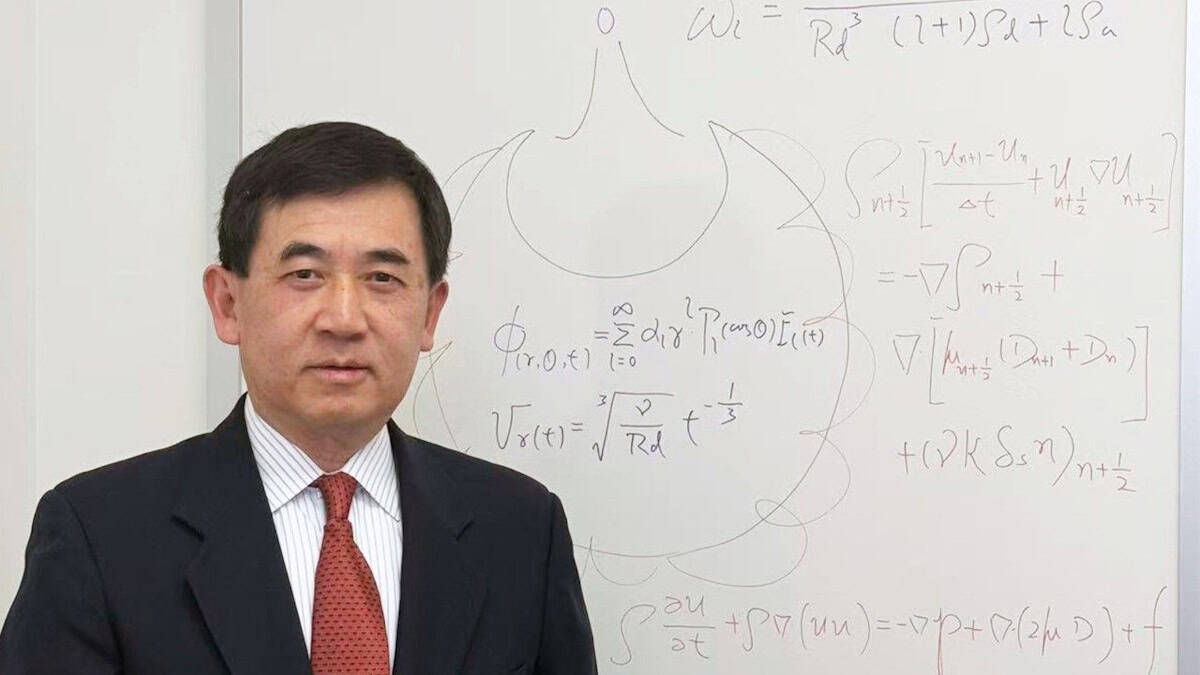
Jiangtao Cheng of Virginia Tech
Breaking the capillary length limitation Jiangtao Cheng of Virginia Tech and collaborators have found a way to launch much larger water droplets into the air than scientists once thought possible. (Courtesy: Jiangtao Cheng)

On a quiet spring morning, when dew settles on leaves, something curious sometimes happens. A droplet sitting there peacefully will suddenly lift off. No wind. No vibration. Just a tiny leap into the air.

Physicists call this phenomenon droplet jumping. In simple terms, it means that a droplet lifts off from the surface it sits on. If a raindrop hits a leaf and rebounds upward, that rebound can also be considered droplet jumping.

While this may seem like a minor detail in fluid behaviour, removing liquid from surfaces is important for many technologies. When droplets detach from a contaminated surface, they can carry away particles, a process that forms the basis of self-cleaning materials. When droplets leave hot surfaces, they remove heat. And on cold surfaces, quickly removing droplets can help prevent ice buildup.

For years, scientists believed that there was a physical limit to how large these jumping droplets could be. A new study published in Nature has now shown that this limit can be broken, with the help of a bubble.

The research was headed up by Jiangtao Cheng’s lab at Virginia Tech, and performed in collaboration with researchers from the Hong Kong University of Science and Technology and Wuhan University of Technology.

A stubborn limit in droplet physics

Within a droplet, two forces compete constantly: the first is surface tension, the other is gravity.

Surface tension tries to pull the droplet into a sphere, which minimizes its surface area and, therefore, its energy. Gravity, meanwhile, pulls the droplet downward, flattening it against the surface.

The balance between these two forces defines the so-called capillary length – which for water is 2.7 mm. Below this length, surface tension dominates and droplets can sometimes propel themselves upward. Above this length limitation, gravity takes over.

This balance has long been a fundamental barrier in the field of self-propelled droplet jumping. “For droplets larger than the capillary length, gravity dominates,” Cheng tells Physics World. “Simply releasing surface energy from shape relaxation is no longer sufficient to generate enough upward momentum for jumping.”

That is why most previous studies have observed droplets no larger than about 3 mm jumping on their own.

Inspiration from nature

The idea behind the new research began with observations in nature. First author Wenge Huang, who grew up in rural South China, often saw dew droplets on lotus leaves containing tiny air bubbles. Occasionally, when those bubbles burst, the droplets moved.

Years later, that observation led to a question: “could a bubble trapped inside a droplet provide the extra energy needed for jumping?”

A bubble-powered launch

To test this idea, the researchers placed a water droplet on a superhydrophobic surface, which strongly repels water. They then injected air into the droplet using a fine needle, forming a bubble inside the liquid. After a short time, the bubble burst.

High-speed cameras captured what happened next: the droplet lifted cleanly off the surface.

What surprised the researchers most was that droplets nearly 1 cm wide were able to jump – far exceeding the previously accepted capillary length limitation.

A bubble inside the droplet creates additional air–liquid interfaces, increasing the system’s stored surface energy while adding almost no mass. When the bubble bursts, that energy is released as capillary waves that focus momentum upward.

“Embedding a bubble increases the system’s surface energy without increasing its weight,” explains Cheng.

Small bubbles, strong possibilities

The researchers also found that the mechanism was extremely efficient, converting more than 90% of the energy into upward momentum, well above that of many conventional droplet propulsion methods.

The implications extend beyond basic physics; the discovery could help improve self-cleaning surfaces, heat transfer systems and anti-icing technologies. The bubble-burst process can also create directional liquid jets, which could be useful for microscale 3D printing and material deposition.

In simple terms, the study revealed something unexpected. A single bursting bubble can launch a much larger droplet than scientists once thought possible, even at the centimetre scale.

The post A bursting bubble can make a puddle jump appeared first on Physics World.

Droplet scientists push the boundary between living and non-living matter

12 mars 2026 à 15:45

In this episode of the Physics World Weekly podcast, we hear from a trio of scientists with a common interest in the physics of droplets. Specifically, Joe Forth, Rob Malinowski and Giorgio Volpe share a fascination with droplets that are “animate” – that is, capable of responding to their surroundings in ways that resemble the behaviour of living organisms.

As they explain in the podcast, systems must tick three boxes to qualify as animate. First, they must be active, able to use energy from their environment to do work and perform tasks. Second, they must be adaptive, able to move between different dynamical states in response to changes to their environment or their own internal states. Finally, they must be autonomous, able to process multiple inputs and choose how to respond to them without intervention from the outside world.

Incorporating all these behaviours into a droplet – or a system of many droplets – is challenging. The boundary between autonomous and non-autonomous systems is proving especially hard to overcome, and Volpe, Malinowski and Forth have a friendly disagreement over whether any droplet-based system has managed it yet.

Crosses disciplinary borders

Part of the challenge, they say, is that the field crosses disciplinary borders. Although Volpe thinks the community of droplet researchers is getting better at finding a common vocabulary for discussions, Forth jokes that it is still the case that “the chemists are scared of physics, the physicists are scared of chemists, everyone is scared of biology”. The potential rewards of overcoming these fears are great, however, with possible future applications of animate droplets ranging from consumer products such as deodorant to oil spill clean-up.

This discussion is based on a Perspective article that Volpe (a professor of soft matter in the chemistry department at University College London, UK), Malinowski (a research fellow in soft matter physics in the same department) and Forth (a colloid scientist and lecturer in the chemistry department at the University of Liverpool, UK) wrote for the journal EPL, which sponsors this episode of the podcast.

The post Droplet scientists push the boundary between living and non-living matter appeared first on Physics World.

Mantis Space emerges from stealth with $10 million for solar-power constellation

12 mars 2026 à 13:00

SAN FRANCISCO – Mantis Space, a New Mexico startup planning a constellation to supply solar power to spacecraft, emerged from stealth March 12 with $10 million in seed funding. “We are building a constellation of satellites that deliver power directly to solar arrays that exist in the market today and bringing products to market that […]

The post Mantis Space emerges from stealth with $10 million for solar-power constellation appeared first on SpaceNews.

The American Physical Society’s 2026 Global Physics Summit opens in Denver

12 mars 2026 à 11:00

The Global Physics Summit (GPS) bills itself as “the world’s largest physics research conference”. Organized by the American Physical Society (APS), it combines the previously separate APS March and April meetings, with at least 14,000 people expected to attend this year’s event in Denver, Colorado, which has the theme “science for a shared future”.

The two APS meetings (especially APS March) have long been pilgrimages for physicists. They’re a chance to meet people whose papers you’ve read, learn about new research, land a dream job or perhaps decide what your future physics career should look like. They offer unparalleled opportunities for gossiping, networking and making your name.

Sometimes they even host extraordinary announcements, such as in 2023 when one group claimed to have discovered room-temperature superconductors, or in 1987 when several groups really did present the first data on high-temperature ones.

Due to the current state of US politics, however, physicists from many countries may well have second thoughts about travelling to this and other scientific meetings in the US.

Indeed, if you’re from one of almost 40 nations to which the US government has partially or fully suspended issuing visas – supposedly “to protect the security of the United States” – you probably won’t be able to get into the country at all.

Among the countries affected by the Trump administration’s ban is Ethiopia, which is home to people like the physicist Mulugeta Bekele, who almost single-handedly kept Ethiopian physics alive in the 1970s and 1980s despite being jailed and tortured.

As Robert P Crease recounts in his latest feature, Mulugeta was awarded the APS’s Sakharov human-rights prize in 2012, picking up his award at that year’s APS March meeting in Boston. Would Mulugeta, I wonder, be able to enter the US in current circumstances?

One US physicist told me that outsiders should respond to the situation in America by boycotting the US entirely. To me, that’s a step too far, not least because breaking contact would show a lack of solidarity with US-based scientists suffering from funding cuts or worse. After all, physics is a global enterprise, as two recent Physics World articles make clear.

The first is a feature about quantifying the environmental impact of military conflicts by Ben Skuse. Numbers are hard to come by, but according to a 2022 estimate extrapolated from the small number of nations that do share their data, the total military carbon footprint is about 5.5% of global emissions. This would make the world’s militaries the fourth biggest carbon emitter if they were a nation.

In another feature, Michael Allen examines how climate change could trigger extreme changes in the activity of earthquakes and volcanoes. Worryingly, increased volcanic eruptions not only contribute to the build-up of greenhouse gases but also create other problems too. In particular, a warming climate melts ice caps, lowering surface loads and potentially causing more earthquakes to occur.

Both issues – and many more besides – will only be solved through global, interdisciplinary collaborations. As the theme of the GPS quite rightly puts it, we need science for a shared future.

That’s why it’s great that the APS, along with AIP Publishing and IOP Publishing, which together form the Purpose-led Publishing (PLP) Coaltion, are hosting a network of 23 satellite events in Africa, Asia and South America to expand participation in this year’s GPS.

PLP’s satellite hubs, which will take place both in person and online, aim to let researchers engage with the summit programme, contribute to discussions, and take part in locally organised workshops and presentations.

Taking place in countries ranging from Brazil and Benin to the Philippines and Pakistan, the events will host livestreamed and recorded content from Denver as well as offering debates, expert-led sessions and opportunities for networking.

One event will be held in Ethiopia, which, I hope, Mulugeta at least will be pleased to hear.

The post The American Physical Society’s 2026 Global Physics Summit opens in Denver appeared first on Physics World.

Interplaying hazards: can you solve our crossword on geophysical processes?

Par : No Author
11 mars 2026 à 17:15

See how much you know about the subject by trying our interactive crossword. Most of the clues are based on the article, but there are a few additional brain teasers thrown in. If you’re feeling stuck, check out the “assist” menu for help.

If you would like to sponsor a puzzle on Physics World please contact Edward Jost at: edward.jost@ioppublishing.org.

The post Interplaying hazards: can you solve our crossword on geophysical processes? appeared first on Physics World.

Lunar magnetic field mystery may finally have an explanation

11 mars 2026 à 17:00

When the Apollo astronauts returned from the Moon, they brought a puzzle back with them. Some of the rocks they collected were so strongly magnetic, it implied that the Moon’s magnetic field must have been stronger than the Earth’s when the rocks formed 3.9‒3.5 billion years ago. “That doesn’t make any sense with the physics that we understand about how planets generate magnetic fields,” says Claire Nichols, a planetary geologist at the University of Oxford, UK.

Nichols and her Oxford colleagues Jon Wade and Simon N Stephenson have now identified a possible explanation. The key, they say, lies in the rocks’ composition, which happens to provide ideal spacecraft landing sites, leading to sampling bias. “It was a proper kind of Eureka moment,” Nichols says.

The lunar dynamo

The magnetic fields of planets and moons stem from convective currents in their largely iron cores. Scientists expect that objects with smaller cores, such as the Moon, will have lower magnetic field strengths. But measurements of the Apollo samples suggested that the magnetic field strength might, in some cases, have exceeded 100 μT – higher than the typical value of 40μT on the surface of the Earth. It’s as if an AA battery were somehow powering a fridge.

“The dynamo modelling community have been trying to come up with all sorts of mechanisms to give you these really strong fields,” Nichols tells Physics World.

When Nichols mentioned this problem to Wade, a petrologist, his response intrigued her. “He said, kind of as a throwaway comment, ‘Have you looked to see if there’s any link between the composition and the intensities?’”

Upon inspecting the data, Nichols realized that Wade could be onto something. While all the lunar basalt samples with high magnetization contained large quantities of titanium, samples with low magnetization contained little.

A possible mechanism

Other researchers had previously suggested a process that could have supercharged the Moon’s dynamo, boosting the magnetization of titanium-bearing basalt in the process. When the Moon formed, an ocean of molten magma developed that gradually crystallized into today’s lunar mantle. The last material to solidify was a titanium-rich mineral called ilmenite. Solid ilmenite is incredibly dense, so once it solidified, it sank towards the Moon’s magnetic core.

According to the hypothesis, heat transfer across the core-mantle boundary then pushed the ilmenite to its melting point and increased the local temperature gradient, thereby boosting convection and, by extension, magnetic field strength. This means that the ilmenite-bearing rocks supercharged the dynamo behind the Moon’s magnetic field and became unusually highly magnetized in the process. Eventually, volcanic activity brought the rocks to the lunar surface, where the Apollo astronauts collected them.

The problem with this explanation, Nichols says, is that the heat flux at the boundary would only be raised for brief periods, meaning that by this mechanism, only two in every thousand Apollo samples would be strongly magnetized. The real figure is roughly half.

A further role for heat transfer?

Nichols and her colleagues therefore dug deeper into the process. They realized that while the period of melting was brief, it played a crucial role in creating the samples the Apollo astronauts found. “Those samples are all being erupted only at the times where the heat flux is high,” Nichols tells Physics World. And when they eventually made their way to the lunar surface, they did so as part of basaltic flows, which happen to make perfect landing sites for spacecraft.

Case solved? Not quite. According to widely accepted theories of convection in the lunar mantle, the ilmenite lumps could not have got as far as the boundary between the core and mantle, because if they did, they would have lacked the buoyancy to rise again. Still, John Tarduno, whose research at the University of Rochester, US, centres on the origins of Earth’s dynamo, describes Nichols and colleagues’ ideas as “intriguing and certainly worth further consideration through data collection and modelling”.

Tarduno, who was not involved in this work, adds that he isn’t sure that core heat flux alone would ensure that the lunar core once had an intermittent strong dynamo. “The work should motivate numerical dynamo simulations as well as modelling of mantle evolution to test the authors’ ideas,” he says.

Nichols is up for the challenge. By studying additional Apollo samples, together with new ones from the Artemis and Chang’e missions to other parts of the Moon, she aims to determine whether magnetization intensity really does correlate with titanium content, and thereby lay the mystery to rest.

The study appears in Nature Geoscience.

The post Lunar magnetic field mystery may finally have an explanation appeared first on Physics World.

Licensing puts the power into nuclear fusion

Par : No Author
11 mars 2026 à 14:59
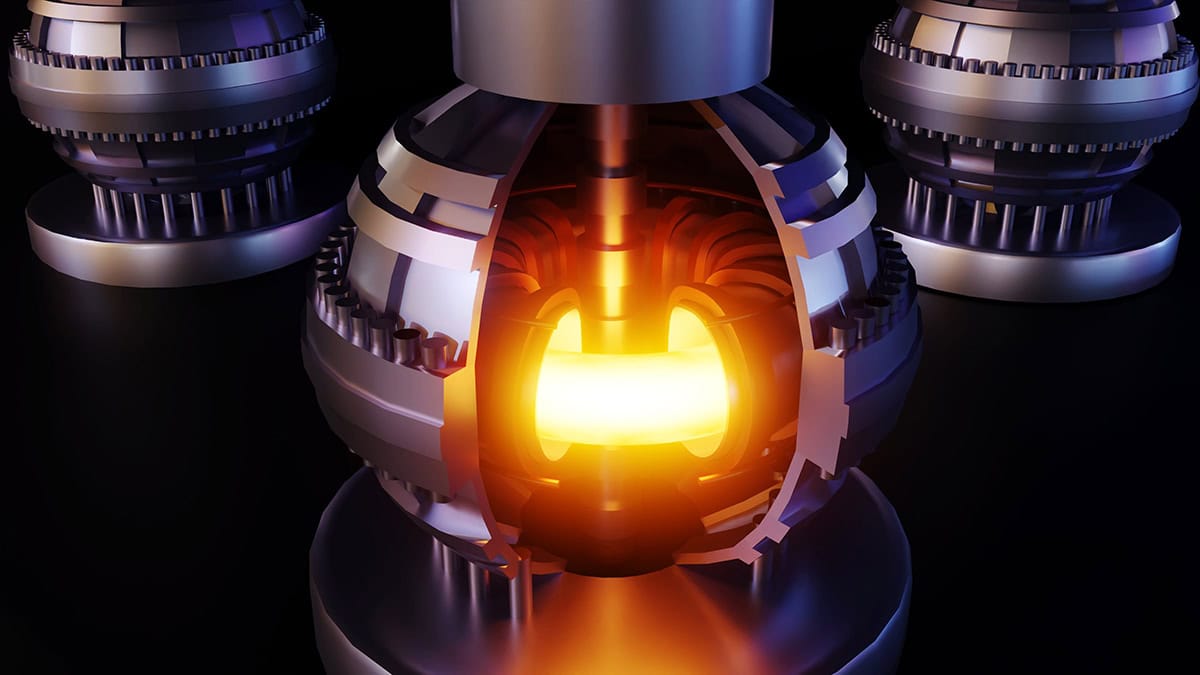
Superheated: A growing number of companies are aiming to build compact reactors that will deliver electricity from nuclear fusion (Credit: shutterstock/Love Employee)

Nuclear fusion has long held the promise of providing an unlimited supply of clean energy, but turning such a compelling concept into a practical reality has always seemed just beyond reach. That could be about to change, with a new wave of commercial operators developing compact nuclear reactors that they believe could be providing the grid with useful amounts of electricity within the next 10 years.

Leading the way is the US, where a combination of federal grants and private capital is fuelling the drive towards commercial production. One company grabbing the headlines is Helion, which has broken ground on a power plant that is due to supply 50 MW of power to Microsoft by 2028. Commonwealth Fusion Systems, set up with the backing of the Massachusetts Institute of Technology, has also announced an agreement with Google that trades an early strategic investment for 200 MW of power when the company’s first reactor comes online in the early 2030s.

Such commercial interest has been buoyed by a clarification in the licensing regime, at least within the US. In 2023 the Nuclear Regulatory Commission (NRC), the federal agency responsible for nuclear safety, ruled that fusion reactors need not be governed by the highly restrictive framework that applies to existing power plants based on nuclear fission. Instead, fusion developers must comply with the part of the code that is primarily focused on the handling of radioactive material.

“That was a big win for the industry,” says Steve Bump, an expert in radiation safety and licensing at consultancy firm Dade Moeller, part of the NV5 group. “Fusion is a much safer process because there is no spent fuel to deal with and there is no risk of the reaction running out of control. In the event of a system failure, everything just stops.”

Growth industry

Almost 50 companies are now actively involved in fusion development and research within the US, while others are active in the UK, China and Europe. Different reactor designs are being pursued, but each rely on heating a plasma containing deuterium and tritium to extreme temperatures and then confining the superheated plasma. When the light atomic nuclei collide and fuse together – which requires the plasma to reach temperatures above 100 million degrees Celsius – the nuclear reaction releases helium gas and high-energy neutrons, along with a vast amount of energy.

Nuclear fusion has already been shown to deliver intense bursts of energy that exceed the power needed to generate and sustain the plasma, but no-one has yet managed to produce a steady supply of electricity from the process. “The fusion industry is often characterized as a race,” says Bump. “There are many new companies that are aiming to build a commercially viable power plant that can be scaled up and replicated in multiple locations.”

Amid this rapid expansion, one upshot from the NRC ruling is that state-level regulators now have the authority to award licences for fusion reactors, provided that they follow the framework set out by the federal agency. But these state regulators are more accustomed to issuing licences to healthcare providers or research institutes that need to handle small amounts of radioactive material, and they are often wary of applications from fusion developers that ask for large quantities of radioactive tritium. “The amounts required for fusion can produce thousands and thousands of curies, while most other applications need less than a microcurie,” says Bump. “That makes it very different from a licensing standpoint, and the state agencies don’t have much experience with activities that use that much material. It makes them nervous.”

A big priority for them is to ensure that people in and around the plant are safe from any exposure, and we can help to ensure that the information provided by the company is clear, thorough and accurate.

Bump and his colleagues can help fusion companies to reassure the state regulators that all the evaluations have been done correctly. “Each state agency is a little different, and we need to work with each one to find out what they need and what they will accept,” adds Bump. “They need to consider the impact of the facility on public safety and the local environment, and they are going to ask questions before they are confident enough to issue a licence.”

That abundance of caution means that each application must be customized to address the concerns of each regulator. One area that receives particular scrutiny is the amount of shielding needed to protect people from the energetic neutrons produced by the fusion reaction. Slowing down and absorbing these neutral particles is a difficult process, requiring a multi-stage strategy that typically includes water-cooled steel and walls made of reinforced concrete.

As part of the licence application, companies need to demonstrate that their shielding mechanisms reduce the radiation dose to acceptable levels, both for people working inside the facility and those living and working in the neighbourhood. “We can review the shielding evaluations produced by companies before they are submitted to the state regulators,” says Bump. “A big priority for them is to ensure that people in and around the plant are safe from any exposure, and we can help to ensure that the information provided by the company is clear, thorough and accurate.”

Practical advice

The experts at Dade Moeller can also help fusion developers to make a realistic assessment of the amount of tritium they will need, since any licence will place a limit on how much radioactive material can be held within the facility. In addition, they can advise companies on how to establish and document failsafe procedures for storing and using tritium, along with real-time monitoring systems to ensure that emissions of tritium gas are kept within regulated limits. “We also look at the potential dose consequences if there is an accidental release, along with any emergency planning that may be needed if any radioactive material does escape,” adds Bump.

As well as providing the technical documentation needed by the regulators, fusion companies need to gain the support of local residents and businesses. Outreach events and public meetings are critical to explain how the technology works, openly discuss the risks and mitigation strategies, and highlight the benefits to the surrounding community. “We have attended some of the public meetings where people have had the opportunity to ask questions and voice their concerns,” says Bump. “We can help companies to prepare helpful and informative answers, particularly when questions are submitted prior to the meeting.”

If these efforts are successful, many local communities welcome the economic boost that could be produced by a commercial power plant, such as the creation of highly skilled jobs and the potential to attract other businesses to the area. Several fusion companies are planning to build their production facilities on the sites of previous coal-fired power stations, potentially breathing new life into small cities suffering from a post-industrial malaise.

These sites also provide prospective commercial operators with easy access to the existing electrical infrastructure. “It’s convenient for them because there is no need to install new transmission lines,” says Bump. “If they can make electricity, they can simply connect to the grid through the existing substation.”

Most commercial developers are currently building and testing pilot machines, with commercial production expected in the 2030s. As they make that transition, Bump and his colleagues can provide the expertise needed to navigate the licensing requirements across different states. “We can offer advice on how to get started, and how to set up a framework for radiation protection that will support companies as they scale up their operations,” says Bump. “It’s a growing industry, and we are here to help.”


The post Licensing puts the power into nuclear fusion appeared first on Physics World.

Celebrating 100 years of physics at Tsinghua University

11 mars 2026 à 14:57

Can you tell us about your career in physics?

My academic path studying physics at Tsinghua University began in 1981 where I completed a Bachelor’s and Master’s before earning a PhD in 1992. I then did a postdoc at the Central Iron & Steel Research Institute in Beijing before returning to Tsinghua University in 1994 as a faculty member in the physics department.

Have you always studied and worked in China?

During my time at Tsinghua I carried out two research visits abroad, first at the University of Minnesota from 1996 to 1999 and then at the University of California, Berkeley from 2002 to 2003.

What is your research focus?

My career has been centred on employing and developing theoretical computational methods to understand, predict and design the physical properties of materials from the microscopic level of atoms and electrons. My work is an attempt to use a “computational microscope” to probe the fundamental nature of materials and sketch blueprints for new ones. This journey from fundamental theory to potential application has been continuously challenging and immensely rewarding.

Can you explain some examples?

One is in the theoretical study of topological quantum materials. We have performed theoretical work predicting the potential for the quantum spin Hall effect in two-dimensional systems and we have explored new states of matter such as topological semimetals. Another avenue of research is on the physics of low-dimensional and artificial microstructures. My group has a long-standing interest in the electronic structure, magnetic properties, and optical responses of low-dimensional systems like graphene and two-dimensional magnetic materials. Recently, our team discovered a novel spin chirality-driven nonlinear optical effect in a 2D magnetic material.

Are you using AI in this endeavour?

Yes. A significant recent focus is pioneering the integration of artificial intelligence with computational materials science. We are developing deep-learning models that are compatible with mainstream computational frameworks to increase the efficiency of simulating complex material systems and accelerate the discovery of new materials.

What areas of physics research is Tsinghua active in?

Our department boasts a robust and comprehensive research portfolio. Our research can be mainly outlined as three core directions. The first is condensed-matter physics, which has historically been one of our largest and most prominent areas. Research here spans from fundamental quantum phenomena to materials design for future technologies.

Experimentally we work in areas such as topological quantum materials, high-temperature superconductivity, two-dimensional systems, and novel magnetic phenomena. The recent experimental discovery of the quantum anomalous Hall effect at Tsinghua is one example. Theoreticians, including my group, focus on predicting new quantum states and understanding complex electronic behaviours using first-principles calculations and model analysis.

A more diverse international community brings essential perspectives that challenge assumptions, spark innovation and elevate our collective work to a global standard

What about the other two areas?

The second area is atomic, molecular, and optical physics. Key topics include ultra-cold atoms for quantum simulation of complex many-body problems, quantum optics and quantum communication and precision measurement science. Work here often provides the physical platforms and techniques that enable advances in quantum-information science.

The other area is nuclear physics and particle physics: In particle physics, our faculty and students work in major international collaborations such as the Large Hadron Collider. Besides these core directions, our research is also focused on programmes in astrophysics/cosmology and in biophysics. The emergent field of quantum-information science also connects nearly all these areas making it a defining feature of our current research environment.

Are there some areas of physics that Tsinghua might increase its efforts in?

One is the integration of artificial intelligence and machine learning with fundamental physics research. In my own field of computational materials science, we are already using AI to accelerate the discovery of new quantum materials and predict complex properties with unprecedented speed. This approach should be expanded and deepened across the department — from using AI to analyse data from particle colliders and gravitational-wave detectors, to developing new algorithms for quantum many-body problems and astrophysical simulations.

Any other areas?

We must also intensify our efforts in the development and application of quantum technologies. We already have excellent groups in quantum information, quantum optics and quantum materials so the next step is to combine these strengths towards the engineering of functional quantum systems.

What are some of the major international institutions that Tsinghua collaborates with?

Internationally, our researchers are embedded in several “big science” projects such as the XENON collaboration for direct dark-matter detection, particle physics experiments like ATLAS, CMS and FASER at CERN as well as the LIGO collaboration in gravitational-wave astronomy.

What about those closer to home?

Domestically, we work with the Institute of Physics at the Chinese Academy of Sciences and the Beijing Academy of Quantum Information Sciences, particularly in areas like condensed matter and quantum science. We also value industry partnerships, a notable example being our long-standing collaboration with Foxconn, which formed the joint Foxconn Nanotechnology Center within our department.

How many students and staff are there in Tsinghua’s physics department?

We have an academic community of more than 900 people: 85 faculty members, around 100 staff members, 420 graduate students and 320 undergraduate students.

How many foreign staff and students do you have?

We currently have four foreign professors together with 11 international undergraduates and five international PhD candidates – from Malaysia, Germany, Belarus, Russia, and Iran.

Would you like to see these numbers increase?

Yes, but my emphasis is more on qualitative enhancement than just quantitative increase. A more diverse international community brings essential perspectives that challenge assumptions, spark innovation and elevate our collective work to a global standard. We are working to create an even more welcoming and supportive environment – through dedicated discussions on internationalization, fostering research collaborations, and hosting global conferences.

I hope we are known not just for our discoveries, but for building essential research “bridges” that solve big problems

Why is Tsinghua an attractive place to work?

It’s appeal lies not in any single attribute, but in a unique ecosystem that fosters research and innovation. First, is Tsinghua’s strengths across science and engineering that create a natural incubator for interdisciplinary work. My own research, particularly in integrating advanced computational methods with materials discovery, has been significantly accelerated by collaboration with leading experts in adjacent fields.

Second, is the balance of academic freedom and responsibility. The university provides substantial intellectual freedom and long-term support allowing researchers to pursue high-risk, fundamental questions without being bound solely by short-term deliverables. Coupled with this freedom is a profound sense of responsibility to contribute to national and global scientific efforts, an ethos deeply embedded in Tsinghua’s tradition.

Third, it is the quality of the students. Engaging with some of China’s most talented and driven young minds is perhaps the greatest privilege. Their curiosity, rigor and fresh perspectives constantly challenge and renew my own thinking. Mentoring them from promising undergraduates to independent researchers is a core part of the scientific legacy we build here.

What events do you have planned to mark the centenary of physics at Tsinghua?

We have a number of activities planned including the publication of an updated departmental history book that formally documents our century-long journey from 1926 to the present as well producing a centennial documentary film. We also have an alumni interview series and department exhibitions to visually narrate our history and scientific contributions.

We are collaborating with the Chinese Physical Society, the Chinese Academy of Sciences and the National Natural Science Foundation as well as IOP Publishing to publish commemorative special issues throughout the year. There will also be a series of high-level academic forums and lecture series at Tsinghua, the culmination of the year’s celebration will be Centennial Commemoration Conference on Saturday on 5 September.

What do you hope for Tsinghua in the coming 100 years?

First, I hope we become the world’s leading centre for a new way of doing physics: integrating AI directly into the core of our research cycle. This means moving beyond using AI just as a tool. I envision a future where AI actively helps us formulate new theories about quantum materials, guides the design of critical experiments in astrophysics and particle detection and even controls advanced instruments to run complex measurements. Our goal should be to pioneer a “AI-scientist” partnership, making it as natural as using a microscope.

Second, I hope we are known not just for our discoveries, but for building essential research “bridges” that solve big problems. This means deeply partnering with our engineering schools to turn quantum science into reliable technology as well as with life sciences and environmental science to apply physical principles to global challenges in health and sustainability. We aim to educate students who are not just technically able, but who are also ethically grounded and driven.

If we succeed, then Tsinghua Physics will continue to contribute meaningfully, not just to the scientific community, but to the broader human endeavour of understanding our world. That is the enduring legacy we strive for.

The post Celebrating 100 years of physics at Tsinghua University appeared first on Physics World.

Cobalt dissolution from PtₓCo/C cathode catalysts in PEM fuel cells: in situ quantification and removal methods

Par : No Author
11 mars 2026 à 14:41

Pt-alloy/C catalysts, such as PtxCo/C, are used as cathode catalysts in proton-exchange membrane (PEM) fuel cells due to their exceptionally high kinetic activity for the oxygen reduction reaction (ORR). However, the performance and durability of membrane electrode assemblies (MEAs) with a PtxCo/C cathode catalyst are impaired by the dissolution of Co2+ cations in the ionomer phase of the MEA.

In the first part of this webinar, an in situ method to quantify the amount of Co2+ contamination in an MEA via electrochemical impedance spectroscopy (EIS) is presented. Pt/C model MEAs doped with different amounts of Co2+ ions are used to analyze the effects of Co2+ contamination on the H2/air performance and on ionic resistances under various conditions, highlighting the role of the inactive membrane area. Based on these model MEAs, a calibration curve is established that correlates the high-frequency resistance (HFR) under dry conditions to the amount of Co2+ in the MEA. Due to the high sensitivity of the dry HFR to metal cations, this method enables the tracking of Co2+ leaching from a Pt2.5Co/C MEA in voltage cycling accelerated stress tests.

In the second part, a recovery method to remove cationic contaminants from an MEA using CO2–O2 cathode gas feeds is presented. With this method, cation-induced performance losses of aged PtxCo/C MEAs can be largely recovered. The mechanism of cation removal and opportunities for the durability of Pt-alloy/C MEAs are discussed.

Markus Schilling
Markus Schilling

Markus Schilling is a PhD student at the chair of technical electrochemistry under the supervision of Prof Hubert A Gasteiger at the Technische Universität München. In his research, he investigates the degradation of Pt-alloy on carbon cathode catalysts (e.g., PtCo/C) for PEM fuel cells, with the aim of deepening the understanding of aging mechanisms and identifying strategies to increase durability. Current works include catalyst pre-treatments, development of diagnostic methods on the cell level, voltage cycling accelerated stress testing, and recovery methods.

Schilling received his BSc in 2019 from the Universität Konstanz and his MSc in 2022 from the Technische Universität München, where he investigated PEM fuel cell catalyst inks in his thesis, supervised by Prof Gasteiger.

The post Cobalt dissolution from PtₓCo/C cathode catalysts in PEM fuel cells: in situ quantification and removal methods appeared first on Physics World.

The perils of political impatience in the Artemis program

11 mars 2026 à 14:00
Artemis 2

Recent engineering setbacks, specifically regarding helium system issues associated with the improper flow of helium into the Space Launch System (SLS) rocket’s upper stage, and persistent hydrogen leaks, have forced NASA to delay the crewed Artemis 2 mission to no earlier than April. While frustrating for the public, these delays are a necessary byproduct of […]

The post The perils of political impatience in the Artemis program appeared first on SpaceNews.

❌