 Connexion
Nuclear-powered transport – how far can it take us?
In 1942 physicists in Chicago, led by Enrico Fermi, famously produced the world’s first self-sustaining nuclear chain reaction. But it was to be another nine years before electricity was generated from fission for the first time. That landmark event occurred in 1951 when the Experimental Breeder Reactor-I in southern Idaho powered a string of four 200-watt light bulbs.
Our ability to harness nuclear power has been under constant development since then. In fact, according to the Nuclear Energy Association, a record 2667 terrawatt-hours of electricity was generated by nuclear reactors around the world in 2024 – up 2.5% on the year before. But what, I wonder, is the potential of nuclear-powered transport?
A “nuclear engine” has many advantages, notably providing a vehicle with an almost unlimited supply of onboard power, with no need for regular refuelling. That’s particularly attractive for large ships and submarines, where fuel stops at sea are few and far between. It’s even better for space craft, which cannot refuel at all.
The downside is that a vehicle needs to be fairly large to carry even a small nuclear fission reactor – plus all the heavy shielding to protect passengers onboard. Stringent safety requirements also have to be met. If the vehicle were to crash or explode, the shield around the reactor needs to stay fully intact.
Ships and planes
Perhaps the best known transport application of nuclear power is at sea, where it’s used for warships, submarines and supercarriers. The world’s first nuclear-powered ship was the US Navy submarine Nautilus, which was launched in 1954. As the first vessel to have a nuclear reactor for propulsion, it revolutionized naval capabilities.
Compared to oil or coal-fired ships, nuclear-powered vessels can travel far greater distances. All the fuel is in the reactor, which means there is no need for additional fuel be carried onboard – or for exhaust chimneys or air intakes. Even better, the fuel is relatively cheap. But operating and infrastructure costs are steep, which is why almost all nuclear-powered marine vessels belong to the military.
There have, however, been numerous attempts to develop other forms of nuclear-powered transport. While a nuclear-powered aircraft might seem unlikely, the idea of flying non-stop to the other side of the world, without giving off any greenhouse-gas emissions, is appealing. Incredible as it might seem, airborne nuclear reactors were actually trialled in the mid-1950s.
That was when the United States Air Force converted a B-36 bomber to carry an operational air-cooled reactor, weighing around 18 tons. The aircraft was not actually nuclear powered but it was operated in this configuration to assess the feasibility of flying a nuclear reactor. The aircraft made a total of 47 flights between July 1955 and March 1957.
In 1955, the Soviet Union also ran a project to adapt a Tupolev Tu-95 “Bear” aircraft for nuclear power. However, because of the radiation hazard to the crew and the difficulties in providing adequate shielding, the project was soon abandoned. Neither the American or the Soviet atomic-powered aircraft ever flew and – because the technology was inherently dangerous – it was never considered for commercial aviation.
Cars and trains
The same fate befell nuclear-powered trains. In 1954 the US nuclear physicist Lyle Borst, then at the University of Utah, proposed a 360-tonne locomotive carrying a uranium-235 fuelled nuclear reactor. Several other countries, including Germany, Russia and the UK, also had schemes for nuclear locos. But public concerns about safety could not be overcome and nuclear trains were never built. The $1.2m price tag of Borst’s train didn’t help either.
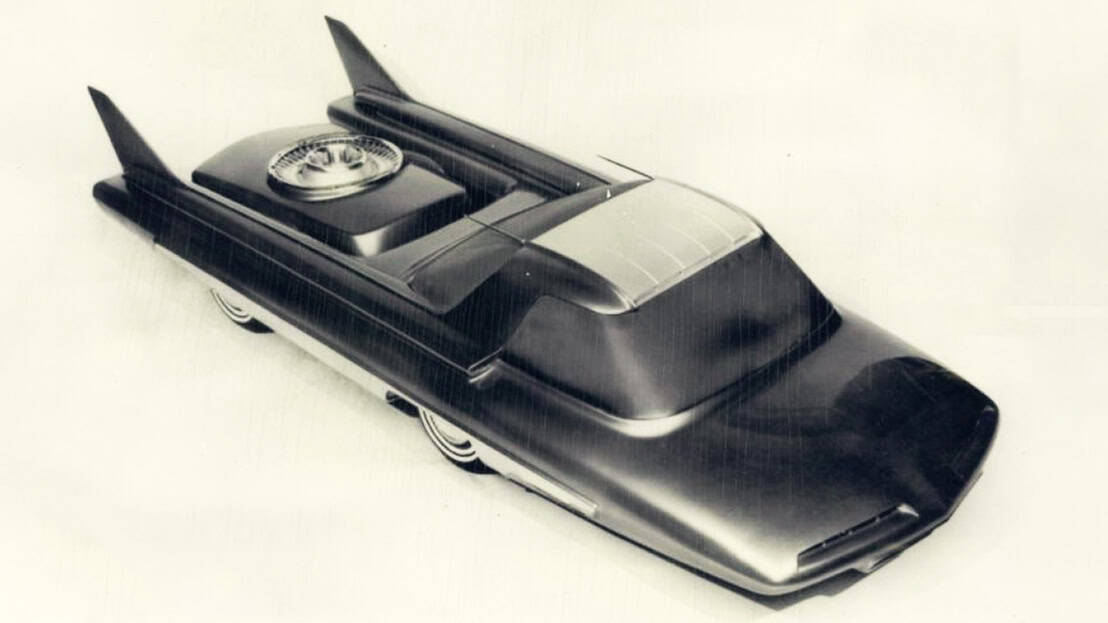
In the late 1950s, meanwhile, there were at least four theoretical nuclear-powered “concept cars”: the Ford Nucleon, the Studebaker Packard Astral, the Simca Fulgur and the Arbel Symétric. Based on the assumption that nuclear reactors would get much smaller over time, it was felt that such a car would need relatively light radiation shielding. I certainly wouldn’t have wanted to take one of those for a spin; in the end none got beyond concept stage.
Perhaps the real success story of nuclear propulsion has been in space.
But perhaps the real success story of nuclear propulsion has been in space. Between 1967 and 1988, the Soviet Union pioneered the use of fission reactors for powering surveillance satellites, with over 30 nuclear-powered satellites being launched during that period. And since the early 1960s, radioisotopes have been a key source of energy in space.
Driven by the desire for faster, more capable and longer duration space missions to the Moon, Mars and beyond, China, Russia and the US are now investing significantly in the next generation of nuclear reactor technology for space propulsion, where solar or radioisotope power will be inadequate. Several options are on the table.
One is nuclear thermal propulsion, whereby energy from a fission reactor heats a propellant fuel. Another is nuclear electric propulsion, in which the fission energy ionizes a gas that gets propelled out the back of the spacecraft. Both involve using tiny nuclear reactors of the kind used in submarines, except they’re cooled by gas, not water. Key programmes are aiming for in-space demonstrations in the next 5–10 years.
Where next?
Many of the first ideas for nuclear-powered transport were dreamed up little more than a decade after the first self-sustaining chain reaction. The appeal was clear: compared to other fuels, nuclear power has a high energy density and lasts much longer. It also has zero carbon emissions. Nuclear power must have seemed a panacea for all our energy needs – using it for cars and planes must have seen an obvious next step.
However, there are major safety issues to address when nuclear sources are mobilized, from protecting passengers and crew, to ensuring appropriate safeguards should anything go wrong. And today we understand all too well the legacy of nuclear systems, from the safe disposal of spent fuel to the decommissioning of nuclear infrastructure and equipment.
We’ve struck the right balance when it comes to using nuclear power, confining it to sea-faring vessels under the watchful eye of the military.
Here on Earth, I think we’ve struck the right balance when it comes to using nuclear power, confining it to sea-faring vessels under the watchful eye of the military. But as human-crewed, deep-space exploration beckons, a whole new set of issues will arise. There will, of course, be lots of technical and engineering challenges.
How, for example, will we maintain, repair and decommission nuclear-powered space craft? How will we avoid endangering crews or polluting the environment especially when craft take off? Who should set appropriate legislation – and how we do we police those rules? When it comes to space, nuclear will help us “to boldly go”; but it will also require bold regulation.
The post Nuclear-powered transport – how far can it take us? appeared first on Physics World.
