This episode of the Physics World Weekly podcast features a conversation with Tim Prior and John Devaney of the National Physical Laboratory (NPL), which is the UK’s national metrology institute.
Prior is NPL’s quantum programme manager and Devaney is its quantum standards manager. They talk about NPL’s central role in the recent launch of NMI-Q, which brings together some of the world’s leading national metrology institutes to accelerate the development and adoption of quantum technologies.
Prior and Devaney describe the challenges and opportunities of developing metrology and standards for rapidly evolving technologies including quantum sensors, quantum computing and quantum cryptography. They talk about the importance of NPL’s collaborations with industry and academia and explore the diverse career opportunities for physicists at NPL. Prior and Devaney also talk about their own careers and share their enthusiasm for working in the cutting-edge and fast-paced field of quantum metrology.
This podcast is sponsored by the National Physical Laboratory.
This episode of the Physics World Weekly podcast features Alex May, whose research explores the intersection of quantum gravity and quantum information theory. Based at Canada’s Perimeter Institute for Theoretical Physics, May explains how ideas being developed in the burgeoning field of quantum information theory could help solve one of the most enduring mysteries in physics – how to reconcile quantum mechanics with Einstein’s general theory of relativity, creating a viable theory of quantum gravity.
This interview was recorded in autumn 2025 when I had the pleasure of visiting the Perimeter Institute and speaking to four physicists about their research. This is the last of those conversations to appear on the podcast.
Particle and nuclear physics evokes evokes images of huge accelerators probing the extremes of matter. But in this round-up of my favourite research of 2025 I have chosen five stories in which particle and nuclear physics forms the basis for a range of quirky and fascinating research from astrophysics to archaeology.
Stable discovery The Fireball experiment installed in the HiRadMat irradiation area at CERN. (Courtesy: Gianluca Gregori)
My first pick involves simulating the vast cosmic plasma in the lab. Blazars are extremely bright galaxies that are powered by supermassive black holes. They emit intense jets of radiation, including teraelectronvolt gamma rays – which can be detected by astronomers if a jet happens to point at Earth. As these high-energy photons travel through intergalactic space, they interact with background starlight, producing numerous electron–positron pairs. These pairs should, in theory, generate gigaelectronvolt gamma rays – but this secondary radiation has never been observed. One explanation is that intergalactic magnetic fields deflect these pairs and the resulting gamma rays away from our line of sight. However, there is no conclusive evidence for such fields. Another theory is that plasma instabilities in the sparse intergalactic medium could dissipate the energy of the pair beams. Now, physicists working on the Fireball experiment at CERN have simulated the effect of plasma instabilities by firing a beam of electron–positron pairs through a metre-long argon plasma. They found that plasma instabilities are too weak to account for the missing gamma radiation – strengthening the case for the existence of primordial intergalactic magnetic fields.
A compact source of muons could soon be discovering hidden chambers in ancient pyramids. Muons are subatomic particles similar to electrons but 200 times heavier. They are produced in copious amounts in the atmosphere by cosmic rays. These cosmic muons can penetrate long distances into materials and are finding increasing use in “muon tomography” – a technique that has imaged the interiors of huge objects such as volcanoes, pyramids and nuclear reactors. One downside of muon tomography is that muons are always vertically incident, limiting opportunities for imaging. While beams of muons can be made in accelerators, these are large and expensive facilities – and the direction of such beams are also fixed. Now, physicists at Lawrence Berkeley National Laboratory have demonstrated a compact, and potentially portable method for generating high-energy muon beams using laser plasma acceleration. It uses an ultra-intense, tightly focused laser pulse to accelerate electrons in a short plasma channel. These electrons then strike a metal target creating a muon beam. With more work, compact and portable muon sources could be developed, leading to new possibilities for non-destructive imaging in archaeology, geology, and nuclear safety.
Could a “superradiant neutrino laser” be created using radioactive atoms in an ultracold Bose–Einstein condensate (BEC)? The answer is “maybe”, according to theoretical work by two physicists in the US. Their proposal involves creating a BEC of rubidium-83, which undergoes beta decay involving the emission of neutrinos. Unlike photons, neutrinos are fermions and therefore cannot form the basis of conventional laser. However, if the atoms in the BEC are close enough together, quantum interactions between the atomic nuclei could accelerate beta decay and create a coherent, laser-like burst of neutrinos. This is a well-known phenomenon called superradiance. While the idea could be tested using existing technologies for making BECs, it would be a challenge to deploy radioactive rubidium in a conventional atomic physics lab. Another drawback is that there are no obvious applications for a neutrino laser – at least for now. However, the very idea of a neutrino laser is so cool that I am hoping that someone will try to build one soon!
Lifted by crane The BASE-STEP system is moved to a lorry at CERN. Marcel Leonhardt (right), physicist at HHU, checks the status of the device and confinement of the protons on a tablet. (Courtesy: BASE/Julia Jäger)
If you happen to be driving between Geneva and Dusseldorf in the future, you might just overtake a shipment of antimatter. It will be on its way to an experiment that could solve some of the biggest mysteries in physics – including why there is much more matter than antimatter in the universe. While antielectrons (positrons) can be created in a small lab, antiprotons can only be created at large and expensive accelerators. This limits where antimatter experiments can be done. But now, physicists on the BASE collaboration at CERN have shown that it should be possible to transport antiprotons by road. Protons stood in for antiprotons in their demonstration and the particles were held in an electromagnetic trap at cryogenic temperatures and ultralow pressure. By transporting their BASE-STEP system around CERN’s Meyrin site, they showed it was stable and robust enough to handle the rigors of road travel. The system will now be re-configured to transport antiprotons about 700 km to Germany’s Heinrich Heine University. There, physicists hope to search for charge–parity–time (CPT) violations in protons and antiprotons with a precision at least 100 times higher than is currently possible at CERN. The BASE collaboration is also cited in our Top 10 Breakthroughs of 2025 for their quantum control of a single antiproton.
Solid quartz crystals revolutionized time keeping in the 20th century, so could solid-state nuclear clocks soon do the same? Today, the best timekeepers use the light emitted in atomic transitions. In principle, even better clocks could be made using very-low-energy gamma-rays emitted in some nuclear transitions. Nuclei are much smaller than atoms and these transitions are governed by the strong force. This means that such nuclear clocks would be far less susceptible to performance-degrading electromagnetic noise. And unlike atomic clocks, the nuclei could be embedded in solids – which would greatly simplify clock design. Thorium-229 shows great promise as a clock nucleus but it has two practical shortcomings: it is radioactive and extremely expensive. The solution to both of these problems is a clock design that uses only a tiny amount of thorium-229. Now researchers in the US have shown that physical vapour deposition can used to create extremely thin films of thorium tetrafluoride. Characterization using a vacuum ultraviolet laser confirmed the accessibility of the clock transition – but its lifetime was shorter and the signal less intense than measured in thorium-doped crystals. However, the researchers believe that these unexpected results should not dissuade those aiming to build nuclear clocks.
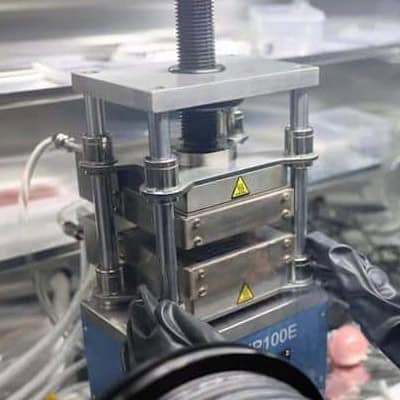
Under pressure A researcher in Beijing operates an apparatus used to make 2D metals. (Courtesy: CAS IOP/Handout via Xinhua)
The Physics World 2025 Breakthrough of the Year is awarded to Guangyu Zhang, Luojun Du and colleagues at the Institute of Physics of the Chinese Academy of Sciences for producing the first 2D sheets of metal. The team produced five atomically thin 2D metals – bismuth, tin, lead, indium and gallium – with the thinnest being around 6.3 Å. The researchers say their work is just the “tip of the iceberg” and now aim to use their new materials to probe the fundamentals of physics. Their breakthrough could also lead to the development of new technologies.
Since the discovery of graphene – a sheet of carbon just one atom thick – in 2004, hundreds of other 2D materials have been fabricated and studied. In most of these, layers of covalently bonded atoms are separated by gaps where neighbouring layers are held together only by weak van der Waals (vdW) interactions, making it relatively easy to “shave off” single layers to make 2D sheets. Many thought that making atomically thin metals would be impossible given that each atom in a metal is strongly bonded to surrounding atoms in all directions.
The technique developed by Zhang, Du and colleagues involves heating powders of pure metals between two monolayer-MoS2/sapphire vdW anvils. Once the metal powders are melted into a droplet, the researchers applied a pressure of 200 MPa and continued this “vdW squeezing” until the opposite sides of the anvils cooled to room temperature and 2D sheets of metal were formed.
“Right now, we have reported five single element metals, but actually we can do more because of the 88 metals in the periodic table,” Zhang explains in today’s episode of the Physics World Weekly podcast. In the podcast, he also talks about the team’s motivation creating 2D metals and some of the possible technological applications of the materials.
The Breakthrough of the Year was chosen by the Physics World editorial team. We looked back at all the scientific discoveries we have reported on since 1 January and picked the most important. In addition to being reported in Physics World in 2025, the breakthrough must meet the following criteria:
Significant advance in knowledge or understanding
Importance of work for scientific progress and/or development of real-world applications
Of general interest to Physics World readers
Before we picked our winners, we released the Physics World Top 10 Breakthroughs for 2025, which served as our shortlist. The other nine breakthroughs are listed below in no particular order.
Analysing returned samples Tim McCoy (right), curator of meteorites at the Smithsonian’s National Museum of Natural History, and research geologist Cari Corrigan examine scanning electron microscope (SEM) images of a Bennu sample. (Courtesy: James Di Loreto, Smithsonian)
To Tim McCoy, Sara Russell, Danny Glavin, Jason Dworkin, Yoshihiro Furukawa, Ann Nguyen, Scott Sandford, Zack Gainsforth and an international team of collaborators for identifying salt, ammonia, sugar, nitrogen- and oxygen-rich organic materials, and traces of metal-rich supernova dust, in samples returned from the near-Earth asteroid 101955 Bennu. The incredible chemical richness of this asteroid, which NASA’s OSIRIS-REx spacecraft visited in 2020, lends support to the longstanding hypothesis that asteroid impacts could have “seeded” the early Earth with the raw ingredients needed for life to form. The discoveries also enhance our understanding of how Bennu and other objects in the solar system formed out of the disc of material that coalesced around the young Sun.
To Takamasa Momose of the University of British Columbia, Canada, and Susumu Kuma of the RIKEN Atomic, Molecular and Optical Physics Laboratory, Japan for observing superfluidity in a molecule for the first time. Molecular hydrogen is the simplest and lightest of all molecules, and theorists predicted that it would enter a superfluid state at a temperature between 1‒2 K. But this is well below the molecule’s freezing point of 13.8 K, so Momose, Kuma and colleagues first had to develop a way to keep the hydrogen in a liquid state. Once they did that, they then had to work out how to detect the onset of superfluidity. It took them nearly 20 years, but by confining clusters of hydrogen molecules inside helium nanodroplets, embedding a methane molecule within the clusters, and monitoring the methane’s rotation, they were finally able to do it. They now plan to study larger clusters of hydrogen, with the aim of exploring the boundary between classical and quantum behaviour in this system.
To researchers at the University of Southampton and Microsoft Azure Fiber in the UK, for developing a new type of optical fibre that reduces signal loss, boosts bandwidth and promises faster, greener communications. The team, led by Francesco Poletti, achieved this feat by replacing the glass core of a conventional fibre with air and using glass membranes that reflect light at certain frequencies back into the core to trap the light and keep it moving through the fibre’s hollow centre. Their results show that the hollow-core fibres exhibit 35% less attenuation than standard glass fibres – implying that fewer amplifiers would be needed in long cables – and increase transmission speeds by 45%. Microsoft has begun testing the new fibres in real systems, installing segments in its network and sending live traffic through them. These trials open the door to gradual rollout and Poletti suggests that the hollow-core fibres could one day replace existing undersea cables.
PAT pioneers The research team in the proton therapy gantry room. (Courtesy: UO Fisica Sanitaria and UO Protonterapia, APSS, Trento)
To Francesco Fracchiolla and colleagues at the Trento Proton Therapy Centre in Italy for delivering the first clinical treatments using proton arc therapy (PAT). Proton therapy – a precision cancer treatment – is usually performed using pencil-beam scanning to precisely paint the dose onto the tumour. But this approach can be limited by the small number of beam directions deliverable in an acceptable treatment time. PAT overcomes this by moving to an arc trajectory with protons delivered over a large number of beam angles and the potential to optimize the number of energies used for each beam direction. Working with researchers at RaySearch Laboratories in Sweden, the team performed successful dosimetric comparisons with clinical proton therapy plans. Following a feasibility test that confirmed the viability of clinical PAT delivery, the researchers used PAT to treat nine cancer patients. Importantly, all treatments were performed using the centre’s existing proton therapy system and clinical workflow.
To Peter Maurer and David Awschalom at the University of Chicago Pritzker School of Molecular Engineering and colleagues for designing a protein quantum bit (qubit) that can be produced directly inside living cells and used as a magnetic field sensor. While many of today’s quantum sensors are based on nitrogen–vacancy (NV) centres in diamond, they are large and hard to position inside living cells. Instead, the team used fluorescent proteins, which are just 3 nm in diameter and can be produced by cells at a desired location with atomic precision. These proteins possess similar optical and spin properties to those of NV centre-based qubits – namely that they have a metastable triplet state. The researchers used a near-infrared laser pulse to optically address a yellow fluorescent protein and read out its triplet spin state with up to 20% spin contrast. They then genetically modified the protein to be expressed in bacterial cells and measured signals with a contrast of up to 8%. They note that although this performance does not match that of NV quantum sensors, it could enable magnetic resonance measurements directly inside living cells, which NV centres cannot do.
To the team led by Yichao Zhang at the University of Maryland and Pinshane Huang of the University of Illinois at Urbana-Champaign for capturing the highest-resolution images ever taken of individual atoms in a material. The team used an electron-microscopy technique called electron ptychography to achieve a resolution of 15 pm, which is about 10 times smaller than the size of an atom. They studied a stack of two atomically-thin layers of tungsten diselenide, which were rotated relative to each other to create a moiré superlattice. These twisted 2D materials are of great interest to physicists because their electronic properties can change dramatically with small changes in rotation angle. The extraordinary resolution of their microscope allowed them to visualize collective vibrations in the material called moiré phasons. These are similar to phonons, but had never been observed directly until now. The team’s observations align with theoretical predictions for moiré phasons. Their microscopy technique should boost our understanding of the role that moiré phasons and other lattice vibrations play in the physics of solids. This could lead to the engineering of new and useful materials.
Exquisite control Physicist Barbara Latacz at the BASE experiment at CERN. (Courtesy: CERN)
To CERN’s BASE collaboration for being the first to perform coherent spin spectroscopy on a single antiproton – the antimatter counterpart of the proton. Their breakthrough is the most precise measurement yet of the antiproton’s magnetic properties, and could be used to test the Standard Model of particle physics. The experiment begins with the creation of high-energy antiprotons in an accelerator. These must be cooled (slowed down) to cryogenic temperatures without being lost to annihilation. Then, a single antiproton is held in an ultracold electromagnetic trap, where microwave pulses manipulate its spin state. The resulting resonance peak was 16 times narrower than previous measurements, enabling a significant leap in precision. This level of quantum control opens the door to highly sensitive comparisons of the properties of matter (protons) and antimatter (antiprotons). Unexpected differences could point to new physics beyond the Standard Model and may also reveal why there is much more matter than antimatter in the visible universe.
To Richard Allen, director of the Berkeley Seismological Laboratory at the University of California, Berkeley, and Google’s Marc Stogaitis and colleagues for creating a global network of Android smartphones that acts as an earthquake early warning system. Traditional early warning systems use networks of seismic sensors that rapidly detect earthquakes in areas close to the epicentre and issue warnings across the affected region. Building such seismic networks, however, is expensive, and many earthquake-prone regions do not have them. The researchers utilized the accelerometer in millions of phones in 98 countries to create the Android Earthquake Alert (AEA) system. Testing the app between 2021 and 2024 led to the detection of an average of 312 earthquakes a month, with magnitudes ranging from 1.9 to 7.8. For earthquakes of magnitude 4.5 or higher, the system sent “TakeAction” alerts to users, sending them, on average, 60 times per month for an average of 18 million individual alerts per month. The system also delivered lesser “BeAware” alerts to regions expected to experience a shaking intensity of magnitude 3 or 4. The team now aims to produce maps of ground shaking, which could assist the emergency response services following an earthquake.
To Lisa Nortmann at Germany’s University of Göttingen and colleagues for creating the first detailed “weather map” of an exoplanet. The forecast for exoplanet WASP-127b is brutal with winds reaching 33,000 km/hr, which is much faster than winds found anywhere in the Solar System. The WASP-127b is a gas giant located about 520 light–years from Earth and the team used the CRIRES+ instrument on the European Southern Observatory’s Very Large Telescope to observe the exoplanet as it transited across its star in less than 7 h. Spectral analysis of the starlight that filtered through WASP-127b’s atmosphere revealed Doppler shifts caused by supersonic equatorial winds. By analysing the range of Doppler shifts, the team created a rough weather map of WASP-127b, even though they could not resolve light coming from specific locations on the exoplanet. Nortmann and colleagues concluded that the exoplanet’s poles are cooler that the rest of WASP-127b, where temperatures can exceed 1000 °C. Water vapour was detected in the atmosphere, raising the possibility of exotic forms of rain.
Physics World‘s coverage of the Breakthrough of the Year is supported by Reports on Progress in Physics, which offers unparalleled visibility for your ground-breaking research.
This episode of the Physics World Weekly podcast features Guangyu Zhang. Along with his colleagues at the Institute of Physics of the Chinese Academy of Sciences, Zhang has bagged the 2025 Physics World Breakthrough of the Year award for creating the first 2D metals.
In a wide-ranging conversation, we chat about the motivation behind the team’s research; the challenges in making 2D metals and how these were overcome; and how 2D metals could be used to boost our understanding of condensed-matter physics and create new technologies.
I am also joined by my Physics World colleague Matin Durrani to talk about some of the exciting physics that we will be showcasing in 2025.
Physics World‘s coverage of the Breakthrough of the Year is supported by Reports on Progress in Physics, which offers unparalleled visibility for your ground-breaking research.
Physics World is delighted to announce its Top 10 Breakthroughs of the Year for 2025, which includes research in astronomy, antimatter, atomic and molecular physics and more. The Top Ten is the shortlist for the Physics World Breakthrough of the Year, which will be revealed on Thursday 18 December.
Our editorial team has looked back at all the scientific discoveries we have reported on since 1 January and has picked 10 that we think are the most important. In addition to being reported in Physics World in 2025, the breakthroughs must meet the following criteria:
Significant advance in knowledge or understanding
Importance of work for scientific progress and/or development of real-world applications
Of general interest to Physics World readers
Here, then, are the Physics World Top 10 Breakthroughs for 2025, listed in no particular order. You can listen to Physics World editors make the case for each of our nominees in the Physics World Weekly podcast. And, come back next week to discover who has bagged the 2025 Breakthrough of the Year.
Analysing returned samples Tim McCoy (right), curator of meteorites at the Smithsonian’s National Museum of Natural History, and research geologist Cari Corrigan examine scanning electron microscope (SEM) images of a Bennu sample. (Courtesy: James Di Loreto, Smithsonian)
To Tim McCoy, Sara Russell, Danny Glavin, Jason Dworkin, Yoshihiro Furukawa, Ann Nguyen, Scott Sandford, Zack Gainsforth and an international team of collaborators for identifying salt, ammonia, sugar, nitrogen- and oxygen-rich organic materials, and traces of metal-rich supernova dust, in samples returned from the near-Earth asteroid 101955 Bennu. The incredible chemical richness of this asteroid, which NASA’s OSIRIS-REx spacecraft visited in 2020, lends support to the longstanding hypothesis that asteroid impacts could have “seeded” the early Earth with the raw ingredients needed for life to form. The discoveries also enhance our understanding of how Bennu and other objects in the solar system formed out of the disc of material that coalesced around the young Sun.
To Takamasa Momose of the University of British Columbia, Canada, and Susumu Kuma of the RIKEN Atomic, Molecular and Optical Physics Laboratory, Japan for observing superfluidity in a molecule for the first time. Molecular hydrogen is the simplest and lightest of all molecules, and theorists predicted that it would enter a superfluid state at a temperature between 1‒2 K. But this is well below the molecule’s freezing point of 13.8 K, so Momose, Kuma and colleagues first had to develop a way to keep the hydrogen in a liquid state. Once they did that, they then had to work out how to detect the onset of superfluidity. It took them nearly 20 years, but by confining clusters of hydrogen molecules inside helium nanodroplets, embedding a methane molecule within the clusters, and monitoring the methane’s rotation, they were finally able to do it. They now plan to study larger clusters of hydrogen, with the aim of exploring the boundary between classical and quantum behaviour in this system.
To researchers at the University of Southampton and Microsoft Azure Fiber in the UK, for developing a new type of optical fibre that reduces signal loss, boosts bandwidth and promises faster, greener communications. The team, led by Francesco Poletti, achieved this feat by replacing the glass core of a conventional fibre with air and using glass membranes that reflect light at certain frequencies back into the core to trap the light and keep it moving through the fibre’s hollow centre. Their results show that the hollow-core fibres exhibit 35% less attenuation than standard glass fibres – implying that fewer amplifiers would be needed in long cables – and increase transmission speeds by 45%. Microsoft has begun testing the new fibres in real systems, installing segments in its network and sending live traffic through them. These trials open the door to gradual rollout and Poletti suggests that the hollow-core fibres could one day replace existing undersea cables.
PAT pioneers The research team in the proton therapy gantry room. (Courtesy: UO Fisica Sanitaria and UO Protonterapia, APSS, Trento)
To Francesco Fracchiolla and colleagues at the Trento Proton Therapy Centre in Italy for delivering the first clinical treatments using proton arc therapy (PAT). Proton therapy – a precision cancer treatment – is usually performed using pencil-beam scanning to precisely paint the dose onto the tumour. But this approach can be limited by the small number of beam directions deliverable in an acceptable treatment time. PAT overcomes this by moving to an arc trajectory with protons delivered over a large number of beam angles and the potential to optimize the number of energies used for each beam direction. Working with researchers at RaySearch Laboratories in Sweden, the team performed successful dosimetric comparisons with clinical proton therapy plans. Following a feasibility test that confirmed the viability of clinical PAT delivery, the researchers used PAT to treat nine cancer patients. Importantly, all treatments were performed using the centre’s existing proton therapy system and clinical workflow.
To Peter Maurer and David Awschalom at the University of Chicago Pritzker School of Molecular Engineering and colleagues for designing a protein quantum bit (qubit) that can be produced directly inside living cells and used as a magnetic field sensor. While many of today’s quantum sensors are based on nitrogen–vacancy (NV) centres in diamond, they are large and hard to position inside living cells. Instead, the team used fluorescent proteins, which are just 3 nm in diameter and can be produced by cells at a desired location with atomic precision. These proteins possess similar optical and spin properties to those of NV centre-based qubits – namely that they have a metastable triplet state. The researchers used a near-infrared laser pulse to optically address a yellow fluorescent protein and read out its triplet spin state with up to 20% spin contrast. They then genetically modified the protein to be expressed in bacterial cells and measured signals with a contrast of up to 8%. They note that although this performance does not match that of NV quantum sensors, it could enable magnetic resonance measurements directly inside living cells, which NV centres cannot do.
To Guangyu Zhang, Luojun Du and colleagues at the Institute of Physics of the Chinese Academy of Sciences for producing the first 2D sheets of metal. Since the discovery of graphene – a sheet of carbon just one atom thick – in 2004, hundreds of other 2D materials have been fabricated and studied. In most of these, layers of covalently bonded atoms are separated by gaps where neighbouring layers are held together only by weak van der Waals (vdW) interactions, making it relatively easy to “shave off” single layers to make 2D sheets. Many thought that making atomically thin metals, however, would be impossible given that each atom in a metal is strongly bonded to surrounding atoms in all directions. The technique developed by Zhang and Du and colleagues involves heating powders of pure metals between two monolayer-MoS2/sapphire vdW anvils. Once the metal powders are melted into a droplet, the researchers applied a pressure of 200 MPa and continued this “vdW squeezing” until the opposite sides of the anvils cooled to room temperature and 2D sheets of metal were formed. The team produced five atomically thin 2D metals – bismuth, tin, lead, indium and gallium – with the thinnest being around 6.3 Å. The researchers say their work is just the “tip of the iceberg” and now aim to study fundamental physics with the new materials.
Exquisite control Physicist Barbara Latacz at the BASE experiment at CERN. (Courtesy: CERN)
To CERN’s BASE collaboration for being the first to perform coherent spin spectroscopy on a single antiproton – the antimatter counterpart of the proton. Their breakthrough is the most precise measurement yet of the antiproton’s magnetic properties, and could be used to test the Standard Model of particle physics. The experiment begins with the creation of high-energy antiprotons in an accelerator. These must be cooled (slowed down) to cryogenic temperatures without being lost to annihilation. Then, a single antiproton is held in an ultracold electromagnetic trap, where microwave pulses manipulate its spin state. The resulting resonance peak was 16 times narrower than previous measurements, enabling a significant leap in precision. This level of quantum control opens the door to highly sensitive comparisons of the properties of matter (protons) and antimatter (antiprotons). Unexpected differences could point to new physics beyond the Standard Model and may also reveal why there is much more matter than antimatter in the visible universe.
To Richard Allen, director of the Berkeley Seismological Laboratory at the University of California, Berkeley, and Google’s Marc Stogaitis and colleagues for creating a global network of Android smartphones that acts as an earthquake early warning system. Traditional early warning systems use networks of seismic sensors that rapidly detect earthquakes in areas close to the epicentre and issue warnings across the affected region. Building such seismic networks, however, is expensive, and many earthquake-prone regions do not have them. The researchers utilized the accelerometer in millions of phones in 98 countries to create the Android Earthquake Alert (AEA) system. Testing the app between 2021 and 2024 led to the detection of an average of 312 earthquakes a month, with magnitudes ranging from 1.9 to 7.8. For earthquakes of magnitude 4.5 or higher, the system sent “TakeAction” alerts to users, sending them, on average, 60 times per month for an average of 18 million individual alerts per month. The system also delivered lesser “BeAware” alerts to regions expected to experience a shaking intensity of magnitude 3 or 4. The team now aims to produce maps of ground shaking, which could assist the emergency response services following an earthquake.
To Lisa Nortmann at Germany’s University of Göttingen and colleagues for creating the first detailed “weather map” of an exoplanet. The forecast for exoplanet WASP-127b is brutal with winds reaching 33,000 km/hr, which is much faster than winds found anywhere in the Solar System. The WASP-127b is a gas giant located about 520 light–years from Earth and the team used the CRIRES+ instrument on the European Southern Observatory’s Very Large Telescope to observe the exoplanet as it transited across its star in less than 7 h. Spectral analysis of the starlight that filtered through WASP-127b’s atmosphere revealed Doppler shifts caused by supersonic equatorial winds. By analysing the range of Doppler shifts, the team created a rough weather map of WASP-127b, even though they could not resolve light coming from specific locations on the exoplanet. Nortmann and colleagues concluded that the exoplanet’s poles are cooler that the rest of WASP-127b, where temperatures can exceed 1000 °C. Water vapour was detected in the atmosphere, raising the possibility of exotic forms of rain.
To the team led by Yichao Zhang at the University of Maryland and Pinshane Huang of the University of Illinois at Urbana-Champaign for capturing the highest-resolution images ever taken of individual atoms in a material. The team used an electron-microscopy technique called electron ptychography to achieve a resolution of 15 pm, which is about 10 times smaller than the size of an atom. They studied a stack of two atomically-thin layers of tungsten diselenide, which were rotated relative to each other to create a moiré superlattice. These twisted 2D materials are of great interest to physicists because their electronic properties can change dramatically with small changes in rotation angle. The extraordinary resolution of their microscope allowed them to visualize collective vibrations in the material called moiré phasons. These are similar to phonons, but had never been observed directly until now. The team’s observations align with theoretical predictions for moiré phasons. Their microscopy technique should boost our understanding of the role that moiré phasons and other lattice vibrations play in the physics of solids. This could lead to the engineering of new and useful materials.
Physics World‘s coverage of the Breakthrough of the Year is supported by Reports on Progress in Physics, which offers unparalleled visibility for your ground-breaking research.
This episode of the Physics World Weekly podcast features a lively discussion about our Top 10 Breakthroughs of 2025, which include important research in quantum sensing, planetary science, medical physics, 2D materials and more. Physics World editors explain why we have made our selections and look at the broader implications of this impressive body of research.
The top 10 serves as the shortlist for the Physics World Breakthrough of the Year award, the winner of which will be announced on 18 December.
Links to all the nominees, more about their research and the selection criteria can be found here.
Physics World‘s coverage of the Breakthrough of the Year is supported by Reports on Progress in Physics, which offers unparalleled visibility for your ground-breaking research.
Two major experiments have found no evidence for sterile neutrinos – hypothetical particles that could help explain some puzzling observations in particle physics. The KATRIN experiment searched for sterile neutrinos that could be produced during the radioactive decay of tritium; whereas the MicroBooNE experiment looked for the effect of sterile neutrinos on the transformation of muon neutrinos into electron neutrinos.
Neutrinos are low-mass subatomic particles with zero electric charge that interact with matter only via the weak nuclear force and gravity. This makes neutrinos difficult to detect, despite the fact that the particles are produced in copious numbers by the Sun, nuclear reactors and collisions in particle accelerators.
Neutrinos were first proposed in 1930 to explain the apparent missing momentum, spin and energy in the radioactive beta decay of nuclei. The they were first observed in 1956 and by 1975 physicists were confident that three types (flavours) of neutrino existed – electron, muon and tau – along with their respective antiparticles. At the same time, however, it was becoming apparent that something was amiss with the Standard Model description of neutrinos because the observed neutrino flux from sources like the Sun did not tally with theoretical predictions.
Gaping holes
Then in the late 1990s experiments in Canada and Japan revealed that neutrinos of one flavour transform into other flavours as then propagate through space. This quantum phenomenon is called neutrino oscillation and requires that neutrinos have both flavour and mass. Takaaki Kajita and Art McDonald shared the 2015 Nobel Prize for Physics for this discovery – but that is not the end of the story.
One gaping hole in our knowledge is that physicists do not know the neutrino masses – having only measured upper limits for the three flavours. Furthermore, there is some experimental evidence that the current Standard-Model description of neutrino oscillation is not quite right. This includes lower-than-expected neutrino fluxes from some beta-decaying nuclei and some anomalous oscillations in neutrino beams.
One possible explanation for these oscillation anomalies is the existence of a fourth type of neutrino. Because we have yet to detect this particle, the assumption is that it does not interact via the weak interaction – which is why these hypothetical particles are called sterile neutrinos.
Electron energy curve
Now, two very different neutrino experiments have both reported no evidence of sterile neutrinos. One is KATRIN, which is located at the Karlsruhe Institute of Technology (KIT) in Germany. It has the prime mission of making a very precise measurement of the mass of the electron antineutrino. The idea is to measure the energy spectrum of electrons emitted in the beta decay of tritium and infer an upper limit on the mass of the electron antineutrino from the shape of the curve.
If sterile neutrinos exist, then they could sometimes be emitted in place of electron antineutrinos during beta decay. This would change the electron energy spectrum – but this was not observed at KATRIN.
“In the measurement campaigns underlying this analysis, we recorded over 36 million electrons and compared the measured spectrum with theoretical models. We found no indication of sterile neutrinos,” says Kathrin Valerius of the Institute for Astroparticle Physics at KIT and co-spokesperson of the KATRIN collaboration.
Meanwhile, physicists on the MicroBooNE experiment at Fermilab in the US have looked for evidence for sterile neutrinos in how muon neutrinos oscillate into electron neutrinos. Beams of muon neutrinos are created by firing a proton beam at a solid target. The neutrinos at Fermilab then travel several hundred metres (in part through solid ground) to MicroBooNE’s liquid-argon time projection chamber. This detects electron neutrinos with high spatial and energy resolution, allowing detailed studies of neutrino oscillations.
If sterile neutrinos exist, they would be involved in the oscillation process and would therefore affect the number of electron neutrinos detected by MicroBooNE. Neutrino beams from two different sources were used in the experiments, but no evidence for sterile neutrinos was found.
Together, these two experiments rule out sterile neutrinos as an explanation for some – but not all – previously observed oscillation anomalies. So more work is needed to fully understand neutrino physics. Indeed, current and future neutrino experiments are well placed to discover physics beyond the Standard Model, which could lead to solutions to some of the greatest mysteries of physics.
“Any time you rule out one place where physics beyond the Standard Model could be, that makes you look in other places,” says Justin Evans at the UK’s University of Manchester, who is co-spokesperson for MicroBooNE. “This is a result that is going to really spur a creative push in the neutrino physics community to come up with yet more exciting ways of looking for new physics.”
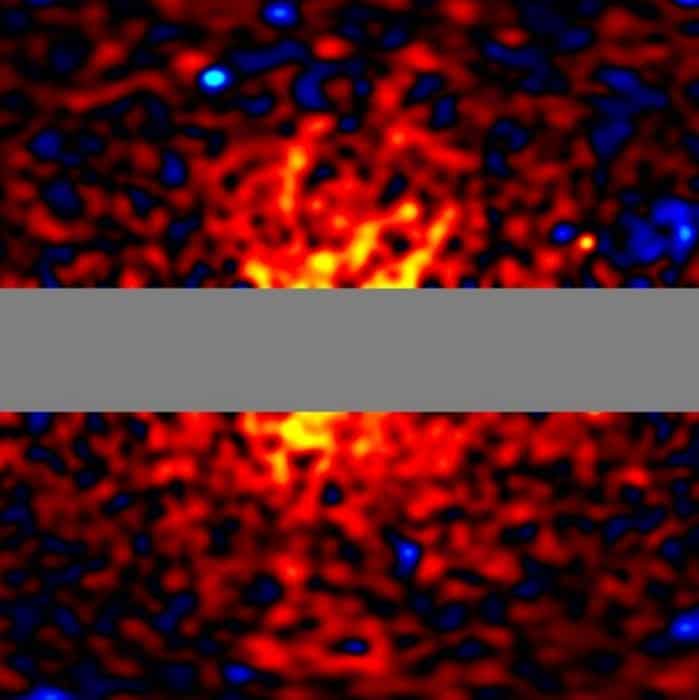
Excess radiation Gamma-ray intensity map excluding components other than the halo, spanning approximately 100° in the direction of the centre of the Milky Way. The blank horizontal bar is the galactic plane area, which was excluded from the analysis to avoid strong astrophysical radiation. (Courtesy: Tomonori Totani/The University of Tokyo)
Gamma rays emitted from the halo of the Milky Way could be produced by hypothetical dark-matter particles. That is the conclusion of an astronomer in Japan who has analysed data from NASA’s Fermi Gamma-ray Space Telescope. The energy spectrum of the emission is what would be expected from the annihilation of particles called WIMPs. If this can be verified, it would mark the first observation of dark matter via electromagnetic radiation.
Since the 1930s astronomers have known that there is something odd about galaxies, galaxy clusters and larger structures in the universe. The problem is that there is not nearly enough visible matter in these objects to explain their dynamics and structure. A rotating galaxy, for example, should be flinging out its stars because it does not have enough self-gravitation to hold itself together.
Today, the most popular solution to this conundrum is the existence of a hypothetical substance called dark matter. Dark-matter particles would have mass and interact with each other and normal matter via the gravitational force, gluing rotating galaxies together. However, the fact that we have never observed dark matter directly means that the particles must rarely, if ever, interact via the other three forces.
Annihilating WIMPs
The weakly interacting massive particle (WIMP) is a dark-matter candidate that interacts via the weak nuclear force (or a similarly weak force). As a result of this interaction, pairs of WIMPs are expected to occasionally annihilate to create high-energy gamma rays and other particles. If this is true, dense areas of the universe such as galaxies should be sources of these gamma rays.
Now, Tomonori Totani of the University of Tokyo has analysed data from the Fermi telescope and identified an excess of gamma rays emanating from the halo of the Milky Way. What is more, Totani’s analysis suggests that the energy spectrum of the excess radiation (from about 10−100 GeV) is consistent with hypothetical WIMP annihilation processes.
“If this is correct, to the extent of my knowledge, it would mark the first time humanity has ‘seen’ dark matter,” says Totani. “This signifies a major development in astronomy and physics,” he adds.
While Totani is confident of his analysis, his conclusion must be verified independently. Furthermore, work will be needed to rule out conventional astrophysical sources of the excess radiation.
Catherine Heymans, who is Astronomer Royal for Scotland told Physics World, “I think it’s a really nice piece of work, and exactly what should be happening with the Fermi data”. The research is described in Journal of Cosmology and Astroparticle Physics. Heymans describes Totani’s paper as “well written and thorough”.
 Connexion