↩ Accueil

Vue normale

Reçu — 9 février 2026 6.5 📰 Sciences English

CERN upgrade to LHCb experiment threatened by UK funding cuts

9 février 2026 à 13:30

A major upgrade to the LHCb experiment at CERN is under threat after the UK did not commit any further contributions towards the project. The decision by the UK Research and Innovation (UKRI) to defund the plan means that unless the decision if overturned, the experiment will now likely finish operation in 2033.

LHCb is one of the four large experiments based at the Large Hadron Collider (LHC) at CERN. It specializes in the measurements of the parameters of charge-parity (CP) violation in the interactions of b- and c-hadrons, studies of which help to explain the matter-antimatter asymmetry in the universe.

LHCb began recording its first data in 2009 when the LHC began operations and started its main research programme from 2010.

At the end of 2018 it was the shut down for upgrades, which were completed in 2022. That led to a vast increase in the amount of data the experiment could collect, allowing significant improvements in precision for many measurements.

The detector is expected to operate until 2033 by which time it would have reached the end of its lifetime after years of intense radiation damage.

LHCb is operated by the LHCb collaboration, which involves about 1700 scientists and technicians from over 100 institutions in 22 countries around the world with work on the machine having already resulted in over 800 publications.

The UK is one of the leading countries working on LHCb – four of the eight spokespeople for the experiment have come from the UK – and over the past decade physicists from the UK have been planning an upgrade to experiment dubbed LHCb upgrade II.

This would take advantage of the upgrade to the LHC – the High-Luminosity LHC (HL-LHC) – and offer an order of magnitude increase in luminosity over upgrade I.

The second upgrade would provide another boost in capability to answer questions such as whether all CP-violation phenomena are consistent with the Standard Model of particle physics or require an extended theory as well as how the strong interaction binds together the exotic tetraquark and pentaquark states that have been discovered by LHCb.

At a cost of about £150m with the construction phase beginning in 2027, the upgrade components would be installed by 2035 before collecting data for five to six years until the HL-LHC is shut down in 2040.

UK researchers submitted a proposal to the UKRI infrastructure fund in 2021 to begin work on the upgrade and was awarded £49.4m in 2022.

Some £5m has been spent on the pre-construction phase, in which agreements have been made with international partners on the scope and design of the improved detector.

Yet on 19 December researchers working on the project were sent a letter telling them that the remaining funding has “not been prioritised” and will now be cancelled.

“It was a complete shock,” says Tim Gershon from the University of Warwick, who is principal investigator for the project in the UK and is set to become spokesperson for the international collaboration in July.

‘Out in the cold’

The Science and Technology Facilities Council’s (STFC) core budget has been held relatively flat from £835m to £842m from 2026 to 2030. Yet the council said that projects would need to be cut given inflation, rising energy costs as well as “unfavourable movements in foreign exchange rates” that have increased STFC’s annual costs by over £50m a year.

The STFC, which is one of the main funding council belonging to UKRI, has already said that it needs to reduce spending from the core budget by at least 30% over 2024/2025 levels at the same time it also announced that it will need to reduce the number of projects that are funded by its infrastructure fund.

It’s like paying to heat your house but then sitting outside in the cold

Tim Gershon

Four projects will now not be prioritised. They include two UK national facilities: the Relativistic Ultrafast Electron Diffraction and Imaging facility and a mass spectrometry centre dubbed C‑MASS.

The other two are international particle-physics projects: the upgrade to LHCb as well as a contribution to the Electron-Ion Collider at the Brookhaven National Laboratory that is currently being built by a collaboration of 40 countries.

“This is more terrible news for physics, for the UK and for global scientific progress. The withdrawal of funding in this abrupt way is incredibly damaging to our international reputation as a science superpower and could cause long-term damage to the UK economy,” notes Paul Howarth, president-elect of the Institute of Physics, which publishes Physics World. “But even more important is the harm this cut will cause to human understanding of the universe and human progress.”

Gershon adds that the LHCb collaboration were not asked for any input before the decision was made and since then they have trying to work out what it means.

The UK pays the CERN subscription, which pays for the accelerator, but needs to also invest in experiments to obtain scientific return from this,” says Gershon. “It’s like paying to heat your house but then sitting outside in the cold.

It might be possible to get funding from elsewhere in the short-term to cover the initial work on the upgrade, but Gershon sats that without investment from UKRI/STFC, the project will be dead as it would not be possible for international partners to go ahead without UK involvement on the timescale dictated by the LHC schedule.

That would mean the LHCb stops operating from 2033 and does not take advantage of the HL-LHC. “The move also goes against the European Strategy for Particle Physics roadmap, of which the top priority is fully exploiting the HL-LHC,” says Gershon. “Without LHCb upgrade, it won’t be possible to do that.”

Howarth adds there are “demonstrable impacts on UK growth and prosperity” for such research. “An earlier upgrade to the LHCb experiment generated about £15m in contracts for more than 80 UK companies,” he adds. “This funding cut means the upgrade is unlikely to go ahead, so all this business for UK innovators is lost. We urge the government to step back and consider how its new funding strategy will impact UK science.”

The post CERN upgrade to LHCb experiment threatened by UK funding cuts appeared first on Physics World.

Reçu — 3 février 2026 6.5 📰 Sciences English

Top-cited authors from India and North America share their tips for early-career researchers

3 février 2026 à 14:24

Some 20 papers from researchers based in North America have been recognized with a Top Cited Paper award for 2025 from IOP Publishing, which publishes Physics World.

The prize is given to corresponding authors who have papers published in both IOP Publishing and its partners’ journals from 2022 to 2024 that are in the top 1% of the most cited papers.

Meanwhile, 29 papers from India have been recognized with a Top Cited Paper award for 2025.

Below, some of the winners of the 2025 top-cited paper award from India and North America outline their tips for early-career researchers who are looking to boost the impact of their work.

Answers have been edited for clarity and brevity.

Shikhar Mittal from Tata Institute of Fundamental Research in Mumbai: Early-career researchers, especially PhD students, often underestimate the importance of presentation and visibility when it comes to their work. While doing high-quality research is, of course, essential, it is equally important to write your paper clearly and professionally. Even the tiniest of details, such as consistent scientific notation, clean figures, correct punctuation and avoiding typos can make a big difference. A paper full of careless errors may not be taken seriously, even if it contains strong scientific results.

Another crucial aspect is visibility. It is important to actively advertise your research by presenting your work at conferences and reaching out to researchers who are working on related topics. If someone misses citing your relevant work, a polite message can often lead to recognition and even collaboration. Being proactive in how you communicate and share your research can significantly improve its impact.

Sandip Mondal from the Indian Institute of Technology Bombay: Don’t try to solve everything at once. Pick a focused, well-motivated question and go deep into it. It’s tempting to jump on “hot topics”, but the work that lasts – and gets cited – is methodologically sound, reproducible and well-characterized. Even incremental advances, if rigorously done, can be very impactful.

Another tip is to work with people who bring complementary skills — whether in theory, device fabrication or characterization. Collaboration isn’t just about co-authors; it’s about deepening the quality of your work. And once your paper is published, your job isn’t done. Promote it as visibility breeds engagement, which leads to impact.

Sarika Jalan from the Indian Institute of Technology Indore: Try to go in-depth into the problem you are working on. Publications alone cannot give visibility, its understanding and creativity that will matter in the long run.

Marcia Rieke from the University of Arizona: Write clearly and concisely. I would also suggest being careful with your choice of journal – high-impact-factor journals can be great but may lead to protracted refereeing while other journals are very reputable and sometimes have faster publication rates.

Dan Scolnic from Duke University: At some point there needs to be a transition from thinking about “number of papers” to “number of citations” instead. Graduate students typically talk about writing as many papers as possible – that’s the metric. But at some point scientists start getting judged on the impact of their papers, which is most easily understood with citations. I’m not saying one should e-mail anyone with a paper to cite them, but rather, to think about what one wants to put time in to work on. One should say “I’d like to work on this because I think it can have a big impact”.

P Veeresha from CHRIST University in Bangalore: Build a strong foundation in the fundamentals and always think critically about what society truly needs. Also focus on how your research can be different, novel, and practically useful. It’s important to present your work in a simple and clear way so that it connects with both the academic community and real-world applications.

Parasuraman Swaminathan from the Indian Institute of Technology Madras: Thorough research is critical for good quality research, be bold and try to push the boundaries of your chosen topic.

Arnab Pal from the Institute of Mathematical Sciences in Chennai: Focus on asking meaningful, well-motivated questions rather than just solving technically difficult problems. Write clearly and communicate your ideas with simplicity and purpose. Engage with the research community early through talks, preprints and collaborations. Above all, be patient and consistent; impactful work often takes time to be recognized.

Steven Finkelstein from the University of Texas at Austin: Work on topics that both you think are interesting, and that others find interesting, and above all work with people who you trust.

The post Top-cited authors from India and North America share their tips for early-career researchers appeared first on Physics World.

Reçu — 30 janvier 2026 6.5 📰 Sciences English

The physics of an unethical daycare model that uses illness to maximize profits

30 janvier 2026 à 15:07

When I had two kids going through daycare, or nursery as we call it in the UK, every day seemed like a constant fight with germs and illness. After all, at such a young age kids still have a developing immune system and are not exactly hot on personal hygiene.

That same dilemma faced mathematician Lauren Smith from the University of Auckland. She has two children at a “wonderful daycare centre” who often fall ill. As many parents juggling work and parenting will understand, Smith is frequently faced with the issue of whether her kids are well enough to attend daycare.

Smith then thought about how an unethical daycare centre might take advantage of this to maximize its profits – under the assumption that if there are not enough children attending (who still pay) then staff get sent home without pay, and also don’t get sick pay themselves.

“It occurred to me that a sick kid attending daycare could actually be financially beneficial to the centre, while clearly being a detriment to the wellbeing of the other children as well as the staff and the broader community,” Smith told Physics World.

For a hypothetical daycare centre that is solely focused on making as much money as possible, Smith realized that full attendance of sick children is not optimal financially as this requires maximal staffing at all times, whereas zero attendance of sick children does not give an opportunity for the disease to spread such that other children are then sent home.

But in between these two extremes, Smith thought there should be an optimal attendance rate so that the disease is still able to spread and some children – and staff – are sent home. “As a mathematician I knew I had the tools to find it,” adds Smith.

Model behaviour

Using the so-called Susceptible-Infected-Recovered model for 100 children, a teacher to child ratio of 1:6 and a recovery rate from illness of 10 days, Smith found that the more infectious the disease, the lower the optimal attendance rate for sick children is, and so the more savings the unethical daycare centre can make.

In other words, the more infectious a disease, fewer ill children are required to attend to spread it around, and so can keep more of them – and importantly staff – at home while still making sure it still spreads to non-infected kids.

For a measles outbreak with a basic reproductive number of 12-18, for example, the model resulted in a potential staff saving of 90 working days, whereas for seasonal flu with a basic reproductive rate of 1.2 to 1.3, the potential staff savings is 4.4 days.

Smith writes in the paper that the work is “not intended as a recipe for unethical daycare centre” but is rather to illustrate the financial incentive that exists for daycare centres to propagate diseases among children, which would lead to more infections of at-risk populations in the wider community.

“I hope that as well as being an interesting topic, it can show that mathematics itself is interesting and is useful for describing the real world,” adds Smith.

The post The physics of an unethical daycare model that uses illness to maximize profits appeared first on Physics World.
Reçu — 29 janvier 2026 6.5 📰 Sciences English

Michele Dougherty steps aside as president of the Institute of Physics

29 janvier 2026 à 16:00

The space physicist Michele Dougherty has stepped aside as president of the Institute of Physics, which publishes Physics World. The move was taken to avoid any conflicts of interest given her position as executive chair of the Science and Technology Facilities Council (STFC) – one of the main funders of physics research in the UK.

Dougherty, who is based at Imperial College London, spent two years as IOP president-elect from October 2023 before becoming president in October 2025. Dougherty was appointed executive chair of the STFC in January 2025 and in July that year was also announced as the next Astronomer Royal – the first woman to hold the position.

The changes at the IOP come in the wake of UK Research and Innovation (UKRI) stating last month that it will be adjusting how it allocates government funding for scientific research and infrastructure. Spending on curiosity-driven research will remain flat from 2026 to 2030, with UKRI prioritising funding in three key areas or “buckets”.

The three buckets are: curiosity-driven research, which will be the largest; strategic government and societal priorities; and supporting innovative companies. There will also be a fourth “cross-cutting” bucket with funding for infrastructure, facilities and talent. In the four years to 2030, UKRI’s budget will be £38.6bn.

While the detailed implications of the funding changes are still to be worked out, the IOP says its “top priority” is understanding and responding to them. With the STFC being one of nine research councils within UKRI, Dougherty is stepping aside as IOP president to ensure the IOP can play what it says is “a leadership role in advocating for physics without any conflict of interest”.

In her role as STFC executive chair, Dougherty yesterday wrote to the UK’s particle physics, astronomy and nuclear physics community, asking researchers to identify by March how their projects would respond to flat cash as well as reductions of 20%, 40% and 60% – and to “identify the funding point at which the project becomes non-viable”. The letter says that a “similar process” will happen for facilities and labs.

In her letter, Dougherty says that the UK’s science minister Lord Vallance and UKRI chief executive Ian Chapman want to protect curiosity-driven research, which they say is vital, and grow it “as the economy allows”. However, she adds, “the STFC will need to focus our efforts on a more concentrated set of priorities, funded at a level that can be maintained over time”.

Tom Grinyer, chief executive officer of the IOP, says that the IOP is “fully focused on ensuring physics is heard clearly as these serious decisions are shaped”. He says the IOP is “gathering insight from across the physics community and engaging closely with government, UKRI and the research councils so that we can represent the sector with authority and evidence”.

Grinyer warns, however, that UKRI’s shift in funding priorities and the subsequent STFC funding cuts will have “severe consequences” for physics. “The promised investment in quantum, AI, semiconductors and green technologies is welcome but these strengths depend on a stable research ecosystem,” he says.

“I want to thank Michele for her leadership, and we look forward to working constructively with her in her capacity at STFC as this important period for physics unfolds,” adds Grinyer.

Next steps

The nuclear physicist Paul Howarth, who has been IOP president-elect since September, will now take on Dougherty’s responsibilities – as prescribed by the IOP’s charter – with immediate effect, with the IOP Council discussing its next steps at its February 2026 meeting.

With a PhD in nuclear physics, Howarth has had a long career in the nuclear sector working on the European Fusion Programme and at British Nuclear Fuels, as well as co-founding the Dalton Nuclear Institute at the University of Manchester.

He was a non-executive board director of the National Physical Laboratory and until his retirement earlier this year was chief executive officer of the National Nuclear Laboratory.

In response to the STFC letter, Howarth says that the projected cuts “are a devastating blow for the foundations of UK physics”.

“Physics isn’t a luxury we can afford to throw away through confusion,” says Howarth. “We urge the government to rethink these cuts, listen to the physics community, and deliver to a 10-year strategy to secure physics for the future.”

The post Michele Dougherty steps aside as president of the Institute of Physics appeared first on Physics World.

Reçu — 27 janvier 2026 6.5 📰 Sciences English

European Space Agency unveils first images from Earth-observation ‘sounder’ satellite

27 janvier 2026 à 19:26

The European Space Agency has released the first images from the Meteosat Third Generation-Sounder (MTG-S) satellite. They show variations in temperature and humidity over Europe and northern Africa in unprecedented detail with further data from the mission set to improve weather-forecasting models and improve measurements of air quality over Europe.

Launched on 1 July 2025 from the Kennedy Space Center in Florida aboard a SpaceX Falcon 9 rocket, MTG-S operates from a geostationary orbit, about 36 000 km above Earth’s surface and is able to provide coverage of Europe and part of northern Africa on a 15-minute repeat cycle.

The satellite carries a hyperspectral sounding instrument that uses interferometry to capture data on temperature and humidity as well as being able to measure wind and trace gases in the atmosphere. It can scan nearly 2,000 thermal infrared wavelengths every 30 minutes.

The data will eventually be used to generate 3D maps of the atmosphere and help improve the accuracy of weather forecasting, especially for rapidly evolving storms.

The “temperature” image, above, was taken in November 2025 and shows heat (red) from the African continent, while a dark blue weather front covers Spain and Portugal.

The “humidity” image, below, was captured using the sounder’s medium-wave infrared channel. Blue colours represent regions in the atmosphere with higher humidity, while red colours correspond to lower humidity.

Whole-Earth image showing cloud formation
(Courtesy: EUMETSAT)

“Seeing the first infrared sounder images from MTG-S really brings this mission and its potential to life,” notes Simonetta Cheli, ESA’s director of Earth observation programmes. “We expect data from this mission to change the way we forecast severe storms over Europe – and this is very exciting for communities and citizens, as well as for meteorologists and climatologists.”

ESA is expected to launch a second Meteosat Third Generation-Imaging satellite later this year following the launch of the first one – MTG-I1 – in December 2022.

The post European Space Agency unveils first images from Earth-observation ‘sounder’ satellite appeared first on Physics World.

Reçu — 20 janvier 2026 6.5 📰 Sciences English

Physicist Norbert Holtkamp takes over as head of Fermilab

20 janvier 2026 à 18:49
Norbert Holtkamp
Particle pioneer: One of Holtkamp’s main aims will be to oversee the completion of the $1.5bn Long-Baseline Neutrino Facility-Deep Underground Neutrino Experiment (courtesy: JJ Starr, Fermilab)

Particle physicist Norbert Holtkamp has been appointed the new director of Fermi National Accelerator Laboratory. He took up the position on 12 January, replacing Young-Kee Kim from the University of Chicago, who held the job on an interim basis following the resignation of Lia Merminga last year.

With a PhD in physics from the Technical University in Darmstadt, Germany, Holtkamp has managed large scientific projects throughout his career.

Holtkamp is the former deputy director of the SLAC National Accelerator Laboratory at Stanford University where he managedthe construction of the Linac Coherent Light Source upgrade, the world’s most powerful X-ray laser, along with more than $2bn of onsite construction projects.

Holtkamp also previously served as the principal deputy director general for the international fusion project ITER, which is currently under construction in Cadarache, France.

Holtkamp worked at Fermilab between 1998 and 2001, where he worked on commissioning the Main Injector and also led a study on the feasibility of an intense neutrino source based on a muon storage ring.

One of Holtkamp’s main aims as Fermilab boss will be to oversee the completion of the $5bn Long-Baseline Neutrino Facility-Deep Underground Neutrino Experiment (LBNF-DUNE) at Fermilab, which is expected to come online towards the end of the decade.

LBNF-DUNE will study the properties of neutrinos in unprecedented detail, as well as the differences in behaviour between neutrinos and antineutrinos. The DUNE detector, which lies about 1300 km from Fermilab, will measure the neutrinos that are generated by Fermilab’s accelerator complex, which is just outside Chicago.

In a statement, Holtkamp said he is “deeply honoured” to lead the lab. “Fermilab has done so much to advance our collective understanding of the fundamentals of our universe,” he says. “I am committed to ensuring the laboratory remains the neutrino capital of the world, and the safe and successful completion of LBNF-DUNE is key to that goal. I’m excited to rejoin Fermilab at this pivotal moment to guide this project and our other important modernization efforts to prepare the lab for a bright future.”

Managerial experience

Fermilab has experienced a difficult few years, with questions raised about its internal management and external oversight. In August 2024 a group of anonymous self-styled whistleblowers published a 113-page “white paper” on the arXiv preprint server, asserting that the lab was “doomed without a management overhaul”.

Then in October that year, a new organization – Fermi Forward Discovery Group – was announced to manage the lab for the US Department of Energy. That move came under scrutiny given it is dominated by the University of Chicago and Universities Research Association (URA), a consortium of research universities, which had already been part of the management since 2007. Then a month later, almost 2.5% of Fermilab’s employees were laid off.

“We’re excited to welcome Norbert, who brings of a wealth of scientific and managerial experience to Fermilab,” noted University of Chicago president Paul Alivisatos, who is also chair of the board of directors of Fermi Forward Discovery Group.

Alivisatos thanked Kim for her “tireless service” as director. “[Kim] played a critical role in strengthening relationships with Fermilab’s leading stakeholders, driving the lab’s modernization efforts, and positioning Fermilab to amplify DOE’s broader goals in areas like quantum science and AI,” added Alivisatos.

The post Physicist Norbert Holtkamp takes over as head of Fermilab appeared first on Physics World.

Reçu — 19 janvier 2026 6.5 📰 Sciences English

CERN accepts $1bn in private cash towards Future Circular Collider

19 janvier 2026 à 14:00

The CERN particle-physics lab near Geneva has received $1bn from private donors towards the construction of the Future Circular Collider (FCC). The cash marks the first time in the lab’s 72-year history that individuals and philanthropic foundations have agreed to support a major CERN project. If built, the FCC would be the successor to the Large Hadron Collider (LHC), where the Higgs boson was discovered.

CERN originally released a four-volume conceptual design report for the FCC in early 2019, with more detail included in a three-volume feasibility study that came out last year. It calls for a giant tunnel some 90.7 km in circumference – roughly three times as long as the LHC  – that would be built about 200 m underground on average.

The FCC has been recommended as the preferred option for the next flagship collider at CERN in the ongoing process to update the European Strategy for Particle Physics, which will be passed over to the  CERN Council in May 2026.If the plans are given the green light by CERN Council in 2028, construction on the FCC electron-positron machine, dubbed FCC-ee, would begin in 2030. It would start operations in 2047, a few years after the High Luminosity LHC (HL-LHC) closes down, and run for about 15 years until the early 2060s.

The FCC-ee would focus on creating a million Higgs particles in total to allow physicists to study its properties with an accuracy an order of magnitude better that possible with the LHC. The FCC feasibility study then calls for a hadron machine, dubbed FCC-hh, to replace the FCC-ee in the existing 91 km tunnel. It would be a “discovery machine”, smashing together protons at high energy – about 85 TeV – with the aim of creating new particles. If built, the FCC-hh will begin operation in 2073 and run to the end of the century.

The funding model for the FCC-ee, which is expected to have a price tag of about $18bn, is still a work in progress. But it is estimated that at least two-thirds of the construction costs will come from CERN’s 24 member states with the rest needing to be found elsewhere. One option to plug that gap is private donations and in late December CERN received a significant boost from several organizations including the Breakthrough Prize Foundation, the Eric and Wendy Schmidt Fund for Strategic Innovation, and the entrepreneurs John Elkann and Xavier Niel. Together, they pledged a total of $1bn towards the FCC-ee.

Costas Fountas, president of the CERN Council, says CERN is “extremely grateful” for the interest. “This once again demonstrates CERN’s relevance and positive impact on society, and the strong interest in CERN’s future that exists well beyond our own particle physics community,” he notes.

Eric Schmidt, who founded Google, claims that he and Wendy Schmidt were “inspired by the ambition of this project and by what it could mean for the future of humanity”. The FCC, he believes, is an instrument that “could push the boundaries of human knowledge and deepen our understanding of the fundamental laws of the Universe” and could lead to technologies that could benefit society “in profound ways” from medicine to computing to sustainable energy.

The cash promised has been welcomed by outgoing CERN director-general Fabiola Gianotti. “It’s the first time in history that private donors wish to partner with CERN to build an extraordinary research instrument that will allow humanity to take major steps forward in our understanding of fundamental physics and the universe,” she said. “I am profoundly grateful to them for their generosity, vision, and unwavering commitment to knowledge and exploration.”

Further boost

The cash comes a few months after the Circular Electron–Positron Collider (CEPC) – a rival collider to the FCC-ee that also involves building a huge 100 km tunnel to study the Higgs in unprecedented detail – was not considered for inclusion in China’s next five-year plan, which runs from 2026 to 2030. There has been much discussion in China about whether the CEPC is the right project for the country, with the collider facing criticism from particle physicist and Nobel laureate Chen-Ning Yang, before he died last year.

Wang Yifang of the Institute of High Energy Physics (IHEP) in Beijing says they will submit the CEPC for consideration again in 2030 unless FCC is officially approved before then. But for particle theorist John Ellis from Kings College London, China’s decision to effectively put the CEPC on the back burner  “certainly simplifies the FCC discussion”. “However, an opportunity for growing the world particle physics community has been lost, or at least deferred [by the decision],” Ellis told Physics World.

Ellis adds, however, that he would welcome China’s participation in the FCC. “Their accelerator and detector [technical design reviews] show that they could bring a lot to the table, if the political obstacles can be overcome,” he says.

However, if the FCC-ee goes ahead China could perhaps make significant “in-kind” contributions rather like those that occur with the ITER experimental fusion reactor, which is currently being built in France. In this case, instead of cash payments, the countries provide components, equipment and other materials.

Those considerations and more will now fall to the British physicist Mark Thomson, who took over from Gianotti as CERN director-general on 1 January for a five-year term. As well as working on funding requirements for the FCC-ee, top of his in-tray will actually be shutting down the LHC in June to make way for further work on the HL-LHC, which involves installing powerful new superconducting magnets and improving the detection.

About 90% of the 27 km LHC accelerator will be affected by the upgrade with a major part being to replace the magnets in the final focus systems of the two large experiments, ATLAS and CMS. These magnets will take the incoming beams and then focus them down to less than 10 µm in cross section. The upgrade includes the installation of brand new state-of-the-art niobium-tin (Nb3Sn) superconducting focusing magnets.

The HL-LHC will probably not turn on until 2030, at which time Thomson’s term will nearly be over, but that doesn’t deter him from leading the world’s foremost particle-physics lab. “It’s an incredibly exciting project,” Thomson told the Guardian. “It’s more interesting than just sitting here with the machine hammering away.”

The post CERN accepts $1bn in private cash towards Future Circular Collider appeared first on Physics World.

Reçu — 16 janvier 2026 6.5 📰 Sciences English

Astronomer Daniel Jaffe named president of the Giant Magellan Telescope project

16 janvier 2026 à 16:30
Daniel Jaffe
Jaffe joins the Giant Magellan Telescope Corporation as it aims to secure the funding necessary to complete the $2.5bn telescope. (Courtesy: Giant Magellan Telescope – GMTO Corporation)

Astronomer Daniel Jaffe has been appointed the next president of the Giant Magellan Telescope Corporation –  the international consortium building the $2.5bn Giant Magellan Telescope (GMT). He succeeds Robert Shelton, who announced his retirement last year after eight years in the role.

A former head of astronomy at the University of Texas at Austin from 2011 to 2015, Jaffe became vice-president for research at the university from 2016 to 2025 and he also served as interim provost from 2020 to 2021.

Jaffe has sat on the board of directors of the Association of Universities for Research in Astronomy and the Gemini Observatory and played a role in establishing the University of Texas at Austin’s partnership in the GMT.

Under construction in Chile and expected to be complete in the 2030s, the GMT consists of seven mirrors to create a 25.4 m telescope. From the ground it will produce images 4–16 times sharper than the James Webb Space Telescope and will investigate the origins of the chemical elements, and search for signs of life on distant planets.

“I am honoured to lead the GMT at this exciting stage,” notes Jaffe. “[It] represents a profound leap in our ability to explore the universe and employ a host of new technologies to make fundamental discoveries.”

“[Jaffe] brings decades of leadership in research, astronomy instrumentation, public-private partnerships, and academia,” noted Taft Armandroff, board chair of the GMTO Corporation. “His deep understanding of the Giant Magellan Telescope, combined with his experience leading large research enterprises and cultivating a collaborative environment, make him exceptionally well suited to lead the observatory through its next phase of construction and toward operations.”

Jaffe joins the GMT at a pivotal time, as it aims to secure the funding necessary to complete the telescope with just over $1bn from private funds having been pledges so far. The collaboration recently added Northwestern University and the Massachusetts Institute of Technology to its international consortium taking the number of members to 16 universities and research institutions.

In June 2025 the GMT, which is already 40% completed, received NSF approval confirming that the observatory will advance into its “major facilities final design phase”, one of the final steps before becoming eligible for federal construction funding.

Yet it faces competition from another next-generation telescope – the Thirty Meter Telescope (TMT) that will use a segmented primary mirror consisting of 492 elements of zero-expansion glass for a 30 m-diameter primary mirror.

The TMT team chose Hawaii’s Mauna Kea peak as its location. However, protests by indigenous Hawaiians, who regard the site as sacred, have delayed the start of construction with officials identifying the island of La Palma, belonging to Spain’s Canary Islands, as an alternative site in 2019.

The post Astronomer Daniel Jaffe named president of the Giant Magellan Telescope project appeared first on Physics World.

Reçu — 9 janvier 2026 6.5 📰 Sciences English

Watching how grasshoppers glide inspires new flying robot design

9 janvier 2026 à 15:43

While much insight has been gleaned from how grasshoppers hop, their gliding prowess has mostly been overlooked. Now researchers at Princeton University have studied how these gangly insects deploy and retract their wings to inspire a new approach to flying robots.

Typical insect-inspired robot designs are often based on bees and flies. They feature constant flapping motion, yet that requires a lot of power so the robots either carry heavy batteries or are tethered to a power supply.

Grasshoppers, however, are able to jump and glide as well as flap their wings and while they are not the best gliding insect, they have another trick as they are able to retract and unfurl their wings.

Grasshoppers have two sets of wings, the forewings and hindwings. The front wing is mainly used for protection and camouflage while the hindwing is used for flight. The hindwing is corrugated, which allows it to fold in neatly like an accordion.

A team of engineers, biologists and entomologists analysed the wings of the American grasshopper, also known as the bird grasshopper, due to its superior flying skills. They took CT scans of the insects and then used the findings to 3D-print model wings. They attached these wings to small frames to create grasshopper-inspired gliders, finding that their performance was on par with that of actual grasshoppers.

The team also tweaked certain wing features such as the shape, camber and corrugation, finding that a smooth wing produced gliding that was more efficient and repeatable than one with corrugations. “This showed us that these corrugations might have evolved for other reasons,” notes Princeton engineer Aimy Wissa, who adds that “very little” is known about how grasshoppers deploy their wings.

The researchers say that further work could result in new ways to extend the flight time for insect-sized robots without the need for heavy batteries or tethering. “This grasshopper research opens up new possibilities not only for flight, but also for multimodal locomotion,” adds Lee. “By combining biology with engineering, we’re able to build and ideate on something completely new.”

The post Watching how grasshoppers glide inspires new flying robot design appeared first on Physics World.

Reçu — 8 janvier 2026 6.5 📰 Sciences English

Chess960 still results in white having an advantage, finds study

8 janvier 2026 à 14:43

Chess is a seemingly simple game, but one that hides incredible complexity. In the standard game, the starting positions of the pieces are fixed so top players rely on memorizing a plethora of opening moves, which can sometimes result in boring, predictable games. It’s also the case that playing as white, and therefore going first, offers an advantage.

In the 1990s, former chess world champion Bobby Fischer proposed another way to play chess to encourage more creative play.

This form of the game – dubbed Chess960 – keeps the pawns in the same position but randomizes where the pieces at the back of the board – the knights, bishops, rooks, king and queen – are placed at the start while keeping the rest of the rules the same. It is named after the 960 starting positions that result from mixing it up at the back.

It was thought that Chess960 could allow for more permutations that would make the game fairer for both players. Yet research by physicist Marc Barthelemy at Paris-Saclay University suggests it’s not as simple as this.

Initial advantage

He used the open-source chess program called Stockfish to analyse each of the 960 starting positions and developed a statistical method to measure decision-making complexity by calculating how much “information” a player needs to identify the best moves.

He found that the standard game can be unfair, as players with black pieces who go second have to keep up with the moves from the player with white.

Yet regardless of starting positions at the back, Barthelemy discovered that white still has an advantage in almost all – 99.6% – of the 960 positions. He also found that the standard set-up – rook, knight, bishop, queen, king, bishop, knight, rook – is nothing special and is presumably an historical accident possibly as the starting positions are easy to remember, being visually symmetrical.

“Standard chess, despite centuries of cultural evolution, does not occupy an exceptional location in this landscape: it exhibits a typical initial advantage and moderate total complexity, while displaying above-average asymmetry in decision difficulty,” writes Barthelemy.

For a more fair and balanced match, Barthelemy suggests playing position #198, which has the starting positions as queen, knight, bishop, rook, king, bishop, knight and rook.

The post Chess960 still results in white having an advantage, finds study appeared first on Physics World.

Reçu — 31 décembre 2025 6.5 📰 Sciences English

The quirkiest stories from the world of physics in 2025

31 décembre 2025 à 11:00

From cutting onions to a LEGO Jodrell Bank, physics has had its fair share of quirky stories this year. Here is our pick of the best, not in any particular order.

Flight of the nematode

Researchers in the US this year discovered that a tiny jumping worm uses static electricity to increase its chances of attaching to unsuspecting prey. The parasitic roundworm Steinernema carpocapsae can leap some 25 times its body length by curling into a loop and springing in the air. If the nematode lands successfully on a victim, it releases bacteria that kills the insect within a couple of days upon which  the worm feasts and lays its eggs. To investigate whether static electricity aids their flight, a team at Emory University and the University of California, Berkeley, used high-speed microscopy to film the worms as they leapt onto a fruit fly that was tethered with a copper wire connected to a high-voltage power supply. The researchers found that a charge of a  few hundred volts – similar to that generated in the wild by an insect’s wings rubbing against ions in the air – fosters a negative charge on the worm, creating an attractive force with the positively charged fly. They discovered that without any electrostatics, only 1 in 19 worm trajectories successfully reached their target. The greater the voltage, however, the greater the chance of landing with 880 V resulting in an 80% probability of success. “We’re helping to pioneer the emerging field of electrostatic ecology,” notes Emory physicist Ranjiangshang Ran.

Tear-jerking result

While it is known that volatile chemicals released from onions irritate the nerves in the cornea to produce tears, how such chemical-laden droplets reach the eyes and whether they are influenced by the knife or cutting technique remain less clear. To investigate, Sunghwan Jung  from Cornell University and colleagues built a guillotine-like apparatus and used high-speed video to observe the droplets released from onions as they were cut by steel blades. They found that droplets, which can reach up to 60 cm high, were released in two stages – the first being a fast mist-like outburst that was followed by threads of liquid fragmenting into many droplets. The most energetic droplets were released during the initial contact between the blade and the onion’s skin. When they began varying the sharpness of the blade and the cutting speed, they discovered that a greater number of droplets were released by blunter blades and faster cutting speeds. “That was even more surprising,” notes Jung. “Blunter blades and faster cuts – up to 40 m/s – produced significantly more droplets with higher kinetic energy.” Another surprise was that refrigerating the onions prior to cutting also produced an increased number of droplets of similar velocity, compared to room-temperature vegetables.

LEGO telescope

Students at the University of Manchester in the UK created a 30 500-piece LEGO model of the iconic Lovell Telescope to mark the 80th anniversary of the Jodrell Bank Observatory, which was founded in December 1945. Built in 1957, the 76.2 m diameter telescope was the largest steerable dish radio telescope in the world at the time. The LEGO model has been designed by Manchester’s undergraduate physics society and is based on the telescope’s original engineering blueprints. Student James Ruxton spent six months perfecting the design, which even involved producing custom-designed LEGO bricks with a 3D printer. Ruxton and fellow students began construction in April and the end result is a model weighing 30 kg with 30500 pieces and a whopping 4000-page instruction manual. “It’s definitely the biggest and most challenging build I’ve ever done, but also the most fun,” says Ruxton. “I’ve been a big fan of LEGO since I was younger, and I’ve always loved creating my own models, so recreating something as iconic as the Lovell is like taking that to the next level!” The model has gone on display in a “specially modified cabinet” at the university’s Schuster building, taking pride of place alongside a decade-old LEGO model of CERN’s ATLAS detector.

Petal physics

The curves and curls of leaves and flower petals arise due to the interplay between their natural growth and geometry. Uneven growth in a flat sheet, in which the edges grow quicker than the interior, gives rise to strain and in plant leaves and petals, for example, this can result in a variety of shapes such as saddle and ripple shapes. Yet when it comes to rose petals, the sharply pointed cusps – a point where two curves meet – that form at the edge of the petals set it apart from soft, wavy patterns seen in many other plants.

To investigate this intriguing difference, researchers from the Hebrew University of Jerusalem carried out theoretical modelling and conducted a series of experiments with synthetic disc “petals”. They found that the pointed cusps that form at the edge of rose petals are due to a type of geometric frustration called a Mainardi–Codazzi–Peterson (MCP) incompatibility. This type of mechanism results in stress concentrating in a specific area, which goes on to form cusps to avoid tearing or forming unnatural folding. When the researchers suppressed the formation of cusps, they found that the discs revert to being smooth and concave. The researchers say that the findings could be used for applications in soft robotics and even in the deployment of spacecraft components.

Wild Card physics

The Wild Cards universe is a series of novels set largely during an alternate history of the US following the Second World War. The series follows events after an extraterrestrial virus, known as the Wild Card virus, has spread worldwide. It mutates human DNA causing profound changes in human physiology. The virus follows a fixed statistical distribution in that 90% of those infected die, 9% become physically mutated (referred to as “jokers”) and 1% gain superhuman abilities (known as “aces”). Such capabilities include the ability to fly as well as being able to move between dimensions. George R R Martin, the author who co-edits the Wild Cards series, co-authored a paper examining the complex dynamics of the Wild Card virus together with Los Alamos National Laboratory theoretical physicist Ian Tregillis, who is also a science-fiction author. The model takes into consideration the severity of the changes (for the 10% that don’t instantly die) and the mix of joker/ace traits. The result is a dynamical system in which a carrier’s state vector constantly evolves through the model space – until their “card” turns. At that point the state vector becomes fixed and its permanent location determines the fate of the carrier. “The fictional virus is really just an excuse to justify the world of Wild Cards, the characters who inhabit it, and the plot lines that spin out from their actions,” says Tregillis.

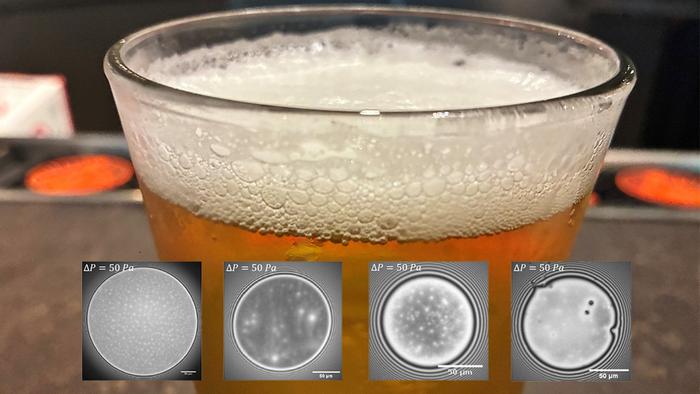
Glass of beer with foamy top
Bubble vision: researchers have discovered that triple-fermented beer feature the most stable beer foam heads (courtesy: AIP/Chatzigiannakis et al.)

Foamy top

And finally, a clear sign of a good brew is a big head of foam at the top of a poured glass. Beer foam is made of many small bubbles of air, separated from each other by thin films of liquid. These thin films must remain stable, or the bubbles will pop, and the foam will collapse. What holds these thin films together is not completely understood and is likely conglomerates of proteins, surface viscosity or the presence of surfactants – molecules that can reduce surface tension and are found in soaps and detergents. To find out more, researchers from ETH Zurich and Eindhoven University of Technology investigated beer-foam stability for different types of beers at varying stages of the fermentation process. They found that for single-fermentation beers, the foams are mostly held together with the surface viscosity of the beer. This is mostly influenced by the proteins in the beer – the more they contain, the more viscous the film and more stable the foam will be. However, for double-fermented beers, the proteins in the beer are slightly denatured by the yeast cells and come together to form a two-dimensional membrane that keeps the foam intact longer. The head was found to be even more stable for triple-fermented beers, which include Trappist beers. The team says that the work could be used to identify ways to increase or decrease the amount of foam so that everyone can pour a perfect glass of beer every time. Cheers!

You can be sure that 2026 will throw up its fair share of quirky stories from the world of physics. See you next year!

The post The quirkiest stories from the world of physics in 2025 appeared first on Physics World.

Reçu — 12 décembre 2025 6.5 📰 Sciences English

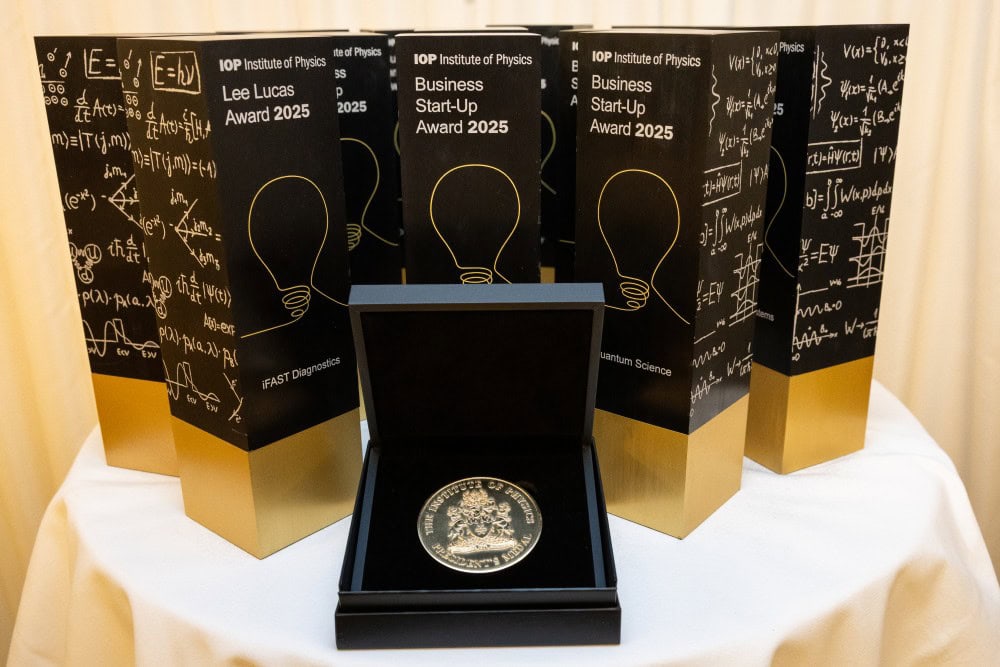
Institute of Physics celebrates 2025 Business Award winners at parliamentary event

12 décembre 2025 à 12:00

A total of 14 physics-based firms in sectors from quantum and energy to healthcare and aerospace have won 2025 Business Awards from the Institute of Physics (IOP), which publishes Physics World. The awards were presented at a reception in the Palace of Westminster yesterday attended by senior parliamentarians and policymakers as well as investors, funders and industry leaders.

The IOP Business Awards, which have been running since 2012, recognise the role that physics and physicists play in the economy, creating jobs and growth “by powering innovation to meet the challenges facing us today, ranging from climate change to better healthcare and food production”. More than 100 firms have now won Business Awards, with around 90% of those companies still commercially active.

The parliamentary event honouring the 2025 winners were hosted by Dave Robertson, the Labour MP for Lichfield, who spent 10 years as a physics teacher in Birmingham before working for teaching unions. There was also a speech from Baron Sharma, who studied applied physics before moving into finance and later becoming a Conservative MP, Cabinet minister and president of the COP-26 climate summit.

Seven firms were awarded 2025 IOP Business Innovation Awards, which recognize companies that have “delivered significant economic and/or societal impact through the application of physics”. They include Oxford-based Tokamak Energy, which has developed “compact, powerful, robust, quench-resilient” high-temperature superconducting magnets for commercial fusion energy and for  propulsion systems, accelerators and scientific instruments.

(courtesy: Carmen Valino)

Oxford Instruments was honoured for developing a novel analytical technique for scanning electron microscopes, enabling new capabilities and accelerating time to results by at least an order of magnitude. Ionoptika, meanwhile, was recognized for developing Q-One, which is a new generation of focused ion-beam instrumentation, providing single atom through to high-dose nanoscale advanced materials engineering for photonic and quantum technologies.

The other four winners were: electronics firm FlexEnable for their organic transistor materials; Lynkeos Technology for the development of muonography in the nuclear industry; the renewable energy company Sunamp for their thermal storage system; and the defence and security giant Thales UK for the development of a solid-state laser for laser rangefinders.

Business potential

Six other companies have won an IOP Start-up Award, which celebrates young companies “with a great business idea founded on a physics invention, with the potential for business growth and significant societal impact”. They include Astron Systems for developing “long-lifetime turbomachinery to enable multi-reuse small rocket engines and bring about fully reusable small launch vehicles”, along with MirZyme Therapeutics for “pioneering diagnostics and therapeutics to eliminate preeclampsia and transform maternal health”.

The other four winners were: Celtic Terahertz Technology for a metamaterial filter technology; Nellie Technologies for a algae-based carbon removal technology; Quantum Science for their development of short-wave infrared quantum dot technology; and Wayland Additive for the development and commercialisation of charge-neutralised electron beam metal additive manufacturing.

James McKenzie, a former vice-president for business at the IOP, who was involved in judging the awards, says that all awardees are “worthy winners”. “It’s the passion, skill and enthusiasm that always impresses me,” McKenzie told Physics World.

iFAST Diagnostics were also awarded the IOP Lee Lucas Award that recognises early-stage companies taking innovative products into the medical and healthcare sector. The firm, which was spun out of the University of Southampton, develops blood tests that can test the treatment of bacterial infections in a matter of hours rather than days. They are expecting to have approval for testing next year.

“Especially inspiring was the team behind iFAST,” adds McKenzie, “who developed a method to test very rapid tests cutting time from 48 hours to three hours, so patients can be given the right antibiotics.”

“The award-winning businesses are all outstanding examples of what can be achieved when we build upon the strengths we have, and drive innovation off the back of our world-leading discovery science,” noted Tom Grinyer, IOP chief executive officer. “In the coming years, physics will continue to shape our lives, and we have some great strengths to build upon here in the UK, not only in specific sectors such as quantum, semiconductors and the green economy, but in our strong academic research and innovation base, our growing pipeline of spin-out and early-stage companies, our international collaborations and our growing venture capital community.”

For the full list of winners, see here.

The post Institute of Physics celebrates 2025 Business Award winners at parliamentary event appeared first on Physics World.

Reçu — 9 décembre 2025 6.5 📰 Sciences English

Fermilab opens new building dedicated to Tevatron pioneer Helen Edwards

9 décembre 2025 à 15:59

Fermilab has officially opened a new building named after the particle physicist Helen Edwards. Officials from the lab and the US Department of Energy (DOE) opened the Helen Edwards Engineering Research Center at a ceremony held on 5 December.  The new building is the lab’s largest purpose-built lab and office space since the lab’s iconic Wilson Hall, which was completed in 1974.

Construction of the Helen Edwards Engineering Research Center began in 2019 and was completed three years later. The centre is an 7500 m2 multi-story lab and office building that is adjacent and connected to Wilson Hall.

The new centre is designed as a collaborative lab where engineers, scientists and technicians design, build and test technologies across several areas of research such as neutrino science, particle detectors, quantum science and electronics.

The centre also features cleanrooms, vibration-sensitive labs and cryogenic facilities in which the components of the near detector for the Deep Underground Neutrino Experiment will be assembled and tested.

A pioneering spirit

With a PhD in experimental particle physics from Cornell University, Edwards was heavily involved with commissioning the university’s 10 GeV electron synchrotron. In 1970 Fermilab’s director Robert Wilson appointed Edwards as associate head of the lab’s booster section and she later became head of the accelerator division.

While at Fermilab, Edwards’ primary responsibility was designing, constructing, commissioning and operating the Tevatron, which led to the discoveries of the top quark in 1995 and the tau neutrino in 2000.

Edwards retired in the early 1990s but continued to work as guest scientists at Fermilab and officially switched the Tevatron off during a ceremony held on 30 September 2011. Edwards died in 2016.

Darío Gil, the undersecretary for science at the DOE says that Edwards’ scientific work “is a symbol of the pioneering spirit of US research”.

“Her contributions to the Tevatron and the lab helped the US become a world leader in the study of elementary particles,” notes Gil. “We honour her legacy by naming this research centre after her as Fermilab continues shaping the next generation of research using [artificial intelligence], [machine learning] and quantum physics.”

The post Fermilab opens new building dedicated to Tevatron pioneer Helen Edwards appeared first on Physics World.

❌