Connexion
CES 2026: ASUS opens door for next-gen, high-performance systems
During the European Hardware Association Tech Tour, KitGuru was invited to ASUS headquarters in Taipei for an early look at a wide range of hardware planned for 2026. Rather than focusing on individual launches, the briefings were structured around broader design themes – power delivery, thermal density, system integration and the growing need to treat modern PCs as complete platforms rather than collections of parts.
What follows is an overview of how ASUS is approaching that challenge across its 2026 high-performance portfolio – starting with its new motherboards/platforms.
ROG Crosshair X870E and the NEO Refresh
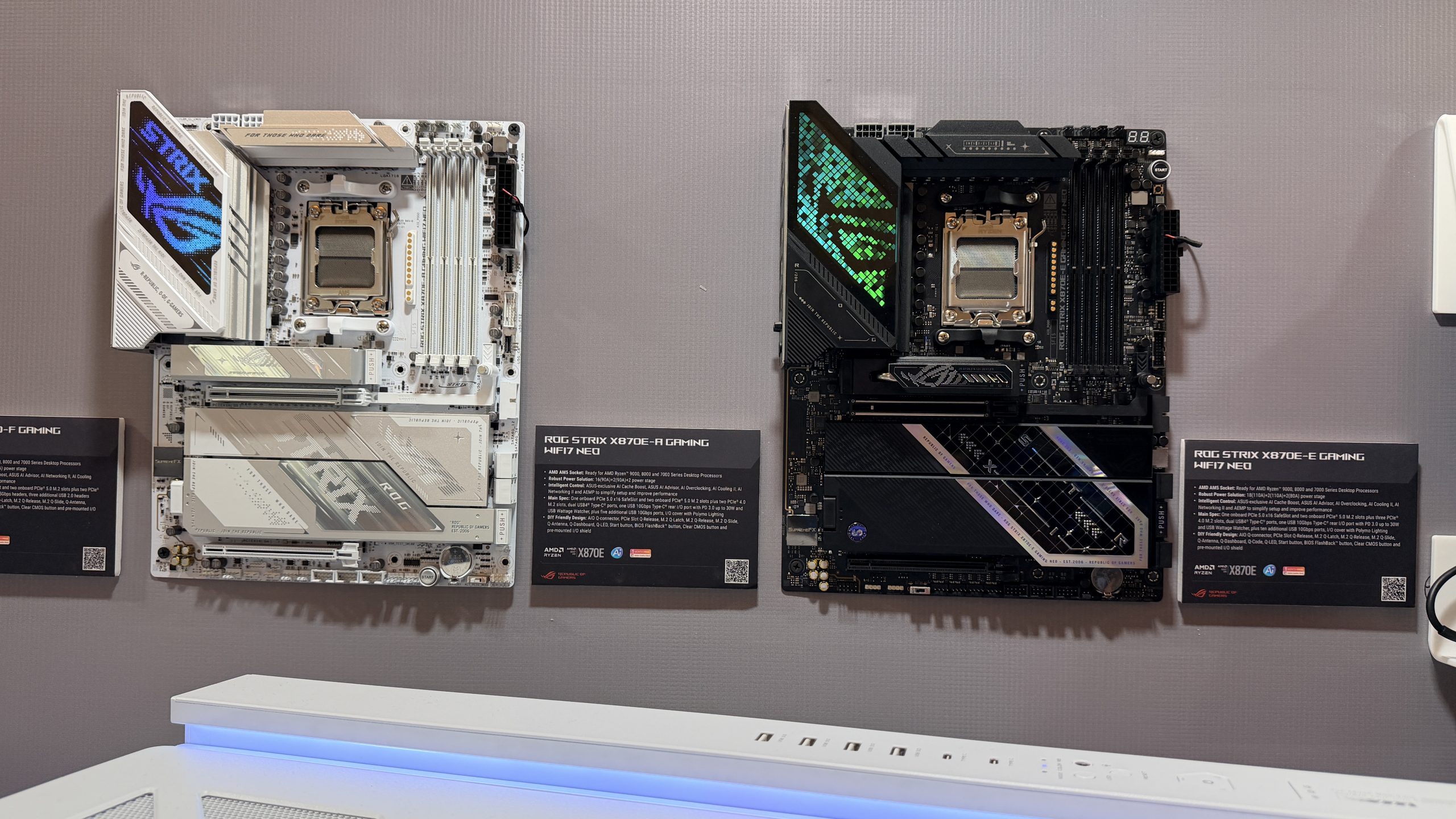
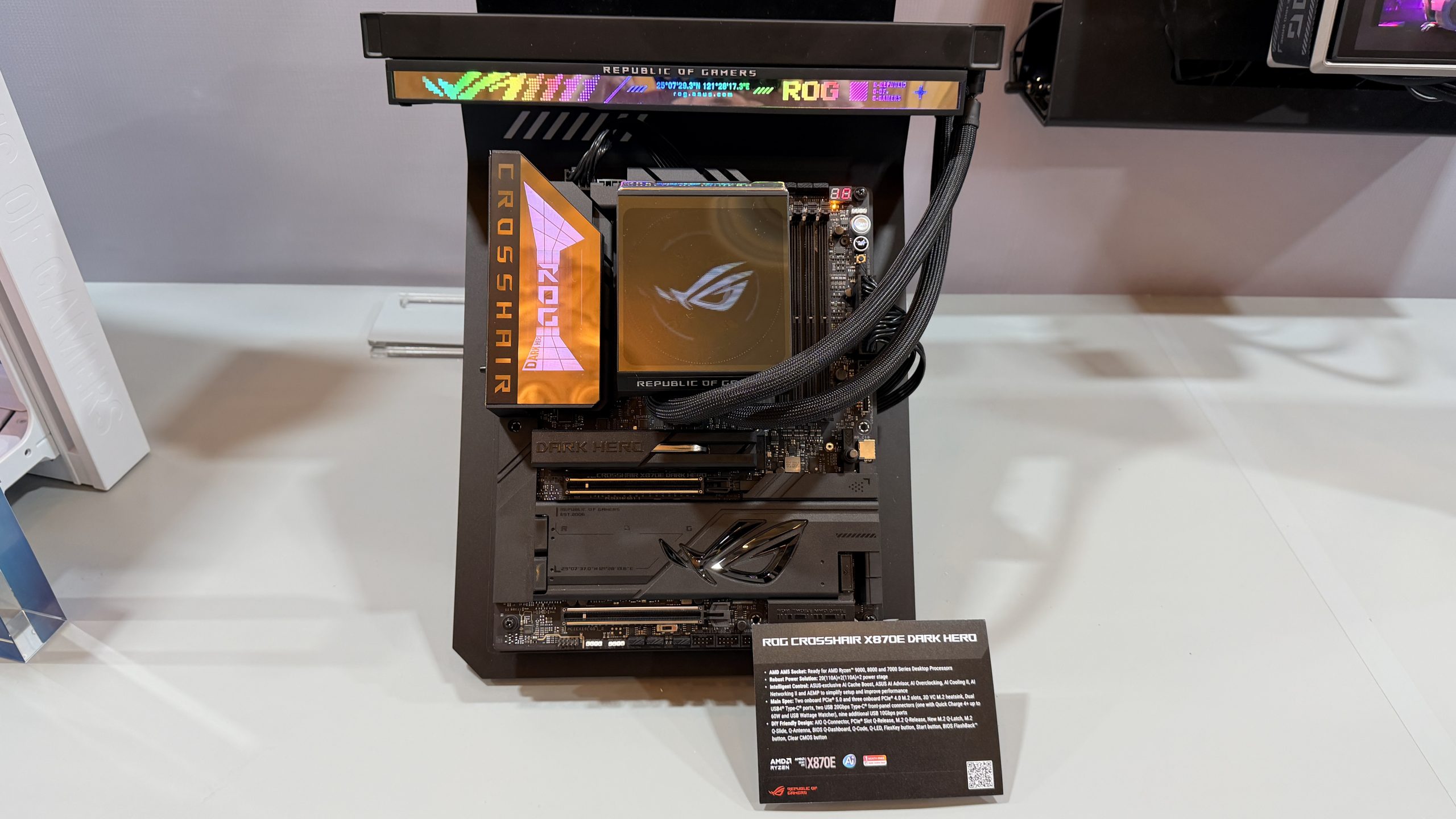
At the centre of ASUS' next-generation strategy sits the ROG Crosshair X870E platform, positioned as the flagship foundation for upcoming AMD systems. Two models lead that charge – the Crosshair X870E Glacial and Crosshair X870E Dark Hero – each targeting slightly different priorities while sharing the same underlying design intent. More will be announced about the NEO refresh closer to the launch in February 2026.
Power delivery and future-proofing
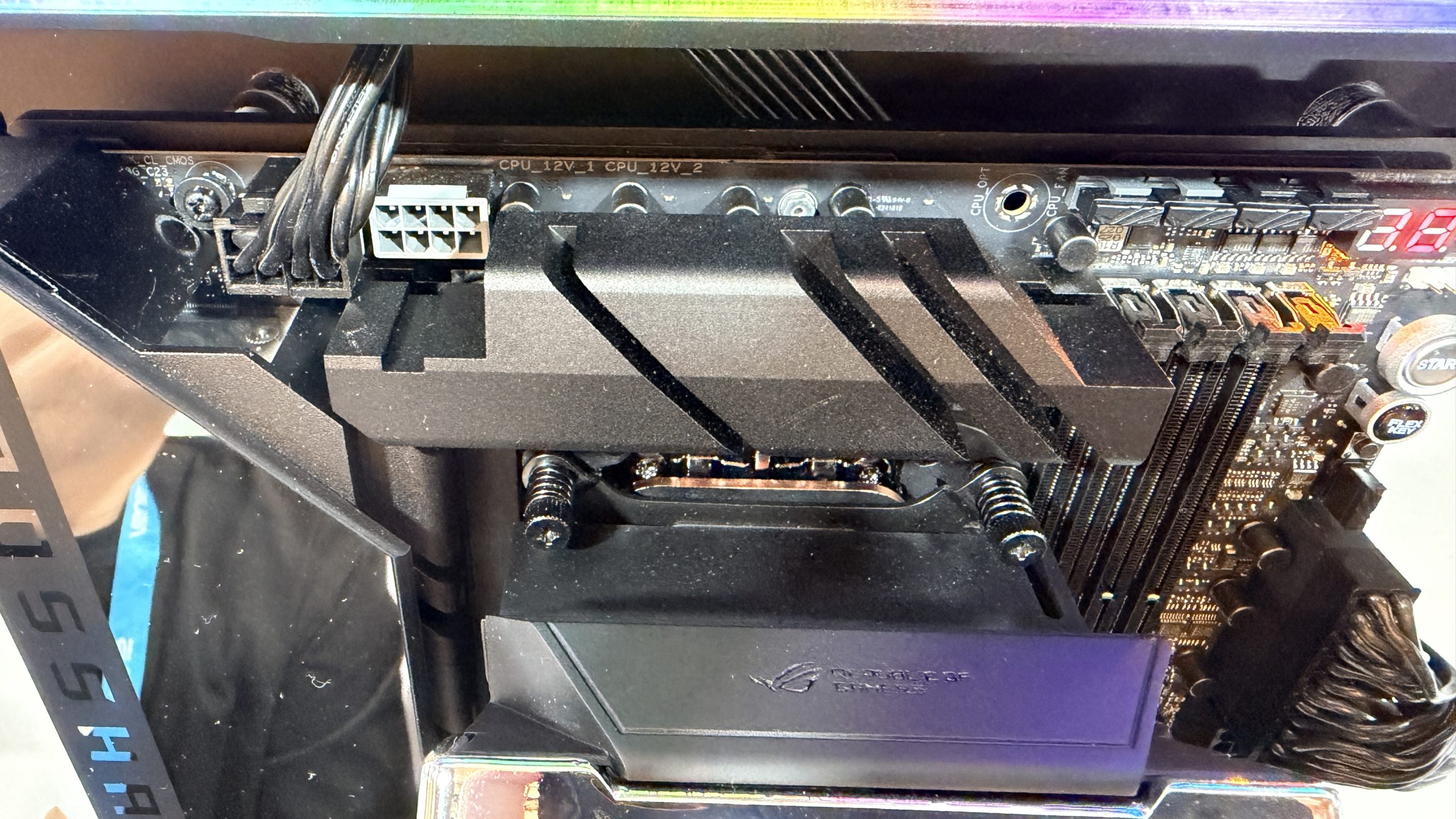
ASUS is explicit that these boards are designed with future AMD CPUs in mind, including processors that may, in theory, demand 200W or more of sustained power draw. While no such CPUs have been announced publicly (at the time of writing), this expectation aligns with broader industry conversations around rising power density and sustained boost behaviour.
The Glacial model features a 24(110A)+2(110A)+2 power stage design, while the Dark Hero uses a 20(110A)+2(110A)+2 configuration, both employing ProCool II connectors, MicroFine alloy chokes and premium metallic capacitors. The intent here is not peak benchmarking, but long-term electrical stability under heavy, sustained loads.
Within the motherboard industry, there is also a growing belief that next-generation platforms could unlock 5–15% gaming performance gains, depending on workload and configuration. This is not positioned as a guarantee, but as a byproduct of improved signal integrity, memory routing and platform optimisation rather than dramatic architectural shifts. All of which could be pretty useful as we head into a year where gamers might need to step back slightly on graphics card and system memory options.
Connectivity and segmentation
Networking is another area where ASUS differentiates clearly between the two boards. The Glacial integrates dual Realtek 10Gb Ethernet, while the Dark Hero combines 10Gb and 5Gb Ethernet, with both boards featuring on-board WiFi 7 (802.11be) and ASUS' WiFi Q-Antenna system.
Thermal engineering as a motherboard feature
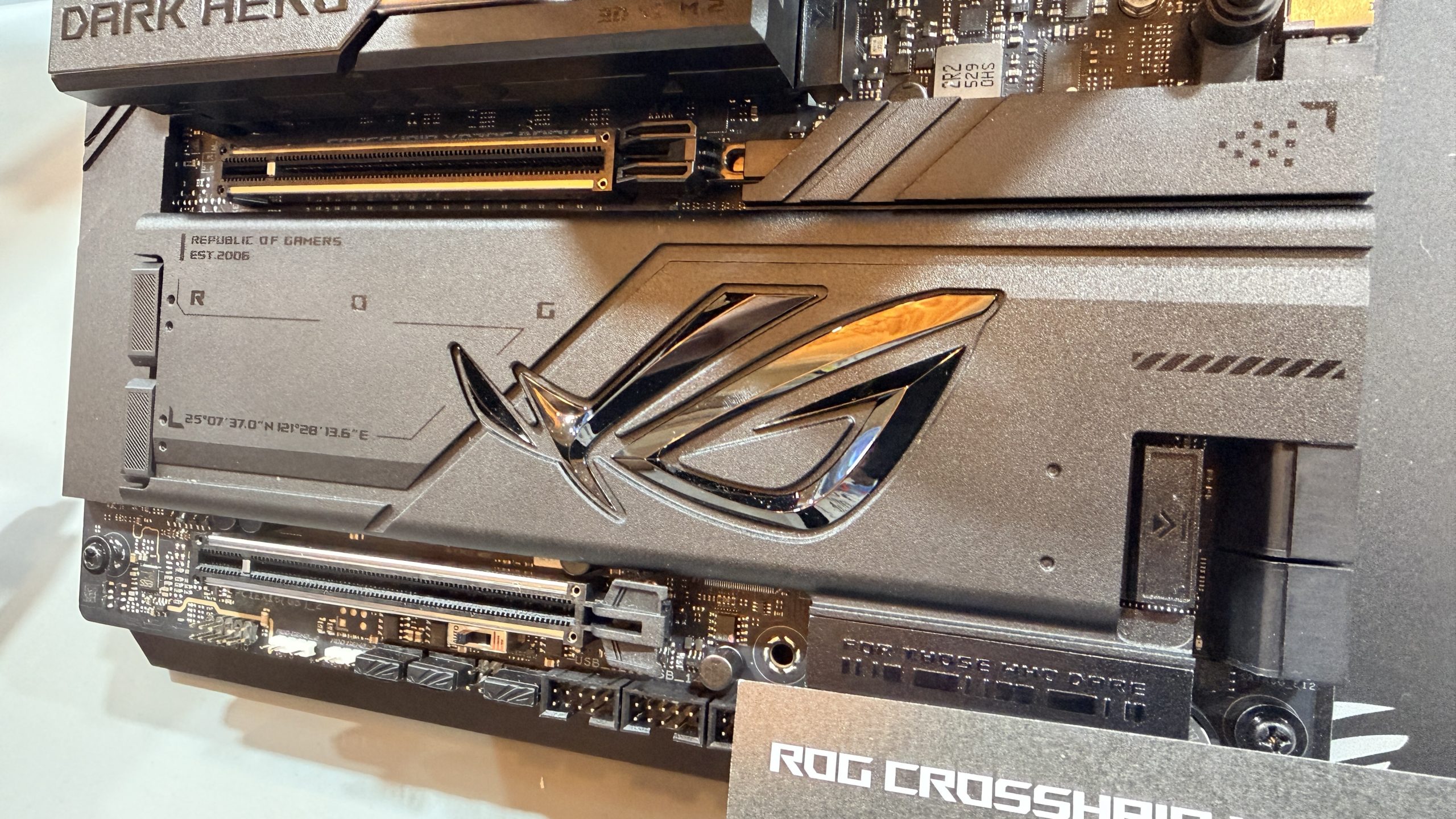
Thermal design is treated as a first-class concern. Both boards use large, integrated heatsinks tied into the I/O shroud, linked by heatpipes and high-conductivity thermal pads. One PCIe 5.0 M.2 slot benefits from ASUS' 3D vapour chamber M.2 heatsink, explicitly designed to cope with the heat output of next-generation storage. With PCI-Express Gen 6 on the horizon, we will need to get used to active cooling for SSDs as being a standard topic of discussion.
Memory cooling is also integrated into the control logic via ROG Memory Q-Fan, reinforcing the idea that modern motherboards are now active thermal managers rather than passive backplanes.
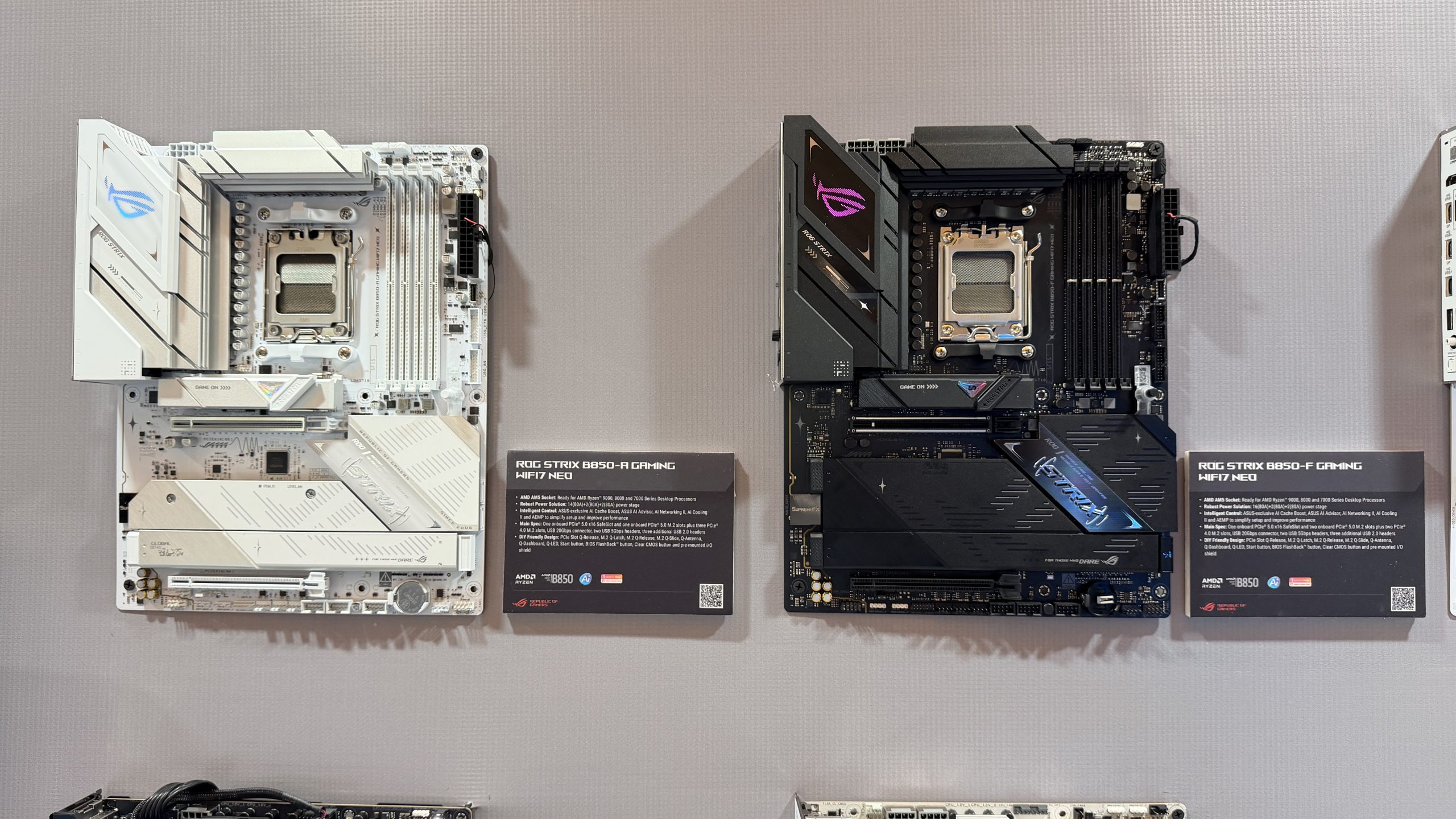
The NEO refresh
Sitting beneath the Crosshair flagships and more affordable for the masses, is the refreshed ROG Strix NEO series, covering X870E and B850 models. ASUS describes this as more than a cosmetic update. A redesigned memory routing architecture using via-in-pad routing and improved impedance continuity enables ASUS to quote much faster overclocked memory speeds.
We were shown ‘ASUS internal figures’ – and KitGuru will look to validate them independently once hardware is available. The more important takeaway is that memory stability and compatibility appear to be the primary goal, rather than chasing record-setting frequencies.
Additional platform changes include asynchronous clocking, expanded M.2 support while maintaining PCIe 5.0 x16 GPU bandwidth, and a renewed BIOS interface. ASUS has also introduced ASUS MB Manager, initially on the NEO series, to separate motherboard-level RGB and system control from the broader Armoury Crate ecosystem.
ASUS ExpertCenter Pro ET900N G3
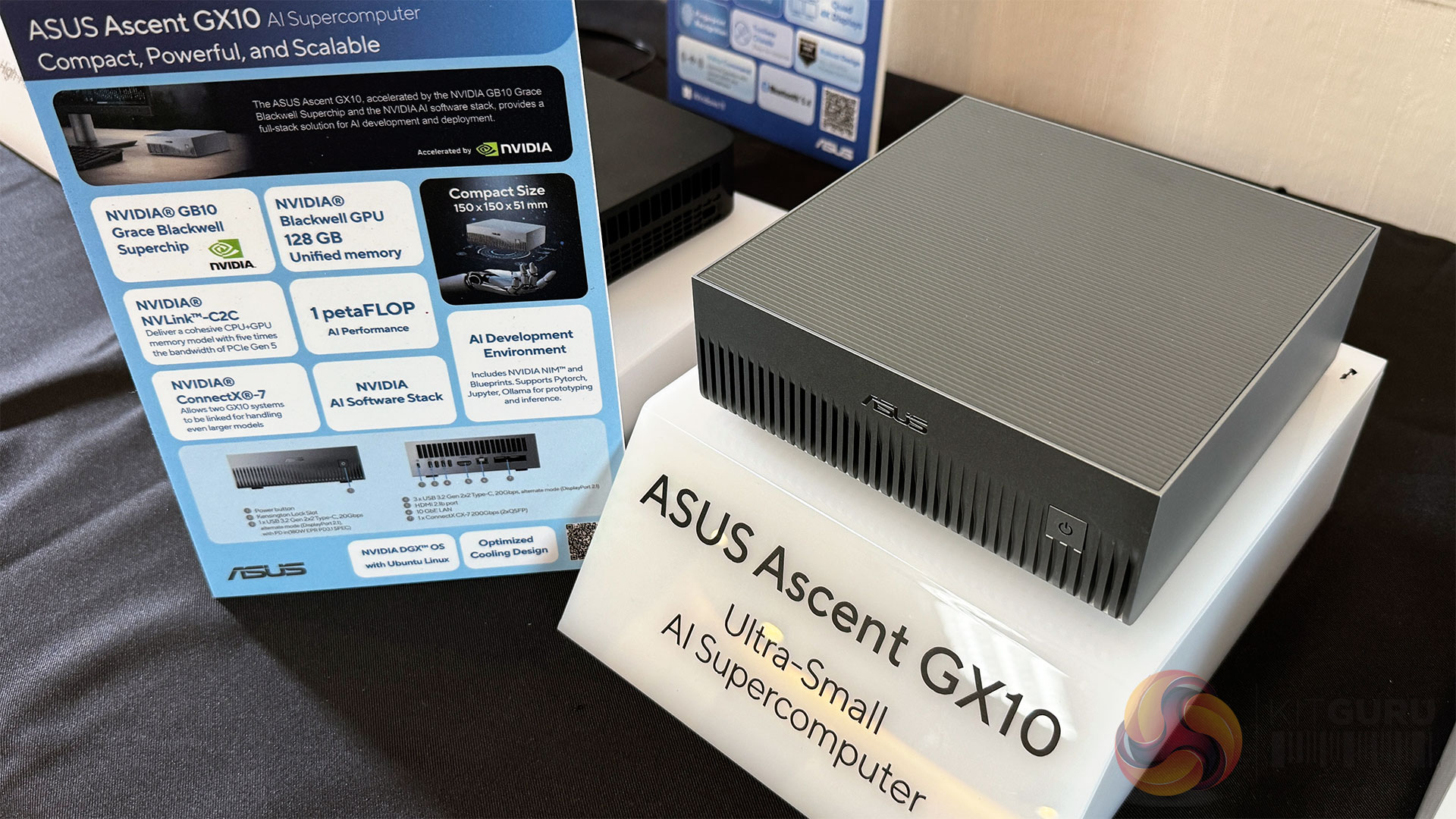
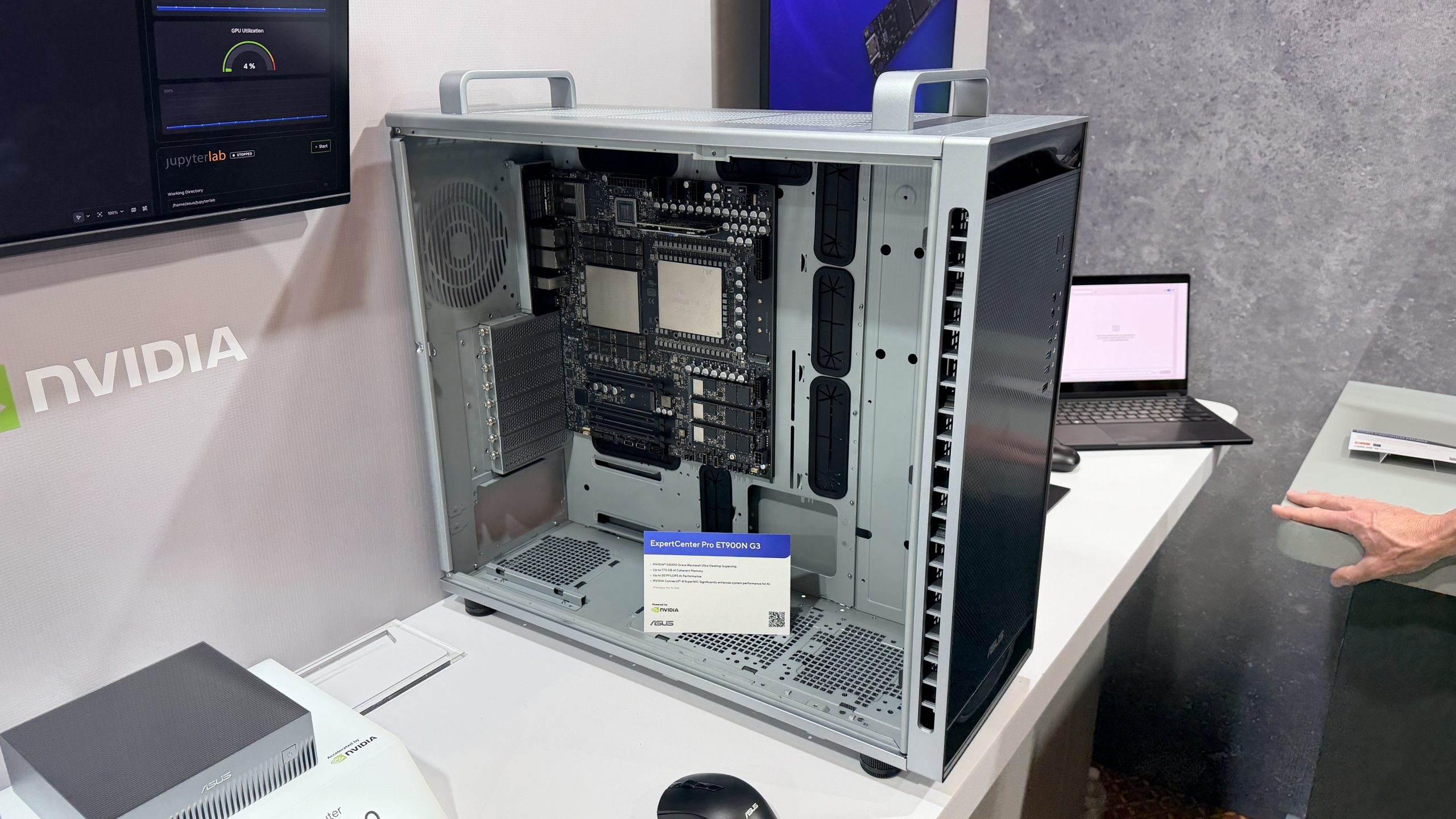
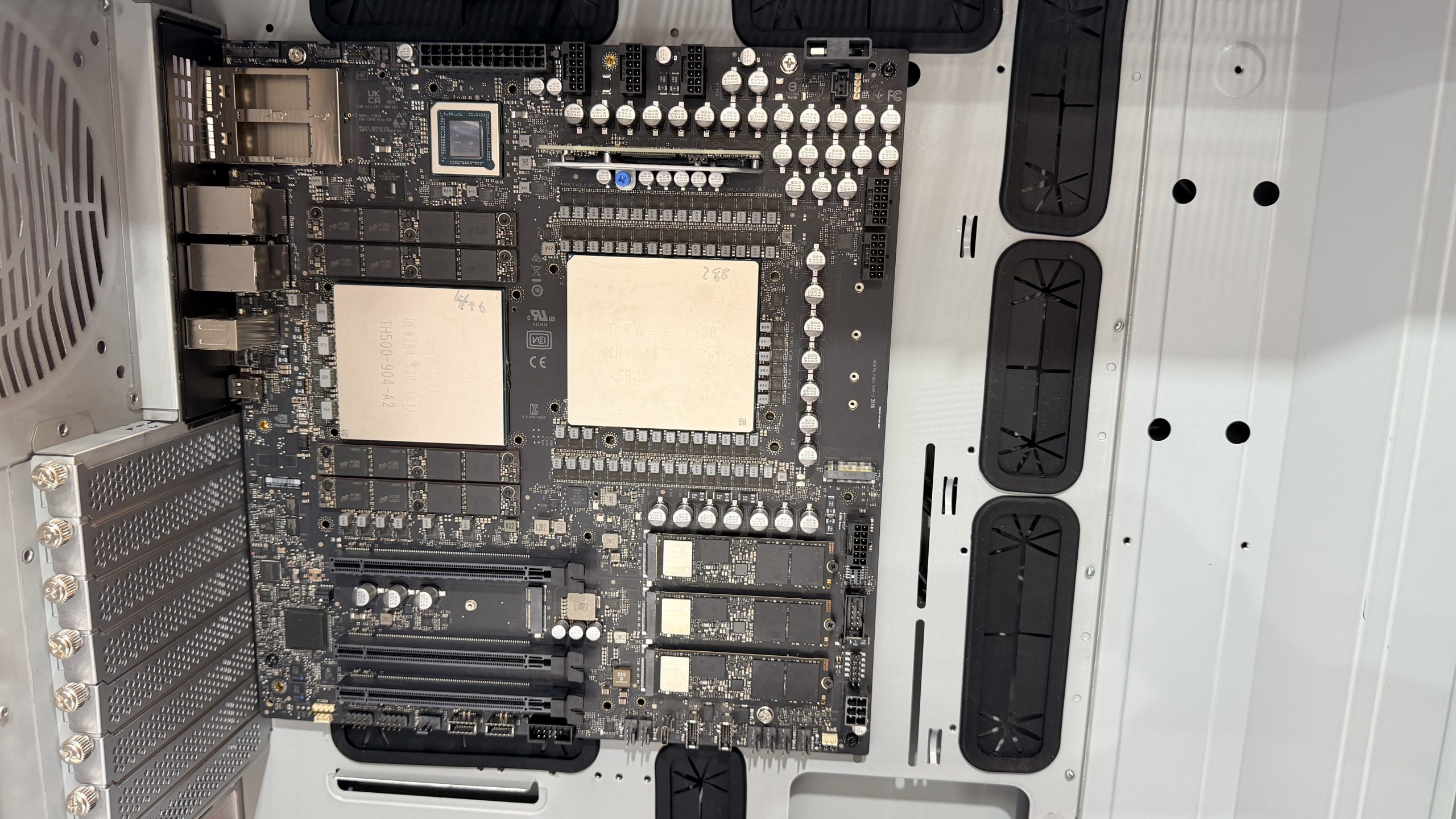
The most striking system shown during the tour was arguably the ASUS ExpertCenter Pro ET900N G3. This is a desktop form factor AI supercomputer built around NVIDIA Grace and Blackwell technologies.
ASUS positions the ET900N G3 as a bridge between traditional workstations and rack-mounted server infrastructure. According to figures provided by ASUS, the system offers higher PFLOPS compute capability than a four-GPU NVIDIA HGX H200 SXM system, based on FP8 model performance comparisons. The figures shown are claims by ASUS. We expect that real-world performance will depend on workload and configuration.
The rationale behind the creation of the ET900N G3 becomes clearer when viewed against industry pricing. HGX H200 SXM systems are widely understood to cost hundreds of thousands of dollars once GPUs, chassis, networking, power and cooling infrastructure are accounted for. By contrast, ET900N G3 is designed to deliver serious AI compute in environments that cannot justify data-centre-scale deployments.
Features such as ConnectX-8 SuperNICs, QSFP 400G networking, and Multi-Instance GPU (MIG) support reinforce that this is not a consumer product, but a workstation-class tool aimed at research, enterprise AI, and edge compute scenarios.
Thermal Solutions: ROG Ryuo and Strix LC IV
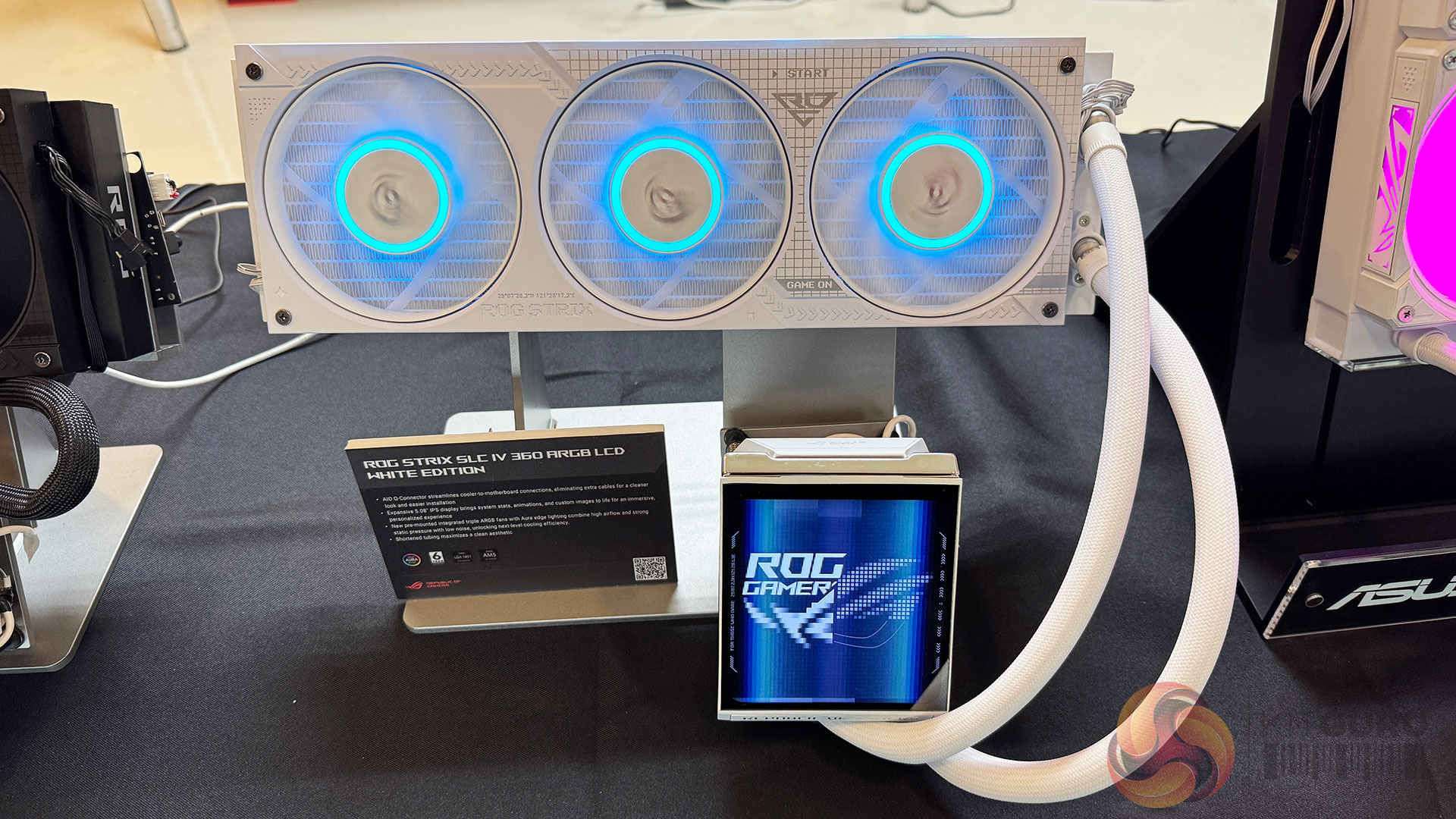
As CPU power draw begins to rise again, ASUS is also evolving its cooling ecosystem. The ROG Ryuo IV and introduces Asetek Emma Gen8 V2 pumps, with the Ryuo IV and ROG Strix SLC/LC IV AIO coolers benefiting from updated cold plates and an emphasis on installation simplicity.
A notable design change is the AIO Q-Connector, which consolidates cabling between the cooler and compatible ASUS motherboards into a single connection. While this reduces cable clutter and simplifies builds, it also reinforces a clever ecosystem lock-in, which is a trade-off that ASUS appears willing to make in pursuit of cleaner system design.
The integrated 5.08-inch IPS LCD, running at 720 × 720 and 60Hz, is positioned less as a novelty and more as a system monitoring surface, capable of displaying thermals, fan speeds and custom visuals. We did ask about future models with much higher refresh rates on bigger screens, but were told (with a smile) that 5” and 60Hz was probably all that was needed.
Graphics: ASUS ProArt GeForce RTX 5090 32GB GDDR7 OC Edition
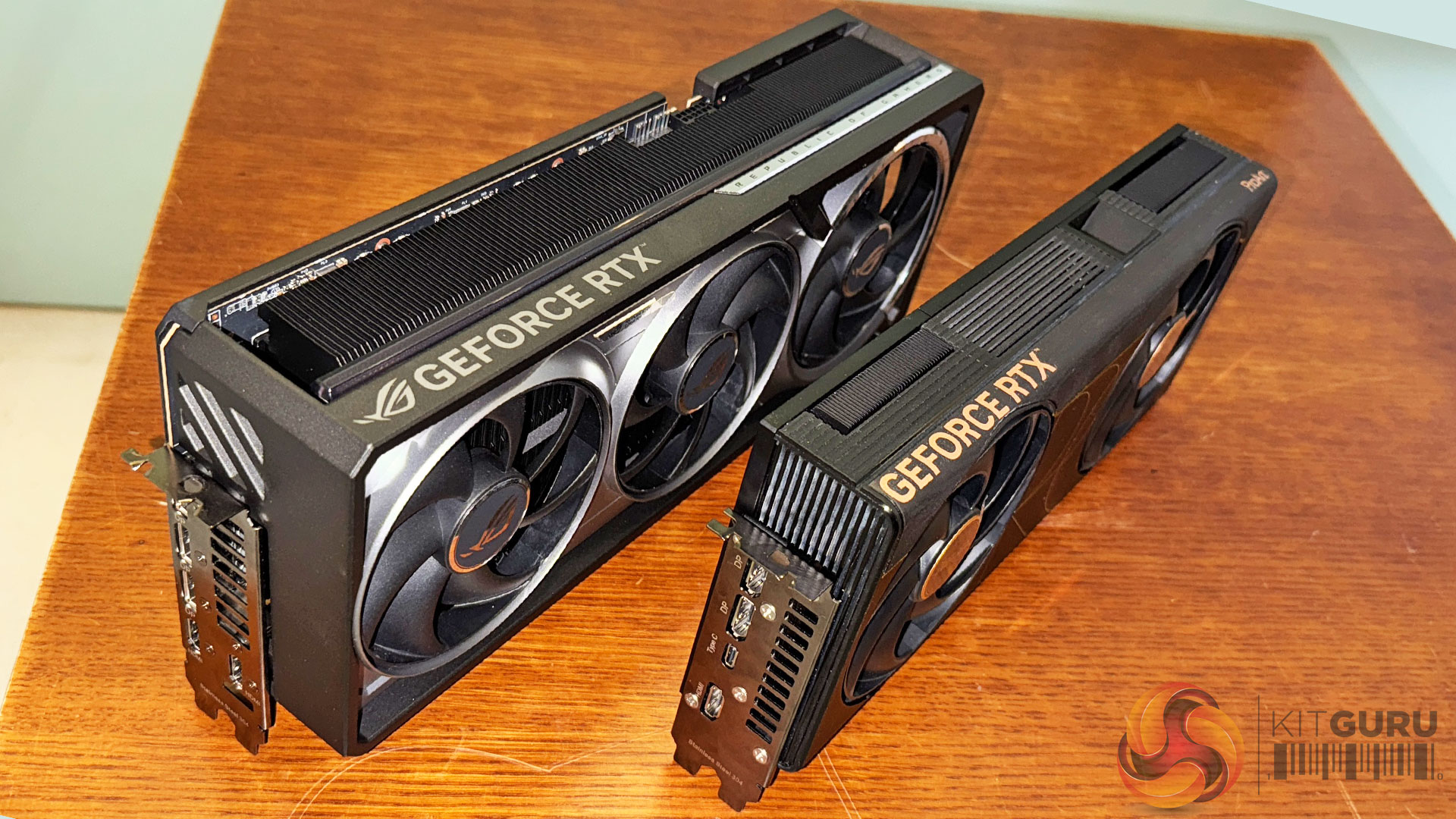
Last year, ASUS demonstrated the ROG Astral RTX 5090, a physically enormous statement GPU. The ProArt RTX 5090 shown this year, is effectively the counterpoint. All of the important hardware in a much smaller package.
According to ASUS, the ProArt card occupies roughly a quarter of the volume of the largest Astral designs (see below), while remaining SFF-ready in a 2.5-slot form factor. This immediately broadens its appeal to professional workstations, compact builds and creator systems – where physical space and airflow matter as much as raw performance.
Cooling is handled via liquid metal on the GPU die, a vapour chamber, dual Axial-tech fans and a double-vented backplate designed to actively exhaust heat rather than trap it within the chassis. ASUS also highlights USB-C output support and ProArt-specific software tuning for professional workflows.
ASUS claims performance parity with flagship RTX 5090 silicon while maintaining acoustics and thermals suitable for sustained workloads. As always, KitGuru will be looking to validate those claims through independent testing.
Chassis and Airflow: ROG Cronox and Eurux GR120
The final piece of the system puzzle is airflow and enclosure design, and this is where ASUS' BTF (Hidden Connector) strategy becomes most visible.
ROG Cronox PC Case
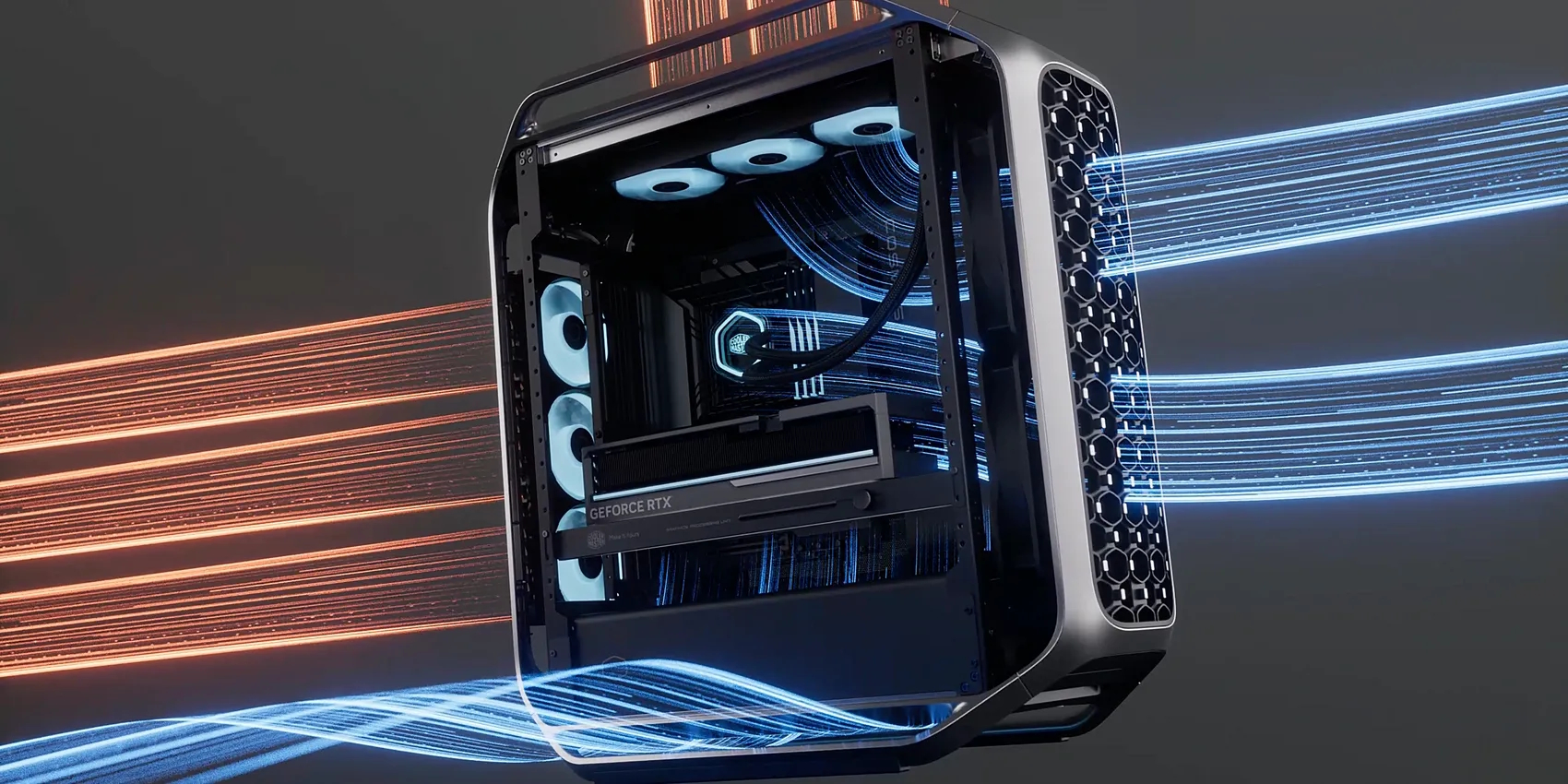
The ROG Cronox is a large, airflow-focused chassis that will be sold separately. It features an aluminium-trimmed structural frame, a tool-free curved glass side panel, and support for up to 14 × 120 mm fans.
Cooling support includes dual 360mm radiators, GPUs up to 400mm in length, and CPU coolers up to 180mm tall. A patented rotatable side fan bracket allows airflow to be redirected at a 45-degree angle, prioritising either cooling efficiency or system visibility depending on the build.
A built-in 9.2-inch LCD panel (1920 × 420, 400 nits, 60Hz) provides system monitoring and visual customisation, reinforcing the theme of integrated, system-level control rather than bolt-on accessories.
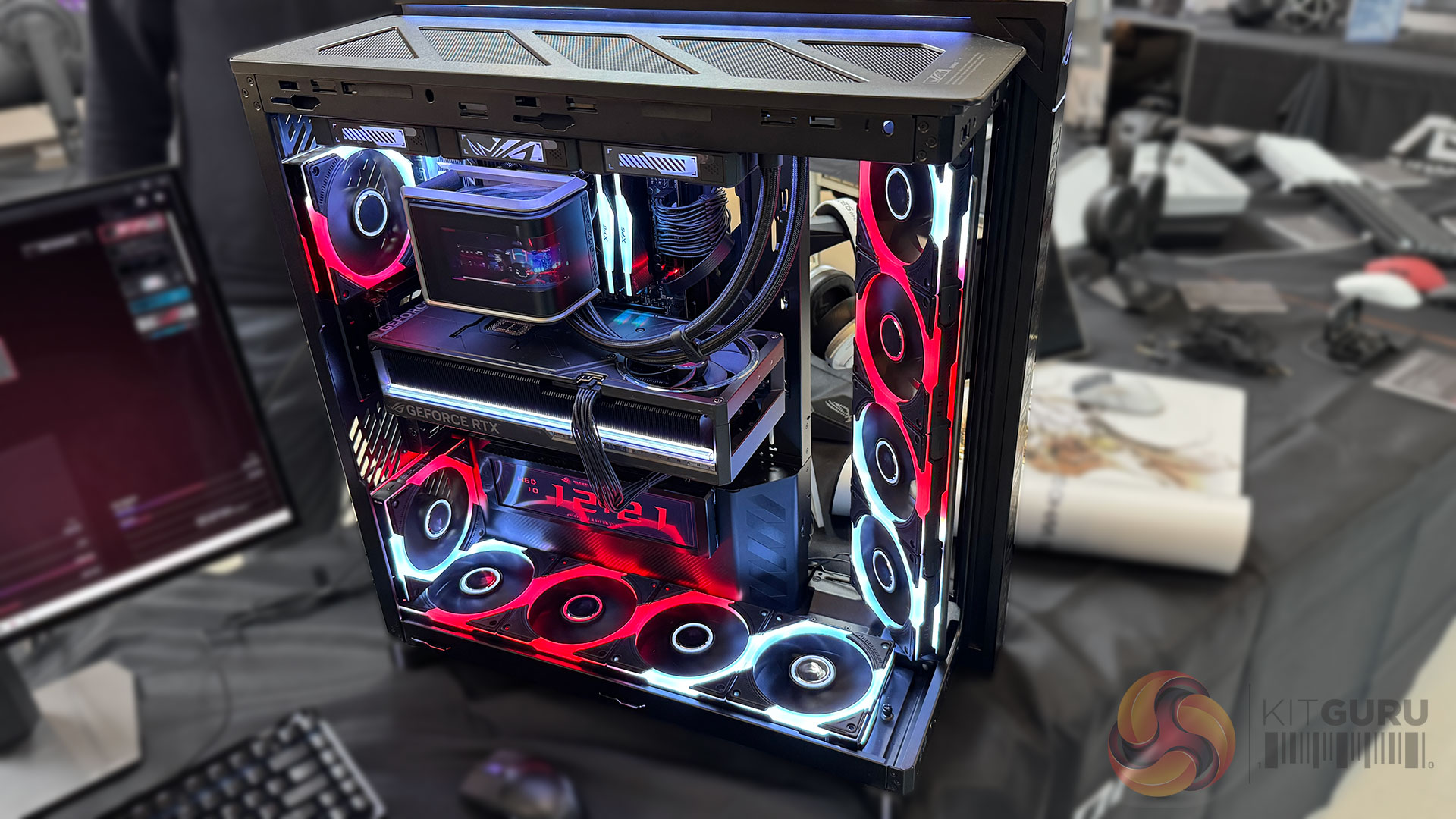
BTF integration
The chassis briefing delivered by ASUS, also revealed the Hero BTF version of the new X870E Crosshair motherboards and a ROG Astral GeForce RTX 5090 BTF Edition graphics card. While not every build will adopt BTF, it provides a clean link between motherboard design, GPU layout, and chassis airflow, reducing visible cables and improving internal airflow paths.
ROG Eurux GR120 ARGB fan
Completing the airflow story is the ROG Eurux GR120 ARGB fan, featuring LCP fan blades, CNC-milled brass bearing shells, and ASUS-quoted performance figures of 91 CFM airflow, 4.6mmH₂O static pressure, and 33 dB(A) noise levels at up to 2600 RPM.
Figures shows are ASUS claims but, on paper, they position the GR120 as a fan capable of handling dense radiator and chassis scenarios, particularly when paired with the Cronox case and BTF-style builds. It will be interesting to see if we can achieve the same cooling standards as ASUS claim with this kind of set-up.
KitGuru Says: Taken individually, each of these products serves a specific audience. Viewed together, they form a coherent picture of where ASUS believes high-performance systems are heading: Higher sustained power, tighter thermal budgets, cleaner physical layouts and platforms engineered as complete ecosystems rather than collections of parts. Many of the figures quoted here come directly from ASUS briefings, and KitGuru will be looking to see how those claims translate into real-world performance once hardware becomes available.
The post CES 2026: ASUS opens door for next-gen, high-performance systems first appeared on KitGuru.