↩ Accueil

Vue normale

CES 2026: MSI unveils MEG system, AMD MAX motherboards and more

5 janvier 2026 à 19:59

One of the clearest messages from our pre-CES briefing at MSI’s Taipei HQ, is that the company is no longer thinking solely in terms of isolated components. For 2026, the focus is on complete platforms, where motherboard, power delivery, cooling and chassis are designed and engineered as a single system. This is most evident in the MEG range, supported by the introduction of Safeguard+ at the PSU level and a substantially revised AMD MAX motherboard strategy built around X870E.

Rather than chasing peak benchmark numbers in isolation, MSI appears to be targeting stability under sustained load, predictable behaviour when pushed outside default limits and fewer failure points – as next-gen GPUs and CPUs continue to draw more power and operate closer to their electrical limits.

The MEG system: building around the extreme user
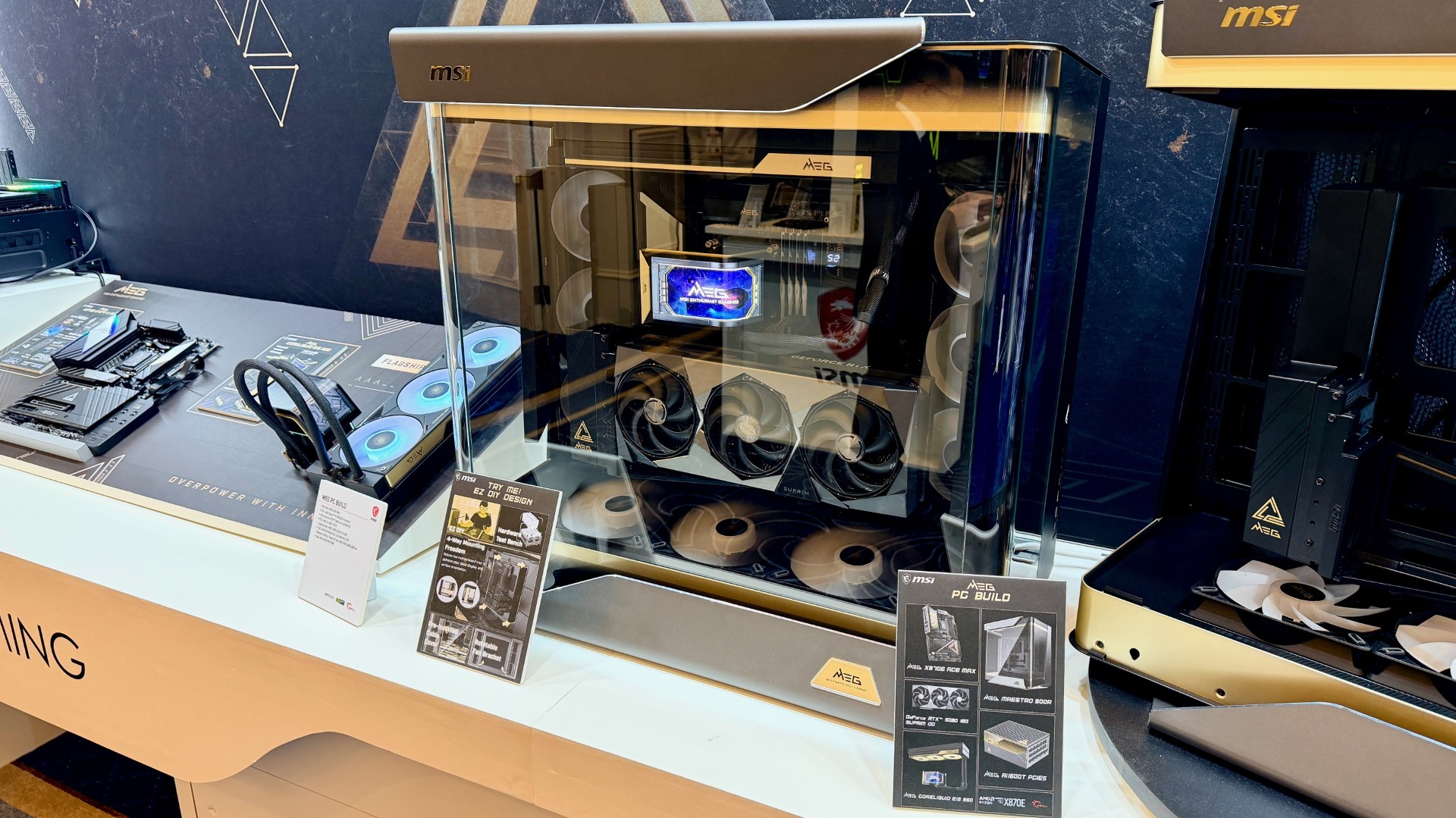
MEG, short for MSI Enthusiast Gaming, sits at the top of MSI’s desktop stack. What’s different with this generation is how tightly the individual MEG components are designed to work together, rather than simply sharing branding.

At the centre of the MEG system is the X870E ACE MAX motherboard. It uses an 18+2+1 phase power design with 110A smart power stages, mounted on a high-layer, server-grade PCB with 2oz copper. This is not unusual in isolation, but the way MSI builds around it feels more deliberate than before.

Power delivery and overclocking control
The defining feature across MAX boards is the built-in OC Engine, which decouples base clock control from the rest of the system. Instead of raising BCLK and dragging memory, PCIe and NVMe controllers out of specification, the OC Engine allows fine-grained CPU base clock adjustment while keeping other subsystems within tolerance.

For enthusiasts, the benefit should be more than just theoretical. It looks to enable measurable gains on modern Ryzen CPUs without destabilising storage or I/O (which has traditionally been the limiting factor for BCLK-based tuning). MSI also supports this with the Direct OC Jumper, allowing real-time base clock adjustment from within the operating system, rather than repeated BIOS reboots.

This is paired with a 64MB BIOS ROM across MAX boards, doubling previous capacity. In practice, this allows MSI to retain full CPU support tables, richer firmware features and a less constrained UI, while maintaining forward compatibility as future Ryzen CPUs are introduced.

Thermal design as part of the platform

Thermal management is another area where MSI is treating the motherboard as part of a wider system rather than a standalone product. The Frozr Guard cooling architecture combines wavy-fin heatsinks, cross heat-pipes, high-conductivity thermal pads and full-length metal backplates.

Importantly, this is not just about MOSFET cooling. PCIe 5.0 storage controllers can generate significant heat under sustained transfer loads, and MSI treats M.2 thermals as a first-class concern, with double-sided shield designs and tool-free installation that encourages users to use them correctly.

The cooling strategy extends beyond passive hardware. Frozr AI Cooling and the Cooling Wizard integrate fan curves, thermal zones and workload behaviour – allowing the board to respond dynamically rather than relying on static profiles.

MEG beyond the motherboard: chassis, cooling and power
MSI’s intent to treat MEG as a system becomes clearer when looking at the surrounding components.

MEG Maestro 900R chassis
The Maestro 900R is MSI’s largest and most flexible case to date. It supports E-ATX motherboards, graphics cards up to 400mm long and multiple radiator configurations, with capacity for up to four radiators or 14 fans.

The defining feature is the rotatable and removable motherboard tray. This allows traditional, inverted or showcase layouts, and even converts the chassis into a standalone test bench. While this will appeal to modders and extreme builders, it also reflects a more practical consideration: Airflow optimisation around increasingly large GPUs.

Vertical GPU mounting, dual-GPU configurations and complex liquid loops should all be accommodated without forcing compromises elsewhere in the system.

MEG CoreLiquid E15 360
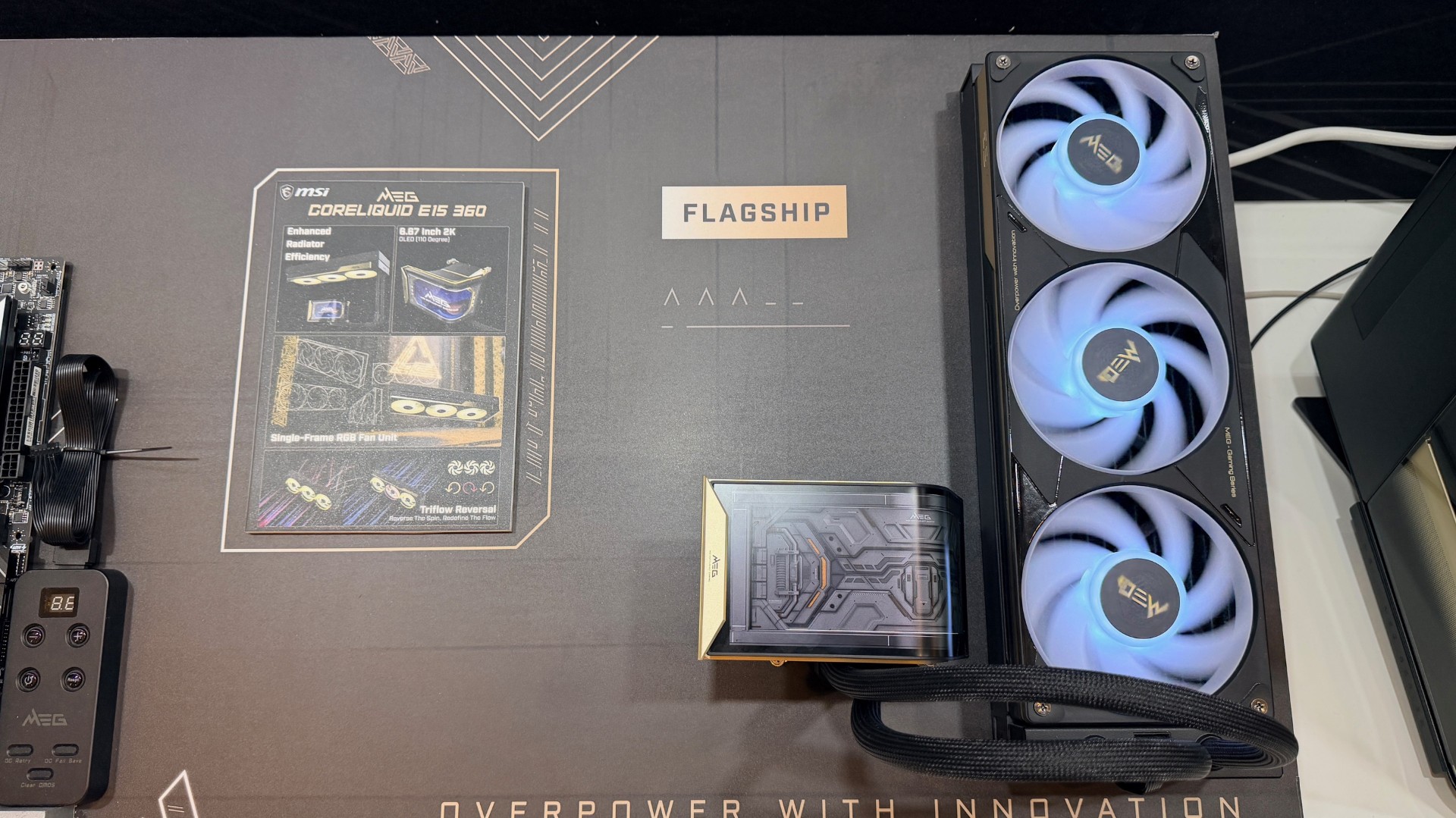
Cooling is handled at the top end by the MEG CoreLiquid E15 360. Beyond the obvious headline feature (which is a curved 6.67-inch OLED display with 2K resolution), the more interesting detail is the fan and cabling architecture.

The three radiator fans use alternating rotation directions to reduce turbulence and improve airflow consistency. All power, control and RGB signalling is routed through a single JAF_2 connector, significantly reducing cable clutter and potential installation errors.

The OLED display is configurable for system telemetry or custom visuals, but it also reinforces MSI’s broader move towards integrated system monitoring rather than relying on third-party tools.

MEG Ai1600T PCIE5 power supply
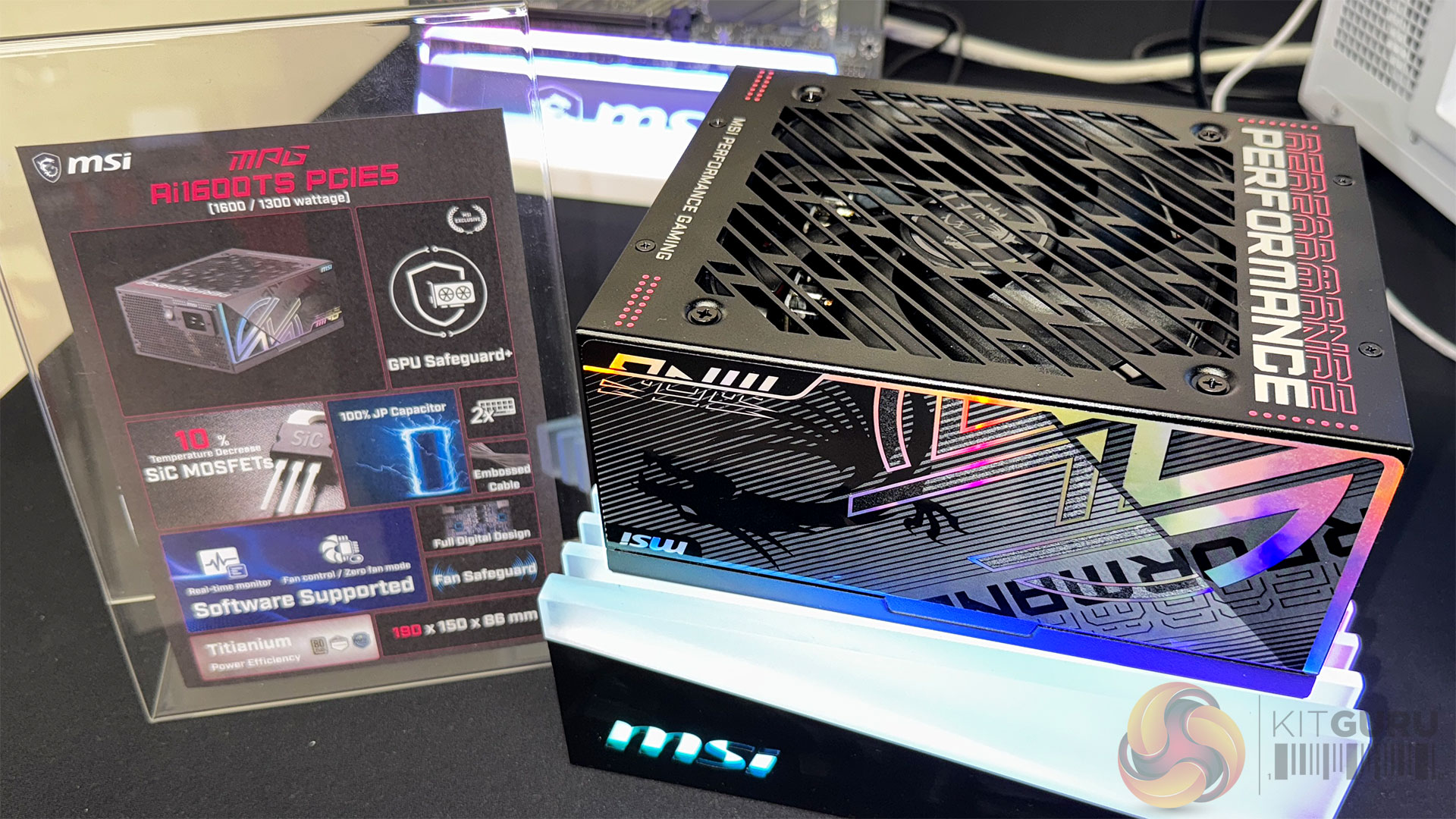
At the base of the system sits the MEG Ai1600T PCIE5 PSU. Rated for up to 1,600W with 80 Plus Titanium efficiency, it uses a fully digital design with SiC MOSFETs, reducing operating temperatures by around 10 percent compared to conventional silicon solutions.

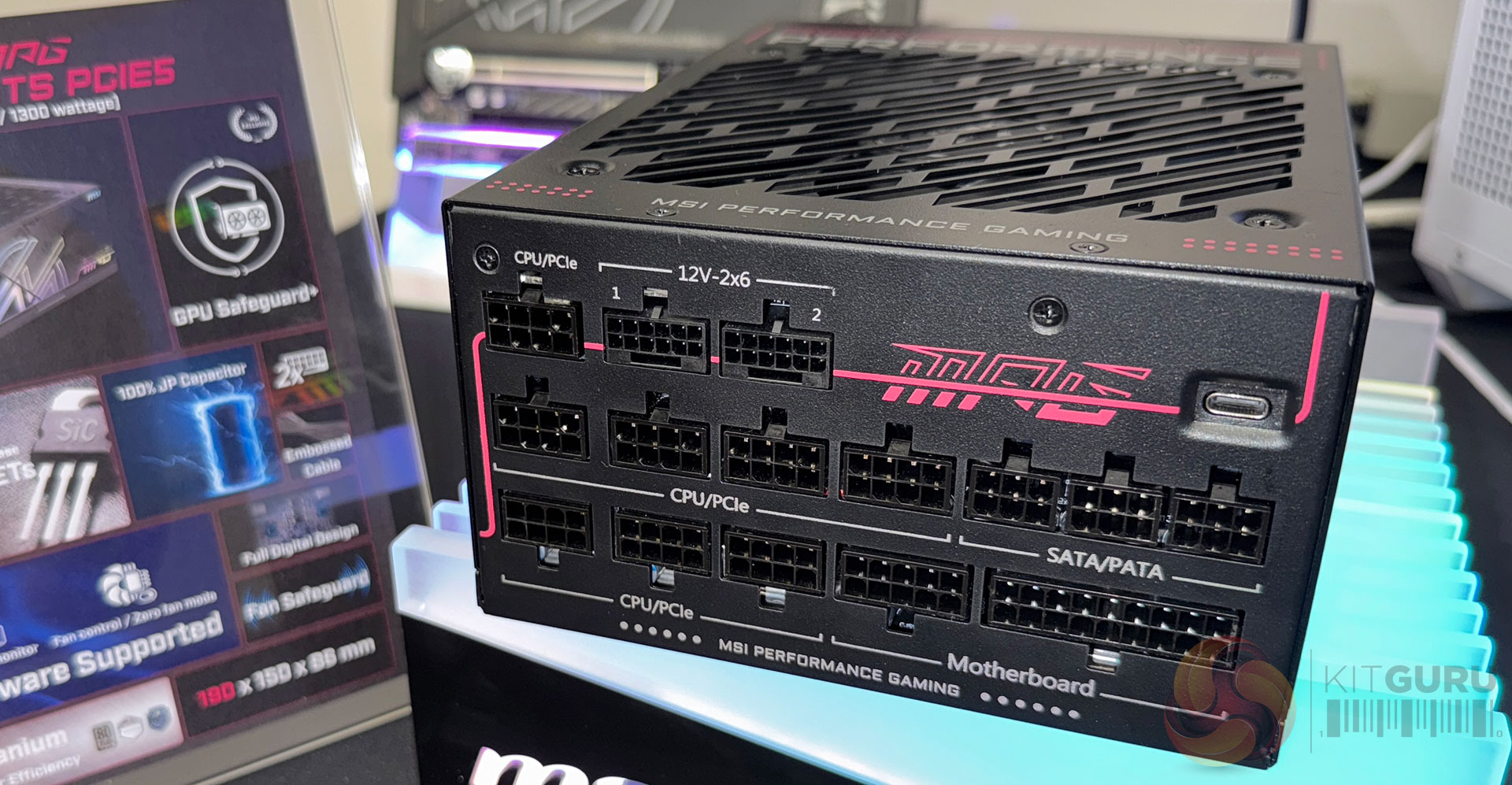
It provides dual 12V-2×6 connectors for flagship GPUs, which is increasingly relevant as single-card power budgets continue to climb. However, raw capacity is not the most important story here. That comes with Safeguard+ that is available on MPG Ai1600TS / Ai1300TS PCIE5, but not on the MEG Ai1600T PCIE5.
Safeguard+: Looking to address a real-world failure point
The move to the 12V-2×6 connector has solved some problems and created others. While it simplifies cabling and supports higher power delivery, it has also exposed systems to failures caused by poor seating, uneven current distribution and sudden overcurrent events. Safeguard+ is MSI’s attempt to deal with this ‘at the PSU level’, rather than leaving it to the GPU or the user.

According to MSI, there continue to be power coupling issues across the industry – when connecting major-draw graphic cards and power supplies. They were careful to point out that if you only connect your GPU once, then it's likely to be fine – but if you (re)connect on a regular basis – then there is potential for problems.

By changing connection mechanisms and other improvements, MSI believes that it can make high-wattage connections much safer. But the immovation doesn't stop with the physical PSUs themselves. Enter Safeguard+.

How Safeguard+ works
Safeguard+ uses an onboard microcontroller to monitor current across individual pins on the 12V-2×6 connector in real time. If it detects current imbalance or an instant overcurrent condition, the system moves through a defined protection sequence.

First, the user is alerted via a physical buzzer and an on-screen notification through MSI Center. If the issue is not resolved, the system disables video output while continuing to sound the alert, forcing user intervention before damage can occur.

This is not a soft warning system. It is designed to interrupt operation before heat or electrical stress causes permanent damage to the PSU, GPU or connector itself. We question whether an audio alarm is the best way forward, but at least it’s hard to ignore.

Software integration and logging
Through MSI Center, users can monitor real-time current delivery, PSU efficiency, temperatures and fan behaviour. Logs can be reviewed over time, making it easier to diagnose intermittent issues or confirm that a system is operating as expected under load.

Safeguard+ is implemented differently depending on PSU tier. MPG Ai1600TS and Ai1300TS models support dual 12V-2×6 monitoring with full software integration, while MAG-series units support single-connector protection with hardware alerts only.

Fan Safeguard
Alongside GPU-focused protection, MSI has implemented Fan Safeguard across new MPG and MAG PSUs. If the PSU fan fails to follow its expected rotation profile, whether due to dust build-up or disconnection, the PSU shuts down to prevent overheating. This is a simple feature, but it addresses a common long-term failure mode that is often ignored until damage has already occurred.

MAX series motherboards for AMD Ryzen: preparing for what comes next
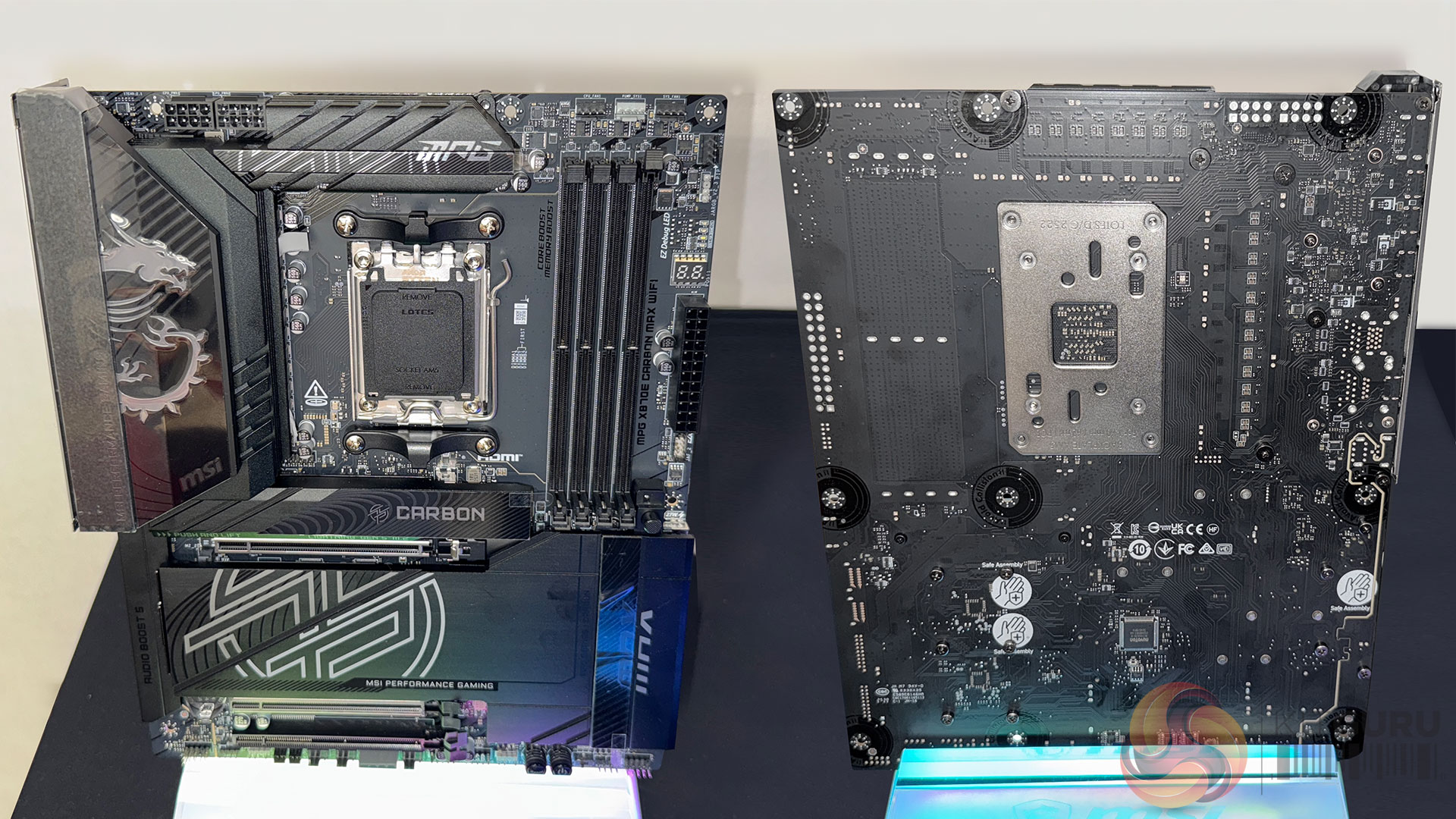
The third pillar of MSI’s strategy is the MAX motherboard range, built around AMD’s X870E chipset. MAX is not a cosmetic refresh. It is a structural upgrade designed to extend platform relevance as CPU, memory and I/O demands increase. There will also be new B850 models on show at CES from MSI.
Power and memory headroom
MAX boards scale up to 24 power phases with 110A stages on flagship models, with memory support officially extending beyond DDR5-10000 on compatible kits. While not every user will reach these limits, the headroom matters for stability at more modest settings.

MSI has also paid attention to PCB design, using higher layer counts and server-grade materials on upper-tier boards. This improves signal integrity for both memory and PCIe 5.0 devices, which is increasingly important as data rates climb.

Lane allocation and PCIe 5.0
One of the quieter but more meaningful improvements is how MSI handles PCIe lane bifurcation. On MAX boards, the GPU x16 slot and dual PCIe 5.0 M.2 slots can operate independently, avoiding bandwidth sharing that can limit performance in real-world workloads.

On boards like the MEG X870E GODLIKE X Edition, MSI goes further, supporting up to five onboard M.2 drives plus additional Gen5 storage via the included Xpander-Z card.

Connectivity and I/O
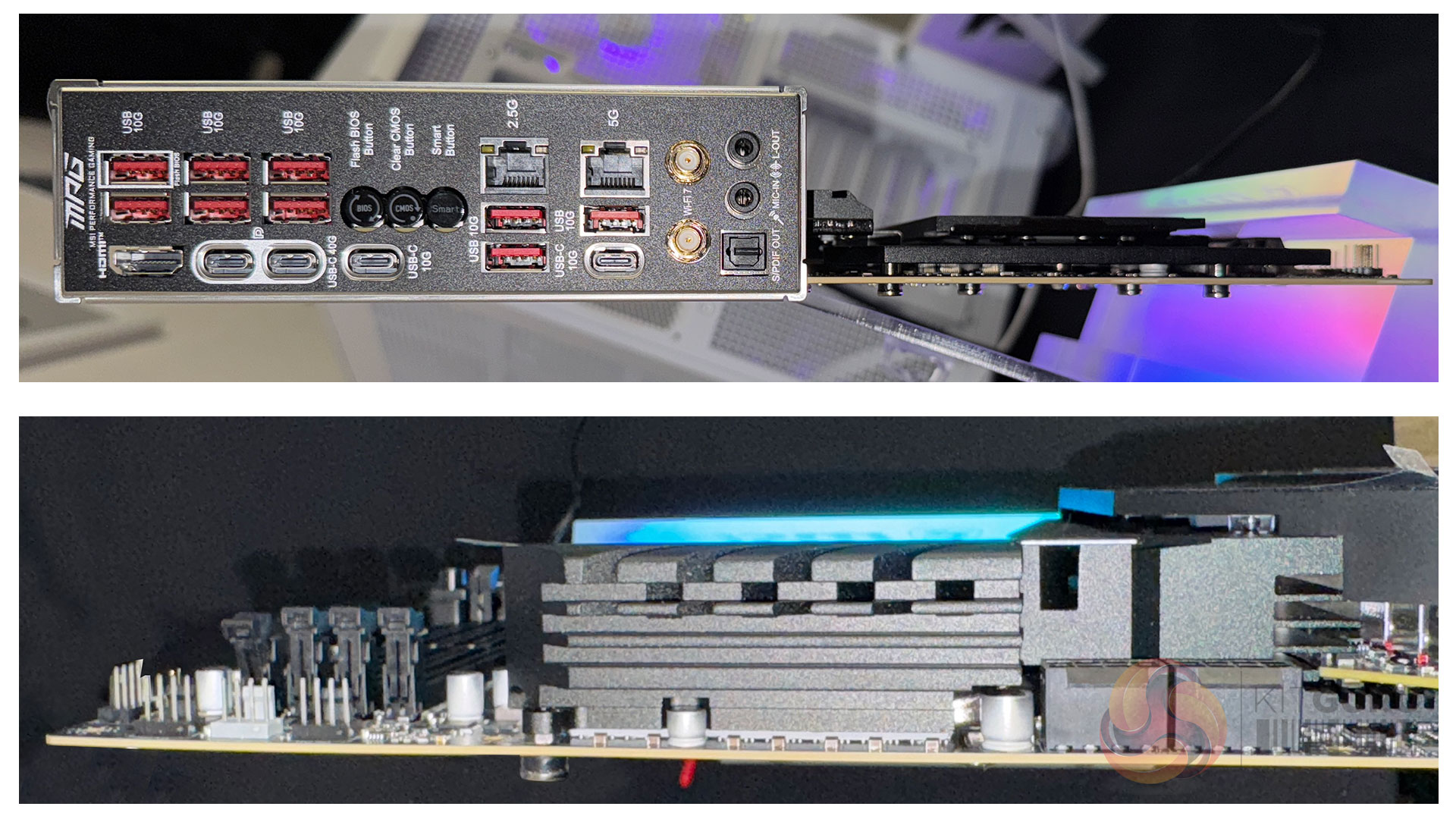
MAX boards standardise features that were previously reserved for select models. USB4, Wi-Fi 7 with full 320MHz channel support, and up to 10Gb Ethernet are now consistent across much of the range.

Front-panel USB-C charging is also enhanced, with up to 60W power delivery on higher-end boards, monitored in real time through the BIOS and software.
EZ DIY, taken seriously
MSI’s EZ DIY approach is not new, but on MAX boards it feels more comprehensive. Tool-free M.2 installation, PCIe slot release mechanisms, pre-installed I/O shields and consolidated cabling via EZ Conn and EZ Link designs all reduce friction during assembly and maintenance.

These are not headline features, but they matter when dealing with large, heavy GPUs and dense internal layouts.

In practical terms, we were told that a well configured system built on an MSI Max motherboard for Ryzen, could give you 5% to 15% additional in-game performance.

Across MEG, Safeguard+ and AMD MAX, MSI’s direction appears clear. The company is engineering for systems that are pushed hard, run for long periods and carry real financial risk when something goes wrong.

Rather than relying on user discipline or aftermarket solutions, MSI is building protection, monitoring and control into the platform itself. That does not make these systems simpler, but it does make them more predictable, which is arguably more valuable at this end of the market.

For enthusiasts, overclockers and professionals running high-end hardware at the edge of specification, that shift may prove more important than another incremental performance headline.

KitGuru says: In the DIY PC space, consumers are used to mixing up components from different vendors and throwing them all together in one system. As companies like MSI start to fill out their own ‘ecosystems' more, it becomes more tempting to buy more of your components from one place, as they've been designed to work well together. 

The post CES 2026: MSI unveils MEG system, AMD MAX motherboards and more first appeared on KitGuru.
CES 2026: Phanteks debuts new Evolv and XT View Matrix cases

5 janvier 2026 à 18:00

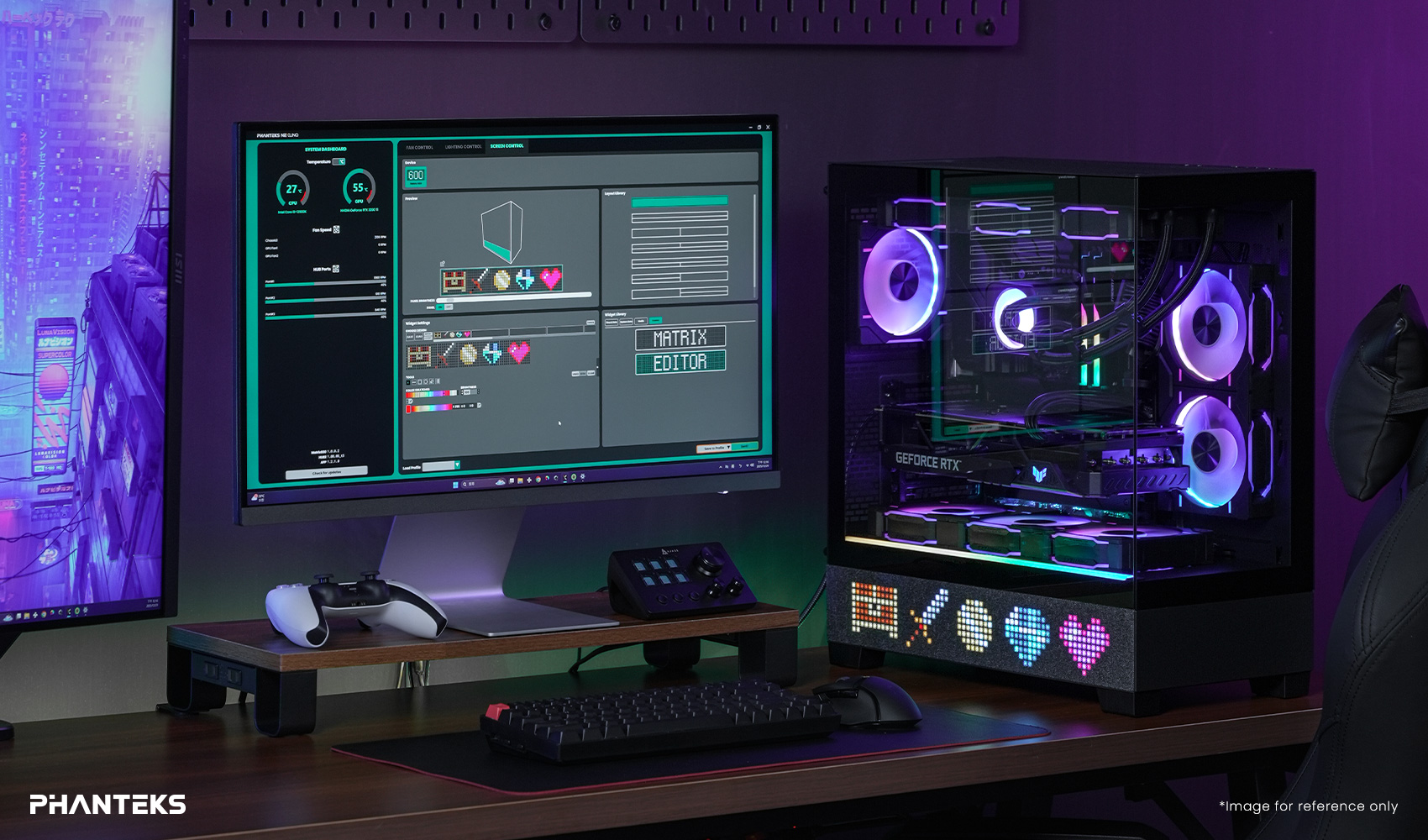
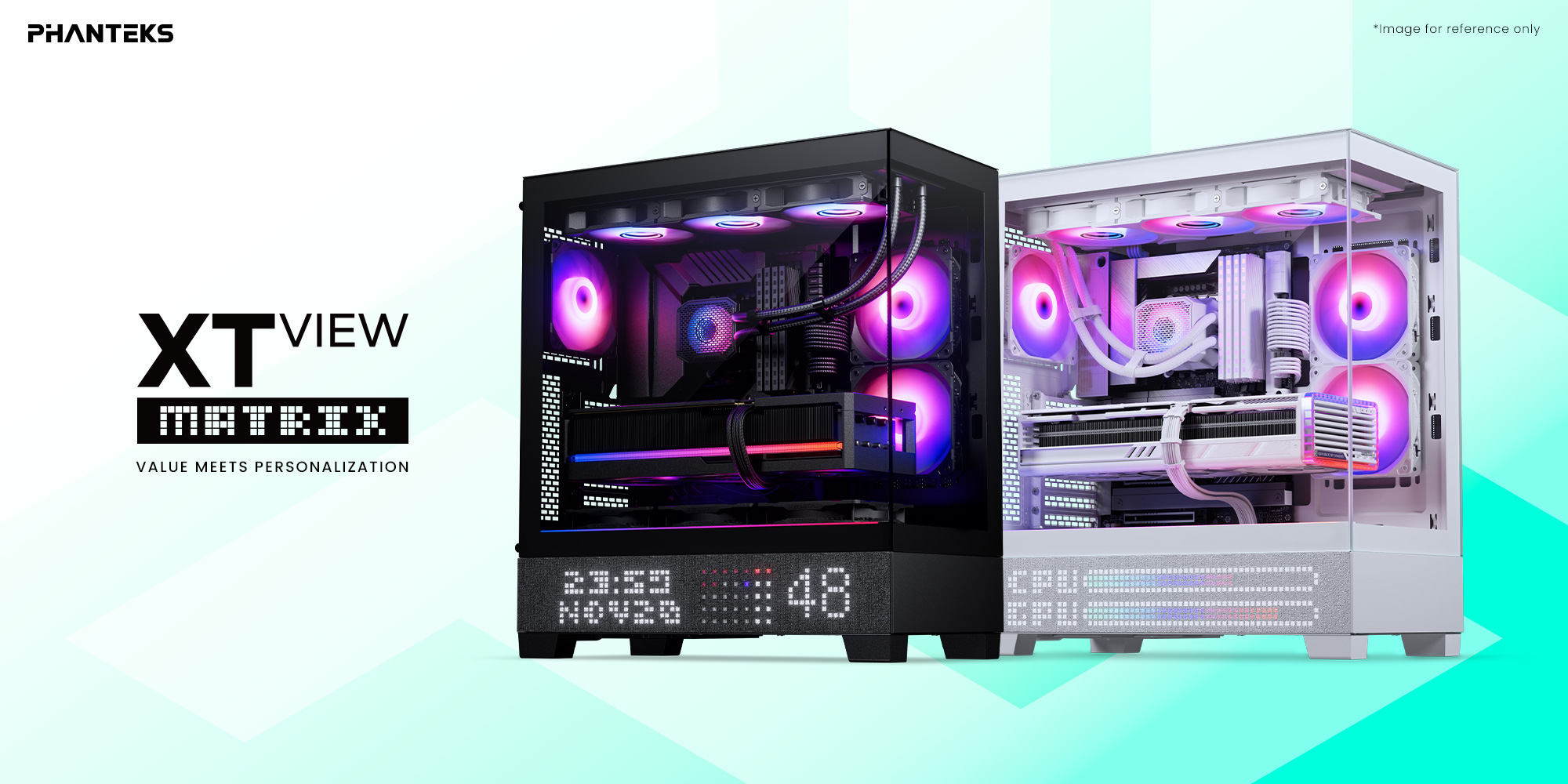
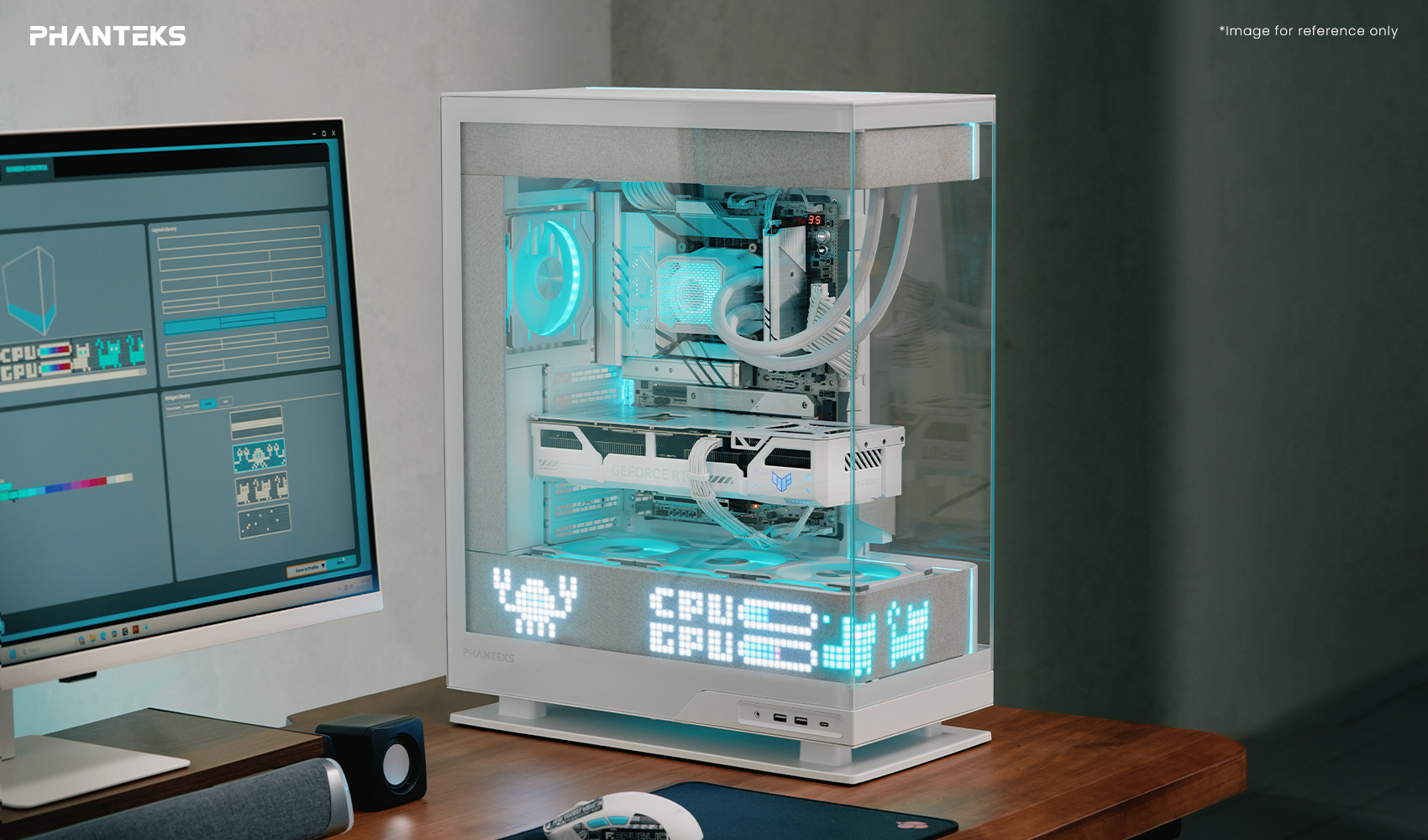
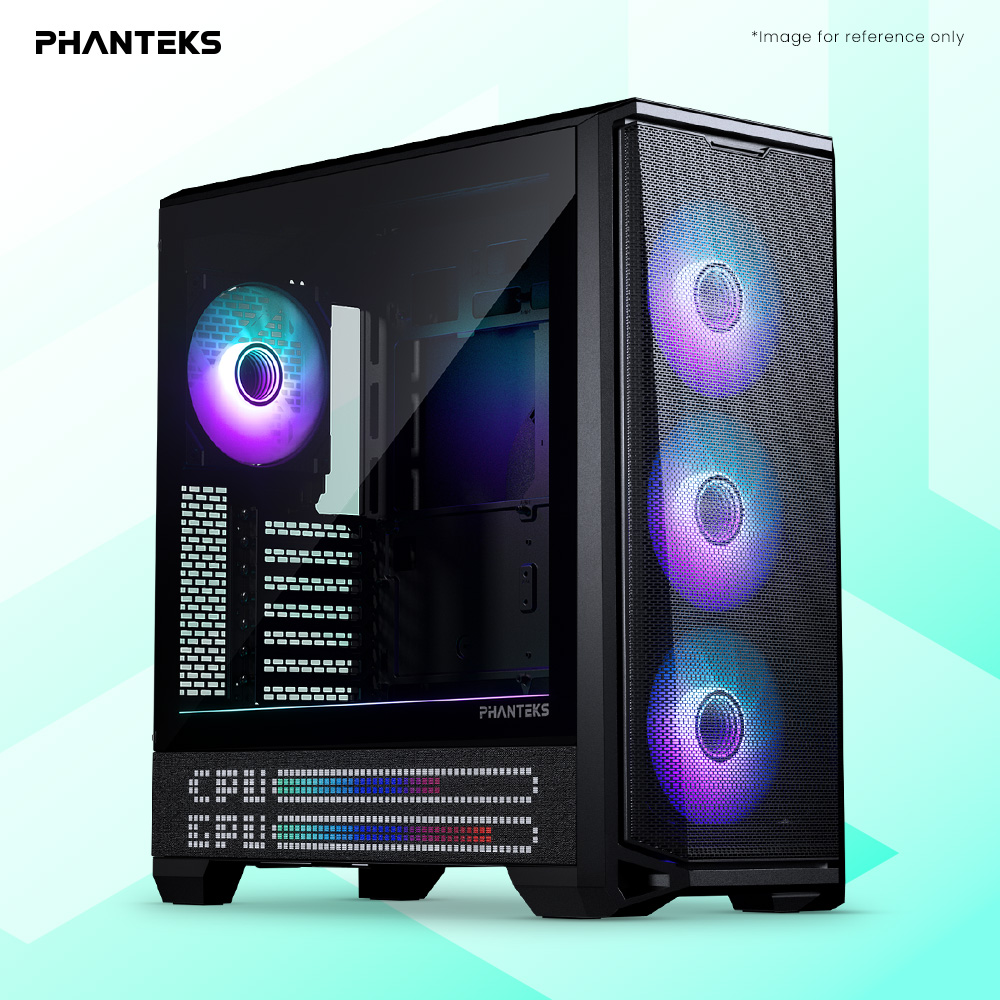
Phanteks has several new products to show off at CES this week, including new Evolv and XT View Matrix PC cases, and upgrade kits for those looking to add an LED Matrix display to their current Phanteks chassis. Here, we break it all down, along with pricing and launch dates. 

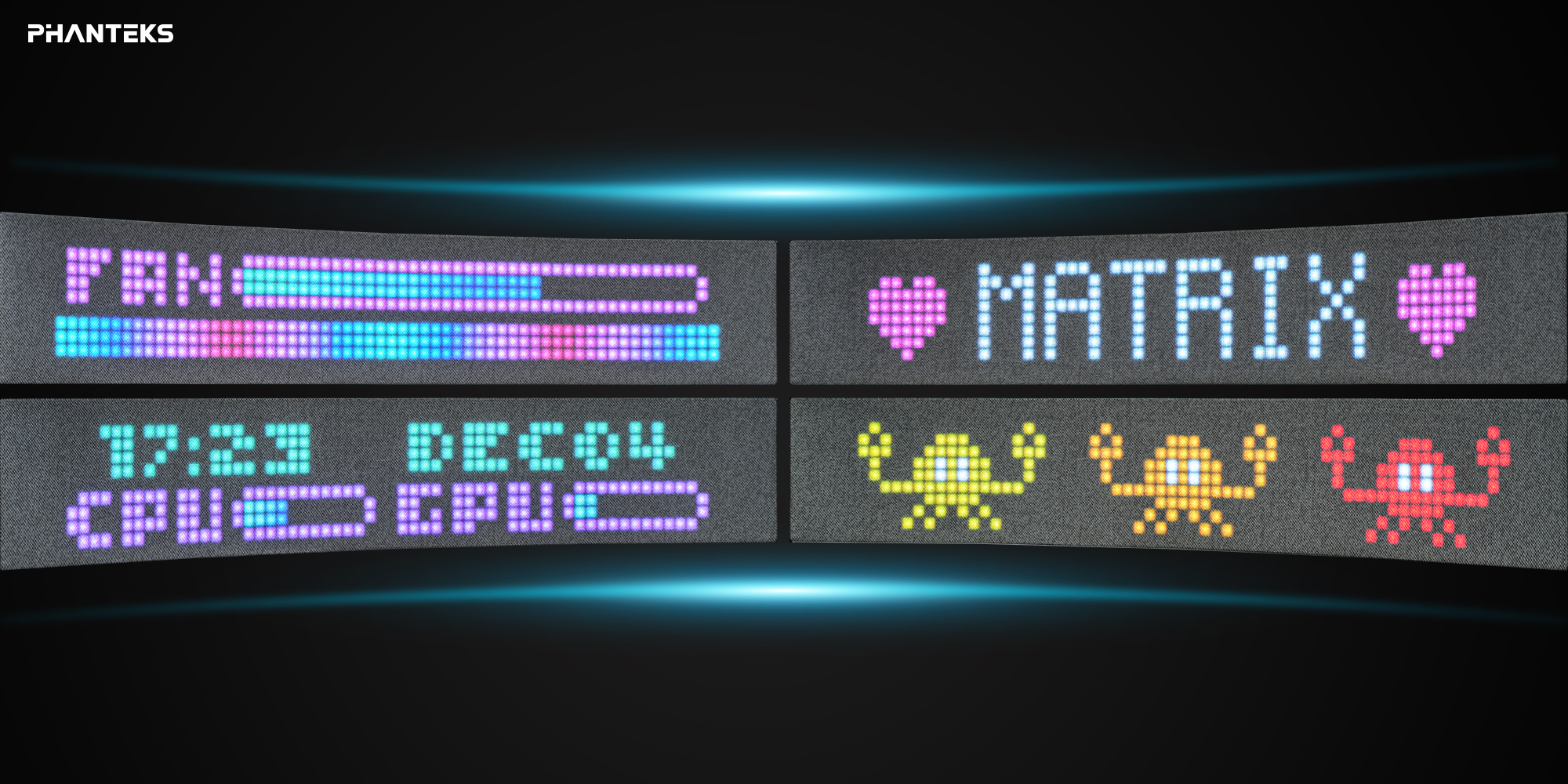
The flagship Evolv X2 Matrix features a 900‑LED display behind a soft fabric and glass front panel, offering ambient illumination and customizable visuals. It includes vertical airflow, support for rear‑connector ATX boards, and integrated D‑RGB accents.

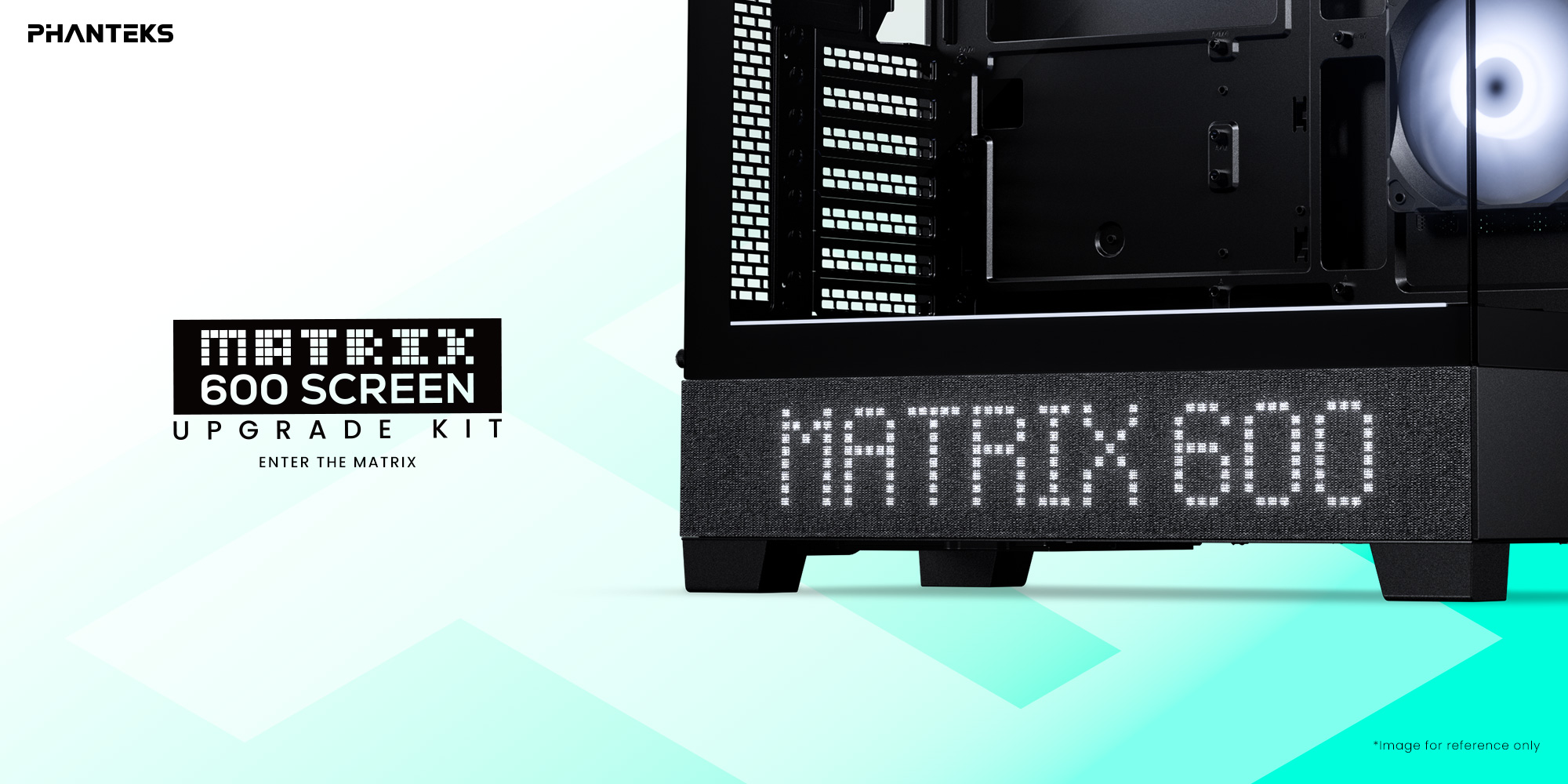
The XT View Matrix brings similar functionality to a mid‑range chassis, with a 600‑LED side panel display, support for large GPUs, nine fan positions, and three included D‑RGB fans. For existing builds, the Matrix‑600 Upgrade Kit adds display functionality to compatible cases like the XT View and G400A. It includes a 600‑LED array behind UV‑resistant fabric and supports full customization via Nexlinq.

All Matrix products are available starting January 5, 2026. Launch pricing includes:

  • Evolv X2 Matrix: $199.99 / €199.90 / £179.90
  • XT View Matrix: $119.99 / €119.90 / £104.90
  • Matrix‑600 Upgrade Kit: $49.99 / €49.90 / £43.90

A limited launch promotion includes a free Nexlinq Hub with Evolv X2 Matrix purchases, redeemable via Phanteks or authorised retailers.

KitGuru Says: Are you planning a new PC build this year? Will you be opting for a new Phanteks case for it? 

The post CES 2026: Phanteks debuts new Evolv and XT View Matrix cases first appeared on KitGuru.

Hollow Knight: Silksong secures Game of the Year at the 2025 Steam awards

5 janvier 2026 à 17:00

Valve has revealed the winners of the 2025 Steam Awards. Unlike the heavily produced ceremonies that rely on a mix of critics and developers, the Steam Awards remain entirely community-driven, with millions voting to decide which titles best represent each category. This year’s crowning achievement belongs to Hollow Knight: Silksong, which not only took home the Game of the Year award but also secured a second trophy for the Best Game You Suck At category.

The difference in player sentiment is most evident when comparing Steam Awards 2025 results to the accolades handed out at The Game Awards 2025. While Clair Obscur: Expedition 33 was the undisputed juggernaut of the December festival, sweeping nine categories including the primary GOTY title, it saw a much more modest reception from the Steam public, as the title only won the Best Soundtrack.

In the more niche categories, the community demonstrated a distinct sense of irony. The Sit Back and Relax Award was handed to RV There Yet?, a co-op driving game that many players find anything but relaxing.. Other notable victories included Hades II for Best Game on Steam Deck and Baldur's Gate 3, which continues its run by winning the Labor of Love award for Larian Studios. The detailed list of nominees and winners can be found below:

Game of the Year Award

  • Winner: Hollow Knight: Silksong
  • Dispatch
  • Clair Obscur: Expedition 33
  • Kingdom Come: Deliverance II
  • ARC Raiders

VR Game of the Year Award

  • Winner: The Midnight Walk
  • F1 25
  • Pavlov
  • Le Mans Ultimate
  • Emissary Zero

Labor of Love Award

  • Winner: Baldur’s Gate 3
  • Dota 2
  • No Man’s Sky
  • Rust
  • Helldivers 2

Best Game on Steam Deck Award

  • Winner: Hades II
  • Digimon Story Time Stranger
  • Ball x Pit
  • CloverPit
  • Deep Rock Galactic: Survivor

Better With Friends Award

  • Winner: Peak
  • Schedule I
  • Battlefield 6
  • R.E.P.O.
  • Split Fiction

Outstanding Visual Style Award

  • Winner: Silent Hill f
  • Final Fantasy VII Rebirth
  • ENA: Dream BBQ
  • My Little Puppy
  • DOOM: The Dark Ages

Most Innovative Gameplay Award

  • Winner: ARC Raiders
  • Escape From Duckov
  • Europa Universalis V
  • Mage Arena
  • Blue Prince

Best Game You Suck at Award

  • Winner: Hollow Knight: Silksong
  • Where Winds Meet
  • Marvel Rivals
  • Elden Ring Nightreign
  • Path of Exile 2

Best Soundtrack Award

  • Winner: Clair Obscur: Expedition 33
  • Tokyo Xtreme Racer
  • Rift of the NecroDancer
  • Deltarune
  • Marvel’s Spider-Man 2

Outstanding Story-Rich Game Award

  • Winner: Dispatch
  • Dying Light: The Beast
  • No, I’m Not a Human
  • The Last of Us Part II Remastered
  • Kingdom Come: Deliverance II

Sit Back and Relax Award

  • Winner: RV There Yet?
  • PowerWash Simulator 2
  • Chill with You : Lo-Fi Story
  • Megabonk
  • Slime Rancher 2

KitGuru says: Did you vote for the Steam Awards 2025? Do you agree with the winners?

The post Hollow Knight: Silksong secures Game of the Year at the 2025 Steam awards first appeared on KitGuru.

Asus ROG unveils trio of OLED monitors ahead of CES 2026

5 janvier 2026 à 15:30

Asus has officially launched its CES 2026 campaign with a trio of ROG gaming monitors that address a major issue with OLED technology: text clarity. By adopting the latest sub-pixel architectures from both LG Display and Samsung Display, the new ROG Swift and Strix models promise to deliver a native RGB-stripe experience that eliminates the fringing issues that have historically plagued OLED panels on the desktop.

Starting with the ROG Swift OLED PG27UCWM, this 27-inch display uses LG Display's 4th Gen Tandem WOLED panel at a native 4K resolution, swapping the traditional white-subpixel (RGWB) layout for an RGB-stripe arrangement. Combined with a 166 PPI, this shift is designed to produce the sharpest text rendering ever seen on a 27-inch OLED, making it suitable for gaming and productivity. The monitor also features a dual-mode toggle that lets users choose between native 4K at 240 Hz and 1080p at 480 Hz.

On the ultrawide front, the ROG Swift OLED PG34WCDN serves as a showcase for Samsung Display's 5th-Gen QD-OLED technology. It introduces a new “V-stripe” vertical-pixel structure that replaces the triangular sub-pixel matrix used in previous generations. This structural change is paired with a new BlackShield Film coating, which Asus claims deepens black levels by 40% in bright rooms and significantly reduces the characteristic purple tint of QD-OLED panels. The 34-inch curved display features a 360 Hz refresh rate, a 1800R curvature, and a peak HDR brightness of 1,300 nits, thanks to the new EL 3.0 material stack.

For those looking for the same visual improvements in a slightly more accessible package, Asus is also launching the ROG Strix OLED XG34WCDMS. This model utilises the same V-stripe QD-OLED panel and BlackShield coating as its flagship sibling but scales the refresh rate back to a respectable 280 Hz. It maintains the 1300-nit peak brightness and 1800R curvature.

Connectivity across the new lineup is quite good, with the PG27UCWM and PG34WCDN both featuring DisplayPort 2.1 (UHBR20) for maximum uncompressed bandwidth. USB-C with 90W Power Delivery is standard on the Swift models, while all three units include the latest ROG OLED Care Pro suite and a Neo Proximity Sensor to mitigate burn-in risks.

KitGuru says: The move to an RGB-stripe layout is the “holy grail” for many who use their OLED monitor for both work and play. By offering these monitors with the latest OLED tech, Asus is making a very strong case for OLED as a primary, no-compromise desktop solution in 2026.

The post Asus ROG unveils trio of OLED monitors ahead of CES 2026 first appeared on KitGuru.

Unreleased MSI RTX 5090 Lightning GPU revealed in benchmark submissions

5 janvier 2026 à 14:00

The high-end graphics card market is bracing for a literal storm as MSI prepares to resurrect its legendary Lightning brand at CES 2026. While the company hasn't confirmed it officially just yet, a series of calculated “weather forecast” teasers on social media predict thunder and lightning for the first day of CES. On top of that, a number of record-breaking benchmark submissions have also been unearthed, pointing to an RTX 5090 Lightning announcement. 

Various overclockers have shared the results of their work on HWBot (via Wccftech), where the MSI RTX 5090 Lightning was explicitly named in submissions from TSAIK, Lucky_n00b, and littleboy. TSAIK seems to have been the most successful, setting new world records for GPUPI v3.3 1B (1-core), 3DMark Port Royal, 3DMark Time Spy GPU, 3DMark Wild Life Extreme, 3DMark Speed Way, and Geekbench 6 Compute. During these runs, the overclocker also set the world record for RTX 5090 GPU frequency at 3,742 MHz. Lucky_n00b and littleboy were also reasonably competent, with the former getting the world record for Geekbench 5 Compute and the latter for 3DMark Solar Bay and Solar Bay Extreme.

Image credit: HWBot (littleboy)

The GPU itself appears to be an absolute behemoth designed for extreme scenarios. Leaked images and early technical data point to a massive 40-phase VRAM power delivery system. Perhaps most telling of its power requirements is the presence of dual 12V-2×6 power connectors, a configuration that doubles the potential power input compared to standard enthusiast cards.

Furthermore, Lucky_n00b has shared what appears to be the maximum power limit in the BIOS for the MSI GeForce RTX 5090 Lightning graphics card, which can reach 2500W. The overclocker also stated that the sample he received didn't include a proper cooling solution. Instead, he got the “OCER” version, which consists of a bare PCB and a test heatsink.

MSI has not used the Lightning moniker for a flagship Nvidia card since the RTX 2080 Ti Lightning Z in 2019. By bringing it back to the Blackwell architecture, MSI is signalling a return to the over-the-top engineering that defined the GTX 1080 Ti and Radeon R9 290X Lightning eras. For the average consumer, these records serve as a demonstration of silicon potential rather than out-of-the-box performance. However, for those with the budget to reach the absolute ceiling of the RTX 5090, the Lightning is positioning itself as the new benchmark to beat.

KitGuru says: The return of the Lightning brand marks MSI's first real “halo” card since the 20-series. With a 40-phase VRM and dual 12V-2×6 connectors, the new Lightning card is clearly not intended for the average gamer but rather for extreme overclocking in a lab.

The post Unreleased MSI RTX 5090 Lightning GPU revealed in benchmark submissions first appeared on KitGuru.

Bloober Team trademarks ‘Onyx: The Dark Grip’ following recent teaser

5 janvier 2026 à 13:00

Starting off as a mid-tier developer, Bloober Team have gone from strength-to-strength with each successive release – culminating in the successful launches of Silent Hill 2 Remake in 2024 and new IP Cronos: The New Dawn last year. While some of Bloober’s future projects have been confirmed, it appears as though the studio is working on another new IP known as ‘Onyx: The Dark Grip’.

As discovered by Reddit user ‘Solid-Entertainer-39’, a European trademark was recently published for the name Onyx: The Dark Grip by Bloober Team.

Though the title was first registered all the way back in 2024, it wasn’t until now that the trademark had been officially published and publicised.

Bloober Onyx

As mentioned, Bloober Team have worked on quite a few different projects in recent years, with multiple more confirmed to be in development – including a remake of Silent Hill 1 and an original title in development for the Nintendo Switch.

Additionally, Bloober Team began teasing something a couple days back, launching a website which included a seemingly random string of letters (RemosdNeulSerorehsoOvamCeyerd) alongside a timer counting down to the 14th of February 2026.

Whether these two things are related, we will have to wait and see – but it seems like more than a simple coincidence.

Discuss on our Facebook page HERE.

KitGuru says: What do you think of the name Onyx: The Dark Grip? Could this be the previously-announced Nintendo exclusive or do you think it's a 3rd project? Let us know down below.

The post Bloober Team trademarks ‘Onyx: The Dark Grip’ following recent teaser first appeared on KitGuru.

2025 was “comfortably the worst year on record” for Xbox in the UK as PS5 sales also fell

5 janvier 2026 à 12:00

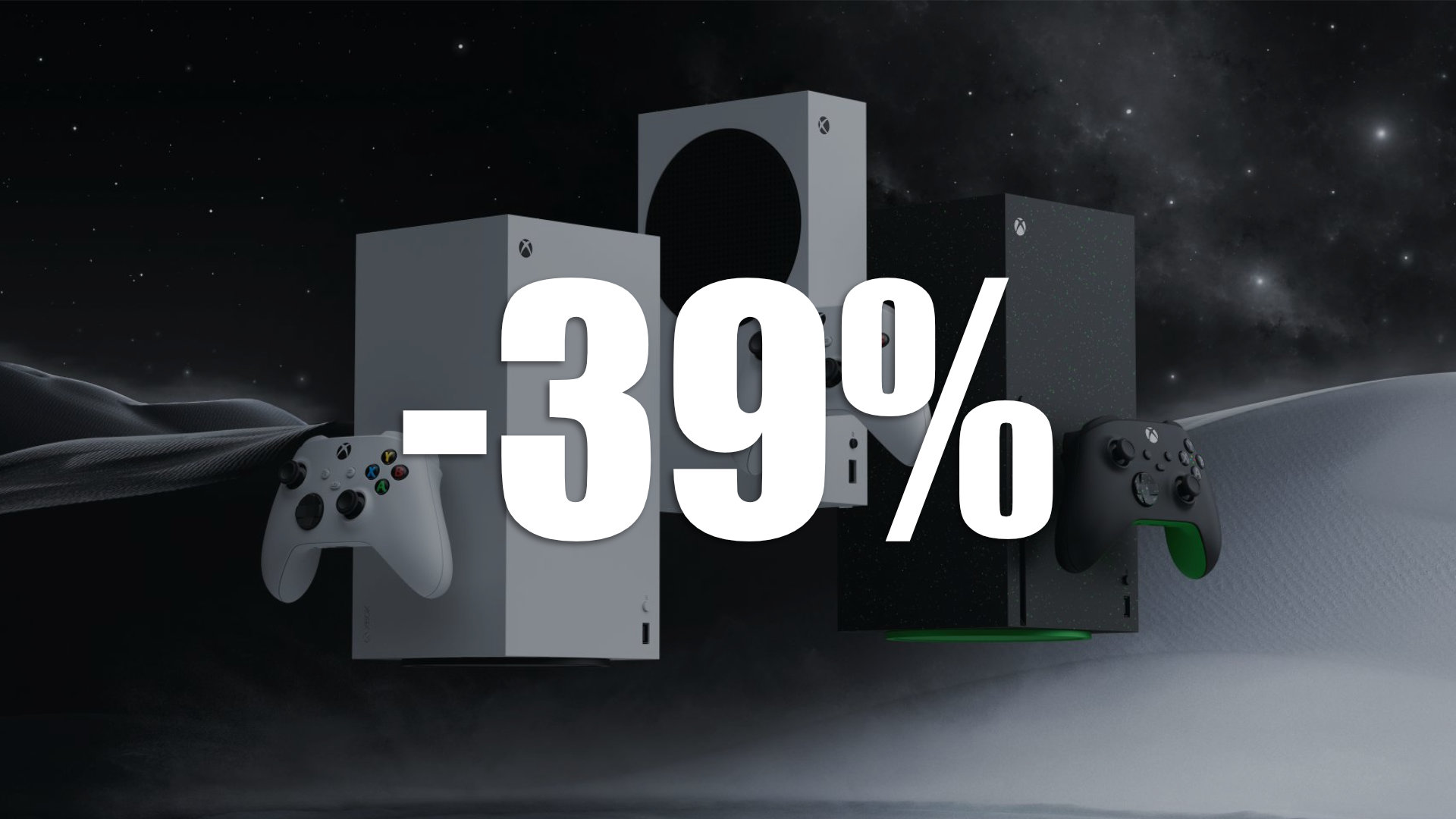
With 2025 officially behind us, we’ve started to get some more concrete details on exactly how the video games industry performed over the past 12 months. According to analysts, Xbox had “comfortably the worst year on record” in the UK last year with sales dropping by a substantial 39%.

Taking to Twitter, known industry insider/analyst Christopher Dring shared some data regarding the performance of the video games industry in the UK throughout 2025, revealing that:

“Sales of Xbox consoles were down 39% in the UK during 2025, making it comfortably the worst year on record for Xbox consoles.”

Considering the fact that Xbox was already struggling somewhat to sell units when compared to PlayStation, such a massive drop is even more notable.

Xbox 2025

That’s not to say that PlayStation had a record-breaking year however, with Dring confirming that sales of the PS5 in the UK throughout 2025 were down 12% when compared to 2024. Of course, the PS5 has consistently sold a high volume of systems each year and so such a drop is expected half a decade into the console’s lifecycle.

Still, with rumours claiming that the ongoing RAM issues could lead to a delay in next-gen consoles, it will be interesting to see how both PS5 and Xbox sales continue to shift with each passing year.

Discuss on our Facebook page HERE.

KitGuru says: Was 2025 a good year for PlayStation? What about Xbox? Can Microsoft recover from its downward spiral? Let us know down below.

The post 2025 was “comfortably the worst year on record” for Xbox in the UK as PS5 sales also fell first appeared on KitGuru.

Bright Memory devs officially unveil their next project

5 janvier 2026 à 11:00

Bright Memory Infinite was one of the first Xbox Series X games to be shown off all the way back in 2020. While the game did not blow up in popularity, it seemed to have achieved what it set out to – all the while getting a bunch of major and welcome updates. Half a decade on however and the team have moved over to their next project – which is said to be a “3rd person action shooter set in Republic of China.”

Making the announcement on their socials in celebration of the new year, the team at FYQD Studio offered a slight tease for their next project, writing:

“Hello everyone! FYQD-Studio is developing a third-person action shooter set in Republic of China, amidst a time of turmoil and collapsing order, rival gangs clash in the shadows, as violence and conspiracy quietly spread through the streets.”

Though little else was offered in the way of gameplay details, the team did confirm that the project “is currently in development, focusing on art assets and motion capture” with more information promised to be “coming soon.”

Bright Memory 3rd person

Alongside the announcement, the team shared a selection of screenshots, showcasing a game that appears to be rich in atmosphere and vibes – though of course we will have to get our hands on the title to know for sure.

It is interesting to see that FYQD’s next project is a 3rd person title, given that Bright Memory Infinite was an FPS experience. That said, the game did receive a free update later in its life offering a 3rd person mode; perhaps in preparation for their next project.

Regardless, it will be interesting to see exactly what this new game is when it is more formally announced / shown off some time later this year hopefully.

Discuss on our Facebook page HERE.

KitGuru says: Did you try Bright Memory Infinite? What did you think? Are you surprised to see them switching to 3rd person for their follow-up project? Let us know down below.

The post Bright Memory devs officially unveil their next project first appeared on KitGuru.

Ubisoft gearing up for Assassin’s Creed: Black Flag Resynced and Sands of Time Remake

5 janvier 2026 à 10:15

Throughout 2025 we saw an increasing number of leaks and rumours surrounding Ubisoft’s long-awaited Prince of Persia The Sands of Time Remake alongside details pertaining to their as-of-yet-unannounced Assassin’s Creed Black Flag Remake. With both titles said to be arriving in the coming months, it appears as though Ubisoft are gearing up to unveil both projects soon.

As discovered by fans of both franchises, Ubisoft recently registered two new websites – one for Prince of Persia The Sands of Time Remake and another for the yet-to-be-announced Assassin’s Creed Black Flag Resynced.

While this in and of itself does not mean an announcement is coming, we’d gotten a bunch of leaks throughout 2025 claiming that Prince of Persia is scheduled to launch as soon as some time this month – with Black Flag Resynced said to be following up around March.

Black Flag Ubisoft

For the uninitiated, the Sands of Time Remake was first announced back in 2020 alongside an early 2021 release date. Due to a strong (negative) reception towards the trailer however, the game went back to the drawing board and has yet to be seen properly since.

As mentioned, Ubisoft have yet to officially announce Assassin’s Creed Black Flag’s remake, however leaks have claimed that the project will remove modern day elements in favour of more Edward Conway content. Perhaps more controversially, the remake will reportedly also feature an added degree of RPG mechanics – though likely less than Odyssey/Valhalla.

Considering both domains have been registered, it seems as though Ubisoft is pretty much ready to unveil both of these projects. When will this occur however? We’ll have to wait and see, but it wouldn’t be surprising if Ubisoft were to announce one of their showcases in the coming days/weeks.

Discuss on our Facebook page HERE.

KitGuru says:; Are you excited for Ubisoft’s 2026? Which of these two remakes are you more looking forward to? Are you expecting much of a difference between the initial Sands of Time trailer and the final product? Let us know down below.

The post Ubisoft gearing up for Assassin’s Creed: Black Flag Resynced and Sands of Time Remake first appeared on KitGuru.

YPlasma to debut world’s first plasma-cooled laptop at CES 2026

4 janvier 2026 à 14:00

The death of the mechanical laptop fan may be closer than expected. YPlasma, a deep-tech startup based in Newark and Spain, has announced it will unveil a revolutionary solid-state cooling solution at CES 2026. Replacing traditional rotary fans with “Dielectric Barrier Discharge” (DBD) plasma actuators, the company claims to have achieved high-performance cooling with zero moving parts, zero noise, and a form factor thinner than that of a typical cooling solution.

To achieve this feat, YPlasma (via Techpowerup) is using a 200-micron cooling film, an ultra-thin layer that uses electrically charged plasma to generate a high-velocity “ionic wind”. While ionic cooling has been explored before, it typically relied on “corona discharge”, which suffered from needle erosion and the production of harmful ozone. YPlasma's DBD approach uses a physical dielectric barrier to stabilise the discharge, making it ozone-free and durable enough to last the entire lifespan of a consumer device. Because there are no bearings or blades, the system operates at a virtually silent 17 dBA.

The 200-micron thickness also allows thermal engineers to integrate cooling directly into the chassis walls or heat sinks, potentially enabling a new generation of “hyper-thin” laptops that don't have to throttle performance due to a lack of airflow. Interestingly, the actuators are also the first in the world capable of dual-mode operation, providing both cooling and heating within the same film.

YPlasma will be hosting a live demonstration of a plasma-cooled laptop prototype at CES 2026 on Wednesday, January 7th.

KitGuru says: If YPlasma can deliver on its promise, this could be the most significant shift in PC cooling since the transition from passive heatsinks to active fans.

The post YPlasma to debut world’s first plasma-cooled laptop at CES 2026 first appeared on KitGuru.

AMD Radeon RX 9070 sees growth in latest Steam hardware survey

4 janvier 2026 à 13:00

The RDNA 4 architecture has finally broken its silence on the Steam Hardware Survey, nearly a year after the Radeon RX 9000 series was released. While Nvidia's Blackwell architecture began appearing in the charts shortly after its early 2025 debut, AMD's latest generation had been curiously absent, leading to significant speculation about RDNA 4's market performance and the accuracy of Valve's reporting.

As of the December 2025 survey, the Radeon RX 9070 has officially debuted with a 0.21% share. This makes it the sole representative of the RX 9000 series on the list, as the flagship RX 9070 XT and the more budget-friendly RX 9060 models have not yet met the threshold for a named entry. This initial appearance places the RX 9070 alongside legacy GPUs like the RX 5500 XT and Intel's HD Graphics 4600.

In comparison, Nvidia's Blackwell generation has seen a much more aggressive ramp-up. The best representative of Nvidia's lineup is the RTX 5070, which leads the current-gen charge at 3.05%, followed by the RTX 5060 with 2.21%. The worst is the RTX 5090, but even so, with its 0.60%, it's almost three times higher than that of the Radeon RX 9070. At the top is the RTX 3060 with a whopping 6.53%, followed by the RTX 4060 Laptop with 5.85% and the RTX 4060 desktop with 5.84%.

Moving on to CPUs, another interesting bit is AMD's race to 50% share. Currently sitting at 44.42%, the red team has never been closer to surpassing Intel than it is now.

KitGuru says: The “missing” RDNA 4 cards were likely due to identification bugs rather than poor sales. With the RX 9070 finally on the board, we expect the 9070 XT to make a sudden jump in the early 2026 surveys as Valve refines its hardware detection.

The post AMD Radeon RX 9070 sees growth in latest Steam hardware survey first appeared on KitGuru.

Lionsgate says John Wick and Saw videogames are on the way

4 janvier 2026 à 12:00

Lionsgate is finally pulling the trigger on full-scale interactive expansions for its two most valuable franchises. During the studio's Q2 2026 earnings call, Adam Fogelson, Chairman of the Lionsgate Motion Picture Group, confirmed that high-budget AAA video game adaptations of John Wick and Saw are in active development, with formal reveals expected shortly.

For years, the studio favoured low-risk licensing deals such as the tactical John Wick Hex or crossover skins in Fortnite and Dead by Daylight. However, it seems Lionsgate wants to move things up a notch into AAA gaming. As per Adam Fogelson's words (via Tech4Gamers), “our AAA game opportunities and other gaming opportunities around John Wick and Saw and some others that we'll be announcing soon”.

By moving away from “no-risk licensing” toward AAA productions, Lionsgate can capture the visceral “gun-fu” action of Wick and the complex psychological horror of Saw in ways that previous mobile and mid-tier titles could not. Whether the game is a direct retelling of the films or a spin-off like the Ballerina movie, it would be nice to see Keanu Reeves return, especially after seeing his work as Johnny Silverhand in Cyberpunk 2077.

On the other hand, Saw already had some games like Saw (2009) and Saw II: Flesh & Blood (2010), but the new one will hopefully be better received. While Fogelson was tight-lipped on specifics, it's not that hard to imagine how a Saw game can look. The most obvious would be a survival horror title, but a multiplayer game akin to Dead by Daylight is also a possibility.

KitGuru says: If Lionsgate partners with a high-tier combat studio like Sloclap (Sifu), we could finally get the John Wick game fans have been building in their heads for years. On another note, what “some other” franchises do you think Fogelson was referring to?

The post Lionsgate says John Wick and Saw videogames are on the way first appeared on KitGuru.
GeForce Now is getting 14 new games in January

4 janvier 2026 à 11:00

Nvidia is entering 2026 by expanding the GeForce Now library and pushing its cloud infrastructure further into the current generation of hardware. This month’s update brings a diverse range of titles to the service, while also marking the point at which previously announced usage restrictions begin to affect the broader subscriber base.

Nvidia GeForce Now's library expansion kicks off immediately with several high-profile additions. Steam’s recent release of My Winter Car leads the pack, joined by Eternights and the Epic Games Store version of Warhammer 40,000: Space Marine 2. For those using the platform’s integration with Microsoft’s ecosystem, Banishers: Ghosts of New Eden and The Casting of Frank Stone are now accessible via Xbox Game Pass licences.

More games are expected to join throughout January, with StarRupture and Pathologic 3 scheduled to arrive in the coming weeks, followed by titles like Quarantine Zone: The Last Check, MIO: Memories in Orbit, and Nova Roma. Other games coming to the cloud gaming service include Guild Wars: Reforged (Steam), Mon Bazou (Steam), Supermarket Simulator (Xbox, available on Game Pass), and Tavern Keeper (Steam).

Moreover, Nvidia is leveraging its latest architecture by enabling RTX 5080-powered servers for two new games: Factorio and Warhammer 40,000: Space Marine 2.

KitGuru says: Interested in any of the new games joining the GeForce Now platform?

The post GeForce Now is getting 14 new games in January first appeared on KitGuru.
MSI shows off the MPG 341CQR X36 – its first 5th-Gen QD-OLED Monitor

4 janvier 2026 à 09:00

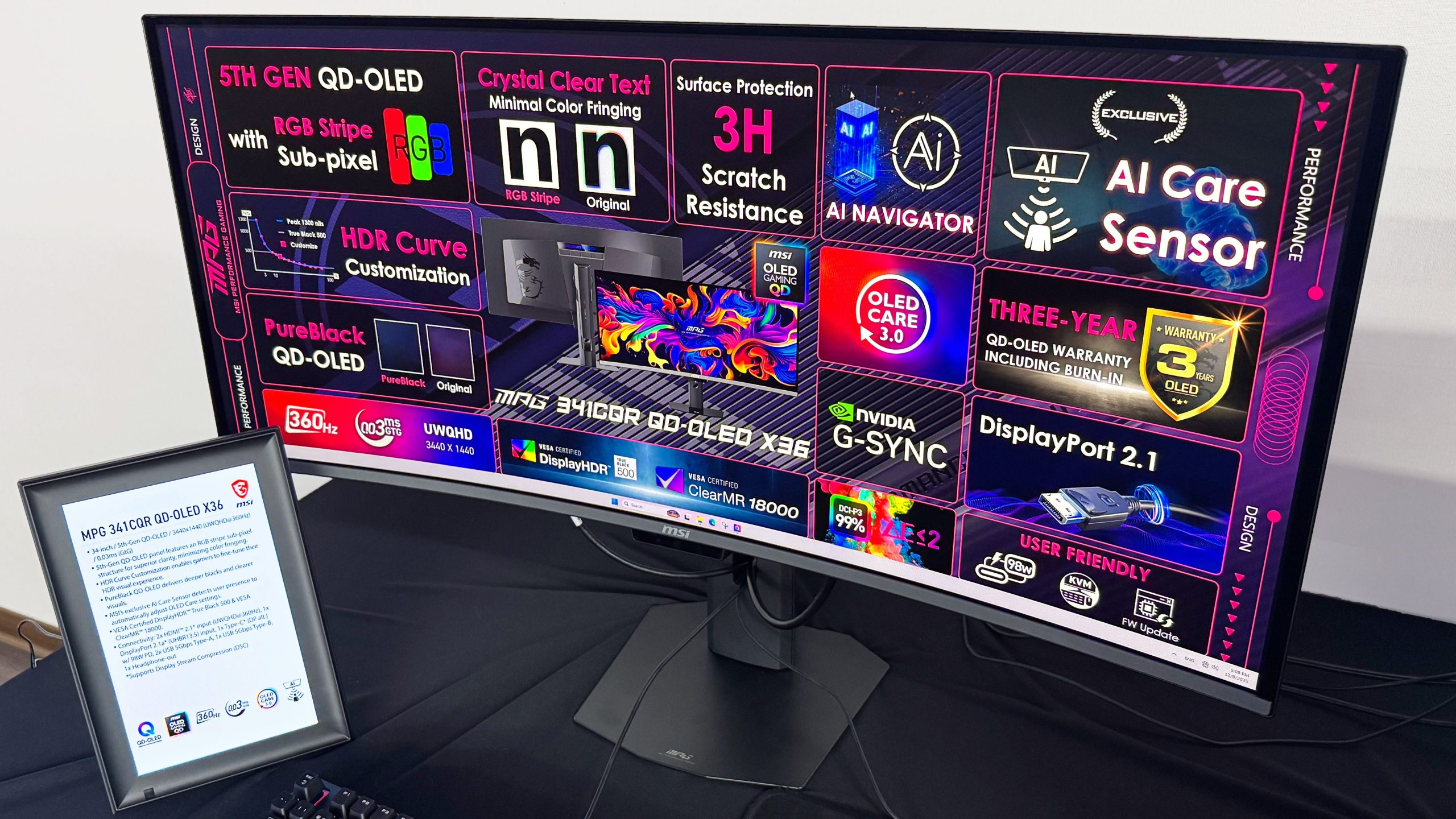
CES 2026 will see the launch of a next-generation gaming monitor from MSI, built around Samsung Display’s latest fifth generation QD-OLED panel technology. Well ahead of the public announcement, KitGuru was invited to MSI’s headquarters in Taipei as part of the EHA Tech Tour – to receive an early briefing on the new display platform, including a technical deep dive. 

Fifth-Gen QD-OLED Technology Improvements

Samsung’s fifth generation QD-OLED technology is not a radical departure from what came before, but a concentrated refinement of the areas that matter most to PC users who spend long hours in front of a screen. The improvements focus on clarity, durability, HDR consistency and longevity – rather than chasing ‘headline numbers’ alone. In other words, this is not about 8K or 800Hz refresh rates as much as delivering the best possible experience for serious gamers in 2026.

The most important change is the move away from the previous Q-stripe sub-pixel layout towards a new V-stripe structure. While QD-OLED has long delivered excellent colour volume and contrast, earlier implementations could still show artefacts in fine text and UI elements, particularly in desktop use. The V-stripe layout is designed to improve sub-pixel alignment and light distribution, resulting in sharper text rendering, more consistent viewing angles, and fewer colour fringing issues across the panel.

Alongside this architectural change, Samsung and MSI have also addressed practical, real-world concerns raised by early OLED adopters. The panel surface itself has been hardened, moving from a 2H to a 3H rating, which should make it more resistant to micro-scratches during cleaning and day-to-day use. The screen coating has also been reworked, using a deliberately asymmetric texture rather than a uniform finish, allowing it to absorb and diffuse ambient light more effectively without introducing visible grain. The result is reduced glare without the heavy haze sometimes associated with aggressive matte coatings.

HDR performance is another major focus. The MPG 341CQR QD-OLED X36 is rated for peak brightness of up to 1,300 nits, while maintaining OLED’s (claimed) near-infinite contrast characteristics. Combined with VESA DisplayHDR True Black 500 certification, this allows the panel to span an extremely wide dynamic range, from deep/detail-rich blacks to small, intense highlights. MSI has built this around a set of 14 user-selectable HDR profiles, giving users fine-grained control depending on content type, ambient lighting, and personal preference rather than forcing a single fixed tone curve.

Burn-in mitigation and panel longevity have also been expanded beyond previous generations. MSI’s OLED Care suite has evolved further, now supported by an AI Care Sensor that uses real-time image analysis and human presence detection. Key functions include real human detection (fake humans beware), wake-on-approach and ‘lock-on-leave’ behaviour. There’s also adaptive dimming for static elements, automatic brightness and colour temperature adjustment based on environment – as well as broad multi-platform compatibility including macOS. This was previously the realm of LG only. The aim here is not only to protect the panel over time, but to do so in a way that is largely invisible to the user.

Samsung, QD-OLED, and MSI: Context and Continuity

Samsung’s position in the display industry stretches back more than five decades, with the company producing its first television panels in the late 1960s. Commercial OLED displays arrived much later, with Samsung Display refining OLED for consumer use through the 2010s before introducing QD-OLED as a distinct platform in the early 2020s. MSI, meanwhile, has worked with Samsung as a panel supplier for well over a decade, long before OLED entered the gaming monitor space, and that relationship has deepened as display technology has moved upmarket.

Samsung’s internal framing of QD-OLED development is best understood in generational steps:-

  • First-generation
    QD-OLED panels, introduced in 2022, established the core concept of blue OLED light combined with quantum dot colour conversion
  • Second-generation
    These panels arrived in 2023 with improved efficiency and thermal behaviour, allowing higher sustained brightness
  • Third-generation
    Refined uniformity and HDR handling, making QD-OLED viable across a wider range of gaming monitors
  • Fourth-generation
    Increased popularity in 2025 pushed refresh rates to extreme levels, including 500Hz at QHD, while laying the groundwork for changes to sub-pixel structure.

The fifth-generation platform builds on all of this.

It introduces the V-stripe sub-pixel layout, higher usable brightness, improved anti-reflective coatings, increased panel hardness, and further reductions in burn-in risk, which Samsung estimates at around 30 percent compared to earlier implementations. Crucially, it is designed to scale these improvements to higher resolutions and larger panel sizes, enabling products like MSI’s 34-inch, 360Hz ultrawide display.

That evolution matters because MSI’s previous-generation flagship, the MPG 321URX, set a very high bar. When we reviewed it in April 2024, we were struck by how well it combined 4K resolution, a 240Hz refresh rate, and the visual strengths of QD-OLED into a genuinely versatile high-end display. It spent months at the top of our Best Monitors chart despite its premium pricing, a clear sign that performance and image quality were strong enough to justify the cost.

The shift from Q-stripe to V-stripe is therefore not a minor footnote, but the key change that MSI and Samsung will be relying on to move beyond what was already an excellent panel.

The Economics of the Modern PC Displays

While market pressure on core PC components is increasing due to high demand for memory and high-performance CPUs and GPUs in the AI market, costs are driving higher. Yet the monitor market appears to be moving in the opposite direction.

Samsung estimates that out of roughly 130 million displays sold in 2025, around 29 million will be gaming monitors, rising to 31 million in 2026. Growth is strongest at the premium end, with monitors priced above $500 increasing from around 2.6 million units in 2024 to a projected 3 million units in 2025. Average selling prices in this segment peaked above $900 during 2024.

The implication is clear. Even as buyers become more cost-conscious about CPUs, GPUs and memory – many are still willing to invest heavily in large, high-quality displays that define their daily experience across work, gaming, and media consumption. High-end QD-OLED panels sit squarely in that category.

KitGuru Says: On paper, the MSI MPG 341CQR QD-OLED X36 represents a meaningful step forward rather than a cosmetic update. We've been fortunate enough to have one of these units in for review already, so if you want to see our full in-depth testing and results, you can find the review HERE

The post MSI shows off the MPG 341CQR X36 – its first 5th-Gen QD-OLED Monitor first appeared on KitGuru.

MSI MPG 341CQR QD-OLED X36 Review (5th Gen Ultrawide)

4 janvier 2026 à 09:00

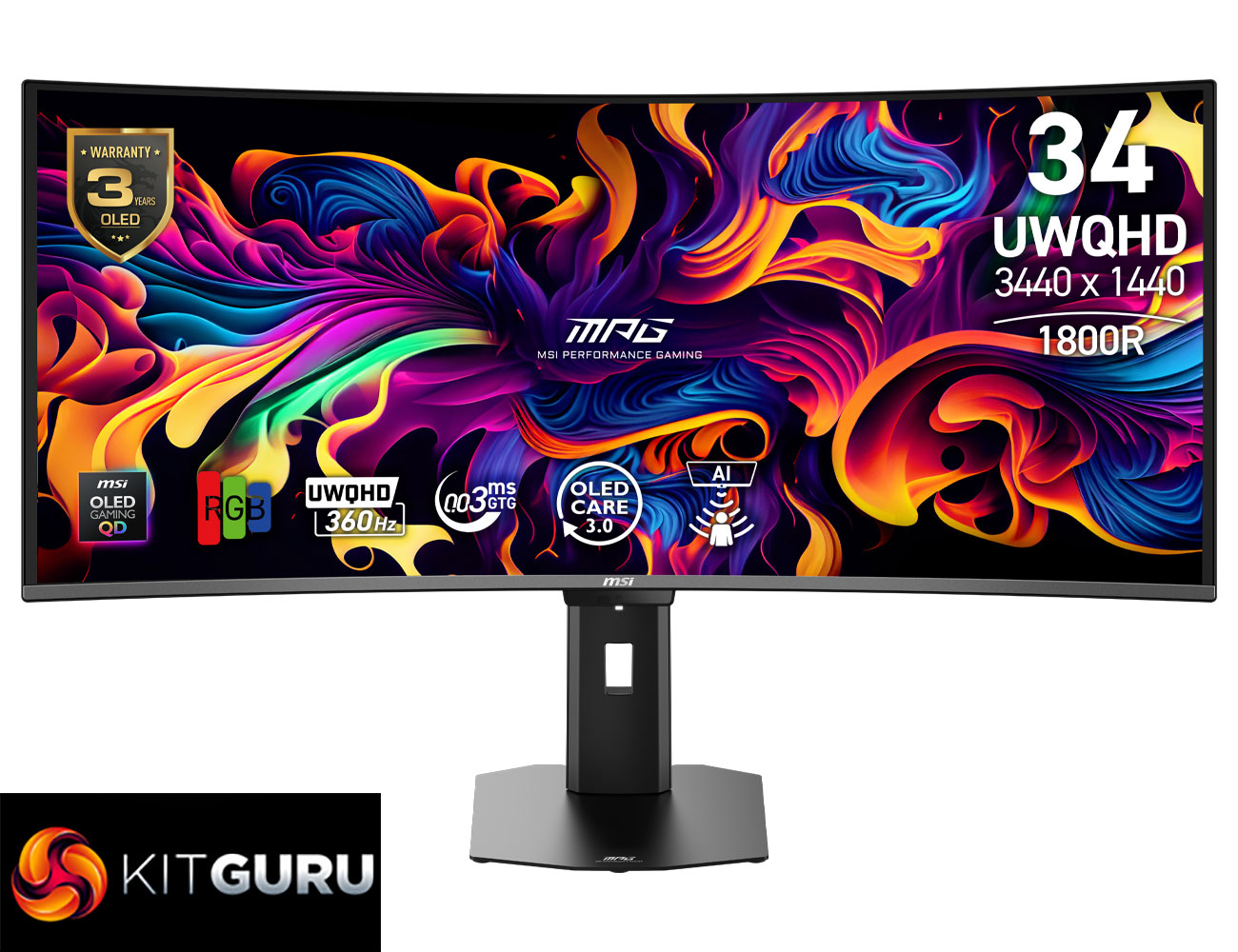
Today MSI has announced its latest QD-OLED monitor, the MPG 341CQR QD-OLED X36. Built on a new 5th Gen panel from Samsung, this is a curved ultrawide with a 360Hz refresh rate, making it the fastest 21:9 OLED monitor to date. It's also packing a number of improvements to the sub-pixel layout and coating, alongside increased brightness for both SDR and HDR. There's a lot to talk about, so let's get into it.

Timestamps

00:00 Intro
00:45 Key panel improvements
02:20 Design overview
03:23 Connectivity
03:51 New panel coating vs older QD-OLED + WOLED
05:51 Sub-pixel structure is also improved
07:12 Out of the box testing
09:20 sRGB mode + calibrated results
09:53 Response times, motion clarity
11:23 Real-world gaming experience
15:44 HDR issues ‘update’
17:12 Closing thoughts

Starting with the new 5th Gen QD-OLED panel from Samsung, this is packing in some key improvements designed to overcome known limitations of earlier QD-OLED panels. It's got a new RGB V-stripe sub-pixel layout, replacing the older diamond shape, AKA Q-stripe, layout that could cause some fringing around text. It also has a new and improved coating to help improve black depth in brighter conditions, designed to fix the issue where older QD-OLED panels would see elevated black levels depending on the ambient lighting. On top of that, the surface hardness has been increased from 2H to 3H, increasing scratch resistance.

Those appear to be the key improvements with the new panel, given the underlying EL 3.0 technology has not changed from 4th Gen QD-OLED. It still offers improved brightness compared to most other QD-OLEDs, though performance here is similar to the enhanced 272QP X50, with MSI claiming up to 1300 nits for HDR and 300 nits for SDR. And of course, as mentioned earlier, it's a new 360Hz refresh rate, too, up from the previous 240Hz limit for ultrawide QD-OLED panels.

In terms of pricing, MSI told us the MSRP is £999, or $1099, so it's not cheap, but about as expected for a new QD-OLED panel.

Specification:

  • Model: MPG 341CQR QD-OLED X36
  • Panel size: 34″ QD-OLED
  • Aspect ratio: 21:9
  • Panel resolution: 3440 x 1440 (UWQHD)
  • Pixel pitch (H x V): 0.2315 (H) x 0.2315 (V)
  • Refresh rate: 360Hz
  • Response time: 0.03ms (GtG)
  • Viewing angle: 178° (H) / 178° (V)
  • Brightness: SDR: 300 nits; HDR: 1300 nits
  • Contrast ratio: 1,500,000:1
  • DisplayPort: 1x DisplayPort 2.1a (UHBR13.5) (UWQHD@360Hz)
  • HDMI: 2x HDMI™ 2.1 (48Gbps) (UWQHD@360Hz)
  • USB Type-C: 1x Type-C (DP Alt Mode) with 98W Power Delivery
  • USB Type-A: 2x USB 5Gbps Type-A
  • USB Type-B: 1x USB 5Gbps Type-B
  • ETD: 12/B-12/M
  • MSRP: £999/$1,099

Firmware tested: FW.014

The post MSI MPG 341CQR QD-OLED X36 Review (5th Gen Ultrawide) first appeared on KitGuru.

Samsung Display fires back at LG with “V-Stripe” 360Hz QD-OLED ultrawide

2 janvier 2026 à 17:00

Samsung Display has officially announced the mass production of its next-generation 34-inch QD-OLED panel. Aimed directly at the long-standing complaints regarding text fringing, the new panel introduces a “V-Stripe” pixel structure that abandons the traditional triangular sub-pixel arrangement of previous generations.

By aligning the red, green, and blue sub-pixels vertically, Samsung is promising a true RGB-stripe experience that finally brings OLED text rendering into parity with standard LCD monitors. This move follows closely behind LG Display's own announcement of a 27-inch RGB-stripe WOLED panel, signalling a broader industry-wide push to make OLED technology viable for serious productivity work like coding and document editing.

Image credit: Samsung

The technical specifications of this new panel are a significant leap forward for the ultrawide category. Operating at a native 360 Hz refresh rate, the display offers a substantial upgrade in motion clarity over previous 240 Hz models, while maintaining the cinematic 21:9 aspect ratio and a subtle 1800R curve. Samsung has also pushed the luminance envelope, citing a peak HDR brightness of 1,300 nits and VESA DisplayHDR 500 True Black certification. To achieve these figures on a high-refresh ultrawide, Samsung used a new top-emission structure and improved organic materials under its EL 3.0 implementation to maximise efficiency and longevity.

While the announcement comes from the panel manufacturer, the hardware is already in the hands of major partners. Samsung Display confirmed that it has been supplying these V-Stripe panels to seven global brands, including Asus, MSI, and Gigabyte. With CES 2026 set to kick off in Las Vegas on January 6th, both Asus and MSI are expected to unveil the first retail monitors using this technology.

KitGuru says: With both LG and Samsung now preparing RGB-stripe panels, OLED/QD-OLED panels could become the go-to solution for gaming and working on a single display.

The post Samsung Display fires back at LG with “V-Stripe” 360Hz QD-OLED ultrawide first appeared on KitGuru.
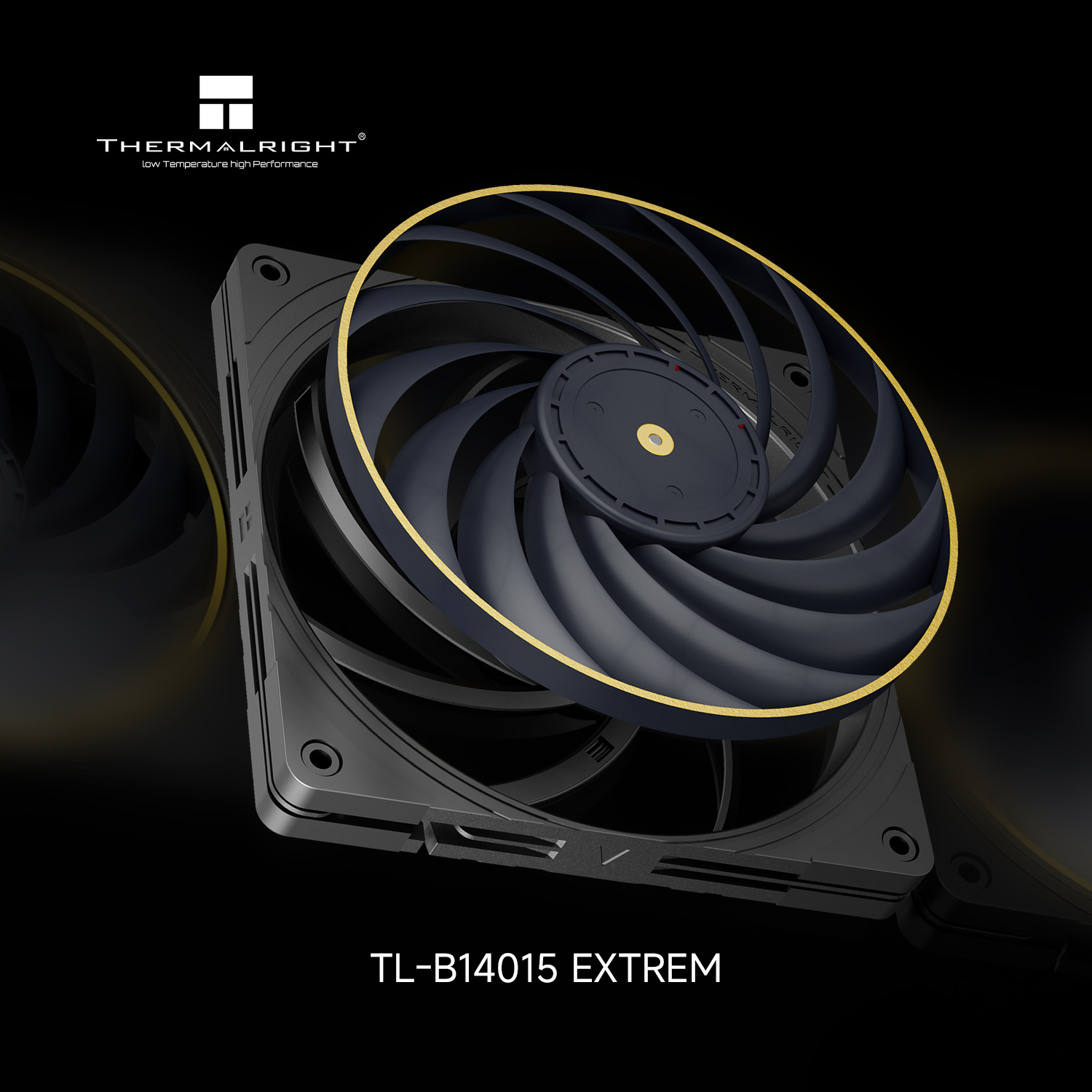
Thermalright unveils slim new 140mm case fans

2 janvier 2026 à 16:00

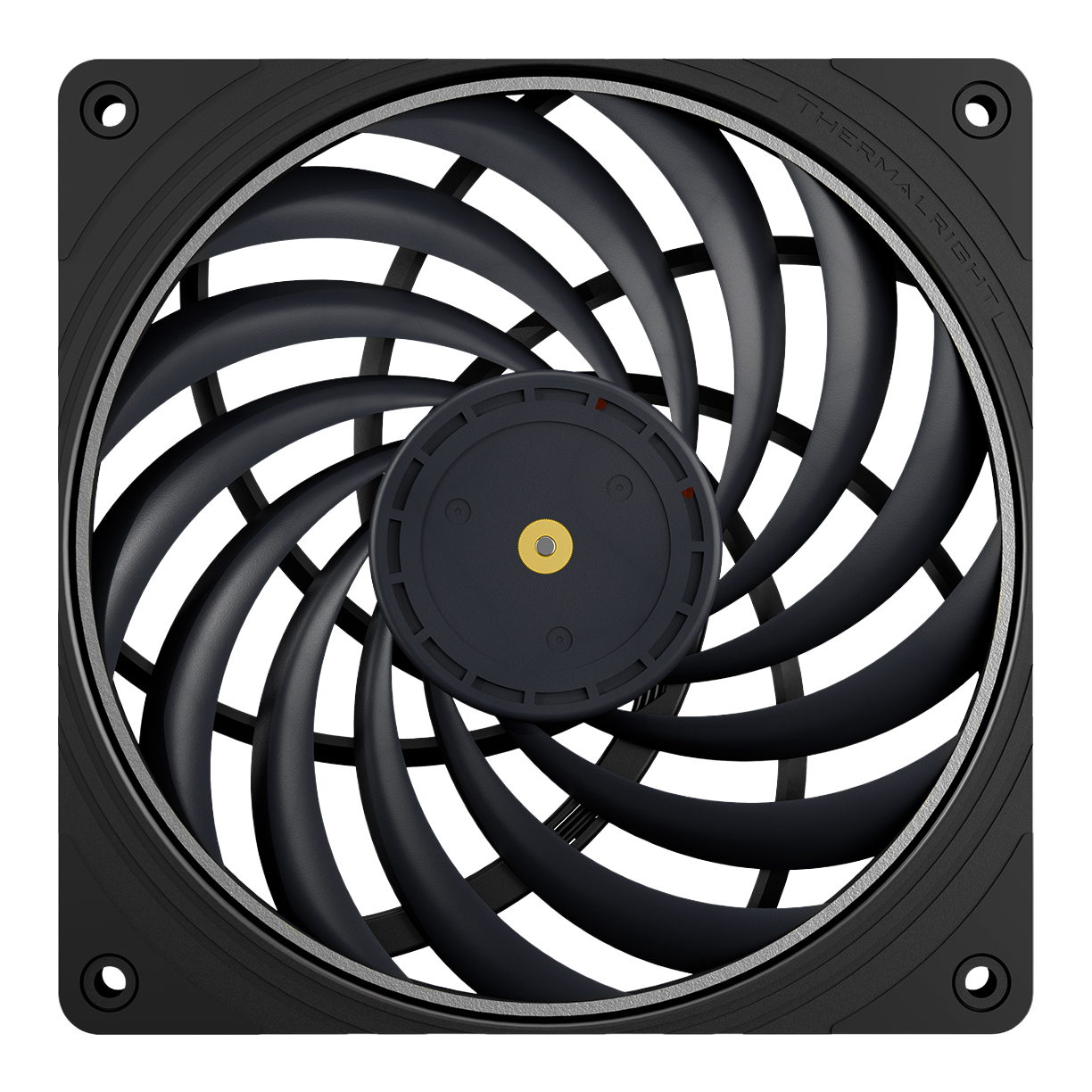
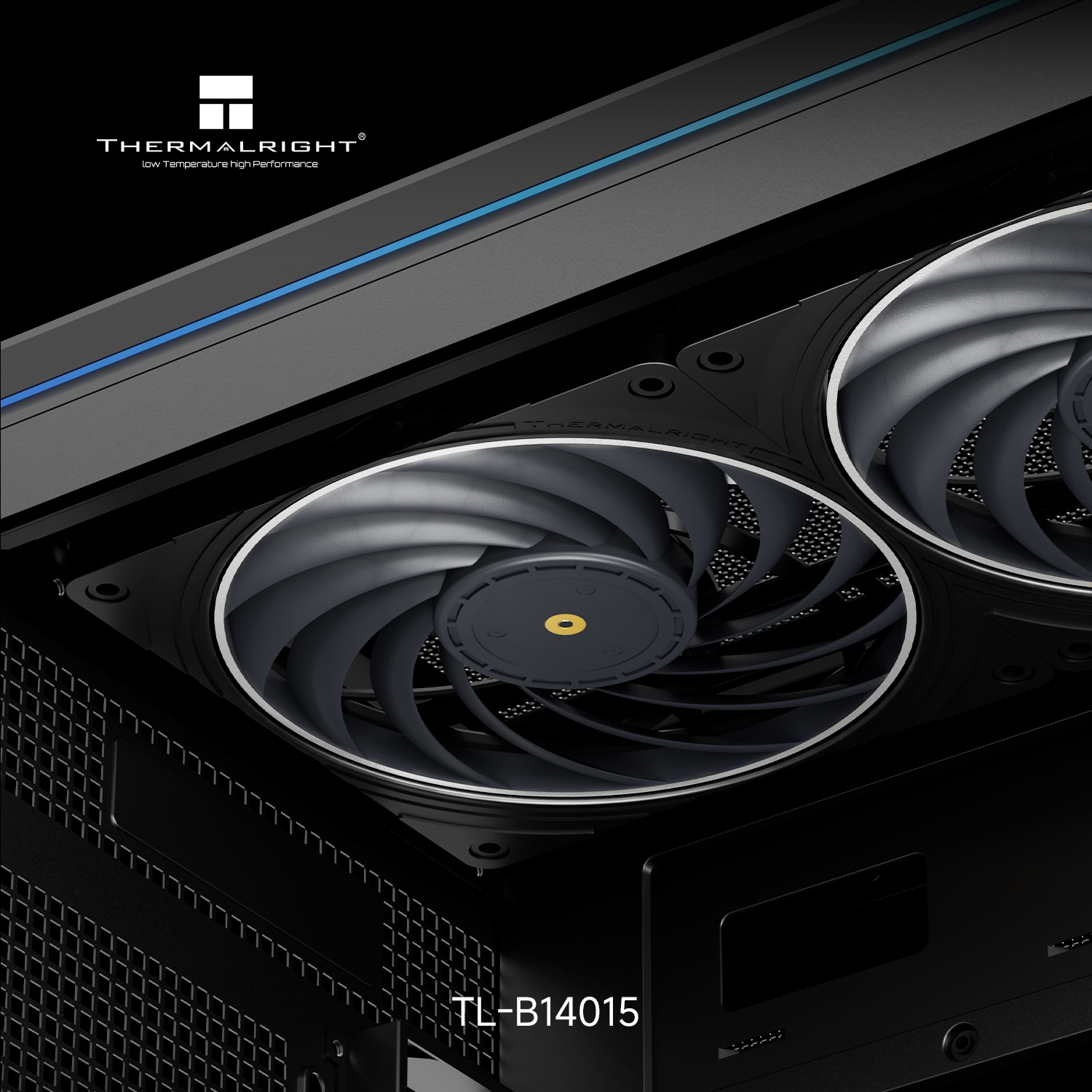
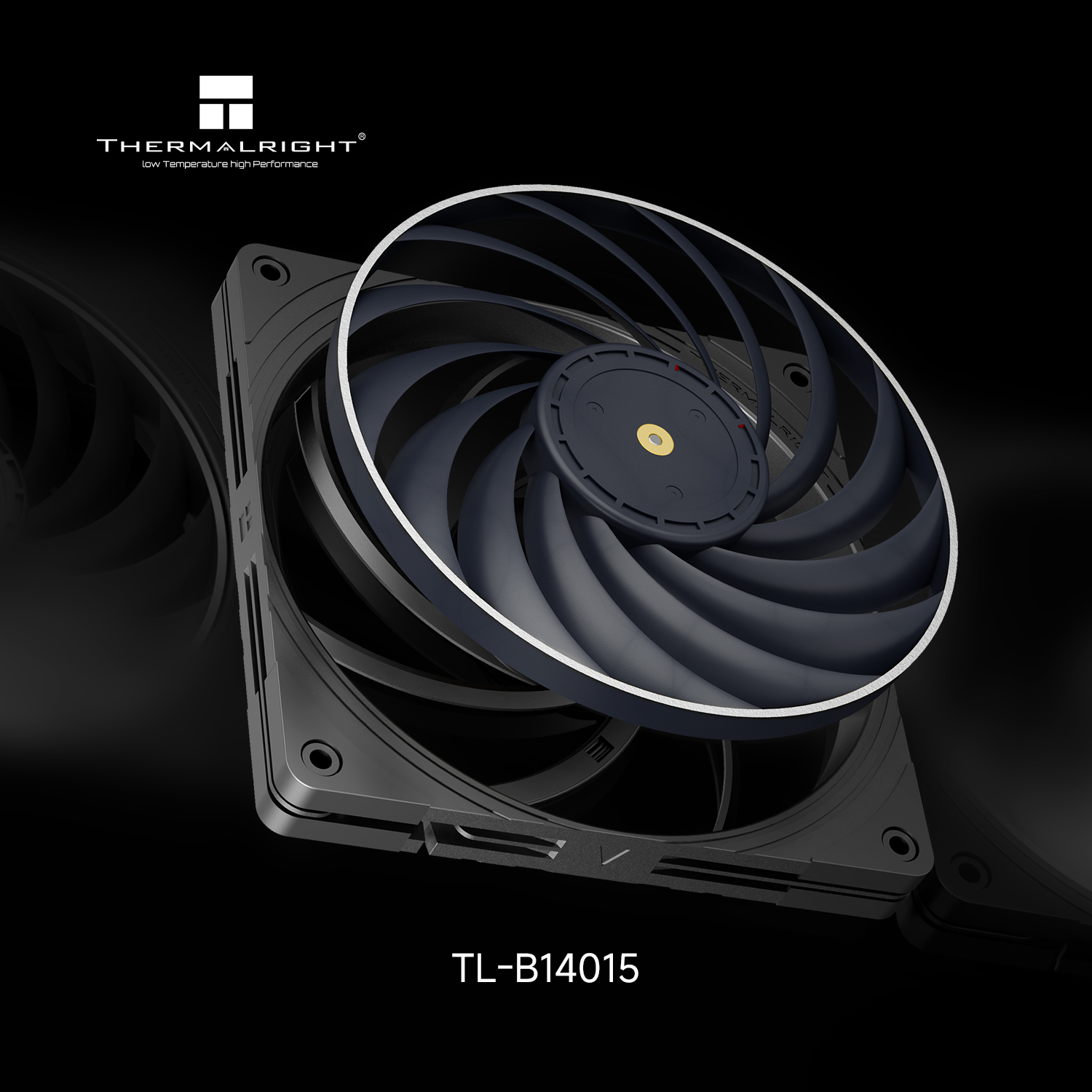
Thermalright is expanding its already vast cooling catalogue with a rare entry into the slim 140mm fan market. The newly unveiled TL-B14015 series targets the growing niche of Small Form Factor (SFF) enthusiasts who require the surface area of a 140 mm fan but lack the clearance for standard 25-mm-thick fans. Measuring just 15 mm thick, these fans are designed to slide into tight gaps behind front panels or beneath bottom-mounted radiators where traditional blowers won't fit.

Currently available in a stealthy black finish, the standard TL-B14015 (via CowCotland) operates at a modest 1600 RPM, delivering 62.8 CFM of airflow and 1.0 mmH2O of static pressure while keeping noise levels very respectable at 24.6 dBA.

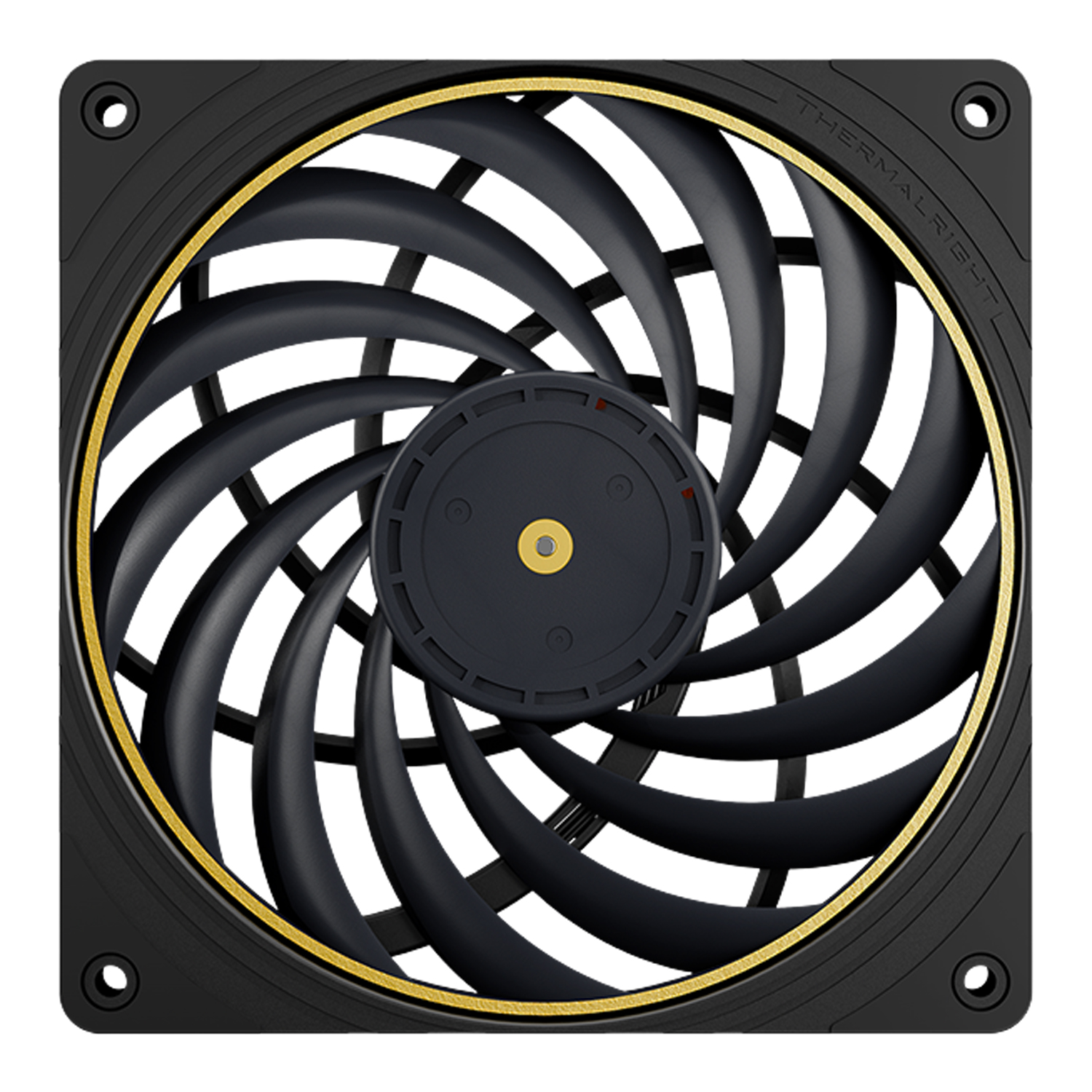
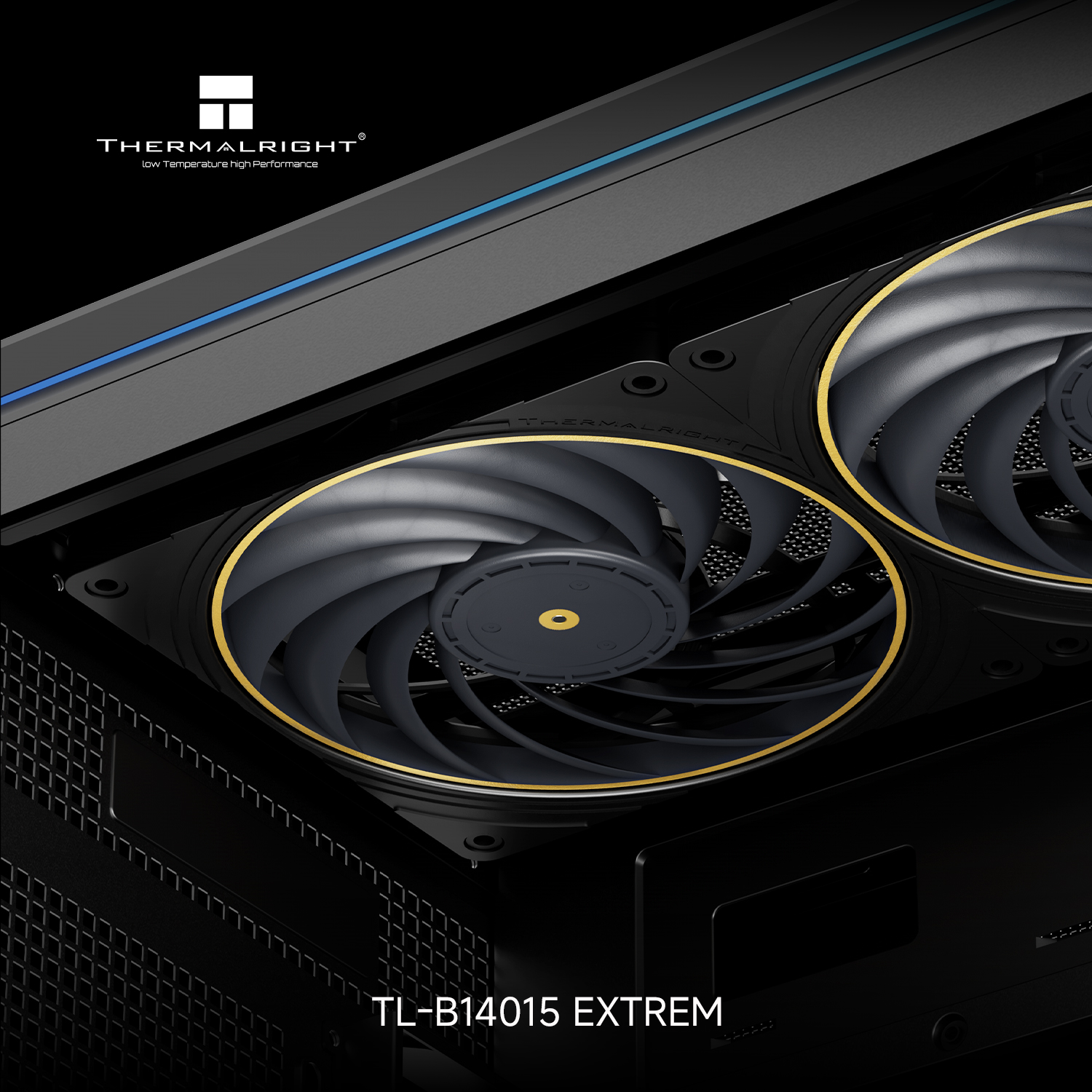
For those who prioritise raw performance over acoustic stealth, Thermalright has also introduced the TL-B14015 Extrem. This “Extrem” variant is distinguished by a structural gold ring connecting the blade tips. Moving away from standard plastics, the Extrem model utilises Liquid Crystal Polymer (LCP) blades. The performance jump is significant, with the Extrem pushing up to 2600 RPM, doubling the static pressure of the base model to 2.01 mmH2O and increasing airflow to 92.3 CFM. However, as one might expect from a slim fan spinning at such high velocities, the noise level climbs to 34.2 dBA.

Both versions of the TL-B14015 use a dual-row ball bearing system, which generally offers a longer lifespan than sleeve or fluid-dynamic bearings. Thermalright also includes a fairly robust accessory bundle for a standalone fan, including a protective metal grille with a colour-matched centre, mounting screws, and a PWM splitter for dual-fan configurations. This launch effectively positions Thermalright as a direct competitor to the few premium slim 140mm options on the market, likely at a price point that makes it the default choice for budget-conscious SFF builders.

KitGuru says: Thermalright continues to be a menace to the high-priced cooling establishment. Bringing LCP blades and a 2600 RPM ceiling to a 15mm-thick 140mm fan is an impressive technical feat, provided you don't mind the turbine-like acoustics at full power.

The post Thermalright unveils slim new 140mm case fans first appeared on KitGuru.
LG enters a new era of ultra-portability with ‘Aerominum’ laptops

2 janvier 2026 à 15:00

LG is raising the bar for ultra-light computing ahead of CES 2026, unveiling a refreshed laptop lineup that aims to solve the age-old compromise between weight and structural integrity. The 2026 collection is defined by the debut of “Aerominum”, a proprietary magnesium-aluminium alloy inspired by aerospace engineering.

The new Aerominum chassis is achieved by fusing the low density of magnesium with the rigidity of aluminium. LG claims to have reduced the weight of the latest models while increasing scratch resistance. The result is a premium metallic finish that is more durable without the “flimsy” feel sometimes associated with ultra-light devices.

On the performance side, LG is leading with the US-exclusive Gram Pro 17 (17Z90UR), which the company is touting as the world's lightest 17-inch RTX laptop. Designed for creators who need a lightweight workstation, it squeezes an Nvidia GeForce RTX 5050 (8 GB GDDR7) into a frame roughly the size of a traditional 16-inch laptop. This model features a 17-inch WQXGA (2560 x 1600) IPS panel.

As the lightest 16-inch laptop in its class with both on-device and cloud-based AI, the LG Gram Pro 16 (16Z90U) establishes a new benchmark. For both professional and creative tasks, the 16-inch WQXGA+ (2,880 x 1,800) OLED display provides a high-end, immersive visual experience with high PPI. For graphics, it seems the laptop will depend on the iGPU of the Intel Core Ultra series CPUs powering it.

The 2026 lineup also marks the debut of LG's Advanced Dual AI strategy. By combining Microsoft Copilot+ capabilities with LG's Gram Chat On-Device AI, these laptops can perform complex tasks such as document summarisation, search, and translation without an internet connection. This is powered by the upgraded Exaone 3.5 small LLM, ensuring user data stays private on the local hardware. A new “Time Travel” feature even allows users to revisit and restore past workflows or deleted data through an intuitive AI-driven timeline. Connectivity-wise, the new laptops are getting Gram Link, which now supports seamless file sharing and screen mirroring across Android, iOS, and even webOS-based LG devices like TVs and smart monitors.

KitGuru says: LG Gram laptops have always been exceptionally light, but there still seems to be room to make them lighter. Is the weight of a laptop a critical factor to you?

The post LG enters a new era of ultra-portability with ‘Aerominum’ laptops first appeared on KitGuru.
BootRom keys for PS5 leak, enabling custom firmware, emulation and piracy

2 janvier 2026 à 14:00

The new year brought about some unfortunate news for Sony's security team. The BootRom key for PS5 consoles has leaked, enabling a new wave of jailbreaking, along with the ability to allow homebrew software to run. 

The BootRom is crucial to the security of consoles. With the key, modders will be able to decrypt the bootloader and from there, it will become possible to run unlicensed software and install custom firmware, which could lead to a new wave of piracy-enabled ‘hacked' PS5 consoles.

PlayStation 5 UK

As pointed out by HotHardware, this could also enable emulator developers to get PS5 emulation up and running, as they will be able to simulate the PS5 booting process and decrypt game loaders.

Unfortunately, there is no magic way for Sony to put the genie back in the bottle here. However, Sony can always take legal action against attempts to share these keys online, as well as attempts to ship emulators. As Nintendo managed to get Switch emulators shut down a few years ago, Sony may also have success stamping out publicly available emulators for PS5 initially as well.

KitGuru Says: It was possible to ‘hack' a PS5 before this but the addition of BootROM keys will open up additional possibilities. Due to the high risk of legal action though, we would expect anyone in possession of the keys to keep it private for the foreseeable future. 

The post BootRom keys for PS5 leak, enabling custom firmware, emulation and piracy first appeared on KitGuru.
Dispatch has officially sold over 3 million copies ahead of Switch launch later this month

2 janvier 2026 à 12:00

One of 2025’s biggest indie hits was Dispatch – an episodic superhero adventure title from developers who previously worked at Telltale Games and Night School Studio. Released in chunks, the game saw its final episode arrive in November; receiving high praise across the board and helping to push the game past 2 million copies sold. Since then, interest has not yet slowed down, with the title having now officially sold over 3 million copies in total.

Taking to BlueSky to release their ‘2025 Dispatch Wrapped’ the team at AdHoc Studio shared a bunch of different player statistics, including but not limited to the total number of shifts completed; the amount of calls answered and players’ overall romance choices.

Dispatch Million

By far the most interesting stat however was the confirmation that Dispatch has sold 3 million copies – a little over a month since its last major milestone.

Currently, Dispatch is only available on PlayStation 5 and PC. With the game confirmed to be landing on both the Switch and Switch 2 later this month however, it is likely that Dispatch will only continue to grow in popularity. It will be interesting to see how big the game winds up being on Switch.

KitGuru says: Have you played through the game? What did you think? How well will the game sell throughout 2026? Let us know your thoughts down below.

The post Dispatch has officially sold over 3 million copies ahead of Switch launch later this month first appeared on KitGuru.
Bloober Team teases mysterious project with new website and countdown

2 janvier 2026 à 11:00

Over the past few years Bloober Team have made a name for themselves in the horror space. While their earlier projects were far from masterpieces, the team have proven themselves with time – culminating in the successful release of Silent Hill 2 Remake. With multiple projects currently in the works at the studio, Bloober Team have started to tease something mysterious.

Taking to Twitter, Bloober Team shared a curious URL alongside the message “Dare to peek into the darkness…”

In going to the link, users are met with what appears to be a random string of letters, then leading to a countdown timer which will last for 44 days – seemingly ending on the 14th of February 2026.

The letters in question are as follows: RemosdNeulSerorehsoOvamCeyerd; though what this means exactly is currently unknown.

For the uninitiated, Bloober Team are currently developing a number of different projects. Alongside their ongoing work on the Silent Hill 1 Remake, Bloober also previously announced Project M – an exclusive being developed for the Nintendo Switch / Switch 2.

Considering the fact that Nintendo has hosted various Directs during the month of February in previous years, it is quite possible that Bloober Team are teasing their Switch exclusive. We won’t have to wait too long to find out.

KitGuru says: What do you think of this teaser? Could it be related to project M? What do you think the message spells out? Let us know down below.

The post Bloober Team teases mysterious project with new website and countdown first appeared on KitGuru.
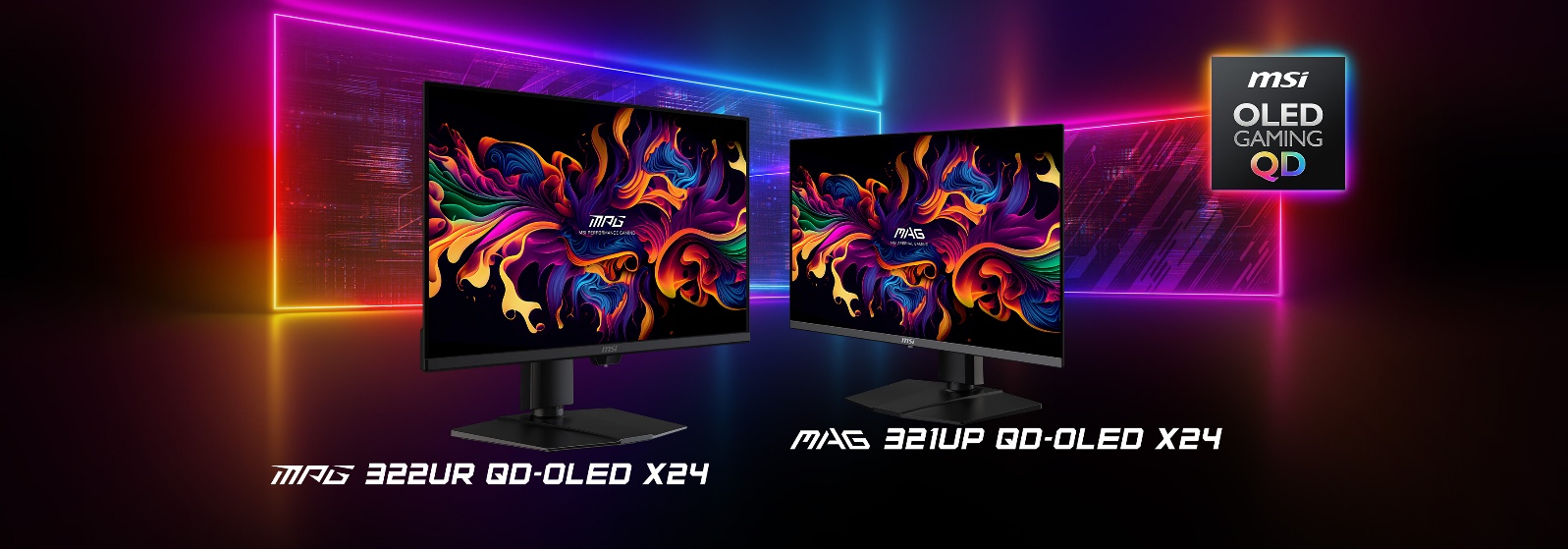
MSI introduces DarkArmor and Uniform Luminance Reshape for new QD-OLED displays

2 janvier 2026 à 10:49

MSI has expanded its 32‑inch 4K QD‑OLED gaming monitor lineup with two new models, the MPG 322UR QD‑OLED X24 and MAG 321UP QD‑OLED X24. Both displays use MSI’s latest 5‑layer Tandem OLED architecture with EL Gen 3 technology, designed to improve luminous efficiency and extend panel lifespan across the company’s 32‑inch 4K range.

The monitors introduce several upgraded display technologies aimed at delivering stronger visual performance and durability. MSI’s new DarkArmor Film enhances light absorption to eliminate the purple or red tint often seen on standard QD‑OLED panels under ambient lighting. It increases perceived black depth by up to 40% and raises surface hardness from 2H to 3H, offering significantly better scratch resistance for everyday use.

Uniform Luminance is another key addition, addressing the inconsistent brightness shifts common in HDR content. The feature allows users to fine‑tune the HDR brightness curve by mapping brightness levels to different window sizes, ensuring smoother and more stable luminance across varied scenarios.

The MPG 322UR QD‑OLED X24 serves as the flagship option, adding MSI’s AI Care Sensor for automated panel protection. Powered by an NPU‑based IC, the system uses real‑time human‑detection algorithms to manage power states and trigger protective measures based on user presence. This allows the monitor to safeguard the panel without interrupting gameplay or requiring manual intervention.

With these updates, MSI aims to deliver higher durability, improved HDR consistency, and smarter long‑term protection for players seeking premium 4K QD‑OLED performance. We'll get a closer and more detailed look at all of this next week as CES gets underway.

KitGuru Says: Are you looking forward to the next generation of QD-OLED panels? We've been getting steady improvements over the past few years and prices have been coming down too.

The post MSI introduces DarkArmor and Uniform Luminance Reshape for new QD-OLED displays first appeared on KitGuru.
Epomaker TH108 Pro Keyboard Review

2 janvier 2026 à 10:11

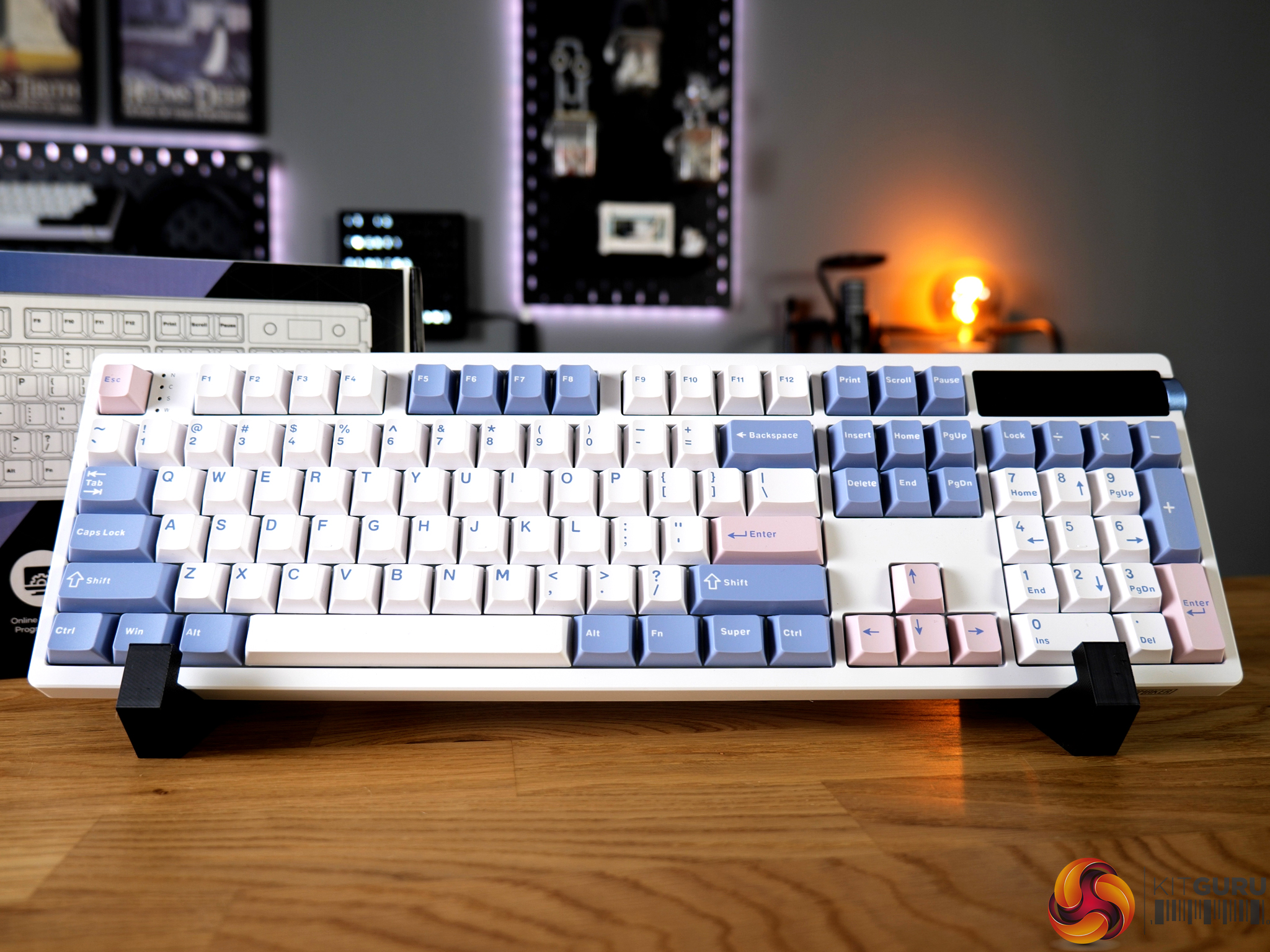
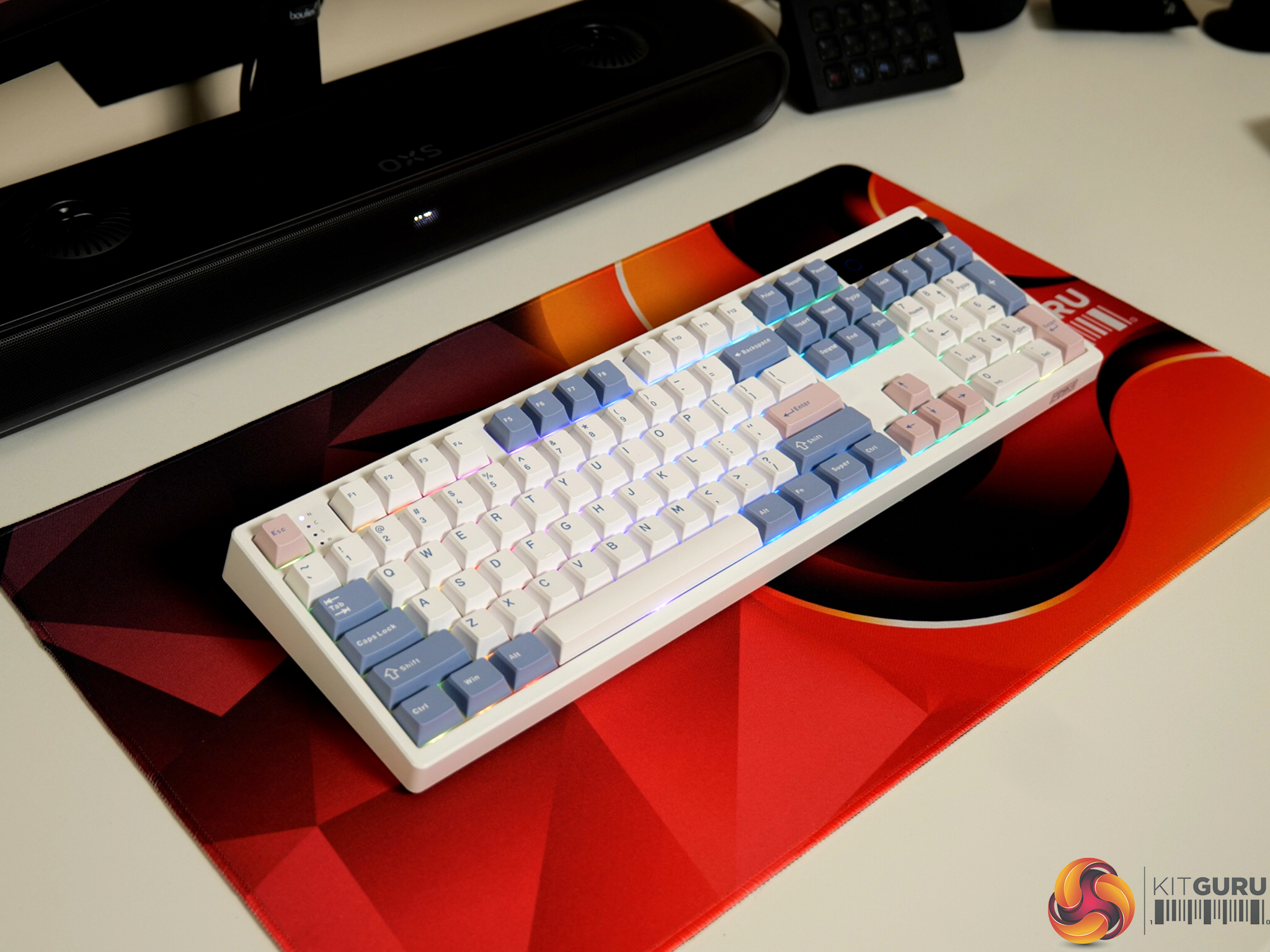
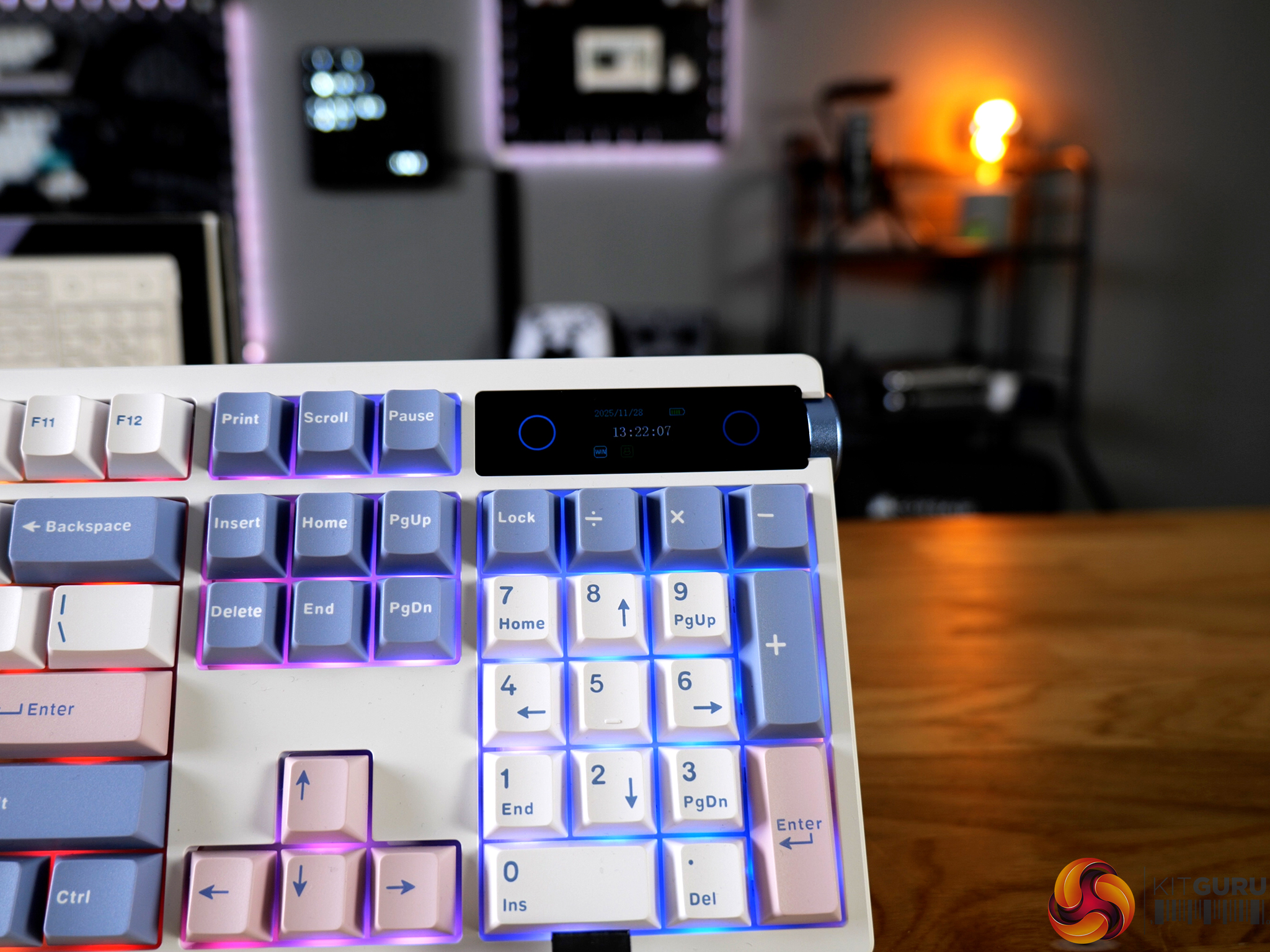
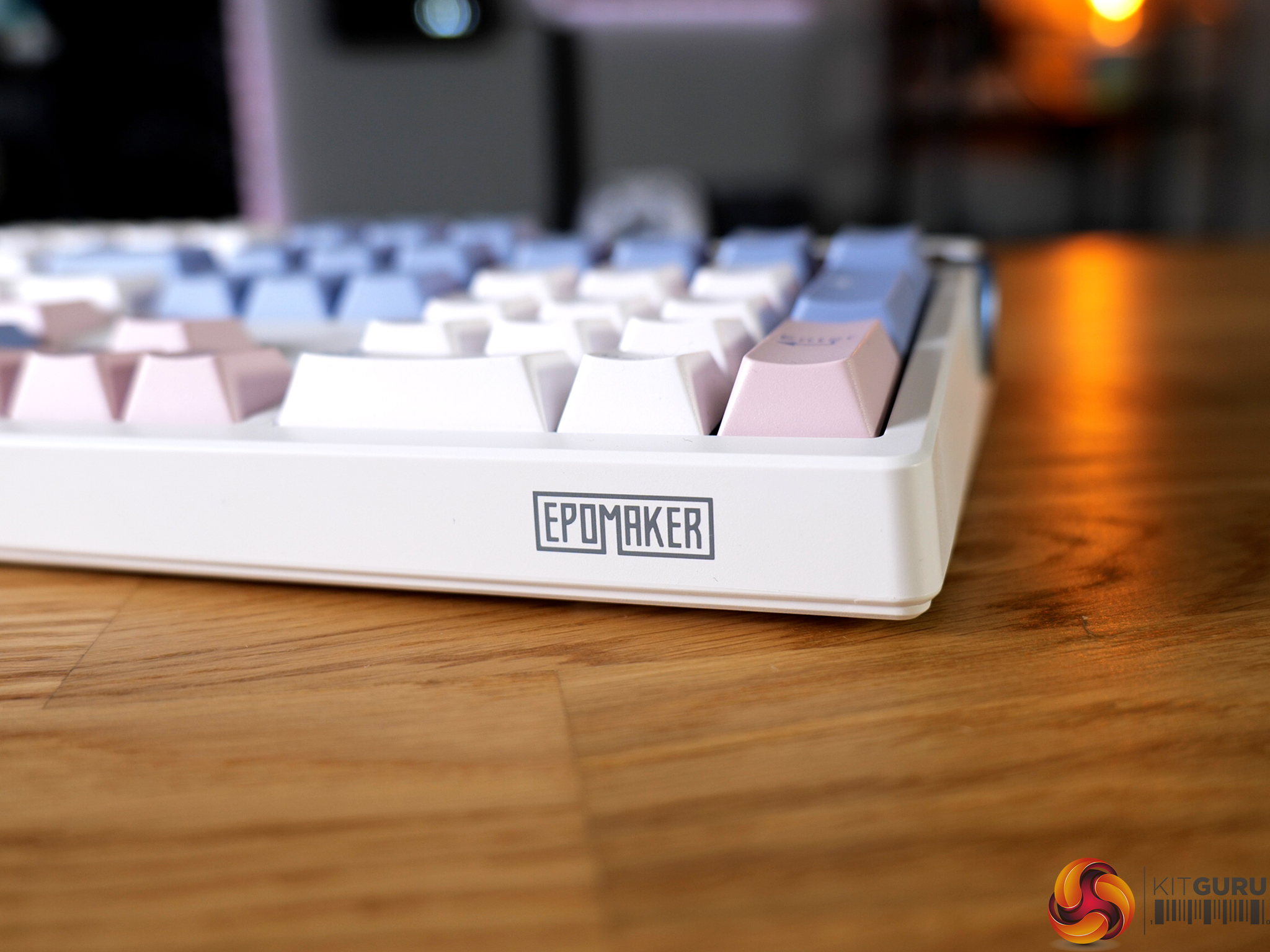
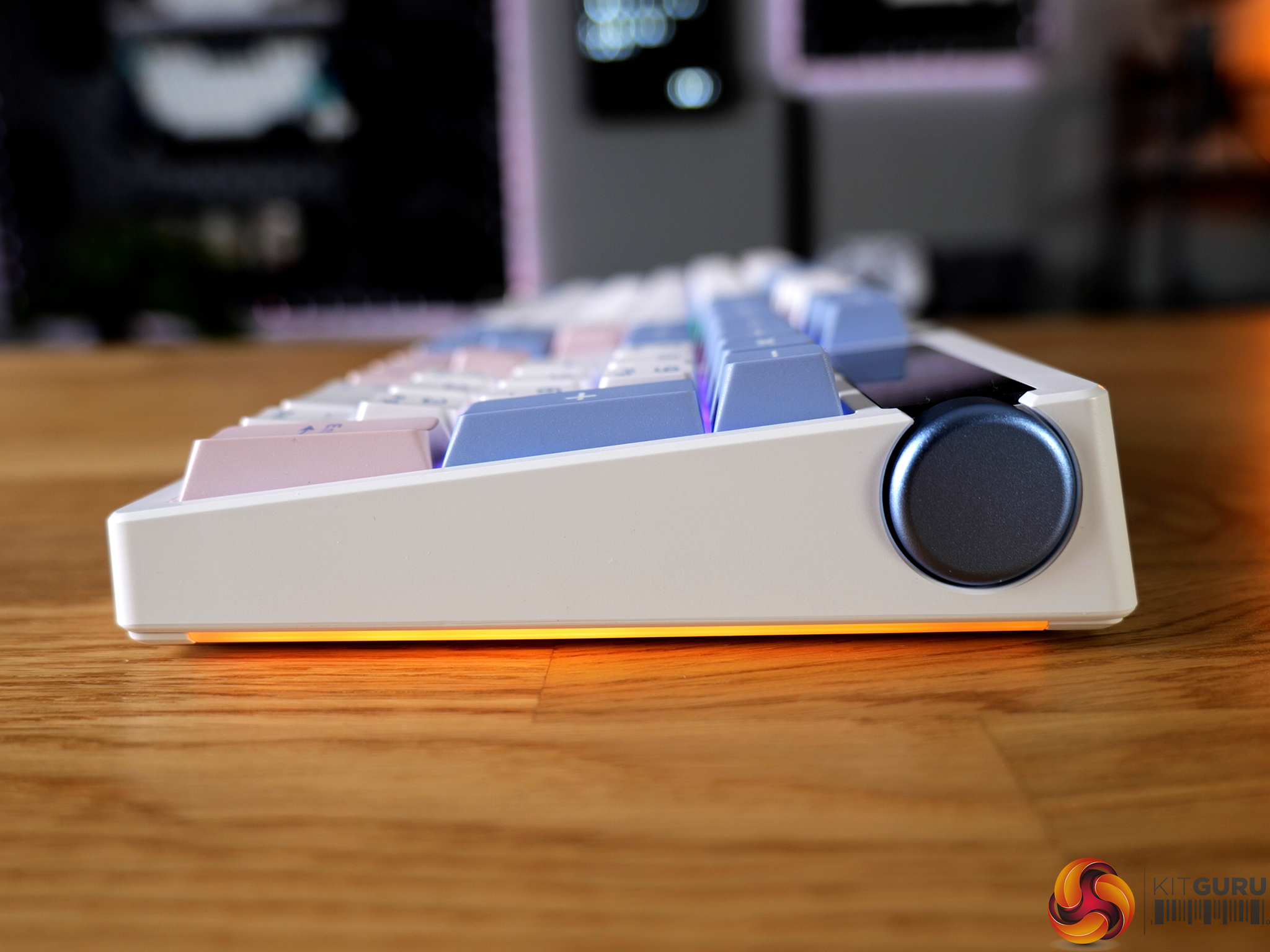
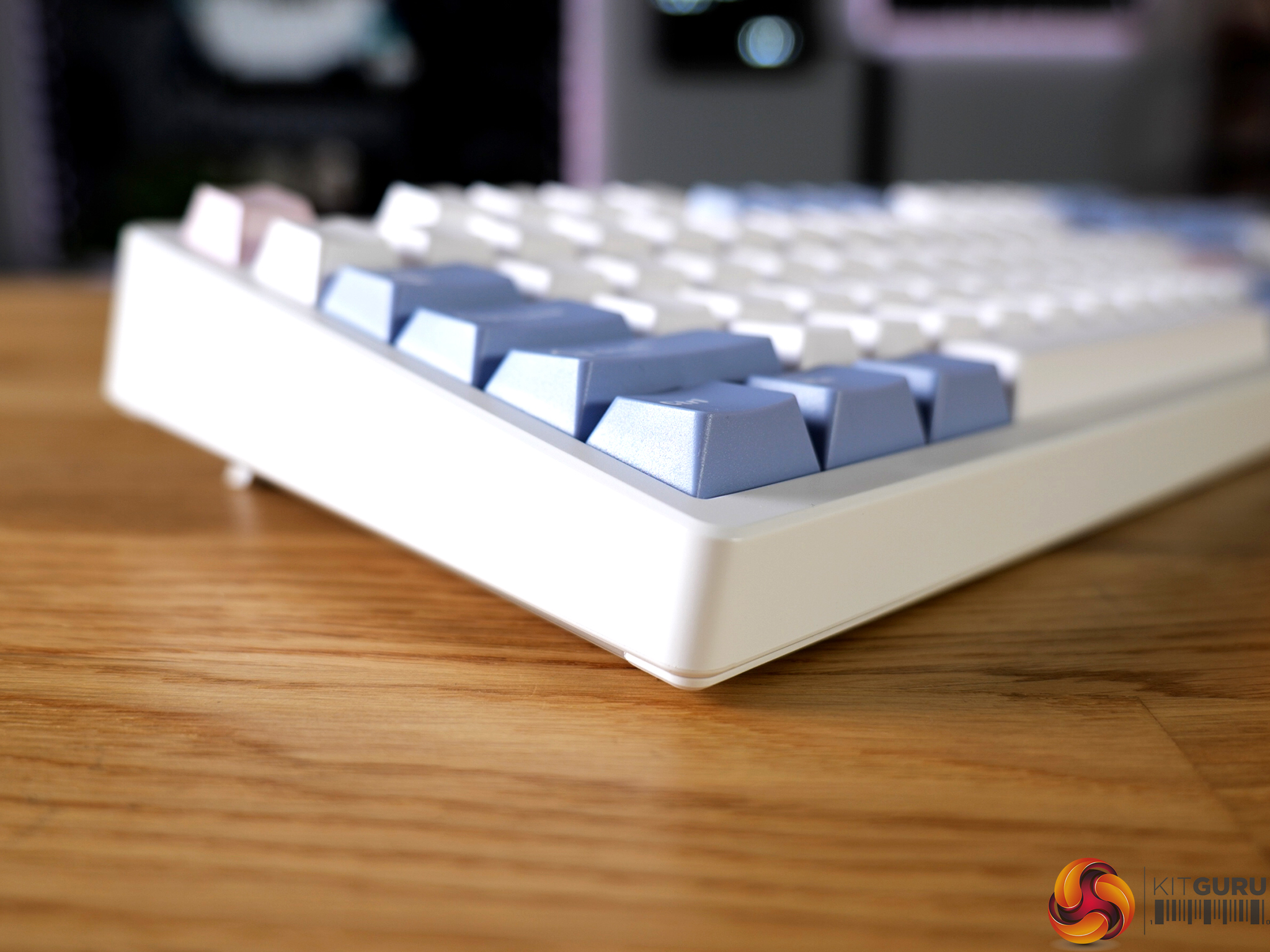
In a sea of small form-factor keyboards, it’s sometimes easy to forget that full-size boards still exist. The Epomaker TH108 Pro is exactly that – a full-size, gasket mounted mechanical keyboard which features a TFT screen and rotary dial for added functionality. With a chassis made from ABS plastic and a price tag of roughly £75, is the TH108 Pro any good?

Timestamps:

00:00 Intro
00:51 Pricing and key details
01:25 Design and appearance
02:27 TFT display + dial
03:20 RGB lighting and other details
04:32 Build quality
05:42 Typing feel + acoustics
06:35 Soundtest
06:57 Day to day use
08:24 Battery life
08:53 Web software
09:37 Mat’s closing thoughts

Specifications

  • Brand – EPOMAKER
  • Model – TH108 PRO mechanical gaming keyboard
  • LAYOUT – 100% full sized gaming keyboard
  • Number of Keys – 104 Keys
  • Battery – 10000mAh Rechargeable Battery
  • Connectivity – 2.4Ghz Wireless, Bluetooth, USB Cable
  • Compatibility – Mac/WIN/Android
  • Keyboard Height (Spacebar Side) – 28mm (including keycaps), 20mm (without keycaps)
  • Keyboard Height (ESC Side) – 42mm (including keycaps), 34mm (without keycaps)
  • Kickstand – Yes, TH108 PRO features a 2-stage adjustable kickstand and offers three typing angles.
  • Typing Angle – 6, 8 and 10.5 degree
  • Case Material – Thick ABS Plastic
  • Plate Material – PC Plastic
  • Flex-Cut – Yes, the TH108 PRO has a flex-cut plate in PC and a flex-cut PCB board in FR4.
  • Stabilizers – TH108 PRO has finely tuned plate-mounted stabilizers and is not compatible with PCB or screw-in stabilizers.
  • Mounting Structure – Gasket-Mounted
  • Sound Dampening – 5 Layers of sound dampening, including PORON sandwich foam, IXPE switch pad, Sound-Enhancement PET, EPDM switch socket foam, and bottom silicone.
  • Keycaps Profile – Cherry Profile
  • Keycaps Material – PBT Plastic
  • Keycaps Manufacturing Technique – Double-Shot
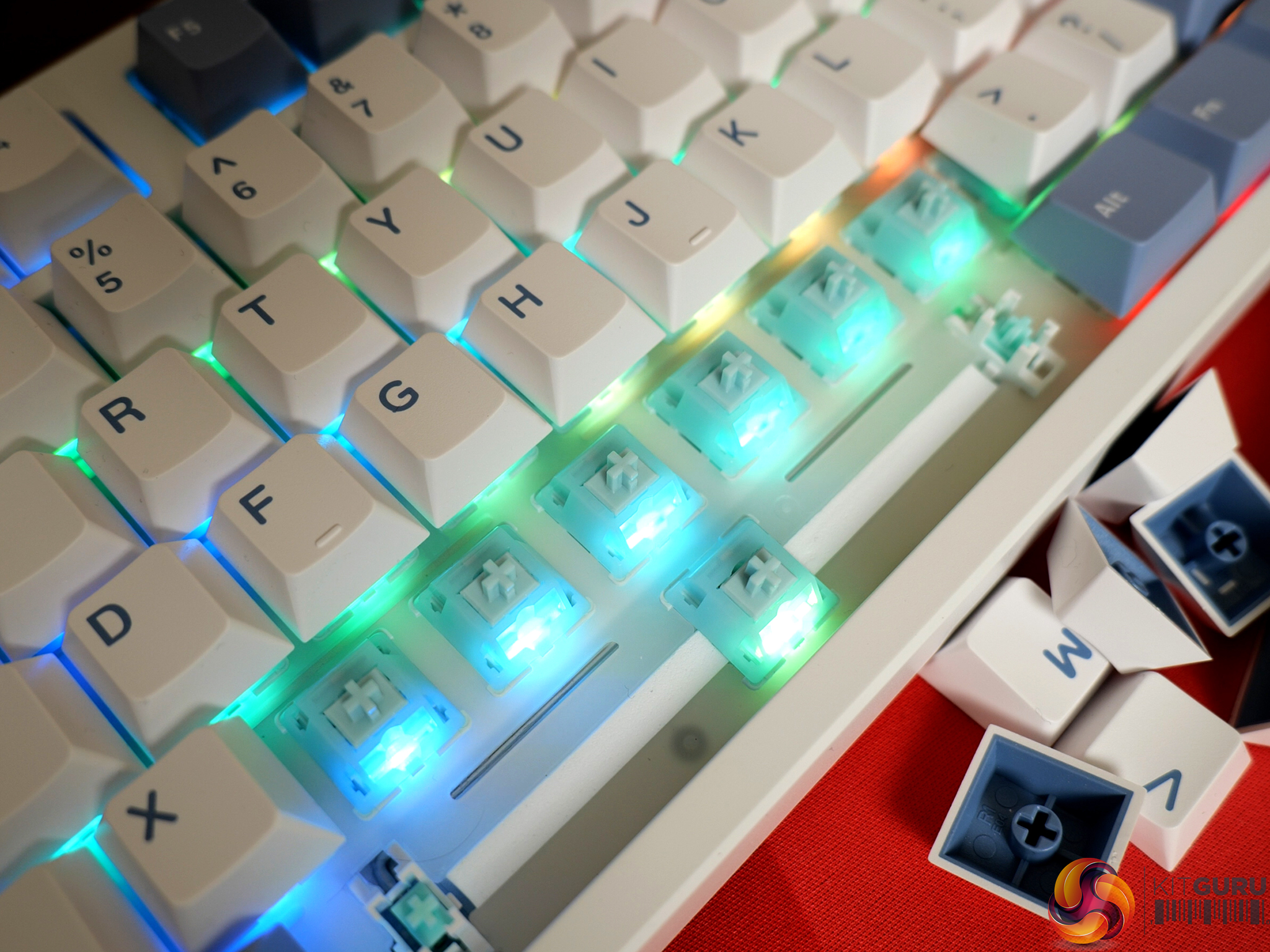
  • Switch – Factory Lubed Mechanical Switch
  • Hot swappable – Yes, TH108 PRO has a hot-swappable PCB and is compatible with 5-pin mechanical switches.
  • RGB – South-Facing, Per-Key LEDs
  • Polling Rate – 1000Hz in USB and 2.4GHz mode, and 125Hz in Bluetooth mode.
  • Latency – 2ms (USB), 5ms (2.4Ghz Wireless), 11ms (Bluetooth)
  • Anti-Ghosting – Yes, TH108 PRO supports N-key rollover and is anti-ghosting
  • Keyboard Dimensions – 445 x 140 x 42 mm
  • Keyboard Weight – 1.12kg

You can buy the TH108 Pro keyboard directly from Epomaker, starting at £74.76 HERE.

Pros:

  • Very comfortable typing feel thanks to gasket mount.
  • Smooth stock switches (Creamy Jade).
  • Good connectivity options (wired, 2.4GHz, Bluetooth).
  • Clean, universal design.
  • Strong battery life for wireless use.
  • Decent RGB with smooth transitions.

Cons:

  • ABS case has some flex.
  • Dial wobbles when being rotated.
  • TFT screen has poor viewing angles and limited usefulness.
  • Web customisation is dated and very basic.

KitGuru says: What the TH108 Pro lacks in build quality, it makes up for with a comfortable and satisfying typing experience. 

The post Epomaker TH108 Pro Keyboard Review first appeared on KitGuru.

ASRock to debut new AIO coolers, monitors and more at CES 2026

2 janvier 2026 à 10:08

ASRock is set to showcase a wide range of new hardware at CES 2026, expanding its portfolio across cooling, motherboards, monitors, graphics cards, power supplies, and compact systems.

The company will debut a full lineup of next‑generation AIO liquid coolers featuring a new pump architecture, improved flow design, optional full‑color LCD displays, and premium components such as LCP fan blades and dual‑ball‑bearing motors.

ASRock is also introducing the new Rock Series motherboards, including B850 and B860 models in both ATX and mATX formats. The Challenger Series expands with additional AMD X870E, X870, and B850 options, plus Intel B860 variants, now available in both ATX and compact mATX designs.

Sticking to components, this year will also see ASRock launching its very first white graphics card – the RX 9070 XT Taichi White, featuring an LCD display, ARGB lighting and a white PCB. ASRock will also have new Phantom Gaming SFX and Steel Legend Platinum power supplies hitting the market this year.

Rounding out the components side of things, ASRock is also going to be introducing its new DeskSlim mini PCs during CES this month, promising powerful 120W CPUs in a small 4.9-liter design.

In displays, ASRock will present its latest 27‑inch OLED gaming monitors across the Taichi and Phantom Gaming lines. Taichi models offer WOLED and QD‑OLED panels with 2K or 4K resolution, refresh rates up to 540Hz, Dual Mode switching, and VESA DisplayHDR True Black certification. Phantom Gaming models deliver 2K 240Hz QD‑OLED performance with ergonomic stands and USB‑C connectivity.

CES 2026 begins on the 6th of January.

KitGuru Says: Are you looking forward to new tech announcements at CES next week?

The post ASRock to debut new AIO coolers, monitors and more at CES 2026 first appeared on KitGuru.
❌