↩ Accueil

Vue normale

How green is green hydrogen?

9 février 2026 à 10:05

Green hydrogen is hydrogen gas produced by splitting water using electrolysis powered entirely by renewable electricity. It is important because it provides a clean fuel option for industries that are very difficult to decarbonise using other methods. Sectors such as steel, cement, glass, and chemicals require extremely high temperatures (1,000–1,600°C), which are hard to achieve reliably or cheaply with electricity alone, so they still rely heavily on fossil fuels.

In this work, the researchers examined whether using green hydrogen actually reduces emissions across different sectors, comparing it not only with fossil fuels but also with other low‑emission alternatives such as heat pumps, electric vehicles, and biofuels. They carried out a prospective life cycle assessment covering all stages of hydrogen (production, transport, and use) using projected 2030 conditions that include cleaner electricity grids, improved electrolyser efficiency, updated industrial processes, and expected hydrogen transport methods. They then compared green hydrogen to alternative technologies across eight applications: producing methanol, ammonia, steel, and aviation fuels; powering fuel‑cell passenger cars; providing low‑temperature domestic heat; supplying high‑temperature industrial heat; and balancing the electricity grid over long periods.

Across all eight applications, green hydrogen produced fewer emissions than fossil fuels, although often only marginally. However, when compared to other low‑emission technologies, green hydrogen often performed similarly or worse. This is because producing and transporting hydrogen still generates emissions, especially when the electricity used is not extremely low‑carbon, and because electrolysis itself is relatively inefficient. Green hydrogen only outperforms other clean options when it is produced using very low‑carbon electricity (such as wind power) and used on‑site without transport. Under these ideal conditions, it becomes the preferred option for ammonia and steel production, industrial and domestic heating, and long‑term grid balancing.

To maximise hydrogen’s climate benefit, emissions must be reduced across the entire supply chain, and hydrogen should be prioritised only in applications where it genuinely outperforms other clean alternatives. The authors propose a climate ladder to help rank and prioritise hydrogen use across sectors, guiding smarter policy and investment decisions.

Read the full article

Climate-optimal use of green hydrogen

Kiane de Kleijne et al 2025 Prog. Energy 7 034001

Do you want to learn more about this topic?

Research and development of hydrogen carrier based solutions for hydrogen compression and storage Martin Dornheim et al. (2022)

The post How green is green hydrogen? appeared first on Physics World.
Practical impurity analysis for biogas producers

2 février 2026 à 09:41

Biogas is a renewable energy source formed when bacteria break down organic materials such as food waste, plant matter, and landfill waste in an oxygen‑free (anaerobic) process. It contains methane and carbon dioxide, along with trace amounts of impurities. Because of its high methane content, biogas can be used to generate electricity and heat, or to power vehicles. It can also be upgraded to almost pure methane, known as biomethane, which can directly replace natural fossil gas.

Strict rules apply to the amount of impurities allowed in biogas and biomethane, as these contaminants can damage engines, turbines, and catalysts during upgrading or combustion. EN 16723 is the European standard that sets maximum allowable levels of siloxanes and sulfur‑containing compounds for biomethane injected into the natural gas grid or used as vehicle fuel. These limits are extremely low, meaning highly sensitive analytical techniques are required. However, most biogas plants do not have the advanced equipment needed to measure these impurities accurately.

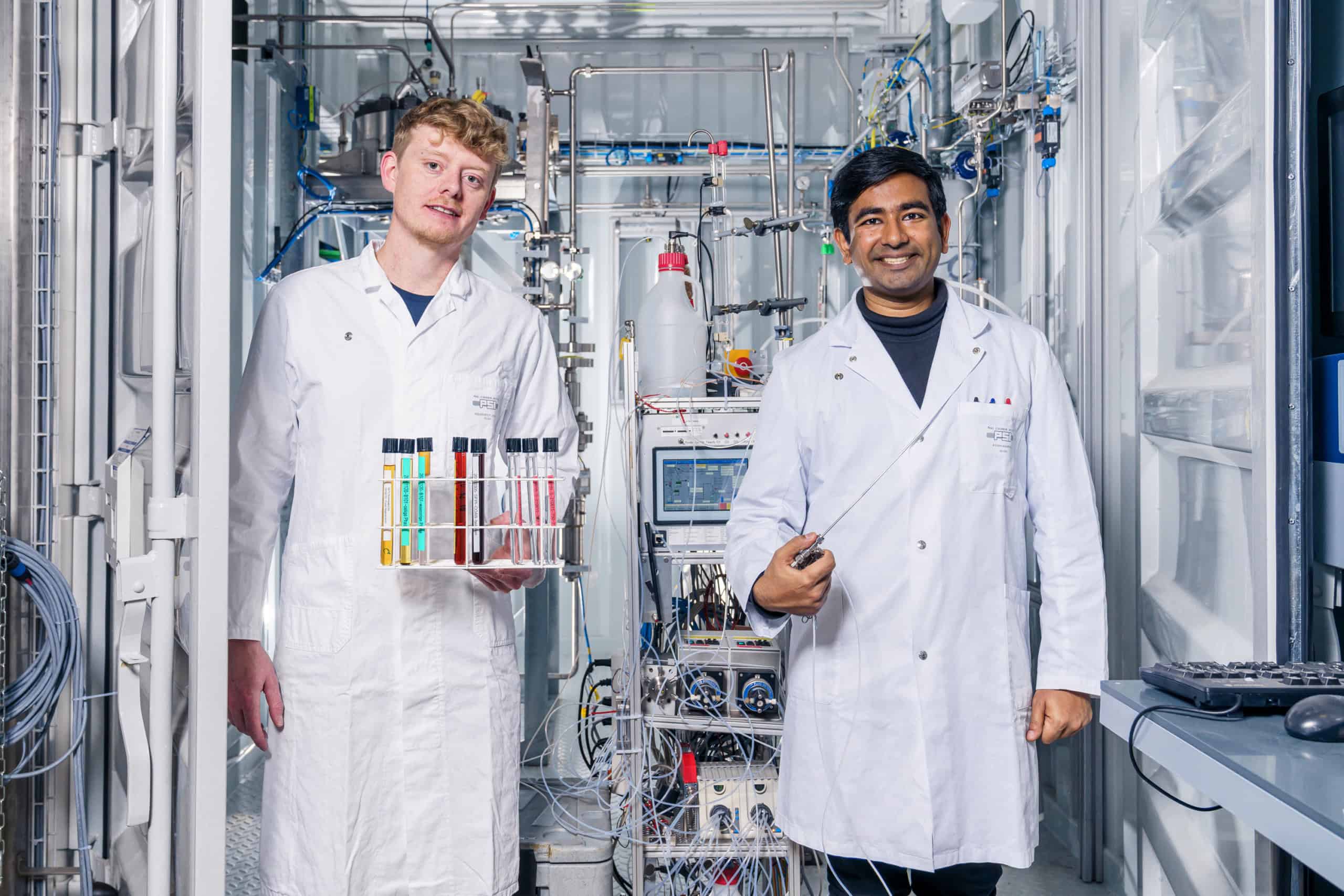
Researchers from the Paul Scherrer Institute, Switzerland: Julian Indlekofer (left) and Ayush Agarwal (right), with the Liquid Quench Sampling System
Researchers from the Paul Scherrer Institute, Switzerland: Julian Indlekofer (left) and Ayush Agarwal (right), with the Liquid Quench Sampling System (Courtesy: Markus Fischer/Paul Scherrer Institute PSI)

The researchers developed a new, simpler method to sample and analyse biogas using GC‑ICP‑MS. Gas chromatography (GC) separates chemical compounds in a gas mixture based on how quickly they travel through a column. Inductively Coupled Plasma Mass Spectrometry (ICP‑MS) then detects the elements within those compounds at very low concentrations. Crucially, this combined method can measure both siloxanes and sulfur compounds simultaneously. It avoids matrix effects that can limit other detectors and cause biased or ambiguous results. It also achieves the very low detection limits required by EN 16723.

The sampling approach and centralized measurement enables biogas plants to meet regulatory standards using an efficient, less complex, and more cost‑effective method with fewer errors. Overall, this research provides a practical, high‑accuracy tool that makes reliable biogas impurity monitoring accessible to plants of all sizes, strengthening biomethane quality, protecting infrastructure, and accelerating the transition to cleaner energy systems.

Read the full article

Sampling to analysis: simultaneous quantification of siloxanes and sulfur compounds in biogas for cleaner energy

Ayush Agarwal et al 2026 Prog. Energy 8 015001

Do you want to learn more about this topic?

Household biogas technology in the cold climate of low-income countries: a review of sustainable technologies for accelerating biogas generation Sunil Prasad Lohani et al. (2024)

The post Practical impurity analysis for biogas producers appeared first on Physics World.

ATLAS narrows the hunt for dark matter

28 janvier 2026 à 10:04

Researchers at the ATLAS collaboration have been searching for signs of new particles in the dark sector of the universe, a hidden realm that could help explain dark matter. In some theories, this sector contains dark quarks (fundamental particles) that undergo a shower and hadronization process, forming long-lived dark mesons (dark quarks and antiquarks bound by a new dark strong force), which eventually decay into ordinary particles. These decays would appear in the detector as unusual “emerging jets”: bursts of particles originating from displaced vertices relative to the primary collision point.

Using 51.8 fb⁻¹ of proton–proton collision data at 13.6 TeV collected in 2022–2023, the ATLAS team looked for events containing two such emerging jets. They explored two possible production mechanisms, which are a vector mediator (Z′) produced in the s‑channel and a scalar mediator (Φ) exchanged in the t‑channel. The analysis combined two complementary strategies. A cut-based strategy relying on high-level jet observables, including track-, vertex-, and jet-substructure-based selections, enables a straightforward reinterpretation for alternative theoretical models. A machine learning approach employs a per-jet tagger using a transformer architecture trained on low-level tracking variables to discriminate emerging from Standard Model jets, maximizing sensitivity for the specific models studied.

No emerging‑jet signal excess was found, but the search set the first direct limits on emerging‑jet production via a Z′ mediator and the first constraints on t‑channel Φ production. Depending on the model assumptions, Z′ masses up to around 2.5 TeV and Φ masses up to about 1.35 TeV are excluded. These results significantly narrow the space in which dark sector particles could exist and form part of a broader ATLAS programme to probe dark quantum chromodynamics. The work sharpens future searches for dark matter and advances our understanding of how a dark sector might behave.

Read the full article

Search for emerging jets in pp collisions at √s = 13.6 TeV with the ATLAS experiment

The ATLAS Collaboration 2025 Rep. Prog. Phys. 88 097801

Do you want to learn more about this topic?

Dark matter and dark energy interactions: theoretical challenges, cosmological implications and observational signatures by B WangE AbdallaF Atrio-Barandela and D Pavón (2016)

The post ATLAS narrows the hunt for dark matter appeared first on Physics World.

The secret life of TiO₂ in foams

26 janvier 2026 à 17:31

Porous carbon foams are an exciting area of research because they are lightweight, electrically conductive, and have extremely high surface areas. Coating these foams with TiO₂ makes them chemically active, enabling their use in energy storage devices, fuel cells, hydrogen production, CO₂‑reduction catalysts, photocatalysis, and thermal management systems. While many studies have examined the outer surfaces of coated foams, much less is known about how TiO₂ coatings behave deep inside the foam structure.

In this study, researchers deposited TiO₂ thin films onto carbon foams using magnetron sputtering and applied different bias voltages to control ion energy, which in turn affects coating density, crystal structure, thickness, and adhesion. They analysed both the outer surface and the interior of the foam using microscopy, particle‑transport simulations, and X‑ray techniques.

They found that the TiO₂ coating on the outer surface is dense, correctly composed, and crystalline (mainly anatase with a small amount of rutile) ideal for catalytic and energy applications. They also discovered that although fewer particles reach deep inside the foam, those do retain the same energy, meaning particle quantity decreases with depth but particle energy does not. Because devices like batteries and supercapacitors rely on uniform coatings, variations in thickness or structure inside the foam can lead to poorer performance and faster degradation.

Overall, this research provides a much clearer understanding of how TiO₂ coatings grow inside complex 3D foams, showing how thickness, density, and crystal structure evolve with depth and how bias voltage can be used to tune these properties. By revealing how plasma particles move through the foam and validating models that predict coating behaviour, it enables the design of more reliable, higher‑performing foam‑based devices for energy and catalytic applications.

Read the full article

A comprehensive multi-scale study on the growth mechanisms of magnetron sputtered coatings on open-cell 3D foams

Loris Chavée et al 2026 Prog. Energy 8 015002

Do you want to learn more about this topic?

Advances in thermal conductivity for energy applications: a review Qiye Zheng et al. (2021)

The post The secret life of TiO₂ in foams appeared first on Physics World.

Laser processed thin NiO powder coating for durable anode-free batteries

26 janvier 2026 à 17:30

Traditional lithium‑ion batteries use a thick graphite anode, where lithium ions move in and out of the graphite during charging and discharging. In an anode‑free lithium metal battery, there is no anode material at the start, only a copper foil. During the first charge, lithium leaves the cathode and deposits onto the copper as pure lithium metal, effectively forming the anode. Removing the anode increases energy density dramatically by reducing weight, and it also simplifies and lowers the cost of manufacturing. Because of this, anode‑free batteries are considered to have major potential for next‑generation energy storage. However, a key challenge is that lithium deposits unevenly on bare copper, forming long needle‑like dendrites that can pierce the separator and cause short circuits. This uneven growth also leads to rapid capacity loss, so anode‑free batteries typically fail after only a few hundred cycles.

In this research, the scientists coated the copper foil with NiO powder and used a CO₂ laser (l = 10.6 mm) to rapidly heat the same in a rapid scanning mode to transform it. The laser‑treated NiO becomes porous and strongly adherent to the copper, helping lithium spread out more evenly. The process is fast, energy‑efficient, and can be done in air. As a result, lithium ions diffuse or move more easily across the surface, reducing dendrite formation. The exchange current density also doubled compared to bare copper, indicating better charge‑transfer behaviour. Overall, battery performance improved dramatically. The modified cells lasted 400 cycles at room temperature and 700 cycles at 40°C, compared with only 150 cycles for uncoated copper.

This simple, rapid, and scalable technique offers a powerful way to improve anode‑free lithium metal batteries, one of the most promising next‑generation battery technologies.

Read the full article

Microgradient patterned NiO coating on copper current collector for anode-free lithium metal battery

Supriya Kadam et al 2025 Prog. Energy 7 045003

Do you want to learn more about this topic?

Lithium aluminum alloy anodes in Li-ion rechargeable batteries: past developments, recent progress, and future prospects by Tianye Zheng and Steven T Boles (2023)

The post Laser processed thin NiO powder coating for durable anode-free batteries appeared first on Physics World.

Planning a sustainable water future in the United States

26 janvier 2026 à 17:28

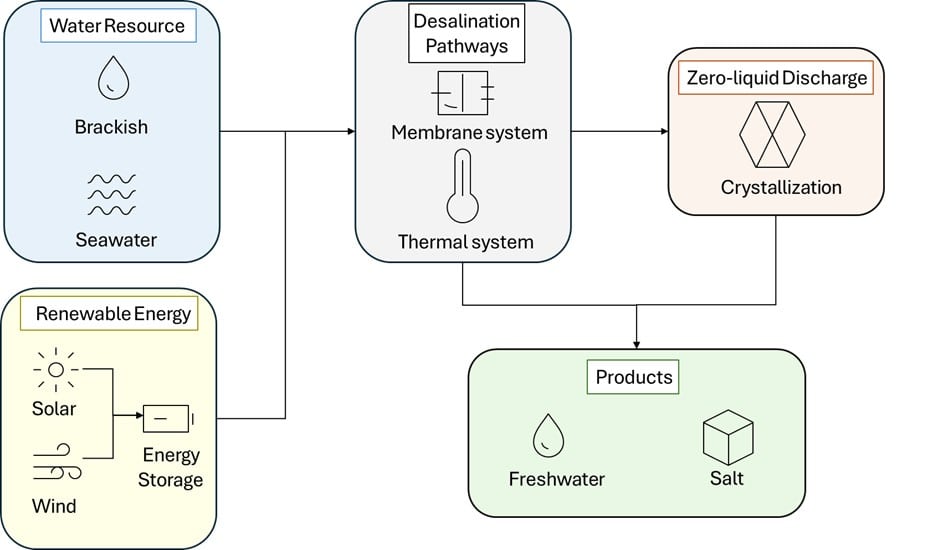
Within 45 years, water demand in the United States is predicted to double, while climate change is expected to worsen freshwater supplies, with 44% of the country already experiencing some form of drought. One way to expand water resources is desalination, where salt is removed from seawater or brackish groundwater to make clean, usable water. Brackish groundwater contains far less salt than seawater, making it much easier and cheaper to treat, and the United States has vast reserves of it in deep aquifers. The challenge is that desalination traditionally requires a lot of energy and produces a concentrated brine waste stream that is difficult and costly to dispose of. As a result, desalination currently provides only about 1% of the nation’s water supply, even though it is a major source of drinking water in regions such as the Middle East and North Africa.

Researchers Vasilis Fthenakis (left) and Zhuoran Zhang (right) from Columbia University taken at Nassau Point in Long Island
Researchers Vasilis Fthenakis (left) and Zhuoran Zhang (right) from Columbia University taken at Nassau Point in Long Island (Courtesy: Zhuoran Zhang, Columbia University)

In this work, the researchers show how desalination of brackish groundwater can be made genuinely sustainable and economically viable for addressing the United States’ looming water shortages. A key part of the solution is zero‑liquid‑discharge, which avoids brine disposal by extracting more freshwater and recovering salts such as sodium, calcium, and magnesium for reuse. Crucially, the study demonstrates that when desalination is powered by low‑cost solar and wind energy, the overall process becomes far more affordable. By 2040, solar photovoltaics paired with optimised battery storage are projected to produce electricity at lower cost than the grid in the states facing the largest water deficits, making renewable‑powered desalination a competitive option.

The researchers also show that advanced technologies, such as high‑recovery reverse osmosis and crystallisation, can achieve zero‑liquid‑discharge without increasing costs, because the extra water and salt recovery offsets the expense of brine management. Their modelling indicates that a full renewable‑powered zero‑liquid‑discharge pathway can produce freshwater at an affordable cost, while reducing environmental impacts and avoiding brine disposal altogether. Taken together, this work outlines a realistic, sustainable pathway for large‑scale desalination in the United States, offering a credible strategy for securing future water supplies in increasingly water‑stressed regions.

Progress diagram adapted from article
Progress diagram adapted from article (Courtesy: Zhuoran Zhang, Columbia University)

Do you want to learn more about this topic?

Review of solar-enabled desalination and implications for zero-liquid-discharge applications by Vasilis Fthenakis et al. (2024)


The post Planning a sustainable water future in the United States appeared first on Physics World.

A surprising critical state emerges in active nematic materials

21 janvier 2026 à 08:47

Nematics are materials made of rod‑like particles that tend to align in the same direction. In active nematics, this alignment is constantly disrupted and renewed because the particles are driven by internal biological or chemical energy. As the orientation field twists and reorganises, it creates topological defects-points where the alignment breaks down. These defects are central to the collective behaviour of active matter, shaping flows, patterns, and self‑organisation.

In this work, the researchers identify an active topological phase transition that separates two distinct regimes of defect organisation. As the system approaches this transition from below, the dynamics slow dramatically: the relaxation of defect density becomes sluggish, fluctuations in the number of defects grow in amplitude and lifetime, and the system becomes increasingly sensitive to small changes in activity. At the critical point, defects begin to interact over long distances, with correlation lengths that grow with system size. This behaviour produces a striking dual‑scaling pattern, defect fluctuations appear uniform at small scales but become anti‑hyperuniform at larger scales, meaning that the number of defects varies far more than expected from a random distribution.

A key finding is that this anti‑hyperuniformity originates from defect clustering. Rather than forming ordered structures or undergoing phase separation, defects tend to appear near existing defects, creating multiscale clusters. This distinguishes the transition from well‑known defect‑unbinding processes such as the Berezinskii-Kosterlitz-Thouless transition in passive nematics or the nematic-isotropic transition in screened active systems. Above the critical activity, the system enters a defect‑laden turbulent state where defects are more uniformly distributed and correlations become short‑ranged and negative.

The researchers confirm these behaviours experimentally using large‑field‑of‑view measurements of endothelial cell monolayers which are the cells that line blood vessels. The same dual‑scaling behaviour, long‑range correlations, and clustering appear in these living tissues, demonstrating that the transition is robust across system sizes, parameter variations, frictional damping, and boundary conditions.

Read the full article

Anti-hyperuniform critical states of active topological defects

Simon Guldager Andersen et al 2025 Rep. Prog. Phys. 88 108101

Do you want to learn more about this topic?

Active phase separation: new phenomenology from non-equilibrium physics M E Cates and C Nardini (2025)

The post A surprising critical state emerges in active nematic materials appeared first on Physics World.

Mapping electron phases in nanotube arrays

14 janvier 2026 à 13:56

Carbon nanotube arrays are designed to investigate the behaviour of electrons in low‑dimensional systems. By arranging well‑aligned 1D nanotubes into a 2D film, the researchers create a coupled‑wire structure that allows them to study how electrons move and interact as the system transitions between different dimensionalities. Using a gate electrode positioned on top of the array, the researchers were able to tune both the carrier density (number of electrons and holes in a unit area) and the strength of electron–electron interactions, enabling controlled access to regimes. The nanotubes behave as weakly coupled 1D channels where electrons move along each nanotube, as a 2D Fermi liquid where the electrons can move between nanotubes behaving like a conventional metal, or as a set of quantum‑dot‑like islands showing Coulomb blockade where at low carrier densities sections of the nanotubes become isolated.

The dimensional transitions are set by two key temperatures: T₂D, where electrons begin to hop between neighbouring nanotubes, and T₁D, where the system behaves as a Luttinger liquid which is a 1D state in which electrons cannot easily pass each other and therefore move in a strongly correlated, collective way. Changing the number of holes in the nanotubes changes how strongly the tubes interact with each other. This controls when the system stops acting like separate 1D wires and when strong interactions make parts of the film break up into isolated regions that show Coulomb blockade.

The researchers built a phase diagram by looking at how the conductance changes with temperature and voltage, and by checking how well it follows power‑law behaviour at different energy ranges. This approach allows them to identify the boundaries between Tomonaga–Luttinger liquid, Fermi liquid and Coulomb blockade phases across a wide range of gate voltages and temperatures.

Overall, the work demonstrates a continuous crossover between 2D, 1D and 0D electronic behaviour in a controllable nanotube array. This provides an experimentally accessible platform for studying correlated low‑dimensional physics and offers insights relevant to the development of nanoscale electronic devices and future carbon nanotube technologies.

Read the full article

Dimensionality and correlation effects in coupled carbon nanotube arrays

Xiaosong Deng et al 2025 Rep. Prog. Phys. 88 088001

Do you want to learn more about this topic?

Structural approach to charge density waves in low-dimensional systems: electronic instability and chemical bonding Jean-Paul Pouget and Enric Canadell (2024)

The post Mapping electron phases in nanotube arrays appeared first on Physics World.

CMS spots hints of a new form of top‑quark matter

14 janvier 2026 à 13:54

The CMS Collaboration investigated in detail events in which a top quark and an anti‑top quark are produced together in high‑energy proton–proton collisions at √s = 13 TeV, using the full 138 fb⁻¹ dataset collected between 2016 and 2018. The top quark is the heaviest fundamental particle and decays almost immediately after being produced in high-energy collisions. As a consequence, the formation of a bound top–antitop state was long considered highly unlikely and had never been observed. The anti-top quark has the same mass and lifetime as the top quark but opposite charges. When a top quark and an anti-top quark are produced together, they form a top-antitop pair (tt̄).

Focusing on events with two charged leptons (top quarks and anti-top quarks decay into two electrons, two muons or one electron and one muon) and multiple jets (sprays of particles associated with top quark decay), the analysis examines the invariant mass of the top–antitop system along with two angular observables that directly probe how the spins of the top and anti‑top quarks are correlated. These measurements allow the team to compare the data with the prediction for the non resonant tt̄ production based on fixed order perturbative quantum chromodynamics (QCD), which is what physicists normally use to calculate how quarks behave according to the standard model of particle physics.

Near the kinematic threshold where the top–antitop pair is produced, CMS observes a significant excess of events relative to the QCD prediction. The number of extra events they see can be translated into a production rate. Using a simplified model based on non‑relativistic QCD, they estimate that this excess corresponds to a cross section of about 8.8 picobarns, with an uncertainty of roughly +1.2/–1.4 picobarns. The pattern of the excess, including its spin‑correlation features, is consistent with the production of a colour singlet pseudoscalar (a top–antitop pair in the 1S₀ state, i.e. the simplest, lowest energy configuration), and therefore with the prediction of non-relativistic QCD near the tt̄ threshold. The statistical significance of the excess exceeds five standard deviations, indicating that the effect is unlikely to be a statistical fluctuation. Researchers want to find a toponium‑like state because it would reveal how the strongest force in nature behaves at the highest energies, test key theories of heavy‑quark physics, and potentially expose new physics beyond the Standard Model.

The researchers emphasise that modelling the tt̄ threshold region is theoretically challenging, and that alternative explanations remain possible. Nonetheless, the result aligns with long‑standing predictions from non‑relativistic QCD that heavy quarks could form short‑lived bound states near threshold. The analysis also showcases spin correlation as an effective means to discover and characterise such effects, which were previously considered to be beyond the reach of experimental capabilities. Starting with the confirmation by the ATLAS Collaboration last July, this observation has sparked and continues to inspire follow-up theoretical follow-up theoretical and experimental works, opening up a new field of study involving bound states of heavy quarks and providing new insight into the behaviour of the strong force at high energies.

Read the full article

Observation of a pseudoscalar excess at the top quark pair production threshold

The CMS Collaboration 2025 Rep. Prog. Phys. 88 087801

Do you want to learn more about this topic?

The sea of quarks and antiquarks in the nucleon D F Geesaman and P E Reimer (2019)

The post CMS spots hints of a new form of top‑quark matter appeared first on Physics World.

When heat moves sideways

7 janvier 2026 à 09:30

Heat travels across a metal by the movement of electrons. However, in an insulator there are no free charge carriers; instead, vibrations in the atoms (phonons) move the heat from hot regions to cool regions in a straight path. In some materials, when a magnetic field is applied, the phonons begin to move sideways, this is known as the Phonon Hall Effect. Quantised collective excitations of the spin structure, called magnons, can also do this via the Magnon Hall Effect. A combined effect occurs when magnons and phonons strongly interact and traverse sideways in the Magnon–Polaron Hall Effect.

Scientists understand the quantum mechanical property known as Berry curvature that causes this transverse heat flow. Yet in some materials, the effect is greater than what Berry curvature alone can explain. In this research, an exceptionally large thermal Hall effect is recorded in MnPS₃, an insulating antiferromagnetic material with strong magnetoelastic coupling and a spin-flop transition. The thermal Hall angle remains large down to 4 K and cannot be accounted for by standard Berry curvature-based models.

This work provides an in-depth analysis of the role of the spin-flop transition in MnPS₃’s thermal properties and highlights the need for new theoretical approaches to understand magnon–phonon coupling and scattering. Materials with large thermal Hall effects could be used to control heat in nanoscale devices such as thermal diodes and transistors.

Read the full article

Large thermal Hall effect in MnPS3

Mohamed Nawwar et al 2025 Rep. Prog. Phys. 88 080503

Do you want to learn more about this topic?

Quantum-Hall physics and three dimensions Johannes GoothStanislaw Galeski and Tobias Meng (2023)

The post When heat moves sideways appeared first on Physics World.

Symmetry‑preserving route to higher‑order insulators

7 janvier 2026 à 09:29

Topological insulators are materials that are insulating in the bulk within the bandgap, yet exhibit conductive states on their surface at frequencies within that same bandgap. These surface states are topologically protected, meaning they cannot be easily disrupted by local perturbations. In general, a material of n‑dimensions can host n‑1-dimensional topological boundary states. If the symmetry protecting these states is further broken, a bandgap can open between the n-1-dimensional states, enabling the emergence of n-2-dimensional topological states. For example, a 3D material can host 2D protected surface states, and breaking additional symmetry can create a bandgap between these surface states, allowing for protected 1D edge states. A material undergoing such a process is said to exhibit a phenomenon known as a higher-order topological insulator. In general, higher-order topological states appear in dimensions one lower than the parent topological phase due to the further unit-cell symmetry reduction. This requires at least a 2D lattice for second-order states, with the maximal order in 3D systems being three.

The researchers here introduce a new method for repeatedly opening the bandgap between topological states and generating new states within those gaps in an unbounded manner – without breaking symmetries or reducing dimensions. Their approach creates hierarchical topological insulators by repositioning domain walls between different topological regions. This process opens bandgaps between original topological states while preserving symmetry, enabling the formation of new hierarchical states within the gaps. Using one‑ and two‑dimensional Su–Schrieffer–Heeger models, they show that this procedure can be repeated to generate multiple, even infinite, hierarchical levels of topological states, exhibiting fractal-like behavior reminiscent of a Matryoshka doll. These higher-level states are characterized by a generalized winding number that extends conventional topological classification and maintains bulk-edge correspondence across hierarchies.

The researchers confirm the existence of second‑ and third-level domain‑wall and edge states and demonstrate that these states remain robust against perturbations. Their approach is scalable to higher dimensions and applicable not only to quantum systems but also to classical waves such as phononics. This broadens the definition of topological insulators and provides a flexible way to design complex networks of protected states. Such networks could enable advances in electronics, photonics, and phonon‑based quantum information processing, as well as engineered structures for vibration control. The ability to design complex, robust, and tunable hierarchical topological states could lead to new types of waveguides, sensors, and quantum devices that are more fault-tolerant and programmable.

Read the full article

Hierarchical topological states without dimension reduction

Joel R Pyfrom et al 2025 Rep. Prog. Phys. 88 118003

Do you want to learn more about this topic?

Interacting topological insulators: a review by Stephan Rachel (2018)

The post Symmetry‑preserving route to higher‑order insulators appeared first on Physics World.

Improving precision in muon g-2 calculations

17 décembre 2025 à 09:16

The gyromagnetic ratio is the ratio of a particle’s magnetic moment and its angular momentum. This value determines how a particle responds to a magnetic field. According to classical physics, muons should have a gyromagnetic ratio equal to 2. However, owing to quantum mechanics, there is a small difference between the expected gyromagnetic ratio and the observed value. This discrepancy is known as the anomalous magnetic moment.

The anomalous magnetic moment is incredibly sensitive to quantum fluctuations. It can be used to test the Standard Model of physics, and previous consistent experimental discrepancies have hinted at new physics beyond the Standard Model. The search for the anomalous magnetic moment is one of the most precise tests in modern physics.

To calculate the anomalous magnetic moment, experiments such as Fermilab’s Muon g-2 experiment have been set up where researchers measure the muon’s wobble frequency, which is caused by its magnetic moment. But effects such as hadronic vacuum polarization and hadronic light-by-light scattering cause uncertainty in the measurement. Unlike hadronic vacuum polarization, hadronic light-by-light cannot be directly extracted from experimental cross-section data, making it dependent on the model used and a significant computational challenge.

In this work, the researcher took a major step in resolving the anomalous magnetic moment of the muon. Their method calculated how the neutral pion contributes to hadronic light-by-light scattering, used domain wall fermions to preserve symmetry, employed eight different lattice configurations with variational pion masses, and introduced a pion structure function to find the key contributions in a model-independent method. The pion transition form factor was computed directly at arbitrary space-like photon momenta, and a Gegenbauer expansion was used to confirm that about 98% of the π⁰-pole contribution was determined in a model-independent way. The analysis also included finite-volume corrections and chiral and continuum extrapolations and yielded a value for the π⁰ decay width.

The development of a more accurate and model-independent anomalous magnetic moment for the muon has reduced major theoretical uncertainties and can make Standard Model precision tests more robust.

Do you want to learn more about this topic?

The muon Smasher’s guide Hind Al Ali et al (2022)

The post Improving precision in muon g-2 calculations appeared first on Physics World.

Diagnosing brain cancer without a biopsy

10 décembre 2025 à 10:19

Early diagnosis of primary central nervous system lymphoma (PCNSL) remains challenging because brain biopsies are invasive and imaging often lacks molecular specificity. A team led by researchers at Shenzhen University has now developed a minimally invasive fibre-optic plasmonic sensor capable of detecting PCNSL-associated microRNAs in the eye’s aqueous humor with attomolar sensitivity.

At the heart of the approach is a black phosphorus (BP)–engineered surface plasmon resonance (SPR) interface. An ultrathin BP layer is deposited on a gold-coated fiber tip. Because of the work-function difference between BP and gold, electrons transfer from BP into the Au film, creating a strongly enhanced local electric field at the metal–semiconductor interface. This BP–Au charge-transfer nano-interface amplifies refractive-index changes at the surface far more efficiently than conventional metal-only SPR chips, enabling the detection of molecular interactions that would otherwise be too subtle to resolve and pushing the limit of detection down to 21 attomolar without nucleic-acid amplification. The BP layer also provides a high-area, biocompatible surface for immobilizing RNA reporters.

To achieve sequence specificity, the researchers integrated CRISPR-Cas13a, an RNA-guided nuclease that becomes catalytically active only when its target sequence is perfectly matched to a designed CRISPR RNA (crRNA). When the target microRNA (miR-21) is present, activated Cas13a cleaves RNA reporters attached to the BP-modified fiber surface, releasing gold nanoparticles and reducing the local refractive index. The resulting optical shift is read out in real time through the SPR response of the BP-enhanced fiber probe, providing single-nucleotide-resolved detection directly on the plasmonic interface.

With this combined strategy, the sensor achieved a limit of detection of 21 attomolar in buffer and successfully distinguished single-base-mismatched microRNAs. In tests on aqueous-humor samples from patients with PCNSL, the CRISPR-BP-FOSPR assay produced results that closely matched clinical qPCR data, despite operating without any amplification steps.

Because aqueous-humor aspiration is a minimally invasive ophthalmic procedure, this BP-driven plasmonic platform may offer a practical route for early PCNSL screening, longitudinal monitoring, and potentially the diagnosis of other neurological diseases reflected in eye-fluid biomarkers. More broadly, the work showcases how black-phosphorus-based charge-transfer interfaces can be used to engineer next-generation, fibre-integrated biosensors that combine extreme sensitivity with molecular precision.

Do you want to learn more about this topic?

Theoretical and computational tools to model multistable gene regulatory networks by Federico BocciDongya JiaQing NieMohit Kumar Jolly and José Onuchic (2023)

The post Diagnosing brain cancer without a biopsy appeared first on Physics World.

5f electrons and the mystery of δ-plutonium

10 décembre 2025 à 10:18

Plutonium is considered a fascinating element. It was first chemically isolated in 1941 at the University of California, but its discovery was hidden until after the Second World War. There are six distinct allotropic phases of plutonium with very different properties. At ambient pressure, continuously increasing the temperature converts the room-temperature, simple monoclinic a phase through five phase transitions, the final one occurring at approximately 450°C.

The delta (δ) phase is perhaps the most interesting allotrope of plutonium. δ-plutonium is technologically important, has a very simple crystal structure, but its electronic structure has been debated for decades. Researchers have attempted to understand its anomalous behaviour and how the properties of δ-plutonium are connected to the 5f electrons.

The 5f electrons are found in the actinide group of elements which includes plutonium. Their behaviour is counterintuitive. They are sensitive to temperature, pressure and composition, and behave in both a localised manner, staying close to the nucleus and in a delocalised (itinerant) manner, more spread out and contributing to bonding. Both these states can support magnetism depending on actinide element. The 5f electrons contribute to δ-phase stability, anomalies in the material’s volume and bulk modulus, and to a negative thermal expansion where the δ-phase reduces in size when heated.

Research group from Lawrence Livermore National Laboratory
Research group from Lawrence Livermore National Laboratory. Left to right: Lorin Benedict, Alexander Landa, Kyoung Eun Kweon, Emily Moore, Per Söderlind, Christine Wu, Nir Goldman, Randolph Hood and Aurelien Perron. Not in image: Babak Sadigh and Lin Yang (Courtesy: Blaise Douros/Lawrence Livermore National Laboratory)

In this work, the researchers present a comprehensive model to predict the thermodynamic behaviour of δ-plutonium, which has a face-centred cubic structure. They use density functional theory, a computational technique that explores the overall electron density of the system and incorporate relativistic effects to capture the behaviour of fast-moving electrons and complex magnetic interactions. The model includes a parameter-free orbital polarization mechanism to account for orbital-orbital interactions, and incorporates anharmonic lattice vibrations and magnetic fluctuations, both transverse and longitudinal modes, driven by temperature-induced excitations. Importantly, it is shown that negative thermal expansion results from magnetic fluctuations.

This is the first model to integrate electronic effects, magnetic fluctuations, and lattice vibrations into a cohesive framework that aligns with experimental observations and semi-empirical models such as CALPHAD. It also accounts for fluctuating states beyond the ground state and explains how gallium composition influences thermal expansion. Additionally, the model captures the positive thermal expansion behaviour of the high-temperature epsilon phase, offering new insight into plutonium’s complex thermodynamics.

Read the full article

First principles free energy model with dynamic magnetism for δ-plutonium

Per Söderlind et al 2025 Rep. Prog. Phys. 88 078001

Do you want to learn more about this topic?

Pu 5f population: the case for n = 5.0 J G Tobin and M F Beaux II (2025)

The post 5f electrons and the mystery of δ-plutonium appeared first on Physics World.

❌