↩ Accueil

Vue normale

Reçu aujourd’hui — 11 décembre 2025

Top 10 Breakthroughs of the Year in physics for 2025 revealed

11 décembre 2025 à 15:27

Top 10 breakthrough logoPhysics World is delighted to announce its Top 10 Breakthroughs of the Year for 2025, which includes research in astronomy, antimatter, atomic and molecular physics and more. The Top Ten is the shortlist for the Physics World Breakthrough of the Year, which will be revealed on Thursday 18 December.

Our editorial team has looked back at all the scientific discoveries we have reported on since 1 January and has picked 10 that we think are the most important. In addition to being reported in Physics World in 2025, the breakthroughs must meet the following criteria:

  • Significant advance in knowledge or understanding
  • Importance of work for scientific progress and/or development of real-world applications
  • Of general interest to Physics World readers

Here, then, are the Physics World Top 10 Breakthroughs for 2025, listed in no particular order. You can listen to Physics World editors make the case for each of our nominees in the Physics World Weekly podcast. And, come back next week to discover who has bagged the 2025 Breakthrough of the Year.

Finding the stuff of life on an asteroid

Tim McCoy and Cari Corrigan
Analysing returned samples Tim McCoy (right), curator of meteorites at the Smithsonian’s National Museum of Natural History, and research geologist Cari Corrigan examine scanning electron microscope (SEM) images of a Bennu sample. (Courtesy: James Di Loreto, Smithsonian)

To Tim McCoy, Danny Glavin, Jason Dworkin, Yoshihiro Furukawa, Ann Nguyen, Scott Sandford, Zack Gainsforth and an international team of collaborators for identifying salt, ammonia, sugar, nitrogen- and oxygen-rich organic materials, and traces of metal-rich supernova dust, in samples returned from the near-Earth asteroid 101955 Bennu. The incredible chemical richness of this asteroid, which NASA’s OSIRIS-REx spacecraft visited in 2020, lends support to the longstanding hypothesis that asteroid impacts could have “seeded” the early Earth with the raw ingredients needed for life to form. The discoveries also enhance our understanding of how Bennu and other objects in the solar system formed out of the disc of material that coalesced around the young Sun.

The first superfluid molecule

To Takamasa Momose of the University of British Columbia, Canada, and Susumu Kuma of the RIKEN Atomic, Molecular and Optical Physics Laboratory, Japan for observing superfluidity in a molecule for the first time. Molecular hydrogen is the simplest and lightest of all molecules, and theorists predicted that it would enter a superfluid state at a temperature between 1‒2 K. But this is well below the molecule’s freezing point of 13.8 K, so Momose, Kuma and colleagues first had to develop a way to keep the hydrogen in a liquid state. Once they did that, they then had to work out how to detect the onset of superfluidity. It took them nearly 20 years, but by confining clusters of hydrogen molecules inside helium nanodroplets, embedding a methane molecule within the clusters, and monitoring the methane’s rotation, they were finally able to do it. They now plan to study larger clusters of hydrogen, with the aim of exploring the boundary between classical and quantum behaviour in this system.

Hollow-core fibres break 40-year limit on light transmission

To researchers at the University of Southampton and Microsoft Azure Fiber in the UK, for developing a new type of optical fibre that reduces signal loss, boosts bandwidth and promises faster, greener communications. The team, led by Francesco Poletti, achieved this feat by replacing the glass core of a conventional fibre with air and using glass membranes that reflect light at certain frequencies back into the core to trap the light and keep it moving through the fibre’s hollow centre. Their results show that the hollow-core fibres exhibit 35% less attenuation than standard glass fibres – implying that fewer amplifiers would be needed in long cables – and increase transmission speeds by 45%. Microsoft has begun testing the new fibres in real systems, installing segments in its network and sending live traffic through them. These trials open the door to gradual rollout and Poletti suggests that the hollow-core fibres could one day replace existing undersea cables.

First patient treatments delivered with proton arc therapy

Trento Proton Therapy Centre researchers
PAT pioneers The research team in the proton therapy gantry room. (Courtesy: UO Fisica Sanitaria and UO Protonterapia, APSS, Trento)

To Francesco Fracchiolla and colleagues at the Trento Proton Therapy Centre in Italy for delivering the first clinical treatments using proton arc therapy (PAT). Proton therapy – a precision cancer treatment – is usually performed using pencil-beam scanning to precisely paint the dose onto the tumour. But this approach can be limited by the small number of beam directions deliverable in an acceptable treatment time. PAT overcomes this by moving to an arc trajectory with protons delivered over a large number of beam angles and the potential to optimize the number of energies used for each beam direction. Working with researchers at RaySearch Laboratories in Sweden, the team performed successful dosimetric comparisons with clinical proton therapy plans. Following a feasibility test that confirmed the viability of clinical PAT delivery, the researchers used PAT to treat nine cancer patients. Importantly, all treatments were performed using the centre’s existing proton therapy system and clinical workflow.

A protein qubit for quantum biosensing

To Peter Maurer and David Awschalom at the University of Chicago Pritzker School of Molecular Engineering and colleagues for designing a protein quantum bit (qubit) that can be produced directly inside living cells and used as a magnetic field sensor. While many of today’s quantum sensors are based on nitrogen–vacancy (NV) centres in diamond, they are large and hard to position inside living cells. Instead, the team used fluorescent proteins, which are just 3 nm in diameter and can be produced by cells at a desired location with atomic precision. These proteins possess similar optical and spin properties to those of NV centre-based qubits – namely that they have a metastable triplet state. The researchers used a near-infrared laser pulse to optically address a yellow fluorescent protein and read out its triplet spin state with up to 20% spin contrast. They then genetically modified the protein to be expressed in bacterial cells and measured signals with a contrast of up to 8%. They note that although this performance does not match that of NV quantum sensors, it could enable magnetic resonance measurements directly inside living cells, which NV centres cannot do.

First two-dimensional sheets of metal

To Guangyu ZhangLuojun Du and colleagues at the Institute of Physics of the Chinese Academy of Sciences for producing the first 2D sheets of metal. Since the discovery of graphene – a sheet of carbon just one atom thick – in 2004, hundreds of other 2D materials have been fabricated and studied. In most of these, layers of covalently bonded atoms are separated by gaps where neighbouring layers are held together only by weak van der Waals (vdW) interactions, making it relatively easy to “shave off” single layers to make 2D sheets. Many thought that making atomically thin metals, however, would be impossible given that each atom in a metal is strongly bonded to surrounding atoms in all directions. The technique developed by Zhang and Du and colleagues involves heating powders of pure metals between two monolayer-MoS2/sapphire vdW anvils. Once the metal powders are melted into a droplet, the researchers applied a pressure of 200 MPa and continued this “vdW squeezing” until the opposite sides of the anvils cooled to room temperature and 2D sheets of metal were formed. The team produced five atomically thin 2D metals – bismuth, tin, lead, indium and gallium – with the thinnest being around 6.3 Å. The researchers say their work is just the “tip of the iceberg” and now aim to study fundamental physics with the new materials.

Quantum control of individual antiprotons

Photo of a physicist working at the BASE experiment
Exquisite control Physicist Barbara Latacz at the BASE experiment at CERN. (Courtesy: CERN)

To CERN’s BASE collaboration for being the first to perform coherent spin spectroscopy on a single antiproton – the antimatter counterpart of the proton. Their breakthrough is the most precise measurement yet of the antiproton’s magnetic properties, and could be used to test the Standard Model of particle physics. The experiment begins with the creation of high-energy antiprotons in an accelerator. These must be cooled (slowed down) to cryogenic temperatures without being lost to annihilation. Then, a single antiproton is held in an ultracold electromagnetic trap, where microwave pulses manipulate its spin state. The resulting resonance peak was 16 times narrower than previous measurements, enabling a significant leap in precision. This level of quantum control opens the door to highly sensitive comparisons of the properties of matter (protons) and antimatter (antiprotons). Unexpected differences could point to new physics beyond the Standard Model and may also reveal why there is much more matter than antimatter in the visible universe.

A smartphone-based early warning system for earthquakes

To Richard Allen, director of the Berkeley Seismological Laboratory at the University of California, Berkeley, and Google’s Marc Stogaitis and colleagues for creating a global network of Android smartphones that acts as an earthquake early warning system. Traditional early warning systems use networks of seismic sensors that rapidly detect earthquakes in areas close to the epicentre and issue warnings across the affected region. Building such seismic networks, however, is expensive, and many earthquake-prone regions do not have them. The researchers utilized the accelerometer in millions of phones in 98 countries to create the Android Earthquake Alert (AEA) system. Testing the app between 2021 and 2024 led to the detection of an average of 312 earthquakes a month, with magnitudes ranging from 1.9 to 7.8. For earthquakes of magnitude 4.5 or higher, the system sent “TakeAction” alerts to users, sending them, on average, 60 times per month for an average of 18 million individual alerts per month. The system also delivered lesser “BeAware” alerts to regions expected to experience a shaking intensity of magnitude 3 or 4. The team now aims to produce maps of ground shaking, which could assist the emergency response services following an earthquake.

A “weather map” for a gas giant exoplanet

To Lisa Nortmann at Germany’s University of Göttingen and colleagues for creating the first detailed “weather map” of an exoplanet. The forecast for exoplanet WASP-127b is brutal with winds reaching 33,000 km/hr, which is much faster than winds found anywhere in the Solar System. The WASP-127b is a gas giant located about 520 light–years from Earth and the team used the CRIRES+ instrument on the European Southern Observatory’s Very Large Telescope to observe the exoplanet as it transited across its star in less than 7 h. Spectral analysis of the starlight that filtered through WASP-127b’s atmosphere revealed Doppler shifts caused by supersonic equatorial winds. By analysing the range of Doppler shifts, the team created a rough weather map of  WASP-127b, even though they could not resolve light coming from specific locations on the exoplanet. Nortmann and colleagues concluded that the exoplanet’s poles are cooler that the rest of WASP-127b, where temperatures can exceed 1000 °C. Water vapour was detected in the atmosphere, raising the possibility of exotic forms of rain.

Highest-resolution images ever taken of a single atom

To the team led by Yichao Zhang at the University of Maryland and Pinshane Huang of the University of Illinois at Urbana-Champaign for capturing the highest-resolution images ever taken of individual atoms in a material. The team used an electron-microscopy technique called electron ptychography to achieve a resolution of 15 pm, which is about 10 times smaller than the size of an atom. They studied a stack of two atomically-thin layers of tungsten diselenide, which were rotated relative to each other to create a moiré superlattice. These twisted 2D materials are of great interest to physicists because their electronic properties can change dramatically with small changes in rotation angle. The extraordinary resolution of their microscope allowed them to visualize collective vibrations in the material called moiré phasons. These are similar to phonons, but had never been observed directly until now. The team’s observations align with theoretical predictions for moiré phasons. Their microscopy technique should boost our understanding of the role that moiré phasons and other lattice vibrations play in the physics of solids. This could lead to the engineering of new and useful materials.

ROPP banner

Physics World‘s coverage of the Breakthrough of the Year is supported by Reports on Progress in Physics, which offers unparalleled visibility for your ground-breaking research.

The post Top 10 Breakthroughs of the Year in physics for 2025 revealed appeared first on Physics World.
Exploring this year’s best physics research in our Top 10 Breakthroughs of 2025

11 décembre 2025 à 15:27

This episode of the Physics World Weekly podcast features a lively discussion about our Top 10 Breakthroughs of 2025, which include important research in quantum sensing, planetary science, medical physics, 2D materials and more. Physics World editors explain why we have made our selections and look at the broader implications of this impressive body of research.

The top 10 serves as the shortlist for the Physics World Breakthrough of the Year award, the winner of which will be announced on 18 December.

Links to all the nominees, more about their research and the selection criteria can be found here.

ROPP banner

Physics World‘s coverage of the Breakthrough of the Year is supported by Reports on Progress in Physics, which offers unparalleled visibility for your ground-breaking research.

The post Exploring this year’s best physics research in our Top 10 Breakthroughs of 2025 appeared first on Physics World.

Reçu hier — 10 décembre 2025

Sterile neutrinos: KATRIN and MicroBooNE come up empty handed

10 décembre 2025 à 17:49

Two major experiments have found no evidence for sterile neutrinos – hypothetical particles that could help explain some puzzling observations in particle physics. The KATRIN experiment searched for sterile neutrinos that could be produced during the radioactive decay of tritium; whereas the MicroBooNE experiment looked for the effect of sterile neutrinos on the transformation of muon neutrinos into electron neutrinos.

Neutrinos are low-mass subatomic particles with zero electric charge that interact with matter only via the weak nuclear force and gravity. This makes neutrinos difficult to detect, despite the fact that the particles are produced in copious numbers by the Sun, nuclear reactors and collisions in particle accelerators.

Neutrinos were first proposed in 1930 to explain the apparent missing momentum, spin and energy in the radioactive beta decay of nuclei. The they were first observed in 1956 and by 1975 physicists were confident that three types (flavours) of neutrino existed – electron, muon and tau – along with their respective antiparticles. At the same time, however, it was becoming apparent that something was amiss with the Standard Model description of neutrinos because the observed neutrino flux from sources like the Sun did not tally with theoretical predictions.

Gaping holes

Then in the late 1990s experiments in Canada and Japan revealed that neutrinos of one flavour transform into other flavours as then propagate through space. This quantum phenomenon is called neutrino oscillation and requires that neutrinos have both flavour and mass. Takaaki Kajita and Art McDonald shared the 2015 Nobel Prize for Physics for this discovery – but that is not the end of the story.

One gaping hole in our knowledge is that physicists do not know the neutrino masses – having only measured upper limits for the three flavours. Furthermore, there is some experimental evidence that the current Standard-Model description of neutrino oscillation is not quite right. This includes lower-than-expected neutrino fluxes from some beta-decaying nuclei and some anomalous oscillations in neutrino beams.

One possible explanation for these oscillation anomalies is the existence of a fourth type of neutrino. Because we have yet to detect this particle, the assumption is that it does not interact via the weak interaction – which is why these hypothetical particles are called sterile neutrinos.

Electron energy curve

Now, two very different neutrino experiments have both reported no evidence of sterile neutrinos. One is KATRIN, which is located at the Karlsruhe Institute of Technology (KIT) in Germany. It has the prime mission of making a very precise measurement of the mass of the electron antineutrino. The idea is to measure the energy spectrum of electrons emitted in the beta decay of tritium and infer an upper limit on the mass of the electron antineutrino from the shape of the curve.

If sterile neutrinos exist, then they could sometimes be emitted in place of electron antineutrinos during beta decay. This would change the electron energy spectrum – but this was not observed at KATRIN.

“In the measurement campaigns underlying this analysis, we recorded over 36 million electrons and compared the measured spectrum with theoretical models. We found no indication of sterile neutrinos,” says Kathrin Valerius of the Institute for Astroparticle Physics at KIT and co-spokesperson of the KATRIN collaboration.

Meanwhile, physicists on the MicroBooNE experiment at Fermilab in the US have looked for evidence for sterile neutrinos in how muon neutrinos oscillate into electron neutrinos. Beams of muon neutrinos are created by firing a proton beam at a solid target. The neutrinos at Fermilab then travel several hundred metres (in part through solid ground) to MicroBooNE’s liquid-argon time projection chamber. This detects electron neutrinos with high spatial and energy resolution, allowing detailed studies of neutrino oscillations.

If sterile neutrinos exist, they would be involved in the oscillation process and would therefore affect the number of electron neutrinos detected by MicroBooNE. Neutrino beams from two different sources were used in the experiments, but no evidence for sterile neutrinos was found.

Together, these two experiments rule out sterile neutrinos as an explanation for some – but not all – previously observed oscillation anomalies. So more work is needed to fully understand neutrino physics. Indeed, current and future neutrino experiments are well placed to discover physics beyond the Standard Model, which could lead to solutions to some of the greatest mysteries of physics.

“Any time you rule out one place where physics beyond the Standard Model could be, that makes you look in other places,” says Justin Evans at the UK’s University of Manchester, who is co-spokesperson for MicroBooNE. “This is a result that is going to really spur a creative push in the neutrino physics community to come up with yet more exciting ways of looking for new physics.”

Both groups report their results in papers in Nature: Katrin paper; MicroBooNE paper.

The post Sterile neutrinos: KATRIN and MicroBooNE come up empty handed appeared first on Physics World.

Reçu avant avant-hier

Galactic gamma rays could point to dark matter

5 décembre 2025 à 15:21
Fermi telescope data
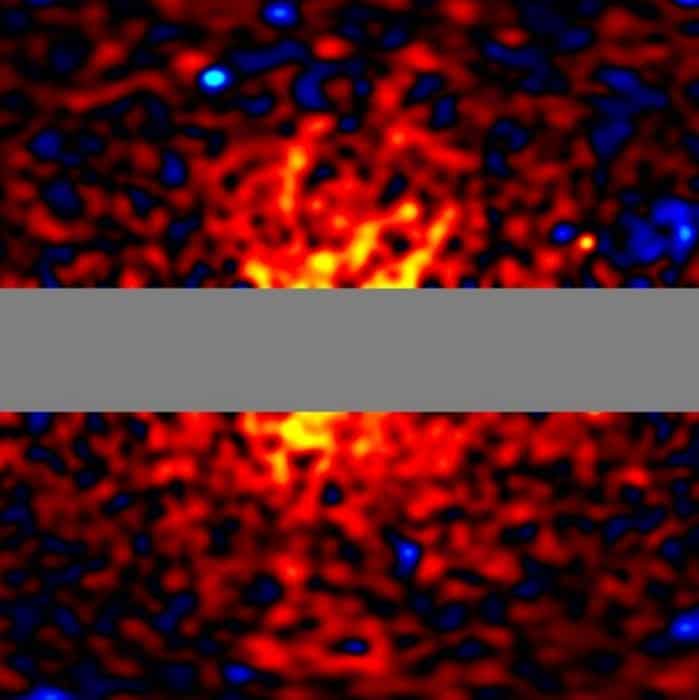
Excess radiation Gamma-ray intensity map excluding components other than the halo, spanning approximately 100° in the direction of the centre of the Milky Way. The blank horizontal bar is the galactic plane area, which was excluded from the analysis to avoid strong astrophysical radiation. (Courtesy: Tomonori Totani/The University of Tokyo)

Gamma rays emitted from the halo of the Milky Way could be produced by hypothetical dark-matter particles. That is the conclusion of an astronomer in Japan who has analysed data from NASA’s Fermi Gamma-ray Space Telescope. The energy spectrum of the emission is what would be expected from the annihilation of particles called WIMPs. If this can be verified, it would mark the first observation of dark matter via electromagnetic radiation.

Since the 1930s astronomers have known that there is something odd about galaxies, galaxy clusters and larger structures in the universe. The problem is that there is not nearly enough visible matter in these objects to explain their dynamics and structure. A rotating galaxy, for example, should be flinging out its stars because it does not have enough self-gravitation to hold itself together.

Today, the most popular solution to this conundrum is the existence of a hypothetical substance called dark matter. Dark-matter particles would have mass and interact with each other and normal matter via the gravitational force, gluing rotating galaxies together. However, the fact that we have never observed dark matter directly means that the particles must rarely, if ever, interact via the other three forces.

Annihilating WIMPs

The weakly interacting massive particle (WIMP) is a dark-matter candidate that interacts via the weak nuclear force (or a similarly weak force). As a result of this interaction, pairs of WIMPs are expected to occasionally annihilate to create high-energy gamma rays and other particles. If this is true, dense areas of the universe such as galaxies should be sources of these gamma rays.

Now, Tomonori Totani of the University of Tokyo has analysed data from the Fermi telescope  and identified an excess of gamma rays emanating from the halo of the Milky Way. What is more, Totani’s analysis suggests that the energy spectrum of the excess radiation (from about 10−100 GeV) is consistent with hypothetical WIMP annihilation processes.

“If this is correct, to the extent of my knowledge, it would mark the first time humanity has ‘seen’ dark matter,” says Totani. “This signifies a major development in astronomy and physics,” he adds.

While Totani is confident of his analysis, his conclusion must be verified independently. Furthermore, work will be needed to rule out conventional astrophysical sources of the excess radiation.

Catherine Heymans, who is Astronomer Royal for Scotland told Physics World, “I think it’s a really nice piece of work, and exactly what should be happening with the Fermi data”.  The research is described in Journal of Cosmology and Astroparticle Physics. Heymans describes Totani’s paper as “well written and thorough”.

The post Galactic gamma rays could point to dark matter appeared first on Physics World.

Building a quantum future using topological phases of matter and error correction

4 décembre 2025 à 15:55

This episode of the Physics World Weekly podcast features Tim Hsieh of Canada’s Perimeter Institute for Theoretical Physics. We explore some of today’s hottest topics in quantum science and technology – including topological phases of matter; quantum error correction and quantum simulation.

Our conversation begins with an exploration of the quirky properties quantum matter and how these can be exploited to create quantum technologies. We look at the challenges that must be overcome to create large-scale quantum computers; and Hsieh reveals which problem he would solve first if he had access to a powerful quantum processor.

This interview was recorded earlier this autumn when I had the pleasure of visiting the Perimeter Institute and speaking to four physicists about their research. This is the third of those conversations to appear on the podcast.

The first interview in this series from the Perimeter Institute was with Javier Toledo-Marín, “Quantum computing and AI join forces for particle physics”; and the second was with Bianca Dittrich, “Quantum gravity: we explore spin foams and other potential solutions to this enduring challenge“.

APS logo


This episode is supported by the APS Global Physics Summit, which takes place on 15–20 March, 2026, in Denver, Colorado, and online.

The post Building a quantum future using topological phases of matter and error correction appeared first on Physics World.

Quantum gravity: we explore spin foams and other potential solutions to this enduring challenge

27 novembre 2025 à 16:00

Earlier this autumn I had the pleasure of visiting the Perimeter Institute for Theoretical Physics in Waterloo Canada – where I interviewed four physicists about their research. This is the second of those conversations to appear on the podcast – and it is with Bianca Dittrich, whose research focuses on quantum gravity.

Albert Einstein’s general theory of relativity does a great job at explaining gravity but it is thought to be incomplete because it is incompatible with quantum mechanics. This is an important shortcoming because quantum mechanics is widely considered to be one of science’s most successful theories.

Developing a theory of quantum gravity is a crucial goal in physics, but it is proving to be extremely difficult. In this episode, Dittrich explains some of the challenges and talks about ways forward – including her current research on spin foams. We also chat about the intersection of quantum gravity and condensed matter physics; and the difficulties of testing theories against observational data.

IOP Publishing’s new Progress In Series: Research Highlights website offers quick, accessible summaries of top papers from leading journals like Reports on Progress in Physics and Progress in Energy. Whether you’re short on time or just want the essentials, these highlights help you expand your knowledge of leading topics.

The post Quantum gravity: we explore spin foams and other potential solutions to this enduring challenge appeared first on Physics World.

Ask me anything: Jason Palmer – ‘Putting yourself in someone else’s shoes is a skill I employ every day’

24 novembre 2025 à 12:00

What skills do you use every day in your job?

One thing I can say for sure that I got from working in academia is the ability to quickly read, summarize and internalize information from a bunch of sources. Journalism requires a lot of that. Being able to skim through papers – reading the abstract, reading the conclusion, picking the right bits from the middle and so on – that is a life skill.

In terms of other skills, I’m always considering who’s consuming what I’m doing rather than just thinking about how I’d like to say something. You have to think about how it’s going to be received – what’s the person on the street going to hear? Is this clear enough? If I were hearing this for the first time, would I understand it? Putting yourself in someone else’s shoes – be it the listener, reader or viewer – is a skill I employ every day.

What do you like best and least about your job?

The best thing is the variety. I ended up in this business and not in scientific research because of a desire for a greater breadth of experience. And boy, does this job have it. I get to talk to people around the world about what they’re up to, what they see, what it’s like, and how to understand it. And I think that makes me a much more informed person than I would be had I chosen to remain a scientist.

When I did research – and even when I was a science journalist – I thought “I don’t need to think about what’s going on in that part of the world so much because that’s not my area of expertise.” Now I have to, because I’m in this chair every day. I need to know about lots of stuff, and I like that feeling of being more informed.

I suppose what I like the least about my job is the relentlessness of it. It is a newsy time. It’s the flip side of being well informed, you’re forced to confront lots of bad things – the horrors that are going on in the world, the fact that in a lot of places the bad guys are winning.

What do you know today that you wish you knew when you were starting out in your career?

When I started in science journalism, I wasn’t a journalist – I was a scientist pretending to be one. So I was always trying to show off what I already knew as a sort of badge of legitimacy. I would call some professor on a topic that I wasn’t an expert in yet just to have a chat to get up to speed, and I would spend a bunch of time showing off, rabbiting on about what papers I’d read and what I knew, just to feel like I belonged in the room or on that call. And it’s a waste of time. You have to swallow your ego and embrace the idea that you may sound like you don’t know stuff even if you do. You might sound dumber, but that’s okay – you’ll learn more and faster, and you’ll probably annoy people less.

In journalism in particular, you don’t want to preload the question with all of the things that you already know because then the person you’re speaking to can fill in those blanks – and they’re probably going to talk about things you didn’t know you didn’t know, and take your conversation in a different direction.

It’s one of the interesting things about science in general. If you go into a situation with experts, and are open and comfortable about not knowing it all, you’re showing that you understand that nobody can know everything and that science is a learning process.

The post Ask me anything: Jason Palmer – ‘Putting yourself in someone else’s shoes is a skill I employ every day’ appeared first on Physics World.

Sympathetic cooling gives antihydrogen experiment a boost

21 novembre 2025 à 15:20

Physicists working on the Antihydrogen Laser Physics Apparatus (ALPHA) experiment at CERN have trapped and accumulated 15,000 antihydrogen atoms in less than 7 h. This accumulation rate is more than 20 times the previous record. Large ensembles of antihydrogen could be used to search for tiny, unexpected differences between matter and antimatter – which if discovered could point to physics beyond the Standard Model.

According to the Standard Model every particle has an antimatter counterpart – or antiparticle. It also says that roughly equal amounts of matter and antimatter were created in the Big Bang. But, today there is much more matter than antimatter in the visible universe, and the reason for this “baryon asymmetry” is one of the most important mysteries of physics.

The Standard Model predicts the properties of antiparticles. An antiproton, for example, has the same mass as a proton and the opposite charge. The Standard Model also predicts how antiparticles interact with matter and antimatter. If physicists could find discrepancies between the measured and predicted properties of antimatter, it could help explain the baryon asymmetry and point to other new physics beyond the Standard Model.

Powerful probe

Just as a hydrogen atom comprises a proton bound to an electron, an antihydrogen antiatom comprises an antiproton bound to an antielectron (positron). Antihydrogen offers physicists several powerful ways to probe antimatter at a fundamental level. Trapped antiatoms can be released in freefall to determine if they respond to gravity in the same way as atoms. Spectroscopy can be used to make precise measurements of how the electromagnetic force binds the antiproton and positron in antihydrogen with the aim of finding differences compared to hydrogen.

So far, antihydrogen’s gravitational and electromagnetic properties appear to be identical to hydrogen. However, these experiments were done using small numbers of antiatoms, and having access to much larger ensembles would improve the precision of such measurements and could reveal tiny discrepancies. However, creating and storing antihydrogen is very difficult.

Today, antihydrogen can only be made in significant quantities at CERN in Switzerland. There, a beam of protons is fired at a solid target, creating antiprotons that are then cooled and stored using electromagnetic fields. Meanwhile, positrons are gathered from the decay of radioactive nuclei and cooled and stored using electromagnetic fields. These antiprotons and positrons are then combined in a special electromagnetic trap to create antihydrogen.

This process works best when the antiprotons and positrons have very low kinetic energies (temperatures) when combined. If the energy is too high, many antiatoms will be escape the trap. So, it is crucial that the positrons and antiprotons to be as cold as possible.

Sympathetic cooling

Recently, ALPHA physicists have used a technique called sympathetic cooling on positrons, and in a new paper they describe their success.  Sympathetic cooling has been used for several decades to cool atoms and ions. It originally involved mixing a hard-to-cool atomic species with atoms that are relatively easy to cool using lasers. Energy is transferred between the two species via the electromagnetic interaction, which chills the hard-to-cool atoms.

The ALPHA team used beryllium ions to sympathetically cool positrons to 10 K, which is five degrees colder than previously achieved using other techniques. These cold positrons boosted the efficiency of the creation and trapping of antihydrogen, allowing the team to accumulate 15,000 antihydrogen atoms in less than 7 h. This is more than a 20-fold improvement over their previous record of accumulating 2000 antiatoms in 24 h.

Science fiction

“These numbers would have been considered science fiction 10 years ago,” says ALPHA spokesperson Jeffrey Hangst, who is a Denmark’s Aarhus University.

Team member Maria Gonçalves, a PhD student at the UK’s Swansea University, says, “This result was the culmination of many years of hard work. The first successful attempt instantly improved the previous method by a factor of two, giving us 36 antihydrogen atoms”.

The effort was led by Niels Madsen of the UK’s Swansea University. He enthuses, “It’s more than a decade since I first realized that this was the way forward, so it’s incredibly gratifying to see the spectacular outcome that will lead to many new exciting measurements on antihydrogen”.

The cooling technique is described in Nature Communications.

The post Sympathetic cooling gives antihydrogen experiment a boost appeared first on Physics World.

Talking physics with an alien civilization: what could we learn?

20 novembre 2025 à 14:55

It is book week here at Physics World and over the course of three days we are presenting conversations with the authors of three fascinating and fun books about physics. Today, my guest is the physicist Daniel Whiteson, who along with the artist Andy Warner has created the delightful book Do Aliens Speak Physics?.

Is physics universal, or is it shaped by human perspective? This will be a very important question if and when we are visited by an advanced alien civilization. Would we recognize our visitors’ alien science – or indeed, could a technologically-advanced civilization have no science at all? And would we even be able to communicate about science with our alien guests?

Whiteson, who is a particle physicist at the University of California Irvine, tackles these profound questions and much more in this episode of the Physics World Weekly podcast.

APS logo


This episode is supported by the APS Global Physics Summit, which takes place on 15–20 March, 2026, in Denver, Colorado, and online.

The post Talking physics with an alien civilization: what could we learn? appeared first on Physics World.

Better coffee, easier parking and more: the fascinating physics of daily life

18 novembre 2025 à 15:20

It is book week here at Physics World and over the course of three days we are presenting conversations with the authors of three fascinating and fun books about physics. First up is my Physics World colleague Michael Banks, whose book Physics Around the Clock: Adventures in the Science of Everyday Living starts with your morning coffee and ends with a formula for making your evening television viewing more satisfying.

As well as the rich physics of coffee, we chat about strategies for finding the best parking spot and the efficient boarding of aeroplanes. If you have ever wondered why a runner’s ponytail swings from side-to-side when they reach a certain speed – we have the answer for you.

Other daily mysteries that we explore include how a hard steel razor blade can be dulled by cutting relatively soft hairs and why quasiparticles called “jamitons” are helping physicists understand the spontaneous appearance of traffic jams. And a warning for squeamish listeners, we do talk about the amazing virus-spreading capabilities of a flushing toilet.

APS logo


This episode is supported by the APS Global Physics Summit, which takes place on 15–20 March, 2026, in Denver, Colorado, and online.

The post Better coffee, easier parking and more: the fascinating physics of daily life appeared first on Physics World.

SEMICON Europa 2025 presents cutting-edge technology for semiconductor R&D and production

12 novembre 2025 à 17:38

“Global collaborations for European economic resilience” is the theme of  SEMICON Europa 2025. The event is coming to Munich, Germany on 18–21 November and it will attract 25,000 semiconductor professionals who will enjoy presentations from over 200 speakers.

The TechARENA portion of the event will cover a wide range of technology-related issues including new materials, future computing paradigms and the development of hi-tech skills in the European workface. There will also be an Executive Forum, which will feature leaders in industry and government and will cover topics including silicon geopolitics and the use of artificial intelligence in semiconductor manufacturing.

SEMICON Europa will be held at the Messe München, where it will feature a huge exhibition with over 500 exhibitors from around the world. The exhibition is spread out over three halls and here are some of the companies and product innovations to look out for on the show floor.

Accelerating the future of electro-photonic integration with SmarAct

As the boundaries between electronic and photonic technologies continue to blur, the semiconductor industry faces a growing challenge: how to test and align increasingly complex electro-photonic chip architectures efficiently, precisely, and at scale. At SEMICON Europa 2025, SmarAct will address this challenge head-on with its latest innovation – Fast Scan Align. This is a high-speed and high-precision alignment solution that redefines the limits of testing and packaging for integrated photonics.

Fast Scan Align
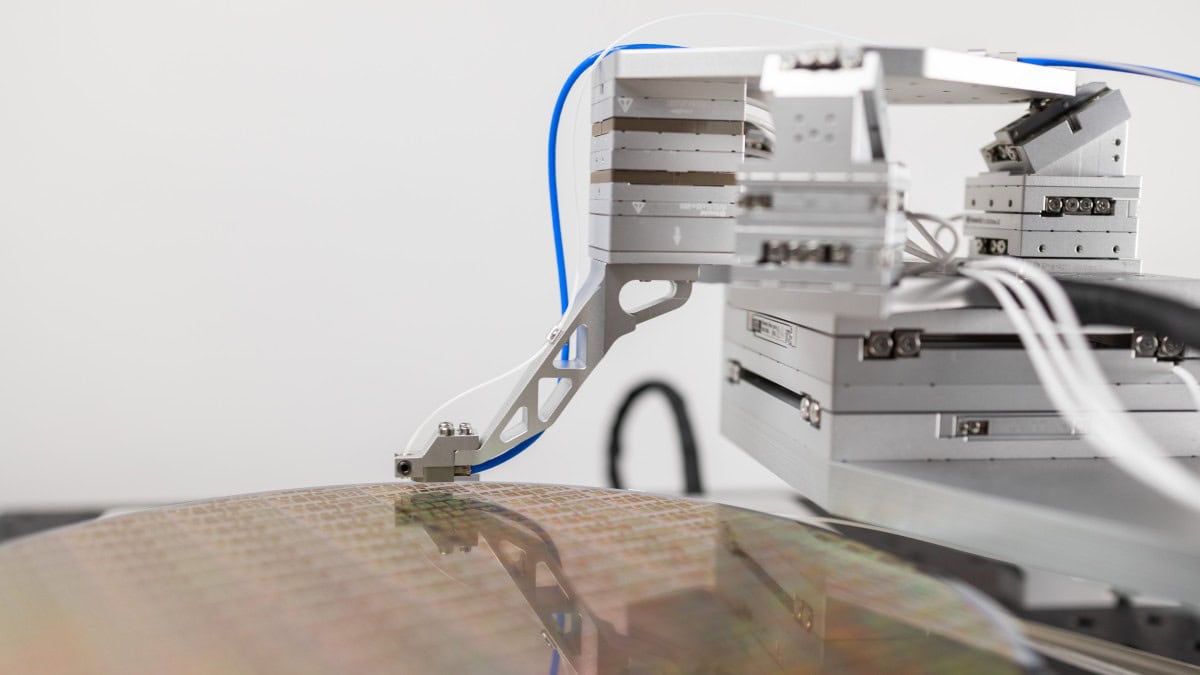
Fast Scan Align SmarAct’s high-speed and high-precision alignment solution redefines the limits of testing and packaging for integrated photonics. (Courtesy: SmarAct)

In the emerging era of heterogeneous integration, electronic and photonic components must be aligned and interconnected with sub-micrometre accuracy. Traditional positioning systems often struggle to deliver both speed and precision, especially when dealing with the delicate coupling between optical and electrical domains. SmarAct’s Fast Scan Align solution bridges this gap by combining modular motion platforms, real-time feedback control, and advanced metrology into one integrated system.

At its core, Fast Scan Align leverages SmarAct’s electromagnetic and piezo-driven positioning stages, which are capable of nanometre-resolution motion in multiple degrees of freedom. Fast Scan Align’s modular architecture allows users to configure systems tailored to their application – from wafer-level testing to fibre-to-chip alignment with active optical coupling. Integrated sensors and intelligent algorithms enable scanning and alignment routines that drastically reduce setup time while improving repeatability and process stability.

Fast Scan Align’s compact modules allow various measurement techniques to be integrated with unprecedented possibilities. This has become decisive for the increasing level of integration of complex electro-photonic chips.

Apart from the topics of wafer-level testing and packaging, wafer positioning with extreme precision is as crucial as never before for the highly integrated chips of the future. SmarAct’s PICOSCALE interferometer addresses the challenge of extreme position by delivering picometer-level displacement measurements directly at the point of interest.

When combined with SmarAct’s precision wafer stages, the PICOSCALE interferometer ensures highly accurate motion tracking and closed-loop control during dynamic alignment processes. This synergy between motion and metrology gives users unprecedented insight into the mechanical and optical behaviour of their devices – which is a critical advantage for high-yield testing of photonic and optoelectronic wafers.

Visitors to SEMICON Europa will also experience how all of SmarAct’s products – from motion and metrology components to modular systems and up to turn-key solutions – integrate seamlessly, offering intuitive operation, full automation capability, and compatibility with laboratory and production environments alike.

For more information visit SmarAct at booth B1.860 or explore more of SmarAct’s solutions in the semiconductor and photonics industry.

Optimized pressure monitoring: Efficient workflows with Thyracont’s VD800 digital compact vacuum meters

Thyracont Vacuum Instruments will be showcasing its precision vacuum metrology systems in exhibition hall C1. Made in Germany, the company’s broad portfolio combines diverse measurement technologies – including piezo, Pirani, capacitive, cold cathode, and hot cathode – to deliver reliable results across a pressure range from 2000 to 3e-11 mbar.

VD800 series
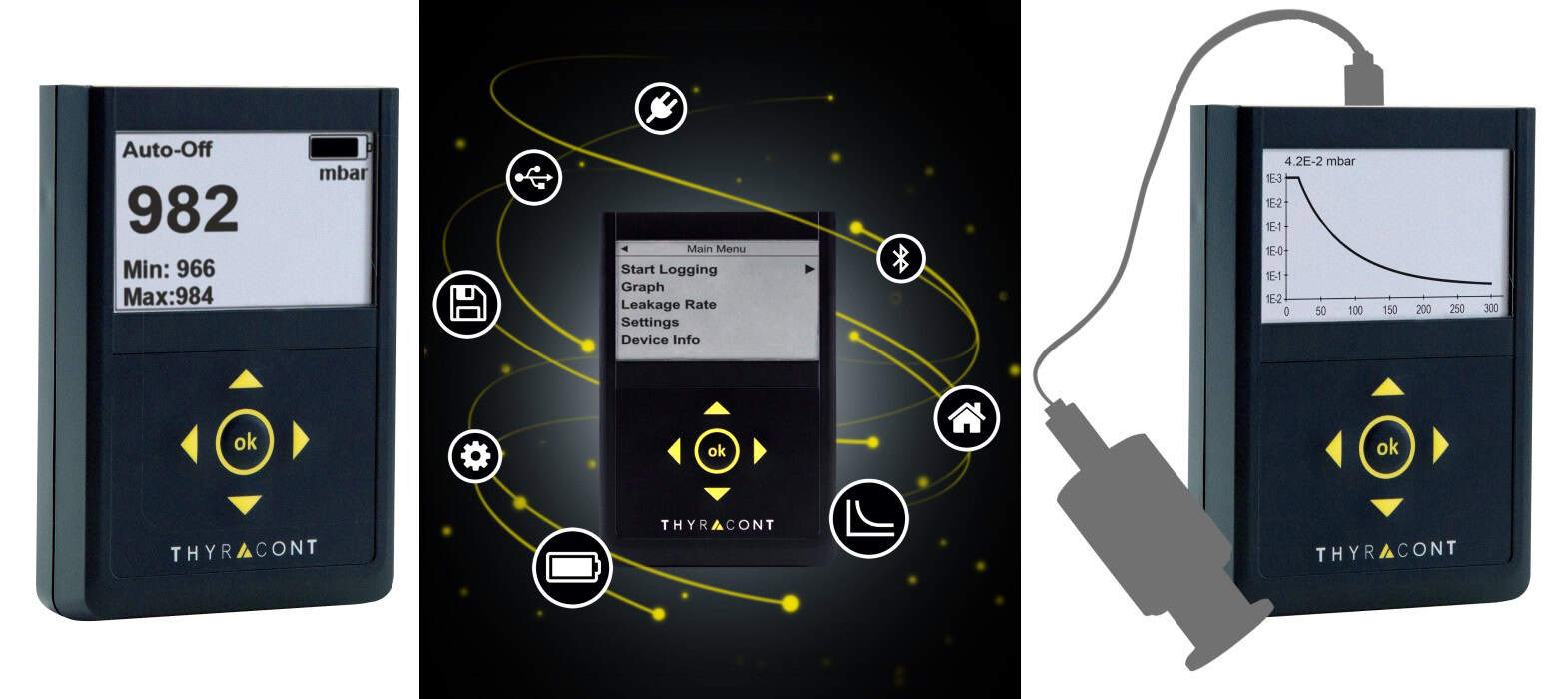
VD800 Thryracont’s series combines high accuracy with a highly intuitive user interface, defining the next generation of compact vacuum meters. (Courtesy: Thyracont)

Front-and-centre at SEMICON Europa will be Thyracont’s new series of VD800 compact vacuum meters. These instruments provide precise, on-site pressure monitoring in industrial and research environments. Featuring a direct pressure display and real-time pressure graphs, the VD800 series is ideal for service and maintenance tasks, laboratory applications, and test setups.

The VD800 series combines high accuracy with a highly intuitive user interface. This delivers real-time measurement values; pressure diagrams; and minimum and maximum pressure – all at a glance. The VD800’s 4+1 membrane keypad ensures quick access to all functions. USB-C and optional Bluetooth LE connectivity deliver seamless data readout and export. The VD800’s large internal data logger can store over 10 million measured values with their RTC data, with each measurement series saved as a separate file.

Data sampling rates can be set from 20 ms to 60 s to achieve dynamic pressure tracking or long-term measurements. Leak rates can be measured directly by monitoring the rise in pressure in the vacuum system. Intelligent energy management gives the meters extended battery life and longer operation times. Battery charging is done conveniently via USB-C.

The vacuum meters are available in several different sensor configurations, making them adaptable to a wide range of different uses. Model VD810 integrates a piezo ceramic sensor for making gas-type-independent measurements for rough vacuum applications. This sensor is insensitive to contamination, making it suitable for rough industrial environments. The VD810 measures absolute pressure from 2000 to 1 mbar and relative pressure from −1060 to +1200 mbar.

Model VD850 integrates a piezo/Pirani combination sensor, which delivers high resolution and accuracy in the rough and fine vacuum ranges. Optimized temperature compensation ensures stable measurements in the absolute pressure range from 1200 to 5e-5 mbar and in the relative pressure range from −1060 to +340 mbar.

The model VD800 is a standalone meter designed for use with Thyracont’s USB-C vacuum transducers, which are available in two models. The VSRUSB USB-C transducer is a piezo/Pirani combination sensor that measures absolute pressure in the 2000 to 5.0e-5 mbar range. The other is the VSCUSB USB-C transducer, which measures absolute pressures from 2000 down to 1 mbar and has a relative pressure range from -1060 to +1200 mbar. A USB-C cable connects the transducer to the VD800 for quick and easy data retrieval. The USB-C transducers are ideal for hard-to-reach areas of vacuum systems. The transducers can be activated while a process is running, enabling continuous monitoring and improved service diagnostics.

With its blend of precision, flexibility, and ease of use, the Thyracont VD800 series defines the next generation of compact vacuum meters. The devices’ intuitive interface, extensive data capabilities, and modern connectivity make them an indispensable tool for laboratories, service engineers, and industrial operators alike.

To experience the future of vacuum metrology in Munich, visit Thyracont at SEMICON Europa hall C1, booth 752. There you will discover how the VD800 series can optimize your pressure monitoring workflows.

The post SEMICON Europa 2025 presents cutting-edge technology for semiconductor R&D and production appeared first on Physics World.

Unlocking the potential of 2D materials: graphene and much more

6 novembre 2025 à 15:49

This episode explores the scientific and technological significance of 2D materials such as graphene. My guest is Antonio Rossi, who is a researcher in 2D materials engineering at the Italian Institute of Technology in Genoa.

Rossi explains why 2D materials are fundamentally different than their 3D counterparts – and how these differences are driving scientific progress and the development of new and exciting technologies.

Graphene is the most famous 2D material and Rossi talks about today’s real-world applications of graphene in coatings. We also chat about the challenges facing scientists and engineers who are trying to exploit graphene’s unique electronic properties.

Rossi’s current research focuses on two other promising 2D materials – tungsten disulphide and hexagonal boron nitride. He explains why tungsten disulphide shows great technological promise because of its favourable electronic and optical properties; and why hexagonal boron nitride is emerging as an ideal substrate for creating 2D devices.

Artificial intelligence (AI) is becoming an important tool in developing new 2D materials. Rossi explains how his team is developing feedback loops that connect AI with the fabrication and characterization of new materials. Our conversation also touches on the use of 2D materials in quantum science and technology.

IOP Publishing’s new Progress In Series: Research Highlights website offers quick, accessible summaries of top papers from leading journals like Reports on Progress in Physics and Progress in Energy. Whether you’re short on time or just want the essentials, these highlights help you expand your knowledge of leading topics.

The post Unlocking the potential of 2D materials: graphene and much more appeared first on Physics World.

Quantum steampunk: we explore the art and science

30 octobre 2025 à 12:42

Earlier this year I met the Massachusetts-based steampunk artist Bruce Rosenbaum at the Global Physics Summit of the American Physical Society. He was exhibiting a beautiful sculpture of a “quantum engine” that was created in collaboration with physicists including NIST’s Nicole Yunger Halpern – who pioneered the scientific field of quantum steampunk.

I was so taken by the art and science of quantum steampunk that I promised Rosenbaum that I would chat with him and Yunger Halpern on the podcast – and here is that conversation. We begin by exploring the art of steampunk and how it is influenced by the technology of the 19th century. Then, we look at the physics of quantum steampunk, a field that weds modern concepts of quantum information with thermodynamics – which itself is a scientific triumph of the 19th century.


This podcast is supported by Atlas Technologies, specialists in custom aluminium and titanium vacuum chambers as well as bonded bimetal flanges and fittings used everywhere from physics labs to semiconductor fabs.

The post Quantum steampunk: we explore the art and science appeared first on Physics World.

Ask me anything: Kirsty McGhee – ‘Follow what you love: you might end up doing something you never thought was an option’

27 octobre 2025 à 11:00

What skills do you use every day in your job?

Obviously, I write: I wouldn’t be a very good science writer if I couldn’t. So communication skills are vital. Recently, for example, Qruise launched a new magnetic-resonance product for which I had to write a press release, create a new webpage and do social-media posts. That meant co-ordinating with lots of different people, finding out the key features to advertise, identifying the claims we wanted to make – and if we have the data to back those claims up. I’m not an expert in quantum computing or magnetic-resonance imagining or even marketing so I have to pick things up fast and then translate technically complex ideas from physics and software into simple messages for a broader audience. Thankfully, my colleagues are always happy to help. Science writing is a difficult task but I think I’m getting better at it.

What do you like best and least about your job?

I love the variety and the fact that I’m doing so many different things all the time. If there’s a day I feel I want something a little bit lighter, I can do some social media or the website, which is more creative. On the other hand, if I feel I could really focus in detail on something then I can write some documentation that is a little bit more technical. I also love the flexibility of remote working, but I do miss going to the office and socialising with my colleagues on a regular basis. You can’t get to know someone as well online, it’s nicer to have time with them in person.

What do you know today, that you wish you knew when you were starting out in your career?

That’s a hard one. It would be easy to say I wish I’d known earlier that I could combine science and writing and make a career out of that. On the other hand, if I’d known that, I might not have done my PhD – and if I’d gone into writing straight after my undergraduate degree, I perhaps wouldn’t be where I am now. My point is, it’s okay not to have a clear plan in life. As children, we’re always asked what we want to be – in my case, my dream from about the age of four was to be a vet. But then I did some work experience in a veterinary practice and I realized I’m really squeamish. It was only when I was 15 or 16 that I discovered I wanted to do physics because I liked it and was good at it. So just follow the things you love. You might end up doing something you never even thought was an option.

The post Ask me anything: Kirsty McGhee – ‘Follow what you love: you might end up doing something you never thought was an option’ appeared first on Physics World.

Quantum computing and AI join forces for particle physics

23 octobre 2025 à 15:57

This episode of the Physics World Weekly podcast explores how quantum computing and artificial intelligence can be combined to help physicists search for rare interactions in data from an upgraded Large Hadron Collider.

My guest is Javier Toledo-Marín, and we spoke at the Perimeter Institute in Waterloo, Canada. As well as having an appointment at Perimeter, Toledo-Marín is also associated with the TRIUMF accelerator centre in Vancouver.

Toledo-Marín and colleagues have recently published a paper called “Conditioned quantum-assisted deep generative surrogate for particle–calorimeter interactions”.

Delft logo

This podcast is supported by Delft Circuits.

As gate-based quantum computing continues to scale, Delft Circuits provides the i/o solutions that make it possible.

The post Quantum computing and AI join forces for particle physics appeared first on Physics World.

Doorway states spotted in graphene-based materials

22 octobre 2025 à 15:51

Low-energy electrons escape from some materials via distinct “doorway” states, according to a study done by physicists at Austria’s Vienna Institute of Technology. The team studied graphene-based materials and found that the nature of the doorway states depended on the number of graphene layers in the sample.

Low-energy electron (LEE) emission from solids is used across a range of materials analysis and processing applications including scanning electron microscopy and electron-beam induced deposition. However, the precise physics of the emission process is not well understood.

Electrons are ejected from a material when a beam of electrons is fired at its surface. Some of these incident electrons will impart energy to electrons residing in the material, causing some resident electrons to be emitted from the surface. In the simplest model, the minimum energy needed for this LEE emission is the electron binding energy of the material.

Frog in a box

In this new study, however, researchers have shown that exceeding the binding energy is not enough for LEE emission from graphene-based materials. Not only does the electron need this minimum energy, it must also be in a specific doorway state or it is unlikely to escape. The team compare this phenomenon to the predicament of a frog in a cardboard box with a window. Not only must the frog hop a certain height to escape the box, it must also begin its hop from a position that will result in it travelling through the hole (see figure).

For most materials, the energy spectrum of LEE electrons is featureless. However, it was known that graphite’s spectrum has an “X state” at about 3.3 eV, where emission is enhanced. This state could be related to doorway states.

To search for doorway states, the Vienna team studied LEE emission from graphite as well as from single-layer and bi-layer graphene. Graphene is a sheet of carbon just one atom thick. Sheets can stick together via the relatively weak Van der Waals force to create multilayer graphene – and ultimately graphite, which comprises a large number of layers.

Because electrons are mostly confined within the graphene layers, the electronic states of single-layer, bi-layer and multi-layer graphene are broadly similar. As a result, it was expected that these materials would have similar LEE emission spectra . However, the Vienna team found a surprising difference.

Emission and reflection

The team made their discovery by firing a beam of relatively low energy electrons (173 eV) incident at 60° to the surface of single-layer and bi-layer graphene as well as graphite. The scattered electrons are then detected at the same angle of reflection. Meanwhile, a second detector is pointed normal to the surface to capture any emitted electrons. In quantum mechanics electrons are indistinguishable, so the modifiers scattered and emitted are illustrative, rather than precise.

The team looked for coincident signals in both detectors and plotted their results as a function of energy in 2D “heat maps”. These plots revealed that bi-layer graphene and graphite each had doorway states – but at different energies. However, single-layer graphene did not appear to have any doorway states. By combining experiments with calculations, the team showed that doorway states emerge above a certain number of layers. As a result the researchers showed that graphite’s X state can be attributed in part to a doorway state that appears at about five layers of graphene.

“For the first time, we’ve shown that the shape of the electron spectrum depends not only on the material itself, but crucially on whether and where such resonant doorway states exist,” explains Anna Niggas at the Vienna Institute of Technology.

As well as providing important insights in how the electronic properties of graphene morph into the properties of graphite, the team says that their research could also shed light on the properties of other layered materials.

The research is described in Physical Review Letters.

The post Doorway states spotted in graphene-based materials appeared first on Physics World.

From quantum curiosity to quantum computers: the 2025 Nobel Prize for Physics

9 octobre 2025 à 15:50

This year’s Nobel Prize for Physics went to John Clarke, Michel Devoret and John Martinis “for the discovery of macroscopic quantum mechanical tunnelling and energy quantization in an electric circuit”.

That circuit was a superconducting device called a Josephson junction and their work in the 1980s led to the development of some of today’s most promising technologies for quantum computers.

To chat about this year’s laureates, and the wide-reaching scientific and technological consequences of their work I am joined by Ilana Wisby – who is a quantum physicist, deep tech entrepreneur and former CEO of UK-based Oxford Quantum Circuits. We chat about the trio’s breakthrough and its influence on today’s quantum science and technology.

Courtesy: American ElementsThis podcast is supported by American Elements, the world’s leading manufacturer of engineered and advanced materials. The company’s ability to scale laboratory breakthroughs to industrial production has contributed to many of the most significant technological advancements since 1990 – including LED lighting, smartphones, and electric vehicles.

The post From quantum curiosity to quantum computers: the 2025 Nobel Prize for Physics appeared first on Physics World.

John Clarke, Michel Devoret and John Martinis win the 2025 Nobel Prize for Physics

7 octobre 2025 à 11:52

John Clarke, Michel Devoret and John Martinis share the 2025 Nobel Prize for Physics “for the discovery of macroscopic quantum mechanical tunnelling and energy quantization in an electric circuit”. 

The award includes a SEK 11m prize ($1.2m), which is shared equally by the winners. The prize will be presented at a ceremony in Stockholm on 10 December.

The prize was announced this morning by members of the Royal Swedish Academy of Science. Olle Eriksson of Uppsala University and chair of the Nobel Committee for Physics commented, “There is no advanced technology today that does not rely on quantum mechanics.”

Göran Johansson of Chalmers University of Technology explained that the three laureates took quantum tunnelling from the microscopic world and onto superconducting chips, allowing physicists to study quantum physics and ultimately create quantum computers.

Speaking on the telephone, John Clarke said of his win, “To put it mildly, it was the surprise of my life,” adding “I am completely stunned. It had never occurred to me that this might be the basis of a Nobel prize.” On the significance of the trio’s research, Clarke said, “The basis of quantum computing relies to quite an extent on our discovery.”

As well as acknowledging the contributions of Devoret and Martinis, Clarke also said that their work was made possible by the work of Anthony Leggett and Brian Josephson – who laid the groundwork for their work on tunnelling in superconducting circuits. Leggett and Josephson are previous Nobel winners.

As well as having scientific significance, the trio’s work has led to the development of nascent commercial quantum computers that employ superconducting circuits. Physicist and tech entrepreneur Ilana Wisby, who co-founded Oxford Quantum Circuits, told Physics World, “It’s such a brilliant and well-deserved recognition for the community”.

A life in science

Clarke was born in 1942 in Cambridge, UK. He received his BA in physics from the University of Cambridge in 1964 before carrying out a PhD at Cambridge in 1968. He then moved to the University of California, Berkeley, to carry out a postdoc before joining the physics faculty in 1969 where he has remained since.

Devoret was born in Paris, France in 1953. He graduated from Ecole Nationale Superieure des Telecommunications in Paris in 1975 before earning a PhD from the University of Paris, Orsay, in 1982. He then moved to the University of California, Berkeley, to work in Clarke’s group collaborating with Martinis who was a graduate student at the time. In 1984 Devoret returned to France to start his own research group at the Commissariat à l’Energie Atomique in Saclay (CEA-Saclay) before heading to the US to Yale University in 2002. In 2024 he moved to the University of California, Santa Barbara, and also became chief scientist at Google Quantum AI.

Martinis was born in the US in 1958. He received a BS in physics in 1980 and a PhD in physics both from the University of California, Berkeley. He then carried out postdocs at CEA-Saclay, France, and the National Institute of Standards and Technology in Boulder, Colorado, before moving to the University of California, Santa Barbara, in 2004. In 2014 Martinis and his team joined Google with the aim of building the first useful quantum computer before he moved to Australia in 2020 to join the start-up Silicon Quantum Computing. In 2022 he co-founded the company Qolab, of which he is currently the chief technology officer.

The trio did its prizewinning work in the mid-1980s at the University of California, Berkeley. At the time Devoret was a postdoctoral fellow and Martinis was a graduate student – both working for Clarke. They were looking for evidence of macroscopic quantum tunnelling (MQT) in a device called a Josephson junction. This comprises two pieces of superconductor that are separated by an insulating barrier. In 1962 the British physicist Brian Josephson predicted how the Cooper pairs of electrons that carry current in a superconductor can tunnel across the barrier unscathed. This Josephson effect was confirmed experimentally in 1963.

Single wavefunction

The lowest-energy (ground) state of a superconductor is a macroscopic quantum state in which all Cooper pairs are described by a single quantum-mechanical wavefunction. In the late 1970s, the British–American physicist Anthony Leggett proposed that the tunnelling of this entire macroscopic state could be observed in a Josephson junction.

The idea is to put the system into a metastable state in which electrical current flows without resistance across the junction – resulting in zero voltage across the junction. If the system is indeed a macroscopic quantum state, then it should be able to occasionally tunnel out of this metastable state, resulting in a voltage across the junction.

This tunnelling can be observed by increasing the current through the junction and measuring the current at which a voltage occurs – obtaining an average value over many such measurements. As the temperature of the device is reduced, this average current increases – something that is expected regardless of whether the system is in a macroscopic quantum state.

However, at very low temperatures the average current becomes independent of temperature, which is the signature of macroscopic quantum tunnelling that Martinis, Devoret and Clarke were seeking. Their challenge was to reduce the noise in their experimental apparatus, because noise has a similar effect as tunnelling on their measurements.

Multilevel system

As well as observing the signature of tunnelling, they were also able to show that the macroscopic quantum state exists in several different energy states. Such a multilevel system is essentially a macroscopic version of an atom or nucleus, with its own spectroscopic structure.

The noise-control techniques developed by the trio to observe MQT and the fact that a Josephson junction can function as a macroscopic multilevel quantum system have led to the development of superconducting quantum bits (qubits) that form the basis of some nascent quantum computers.

The post John Clarke, Michel Devoret and John Martinis win the 2025 Nobel Prize for Physics appeared first on Physics World.

❌