Dans la grande série « Depuis que je suis à la retraite, je ne sais plus quel jour on est », je viens de me faire rappeler à l’ordre (encore heureux, merci, Daniel et merci, Ysengrain): j’ai oublié l’Open Bar de ce début du mois. Et ce n’est pas la première fois! Bon, j’ai fait un examen neurologique pour être sûr, je n’ai aucune dégénérescence cognitive et toutes mes mémoires vont bien. ... Continuer la lecture
Le microbiote des plantes ? L’holobionte végétal ? Des concepts méconnus, mais cruciaux pour la santé des plantes et l’agriculture durable. Explications avec l’écologue Philippe Vandenkoornhuyse, réputé mondialement pour avoir contribué à révéler leur rôle.
Unless you’ve been living under a stone, you can’t have failed to notice that 2025 marks the first 100 years of quantum mechanics. A massive milestone, to say the least, about which much has been written in Physics World and elsewhere in what is the International Year of Quantum Science and Technology (IYQ). However, I’d like to focus on a specific piece of quantum technology, namely quantum computing.
I keep hearing about quantum computers, so people must be using them to do cool things, and surely they will soon be as commonplace as classical computers. But as a physicist-turned-engineer working in the aerospace sector, I struggle to get a clear picture of where things are really at. If I ask friends and colleagues when they expect to see quantum computers routinely used in everyday life, I get answers ranging from “in the next two years” to “maybe in my lifetime” or even “never”.
Before we go any further, it’s worth reminding ourselves that quantum computing relies on several key quantum properties, including superposition, which gives rise to the quantum bit, or qubit. The basic building block of a quantum computer – the qubit – exists as a combination of 0 and 1 states at the same time and is represented by a probabilistic wave function. Classical computers, in contrast, use binary digital bits that are either 0 or 1.
Also vital for quantum computers is the notion of entanglement, which is when two or more qubits are co-ordinated, allowing them to share their quantum information. In a highly correlated system, a quantum computer can explore many paths simultaneously. This “massive scale” parallel processing is how quantum may solve certain problems exponentially faster than a classical computer.
The other key phenomenon for quantum computers is quantum interference. The wave-like nature of qubits means that when different probability amplitudes are in phase, they combine constructively to increase the likelihood of the right solution. Conversely, destructive interference occurs when amplitudes are out of phase, making it less likely to get the wrong answer.
Quantum interference is important in quantum computing because it allows quantum algorithms to amplify the probability of correct answers and suppress incorrect ones, making calculations much faster. Along with superposition and entanglement, it means that quantum computers could process and store vast numbers of probabilities at once, outstripping even the best classical supercomputers.
Towards real devices
To me, it all sounds exciting, but what have quantum computers ever done for us so far? It’s clear that quantum computers are not ready to be deployed in the real world. Significant technological challenges need to be overcome before they become fully realisable. In any case, no-one is expecting quantum computers to displace classical computers “like for like”: they’ll both be used for different things.
Yet it seems that the very essence of quantum computing is also its Achilles heel. Superposition, entanglement and interference – the quantum properties that will make it so powerful – are also incredibly difficult to create and maintain. Qubits are also extremely sensitive to their surroundings. They easily lose their quantum state due to interactions with the environment, whether via stray particles, electromagnetic fields, or thermal fluctuations. Known as decoherence, it makes quantum computers prone to error.
That’s why quantum computers need specialized – and often cryogenically controlled – environments to maintain the quantum states necessary for accurate computation. Building a quantum system with lots of interconnected qubits is therefore a major, expensive engineering challenge, with complex hardware and extreme operating conditions. Developing “fault-tolerant” quantum hardware and robust error-correction techniques will be essential if we want reliable quantum computation.
As for the development of software and algorithms for quantum systems, there’s a long way to go, with a lack of mature tools and frameworks. Quantum algorithms require fundamentally different programming paradigms to those used for classical computers. Put simply, that’s why building reliable, real-world deployable quantum computers remains a grand challenge.
What does the future hold?
Despite the huge amount of work that still lies in store, quantum computers have already demonstrated some amazing potential. The US firm D-Wave, for example, claimed earlier this year to have carried out simulations of quantum magnetic phase transitions that wouldn’t be possible with the most powerful classical devices. If true, this was the first time a quantum computer had achieved “quantum advantage” for a practical physics problem (whether the problem was worth solving is another question).
There is also a lot of research and development going on around the world into solving the qubit stability problem. At some stage, there will likely be a breakthrough design for robust and reliable quantum computer architecture. There is probably a lot of technical advancement happening right now behind closed doors.
The first real-world applications of quantum computers will be akin to the giant classical supercomputers of the past. If you were around in the 1980s, you’ll remember Cray supercomputers: huge, inaccessible beasts owned by large corporations, government agencies and academic institutions to enable vast amounts of calculations to be performed (provided you had the money).
And, if I believe what I read, quantum computers will not replace classical computers, at least not initially, but work alongside them, as each has its own relative strengths. Quantum computers will be suited for specific and highly demanding computational tasks, such as drug discovery, materials science, financial modelling, complex optimization problems and increasingly large artificial intelligence and machine-learning models.
These are all things beyond the limits of classical computer resource. Classical computers will remain relevant for everyday tasks like web browsing, word processing and managing databases, and they will be essential for handling the data preparation, visualization and error correction required by quantum systems.
And there is one final point to mention, which is cyber security. Quantum computing poses a major threat to existing encryption methods, with potential to undermine widely used public-key cryptography. There are concerns that hackers nowadays are storing their stolen data in anticipation of future quantum decryption.
Having looked into the topic, I can now see why the timeline for quantum computing is so fuzzy and why I got so many different answers when I asked people when the technology would be mainstream. Quite simply, I still can’t predict how or when the tech stack will pan out. But as IYQ draws to a close, the future for quantum computers is bright.
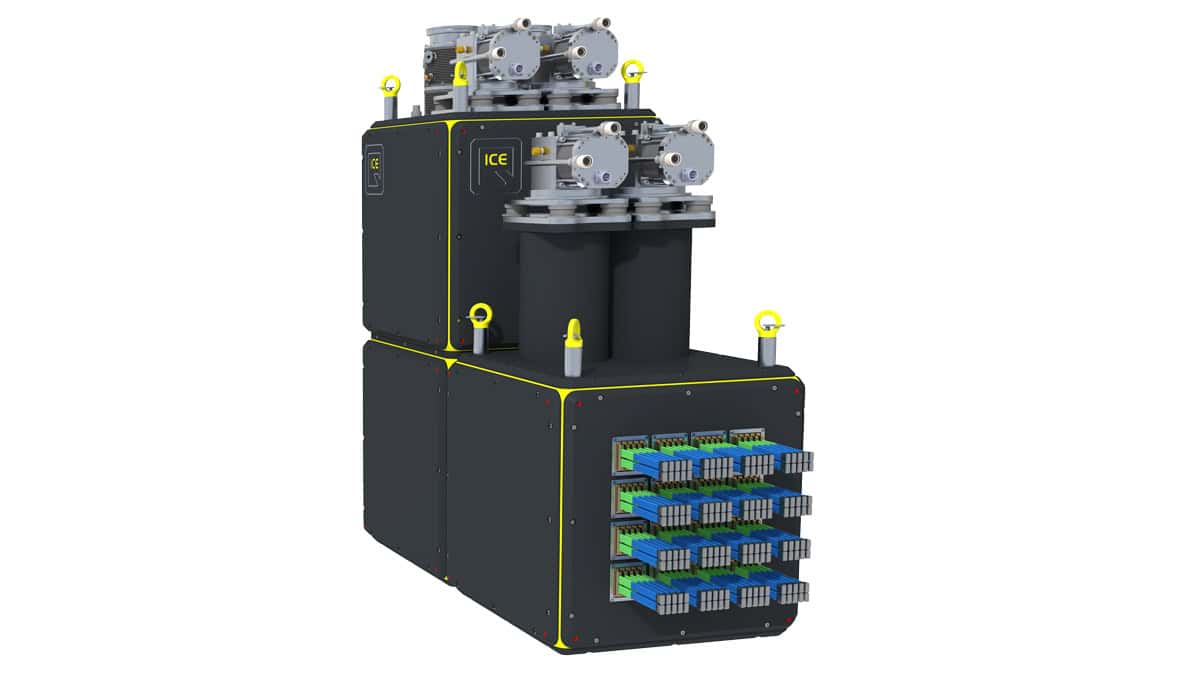
Modular and scalable: the ICE-Q cryogenics platform delivers the performance and reliability needed for professional computing environments while also providing a flexible and extendable design. The standard configuration includes a cooling module, a payload with a large sample space, and a side-loading wiring module for scalable connectivity (Courtesy: ICEoxford)
At the centre of most quantum labs is a large cylindrical cryostat that keeps the delicate quantum hardware at ultralow temperatures. These cryogenic chambers have expanded to accommodate larger and more complex quantum systems, but the scientists and engineers at UK-based cryogenics specialist ICEoxford have taken a radical new approach to the challenge of scalability. They have split the traditional cryostat into a series of cube-shaped modules that slot into a standard 19-inch rack mount, creating an adaptable platform that can easily be deployed alongside conventional computing infrastructure.
“We wanted to create a robust, modular and scalable solution that enables different quantum technologies to be integrated into the cryostat,” says Greg Graf, the company’s engineering manager. “This approach offers much more flexibility, because it allows different modules to be used for different applications, while the system also delivers the efficiency and reliability that are needed for operational use.”
The standard configuration of the ICE-Q platform has three separate modules: a cryogenics unit that provides the cooling power, a large payload for housing the quantum chip or experiment, and a patent-pending wiring module that attaches to the side of the payload to provide the connections to the outside world. Up to four of these side-loading wiring modules can be bolted onto the payload at the same time, providing thousands of external connections while still fitting into a standard rack. For applications where space is not such an issue, the payload can be further extended to accommodate larger quantum assemblies and potentially tens of thousands of radio-frequency or fibre-optic connections.
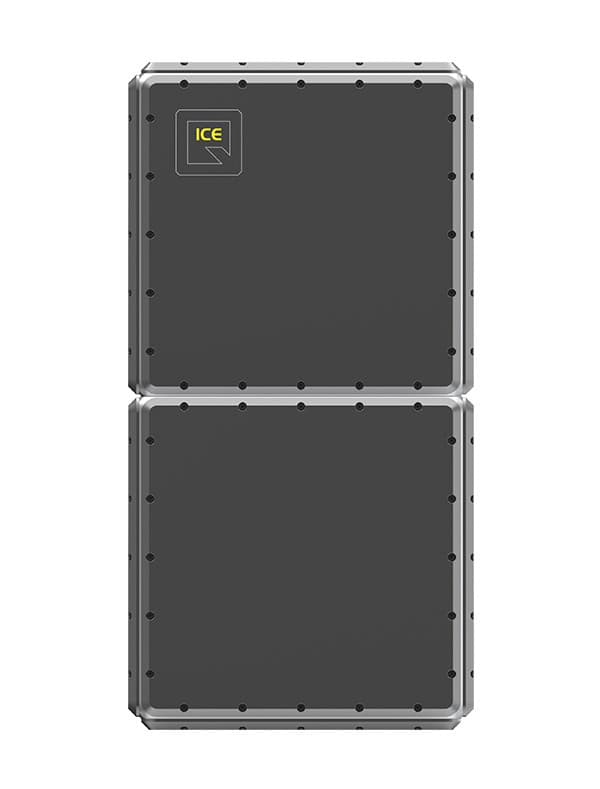
The cube-shaped form factor provides much improved access to these external connections, whether for designing and configuring the system or for ongoing maintenance work. The outer shell of each module consists of panels that are easily removed, offering a simple mechanism for bolting modules together or stacking them on top of each other to provide a fully scalable solution that grows with the qubit count.
The flexible design also offers a more practical solution for servicing or upgrading an installed system, since individual modules can be simply swapped over as and when needed. “For quantum computers running in an operational environment it is really important to minimize the downtime,” says Emma Yeatman, senior design engineer at ICEoxford. “With this design we can easily remove one of the modules for servicing, and replace it with another one to keep the system running for longer. For critical infrastructure devices, it is possible to have built-in redundancy that ensures uninterrupted operation in the event of a failure.”
Other features have been integrated into the platform to make it simple to operate, including a new software system for controlling and monitoring the ultracold environment. “Most of our cryostats have been designed for researchers who really want to get involved and adapt the system to meet their needs,” adds Yeatman. “This platform offers more options for people who want an out-of-the-box solution and who don’t want to get hands on with the cryogenics.”
Such a bold design choice was enabled in part by a collaborative research project with Canadian company Photonic Inc, funded jointly by the UK and Canada, that was focused on developing an efficient and reliable cryogenics platform for practical quantum computing. That R&D funding helped to reduce the risk of developing an entirely new technology platform that addresses many of the challenges that ICEoxford and its customers had experienced with traditional cryostats. “Quantum technologies typically need a lot of wiring, and access had become a real issue,” says Yeatman. “We knew there was an opportunity to do better.”
However, converting a large cylindrical cryostat into a slimline and modular form factor demanded some clever engineering solutions. Perhaps the most obvious was creating a frame that allows the modules to be bolted together while still remaining leak tight. Traditional cryostats are welded together to ensure a leak-proof seal, but for greater flexibility the ICEoxford team developed an assembly technique based on mechanical bonding.
The side-loading wiring module also presented a design challenge. To squeeze more wires into the available space, the team developed a high-density connector for the coaxial cables to plug into. An additional cold-head was also integrated into the module to pre-cool the cables, reducing the overall heat load generated by such large numbers of connections entering the ultracold environment.
Flexible for the future: the outer shell of the modules is covered with removable panels that make it easy to extend or reconfigure the system (Courtesy: ICEoxford)
Meanwhile, the speed of the cooldown and the efficiency of operation have been optimized by designing a new type of heat exchanger that is fabricated using a 3D printing process. “When warm gas is returned into the system, a certain amount of cooling power is needed just to compress and liquefy that gas,” explains Kelly. “We designed the heat exchangers to exploit the returning cold gas much more efficiently, which enables us to pre-cool the warm gas and use less energy for the liquefaction.”
The initial prototype has been designed to operate at 1 K, which is ideal for the photonics-based quantum systems being developed by ICEoxford’s research partner. But the modular nature of the platform allows it to be adapted to diverse applications, with a second project now underway with the Rutherford Appleton Lab to develop a module that that will be used at the forefront of the global hunt for dark matter.
Already on the development roadmap are modules that can sustain temperatures as low as 10 mK – which is typically needed for superconducting quantum computing – and a 4 K option for trapped-ion systems. “We already have products for each of those applications, but our aim was to create a modular platform that can be extended and developed to address the changing needs of quantum developers,” says Kelly.
As these different options come onstream, the ICEoxford team believes that it will become easier and quicker to deliver high-performance cryogenic systems that are tailored to the needs of each customer. “It normally takes between six and twelve months to build a complex cryogenics system,” says Graf. “With this modular design we will be able to keep some of the components on the shelf, which would allow us to reduce the lead time by several months.”
More generally, the modular and scalable platform could be a game-changer for commercial organizations that want to exploit quantum computing in their day-to-day operations, as well as for researchers who are pushing the boundaries of cryogenics design with increasingly demanding specifications. “This system introduces new avenues for hardware development that were previously constrained by the existing cryogenics infrastructure,” says Kelly. “The ICE-Q platform directly addresses the need for colder base temperatures, larger sample spaces, higher cooling powers, and increased connectivity, and ensures our clients can continue their aggressive scaling efforts without being bottlenecked by their cooling environment.”
You can find out more about the ICE-Q platform by contacting the ICEoxford team at iceoxford.com, or via email at sales@iceoxford.com. They will also be presenting the platform at the UK’s National Quantum Technologies Showcase in London on 7 November, with a further launch at the American Physical Society meeting in March 2026.
Due to government shutdown restrictions currently in place in the US, the researchers who headed up this study have not been able to comment on their work
Laser plasma acceleration (LPA) may be used to generate multi-gigaelectronvolt muon beams, according to physicists at the Lawrence Berkeley National Laboratory (LBNL) in the US. Their work might help in the development of ultracompact muon sources for applications such as muon tomography – which images the interior of large objects that are inaccessible to X-ray radiography.
Muons are charged subatomic particles that are produced in large quantities when cosmic rays collide with atoms 15–20 km high up in the atmosphere. Muons have the same properties as electrons but are around 200 times heavier. This means they can travel much further through solid structures than electrons. This property is exploited in muon tomography, which analyses how muons penetrate objects and then exploits this information to produce 3D images.
The technique is similar to X-ray tomography used in medical imaging, with the cosmic-ray radiation taking the place of artificially generated X-rays and muon trackers the place of X-ray detectors. Indeed, depending on their energy, muons can traverse metres of rock or other materials, making them ideal for imaging thick and large structures. As a result, the technique has been used to peer inside nuclear reactors, pyramids and volcanoes.
As many as 10,000 muons from cosmic rays reach each square metre of the Earth’s surface every minute. These naturally produced particles have unpredictable properties, however, and they also only come from the vertical direction. This fixed directionality means that can take months to accumulate enough data for tomography.
Another option is to use the large numbers of low-energy muons that can be produced in proton accelerator facilities by smashing a proton beam onto a fixed carbon target. However, these accelerators are large and expensive facilities, limiting their use in muon tomography.
A new compact source
Physicists led by Davide Terzani have now developed a new compact muon source based on LPA-generated electron beams. Such a source, if optimized, could be deployed in the field and could even produce muon beams in specific directions.
In LPA, an ultra-intense, ultra-short, and tightly focused laser pulse propagates into an “under-dense” gas. The pulse’s extremely high electric field ionizes the gas atoms, freeing the electrons from the nuclei, so generating a plasma. The ponderomotive force, or radiation pressure, of the intense laser pulse displaces these electrons and creates an electrostatic wave that produces accelerating fields orders of magnitude higher than what is possible in the traditional radio-frequency cavities used in conventional accelerators.
LPAs have all the advantages of an ultra-compact electron accelerator that allows for muon production in a small-size facility such as BeLLA, where Terzani and his colleagues work. Indeed, in their experiment, they succeeded in generating a 10 GeV electron beam in a 30 cm gas target for the first time.
The researchers collided this beam with a dense target, such as tungsten. This slows the beam down so that it emits Bremsstrahlung, or braking radiation, which interacts with the material, producing secondary products that include lepton–antilepton pairs, such as electron–positron and muon–antimuon pairs. Behind the converter target, there is also a short-lived burst of muons that propagates roughly along the same axis as the incoming electron beam. A thick concrete shielding then filters most of the secondary products, letting the majority of muons pass through it.
Crucially, Terzani and colleagues were able to separate the muon signal from the large background radiation – something that can be difficult to do because of the inherent inefficiency of the muon production process. This allowed them to identify two different muon populations coming from the accelerator. These were a collimated, forward directed population, generated by pair production; and a low-energy, isotropic, population generated by meson decay.
Many applications
Muons can ne used in a range of fields, from imaging to fundamental particle physics. As mentioned, muons from cosmic rays are currently used to inspect large and thick objects not accessible to regular X-ray radiography – a recent example of this is the discovery of a hidden chamber in Khufu’s Pyramid. They can also be used to image the core of a burning blast furnace or nuclear waste storage facilities.
While the new LPA-based technique cannot yet produce muon fluxes suitable for particle physics experiments – to replace a muon injector, for example – it could offer the accelerator community a convenient way to test and develop essential elements towards making a future muon collider.
The experiment in this study, which is detailed in Physical Review Accelerators and Beams, focused on detecting the passage of muons, unequivocally proving their signature. The researchers conclude that they now have a much better understanding of the source of these muons.
Unfortunately, the original programme that funded this research has ended, so future studies are limited at the moment. Not to be disheartened, the researchers say they strongly believe in the potential of LPA-generated muons and are working on resuming some of their experiments. For example, they aim to measure the flux and the spectrum of the resulting muon beam using completely different detection techniques based on ultra-fast particle trackers, for example.
The LBNL team also wants to explore different applications, such as imaging deep ore deposits – something that will be quite challenging because it poses strict limitations on the minimum muon energy required to penetrate soil. Therefore, they are looking into how to increase the muon energy of their source.
Que vaut le kit de 2 caméras SoloCam E42 de eufy ?
Vous le savez chez Vonguru, on adore tout ce qui est domotique et chez eufy, on a toujours le choix de ce côté-là ! Aujourd’hui, c’est la sécurité qui est mise en avant avec le nouveau kit de 2 caméras SoloCam E42 ! Au programme de cette nouveauté, résolution 4K UHD, Protection 360° sans angles morts, détection IA et suivi intelligent !
Voyons ensemble ce que vaut ce nouveau kit, muni de sa HomeBase 3. Vous retrouverez ce kit au prix de 479 € hors promotion directement sur le site de la marque ou bien sur Amazon. Place au test !
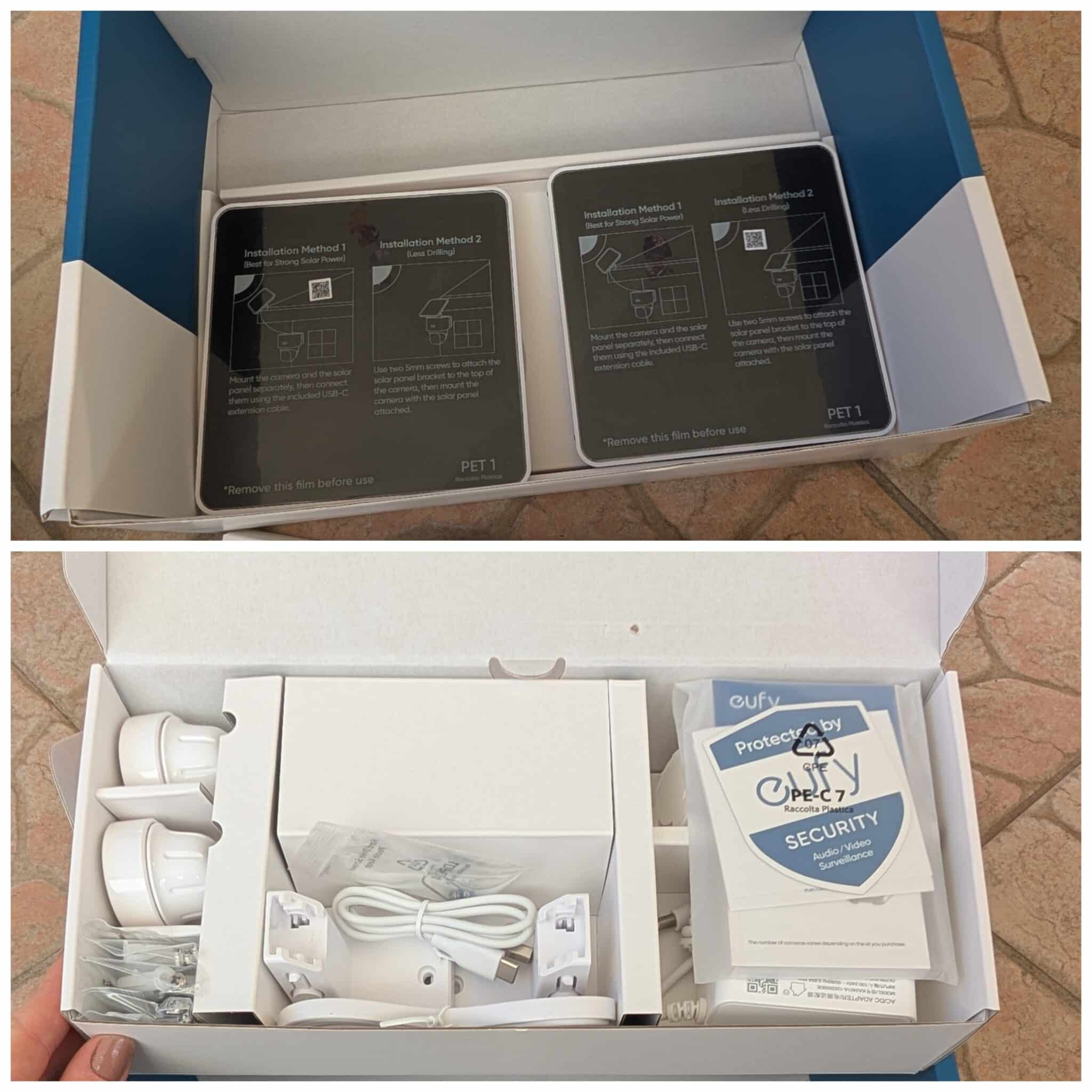
Unboxing
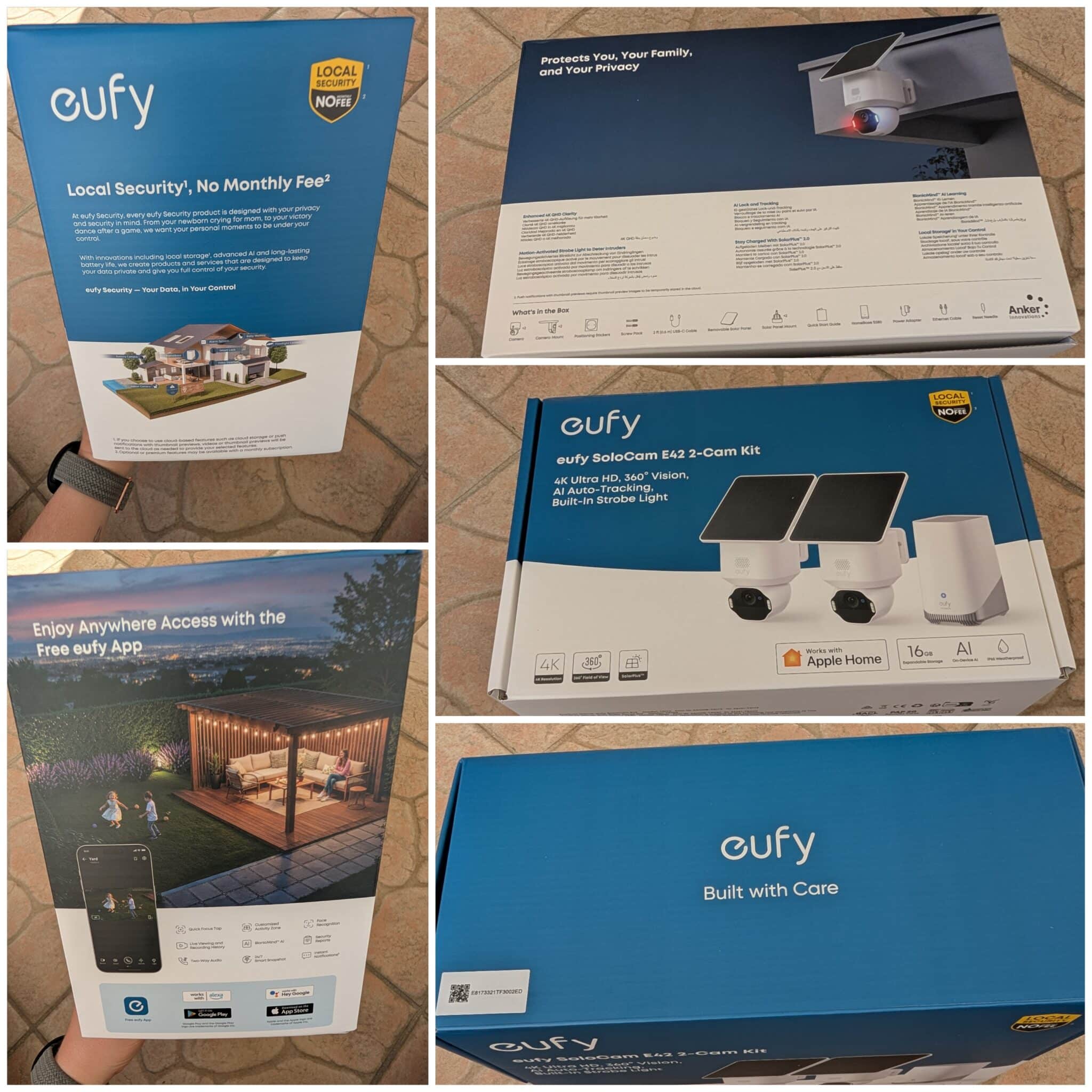
On retrouvera les couleurs bleu et blanche bien caractéristiques de la marque, avec sur la face avant un rappel de la marque ainsi que du nom du modèle, ici eufy SoloCam E42 2-Cam Kit ainsi que quelques arguments marketings sous formes de listes mais aussi avec quelques pictogrammes. On retrouvera également en visuel deux caméras aux côtés de leur HomeBase.
À gauche, on nous parlera en détails de l’absence d’abonnement et de la sécurisation en local de vos données, chose que nous apprécions beaucoup avec eufy, tandis qu’à droite, nous aurons cette fois un visuel d’un extérieur surveillé par la caméra, quelques fonctionnalités listées en anglais et un rappel de l’application, eufySecurity, à télécharger.
Caractéristiques techniques
Usages recommandés pour le produit
Sécurité extérieure
Marque
eufy Security
Nom de modèle
Solo Cam E42
Technologie de connectivité
Sans fil
Utilisation intérieure/extérieure
Extérieure
Protocole de connectivité
WLAN
Type de fixation
Installation murale
Résolution d’enregistrement vidéo
4k
Couleur
Blanc
Nombre d’articles
2
Fonctionnalités
Netteté ultime – avec sa véritable résolution 4K UHD, cette caméra ne passe à côté d’aucun détail. Elle peut même reconnaître une plaque d’immatriculation jusqu’à 10 m de distance.
Détection IA et suivi intelligent – l’IA intégrée détecte instantanément les mouvements et suit automatiquement les personnes, les véhicules, ou les événements importants qui se déroulent à portée de vue. Les fausses alarmes sont minimisées, et votre propriété est sécurisée.
Protection 360° sans angles morts – l’angle de vue large fournit une couverture complète, minimise les angles morts et vous permet de garder un œil sur votre palier, votre entrée ou votre jardin.
Sirène détection de mouvement – protégez votre domicile grâce au stroboscope puissant et déclenché par le mouvement, qui effraie les visiteurs indésirables et vous informe en instantané de tous les comportements inhabituels.
Sécurité assurée avec la technologie SolarPlus 2.0 – deux heures d’ensoleillement direct suffisent pour que votre caméra fonctionne toute la journée. Une utilisation en continu, sans entretien, et dans toutes les conditions météorologiques.
Sans frais mensuels – insérez une carte microSD de 128 GB pour stocker vos images de manière confidentielles et éviter les frais d’inscription. Attention : carte microSD non incluse.
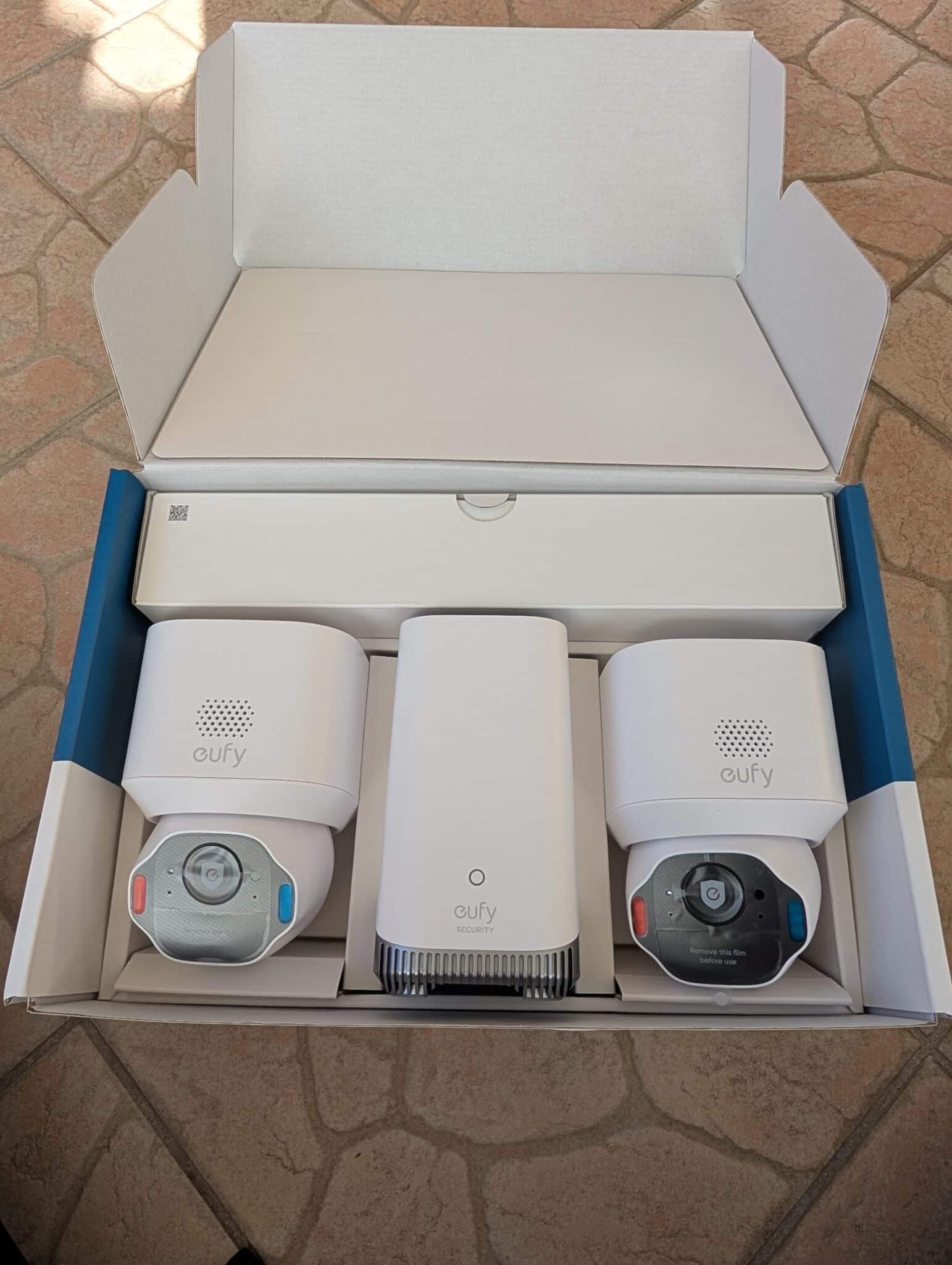
Contenu
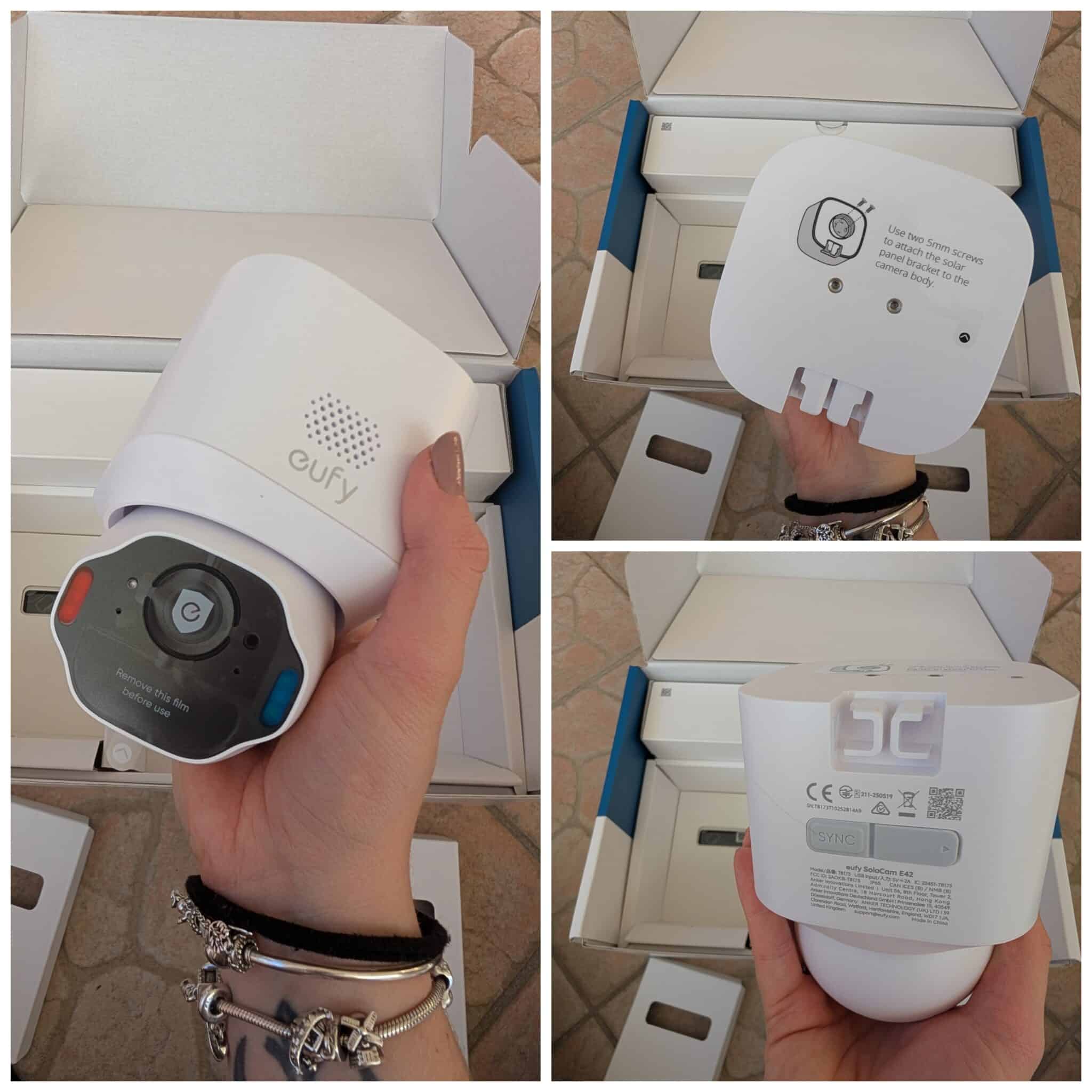
Deux caméras de surveillance sans fil avec panneaux solaires.
Deux supports de montage ajustables.
Visserie pour fixation murale.
Câbles pour le chargement initial.
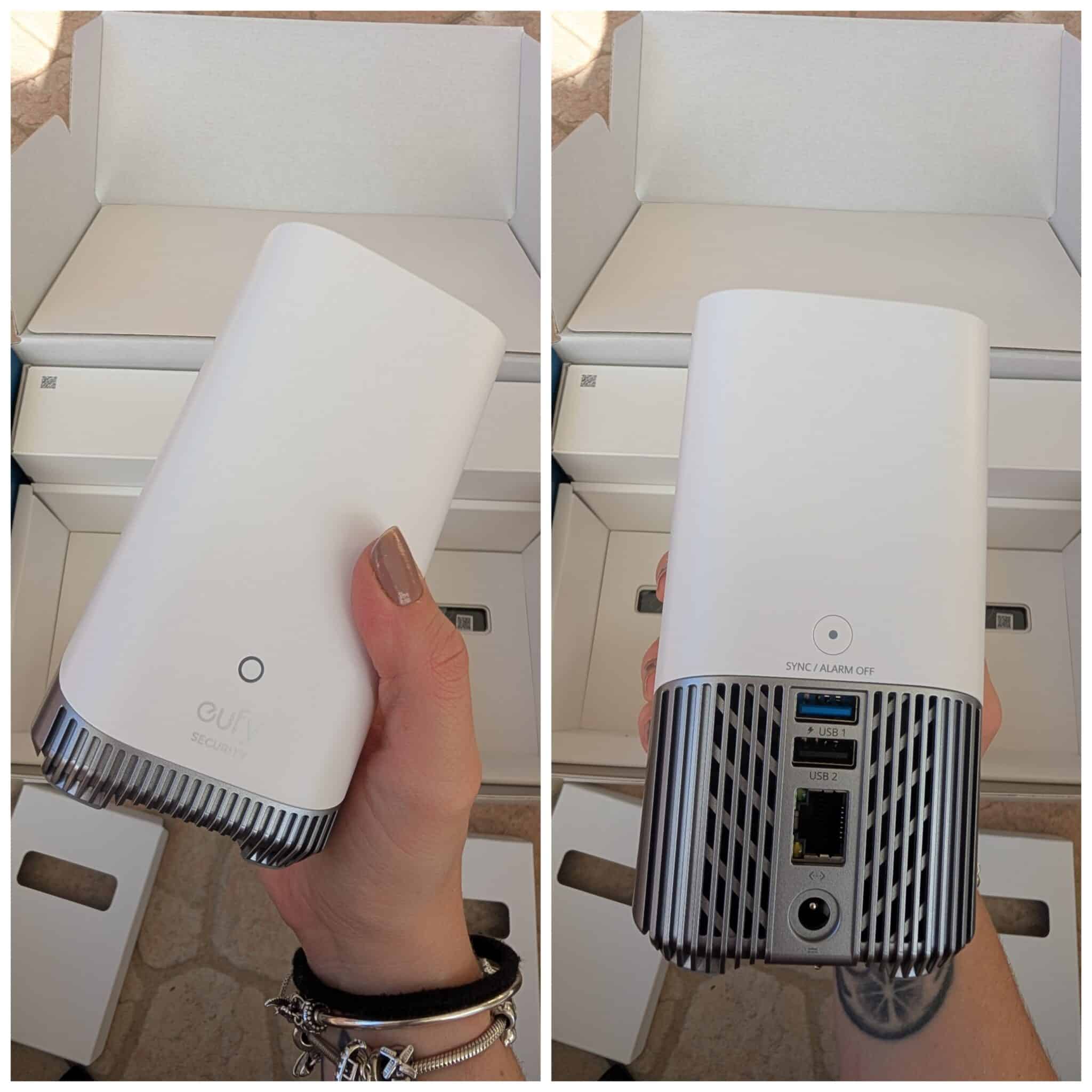
HomeBase 3
Fiches secteurs selon région pour le branchement de la HomeBase
Câble de raccordement pour la HomeBase
Des stickers
Installation
Commençons par parler de l’installation, aussi bien hardware que software, qui dans les deux cas n’a plus vraiment de secret pour nous. On rappellera cependant de BIEN vérifier la porter de son Wi-Fi AVANT de percer son mur car oui, il vous faudra percer
Préparation :
Chargez les caméras via USB-C.
Choisissez un emplacement extérieur dégagé, à 2–3 m de hauteur, bien exposé au soleil si vous utilisez les panneaux solaires intégrés.
Fixation :
Montez les caméras avec les supports fournis.
Orientez-les légèrement vers le bas pour une meilleure couverture et moins de fausses alertes.
Connexion Wi-Fi :
Installez l’application Eufy Security et créez un compte si vous n’en avez pas encore un.
Ajoutez les caméras : appuyez sur le bouton SYNC, scannez le QR code via l’application et connectez-les au Wi-Fi 2,4 GHz.
Paramètres dans l’application :
Renommez chaque caméra.
Configurez zones de détection et notifications (personnes, véhicules, animaux).
Choisissez la résolution et le stockage (microSD).
Tests :
Vérifiez le flux en direct, la détection de mouvement et la vision nocturne.
Test & Application
Lorsqu’on pense « sécurité extérieure » sans prise de tête, on cherche : une image nette, des alertes fiables, pas d’abonnement, et une installation qui ne transforme pas votre mur en chantier, que vous soyez propriétaire ou locataire. Le kit 2 caméras SoloCam E42 de eufy coche à première vue beaucoup de ces cases : résolution 4K, alimentation solaire/batterie, detection IA, et hub inclus (HomeBase S380) pour aller plus loin. Je suis déjà munie de caméras intérieures et extérieures de eufy, et j’avais très hâte de tester ces nouveaux modèles.
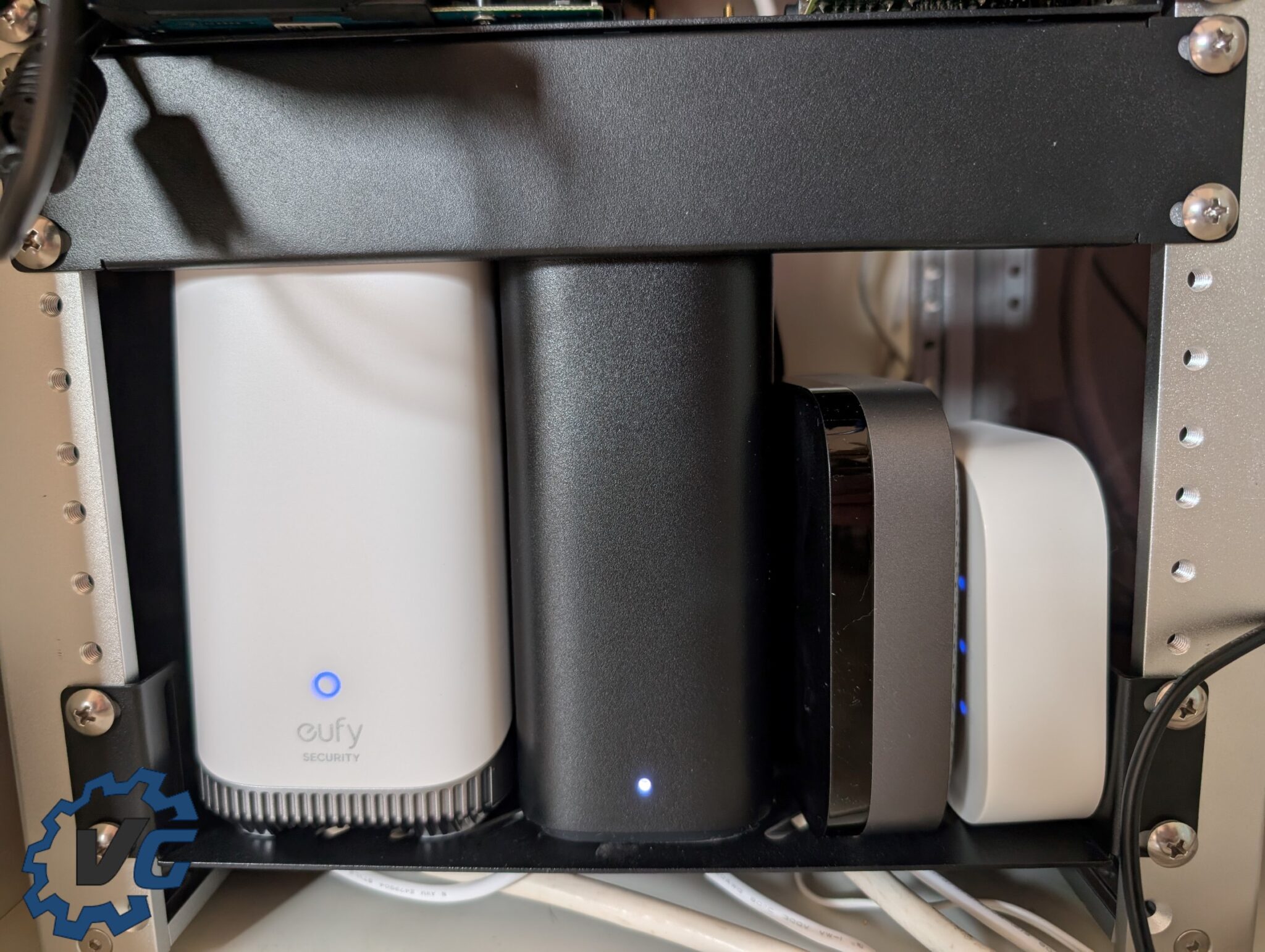
D’ailleurs, ayant déjà d’une HomeBase, cette dernière se trouve toujours dans mon Rack Server, bien au chaud aux côtés des copains.
L’installation, c’est vu. Parlons donc de tout le reste. Côté image, Eufy ne déçoit pas. Le capteur 4K de la SoloCam E42 offre un rendu vraiment très bon, aussi bien de jour que de nuit. Les détails sont précis, les couleurs équilibrées, et la compression ne dégrade pas la qualité du flux, même sur un réseau Wi-Fi standard. La vision nocturne en couleur est également au rendez-vous, grâce à un projecteur LED intégré. La caméra bascule automatiquement entre vision IR et couleur selon la luminosité, garantissant une visibilité constante.
Eufy intègre ici une détection intelligente de mouvement qui distingue les personnes, véhicules et animaux. Fini les notifications inutiles dès qu’une feuille bouge ou qu’un insecte passe devant la lentille. La précision est excellente, surtout pour une caméra sans station de base. Les alertes arrivent rapidement sur smartphone, accompagnées d’une courte vidéo enregistrée en local sur carte microSD (jusqu’à 128 Go). Et surtout : aucun abonnement n’est nécessaire. Tout est stocké et géré en interne.
Autre bonne surprise : la communication bidirectionnelle. Depuis l’application, on peut parler directement via le haut-parleur de la caméra. Pratique pour répondre à un livreur ou dissuader un intrus. La E42 embarque aussi une sirène et un flash lumineux, activables automatiquement ou manuellement. Un combo efficace pour faire fuir quiconque s’approcherait un peu trop près.
Le grand atout de la SoloCam E42, c’est son autonomie. En usage normal, la batterie tient plusieurs mois, et le panneau solaire intégré assure une recharge continue. En pratique, même par temps couvert, la caméra maintient un niveau de batterie stable. Pour ceux qui n’aiment pas grimper à l’échelle tous les trois mois, c’est un vrai luxe. Pour vous dire, mon kit 4 caméras S330 n’a JAMAIS eu besoin d’être rechargé. Les panneaux font le boulot tout le temps.
Après quelques jours d’utilisation, on oublie la présence du système. Les notifications sont pertinentes, le flux vidéo rapide, et l’application parfaitement fluide. Eufy a trouvé un excellent équilibre ici entre ergonomie, performance et tranquillité d’esprit. On regrettera cependant que ces nouvelles caméras ne filment pas en dôme, ce que l’on espère voir apparaître chez eufy dans les mois à venir avec de nouveaux modèles, car c’est bien là la seule fonctionnalité qui manque à ses caméras haut de gamme.
J’aime également que les caméras intègrent directement les panneaux comme sur d’autres modèles de la marque déjà testé, mais pour abriter tout ce condensé de technologie, il faut plus d’autonomie je présume, d’où la présence d’un panneau plus grand. Cela permet également de positionner ledit panneau à un autre endroit si l’emplacement choisi est peu exposé au soleil. C’est donc à vous de voir ce que vous préférez selon vos besoins et vos envies esthétiques.
Conclusion
Le kit de 2 caméras SoloCam E42 de Eufy coche toutes les cases : image 4K, autonomie solaire, installation en quelques minutes et stockage local sécurisé. C’est une solution idéale pour ceux qui veulent protéger leur maison sans s’encombrer d’un système complexe. Au vu de sa rotation à 360, on apprécie une installation par exemple sur un poteau, afin de l’utiliser pleinement.
En clair, ce kit de caméra fonctionne vraiment très bien, autonome et discret, qui fait exactement ce qu’on attend de lui, sans surcoût avec une installation somme toute facile et une app bien rôdée. Cependant, le prix est tout de même élevé. 479 € hors promotion directement sur le site de la marque ou bien sur Amazon, ce n’est pas à la porter de toutes les bourses.
Test de la montre connectée Withings ScanWatch 2 2025
Nous vous en avions parlé lors de son annonce par la marque, la ScanWatch 2 2025 est maintenant disponible en boutique. Il s’agit pour rappel, d’une montre connectée hybride et dotée d’une autonomie de 30 jours. Ce modèle, grâce à son application permet aussi un suivi du cycle menstruel, sans parler des divers relevés permettant de vérifier la bonne santé de notre cœur, le nombre de pas que l’on marche chaque jour, la température corporelle ou bien de suivre un score de qualité du sommeil.
La ScanWatch 2 2025 est disponible dès à présent au tarif de 349,45 €.
Bref, que vaut cette nouvelle ScanWatch au quotidien ? Réponse dans ce test !
Déballage
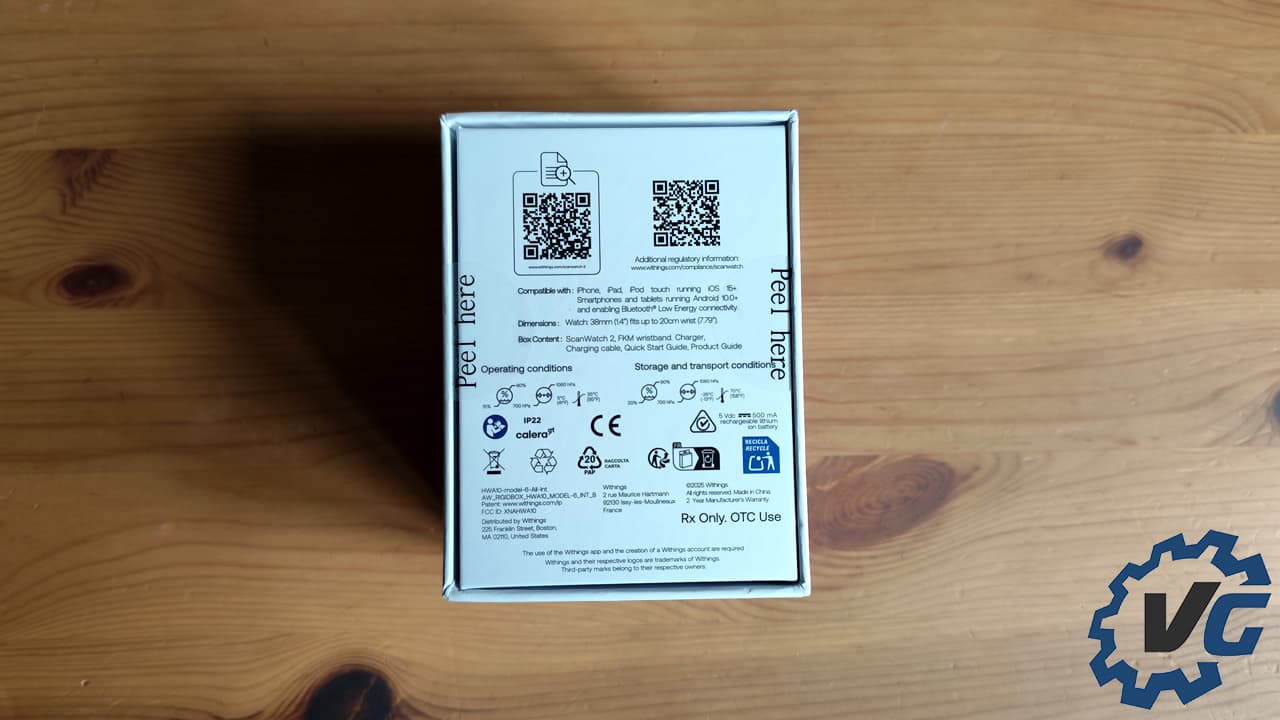
La ScanWatch 2 2025 arrive dans une boîte blanche avec la montre de représentée dessus. Il s’agit d’une boîte identique à la ScanWatch 2 sortie en 2023. À l’arrière, nous retrouvons quelques informations complémentaires sur sa compatibilité (iphone, ipad, smartphones avec Android 10 au minimum). Nous avons aussi le droit à diverses informations techniques ainsi que celles de recyclage. Sur les côtés, la marque met en avant son application Withings App.
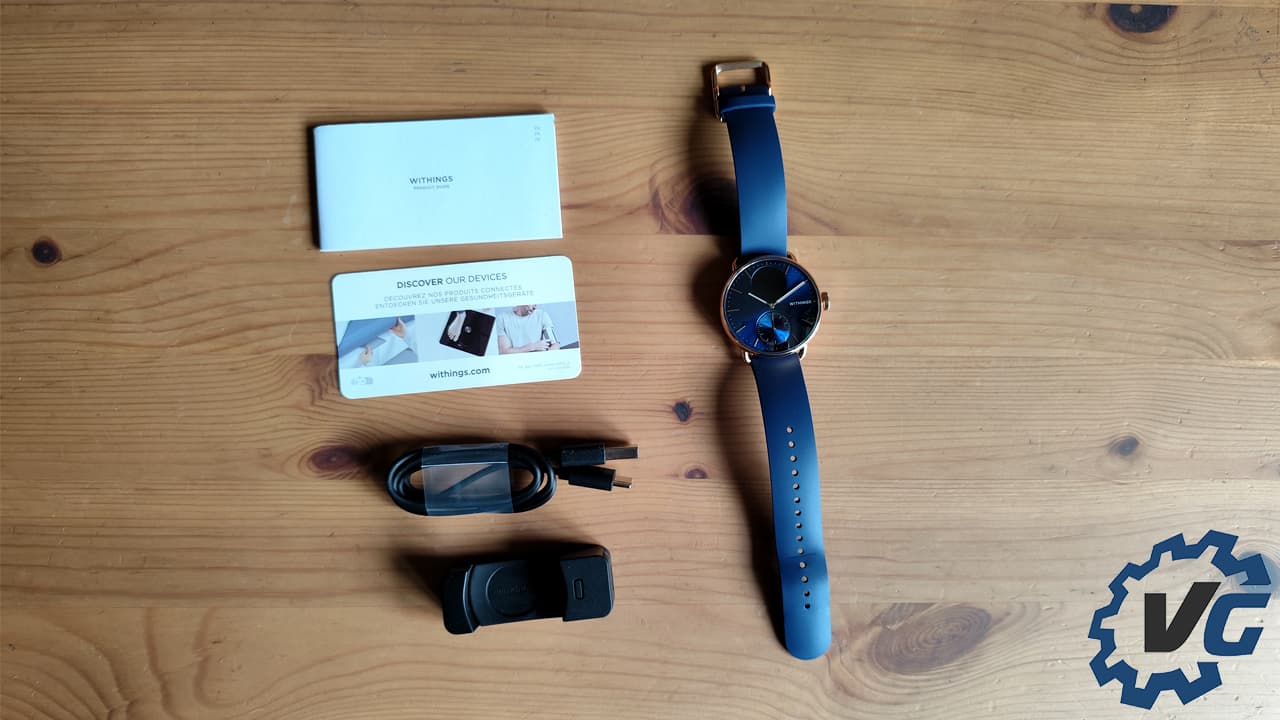
Dès que l’on ouvre cette petite boîte, nous découvrons la montre installée sur une base en carton. On la retrouve aux côtés de :
un socle de chargement
et son câble USB-C vers USB-A
un guide d’installation
une carte promotionnelle des produits Withings
Spécifications techniques
Test
Mise en route
Pour utiliser la ScanWatch 2 2025 pour la première fois, c’est relativement rapide et facile. Il faudra en effet installer la montre sur votre poignet et au préalable télécharger l’application de Withings (la même que pour les autres produits de la marque). On pensera bien entendu à mettre son smartphone en Bluetooth et à activer la localisation puis on lancera l’application de la marque. Grâce au bouton disponible tout en haut à droite de l’application, il sera possible d’installer la montre. En moins de 5 minutes, tout est prêt à l’emploi !
Le plus « dur » en soit sera de mettre la bonne heure sur la montre, si elle n’est pas parfaitement mise par défaut. Il faudra alors tourner les aiguilles sur l’application pour la mettre à l’heure en direct, mais cela reste un détail.
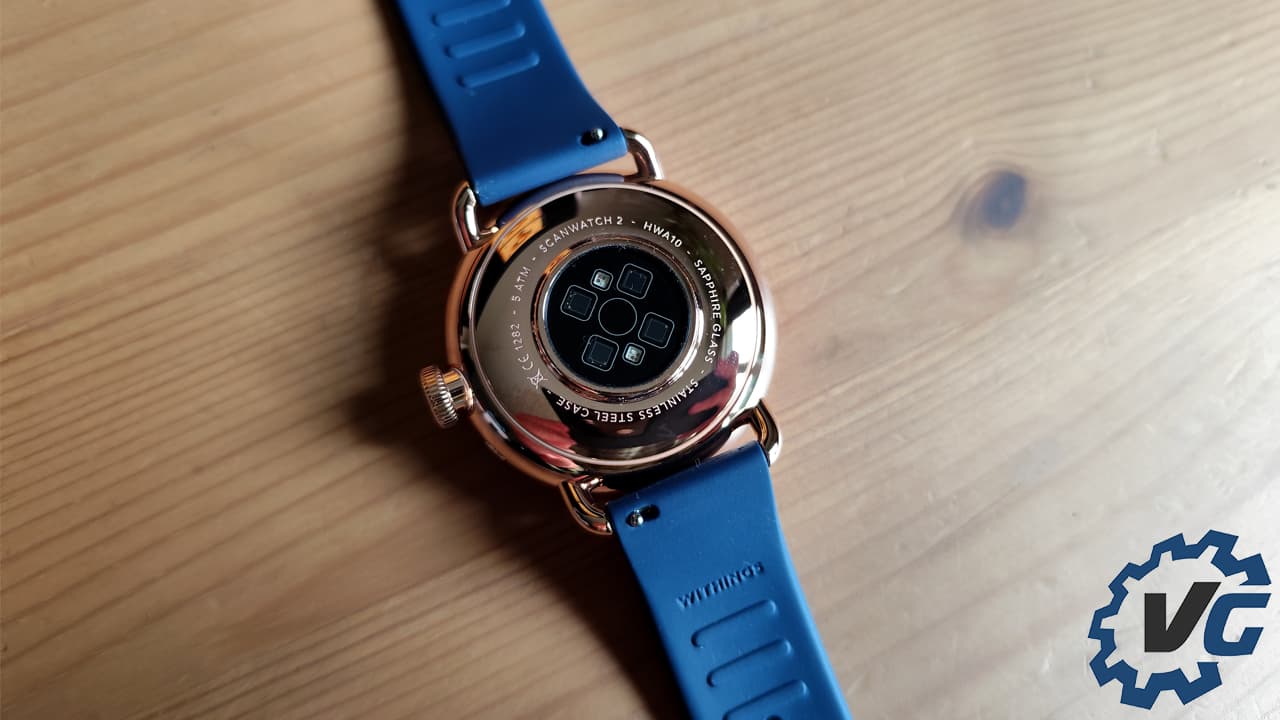
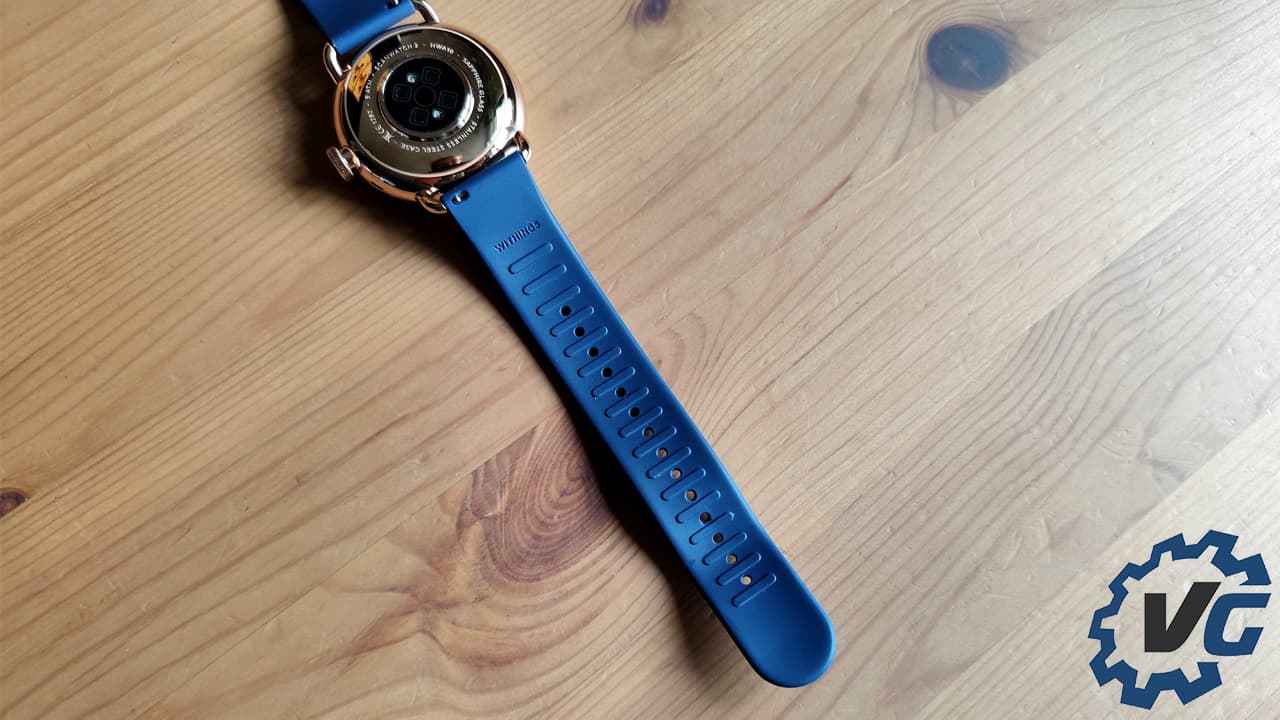
Petit point négatif concernant la montre en sortie de boîte. Effectivement, le bracelet était un peu marqué par l’emballage. Néanmoins, cette marque s’atténue au bout de quelques jours de portage mais reste encore légèrement visible après 10 jours au poignet. C’est un peu dommage pour le coup.
Utilisation quotidienne
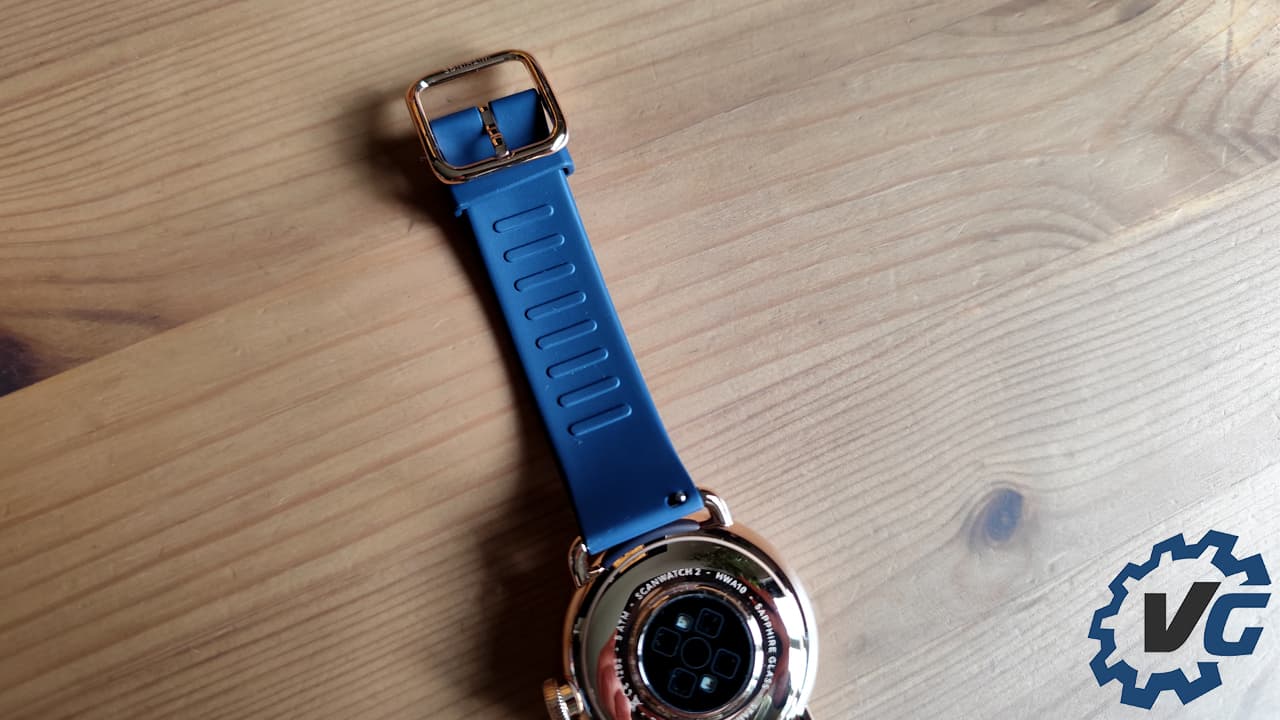
Au quotidien, la ScanWatch 2 2025 est assez confortable à utiliser et à porter. Néanmoins, le bracelet aura tendance à marquer un peu la peau. Et si je le desserre, ne serait-ce qu’un peu, il ne sera plus assez serré pour moi. Il faudra donc peut-être envisager un bracelet dans une autre matière pour la vie courante. Par contre, c’est aussi ce qui permet à la montre connectée de supporter l’immersion… Donc à voir selon votre utilisation quotidienne, si vous souhaitez la garder pendant la douche, à la piscine, ou non.
À l’usage, j’ai remarqué que ce modèle avait tendance à irriter ma peau, contrairement à la ScanWatch première du nom. En effet, si je la porte pendant plusieurs jours d’affilés, sans la retirer, je me retrouve avec des rougeurs et irritations sur le poignet (en dessous du cadran et aussi au niveau du bracelet silicone). C’est un point qui me fait penser qu’il faudra sûrement opter pour un bracelet cuir peut-être si vous êtes également concerné par ce soucis.
Sur ce modèle, contrairement aux montres et bracelets Fitbit par exemple, l’écran restera bien visible en extérieur ! Et ce, peut importe l’ensoleillement.
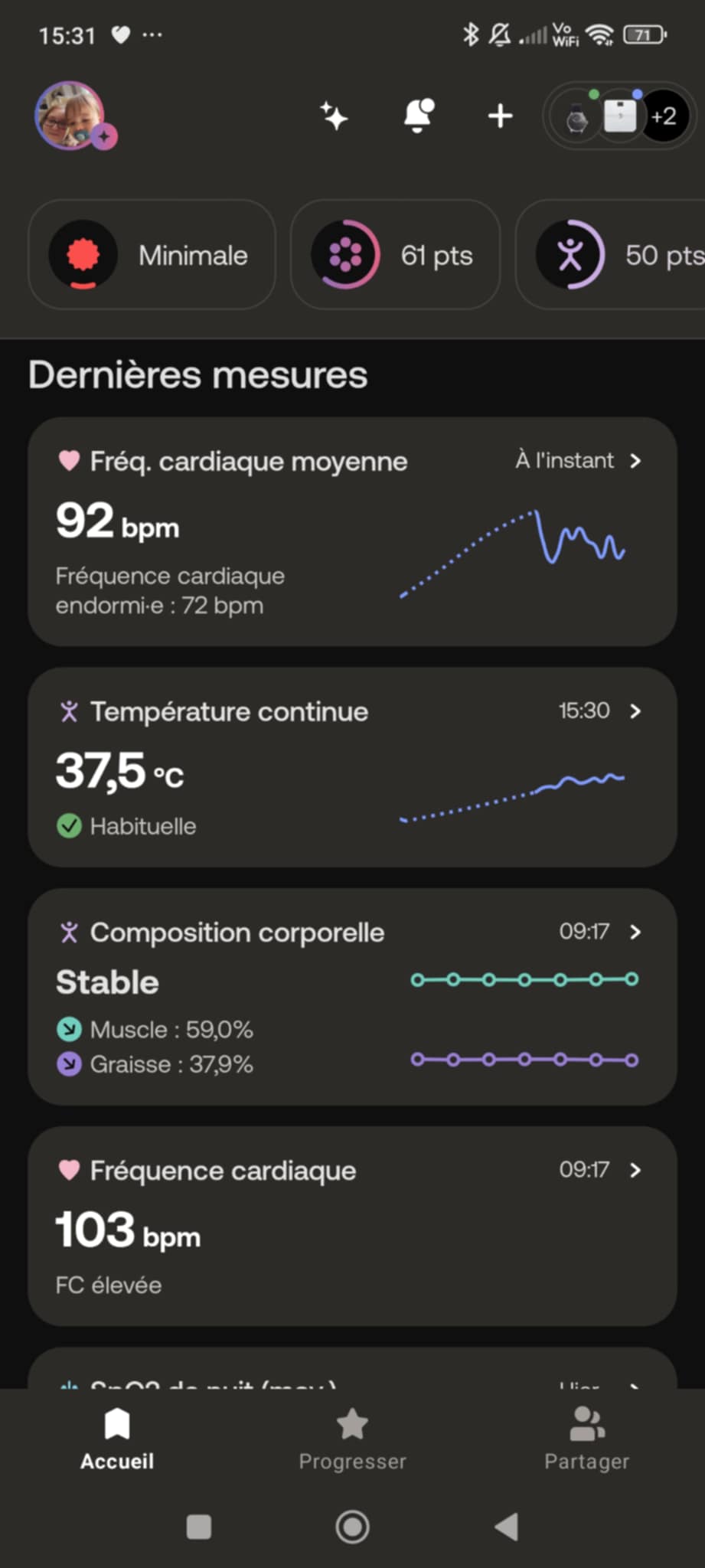
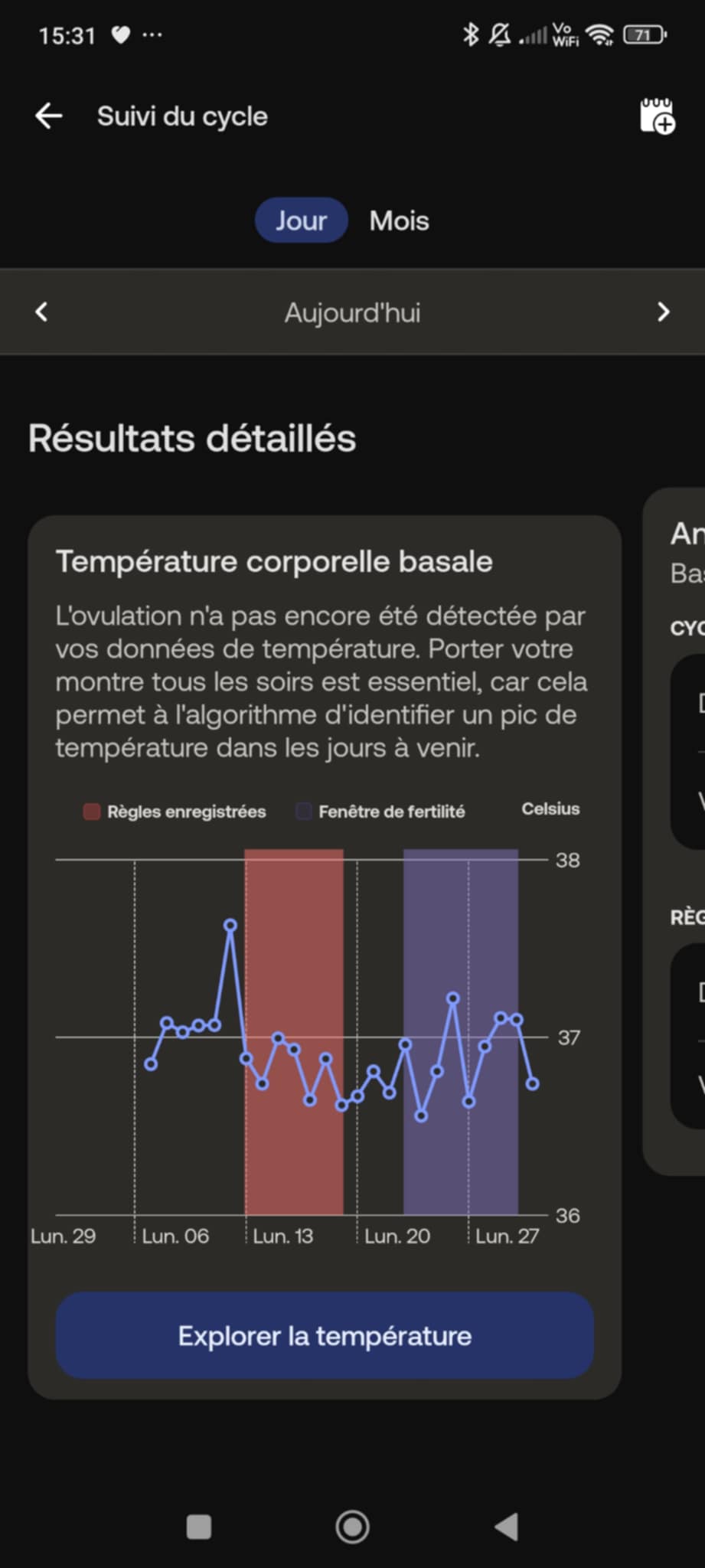
Sinon, la ScanWatch 2 2025 est dotée d’un bon nombre de fonctionnalités intéressantespour suivre sa santé de manière générale. On pourra notamment vérifier comme je disais plus haut, le nombre de pas faits par jour, le rythme cardiaque mais on pourra aussi faire un électrocardiogramme ou encore vérifier ses perturbations respiratoires pendant le sommeil ou la quantité d’oxygène dans le sang. Dans le même ordre d’idées, nous avons un relevé de notre température disponible dans l’application. Une température de « base » est analysée par la montre, elle pourra ensuite vous dire si vous situez en dessous de cette moyenne ou bien au dessus.
Il s’agit d’un excellent allier pour faire attention à sa santé, surtout dans notre ère moderne où le télétravail a été beaucoup généralisé. Toutefois, il faudra quand même faire attention aux données relevées par la ScanWatch 2 2025 et ne pas hésiter à aller consulter un médecin en cas de doute. La technologie peut être défaillante, alors faites bien attention à vous.
Avec son application, la marque propose aussi un suivi du cycle menstruel. C’est une option très intéressante pour les personnes qui n’ont pas spécialement d’appli pour leur suivi. D’autant plus que Withings propose actuellement une offre pour bénéficier de l’application Clue pendant un an. À titre personnel, c’est une application que j’utilise depuis des années, je trouve cela plutôt chouette. Du côté de Withings, nous pourrons aussi noter nos périodes menstruelles, nos symptômes directement sur l’application. En plus de cela, directement sur la montre (en utilisant la molette), il sera possible de noter quelques informations sur notre cycle. C’est rapide et pratique si l’on a pas le temps d’ouvrir l’appli.
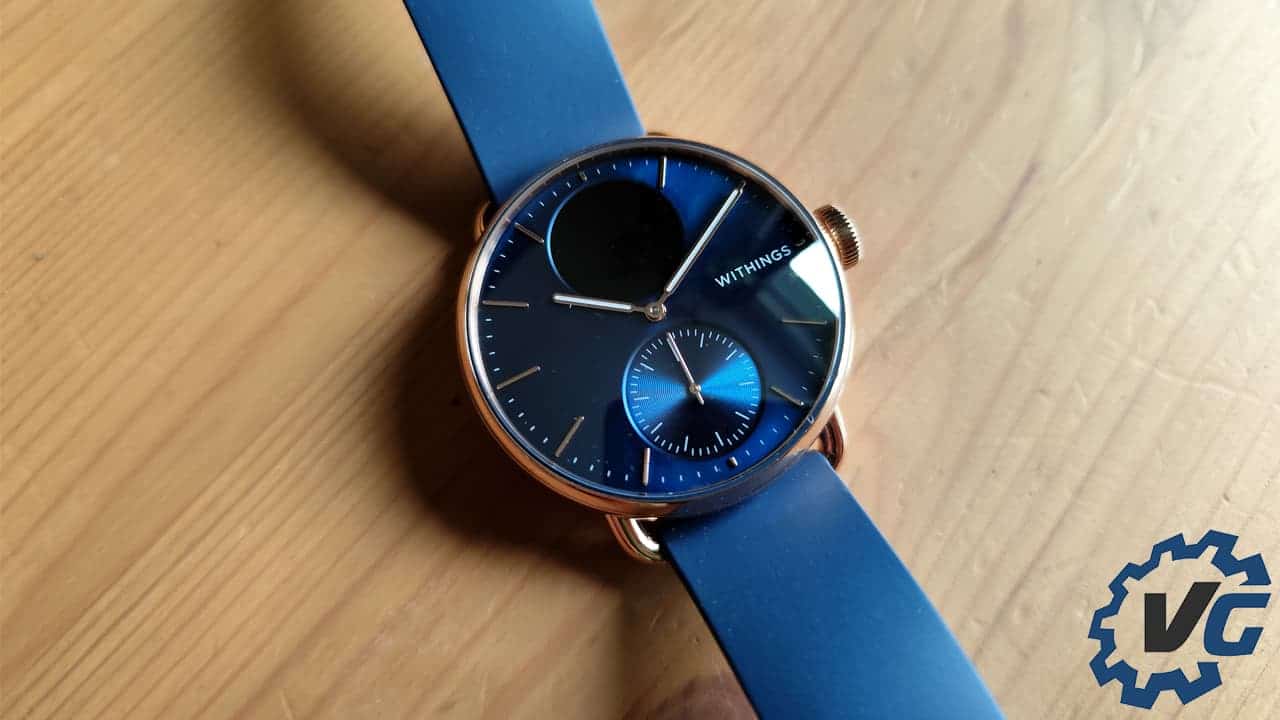
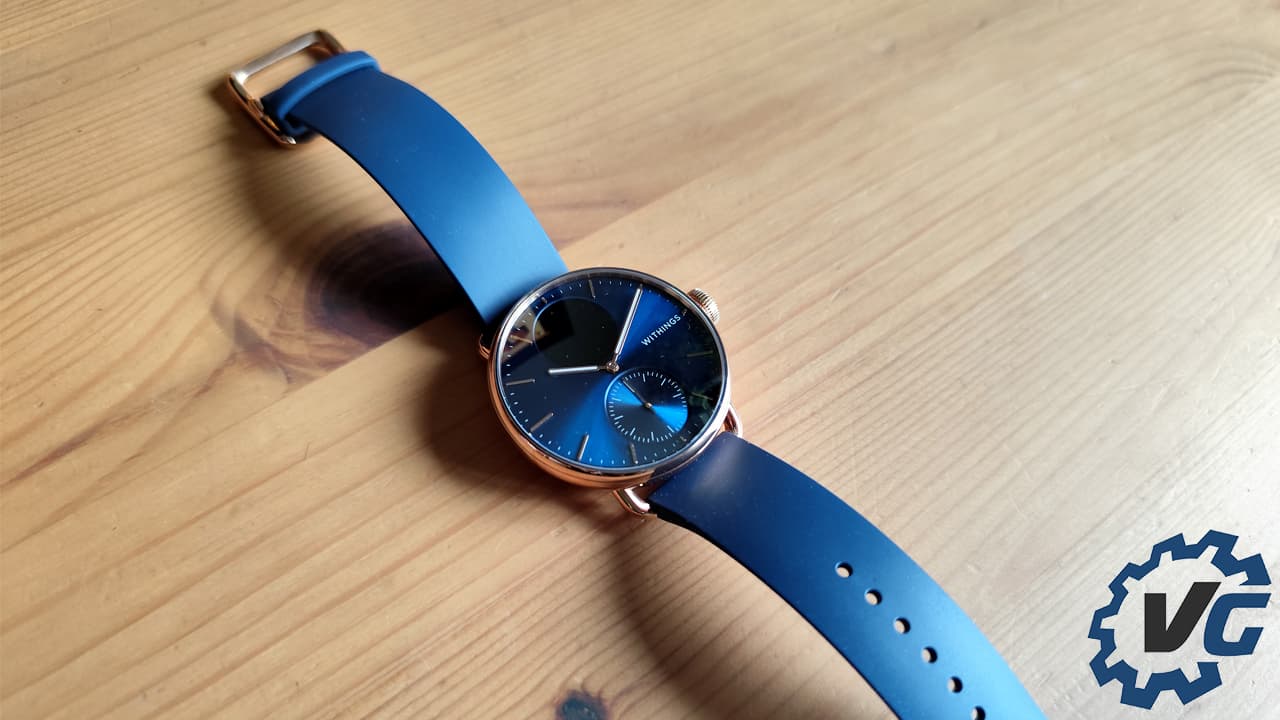
Esthétiquement parlant, la montre connectée de Withings est très élégante. On est loin de l’aspect sportif des montres Fitbit. Ici, notre exemplaire du jour possède des couleurs bleues foncées et un joli cadran couleur or rose. Sans parler de son cadran avec aiguilles qui donne un aspect haut de gamme non négligeable.
En plus de cela, si l’envie vous prends, de nombreux autres bracelets sont disponibles sur le site de la marque. Vous permettant ainsi de changer de couleur au gré de vos envies. Néanmoins, ils ne sont pas donnés puisqu’ils se trouvent entre 19,95 € pour les plus « simples » et 49,95 € pour d’autres (ceux en cuir notamment). Ceci dit, la marque Fitbit, ne les vend pas beaucoup moins chers de son côté !
Autonomie et recharge
Utilisant les montres Withings depuis plusieurs années maintenant, je peux vous assurer que la batterie d’un mois tient ses promesses. C’est vraiment top, on ne passe pas son temps à recharger sa montre.
Application
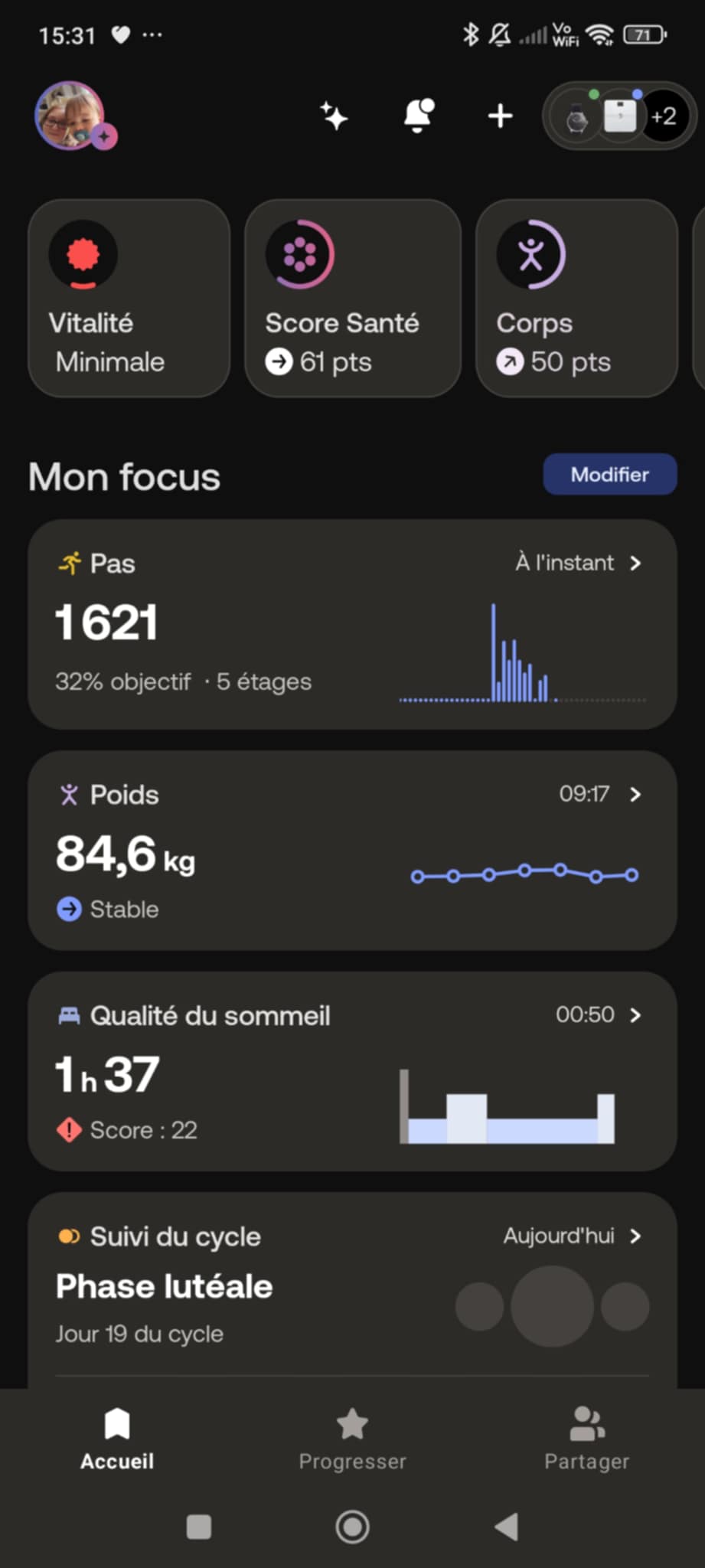
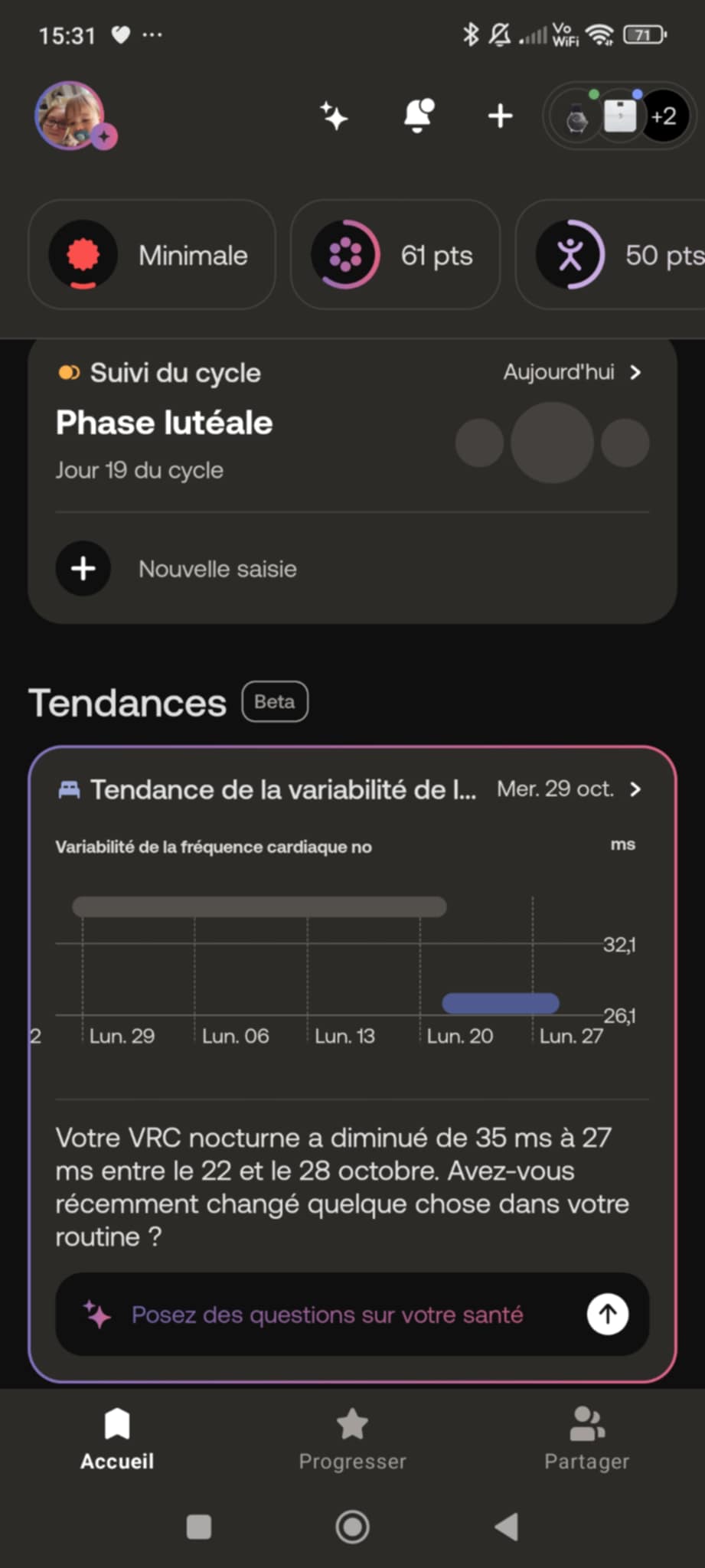
L’application de Withings est vraiment complète et intuitive. Par défaut, au démarrage, nous nous retrouverons sur notre accueil répertoriant la plupart des données relevées et nous donnant accès à des notifications. Nous avons notamment le nombre de pas relevés, notre temps de sommeil, fréquence cardiaque moyenne, poids etc. De quoi tout vérifier en peu de temps !
Suivi du cycle
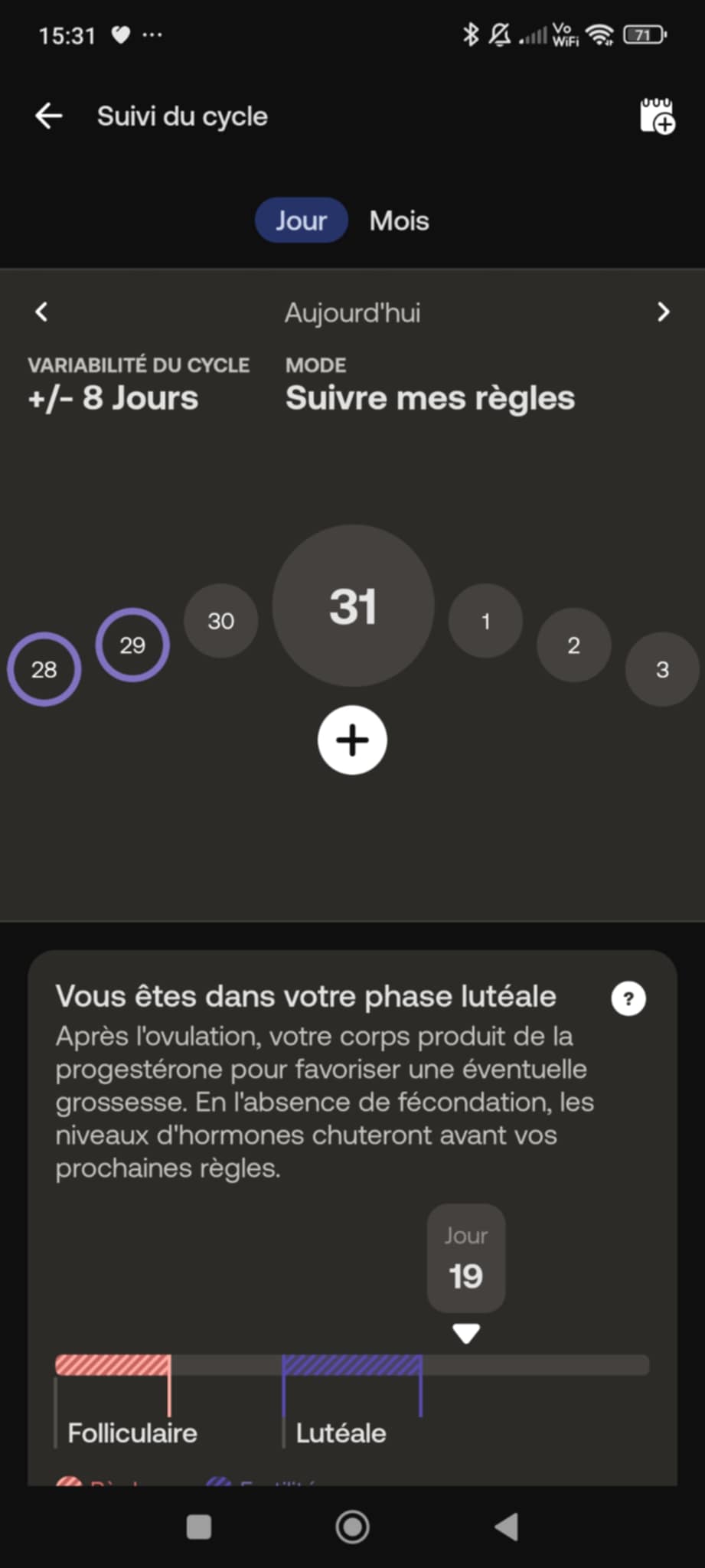
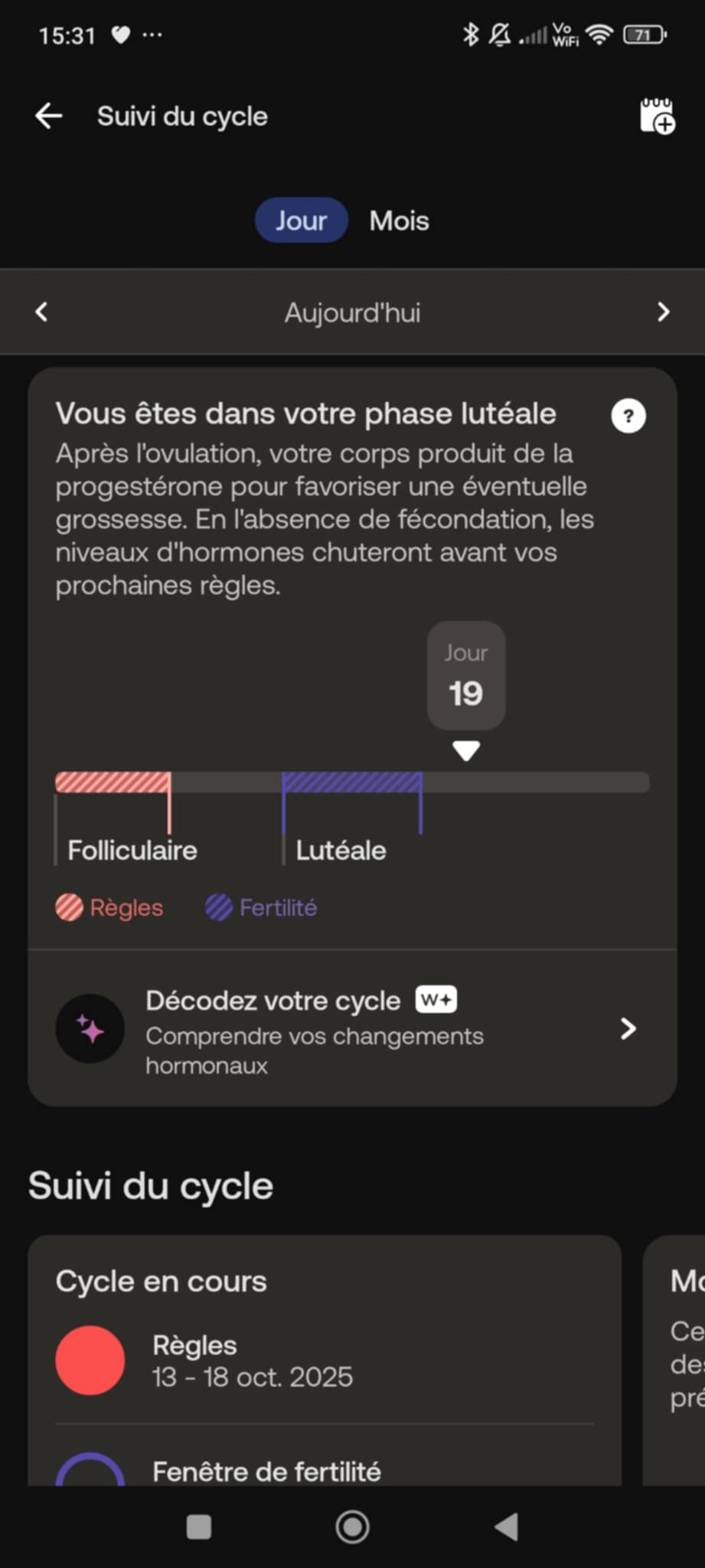
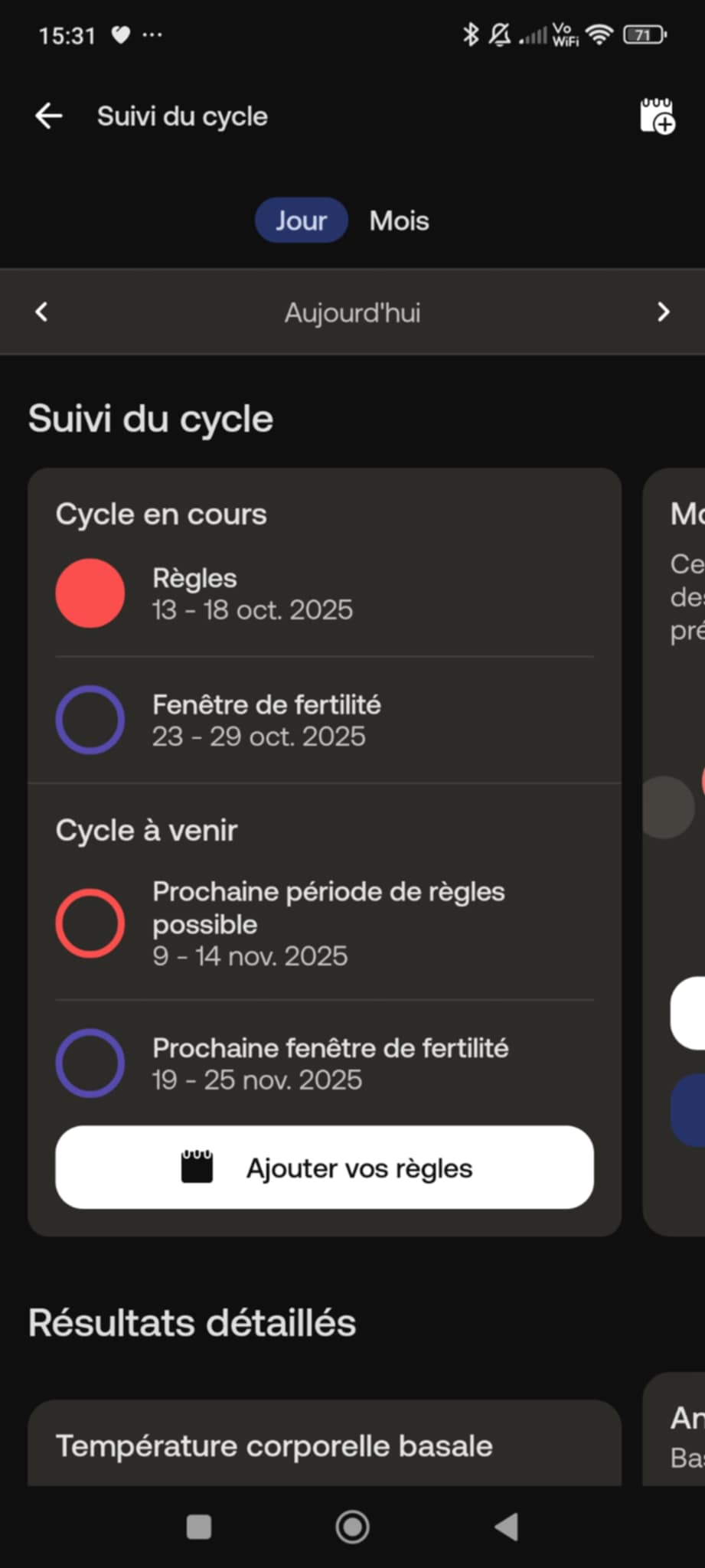
Dans la partie suivi du cycle, il nous sera possible de suivre nos règles, de les ajouter, d’ajouter aussi différents symptômes que l’on pourrait ressentir grâce au petit « + ». L’appli nous indique aussi notre phase (folliculaire, ovulation, lutéale), la fenêtre de fertilité et les dates de nos potentielles prochaines règles. De plus, en se basant sur notre température corporelle, l’application est censée pouvoir détecter notre ovulation.
Progresser et partager
Dans progresser, Withings nous donne des programmes et astuces pour améliorer notre santé. Tandis que la partie « partager » concerne plutôt le suivi de la santé et le partage à nos médecins entre autre.
Conclusion
Au final, nous retrouvons une nouvelle fois une montre connectée pleine de fonctionnalités, qui nous rappellera notamment celles disponibles dans les bracelets/montres de la marque Fitbit. Elle est agréable à porter au quotidien et apportera une dose d’élégance non négligeable à votre poignet, n’étant pas du tout typé sport. Attention toutefois aux peaux sensibles qui pourront être irritées par les matériaux de cette dernière. Dans ce cas, il faudra peut-être envisager l’achat d’un bracelet en matière naturelle, type cuir.
Sinon, ce modèle bénéficie d’une grande autonomie de 1 mois. C’est une autonomie qui est ultra satisfaisante, nous n’avons pas l’impression de la recharger toutes les trente secondes.
On regrettera toutefois, à la sortie de la boîte, avoir constaté que le bracelet de notre montre était marqué. Bien que cela s’estompe petit à petit mais reste tout de même visible pendant une quinzaine de jours.
Malheureusement, c’est un constat que l’on fait à chaque fois, les accessoires pour la ScanWatch 2 2025 ne sont pas donnés. Il faudra rajouter entre 20 et 50 euros pour bénéficier d’un bracelet de rechange. La montre en elle-même est disponible au tarif de 349,95 €.
Mais, au vu des fonctionnalités qu’elle intègre et de son élégance, je ne peux que la recommander. Il n’y a pas de réel point noir sur ce modèle, mise à part, un prix qui pique et malheureusement un abonnement mensuel à rajouter si on veut profiter pleinement de toutes les fonctionnalités qu’elle peut proposer !
 Connexion