↩ Accueil

Vue normale

CES 2026: Gigabyte unveils new laptop range, including high-end Aorus Master 16

8 janvier 2026 à 18:44

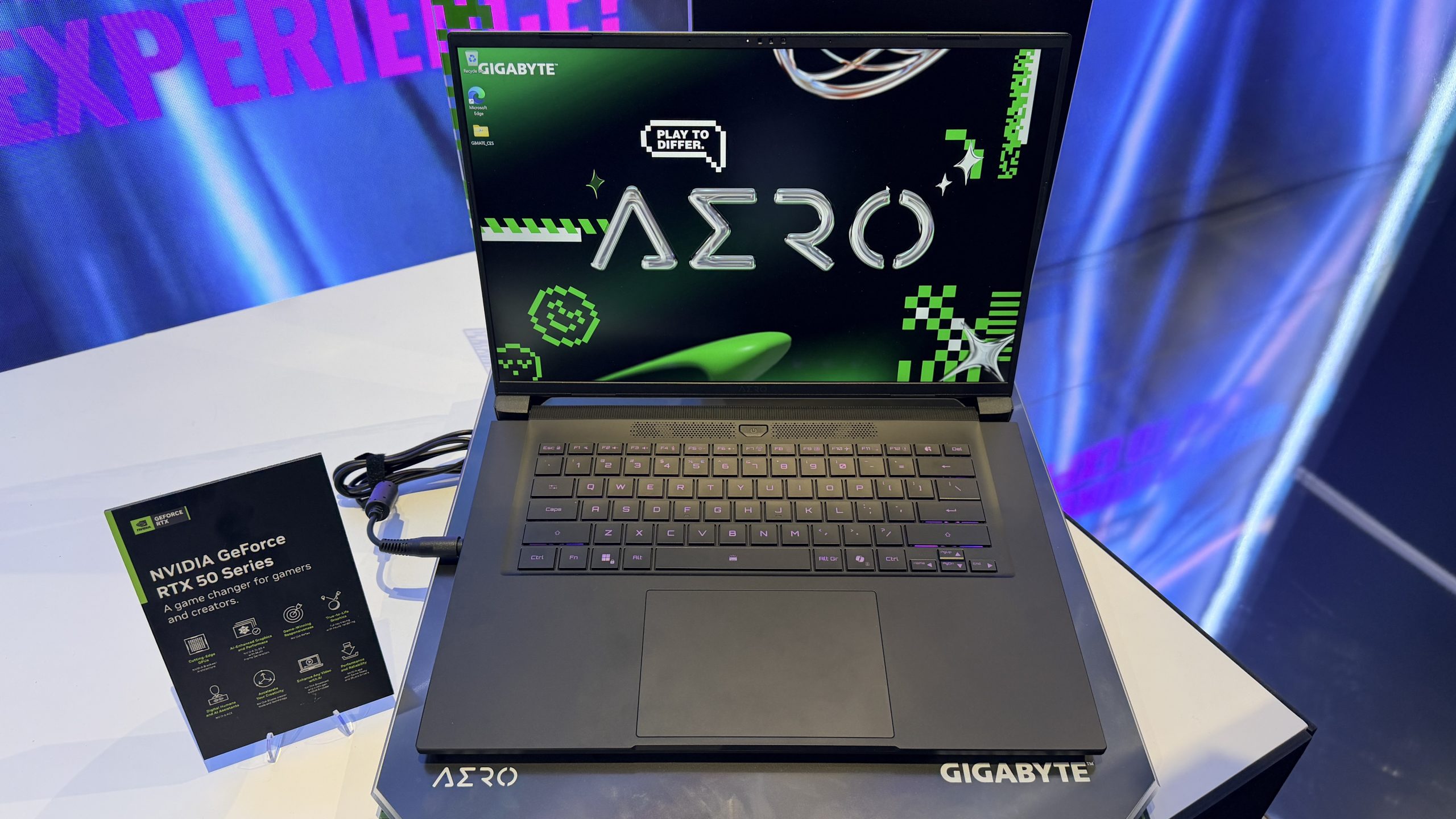
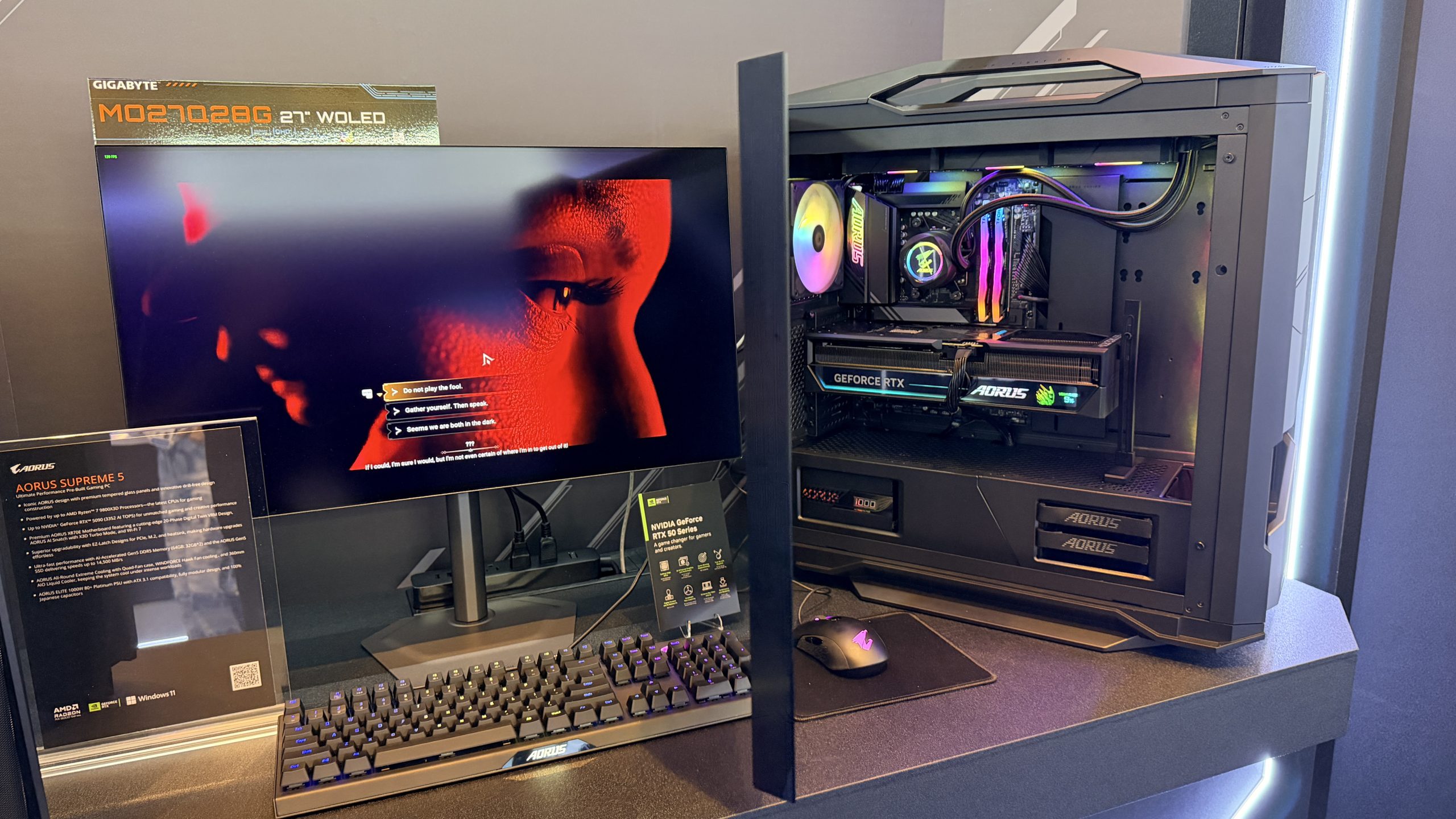
Gigabyte is finishing up its CES announcements this week with the reveal of several new laptop models. The new models house the latest Ryzen CPUs and RTX graphics, with new AI features designed to make hardware and software management easier.

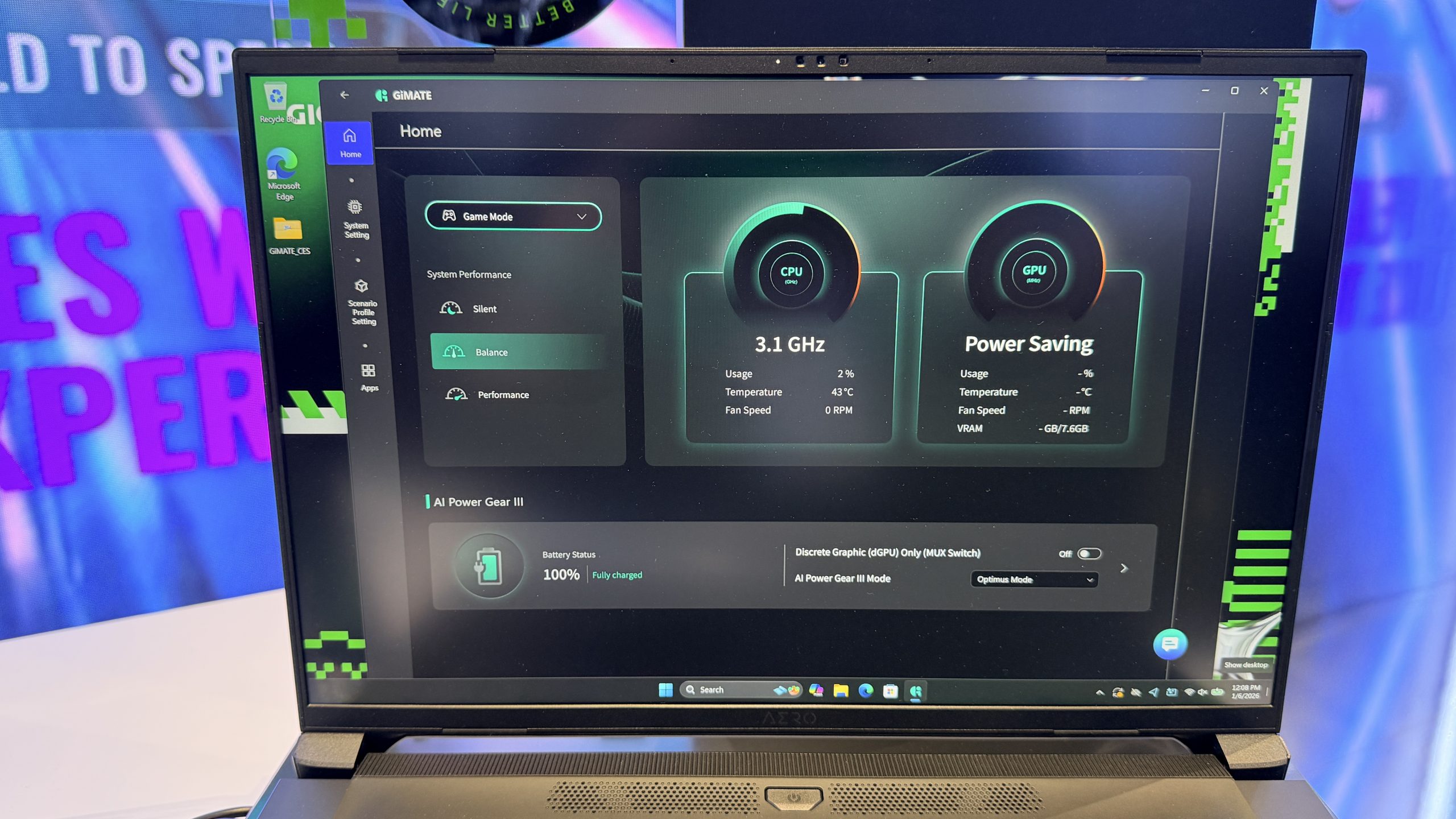
The updated GiMATE interface consolidates real‑time system information, voice‑driven controls and hardware management into a single interface aimed at simplifying navigation and day‑to‑day adjustments. The GiMATE ecosystem is also being expanded. AI Power Gear III now supports direct MUX switching between Discrete Mode and MSHybrid, while offering several automated power profiles: Auto Mode disables the GPU on battery to extend runtime, Optimus Mode targets balanced performance and Eco Mode prioritises maximum power saving. GiMATE Creator adds support for Qwen‑Image for English and Chinese visual‑generation prompts, and GiMATE Coder introduces natural‑language code generation, correction and optimisation.
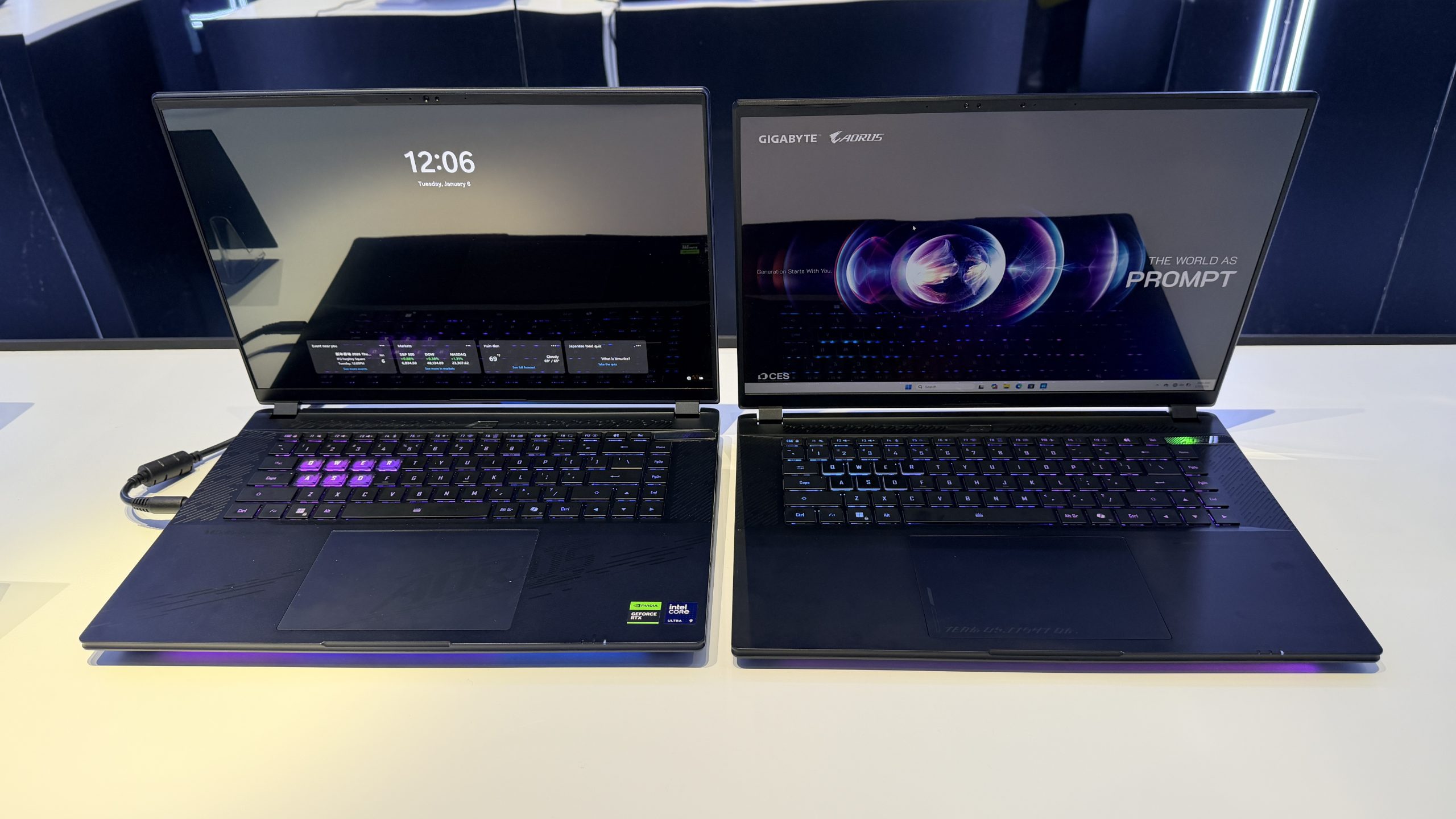
Moving on to the new laptops themselves, there are three models to look at, headlined by the Aorus Master 16. This laptop is positioned as the flagship for 2026, pairing AMD’s Ryzen 9 9955HX3D with an RTX 5090 Laptop GPU inside a 19mm chassis, a notable reduction in thickness compared to the previous generation. The system uses the company’s WINDFORCE Infinity EX cooling design, combining a vapor chamber with an asymmetric Frost Fan layout to manage the thermal load of high‑end components in a thin‑and‑light form factor. This model is clearly aimed at users who want desktop‑class performance in a portable footprint.

For creators and mobile professionals, the AERO X16 shifts the focus toward efficiency and on‑device AI acceleration. It is built around AMD’s Ryzen AI 400 series processors, which are designed to improve responsiveness and handle heavier AI‑assisted workloads without relying on cloud processing. GIGABYTE positions this model as the more mobility‑friendly option in the lineup, with an emphasis on creative workflows and general productivity.

Rounding out the range is the GAMING A18 PRO, which offers a more balanced configuration. With a 20mm profile and support for up to an RTX 5080 Laptop GPU, it targets users who want strong gaming and content‑creation performance without stepping into flagship territory. GIGABYTE frames this model as a versatile choice for mainstream gamers, hybrid creators and users beginning to explore AI‑accelerated applications.

Discuss on our Facebook page, HERE.

KitGuru Says: Are you thinking of picking up a new laptop this year?

The post CES 2026: Gigabyte unveils new laptop range, including high-end Aorus Master 16 first appeared on KitGuru.
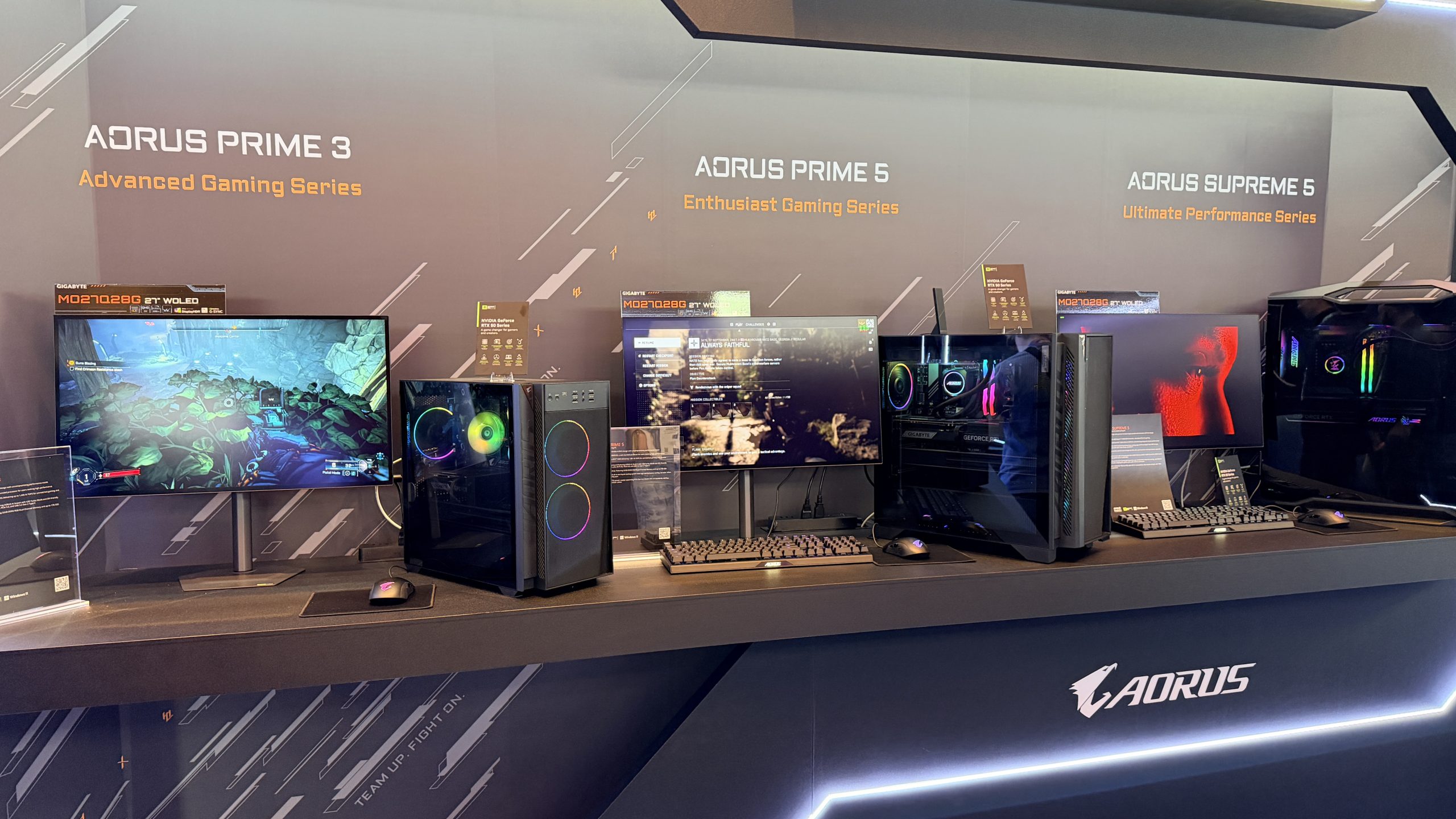
CES 2026: Gigabyte unveils new-gen OLED monitors

8 janvier 2026 à 18:24

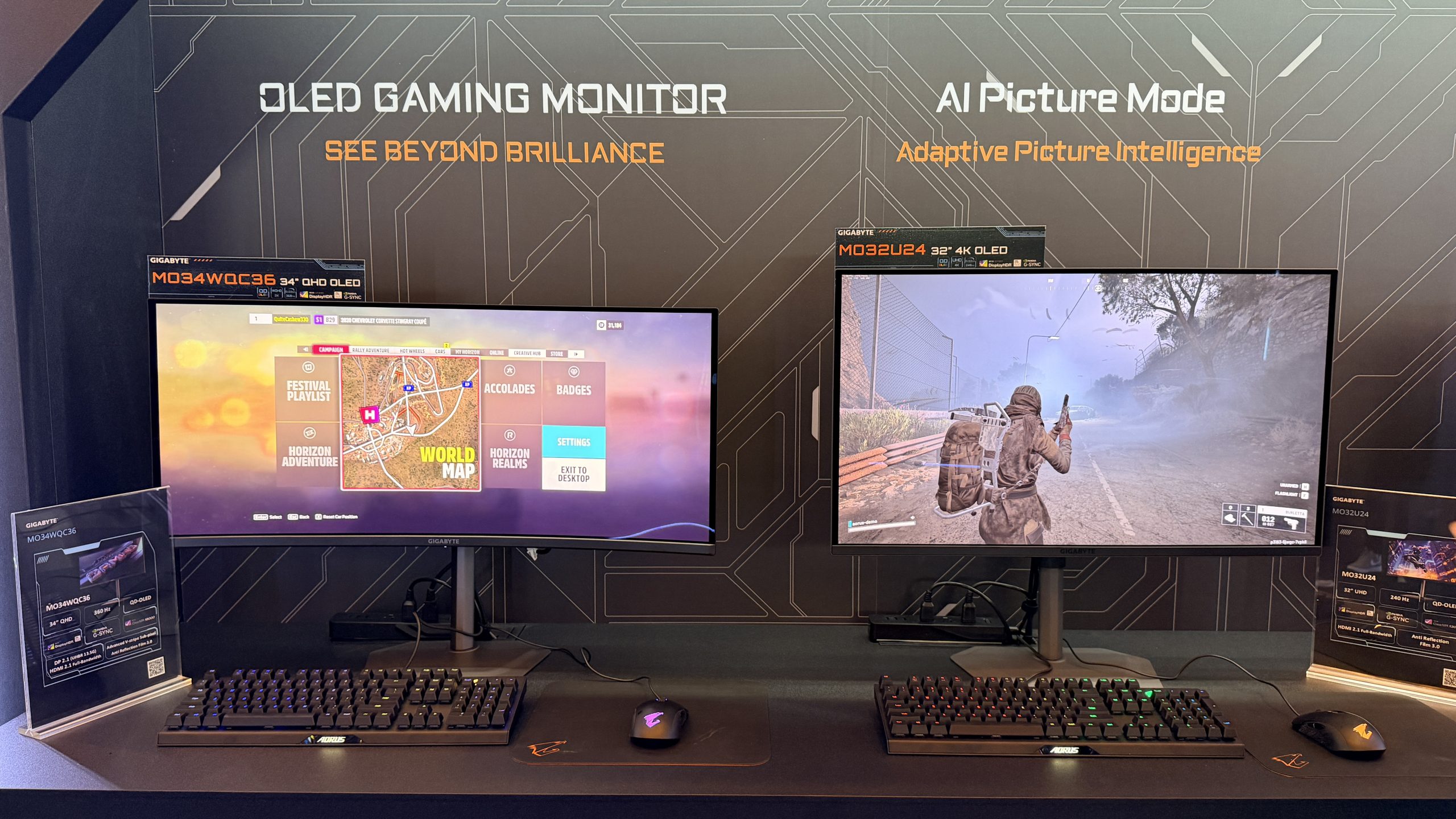
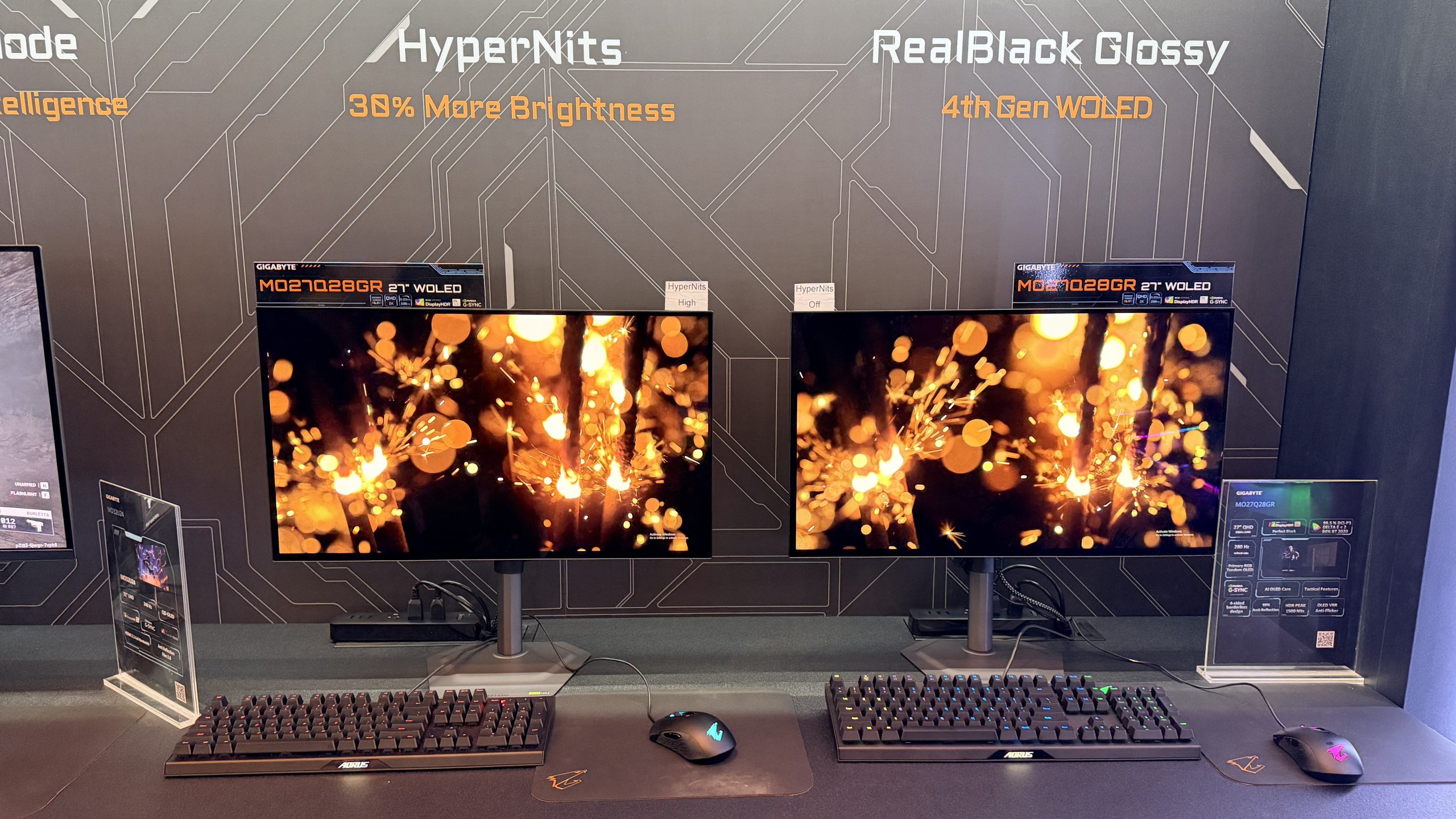
At CES this week, Gigabyte has introduced four new OLED gaming monitors to its line-up, focusing heavily on picture-quality tuning for HDR and SDR content. The key new feature is HyperNits, which aims to address issues with HDR modes appearing dim by boosting the brightness curve without blowing out highlights.

For HDR, GIGABYTE is introducing a set of tuned HDR Picture Modes including HDR Movie, HDR Game and HDR Vivid, alongside a new feature called HyperNits. Many OLED panels appear dim in HDR peak‑brightness modes due to APL constraints, and HyperNits aims to counter this by reshaping the EOTF curve to boost brightness by up to 30% without blowing out highlights. Users can select HyperNits High for maximum output or HyperNits Medium for a milder 20% lift.

SDR content is handled by a new AI Picture Mode trained on a large dataset to automatically adjust settings based on activity. It can reduce brightness and blue light for work, increase contrast and adjust gamma for movies, or activate AI Black Equalizer for improved visibility in FPS titles. Adjustments are applied dynamically in real time.

These new displays will also come with a new set of Gigabyte's ‘Tactical Features'. Tactical Switch 2.0 enables one‑click switching between resolutions and aspect ratios such as 4:3 or 5:4, while Ultra Clear is designed to improve motion clarity and reduce blur in fast‑moving content.

The CES lineup includes the ultra‑wide QD‑OLED MO34WQC36 and the 4K QD‑OLED MO32U24, both featuring the new ObsidianShield film and DisplayHDR True Black 500 certification. ObsidianShield is said to improve perceived black levels by up to 40% and increases surface hardness from 2H to 3H for better scratch resistance. The MO34WQC36 also adopts a new V‑stripe sub‑pixel structure for improved text clarity. Rounding out the range is the MO27Q28GR, which uses RealBlack Glossy 4th‑gen WOLED technology and carries UL certification for bright‑room black performance.

Discuss on our Facebook page, HERE.

KitGuru Says: Are you thinking of making the jump to a new-gen OLED display this year?

The post CES 2026: Gigabyte unveils new-gen OLED monitors first appeared on KitGuru.
CES 2026: Digital Storm debuts new prebuilt PCs with RTX Pro Blackwell graphics

8 janvier 2026 à 15:30

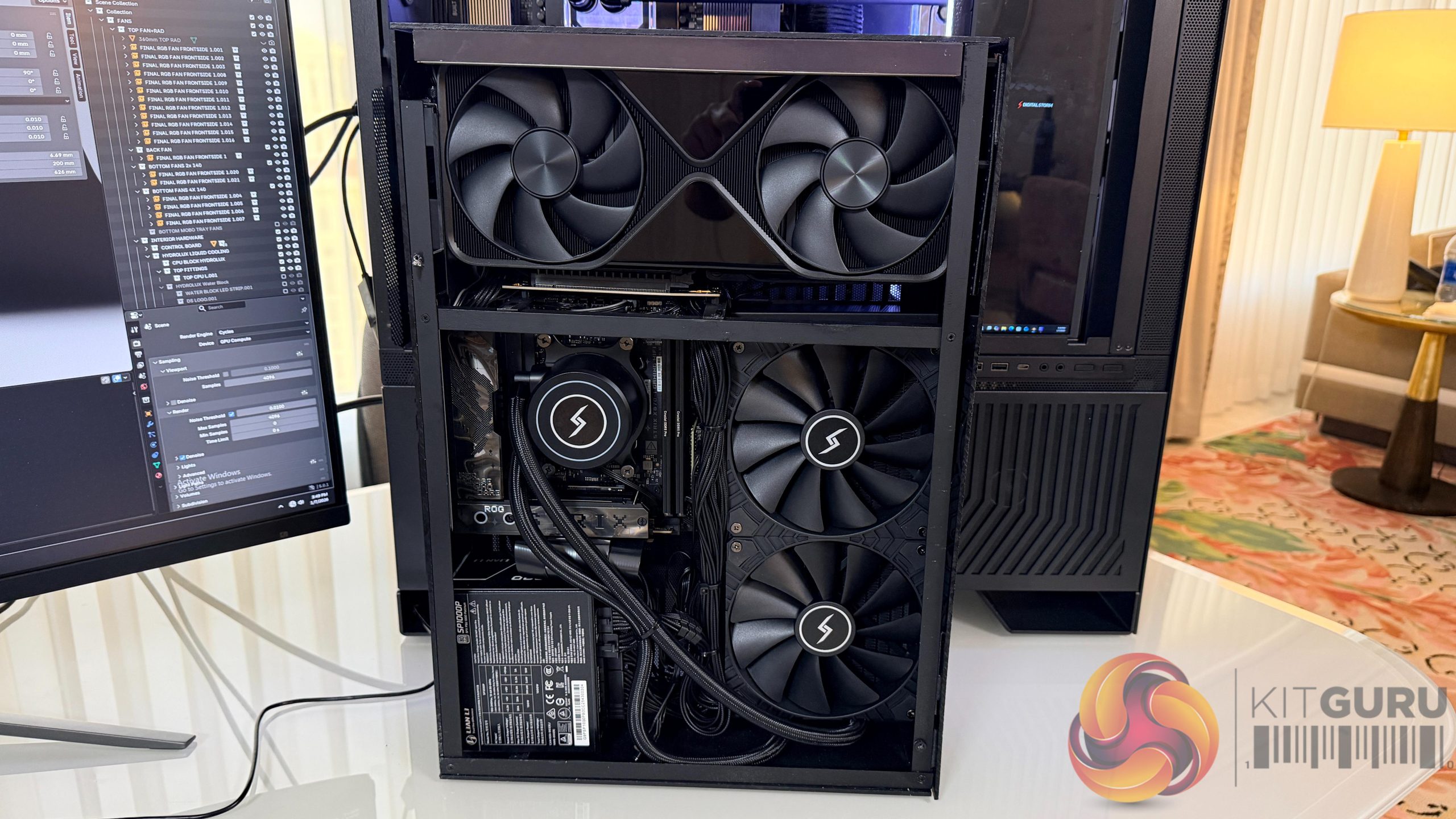
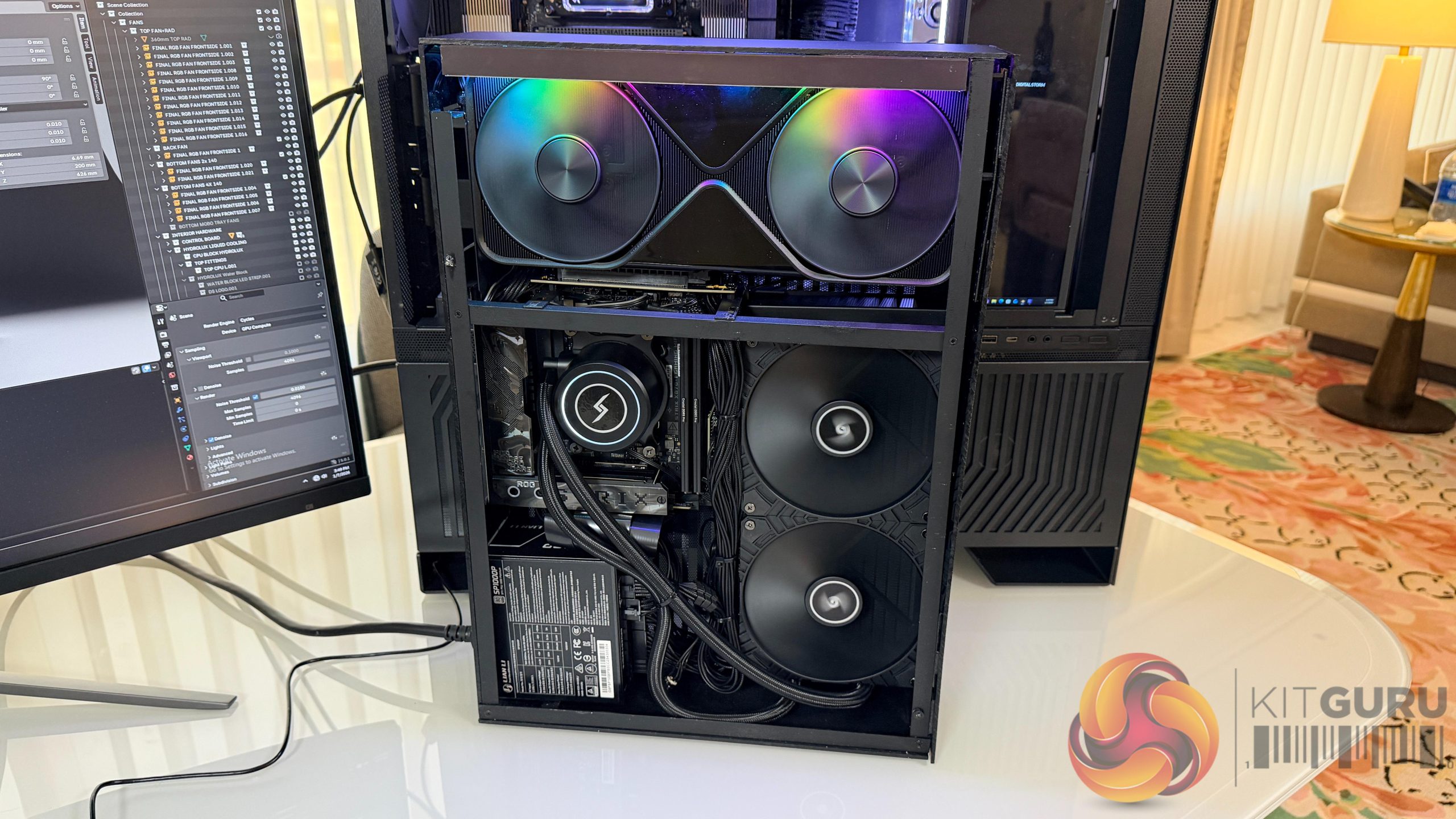
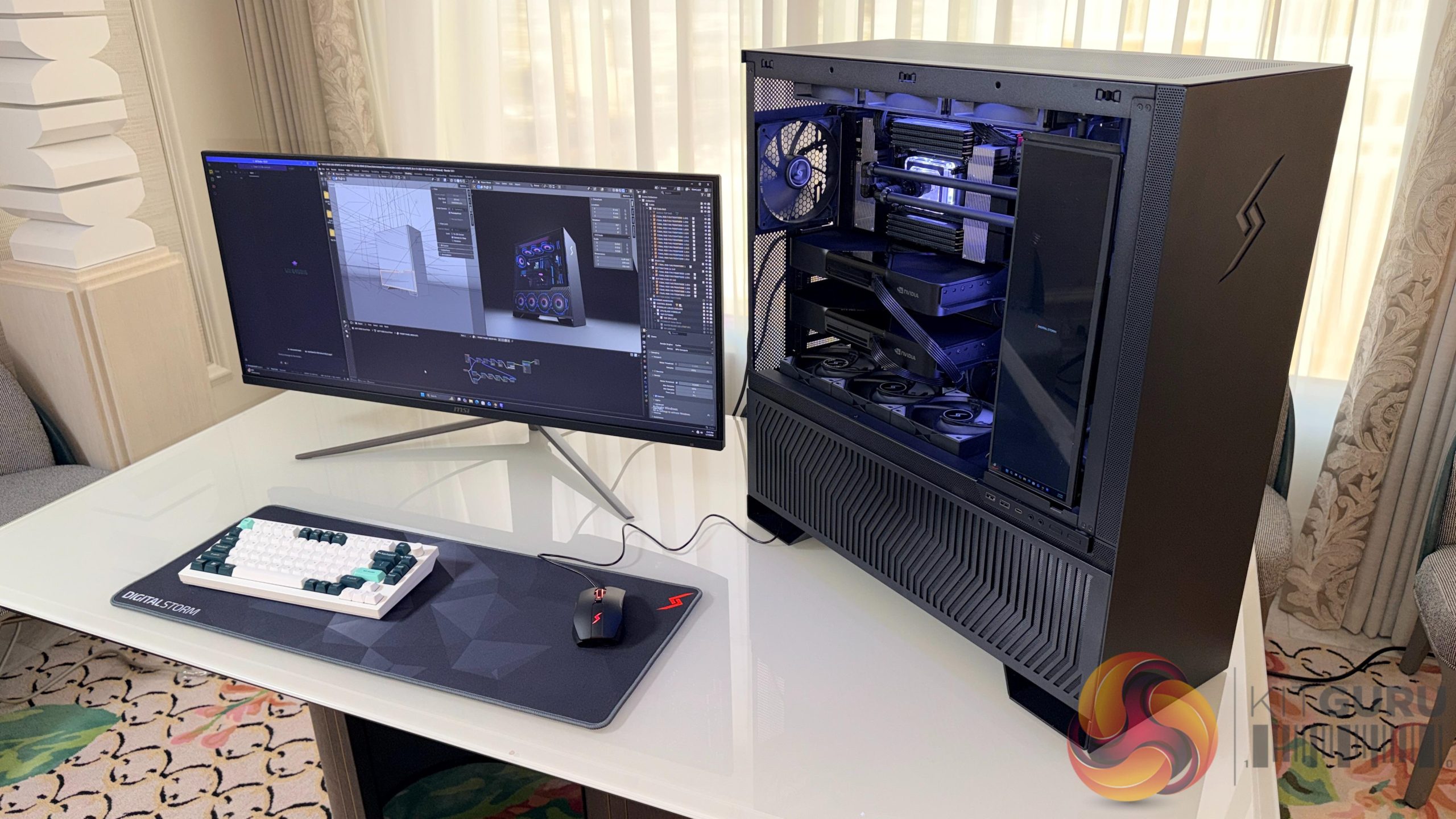
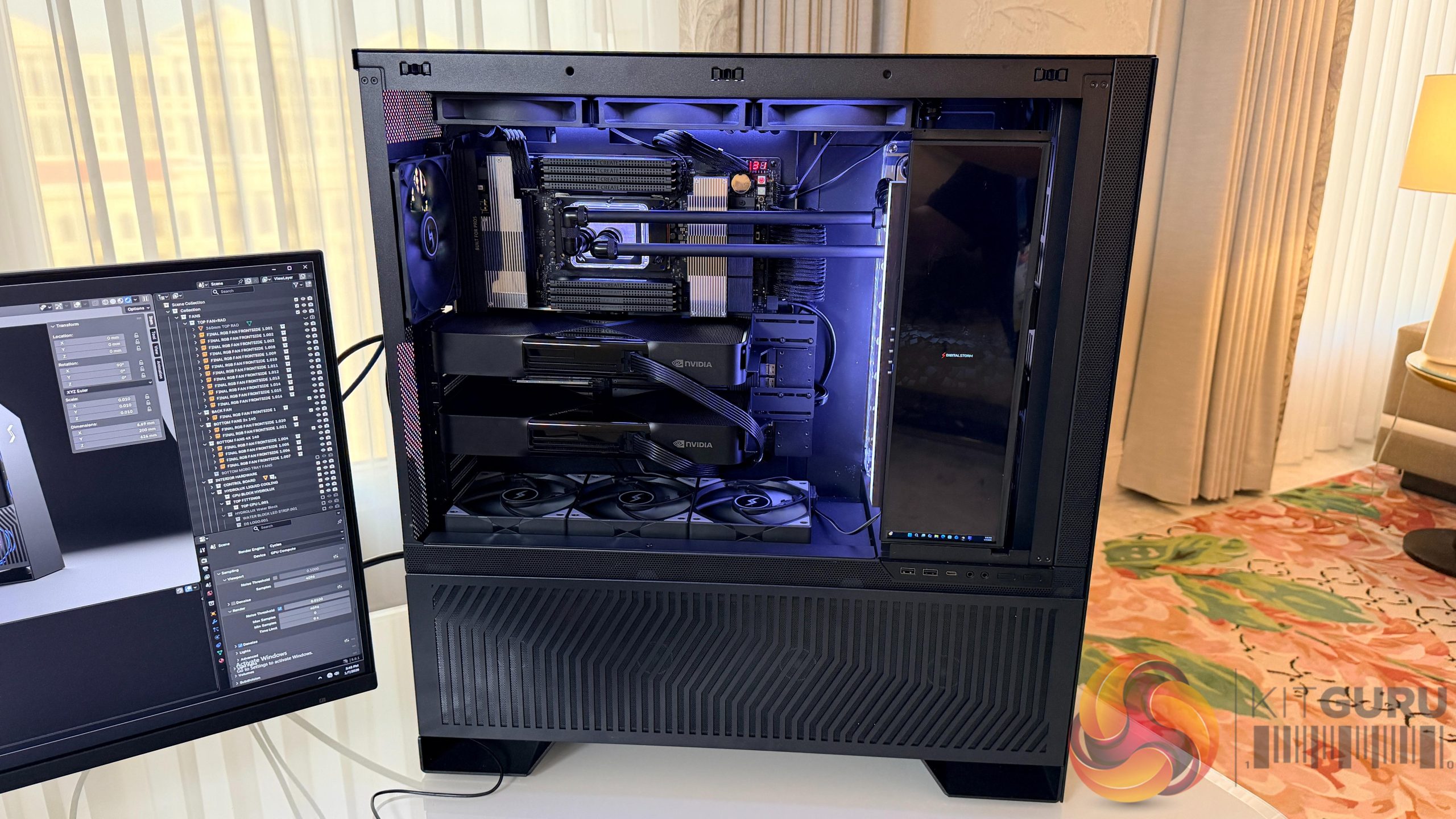
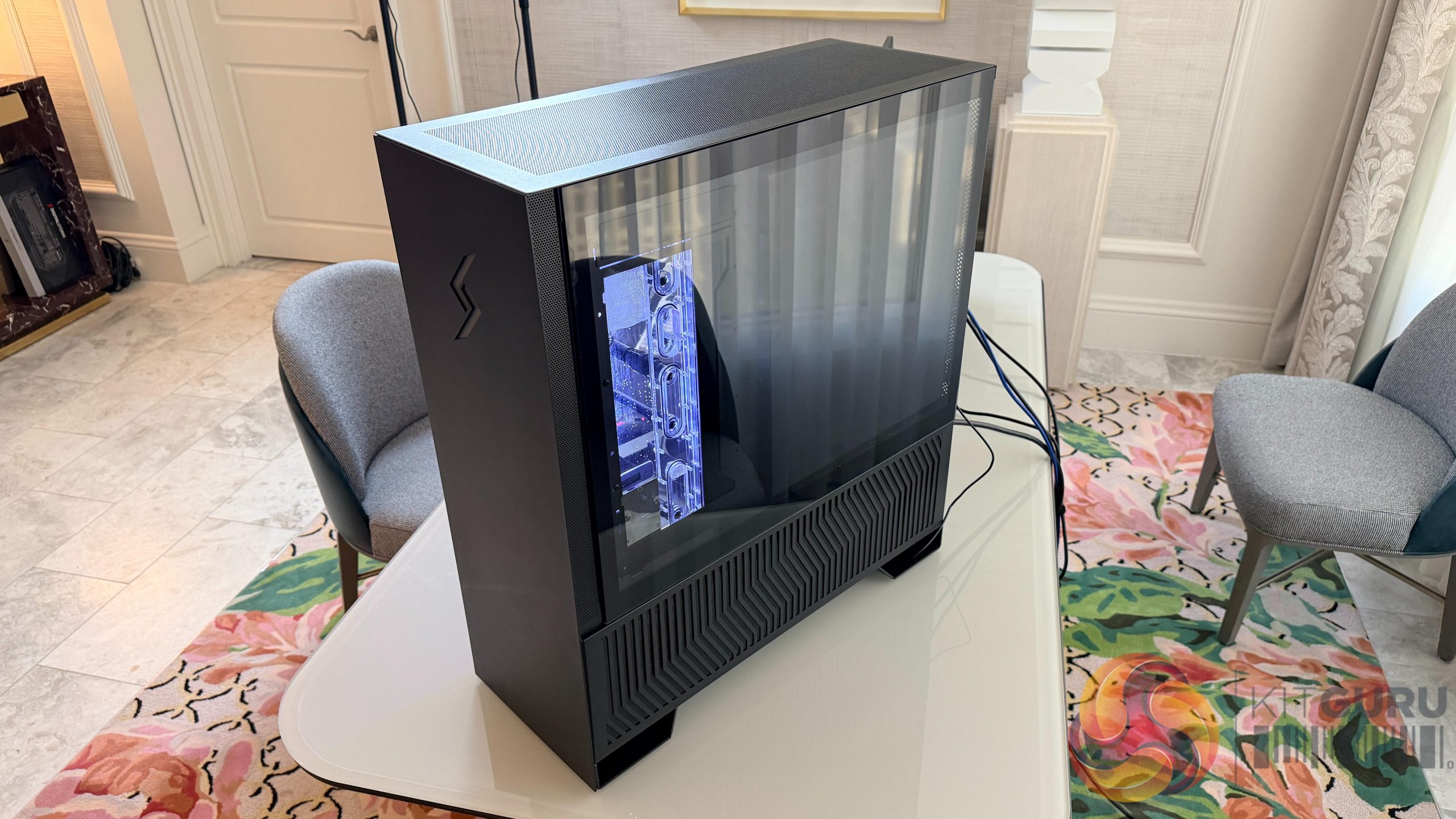
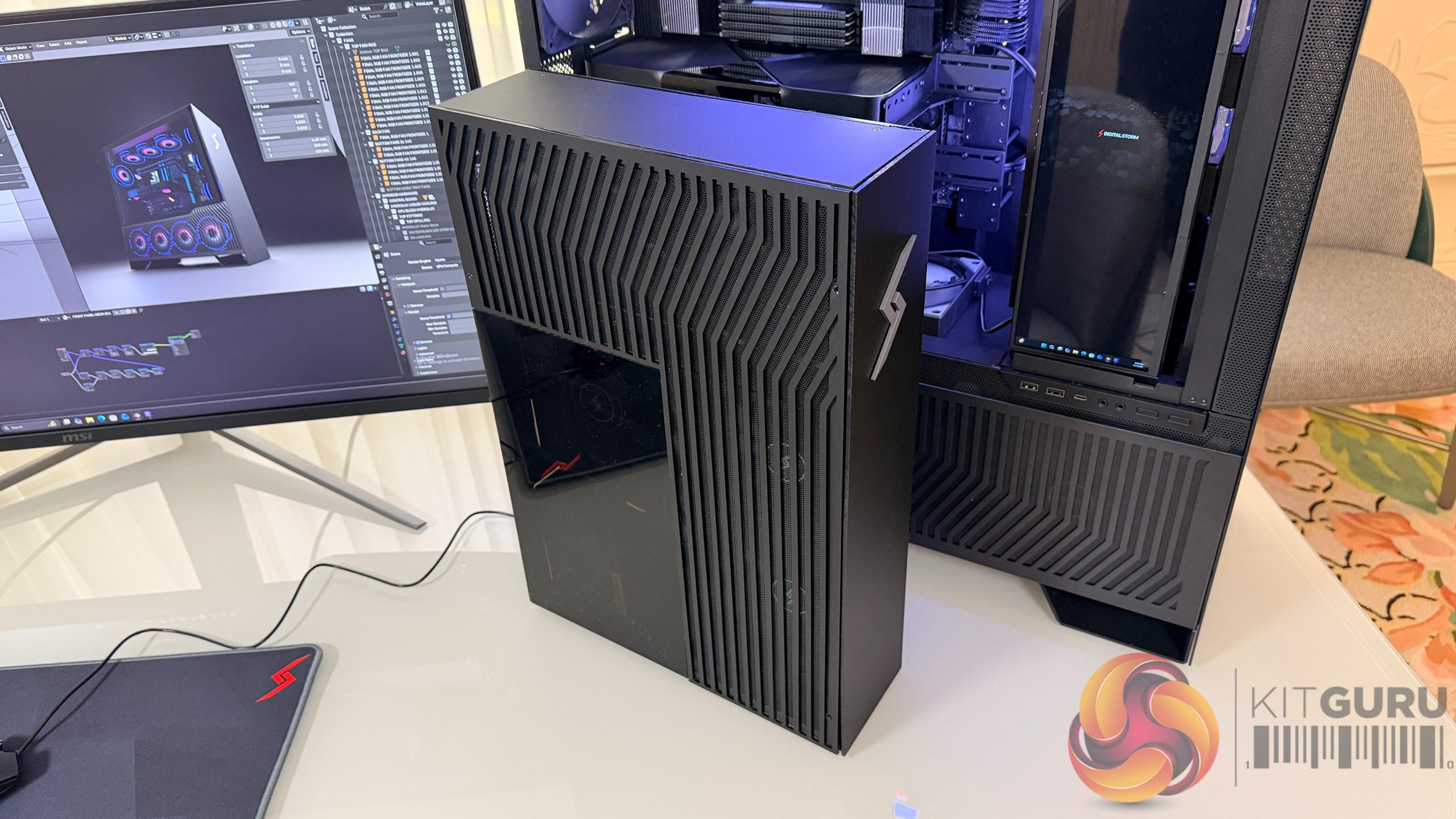
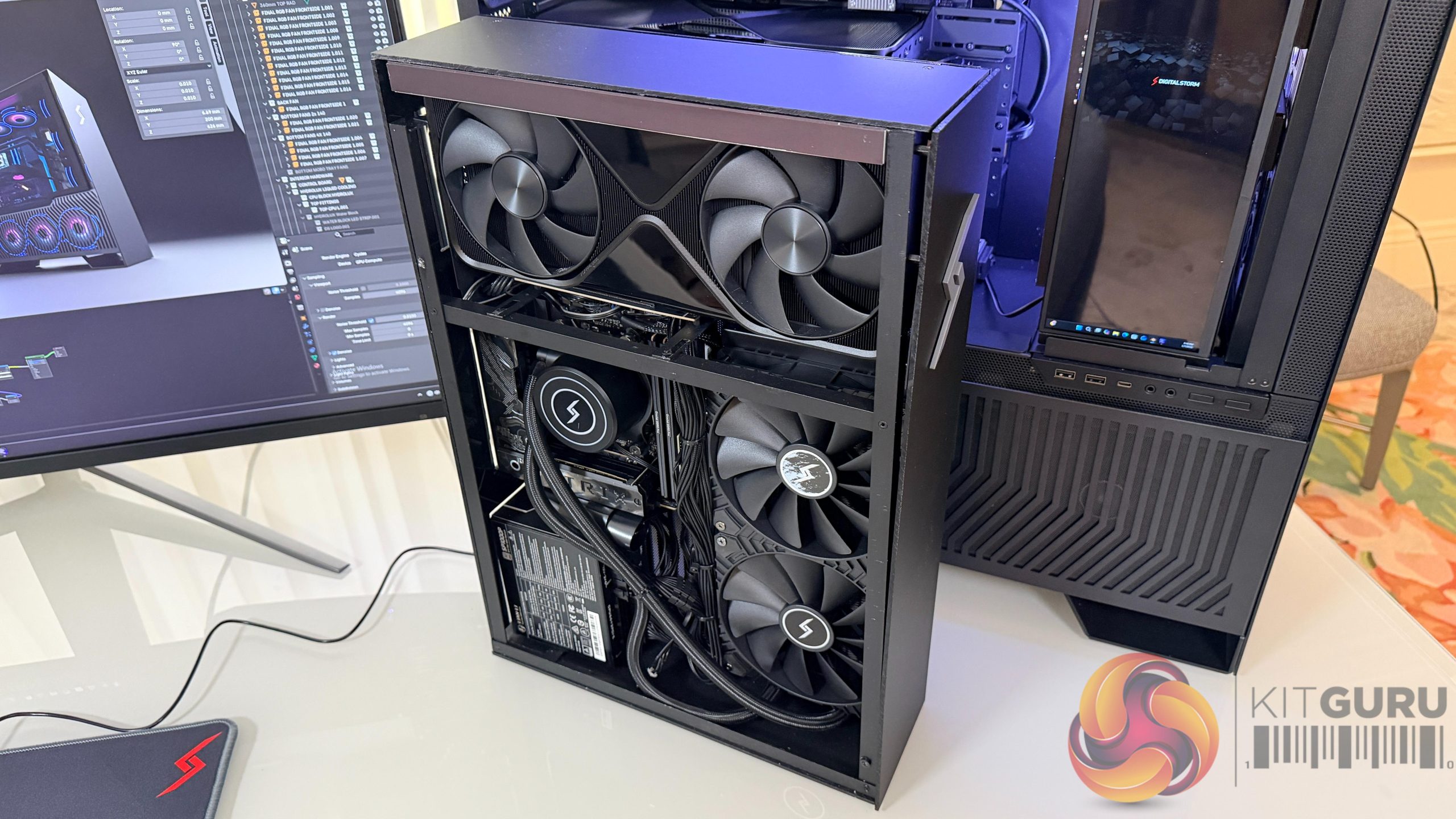
At CES this week, we stopped by to visit US PC maker, Digital Storm. At their booth, we got a look at the new Vector and Aventum 5 systems, each taking a different approach to high-end computing.

The Digital Storm Vector is designed as a slimmer, more compact alternative to traditional ATX towers, fitting high‑end components into a chassis just 4 inches wide. It emphasises performance density, managing heat, airflow and acoustics within a constrained volume while still supporting powerful CPUs and modern GPUs. In its top configurations, the Vector can be equipped with an NVIDIA RTX 6000 Pro Blackwell GPU paired with either an AMD Ryzen 9 9950X or an Intel Core Ultra 9 285K processor.

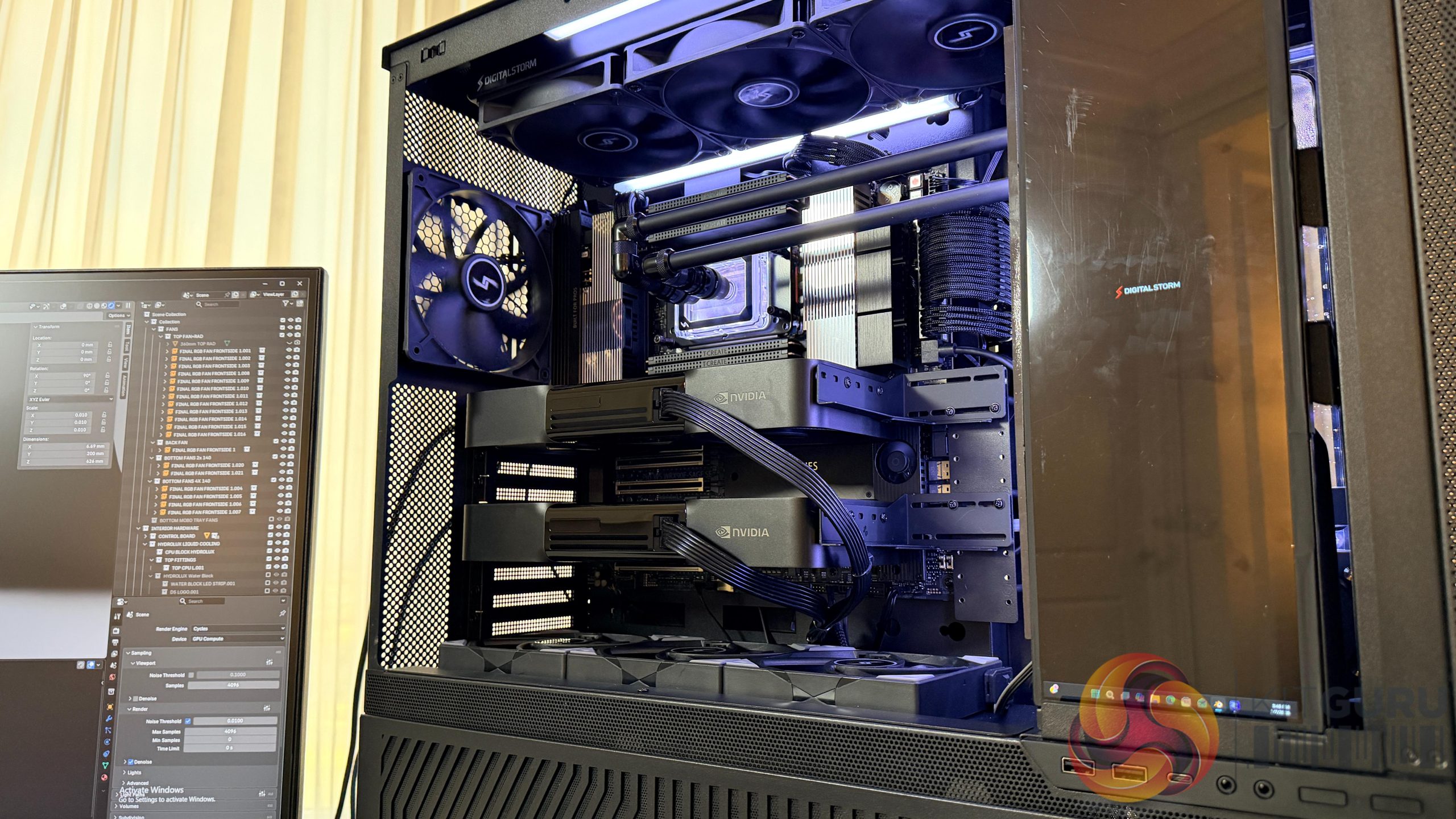
The Aventum 5 is Digital Storm’s latest fully liquid‑cooled desktop, redesigned to prioritise radiator capacity, airflow routing and serviceability for long‑duration CPU and GPU workloads. The system is built to keep next‑generation CPUs and RTX 6000‑class GPUs operating at boost clocks for extended periods without throttling. A large display is integrated directly into the chassis, providing real‑time system monitoring stats such as temperatures, clock speeds, utilisation and cooling performance without relying on overlays or additional monitors.

Both the Vector and Aventum 5 PCs will be available with a wide range of configuration options, including the latest desktop platforms from AMD and Intel, NVIDIA GPUs up to the RTX 6000 Pro Blackwell, large memory capacities, fast NVMe storage and high‑end power supplies. The Aventum 5 is expected to start at around $3,000 USD. Meanwhile, the Vector will start at approximately $2,000 USD. Both are expected to be available to order through Digital Storm starting in Q2.

Discuss on our Facebook page, HERE.

KitGuru Says: These aren't so much gaming PCs but rather AI development powerhouses.

The post CES 2026: Digital Storm debuts new prebuilt PCs with RTX Pro Blackwell graphics first appeared on KitGuru.
CES 2026: CyberPowerPC showcases impressive MA-01 chassis with woven steel mesh

8 janvier 2026 à 15:00

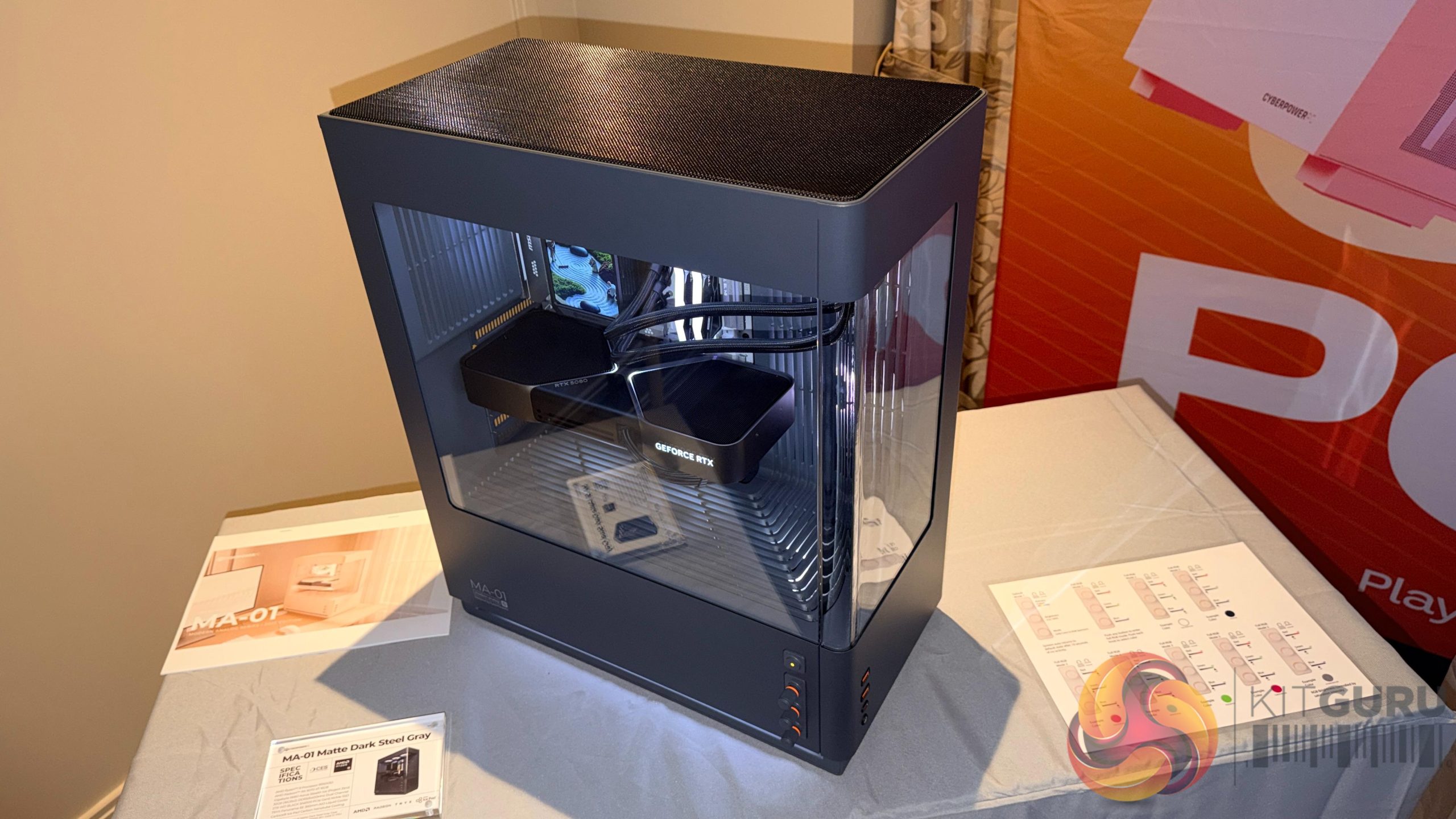
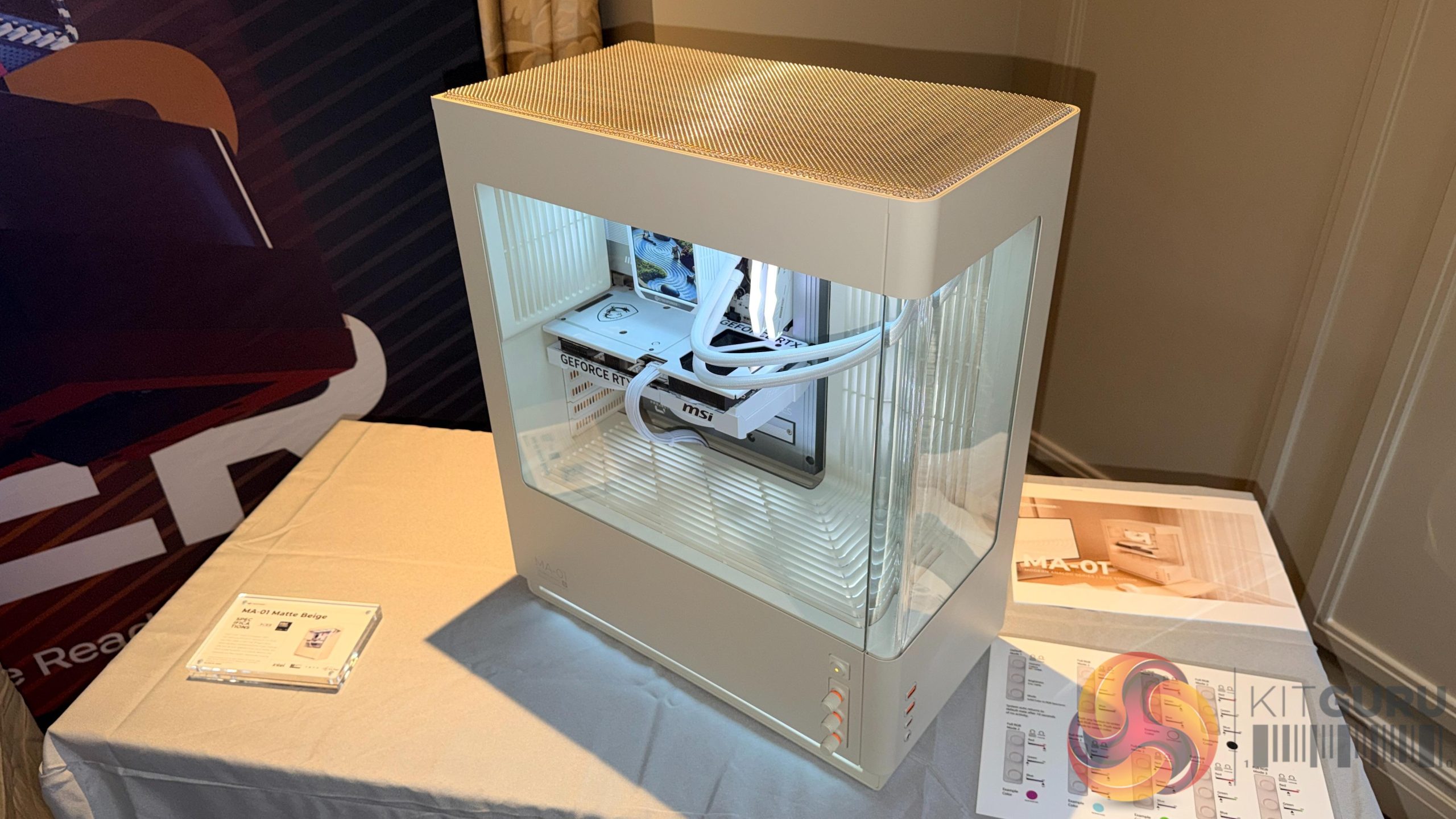
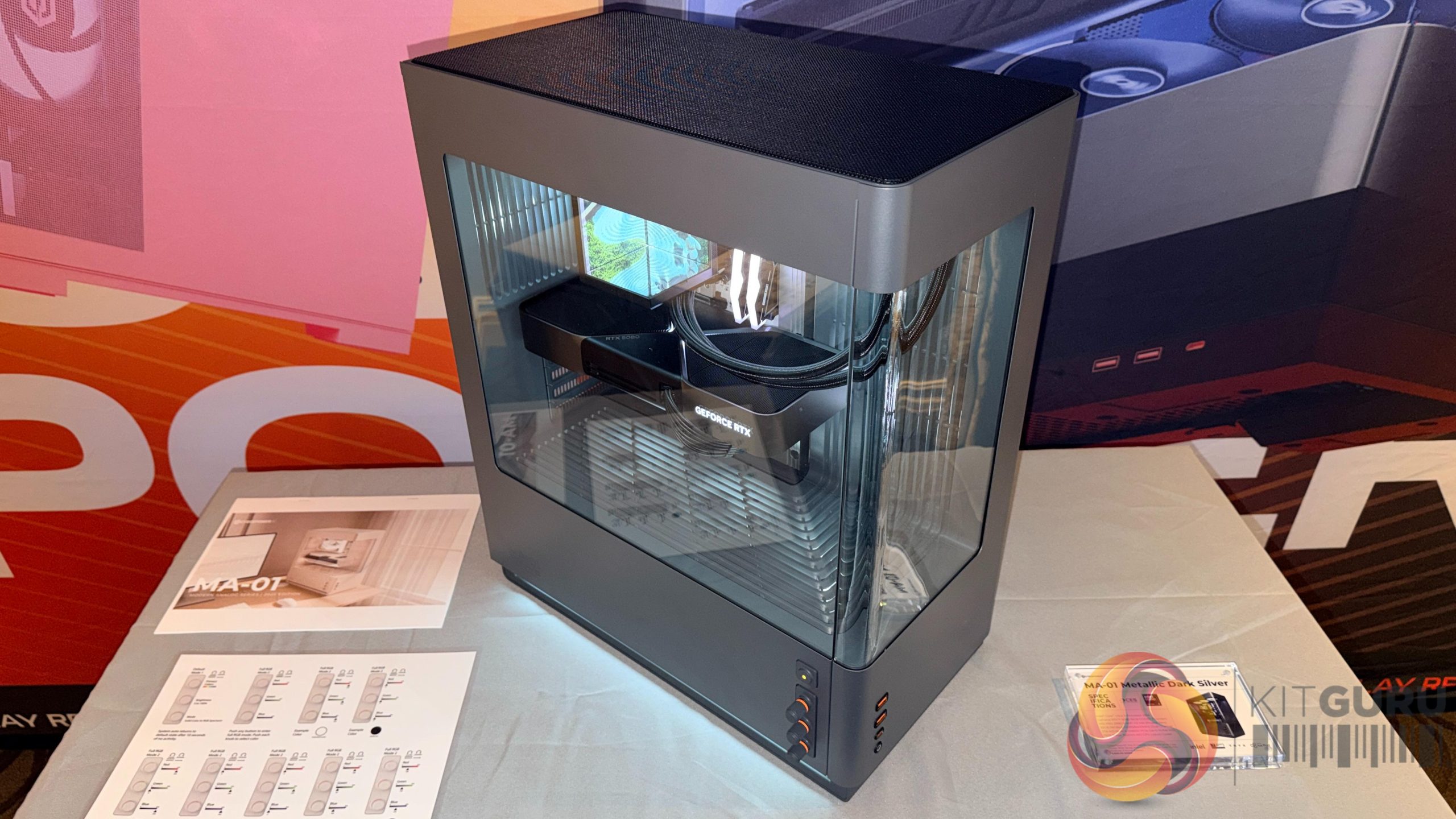
CyberPowerPC is well known for its pre-built gaming PCs in both the US and the UK. This year at CES, the company is showcasing something for the DIY market – a new PC case designed in-house, built around a minimalist design that hides most structural and cooling elements while keeping key components on display. It is also one of the first DIY PC cases on the market to use woven steel mesh rather than standard mesh panels, heavily reducing noise resonance while maintaining strong airflow channels. 

You can get a good look at the CyberPowerPC MA-01 chassis in the video and gallery above, but for those who would prefer to read, you can find a full breakdown of this chassis below based on the details shared so far.

One of the standout features of the MA-01 is the use of woven steel mesh, a first of its kind in the PC case market. The mesh varies in porosity and depth to reduce high‑frequency resonance, lowering exhaust noise by up to 30% while maintaining airflow. The MA‑01 also conceals fans, radiators and lighting behind sculpted internal covers, with all illumination engineered to shine indirectly through vent slits and adjacent surfaces to create a soft ambient glow rather than visible LED hotspots.

Other design elements include angled vent covers that guide intake air directly onto heat‑critical components, precision‑moulded I/O shrouds that absorb side impacts and reduce insertion wear, and support for both standard ATX and back‑connect BTF‑style motherboards. The chassis also uses two curved glass panels that meet without a corner pillar, providing an unobstructed view of the GPU, CPU cooler and memory. Analog RGB dials offer software‑free control across the full 16.7‑million‑colour spectrum, with secondary push functions for colour jumping, effect modes and brightness.

The MA‑01 measures in at 460 x 235 x 498mm and has the space for seven expansion slots, two 3.5-inch drive bays, one 2.5-inch drive bay, up to ten 120mm fans and support for 360mm or 240mm liquid cooling radiators in the front and top. Component clearances include 420mm for GPUs, 185mm for CPU coolers and 200mm for power supplies.

CyberPowerPC will offer the MA‑01 in Satin Dark Silver, Satin Matte Off White and Satin Matte Steel Gray colour options. The Chrome Steel version will launch at $149.99, while the Stainless Steel model will be priced at $249.99, with availability expected in early Q2 2026.

Discuss on our Facebook page, HERE.

KitGuru Says: We'll be looking forward to getting our hands on this for a review in the future. What do you think of this new case from CyberPower? Would you like to build in one of these?

The post CES 2026: CyberPowerPC showcases impressive MA-01 chassis with woven steel mesh first appeared on KitGuru.
CES 2026: Kioxia launches new BG7 SSDs with improved efficiency

8 janvier 2026 à 13:31

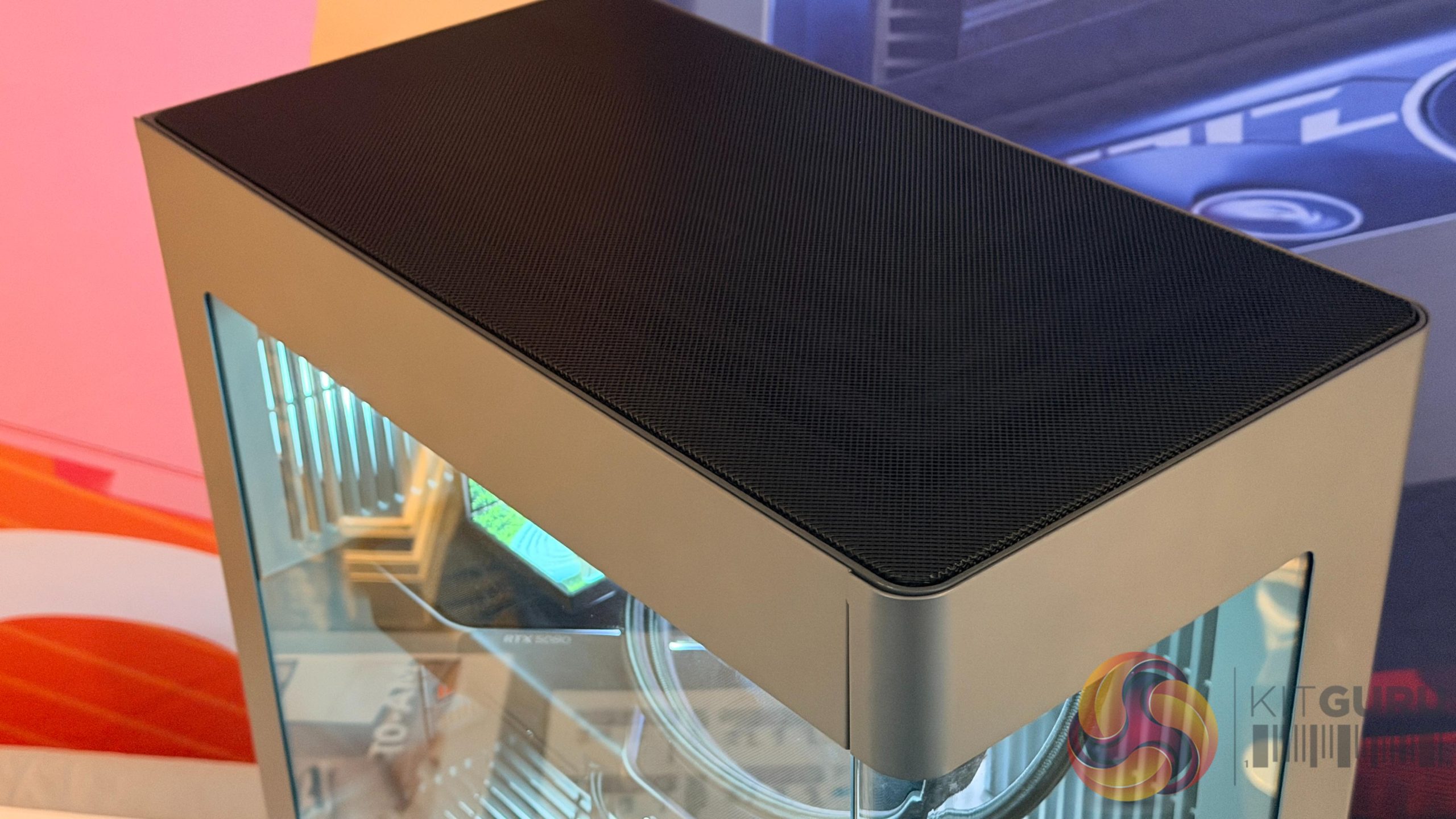
At CES this week Kioxia is launching its BG7 series SSDs at CES 2026, marking the first client‑focused drives to use the company’s eighth‑generation BiCS Flash paired with its new CMOS‑Bonded‑to‑Array (CBA) architecture. The update targets thin‑and‑light notebooks, compact desktops and OEM systems, promising stronger performance and improved power efficiency over the previous BG6 generation.

The move to BiCS Flash Gen 8 brings a notable uplift in throughput. Kioxia rates the BG7 for up to 7,000MB/s sequential reads and as much as 1,000,000 IOPS in random workloads, translating to roughly a 10% improvement in random performance and around 16% in sequential reads compared to BG6. Power efficiency sees the biggest generational jump with sequential‑write efficiency up by approximately 67%. This improvement is achieved through a combination of CBA‑enhanced memory cells, refined control circuitry and an updated SSD controller.

The BG7 series also expands the physical formats available. Alongside the familiar M.2 2230 and 2280 options, Kioxia is adding a new M.2 2242 model to support a wider range of OEM designs and space‑constrained systems. NVMe 2.0d support has been introduced as well, giving system builders finer control over power states and device behaviour.

As with previous entries in the BG line, the BG7 remains a DRAM‑less design, relying on Host Memory Buffer (HMB) to keep costs down while maintaining responsiveness. Capacities span 256GB, 512GB, 1TB and 2TB, and the drives connect over PCIe 4.0. Security‑conscious deployments can opt for models supporting TCG Opal 2.01 self‑encrypting drive functionality.

Discuss on our Facebook page, HERE.

KitGuru Says: With DRAM being in short supply for consumer-oriented products at the moment, DRAM-less SSDs should become more prominent across the consumer market.

The post CES 2026: Kioxia launches new BG7 SSDs with improved efficiency first appeared on KitGuru.
CES 2026: Thermaltake launches new cases, expands racing sim line-up and more

8 janvier 2026 à 11:35

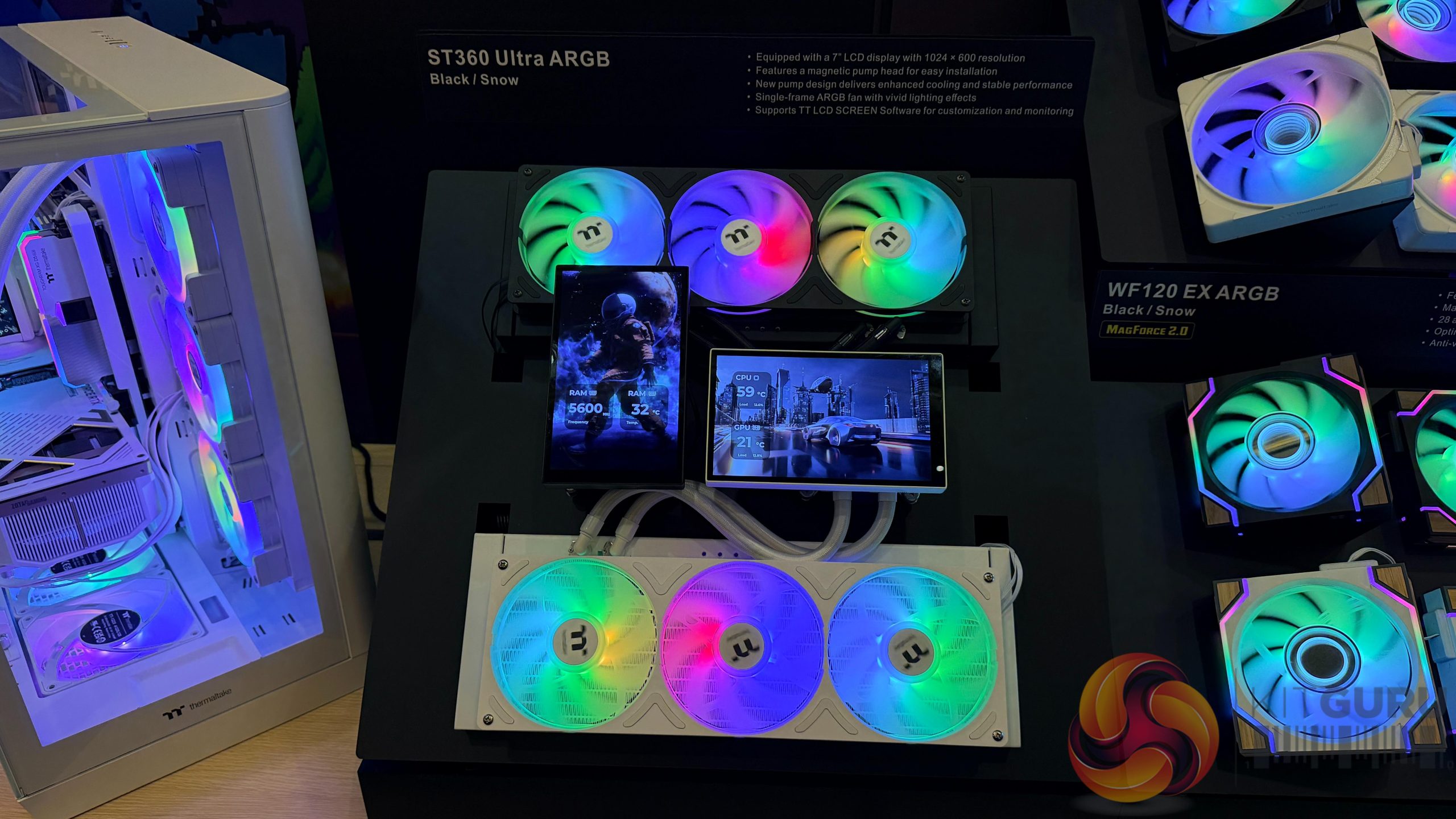
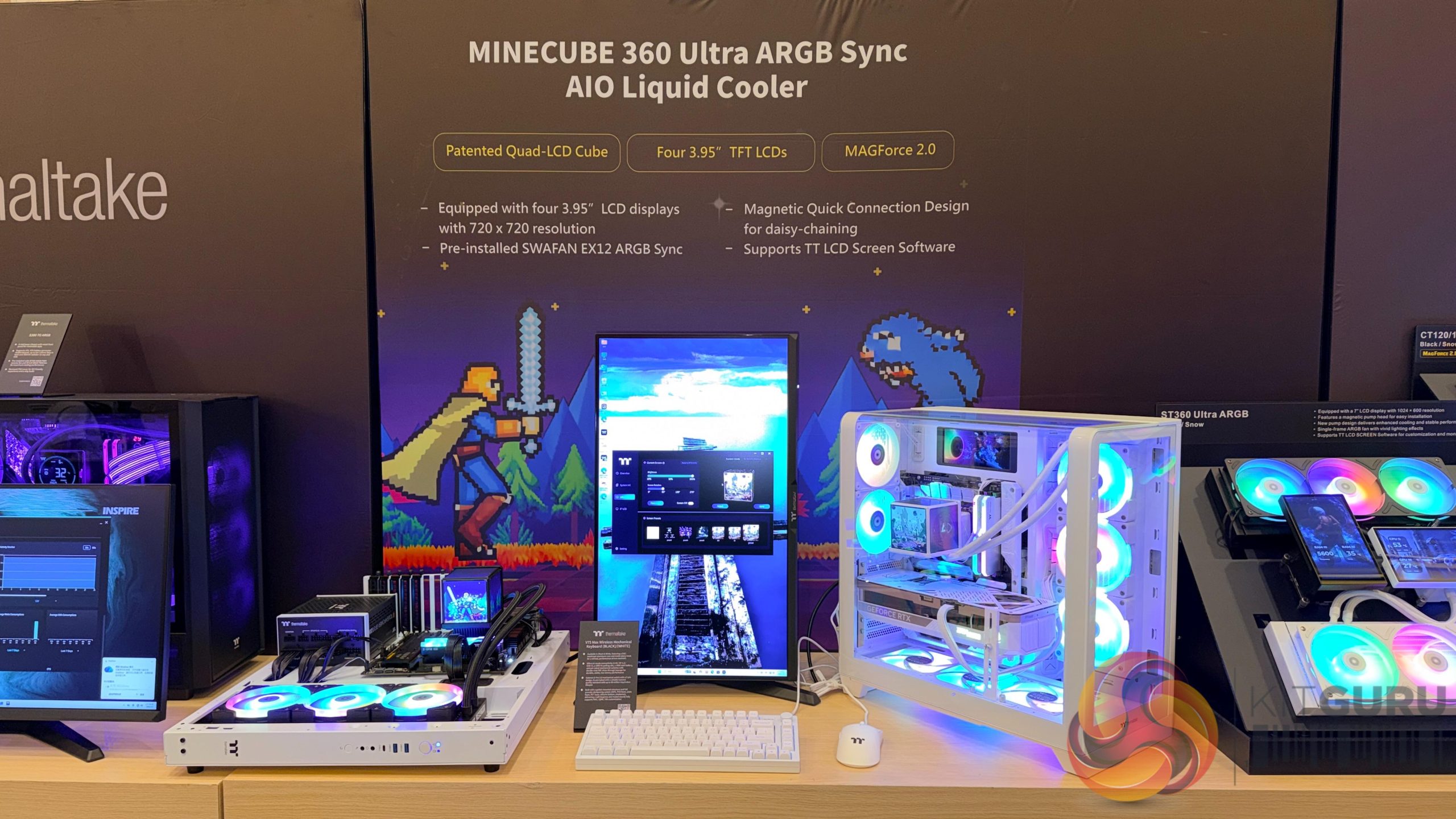
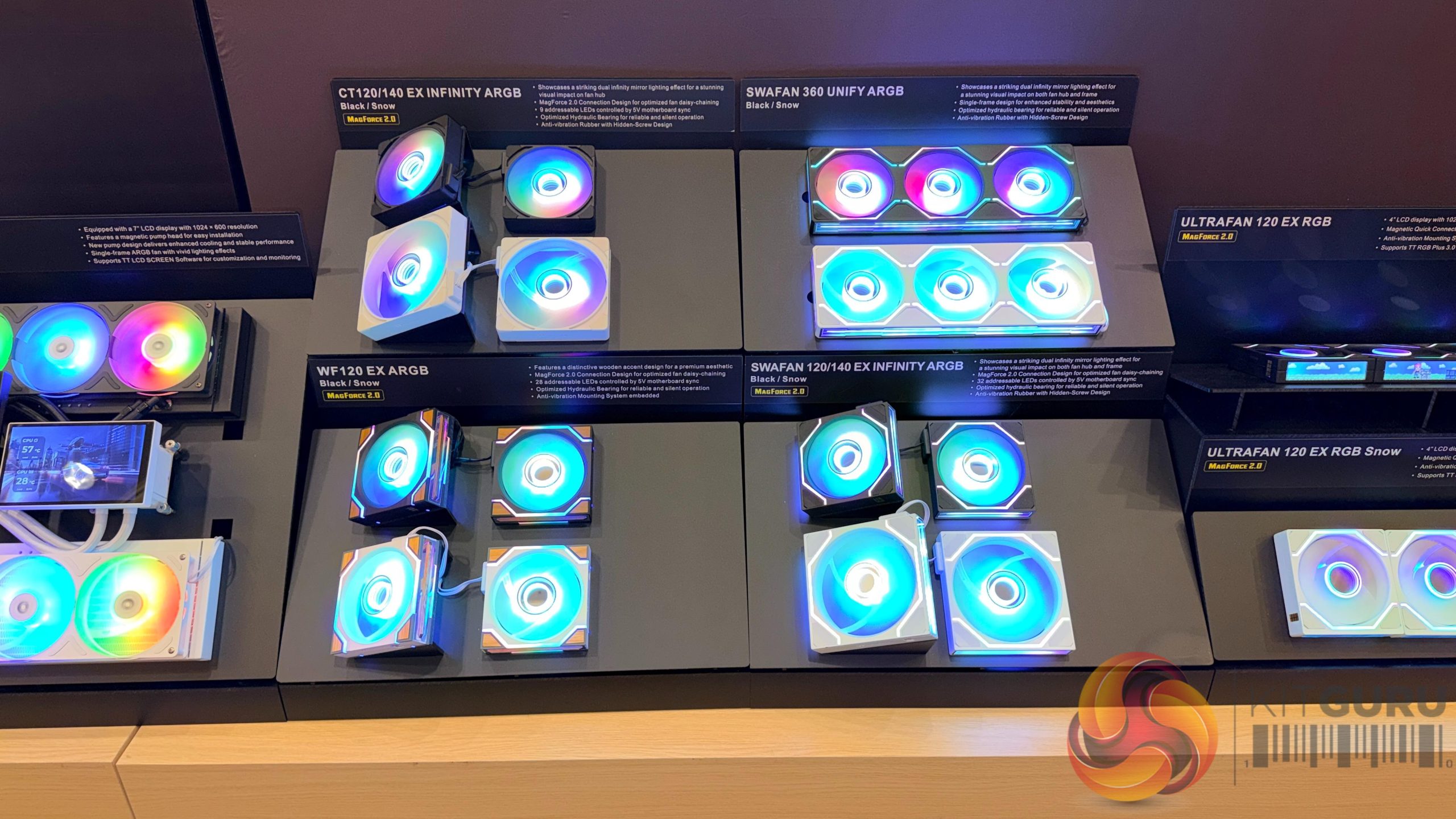
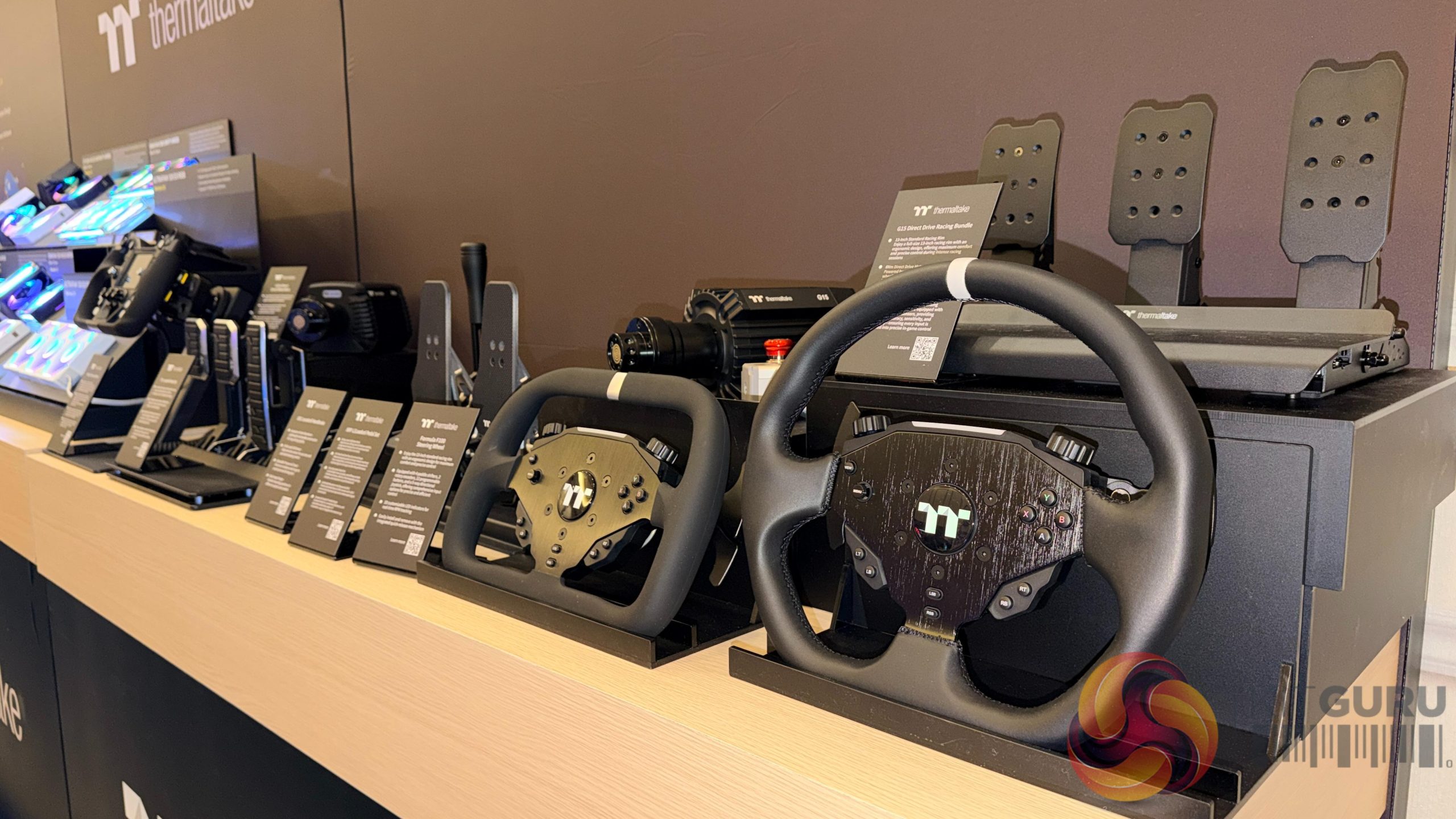
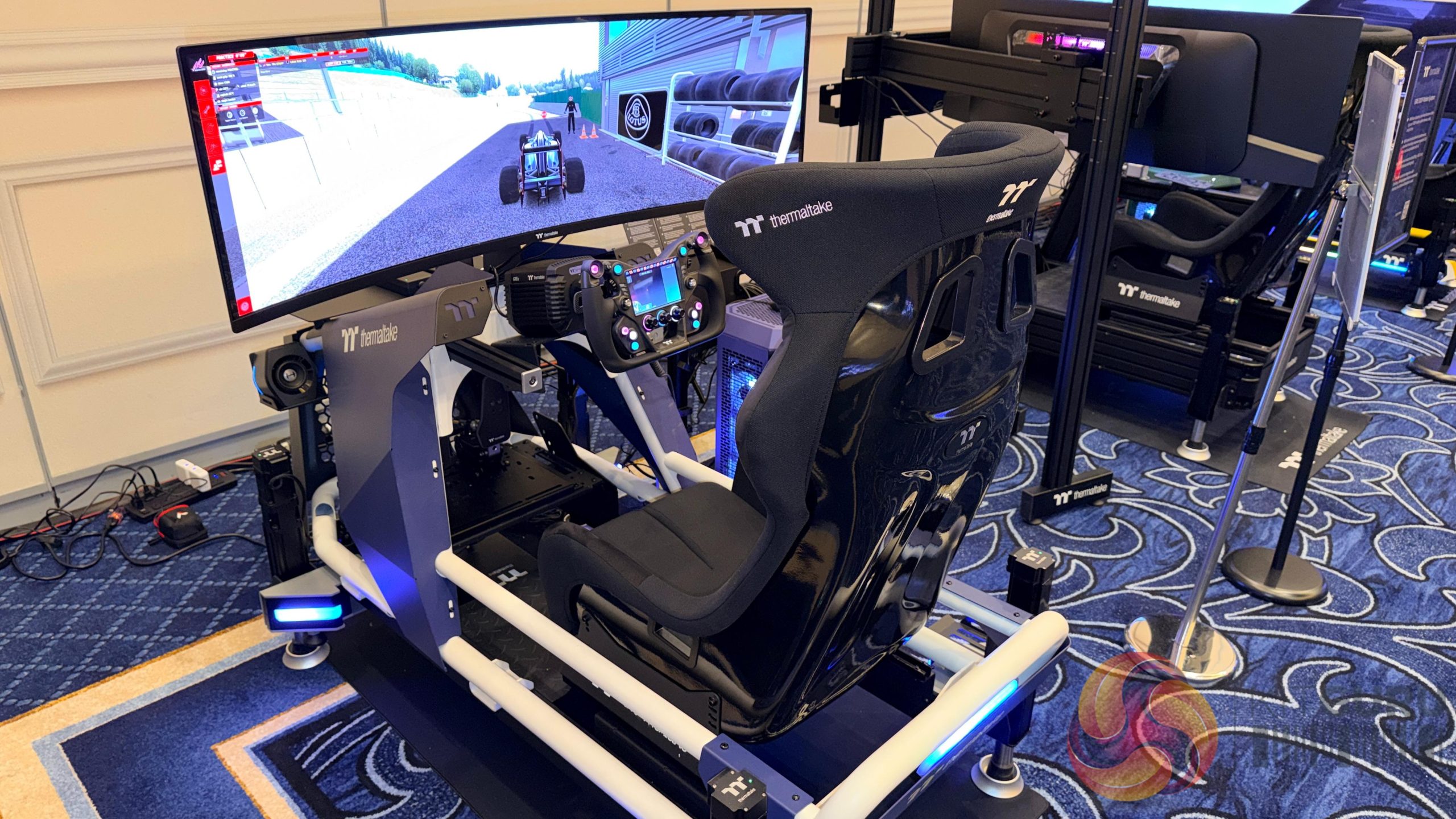
This week at CES we caught up with Thermaltake to get a first-hand look at their new product launches. In our video, we take you through it all, direct from the CES show floor.

Watch via YouTube below:

Timestamps:
00:00 View Cross TG Case
00:40 GK500 Go-Kart Simulator
01:08 GR900 Racing Simulator Cockpit
01:25 GR700 Racing Race Car Simulator
01:41 Race peripherials
01:53 New Fan Series
02:29 New System components
02:46 AI Forge Software
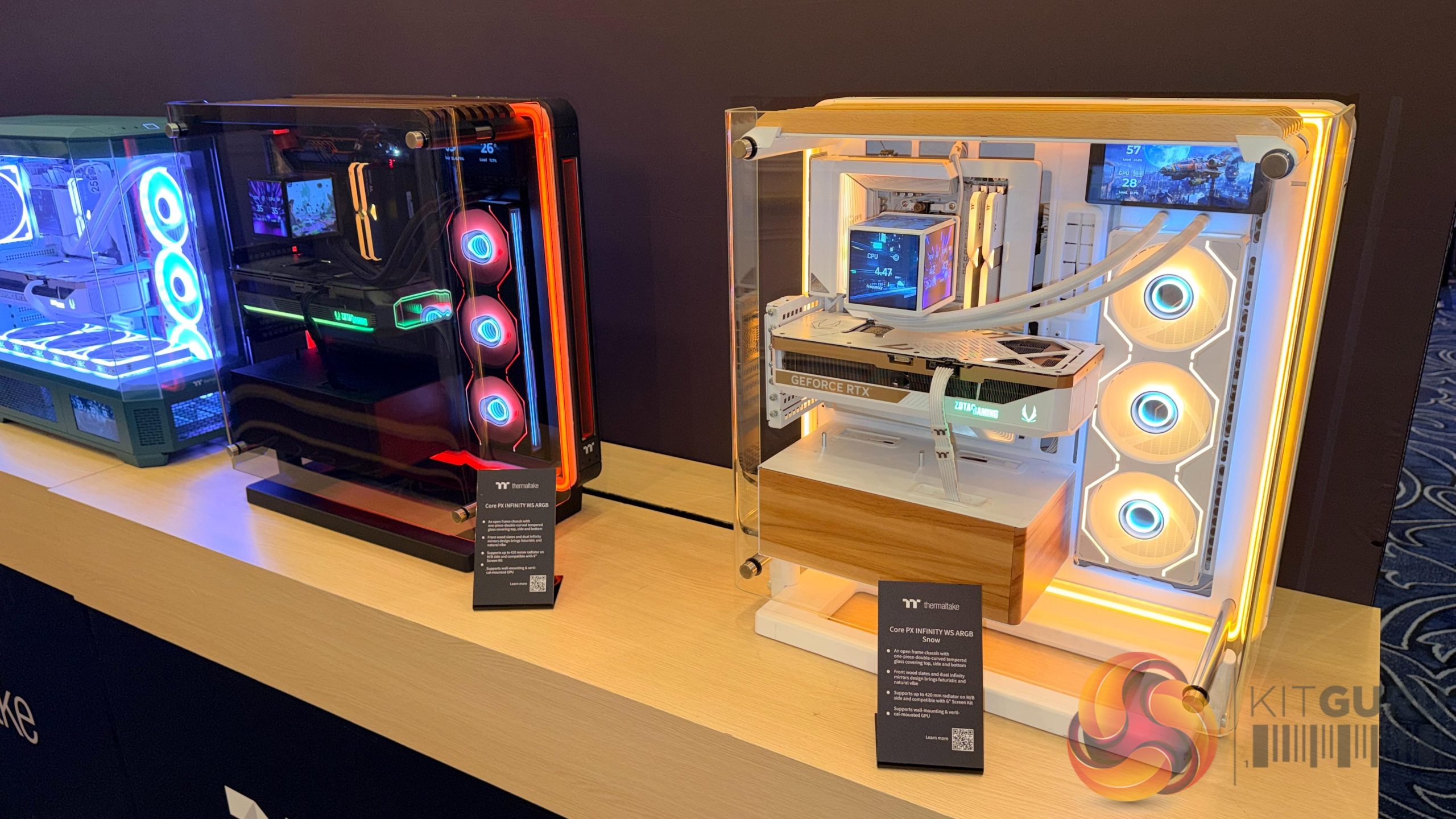
03:16 Core PX Series Cases
03:50 Power Supplies
04:24 Retro Gaming Kit

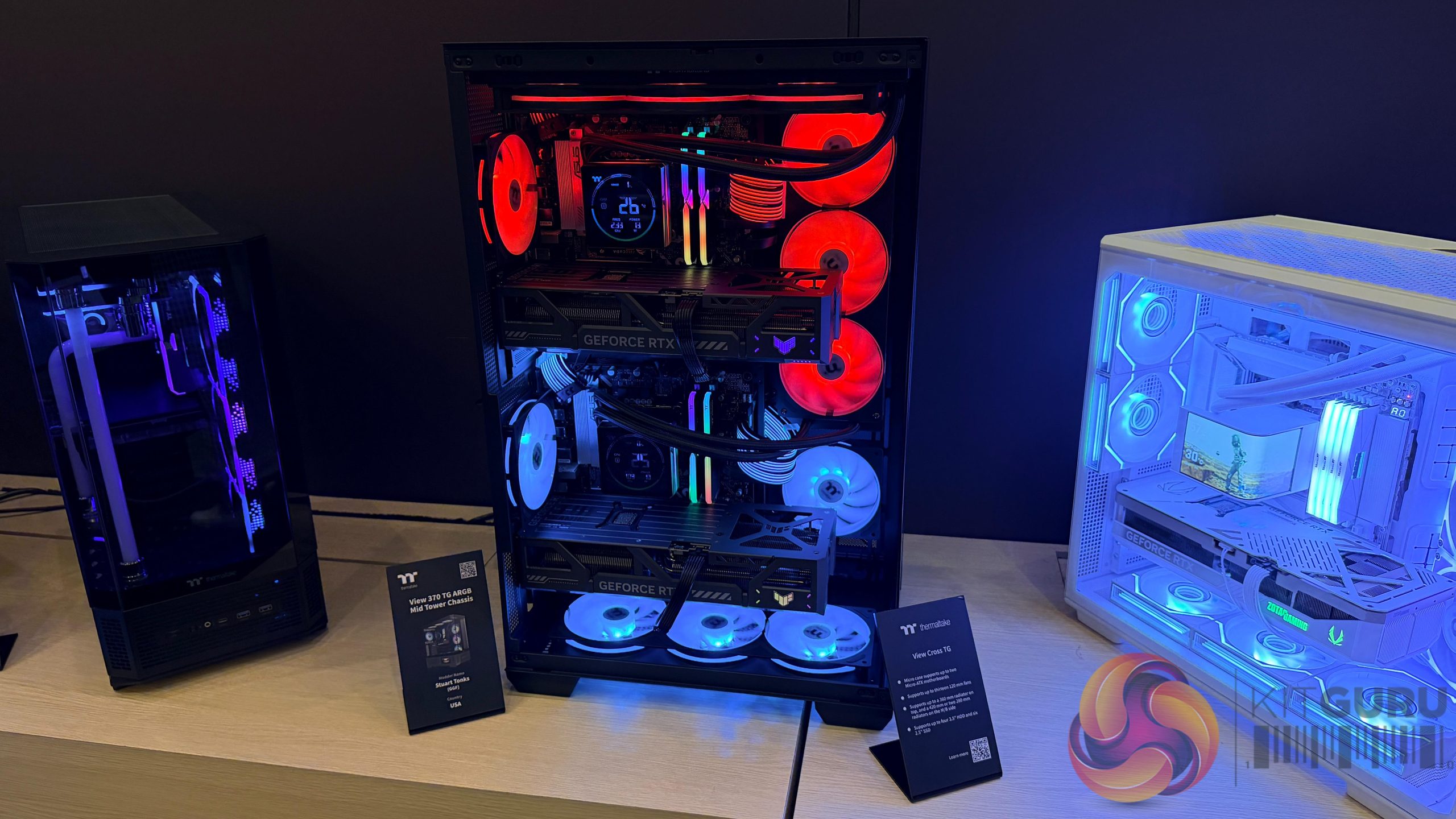
Thermaltake’s View 370 TG ARGB is a mid‑tower chassis built around panoramic presentation, using a four‑piece tempered‑glass layout that wraps across the front and side for full component visibility. It supports Mini‑ITX to ATX boards, including hidden‑connector designs from ASUS, MSI, and Gigabyte, and offers room for up to ten 120mm fans and 360mm radiators, with two ARGB fans pre‑installed. The case also supports vertical GPU mounting and an optional 6‑inch LCD panel on the PSU shroud for system stats or custom graphics via TT RGB Plus 3.0. Front I/O includes USB‑C, dual USB‑A, and HD audio, while removable dust filters cover the major intake points for easier upkeep.

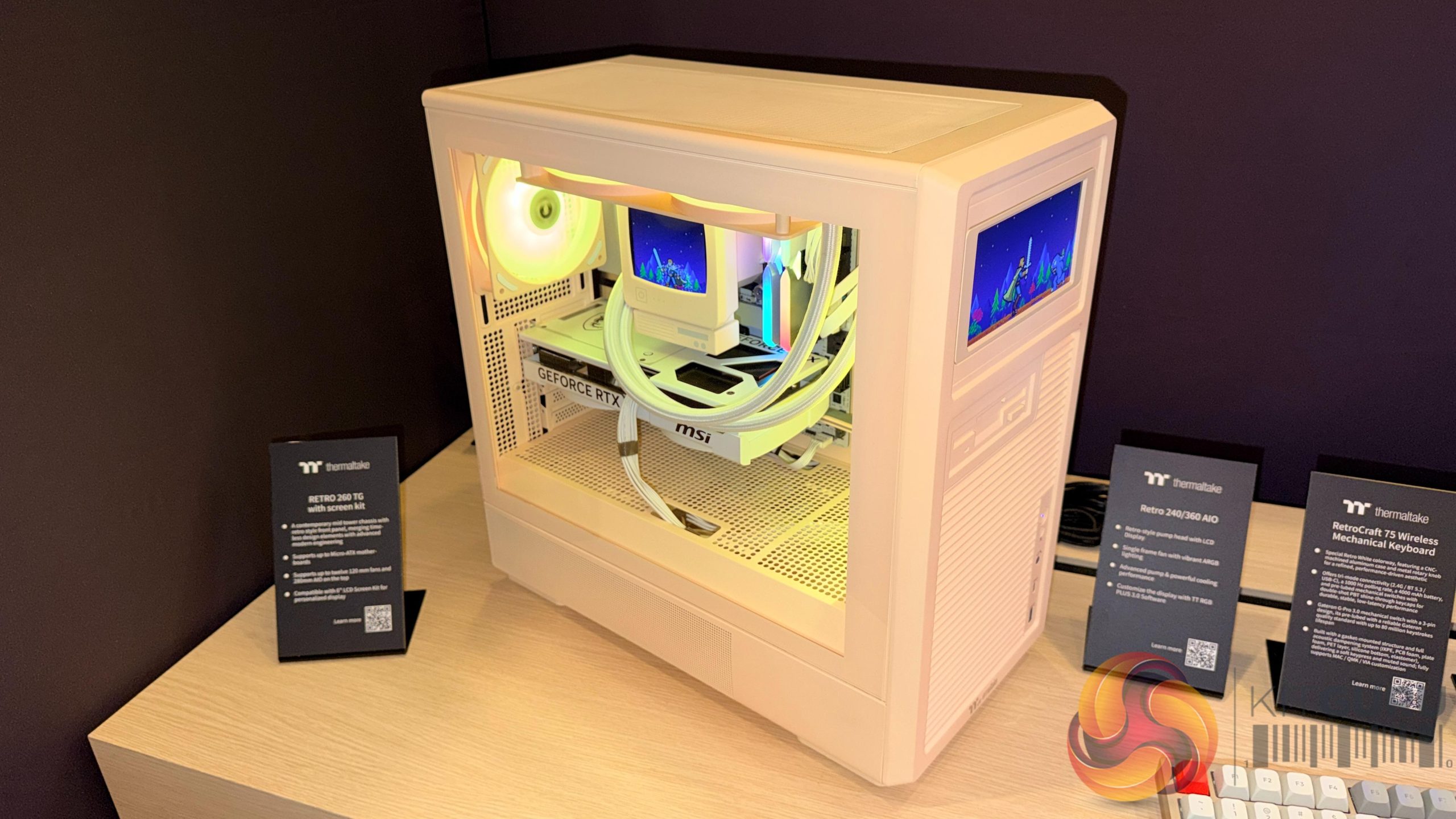
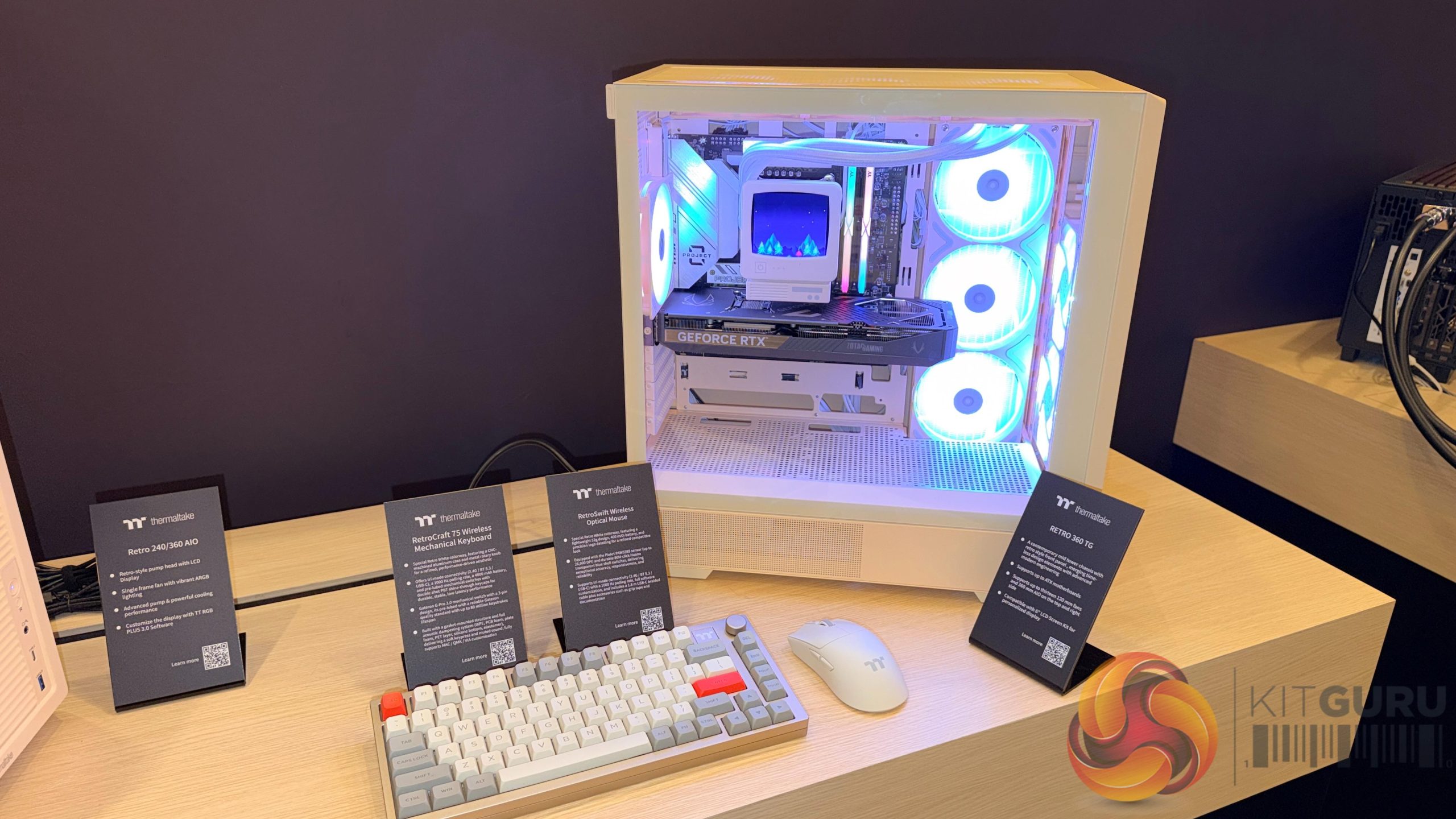
Next up we have the new Retro Series, which brings 90s workstation styling to modern hardware. Starting with the compact Retro 260 TG mATX chassis, despite its old-school look this case supports hidden‑connector motherboards, up to nine 120mm fans, a 280mm top radiator, and the company’s optional 6‑inch LCD display. The larger Retro 360 TG scales the design to a mid‑tower with ATX support, room for twelve 120mm fans, dual 360mm radiator mounts, and updated front I/O including USB‑C. Rounding out the lineup is the Retro Ultra ARGB Sync AIO cooler, which will be available in 240mm and 360mm sizes and features a CRT‑inspired 3.6‑inch LCD display on the CPU block.

Thermaltake is also expanding its sim‑racing portfolio at CES with three new cockpits and updated peripherals. The flagship GR900 uses an anodised aluminium profile frame with extensive adjustability and support for single or triple displays and can be paired with motion systems for full professional‑grade feedback. The GR700 offers a more accessible tubular‑steel design with support for belt‑ and direct‑drive wheels, an integrated monitor mount, and optional 3DOF motion for added immersion. For karting fans, the GK500 delivers an authentic low‑slung posture with adjustable seating, steering and pedals for both children and adults. Aside from the new cockpits, Thermaltake also has new wheel and pedal sets coming out, including the XRW G1 steering wheel with a five‑inch touchscreen, RGB indicators, Hall‑effect paddles and CNC‑machined construction, plus the XRP L1 load‑cell pedal set built around a 200kg sensor, adjustable pedal mechanics and high‑resolution Hall sensors for precise braking control.

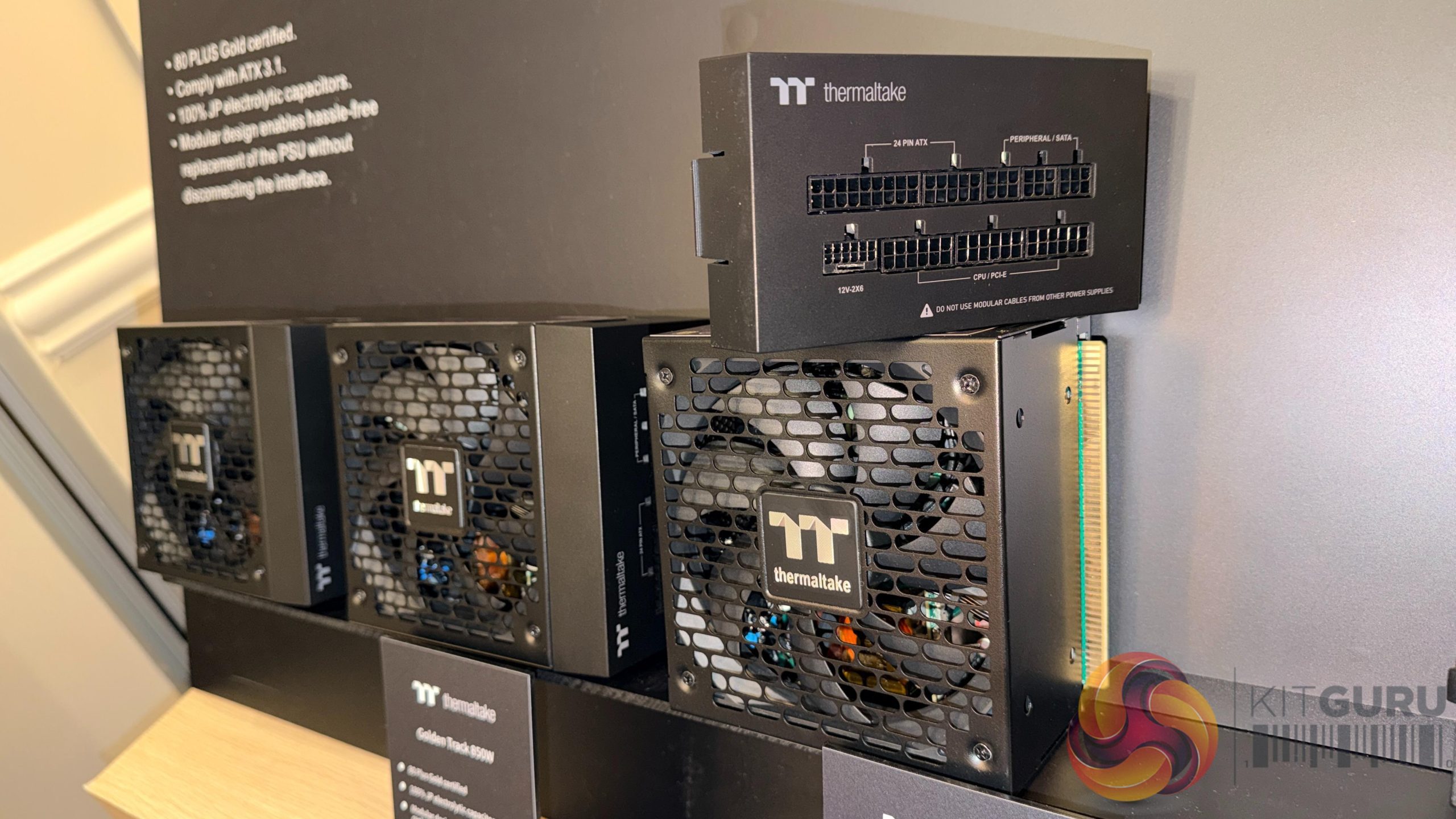
On the power supply front Thermaltake has something quite innovative on show. The Golden Track Series offers a new modular approach to power supplies, launching in 750W, 850W, 1000W and 1200W models, built around a new gold‑finger connector that links the power‑supply body to a fixed rear backplane. Instead of unplugging cables or re‑routing wiring, users can swap the PSU module itself for a higher‑wattage unit while leaving the interface and all cabling in place.

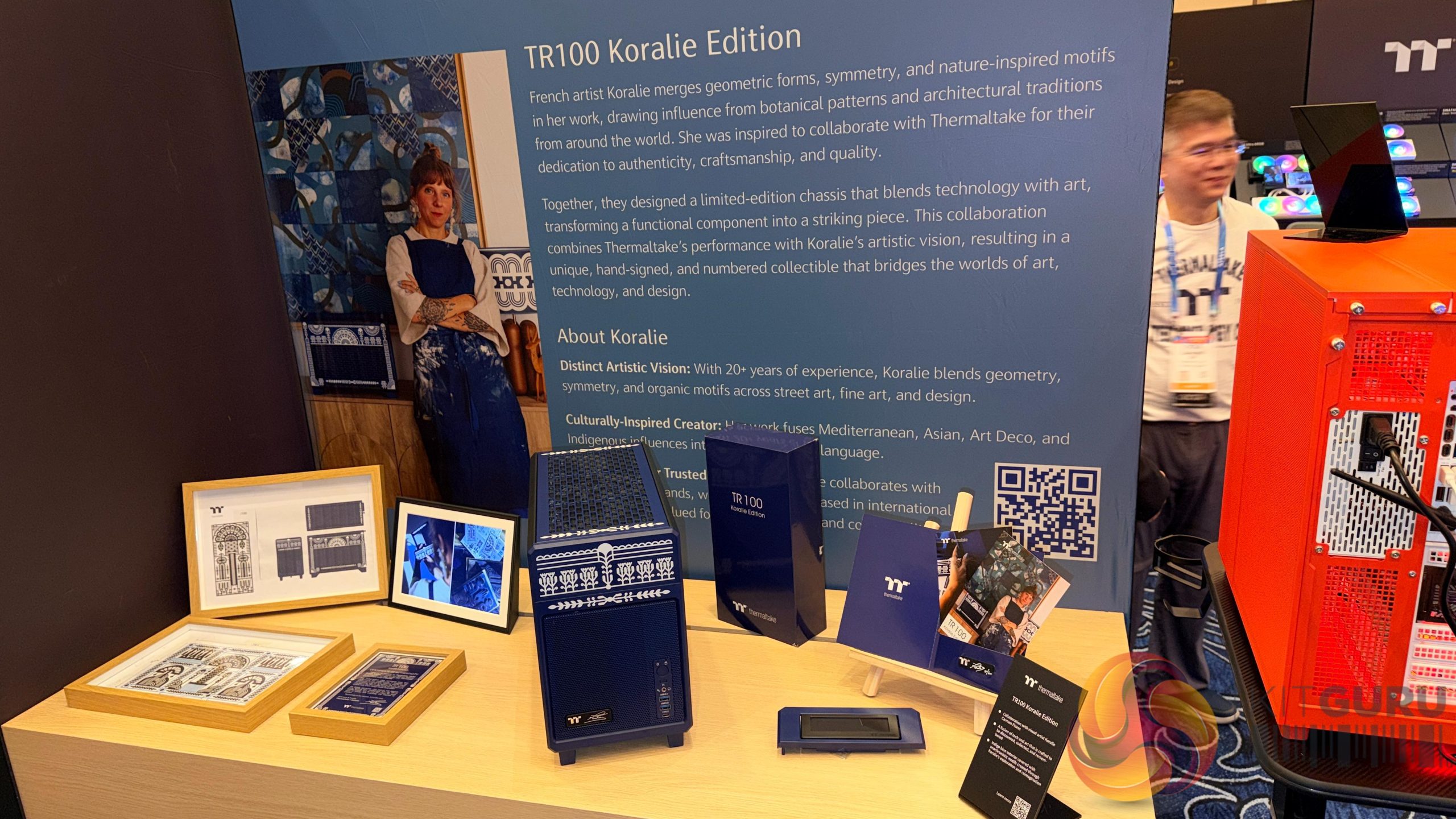
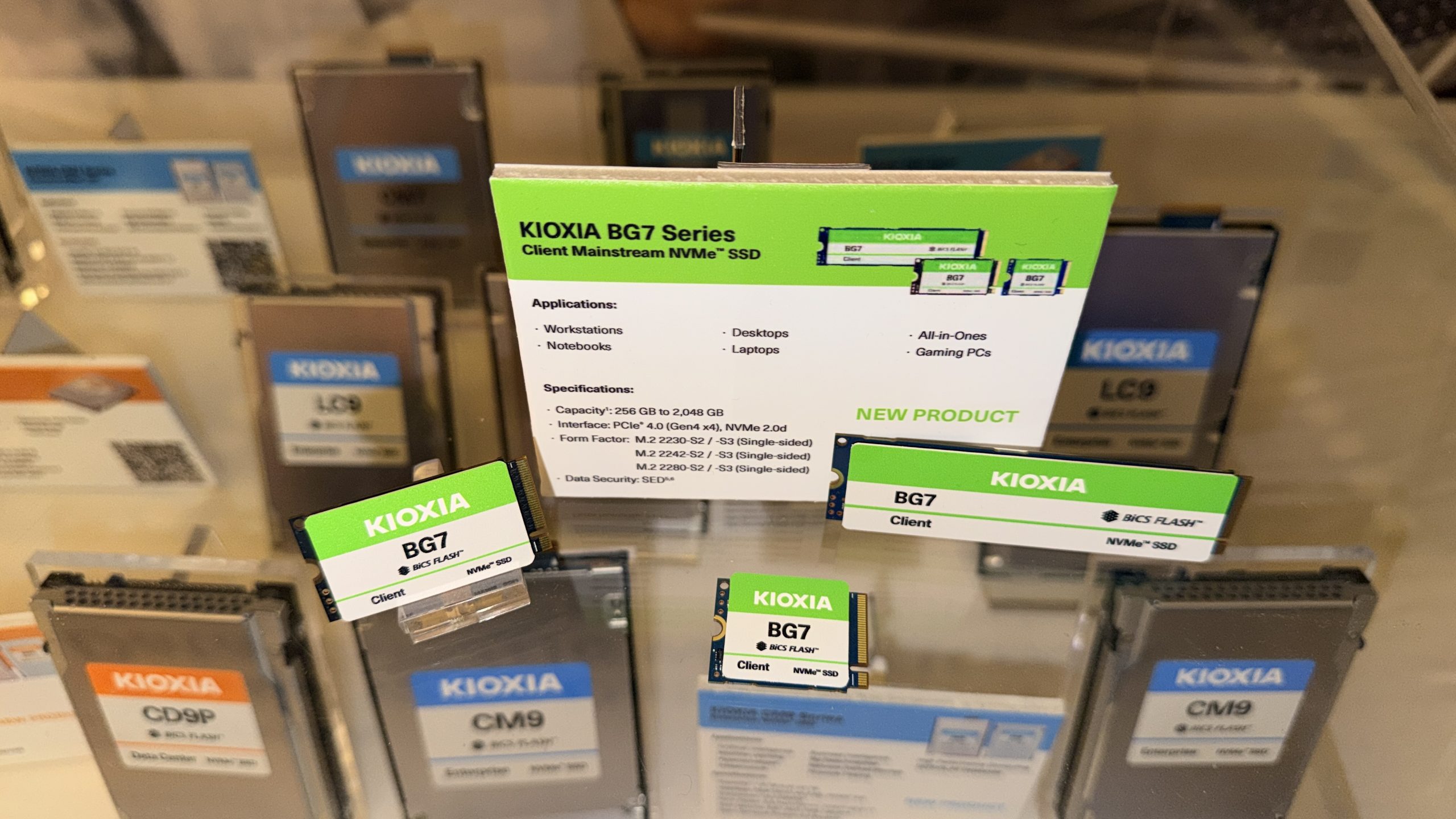
Last on our list we have two design‑focused updates: Transformative Teal, a new blue‑green colourway being applied across several existing chassis, and the TR100 Koralie Edition, a limited‑run artistic re‑skin of the company’s compact Mini‑ITX case. Transformative Teal is positioned as a calming, sustainability‑inspired shade that will appear on refreshed versions of The Tower 600, View 390 Air and View 600 TG, while the TR100 Koralie Edition adds a deep blue finish and geometric motifs created with French artist Koralie Carmen Flores.

Discuss on our Facebook page, HERE.

KitGuru Says: What did you think of Thermaltake's CES showing this year? 

The post CES 2026: Thermaltake launches new cases, expands racing sim line-up and more first appeared on KitGuru.
❌