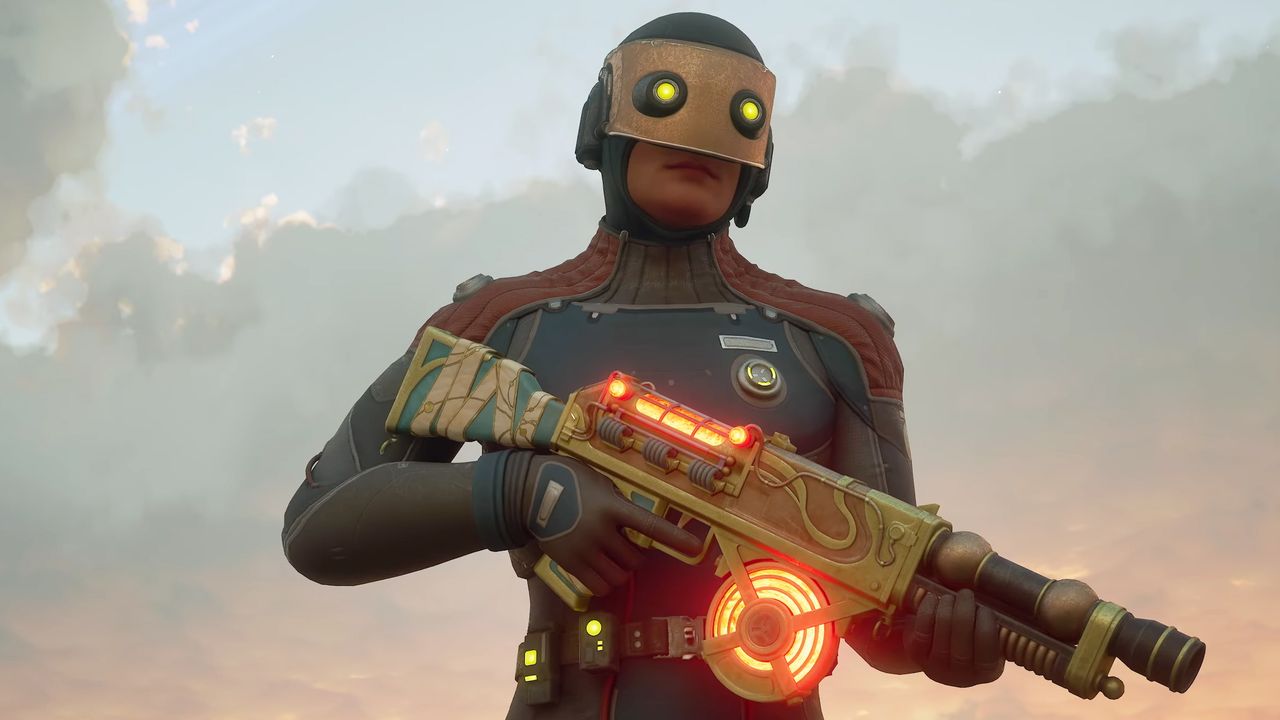
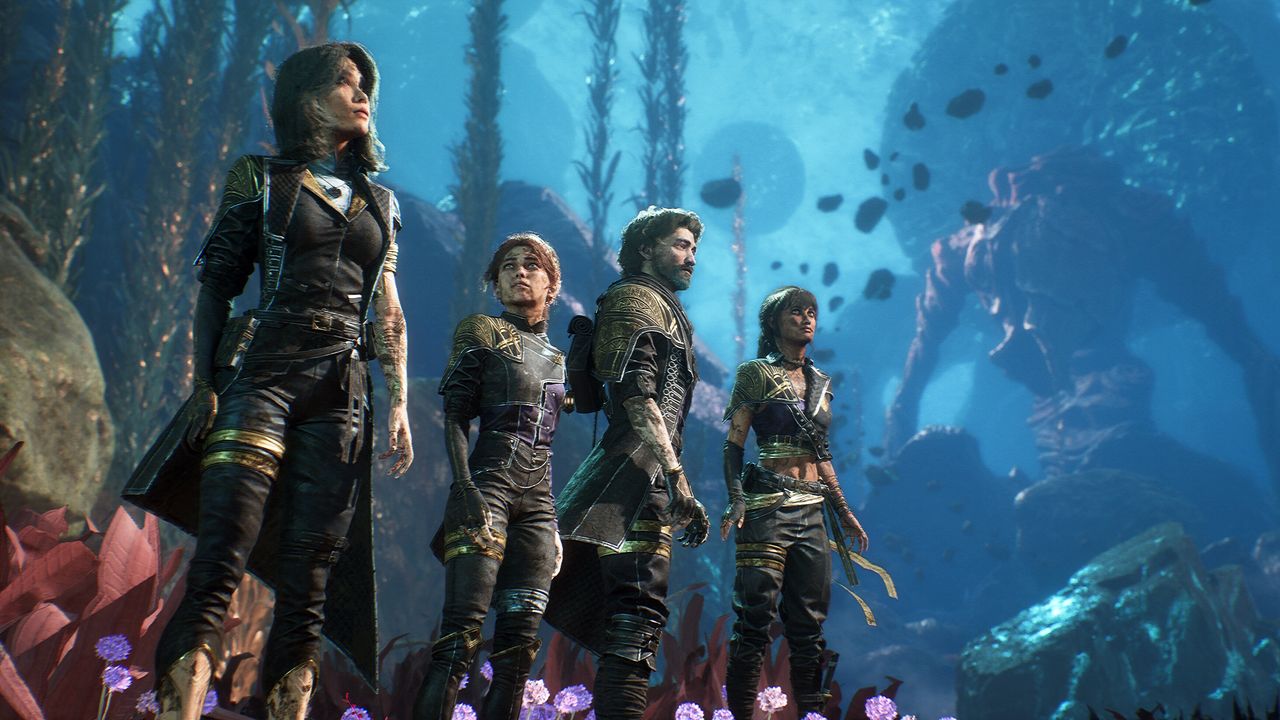
007 First light is delayed two months for “further polish,” developer and publisher IO Interactive has announced.
The James Bond adventure video game was due out March 27, 2026, but will now release on May 27, 2026. In a statement published online, IOI said the delay would ensure it was able to deliver “the strongest possible version at launch.”
It’s worth noting that 007 First Light’s new release date is just a day after Grand Theft Auto 6 was due to be released before its latest delay to November 19, 2026. Essentially, IOI has snapped up the release slot left vacant by Rockstar’s behemoth.
007 First Light was thought to have benefited from the GTA 6 delay, coming out at the time just two months before GTA 6’s prior release date. In an interview with GamesIndustry.biz from last month, IOI CEO Hakan Abrak was asked about GTA 6 kindly getting out of 007’s way.
“It would be a lie not to say that obviously spring looks really good,” he replied. “I want to say in the same breath that GTA 6 is a welcome thing for the industry. I do believe a lot of gamers who maybe haven't played for a while will get into things again, and generally for the industry as a whole, I think that will be amazing.”
Clearly, GTA 6’s delay has given IOI even more room to breathe, and it’s snapped that extra time up to give 007 First Light the best chance possible of having a strong launch.
Wesley is Director, News at IGN. Find him on Twitter at @wyp100. You can reach Wesley at wesley_yinpoole@ign.com or confidentially at wyp100@proton.me.
Well, Anaconda must not have buns, because I don't want none of what Sony's funny-first reboot is laying down (the youths know who Sir Mix-a-Lot is, right?). Director Tom Gormican follows his Nicolas Cage in-joke-of-a-movie, The Unbearable Weight of Massive Talent, with another meta-filmmaking comedy—but this one’s a ssstinker. It's concept over execution: a tantalizing idea that never seems to evolve past the thought bubble phase. 1997's Anaconda is beloved for its B-movie antics, practical reptilian effects, and a menacing lean into creature-feature violence. Gormican's spoofier update purposely ditches all that in favor of mainstream yucks, getting stuck in that horror-comedy purgatory where neither subgenre flourishes.
In the film, four Buffalo, New York, jamooks stuck living their best "B+" lives decide on a whim to independently reboot Anaconda. Lifetime background actor Griff (Paul Rudd) claims he's miraculously secured the legal rights, teeing up a golden opportunity. His best friend Doug (Jack Black) is a creatively unfulfilled wedding videographer wasting his talents. Their buddy Kenny (Steve Zahn) could use a distraction to help stay sober. Then there's Griff's hometown fling, Claire (Thandiwe Newton), who's newly divorced and ready for a shakeup. All four embark on the mid-life-crisis of a lifetime, heading into Brazil's Amazonian jungle for a three-week shoot—but they soon find themselves in Anaconda, for real.
Unfortunately, Gormican and co-writer Kevin Etten struggle to weave riverboat survival thrills into a Hollywood satire that roasts an industry obsessed with resurrecting intellectual properties. At the film's core is a wholesome message about creating art with the people you love, but subplots about illegal activities and trigger-happy thugs feel shoehorned in as runtime padding. Daniela Melchior flounders as the boat's sketchy captain, Ana Almeida, given how the film would run smoothly without her added baggage. Griff, Doug, Kenny, and Claire wrestle with enough existential depression about unhappiness and self-loathing to keep the central conflicts afloat, while Ana's eventual "moment" sinks and is immediately forgotten.
Laughs are hard to come by as ridiculous gags frequently impair snake-based tension, but the punchlines aren't all duds. Rudd is unsurprisingly charming as a D-lister who has to pull up his big-boy hero pants, while Black… well, I'm a mark for Jack Black doing Jack Black things, and here he's putting all that chaotic energy into a passion for indie filmmaking (although he’s handcuffed by his character’s straight man trappings). As these knuckleheads treat basic screenwriting tools as epiphanies, patting themselves on the back for adding identifiable themes, shades of King Kong (panicked film crew against monsters) or Ed Wood (low-talent filmmaker hijinx) peek out. Catastrophe strikes all the time on a no-budget film set, and the film's consistently funniest as Griff and Doug play fixer on the spot. When Anaconda is about inexperienced goofballs hoping to become the “white Jordan Peele,” driven by blind optimism and boundless enthusiasm, there’s something (fleeting) to enjoy.
Sure, the 1997 Anaconda has a rubbery snake prop, but I'd rather that be used than the lifeless pixelation on display.
But Gormican doesn't have an eye for terror, nor do his action sensibilities dazzle. That's a problem in an Anaconda reboot that starts with Ana speeding on her dirt bike from armed pursuers—a strange, confusingly vague cold open. It's supposed to serve as an introduction to the snake's ferocity but, between the uninspired computer graphics and choppy editing, serves more as a content warning of what's to come. Gormican reuses the same underwater constriction shots every time someone's killed, rapidly succumbing to the boring reality that Anaconda only has one trick in the horror department. No scene slithers under your skin, nor does any gruesomeness happen on camera to appease the PG-13 masses. Sure, the 1997 Anaconda has a rubbery snake prop, but I'd rather that be used than the lifeless pixelation on display.
Even worse, the stodgy comedy stylings of dopey Americans adrift in the Amazon are oftentimes lazy setups with pillowy payoffs. There isn't much thought put into jokes about Kenny's failed sobriety, Doug and Griff's arguing over who's the best driver, or Sony's desire to cash in on Anaconda. Don't get me wrong, Gormican had me howling at a few nostalgic callbacks (one ruined by trailers), and who doesn't love overt Jurassic Park homages, but the bread and butter humor? It's stale and uninspired, driving an even bigger wedge into an already fractured tonal blunder. Everything's comical for a few seconds, but overstays its welcome: Black running with a thought-to-be-dead warthog on his back, Selton Mello's way too passionate snake handler, bash-your-head-in callbacks to the original, even Rudd doing his patented pouty-faced jealousy routine.
Who is this reboot for, frankly? It strays detrimentally far from 1997's Anaconda, making a mockery of the beloved midnighter. It's also uninspiringly dry, leaning on low-hanging fruit in a script that begs for further development. The concept, "what if bozos trying to make Anaconda found themselves in Anaconda," is achieved at face value but hardly at full potential. For such an out-of-bounds idea, everything reads so generic. The potty humor, the "Back in Black" and "Kickstart My Heart" needledrops, the repurposed Hollywood pyrotechnics à la Tropic Thunder—it's all stock material repackaged anew.
Look, not all games can be great. In fact, many of them are not good, and some even fail to be simply okay. If you’re looking for all things good and great, then check out our list of the best-reviewed games of 2025. But this place, sadly, is not where they live. No, this is where I have the job of reminding you of all of the worst games we played this year. The ones that didn’t quite live up to expectations and received a score of five or below from IGN reviewers. Maybe you did enjoy some of these, and to that I say, all the power to you. Let us know in the comments which games featured on this list you did actually love playing. But before you scroll all the way down there, let’s talk about IGN’s worst-reviewed games of 2025.
5 - Mediocre
What better way to kick this off than with a welcome tour? A Nintendo Switch 2 Welcome Tour, to be exact. A collection of minigames and digital museum displays designed to give you a better idea of the tech powering your new Nintendo console, this one just ended up committing a criminal cardinal sin by Nintendo standards — it just wasn’t fun. Our review described this “interactive brochure” as “a muddled collection of quaint tech demos and boring factoids”. Not exactly the best way to get everyone excited about a new generation of hardware, was it? And it didn’t even come packaged with the console. A standalone purchase isn’t exactly the best way to deliver your new spin on a digital manual.
At least the tech being shown off in Welcome Tour is very impressive, though, which sadly couldn’t be said for Kaiserpunk. A city-builder that, unfortunately, suffered from significant performance issues at launch, ranging from “huge, save-killing bugs” to an interface that lacks “fairly basic functionality”, it provided unsolid foundations to build any metropolis on. If a fully-built sci-fi city is more your vibe, then maybe you could be tempted by Steel Seed, an action-platform dripping in neon. But when we tell you that it’s actually a “stealth action game cursed by mediocrity”, then maybe you’ll be less interested. Hence, the five out of ten rating, which stands for “mediocre” here at IGN. Along those lines, if “30 mediocre hours of dodge rolling and sword swinging” sounds appealing, then maybe you want to check out AI Limit. A “soulslike without any soul”, this one just lacked the sort of creativity you’d hope for in what’s become a fairly played-out genre these days.
Speaking of souls, Lost Soul Asidewas a hotly anticipated PlayStation console exclusive this summer, which sadly didn’t quite live up to the hype. While it did come packed with some exciting combat, unfortunately, “repetitive story, derivative characters, and bland level design” couldn’t support it. Another game that fell foul of repetition was Full Metal Schoolgirl, which you may not instantly see as a negative when considering it's an action roguelike — a genre grounded in attempting the same objectives over and over again — but when you hear that after “a couple runs, you've pretty much seen it all”, that isn’t ideal.
Feeling like we’d pretty much seen it all before is exactly why we gave theBattlefield 6 campaigna score of five, too. As our shockingly handsome reviewer said, the single-player offering is a “safe, dull reimagining of what Battlefield once was, rather than a bold reinvention of what it could be”, and I, for one, agree with him. It’s a short string of missions that doesn’t embrace the chaos naturally created in Battlefield 6’s multiplayer, instead feeling like a relic of a bygone age of FPSs. We also gave this year’s Call of Duty Black Ops 7 campaign a less-than-shiny score, too, but it narrowly misses out on making this list due to us giving it a 6, because it at least tries to do something new, even if it isn’t very successful.
Now we head into the remaster, reboot, and reimagining section of proceedings. Yooka-Replayeeaimed to bring the 2017 original into the modern day with some tweaks, but while improvements were made, we were of the opinion that “none of its changes do enough to bring it close to the 3D platforming standards of today”. Double Dragon Reviveattempted to breathe new life into the classic side-scrolling beat ‘em up, but ended up feeling “less a miraculous resurrection and more like exhuming a shambling corpse”. Similar things could be said for Painkiller, a reboot of People Can Fly’s 2004 cult-favourite, which again fell short, instead playing like a “mediocre resurrection of a classic trying to put a new cover on an old book and hoping it still has some relevance 21 years later”. Shadow Labyrinthdid at least attempt to take something incredibly old and do something new with it. Unfortunately, this gritty, Metroidvania reinvention of Pac-Man was deemed to be “largely dull,” with crimes ranging from “annoying checkpointing to the one-note combat”.
There is no shortage of checkpoints in racing games. Sorry, that’s the best segue I have for this one. Project Motor Racingis the most recent game we have on our list to score a five or below, as it failed to excite our reviewer, who said that “there are certainly glimpses of a competent racing sim here, but it is drastically unfinished”. On the other end of the racing spectrum was Wreckreation, not in terms of quality, as it also received a five, but in its very “arcadey” approach to action of four wheels. Disappointingly, it just didn’t reach the heights of the likes of its Burnout inspiration. Instead, “overflowing with ambition but ultimately plain and with no style to call its own, Wreckreation feels like a supermarket brand homage to a series of better arcade racers.”
Let’s head into fantasy corner now and take a look at those sword-swinging games that just weren’t quite sharp enough this year. Yasha: Legends of the Demon Bladewas yet another action roguelite to come out in 2025, but one that didn’t leave much of an impression, thanks to “repetitive levels and a flimsy story”. Blades of Firetook an interesting approach to third-person action by placing an emphasis on creating your own bespoke swords through an involved blacksmithing process, which was admittedly quite good, but its “overly simplistic combat and a mediocre story mean it doesn’t forge a sharp enough edge to put its customizable weapons to good use”. And, finally, rounding out our list of games that received a review score of five from IGN this year, is Game of Thrones: Kingsroad.A microtransaction-riddled interpretation of George R.R. Martin’s world, in which the recreation of HBO’s visual style is admittedly impressively done, it’s unfortunately hampered “by an overly grindy, pay-to-win live service model, and both its combat and homestead management are too tedious to keep things interesting on their own”.
4 - Bad
Heading into the games that got a four, which represents “bad” on the IGN review scale, let’s stick with another beloved piece of fantasy literature that struggles to produce good video game adaptations. Tales of the Shire: A The Lord of the Rings Gamewas an attempt to “cosify” Tolkien’s world and asked the age-old question, “What if Animal Crossing, but Hobbits?”. The answer, sadly, was a resounding “no”, as we described it as “a promising idea that turned out dreadfully boring and extremely buggy”.
Arguably, no other game arrived with as heavy a thud as MindsEye did in 2025. The brainchild of former GTA dev, Leslie Benzies, this throwback third-person action-adventure was not only incredibly dull, but borderline broken. Sure, it looked like a blockbuster when viewed from a very specific, narrow angle, but on the whole, it failed to live up to any expectations that may have been held for it. “MindsEye’s flashy graphics and cinematics can’t hide its serious lack of substance and major performance problems”, says our review, and that tells you all you need to know.
To round things off, we have a handful of early access games that we gave a score of four to this year. These include Hyper Light Breaker, which we described as a “roguelite that currently feels hyper light on content and the wrong kind of broken”, and La Quimera,an “FPS version of a direct-to-video movie, with dialogue that is both poorly written and badly acted, middling combat, and an unfinished campaign”. Then there was EA’s reboot of Skate,which we calleda “faithful facsimile of the incredible feel of the old games, but its mobile game-style progression, dud dialogue, and cutesy art style make its early access debut drastically inferior to the originals in all other ways”. Unfortunately for Hyper Light Breaker, similar responses from both other critics and players eventually led to developer Heart Machine bringing development to a close. As for the other two, they remain developing projects, so let’s hope that these games fix their respective issues and have a better time in 2026 in the run-up to their full launches.
And that’s it, all of the games that we at IGN scored a five or four out of ten this year. Believe it or not, nothing actually scored lower, so I’m glad to say there are no twos or threes to report this year. Did you actually love any of the games listed here? Let us know in the comments. For more, check out the best-reviewed games of 2025, and our game of the year awards.
Simon Cardy is a Senior Editor at IGN who can mainly be found skulking around open world games, indulging in Korean cinema, or despairing at the state of Tottenham Hotspur and the New York Jets. Follow him on Bluesky at @cardy.bsky.social.
I don’t know if you’ve heard about this, but some good movies came out this year. Did you see Ryan Coogler’s vampire epic, Sinners? Or Guillermo del Toro’s long-gestating passion project, Frankenstein? Or the hilarious but also heartbreaking afterlife dramedy, Eternity? You probably should have if you haven’t, but that’s not why we’re here. We’re here to talk about the other side of the coin – the 2025 movies that didn’t just fail to make the grade, but made falling on their faces an artform unto itself.
For this list, we’re namechecking movies that received a 2 or 3 on IGN’s review scale. Nothing got a 1 this year (praise be), and although we did see a few 4s, like The Electric State, Deep Cover, and Eddington, we decided to really scrape the bottom of the barrel. So if you want to know what movies to avoid (or perhaps seek out if you’re morbidly curious), let’s dive into IGN’s worst reviewed movies of 2025!
Atrocious Actioners
Jackie Chan is known across the globe as one of the best martial arts stars to ever grace the silver screen, but even legends don’t always bat a thousand. Panda Plan from director Luan Zhang is one of Chan’s worst films; he stars as a fictionalized version of himself who has to commit a heist to save zoo pandas from an army of mercenaries. With terrible VFX and lifeless fight scenes, Panda Plan was described as “little more than a poor imitation” of Chan’s previous films by IGN reviewer Chase Hutchinson.
But he wasn’t the only action star to come up short in 2025, with Jason Statham starring in the woeful David Ayer film, A Working Man. Based on the Levon Cade novel series from Chuck Dixon, A Working Man is a paint-by-numbers affair that doesn’t take advantage of Statham’s charm or physical skills. Reviewer Hanna Ines Flint said that Statham is “surrounded by a cohort of undercooked villains in what amounts to a colossal waste of an action film budget.”
Viola Davis also got in on the action with G20, an Amazon Prime Original from director Patricia Riggen. Starring Davis as United States President Danielle Sutton, G20 is a “terrorists versus the Prez” vehicle in the vein of Air Force One that unfortunately falls into many of the typical made-for-streaming movie traps. Reviewer Jesse Hassenger said that G20 was lacking in “exciting or well-staged action,” instead featuring “thriller cliches and unconvincing political details.”
In the same vein is Shadow Force, a bare-bones Joe Carnahan actioner starring Kerry Washington and Omar Sy that somehow received a theatrical release. This one is hard to describe, because the plot and characters are so thinly sketched that they might as well be composed on table napkins. Reviewer Devan Suber called Shadow Force “a movie as vague as its title,” adding that it “doesn’t give you any real reason to care about anyone or anything that happens onscreen.” Ouch.
Horrendous Horror
COVID-19 themed movies haven’t generally been widely loved, and Don’t Log Off didn’t change that trend. A screenlife movie in the same style as Searching, Don’t Log Off stars Ariel Winter in a story about a group of friends trying to figure out what happened to one of them that disappears from a video call. Reviewer Steven Nguyen Scaife found it repetitive and tiring, writing that “both the COVID-era setting and the computer-screen presentation of Don’t Log Off show flickers of promise, but this horror film has no clever ideas for using either one.”
The Strangers - Chapter 2 is devoid of tension, thrills, or emotional resonance.
Another gimmicky horror film came from social media celebrity Kris Collins and Celina Myers; House on Eden is a supernatural found footage movie that’s yet another uninspired knock-off of The Blair Witch Project. Reviewer Matt Donato was profoundly unimpressed, saying the film is “hapless and nonsensical in its structure” and is “built from blocks stolen from better and more accomplished movies.”
Further weak horror films from this year include I Heart Willie, a public domain Mickey Mouse slasher based on the Steamboat Willie animated short that Matt Donato said “flimsily sets up cheap flesh-flaying thrills that never stray far from convention,” and Ick, a sci-fi horror comedy about a science teacher who has to combat a parasitic alien plant that reviewer Shannon Miller said is “not remotely haunting enough to make for a decent horror movie or anywhere near funny enough to be a good comedy.”
I reviewed The Strangers - Chapter 2, the second in a planned trilogy of slasher films from director Renny Harlin. Despite Madelaine Petsch doing what she can in the lead role, the movie is devoid of tension, thrills, or emotional resonance. It might be marginally better than Chapter 1, but I described Chapter 2 as “ultimately just as slapdash as its predecessor.”
The biggest turkey in the horror category this year is Five Nights at Freddy’s 2, the latest video game adaptation to be lambasted by critics. The first film wasn’t that great either, but the sequel reaches new lows with a shoddy script penned by series creator Scott Cawthon that’s more concerned with spoon-feeding easter eggs to franchise fans than doing anything dramatically satisfying. It’s a shame, because director Emma Tammi (who returns from the first movie) isn’t an untalented filmmaker; her minimalist horror movie, The Wind, that she directed before becoming the custodian of the FNAF films, is a pretty decent spooky western. But her skills aren’t on display in Five Nights at Freddy’s 2, which Matt Donato described as a “bare minimum sequel.”
Star Trek to Nowhere
Holding the ignominious honor of being the only film rated a 2 by IGN this year is Star Trek: Section 31. Originally developed as a spin-off series from Star Trek: Discovery for Michelle Yeoh’s character, Philippa Georgiou, Section 31 was reworked into a movie after production issues caused by the COVID-19 pandemic.
Ultimately, neither director Olatunde Osunsanmi or screenwriter Craig Sweeny wrangled anything of value out of the film, which is nominally about Georgiou as an evil-emperor-turned-secret-agent who joins a team of whoevers to recover a superweapon before bad guys can use it to destroy the universe… or something. It’s actually kind of hard to follow, but trying isn’t even worth your time, with reviewer Jordan Hoffman describing the film as “nothing but a lousy, uninteresting caper picture” that’s devoid of all the qualities fans expect from the Star Trek franchise.
Did you know this technically counts as the 14th Trek movie? I’m sure by this time next year, nobody but Paramount will even remember that.
What were your picks for the worst movies of the year? Vote in our poll and let's discuss in the comments.
Carlos Morales writes novels, articles, and Mass Effect essays. You can follow his fixations on Twitter.
Universal made the shock announcement that Blumhouse’s horror sequel would launch on digital platforms to buy or rent on December 23, 2025, just 18 days after its theatrical debut.
It was thought that Five Nights at Freddy's 2 had secured a box office win despite a critical mauling. In 2023, Blumhouse’s Five Nights at Freddy’s, which adapts the hugely popular video game series by Scott Cawthon, became the highest-grossing horror film of the year. Two years later, Five Nights at Freddy’s 2 earnt a huge $109 million at the global box office during launch weekend. While that wasn’t as big as Five Nights at Freddy’s $160 million box office debut, it was enough to take the number one spot at the domestic box office with an impressive $63 million haul.
During its third weekend, Five Nights at Freddy’s 2 grossed a further $8 million to reach $92.9 million domestically — that’s more than M3GAN, Get Out, The Black Phone, 28 Years Later, and Smile 2 managed. The film now has a global box office of $202 million.
Universal Pictures had said it expected continued box office momentum for the film, “fueled by strong social media buzz and word-of-mouth,” which makes today’s VOD launch all the more surprising. Perhaps Blumhouse and Universal are already satisfied with the film’s box office, which reportedly makes the movie profitable, and want to capitalize on holiday movie watching. While Five Nights at Freddy’s 2 remains in theaters for now, its box office is now likely to slow to a crawl.
Here’s the official blurb:
Dive deeper into the world of Freddy Fazbear at home as the dark and mysterious thrill ride now comes jam-packed with revealing cast interviews, a jaw-dropping look behind the scenes at how fan-favorite animatronics like Mangle and Marionette came to life on screen, and an exploration of the Easter eggs dotting nearly every scene of the new movie.
And here are the Five Nights at Freddy’s 2 bonus features when you buy the VOD:
EMPLOYEES OF THE MONTH: THE CAST - Revealing interviews and behind-the-scenes footage highlight how actors develop their roles to fill the FNAF world with new mysteries, thrilling surprises, and fan-pleasing lore.
BRINGING FREDDY & FRIENDS TO LIFE - Learn how stunt doubles and puppeteers advance animatronic terror to the next level.
MANGLE MAYHEM - Witness Mangle come to life as a nightmarish, multi-limbed monstrosity.
HIGH-STRUNG - Cast and crew reveal the multiple methods used to turn the Marionette into an eerie entity whose unique design and haunting movements are unlike any other animatronic.
SENSORY OVERLOAD: EXPLORING THE SETS - Actors join the artists behind the production design to serve up details on the Easter eggs and game inspirations lurking inside the incredible sets.
IGN’s Five Nights at Freddy's 2 review returned a 3/10. We said: “Five Nights at Freddy's 2 gives sequels, video game adaptations, and gateway horror movies a bad name.”
Wesley is Director, News at IGN. Find him on Twitter at @wyp100. You can reach Wesley at wesley_yinpoole@ign.com or confidentially at wyp100@proton.me.
SteelSeries is behind many of the top gaming headsets. While its high-end Arctis Nova Pro Wireless and Arctis Nova Elite headsets are impressive, they are expensive, even when you manage to score a great discount. For a more affordable alternative, the SteelSeries Arctis Nova 1 is worth your consideration. Now is the time to buy, too. The headset is cheaper than Black Friday. It’s nearly 40% off, costing you just $36.49. Chances are good you won’t see prices this low again for a long time. Be sure to grab this deal while you still can.
Save 39% on the SteelSeries Arctis Nova 1 Gaming Headset
The SteelSeries Arctis Nova 1 is our favorite budget gaming headset at full price, and with the current steep discount, it’s even more appealing. With it, you still get the awesome Arctis Nova design. It features a lightweight build, soft mesh earpads, and a stretchable headband for a comfy and secure fit that was praised by IGN expert Matthew Adler in his review of the SteelSeris Arctis Nova 1. Although this headset is a wired-only option, it offers multi-platform support. So, whether you’ve got a PS5, Xbox, Switch, PC, or Mac, you’ll find the Arctis Nova 1 works seamlessly.
Even if this headset is cheaper, it doesn’t mean sound is lacking. Sure, the tunability and overall performance won’t be on the level of its higher-end brethren. Still, the Arctis Nova 1 punches far above its budget price class, delivering clear mids and highs with a surprisingly solid bass. As for surround sound, there’s Tempest 3D Audio and Microsoft Spatial Sound support, helping to discern sound cues in a game easily. You’ll even come across crisp and clear to teammates, thanks to a retractable mic that helps dull background noises. It’s seriously impressive for a headset that costs less than $40 right now.3
If you’re after one of SteelSeries’ high-end headsets, there’s an awesome sale on blemished box Arctis Nova Pro Wireless gaming headsets. While the packaging may be damaged, the goods inside are unscathed. For a limited time, you can purchase the headset for only $239.39 on the SteelSeries website after applying the coupon code FRAG10X.
Danielle is a Tech freelance writer based in Los Angeles who spends her free time creating videos and geeking out over music history.
Star Citizen developer Cloud Imperium Games has told fans that the Mark Hamill-fronted single-player space adventure Squadron 42 is still on track for a 2026 release date — and not to expect “a long, drawn-out marketing campaign” beforehand.
Founder and CEO Chris Roberts wrote in a blog post that CIG is focusing on quality and polish as it moves toward an internal beta milestone and, eventually, a full release for Squadron 42 at some point next year.
“We’re confident in the direction the game is headed and are fully focused on delivering,” Roberts said. “We know many of you are eager to play, and we’re looking forward to putting it in your hands. We don’t plan on a long, drawn-out marketing campaign as we’ve already done our share of trailers and gameplay previews. When it’s time, you (and the rest of the gaming world) will hear a lot more from us.”
All chapters are said to be fully playable from beginning to end, and “we’ve been playing through the game ourselves regularly,” Roberts added. “Squadron 42 is a large game, over 40 hours in length, and it’s becoming increasingly clear how special it will be once the remaining polish, optimization, and bug fixing is complete.”
He continued: “a big part of what makes this possible is the technology we’ve built at CIG over many years. The ability to move seamlessly from on foot, into a vehicle you can fly and move around inside, down to a planet or across star systems, all without loading screens, creates a level of immersion that’s very difficult to replicate. That combination of close-up interaction and galactic scale is at the core of what will make Squadron 42 so unique.
“Equally important is the quality of the content itself. From writing and performance capture to characters, environments, ships, lighting, sound, cinematics, and design, the level of care across the entire game is something I’m incredibly proud of. Combined with deeply interactive systems, it creates an experience that pulls you into the world and keeps you there.”
Roberts, known for creating the Wing Commander series also starring Mark Hamill, showed off a Squadron 42 demo back in 2024. It was heavy on flashy cutscenes, with CGI representations of Hollywood stars such as Gillian Anderson, Henry Cavill, Gary Oldman, and Mark Strong mixed with on-rails turret action in a huge space battle. The demo ended with a first-person shooter segment as the alien enemy boarded the player’s ship.
As for Star Citizen itself, Roberts described 2025 as “the Year of Playability” for the space sim.
“It was a year when more people played than ever before and spent more time in the ’verse than at any point in our history,” he said. “That momentum did not happen by chance. It came from a focused effort to improve quality of life, performance, and reliability, and to make the gameplay experience more engaging and rewarding to return to.”
Star Citizen is reportedly set for a full release sometime in 2027 or 2028, or as Roberts has put it, one or two years after the release of Squadron 42. No firm release window was offered in his latest blog post, but he did say next year will see the developer “continue improving stability and depth in Star Citizen while expanding and connecting core systems that shape how you play, from Engineering to Inventory, Crafting, Social Tools, and other foundational features, alongside expanding the playable universe itself.”
Star Citizen is considered one of the most controversial projects in all video games. Over the 13 years since its crowdfunding drive began, Star Citizen has been called many things including a scam by those who wonder whether it will ever properly launch. Its virtual space ships, some of which cost hundreds of dollars, are often the focus of criticism. Roberts is said to have confirmed he's raised just over $1 billion for Star Citizen from players so far.
Wesley is Director, News at IGN. Find him on Twitter at @wyp100. You can reach Wesley at wesley_yinpoole@ign.com or confidentially at wyp100@proton.me.
A human interest story in cinematic form, Song Sung Blue is more lukewarm than heartwarming despite its talented cast. Starring Hugh Jackman and Kate Hudson as a married Neil Diamond nostalgia act, the film – written and directed by Craig Brewer ofHustle & Flow – is based on real events, but picks its moments in puzzling fashion. Alfred Hitchcock once said “drama is life with the dull bits cut out,” but Brewer seems to challenge that notion by doing the opposite, leaving the most intriguing bits of his story far off-screen.
Milwaukee musician Mike “Lightning” Sardina (Jackman), a recovering alcoholic formerly deployed to Vietnam, is middle-aged, divorced, and relegated to doing impressions of better artists on stage. His career stagnates until he meets and falls in love with Patsy Cline impersonator Claire Stingl (Hudson), an upbeat fellow divorcée with whom he soon concocts the Neil Diamond tribute band, Lightning & Thunder. The movie opens and closes with Mike, and follows the couple’s ups and downs through his eyes; however, Song Sung Blue can’t help but feel like it has the wrong protagonist.
When the story begins, many of Mike’s struggles are in his rearview, although he keeps his ongoing health problems close to the chest (no pun intended). Jackman’s performance is – despite his geographically unplaceable accent – incredibly charismatic and heartrending, as a concerned husband, father, and stepfather looking out for his family when things go south for Claire in ways better left unspoiled. However, there’s not much to him as a character beyond what he’s already been through. He’s occasionally cocky, but Claire, along with Mike’s friends and peers – played by a cavalcade of great character actors like Michael Imperioli, Fisher Stevens, and Jim Belushi – are immediately forgiving of his ego. There’s no real tension or drama to anything he does, beyond the tragedies that end up befalling his spouse. Were their genders flipped, he’d be a perfectly serviceable and typical supporting biopic wife.
On the other hand, Hudson’s conception of Claire as a bubbly artist and mother to a teen and middle schooler is far more magnetic. Song Sung Blue is at its most interesting when it’s a story about her expectations, whether or not they can be met, and what happens when life throws violent curve balls her way. Hudson tries to transform all of this into a tale of a woman knocked back down by life until she finds the strength to pick herself up again with her husband’s help. Unfortunately, what remains of this story is mere bullet-point highlights; we often need to be reintroduced to Claire after time has passed and she’s already come to realizations about herself and how to approach the world, including stints in psychiatric wards and physical rehab clinics. To reduce these struggles to mere interludes may as well be dramatic malpractice.
Worse yet, when Claire’s misfortunes do finally enter the fray, the film has spent so little time with her, and so little time on anything of interest, that the story’s turns feel hilariously sudden despite the anguish on display. Given Brewer’s stylistically and narratively noncommittal approach, when something finally happens, it feels like a melodramatic SNL sketch. There’s a flatness to the whole affair that’s only brought to life by the warm skin tones of Amy Vincent’s cinematography, which unfortunately doesn’t make up for the lack of energy during its musical performances.
The film is also unstuck in time in curious ways. Its perspective on Diamond’s music – and music in general – is practically nil, despite featuring several of his famous songs (like “Sweet Caroline”) as well as infrequent scenes of Mike hinting that the artist’s work holds personal meaning in his life. What that meaning is remains a mystery, as does the movie’s actual setting. The couple’s real romance lasted from 1987 until 2006, but Song Sung Blue has little sense of an actual time period. Given that neither character’s children age on screen, it could conceivably take place in either the ’80s or the mid-aughts. For a film about real people made of flesh and blood who age and hurt and fail, having no sense of time’s passing is especially strange.
After a series of leaks and a week-long run exclusively in front of Avatar: Fire and Ash in theaters, the Avengers: Doomsday teaser trailer confirming Steve Rogers / Captain America’s return is online.
Marvel officially released the teaser trailer today, December 23, with a Thor teaser trailer set to replace it in theaters this week. (The Thor teaser trailer leaked overnight, as this Captain America trailer had last week.)
As IGN reported last week, the trailer begins with a figure on a motorbike pulling up to a familiar-looking 1950s house, which Marvel fans may recognize from Avengers: Endgame's closing scene. Inside the house, the figure is revealed to be Chris Evans' Steve Rogers, as he folds away his Captain America uniform and picks up a baby, which we assume is his. On-screen text then reads: "Steve Rogers will return in Avengers: Doomsday." We then get the countdown to Avengers: Doomsday's release date in December 2026, alongside a Doctor Doom-themed Avengers logo.
Steve Rogers was last seen living happily in the 1950s with Peggy Carter (Hayley Atwell), having presumably completed his final mission of returning the Infinity Stones to their original places in the timeline. Doomsday may explain how Rogers managed to get back to the main MCU reality in order to hand his shield over (according to MCU time-travel rules, he should technically be in a new branch of reality instead).
The character was one of the original Avengers and played a key part in the $2.7 billion-grossing Avengers: Endgame. Having the original Captain America back will undoubtedly be a huge audience draw, especially for those who have lost interest in Marvel over the past few years amid a string of underwhelming entries in its Multiverse Saga.
In a post on Instagram, the Russo brothers, who directed both Avengers: Infinity War and Endgame, issued a statement on Steve Rogers' return: "the character that changed our lives. The story that brought us all here together. It was always going to come back to this…"
Avengers: Doomsday hits theaters December 18, 2026. Avengers: Secret Wars follows a year later.
Wesley is Director, News at IGN. Find him on Twitter at @wyp100. You can reach Wesley at wesley_yinpoole@ign.com or confidentially at wyp100@proton.me.
Yes, GTA 6 may still be a while away, but that gives us plenty of time to go back and replay all of those Rockstar games we’ve loved from the past, or even check out some that we may have missed. But which parts of the famed Grand Theft Auto developers’ library should you prioritise first?
Well, we’ve gone ahead and ranked our favourite Rockstar games. From school-yard antics to tragic tales on the American frontier, here are the 10 best Rockstar games.
10. Manhunt
For a studio that’s no stranger to causing controversy due to the contents of its games, arguably none of Rockstar’s negative press surrounding GTA has come close to the furore that followed Manhunt. A stealth-action horror game in which you play as a death row inmate forced into partaking in a series of snuff films for the disembodied voice of a pre-Succession Brian Cox, it maybe shouldn’t have been a surprise that it garnered horrified reactions from the mainstream media, resulting in it being banned in several countries.
But the controversy only tells half of the story, because Manhunt is a good game, and a singular one in Rockstar’s library (although we don’t talk about its inferior sequel). A disturbing satire of the USA’s fascination with violence, it's undeniably gnarly, but smartly psychological in its approach. Linear hallways create a very specific kind of tension that so many of the studio’s other works simply can’t due to their open-world nature. The result is tight, focused, and brutal action that works to horrifying effect. Well over 20 years old now, Manhunt has stuck long in the memory… although maybe that’s mostly due to how its stark box art staring out from store shelves scared the absolute crap out of me as a child.
9. GTA 3
Very few games have charted the future of game development quite like Grand Theft Auto 3. The open world of Liberty City plays host to a twisting story of gang warfare, drug running, and betrayal in the series' first 3D entry. To say it broke new ground is an understatement, and the additional dimension and shift to a street-level camera is only the start of it. The PlayStation 2 had seen nothing of the like in terms of an immersive city sandbox full of opportunity. Its bounty of side missions and minigames blended with a main story that allowed for Rockstar to flex its storytelling chops like never before, telling the tale of Claude’s search for the truth through a cinematic lens and an all-star cast to match the story’s mob movie-inspired ambition (The Sopranos alumni Frank Vincent and Joe Pantoliano included).
GTA 3’s slice of fictional New York may seem like a small map to wander around in these days, but gradually unlocking its three islands, each with its own East Coast flavouring, felt like a miracle at the time. Yes, the repetitive, simplistic mission design and less-than-desirable vehicle handling may not have aged anything close to gracefully since its 2001 launch, but an engaging story and compelling (if archetypal) characters are still there to be seen. It’s still worth playing today to see where the roots of what GTA (and a dozen other open-world games) sprouted from.
8. Bully
Bully has often been described as “GTA, but in a school”, and to an extent, that’s exactly what it is. By substituting shotguns for slingshots and muscle cars for go-karts, it hits the right spot for anyone looking to wreak havoc at a private New England boarding school instead of running drugs across a fictional Miami or Los Angeles. The source of that havoc is Jimmy Hopkins, a troubled 15-year-old with a history of educational expulsions. Tasked with navigating a year at Bullworth Academy, a variety of classroom minigames, various clique quests, and hallway politics all serve to tell Bully’s story – one full of teenage charm and typical Rockstar social commentary.
Skating or cycling around the academy and its suburban surroundings is a delight, with memorable landmarks like a colourful funfair or the looming Happy Volts Asylum filling a sizable map that changes mood with the seasons as the story unfolds. This world is the result of Rockstar adapting the GTA formula for an unfamiliar, unconventional setting – look a little closer, and you’ll see well-worn mechanics twisted to fit school life (for example, attending lessons late risks the fury of teachers and prefects, which is Bully’s version of the Wanted system).
Bully is admittedly a little janky to play today, thanks to a less-than-robust camera and over-reliance on quicktime events, but it's still a very fun time. And maybe if we’re really lucky, when Rockstar is done with GTA 6, we’ll get that sequel we’ve all wanted for almost 20 years now.
7. GTA 4
There’s a strong argument for Niko Bellic being the strongest of all the GTA protagonists – something I’d likely agree with. Whether all of GTA 4 stands as tall around him is up for further debate. 2008’s return to Liberty City took on the surprisingly bleak issues of the American Dream and what it means to be an immigrant in the modern Western world. It’s a story that delivers for the most part, providing a surprising amount of mature depth for a studio whose tales have historically been approached from a more pulpy angle. The city itself was a revelation for the time, packing a varied amount of detailed sights and sounds, even if in hindsight its visuals replicate the brown-grey blur that so many games from the Xbox 360 era suffer from.
It’s in objective design and general gameplay that GTA 4 is let down, though, which, for the most part, is a lot of driving people from A to B and assassinating single targets. Well, aside from the fantastic Three Leaf Clover bank heist mission, that is, which would go on to inspire the central hook of GTA 5. There’s no denying the longevity of Niko as a character, though, and the very real, grounded struggles he battles throughout his story. We certainly understand why he’d really rather go bowling with his cousin…
6. GTA Vice City
There are few video game locations as iconic as Vice City. Its neon-drenched roads, soundtracked by an all-timer collection of ‘80s hits, served as the setting for many people’s core memories of the PS2. Rockstar’s time-traveling trip back to the 1980s is anchored by protagonist Tommy Vercetti, played fantastically by Goodfellas’ Ray Liotta. Released only a year after the game-changing GTA 3, it’s remarkable how much of a step up Vice City achieved in just 12 months, not just in its star-studded cast and characterful storytelling, but also in the way its design injected life into every corner of its proxy Miami.
An engaging story filled with Scarface parallels brought with it a new sense of excess, which lent a blockbuster style to a series that was, in many ways, still finding its feet. Those early days are evident in the relatively shonky controls and dated mission design – during the campaign’s twilight hours, your attempts to wrestle control of businesses and balance money-making plates across the city don’t quite support the more ballistic ambition of the story. That doesn’t take away from Vice City’s overall charm, though; it remains a landmark piece of Rockstar history. And we can’t wait to go back to those beaches and clubs next year in GTA 6.
5. Max Payne 3
Rockstar decided to take Max Payne in-house for its third entry, having published the first two Remedy-developed games. Perhaps unsurprisingly, leaving Max’s Finnish creatives behind resulted in an entirely different tone, but one that is equally as thrilling. Gone are the pulpy comic book panels, melodramatic monologues, and moonlit greys of neo-noir New York, replaced by sensory overload thanks to blinding sunlight, dancefloor bullet ballets, and a now-synonymous soundtrack composed by Health. Building on the bullet-time foundations that propelled the series to success in a post-Matrix world, Max Payne 3 transports the tortured ex-NYPD officer to Brazil in the midst of a gritty gang war that leads to a larger conspiracy that’s bleaker than anything Sam Lake would have cooked up.
The decision to target societal ills reflects the difference between Rockstar and Remedy as developers – the former is always willing to take swipes at nations and their ingrained domestic problems, whereas the latter looks inwards for more cerebral tales of individual struggle. Both are valid, and both work in the world of Max Payne, which means all three entries are fantastic in their own way. They all share one thing in common, however: that unrivalled power trip of triggering that bullet time, leaping backwards through the air, and raining dual Uzi fire down on anyone standing in your way. Delicious.
4. GTA San Andreas
If the jump between GTA 3 and Vice City was big, then the chasm between Vice City and San Andreas requires industrial machinery to measure. In just two years, Rockstar had taken all of its previous Grand Theft Auto learnings, plus several huge swings, and blended them all together to concoct its first version of California. This vast (at least by PS2 standards) state is home to multiple cities that steadily unlock as you progress through its story. The road trip between them conveys a great sense of scale, as does the incredibly varied mission design and extensive cast of characters you meet during your tenures in each metropolis.
It isn’t just the sheer size that’s impressive, but also the gambles Rockstar took when it came to gameplay. San Andreas features elements pilfered from the RPG and life-sim genres, allowing you to sculpt your character and customise their appearance, adjusting their physique depending on how many weights you lift or Cluckin’ Bell buckets you feast on.
And then, of course, there’s CJ himself, a protagonist who lives on beyond the meme that follows him like a shadow. Authentically brought to life by rapper Young Maylay, his story is one of redemption and survival that pits him against some of the series' most memorable adversaries, chief among them being Samuel L. Jackson’s despicable Officer Tenpenny. It all comes together to make one of Rockstar’s greatest games, and the best GTA of the PS2 era.
3. Red Dead Redemption
Rockstar had been displaying cinematic ambitions for many years before Red Dead Redemption’s arrival in 2010, so it was only natural that it would one day tackle one of the most fundamentally filmic of genres: the western. Taking heavy influence from the likes of The Wild Bunch, Red Dead’s cross-continent tale of an outlaw coming to terms with being the last of his kind takes fan-favourite John Marston to Mexico and back as he hunts down his former mentor, Dutch Van Der Linde. It’s a more rural setting than we’d previously come to expect from a Rockstar open-world, allowing for those cinematic flourishes to take hold and present an impressive artistic achievement. Bustling city streets made way for dusty canyons, and a stunning Woody Jackson score filled the space once dominated by constant radio chatter.
Red Dead Redemption’s slower pace allows for the story to play out elegantly, with Marston’s near-invisible foe hanging menacingly in the background, patiently awaiting their memorable snow-covered face-off. Then there’s the ending, which I’d never spoil here for those who’ve never had a chance to witness it, but safe to say it's lived long in the memory as one of video games’ most impactful finales in the 15 years since.
The road to that point is paved by some admittedly fairly routine mission design and a lot of horse riding, but there’s still enough personality in its dead-eye shooting system and endlessly fun minigames (liar’s dice, here’s looking at you) to allow for Red Dead Redemption to age very gracefully. It lives on as one of Rockstar’s three finest achievements.
2. GTA 5
Grand Theft Auto 5 is a blockbuster in every sense of the word. Not just because of the colossal number of copies it’s sold, nor the amount of money it cost to make, but because of every aspect of its design. It wears excess proudly on its sleeve, reflected in the drive for money displayed by each of its three protagonists. This greed – itself Rockstar’s clearest criticism of capitalism and the obnoxious characters it produces – comes to a head in GTA 5’s signature heist missions, each a series of audacious action set pieces battling to upstage one another. These campaign highpoints blend in seamlessly with a Los Santos map bustling with life and teeming with charm – Rockstar’s signature humour oozes out of every sight and sound, from street corner billboards to radio station ramblings.
This sandbox has kept fans entertained ever since its construction in 2013, and thanks to the addition of GTA Online, it has expanded and improved consistently to this day. It’s created a whole new ecosystem for players to live in, take on increasingly complex heists, and even build race tracks that stretch and loop into the sky. It truly is its own ridiculous beast. But while it may be that expansive multiplayer mode that led to GTA 5’s enormous success, it’s Michael, Franklin, and Trevor’s story that has proven to have the most staying power, at least for us. It’s the best that a Grand Theft Auto campaign has ever been, and that has us excited to see how Rockstar will try to top it with GTA 6.
1. Red Dead Redemption 2
The culmination of all Rockstar’s work to date, Red Dead Redemption 2 took living, breathing video game worlds to the next level when it was released in 2018. The level of detail in its sprawling frontier is extraordinary, with every creature, both animal and human, reacting authentically to your every movement. This makes each interaction with these digital personalities feel astonishingly lifelike. This expertly crafted, turn-of-the-century western America is the stage for a whole host of memorable characters, both quirky and dangerous, but none stick in the mind as firmly as protagonist Arthur Morgan.
His journey represents the peak of Rockstar storytelling, displaying a level of complexity and nuance simply not present in any of the studio’s other games. The Van Der Linde gang’s trials and tribulations lead to a memorable set of dangerous missions thanks to the increasing desperation of its leader, Dutch. It’s a tale laden with standout chapters – a turf war between the Gray and Braithwaite families leads up to a manor house siege, a blockbuster bank heist in the major city of Saint Denis leads to an unexpected sojourn to the island of Guarma, and tensions between the native Wapiti Indians and American Army lead to flame-soaked shootouts. It would be hard to pick a single favourite from that list. Red Dead Redemption 2 is a vast, epic tapestry steeped in cinematic style, and the best game Rockstar has given us yet.
Simon Cardy is a Senior Editor at IGN who can mainly be found skulking around open world games, indulging in Korean cinema, or despairing at the state of Tottenham Hotspur and the New York Jets. Follow him on Bluesky at @cardy.bsky.social.
Arc Raiders is a multiplayer extraction adventure in which players scavenge the remnants of a devastated world. The main threat is Arc’s machines and, as developer Embark Studios puts it, “the unpredictable choices of fellow survivors.” But one Arc Raiders player, hell bent on killing relative newcomers, casuals, and those who have next to no loot or even none at all, has gone viral for killing others for sport — sparking a debate about what is and isn’t acceptable PvP behavior in the process.
Let’s start with a brief primer on how Arc Raiders works. You can play solo or in parties up to three, working as a team to progress through the game. However, other players are a constant threat, and while Arc Raiders’ explosive launch has seen a number of wholesome, viral clips of players coming together to help each other out, some players just want to watch the world burn.
Taylor "THump" Humphries, a retired American professional H1Z1 and Apex Legends player, who has taken it upon themselves to hunt down teams of players and kill them for, well, sport. In a clip viewed 4.8 million times so far on Twitter / X, THump kills a group of players, one of whom pleads: “we just started. I have nothing.” THump is then called “scum” and “a piece of s**t.” THump responds to say: “yeah, I killed every single one of you by the way.” He then laughs.
THump‘s post reads: “I love killing grown men that have jobs and children as they are trying to get 5 million credits for the expedition. Killing all teamers in solos, live now.”
I love killing grown men that have jobs and children as they are trying to get 5 million credits for the expedition. Killing all teamers in solos, live now.https://t.co/hiY3uPb3e7pic.twitter.com/ncHTgNMT1x
The post sparked a strong reaction from a large group of players, some of whom hit out at THump‘s actions, some of whom backed him up. “I come from a place where PvP is not optional,” THump said. “It’s a way of life. You want optional PvP go play WoW.” Then: “couldn’t imagine spending my Friday night getting mad at a random streamer on the internet enough to comment under his tweet because he killed people in a PvP game.”
“Another toxic streamer,” one critic posted. “You should try helping them instead, it might make you feel good about yourself for a change.” Another said THump was demonstrating “psychotic behavior.”
“I think there's something uniquely anti-social about people whose only enjoyment in games is ruining the fun of nice and friendly people,” said X / Twitter user Mizutamari. “There was always a difference between people who trolled guys that were yelling slurs or slamming keyboards and people who only trolled guys that were friendly and seemed to try and keep a happy disposition.”
In the months since Arc Raiders’ release, a sort of PvP etiquette has emerged. If you encounter another player and have no intention to PvP, call out that you’re friendly. It’s considered not cool to say friendly and act friendly then shoot, but of course that does happen. In Arc Raiders, PvP is always on.
In truth, this griefing debate has been around for as long as competitive multiplayer games have existed, but Arc Raiders has certainly brought it back to the forefront. Who cares if you pretend to be friendly then shoot to kill? It’s a video game, right? “Your fellow human who trusted you cares,” suggested redditor ilmk9396.
“It's a video game. You don't die in real life when your character dies,” countered MachinationMachine.
“There's a real person on the other end spending real time and effort playing the game and they trust you not to steal that from them after you say you're friendly,” responded ilmk9396. “They let their guard down and then you take advantage of that like a coward. Be a man and shoot on sight if you want the loot.”
Then, from MachinationMachine: “it's a competitive PvP videogame where you role-play as a ruthless post-apocalyptic raider. How is being honorable good role-playing?”
And so on, and so forth. But isn’t this exactly what Embark Studios had hoped would emerge from Arc Raiders? “In the end, only you decide what kind of Raider you are — and how far you’ll go to prevail,” reads the official blurb. Here, the developer is essentially handing over Arc Raiders to its community. Do what you feel is right, basically. The game is designed for tension. But is it designed for relentless PvP?
“The game is designed for you to work together, as there's typically enough loot in the environment to go around so that everyone can rise up and you can have a good time together, with the occasional PvP,” iNteg suggested. “The second lobbies only become about PvP you lose most of your playerbase who wants to enjoy the other aspects of the game and not just PvP. Going in with a mindset that it's only about PvP takes the charm and fun out of the game completely and also ruins the experience, you lose any sort of potential magic that could have happened because oop, see person must rat and gun them down without an interaction.”
This one isn’t going anywhere, and neither is THump. Undeterred by any potential backlash, he has doubled down on his playstyle, posting a similar clip with the comment: “love loading up Arc Raiders on Saturday night to show the blue-collar workforce of America what a real professional gamer looks like.”
Love loading up Arc Raiders on Saturday night to show the blue-collar workforce of America what a real professional gamer looks like. Live now with more skillhttps://t.co/hiY3uPb3e7pic.twitter.com/gw4UQDCTqI
And alongside another more recent clip, he posted: "Logging in with a full inventory of trigger nades and killing everyone trying to get re-looted after the expedition is a joy."
Logging in with a full inventory of trigger nades and killing everyone trying to get re-looted after the expedition is a joy. Trigger nades do NOT need a nerf! Livehttps://t.co/hiY3uPb3e7pic.twitter.com/DuaFRCGlUi
Wesley is Director, News at IGN. Find him on Twitter at @wyp100. You can reach Wesley at wesley_yinpoole@ign.com or confidentially at wyp100@proton.me.