Home Alone director Chris Columbus is part of a truly solid crop of American directors who excelled in the comedy space in the 80s and 90s — but he isn’t quite as fond of the comedic efforts that came after his work in the Home Alone franchise. In fact, he recently went as far as to call the other installments “really bad.”
"It's been revisited with really bad sequels," Columbus said while speaking at a screening at the Academy Museum recently. "Sorry to insult anybody, but they've completely f***ed it up. It started with Home Alone 3 and then it just went downhill from there; Home Alone 3 is sort of the best of the bunch of the bad movies."
He didn’t name drop any of the other titles specifically, but after Home Alone 3, there were three more sequels featuring different protagonists: 2002’s Home Alone 4, 2012’s Home Alone: The Holiday Heist, and 2021’s Home Sweet Home Alone. For Columbus, a big part of the problem was in the wirework, which gives a “false sense of the stunt" and makes the franchise’s classic stunts look unnatural.
That said, we could have a really great Home Alone sequel — if 20th Century Studios would just listen to original star Macaulay Culkin, who recently had an excellent idea for a legacy sequel film that he shared during a show on the A Nostalgic Night with Macaulay Culkin tour.
In his concept, his original character, Kevin McAllister, is an adult father. "I'm working really hard and I'm not really paying enough attention and the kid is kind of getting miffed at me and then I get locked out,” Culkin explained. “He won't let me in… and he's the one setting traps for me.”
Honestly, we think he might be onto something, so 20th Century, you should listen up. The original Home Alone is available to stream now on Disney+.
Lex Briscuso is a film and television critic and a freelance entertainment writer for IGN. You can follow her on Twitter at @nikonamerica.
Nintendo recorded more than 30 minutes of extra conversations featuring Metroid Prime 4: Beyond's chatty companion characters that don't currently appear in the game.
The voice lines have now been datamined and uploaded to YouTube (thanks, VGC) where fans can listen in to long stretches of cut Metroid Prime 4 banter, recorded for the Galactic Federation troops Samus encounters.
Specifically, these conversations would have played out at Base Camp, between much-maligned mechanic Miles MacKenzie, and later NPCs such as the robot VUE-995, Private Armstrong, Sergeant Duke and Corporal Tokabi.
Listening in to the conversations, these are all non-essential chats that add to each character's backstory and personality. Most are designed to be humorous, such as the chats between hulking mech VUE-995 and Private Armstrong talking about working out, getting a tattoo-like custom paint scheme, and Armstrong's love of dogs. Armstrong even discusses her pet pooch back home, named Bowser.
Speaking with Sergeant Duke, VUE-995 is told he needs greasing up, as the other troops are complaining that he's squeaking. As a group, the team also discusses eating jerky. (There are no voice lines featuring Samus, for obvious reasons.)
It remains to be seen whether this dialogue is ever used for anything, or made available in-game via a future update. (Perhaps it's being saved for the launch of a New Game Plus mode?) Alternatively, the fact the dialogue has been cut could be a sign that Nintendo knew its cheery marines might come across as an odd fit in Metroid Prime — a series known for its themes of isolation, with a famously silent protagonist and little to no other dialogue.
"It doesn't take psychic powers to see the ideal vision Metroid Prime 4: Beyond was aiming for," IGN wrote in our Metroid Prime 4: Beyond review. "It tries to mix the excellent Prime formula with a character-focused story and a large hub world to explore. It doesn't quite reach that ambitious goal, with an outdated open desert area that mostly feels like padding and a cast of characters that provide both a handful of memorable moments and too much chatter at times."
Tom Phillips is IGN's News Editor. You can reach Tom at tom_phillips@ign.com or find him on Bluesky @tomphillipseg.bsky.social
Larian has confirmed that its upcoming role-playing game, Divinity, is indeed turn-based following speculation from the developer's fans.
Following the announcement of Divinity at The Game Awards, fans had wondered if it would follow 2023’s Baldur’s Gate 3 and prior games in the Divinity series by offering turn-based combat, or mark a significant shift for Larian and move to more action game-oriented combat. Confirmation that it is sticking with turn-based comes from a Bloomberg interview with Larian boss Swen Vincke.
“This is going to be us unleashed, I think,” Vincke said. “It’s a turn-based RPG featuring everything you’ve seen from us in the past, but it’s brought to the next level.”
Wesley is Director, News at IGN. Find him on Twitter at @wyp100. You can reach Wesley at wesley_yinpoole@ign.com or confidentially at wyp100@proton.me.
Ahead of the hotly-anticipated launch of Fallout Season 2 on Prime Video, a Samsung executive has discussed the optimal TV picture settings for watching the show — and even got Bethesda development chief Todd Howard asking questions of his own.
Bethesda chief Todd Howard was in the same interview, and he got pretty excited about the question. “I look this stuff up,” he said. “I want to know as well. This is the best question!”
Replying, Beatty pointed to HDR10+, the High Dynamic Range (HDR) format that uses dynamic metadata for scene-by-scene or frame-by-frame adjustments to color, contrast, and brightness. It's supported by major brands and streaming services like Amazon Prime Video, where Fallout Season 2 kicks off today, December 16.
“... HDR10+ and with AI processors now we are upscaling these things,” Beatty said. “And so, these are actual capabilities that exist in every single line that you're buying off the shelf, that is going to improve the experience when you're watching it on Amazon Prime.”
Determined to find out more, Howard asked a question of his own:
“No, but legit, backlight 20 or 11? I sit there and mess with it.”
Beatty responded: “Oh, well, I think it depends on the lighting of your room.”
At this point in the interview we’re told HDR10+ does this automatically. “Yeah, but sometimes it clicks it on and off,” Howard countered. “It's not the fault on your TV, I'm just saying.”
Beatty added: “I think it also depends on your room though, right? If you're in a room that is well lit versus completely dark…”
At this point Howard made one thing very clear: “Not dynamic mode though, you turn that off. That's for stores.”
In Ross Duffer’s TV settings post, he expressed particular disdain for what he called the “worst offender of all: TruMotion, aka smooth motion, “or the dreaded soap opera effect.”
Then, Duffer added: “whatever you do, do not switch on anything called ‘vivid’ — because it’s going to turn on all the worst offenders, it’s going to destroy the color, and is not the filmmaker’s intent.”
We put Duffer’s comments to Beatty, and while he didn’t want to respond to them directly, he did say he understood where Duffer was coming from as a creative.
“I was mentioning to Todd, I came from Disney prior to Samsung, and so worked really closely with a lot of the creators, and so there is absolutely a bias on, this content has to look this good, and it has to have this type of color variation and sensitivity,” he began. “I think it really depends. I can't comment on necessarily Stranger Things 5, of what works best, but I would say though that HDR10+ generally speaking will improve it the most.”
And on Duffer’s comment on TruMotion specifically, Beatty replied: “Yeah. I could see where he's probably coming from, where he thinks that it's adding creative flexibility on top of what he's trying to come up with. And these are settings that people can turn off, if they want.”
Wesley is Director, News at IGN. Find him on Twitter at @wyp100. You can reach Wesley at wesley_yinpoole@ign.com or confidentially at wyp100@proton.me.
Modder ‘johnnycoax’ has released a pretty cool mod for Bloodborne that everyone should use. This mod adds to the game high-quality skyboxes and clouds. As such, the game can now look better and crisper than before. Going into more details, this mod improves the sky and clouds by making them much clearer. It removes ugly … Continue reading Bloodborne Just Got High-Quality Skyboxes & Clouds→
For the Animal Crossing fans looking for new dialogue or major overhauls to what exists in Animal Crossing: New Horizons, you may not want to hold your breath for the 3.0 Update or the Nintendo Switch 2 version. The announcement for anything new for the five-year-old game was already a delightful surprise (especially after Nintendo previously said they were done with major updates years ago), but there don't seem to be many secrets or surprises beyond what was shown in the reveal trailer. IGN was invited by Nintendo to get a hands-off look at what's coming to ACNH on January 15, 2026, and the roughly 25-minute demo confirmed certain ACNH fan factions' excitement and disappointment: namely, this one is for the decorators. That being said, as someone who does love decorating in Animal Crossing, this update is an exciting reason for me to play more regularly again.
The Switch 2 version's three main features aren't all that interesting, though the speed and graphical updates are pleasing. In the demo, I saw and had it confirmed that the Switch 2 exclusive Megaphone tool is limited to calling residents who can actually hear. So, it won't impact anyone inside a building, which makes it less useful for tracking down a particular character. Then, the final major benefit to playing on Switch 2 is being able to play with up to 12 people total in multiplayer, though that hinges on everyone in the session playing on a Switch 2. I feel lucky I know even three people still playing, leaving this update as the least impactful.
The hotel is by far the biggest change out of everything. It was explained that, like other facilities in ACNH, the hotel is something you'll unlock. Since it's tied to the pier, it cannot be moved and getting it is not optional. I didn't see what's involved in building the hotel, but once it's there, it'll receive season-appropriate decor like other facilities. Inside is the welcoming site of Kapp'n's family. The main activity you'll do in the hotel is decorating rooms similar to the Happy Home Paradise DLC, with the key difference being that you have a list of room themes to choose from (such as Ranch Room, Skyscraper Room, and plenty more) and are free to do what you will with it… or skip using a theme entirely and freestyle the design.
If you use a theme, you're provided a selection of items that match. Though unlike HHP, you're not required to use any specific items even if you do opt to use a theme. Then, when you're done, you'll receive a reward of the new hotel currency, tickets, once per day. You can keep decorating the eight guest rooms, but you won't receive any extra currency. Tickets can then be spent at the hotel gift shop that has hotel-related items along with new furniture, most of which I did not get to see. The other way to earn tickets is by crafting requested items for Kapp'n. The new bulk crafting feature wasn't shown in my demo either.
Tourists who stay in the hotel can roam your island in the customizable outfits displayed in the hotel, which helps to clearly identify them. Unfortunately, there wasn't much interaction with tourists in my demo. The one conversation with a tourist didn't make it clear whether or not they can be invited to stay on the island, though it was mentioned in the demo that if the visitor is convinced, they could potentially become a resident.
The four new characters coming to ACNH with 3.0 (two from Splatoon, two from The Legend of Zelda: Tears of the Kingdom) weren't present in the demo, though the items that get added to ACNH after scanning one of their respective series amiibo were. It was clarified that to get one of the new Splatoon or Legends of Zelda characters and the associated special items, all you need to do is scan any one amiibo from their respective franchise, rather than any specific amiibo. The items looked great peppered around the item, and it seems most of the items are interactive.
For those looking for even more decorating, Slumber Islands await. We unfortunately again didn't see much of the special Slumber Island space beyond what was shown in the reveal trailer. This feature requires a Nintendo Switch Online subscription. With that, you'll get access to three island save spots and can create a small, medium, or large island, with the large size being close to being the size of the normal island. The Animal Crossing community has come up with some amazing island designs over the years, and the Slumber Islands feature is primed to encourage even more of that. Whatever you've collected will be available on the Slumber Islands, and anything you do or use in the dreams won't impact your main island. It was confirmed during the demo that there won't be any new additional custom design save slots, though, so players will need to get creative with what's already available if custom designs are a key part of their island design process.
Our demo didn't show Resetti's new suite of cleanup services, all the new items coming with the hotel, or how much it costs to upgrade storage. There wasn't a chance to ask the developers questions either, so it's still unclear whether we should expect any other ACNH updates beyond this. I'm eager to see the patch notes whenever Nintendo releases them to see if there are any secret small quality of life updates or item updates for holidays (will we get a 2026 balloon arch for the New Year's event?), but, as I mentioned earlier, I'm skeptical we'll see any major changes other than what's been announced. Even still, I'm enjoying having a reason to return to my island and get it cleaned up for future tourists.
Miranda Sanchez is the executive editor of guides at IGN and a member of Unlocked. She's a big fan of stationery, reading, and bouncing between forever games. You can sometimes find her on Bluesky.
Three years ago, I sat down to watch Avatar: The Way of Water with one big question on my mind: Could James Cameron deliver a sequel to his 2009 blockbuster that’s worth a thirteen-year wait? Three hours and twelve minutes later, it was abundantly clear that yup, dude’s still got it.
Earlier this month, when I sat down to watch Avatar: Fire and Ash, I had a lot more questions. A couple were about loose ends from the previous film, but my more pressing queries were about the film itself. Would a new Avatar film after just three years pack as much of a punch as one that benefited from a middle schooler’s lifetime of anticipation? Also, Cameron’s made some of the best sequels of all time, but what does a James Cameron threequel look like? Well, three hours and seventeen minutes later, I didn’t have quite as definitive an answer to either of those questions… but I did have one huge smile on my face.
Avatar: Fire and Ash picks up immediately after the events of The Way of Water. Jake (Sam Worthington), Neytiri (Zoe Saldaña), and the rest of the Sully family are mourning the loss of their eldest son, Neteyam (played by Jamie Flatters in The Way of Water). They’ve finally been accepted into the Metkayina clan, but aside from the looming threat of retaliation from the RDA, there are a couple factors preventing them from properly settling down. For one, Jake’s favorite form of grieving involves preparing for war with the humans, an interest the Metkayina clan doesn’t share. Two, they have a kid who can’t breathe. Their adopted son, Spider (Jack Champion), still needs a rebreather to survive in Pandora’s atmosphere, and they only have one backup battery – which, to put it lightly, is stupidly risky. So, Jake makes the unpopular call that Spider should go live with other humans, and to soften the blow, proposes that they make a family vacation out of it by hitching a ride with the nomadic airborne Tlalim clan, aka the Wind Traders.
Aside from all the grieving, Fire and Ash looks and feels very similar to The Way of Water in the early part of the film. While that’s by no means a bad thing, it’s initially lacking in the spectacle, novelty, or for lack of a better word, “newness” I was hoping for from another Avatar. However, that quickly changes with the arrival of the Wind Traders. The Avatar movies have always been a visual feast, but an armada of vessels suspended from enormous flying jellyfish-like Medusoids pulled by cephalopodian Windrays literally and figuratively blows the more familiar imagery out of the water, especially in 3D on a huge screen.
Cameron has always had a flair for large-scale spectacle, but I was equally impressed with the shots of the Wind Traders hocking their wares. In terms of narrative or action, nothing particularly exciting takes place in these shots, but they’re so densely packed with detail, activity, and stuff that I sat forward in my seat. If you’re not as impressed by baskets and gourds at a Na’vi swap meet as I am, don’t worry, the Fire Nation shows up soon enough.
They are the Mangkwan clan – a ruthless and quite literally godless group of Na’vi led by Varang (Oona Chaplin), who is one of the highlights of the film. Chaplin’s performance is properly terrifying, and her whole crew looks and acts more like denizens of Mordor than Pandora. Varang has no qualms about breaking Eywa’s laws, and is extremely eager to get her hands on human weapons. And you know who has access to a lot of those, and a similar penchant for torching Na’vi villages? Miles Quaritch (Stephen Lang). Naturally, they hit it off like gasoline and an open flame.
When Quaritch showed up in the first film, I didn’t think he was anything to write home about. Lang gave a decent enough performance as an extremely hateable badass, but when it was announced that he was attached for all four sequels, it didn’t move the needle for me. His performance in Fire and Ash, however, has elevated him to one of my favorite villains in recent memory, especially in his scenes with Chaplin. The two of them don’t chew scenery – they devour it like a five-course meal.
Another character who unexpectedly grew on me was Spider, which is good, because he’s basically the linchpin of the whole film. In The Way of Water, he’s introduced as the annoying neighborhood kid who’s always hanging around, somewhere between The Simpsons’ Milhouse Van Houten and Eli Cash in The Royal Tenenbaums. In Fire and Ash, Spider is part of the family, and I found Champion’s performance to be fully endearing, resembling the combination of earnestness and obnoxiousness that Cameron brought out of Edward Furlong’s John Conner in Terminator 2: Judgment Day.
My one hangup about Fire and Ash, if you can even call it that, is that it gave me a sense of déjà vu.
Speaking of which, Cameron has given us some of the most badass moms in movie history. Neytiri definitely kicks some ass in The Way of Water, but it pales in comparison to one particularly explosive sequence that puts her right up there with Ellen Ripley in a Power Loader or Sarah Connor racking a shotgun one-handed. Zoe Saldaña has always been a highlight of these films, but she’s in top form here.
My one hangup about Fire and Ash, if you can even call it that, is that it gave me a sense of déjà vu. Some of the visuals and story beats tread very close to those in the previous films, to the point that it almost felt like deleted scenes or alternate takes intercut with new material. But, looking at Cameron’s past work, it’s safe to assume this is a feature and not a bug. George Lucas once described the Star Wars prequel trilogy’s relationship to the original by saying, “it’s like poetry, they rhyme.” I would argue that Cameron’s sequels have a tendency to amplify and echo; rather than taking a familiar concept, theme, or visual and presenting it as a flipped mirror image, his sequels take something we know and present a grander, more operatic version. “Once more, with feeling,” as the saying goes. Fire and Ash is the first “Part 3” he’s ever done, so I wasn’t sure how it’d shake out. Does it get louder? Does it rhyme? Does it do something completely different?
Watching The Terminator and Terminator 2 back to back, they both open on tandem time travelers, escalate into shootouts and truck chases, then culminate in factory showdowns. Alien and Aliens both feature a crew investigating a distress signal on LV-426, taking some casualties, and misreading a motion tracker with terrifying results before featuring a tense final sequence in which a flamethrower-toting Ripley rescues a loved one before blowing a xenomorph stowaway out of an airlock. In both cases, these similarities are obscured by better effects, incredible action sequences, great characters, and the delightful twist that unlike in the first film, where a scary android character tries to murder the heroine, this time the android is her friend instead.
The Way of Water didn’t subvert Avatar as much as it did submerge it. Jake’s training sequence and rite of passage to join the Omatikaya clan in the first film happened all over again, underwater with the Metkayina. But The Way of Water does have its share of little twists too, In the first film, Jake earned the Omatikaya’s respect by bonding with the vicious killer pterodactyl everyone fears and respects; in the second, Jake’s son is shunned when he bonds with a huge murderer whale that they all fear and hate because of complicated politics, like, one time. In both cases, the big cool animal shows up in the final battle and saves the day.
A lot of The Way of Water was spent establishing new characters, relationships, stakes, and rules, but in Fire and Ash, the groundwork has been laid, so everything hits the ground running. Cameron does plenty of his trademark super-sizing of existing ideas, but the new film “rhymes” as well. For instance, Quaritch's relationship with Varang is like a twisted reimagining of how Jake and Neytiri started out, and as much of a thrill as it is to see all the visual spectacle and action sequences, it’s just as cool seeing the Quaritch/Varang dynamic juxtaposed with Jake and Neytiri, who are long past the honeymoon phase.
When watching Fire and Ash, it was hard not to compare it to third installments in other notable sci-fi and fantasy movie franchises, and it kept reminding me of a couple all-timers. As a direct continuation of The Way of Water, it’s reminiscent of The Return of the King’s escalation in the wake of The Two Towers. That’s not to say Fire and Ash has multiple false endings, but rather that it’s got some truly epic battle scenes and enough plot threads going on at once to keep it from dragging, but not so many that it’s difficult to track who’s doing what.
Cameron also has some wonderful new toys to play with courtesy of the army of artists at WETA, and he gets plenty of mileage out of those, but for a few scenes he also drags out a couple huge Tupperware tubs full of action figures, vehicles, and playsets made for the first two films and dumps their contents into the mix. In that sense, Fire and Ash’s big final battle reminded me of how Return of the Jedi’s Battle of Endor is like a souped-up spin on A New Hope’s grand finale. Yes, it has some familiar elements, but the sheer volume of other stuff flying around the screen makes that feel like a stupid thing to get hung up on.
With the exception of bright orange explosions and the occasional vat of yellow molten steel, Cameron’s earlier films make such heavy use of the color blue that it’s almost a running joke. Fire and Ash, despite its two-tone namesake, refreshingly makes use of the full visible spectrum to great effect. There are a few psychedelic scenes that push the boundaries, but ironically, seeing 3D CGI renditions of the effects of hallucinogens is somehow less hallucinogenic than the rest of the film.
It's hard not to compare Fire and Ash to third installments in other notable sci-fi and fantasy movie franchises.
Enough has been said about how much Avatar films need to be seen in theaters, but if you’ll allow me to beat a dead direhorse for a moment, it’s true – especially in 3D. As was the case with The Way of Water, some scenes are in a higher frame rate than others, and the transition can be occasionally jarring, but that’s a minor nitpick considering how genuinely awesome everything else looks.
This is a spoiler-free review of Fallout Season 2’s first six episodes, which start streaming weekly on Prime Video from December 16.
Amazon bet big on the weird apocalypse when it decided to turn Fallout into a TV show. With its kitchy “atompunk” visuals, near-overwhelming amounts of lore, and b-movie violence sitting as equals next to rich conspiracy plots and complex character work, it had every chance of baffling general audiences… and ran the classic risk of annoying the game’s loyal fanbase with even the smallest changes to the established fiction. But that bet paid off. And what do you do when you win big? You go to Vegas. Or, at least in the nuclear wastes of tomorrow, you go to New Vegas – the setting of what many consider to be the best game in Fallout’s long history.
With such a move comes risk again: it’s no easy thing to create something that can stand up to the reputation of one of the greatest RPGs of all time. But while showrunners Graham Wagner and Geneva Robertson-Dworet don’t hit the jackpot immediately, this second season quickly finds its identity, and it’s a more authentic adaptation of New Vegas than I ever expected. The writing team has shaped this year’s story around competing factions and figureheads, the game’s flagship feature, making for a tinderbox of a season that’s overflowing with warring tensions, difficult decisions, and backstabbing betrayals. I’ve only been able to watch six out of the total eight episodes ahead of the season’s premiere, but even if the conclusion turns out to be less appetising than a 200-year-old box of Yum Yum deviled eggs, this will still have been a largely worthy follow-up to one of the most surprising success stories in video game TV.
At its core, Fallout Season 2 is once again focused on the journeys of three people. The quests of Ella Purnell’s Lucy MacLean and Walton Goggins’ The Ghoul have combined, and together they trek across the Mojave wasteland and into New Vegas itself in search of their respective families. It’s a road trip that takes a little while to get into gear – across the first couple of episodes the duo finds themselves in overfamiliar territory – but when things do step up, the resulting character development is strong. That’s particularly true of The Ghoul, who now needs to wrestle with his hollowed-out sense of morality in the face of potentially being reunited with the people he loves. Lucy’s evolution is a little more typical of this kind of fish-out-of-water scenario, as she’s forced to adapt to a more ruthless world while trying to hold onto her humanity, but Fallout’s distinct personality keeps this all very entertaining – there’s violence and drugs aplenty for our wide-eyed heroine to contend with this year.
After having been a close companion of Lucy in Season 1, Aaron Moten’s Maximus spends most of his time with the Brotherhood of Steel this year, which significantly shifts the faction’s role in the story. Now in control of the Cold Fusion relic, the Brotherhood is a major player throughout the entire season, rather than just the backdrop for Maximus’ story. In fact, the ruthlessly ambitious aims of Elder Cleric Quintus (Michael Cristofer) threaten to overshadow Maximus’ own development within the first couple of episodes, and remain central to the plot as the season unfolds.
That’s not to say Maximus is demoted from his protagonist status. The brewing conflict between the Brotherhood’s uneasy alliance of members acts as a stage upon which he can be both part of a greater power-armoured ensemble as well as a lead character – he’s kept in line as one of Quintus’ dogs in the season’s opening act, but as a visitor (Kumail Nanjiani) from Boston’s Commonwealth chapter of the Brotherhood shapes him, he’s able to shape the faction in return. Maximus may feel a touch more like a cog in a greater machine this time, but he’s clearly the largest gear.
There’s no attempt to choose which one of New Vegas’ many endings is “canon”, although I’d argue it was a wise decision to not get tied up in all those details.
While Lucy and The Ghoul’s journey is very clearly the season’s central throughline, and Maximus’ struggles with the Brotherhood is the parallel support beam, the show’s scope has undeniably expanded beyond the trio that defined the first season. Now structured more akin to Game of Thrones, there are multiple other concurrent storylines that make Fallout feel like the story of the wasteland itself as much as it is the tale of its key characters. All of this does make for a very packed season, and there are inevitable casualties.
There’s no clearer example than the interconnected vaults 31, 32, and 33, which remain a consistent part of the show despite Lucy’s distant departure. Each bunker now has its own storyline, the most pressing of which is the unfolding conspiracy of 31 and its army of frozen Vault-Tec middle managers, discovered in last year’s finale by Moisés Arias’ Norm MacLean. But while it feels significant, that story fights for space against the seemingly inconsequential plotlines unfolding in vaults 32 and 33. An intriguing mid-season reveal suggests maybe better things are still to come and that we haven't been totally wasting our time, but this is outweighed by a lot of trivial baffoonery. I do very much like Fallout’s comedic approach to its clueless vault dwellers, but it so far feels like this was a joke best left in Season 1.
Out on the surface, there are further stories that deal with the New California Republic and Caesar’s Legion, two significant factions from the New Vegas video game. While the Legion is notably well realised and both groups are elegantly woven into Lucy and The Ghoul’s larger journey, long-time fans who have been waiting 15 years to see more of these factions may well be disappointed that they have, at least within the context of the first six episodes, little bearing on the overall plot, and are only in the spotlight for a single chapter. There’s also no attempt to choose which one of New Vegas’ many endings is “canon”, although I’d argue it was a wise decision to not get tied up in all those details. The narrative solutions Wagner and Robertson-Dworet have devised to sidestep such a problem are strong, and the Legion’s current situation in particular feels like it’d make an exceptional questline in a theoretical New Vegas 2. The NCR gets dealt a weaker hand, but that’s made up for by the way they’re utilised as part of The Ghoul’s story – these factions are used to enrich the journeys of the main characters, rather than be significant players themselves.
There is one New Vegas figurehead that does get to take the spotlight, though: Robert House. The new antagonist of the pre-apocalypse flashbacks, he’s played to slimy perfection by Justin Theroux. Fallout keeps its cards close to its chest with regards to House’s motives, and while fans will already know what his deal is, the involvement of The Ghoul’s former self, Hollywood star Cooper Howard, means there’s still plenty of original, unpredictable material interacting with the established lore.
The Ghoul is given much more depth this time around, with rare-but-vital flashes of vulnerability.
In my review of Season 1, I wrote that I found Maximus to be Fallout’s most compelling lead, as his deep flaws made him the show’s most complex character. That continues to be true in Season 2, where Maximus’ weaknesses see him crushed and manipulated by a number of other forces, and his attempt to find some kind of a redemption arc is one of the strongest throughlines. However, I suspect by the time the finale’s credits roll, The Ghoul will have ascended to become my favourite of the season. He’s given much more depth this time around, with rare-but-vital flashes of vulnerability. There’s a stronger sense of connection between The Ghoul and Cooper, emphasised by the smart crosscutting of scenes across the timeline that help draw parallels and establish contrast between the man he was and the monster he’s become. Goggins is, as before, exceptional at portraying both sides, but he’s particularly strong during the flashback sequences, where he’s forced to wrestle with his wife’s involvement in the looming apocalypse, and how he could play a role in stopping it… if only he gives into a more violent path.
While Goggins is on track to be this year’s undisputed headliner, everyone pulls their weight. Particularly enjoyable this time around is Kyle MacLachlan as Hank MacLean, whose larger, quirkier role allows him to be very, well, Kyle MacLachlan. Any details about his activities in the Mojave wasteland are strictly off-limits in a spoiler-free review, but there’s a lot to dig into from as early as the first episode, with fascinating links established between him, Lucy, and a number of other characters.
While characters remain Fallout’s most valuable triumph, all the efforts that go into building the world around them continue to be top-shelf in this second season. The initial excitement of seeing the video games’ iconic designs rendered in live-action has admittedly worn off, but it’s still great to see the many newly realised places and creatures. Much has been made of the Deathclaw, which was teased during the credits of Season 1’s finale, and the big, bullish brute doesn’t disappoint. But there are other, even nerdier joys - among them the old T-45 power armour and the television-faced Securitron robots, both lovingly built by an incredibly talented prop department. There’s similar skill demonstrated by the set builders, too, with locations like the Lucky 38 casino and Dino Dee-lite Motel appearing exactly as you remember. They’re not just authentically realised, but smartly employed to create a bond between show and game: I certainly got a kick out of seeing Lucy metaphorically wear the beret of New Vegas’ beloved marksman, Boone, by making a sniper’s nest in the mouth of the motel’s giant model T-Rex, Dinky.
As with the first season, Fallout likes to effectively wink into the camera whenever it’s doing something video game-y, and there’re multiple good examples of that across these six episodes, such as Lucy walking herself through options A, B, and C when faced with a sticky situation, all of which translate to the different branching pathways of a choice-driven RPG like Fallout. Previous video game adaptations have failed at paying homage to their parent medium – see Halo’s bizarre first-person battle sequences – so it’s great to see Fallout continue to successfully remould its foundations into a new format.
After the mammoth success of Baldur's Gate 3, many fans and the industry at large were eager to learn what developer Larian Studios would announce next, and we finally got that answer at The Game Awards 2025 with the reveal of a brand new game in the Divinity series. Divinity is the next big a turn-based RPG from Larian, and it looks to be just as sprawling in scope and gruesome in its brutality as the developer's previous release.
Shortly after the reveal, IGN interviewed Swen Vincke, founder of Larian Studios and game director of Baldur's Gate 3. Along with sharing his thoughts on that viral tease for Divinity ahead of The Game Awards 2025, he also spoke about the lessons learned from the success of Baldur's Gate 3, and why it was important for Larian to return to the series that built the developer.
Editor's Note:This interview has been edited for clarity and readability.
IGN: Firstly, were you surprised by how quickly fans kind of figured out what that mysterious statue was and that it tied in to you all?
Swen Vincke: With the speed with which they discovered the statue? Well, Geoff Keighley tweeted it, so we're not surprised by how it turned out after that. I mean, I actually thought we were gonna make it, that it wasn't gonna leak until the show. But yeah, bureaucracy was against us because it was too fast [and too close to the show]. Normally, it takes more time for something like that to be filed, and here they filed really, really fast.
IGN: After the success of Baldur's Gate 3, it seemed like you and the developers had a lot of options for what was next – especially continuing with that franchise. Firstly, was the plan to always return to the Divinity series right after BG3 was finished?
Swen Vincke: No, we were working on something else for Baldur's Gate originally, and I think we've talked about that publicly. Eventually, we were going to go back to the Divinity series, but before we did, we were going to take more time away from it, and then we changed our minds, honestly. Our hearts weren't into the thing that we were making before this, so it was an instant decision to say, 'Okay, we have to make Divinity now. So let's start doing it.' But when we did, it took us a little while to set everything up because we didn't have anything ready. So it was quite a flip, for sure.
IGN: How far along in development is Divinity right now?
Swen Vincke: We've been working on it for over two years in development. We're now in full production.
IGN: It can't be stated enough how massively successful Baldur's Gate 3 was for not just Larian Studios, but for how it renewed interest in the CRPG genre, the larger Dungeons and Dragons franchise, and also brought in new players for both of those. What were some key lessons you took away from that, and what do you plan to bring into the next Divinity?
Swen Vincke: One of the biggest lessons was the success of cinematics – and how we present the story and choices. Obviously, we did a lot of things differently in BG3 than we did with Divinity: Original Sin 2, and that game was much better, I think. But the fact that, when people started seeing choices cinematically, what an impact that has on players, how they bond with the characters, and the attractions and choices in the game. So I think that was probably my biggest takeaway from everything, yeah, for sure.
IGN: Does returning to the Divinity series feel different now following the success of BG3? Do you view this series differently now compared to how you felt about Divinity: Original Sin 2?
Swen Vincke: Yeah, in a way. We learned the value of having a solid universe behind you, for sure. One of the first things we started doing was saying, 'Okay, we're gonna put a lot of effort into making this universe feel tidy.' That's also why we are just calling it Divinity, right? There's never been a game that's just Divinity first, because there were all kinds of versions with different names. So this is actually going to be Divinity, which is going to have a proper universe backing it. We're building everything as you would expect, with lots of surprises, so that we can build on top of it. We learned that from BG, because we spent a lot of time delving through all kinds of DnD books, so that's probably one of the biggest takeaways from that development process.
IGN: Divinity is also entirely owned by Larian Studios. You all have intimate knowledge of the lore, and without working with other agencies.
Swen Vincke: Yeah, we also have the benefit of being able to do what we want with it, right? Other things do not bind us. I mean, D&D, for all its glory, is a ruleset that is made for tabletop role-playing games. Here, we have the benefit of making something that's actually a video game first. So it's very different, but I think people who enjoyed Baldur's Gate 3 are gonna love what we're doing with this.
IGN: There must be a great freedom in being able to bend and even break the rules of your systems however you please.
Swen Vincke: Yes, and we want you to break the systems in our games. That's our gameplay formula; we want you to break things.
IGN: That was a part of the fun of Baldur's Gate 3 for many people; you could come up with some wacky solutions to combat and quests. Would you say you're looking to elevate that even with Divinity?
Swen Vincke: Yes [Laughs]. But I can't talk about the game's mechanics yet. I think you want to discover this aspect by seeing it. It's one thing to talk about it, but when you're gonna see it in action, you're gonna say, 'Ah!,' you're gonna be nodding. I think if you like BG3, this is gonna be great.
IGN: Is the scope of this game bigger than Original Sin 2 and even Baldur's Gate 3?
Swen Vincke: Ah, smart question. I will say that it's bigger than BG3. I've actually never compared BG3 to Original Sin 2, so I don't know what the numbers are. I reckon BG3 is bigger for sure, yeah, but Original Sin 2 is pretty big as well. I can't compare Divinity to Original Sin 2 accurately, but I can say that it'll be bigger than BG3.
IGN: As you develop the Divinity universe further, do you feel more comfortable operating within this setting, and does it feel easier compared to BG3?
Swen Vincke: I mean, it actually feels a bit harder because we have to create the entire universe. We really wanted to tidy up because the first Divinity games were made with little thought for universe-building, and it's only in Original Sin 2 that we started thinking more about it – but even then, not really 100% to what we did with Baldur's Gate 3. So now we're really thinking about it, and so that's a lot of work to make sure we get it right. Because it's the little things, right? I mean, what do people do when they go out to eat? What do they do when they go to sleep? What all of that has to be called out. So there's a lot of stuff to consider.
IGN: Shifting to a development question, Baldur's Gate 3 and Divinity: Original Sin 2 used the early access release model. Will Divinity be planned with a similar release model, including early access?
Swen Vincke: Most likely, but I don't want to commit to it right now, because we don't know how the games industry will change. We're not ready to do anything in early access yet, but I think it's worked well for us in the past. We had the player community and their feedback, and that has made all of our games that were in early access much better. So yeah, I think we would very much like to do that again. But that said, we don't want too many people playing in early access, because we do need to 'cook' and it's still a period of development. So that might be a little bit problematic, but we'll see.
IGN: Given that Baldur's Gate 3 and Original Sin 2 were still very much structured in traditional CRPG gameplay, do you feel the need to switch things up with mechanics to go for something different?
Swen Vincke: Well, we certainly want to innovate, yeah. But there are some core pillars that we don't need to change. It's going to be a single-player game, and it's also going to be a cooperative multiplayer game. Obviously, all within our formula, and there's still plenty of room for innovation. So you will see. There will be more agency for sure, more freedom for sure, more shenanigans that you can do for sure. So, in the combination of all these things, that's the thing that will surprise people the most.
IGN: It feels like we're in this renaissance period for role-playing games in the wake of Baldur's Gate 3, especially the CRPG-style of video games. As a developer and an admirer of the genre, do you feel optimistic about where this genre of games is going, especially in how they tell stories?
Swen Vincke: Yeah, certainly for the genres of RPGs, I can't speak for other developers, but you see that there's way more interest and investment money available to put into RPGs. I mean, an RPG won the Game of the Year tonight at The Game Awards. We also have Kingdom Come Deliverance 2, which was also nominated tonight, along with Hades 2, which has a lot of RPG elements, even though it's a roguelite. So, I think it's… normal, yeah? Because I think it's one of the best genres out there.
IGN: On that note, did you play Expedition 33?
Swen Vincke: I haven't finished it yet, but it's really good. I took an interest in it very early on because the art style instantly appealed to me. So yeah, I think it's a remarkable achievement.
IGN: When it comes to working on the next Divinity game after BG3, is there a sense of pressure on yourselves to deliver?
Swen Vincke: Yeah, the pressure is high. Pressure is high. Yes, for sure. We feel the pressure on our shoulders, yeah, especially because we set high ambitions for ourselves. But I mean the opposite of that would be that we say, "Oh, you know what, we'll just make a lesser game." That wouldn't be very motivating at all.
IGN: Well, it seems like you're feeling great about the current vision for Divinity and feeling good about what's to come.
Swen Vincke: Oh, no, we're in the middle of development – there's always anxiety, for sure [Laughs]. These are complicated things to make, so it's not like, "Oh, let's make the game." No, it's a mess [to make games], but we'll be fine eventually. The team is good, we have trust, and we know that they know what they're doing, that eventually we're going to get what comes out of it. But if you were to go and look now, it's as messy as a building that is under construction, right?
Eventually, we will figure it out. We will learn the language of the game and how to write in it to start making poetry. Eventually, it gets really good, but it takes time. It takes iteration, and every single time you take an extra step, you learn more things about your game, and then you improve it. And that's just a process that takes time.
Wesley is Director, News at IGN. Find him on Twitter at @wyp100. You can reach Wesley at wesley_yinpoole@ign.com or confidentially at wyp100@proton.me.
Resident Evil fans are worriedly discussing new screenshots of fan-favorite character Leon S. Kennedy, which look to feature an ominous-looking mark on his neck.
The past week has been a rollercoaster for Leon fans, with leaked artwork confirming the character's long-rumored presence in Requiem, followed by his official unveiling in a trailer at The Game Awards last Thursday.
But now there's concern for Leon's future — as fans analyse screenshots from Capcom's latest trailer that seemingly show a dark, bloodied wound on the hero's neck, and following a comment from Resident Evil: Requiem producer Akifumi Nakanishi who stated that Leon is hiding "a big secret."
IGN has revisited last week's official Resident Evil Requiem trailer that aired during The Game Awards, and enhanced the screenshots you can see below.
Could this be a zombie bite, or potentially another infection? The question has prompted furious debate among fans on reddit and social media, while others have suggested this would be an unlikely plot point for Capcom to explore again, after Leon was injected with Las Plagas during Resident Evil 4. Other fans, however, have said this mark could be a sign of Leon's older Las Plagas infection slowly recurring — as a neat way to tie Leon's story in Requiem back to the franchise's most popular entry.
Jokingly, some fans have suggested the mark is a nod to Capcom's non-canon Game Boy Color title Resident Evil: Gaiden, in which Leon is revealed to secretly be a monster when green blood oozes from a wound on his neck. Alternatively, one other fan claimed, it's a love bite from Ada.
The topic of whether Leon will die has long been debated by fans anticipating his appearance in Requiem, which Capcom has suggested will conclude story threads from the franchise so far. Will the passing of Leon — for many, the series' most popular character — be used to mark the end of Resident Evil's current era of storytelling, as it marks its 30th anniversary?
Speculation has only intensified after remarks from Requiem producer Akifumi Nakanishi, who was asked by Denfaminicogamer about the word "Elpis," which appears in the game's latest trailer.
"Although I can't reveal any details yet, Leon has a big secret, and Elpis is involved in that as well," Nakinishi said, "and it has an important meaning. I hope that as you play, you will be able to unravel Elpis' secret.
"In ancient Greek mythology, Elpis is a symbol left behind in Pandora's Box, from which various disasters are said to have flowed," he continued. "It is generally interpreted as 'hope,' but in fact, some people also see it as 'disaster.' This is an important element in the story of Requiem."
Will Leon's fate ultimately be one of hope or disaster? Resident Evil: Requiem launches on February 27, 2026.
Tom Phillips is IGN's News Editor. You can reach Tom at tom_phillips@ign.com or find him on Bluesky @tomphillipseg.bsky.social
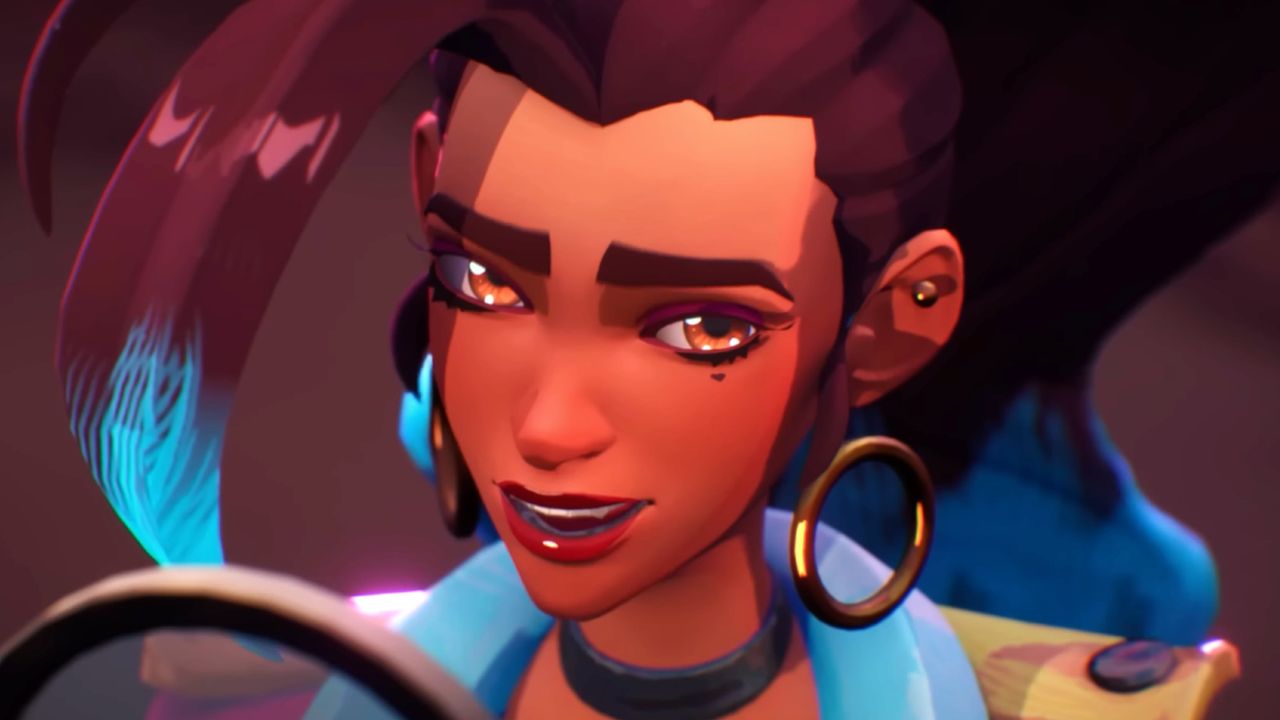
Valve has outlined what's new in Dota 2 patch 7.40 and provided a rundown of its latest hero, Largo.
"Dota is an ensemble cast, but keen observers looking through the collection of rogues, wizards, druids, and knights (not to mention two characters named 'ranger') may have noticed the absence of that most maligned of hero classes: the bard. At least, up until now," Valve teased, before introducing Largo himself.
Largo is the shamanic head of the bardmonk order, and unlike bards that "sing about current events and chord changes," he "tailors every song to his exact circumstances, raising his allies' spirits or, if necessary, their foot speed as they run toward battle (or away). As a frog, his prehensile tongue has, shall we say, all kinds of tricks."
One such trick is his Catchy Lick, in which he targets someone, licks them, pulls them back a short distance, and applies a basic dispel. If they're an ally, he pulls them out of harm's way, and if they're an enemy, his tongue deals damage. By dispelling an effect from a target, Largo gets a brief health regen, too. He can also fire froglings that stomp the ground every second, dealing damage and ministuns, and minimize ally mana costs with his Croak of Genius skill.
His ultimate skill is Amphibian Rhapsody. To be honest, with a name as incredible as that, I don't even care what it does, but for those wondering, it's essentially a mini-rhythm game.
"Largo gets ready to groove," Valve explains. "He is disarmed and his ability bar switches to three song abilities, each with different effects. Songs are only effective if strummed on the beat.
"Every time he strums successfully, he gains a stack of Groovin'. Each stack gives him bonus armor and reduces the mana cost of every song, but he loses a stack if he misses a beat. Stacks linger for a short duration when Largo's song ends."
Vikki Blake is a reporter for IGN, as well as a critic, columnist, and consultant with 15+ years experience working with some of the world's biggest gaming sites and publications. She's also a Guardian, Spartan, Silent Hillian, Legend, and perpetually High Chaos. Find her at BlueSky.
Point Break is reportedly getting a TV show set 35 years after the events of the iconic ‘90s movie.
Deadline reports that AMC is developing a TV series based on the 1991 film starring Patrick Swayze, Keanu Reeves, Lori Petty, and Gary Busey.
Point Break, directed by Kathryn Bigelow, follows rookie FBI Agent Johnny Utah (Keanu Reeves) who goes undercover to infiltrate a gang of Southern California surfers led by the charismatic Bodhi (Patrick Swayze), who are suspected of pulling off bank robberies as the "Ex-Presidents.” Utah ends up drawn into their adrenaline-fueled lifestyle, and falls for a surfer girl named Tyler (Lori Petty).
According to Deadline, this new TV series revolves around “a dangerous heist crew with ties to the Ex-Presidents gang.” It's set in 2026, 35 years after Point Break's 1991 setting. The series is from Dave Kalstein, whose credits include Amazon’s Daniel Dae Kim thriller Butterfly, and CBS’ NCIS: Los Angeles, ABC’s Quantico, and USA Network’s Treadstone. That’s all the information we have right now. There’s no word on new characters, a new cast, or whether Keanu Reeves himself might pop up in some fashion.
This isn’t the first attempt to revive Point Break. A 2015 remake came and went without making much of a splash at all. IGN’s review returned a 5/10. We said: “Point Break gets the stunts right, but is lacking everything else needed to make an enjoyable film experience.”
Hopefully this new TV series fares better.
Photo by Richard Foreman/Fotos International/Getty Images.
Wesley is Director, News at IGN. Find him on Twitter at @wyp100. You can reach Wesley at wesley_yinpoole@ign.com or confidentially at wyp100@proton.me.
At last week's The Game Awards, Catalyst’s first trailer was immediately followed by the reveal of Legacy of Atlantis, a “reimagining” of the original 1996 classic. Built with Unreal Engine 5, Legacy of Atlantis is due out next year as the franchise marks its 30th anniversary, with Catalyst set to follow in 2027.
While some, quite naturally, suggest starting at the beginning makes sense given the anniversary, others are wondering if the announcement of the new game means the team has to go back and retcon some aspects of Lara Croft's story to make sure everything makes sense in the character's 30-year-old canon timeline.
"There are many theories about why the reimagining of TR1 is happening. Some say it’s only because of the 30th anniversary but I personally think it’s happening because it HAS to happen. We’re entering a new unified timeline where some things need to be retconned and some need to be reimagined," suggested X/Twitter user Merychxrry.
"This kind of reimagining will likely need to happen for every mainline game, but especially for these four story-heavy titles: Tomb Raider: The Last Revelation, Tomb Raider: The Angel of Darkness, Tomb Raider: Legend, and Tomb Raider: Underworld.
"You might ask, 'Why not TR2-3 first?' Well, they’re not story-heavy. As much as I’d love to see them remade, we first need to unify these four story-focused games. Otherwise, it would take too long to reach them, and their stories would need to be retconned."
As Mery added, the order itself likely doesn't matter — "it could be 4 and 6 first, then Legends and Underworld, or vice-versa" — but since the assets for Legacy of Atlantis will be available first, "it shouldn't take too long to produce these games."
"That is actually genius!" replied one commenter, while another said: "Yes! This exactly!" "I feel like LOA is a test, like the [Resident Evil 2] remake was, suggested someone else. "TR1 was the safest choice they had for a reimagining because of its simple story."
As game director Will Kerslake recently told GamesRadar+, Catalyst fits into the timeline after the events of Tomb Raider: Underworld. The most recent games, known as the Survivor reboot trilogy — 2013's Tomb Raider, 2015's Rise of the Tomb Raider, and 2018's Shadow of the Tomb Raider — are still considered as part of Croft's origin story.
While the news of the recasting was a surprise for some, actor Camilla Luddington — who portrayed Lara Croft in the Survivor Trilogy — shared a bittersweet Instagram post about her time as the lead this week, saying she loved the fans and Croft will "forever be a part of [her]." Alix Wilton Regan will now play Lara Croft in both Tomb Raider: Legacy of Atlantis and Tomb Raider: Catalyst.
Meanwhile, there's the upcoming Amazon TV show to consider. The live-action Tomb Raider Prime Video series, which will star Game of Thrones alum Sophie Turner, will “reinvent the franchise on a massive scale” and will interconnect “live-action television series and video games into a unified storytelling universe.”
Vikki Blake is a reporter for IGN, as well as a critic, columnist, and consultant with 15+ years experience working with some of the world's biggest gaming sites and publications. She's also a Guardian, Spartan, Silent Hillian, Legend, and perpetually High Chaos. Find her at BlueSky.
 Connexion