↩ Accueil

Vue lecture

Ayn Thor Review

Ever since I first got my silver Game Boy Advance SP for my birthday back in 2003, I have adored the clamshell design for my portable gaming devices. What the GBA SP started, the DS Lite later solidified for me: two screens and a clamshell case is far and away my favorite handheld design. Fast-forward more than two decades, and I can't remember the last time I fell in love with a device as fast as the Thor, an Android-based clamshell powerhouse from Ayn.

The Ayn Thor is available in four different variants, three of which are identical except for increasing amounts of onboard memory and RAM, while the fourth is the “Lite” version, featuring a different CPU. Regardless of which model you pick, you can expect a 6000mAh battery, drift-less Hall effect joysticks, active cooling, a DisplayPort for video out, and what blew me away, two beautiful AMOLED screens – the top being a 6-inch 1080×1920 screen at 120Hz and the bottom a 3.92-inch 1080×1240 at 60Hz. Every game, video, and webpage I viewed on the Thor looked amazing, as one would expect from such displays. Admittedly, I kept the top screen at a locked 60Hz refresh rate most of the time, in order to improve battery life, but a quick press of the Ayn button pulled up the custom Ayn settings menu, wherein I could toggle to 120Hz at any time.

The Base, Pro, and Max versions all feature the more powerful Qualcomm Snapdragon 8 Gen 2 CPU, Adreno 740 GPU, and DDR5 memory, while the Lite features a Snapdragon 865 CPU, Adreno 650 GPU, and DDR4 memory. The non-Lite options also feature additional improvements, including Wi-Fi and the ability to output 4K 60fps video.

I opted for the Max version to future-proof my storage capability, though there is a Micro SD port for you to expand your storage regardless of model. I was looking at the Thor as a potential replacement for my Steam Deck, so having the best specs I could would help me in that pursuit. Regardless of what model you choose, you can pick from a Clear Purple, Rainbow (warm grey plastic with SFC-color inspired buttons and joysticks), Black (which I have heard is an absolute fingerprint magnet), and White. Reminding me of my beloved white DS Lite, that’s what I went with.

Coming in at 380g (just under a pound – the New 3DS XL weighs 326g for comparison) and nearly the same size as the New 3DS XL, the Thor features layers of glass over the entirety of the top and bottom screens, minus the holes cut in for the buttons and joysticks. I was concerned that this much glass would lead to excessive reflections or picking up fingerprints, both of which could risk obscuring gameplay. Thankfully, on the white model that I went with, neither of these concerns proved to be a problem. While I haven’t done much playing outside with it, being winter in the Midwest, I did make a point to play while sitting near a window in bright sun, and was pleasantly surprised by how clear everything still is. The gorgeous OLED screens and 550 nits of brightness did their jobs with aplomb.

Even with its flat bottom, using the Thor for longer stretches was still pretty comfortable. The device has a good weight to it, and the plastic feels sturdy and high-quality. Even under heavier loads, the Thor never got hot, remaining a reasonable temperature thanks to its surprisingly quiet fans. As nostalgic as the clamshell is, there are some aspects of the Thor that I have some criticism of, first – and the one I take most issue with – is the flat-edged shape of the L2 and R2 trigger buttons. A more rounded design, better aligned with the curve of the finger along its side, would make this device even more comfortable to play.

The front-facing speakers on the Thor do an adequate job, but they certainly didn’t blow me away, and I quickly paired my wireless earbuds instead of playing sound out loud. Another issue is that there is a small gap between the two halves when the device is closed, with the top screen resting on two small pads. I liked to keep the piece of foam that came with the device in there just for some added stability, and while I’m not too worried about it leading to damage, this gap is still something I would love to see addressed in a second-generation Thor. I’d be happy with a slight overhang on the topscreen to cover it, and Ayn does offer a shell that you can buy that covers the gap. But, considering the Thor’s dimensions are so close to those of the 3DS XL, if you happen to have some old cases for that lying around, just throw it in there. My Thor is right at home in my Persona Q 3DS case.

If you plan to spend much of your time playing games that require both joysticks, I did find it a little awkward and cramped working the right stick. I occasionally would be forced to maneuver it with the middle of my thumb instead of how I normally would with my thumb pad, just to keep my hand in a comfortable range of the shoulder buttons. Ayn does offer a grip accessory you can buy that may help in that regard, but I haven’t tested it myself.

Booting up the Thor for the first time, you’re greeted with a familiar-looking Android UI with a pleasantly surprising amount of clutter or bloat to contend with. Utilizing Android 13 as its base OS, the Thor doesn’t come with much beyond your typical Android stock software, requiring you to install whatever games or apps you want yourself. Downloading games and apps from the Play Store is as easy as it ever is, simply requiring you to log in with your account, find what you want, and click download. For other gaming pursuits, the process is a bit more fiddly, but luckily, Android 13 is a known quantity at this point, and there are plenty of resources and setup guides available if you go looking.

Compact Power

Over these past few weeks of testing, I’ve found myself using the Thor identically to how I have utilized my Steam Deck, streaming my PlayStation 5 to it using the Chiyaki app, playing retro games (especially those that I can enjoy more faithfully due to the Thor’s two screens), and yes, even playing PC games thanks to apps like Gamehub Lite and Winlator that let me install and play my Steam library natively on the device. This was where the extra memory and internal storage of the Max model really helped out.

Nearly every indie game I have thrown at it, from new hotness like Ball x Pit to games like Hades II and Gundam Breaker 4, has been fine to play. While you shouldn’t expect to bust out Cyberpunk 2077 on it (natively anyway), I was able to get mid-2010s shooters like Deus Ex: Human Revolution and the BioShock games running and playable. It can take a little fiddling around at times, and the drain these heavier 3D games have on the battery means that I won’t be playing them tons, but this ability is really neat and makes the Thor a fantastic indie machine.

The Thor has also managed to do something I previously thought impossible: make me interested in mobile games. With the Play Store coming preinstalled, it was a quick and easy process to sign in and start downloading games like Persona 5X that I’ve always shied away from, since using onscreen controls for games has never been my thing. With the great and clicky (but not too clicky) buttons and smooth Hall-effect joysticks, I was able to check out Persona and a couple of other games, and had a pretty good time. Every Play Store app I tried ran great, and for games like Pokémon Unite that don’t have native controller support, the Thor lets you quickly screen map the various keys and joysticks to areas on the screen to simulate controller support.

On the software side, built on Android 13, the Thor makes using both screens incredibly easy. Tapping the top or bottom screen will set that one as the active screen, just like you would with windows on PC, and any application you boot up will load on the active screen. Both screens, by default, show the same typical Android menu, and switching an application to the other screen is as simple as tapping its associated icon on that screen, instantly switching.

The fact that both screens can act independently also provides the Thor with some nice multitasking functionality. Can’t get past that tough part in the game you’re playing? Load up YouTube with a walkthrough on the other screen to help you out. Or play a game while you wait for another one to download and install on the other screen. A handy little button just under the bottom screen, the Ayn button, will open up a stats screen where you can see the temperature, fan speed, adjust the performance modes, turn on the direct power supply option, and other handy tweaks.

For a long time, I’ve felt that breaking the dual-screen ceiling was the last big hurdle for the Android handheld market, and as I have sat in my chair playing my Thor, I think that’s still the case. While not the first through the finish line, the Thor manages to deliver a sensational product for a pretty reasonable price, starting out at $249 for the Lite or $299 for the Base (honestly, I would just avoid the Lite). If you are more interested in playing PC games off the device or other more resource-intensive tasks, then the Pro at $349 and Max at $429 are the way to go. All of which are cheaper than the cheapest Steam Deck, with the exception of the Max, which is $20 more (worth it). Now, it will be all about refining it all and improving specs in the generations to come.

  •  

What Was and Wasn't Changed in the Silent Hill 2 Adaptation Return to Silent Hill

Warning: Spoilers follow for Return to Silent Hill and Silent Hill 2.

Silent Hill has been having something of a renaissance lately. After many years of fans being worried that Konami’s survival horror franchise would be relegated to the dustbins of history, Silent Hill has made a welcome comeback with the much-acclaimed Silent Hill 2 remake and Silent Hill f. Given that both games have sold well, it appears that the iconic horror series is here to stay, and that trend continues with a new film based on the franchise, Return to Silent Hill.

Directed by Christophe Gans – who previously helmed the underrated 2006 film, Silent Hill – Return to Silent Hill is a direct adaptation of Silent Hill 2. Commonly considered the best game in the franchise, a film version of James Sunderland’s story felt like an inevitability, but it will also certainly be scrutinized by fans for how closely it sticks to the source material. For his part, Gans has affirmed his love for the original game, calling the new film “an adaptation created out of deep respect for a true masterpiece of a game, Konami’s iconic Silent Hill 2.”

But now that the fog’s cleared and the movie is out in the wild, we have to ask: Does Return to Silent Hill really understand Silent Hill 2? Let’s take a look!

I See That Town

Silent Hill 2 and its 2024 remake both tell the story of James Sunderland, a man who goes to the eponymous town because of a letter he receives from his late wife Mary, who apparently died of an unspecified illness years earlier. Uncertain if Mary is somehow still alive, James traverses the town searching for her, encountering a handful of other characters and numerous monsters along the way. In the end, James has to face the truth: He killed Mary, and has been in denial ever since. Unlike most of the other games in the series, Silent Hill 2 doesn’t involve the mythology of the Order, the town’s resident evil (hah) cult, and instead focuses squarely on the personal story of one man’s journey through his guilt and torment. It’s not only one of the best survival horror games of all time, but also one of the finest examples of a video game telling an emotionally mature narrative.

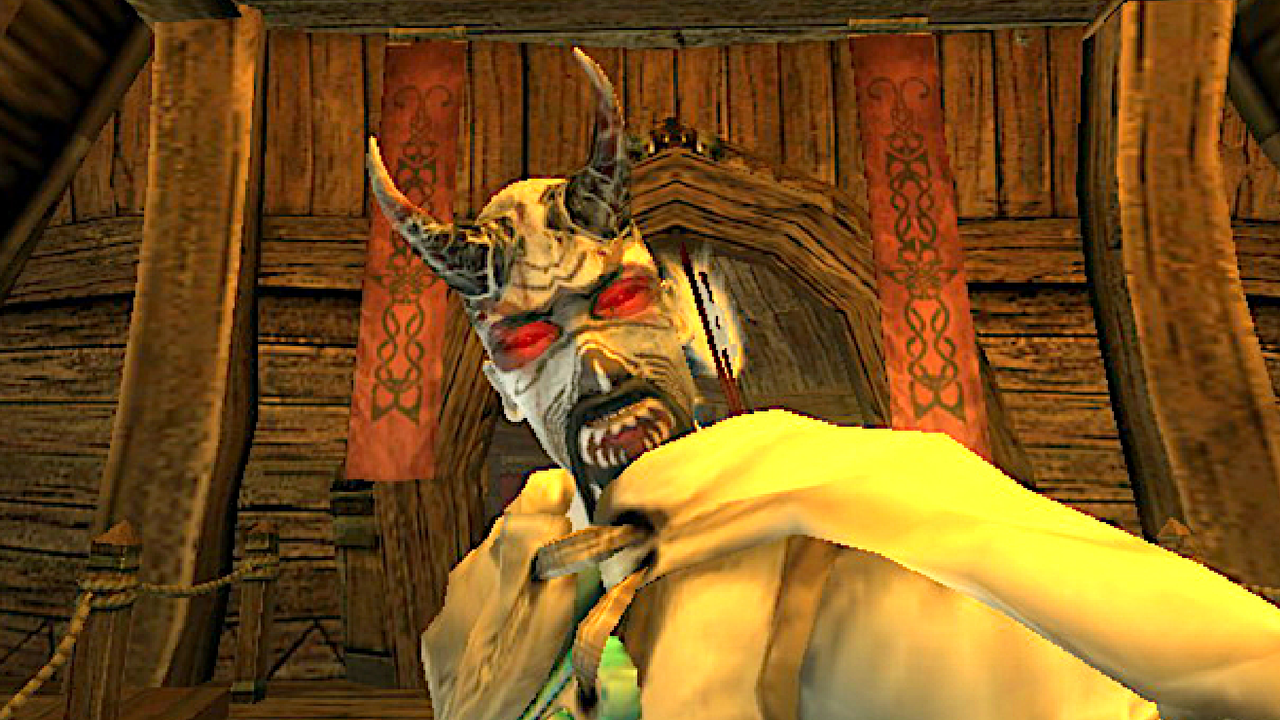
Return to Silent Hill is a faithful rendition of that same core premise. Jeremy Irvine plays James Sunderland, Hannah Emily Anderson plays Mary (and a few other characters, but we’ll get to that), and the movie does indeed feature James going to Silent Hill to look for her. Many of the game’s locations, such as the opening parking lot overlooking the woods outside Toluca Lake, Brookhaven Hospital, the Heaven’s Night strip club, and the Lakeview Hotel are present and serve similar functions in the narrative. And many of the game’s monsters, such as the Lying Figures, Bubble Head Nurses, the Abstract Daddy, and Pyramid Head himself, are all ripped right from the game. Series composer Akira Yamaoka even returned to write the film’s musical score. If you’re looking for fidelity to the sights and sounds of Silent Hill 2, Return to Silent Hill has you covered.

But there’s more to a story than visuals and music. There are also characters and themes, and this is where Return to Silent Hill makes some serious changes. There's nothing inherently wrong with altering things when adapting to a new medium; a film probably shouldn’t include James wandering through Wood Side Apartments for an hour trying to solve puzzles. The first Silent Hill movie took many elements from Silent Hill 1, but also invented new characters out of whole cloth, like main protagonist Rose Da Silva (Radha Mitchell), and heavily reimagined others like Dahlia Gillespie (Deborah Kara Unger). That worked fine, because that movie was more of a sibling to the games rather than a direct translation of any particular entry in the series. Return to Silent Hill is genuinely trying to be a new version of Silent Hill 2, but not every change it makes is for the better.

There’s Something About Mary

In the original game, players encounter Maria, a doppelgänger of Mary, shortly into the adventure. She’s dressed provocatively and is flirtatious towards James, tempting him to stray from his search for Mary to be with her instead. The player is even tasked with keeping her safe during certain sections of the game. Maria is not a separate character from Mary so much as a manifestation of James’ sexual frustration after losing his wife, and how the player treats Maria affects how the ending plays out. Maria appears in Return to Silent Hill, also played by Hannah Emily Anderson; however, not only is Maria’s role in the film much smaller than you might expect if you’ve played the game, but Anderson also plays another character that Silent Hill fans will recognize, and this is where things start to fall apart.

Anderson doesn’t just play Mary and Maria, but also Angela, who in the original game is not the same character as Mary. Angela is one of a handful of supporting characters James runs into during his quest, and she has her own subplot that runs parallel to the main story. Conflating Angela with Mary doesn’t just remove the purpose that Angela served in the game, but it also leads into one of the movie’s more problematic choices, which is working the Order back in as part of the plot. In the film, Mary gets a new backstory: She is the daughter of a high-ranking member of the Order, and her unseen father groomed her to be some kind of vessel for the cult’s shady ceremonies. Mary’s terminal illness is a result of her being “poisoned” by the cult, and we meet other members who present themselves to James as Mary’s friends, but are actually using her for their nebulously villainous ends.

Making Mary a victim of her father and the Order clashes with James’ journey deriving from his guilt over killing Mary.

While flashbacks with James and Mary before her death make sense for a film adaptation, these additions subtract from the personal narrative Silent Hill 2 is supposed to represent. Making Mary a victim of her father and the Order clashes with James’ journey deriving from his guilt over killing Mary. Mary even asks him to kill her in this version so that she can be free of the suffering caused by the cult’s abuse, which basically gives James a pass on the main emotional obstacle he’s supposed to be reckoning with. In the game, James killing Mary was a selfish act; he resented Mary for keeping his life locked in stasis through her illness, and wanted to be free of her even if he loved her. In the movie, James killing Mary is something she requests, making it – if not necessarily a “heroic” act – at least a more justified one. But this also blunts James’ character, which is something that happens to the rest of the cast as well.

It Doesn’t Matter Who I Am

As discussed previously, James runs into a few other characters while searching for Mary. We’ve already mentioned Maria and Angela, but there’s also Eddie and Laura. All four characters are technically in Return to Silent Hill, but their importance has been severely downplayed. Maria is only a companion to James for the film’s second act, and is killed by Pyramid Head in the Labyrinth. Instead of coming back to life later like she does in the game, Maria is gone from the film after that, with James never really acting like he's even interested in her at any point. Angela’s subplot about being sexually abused by her father is consolidated into Mary’s backstory of being used by the Order, although whether her father also abused her in the same way isn’t made clear, despite the brief appearance of the Abstract Daddy monster that’s supposed to symbolize it.

All four of these characters mirrored James in specific ways in the game: Maria represented James’ desire to repress the ugly aspects of Mary’s memory and the temptation to embrace an idealized version of her; Angela embodied James’ depression, self-destructive tendencies, and the part of himself that feels he deserves punishment; Eddie was James’ denial of his guilt and inability to accept that he did anything wrong to Mary; and Laura was the good part of himself that has always loved Mary, and also represents the possibility of accepting his actions and finding redemption. They were all significant parts of Silent Hill 2’s thematic throughline, and helped make James into a more layered, tragic character. None of them really serve the same purpose in the film: James doesn’t seem tempted by Maria; Angela has been erased and made into an aspect of Mary; and Eddie (Pearse Egan) and Laura (Evie Templeton) don’t get enough screen time to solidify their relationships to James’ actions.

That doesn’t mean the film is a total loss. Gans is a skilled visual craftsman, and even if the script hollows out a lot of the depth from the game’s story, the look and atmosphere of the game mostly remains intact. His choice to use dancers to play the monsters really helps sell their inhuman-looking movements, and his use of lighting to make real human actors look like video game characters for key moments to serve the surreal nature of the proceedings is a technique I’ve truly never seen before. The movie also goes out on a relatively strong note, with Gans invoking the “In Water” ending of the game, where James chooses to commit suicide by driving his car into the lake with Mary’s body inside. In the film, however, James dies only to wake up at the beginning of the movie where he meets Mary again for the first time. It’s a full-circle moment that reveals James has not truly learned the lesson the town has tried to impart. Clearly, he will be trapped in this loop until he makes new choices, accepts Mary's death, and moves on with his life.

It may not be enough to make it a great movie, but it does show that whatever faults Return to Silent Hill has as an adaptation, it isn’t wholly removed from the spirit of its source. That said, if you want the best version of James Sunderland’s tale, you’ll still be better served by booting up the game.

Carlos Morales writes novels, articles, and Mass Effect essays. You can follow his fixations on Twitter.

  •  

'I Can't Even Hear the Theme Tune' — Sophie Turner Says 'Anything Game of Thrones' Gives Her 'Crazy Anxiety,' and She Won't Be Watching a Knight of the Seven Kingdoms

Former Game of Thrones star Sophie Turner has said that she won't be watching the franchise's latest spin-off series A Knight of the Seven Kingdoms, as even hearing the original show's theme tune now gives her "crazy anxiety."

Speaking on the red carpet for the premiere of her new Amazon Prime thriller Steal, Turner was asked if she would be tuning in to watch the just-launched A Knight of the Seven Kingdoms, having previously been a central part of the Thrones universe.

Perhaps surprisingly, Turner said she couldn't watch anything connected to Game of Thrones despite having the "best" time on the show itself — and agreed it had been a different chapter of her life.

"If I'm totally honest, anything Game of Thrones, I don't think I can... I can't even hear the theme tune," Turner said, via jamesbstreet. "It gives me like... crazy anxiety. I don't know why. I had the best time on that show, but I can't watch anything related to it.

"But I'm really excited for all the actors on it, and I think it will probably be incredible because it is that universe," she continued. "So, good luck to everyone involved. I won't be watching it, but I'll be rooting for you."

Turner recently suggested she would be unlikely to revisit her character in any future Game of Thrones sequel, as early pre-production continues within HBO to mount the first spin-off set after the events of the original show's controversial final season. After an earlier idea centered around Kit Harington's character Jon Snow ended up scrapped, the network is now exploring an alternate sequel series starring Arya Stark, sister to Turner's character Sansa, according to a recent interview with franchise creator George R.R. Martin.

"I feel that I was very happy with the way Sansa ended her story in Game of Thrones," Turner said recently, acknowledging that also "no one else was really happy with their ending." Of course, Sansa Stark ended up surviving the events of the show — something plenty of other characters did not — to be crowned Queen of the North. "I feel like I got a good one," she concluded, "and so I don't know if I could revisit it."

Next up for Turner will be her starring role in Amazon's new Tomb Raider series, alongside a starry cast that includes Sigourney Weaver, Jason Isaacs, Bill Paterson, Paterson Joseph and Celia Imrie, among others. Weaver will play Evelyn Wallis, a new character not featured in the original games who is described by Amazon as a "mysterious, high-flying woman who is keen to exploit Lara's talents."

First images of Turner in costume as Lara Croft were released last week, and show the actress dressed in the adventurer's iconic green tank top and red shades.

As for A Knight of the Seven Kingdoms, early response to the series' debut has been positive, while HBO has already greenlit the show for a second season. "With this charming season premiere, A Knight of the Seven Kingdoms is off to a pleasant and promising start," IGN wrote in our A Knight of the Seven Kingdoms review, rating the first episode 8/10.

Image credit: Stuart C. Wilson/Getty Images.

Tom Phillips is IGN's News Editor. You can reach Tom at tom_phillips@ign.com or find him on Bluesky @tomphillipseg.bsky.social

  •  

Arknights: Endfield Launch Marks Franchise’s Debut on PC and Console

The latest entry in the hugely popular Arknights universe is out now, expanding the IP beyond mobile and introducing cross platform progression. Arknights: Endfield – a free-to-play RPG that builds on the strategic depth of 2019’s Arknights – made an impact with its presence at Japan Expo, Anime Expo and gamescom last year, and had over 35 million sign-ups in its pre-registration phase.

To celebrate the release on PlayStation 5, PC and mobile, publisher GRYPHLINE has announced an array of rewards players can claim, including sign-in bonuses and milestone rewards equivalent to at least 135 pulls across different banners.

The game introduces a 3D world built around exploration, real-time combat and base-building objectives to the original 2D offering, with a new frontier storyline driving the action. Players control squads of up to four characters (Operators), combining their skills, elemental abilities and coordinated tactics in a series of fast-paced enemy encounters.

At the heart of the narrative is the player-character the Endministrator, or Endmin, a legendary guardian who has been roused from a decade-long hibernation. The Endmin has been tasked with protecting the inhabitants of Talos II from catastrophic threats, and, with the assistance of Endfield Industries, has utilised their mastery of advanced energy transmission and the planet’s most valuable resource: an element called Originium. Together, they have developed a variety of industrial technologies including the Automated Industrial Complex (AIC), a backbone of production networks and power grids stretching across the wilderness, in order to forge a future and expand the Civilization Band across Talos II.

But as well as driving innovation and progress, the Civilization Band also faces threats posed by raider clans, hostile entities the Aggeloi, and The Blight – a mysterious dimensional anomaly that infects and taints any matter it comes into contact with.

Arknights: Endfield’s expansion beyond mobile means that exploration, AIC mastery, squad combat and management of Endfield Industries’ orbital HQ can all be enjoyed with native 120 FPS support, realistic snow-stepping, environmental puddle reflections and more. Players can also toggle NVIDIA DLSS Super Resolution and Frame Generation independently, to further bring the expansive landscapes of Talos II to life.

In addition, there is plug-and-play support on both mobile and PC for DualSense, DualShock and Xbox controllers with haptic feedback, providing a premium tactile as well as visual experience.

Arknights: Endfield is available now on PlayStation5, PC via the official launcher and Epic Games Store, and mobile devices via Apple App Store and Google Play Store. Check out our review so far for a comprehensive breakdown of the game’s mechanics and the opening hours of gameplay.

  •  

A Selection of Adorable Pokémon Plush Toys Are on Sale at Amazon

Pokémon Day may not be until next month, but Amazon is kicking off the celebration a little early by offering some great deals on select Pokémon plush toys right now. At the moment, there are a few different plushies that have caught our eye - including a 12-inch Lugia plush, a 12-Inch Dragonite plush, and this absurdly cute 12-Inch Pikachu plush, among others - that have all dropped down to just $22.99 at the retailer.

Alongside offering discounts of up to 49% off, some of these plushies have even hit their lowest prices yet at Amazon, such as the Lugia plush. So, if you're wanting to catch all of these cuddly cuties to have in your collectibles, now is as good a time as any to grab them. Have a look through some of our favorites that are currently on sale at the retailer below.

Pokémon Plush Toys on Sale at Amazon

If Pokémon Day is on the brain for you right now, considering it's just a month away, the Pokémon Day 2026 TCG Collection is also available to preorder right now from TCG Player. It was available at Amazon earlier, too (with a great discount), but it's unfortunately out of stock at the moment. We're keeping an eye out to see if it comes back into stock at any point, though.

On the topic of Pokémon TCG, 2026 is already looking to be an exciting year for fans in general. If you're curious what's to come in the months ahead, check out our breakdown of the Pokémon TCG: Full Release Schedule for 2026. While it doesn't feature everything that this year has in store yet, we've included information on what's been confirmed so far, including Mega Evolution: Ascended Heroes and Mega Evolution: Perfect Order alongside the Pokémon Day 2026 TCG Collection.

Hannah Hoolihan is a freelancer who writes with the guides and commerce teams here at IGN.

  •  

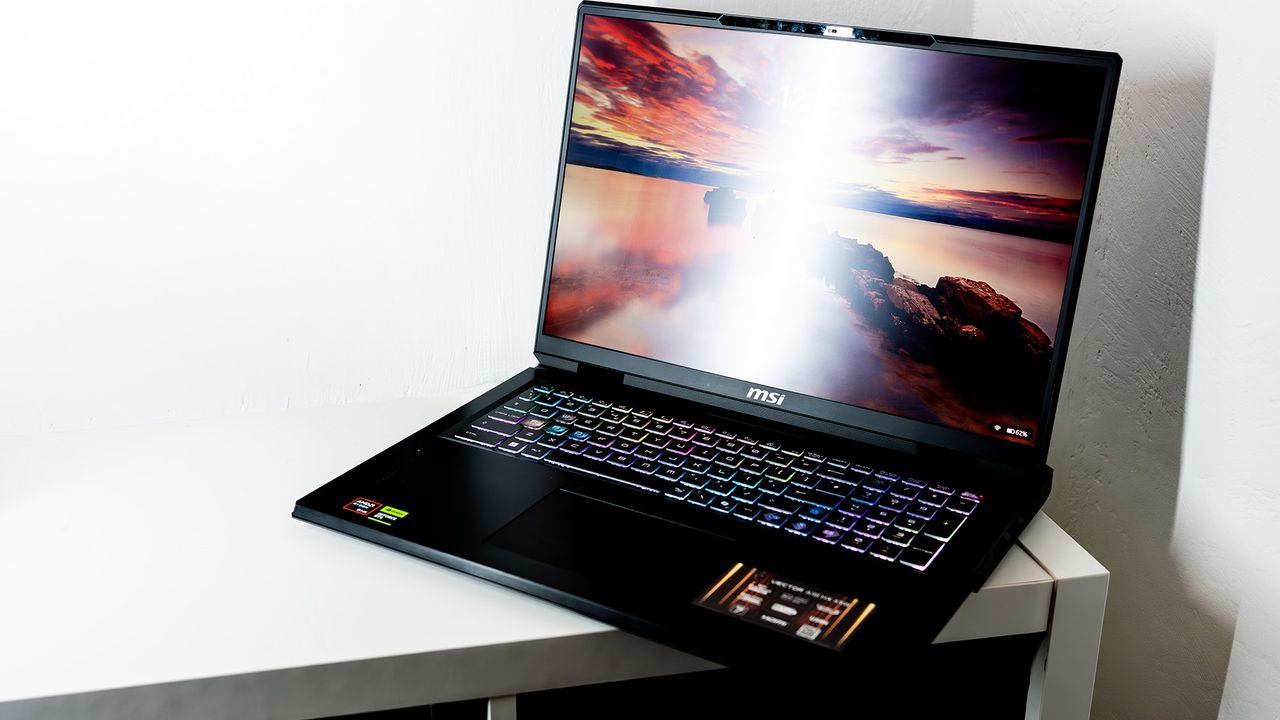
MSI Vector A18 HX review

At last, a laptop for those who like to use crowbars for the job they were originally designed for.

  •  

Here's How The Office's Michael Scott and Dwight Schrute Look in Fortnite

Fortnite fans have gained a first look at how The Office characters Michael Scott and Dwight Scrute will appear in the game, when they become available later tonight.

The pair of new Fortnite skins include the likenesses of actors Steve Carell and Rainn Wilson, and come with a range of alternate styles and accessories. The Michael Scott skin includes the option to wear sunglasses, or unbutton his shirt and wear a backwards cap for his "Date Mike" look.

Dwight Scrute, meanwhile, comes with the option to wear his suit jacket or not — and without, the skin can be seen with a holster strapped to his uncovered belt (complete with banana, as seen in the show). Another reference comes in the shape of Dwight's skin mask option for his face, as worn by the character after he memorably cut it off of a CPR dummy.

ALL THE OFFICE SKIN STYLES IN FORTNITE pic.twitter.com/PlIZgNB7rQ

— Shiina (@ShiinaBR) January 23, 2026

THE OFFICE FORTNITE EMOTES 😭😭 pic.twitter.com/Nd4OLJbyuC

— Shiina (@ShiinaBR) January 23, 2026

Said CPR dummy (without face) is appropriately Dwight's backbling. Michael's backwear, meanwhile, is a giant World's Best Boss mug, as used by the character throughout the show. Further accessories include Dwight's Broom-Stake and Michael's Dundee award statue, both used as pickaxes.

There's even a Megadesk glider, and emotes for Dwight's convertible (which he leans out of yelling in his megaphone), and Michael's Scarn dance. Both feature original dialogue from the show.

Fortnite developer Epic Games first teased an The Office crossover earlier this week, after simply posting on social media: "Build. Beets. Battle Royale." Immediately, fans got the reference, and have been anticipating a first look at how the characters will appear in-game.

Today, the collaboration has been decrypted within Fortnite's files, ahead of the items going on sale via the game's shop at its next reset. This has allowed the game's usual leakers such as ShinaBR, whose posts are embedded above, to show off the content early.

Fortnite launched into its Chapter 7 era in November with an Avengers Endgame-style team-up event. Crossovers added since then have included skins for Kim Kardashian, Bleach, and South Park. Next week will bring a skin for Ed from Ed, Edd n Eddy. Today also sees the launch of Fortnite's 3v3 Fall Guys basketball mode Crown Jam, which is available for a limited time. Take a first look at that just below.

Tom Phillips is IGN's News Editor. You can reach Tom at tom_phillips@ign.com or find him on Bluesky @tomphillipseg.bsky.social

  •  

Corsair’s Katar Pro XT Review: A Solid Wired Budget Mouse, but Its Exaggerated Egg Shape Feels Alien

The Corsair Katar Pro XT's silhouette is alien. At first glance, its bulging middle resembles the wider egg shape popularized by great gaming mice like Logitech's G305, but as soon as I held it, something felt weird.

It's two things: first, everything in front of its hump – about two-thirds of the way along the mouse – is essentially a dead straight slope down. The middle and front of most mice curve to fit the shape of your hand, but not here. It's like a shelf for your index and middle fingers. Second, the sides slope sharply inwards. Most mice fall straight down and some slope outwards to give your ring and pinky fingers somewhere to rest, but the idea of the Katar Pro XT is that your fingers wrap around it, giving you full control.

That's the theory, at least. In practice I found a comfy position, but only after lots of trial and error. It feels like an exaggerated version of the Logitech egg, with a flatter top and slopier sides: I ended up liking the shape, but felt like I had to work to get there.

And that's the story all over with this mouse: at $35/£35, there's plenty to like – the left and mouse clicks are particularly rapid — but you'll have to contend with some missteps, too.

Rapid-Fire Mouse Buttons and a Solid Sensor

Corsair has packed plenty of impressive tech into the Katar Pro XT.

The left and right clicks are excellent: Corsair's "Quickstrike" tech sounds gimmicky, but lives up to the name. The switches for the clicks sit right below the buttons, so as soon as you push down even slightly, it detects an input. The result is rapid-fire spamming that sounds clean and bouncy. I was at first worried I'd inadvertently click when I didn't mean to, but that never happened.

I've reviewed plenty of budget gaming mice recently and this PMW3391 sensor, with a maximum DPI of 18,000, is slightly better on paper than some of the others I've tested. Combined with the 1,000Hz polling rate (the number of times per second it reports its position to your PC), it's certainly good enough for most gamers in whatever genre you want to play.

I tested it in Arc Raiders, Counter-Strike 2, and Kingdom Come: Deliverance 2, and whether I was flick-shotting or lazily swinging a sword, it reacted to my hand movements with no noticeable stuttering or inconsistencies. It felt precise, and any issues I faced were more down to the mouse feet than the sensor.

Itchy Feet and Mushy Side Clicks

Those feet felt ever-so-slightly inconsistent in-game. I couldn't work out what it was, so I did some testing. If I pushed the mouse sideways and let go, it slid a short distance, but if I pushed it up and let go, it stopped instantly. Basically, there's more friction on vertical movements than horizontal ones. What's more, the top feet produce more friction than the bottom ones. When I pushed sideways and let go, the bottom travelled further than the top, meaning the mouse tilted sideways. The third offense: left and right swipes are much louder than top to bottom swipes, which rings alarm bells.

Those problems sound worse than they actually are, and replacement mice feet are pretty cheap. In-game, these quirks didn't seem to affect performance and I felt I could land all my shots accurately, but it just wasn't the smoothest ride – and I could feel every bit of its 74g weight. I've tested other budget mice that glide more gracefully.

Pressing the side buttons isn't particularly enjoyable, either. They barely protrude from the body of the mouse, so when you click them you touch the edges of the shell, while the actual clicks feel soft and mushy. And I don't love the scroll wheel, which feels stiff. It also rattles if you shake the mouse: the overall build quality of the Katar Pro XT is solid, and its body won't bend or creak even if you squeeze it really hard, but the rattling scroll wheel is the one sore spot.

You can expect some good, some bad with any budget gaming mouse, and that's what you get here. Whether the Katar Pro XT is good for you, then, might come down to its shape.

Comfortable Shape That Requires Trial and Error

I like that Corsair have at least tried something different: so many mice sport the same shape, and that might not suit everybody.

I can immediately rule out palm grip, where your whole palm rests on the body of the mouse. The inward-sloping sides won't accommodate your pinky and ring fingers, plus the angle of the bulge leaves awkward gaps: this is very much a fingertip grip and claw grip mouse.

I actually really like the shape for fingertip grip. Minimal contact with the mouse surface means the lack of curves really doesn't matter, and the straight, flat mouse buttons give you maximum clicking space. The inward sloping sides fit my thumb, index, and pinky finger well, and I feel fully in control of the mouse. The subtle mesh texture on the mouse sides give you ever more grip, and it feels nimble and agile in my hands. That said, this is a wide mouse. My hands are slightly larger than average, and people with narrower palms might struggle to find a comfortable spot for their ring and pinky fingers.

As for claw grip, I simply couldn't find a comfy position. The width of the mouse means you really have to curl your ring and pink fingers onto the sides, and my hand just felt cramped and contorted.

That was until I tried a variation of the claw grip with three fingers on the top of the mouse: index finger for left click, middle finger for the scroll wheel, and ring finger for the right click, with my pink on the side of the mouse. This felt very comfortable, and I was fully in control of the mouse. It's not my natural claw grip – I prefer two fingers on top – but I know some people favor this version. If you're one of them, this mouse will work for you.

So if you like fingertip grip or a modified claw grip, and you don't have small hands, the Katar Pro XT is tempting, especially if you see it on sale. But if not, there are plenty of better options on our list of best budget mice that will feel more comfortable.

Samuel is a freelance reporter and editor specializing in longform journalism and hardware reviews. You can read his work at his website.

  •  

Pokémon TCG: 151 Booster Bundles Are Back in Stock at Amazon and Under Market Price

One of the most popular sets from the Scarlet and Violet era, Pokémon TCG: 151, continues to be immensely popular even now in the Mega Evolution era. Market price on its selection of sealed products remains high on resale marketplaces like TCGplayer, so it's always good news to find boosters at a better price from major retailers.

Amazon has been on a mighty good hot streak recently with Pokémon cards, and has just restocked its selection of Pokémon TCG: 151 Booster Bundles. Listed for £109.95, the price is still mighty high compared to the averages from recent sets like Phantasmal Flames, where bundles are selling for around $45.

But, still, it's better than the $120+ market price, which is coincidentally on the rise again. According to TCGplayer, 151 Booster Bundles have skyrocketed by 73.48% in value in 12 months, and 23.96% in the past month alone. That being said, it's still a mighty lot higher than the $26.96 MSRP, but you'll be hard-pressed to find that anywhere these days.

If you're just after some cool 151 chase cards, you might be better off just picking up some singles (or several) from marketplaces like TCGplayer.

But, if you want the thrill of opening up some 151 packs, Amazon's listing is the cheapest option going right now, and even includes free delivery, plus one to two day delivery if you're a Prime member. It's also shipped and sold by Amazon directly, so you can be sure you're getting what you ordered.

Like I mentioned, Amazon has a whole bunch of great Pokémon TCG deals recently. Not only has the major retailer blessed us with a fairly outstanding $100 discount on the Pokémon TCG: Mega Charizard X ex Ultra Premium Collection - we've also now got the best price ever on Phantasmal Flames' Booster Bundles, which are now just $44.99 at Amazon.

While stock lasts, at least, as this is such an excellent deal, and below market price, I fully expect these to fly off the digital shelves. Other Phantasmal Flames deals include that UPC for $150 at Amazon or TCGplayer, or you can pick up the Elite Trainer Box for just $79.94 at Amazon as well.

All around, these are pretty excellent deals, and hopefully a sign of things to come when Ascended Heroes, Perfect Order, and everything else that 2026 has in store for Pokemon TCG, come out later this year.

Robert Anderson is Senior Commerce Editor and IGN's resident deals expert on games, collectibles, trading card games, and more. You can follow him @robertliam21 on Twitter/X or Bluesky.

  •  

Cyberpunk 2077 VR Modder Hit by Another DMCA Strike, Pauses Patreon, Pulls Access to All His Mods, and Declares He's 'Under Attack'

The creator of the Cyberpunk 2077 VR mod CD Projekt recently hit with a DMCA strike has paused his Patreon page and pulled access to all his mods after receiving another strike from a different publisher.

Luke Ross, creator of the R.E.A.L. VR mods for games such as Elden Ring, Days Gone, and Far Cry, reportedly earns $20,000 a month through Patreon, which acts as a paywall for his work.

He ditched work on his Cyberpunk 2077 VR mod following CD Projekt’s DMCA strike, and has now said he received another strike from publisher 505 Games for his VR conversion of 2020 first-person cyberpunk action game Ghostrunner. IGN has asked 505 Games for comment. Ross declined to comment further when contacted by IGN.

Ross’ Patreon page now carries a warning, telling potential subscribers that “for the moment there will be no benefits available.” That means that even if you subscribe to his Patreon, you won’t get access to any of the more than 40 mods he has locked behind it. Ross said he’ll keep his Patreon locked down “until the legal situation clears out.” Existing subscriptions will have their access extended for one month without further payments, Ross said.

Ross hit the headlines this month when Jan Rosner, VP, Business Development at CD Projekt Red, tweeted to say the company issued its DMCA strike because the Cyberpunk VR was a paid mod, which violates its fan content guidelines.

“We never allow monetization of our IP without our direct permission and/or an agreement in place,” Rosner said. “We were in touch with Luke last week and informed him that he needs to make it free for everyone (with optional donations) or remove it.

“We are big fans of mods to our games — some of the work out there has been nothing short of amazing, including Luke’s mod for Cyberpunk 2077. We’d be happy to see it return as a free release. However, making a profit from our IP, in any form, always requires permission from CD Projekt Red.”

Ross responded to Rosner’s tweet to take issue with his work being characterized as fan content. Rather, Ross insisted, it is independent software and thus does not infringe on CD Projekt’s IP rights.

“I'm sorry but I don't believe you are within your rights in demanding that my software needs to be free,” Ross said. “It is not ‘derivative work’ or ‘fan content’: it supports a large number of games which were built upon different engines, and it contains absolutely zero code or assets from your IP. Saying that it infringes your IP rights is equivalent to maintaining for example that RivaTuner violates game publishers' copyrights because it intercepts the images the game is drawing on screen and it processes them in order to overlay its statistics.”

Earlier this week, Ross told IGN that people were now pirating his Cyberpunk 2077 VR mod to “punish” him for breaking CD Projekt's terms of service.

In a new post to subscribers, Ross said Patreon automatically complied with 505 Games’ alleged DMCA takedown notice for his Ghostrunner mod.

“I don't blame them,” he continued. “DMCA law is carefully worded to give infinite power to big companies, who only need to write on a slip of paper that they ‘believe’ their copyright has been infringed in order to nuke from the sky anything they don't like — and to give infinite headaches to creators like me, who instead have the only recourse of going to court, sustaining huge costs to get through the legal process.”

Ross said his Patreon is now under threat of termination because of repeated DMCA strikes, and must “avoid posting material that will subject your account to further claims of copyright infringement."

“In light of the above facts, I'm being forced to take immediate action,” Ross explained. “I'm making unavailable all versions of the mods and also all the posts related to the wonderful work we have done here together for years, so that there will be no ground for further claims. And since I cannot stop people from subscribing without closing down the account altogether, I'm making it clear on the About and Welcome pages that new subscriptions will have the only effect of supporting me and that no access to the 40+ conversions can or will be provided at this time.”

IGN had asked Ross if he planned to make the Cyberpunk VR mod free, thus complying with CD Projekt’s terms of service. Responding, Ross said that while he wouldn’t rule out doing so, it would be a lot of work.

“I do not rule out releasing the mod free for everyone,” he said. “But it would take time, because my software supports 40+ games and various completely different engines, which makes creating a version that specifically supports only Cyberpunk 2077 a non-trivial task. Also, the people who have voluntarily given their money to me in order to support my development efforts for the framework might not be happy about seeing the mod being given away all of a sudden to everyone just because I've been bullied into it.”

Ross told subscribers that “people on the web are thirsty for blood because back in the GTA 5 and RDR 2 era, an article came out stating that I was raising $20,000 a month.”

He continued: “Is that ‘reasonable’? Assuming that overall the work I poured into making my software support Cyberpunk, turning it into the ‘most immersive gaming experience’ some people had in their lives, amounted to a few months, say $50,000: is that ‘reasonable’ according to the arbitrary criteria of Cyberpunk's publisher? Something tells me it wouldn't be considered reasonable, despite being a tiny fraction of the many millions they would have to invest for porting CP2077 to VR themselves, and despite the fact that the cost was entirely financed by passionate gamers and none of it was incurred by CD Projekt.

“Hopefully we'll find a way together, in the next few weeks. But if we can't, we'll always have the memories of the wonderful times we spent in those beautiful virtual worlds. Oh and by the way: if you have existing copies of the mods that you downloaded here before all this drama, you will of course be able to use them indefinitely and without restrictions, just like people have been doing for years with the RDR2 mod, as long as the games do not get breaking updates from the publishers.”

Wesley is Director, News at IGN. Find him on Twitter at @wyp100. You can reach Wesley at wesley_yinpoole@ign.com or confidentially at wyp100@proton.me.

  •  
❌