Nintendo has confirmed it will feature a diverse range of options for your character's gender, voice and dating preferences in its upcoming social sim Tomodachi Life: Living the Dream, after a previous backlash to the series a decade ago.
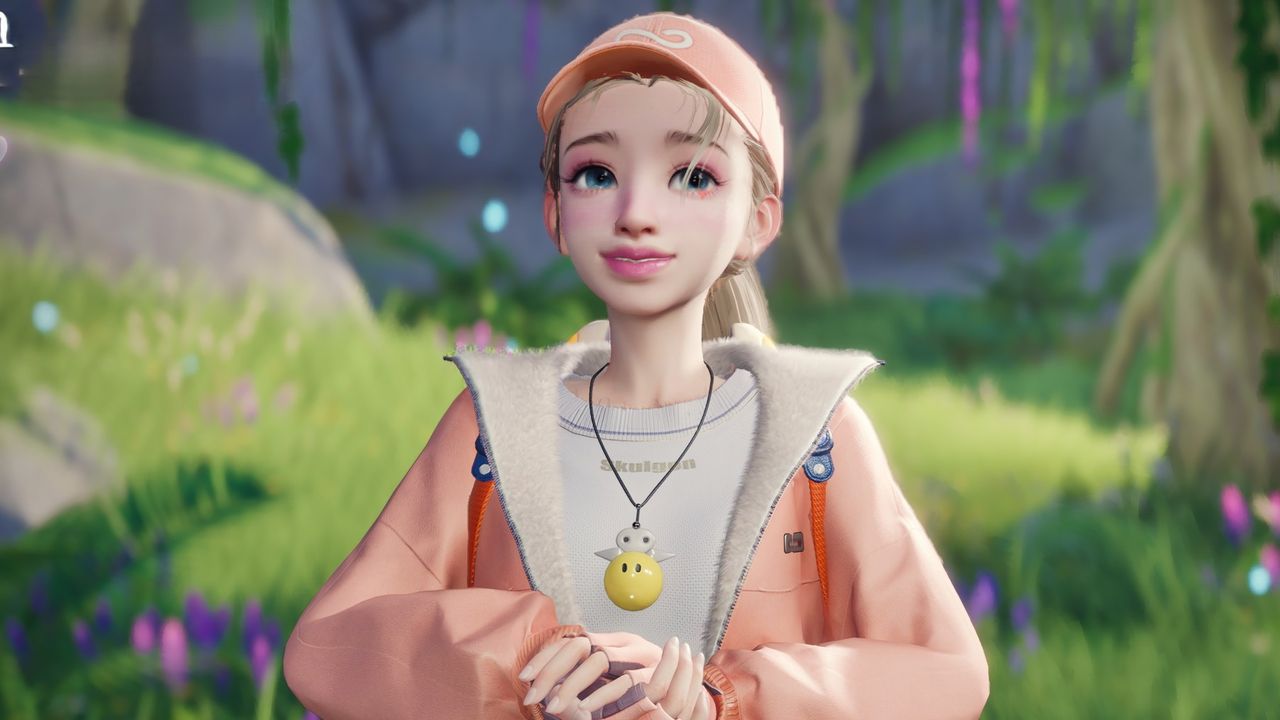
In today's just-finished Tomodachi Life: Living the Dream Nintendo Direct broadcast, the company began by showcasing the process with which players will create their Mii character, picking options for their gender, dating preferences and even a detailed range of setings for their voice.
While not specifically mentioned, the message here was clear: that Nintendo has made good on its promise made back in 2014 to make the next Tomodachi Life game "more inclusive, and [something that] better represents all players."
In #TomodachiLife: Living the Dream, you can create Mii characters from scratch or by answering a series of questions! Once you’re finished with their look, pick their gender and adjust their dating preferences and personality. pic.twitter.com/eVQAWhuq9m
When Tomodachi Life: Living the Dream launches for Switch consoles this year on April 16, it will be 13 years since the arrival of the series' previous entry arrived on 3DS. Shortly thereafter, Nintendo found itself embroiled in a major controversy after Japanese fans alleged that Nintendo had initially developed, then removed, same-sex relationship options for in-game characters.
Nintendo's Bill Trinen commented on the issue to IGN at the time, and stated that while Nintendo had indeed updated the game, the update's intent had been to fix a data leak issue when importing characters from a previous game. Separate to this fact, Trinen said, some players had been using the same feature to import male Mii characters that could then be designated female, allowing for the appearance of two Mii characters of the same sex to marry and have a baby.
"Nintendo never intended to make any form of social commentary with the launch of Tomodachi Life," Nintendo then said in a statement, which did little to stop the growing backlash. "The relationship options in the game represent a playful alternate world rather than a real-life simulation. We hope that all of our fans will see that Tomodachi Life was intended to be a whimsical and quirky game, and that we were absolutely not trying to provide social commentary."
As fan complaints grew, a fan petition for "Miiquality" was launched, and the situation caught mainstream attention — including a high-profile skit by late night TV host John Oliver, who broadcast a skit featuring Mario and Link snogging.
Nintendo then issued a further statement with an apology for "disappointing many people" — and it was here that the company made a "pledge" to make a title that "better represents all players" should it release another Tomodachi title in future.
"We apologize for disappointing many people by failing to include same-sex relationships in Tomodachi Life," Nintendo said at the time. "Unfortunately, it is not possible for us to change this game’s design, and such a significant development change can’t be accomplished with a post-ship patch. At Nintendo, dedication has always meant going beyond the games to promote a sense of community, and to share a spirit of fun and joy. We are committed to advancing our longtime company values of fun and entertainment for everyone. We pledge that if we create a next installment in the Tomodachi series, we will strive to design a game-play experience from the ground up that is more inclusive, and better represents all players."
Tomodachi Life: Living the Dream allows players to create Mii versions of themselves, their friends, fictional characters and love interests and get them to all interact on a fantasy island. Clearly aware of some of the potential uses of this, Nintendo followed up today's Direct broadcast with a vague statement that said it would "place restrictions on certain image sharing features" for the game. Nintendo's Japanese support website states that this relates to the ability to share images directly to a smartphone or social media, though sharing via Game Chat is still possible.
Bungie’s next game after Destiny 2 is Marathon, an extraction shooter that’s set to release on March 5. To celebrate the occasion, Sony is releasing some Marathon-themed PS5 accessories. There’s the PS5 DualSense Wireless Controller - Marathon Limited Edition for $84.99 (see it at Best Buy) and the PULSE Elite Wireless Headset - Marathon Limited Edition, which costs $169.99 and is exclusive to PlayStation Direct. Both accessories will release March 5 alongside the game.
The controller is relatively understated as limited-edition PS5 controllers go, in that has an all-white base. However, the grips and touch pad are decked out in detailed black-and-neon-green Marathon iconography. The back of the controller has the name of the game in neon lettering as well. It’s a nice looking piece of tech that is otherwise identical to all standard DualSense PS5 controllers. You can check out our DualSense controller review for more info on its features. And see every PS5 controller you can buy right now to see if any other designs catch your eye.
The headset is a standard PS5 Pulse Elite Wireless Headset, but it features neon-green-and-black Marathon graphics on the headband. It even has some purple/pink on it for good measure. Check out our 9/10 Pulse Elite Wireless Headset review for more information about what this headset can do and what makes it a solid buy.
Marathon Collector's Edition
Lastly, Marathon fans can preorder the collector’s edition of the game — but note that this version does not include the game itself. It does, however, according to the listing, come with the following:
Physical Items
1/6th Scale Thief Statue with LED lights
USB-A to USB-C 1-metre-length charge cable
Collectible Silkworm Miniature
Iron-on Embroidered Patch
6 Art Postcards
Premium Hexagon Packaging with Lenticular Poster
Beautifully designed display box featuring environmental art
Digital Item
Zero Step Emblem
Zero Step Background
Chris Reed is a commerce editor and deals expert for IGN. He also runs IGN's board game and LEGO coverage. You can follow him on Bluesky.
With Crimson Desert just a handful of weeks from release, developer Pearl Abyss has released a 15-minute video showing everything from the story to the open world, alongside fresh gameplay.
This video shows main character Kliff and the continent of Pywel, which promises to be a seamless open world. Expect “sprawling wilderness, bustling cities, ancient ruins, and diverse regions, all set against a backdrop of escalating conflict and supernatural danger,” Pearl Abyss said.
Kliff is a warrior of the Greymanes, a faction from the northern region of Pailune. The story begins in the aftermath of a peace being shattered, and Kliff must reunite the Greymanes and reclaim their homeland. You end up discovering that the entire continent is involved.
The threat comes from the Abyss, a mysterious realm that’s sending fragments crashing into Pywel. Some want to exploit these fragments. You’re trying to restore balance to the Abyss and stop those who are exploiting it.
Crimson Desert’s huge open world has been a topic of debate recently. Pywel is divided into five distinct regions: Hernand; Pailune; Demeniss; Delesyia; and the Crimson Desert itself. The main quest revolves around Kliff’s journey, but you’re free to explore the world in any order, taking faction-driven quests, large-scale battles, fortress sieges and smaller, character-focused missions.
Pearl Abyss confirmed that as the story progresses, two additional playable characters become available, each with unique combat styles, skills and weapons. Exploration is a big part of the game — you travel on horseback, climb terrain, glide across distances, and later access advanced traversal options such as a missile-firing mech and a dragon. Pearl Abyss said the world is filled with hidden treasures, ancient mechanisms, puzzles and points of interest “designed to reward curiosity and discovery.” As for combat, expect to face enemy soldiers, sorcerers, beasts and machines.
Speaking on the Gaming Interviews YouTube channel, Pearl Abyss’ Will Powers said that describing the size of Crimson Desert’s world in terms of numbers doesn’t do it justice, because doing so fails to capture the scope and scale of the game. But he did go as far as to compare it to two of the biggest open world games around.
"I don't think numbers really do it justice because, how big is that in terms of scope and scale?” he said. “But what we can say is that the world's at least twice as big as the open world, the playable area, of Skyrim. It's larger than the map of Red Dead Redemption 2."
Powers went on to insist that the size of Crimson Desert’s open world won’t determine its quality. Rather, what you actually do in it is the key factor.
"The continent of Pywel is absolutely massive, but size doesn't really matter if there's nothing to do,” he said. “Open-world games are about doing things, having activities, having distractions. So we wanted to create a world that's not only massive, but is also incredibly interactive."
Unlike Skyrim and Red Dead Redemption 2, in Crimson Desert you can fly around on a dragon, so despite the size of its world, you’ll be able to get about quickly. And don’t expect RPG elements in terms of decision-making and choice and consequence as it relates to your character, either. The sheer amount of things to do in the world will facilitate the role-playing part of Crimson Desert, which players will form through “head canon.”
“You choose the type of character you want to play as in terms of your progression within the systems in the game,” Powers explained. “And then through head canon you’re having this very different experience than other players because of the scope and scale of the game. You’ll be distracted by something, you’ll go on this quest line, you’ll have an experience that’ll be radically different than someone else, even though they’re playing the same game and the same canonical storyline that you both are going through.”
Crimson Desert has gone gold, locking in its global release date of March 19, 2026. That’s across PC via Steam, PlayStation 5, Xbox Series X and S, and Mac.
Wesley is Director, News at IGN. Find him on Twitter at @wyp100. You can reach Wesley at wesley_yinpoole@ign.com or confidentially at wyp100@proton.me.
Looking to expand your Switch 2 library? Best Buy is here to help. At the moment, as part of its Deal of the Day, the retailer is offering Pokémon Legends: Z-A for Nintendo Switch 2 for $55.99 (see it here). Overall, this saves you $14 off its usual price of $69.99, but it won't stay at this price for long.
Deals from this section of Best Buy last for one day, and one day only. If you've been itching to boot up Pokémon Legends: Z-A on your Switch 2, now is the time to grab a physical copy and save while it's still on sale.
Pokémon Legends: Z-A (Nintendo Switch 2) for $55.99
We found plenty to enjoy in Pokémon Legends: Z-A, with IGN's Rebekah Valentine noting in her review that it "finally feels like Game Freak hitting its stride in Pokemon’s 3D era."
She continued on to say that, "Lumiose City may not be visually exciting, but exciting Pokemon encounters, well-written characters, and amusing side quests still make it fun to explore while also serving as the ideal vehicle for a more intimate and emotionally mature Pokemon story."
Again, this deal only lasts through today, so now is the time to grab it for $55.99.
Magic: The Gathering has a busy 2026 planned, but the last set to be revealed was a crossover with the Teenage Mutant Ninja Turtles. Yes, it marks our second trip to New York in less than a year, thanks to last year's Spider-Man set (seriously, there are infinite dimensions we could travel to!), but the Heroes in a Half Shell are doing things a little differently.
Not only does it offer our first Universes Beyond Commander Deck since Final Fantasy, but there are some new product types, too. Here's everything you can preorder, including more than a few sealed products that already have some tidy discounts.
MTG x TMNT Preorders in a Half Shell
As you can probably imagine, there are more products coming than you can shake a Bo Staff at launching on March 6, with pre-release a week prior from February 27 to March 5.
You can also grab the now-customary booster bundle, which includes a promo card, a series of nine Play Boosters, a storage box and a spindown life counter.
That’s dropped to $61.01 right now, making it an even more appealing gift option for a Turtle-loving Magic player in your life (there are dozens of us!).
We promised something new, and here it is: The Turtle Team-Up box, which offers co-op gameplay where "2-4 players battle for survival against an onslaught of villainous adversaries".
It's still $49.99 at Amazon, and includes four pre-built 60-card hero decks, one Enemy deck with 11 bosses, seventeen Event Cards, and four 14-card boosters.
Also new this time is a Pizza Bundle, which includes 9 Play Boosters, 1 Collector Booster, 25 non-foil Pizza lands (yes, really), five foil Pizza lands, 2 foil promo cards, and a spindown life counter. Amazon had this for $99.99, but they're all gone - almost certainly because there's a single Collector Booster inside.
Also out of stock is the Collector Boosters. As with any set, these are where you’ll find the high-value cards, and Amazon sold out fairly quick for both boosters and a box of them. Expect them to be expensive, though, with an MSRP of $37.99 each, or around $479.99 for the box.
As a reminder, Collector Boosters include alternate art treatments and foils, but they're functionally the same cards. Buy them, or don't, but don't feel like you have to spend almost $500 for a box just to play this great card game.
Teenage Mutant Ninja Turtles is Getting a Commander Deck
Finally, Commander players can expect a return to precon decks… but just one. After being absent since Edge of Eternities, there’s a new precon coming, which is a five-color deck called Turtle Power!
It's also interesting that after very few five-color decks in recent years, we're now getting two in consecutive sets after Dance of the Elements from Lorwyn: Eclipsed.
UK Preorders
I can’t remember the last time a set came with a single Commander precon. In 2025 alone we’ve had sets with no precons (Spider-Man, Avatar), sets with two (Aetherdrift, Edge of Eternities), a set with four (Final Fantasy) and a set with five (Tarkir Dragonstorm).
Why just the one? I honestly can't complain. Even at my age, picking my favorite turtle is serious business, so having the whole gang in one, 100-card boxed product means I don't have to make any tough choices.
Lloyd Coombes is an experienced freelancer in tech, gaming and fitness seen at Polygon, Eurogamer, Macworld, TechRadar and many more. He's a big fan of Magic: The Gathering and other collectible card games, much to his wife's dismay.
Sony has shared a new 15-minute trailer for Crimson Desert that focuses on the game’s features. This first part of the Features trailer introduces Kliff of the Greymanes, the conflict sweeping over Pywel, and the open world where your journey begins. Crimson Desert started as an open-world MMORPG. During development, though, Pearl Abyss pivoted and … Continue reading Crimson Desert Got a 15-Minute Features Overview Trailer→
Today's dedicated Nintendo Direct has revealed new details on Tomodachi Life: Living the Dream, the next title in Nintendo's social sim series headed to Switch and Switch 2.
Hosted by long-term Nintendo producer Yoshiaki Koizumi, the 20-minute broadcast introduced a look at the latest entry in the Tomodachi series — the first in over a decade. Within the first few minutes, Nintendo answered one of fans' big questions of the game: whether it would cater to same-sex relationships, following a previous controversy.
Nintendo makes good on promise for Tomodachi Life to become more "inclusive"
Players will be able to set their Mii character's "dating preferences" with a combination of three options: Male, Female and Non-binary. The game notes that players "can pick one, more than one, or none." Your character's gender can also be set with the same three options, and there are a series of options and sliders to customize your Mii's voice, based on its speed, pitch and more.
Living the Dream begins with an empty island with few buildings and only a handful of characters. Luckily, it also features plenty of customization options for your characters, islanders and the island itself. Characters don't even need to be human, either — teddy bears and aliens also feature.
Much of this feels like a version of The Sims mixed with Animal Crossing, with the ability to mould your fellow islanders into friends or love interests, introduce other characters to each other, and sit back to watch bizarre storylines play out as your various inhabitants interact.
Mii characters have a range of traits and mannerisms, and when interacting can prompt some truly odd vignettes. Sometimes your fellow islanders will come to you with requests, and you'll also be able to keep them happy with dishes from the food mart, and fresh items of clothing. You can also use the Switch's touchscreen to draw new items, clothing and even pets for your character to interact with.
Islands can be fully built and customised, meanwhile, with houses and items placed to grow your town into a sprawling settlement. Over time, you may find your characters moving in together, fall in love and get married.
Tomodachi Life: Living the Dream release date announced
Today's presentation concluded with an announcement of the game's release date on April 16, 2026. Tomodachi Life: Living the Dream will arrive then for Nintendo Switch, and also be playable on Switch 2.
No specific details of any differences for Switch 2 (or a separate Switch 2 Edition) were mentioned.
Tom Phillips is IGN's News Editor. You can reach Tom at tom_phillips@ign.com or find him on Bluesky @tomphillipseg.bsky.social
In 1978, Reinhold Messner and Peter Habeler did something that both scientists and other mountaineers considered impossible: they climbed Mount Everest without the use of supplemental oxygen. After reaching the summit, they split up for the descent, and it took Messner nearly two hours to reach base camp. When he did arrive, he was suffering from snowblindness. Later, a reporter asked him why he went up there knowing he could have so easily died. “I didn’t go up there to die,” Messner, who would return to complete the first solo ascent (also without supplemental oxygen) of Everest two years later, responded. “I went up there to live.”
It’s a sentiment that would resonate with Aava, the protagonist of Cairn. “All I ever wanted was to touch eternity for an instant,” she tells us at the outset, her eyes to the stars, “To reach one of those rare moments of bliss where everything seems in its place, and you feel you’re part of a whole.” But her mountain isn’t Everest; it’s Kami, a fictional peak no one has ever summited, and she is determined to be the first. Cairn is her story, and like both the mountain she is challenging and the climb itself, it is an incredible one.
Cairn is a game about the climb, about choosing the right route up the mountain, finding the right handhold, taking a chance on the outcropping that seems slightly out of reach, pulling yourself up to a ledge just before your strength fails. Your path to Kami’s summit is up to you and you control each of Aava’s limbs independently (with some optional assistance on by default); each part of the climb is yours. The summit is the goal, but it is enough to make it to the next Bivouac, a tent in which you can sleep, to retape your fingers, cook food, and repair pitons damaged in the climb. There are meters in Cairn that track Aava’s temperature, hunger, hydration level, and overall health, and you’ll need to manage each if you want to survive. Cairn holds you accountable for your choices (if you don’t feed Aava, she will be weaker and climbing will be harder), but it’s rarely overly punishing, and managing your limited resources based on what Kami asks of you is both challenging and rewarding.
What doesn’t have a meter is Aava’s stamina, how strong her grip is at the moment, or how well she is maintaining the position you’ve taken. For that, you’ll have to watch her: the way her arms and legs tremble on an unstable hold, the way she breathes, how she whimpers and winces as she’s about to lose her grip. These tells work great, but they can be subtle, especially at first, and you have to pay attention until you learn what to look for and how to position Aava properly as she moves up the mountain. Aava is incredibly strong, but she’s also human. She cannot hold onto smooth rock for long, nor scurry up a sheer cliff through sheer force of will. Shaking out a tired limb and refocusing while on a semi-stable hold will buy you more time, but you cannot scale all of Kami that way.
Cairn holds you accountable for your choices, but it’s rarely overly punishing.
Salvation, and progress, are found in the small divots she can grab onto, tiny ledges where her feet can find purchase, a crack on the cliff face she can wedge her toes into. Sometimes, there will be nothing, and you will have to take a risk, to brace Aava’s leg against a flat surface in the hope that she can pull herself up before her strength fails or sidle across a small ledge, her hands pressed against smooth stone.
If the rock is suitable, she can drive a piton into Kami and build a belay, clipping herself to a loop of rope in order to rest. If she falls and you’ve been smart about using pitons, her Climbot helper will catch her, and you can climb the rope back to the belay, or use it to rappel down to an area you might not otherwise reach. But even here, it’s possible to make a mistake and realize you need a belay before Aava has time to drive the piton home, or twist it as it’s going in, ensuring Climbot can only recover part of it rather than the whole thing the next time you’re on solid ground. If the stone is too dense, you’ll have to make the climb unaided. These are Cairn’s most memorable moments. You are going to fall. The only question is whether or not it will kill you, and how much time you’ll lose if the mountain claims you.
You can pull the camera out for a bird’s eye view of your location at any time (and see the route you’ve taken to get there, including failed past attempts), which is crucial for planning the next leg of your ascent. There are no wrong answers. Sometimes, the route is clear, but slower; other times, it’s faster, but more difficult, and requires more risk. Often, it’s somewhere in between, and you’ll have to choose where and how the route challenges you rather than if it will. And then there are the times where you’ll think you’ve found a good route only to reach a section without a clear answer, then check the map again and see that there was another, easier path available. Sometimes, you can tough it out with smart choices, chalk (which increases your grip strength), and a few well-placed pitons. Other times, it’s best to adjust your path.
Climbing Kami is exhilarating, and I often found myself gazing up at the path before me wondering how I would manage it, only to look down and realize I had a short time later. There is joy in planning out a route, in securing a piton at the last second before Aava falls, in finding the right handhold or wedging Aava’s feet into a crevice that unlocks a path that seemed impassible, in chalking up and daring to persist a difficult section in the rain instead of waiting it out on a belay, in seeing the path you chart in your head becoming the route you’ve taken, in finally pulling yourself onto a ledge after a particularly difficult climb when the night is falling and your visibility is failing and Aava is dehydrated and hungry and tired, in beating the mountain through sheer, dogged determination. The act of climbing doesn’t change much throughout Cairn’s runtime (my playthrough took me 19 hours, but I was very thorough), and occasionally Ava’s limbs may spider in strange directions or she may fall through the mountain, but I was so invested it hardly mattered.
I will never summit Kami; my victory is inevitable.
As I play, Kami exists as something without end, taller than I could possibly imagine, something I will never complete, and the mountain I am scaling, all at once. It is a remarkable balance, and something Cairn never loses. I will never summit Kami; my victory is inevitable. Each time I make it to a Bivouac (which doubles as a save point), I feel like I’ve done the impossible.
But inside, there is always more to do. I need to tape Aava’s hands, scarred and covered in blood from the climb. I need Climbot to craft new pitons from the scraps I saved. I need to cook a meal, rehydrate. Aava brings supplies to the mountain, but her backpack can only hold so much. Each time I eat a chocolate bar or drink some milk or tape Aava’s hands, I know I am using up a resource I might not get back. Each time I sleep, I know she will wake up hungry. Kami forces me to make compromises. Climbing at sunset is dangerous because I can barely see; climbing at night is nearly impossible, something I only do if I have no other choice. Sometimes, I rest not because Aava physically needs to, but because there is no way to keep going until sunrise.
But it is not all hardship. When I need something, Kami provides. In caves, on ledges, I find dandelions, perfect for tea. Raspberries. Fresh, clear water. Fish. I am always teetering on collapse, never there. There is always just enough, if I’m smart. Climbot recycles used plastic and bottles and makes chalk. Each part of my journey feeds the other.
I learn the mountain’s story. I find the remains of a cable car and its station, of smashed-open vending machines, flyers and advertisements. Tourists walked here, once. Companies offered anyone the chance to see the mountain until it wasn’t profitable anymore, until it failed, until the mountain pushed back. I find the remains of the troglodytes, a civilization built on Kami, beautiful cities carved into the mountain, great statues. I explore. I learn of their resentment of climbers like Aava, the way civilization came for them, encroached on them, eventually forced them down. The remains of what they built are marked by pitons and covered in climbing rope. “My mountain belongs to everyone,” Aava tells a goat that attacks her. But in climbing it, I realize it isn’t true. By being here, I am profaning something sacred. I am walking through the graveyard of a culture people like Aava helped kill.
And I am reminded of the cost of what I am attempting. Sometimes, the hints are subtle. Bear-proof boxes full of supplies. Abandoned backpacks. Other times, they are less so. Dead bodies. “Sometimes you come for the mountain,” Aava says gently, kneeling over someone who shared a dream with her. ‘Sometimes the mountain comes for you.” Abandoned campsites. I learn of a group tracking bears on the mountain, and I wonder what happened to them, and about what I might run into as I ascend. I find the corpse of one-half of a climbing team, two orphans who promised to conquer Kami together, and a letter saying the other has gone on in search of a mystical flower with healing properties, hoping to save his partner. I find markings and letters from a couple who scaled Kami together, getting a little higher each time they attempted it. A broken Climbot still receiving messages because maybe that means the climber it belonged to still is, too.
These stories, and others, recur and build on themselves as I climb, and I find them moving. I explore, go out of my way, to see them. Cairn is not just about Aava; it is about Kami, and everyone who has attempted to climb it. There seem to be two outcomes: either they turn back, or they die. Kami remains unconquered. The mountain always wins.
Stories recur and build on themselves as I climb, and I find them moving.
As I ascend, I also learn about Aava, about the kind of person she is, about who someone driven to do something like this must be. Climbot relays messages she receives as she climbs. From her agent, Chris, who goes from begging her to send him photos to appease their sponsors to just begging her to let him know she’s all right. From her friends, who sing her happy birthday. From her partner, Noami, who does not understand why she is doing this, who reminds her of the cost of what she’s attempting. Aava mostly ignores them. Sometimes they make her smile, make her sad. Sometimes, she is angry with Climbot for playing them.
She meets other people on the mountain. A climber named Marco, who is a fan, grew up reading about her exploits. She is terse with him, occasionally unkind, though she does not mean to be. The quest for the summit may drive her, but she is running away from the world on the ground as much as she is climbing toward Kami’s peak. For everyone else, there is a life at the bottom of the mountain. All they have to do is give up and come down. For Avaa, the climb is all there is.
Cairn never gives us the whole story; everything comes in pieces, in hints, in what’s left unsaid, and in small comments, like the one she makes to Marco when he mentions her father, himself a climber, who put Aava on her first climbing wall when she was three years old. “Great guy,” Marco says, impressed. “So they tell me,” she responds. Like the mountain itself, Aava is complicated, complex, imperfect. And like the mountain, she is incredible. How I felt about her changed as I climbed, but I always understood her. As long as she faced Kami, so would I.
At the end of Cairn, Aava must make a choice about who she is, what she is willing to sacrifice, and how the experience of climbing Kami has changed her. It is a remarkable fusion of gameplay and storytelling, of everything you have seen and done on the mountain. Each choice leads to a different ending. Neither is wrong. I have seen both paths, and in either case, the last couple hours of Cairn are something I will remember for a very long time.
Doom fans will want to keep an eye out for the latest exclusive collectible from Dark Horse Direct. The company is releasing a new statue of the Doom Slayer from 2025's Doom: The Dark Ages in all his shield-slinging glory.
Check out the slideshow gallery below for an exclusive first look at this imposing and very cool statue:
The Doom: The Dark Ages - Doom Slayer Statue is a collaboration between Dark Horse Direct, id Software, and Bethesda Softworks. The statue was sculpted by Bigshot Toyworks and painted by J.W. Productions.
This massive collectible measures 14 inches tall and stands atop a 9.5-inch diameter metallic base. The statue depicts the Doom Slayer holding both a bloody chain flail and his trademark Shield Saw.
The Doom: The Dark Ages - Doom Slayer Statue is limited to 500 units worldwide and is priced at $319.99. It'll be sold exclusively on the Dark Horse Direct website, with an estimated release window between October and December 2026.
Check out the reveal of Huntdown: Overtime, the upcoming over-the-top pixel-art roguelike prequel to Huntdown. This one's set in New Detroit in the year 2084, and you play cybernetic rogue cop John Sawyer, who's out to clean up the city's scumbag-filled streets. It's in development for PC and due out in Steam Early Access in Q2 2026.
Interestingly, Overtime doubles down on having just one playable character, versus the original, which had three. But perhaps this will prove to be more effective in a roguelike loop as you attempt to take down goons and eventually the exaggerated '80s-style bosses. Watch the reveal trailer above and check out the first screenshots in the gallery below.
Huntdown: Overtime is being developed by original Hundown developer Easy Trigger Games and published by Coffee Stain Publishing. Wishlist it on Steam if you're interested, and/or play the demo!
Ryan McCaffrey is IGN's executive editor of previews and host of both IGN's weekly Xbox show, Podcast Unlocked, as well as our semi-retired interview show, IGN Unfiltered. He's a North Jersey guy, so it's "Taylor ham," not "pork roll." Debate it with him on Twitter at @DMC_Ryan.
But, there's also nothing wrong with looking back at one of the most exciting releases from last year: Avatar: The Last Airbender. Considered one of the better "Universes Beyond" sets, Avatar was a mighty big release, and well worth checking out in my opinion.
Now, here's the reason why we're talking about it, as its Beginner Box is discounted at Amazon right now, and has dropped to its best price ever.
As we covered in our preview of the product last year, the contents are very similar to the same Beginner Box released in 2024 for Foundations, only with an Avatar focus instead.
Inside, you’ll find 2 play boards, and two pre-built half decks with one for Aang and one for Zuko, as well as a tutorial booklet to help you do battle between them.
Once you’ve played through the guided game, there are eight other half-decks, so you can put any two together to build an instant deck, with multiple combinations based around Fire, Earth, Water, Air and features like big creatures, spells, and more.
It’s a great way to get started learning how to play, and it gives you plenty of cards to start your collection with and learn how Avatar-centric mechanics like elemental bending work within the confines of Magic: The Gathering.
So, what are the big chase cards from the set? What are the most powerful characters, and which are the rarest? Well we've got a handy round up to check out if you so choose, and I'll leave the top picks just above as well.
Robert Anderson, Senior Commerce Editor, and IGN's resident deals expert on games, collectibles, trading card games, and more. You can follow him @robertliam21 on Bluesky.
Kozo Shioya, the Japanese voice actor behind Majin Buu in Dragon Ball Z and the Dragon Ball video games has died aged 71. As announced by his agency Aoni Production on Wednesday and reported by Oricon, Shioya passed away on January 20 from a cerebral hemorrhage.
Shioya was the Japanese voice for all appearances of Majin Buu across the Dragon Ball anime and games, with the exception of the genie-like villain’s mini version in 2024’s Dragon Ball Daima, who was voiced by Shiho Amuro.
Fellow Dragon Ball VA Ryo Horikawa, who plays Vegeta, tweeted that he was “utterly shocked” to hear the news of Shioya’s passing, adding that “he was someone that I knew since the very beginning of my voice acting career. We would often go out drinking with everyone after recording. I have nothing but fun memories of him.”
Kozo Shioya, the Japanese Voice Actor for Majin Buu has passed away at the age of 70. Rest in Peace 🙏 pic.twitter.com/IQ4QMdNOri
Prolific voice actress Noriko Hidaka recalled working with Kozo Shioya many times, but that voicing One Piece’s Bell-Mère alongside Shioya’s Genzo was “particularly memorable.” She described the fellow actor as like “an older brother,” and that he was a reassuring presence when they were recording.
As well as voicing Majin Buu in Dragon Ball and Genzo in One Piece, Shioya voiced characters across a wide range of anime and game series. This included recurring roles in the Sengoku Basara franchise, in which he played Yoshimoto Imagawa and Xavi. He was also the Japanese language VA for characters in Mobile Suit Gundam, Bleach, Naruto, and Metal Gear Solid (playing Fatman in MGS2 and Soviet premier Nikita Khrushchev in MGS3).
To commemorate the legacy of Kōzō Shioya, let's remember Majin Buu's most emotive moment in Dragon Ball Z ❤️🩹 pic.twitter.com/unq7S1crSX
Very sad to hear about the passing of Kozo Shioya. When I first swapped to the Japanese version of the show well over a decade ago now, his performance as Majin Boo was one that really stuck with me. He truly made that character terrifying in ways I'd never experienced before. pic.twitter.com/M61FEw8vZK
Dragon Ball recently announced two new anime series and a new game project, Age 1000. If you missed it, here’s a rundown of all the reveals made at the series 40th anniversary event, Dragon Ball Genkidamatsuri, last Sunday.
Verity Townsend is a Japan-based freelance writer who previously served as editor, contributor and translator for the game news site Automaton West. She has also written about Japanese culture and movies for various publications.
Return to Silent Hill may have only released in theaters last week, but director Christophe Gans has already confirmed that a longer Director’s Cut exists.
According to a fan who attended a premiere and Q&A with the filmmaker last week and shared some highlights on Reddit, Gans described the alternate version "as longer and allowing [the story] more room to breathe." This includes the death scene of a prominent character from the game that only briefly appeared in the movie.
"Gans said he struggled to find the right place for it in the edit," the fan wrote. "It is unclear whether [the scene] would appear in the Director’s Cut, though he expressed a desire for audiences to see it someday." He also told attendees that he had been instructed by the producers to keep the movie under two hours long. There is no indication, however, that this Return to Silent Hill Director's Cut will ever be released.
Return to Silent Hill debuted to a dreadful reception last week, with just $3.2 million coming in from North American theaters. Despite Konami resurrecting its horror franchise with two well-received games, Silent Hill 2 Remake and Silent Hill f (as well as the divisive Silent Hill: Ascension and upcoming Silent Hill Townfall), the third Silent Hill movie had the lowest domestic box office opening of all three Silent Hill films; 2006's Silent Hill generated $20.2 million, and the painfully poor follow-up Silent Hill: Revelation just $8 million — which is still more than twice Return to Silent Hill's domestic opening.
IGN's Return to Silent Hill review returned a 5/10. We said: "Return to Silent Hill isn’t completely without merit. It’s certainly a better follow-up to Cristophe Gans’ original 2006 film than 2012’s Silent Hill: Revelation, one that finds some success drawing on the creepy imagery and sound design of the games. But it’s ultimately an adaptation that fails to improve upon the source material or do anything particularly new and interesting. Those craving a truly great psychological horror experience are better off booting up a version of Silent Hill 2."
Gans recently said that despite receiving death threats over adapting the horror series for the big screen, he would be open to bringing another instalment to life, insisting: "I will adapt another chapter because there are some that are extremely good, something very different from the first film, and now Return to Silent Hill. I like this world, and I can see that plenty of people are thinking I’m doing a pretty good job."
Vikki Blake is a reporter for IGN, as well as a critic, columnist, and consultant with 15+ years experience working with some of the world's biggest gaming sites and publications. She's also a Guardian, Spartan, Silent Hillian, Legend, and perpetually High Chaos. Find her at BlueSky.
James Gunn has defended The Brave and the Bold screenwriter Christina Hodson amid fan concern following news she will write the DC Universe’s Batman movie.
Last week, The Hollywood Reporter confirmed that Christina Hodson was writing The Brave and the Bold, which will be the first Batman movie in James Gunn and Peter Safran’s rebooted DC Universe. Hodson is best known for writing 2018’s Transformers spinoff Bumblebee, 2020 DCEU movie Birds of Prey, and 2023’s ill-fated The Flash. She also wrote the infamous Batgirl movie Warner Bros. canceled after it was ready for release.
The backlash has a number of components to it, one of which is The Flash itself. 2023 superhero movie The Flash, starring Ezra Miller, was a critical and commercial flop, pulling in just $271 million worldwide during its theatrical run. Both it and the entire DCEU are now defunct.
Gunn responded to one person on social media who said Hodson was getting “unjust hatred,” suggesting The Flash fans saw in theaters wasn’t The Flash Hodson outlined in her screenplay.
“I will only say anyone maligning Christina Hodson's screenwriting skills has almost certainly never read an actual screenplay by Christina Hodson — she's one of the writers who was with us early in the DCU planning stages,” Gunn said. “I don't think you can judge my writing based on films others directed, as massive liberties are sometimes taken.”
In October, The Flash director Andy Muschietti defended his box office bomb, insisting people “like to talk s***” about films they haven’t seen. In an interview with The Playlist to promote IT prequel series Welcome To Derry, Muschietti insisted The Flash was a good movie, and some of the criticism it suffered came from people who hadn’t even seen it.
“A lot of people did not see it,” he said. “But you know how things are these days — people don’t see things, but they like to talk s*** about it, and they like to jump on bandwagons. They don’t really know. People are angry for reasons that are unrelated to these things.”
Muschietti then acknowledged the impact of Ezra Miller’s off-screen controversies on the movie. “Of course, we had a publicity crisis with Ezra that is undeniable,” he said. “And I’m not questioning that. But yeah, we love the movie. And actually, we really recommend it.”
He continued: “And again, we love the movie. We, you know, we gave it our blood, sweat, and tears all the way to the end. And I watched it, like a week ago, and loved it again.”
Muschietti said the film failed to appeal to "the four quadrants" — a movie industry term meaning to appeal to everyone — enough to justify its $200 million budget.
"The Flash failed, among all the other reasons, because it wasn’t a movie that appealed to all four quadrants. It failed at that," Muschietti said. "When you spend $200 million making a movie, [Warner Bros.] wants to bring even your grandmother to the theaters.
"I’ve found in private conversations that a lot of people just don’t care about the Flash as a character. Particularly the two female quadrants. All of that is just the wind going against the film I’ve learned."
The four quadrants, as defined by Hollywood, are males under 25, males over 25, females under 25, and females over 25.
As for The Brave and the Bold, Hodson may be set to reunite with Muschietti, who THR said remains on board the film but whose involvement is not set in stone given his commitments to Welcome to Derry Season 2. Either way, it sounds like The Brave and the Bold is some way away. THR said “it would be some time before a definitive draft comes in as the studio is taking a measured approach to its development.”
Gunn must navigate next year’s release of The Batman 2 and potentially The Batman 3. The Batman 2, starring Robert Pattinson in the title role, is set to launch five-and-a-half years after The Batman, on October 1, 2027. Writer-director Matt Reeves has said he set out to make a trilogy of Batman films as part of his Batman Epic Crime Saga, and as of 2024 that plan was still on. The Batman films exist in a universe separate to the ongoing DCU, and given Gunn has ruled out Pattinson’s Batman crossing over, we’re set for a new actor to play the Caped Crusader for The Brave and the Bold.
Gunn then committed to never releasing two Batman movies in the same year. “I think both Batman and WW [Wonder Woman] are incredibly important,” he said in response to another fan. “But I'm also not going to have two Batman movies come out in the same year.”
Wesley is Director, News at IGN. Find him on Twitter at @wyp100. You can reach Wesley at wesley_yinpoole@ign.com or confidentially at wyp100@proton.me.
 Connexion