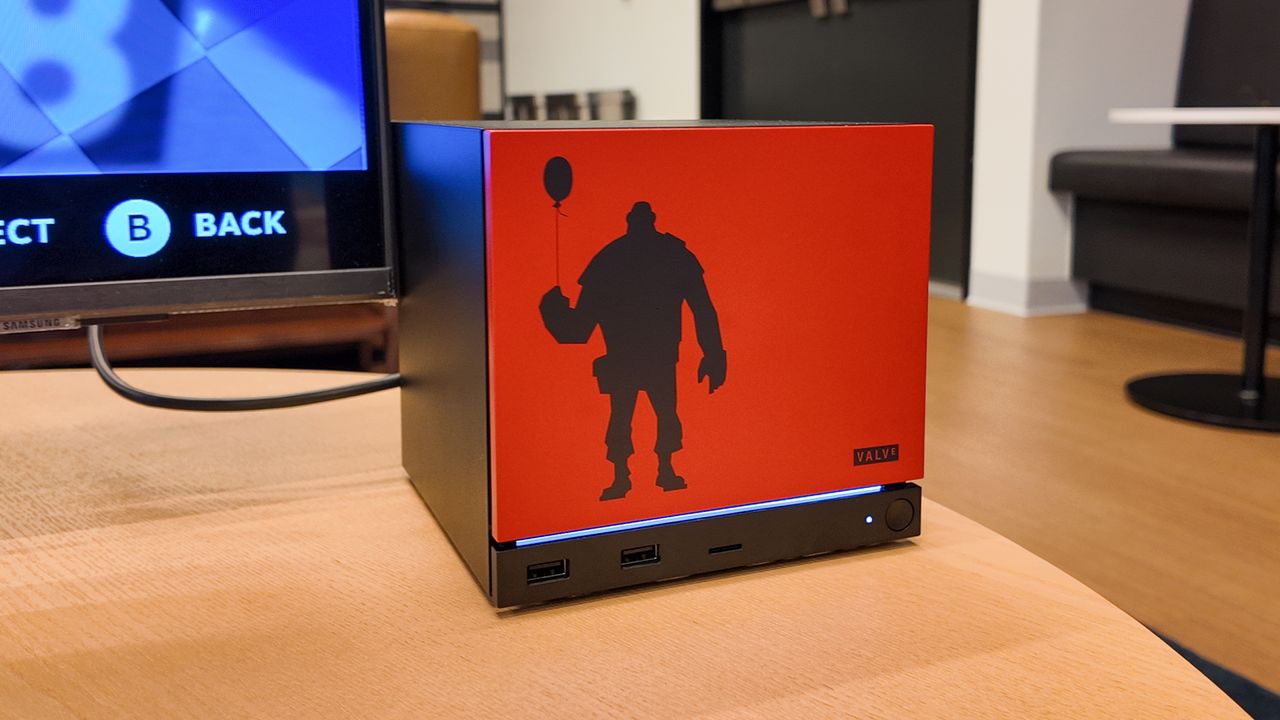
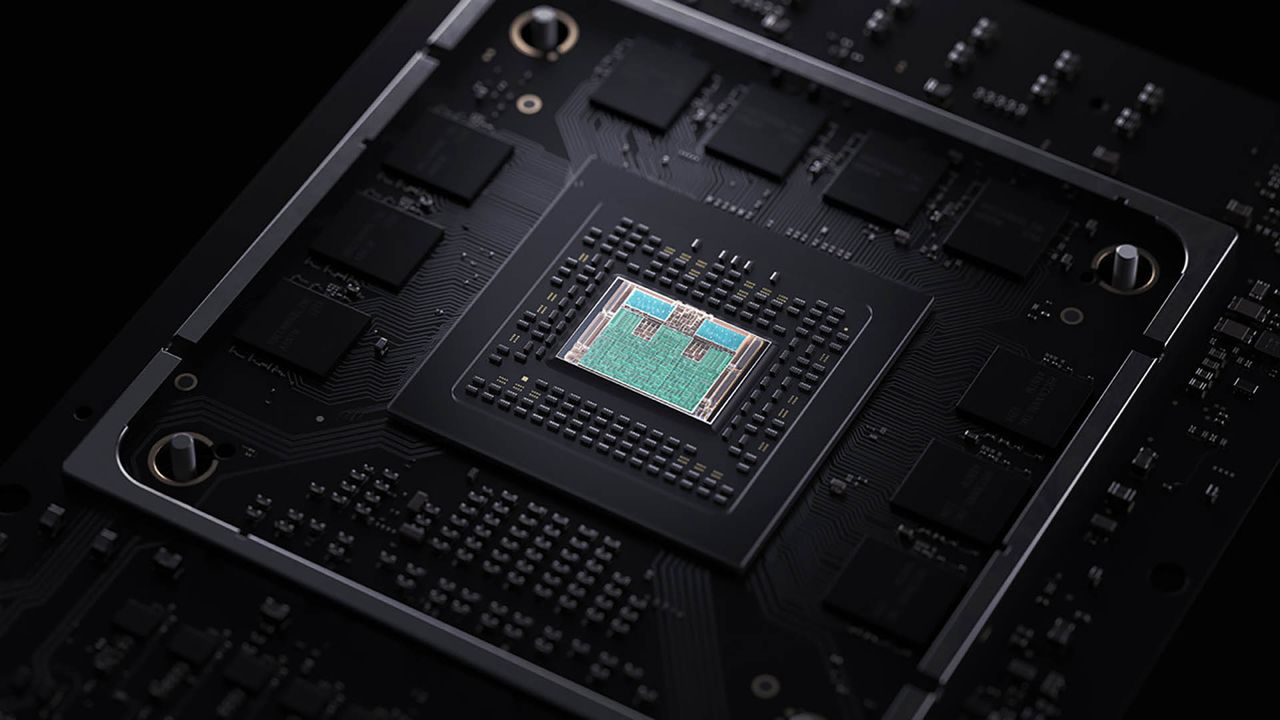
What’s going on with Steam Machine? Valve has been relatively quiet on the upcoming hardware since announcing it last year, and it remains without a release date or a price. But AMD, which powers Steam Machine itself so you’d like to think it’s in the know, has said Valve is “on track” to begin shipping early this year.
That’s according to comments made by CEO Lisa Su in AMD's latest earnings call (the same one that mentioned the next-gen Xbox was set for launch in 2027). To be exact, here’s the quote:
In gaming, revenue increased 50% year-over-year to $843 million. Semi-custom sales increased year-over-year and declined sequentially as expected. For 2026, we expect semi-custom SoC annual revenue to decline by a significant double-digit percentage as we enter the seventh year of what has been a very strong console cycle. From a product standpoint, Valve is on track to begin shipping its AMD-powered Steam Machine early this year.
That sounds pretty clear cut (early this year suggests by the end of March, if we consider early to be the first quarter), but Valve has yet to rubber stamp the launch window, and has remained quiet on potential price points, likely due to the rising cost of PC components. So, what’s the latest?
The Steam Machine is a mid-level gaming-focused PC designed to be more accessible than a standard desktop PC, with a sleek, cube-like design and SteamOS on-board. We here at IGN have offered our thoughts on how much the Steam Machine will cost, suggesting it’ll probably be higher than people think. Chatter about pricing ramped up last year after Linus Sebastian of Linus Tech Tips suggested it wouldn’t follow a “console pricing model” of $500, after mentioning the figure in a meeting with Valve staff.
In an interview with Skill Up from last year, Valve's Lawrence Yang and Pierre-Loup Griffais discussed the price of Steam Machine without actually confirming what it would be. The conversation began with software engineer Pierre-Loup Griffais confirming that Steam Machine is more powerful than 70% of gaming PCs that Valve registers on its hardware survey, in terms of general GPU level, saying: “We have looked at that number as part of speccing the machine, so it’s possible it’s evolved a little bit over time, but I think ballpark, it’s about there.”
He then said that fans should expect the Steam Machine price to be around the same as if you were to build a PC from parts to get “basically the same level of performance.”
“I think that if you build a PC from parts and get to basically the same level of performance, that's the general price window that we aim to be at,” he said. “Ideally we'd be pretty competitive with that and have a pretty good deal, but we're working on refining that as we speak. Right now is just a hard time to have a really good idea of what the price is going to be because there's a lot of different things… a lot of external things.”
In that context, Valve’s Steam Machine will likely cost above $750. We’ve suggested Steam Machine will cost $700-$800. To put that into perspective, the base PS5 with a disc drive currently costs $549.99, while the PS5 Digital Edition costs $499.99. The PS5 Pro, meanwhile, costs $749.99.
Skill Up then asked Valve to rule out the Steam Machine being subsidized hardware, saying, “like Valve is not going into this thinking we're going to eat a big loss on this so that we can grow market share or category or anything like that, correct?"
Pierre-Loup Griffais’ answer here was unequivocal: “No. It's more in-line with what you might expect from the current PC market. Obviously, our goal is for it to be a good deal at that level of performance.”
He then went on to make the case for Steam Machine at that sort of price, pointing to the value you get from the various features it includes that simply wouldn’t be easy to replicate if you were to build your own PC from similar parts.
“And then you have features that are actually really hard to build if you're making your own gaming PC from parts, right?” he continued. “Like things like, obviously the small form factor and I think the noise level that we achieved — or lack thereof — is really impressive, and we're excited that the people are going to find out how quiet this thing is. But also some integration features like HDMI CEC, right? Like being able to turn on your TV, turn off your TV, control it with your TV remote, change the volume, all that kind of stuff.
“Like the Bluetooth and wireless work that we've done, the four antennas, the very deliberate design to make sure that you can have a great experience with four Bluetooth controllers from any manufacturer, plus our Steam Controller receiver integrated as well — that’s all hard to do. But more importantly, you can turn on the machine from your controller, which is not something that is actually straightforward depending on the type of PC you have or the main chipset and all that.
“So being able to sit down on your couch, press one button on your controller, and the whole thing lights up like you'd expect for a thing that's in your living room, I think that's really valuable. And there's not really a price point to that because it's not really something that exists in the PC market right now.
“There's people that are going to be perfectly happy building their PC at whatever level of spec, and that's going to be a great experience for them. We're building Steam OS so that if they want to use it for that they can and they can have essentially the same experience. And if they're happy with that, that's perfectly good with us. But we expect the machine is a nice baseline offering that lets you have some features that are really hard to get to otherwise.”
Valve designer Lawrence Yang then chimed in with his own thought: "for me one of the benefits of Steam Machine is, I'm someone who used to build my PC in college and I am too old and tired to do that now!”
Some have questioned Valve’s refusal to subsidize the Steam Machine and thus theoretically at least miss out on having a greater number of people buying games through Steam. Larian publishing director Michael Douse, who is in charge of business development regarding the likes of Steam megahit Baldur’s Gate 3, took to social media to suggest Valve will lose “far more” than the approx. $200 difference by not having more users on the Steam storefront, “which is essentially a money printing machine.”
“That said it isn't stupid to not sell things at a loss, just peculiar in this case,” Douse continued.
We’ve got plenty more on all Valve’s recent hardware announcements, and have a handy roundup. We went hands-on with Steam Machine and Steam Controller, and if you’re wondering about Steam Deck 2, we asked Valve about that as well.
Wesley is Director, News at IGN. Find him on Twitter at @wyp100. You can reach Wesley at wesley_yinpoole@ign.com or confidentially at wyp100@proton.me.
 Connexion