To me, and I’m sure many others, the Pokémon franchise as a whole has always been “cozy.” Set in a (mostly) idyllic world with cute best friends who are always by your side, how could it not give you warm fuzzy feelings at least occasionally? We’ve had some relaxing Pokémon games over the years, but we’ve never quite had a game that embraced this secondary cozy aesthetic fully into its gameplay–until now, with Pokémon Pokopia. I played the first hour of Pokémon’s first life-sim, and the sheer amount of discovery to be made hooked me. I also played Pokémon Pokopia in multiplayer mode in a more developed world, plus, I learned more straight from the developers.
Pokémon Pokopia begins with a Ditto waking up after a long, undefined slumber. It remembers its trainer in its hometown, with the nameless narrator commenting, “You look so happy with your trainer petting you!”
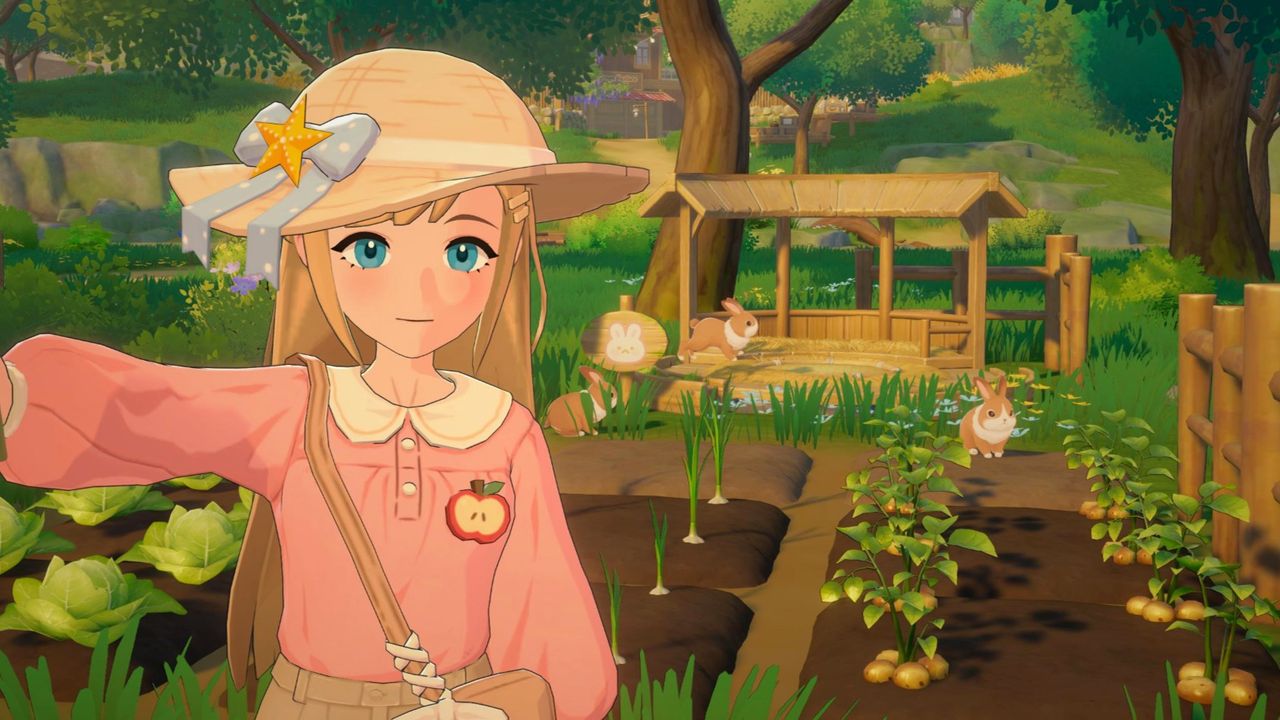
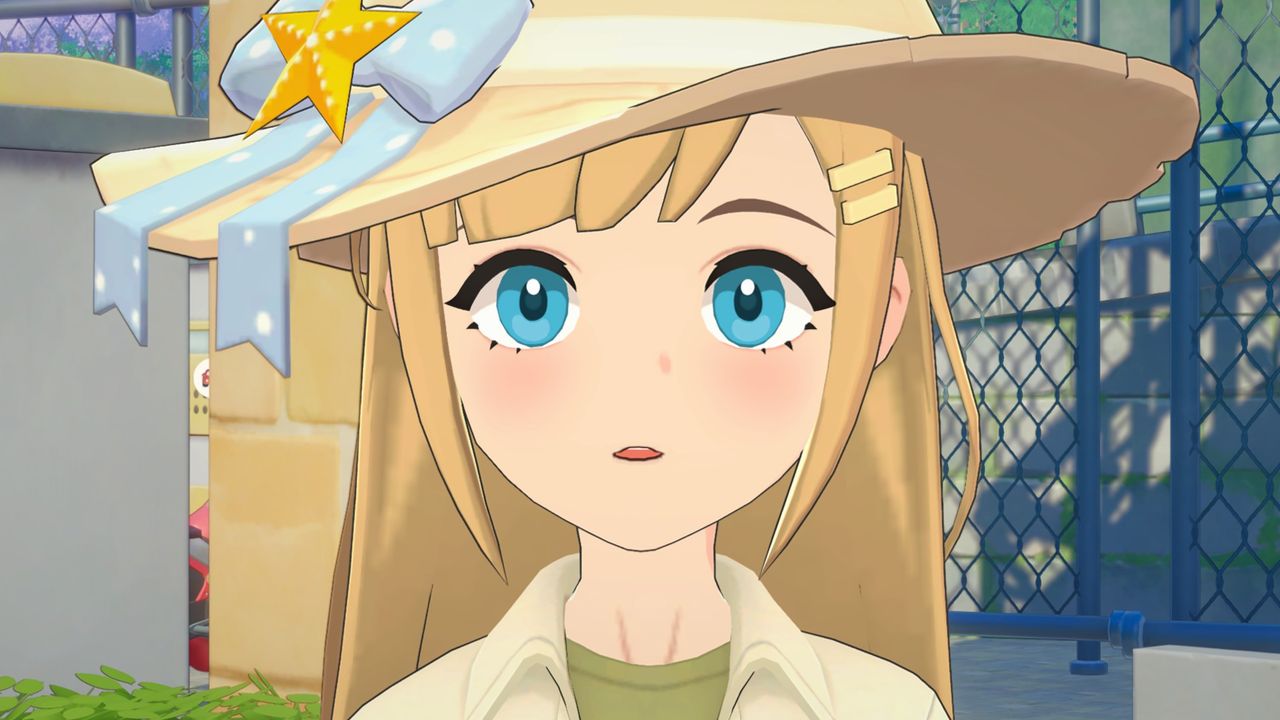
Aw, that is so sweet, and so sad–Ditto’s trainer is nowhere to be found, and that’s Ditto’s–(you, the protagonist’s)–motivator. In a bid to try to find its trainer, Ditto transforms into a human that looks like its trainer the best they can. Enter the character creator, in which you get to choose between seven hairstyles, 28 haircolors, hats, clothes, and bags. No, you can’t just be purple, that wouldn’t be very human-like!
“I wanted to create something where you can directly communicate with Pokémon,” Ohmori said.Shigeru Ohmori, the primary director of Pokémon games since 2014 and Pokémon Pokopia’s Concept and Senior Director, explained the thought behind making a Pokémon the main character and why it transforms into a human. “I wanted to create something where you can directly communicate with Pokémon,” Ohmori said.
Ohmori worried if they had a trainer as the playable character, as in the other mainline titles, it becomes the trainer giving orders to Pokémon, which they wanted to avoid. By keeping it all Pokémon, an atmosphere of friendship and teamwork is created.
There are two reasons Ohmori decided to make specifically Ditto the main character, too: one to benefit the gameplay, and another to benefit the story. Because Ditto can transform into other Pokémon and use their moves, it was the best option (I argue Mew could fit that bill too, but of course Mew wouldn’t have those adorable “simple eyes and slack mouth,” as Professor Tangrowth puts it.)
The other reason feeds the narrative motivations of Pokémon Pokopia. No one else knows what Ditto’s trainer looks like, so Ditto transforming into the trainer it misses is essentially asking the other Pokémon, “Do you know this human being?” Again, so cute, so melancholic, and I love it.
An Unobtrusive Tutorial
The tutorial, fortunately, is nicely integrated into what would be the regular flow of gameplay, and lets you start doing stuff outside its confines very quickly.
After meeting Professor Tangrowth, I found the Pokedex, and then found my first–then second–then third–Pokémon friend, expanding my abilities and how I could affect the world with each one, further enhancing my ability to create a wider variety of habitats to attract a wider variety of Pokémon.
Bulbasaur taught me the move Leafage, allowing me to create tall grass at will. Squirtle taught me the move Water Gun, so I could revitalize the dry ground and grass in the aptly named Withered Wasteland, the environment you start in. Charmander didn’t teach me a move, but instead taught me that you can ask Pokémon to follow you somewhere so they can perform an action based on their Specialty. In Charmander’s case, they lit a fire for me. As for other Specialty examples, Tiburr’s Build helps you build structures, and Bulbasaur’s Grow, makes plants grow faster.
Of course, to find more Pokémon, you need to make a variety of Habitats. The most basic habitat is four squares of tall grass, easily made by Leafage. You can also move objects around with Ditto’s ability to store and then spit-up materials, like, a Punching Bag. This is, canonically, the move Stockpile. Holding the collect button down actually makes Ditto continuously suck up anything around it, causing its face to hilariously and disturbingly resemble The Scream painting.

Other habitats include ones like the self-described “Boulder-shaded tall grass,” which attracts Fighting-type Pokémon like Timburr and Machop, and “Hydrated flower bed,” made of four flower beds placed beside–you guessed it–water. After a bit of time passes, a square in your new habitat may shake, indicating there’s a Pokémon there to meet.
Like the Pokedex for tracking Pokémon, there’s a Habitat dex for tracking habitats, and there are quite a number to discover!
Though I loved just experimenting, it isn’t all completely guess work. Occasionally, you’ll find a sparkle on the ground that’s a “trace of Pokémon” which gives you a hint about a yet-to-be-found Pokémon’s preferred habitat you haven’t discovered yet.
The Core Loop - All Pokemon All the Time
This cycle of attracting new Pokémon, learning new skills oivr discovering new specialties from them, then making more new habitats to attract even more new Pokémon, is the corest-of-core loops in Pokémon Pokopia, and is already incredibly engaging and fun without even considering the crafting and world customization you can do. This isn’t an accident.

“When thinking about development of the game, [the team] started thinking about the cycles of the user's motivation,” said Takuto Edagawa of KOEITECMO GAMES, Pokémon Pokopia Chief Director. “What the user wants to do, what they would want to start to do within the cycle. So, for example, filling up the Pokedex or creating more habitats, then that would create meeting more Pokémon.”
“Every single step in the game,” Edagawa continued, “The core of it is to be with the Pokémon, communicating with Pokémon. So wherever you go, there is always Pokémon… that is the largest difference compared to other [life sim] games.”

This core cycle that focuses on the Pokémon first and foremost is ingrained into the “main objectives” that propel the story as well. Just after meeting the Kanto Starters, you discover a decrepit Pokémon Center nearby. The PC there automatically launches the Poke Life Environment Improvement App, which dishes out both important tasks tied to progression, like increasing an area’s Environment Level or rebuilding the Pokemon Center; and smaller daily objectives, like collecting a certain number of sturdy sticks.
Bulbasaur specifically asked for a bed, so I crafted a Straw Bed from leaves for them. The stick collecting is self-explanatory, but to increase the Environment Level of the area, you must attract more Pokémon and improve their Comfort Levels. Again, another touch point with Pokémon.

Placing furniture a Pokémon wants within the bounds of its habitat–which you can see by pressing in on the R-stick–will increase its Comfort Level. Bulbasaur, for example, specifically asked for a bed, so I crafted a Straw Bed from leaves for them.
The Poke Life app rewarded me for my efforts with new unlocks and Life Coins. These can be used to buy a variety of things at the PC, like furniture, seeds, Pokémon hints, building recipes, and more. After increasing the Environment Level, Professor Tangrowth had more for me, too.
Multiplayer and More
There seems to be a lot more to Pokopia than everything I already talked about. I haven’t even touched on building buildings or what looks to be a huge number of collectibles–like Human Records, which included things like a diary that gave a glimpse of what Professor Tangrowth’s life was like with their human, and a document on Pokémon Greetings that taught me an emote!

The four-player multiplayer session gave me a look at a developed world, where Pokémon’s Habitat’s were developed so thoroughly they lived inside houses! The inside of the houses had furniture and decorations, like plushies, and the little town was manicured with sidewalks, fences, lamp posts, and even a stage.
My time with multiplayer was short, and I’m restricted from what exactly I can reveal, so I can’t say much more about it besides that it was fun. I can see friends ushering each other to stay on task, because it is just so easy to get distracted in Pokémon Pokopia, and that sounds like the best kind of hectic. (I was that friend in my group. I’m sorry!)

Edagawa said that, on average, depending on how you play Pokémon Pokopia, it will take between 20 and 40 hours to reach the “end” credits. But, that’s not really the main motivation to play Pokémon Pokopia–it’s to make a world to live with Pokémon. As for the post game, “There’s more things to experience after the end credits… I believe that players are encouraged to and will be motivated to continue to play the game,” Edagawa said.
There will also be motivation for players to log in intermittently. Pokémon Pokopia Producer Kanako Murata of The Pokemon Company said “When you play day-by-day, there may be something that, on a specific day, something special that might happen in the game.”
Considering how many hours some friends of mine have put into Animal Crossing: New Horizons, I think they’re right, especially for those whose motivations are to create a unique place to live with Pokémon. For me, I hope Ditto and the crew learn what happened to create this apocalyptic, empty world, but regardless, I’m excited to restore it with my best Pokémon friends.
 Connexion