↩ Accueil

Vue lecture

Dress to Impress Codes (February 2026)

If you're looking for DTI codes, IGN's got you covered! In this article, you'll find a list of all the active and working Dress to Impress codes in February 2026 that you can redeem for free rewards and bonuses in DTI, including outfits and accessories like hats, bags, and jewelry.

Active Dress to Impress Codes (February 2026)

Here are all the active Dress to Impress codes in February 2026 and the free rewards you get for redeeming them:

  • LIONDANCER - Lion Dancer set (NEW!)
  • LNY - Lunar New Year clothing (NEW!)
  • BHM26 - Dress and jacket
  • CA11MEHHALEY - Bear dress, bear ears, bear onesie
  • CH00P1E_B4CK_AGA1N - Choopie set rework
  • 2YEARS - Dress
  • 2GETHER - Classic DTI Doll
  • RDC2025 - Lanyard and belt accessory
  • VANILLAMACE - Headscarf
  • PIXIIUWU - Dress
  • ANGELT4NKED - Helmet
  • 3NCHANTEDD1ZZY - Wand
  • ELLA - Skirt
  • 1CON1CF4TMA - Sweater dress
  • MEGANPLAYSBOOTS - Boots
  • CH00P1E_1S_B4CK: Streetwear outfit set
  • S3M_0W3N_Y4Y: Axe
  • KREEK: Bear hat
  • LANA: White shorts, shirt, and legwarmers
  • LANABOW: White bow
  • BELALASLAY: Black jacket with pink halter top
  • LANATUTU: White dress
  • IBELLASLAY: Red, green, and blonde hairstyle
  • M3RM4ID: Orange mermaid set
  • TEKKYOOZ: White handbag
  • LABOOTS: Black boots
  • ITSJUSTNICHOLAS: Black jacket
  • ASHLEYBUNNI: Bunny slippers
  • LEAHASHE: Sweatshirt and sweatpants
  • KITTYUUHH: Black cat
  • C4LLMEHH4LEY: Puffy dress and bear headband
  • SUBM15CY: Necklace and eyelashes
  • D1ORST4R: Bag and bow

All Expired Dress to Impress Codes

Below, you'll find a list of expired DTI codes that no longer work and can't be redeemed as of February 2026:

  • CUPIDSCLOUD
  • GLINDA
  • ELPHABA
  • B3APL4YS_D0L1E
  • Your unique Twitch Cyberpunk Wings code
  • LNY2025
  • HAPPYNEWYEAR
  • Your unique Easter 2025 Easter Bunny Set code
  • UMOYAE
  • FASHION
  • BADDIE4LIFE
  • Your unique April Fools' Day 2025 Flamethrower code
  • M0T0PRINCESSWAV
  • SWEETHEART (was only redeemable between February 15 and February 16, 2025 at 8AM PT)
  • YEAROFTHESNAKE
  • NY2025
  • WINTERUPDATE (was only redeemable between 8 AM - 11 AM PT on Saturday, 14 December!)
  • 4BILLION
  • CHOOPIE10K
  • THEGAMES
  • EYELASHES
  • REWARD4CLASS1C

Roblox Gift Ideas

How to Redeem Dress to Impress Codes

Follow the steps below to redeem Dress to Impress codes and claim free rewards in DTI:

  1. Open the Dress to Impress Roblox Experience.
  2. Click on the handbag icon on the left-hand side to open the DTI Codes menu.
  3. Enter your code in the "Type here..." field.
  4. Check for any spelling mistakes or errors.
  5. Click the checkmark icon to redeem the code.

Why Isn't My Dress to Impress Code Working?

If the code you're trying to redeem in DTI isn't working, it's likely because of one of two reasons:

  • The Dress to Impress code is expired
  • There's a spelling mistake in the code

When inputting a DTI code in Roblox, make sure it's spelled correctly (for example, a capital I isn't a lowercase l, 0 and not O, and vice versa) and that there are no spaces before or after the code. We'd recommend copying and pasting codes straight from our article to ensure they're correct as we've tested and verified that the codes on this page are working ourselves.

If your DTI code still isn't working after checking for typos, it's more than likely expired and can no longer be redeemed in Dress to Impress.

How to Get More DTI Codes

To get more Dress to Impress codes, the best way is to join the official DTI Discord server. While we check for new codes daily, the quickest way to know about new Dress to Impress codes is to follow the Roblox experience's official Discord server where updates are posted in real time.

You can also check the Dress to Impress X account and the official DTI Roblox Group page.

Are There Any Upcoming DTI Codes?

We currently don't know of any upcoming DTI codes now that the two-year anniversary codes have been released. We'll update this article once we find out more information on new Dress to Impress codes.

What is Dress to Impress in Roblox?

Dress to Impress is a popular dress-up Roblox Experience available on PC, console, and iOS and Android mobile devices. In it, you put on your best outfit to complete a specific theme and walk the runway in a bid to earn votes from other players and become a top model. As you gain votes, you gain ranks and can access more clothing and accessories, so make sure you're truly dressed to impress! Also, for toy lovers and collectors, you can now pre-order a mystery pack of 2 Dress to Impress minifigures right now for $30 at Walmart.

Meg Koepp is a Guides Editor on the IGN Guides team, with a focus on trends. When she's not working, you can find her playing an RPG or making miniatures.

  •  

Our Legends of Zelda: Celebrating Hyrule’s 40th Anniversary with Our Favorite Zelda Memories

I would not be in this line of work without The Legend of Zelda. It’s my favorite franchise of all time – video game or otherwise – and it’s the series that will always draw me back into gaming and Nintendo, no matter what. My story is not unique; I know several IGN editors who feel the exact same way.

It’s not a secret to anyone that Zelda is critically important to so many of us here: we’ve awarded seven different Zelda games a 10/10 since IGN was founded in 1996 (the most of any franchise), we were one of very few outlets to recognize Tears of the Kingdom as Game of the Year in a packed 2023, and we crowned Breath of the Wild as the greatest game ever made on our most recent Top 100 Games of All Time list, compiled in 2021. It’s a series that’s constantly growing alongside us: how many franchises contain a game that’s essentially redefined a genre? You could argue Zelda would appear on that short list at least twice.

So as The Legend of Zelda celebrates its 40th anniversary this weekend, a few of us wanted to share our personal memories of this beloved franchise that we hold most dear. These are our legends of Zelda.

Zelda II: The Adventure of Link - By Seth Macy

There aren't a lot of people whose first exposure to The Legend of Zelda franchise was The Adventure of Link. I'd go so far as to say, for most normal, well adjusted people, playing Zelda's NES sequel as their first foray into the series would turn them away from it forever. But not me. No. I was completely hooked.

I rented Zelda 2 for a weekend and, when I went to school the following Monday, my thumbs hurt from playing for so long. And the thing is, I didn't really even understand what the hell was going on. I just fell in love with the setting, the weird way it transitioned from an overhead map to self-contained battles, and the massive castles filled with opportunities for Link to die. It set my young imagination on fire and I became obsessed with it from a stylistic and presentational point of view.

I need to point out, at no point did I actually like the gameplay. It was, and remains, brutally difficult, practically impossible for a kid to complete over the course of a rental weekend. The Death Mountain section was where I hung it up many times out of sheer frustration. And even though I was so angry and defeated and saddened to be unable to get through to the end, I still could not resist renting it week after week. I pored through the tattered rental store copy of the manual, captivated by the art style – so distinctively Japanese and at the time, so new and exciting. I borrowed concepts for my own middle-school drawings and rudimentary pen and paper role-playing creations. I also didn't realize it at the time, but that top-down world view and the experience point grind had awakened in me a love for JRPGs I didn't even know existed at the time.

It wasn't until 2018 I finally beat The Legend of Zelda: The Adventure of Link, playing through the version available on Nintendo Switch Online, and only because I spammed the hell out of save states. Still, even all these years later, my imagination roars to life when I look at those classic illustrations, and I get a weird inkling to start up another playthrough. Then I remember how brutally unfun it is and I play something else. But man. What a world changing experience it was when I was a kid.

The Legend of Zelda: Link’s Awakening - By Brian Altano

I hated school. OK, maybe "hated" is too strong a word. I strongly disliked school and it probably didn't like me very much back. To give the place some credit, I loved cracking jokes with my friends before class started. I loved that the cafeteria sold warm, three-for-a-dollar Otis Spunkmeyer cookies. I loved every art class, the only class where the teacher didn't have to call my parents after and say "Brian is smart and creative, he just doesn't seem to care about this class." See, in 1993, I didn't want to be in school. All I wanted to do was play video games, talk about video games, read about video games, draw video game characters, and eat video game-themed breakfast cereals.

A particular video game that I could not stop reading about (specifically in a Nintendo Power preview article that made frequent trips with me everywhere in my school backpack) was The Legend of Zelda: Link's Awakening, the first portable Zelda game ever made, which was making its way to the Nintendo Game Boy. The idea of a Zelda game that I could bring with me everywhere was absolutely mindblowing at the time. I would hop off the school bus every day to do chores, scrounge for coins in the couch cushions, and save money until I had enough to buy Link's Awakening.

But if I’m being honest, the real cash cow was my daily lunch money. Every day I got three bucks for lunch, which back then was enough to buy a sad cafeteria meal and a drink, usually one of those hockey puck shaped breaded chicken patties smooshed between two wet buns with a canned ice tea made by some questionable bootleg brand like “Ol’ Orchard” or “Teaslees” to wash it down. But one day I realized that if I instead bought three Otis Spunkmeyer cookies, I'd A) still be sort of full, B) get to eat cookies for lunch like some sort of child king, and C) save two whole bucks a day to put towards The Legend of Zelda: Link's Awakening. I’d have the game in a few weeks without having to do much of anything for it. There were some downsides to this plan, obviously. For starters, I'd have to hide the money from my parents. I'd also have to find a way to buy the game without them knowing it. And lastly, (and I can confirm this as a father now) there’s a very real science fact that if a little kid eats nothing but sugary breakfast cereals and three chocolate chip cookies all day and then needs to focus on school work, that kid will instead bounce off of the walls like an insane little maniac. By now you’re probably figuring out why my teachers didn’t like me very much.

A few weeks (and probably several detentions and cavities later) I had successfully saved enough money to buy my game. I walked down a highway in New Jersey to that magical, brown roofed, giraffe themed castle known as Toys ‘R’ Us and came home with my treasure tucked inside the big pocket of my winter jacket. To be fair, I paid every penny for it, but by the way I covertly and anxiously snuck it into my house you’d think I stole the thing. To this day, my parents never found out. Dad, if you’re reading this, a different Brian Altano at IGN wrote it, not the one who is your son. He would never steal lunch money to buy a video game. Weird coincidence that there’s two guys here named Brian Altano, right?

Anyway, for the next several months, my Game Boy came with me everywhere, but especially to school. On the bus, I played Zelda. In between classes, I played Zelda. On the playground, I played Zelda. Strangely enough, having video games to play at school between the actual school parts of school helped me focus on my classes more. Instead of day dreaming about when I’d get to play video games next, I’d walk into class feeling fresh after taking down another Zelda dungeon, and then I’d do everything the teacher needed me to do until I could play video games again. My grades started improving and my parents stopped getting as many disappointed phone calls from my teachers. This also coincided with me not eating chocolate chip cookies for lunch anymore, which also definitely helped.

So thank you to Link’s Awakening for being my first portable Zelda game, one of my favorite games ever made, and a game that rescued my academic career and also almost made me fail out of school. Thank you to Otis Spunkmeyer and Geoffrey Giraffe who went on to get married to each other, maybe. Apologies to my teachers and my parents and to the other Brian Altano here who is now in huge trouble with my dad. And happy birthday to The Legend of Zelda, a franchise that I’ll always be there for on day one, to purchase a brand new game with actual money that is no longer earned by eating chocolate chip cookies for lunch.

The Zelda Timeline - By Logan Plant

Spoilers for The Legend of Zelda: The Wind Waker.

Hyrule's history has been passed down countless times from one generation to the next. In that same tradition, I didn't discover my love for Zelda on my own: I inherited it. Just like every child with pointy ears who gets wrapped up in the never-ending battle for Hyrule, this story begins before my time. My dad played The Legend of Zelda at a friend’s house when he and my mom were in college, which led to them eventually saving to buy an NES of their own, just so they could bomb every last wall in that original 8-bit Hyrule.

Fast-forward roughly a decade to when I entered the picture, born the same year as The Legend of Zelda: Ocarina of Time’s launch on N64. My mom tells me I’d sit on her lap and watch my dad explore a new Hyrule, this time in 3D. Like our favorite childhood bedtime stories, I have no recollection of witnessing Link’s journey to stop Ganondorf. I’ve just always known it. This universe of talking trees and evil pigs and boys without fairies carved a home in my mind during my earliest days and hasn’t budged since.

Which is why it should come as no surprise that my first vivid memory comes from Hyrule, too. I’m four now, and my older sister and I are watching my dad fight the final boss of The Wind Waker. The very first thing I remember is Toon Link leaping into the air and plunging the Master Sword straight into Ganondorf’s skull. I was shocked: it was far and away the most violent, gruesome thing I’d ever seen. I recall walking into the living room to tell my mom what had happened, but then everything goes fuzzy again and all I’m left with is the everlasting image of Ganondorf turning to stone.

No matter where I’ve gone, I’ve taken my love for Zelda with me. Breath of the Wild came out when I was in college, and I spent launch night marathoning it on the enormous, blurry TV in the dormitory lounge as my floormates passed by and watched for a bit on their way out to the evening’s events. Once the hall was empty, and the motion-activated overhead lights went dark, there was nothing left but me and the peaceful glow of the Great Plateau. I was confused when my friends returned just a few moments later. “You’re back already?” I asked, only to learn that four hours had glided by in what felt like minutes. That was the first of dozens of long nights with Breath of the Wild, and later, Tears of the Kingdom, which still managed to hijack my sleep schedule years after the days of going to college parties were long gone. Time changes all things, but Zelda has never seemed to mind.

Zelda tells us a tale about an endless cycle of good rising up to ward off evil, and as we eagerly await its next chapter, I can’t help but wonder where I’ll be when a new 3D entry finally arrives. Maybe I’ll have a child of my own by then, and they’ll watch me take my first steps into whatever wild world Nintendo offers us next. Maybe their first memory will be something creepy or strange in a Zelda game years from now. I like to think they’ll play a new Zelda while off at college, homesick for their childhood but equally giddy to be experiencing a brand new take on Hyrule for themselves. And hopefully, they’ll always call their parents and siblings to talk about Zelda, just like I do to this day. That's a cycle I wouldn't mind repeating for generations to come.

Logan Plant is the host of Nintendo Voice Chat and IGN's Database Manager & Playlist Editor. The Legend of Zelda is his favorite video game franchise of all time, and he is patiently awaiting the day Nintendo announces a brand new F-Zero. You can find new episodes of NVC every Friday on the IGN Games YouTube channel, Apple Podcasts, Spotify, or your favorite podcast app.

  •  

Where To Buy Marvel Super Heroes Collector Boosters For Magic Fans

Magic: The Gathering’s crossover frenzy continues, and Marvel is landing in June. It includes plenty of heroes and villains, but the chase card will be infinitely more likely to appear in Collector Boosters.

Ahead of the set’s official spoilers and reveals, here’s all we know about Collector Booster availability for Marvel Super Heroes.

Where To Find Magic’s Marvel Super Heroes Collector Boosters

In all honesty, Collector Booster packs are pretty much the only place to find the most desirable cards for the Marvel Super Hero set, but since we don’t know what those are, it’s hard to say what you’ll be looking for.

At the time of writing (months before launch), a Collector Booster display box’s market price is around $677, while a single pack will cost you around $67.

Thankfully, Play Boosters are more likely to stay at their (much more affordable) MSRP, making them much better for building an instant collection of the new set.

As a reminder, you can find a Collector Booster in a couple of other products with the Marvel Super Heroes set. The first is the Bundle: Gift Edition, which includes 9 Play Boosters and a single Collector Booster, as well as lands and a storage box for $89.99.

Next up, Draft Night is a boxed product that includes 12 Play Boosters for players to use for drafting, with a Collector Booster up for grabs for the winner. It’s $129.99 and available for preorder.

For more on Collector Boosters, check out a deal Amazon has on the Avatar: The Last Airbender set’s ones.

Lloyd Coombes is an experienced freelancer in tech, gaming and fitness seen at Polygon, Eurogamer, Macworld, TechRadar and many more. He's a big fan of Magic: The Gathering and other collectible card games, much to his wife's dismay.

  •  

Skyrim & Fallout 4 Got a Realistic Weight-Based Movement Inertia System

Modder ‘Zzyxzz’ has just released a new mod for both Skyrim and Fallout 4 that adds to them a realistic weight-based movement inertia system. This mod will make movement in these two Bethesda games feel more realistic. So, let’s take a closer look at it. In both Fallout 4 and Skyrim, player movement feels responsive … Continue reading Skyrim & Fallout 4 Got a Realistic Weight-Based Movement Inertia System

The post Skyrim & Fallout 4 Got a Realistic Weight-Based Movement Inertia System appeared first on DSOGaming.

  •  

What Happened to Xbox President Sarah Bond? Amid Phil Spencer's Retirement and Asha Sharma's Promotion, Long-Term Protégé Resigns

As the dust settles on Microsoft's dramatic changes at the top of its gaming team, fans are digesting the shock resignation of Xbox President Sarah Bond, after nearly a decade working on the console brand.

Yesterday, IGN exclusively reported that Bond had resigned from her post, despite long being considered to be outgoing Microsoft Gaming CEO Phil Spencer's heir apparent. Instead, that job went to Asha Sharma, previously Microsoft's CoreAI product president.

In the hours since, fans have been quick to read between the lines of what has been said — and not said — about Bond's departure, including the belated posting of her own exit note to employees, which arrived some hours after formal statements from Microsoft boss Satya Nadella, Spencer, Sharma and the newly-promoted Matt Booty.

Indeed, Bond's departure was left to be announced by Microsoft within Spencer's own statement — several paragraphs below the big news that he was handing over the baton to Sharma. Here's exactly what Spencer wrote:

"As part of this transition, Sarah Bond has decided to leave Microsoft to begin a new chapter. Sarah has been instrumental during a defining period for Xbox, shaping our platform strategy, expanding Game Pass and cloud gaming, supporting new hardware launches, and guiding some of the most significant moments in our history. I'm grateful for her partnership and the impact she's had, and I wish her the very best in what comes next."

No mention is made of Bond in statements from Nadella, Sharma or Booty, who do not reference her departure at all.

On social media, veteran Xbox exec Aaron Greenberg marked yesterday's events with a flurry of lengthy posts, sharing his excitement for Sharma's posting and a long message of thanks to Spencer on his retirement, following years as colleagues. But Greenberg makes no mention of Bond or her departure, either.

"I’ve decided this is the right time for me to take my next step, both personally and professionally"

Hours later, Bond did publicly release her own farewell message — though this time via LinkedIn. Bond's lengthy statement references the fact that it was she who "decided this is the right time for me to take my next step, both personally and professionally," though there's little more explanation as to why.

Bond joined Xbox in 2017 as Xbox’s corporate VP of bizdev and partnerships. She became corporate VP of game creator experience and ecosystem after that before being named President of Xbox in 2022.

Her full note on her departure is below:

IGN has much more on this story, including the many farewells from veteran developers to Phil Spencer, Spencer's personal words to the Xbox community following his departure, and Sharma's own responses to initial concerns around her recent AI work and lack of gaming industry job experience.

Image credit: Microsoft

Tom Phillips is IGN's News Editor. You can reach Tom at tom_phillips@ign.com or find him on Bluesky @tomphillipseg.bsky.social

  •  

'No Tolerance for Bad AI': New Xbox Boss Responds to Concerns Around Her Microsoft Background

Microsoft's new gaming CEO Asha Sharma has responded to concerns around her background in AI and lack of previous roles in gaming, as part of her first major interview since yesterday's announcement that she will replace veteran Xbox boss Phil Spencer.

Last night, IGN exclusively broke the news of a stunning reshuffle at the top of Microsoft's gaming division. Veteran chief and avid gamer Phil Spencer was retiring, his protégé Sarah Bond was following him out the door, and Sharma was now in charge. Meanwhile, Xbox Studios leader Matt Booty had secured a promotion, and will now serve as Sharma's right-hand man.

Now, Sharma has spoken with Variety and addressed the two immediate concerns raised by many Xbox fans last night as the news broke — that Microsoft boss Satya Nadella had chosen the company's CoreAI head of product development to replace Phil Spencer, who previously had no experience running anything to do with video games.

In Sharma's first message to Microsoft staff, Sharma laid out her three main commitments: "great games", "the return of Xbox" and "future of play."

Talking to Variety, Sharma said she believed great games were those with "deep emotional resonance", "a distinct point of view" and experiences with stories that make players "feel something." Sharma then gave the beloved narrative mystery Firewatch as an example of this.

On her track record, Sharma admitted she had "a lot to learn" as an outside to the gaming community, but was a "platform builder" who intended to "earn the right to be trusted by players and developers."

Sharma began her career at Microsoft in marketing, though has spent time at Meta, scaling Facebook Messenger to billions of users, and then retail delivery company Instacart, where she helped guide the business to profitability.

While she has spent two years working on Microsoft's AI push, her initial message to Xbox staff included a pledge to "not chase short-term efficiency or flood our ecosystem with soulless AI slop." To Variety, she claimed similar, saying her stance was that she had "no tolerance for bad AI."

"AI has long been part of gaming and will continue to be," Sharma said, mentioning the need for gaming "growth engines," but that "great stories are created by humans."

Concluding, Sharma teased more news from Xbox would surface next month during the annual GDC conference, before bigger announcements to follow at a new Xbox Games Showcase later this spring.

IGN has much more on this story, including the many farewells from veteran developers to Phil Spencer, and Spencer's personal words to the Xbox community following his departure.

Image credit: Microsoft

Tom Phillips is IGN's News Editor. You can reach Tom at tom_phillips@ign.com or find him on Bluesky @tomphillipseg.bsky.social

  •  

STALKER 2 Got a Cool FEAR/Crysis-inspired Cinematic FX Mod

Modder ‘Cazanu’ has released a pretty cool mod for STALKER 2 that will make its firefights feel more like those of F.E.A.R. or Crysis. The mod pushes the game’s smoke and spark particles to extreme values, giving it a more cinematic feel. Going into slightly more details, the Cinematic FX Mod increases the amount of … Continue reading STALKER 2 Got a Cool FEAR/Crysis-inspired Cinematic FX Mod

The post STALKER 2 Got a Cool FEAR/Crysis-inspired Cinematic FX Mod appeared first on DSOGaming.

  •  

This AI Remake of Final Fantasy 8 Will Blow You Away

A lot of YouTubers have started using AI to remake old/classic games. Usually, most of them do not look that great. But once in a while, you encounter an AI remake that has the exact art style and aesthetics of the original game. This AI remake for Final Fantasy 8 is one of them. Created … Continue reading This AI Remake of Final Fantasy 8 Will Blow You Away

The post This AI Remake of Final Fantasy 8 Will Blow You Away appeared first on DSOGaming.

  •  

Industry Vets React to Xbox Leaders Phil Spencer and Sarah Bond Departing, Bond Gives Her Statement

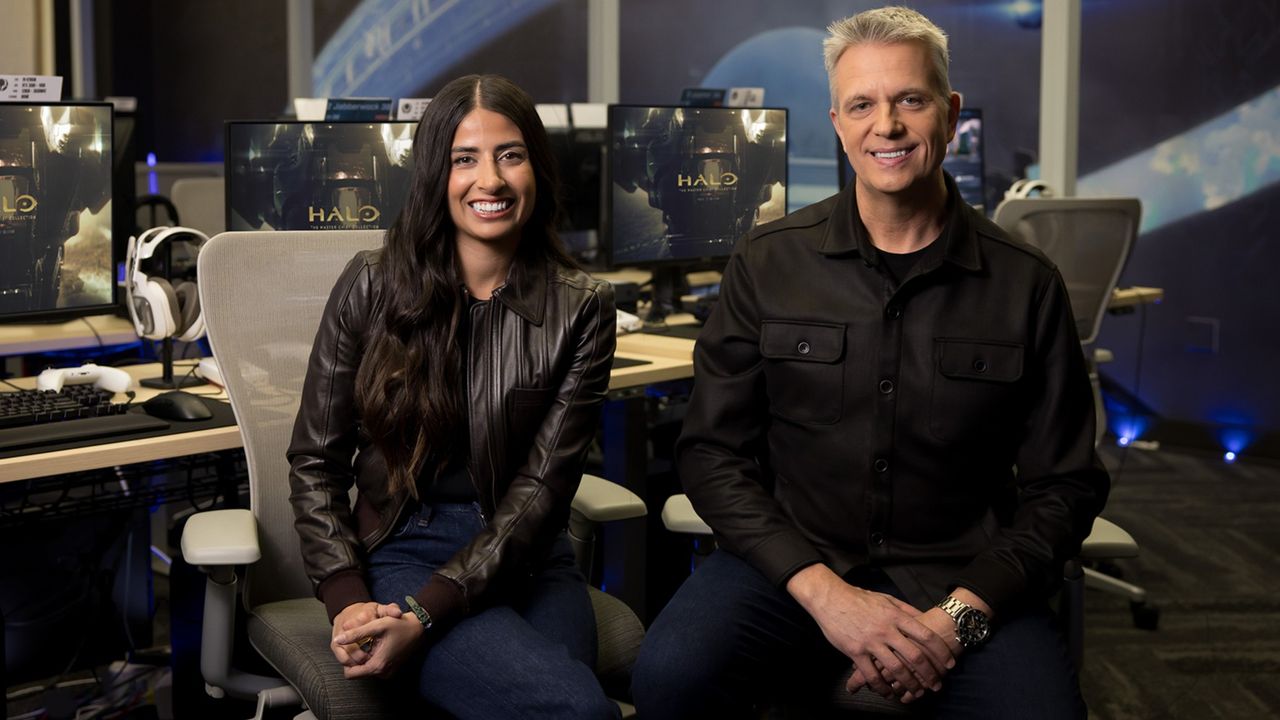
In an exclusive story, we reported that Xbox boss and Microsoft Gaming CEO Phil Spencer is retiring and Xbox president Sarah Bond is leaving her position. Consequently, president of Microsoft's CoreAI product Asha Sharma is taking over as CEO of Xbox with Matt Booty moving up to executive vice president and CCO of Xbox. This shake-up in Xbox leadership was a surprise to many and sent waves across the gaming industry from former Xbox execs to industry veterans alike. We compiled some of the statements made online coming out of the news from key individuals, including what Sarah Bond's had to say upon leaving the Xbox brand.

Bond went to LinkedIn to give her statement on her departure and the leadership changes at Xbox, sharing the note she sent to colleagues internally:

Sharing with gratitude the note I sent to my team today. Grateful to our players, developers, partners, and team. Forever a fan of Xbox. 💚
-----
Hi team,
I know there’s a lot of news to take in today.
I’m incredibly proud of what we’ve built together over the past eight-plus years. PC and cloud gaming are growing faster than ever, our next console is well underway, and together we’ve helped lay the foundation for a more open gaming platform that spans devices and reaches players around the world.
When we announced our intention to acquire Activision Blizzard in 2022, I committed to helping lead Xbox through what would be a critical period of change. Over the past four years, we’ve navigated that moment together and positioned the business for what comes next. We took on some of the biggest challenges this organization has ever faced and did it as one team.
With that, I’ve decided this is the right time for me to take my next step, both personally and professionally. We’re living through a transformative technological era that will shape the next generation of our industry, and I’m energized by what’s ahead. This moment also presents a unique opportunity for fresh eyes and new leadership to guide the team into its next chapter. I’ve had the privilege of spending time with Asha over the last few weeks as we’ve planned for this transition, and I’ve seen firsthand her deep commitment to our players, developers, and brand. She brings deep technology and commerce experience, along with a strong track record of building and scaling platforms that the world uses. Xbox deserves this. I’m excited to see her lead this next chapter for our team. I’ll remain on as a Special Advisor to Asha to help ensure a smooth transition and set the organization up for continued success.
I want to thank Phil for his mentorship and friendship over the years. He’s been a consistent champion of this business and the people who make it what it is, and I’ve learned a great deal from the way he leads through both opportunity and challenge. I’m grateful for his trust and support throughout my time on the team. I also want to thank Satya for his sponsorship and support throughout my time at Microsoft.
As I prepare to sign off, I’ve been reflecting on three simple questions I’ve tried to use to guide my days:
Did I bring my best?
Did I help someone else succeed?
Did I do my best work?
I hope the answer has been yes for many of you. It’s been a privilege to work alongside this team.
Always,
Sarah

On LinkedIn, Peter Moore, former VP of entertainment at Microsoft and longtime CEO and EVP at Electronic Arts:

News that Phil Spencer has stepped away marks the end of a significant chapter for Microsoft Gaming and in particular Xbox.
It is easy, especially in today’s climate, to critique decisions, debate strategy, and judge outcomes with the benefit of hindsight. What is harder is to sustain leadership over decades in an industry that reinvents itself every few years. Of that, I’m only too painfully aware.
Phil did that.
From the early days of Xbox through console transitions, studio acquisitions, platform wars, and the rise of subscription and cloud, he was a steady presence in what has often been a turbulent environment. Gaming at Microsoft has never been a quiet assignment. Expectations were immense. Competition was relentless. The spotlight was constant.
I had the privilege of working alongside him during formative years for the business. What I saw was commitment to players, loyalty to teams, and resilience when the noise was loudest. Phil was,and is, a gamer at heart and that showed in everything he did during my time with him.
Leadership in this industry means making imperfect decisions with incomplete information, under extraordinary pressure. It means standing in front when things go wrong, and sharing credit when they go right. That is not easy work.
Whatever opinions swirl today (and I see the boo birds are out in flocks) history tends to be kinder and more balanced. Sustained contribution matters. Building institutions matters. Showing up year after year matters.
A long career in gaming, particularly at the scale of Microsoft, deserves respect.
Wishing Phil good luck for whatever comes next. All the best, mate.

Reggie Fils-Aimé, former president of Nintendo of America:

Congrats @XboxP3 on a fantastic career. The games industry is better because of your contributions. I look forward to celebrating this milestone with you. https://t.co/uJGjlKJJ2c

— Reggie Fils-Aimé (@Reggie) February 20, 2026

Greg Canessa, former GM and creator of the Xbox Live Arcade:

Congratulations @XboxP3 on an amazing run leading @Xbox. I have nothing but respect and admiration for what you accomplished, and the industry is better off for you having been in it.

— Greg Canessa (@gregcanessa) February 21, 2026

Jason Ronald, VP of Xbox gaming devices and ecosystem, leader on development of the Xbox Series X and S:

Many emotions today, but more than anything I feel incredible gratitude for the years I have spent with both @XboxP3 and @BondSarah_Bond.

Phil and Sarah's impact on the team, the community and me personally are immeasurable. Thank you both for everything you have done for @Xbox. https://t.co/00eeIubq1V

— Jason Ronald (@jronald) February 20, 2026

Sean Murray, director at Hello Games, developers behind No Man's Sky:

🫡 https://t.co/pD5IhojR7N

— Sean Murray (@NoMansSky) February 21, 2026

Larry Hryb, widely known as Major Nelson, former principal program manager and senior director of communications for Xbox:

Hey @XboxP3 I am not texting you now....as I know your phone is blowing up like mine. Let's chat when you come up for air.

— Larry Hryb, Gamer Emeritus 📱⌨️🖱️🎮 (@majornelson) February 20, 2026

An end of an era indeed. https://t.co/inQTwhOKB7

— Larry Hryb, Gamer Emeritus 📱⌨️🖱️🎮 (@majornelson) February 20, 2026

Phil Spencer himself reflected on the 38 years he spent working at Microsoft as well and we broke down his statement in a separate story. He oversaw initiatives such as Xbox Game Pass, the launches of the Xbox One X and the Xbox Series consoles, and several acquisitions of development teams such as Bethesda Game Studios, Playground Games, Ninja Theory, Obsidian Entertainment, and more as well as the industry-shaking $69 billion acquisition of Activision-Blizzard-King. We also looked at new Xbox head Asha Sharma's statement about her vision for the platform and her thoughts on AI moving forward.

Be sure to check out our discussions on the possible impact the leadership changes will have on the Xbox platform and our breakdown of the news on IGN's Daily Fix. And catch our weekly Xbox podcast Unlocked where we've analyzed what a next-gen Xbox looks like and keep up with the year's biggest games.

  •  

Styx: Blades of Greed Review

It might not have the same kind of ambition or bells and whistles as its contemporaries, but Styx holds a special place in my heart as one of very few pure stealth game series we have left. Will you find the incredibly creative scenarios of Hitman or the insane level of polish and replayability of Dishonored? Nope. Instead Styx contents itself with simply being a reliable way for stealth fans to get their fix, and Styx: Blades of Greed is no exception. More often than not, the usual playbook of sneaking around, stealing and assassinating everything in sight, is as fun as it’s ever been, and this sequel makes some important tweaks, like removing weak multiplayer mechanics to refocus on a solo stealth experience and swapping smaller, mission-based maps for absolutely massive regions. But it’s also saddled with quite a few of the same issues it’s always had, finicky movement, performance issues, and an unremarkable story, which are as disappointing as they are completely expected.

Like its predecessor from 2017, Blades of Greed puts you in the leather boots of an elderly, grumpy goblin as you sneak into small spaces, stab humans, elves, and monsters in their soft places, and use an arsenal of gadgets and special abilities to overcome the fact that getting spotted will get you killed in two seconds flat. There are some modest additions, like a couple of new gadgets and abilities that let you do things like mind control NPCs from afar or use a grappling hook to close large gaps in a short period of time, but for the most part there’s very little that’s changed about the moment-to-moment gameplay. You’ll still find, for example, the ol’ reliable ability to turn yourself invisible for a short period of time, and will still find yourself hiding inside closets and barrels before popping out to slit the throat of some idiot guard. Good times. As ever, stealth is absolutely the star of the show, and Blades of Greed has the same high quality sneaking around that you’d hope it would.

The story in Styx has never been very good, and Blades of Greed lives up to those low expectations by having a completely forgettable story in spite of the fact that its protagonist is inherently interesting and unique. After developing a craving for magical abilities granted to you by quartz crystals found throughout the world, you begin a repetitive journey to, well, find more of it, and 90% of the campaign is just going from place-to-place stealing these glowing rocks to power yourself up with little in the way of plot in between those scavenger hunts. You meet some characters along the way, like a gadget-obsessed dwarf and an orc who becomes your spiritual guide, but they don’t get enough screen time to leave much of an impression and what they do get isn’t used effectively, with everyone spouting off explanations of telling you what you need to do next and little else. You’re unlikely to have come to the Styx series looking for an engaging story, but just in case you were hoping to be pleasantly surprised: I wouldn’t count on that.

Though the vast majority of Styx’s bones remain the same, one major change is that instead of treading (and sometimes retreading) through mission-specific levels, Blades of Greed lets you loose in three extremely large maps filled with both mandatory and optional areas to explore, pilfer, and fall to your death within. It’s a neat idea that allows for significantly more freedom over prior adventures, and it’s quite easy to become distracted and assassinate your way through an entire region before realizing you didn’t even really have any objective behind any of it, except that it’s just hard to see a guard walking by unaware and not take him down. These huge levels also allow you to express creativity in how you navigate the area and solve the problem of getting around when every 10 feet there’s someone who could kill you by breathing on you. When you’re staring at an objective that’s a mountain’s distance above you, you’ll need to just creep around and try things to figure out how to get there – maybe you’ll find a nice spot on the side of a tower to make daring leaps while avoiding the notice of guards along the way, or maybe you’ll find a quieter path via a sewer system that leads you to the same spot, but is infested with giant bugs that will swarm you if you get too close.

That can be a really interesting stealth challenge to figure out, but comes with some unique drawbacks as well. For one, it can be exhausting to have to cross such a massive area slowly sneaking along all the while, and if you try to just sprint past everything to get to the objective, you should be prepared to reload a whole bunch as you work through the trial and error process of doing so. That travel time feels significantly less focused and curated than the more linear model for level design as well, and oftentimes you’re kinda just half-assedly sneaking through ruins and across rooftops with no real obstacles along the way until you get to the place that the objective marker wants you to be, at which point things start to feel much more focused. In other words, it’s a whole lot of fat before you get to the meat of the main objectives. I actually spent the vast majority of the more than 20 hours it took me to beat Blades of Greed trying to figure out where exactly my next objective was and how to get there, rather than actually pulling off the heist in question.

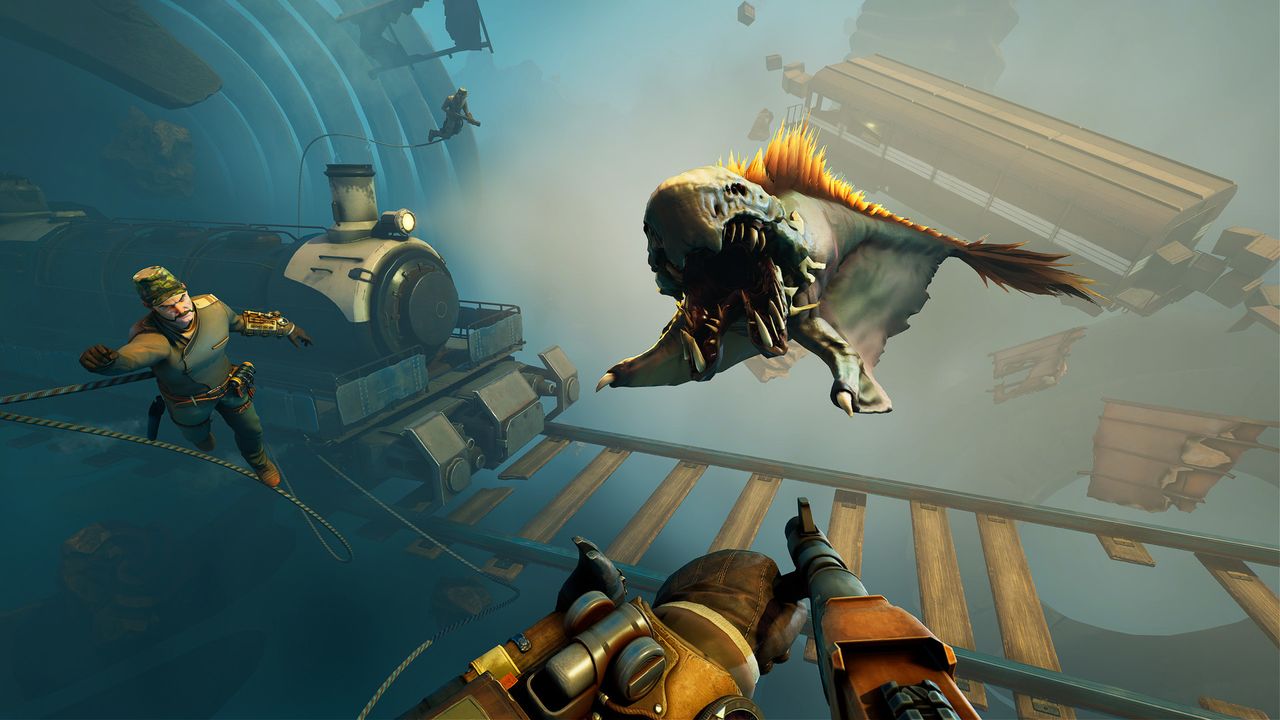
The good news is that each of these maps is pretty awesome across the board. The Wall is an absurdly cool vertical labyrinth of concrete castles and rickety slums, Turquoise Dawn is a jungle of trees, swamps, and massive, deadly roaches swarming in dark areas, and the Akenash Ruins are a ruined, kingdom where everything floats in the air unnaturally and enemies are extremely weird monsters, like something out of Elden Ring. Each visit to these places throughout the story unlocks new areas to explore, though you’ll also do quite a bit of backtracking through areas you’ve already been, which is a bit of a drag. Still, these are some of the more interesting areas I’ve stalked the halls of in a stealth game and highlights the unique, strange, and magically-infused world that this curmudgeonly goblin calls home.

Though the huge amount of space these maps have can be pretty great to explore, they sometimes feel a bit too big for the much smaller objectives within them. The story’s main objectives are much smaller than a typical stealth mission, usually just requiring you to steal a key and open a locked door, or shut down a machine so you can reach your objective – miniature quests that usually only take a couple minutes to complete, if that. Once you’ve checked it off your list, you’re back to the mostly uneventful traveling stealth as you find a way to the next objective, often requiring you to backtrack through some of the same spots in the process, which is how I have spent the bulk of the adventure so far. On the bright side, this format means you’re basically just locked into a constant stream of pure, unadulterated stealth scenarios for hours on end as you work your way through each set of missions, and since that’s Blades of Greed’s strong suit, you’re getting exactly what the doctor ordered.

If you’re familiar with the shortcomings of the previous Styx games, then you’ll probably be less-than-stoked to hear that Blades of Greed doesn’t address most of these. Combat, which is a last resort, but sometimes required, is quite sloppy and overly simplistic, and moving around, especially jumping onto ledges and the like can be finicky at times and caused me to fall to my death or get caught out in the open dozens of times by this point. Worse than those though, are the usual performance issues and technical challenges, like NPCs becoming invisible while talking to them and frames dropping to horrifyingly low levels after extended play sessions. Framerate issues are actually a fair bit worse than I remember them being in previous games, presumably due to the significantly larger maps, and it can get pretty bad for long stretches when there’s a lot happening on screen. Most of these issues are sort of baked into Styx by this point, but it’s still worth shouting out that the bulk of this stuff has mostly gone unaddressed, seemingly.

  •  

Venom Animated Movie From Final Destination: Bloodlines Directors in the Works at Sony Pictures Animation

Sony is reportedly making another Venom movie. This time, it’s going to be animated. How closely the surprise animated project will stick to the events of the recent trilogy starring Tom Hardy, with its plot, casting details, and release date still a mystery for now.

Though the latest Lethal Protector story is still in its early stages, according to the The Hollywood Reporter, it does have some notable names already attached behind the scenes. Final Destination: Bloodlines duo Zach Lipovsky and Adam B. Stein are set to direct the feature-length animation. The two are newcomers to the Marvel world but saw success with last year’s Final Destination reboot. Other highlights from their joint resume includes the 2019 live-action Kim Possible movie, 2018’s Freaks, and a few episodes of Mech-X4.

The Venom animation is said to have series veterans Amy Pascal, Avi Arad, and Matt Tolmach in the mix, though the extent of their involvement is unclear. While Hardy is also involved in the project, there’s no word on whether he will reprise his role as Eddie Brock after concluding the live-action trilogy as the character in Venom: The Last Dance. No specific writer has been named to pen the film’s script as Sony Pictures Animation gets the ball rolling on its story.

Although it seems possible the animated Venom movie could go a completely new direction with its story and characters, it does have some room to grow should Sony choose to directly build on its live-action trilogy. One major Marvel character the Hardy trilogy only lightly touched on is the symbiote god Knull, with one of The Last Dance's final credits sequences teasing big things in store for that character. The series also notoriously refrained from including much about Spider-Man despite Venom’s strong ties to him (largely due to confusing licensing arrangements), but it’s unclear if traveling to the realm of animation would have the two finally crossing paths.

With so many pieces still coming together, it will likely be a while before we learn more, and it will be even longer before the movie actually premieres. In the meantime, you can read our reviews for Venom, Venom: Let There Be Carnage, and Venom: The Last Dance. You can also learn about the upcoming live-action Spider-Noir series coming to Amazon’s Prime Video on May 27.

Michael Cripe is a freelance writer with IGN. He's best known for his work at sites like The Pitch, The Escapist, and OnlySP. Be sure to give him a follow on Bluesky (@mikecripe.bsky.social) and Twitter (@MikeCripe).

  •  

Pokémon Fans Are Worried FireRed and LeafGreen Won't Be Compatible With Pokémon Home, Making the PokéDex Impossible to Finish

Pokémon FireRed and LeafGreen are coming to Nintendo Switch next week to celebrate the series 30th anniversary. And while The Pokémon Company and Nintendo have already answered a number of questions about the releases that probably shouldn't have been necessary to ask to begin with, there's one question we still don't know the answer to: Will these games be compatible with Pokémon Home?

For the non-Pokénerds out there, Pokémon Home is a cloud-based, paid subscription service that allows users to store Pokémon from various games, as well as move them between certain compatible games. The service has been directly compatible with every new Pokémon game on the Nintendo Switch, as well as Pokémon GO, and it also works with Pokémon Bank, a similar program that existed on the 3DS. The explanations and rules are a bit convoluted, but essentially, it's only through Bank and Home that Pokémon from older games such as Red/Blue/Yellow and Gold/Silver/Crystal (in their Virtual Console on Nintendo 3DS incarnations) can be brought forward to modern games.

As a result, with some finagling, Pokémon fans can essentially bring a beloved monster from any mainline Pokémon game they've ever played (except the original Game Boy cartridges for Red/Blue/Yellow and Gold/Silver/Crystal) to Pokemon Home and, if it's compatible, transfer it for use into a modern game and continue their adventures. It's been a cool way for collectors to track their PokéDexes, and for long-time fans to keep beloved monsters from their childhoods by their side as adults.

The original FireRed and LeafGreen are compatible with Home in this way too, though the process is, as suggested above, a bit complicated. In order to get Pokemon OUT of FireRed and LeafGreen into Home, you first have to use the Pal Park feature to transfer them to Diamond, Pearl, or Platinum using a Nintendo DS system. Then, you have to use the Poke Transfer Lab (which requires two Nintendo DS systems) to move them from that game to Pokémon Black, White, Black 2, or White 2. From there, you can move them into Pokémon Bank on a Nintendo 3DS, and then from Bank they can be transferred to Home. It's convoluted, but it's possible.

If Pokémon FireRed/LeafGreen on Nintendo Switch are compatible with Home directly, players can skip all that and bring monsters directly from those games into Home without having to own three different DS systems and multiple old game cartridges. However, players are concerned that this may not be the case. Earlier today, when the eShop page went live for FireRed and LeafGreen, it initially included the line, "Support for Pokémon HOME is coming soon. You'll be able to bring the Pokémon you catch and train to the place where all Pokémon gather-support for Pokémon HOME is coming to Pokémon FireRed/LeafGreen Version!” However, fans noticed that line was almost immediately removed, leaving the compatibility up in the air.

The lack of compatibility would be irritating enough if it was just a matter of convenience, but it's actually possible that Home not being available could cause issues with the gameplay itself. FireRed and LeafGreen are remakes of the original Pokemon games Red and Green. Players are thus able to complete the "Kanto" PokéDex just by playing them and trading a few monsters back and forth with a friend who has the other version of the game. Though online features are apparently not available in these Switch ports (even though they were in the 3DS ports of Red/Blue/Yellow and Gold/Silver/Crystal!), local trading is, so that's not the problem.

What is the problem is the National Dex. In FireRed/LeafGreen, the "National Dex" was, at the time, the "full" Pokedex, containing all 151 original Pokemon as well as all new Pokemon added in the second generation (Gold/Silver/Crystal) and third (Ruby/Sapphire/Emerald). The National Dex unlocks in FireRed/LeafGreen's post-game, and with it comes the ability to catch many of these Pokémon in the wild in-game. However, not every Pokémon is available. The Johto and Hoenn starter Pokémon, legendaries like Mew, Celebi, and Jirachi, and dozens of others were only obtainable back in the day by trading from Ruby, Sapphire, Emerald, Colosseum, or XD. And none of those games are currently available on Nintendo Switch in a way that would be locally compatible for trade with FireRed/LeafGreen.

Which means that, upon release, FireRed/LeafGreen will not be completeable, at least not in the 100% sense, because the National Dex will be impossible to fill out. While that probably won't bother most casual players, it's a pretty notable oversight, especially given that the releases of other classic games on Virtual Console on 3DS seemed so well thought-out.

Now, it's entirely possible this is a lot of hullabaloo over nothing. Maybe the games are compatible with Home and Nintendo was just cleaning up language on the eShop page a bit. Maybe Home compatibility is coming in a few weeks or months, and Nintendo didn't want to set expectations too early. Maybe we're about to get an announcement of Ruby, Sapphire, and Emerald on Nintendo Switch Online next week, and they'll be compatible locally. Maybe Colosseum and XD are coming to Switch Online (Nintendo has already teased them!), though these two games alone wouldn't canvas all the missing Pokemon. Maybe there's some other explanation! But it's weird that given Nintendo's extensive FAQ, they didn't address this glaring issue specifically. IGN reached out to both Nintendo and The Pokémon Company today to try and find out what the deal was. The Pokemon Company declined to comment, and we didn't hear back from Nintendo in time for publication.

Even if neither company Koffings up an answer soon, we'll know more next week when the games actually launch and as the dust settles from Pokémon Day and all its announcements. Regardless, the rollout of FireRed and LeafGreen on Switch has been real weird, especially in light of past efforts to preserve classic Pokémon games. Only Nintendo and The Pokémon Company knows why they don't just dump all these things on Switch Online and make the people happy.

Rebekah Valentine is a senior reporter for IGN. Got a story tip? Send it to rvalentine@ign.com.

  •  

The Best PS5 Controllers Available in 2026

When Sony launched the PlayStation 5 in late 2020, it came with an all-new controller, the DualSense, that completely redesigned the look and feel of its iconic controller. While it still retained the signature parallel thumbsticks and button layout, it added new features like Haptic Feedback and Adaptive Triggers to provide a deeper sense of immersion while playing. For a while, the DualSense was your only option if you wanted to game on PS5.

Five years later, there are plenty of third-party controllers to choose from, as well as a new console in the PS5 Pro. These DualSense alternatives provide options for players looking for a different button layout, more customization, or pro-level features. Check out our full rundown of the best PS5 controllers available in 2026.

TL;DR: These Are the Best PS5 Controllers

Whether you're interested in additional back buttons to enhance your gameplay or want a more customizable pro-style controller, there are plenty of options available now for PS5 controllers. My colleagues and I have tested and reviewed most of the controllers below and handpicked the best options for most players.

1. PlayStation DualSense

Best Overall PS5 Controller

For most players, the best PS5 controller is the one that comes in the box. PlayStation’s DualSense, as we noted in its review a few years ago, is unbeatable for a reason. It's packed with features that enhance your experience and immerse you into your gameplay. The adaptive triggers add tension to simulate actions like firing a gun or slowly drawing a bow, while the haptic feedback delivers subtle vibrations that let you feel things like raindrops in Returnal or the crunch of snow under your feet in Astro Bot.

The DualSense is also built with social gaming in mind. The updated Create button makes it easy to capture screenshots and gameplay clips to share with friends or post online. There’s a built-in microphone for quick multiplayer sessions, and while it’s no match for a dedicated headset, it works well enough. The controller also includes an integrated speaker for in-game audio and a standard headphone jack for wired headsets.

While the DualSense is Sony’s most advanced controller to date, it does have a few drawbacks. Battery life typically ranges from six to 12 hours, and games that fully use the controller’s features can drain it even faster. Like many modern controllers, it is also prone to stick drift, which unfortunately does not have a simple fix and often requires purchasing a new controller entirely.

Still, the DualSense is my pick for the best PS5 controller overall. If you're in the market for a second one or want something more stylish than the standard white, Sony has released a variety of DualSense colors and special editions over the years to suit just about any taste. There's even a Marathon-themed DualSense edition coming out in March 2026 you can preorder now.

2. Sony DualSense Edge

Best Pro-Style PS5 Controller

I reviewed the DualSense Edge, Sony’s answer to the Xbox Elite Controller that offers pro-level features and a wide range of customization options. It retains all of the standard DualSense's core features like adaptive triggers and haptic feedback, but adds a deeper level of control for players looking to elevate their game.

For starters, it includes three types of interchangeable thumbstick caps that can be swapped out depending on your preference or the game you’re playing. Two rear buttons can be easily mapped to any input on the controller, giving you quick access to frequent actions. The thumbstick modules are also user-replaceable, so if you run into stick drift, you can replace just the module instead of buying an entirely new controller.

The new Function buttons located beneath each thumbstick allow for intuitive, on-the-fly customization. You can quickly remap controls through a slick user interface and save up to four profiles that can be easily swapped depending on the game you're playing.

While the DualSense Edge is a strict upgrade over the standard DualSense in just about every way, its battery life leaves much to be desired. On average, it lasts about five to six hours on a single charge, which is even shorter than the regular DualSense.

3. Razer Raiju V3 Pro Wireless

PS5 Controller With the Best Battery Life

If battery life is your biggest concern, the Razer Raiju V3 Pro might be the answer. With nearly 40 hours on a single charge, it ensures you won’t run out of juice at a crucial moment.

Battery life isn't its only standout feature. The Raiju V3 Pro Wireless also features Mecha-Tactile Action Buttons, which feel significantly different than standard membrane buttons. The face buttons and D-pad are incredibly snappy and responsive, requiring less actuation than most controllers. That means faster, more accurate inputs, which could give you an edge in competitive games. You also benefit from TMR sticks, which are much less likely to suffer stick drift after years of use, and Hall Effect triggers which have similar longevity benefits. In my Raiju V3 Pro review, I found the controls incredibly responsive in timing-sensitive games like Clair Obscur: Expedition 33, F1 23, and Battlefield 6.

Six customizable buttons are built into the controller, two on top and four on the back. These work with a satisfying click and provide some much-needed flexibility that helps justify this controller's high price of $220/£199.

Unfortunately, like other third-party wireless PS5 controllers, the Raiju V3 Pro is limited to 250Hz polling rates on PS5, versus up to 2000Hz wired or 1000Hz wireless on PC. It also can't wake the PS5 from deep sleep. These are minor annoyances in the grand scheme of things, but worth mentioning nonetheless.

4. Scuf Reflex Pro

Best Grips on a PS5 Controller

Announced just a year after the PS5 launched, the Scuf Reflex Pro was the first major third-party alternative to the DualSense. Like many Scuf products, it's geared toward competitive players and offers several pro-level features that Sony didn’t include (at the time).

Since then, the DualSense Edge has hit the market and knocked some of the wind out of the Reflex Pro's sails. Still, it remains a solid choice for players looking to elevate their game. One key feature that sets it apart is its four customizable back paddles. They're well-placed and easy to use, providing convenient access to key actions without needing to take your thumbs off the sticks. The controller also has an incredibly comfortable non-slip grip around both stems, keeping you and your hands locked in while gaming.

The Reflex Pro is one of the only third-party controllers to include Sony’s proprietary Adaptive Triggers, but it skips the DualSense’s haptic feedback in favor of traditional rumble. Battery life lands around eight hours, putting it slightly ahead of the DualSense Edge but behind the standard DualSense.

If customization is your thing, Scuf offers a range of vibrant colors and unique faceplates to help your Reflex Pro stand out. It also includes interchangeable thumbsticks you can swap based on your playstyle or comfort preference.

5. Nacon Revolution 5 Pro

Best Thumbsticks on a PS5 Controller

If you've ever experienced stick drift on any of your controllers, you know how frustrating it can be. It often leaves your controller nearly unusable, and in many cases, the only solution is to buy a replacement. That can get expensive quickly, especially if it happens more than once. Thankfully, the Nacon Revolution 5 Pro that I reviewed uses Hall effect sensors in its thumbstick modules, which virtually eliminates the risk of stick drift.

The Revolution 5 Pro is also highly customizable, making it a great fit for anyone who likes to tinker with their tech. Inside the included carrying case, you'll find a mini tool box containing extra interesting components, including three sets of interchangeable thumbstick toppers that change the shape and height as well as thumbstick guards that reduce travel distance for more responsive movement.

One of the most unique additions is a set of controller weights. These can be added into the controller stems to provide a bit more heft and help distribute the weight more evenly. While the default setup is comfortable, this extra level of customization adds a premium feel that sets it apart from most other controllers.

One of the Revolution 5 Pro's killer features is built-in Bluetooth 5.2, allowing you to effectively bypass the PS5's Bluetooth headphone restriction and pair your headphones directly to the controller. You can even adjust the headphone's volume right from the controller!

6. Victrix Pro BFG

Best Customizable PS5 Controller

The Victrix Pro BFG is a highly-customizable controller with a modular design, allowing you to tailor it to your exact needs. A reversible left module allows you to swap between the standard PS5 parallel thumbstick layout and offset Xbox layout, providing a solution that will appeal to everyone.

On the right side of the controller, you can remove the standard thumbstick and button module and replace it with a fightpad-style set of controls, adding a dedicated R1 and R2 button that can be customized for fighting games.

It also features interchangeable thumbsticks and gates as well as three different D-pads for added personalization. The four back buttons can be mapped on the fly and a dedicated profile button on the rear of the controller allows you to create and swap between three unique profiles as needed. While it lacks adaptive triggers and haptic feedback, this is a very capable controller aimed at competitive players across genres.

7. Hori Fighting Commander OCTA

Best PS5 Fightpad

If you're a fan of fighting games and don't necessarily want a bulky arcade fight stick, then the Hori Fighting Commander OCTA that I reviewed might be a great fit for you. It delivers the core features of a traditional fight stick in a more compact, gamepad-style design that fits comfortably in your hands.

The Fighting Commander OCTA is officially licensed by Sony and works with PS5, as well as PS4 and PC through a wired USB connection to ensure minimal input delay.

What makes it ideal for fighting games is its short-throw analog stick with an octagonal gate, which helps you execute combos more easily. It also includes an adjustable circular D-pad for those who prefer 2D-style fighters. On the right side, you'll find six tactile face buttons and two shoulder buttons, all designed for quick access and responsiveness during intense matches.

8. Victrix Pro FS

Best PS5 Fight Stick

PlayStation might have its first official fight stick coming in 2026, but right now, the top fight stick goes to the Pro Arcade FS. Victrix hasn’t pulled any punches here; it’s created one of the best arcade fight sticks available today, featuring lag-free controls that are tournament-ready.
Each of its eight face buttons uses Sanwa Denshi components, a favorite among fight stick enthusiasts, delivering a responsive feel and a satisfying, audible click. It also features an ergonomically designed wrist rest to reduce fatigue during long sessions, along with a built-in foam pad to keep the fight stick stable and comfortable in your lap.

If you enjoy customizing your gear, you can open the bottom panel to swap in new switches and joysticks. But even right out of the box, the Pro Arcade FS is a premium fight stick that stands above much of the competition. It’s designed specifically for PS5 and includes all the buttons found on a standard DualSense, including the Touchpad, Menu, and Create buttons, so you can access all system features without missing a beat.

9. PlayStation Access Controller

Best PS5 Controller for Accessibility

In 2023, Sony released the PlayStation Access Controller to help players with disabilities enjoy games more comfortably and for longer periods.

It features a fully customizable 360-degree layout that can be tailored through both hardware and software. A wide variety of stick and button caps in different shapes and sizes are included to accommodate diverse physical needs. It also has four expansion ports for connecting additional buttons or specialty trigger switches.

On the software side, users can create up to 30 unique control profiles on the PS5. Three of these can be stored directly on the controller and swapped on the fly with a dedicated button, making it easy to adapt the controller to different games or in-game scenarios.

Sony also took care with the packaging, which is designed to be opened with one hand and minimal effort. Inside, it features loops that can be pulled on either side to reveal organized compartments for all of the controller’s components.

How to Choose a PS5 Controller

Think about what matters most to you as a player. Are you looking for a feature-rich controller with all the bells and whistles or something more budget-friendly?

Most third-party PS5 controllers include some level of "pro" features aimed at competitive gamers. Customizable back buttons, interchangeable thumbsticks, enhanced grips, and multiple connectivity options are all things to watch for.

Battery life is another key factor. The standard DualSense doesn’t have the longest battery life, so you might want to consider a wired controller or one with a larger battery that can last longer between charges.

If price is a concern, the standard PS5 DualSense is still a great pick. It includes premium features like adaptive triggers, haptic feedback, a built-in microphone and speaker, and more all for under $80 (and often cheaper – it goes on sale fairly often).

Beyond traditional gamepads, you may also want to explore racing wheels, fight sticks, and joysticks for a more immersive experience in driving, fighting, and flying games.

How We Picked the Best PS5 Controllers

After more than five years of testing and reviewing PS5 controllers, I've assembled this list based on several key factors, including design, core features, customization options, battery life, and accessibility. While the standard DualSense will be more than enough for most players, these alternative controllers offer additional features like back buttons, interchangeable thumbsticks, and other pro-level enhancements that can make a real difference in play, competitive and otherwise.

PlayStation 5 Controller FAQ

What PlayStation 5 controller doesn’t drift?

Most PS5 controllers are susceptible to stick drift, a common issue caused by worn-down potentiometers in the analog sticks. Some high-end gamepads avoid this by using magnetic Hall effect sensors, which are far more durable and resistant to wear. The Nacon Revolution 5 Pro is one such controller, virtually eliminating stick drift thanks to its Hall effect sensors.

How do I fix stick drift on PS5?

If your controller is experiencing stick drift, it may be due to worn-down potentiometers inside the analog sticks, either from regular use or a manufacturing defect. Unfortunately, there is often little you can do to fix the issue yourself. DualSense controllers usually come with a one- or two-year warranty depending on your region, so if yours is still under warranty, it is worth contacting Sony for a repair or replacement. In some cases, the problem may be caused by dirt or debris, so try gently cleaning around the base of the analog stick to see if that resolves it.

Does the PS5 controller have a headphone jack?

Yes, the DualSense controller has a built-in 3.5mm audio jack at its base that a PS5 gaming headset or a pair of headphones can be plugged into. Many other third-party PS5 controllers also feature a headphone jack.

When do PS5 controllers go on sale?

Although discounts on PlayStation 5 consoles may not happen very often, PS5 controllers do go on sale throughout the year. Overall, the best time to buy a PS5 is also the best time to buy a controller. In terms of sales events, Amazon Prime Day in July and Black Friday season in November are when you will see the lowest prices on Dualsense controllers. That being said, you can usually also find deals during the PlayStation Days of Play sale every year.

Matthew Adler has written for IGN since 2019 covering all things gaming, tech, tabletop games, and more. You can follow him on the site formerly known as Twitter @MatthewAdler and watch him stream on Twitch.

  •  
❌