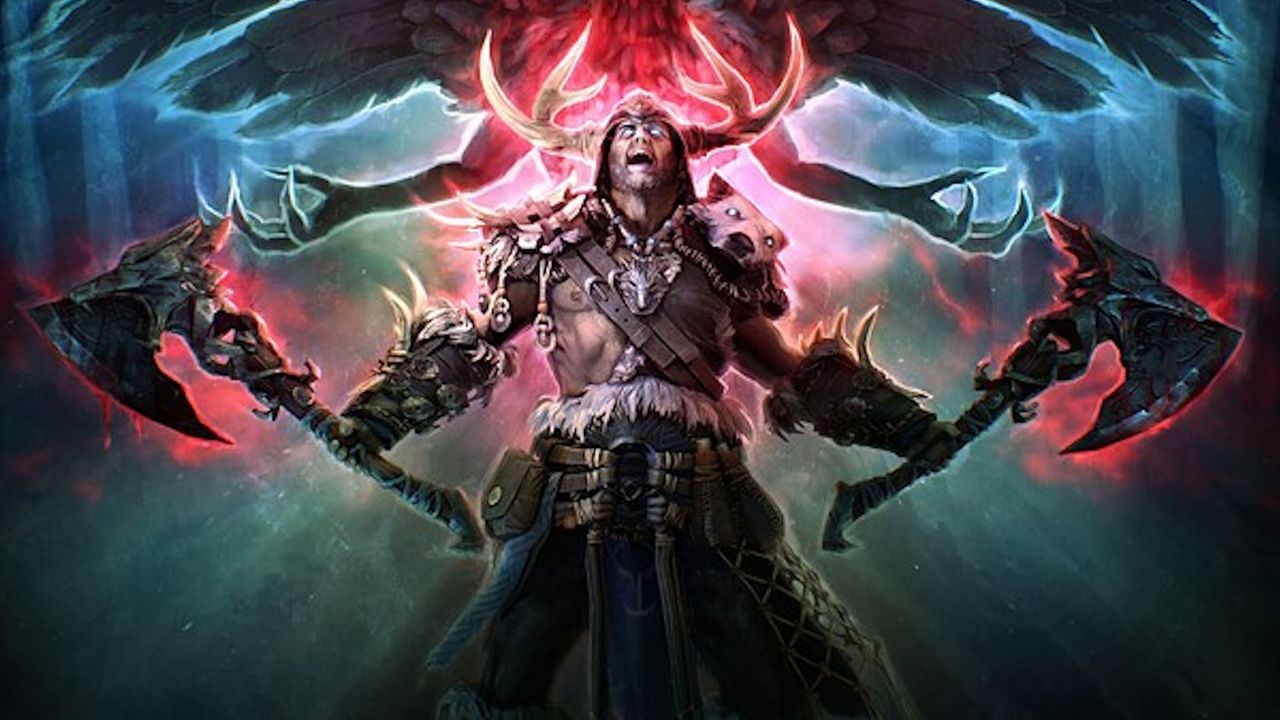
Grim Dawn marks its 10th anniversary with a triumphal update on its final expansion: 'Grim Dawn will not be going out with a bang, it will be a tremendous roar'

A new bill may see May 17 become Bruce Lee Day in California, thanks to Assemblymember Matt Haney.
Assemblymember Haney is a Democrat from San Francisco — the city the martial arts movie star was born in — and he introduced bill AB 2455 to honor Chinese Americans and Lee’s enduring legacy. According to his team, this would mark the first Chinese American to be honored with their own official day in the state of California.
According to KTLA, the bill also encourages public schools in California to use the day as an opportunity to teach students about Lee’s “accomplishments and the contributions he made to the state.”
You might be wondering… why May 17? Simple. It’s the day Lee returned to San Francisco after spending his upbringing in Hong Kong.
Lee’s daughter Shannon Lee, who is the founder and CEO of the Bruce Lee Foundation, revealed that the Lee family was touched by the gesture. “From young people who found confidence and possibility in his philosophy, to families who finally saw themselves represented on screen, to athletes who still draw on his teachings of discipline and inner strength, his reach is profound,” she said in a statement. “My father was a bridge between cultures through his courage, and his spirit of interracial solidarity remains as relevant as ever.”
Lee was a martial arts icon and legendary actor who helped push Chinese American representation in films to the forefront of Hollywood. He is perhaps best known for his work in films The Big Boss, Fists of Fury, Enter the Dragon, and the series The Green Hornet. He died in 1973 aged just 32, but his gifts to the world live on in his films and those he influenced, like the city of San Francisco.
No word yet on the bill’s passing as it was recently introduced, but something tells us it’s going to be a unanimous yes.
Photo by Warner Brothers/Getty Images.
Lex Briscuso is film and television critic and a freelance entertainment writer for IGN. You can follow her on Twitter at @nikonamerica.

As our exclusive, all-February-long IGN First "cover story" on the upcoming black-and-white, hand-animated first-person shooter MOUSE: P.I. for Hire continues, we wanted to learn more about the origins of its unique 1930's rubberhose-animated style. And so we sat down with Fumi Studios CEO and Founder Mateusz Michalak as well as Art Director and Lead Animator Michal Rostek to go behind the scenes of this unique game. Read on for a lightly edited transcript of our conversation, or watch the video version below. And you can wishlist MOUSE on Steam if you're interested.
IGN: What came first here, the idea for the game itself or the desire and idea to use this 1930s Rubber Hose animation style?
Mateusz: Yeah, I think this is the question more for Michal right now because he was one of the original creators and the guy who created the first art for the MOUSE.
Michal: I came from the animation industry and I'm really passionate of the animation and especially of history of animation. The MOUSE is like my little passion project that I started inside of my regular animation work. When we started to make video games, I came into the matter with the idea of the boomer shooter with the style of the 1930s Rubber Hose animations, and he loved that idea and give this idea opportunity to make it happen. We started with five people on the small team of this project. Our programmer put a video of making the game on TikTok then it goes viral and resonates all around the world. I remember that day when I was going to work and met my friend in the subway and he told me, "Hey, I read the article, the gaming website, that some guys make a game that looks like the game that you want to make." And I said, "Really?" "Yeah." Then he showed me the article and that was MOUSE.
Mateusz: Yeah, I can add that from the beginning. It was passion project. We've done most of the work after hours. We started prototyping the game. The first prototype that Michal showed to me was really, really basic. Then we hired a coder/programmer, David, who joined the team and we started the first full small production and the game came out of this small teaser that he showed on TikTok.
IGN: That's cool. So my next question, was it always going to be black and white or was color in this animation? Was that a debate at all amongst the team?
Mateusz: It was never a debate among the team. It was debate in the community because when people first saw the art or the trailer, they thought, "Okay, it's quite original, but you need color." Because no one ever made an FPS cartoonish game in fully black and white. It was something unusual back then, but we sticked with our roots in our original design and we never wanted to add any color. It's challenging. It's really challenging, especially in player guidance, in patch finding because you can always add a yellow color if you have a color in game or any other color, and I think that we've done a pretty good job. It was really, really challenging. We learned a lot of new skills, managing only basically two basic colors, black and white.
IGN: Help me understand how much of this, of the animation of the art, was done by hand?
Mateusz: I think all the animations that you can see in the game are done by hand. It's not easy process, but having computers right now, we can speed up some elements in the whole pipeline. Of course, we used techniques from the 1930s, 1940s Rubber Hose techniques. But having computers, we could speed up the whole process. It was much, much nicer and we could basically see our effects not instantly, but quite fast in the game. So if you would use the old techniques, so using paper, pens, scanners, and so on, the whole process would take not months, but years. And in the game development, they don't tend to wait for games, they want games right now. That's why the whole development process of games is shortening every year and we couldn't tell people that, "Okay, you saw teaser, then you need to wait at least 7, 8 years to see the final product." That's why we used computers. And I think Michal can say something more about the whole pipeline of the animation.
Michal: Yeah, so the animation pipeline is really similar to the pipeline that we use in the animation industry because game is based on animation. So it's really similar but not 100% the same. So for example, we started with the concept that we took from the design department. They're giving us a idea and we made our first concept arts for the character, for the NPC, for the weapons of the game. And then we came to the process that, in the film industry is like a storyboard process when we made a limited animation to put in the game and look how this work.
And if it's good, it comes to the animation process when we put the life on the animations, on the characters, on the weapons and all of the interactive elements in the game. Then to clean up process, when we clean all the outline to not look rough, but to look good, put the colors on it, and the last final step on making animation for the game that is different than making animation for the film is to render all of these things, put it in the engine and pack it and make the magic go on.
IGN: Michal, were the weapons the most fun thing to animate in the game because for me, what I've seen and experienced of the game so far, I mean it's all gorgeous, I just love the entire look, but the weapons, I just love how alive the weapons are.
Michal: Definitely, it was a very fun thing to do, but for me, one of the most challenging things. And we couldn't make such a great design, such a great animations without our two animators and with our two artists, Abraham, who made the great concepts for the weapons on the game and Igor who animated all of the things. So it was also credits for our game design who put all the mechanics, all the specific timing for the weapons to look good because this is one of the things that we need to focus when we making animation for the video game is that it should fit the mechanic, it should fit the interactive aspect of the game and do it in the... right tempo because when you have a game hardly based on the animation, they should look good, but also be useful for the player and not be player shouldn't feel frustration when he uses an animated gun.
IGN: How did the animation influence the tone of the game? It seems to lean a little more playful and I'm just sort of curious how you guys balance that of matching the animation to the tone of the game?
Mateusz: Animation, it's crucial for the whole game, so it's connecting also with the whole narrative element. It's like when they think about MOUSE, they think about animation, they think about art and it's a really great thing because we have a hook, we can hook them, interest them in the game. But beneath that, this art animation elements, there is a deep vibrating story and I believe that we'll surprise a lot of people when they will play the game.
IGN: So you talked about the engine earlier. You guys are using the Unity engine here underneath the animation system. How much custom work had to go into Unity to get it to cooperate with the uniqueness of what you guys are doing with the animation?
Mateusz: The first prototype, however, the first prototype was done in Godot, but the proper development is we are doing in Unity. The unity is really good in managing the 2D animation sprites, it's really good. But our game has thousands of thousands of animations and this was the most challenging part because still, you can put as much assets in the game, 2D assets, as you can, but your game can grow having 200 gigabytes, 300 gigabytes. So the most challenging part was the optimization process of the whole animations and we needed to develop a special tools that will compress 2D animations to have a better performance for the whole level because there is tons of animations, different kinds of animations through the whole level.
IGN: Can you talk about, on a similar note about if there were challenges of using 2D animations in a 3D game? We don't see that very often. I imagine that had to present some sort of challenge either in the animation itself and maybe the level design as well.
Mateusz: I think it would be much easier to make everything in 3D. The most challenging part, managing 2D assets, especially enemies in 3D space is to animate all directions. So we need to animate front, front left, left side, back left, back. All the bosses, all the enemies, every skills, every objects, so not objects, every enemies, bosses and some interactive objects, they are animated in 9 or 8 directions. So it was challenging and really time-consuming. Also, having 3D animations, it's much easier to add every bit of animation to the game. Having 2D animations, we needed to think really carefully what we want to add because we don't want to spend weeks animating things and then we will just delete our work. We wanted to have the whole 2D animations into the foreground, not in the background. So we use flat colors as in the old Rubber Hose animation. So there are all flat colors and you can spot really easily every 2D animation, walking around the level. Either this is enemy or 2D animation objects, interactive objects, you can't really easily spot it.
IGN: I have to imagine that this project has been more difficult than maybe you initially thought. And I only say that because I mean making any video game is clearly not an easy thing, but nobody else does this. You guys are the only studio making a game in this way. So how much more difficult, how have you found the process over time? Have you really, I imagine you've learned a lot in the course of development.
Mateusz: We made a lot of mistakes, a lot of mistakes. And going back and forth, back and forth with numbers of things. I think that there are few FPS games that using sprites or using to the animations, but I think our project is unique that we are using a lot of frames, a lot of images in our animations to show that the Rubber Hose animation style is really unique and the whole animation is really unique. And I know that right now there is a debate if hand skills not be useful in the future or they will be replaced with some tools. I believe, and I think that we showed it, that having a great hand skills, having a great artist, it's only beneficial for your game and the project itself.
IGN: I'm curious as to maybe this might be a good one for Michal, your inspirations for this because Cuphead, I think of very quickly, for obvious reasons, the other really amazingly hand-drawn game, totally different kind of game of course than your boomer shooter, but I also, I get a little bit of Who Framed Roger Rabbit from this too. I'd be curious to hear your inspirations.
Michal: I think the biggest over overall our inspiration, our biggest inspiration is the Rubber Hose art style as a whole. Our biggest inspiration is the animations from the Fleischer Studios, the people who create such a characters as Betty Boop, Popeye, Coco the Clown, or Bimbo the Dog. Fun fact, we probably watched every available Popeye episode during the pre-production, took the best inspirations for the environments for the characters. But also how they inspired by works of Ub Iwerks. He was a lead animator in Disney. He was animating for example, Steamboat Willie but then he became a solo animator and became a solo career and make characters such as Flip The Frog or Willie Whopper, but also other animation studios for that era. Like for example, Paul Terry, Charles Mintz, but also the old cartoons that were quite violent for that era. But it was a good inspiration for the combat and fight for our game. So we took a lot from them.
IGN: Awesome. The last question I have for you guys, maybe for either or both of you, so now you're almost there. The game is nearly complete, it's almost out. Moving forward, do you guys want to stick with this animation style for your next project or was this a one-time fun experiment, fun project or is the Rubber Hose animation going to be the Fumi Studio signature moving forward?
Mateusz: I think that the overall hand-drawn style will be our studio signature. I believe in the craftsmen of artists and I think that we will surprise people in the future with our next project.
Ryan McCaffrey is IGN's executive editor of previews and host of both IGN's weekly Xbox show, Podcast Unlocked, as well as our semi-retired interview show, IGN Unfiltered. He's a North Jersey guy, so it's "Taylor ham," not "pork roll." Debate it with him on Twitter at @DMC_Ryan.
The Legend of Zelda turned 40 years old this week — though Nintendo has sadly done little to mark the occaison. There are no new Zelda games on the horizon, no remakes or re-releases on Nintendo Switch Online, and no sniff of a trailer for next year's ambitious-looking live-action movie. It's a far cry from the array of announcements made for Mario's 40th birthday last year, or the anticipation for Pokémon's 30th celebrations which culminate tomorrow.
In order to mark the occaison ourselves, then, we tracked down the perfect person to talk about their own role in the Zelda series — the voice of Zelda herself, Patricia Summersett. You'll have heard her voice in Breath of the Wild, Tears of the Kingdom, plus their Hyrule Warriors spin-off games Age of Calamity and Age of Imprisonment. In total, her contributions to the franchise now stretch 10 years — meaning she has been the voice of its princess for a quarter of its life.
A fan of the series before her work on it, Summersett previously made headlines when her thoughts on the nature of Link and Zelda's relationship blew up online — a situation she's now said she found angering, while disputing any suggestion that Nintendo itself asked her to intervene and set the record straight. Read on for more about that, her hopes for the franchise's future, Zelda's British accent, and how she originally also auditioned for the Deku Tree.
You've spoken previously about initially auditioning for Princess Zelda without knowing the true identity of the role — but what were you told? What direction were you given?
Patricia Summersett: The best way to describe it was as a bleached script, which is when you have a certain amount of information about what the archetypes of the character are, the general world — for example, that it looks like an RPG fantasy — but you have no idea what the actual roles are going to be or what the game is. And there would've been no way of predicting that it was Zelda because she didn't have a voice before. I just would never have assumed that was the game that I was auditioning for.
There was the description of her being a younger teenage princess, but wise beyond her years, having the weight of the world on her. And those were key things I'd gone into when I looked at the script, when I started to play around with my voice and decide what to do for that particular character.
But I also auditioned for Zelda as well as some other roles — what ended up being Urbosa and I think probably the Deku Tree. There were a few.
Your portrayal of Zelda has a British accent, was that also a note from Nintendo?
Summersett: No, no, it was a really wide open spec. I schooled in London and so I thought something that sounds a little bit RP would make it heightened and put it into that kind of class system I was imagining for royalty. So I did that. I think in the game it's easier now, especially because it's evolved a bit over time and people's interpretations of the character and even the accent has evolved over time. It's a little more comfortable to say this is a Hylian accent versus just a particular version of a UK accent.
Clearly it struck a chord with Nintendo — and now a British actress has been cast as Zelda for the franchise's live-action movie, too.
Summersett: That's a great point. I mean, I don't know how those casting decisions ultimately get made, and it's like, what does portray that character the best? Obviously Bo Bragason is going to kill it, she's going to be amazing. I'm happy to have contributed in any way, without knowing where it's all headed, other than the fact that it's now been 10 years. I'm just floored by the fact I've been involved in this franchise for a quarter of it.
You've played the same incarnation of Zelda now in four games, which may be a record for the franchise. But do you feel like there's still more story in her to tell?
Summersett: I was surprised when Hyrule Warriors: Age of Imprisonment came to be! I only learn about these things when something is offered back to me and I'm told 'okay, it's time to come back and do this role.' And I go, 'oh my gosh, I get to do it again, that's amazing.' I'm not part of that decision making, and I just wait to see what Nintendo is cooking up.
As a fan of the franchise, but also someone who has portrayed Zelda, what are your hopes for the live-action movie?
Summersett: I guess I'm just curious to see what that iteration is. Obviously it is going to be a large collaboration between people who are new to the series and those deeply schooled in the series. [I think] you're going to see a strong Zelda. I'm sure you're going to see a powerful lead character in Zelda. And Link I have no idea, is he going to speak? They certainly haven't alluded to the fact that he does, yet.
Speaking of Link and Zelda, you've previously discussed the relationship between the two characters and your own thoughts on what kind of relationship they have. You've also said yourself that your comments there got misconstrued — I'd love to give you the space to lay out your thoughts on their relationship in full.
Summersett: I have to be so careful when I answer that question. Let me formulate this... I have all sorts of personal theories about what this might be, but I think there's something beautiful in the way that it's left ambiguous, it's left in a kind of — if there are romantic undertones, it's left in an unrequited state. There's obviously a deep friendship and a protectorship between the two of them. It's a gorgeous relationship and it continues to evolve and be left open in so many iterations of this.
And what that means for me, as somebody who represents the character at things like conventions, is that anybody can come up to me with their version of what they think Link and Zelda are. And a lot of it comes in the form of coupleship — people proposing to each other and getting engaged with Zelda as a theme, or they feel like it's something that they want to just celebrate with family or friends. It can mean kind of anything, and I love that it lives in that space.
Of course, Link and Zelda do appear to be cohabiting in Tears of the Kingdom, in a house with only one bed. Your thoughts on that?
Summersett: [Laughs] Hopefully it's a very comfortable bed. That's my thought on that.
And when you mentioned that it's left in an unrequited state, do you mean that there is something romantic there from one of the pair, but unreturned?
Summersett: I have to be careful with that word unrequited. That might be one interpretation of what their particular kind of relationship is — and relationship meaning that they could be friends, they could be warrior buddies, they could be a princess and a soldier, they could be a lovership, or people who are destined to be together even in a non-romantic way, but for their life they're going to have this lifelong friendship. It could be anything. And even for those who do put an obvious romantic tinge onto it, it would still be really on the nose to suddenly have Link and Zelda, because they have this deep relationship, having to get together in a romantic sense. Because that's not the way life works. I think that I prefer that it's not so on the nose as that, personally.
You've said previously that your comments on the subject were misconstrued, and I wondered at the time whether your clarification there came from a place of Nintendo itself saying, essentially, we need this to be a thing that remains ambiguous.
Summersett: No, nobody's ever said anything to me. I just needed to clarify what had happened with a particular article, where they'd isolated a sentence that I'd said, and highlighted it as 'Patricia has confirmed that Link and Zelda are in a relationship.' It's really tricky when you're trying to do these kinds of interviews and people take something completely out of context for the sake of clickbait. I was being used for clickbait and I'm like, 'this is precisely not what I said.' If you read the article further, I said that I liked that it's left open, that it's ambiguous.
Relationships come in all forms, and the fact that it was taken out of context and it was as if I was confirming that they were in a romantic relationship, I found that pretty angering to be honest. And I tried to deal with it as best I could, but it's hard when things blow up online. That's been an interesting thing to navigate in the last few years, just being a simple voice actor trying to stay in my lane and be open to anybody who might come to me to celebrate the series, representing a character but not representing the company.
You've represented Zelda in a few games now, but I'm keen to hear your favorites from the series. You can still say ones you're in though!
Summersett: I am partial to Breath of the Wild, but Ocarina of Time is really the ground zero of what the series means for me. And then maybe I'd say the original, though I was a child watching other people play that. And then I really liked Twilight Princess as well, just the art style of that one. So those are probably the top three.
Twilight Princess still has something of a mixed reception among fans, I feel like.
Summersett: I see a lot of cosplay from Twilight Princess at conventions, and I also write in Twilight Princess Hylian, so I feel a little more connected to that game when I'm writing that in notes to people.
Sorry, you write in Twilight Princess Hylian?
Summersett: It's something I did early on when I was recording [Breath of the Wild] and I was just starting to look through [series companion book] Hyrule Historia at the different versions of the languages from all the previous games. Obviously, Breath of the Wild wasn't out yet, so I didn't know what would be in that game. But I saw Twilight Princess Hylian and it's so beautiful. I thought I could probably learn those characters, which is essentially just the alphabet, and started practicing that over coffee. So now I can kind of write fluently and use it all the time.
And lastly, we've seen plenty of Zelda remakes already over the years, but do you have a particular game from the past you'd like to see return in a new form?
Summersett: I'm trying to think through what I've played recently. A few years ago, I played the original Zelda again on the mini NES console...
How about Ocarina of Time in the Breath of the Wild engine, with a fully-voiced Princess Zelda again?
Summersett: Oh! Can I say I would like that too? It's a great idea. Yeah. You'd have two of the most innovative games coming together with a wild sense of humor and a wonderful soundtrack. So what's not to love about that?
Image credit: Randy Shropshire/Getty Images for Alienware
Tom Phillips is IGN's News Editor. You can reach Tom at tom_phillips@ign.com or find him on Bluesky @tomphillipseg.bsky.social

“Burn it all down.” For a tagline so front and center of Paramount’s marketing for Scream 7, it has very little relationship to the actual ethos of the movie. Instead, Scream 7 feels like a return to roots for the venerable meta-slasher franchise, far more interested in and effective at propping up the more playful tone of Scream’s early days than the increasingly deconstructive tendencies of the fourth, fifth, and sixth entries. It succeeds as a(nother) back-to-basics reset for Scream, but ironically for a story centered on how much a mother will let her trauma affect her daughter, living in the past in order to drive a franchise reset does keep Scream 7 from having an identity of its own.
The two Radio Silence-directed installments which precede Scream 7 felt like very intentional attempts to recontextualize the franchise into a more modern sensibility, something really hammered home by Scream 6’s move to a bustling New York City. Kevin Williamson takes over directing and writing duties (the latter shared with Scream 5 and 6 co-writer Guy Busick) for Scream 7 and, though he wrote the first, second, and fourth films in the franchise, it represents his first time in the director’s chair on a Scream movie and his first time directing a film since 1999’s Teaching Mrs. Tingle. Williamson’s approach veers hard back into more old-fashioned Scream territory, something communicated quickly by the opening scene set at the house of Stu Macher, the co-killer of the original Scream. Stu’s house is now being used as a “psycho killer BNB,” decorated with chalk cutouts of the various victims and killers who’ve died there, posters from the Stab movies, and even a motion-activated Ghostface which you can be damn sure is going to get used to some spine-tingly ends. That sequence may end with Stu’s house in flames but, as the rest of Scream 7 plainly demonstrates, some foundations are just unshakable.
That idea persists through Williamson’s choice to move the action back to a small town, not Woodsboro this time, but Pine Grove, Indiana. Sidney Prescott (Neve Campbell) has put down roots there with her police chief husband Mark (Joel McHale) and kids Tatum (Isabel May) and… the two younger ones conveniently visiting Mark’s parents out of town the week all the murder stuff kicks off.
Neve Campbell’s return as Sidney is a constant highlight of Scream 7. Campbell takes the comfort and confidence that comes with playing a character for 30 years and translates it into a performance that shifts believably from dead serious to tongue-in-cheek and back, often within the same scene but never in a way that rings false or tonally out of step with her circumstances. Sidney has to balance the normal anxieties of being parent to a teenager with how her bloody backstory is antagonizing her relationship with Tatum as news of the murders at Stu’s house reach them in Pine Grove. Even though much of how Scream 7 goes on to dig up the bones of the first movie winds up being to its detriment, Campbell’s performance as Sidney benefits from the constant resurfacing of the Woodsboro murders. It’s as if Kevin Williamson saw how hard David Gordon Green threw the “killing machine” lever in one direction for Laurie Strode in the recent Halloween sequels and said “I like it, but maybe 80% less.”
At 17, Tatum’s the same age Sidney was during the events of the first movie, which causes a ton of extra strife between the two once Ghostface comes a-calling again – that’s also what brings Courteney Cox’s Gale Weathers back into the fold, who’s mostly here to act as a sounding board for Sidney. Sidney can’t quite calibrate how much of her bloody past to share with Tatum, who’s grown to resent Sidney for sharing her story with the rest of the world through books and interviews, but never face-to-face with her. Isabel May is most at home in that tension in Tatum’s interactions with Sidney, doing a good job conveying the hurt associated with these feelings without straying into petulant territory. Petulant characters don’t do great in slashers most of the time.
But Tatum’s insecurity towards finding her place in the circle of life (and death) ends up translating into a character without much definition, something not helped by her being surrounded by trope-fuelled characters like “too-perfect boyfriend,” “popular blonde friend,” or my personal favorite, “weird kid.” Yes, Scream gets far more latitude than most other horror franchises when it comes to whipping these archetypes around like ill-fated marionettes, but Scream 7 rarely finds effective ways to use them in surprising ways, especially when we’ve already seen characters like these subverted again and again in this series.
Nostalgia is front and center from the opening scene set in Stu Macher’s house, where the finale of the first Scream took place – it’s even important enough to be the focus of a Mindy Meeks-Martin (Jasmine Savoy-Brown) breakdown on “the rules” for Tatum and her friends. It’s also the bedrock of much of Scream 7’s comedy, which is heavily rooted in, you guessed it, clowning on both Scream lore and horror history. But the more Scream 7 goes on, the more it feels like all that hearkening back to “where it all began” is designed to open the door for nods to the franchise’s past that don’t wind up feeling justified on their own merits. Scream 7 swings for the ‘member berries hardest in its climactic sequence, a mostly straightforward game of cat-and-mouse that builds nicely on the strength of Campbell and May’s intensity and teamwork and even ends with a satisfying bang. But the reveal of who’s behind Ghostface’s dastardly plot this time suffers greatly from the smoke and mirrors game the movie plays with that killer’s identity. By the time they’ve revealed themselves, it feels like Scream 7 has run out of time to flesh out their motives, or how those motives connect back to the movie’s nostalgic themes.
Scream 7 might be a little light on the deeper genre commentary that made the series famous, but as for how it functions as a pure slasher? The thing ticks like a clock. Williamson has a great sense of rhythm for building up, paying off, and cooling down from tension, which gives Scream 7 a lively pace that keeps many of its shortcomings from lingering long enough to feel fatal. The director has a clear affinity for the operatic when it comes to staging Ghostface kills, with a number of these sequences culminating in memorably grotesque tableaus. An early attack on one of Tatum’s friends leaving her dead body suspended above a stage, a long shot of a knife going through one character’s skull just long enough to really give you a secondhand migraine, and a kill involving a beer tap that feels like an instant classic moment for the series all point towards Williamson having put a lot of care into crafting each and every Ghostface encounter, even if one or two end a little too abruptly for their own good.

Video game deals have been popping up all over the place lately. Alongside PlayStation’s big sale at PlayStation Direct, Woot just dropped its own video game sale, offering an abundance of deals for games on all platforms.
While these games already boast solid discounts, the Amazon-owned online retailer is also offering a bonus 20% off them right now when you use the code ‘LEVEL20’ at checkout. However, that only lasts through February 27 so you’ll want to be quick to take advantage of it.
If you're not looking to drop a lot of cash right now, we’ve gathered together some of our top deals from Woot’s sale that are $20 or less. Have a look and pick up your favorites before the offer comes to an end. Keep in mind that the prices shown below include that extra 20% off from the promo code before tax is added on.
There are some genuinely great options to pick up for under $20, too. From Elden Ring Nightreign to Space Marine 2 to Metaphor: ReFantazio, this is a great time to pick up these games if they've been on your radar. They just scratch the surface of what's available at Woot right now as well.
To get a full look at what this sale has to offer, check out our breakdown of Woot's "Video Games For All!" sale. And while the 20% off bonus promo code only lasts through February 27, the sale itself is set to run until March 5, so there's plenty of time to grab your favorite discounts.
If you're looking for even more video game deals, it's definitely worth seeing what PlayStation's sale at PlayStation Direct has on offer right now. Whether you're hoping to pick up some new PS5 games or scoop up new PS5 accessories, there's quite a lot to look through at the moment.
Hannah Hoolihan is a freelancer who writes with the guides and commerce teams here at IGN.

This article contains spoilers for the first four episodes of DTF St. Louis… but not many of them, okay? Okay. The series debuts on HBO on March 1.
For decades now, HBO has carved out a niche as the TV destination for Sunday nights at 9 PM. Sometimes that takes the form of big fantasy shows like House of the Dragon or IP extensions like The Penguin and IT: Welcome to Derry; it can also mean a prestige series like The Gilded Age or Succession. But the most frequent mode for the time slot? HBO’s Sunday Night Mysteries, which aren’t branded as such but might as well be: True Detective, The White Lotus, Big Little Lies, even Mare of Easttown or Task. They all may have different tones and points of view, but the hook for viewers to come back each week is a serialized, ongoing mystery…usually of the murder variety.
That’s true of DTF St. Louis, a new series written and directed by Steven Conrad, and starring David Harbour, Jason Bateman, and Linda Cardellini in – per the official synopsis – “a limited series about a love triangle between three adults experiencing middle-age malaise, that leads to one of them ending up dead.” So yes, you’ve got a central mystery that’s already been spoiled in the trailers for the series: Who killed David Harbour’s Floyd? Over the course of the season (four episodes were provided to critics for review), the show flashes back in time to illuminate more and more of what went down with that central trio, twisting and turning as you discover that what you think is going on may, in fact, not be what really happened.
All of that is par for the course for any mystery, but DTF St. Louis is also extremely, purposefully weird; in fact, the closest analogue to DTF St. Louis isn’t any of the HBO shows mentioned above, but one on FX: Fargo. This may be a bit of a surface comparison, but right off the bat, the characters in DTF seem like they could have hopped right out of Noah Hawley’s anthology, even though the two cities – that would be Fargo and St. Louis – are 794 miles away from each other. You’ve got staccato speech and specific accents, and while perhaps not as wild as on Fargo, the characters have names like Clark Forrest (Bateman) and Floyd Smernitch (Harbour). Long stretches of time are spent on seeming digressions like discussing drinks at Jamba Juice, and one affair features sex moves that are so insane they seem uncomfortable at best and downright dangerous at worst.
Also on the Fargo comparison beat, you have two laconic investigators looking into the crime: Joy Sunday as Jodie Plumb, a local special investigator somewhat in the mode of Marge Gunderson; and Richard Jenkins as big city detective Donoghue Homer, who consistently thinks he has it all figured out and consistently does not. It’s a classic pairing of a young, ambitious investigator and an old, seen-it-all-done-it-all detective. The show also doesn’t ignore that one is an old white man and the other is a young Black woman.
But what becomes apparent as the series continues past the broadly painted premiere is that there’s a kindness and warmth below the surface. Each time Homer loudly professes he’s closed the case, Plumb presents a piece of evidence that contradicts that; he sighs, hears her out, and they investigate further. That sort of kindness is key to the development of the series, especially since the premiere is off-putting, and it takes a while to get on board with the tone of the show. It seems like Conrad is making fun of the setting and the characters; it has the feel of a city boy pointing out how hilarious these country bumpkins can be.
That’s particularly true when it comes to Floyd, who is overweight, not particularly smart (one scene shows him professing how scared he was that Batman was going to die in a random Batman comic, but then he doesn’t, and Floyd is very relieved), and suffers from Peyronie's disease – essentially a broken penis – which he explains is why he needed to learn ASL (American Sign Language). But as the show continues, it’s clear that his weight problems and intelligence hide a bright ray of sunshine; it’s no coincidence that the opening song for the series is “Let the Sunshine In” from Hair, or that Clark is a weatherman. St. Louis is consistently filmed as overcast and gray, and the theme song asks “where’s the sunshine” – that’s all coming from Floyd.
Similarly, the central premise seems to revolve around the titular app – DTF St. Louis, a hook-up app for married adults which Clark discovers and which he and Floyd sign up for before Floyd winds up dead. The idea of an app specifically for adultery in the St. Louis area is also a little silly, but like the death of Floyd, it’s merely an excuse to keep viewers turning back to a show that is neither violent nor particularly sexy. Yes, there are languid shots of Cardellini at points, but they have a dream-like quality versus an exploitative one. And even as we discover how this main trio may have manipulated each other, there’s real, earnest emotion for each of the characters. There are no villains here, just lonely people who aren’t getting what they want from life and need something more.
DTF St. Louis is also a curious intersection of three careers that have changed dramatically over time. Harbour is the most noticeable, as this is his first project post-Stranger Things. While Floyd is much dumber than Sheriff Hopper, the aggressively generous sign-language interpreter flourishes most when bonding with his emotionally troubled stepson, Richard (Arlan Ruf). Seeing Harbour reach out to a strange, lonely kid isn’t too much of a stretch from where we found him in Hawkins, but putting it all in an adult context does feel like it’s challenging our expectations while leaning into his comedy chops.
On the other hand, there’s Jason Bateman, who got his start in comedy and has more recently delved into dark (sometimes quite literally) dramas like Ozark and Netflix’s recent Black Bunny. He finds a happy medium with DTF St. Louis, which gets funnier the more time Bateman and Harbour spend together, but the show still allows Bateman to flex the less comedic muscles he’s developed over time.
Cardellini is the most fascinating career arc of the three, having fully embraced her femme fatale era over the past few years on shows like Dead to Me, No Good Deed, and the upcoming Friday the 13th prequel series, Crystal Lake, in which she’ll be playing Jason’s mom, Pamela Voorhees. In DTF St. Louis, it initially seems like she’s playing the hits: She’s a blonde bombshell, boobs out, manipulating two dumb dudes. But a powerhouse performance towards the beginning of the show’s fourth episode eviscerates all that, looping back to Conrad’s main thrust that all of these people are to blame, yet none of them are outright bad.
There are other characters who flit in and out of the action, though none of them get a ton of time or a lot to do. The lone exception is Peter Sarsgaard, who does his best with a relatively broad portrayal of a gay man who runs a roller rink and may know more about Floyd’s murder than he’s letting on. Sarsgaard, too, is treated with more kindness than his initial introduction would imply, but at least based on four episodes (there are three more in the season), he’s mostly there to provide exposition and a pretty hilarious observation about Mail Boxes Etc.
It’ll be fascinating to see if the mostly impervious Sunday 9 PM slot works for an odd duck like DTF St. Louis. It’s filled with great performances, name actors, and at least one buzzy sequence per episode, ranging from some hilarious Indiana Jones porn and a wild gym routine to a sequence in Episode 4 that HBO has explicitly asked us not to spoil. That’s probably enough to get the hype machine churning, but this series doesn’t have the high-end real estate and rich people being vapid of The White Lotus or the gritty realism of shows like Mare of Easttown and Task. It’s weird, and adding to the weirdness is that it was initially a show based on a New Yorker article about a murderous dentist that starred Harbour and Pedro Pascal and is now not that at all. In fact, DTF is closer to the half-hour comedies the channel usually puts at 10 PM, rather than the prime hour-long 9 PM slot – see The Chair Company for the closest, most recent point of comparison.
It’s a test, really, and the sort of test at which HBO usually excels. Here, it takes a few episodes for DTF St. Louis to hit its stride, but when it gets down to it, it is down to…well, you know.

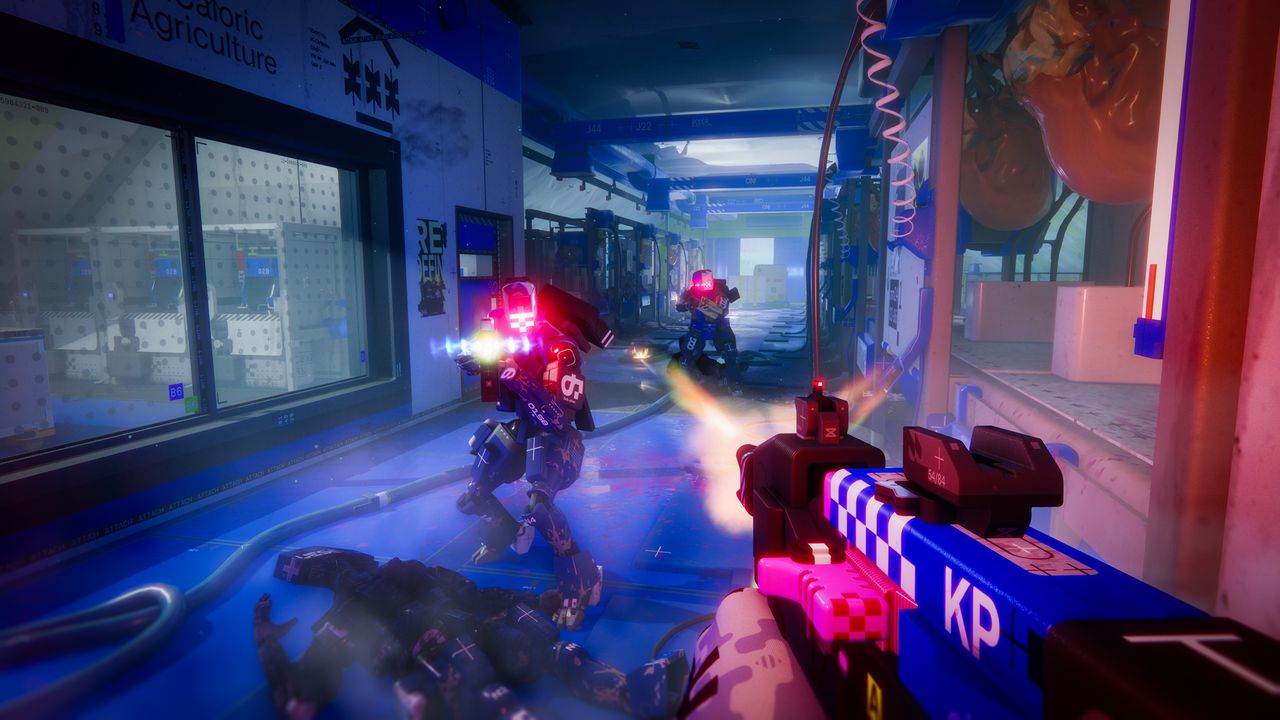
Surgent Studios, the developer behind Tales of Kenzara: ZAU, has unveiled its next game today, and it's...absolutely nothing like Tales of Kenzara: ZAU. It's called FixForce, and it's a chaotic cooperative "extraction platformer" about a team of robots fixing machines using random parts they find lying around.
FixForce puts up to six players together as a robot repair crew sent into an area to fix various broken structures littered around the area within an allotted amount of time. Each broken machine indicates what parts are needed to fix it, and those parts can be found scattered around the level.
However, many of those pieces will be stuck behind obstacles: bodies of water robots can't swim through, up tall towers, guarded by evil enemy robots. To collect them, you'll need to use your robot building abilities to pick up and place objects strategically so you and your friends can climb across them to reach whatever it is you need. And if you're injured by an obstacle, your head will fall off, and your teammates will need to find your head and body and stack them back together to resurrect you back into the game. Teams earn points based on how many things they fix within the time limit.
I got a chance to play a round of FixForce ahead of the announcement alongside the developers, and yeah, the level of silly chaos implied in the announcement trailer pretty much encapsulates it. It's easy to get distracted goofing around with all the objects in the level and building weird, random things, but FixForce also lends itself to silly emergent moments, like when one of the devs tried to toss platforms at me to save me from being stuck on an island, and instead slammed one into me and knocked me right into the water.
It was a surprisingly cheery and silly time for a studio that just made a game about grieving the death of a loved one. That fact is not lost on founder Abubakar Salim, though.
“As FixForce came together, we saw the pure chaos and hilarity it was unleashing and made the decision to move quickly and publish it ourselves," he said in a statement. "Yes, FixForce is completely unlike anything we’ve ever done before, but look: we made one game about grief and another about abuse and thought, ‘can we have a little bit of silly, stupid fun for a second?’ I promise we’ll go back to dark and depressing after this.”
Notably, this isn't the same game Salim announced in 2024, Project Uso, nor is it the horror game announced last year to be published by Pocketpair. Surgent clearly has a lot of irons in the fire here, but its eagerness to get something released quickly makes sense given the scale of its long-term ambitions and its financial struggles in 2024.
FixForce is dropping in early access on March 12 on PC via Steam and Epic Games Store, and its full, final release will also be on Xbox, the studio says.
Rebekah Valentine is a senior reporter for IGN. Got a story tip? Send it to rvalentine@ign.com.

The end of an era that was, frankly, way too short. Creators Michael Cusack and Zach Hadel have unexpectedly announced that their breakout hit Adult Swim series Smiling Friends is ending with Season 3, which fans thought had concluded in late November last year.
"This is not a bit, this is not a joke," Hadel explained in a six-minute audio statement recorded alongside Cusack that was shared across Adult Swim's social media accounts on February 25. "Michael and I are here to announce Smiling Friends will be ending after Season 3 is done."
The creators cited burnout as a major factor in their decision. "To be honest, after Season 3, Zach and I both had the same feeling where we felt pretty burnt out after putting years and years into this, but also pretty accomplished,” Cusack explained. “We came to this feeling where we were like, 'This can just be it.'"
The dynamic duo — who got their starts as animators and voice actors making original content on YouTube — went on to give fans a bit of hope by noting that if someday they feel revitalized on the series or feel they have more they want to do, they may come back. It’s a nice maybe to have out there in the universe, but in the interest of not leading the fans on, Cusack and Hadel doubled down on the fact that the series is truly coming to an end at this point.
That said, they’re not finishing things off without a parting gift, especially considering the third season came and went with fans not suspecting a thing due to the fact that the series was already renewed for Seasons 4 and 5. The series will return to Adult Swim for just two more episodes, one the creators claimed in their statement were not finales but “stragglers” from the third season, on April 12.
Personally, I find this news to be devastating. Many fans have talked about their fears of the show overstaying its welcome and becoming a shell of the greatness that it once exuded, a phenomenon attributed mostly to Rick and Morty when citing this as a reason for wanting the show to go out on top. But Smiling Friends has been consistently excellent since day one, all the way through this third season. That’s a fear with any show; you want a series you think is great to stay great until the end, but far too many people (fans and creators alike) take that as an existential threat, which makes them afraid for a show to spend any length of time stretching its legs for fear it’ll fall into that terrifying subpar version of itself.
Ultimately, this is Smiling Friends going out on top, and if its creators don’t have that spark for it anymore, it’s noble of them to be honest with themselves and the audience. But that doesn’t mean we can’t be sad about it (I am, if you couldn’t tell).
Despite the shock of the announcement, this isn’t the first time Hadel and Cusack have discussed wanting to avoid a fate where the series loses its spark. "We don't want it to be a show that outstays its welcome and goes on forever," Cusack told Indiewire in October 2025. “Zach and I have made a promise to each other where we'll always be honest and say, 'Look, do we want to keep going with this, or do we want to wrap it up on a high note?'"
Smiling Friends premiered on Adult Swim in January 2022 after the pilot episode was aired during Adult Swim’s April Fools Day programming in 2020 and garnered a lot of attention. All three seasons are available to stream on HBO Max.
Lex Briscuso is a film and television critic and a freelance entertainment writer for IGN. You can follow her on Twitter at @nikonamerica.

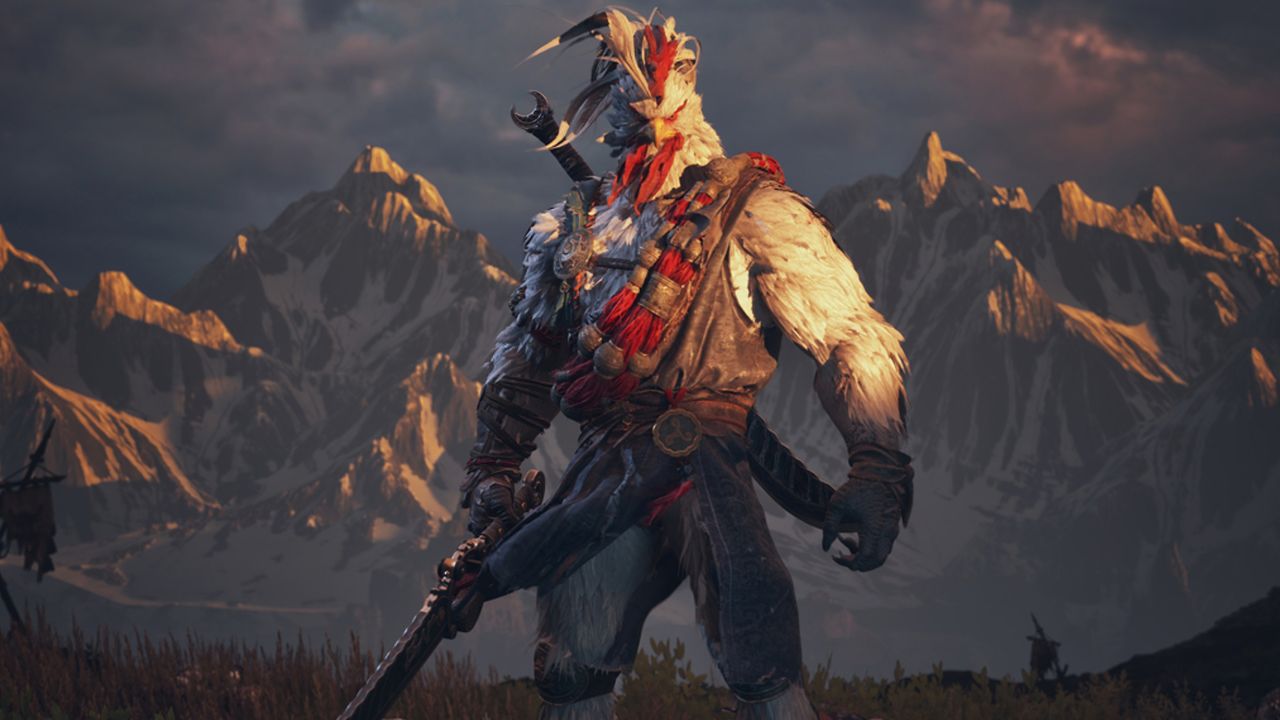
After 15 years at Ubisoft working on Far Cry, Splinter Cell and Rainbow Six, veteran developer Patrik Méthé fancied doing something different — and three years later, at Sony's recent State of Play, viewers were treated to exactly that: a trailer for a blockbuster open-world action RPG starring a hulking bird warrior.
This is Project Windless, a game set in the world of the popular Korean novel series The Bird That Drinks Tears — albeit a franchise that many in the West won't have heard of. Reaction to the game's big reveal trailer was positive, Méthé tells IGN, though tinged with some jokes about its main character that is, essentially, a large humanoid chicken.
But after that initial moment of surprise, well, the game and its world look intriguing. And it's protagonist is certainly unique — a quality Méthé said had been key to centering the game on this particular hero, and why he was interested in the project overall.
"What you're playing is the rise of a mythical character that you will hear about in the [The Bird That Drinks Tears] novels, but obviously he's not there anymore because it's more than 1000 years before," Méthé said, making clear that the game has been created as an entry point for the fantasy franchise.
"You're really playing the foundation of this universe," he continued. "Whether you read the novels or not won't change your immersion, your understanding of the game itself."
Project Windless is set to be the first project from Méthé's Krafton Montreal, a studio forged around the idea of making this game that now houses 90 people. A further 40, meanwhile, are assisting development in a studio near Seoul.
"I was receiving a bunch of contacts on LinkedIn and stuff, and I received one from a company called Krafton," Méthé recalls of how his involvement began, shortly after leaving Ubisoft. "I had no clue what [Krafton] was so I almost closed it, but then it was written: 'the creator of PUBG. I'm like, 'oh, okay, might be worth [taking a look]'."
After a bit of research, Méthé found an old article suggesting that Krafton had been "looking to do the Korean Witcher" — and while this description wasn't in the official pitch for the project he eventually heard, it still piqued his interest.
"What Krafton asked us was simple, it was: 'We have this incredible IP, beloved in South Korea, you have the experience doing great AAA single-player games. What would you do with that in order to introduce it to the Western market?' Not that we don't want to sell to [Korean fans too], but what would you do?'"
"My answer was: 'if anyone answers you [on the spot] to that kind of question, you should stop the call immediately. Because to answer that alone, without thinking about it for more than a few minutes, it's a joke. This kind of project requires the expertise of many people, so if you want a serious answer and not just buzzwords — the used sales car pitch — give me the time to sync with experts and we'll get back to you with a real answer."
And that's what Krafton allowed Méthé to do. After some initial discussion around directly adapting The Bird That Drinks Tears' first novel, Méthé realized that setting the action generations before allowed for more flexibility in crafting a more unique story suited to a video game, rather than adapting the books' stories to a different medium while trying to hit all the same beats.
"For me it's more that we have the novels, which is great for us as developers because it answers a lot of questions that often take up a lot of resource and time," Méthé says. "We have those answers already in place, and we can then easily add layers of depth into the stories and the motivation of each race."
It hasn't all been plain sailing — Méthé says he underestimated how much of a "hectic and a bumpy adventure" it was going to be, figuring out what Project Windless would be while also "building a studio, finding a place, recruiting people, trying to understand the ecosystem of the company." He continued: "We knew it would be a good challenge and it is a good challenge. So it's never boring. Let's say it like that."
That said, it sounds like a welcome change for Méthé after more than 15 years working on Ubisoft shooters, including Splinter Cell Conviction, Far Cry 3, Far Cry 4, Far Cry 5, Far Cry New Dawn, and Rainbow Six Extraction — all of which he served as game director for.
"It's very refreshing," he says. "We're not a shooter at all. Sometimes as developers, because we're repeating stuff because we're say we're doing follow-ups, you find a certain pattern that works, whereas this time it's quite the opposite. We don't have a clear benchmark to follow, and we need to come up with our own vision of what we want."
Still, plenty about the game remains under wraps. Apart from that trailer, there's still much to learn about the game, and more work to be done to convince players that this is a franchise that can stand alongside other open-world action RPG staples. Méthé, however, believes his team is off to a good start.
"What I really loved, of all the comments I've seen and all the content creator reactions I've seen, most of the time it went like this: You see the start of the trailer and they're like, 'okay, interesting, interesting. Then they're like, 'what the...', and then they're like, 'I'm in,' without any hesitation. And that's gold. That's what we wanted. But it's our first communication. It's the first time people are hearing about this. There will be a bunch more down the road to clarify what the game is, how unique it is. For the time being we're just taking the time to celebrate this moment. And when the time comes, we'll be able to explain a bit more in detail."
Tom Phillips is IGN's News Editor. You can reach Tom at tom_phillips@ign.com or find him on Bluesky @tomphillipseg.bsky.social

The game director of extraction shooter Marathon has offered a number of top tips for players jumping into the server slam event this weekend.
Bungie’s Joe Ziegler took to social media to offer last-minute tips. I’m hoping to carve out some time this weekend to give Marathon a shot myself, so I found these tips interesting. Hopefully they will also prove useful!
It all sounds pretty intense, but that’s what you’d expect from an extraction shooter. I expect I’ll be leaning on that last tip over the weekend.
The Marathon server slam runs from today, February 26, to March 2. We’ve got a quick guide to the exact launch times across the globe, as well as the associated rewards, so you know when you can get that download going and jump in. Marathon's full launch is scheduled for March 5 across PC, PlayStation 5, and Xbox Series X and S. PlayStation Plus subscribers can nab bonus weapon charms themed around Ghost of Yōtei, Death Stranding 2, and Helldivers 2 at launch. Marathon players on Steam automatically receive the exclusive Crowbar Weapon Charm (don't say Half-Life 3 confirmed!) when Marathon releases on March 5. Marathon players on Xbox Series X and S, meanwhile, get the exclusive Emerald Clutch Weapon Charm and Emerald Catch Weapon Charm.
Wesley is Director, News at IGN. Find him on Twitter at @wyp100. You can reach Wesley at wesley_yinpoole@ign.com or confidentially at wyp100@proton.me.

Back in 2024, not long after laying off five percent of the company’s workforce, EA CEO Andrew Wilson got on a stage to wax poetic about all the ways generative AI would help take the gaming industry to the next level. Machine learning tools, he said, sticking to a script that may as well have been spat out by an LLM, would give developers an “exponentially bigger canvas upon which to create, and richer colors so they might paint more brilliant worlds.”
He’s hardly the only executive who’s promised his customers the world in recent years, though how exactly AI is going to impact game development remains as ambiguous now as it was the day we were first introduced to ChatGPT. While some, from EA and Ubisoft to Remedy and Larian, prepare to ride the wave, others are putting up walls and turrets. Hooded Horse’s Tim Bender has called the technology “cancerous” and added a No AI Assets clause to the company’s publishing contracts. Meanwhile, a survey by Game Developer found that 36% of industry professionals are using GenAI in their day-to-day work, but that half of them think it’s making games worse, not better.
Right now, it’s possible we’re headed for a future in which many triple-A titles will be incredibly large but feel lacking in substance, akin to the early days of No Man’s Sky’s procedurally generated, endless universe. Wilson himself suggested as much when he mentioned that College Football 25 – with its 150 stadiums and 11,000 athlete avatars – could not have been made without help from GenAI. Our ever-inflating expectations for larger maps and more realistic-looking graphics have pushed development cycles for franchises like Grand Theft Auto and The Elder Scrolls into the double digits, and AI seems like an obvious and cost-effective way to bring those numbers back down again while delivering gargantuan amounts of content.
But while AI could probably program testicle physics for horses, it can’t create a character as deeply human as Arthur Morgan. Consequently, the more you try to automate workflow, the less human (and therefore engaging) your games become. For this reason, I believe we should expect another, equally influential shift to sweep across the industry, one that will push some developers into the opposite direction. Instead of giant, hollow worlds with glossy AI finishes, I suspect we’ll see more games that are smaller in scope, tighter in design, and a little rougher around the edges. In short, we’ll see games that go where AI cannot follow.
To form an impression of how AI will impact games tomorrow, we can start by looking at how the technology is being used today. According to that Game Developer survey, AI use among industry professionals varies by level of seniority, with upper management using AI tools more frequently than those below them. Across the board, people are more reliant on AI for researching and brainstorming than actual asset generation. In other words, the more complex and creative a task, the less AI is used.
Another Game Developer survey, conducted in 2025, found that nearly half of industry professionals fear extensive use of AI would decrease the quality of their games. Brandon Sheffield, founder of Necrosoft Games and director of Demonschool, argued that overreliance on AI tools will cause games to become more generic in style and design, as these tools tend to slavishly replicate their training data without putting an original spin on them. Hidden Door CEO Hilary Mason, also interviewed for the survey, called AI “aspirationally mid,” adding that a technology which lacks both vision and ambition cannot produce anything other than mediocre slop.
People from various creative industries agree that AI tools remain just that: tools, used to take care of mindless busy work so that employees are free to focus on the tasks that they alone can do. This includes writing emails or cleaning up code, but also generating reference material and altering the color, lighting, or perspective of concept art and other types of assets. Take one look at social media, though, and you’ll see that AI’s role in that “busy work” is just as contested.
We can also learn a thing or two about AI’s impact on game design by looking at the impact of previous technological revolutions, like the invention of the camera. The camera did not, as many painters in the early 19th century feared, destroy the art of painting, but merely forced it to evolve. Now that there existed a device which could, in an instant, capture the likeness of anyone and anything, and do so with greater precision than even the most talented artists, there was no good reason to keep on painting realistically. Rather than compete with technology, art went in a direction where technology could not follow: towards abstraction and subjectivity, towards Impressionism, Expressionism, Fauvism, Cubism, Surrealism, and other movements that represented not the world as it is, but how we as individuals experience it.
Tomorrow’s best and brightest game designers, like yesterday’s most celebrated painters, will search for the limits of what AI can achieve and boldly set up shop outside that boundary. Right now, AI is predictable, regurgitating information in consistent, clearly recognizable patterns, so games made by humans will become more unpredictable and surprising. Genre titles – easily mimicable on account of their fixed rules and tropes – will give way to games that evade straightforward categorization. Just as we no longer use labels and describe almost all visual art as “postmodern,” so too might gaming arrive at a point where we can no longer distinguish shooters from Soulslikes or platformers from puzzlers. In many cases, the lines dividing these terms are already much blurrier than they were in previous decades.
AI cannot have personal experiences, so games will likely become more and more grounded in personal experience. Unlike, say, Pixar’s recent move away from autobiographical storytelling in favor of “mass appeal” – a decision which, judging by the box office performance of the studio’s latest film, Elio, isn’t exactly paying off – developers pushing for authenticity will want to draw from ideas they cannot get from LLMs. Think Ryan and Amy Green’s That Dragon, Cancer, about their child’s battle with terminal illness, Adam Robinson-Yu’s A Short Hike, inspired by memories of past hiking trips, or even Cory Barlog basing Kratos’ relationship with Atreus on his own struggles entering fatherhood.
Chances are, developers will also become increasingly keen on exploring the darker, messier, more confusing aspects of human nature and existence. The side that AI – being non-human – cannot comprehend. ChatGPT has the emotional complexity of your most obnoxious LinkedIn connection, and could never – as journalist Ioan Marc Jones points out in The Bookseller’s article about AI’s expected impact on writing – start a story like Albert Camus begins The Stranger: “Maman died today. Or yesterday maybe, I don’t know.” Think, here, of Papers, Please, which lets players explore the psychological conundrums of working as a border patrol officer in a semi-dystopian society, or Hellblade: Senua's Sacrifice’s nuanced portrayal of psychosis.
Finally, AI-generated content often looks polished and perfect to the point of actually being kind of ugly and uncanny, so tomorrow’s games might embrace flaws, imperfections, and other signs of hands-on tinkering that let the humanity behind them shine through. Indeed, if AI won’t speed up triple-A development through automation, it may well do so by convincing AI resisting perfectionists to let go of some of their more compulsive, time-consuming tendencies. Red Dead Redemption 2 didn’t need horse testicle physics to reach the heights that Rockstar wanted to reach. Hell, it didn’t even need Guarma, yet the studio’s insistence on meeting such seemingly arbitrary and ultimately pointless benchmarks for size and detail contributed to a crunch culture so infamously brutal we’re still talking about it today, nearly a decade later.
As with painting, what games lose in visual and technical polish they’ll make up for in conceptual depth. Before the camera, painting was all about what was being painted, not how it was painted. Painting today, on the other hand, typically isn’t about the painting itself so much as how we, the viewer, interact with it: how artists manipulate shape and color to draw attention to the ways culture and brain chemistry quietly shape our perception. Just as the Mona Lisa makes you forget you’re looking at a painting as opposed to a real person, many triple-A games today want you to forget you’re playing a game and make you feel like you’re inside some kind of Hollywood blockbuster instead. Tomorrow’s games – rejecting the immersive potential of AI – will want to make it clear that you are, in fact, playing a game: something invented, constructed, and meta.
While many creatives fear that AI will put them out of work, there are convincing reasons to believe this will not happen – at least, not to the apocalyptic levels they anticipate. Paul Downs, a CG animator and animation teacher in Florida who I spoke to for a different, upcoming IGN article about animation, told me he believes that “AI slop will cancel itself out.” The more low-quality AI-generated content gets released into the world, he reasons, the more people will hunger for genuinely human art. This would be true of any artform, games included.
Two other seasoned artists I spoke to – Dariush Derakhshani and Sam Nielson – both agreed. Derakhshani recalled a time when his supervisors used GenAI to storyboard a film, only to give the job to a human when the results proved completely unusable. Comments by EA’s Andrew Wilson or DreamWorks co-founder Jeffrey Katzenberg – who once predicted that AI would slash labor costs by up to 90% – are, as far as Derakhshani is concerned, nothing but “empty posturing to inflate stock prices.”
Nielson, who teaches at BYU and worked as a designer on the Game Boy Advance game LEGO Bionicle: Quest for the Toa, echoes the results of the various Game Developer surveys, arguing that “the inherent complexity of both design and storytelling” and the “specific psychological criteria” for how audiences respond to those things make it difficult for AI to fully automate creative processes. “A retired colleague who taught 3D animation used to say that students who were hoping to find the button that makes animation easy were making a mistake,” he told me, offering an anecdote that – to my ears – rings true for gaming also. “Because once that button is invented, everyone will push it.”
Then again, perhaps not everyone. In a future where many companies, big and small, will turn to AI to automate significant and in some cases just about all parts of their production processes, we can be sure that a number of creative and ambitious developers will keep on making games that reflect and relish in the unmistakably human craft behind them.
Tim Brinkhof is a freelance writer specializing in art and history. After studying journalism at NYU, he has gone on to write for Vox, Vulture, Slate, Polygon, GQ, Esquire and more.
Death Stranding 2 isn't even a year old, but the PC version is already on the way in just a couple of weeks. When it launched on PS5, it was one of the most beautiful games on the platform, and while that would usually mean it's kind of hard to run on PC, the system requirements are forgiving.
Unlike some recent PC launches, Sony released different quality standards for its minimum and recommended system requirements, which should help pin down what to expect when you try to run the game on your PC. For instance, the minimum spec calls for either an Nvidia GeForce GTX 1660 or an AMD Radeon RX 5500 XT, which should run the game at 1080p with low settings, at 30 fps.
If you want to max out the game, though, you're going to need a bit more hardware, but it's still pretty reasonable. The recommended spec calls for an RTX 3070 or a Radeon RX 6800, and will run the game at 1440p with the High quality preset at 60 fps. Not bad.
I went ahead and listed all of Sony's recommended PC specs below, but as long as you have a relatively modern PC, the game should be able to run flawlessly onj your machine. Nixxes, the studio handling the PC port has also added a "portable preset" which should make it run smoothly on PC handhelds like the Steam Deck or the Xbox Ally X.
Even at the high end, Death Stranding 2's system requirements are pretty humble by today's standards. While the GeForce RTX 4080 seems like a lot, keep in mind that this is likely for maxing out the game at 4K, which you very much don't need to do.
Keep in mind that the minimum spec is calling for a GTX 1660, which was a low-end card when it came out in 2019, and that was almost seven years ago now. I won't know exactly how this game performs until I'm able to run it on my own hardware, but the wide range of GPUs being represented here likely means that the game is incredibly scalable.
It's also important to note that even on the PS5 Pro, Death Stranding 2 did not use ray tracing, which means the higher graphics settings are going to be a lot more approachable than other recent AAA games – unless, of course, ray tracing is added to the PC version. Luckily, Nixxes is also adding support for DLSS, XeSS, FSR and Guerilla's Pico upscaler, so you should be able to find some way to boost your performance.
Death Stranding 2 launches on PC March 19th, so at least we won't have to wait too long to see how it performs.
Jackie Thomas is the Hardware and Buying Guides Editor at IGN and the PC components queen. You can follow her @Jackiecobra

Magic: The Gathering just kicked off its schedule for 2026 with Lorwyn Eclipsed, but it won’t be long until we’re teaming up with the Teenage Mutant Ninja Turtles for their own set in March.
The next set will get its own Draft Night boxed set for players to enjoy right out of the box, and it’s now back in stock at Amazon for the first time in a good while. Here’s what’s included, and how you can save almost $30 as well.
Designed for up to four players, the Draft Night contains 12 Play Boosters and 90 Lands, letting players build decks from, say, three packs each and put them head-to-head.
For context, a Play Booster Box includes 30 packs and is $5 more, but you don’t get the lands or a Collector Booster. Sadly, the Collector Booster is the real value proposition here, because they’re like gold dust.
Collector Boosters include cards that are functionally the same as the cards you’d get from a Play Booster pack, but since they feature foils and alternative art treatments, they’re where you’re much, much more likely to find pricier cards.
The product listing suggests players use the Collector Booster as a prize for whoever wins Draft Night, but I can see scalpers pulling it out and selling it on to make money on the secondary market.
Also in stock, however, is the new Turtle Team-Up. This is a bit of an unknown quantity, offering four 60-card Magic decks, an enemy deck, event cards, and four Play Boosters. It’s a co-operative experience, which is something a little unique, and is selling for $49.99.
Lloyd Coombes is an experienced freelancer in tech, gaming and fitness seen at Polygon, Eurogamer, Macworld, TechRadar and many more. He's a big fan of Magic: The Gathering and other collectible card games, much to his wife's dismay.