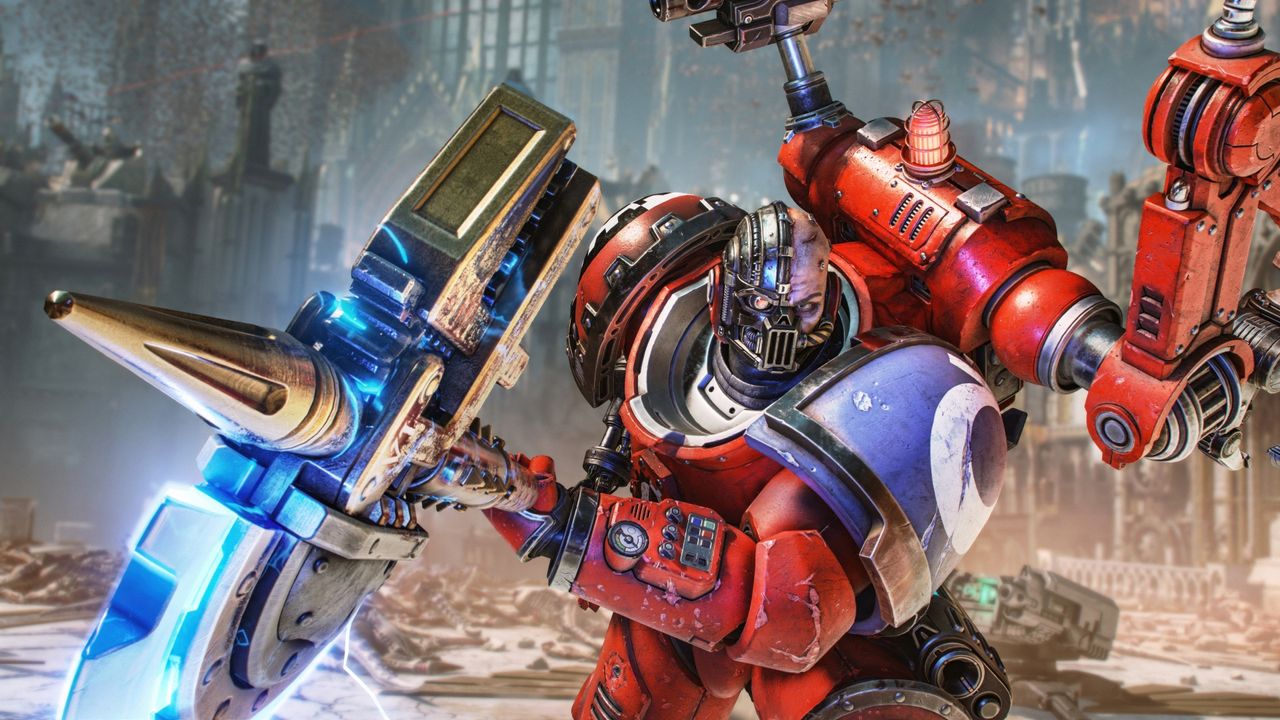
Bluepoint, the studio behind the successful Shadow of the Colossus and Demon's Souls remakes, reportedly pitched a Bloodborne remake last year that was rejected not by Sony, as many have thought, but by FromSoftware.
This comes from a new Bloomberg report discussing the reasons Bluepoint was shut down by Sony earlier this month. As Bloomberg shares, Bluepoint was working on a live-service God of War game following its acquisition by Sony and support work on God of War Ragnarok. The God of War game would have involved Atreus falling into Hades, and different "versions" of him battling through it with some kind of cooperative element.
The idea didn't really coalesce and Bluepoint, famous for more traditional action games, was a poor fit for the project, so it was canceled in January of 2025. The studio was encouraged to pitch other ideas, and the one that made the most sense was a remake of 2015's amazing, IGN 9.1/10, Bloodborne.
Fans have begged for a Bloodborne remake or sequel for years, with all sorts of rumors cropping up that one might be in the works at any given time. Popular belief has been that Sony, as the IP owner, is what stands in the way of FromSoftware actually making one. But according to Bloomberg, that may not be the case. According to those working at the studio, they were told that while Sony was interested in a Bloodborne remake, FromSoftware was not, and the idea was scrapped.
Bloodborne's status has long been in limbo with various individuals with ties to the project sharing conflicting thoughts on what can be made of it. Back in 2024, FromSoftware director Hidetaka Miyazaki said it was "not in my place" to talk about a Bloodborne remake because FromSoftware does not own the IP. He also told Eurogamer at the time that the game would benefit from a release on modern hardware.
Bloodborne has always been the most asked thing. And people wonder why we haven’t really done anything, even an update or a remaster. Should be easy, right? The company is known for doing so many remasters, right, some people get frustrated.
I have only my personal theory to that situation. I left first-party so I don’t know what’s going on, but my theory is, you know because I remember, you know, Miyazaki-san really, really loved Bloodborne, you know, what he created. So I think he is interested, but he’s so successful and he’s so busy, so he doesn’t want, he cannot do himself, but he does not want anyone else to touch it. So that’s my theory. And the PlayStation team respect his wish. So that’s my guess, right? Theory. I am not revealing any secret information, to be clear.
The question of why no one seems to want to hit such an obvious home run, or let someone like Bluepoint hit it for them, remains. FromSoftware is currently hard at work on The Duskbloods, a similarly vampire-themed game exclusive to Nintendo Switch 2. As for Bluepoint, it reportedly went on to pitch other ideas, such as an updated Shadow of the Colossus and a spinoff of Ghost of Tsushima, before it was tragically shut down by Sony, with leaders believing the studio was not equipped to make its own game and was unable to find a sensible partnership. Per Bloomberg, some companies are currently in talks to see if they can save the studio and take it off Sony's hands, but no word yet as to how successful that might be.
Rebekah Valentine is a senior reporter for IGN. Got a story tip? Send it to rvalentine@ign.com.
You may have clicked into this review thinking, “A review of Under Night In-Birth 2 Sys:Celes? In the year of our Lord 2026?!” And you know what, that’s fair. This fighting game came out at the beginning of 2024, and it’s one that builds off a foundation laid by the 2012 original, which we also never reviewed. Well, I’ve decided better late than never, because Under Night In-Birth 2 is quite simply one of the best 2D fighters on the market right now – especially for fighting game fans that pine for the days of fast-paced anime fighters but with all the modern conveniences we’ve come to expect. It’s full of gorgeous pixel art and completely outlandish character designs alongside things like exceptional netcode and the ability to take control of a character during a replay, making its satisfyingly steep learning curve a joy to try and overcome, and its online play a staple of my fighting game rotation well past its initial launch.
For those completely unfamiliar, Under Night In-Birth (or just UNI for short) is the first wholly original series from Japanese developer French Bread, which was previously known mostly for Melty Blood, a 2D fighter based on the world and characters of the visual novel Tsukihime. The UNI games are four-button fighters with light, medium, and heavy attack buttons, as well as the Exs Action button, which has a number of uses ranging from short hops, to defensive shields, to meter management, etc.
What’s really cool about this fighting system at a basic level is that while most fighting games have a linear sort of logic to their combo system, allowing you to chain lights into mediums into heavies, UNI kind of just says “screw it, do what you want, it’ll work.” You can chain heavies into lights and lights into heavies, or convert big combos off of little pokes. Anytime you land any sort of touch in UNI, you can get big damage off of it, which is a very liberating feeling.
You can get big damage off any touch, which is a very liberating feeling.
It also makes jumping into the shallow end of a new character very intuitive, even though they’re all so different from each other. I wouldn’t dare take a brand new character into online play and try to get by using simple combos alone, but if all you’re going to do is play through Arcade mode or mash some buttons against a similarly skilled friend, UNI’s flexible fighting system makes it very easy to do so on a casual level without relying solely on auto-combos.
Don’t let any of that fool you into thinking UNI is easy, though. The game speed is lightning fast, its zoning can feel utterly oppressive if you don't know how to deal with it, and the mixups certain characters can do will make you feel like you just got utterly blended. You really need to make use of its many different mechanics to be able to fight on an even playing field, and learning those is going to take some time – and for the more casual fighting game fan, it may even feel a bit like homework.
At the heart of UNI is the GRD system, and there’s really nothing else quite like it in the expansive world of 2D fighters. Basically, imagine it as a tug-of-war-style minigame that runs parallel to the actual fighting, with the winner being granted a pretty massive advantage for a limited amount of time. At the bottom of the screen, you’ll see a meter comprised of six diamonds on either side. You fill your side of the meter by moving forward, landing attacks, blocking, using the riskier (but more rewarding) shield block, and by holding down the Exs Action button to sit still and charge it up like you’re a Dragon Ball Z character raising your power level. You can also lose meter by moving backwards, getting hit, or having your own attacks blocked by the opponent’s shield block.
While this push and pull is happening, a timer will continue to circle around the middle of the meter, and once it’s up, the person with more of that meter filled wins the minigame and will enter the Vorpal State. While in the Vorpal State, you deal 10% more damage and gain the ability to use a technique called Chain Shift, which allows you to cancel the recovery of any move – much like a Roman Cancel in the Guilty Gear series – and also convert some of your diamonds from the GRD meter into your EXS meter, which governs your ability to use super moves and EX special moves.
GRD is unusual, it's complicated, but it's also kind of brilliant.
It’s unusual, it’s complicated, but it’s also kind of brilliant. It encourages aggressive play while equally rewarding skillful defense; it’s largely negligible at lower levels of play, so newcomers don’t even have to worry about it, while more skilled fighters must split their focus between attacking the opponent in front of them and consider how their actions affect the GRD meter. It also further encourages careful meter and resource management, which is something every great modern fighting game benefits from.
I love the way fighting games look these days; Arc System Works, in particular, does an incredible job of blending 3D characters in 2D environments and reaping the benefits of both dimensions. But I’m also just a huge sucker for incredible 2D sprite art, and UNI’s characters rank up there among the best. Whether it’s the wild flowing hair and flailing limbs of Minerva, the lightning-fast speed and rapid slashes of Seth, or the hilariously gargantuan arms of Waldstein, the 24 characters (plus three more as paid DLC) of UNI2 absolutely brim with personality and flair.
I’m a big fan of rushdown characters, so Linne was the first one I gravitated towards, and I was initially taken aback by just how “rushdown” she actually was. Her run speed is incredibly fast, allowing her to close the distance from full screen in basically the blink of an eye. Even without learning her big damage combos, it’s a ton of fun to look for that slight opening to get in and then utterly blitzing my opponent with a fairly basic strike/throw gameplan. I’m at the point now where I definitely need to dig a little deeper into her moveset and find better ways to open people up, and fortunately, the teaching tools that UNI2 provides are stellar as well.
There’s a mission mode that gives you a basic overview of how to play each character, along with a wide variety of combos that cover just about every situation you could imagine sorted by difficulty. You’ve got quick, low-hitting combos you can use from point-blank range, overhead combos, combos that come out of your farthest reaching poke, anti-air combos, corner combos, and better versions of previous combos that build upon what you’ve already learned to squeeze out just a bit more damage. Once you get all the way down to the bottom, that’s where you’ll learn the big damage combos that incorporate Chain Shifts, super moves, and other high level techniques. It’s pretty much everything you need to build a full game plan with a character, all packed within the actual game itself, which should be the standard for any modern fighting game.
The unfortunate thing for anyone looking to learn about these characters by playing through their story mode, however, is that you’re going to feel buried under a mountain of jargon and names that won’t mean anything to you if you didn’t play the previous games in the series. The world and lore of Under Night is extensive, and there’s no effort made in this version to catch new players up on what “The Hollow Night” is, what the heck “EXS” is, or even what an “In-Birth” means. You are getting dropped into the supposed final chapter of a story, after all. Still, some sort of index or compendium would have gone a long way toward making these otherwise fairly dry arcade mode stories a bit easier to follow.
In general, UNI2 is lacking in content outside of its central modes. If you’re not a serious fighting game player who wants to grind online play and make use of its fantastic teaching tools to get better, there’s not going to be a ton here to hold your interest. Fortunately, if you are one of those people, UNI2 does have a feature that many AAA fighting games still don’t: Replay Takeover. While watching a replay, you’re able to take control of one of the characters at any point. This allows you to repeat something that gave you trouble in a match and try to find a way to learn from it. Like, for example, an offensive sequence that you got hit with that seemed air tight when you were in the moment – when you run it back, you might be able to find a spot where you could use an invincible reversal attack, or maybe your shield to push the opponent back far enough that their next attack wouldn’t have landed. Just like in Street Fighter 6, Tekken 8, and the scant few other fighting games that have this feature, it’s an absolute godsend when it comes to improving your matchup knowledge.
Director Zack Snyder isn't mincing words when it comes to defending the #ReleasetheSnyderCut fan movement. In a recent interview on Josh Horowitz's Happy Sad Confused podcast (via Dexerto), Snyder told critics of the movement to "go f*** yourself."
Snyder's comment comes at the tail-end of a 10-year retrospective about 2016's Batman v Superman: Dawn of Justice and the wider DCEU shared universe. Snyder reflects on the unlikely victory that was Warner Bros. releasing his original director's cut of Justice League in 2021, noting that the Snyderverse fandom was instrumental in making that happen.
"I think the fans should never forget that they did that," Snyder told Horowitz. "We raised a lot of money for suicide prevention and they really did a lot of good. They catch a lot of flak for being toxic or whatever, but they literally saved human lives, so you can go f*** yourself if that's what you think."
As Snyder alludes, the Snyderverse fandom has been the subject of criticism over the years, with some pointing to a pattern of online bullying and harassment. That harassment has seemingly intensified with the pivot from the DCEU to James Gunn's DCU. Mods on r/SnyderCut were forced to delete a post calling for a campaign of review-bombing and spoilers after Gunn glibly replied, "Lol I think we'll survive. I'm not sure the eight people that listen to that guy (I'm going to go out on a limb and guess it's a guy) are going to impact the course of events.”
Even Snyder's colleague, Suicide Squad director David Ayer, hasn't been immune from online harassment. Ayer famously backed away from social media in late 2024 after voicing support for Gunn's Superman movie and receiving death threats in response.
Fans are sharing their reactions to the first image of live-action Kratos and Atreus in the Prime Video God of War show…and they are not impressed.
Those looking forward to the upcoming adaptation of a classic PlayStation franchise quickly flooded social media after Amazon and Sony released an early picture of Ryan Hurst (Kratos) and Callum Vinson (Atreus) in costume earlier today. What could have been a powerful reveal for some of the most iconic video game characters of all time has, instead, started with a whimper.
“Not to be the standard Twitter negative Nancy but something about this looks off, right?” another said. “Like I'm not being negative for no reason? I can’t even pinpoint what looks wrong.”
“Amazon, don't be sorry. Be better,” one Reddit user quipped.
Even some of the more positive reactions come with caveats. There are stories of both struggle and success in the history of live-action video game adaptations, and almost all of them begin with hesitation from fans. It’s something many are keeping in mind as they try to picture how the rest of the God of War cast will translate into a more realistic visual style.
“It’s too clean. That’s the off part,” one IGN reader commented. “He doesn’t look like a weathered warrior like the game looks and neither does his uniform. It just looks too clean and ‘new’ but that could be the lighting. We’ll have to wait and see.”
“The thing about adapting videogames that already look insanely realistic into live action media is that a part of them is inevitably gonna look like [a Saturday Night Live] skit,” one X/Twitter user said.
“It doesn’t even look that bad,” another said, “I just think it’s going to be extremely difficult to translate to live-action.”
is there even a logical reason to making your reveal just a set photo (which will almost always look bad) and not just waiting until you can show how it will look with actual cinematography and lighting https://t.co/t4WbNQhHei
Ngl this took a second for me to absorb. First looks can always feel a bit iffy but maybe I'm just so used to video game Kratos and Atreus. https://t.co/LLCpwVBFpu
Many are calling the outfits “cheap,” asking if the God of War Norse saga-inspired costumes seen today are truly what fans can expect from the final version of the show. There’s no denying this is an officially released image, but it’s worth noting it will probably be a while before the series premieres.
The God of War show still has no release date, and as others have pointed out, a finished episode of TV will look different from a single image. Hurst’s Kratos and Vinson’s Atreus may also come off better (or maybe even worse) once they’re seen in motion in Season 1. It’s a lesson comic book fans learned last year, when fans initially reacted somewhat negatively to the first image from the 2025 Superman movie before largely changing their tune after seeing star David Corenswet in action.
Still, the damage may already be done, as this poor first impression has triggered a wave of skepticism. Some have even gone as far as to compare live-action Kratos and Atreus to something created with generative AI. There is currently little to suggest artificial intelligence had a hand in producing this image, but that isn’t stopping fans from bringing the topic to the table.
“Not saying it is, but this looks like a high quality AI photo….why lol,” another IGN reader said. “Hopefully the first trailer looks more ‘real.’”
"I'm sorry, but this has the same uncanny look as AI generated images," another Reddit user added. "I know it's not, but still."
While we wait to see if fans will warm up to live-action Kratos, you can see more reactions below. You can also catch up with our July 2025 interview with showrunner Ronald D. Moore. Then be sure to check out other live-action versions of classic video game characters, including Lara Croft from Tomb Raider, Sweet Tooth from Twisted Metal, Link and Zelda from The Legend of Zelda, and Joel and Ellie from The Last of Us.
Michael Cripe is a freelance writer with IGN. He's best known for his work at sites like The Pitch, The Escapist, and OnlySP. Be sure to give him a follow on Bluesky (@mikecripe.bsky.social) and Twitter (@MikeCripe).
Once again, Samsung took to the stage for Samsung Galaxy Unpacked to present their latest flagship products. Both our eyes and ears are being treated to some impressive upgrades, and we’ve gathered them all here for you.
Releasing on the 11th March, they’re available for pre-order now, and you can find out all the key things you need to know below.
The Samsung S26, S26+ and S26 Ultra: Three steps forward for the Galaxy Series
Of course, the majority of the presentation focused on the official announcement of the S26 series of devices.
Screen-wise, the S26 offers a 6.3” FHD+ display, while the S26+ and S26 Ultra stretch to 6.7” and 6.9” respectively, both with QHD+. Each model has a 120Hz refresh and peak brightness of 2600 nits. In terms of storage, 256 and 512 GB models are available , with the Ultra also offering a massive 1 TB option for those for whom storage is an essential component.
Meanwhile, memory comes in at a respectable 12 GB, with that 1 TB Ultra getting an extra 4 GB above that. Batteries clock in at 4300, 4900 and 5000 mAh, the last of which Samsung states will offer up to 31 hours of video playback. And it’s not just a case of lasting longer: with the Ultra’s 60W “Super Fast Charging 3.0”, wired charging up to 75% will be possible in around 30 minutes.
As you’d expect at the top end, stats are up across the board on the Ultra, with the NPU 39% more powerful, aiding the increasingly integral Galaxy AI functionality, whilst the CPU is 19% faster and the GPU improved by 24%, all powered by the Snapdragon 8 Elite Gen 5 for Galaxy. There’s also improvements to thermal management, with their largest ever vapour chamber (now in its 6th iteration) managing heat more efficiently than ever, with the expected improvements to performance.
And of course, once again, Galaxy AI* continues to be emphasised across the entire Samsung ecosystem, with the keyword this year being “agentic” - AI which can anticipate your needs before you even know what they are. The presentation did offer a useful introduction to their “Now Brief” feature though, personalising an overview of your day, with the helpful ability to even remember things in your notifications you may have forgotten to diarise, as well as an all-new AI helper, Bixby.
The World’s First Privacy Display on Mobile
A huge amount was also made during the presentation of the Ultra’s cutting edge new Privacy Display. Whilst its standard pixels spread light more widely than ever before, offering broad visibility, its “Black Matrix” narrow pixels allow light to reach only the user, massively narrowing visibility angles, so no more shoulder surfing from your neighbours on public transport.
You can customise the Privacy Display setting for specific apps but, most impressively, even just for certain elements of the screen, such as notifications, so no more embarrassing DM pop-up oversharing while your friend in the next seat is watching YouTube with you!
Cameras: Let There Be (More) Light
Samsung have understandably built a strong reputation for photography on their devices, and so the trend continues here. The S26 and S26 Plus offer 12 MP for the selfie camera, with 10 MP for the telephoto lens (3 x Optical Zoom), 12 MP for the ultra wide, and 50 MP for the wide-angle (2x Optical Quality Zoom). Whilst that’s more than enough for many people, the Ultra is where Samsung have really invested – not only with higher MP (50 for the telephoto and ultra-wide, 200 for the wide-angle) but crucially in wider apertures allowing significantly more light to the sensors, offering sharper detail and clearer more vibrant images as a result (F1.4 for the wide-angle, F2.9 for the telephoto).
Nightography once again is given a great deal of attention, including an emphasis on video in dark conditions having far less grain than previously and the Ultra introducing the APV codec which supports high bit rates and near lossless quality for 8k high resolution video. The new “Super Steady with Horizontal Lock” feature also particularly impressed – automatically maintaining a level horizon, removing the need to constantly ensure you’re keeping a straight hand as you shoot.
Galaxy Buds4 Series
The other product revealed at the San Francisco event was the latest iteration of Samsung’s earbuds, the 4 Series. Both the standard and Pro versions offer 24-bit 96 kHz audio and both adaptive EQ and ANC, offering refined Hi-Fi sound and raising the bar on the sound quality a premium earbud can deliver. As for the inner-ear shaping, the standard model offers an ‘open type’ whilst the Pro opts for the more premium ‘canal’ shaping.
It’s the dual amplifier architecture that separates the pro option in particular, with each amplifier independently powering the tweeter and woofer, with the vibration area expanded almost 20% to help with both deeper, low frequencies, and refined, detailed top end. There’s also a customisable equaliser, allowing you to adjust bass, treble and tone to your environment and preferences.
A nice touch is the instant pairing, removing the need to mess about with apps or downloads when you first get connected and, should you lose a bud, it’s easier than ever to find them with SmartThings. The commitment to AI integration is also evident in your ability to now wake your assistant simply by talking when you’re wearing them, completely hands free.
Pricing, Pre-ordering, and Palette
Price-wise, the Base S26 begins at £879, the Plus at £1099 and the Ultra at £1279. For the Buds, you’re looking at £159 or £219 depending on whether you opt for the Pro version. Pre-orders are open now in advance of the 11th March release, and there’s currently £170 worth of savings to be had on the handsets if you pre-order at samsung.com, where you can also snag some exclusive colour variants (Silver Shadow for the handset, Pink Gold for both the handset and Pro Buds). In addition to the previously mentioned offer, if you pre-order the Galaxy S26 Ultra, Samsung will double up the storage, so you can get 512 GB for the price of 256 GB.**
*Galaxy AI only works with a network connection
**Operates as a price discount: buy the larger storage variant (Galaxy S26 Ultra 512GB) by 10.03.2026 and pay the future price of the smaller storage variant (Galaxy S26 Ultra 256GB)
At the very outset of World of Warcraft’s Midnight expansion, we are summoned by an actual prayer to aid in repelling recurring big bad Xal'atath's invasion of the elven kingdom of Quel'Thalas. And while I'm all for starting out in medias res, this feels like a particularly hamfisted and contextless way to begin a story. It's almost disorienting at first, and I imagine even more so if you haven't watched the five or six pre-expansion cinematics Blizzard has released at this point. Thankfully, from that point onward, the 10 hours or so I've spent with Midnight so far have otherwise been delightful.
Riding into the reimagined elven capital of Silvermoon is one of those WoW moments I'm not going to forget for a long time. Its gleaming ivory spires towered above me as an excellent new musical theme that references multiple previous ones filled me with awe. The layout does feel a bit alienating sometimes while on the ground since it's clearly built for flying mounts, and I think there's a bit too much open space. But the level of detail is maybe the highest we've ever seen for an in-game city in WoW ever, with evocative interiors that interconnect in unexpected ways and invite exploration. My framerate has been less than stellar, though.
Expanding legacy areas like Murder Row into extensive subzones with a lot going on helps the city come alive. And I spent more than half my playtime so far without ever venturing outside the walls, excitedly completing every side quest. It's no secret that I'm a big "Thalassaboo," having been a fan of the elves of Quel'Thalas since Warcraft 2. And even the smaller, optional adventures in Silvermoon excellently immerse you in the decadence, pridefulness, and political maneuvering that characterize the city. As an Alliance player, I was also impressed with how much of it we get to explore – only about a quarter of it is off-limits to us.
Beyond the shining capital, Eversong Woods has also been reimagined gorgeously. It was already one of my favorite zones in the entire history of WoW, and to see it get such a glow-up, finally healed from the scars of Arthas' invasion all those years ago, is fantastic. The brewing story about the dangers of fanaticism hasn't completely gripped me yet. But Xal'atath's Voidstorm being held back by essentially a giant drain plug that won't last forever adds an ominous urgency to all of it. And I feel like I have a little bit more context now for who Xal is as a villain, thematically, though most of that comes from those out-of-game cutscenes I mentioned.
Eversong Woods has also been reimagined gorgeously.
I played several different classes to level 80 in the pre-patch event, which included most of the class changes for Midnight, focusing on my trusty Marksmanship Hunter main and the new Devourer Demon Hunter that unlocks with the expansion. I'm not ready to pass judgement on any spec until I see how they play at max level in difficult content. But as far as Marksmanship goes, I mostly agree with the changes so far thematically. Aimed Shot should be a big nuke that takes a long time to cast. But with the removal of talents like Streamline, the damage needs to feel a lot chunkier than it currently does to earn that fantasy. Our final apex talent, which will give it a 100% critical chance at level 90, could be the answer. We'll see.
As far as Devourer, I'm not sold on it quite yet. I like the other Demon Hunter specs quite a bit, but the flavor of Devourer is a bit more caster-coded than the melee monsters Demon Hunters have always been in the lore. Baseline abilities like Consume don't feel kinetic enough to me. They don't feel… Demon Hunter-y, if that makes sense. And it could just be an animation thing. I kind of wish Reap was our main button instead. But the mobility is there, and the mid-range DPS playstyle is interesting. Again, I'll report back on how it feels at max level.
Since player housing, probably the biggest new feature of Midnight, launched way back in December, I've put well over 100 hours into it already. And while the decor I've seen after 10 hours with the expansion proper makes me think Blizzard was really holding out on us with the initial offerings, it's already become one of my main motivations to log in. The tools are very powerful when you learn how to use them, and I'm astounded and inspired to see what some people have done with them.
At the same time, housing definitely shows that it's a first try in some places. The hotkeys to switch between editing your house and normal gameplay are kind of clunky and add too many steps to certain tasks. There are some common sense features missing, like being able to copy and paste a decoration or furniture item if I have another one in my storage. And it's neat that dyes can be made by other players, but currently I get frustrated previewing different colors on a piece, then having to make a shopping list and go all the way back to town to visit the auction house and buy the paints I want. I'd like for that process to be faster and have fewer steps.
While the Early Access period for Midnight is well underway as I'm writing this, Blizzard is also withholding quite a lot of key features for the start of the first proper season this time around. Not just raids and Mythic+, but even Heroic dungeons and Bountiful Delves are going to be gated off until March 17. That's a long time! It gives us plenty of space to level and see the pre-raid 12.0 story at our own pace, but if gear progression is your main thing and you're not currently subscribed, you could definitely hold off a couple more weeks because you're not going to have much to do.
I'll be updating this review as I make my way through the story and try out a few different specs at max level, with a final score to come some time after Season 1 launches so I can get an idea for how the endgame feels this time around.
Nowadays it's quite difficult to find an RTX 5070 Ti prebuilt for under $2,000, and when you do, it's usually stripped of any other high-end component. However, for this weekend only, Lenovo actually has twoRTX 5070 Ti configurations priced under $2K thanks to two stackable coupon codes "EXTRAFIVE" and "LENOVOWEEKEND". These prices are likely less than what it would cost to build your own equivalent system. With the rising prices of GPUs and RAM, the RTX 5070 Ti graphics card is currently selling for over $1,000, and 32GB of DDR5 RAM will cost you at least $300.
Lenovo Legion Tower 5 RTX 5070 Ti Gaming PC for $1,805
First on the list is a Lenovo Legion Tower 5 Gen 10 GeForce RTX 5070 Ti gaming PC, which drops down to $1,804.99 after coupon codes "EXTRAFIVE" and "LENOVOWEEKEND". This system features an Intel Core Ultra 9 275HX CPU, GeForce RTX 5070 Ti 16GB GPU, 32GB of DDR5-5600MHz RAM, and a 1TB SSD. Rare for a Legion Tower 5 system, the CPU is cooled by a 240mm all-in-one liquid cooler.
Something to note is that this PC is equipped with an Intel Core Ultra 9 275HX CPU on a customized Intel HM870 mATX motherboard. The 275HX is traditionally a laptop CPU, and laptop CPUs are permanently soldered onto the motherboard. That means you won't be able to swap out the CPU for a better one in the future. If you don't intend on swapping the CPU (and let's face it, most of us who buy prebuilts probably never will), then you'll get excellent performance out of this chip.
The RTX 5070 Ti offers the best bang for your buck amongst the new Nvidia Blackwell cards in terms of 4K gaming performance. It performs neck-and-neck with the previous generation RTX 4080 Super and pulls ahead in any game that supports multi-frame generation, especially with the recent DLSS 4.5 update.
Lenovo Legion Tower 7 RTX 5070 Ti Gaming PC for $1,985
If you don't like the idea of a soldered-on CPU, Lenovo is offering a noteworthy deal on another 5070 Ti gaming PC. This time it's equipped with a desktop-class Intel Core Ultra 9 285K processor. This is Intel's best consumer CPU at the moment, featuring a max turbo frequency of 5.6GHz and a whopping 24 cores, excelling at any task. The superior, upgradeable CPU isn't the only perk that you get. The system is housed in a roomier Legion Tower 7 chassis that includes more fans for airflow and an enthusiast-grade 360mm AIO liquid cooler.
If you plan to game on a 1080p or 1440p monitor, then save some money and get this Lenovo Legion Tower 5 RTX 5070 gaming PC instead.
This configuration is equipped with a liquid-cooled Intel Core Ultra 7 265F CPU, GeForce RTX 5070 12GB GPU, 32GB of DDR5-5600MHz RAM, and a 2TB M.2 SSD. The RTX 5070 is the best GPU for up to 1440 gaming without overspending. Compared to the previous generation GPUs, it offers a slight performance improvement over the RTX 4070 Super, which was and still is an excellent GPU. The fps gain is greater in games that support DLSS 4.5 with multi-frame gen.
Eric Song is the IGN commerce manager in charge of finding the best gaming and tech deals every day. When Eric isn't hunting for deals for other people at work, he's hunting for deals for himself during his free time.
The Scream franchise has been ramping up production over the last few years. Scream 5 revitalized the series back in 2022 after a break of more than 10 years, and now all of the sudden we're on Scream 7 in 2026. It certainly seems like Ghostface is more popular than ever.
Scream 7 has brought back series OG Neve Campbell and seemingly plays more toward its more dedicated fans. IGN's review of the film said it "packs in plenty of satisfying slasher action, even if it gets a little too comfortable playing the hits."
Scream 7 has just hit theaters for the weekend, but you can also already preorder the movie in 4K. There's also a limited-edition steelbook up for grabs. A release date for the physical editions has yet to be revealed.
There are quite a few different physical editions up for preorder right now, with two different special editions. First up there's the limited-edition 4K steelbook that features a unique cover, including Ghostface spreading his (or her) arms with intimate menace when you open it up. Like most steelbooks, it includes a 4K UHD disc, a Blu-ray disc, and a digital copy. Presumably there will also be bonus features included, but those have yet to be announced.
The other special edition is an Amazon Exclusive Collector's Edition, which includes different cover art as well as a Ghostface vinyl figure. The figure itself is handmade by Robots (which is a brand, not literal robots) and is surprisingly adorable for a murderous villain. This edition also includes the 4K disc, Blu-ray disc, and a digital code.
Digital Preorders are now live
In addition to the physical editions up for preorder, you can also already preorder the film on digital for $23.99. Prime Video has a page up for the digital version without a release date attached. Like all digital preorders, there is only an option to purchase the film and we do not have any details on rental pricing.
If you're planning a horror movie marathon to catch up on where the previous films left off, you can check out our guide on where to stream every Scream movie right now. Spoiler alert: You'll find all of the previous movies on Paramount+.
Jacob Kienlen is a Senior Audience Development Strategist and Writer for IGN. Born and raised in Portland, Oregon, he has considered the Northwest his home for his entire life. With a bachelor's degree in communication and over 8 years of professional writing experience, his expertise is spread across a variety of different pop culture topics -- from TV shows and movies to indie games and books.
This is a deal we've had our eye on for a little bit now, but it's may not stay at this price for much longer at Amazon. Considering it's a return to its lowest point for PS5 and incredibly close to Xbox's lowest price of $29.60, why not take this opportunity to scoop it up and immerse yourself in a thrilling RPG this spring?
It's an RPG we certainly think is worth the hours to sink into it, too, as it earned a runner-up spot in our awards list of the best RPGs of 2025. IGN's Michael Higham called it an "investment that pays back multiple times over in its 120-hour runtime." He continued on to say that it's a "commitment - a slow-burn game you have to want to live in. But it’s also an action-packed cinematic adventure that proves to have an emotional range that the original didn’t."
It even secured a runner-up spot in our list of the best PC games of 2025, with IGN's Tom Marks saying "This massive medieval adventure could keep you playing well past the 100-hour mark, with tons of stories to unravel and quests to complete."
Our review also had glowing praise for Kingdom Come: Deliverance 2. Writer Leana Hafer called it "one part sequel and one part coronation, bringing a lot of the original's ideas to fruition." Has it piqued your interest? If so, this is a great time to grab it for just $30 before its price goes back up.
Hannah Hoolihan is a freelancer who writes with the guides and commerce teams here at IGN.
Heads up: open box AirPods Pro 3 earbuds are back in stock at Best Buy. Right now you can pick up an "excellent condition" pair of Apple AirPods Pro 3 earbuds for just $154.99 with free shipping. Buying one brand new costs $219. These work and look like new and include all parts and accessories. "Excellent condition" units are often never used and may even include a portion of its original warranty. Since you're also covered by Best Buy's return policy, this is a safer and surer route than buying a used pair from a private seller off FaceBook Marketplace or eBay.
AirPods Pro 3 Earbuds for $154.99
Open Box "Excellent Condition"
The AirPods Pro 3 launched on September 19 and is the newest generation AirPods Pro. Like its predecessor, this is easily the best earbuds for anyone who uses an iPhone. Although it looks pretty similar to the 2nd gen AirPods, there are some pretty significant improvements under the hood. The most notable new feature is the built-in heart rate sensing (which means you don't need an Apple Watch anymore), but the AirPods Pro 3 improves in other subtle ways as well, including better audio quality, better noise cancelation, long battery life, and a more weatherproof IP57 shell.
Released alongside the AirPods Pro 3 was Apple's "Live Translation", which is an Apple Intelligence feature that translates other languages on the fly. This isn't exclusive to the AirPods Pro since it can also be used with the 2nd gen AirPods Pro and the AirPods 4. First hand reports have been generally very positive, including this take from PCMag.
Eric Song is the IGN commerce manager in charge of finding the best gaming and tech deals every day. When Eric isn't hunting for deals for other people at work, he's hunting for deals for himself during his free time.
Woot’s “Video Games For All” sale continues today, and you can still score an extra 20% off with the code “LEVEL20” at checkout. Be sure to pick up the discounted DualSense controllers during the sale. Plus, save big on tons of PS5 games during the PS Direct sale. Beyond video games, Bose earbuds that are perfect for running, a stunning Samsung TV, and a Fire TV Streaming Stick are all seeing all-time lows. That’s not all, so check out all the top deals below:
TL;DR - The Best Deals Today
Metallic DualSense Controllers Score Big Discounts
Woot’s unbelievably great “Video Games For All Sale” continues today, and if you’re in the market for a new DualSense controller, you need to pounce on this deal. The stunning Deep Earth Collection, which features the DualSense in gorgeous metallic colorways, starts at only 54.39 when you use the 20% off code “LEVEL20” at checkout. Prime members also get free shipping. Originally priced at $79.99, this is solid savings. Just note that these controllers are in open box “pristine condition”, with Woot claiming they’ve never actually been in customers' hands.
$119 Off the Bose Ultra Open Earbuds
Your average earbuds do their fair share of passive noise cancellation, and when you’ve got music blaring, you can’t hear much else. However, sometimes you want to be aware of your surroundings while listening. The Bose Ultra Open Earbuds let you do just that. They just lightly clip onto your ear and remain ultra-comfortable for all-day wear, but the earbuds are also extremely secure. From running to biking, they're ideal for situations where hearing the environment around you is vital. The sound quality of these earbuds is also top-notch, especially for open ear, and call performance is solid.
One major downside to the Bose Ultra Open Earbuds is the price. But that’s not the case today, as you can get them for only $179.99 on the Amazon-owned Woot for a limited time. Given that these exact earbuds are selling for $299 on Amazon, this is a pretty awesome deal. Prime members even get free shipping.
Score Nearly Half Off the Samsung Neo QLED 4K QN80F TV
If you’re in the market for a new TV, the 55” Samsung Neo QLED 4K QN80F is only $697.99. It’s nearly half off, and the lowest price ever. This gorgeous display features mini LED technology to deliver an incredible picture with excellent contrast and high brightness. All content shines on this TV, even video games, thanks to the 4K/144Hz refresh rate, VRR, and low input lag.
Woot Video Game Mega Sale
Woot has another awesome gaming sale happening today. In addition to tons of top gaming accessories being discounted, a huge selection of video games is on sale. You can even save an extra 20% by entering the promo code LEVEL20 at checkout. Just note that the total maximum discount is $30. Amazon Prime members also get free shipping.
Titles from PS5, Switch, and Xbox are all a part of this epic deal, but things sell out fast, so act quickly. Right now, you can still grab Elden Ring for $15.99, Zelda: Breath of the Wild for $35.19, Mario Kart 8 Deluxe for $37.59, and plenty more on sale games. Below is just a sampling of the discounted titles, but I’d recommend you scroll through the sale page yourself.
Pokémon TCG: Scarlet and Violet - Journey Together Booster Bundle Hits Low
The Pokémon TCG: Scarlet and Violet - Journey Together Booster Bundle has dropped back down to its lowest price ever. It’s just $34.97 at Walmart. Plus, it’s shipped and sold by the retailer, rather than third party, for added peace of mind. With this bundle, you get six Boosters from the Scarlet & Violet—Journey Together expansion, bringing each pack to $5.82.
5,000mAh MagSafe Qi2 Wireless Power Bank for $16.99
The Lisen 5,000mAh Qi2-certified wireless magnetic power bank is ideal for iPhone users and keeps things ultra compact, measuring just 0.3 inches thick and weighing only 4 ounces. Along with the minimal heft added to your device, it supports the Qi2 standard for faster 15W charging compared to Qi1. For even faster speeds, a 22W PD USB-C port is available. There’s a lot to love here, and I haven’t even mentioned that you can score this excellent power bank for just $16.99 when you use the code “6ZKK2C3T” at checkout.
Score Half Off the Amazon Fire TV Stick 4K Select
The Amazon Fire TV Stick 4K Select is back down to its lowest price ever, just $19.99. That’s 50% savings. With this handy little streaming stick and remote combo, you can enjoy 4K and HDR10+ support for a stunning picture. All you need to do is plug it in and connect to Wi-Fi. The remote even supports voice search via Alexa, making it easy to access all your favorite streaming apps, shows, movies, and more. If you’re after a streaming device to slot in your TV or even for travel, this is an awesomely capable, ultra-compact, and easy-to-use option.
32% Off the Lenovo Legion Tower 5 RTX 5070 Ti
For a perfectly powerful gaming PC under $2,000, check out this Lenovo Legion Tower 5 RTX 5070 Ti deal at B&H Photo. Costing just $1,750, this rig is equipped with a GeForce RTX 5070 Ti GPU, which earned high praise in our review. That’s paired with a reliable all-around CPU, the Intel Core Ultra 7 265F, offering a 5.3GHz max turbo frequency, 20 cores, and a 36MB L2 cache. Plus, you get 32GB of DDR5-5600MHz RAM and a 2TB M.2 SSD, making this a solid choice for 4K gaming and much more.
AMD Ryzen 7 9800X3D CPU On Sale and Includes Crimson Desert
Our favorite CPU, the AMD Ryzen 7 9800X3D, is on sale at Amazon. Normally priced at $479, you can grab it for $439.95. It’s not just the CPU you’re getting, either, as it comes with a Crimson Desert code. The game, set to be released on March 19th, is going for $69.99, so it's a nice little bonus.
The AMD Ryzen 7 9800X3D uses 3D V-cache to reduce latency and help deliver an incredible overall performance. Anyone building a rig with a powerful graphics card will want to pair it with this processor. In our review of the AMD Ryzen 7 9800X3D, Jackie Thomas even claimed it’s “the new king of gaming processors.”
PlayStation 5 Video Game Deals
PlayStation Direct launched an awesome sale on PS5 games and other retailers have followed suit. Notable discounts include God of War Ragnarok, Horizon Forbidden West - Complete Edition, Death Stranding 2, and more from PS Direct. While Astro Bot, Returnal, Metal Gear Solid Delta: Snake Eater, and Ninja Gaiden: Ragebound are on sale at Amazon, or you can score Ghost of Tsushima - Director's Cut, The Last of US Part 1/Part 2, and Gran Turismo 7 for $30 from Best Buy. There are some incredible deals worth grabbing.
Free Game with Discounted 27" Samsung G5 OLED Gaming Monitor
Amazon discounted the 27" Samsung G5 OLED gaming monitor to the lowest price ever. It’s $200 off list price at $349.99, making it one of the least expensive OLED monitors you can buy. But to sweeten the deal even further, this already awesome deal also comes with a free game code for Resident Evil Requiem.
With this QHD display, you’ll get a quantum-dot OLED panel with deep blacks, near-infinite contrast, and a wide color gamut for a stunning picture. The near-instantaneous response times, 180Hz refresh rate, and Nvidia G-Sync support solidify the Samsung G5 OLED as a top-tier gaming monitor.
MTG x TMNT Collector Booster Box is Discounted
The MTG X TMNT Collector Booster Box is in stock and got a nice price cut. Selling for $455.88 a few days ago, you can grab it for $421.80. In the box, you’ll get 12 Collector Boosters, bringing each pack down to $35.15 each. With every booster, you’ll find Turtle-powered Rares and/or Mythics, Traditional Foils, and a Full-Art land. If you’re looking to buy a single Collector Booster, they are still available on Amazon, too.
MTG x TMNT Pizza Bundle In Stock
Beyond the Collector Boosters, the MTG x TMNT Pizza Bundle is back in stock and up for preorder on Amazon. The Pizza Bundle has been a hot commodity, with the preorder rarely staying in stock for long. This fun, pizza-themed box features 9 Play Boosters, 1 Collector Booster, 25 non-foil Pizza lands, 5 foil Pizza lands, 2 foil promo cards, and an oversized spindown life counter. Just note that it keeps coming in and out of stock. Keep checking if it's not available when you look.
There are plenty of other MTG x TMNT pre-orders worth checking out below, and each comes with Amazon’s awesome preorder guarantee. Whether the price goes up or down, you’re paying the lowest amount.
Danielle is a Tech freelance writer based in Los Angeles who spends her free time creating videos and geeking out over music history.
EA and DICE have announced a new update for Battlefield 6. Title Update 1.2.1.5 will come out on March 3rd, and the teams have shared its full patch notes. So, let’s see what this new patch brings to the table. Patch 1.2.1.5 implements additional stability improvements to reduce client crashes. It also improves frontend tile … Continue reading Battlefield 6 Title Update 1.2.1.5 Releases on March 3rd – Full Patch Notes→
Let's make this simple: You want to know if there are any mid- or post-credits scenes in Scream 7. The answer is yes! Rather than the credits outright halting, there is a comedic “during-credits” scene (think Principal Rooney on the bus in Ferris Bueller) that runs for a bit alongside the closing credits scroll.
Full spoilers for the movie follow!
It’s been an incredibly bumpy road for Scream 7 to arrive in theaters, with notably controversial and heated events behind the scenes that have included the film’s initial intended star being fired, the resulting fan outrage over that decision, another actor departing, its original director quitting, and the series’ creator and original star then returning to what was now a drastically overhauled story compared to what we would have originally seen.
But with the film now here, how does it all play out? Who’s behind the Ghostface mask this time, and what’s their motive(s)? Let’s break it down!
Is Stu Macher Actually Alive?
Announced early on, Matthew Lillard’s return to the franchise for Scream 7 has been a big deal. His murderous character, Stu Macher, from the first film way back in 1996 remains a fan favorite thanks to Lillard’s endearingly deranged performance. Stu’s potential return is a major plot point in this movie, as Sidney (Neve Campbell) begins to get video calls from the new Ghostface killer which show a taunting Stu on the other end, appropriately aged from when we last saw him, with his face covered in scars thanks to the TV set Sid dropped on his head at the end of the original Scream.
But as many characters in the movie note, we live in the era of deepfakes and AI. So did Stu actually somehow survive all these years and return to get revenge on Sidney, or is this an elaborate hoax by the real killers?
When Sidney goes to rescue her kidnapped daughter, Tatum (Isabel May), in the final act, the messages from Stu escalate to include other deceased faces from Sidney’s past claiming they’re behind all of this, including: Scream 2 killer Nancy Loomis AKA Debbie Salt (Laurie Metcalf); Scream 3 killer Roman Bridger (Scott Foley); and one of Sidney’s closest friends, the late Dewey Riley (David Arquette), in what is clearly meant to add to her anguish.
But while they keep the Stu charade going as long as possible, when Sid finally comes face to Ghostface and learns who the actual killers are, it turns out to just be that – a charade. None of these killers are Stu, who is (presumably) still quite dead and wasn’t somehow in hiding all these years. And it was indeed our greatest modern villain, AI, used to fake those messages to Sidney.
Who’s Really Behind the Mask(s)?
Scream 7 pulls a notable swerve from the usual formula about a third of the way in, when Gale Weathers (Courteney Cox) makes her big entrance into the film by plowing down a Ghostface trying to kill Sidney, Tatum, and Sid’s husband, Mark (Joel McHale), with her van, outright killing the bastard. The mask is whipped off, and it’s…some random dude?
Okay, we did see this guy for all of 20 seconds earlier in the movie, glowering at Sidney at the coffee shop she owns, but that’s literally it, so the reveal is certainly confusing for both the audience and the characters. It turns out he’s an escaped mental patient named Karl who killed three women years before, which leads Sid and Gale to Fallbrook, the facility where Karl was locked up.
There, they meet Marco (Ethan Embry), who works at Fallbrook and has plenty of helpful info – not just about Karl, but also a mysterious, amnesiac John Doe former patient who Marco confirms to be Stu when shown a photo. Per Marco, this John Doe and Karl were close friends, setting up the idea that Stu had manipulated Karl into becoming his accomplice for these new killings.
The most notable reveal fits more of the old school “someone who’s been close to Sid for awhile now” vibe.
It turns out that none of Marco’s story about Stu/John Doe is true, and Marco himself is one of the actual killers. But where Karl's reveal is definitely intentional as far as its “Who the hell is this?” feel, Marco’s unmasking seems like a step too far for a genuine, final showdown Ghostface reveal. That’s because Marco – a character I’m not even sure was named earlier – is literally only in the movie in that one sequence where Sid and Gale visit the mental hospital. It’s the kind of “oh, it’s that guy from that one scene!” reveal that Heart Eyes did in an intentionally jokey way last year, but it feels like there’s meant to be more weight behind it here.
To be fair, the most notable reveal is saved for last in terms of the character who actually had the most screen time and fits more of the old school “someone who’s been close to Sid for awhile now” vibe. The mastermind behind all of this turns out to be Jessica (Anna Camp), Sidney’s neighbor and friend. Even there, though, this feels pretty lackluster since Jessica only appeared a handful of times in the movie, and also because the movie had killed off or terribly wounded nearly every other possible suspect by this point – including the entirety of Tatum’s friend group, all of whom are murdered – leaving Jessica as one of the only viable possibilities…even if it’s an underwhelming one.
So What Was The Motive This Time?
Scream 7 is an entertaining movie with some fun kills, but it has an especially weak reveal when it comes to the killers, both in terms of who they are (and how little audience impact it has to learn their identities) and their motivations. Previous Scream killers have been motivated by revenge – more than once – but also by everything from the desire for a showy trial, to wanting to be famous for fame’s own sake, to nuclear-powered toxic fandom. This is a series that has always maintained its fun, skewed reflection of evolving pop culture and celebrity; unfortunately, Scream 7 feels very muddled in that area when it’s time for the killer to start monologuing.
Karl was apparently just a deranged stooge; he was already a killer, and he may have been a Stab movie superfan (though it’s hard to know if this was part of Marco’s ruse), but he was manipulated by the real killers that just aimed him in the right direction. He never has any unmasked dialogue, and the characters all know he couldn’t have been operating alone once he’s dead, so it feels okay to leave him as more of a cipher.
It’s with ringleader Jessica that things get dicey. She loved Sidney’s book, Out of Darkness (as introduced in Scream 4), about fighting through her traumatic experiences, and it empowered Jessica to do something about her abusive husband by killing him and covering up that murder. But then Jessica’s explanation takes another turn, as Scream 7 uses Sidney not going to New York in Scream VI to help stop that film’s killer – which, in real life, was because Neve Campbell had a pay dispute with the studio – as a plot point in this film’s story and Jessica’s motivation. As Jessica explains, Sid avoiding that fight in New York felt like a betrayal to Jessica, who saw her as someone who never backed down. So she decided she needed to get rid of Sidney for failing to live up to Jessica’s idealized version of her, but also planned to kill her in front of Tatum, who she thinks can then take her mother’s place as the new Sidney…or something?
It’s all very convoluted (obviously), and also feels like too much of an echo of what’s come before in terms of characters like Scream 4’s Jill trying to fashion herself as the “New Sidney” or Scream 5’s Sam finding herself thrust into that role. And while Jessica’s “I’ll solve my problems with a killing spree” approach is not unusual for this series, it just feels like too much crammed in too fast about a character we don’t know that well, especially because one of the victims in all of this was Jessica’s own teenage son, Lucas (Asa Germann)! She explains that she was just fine disposing of him because his interest in true crime and horror had her assuming that he’d turn out like his dad.
And then there’s Marco, who…well, who knows what his deal is. He met Jessica at Fallbrook after she checked herself in there as a patient and, amusingly, we are told he used to work at Google to hand-wave that he has the background to pull off the highly credible fake Stu AI videos. But why is he doing this? I guess because he liked Jessica a whole lot? The movie doesn’t seem too interested in Marco at all to really properly explain it.
Ghostface Loses Face?!
The final confrontation involves not just Tatum held prisoner, but Mark, who is not actually dead as it seemed earlier, but very badly wounded. Mark is able to help Tatum get free from her bonds, and Sid quickly shoots and kills Marco, taking him and his “I guess just because” motivation out quickly. Jessica makes a run for it, leading to a fight between her and Sidney where both women unleash on each other with various stabbings and bashings before Tatum shows up to save the day and shoot Jessica.
Of course, as established since the first Scream, you gotta shoot these suckers in the head to keep them down for the count, and when Jessica tries to jump Sidney and Tatum one last time, the mother and daughter both shoot her and shoot her and shoot her directly in the face, in the process turning that face into a bloody, disgusting pulp. It’s a pretty memorable exit for one of the less impactful Ghostfaces.
Does Scream 7 Have a Mid- or Post-Credits Scene?
As mentioned at the top, Scream 7 does have its own version of a mid-credits scene…or during-credits scene to be accurate.
After the initial primary credits, including the standard Scream main cast titles accompanied by imagery of each cast member alongside their name, the crawl with the rest of the end credits begins, but it’s accompanied by one additional scene running alongside it.
Though their fellow Core Four members Sam and Tara might not be present, Chad (Mason Gooding) and Mindy (Jasmin Savoy Brown) return in Scream 7.
Though their fellow Core Four members Sam and Tara might not be present, the Meeks-Martin twins, Chad (Mason Gooding) and Mindy (Jasmin Savoy Brown), return in Scream 7 and accompany Gale to town. It turns out that with Gale now doing her own true crime journalism show after her morning show ended, she’s using Chad and Mindy as her so-called interns, with Chad serving as her cameraman. Meanwhile, Mindy makes it clear she has her own aspirations as on-air talent, even attempting to sneak in reports away from Gale earlier in the movie only to be cut off by the savvy Ms. Weathers.
As is their lot in life, Chad and Mindy both get cut up by Ghostface along the way – though not nearly as brutally as last time out – and aren’t present for the confrontation with Jessica and Marco. But in the final proper scene of Scream 7, we see Gale telling an elated Mindy that she should be the one to file the report about what happened in the final showdown, as Gale instead goes to accompany Sid and Tatum to the hospital where Mark has been taken.
The closing credits show in-universe outtakes of Mindy and Chad as Mindy attempts to begin her intro, only to nervously and continually botch what she’s saying as Chad mocks his sister for even messing up her own name. Finally, she gets the intro right, presumably going into the full account of what happened as the sequence ends and the credits continue.
It’s an amusing little extra moment, though obviously nothing plot-significant. But it’s worth noting that Scream never had any sort of ending credits scenes at all prior to Scream VI, which had a super jokey, quick post-credit moment where Mindy mocked the very idea of post-credit scenes. So it seems that it’s now Mindy’s role to get increasingly longer, comedic bits for the Scream closing credits…
It sure looks like a Game Boy, only smaller. It also sounds like a Game Boy, and comes with classic-looking cartridges — though these only play tunes from the original Pokémon games' soundtrack.
In a neat touch, the cartridges include images from Pokémon Red and Pokémon Blue that reflect the music on that particular cart. So, pop in a cartridge with the games' title screen on it, and it's the title screen music that you'll hear. Pop in a cartridge with Cycling Road on it and... you get the picture.
Sound on to be transported back to the 90s!
Listen to the same iconic sounds of the Game Boy system with the Game Music Collection. Embark on a nostalgic audio journey with 45 cartridges featuring music from the original Pokémon Red and Pokémon Blue video games that 🎶 pic.twitter.com/A0VXq1bSmM
45 songs are featured, stored on 45 cartridges. (Or are they all stored on the main miniature Game Boy, and these cartridges just tell it which to play? It is unclear.) Priced at $69.99, the Game Boy Jukebox is available to purchase now via PokémonCenter.com in celebration of the Pokémon franchise's 30th anniversary.
"Relive cherished memories of your Pokémon adventures in the Kanto region by embarking on a new journey to listen to the songs and sounds that helped bring it to life!" reads an official blurb. "In this special collection, you'll find Game Boy Jukebox, a sound toy modeled after the original Game Boy system from Nintendo, along with 45 cartridges that you can insert into the device to hear a familiar melody or sound effect from the original Pokémon video games."
Alas, there does not appear to be any headphone jack — so you'll be listening to the tunes out loud.
Gen Z and Gen Alpha have already reshaped culture so much in recent years, some for the better and some for the worse. Such is the lot of every generation in some way, shape, or form. But according to a recent study, they also want to change the way masculinity is portrayed on screen (despite the fact that what they're looking for is out there).
1,500 young adults ages 10-24 were surveyed by the Center for Scholars and Storytellers at UCLA, and their findings claim this demographic is more interested in seeing the male characters of film and television “moving away from isolation and other masculine stereotypes” and “towards vulnerability and connection” than the reliance on masculine stereotypes that have been prevalent throughout the industry for years. The study was conducted by Yalda T. Uhls, who founded the CSS at UCLA.
Her team has determined newer generations “are asking for a reimagining of how men show up in the lives of others,” according to the published study. “Whether it is a father, mentor, coach, or teacher, the message from the audience was the same.”
The study, which is quite literally named “Evolving Masculinity,” showed that this demo — which consists of young people born between 1997 and 2025 — wants to see fathers “enjoying parenting” by “showing love to kids” in films and television, particularly the youngest of this group (of course, with the lowest participant age being 10).
With parenting comes emotional responsibility — especially for yourself. It turns out 46% of the survey participants want to see “men asking for help, including with their mental health” in films and television, which means almost half of those surveyed see this as a fundamental part of storytelling that they aren’t getting enough of.
“There’s not enough nuance or authenticity in the way that these men show the full range of their emotions,” Uhls told The Hollywood Reporter recently. “Young people are going to make fun of it or reject it.”
Unsurprisingly, some folks have been poking fun at and rejecting something online — this study. The Hollywood Reporter used the 1982 action hit First Blood, starring Sylvester Stallone as Rambo, as the face of their coverage of this study, and that has led to some ribbing jokes on Twitter/X.
“First Blood ends with Rambo sobbing over his PTSD from the Vietnam War,” one user wrote, while another added, “Rambo sequel for Zoomers, in which the VA tells him his PTSD isn’t service-connected.”
But on the whole, fans (presumably belonging to older gens, but who's to say) came out to defend the Rambo franchise for having emotional resonance that would actually make it fit this new gen criteria for masculinity after all.
“The climatic scene in First Blood (where Rambo never kills anyone) is Rambo breaking down crying with grief over his dead friends in his surrogate father's arms,” one fan wrote on X/Twitter. “Isolation is basically the villain of the film. But, importantly, he still looks cool and shoots a big machine gun.”
In response specifically to the part of the study that noted the young gens want to see men dealing with their mental health, several users noted that the use of Rambo as a poser child for what the kids don’t want is actually contradictory. “THAT'S WHAT FIRST BLOOD IS ABOUT,” one fan wrote, while another added with wit, “They don't want Rambo, they want Rambo.”
The researchers pointed to TV shows Heated Rivalry and The Pitt as examples of the "better dads" their respondents say they want to see more of. "For decades, media has relied on the 'stoic provider' or the 'distant hero' as the default for adult men," the report says. "Our data shows that by primarily showing men in positions of power or physical strength, we ignore the roles that young people value, defined by empathy, patience, and emotional availability."
Lex Briscuso is a film and television critic and a freelance entertainment writer for IGN. You can follow her on Twitter at @nikonamerica.
Full book and show spoilers ahead for A Knight of the Seven Kingdoms, Game of Thrones, and House of the Dragon.
The first season of A Knight of the Seven Kingdoms was largely fantasy-free and unburdened by lore, allowing the show to serve as an entry point for viewers who might be new to Westeros. But just because the spin-off series lacks dragons and largely stands alone from the overall saga of A Song of Ice and Fire, that doesn’t mean it’s entirely disconnected from it. A Knight of the Seven Kingdoms’ protagonists Dunk and Egg each play their roles in making sure one of the most consequential characters in all of Game of Thrones lore even exists.
Egg is just a kid squire in A Knight of the Seven Kingdoms, but he eventually grows up to be King Aegon V Targaryen, with Dunk serving as his Lord Commander of the Kingsguard. (Egg is dubbed Aegon the Unlikely given how far down the line of succession he was.) Dunk and Egg’s fates are intertwined, and the fortune teller they encountered in Episode 3 predicted what’s in store for them decades later (in stories as yet to be written by George R.R. Martin).
"You shall be king, and die in a hot fire, and worms shall feed upon your ashes, and all who know you shall rejoice in your passing,” the fortune teller told Egg (who was not yet revealed to be a Targaryen at that point in the show).
Aegon V’s apparent death at Summerhall has ties to one of the enduring mysteries of Game of Thrones: the identity of The Prince That Was Promised who will save the world from the darkness posed by the White Walkers.
So let’s break down what happened at Summerhall, what it meant for the Targaryens, and how Aegon V’s dragon obsession factors into the flagship Game of Thrones TV series.
Dunk and Egg’s Fiery Future: The Tragedy at Summerhall Explained
Summerhall is a Targaryen palace located near the borders of The Reach, Stormlands and Dorne. Egg’s time as Dunk’s squire instills in him a compassion for the smallfolk and an understanding of their needs. As King Aegon V, he sought to improve the lives of the lowborn, and his reforms made him plenty of enemies among the nobility. During his 26-year reign – which is chronicled by George R.R. Martin in his book The World of Ice & Fire: The Untold History of Westeros and the Game of Thrones – Aegon V dealt with several uprisings and political dangers posed by the aristocrats who loathed him for trying to grant freedoms and protections to the smallfolk.
Aegon realized he needed an insurance policy against such threats as well as a way to force the lords to abide by his rulings. He became obsessed with restoring the Targaryen line of dragons (who die off by the conclusion of House of the Dragon). Aegon spent years seeking ancient texts and lost lore about Valyrian dragon breeding, even commissioning expeditions to the port city of Asshai on the continent of Essos, a distant place said to be home of arcane secrets and where magic users can practice openly.
Aegon’s goal of hatching dragon eggs – a ritual that requires fire and a blood sacrifice – results in the tragedy at Summerhall. In 259 AC, Aegon V invited his extended family and allies to Summerhall in what was meant to be a celebration of the birth of his first great-grandchild. But that wasn’t all Aegon had planned while everyone was visiting his summer home.
While many details are lost to history – an ink blot on a maester’s letter chronicling his eyewitness account of the tragedy has kept the event shrouded in mystery – it’s believed that Aegon employed wildfire and sorcery to hatch dragon eggs and that the resulting blaze went horribly awry, killing nearly everyone present and destroying Summerhall.
Among those killed are Egg, Egg’s son Prince Duncan Targaryen, and many more. Dunk is believed to have perished but it's uncertain. (While the Targaryens lost a slew of would-be successors in the lead up to Egg becoming Aegon V, the deaths of so many members of the ruling dynasty at Summerhall only added to why there are so few Targaryens left by the beginning of Game of Thrones.)
While the tragedy at Summerhall is remembered for so much death, it also marked the birth of a pivotal figure in Game of Thrones lore: Prince Rhaegar Targaryen.
The Prince That Was Promised
Rhaegar Targaryen, the son of “The Mad King” Aerys II and his sister-wife Rhaella, was born at Summerhall as it was consumed by flames. It is said that the last heroic deed performed by Dunk – Ser Duncan the Tall, Lord Commander of the Kingsguard – was saving the pregnant Rhaella. If Dunk had failed to rescue Rhaella (and Rhaegar) then neither Daenerys Targaryen nor Jon Snow would have been born. By saving Rhaella, Dunk ensured that Jon Snow is alive to rally humanity against the White Walkers.
The Targaryens have long believed in dreams and prophecies and many of them, including Egg’s brother Daeron the Drunken, have the ability to dream of the future. Egg’s son Jaehaerys II was told by a woods witch that The Prince That Was Promised would be born of Aerys and Rhaella’s line, so he married his two kids to each other to ensure it would happen.
Their firstborn son, Rhaegar, also became obsessed with the prophecy of The Prince That Was Promised and lived his life as if he was the chosen one. He met at least one of the prophecy’s criteria, which is that the savior would be born amidst salt and smoke. Egg’s brother Maester Aemon (the old man at the Wall with Jon Snow) thought Rhaegar being born during the fiery destruction of Summerhall checked those particular boxes, but Rhaegar was not, in fact, the prophesied one. He would die years before the White Walkers showed up, perishing in battle during Robert’s Rebellion.
So perhaps Rhaegar’s son with Lyanna Stark – born Aegon Targaryen but raised by Ned Stark as Jon Snow – is the chosen one instead. However, the Game of Thrones TV series never quite settled the whole Prince That Was Promised prophecy. No character met all the criteria, not even Jon. (Arya Stark, you will remember, is the one who ultimately slew the Night King, not Jon.) Perhaps then the chosen one was a different great-grandchild of Egg’s, namely Rhaegar’s sister and Jon Snow’s aunt, Daenerys Targaryen.
“Remember that Game of Thrones, A Song of Ice and Fire, House of the Dragon in many ways, or Fire & Blood in many ways, are warnings about the perils of power and people in power, and particularly I think in this world, absolute power,” Condal said. “So I will say, we're very interested in how those things play out in this world and how once somebody is given, as we've seen Rhaenyra [Emma D’Arcy’s queen] be given this football to run with that – ‘my father chose me, I was the Prince Who Was Promised, it must be me, this dragon rider was delivered to me’ – and how that's going to see itself manifested over the course of this war."
Condal later added, “We know Rhaenyra is already running with this idea of the Prince Who Was Promised; if Daemon also believes that is Rhaenyra, as we've seen him say to her in High Valyrian in Episode 8, there's a very interesting thing that can be done with his interpretation of that. … We are not trying to make any kind of specific interpretation of a prophecy that has yet to be revealed by its author. And that is George's world and George's space to tell that story. I think we're more interested in playing with the character drama that lives in and around that imagery."
"It would obviously be a huge pisser to see these two beloved characters come to such a bitter end, but it would also be very on brand for Game of Thrones.
Did Egg Try to Sacrifice Rhaegar?
Since hatching dragon eggs requires both fire and a blood sacrifice, there are fan theories – such as those posted by YouTube channels Joe Magician and Alt Shift X – that the dragon-obsessed Aegon V might have been trying to sacrifice either himself or his newborn great-grandson Rhaegar in the fire in the hopes of hatching the dragon eggs.
That would seem especially cruel given the kind nature of Egg’s character, but the Targaryens have shown that they’ll do the damndest things where prophecies are concerned. As Egg’s brother Maester Aemon once observed, “My brothers dreamed of dragons too, and the dreams killed them, every one.”
For Aegon V, dragons are needed to maintain the Targaryens’ hold on the Iron Throne and to protect his family and the smallfolk from his enemies. As Alt Shift X suggested, if Aegon did try to sacrifice Rhaegar, that would put him into direct conflict with Dunk, who is duty-bound as a knight to protect the innocent.
While Daeron’s vision of Dunk standing over a dead dragon seems most likely to refer to Prince Baelor Targaryen’s death in Episode 5, what if it’s actually a vision of Dunk’s final moments with Egg in the distant future?
It would obviously be a huge pisser to see these two beloved characters come to such a bitter end, but it would also be very on brand for Game of Thrones. Of course, it could also be that things turn out very differently for Dunk and Egg than the recorded history of Westeros would have fans believe.
Actor Dexter Sol Ansell recently revealed during a talk show appearance that George R.R. Martin clued him in on the characters’ fates: “We know Dunk survives [Summerhall] but we don't know if Egg survives yet.” (His co-star Peter Claffey, who plays Dunk, interjected that “we don't know if that's exactly what happens.”)
Egg’s adventures with Dunk build his moral character as a future king, but his actual legacy as Aegon V seems like a mixed bag. Sure, he was good to the smallfolk, but his obsession with restoring dragons proved to not only be his undoing, but also caused the death of many innocents and left deep psychological scars on his family for generations to come.
When I reviewed the original ROG Flow Z13 last year, I was impressed at how capable it was. For gaming, its hot new processor, the AMD Ryzen AI Max+ 395 (a.k.a. Strix Halo), challenged convention for the kind of framerates you should expect using onboard graphics. Its 2-in-1, dedicated graphics-less design ensured that it would be for a niche audience, but if you were a gamer looking for something like a Microsoft Surface that could play games, the ROG Flow Z13 is hard to beat.
Enter the Asus ROG Flow Z13-KJP, a collaboration between Asus and Kojima Productions that celebrates the ten year anniversary of Hideo Kojima’s studio. Artistically designed by Kojima Productions’ Yoji Shinkawa, it’s a version of the 2-in-1 gaming laptop that appears transported directly out of Death Stranding and maybe even the hands of a Porter themself.
Asus ROG Flow Z13 Kojima Edition – Design and Features
The KJP edition makes for a version of the Flow that you don’t need to be a fan of the game to appreciate. The gunmetal greys and black of the standard version have been replaced with muted gold and carbon fiber, the latter of which immediately draws the eye with its uniqueness. There are decals across its surface, labeling the ports and components hidden beneath, styled like schematics. If you had it side by side with the original, you might also notice that this version also has serrations along the sides, bringing to mind the hull of a spaceship.
Around the back are more creative touches. One heat vent is now part of a carbon fiber panel. The other has been laser etched into a pattern of dotted beams. It’s a design element that is easy to look at and take for granted but also makes the overall design stand out even more.
The included keyboard folio case has also received a facelift. The keycaps are now topped white and gold (WASD), as well as normal black for the outer ring of keys. The typeface is also different, now more stencil-like to create a militarized feel. It’s all intentional and cohesive.
The laptop also comes with its own hardshell carrying case, similarly drawn from the game world. Together, the two are very well done and make a great set. If you’ve got cash to burn, Asus is also releasing a trio of peripherals and accessories as a part of the collaboration: the ROG Delta II-KJP gaming headset ($270), the ROG Keris II Origin-KJP gaming mouse ($170), and the ROG Scabbard II-KJP deskmat ($70). It’s enough to complete a full Death Stranding-themed gaming setup.
But as you can probably tell from the price of the peripherals, each set to $35-$40 higher than their non-Kojima counterparts, these limited editions don’t come cheap. That applies to the Flow Z13-KJP especially with a price tag of $3,700, a full $900 more than the regular Z13 with matching specs. That puts it firmly in collector territory, so it’s a good thing that it pulls off the details so well.
Outside of the new skin, what we have here is essentially the same exact Flow Z13 we got last year in its highest configuration. That means the flagship Ryzen AI MAX+ 395 with its powerful Radeon 8060S integrated GPU and a whopping 128GB of high speed memory (LPDDR5X, 8,000 MT/s). It comes with an easily replaceable M.2 storage drive and a 13.4 inch, 1600p, ROG Nebula IPS display that really feels like it should be OLED at this price. Still, it’s a vibrant and fast (180Hz) display, and won’t leave you worrying about burn-in.
Because it’s a 2-in-1, it can also function as a Windows tablet by detaching the keyboard case. It’s easy to do thanks to its magnetic latch and POGO pins, but it also stays securely in place to act as a folio cover. If you’d rather use it as a normal screen, the bottom half of its rear panel folds out on a secure hinge to act as a full-length kick stand. It’s solid. Beneath the hinge, there are more schematic decals and the M.2 SSD bay for easy storage expansion in the future.
The screen is beautiful and doesn’t seem to lag behind traditional gaming laptops in any way. It gets plenty bright at up to 500 nits, can run at 180Hz to reduce motion blur and input lag, and supports stylus, multi-point touch, and gesture control to fit both professional and creative work. It’s remarkably solid for gaming thanks to its high speed and resolution, and its smaller size makes dropping to 1200p for more demanding games less of a downgrade.
There are also plenty of ports, which is a major upgrade from many other 2-in-1s that add a pair of USB Type-Cs and call it a day. Here, Asus has landed the Flow Z13 closer to a traditional gaming laptop with two USB4 ports, a full-size USB 3.2 Gen 2 Type-A, a full-size HDMI 2.1, a headphone jack, a microSD card reader, and a power for a power adapter. You can connect peripherals directly, be it a controller or USB flash drive, and if you do need to connect a hub, it’s ready to deliver full speeds. And don’t forget eGPU support, if you’re inclined to improve gaming performance, is supported on either of its USB4 ports at full speed.
Of course, all of this is exactly the same as the original. It still supports Wi-Fi 7 and Bluetooth 5.4, it still has a 13MP rear camera and 5MP IR camera in the front for Windows Hello login. It still has the same 70Whr battery that will get you around nine hours of work and an hour or two of gaming, depending on your settings. And Armoury Crate is still where you turn to adjust performance and customization settings.
The only difference outside of looks, then, comes down to the included carrying case and its weight. Thanks to the different design and materials, the Kojima version is slightly heavier at 3.79 pounds when using the keyboard case (2.76 pounds without). The regular version is 3.51 pounds (2.65 without the keyboard), which makes the Z13-KJP about a quarter pound (127g). But then the adapter is 35 grams lighter, so the two are very close in weight too.
The takeaway? This is a top-spec normal Flow Z13, Kojima-fied, and the decision to pick it up is going to come down to how much that resonates with you.
Asus ROG Flow Z13 Kojima Edition – Performance
The performance numbers here shouldn’t be any different than the original and they’re not. I ran the same benchmarks side by side with the original. That sample was 64GB, but didn’t make a big impact on our roster of tests.
Everything I saw while testing the ROG Flow Z13-KJP could fall within margin or error or to a couple of common culprits, like unknown background processes that decide to fire up and run invisibly. Ultimately, though, this is a case of same hardware, same performance.
With the exception of the Kojima model’s 128GB of memory. For most people, this is simply overkill. Even 64GB of memory is overkill for almost every game out there. The GPU being integrated into the CPU gives it the unique ability to offer configurable VRAM. Theoretically, you could configure it to have more VRAM than the highest-tier desktop GPU, but in practice, that doesn’t offer great returns. For the foreseeable future, there won’t be any games that fully take advantage of the maximum VRAM the Z13-KJP can provide — but it is one of the ways the Ryzen AI Max+ 395 can offer better performance than integrated GPUs have been able to in the past. More video memory raises the ceiling on performance so VRAM doesn’t become a bottleneck.
Instead this massive RAM store seems aimed at everything but gaming. If you’re interested in running local LLMs, extra memory can be a major asset. Likewise, if you’re a creative professional, a system like this can take on demanding tasks like 3D modeling and rendering. That much memory also means that multitasking isn’t going to be kneecapped. With that much memory, you’re more likely to max out your processor before running out of RAM.
Since the performance of the systems for gaming and day to day tasks is just about identical, this review presents a unique opportunity for a long-term revisit of a device I’ve used most days of the week for the last nine months. What’s it like to live with the Flow for more than just a few week review window?
Overall, pretty darn great. Even with the keyboard case, it’s light enough to easily carry without feeling weighed down (though I do use a backpack and not the dedicated case that came with the Z13-KJP). That said, while compact, it’s closer to a laptop in thickness than a competitor like the Microsoft Surface. Asus has to make room for extra ports and better cooling and the trade-off is girth. I’ll take the ports any day of the week, but there’s no denying that the Flow feels chunky after a while.
The versatility of the device is its shining feature, though, and what really won me over. As a daily carry, it was just about perfect for someone like me. When I needed to work, the keyboard case worked flawlessly and offered an enjoyably tactile typing experience. The USB-A port is clutch for my one “must have” dongle and if I need more, the USB4 ports provide enough power for my Dockcase 10-in-1 Smart USB hub to power everything else. Either can be used for charging, too, so I often left my adapter at home.
If I need to present to a room, I am able to connect wirelessly to our main display, mirror screens, and then write in OneNote or slide through a presentation using a stylus. Not included, by the way, and like the OLED screen, I really feel like it should be here at this price.
When it comes to gaming, one of the most repeated Z13 facts is that its Radeon 8060S offers Nvidia RTX 4060 mobile levels of performance. That’s true, but adopting this device also means adopting a mindset of maximizing performance, just like you would with a handheld gaming system. Both use integrated graphics, so it makes sense. It’s a constant game of balancing settings, resolution, performance, and battery life.
In apples to apples tests, the Z13 and RTX 4060 mobile trade blows, but that’s only half the story. The Flow can take advantage of all of the major performance enhancers, like FidelityFX Super Resolution and Fluid Motion Frames (frame generation). The same is true of the RTX 4060 with DLSS and Nvidia’s own frame generation solution. But, the point is, it’s possible to play modern games at decent settings and resolutions while also reaping the size and weight benefits of an integrated GPU.
It’s also the ideal system for streaming games from the cloud. I subscribe to Nvidia GeForce Now and the service works impeccably with the Z13-KJP. If I turn the resolution down to 1080p and run high settings, Battlefield 6 hovers right around 60 FPS locally. If I stream it over GeForce Now, I can easily hit triple digits at full 1600p resolution. The screen sometimes became pixelated due to the emphasis on latency over fidelity for a first-person shooter. A slower paced game like Baldur’s Gate 3, though, didn’t have the same issue 99% of the time.
I have spent hundreds of hours with the Flow Z13 and dozens with the Kojima version. I love it, but can also say that it isn’t going to make sense for many people. Even the standard version demanded a premium for its 2-in-1 yet gaming-centered design, but with this version, you’re getting that premium plus a major hike thanks to the Kojima collaboration.
Make no mistake, this is a very cool machine with a unique and appealing design. But are you willing to spend $900 versus the original ($1,500 compared to the 64GB version) for a case and exterior modeled after Death Stranding? I suspect only the biggest fans would say yes, but to them I can also say that this is a really well-done version.
Top Gun is turning 40 this year, and in celebration of that big anniversary, it's getting a limited edition steelbook (see it here at Amazon). If you're hoping to add this release to your physical media collection, the good news is preorders are now live, and it's sitting with a price tag of $29.99. The wait for it isn't too bad, either, as it's set to be released on May 5 this year.
Head to the link below to get your preorder in, and further down you can learn more about what bonus features you'll get to enjoy alongside the film, too.
Preorder Top Gun 40th Anniversary 4K Steelbook
The front cover for this steelbook highlights Tom Cruise's Maverick in the center, with a big waving American flag behind him, while the back of the case focuses on the skies instead, featuring a pair of fighter jets at the center. The inside of the case also features Maverick giving a thumbs up. You can have a closer look at its design below.
Top Gun 4K Steelbook Bonus Features
This 4K steelbook is also packed with great bonus features, including interviews, commentary, and plenty of featurettes. Check them out below:
Disc 1:
4K Ultra HD Feature Film
4K Special Feature
The Legacy of Top Gun
On Your Six - Thirty Years of Top Gun
Commentary by Filmmakers and Naval Experts
Disc 2:
The Legacy of Top Gun
On Your Six - Thirty Years of Top Gun
Danger Zone: The Making of Top Gun (6-Part Documentary)
Commentary by Filmmakers and Naval Experts
Tom Cruise Interviews
Multi-Angle Storyboards
Best of the Best: Inside the Real Top Gun
Behind-the-Scenes Featurette
Survival Training Featurette
And more...
If you've decided to grab Top Gun and are now feeling the need for even more 4Ks for your library, it's also worth perusing our rundown of upcoming 4Ks and Blu-ray releases. Whether you're in the mood for watching something new, or crave catching a classic in upgraded 4K quality, there's plenty to look forward to in the months ahead. Stock up on your favorites and get ready for many more movie nights.
Hannah Hoolihan is a freelancer who writes with the guides and commerce teams here at IGN.
 Connexion