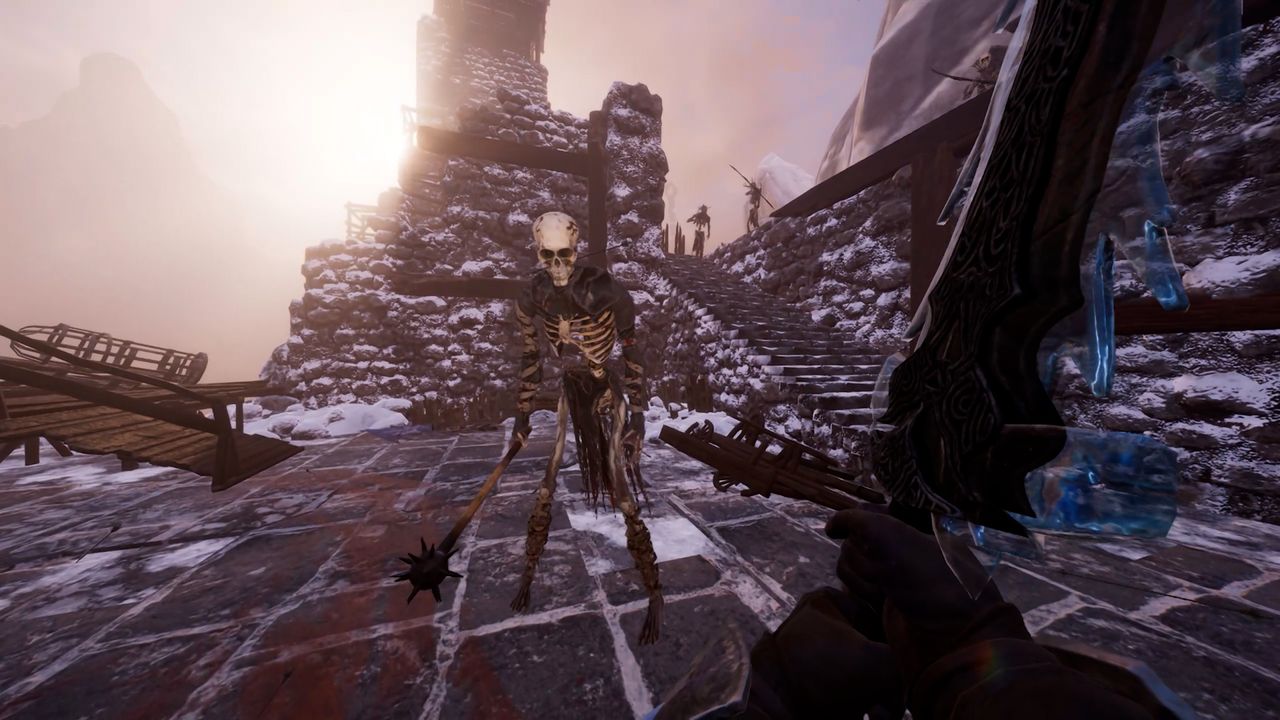
In October 2025, we informed you about an unofficial PC version of the Nintendo 64 Duke Nukem Zero Hour game. And, from the looks of it, a mod came out for it that lets you experience the entire game in first-person mode. What’s also worth noting is that this mod enables proper KB&M controls. Yes, … Continue reading You can now play Duke Nukem Zero Hour N64 in first-person mode→
IGN’s only been around for 30 years, but movies have been going for much, much longer than that. And the thing is, so many of them have never been reviewed by us. But that’s where IGN’s Flashback Reviews come in, so today we’re jumping almost 90 years back in time to talk about one of the greatest horror movies ever made… if you can even call it a horror movie, that is: Bride of Frankenstein!
Elsa Lanchester’s Bride of Frankenstein is an icon, even if most people have never actually seen the only film in which the character appeared. Her image is instantly recognizable – the lightning-striped, shocked bouffant, the bandaged arms and sweeping gown, the impeccably scarred yet beautiful face. Oh, and the hiss – don’t forget the hiss! And this despite the poor creature only getting about four minutes of screentime in total. Again, 90 years ago.
But the birth of the Bride also came at a critical moment for the horror genre, as the looming dangers of censorship would soon drain much of the life out of the creative boom that had led to the film in the first place.
When director James Whale’s Bride of Frankenstein was released in 1935, the horror genre was at the peak of a vast surge in popularity. The huge success in 1931 of the Bride’s Universal Monsters predecessor Dracula, and her would-be-paramour, Frankenstein’s Monster, meant that every mummy, invisible man, black cat, raven, and werewolf in town was about to get their own picture. Meanwhile, Fredric March had won the Oscar in 1932 for playing not just Dr. Jekyll, but also that awful Mr. Hyde (tying with Wallace Beery for the boxing flick The Champ, by the way). Horror was big, and monsters were where horror was at.
The funny thing is, James Whale didn’t actually want to make a sequel to his original Frankenstein, despite its success. You can't blame him, having helmed three horror films in the previous four years with Frankenstein, The Old Dark House, and The Invisible Man. But the director’s mischievous leanings that were already popping up in those pictures would become the lifeblood of Bride, a film that is as much a great comedy as it is a monster movie.
Right off the bat, the film feels bigger than its predecessor, as the title credits reveal Franz Waxman’s foreboding score, before segueing into the melodious Bride’s theme. The first Frankenstein film, having been produced at the cusp of the advent of sound, featured minimal music, instead leaning into frequent spans of crackling silence. But Bride’s new scope, hinted at in this music, is immediately confirmed as Whale’s opening scene takes us for a humorous if unexpected visit to Frankenstein’s very creator, Mary Shelley, along with Percy Bysshe Shelley and Lord Byron, as the three chatter about ghost stories on a stormy night.
As such, Bride of Frankenstein begins in an elegant drawing room of the Romantic Era, where the Rs roll with aplomb and audiences – still in the midst of the Great Depression – surely could only look on in wonder. Played by the uniquely off-kilter Elsa Lanchester – who of course would also play the Bride at the end of the film – Mary seems to speak directly of the viewer, and to the viewer, at one point: “Such an audience needs something stronger than a pretty little love story. So why shouldn't I write of monsters?” No doubt this well-placed bit of dialogue by Whale and his writers is also a jab at the recently implemented self-censoring Hays Code, which would soon hobble many a horror movie in Hollywood.
Why was horror so popular during those dark days of the Depression? Much has been written on the topic, and it seems safe to say that in 1935 audiences were seeking some kind of escapism in the dark safety of the movie house. But there’s also the more lurid, violent, and sexual aspects of these films, elements which folks obviously wanted to indulge in, and ironically the very same aspects that the Hays Code would soon crack down on, taking away much of the spark that had fueled the genre. Viewers wouldn’t have known it at the time, but when the Bride is electrified to life, those four brief minutes of agony and ecstasy were sort of the climax for this heyday of horror.
Viewers wouldn’t have known it at the time, but when the Bride is electrified to life, those four brief minutes of agony and ecstasy were sort of the climax for this heyday of horror.
So who are the monsters that Shelley is talking about in the prologue? Certainly not Boris Karloff’s sad-sack creature, who in a feat that would be replicated by every Freddy, Jason, and Michael Myers who followed, managed to survive the unsurvivable climax of the previous film. Sure, he kills some people here or there, basically to keep the cheap seats happy, but that’s not what interests Whale in the character. While Karloff would later say that he wasn’t particularly fond of the development, the typically mute Monster famously acquires the power of speech in this picture. This leads to some humorous moments – you’ll never forget seeing Karloff half-choking on a cigar – as well as some dark ones, as when the Monster proclaims that he “loves dead… hates living.” The actor can still be scary as the towering Monster, of course, but it’s his moments of pathos and humanity – there, I said it – that work best in Bride.
Certainly the brief time he spends living happily with the blind old man who he encounters in the forest can only end in heartbreaking fashion – even if the whole set-up has become a well-trodden trope by today’s standards. As the old man attempts to teach the Monster about the difference between good and bad, one can’t help but peer past the script and see a meditation on the world in which Whale and his audience were living, survivors of a World War now living through another unimaginably difficult time.
Nor is Colin Clive’s Dr. Henry Frankenstein a villain. Indeed, while Henry was a crackpot who caused a ton of problems for everyone in the first film, in Bride he becomes more of an unwilling participant in the bigger action – almost a bystander. Sure, he’s one of the two creators of the Bride, but he does so under duress. Poor Clive, meanwhile, seems aged and stricken here, a not surprising result, perhaps, of what the character has been through, but one tempered by the knowledge that in reality the actor was reportedly suffering from alcoholism and would die just two years after the film’s release.
But we must look to Ernest Thesiger’s Dr. Pretorius to find the real monster in Bride of Frankenstein. An old mentor of Henry’s, Pretorius shows up to convince Henry to create a new creature with him. He shows off his own dabblings in creating life, specifically weird little men and women who he keeps in jars; this reveal makes for a really odd scene that’s kind of silly but just another example of how Whale didn’t only make this sequel bigger than the first film, but also insisted on branching out in surprising ways with it. Audiences in 1935 expecting more of the same after the first film were in for a surprise.
Thesiger is another highlight, long noted for his camp portrayal and the queer coding that he brings to Bride. Pretorius is the kind of guy who sends his men out to find “fresh” hearts that he can use in his experiments, while also enjoying some wine and dinner over a coffin in a newly robbed crypt. Would you like a cigar? It is his only weakness, you know.
The production design is sweeping. Throwing continuity to the wind, Castle Frankenstein now features arched ceilings everywhere, sometimes lit seemingly only by flickering candlelight. The Bride’s creation scene is somehow even more spectacular than the first film’s, and indeed, the set pieces are exciting and often beautiful to behold. Whale didn’t hesitate to throw some Christ imagery into the proceedings here or there, but hey, this is the same guy who literally had Dr. Frankenstein throw dirt in the face of a statue of Death in the first film, so let him have his fun. The world of Frankenstein that Whale creates is not the real world – monsters notwithstanding – but rather something closer to a dreamed state. His affinity for using painted and lit backdrops to serve as the cloudy horizon and sky in certain scenes never really makes such scenes feel like they’re truly taking place outdoors; instead, what you wind up with is a sort of otherness, a heightened and theatrical feeling that pushes things just a notch into the fantastic. (Whale made his name in the theater, after all, and incorporates here some of the tricks he learned there.)
Of course, this also raises the question of how modern audiences, who have been trained to expect perfect, computer-generated recreations of just about any setting in their movies and TV, might react to a near-century-old picture like this. I think what it comes down to is less about how the film looks and more about how it makes one feel. The Bela Lugosi Dracula, for example, hasn’t aged all that well. Yes, horror and film fans might still appreciate it on multiple levels, but it’s also the kind of movie that tends to elicit unintentional laughs from modern audiences. Bride of Frankenstein, on the other hand, remains as funny today as it surely was in 1935, perhaps even more so. But it’s not a case of us laughing at the movie; no, we’re laughing with it. I think there’s a difference there, and as a result the Bride’s film is kind of timeless.
By the time Elsa Lanchester finally appears as the title character, at around the one-hour, 10-minute mark (of a one-hour, 14-minute movie!), it’s been a long wait for this legend to arrive, but a worthwhile one. Lanchester doesn’t attempt to mimic Karloff in any way. No, her time is limited, and she makes the most of it with her tics and quick, halting, bird-like movements, and of course that hiss. As Dr. Pretorius announces her to the world – “The Bride of Frankenstein!” – little could he, or Whale, or the audiences sitting in the darkened theater, for that matter, have known that the Golden Age of 1930s horror had just peaked.
Whether you love them, hate them, or just get enraged waiting in the queue to try and get them, there’s little doubt that Secret Lair has proven itself to be a goldmine for the folks at Wizards of the Coast.
These special drops highlight different properties that a player, even five years ago, would scoff at as being impossible inclusions, bringing new eyes to the long-running card game.
As the releases are limited, some of the cards included in these Secret Lair drops are highly sought after, whether it is from a collector standpoint or just because folks love the art.
#10 Armiger Unleashed (Forge Anew - Rainbow Foil)
Equipment cards saw a bit of a boost in popularity in 2025, thanks in part to popular Commander decks like the Final Fantasy VII precon, Limit Break, so it should come as no surprise that Armiger Unleased, which focuses on Equipment, would have sold well last year.
This says nothing of the incredible success and popularity of the Final Fantasy set. Thankfully, Armiger Unleased is a pretty solid card on its own, even when you take away the Final Fantasy art and name, letting you equip a creature at instant speed and getting one free equip on your turn. Great for those especially expensive situations, such as Kaldra Compleat’s 7-cost.
#9 Super State (and Rainbow Foil)
Super State was a brand-new card introduced in Secret Lair’s Sonic: Friends and Foes drop and gave us not only an incredibly powerful aura for your Voltron decks, but also probably the closest thing to a Super Saiyan card we will ever get.
Giving the attached creature a host of abilities, including flying, first strike, trample, and haste, along with a boost to a base power and toughness of 9/9, even with its high cost of 7 colorless mana to cast, it’s not hard to see why it was such a hot commodity card in 2025. The sick art of Super Sonic didn’t hurt either.
#8 Knuckles the Echidna (Rainbow Foil)
With all sorts of tokens taking up space on tables nowadays, with things like Treasure, Food, and Lander tokens, a card like Knuckles the Echidna from the Sonic the Hedgehog drops is a great commander card to take advantage of the do-dads.
This comes largely from his special win condition that allows you to win if you control more 30 or more artifacts at the beginning of your upkeep. Put Knuckles behind a “Walls of Ba Sing Say” and alongside an “Academy Manufactor” and just bide your time to victory!
#7 Deadly Rollick (and Rainbow Foil)
The Secret Lair x Marvel’s Deadpool: April Pool’s Day drop was full of cards (expect to see a couple more), but Deadly Rollick and its glorious unicorn has found its way to this list.
Featuring Deadpool riding a unicorn and a scared Cable, this card is a great removal instant for fans of the commander format (which seems like is a majority of players these days), as having your commander - or any commander - under your control lets you exile a target creature for free. A free instant exile removal card? That’s more appealing than a fresh, hot chimichanga! No wonder it’s sold so well!
#6 Deadpool, Trading Card (and Rainbow Foil)
Not to be shown up by a silly Unicorn, it’s no surprise that Deadpool himself as a trading card would sell better as “Deadpool, Trading Card”. Cards with silly novel abilities are fun to pick up and build around, and this card’s “exchange his text box with another creatures” lends itself to some funny combos.
This card was also the only new card in that drop, but it captures that chaotic nature of the character brilliantly, and makes for a fun potential commander, making it no surprise that it sold so well last year in the secondary market.
#5 Plains (#1513)
A card doesn’t need to have a neat gimmick or be incredibly powerful to sell well, and the special Plains card from the Raining Cats and Dogs Commander Precon is a perfect example of this.
This lovely card features the bestest furry cats and dogs lounging and playing in a pristine field of green grass and flowers. In the wild times that we live in, this imagery just gives warm fuzzy feelings, and I find myself wishing I were there in that same grassland plains, and judging by the fact that this was the fifth best-selling card of the year on TCGPlayer, I think I’m not alone in that sentiment.
#4 An Offer You Can't Refuse
Featuring a kittified version of the popular Planeswalker, Jace, this special printing of “An Offer You Can’t Refuse” was actually printed back in 2023 as a Secret Lair Showdown card. Making it only available as a reward for attending and participating at a competitive event.
The card itself is a pretty solid commander staple, allowing you to counter a non-creature spell for only a single blue, at the expense of giving the opponent two treasure tokens, but for the low cost and the kitty Jace, the community has deemed it a worthwhile tradeoff in the number four spot.
#3 Porom's Silence Magic (Silence - Rainbow Foil)
Turns are a lot less stressful, especially in the end game, when you don’t have to worry about your opponents doing something that throws a wrench in your well-laid plans, and that’s why Silence is almost a must-have in decks running white.
Porom’s Silence Magic is a fairly common bonus card from the Secret Lair x Final Fantasy drop from last year, which is a reskin of the powerful spell depicting the twins wielding their magic. The mix of utility and just really stinkin'-good artwork booster this Secret Lair card all the way to the third-best-selling card of 2025.
#2 Harmless Offering (Rainbow Foil)
Yet another card from the Deadpool: April Pool’s Day drop, the Gwenpool carrying Jeff the Land Shark reskin of “Harmless Offering” stands at last year’s number two spot.
With a low price and silly artwork, this card can be a fun addition to multi-color decks when you pair it with something like Nine Lives, Demonic Pact, Archfiend of the Dross or any other cards that can impose a stipulation that will cause the person holding the card to lose the game.
Normally, you want to steal other people's cards, and turning that on its head with Gwenpool and Jeff and giving someone else a card you don’t want is a great way to get a reaction out of people.
#1 Command Tower (#7012 - Rainbow Foil)
Nostalgia is a powerful thing, if the SpongeBob pineapple house “Command Tower” is any indication.
While there are far more valuable cards from the SpongeBob SquarePants Secret Lair release, the affordability of Pineapple House Tower, along with the recognizable and iconic imagery it’s easy to see why this bonus card reaches the top of the list for 2025.
It also doesn’t hurt that nearly every commander deck out their has a copy of some sort, so there is always a demand for new and unique towers to add in to the next deck.
TCGplayer: Score 15% Off with International Ordering
Including: UK, EU, Australia, and more.
If you are looking to buy cards from the US, that's easily remedied with TCGplayer's huge catalog, but it's now even easier to buy cards from the site without being in the US yourself.
"International package forwarding services give you a local shipping address in the U.S, receive purchases for you, and then consolidate and forward them to your home address at competitive global shipping rate," the retailer says, and many locations can receive a 15% discount on their first shipment.
Scott White is a freelance contributor to IGN, assisting with tabletop games and guide coverage. Follow him on X/Twitter or Bluesky.
In November 2025, we informed you about a mod that aims to add real-time Path Tracing to Dark Souls 2. And today, we can share some videos, showing off over an hour of gameplay footage from this mod. From what we know so far, a new version of the DS2LightingEngine Mod will add support for … Continue reading Take a Look at Dark Souls 2 With Real-Time Path Tracing→
ReadyCode has announced that it will release a multiplayer mod for The Elder Scrolls IV: Oblivion Remastered in Q2 2026. To celebrate this announcement, the team shared a new trailer that you can find below. The Multiplayer Mod for Oblivion Remastered will be part of ReadyM. ReadyM is a sandbox platform that transforms existing single-player … Continue reading The Elder Scrolls IV: Oblivion Remastered Multiplayer Mod Announced→
Yakuza creator Toshihiro Nagoshi’s new game is now in doubt after investor NetEase warned his studio that it plans to cut off funding.
Gang of Dragon was meant to be the debut game from Nagoshi Studio, the developer formed by Nagoshi in 2022 under NetEase after he departed Ryu Ga Gotoku a year earlier. Perhaps unsurprisingly, it looks an awful lot like Yakuza.
Bloomberg reported that Chinese megacorp NetEase told Nagoshi Studio employees that it will stop financing the studio from May, which in turn will likely mean Nagoshi’s studio will have to shut down. NetEase is currently in the process of cutting its video game investments, which have already led to studio closures and layoffs.
According to Bloomberg, NetEase made the decision to cut Nagoshi’s funding after it learned Gang of Dragon needed at least another ¥7 billion (approx. $44.4 million) to be completed. Nagoshi is apparently trying to find new investors to help buy the studio out, without much luck.
Photo by Daniel Pearce/Edge Magazine/Future via Getty Images.
Wesley is Director, News at IGN. Find him on Twitter at @wyp100. You can reach Wesley at wesley_yinpoole@ign.com or confidentially at wyp100@proton.me.
Bungie has revealed plans to change Marathon in some key ways just a few days after launch, outlining early patch notes for an update due out next week.
In a tweet, the developer said that “in the near future” it will adjust the amount of Lux, Marathon’s in-game currency, you get for the $10 bundle so that it grants 1,120 Lux, up from 1,100.
This is important because currently a runner skin costs 1,120 Lux, but you can’t buy 1,120 Lux exactly from the store. Instead, you have to spend $10 to get 1,100 Lux (just 20 Lux shy of what you need), and then another $5 to get 500 Lux on top, which in total dollar terms matches the price of the $15 bundle available from the store.
As IGN has reported, this had caused a stink within Marathon’s burgeoning community, with some players accusing Bungie of resorting to “scummy tactics” for the extraction shooter’s monetization. As a part of the change, Bungie will credit 20 Lux to players for each $10 Lux bundle they purchased before this tweak occurred.
But the virtual currency denominations aren’t the only point of contention. Marathon’s $10 Battle Pass has also been roundly criticized for not offering enough value (poor quality items, no premium currency back). And the limited supply stickers, which you can place on your weapons, can’t be applied to all your weapons.
Without going into specifics, Bungie said it was aware of the feedback on Marathon’s cosmetics. “We want to ensure that when you spend in Marathon you feel like you are getting great value and discussing ways to improve this experience,” it said.
Meanwhile, Bungie outlined early patch notes for Marathon’s first update, due out next week. All the changes seem designed to make the extraction shooter an easier experience. The highlight for me is the increased number of Med Cabinets and Munitions Crates that can spawn on the Perimeter map, and the increased amount of starting ammo in the free Sponsored Kits.
Marathon is a very difficult game in which it’s easy to run out of ammo. The enemy AI feels particularly powerful, too, so one wrong turn can end your run in the blink of an eye, especially if you don’t have the ammo to fight back.
Marathon first update early patch notes:
Increased the distance objective nav points appear from 10m to 20m.
Increased the number of Med Cabinets and Munitions Crates that can spawn on Perimeter.
Increased the amount of starting ammo in MIDA, CyberAcme, and Arachne free Sponsored Kits.
I've seen plenty of debate about these balance changes, with some saying they're much needed, others expressing concern that what's important about the Marathon experience - this ultra challenging extraction loop and the slow but rewarding power climb - is diminished by what they believe is an effort to make the game more palatable to casual players.
As I've mentioned in previous reporting, part of the challenge comes from the very nature of Marathon as an extraction shooter. If you die, you lose all your gear. And not just what you looted while out on the battlefield, but what you brought in. And given how easy it is to die in Marathon, it can feel like a brutally punishing video game.
Are people bouncing off Marathon because of this? Are some put off by its steep learning curve? In the two days Marathon has been live, it hit a peak Steam concurrent player count of 88,337. While that's an impressive start for most video games (and let's not forget Marathon is also out on consoles), is it enough for Bungie, which is under pressure to deliver for its owner Sony after recent financial failings?
Wesley is Director, News at IGN. Find him on Twitter at @wyp100. You can reach Wesley at wesley_yinpoole@ign.com or confidentially at wyp100@proton.me.
Unlike the ill-fated Marvel set from last year, there’s a single Commander precon here, and while we may not have been sure what to expect before launch, it turns out it’s actually pretty great (with the caveat that you should be looking to find it at MSRP or lower).
Here’s why Turtle Power is worth picking up, whether you’re a new player or you’re just looking for some great new cards.
What Makes A Good Precon in Magic?
There are a few key considerations when picking up any deck. What does the deck intend to do as its playstyle, and does it execute on that vision? Are there any desirable reprints? Are there new cards that you’d want to use elsewhere?
In all of those areas, Turtle Power does a pretty good job. We’ll comment on how fun it is to play (and the myriad ways to do so) shortly, but for now, there are some decent reprints here.
Naturally, the value will drop as soon as players have picked up Turtle Power, but Fabled Passage, Wave Goodbye, Assassin’s Trophy, Vigor, and Steelbane Hydra are cards that would have been pricey had they not been included here.
For new cards, Continue is an awesome low-cost recursion instant that brings you four creatures back from the graveyard following a board wipe, while Krang, the All-Powerful, gets you double draw triggers and counters.
All in all, there’s plenty of value here in both new cards and reprints, but the real appeal is in how the deck plays.
Swappin’ Shells
Commander Decks have multiple Legendary creatures inside, if you want to swap out your leading favorite for someone else, but Turtle Power goes a step further.
There are six borderless foil cards that cover the Turtles individually, Splinter, and then Heroes in a Half Shell as the team comes together. That means you can swap them around as you see fit, but there are plenty of other Legendary Creatures to use as a Commander, too.
That means you can rotate elements of the deck to fit your playstyle, or try out new cards to find some synergies, while the Partner mechanic lets you play a pair of Commanders.
That’s a LOT of potential combinations (29 possible Commanders in total). Baxter, Fly in the Ointment gives cards with tokens flying, for example, and we can see that being useful in all manner of decks, while Shredder’s ability to slash life totals makes him ideal for ‘Group Slug’ decks.
There’s so much modularity here that with something like the Starter Collection from Foundations, you could use this as a deckbuilding tool that lets you swap in as few or as many cards as you feel comfortable with.
It doesn’t hurt that the mana base here is strong - like, really strong. City of Brass will take the plaudits for being an otherwise expensive card, but there are plenty of land options, including bond lands.
You could, if you have the collection for it, potentially make a couple of decks from the Turtle Power deck - at a major drop from the Avatar set’s $109.99 Commander Bundle.
Lack of Turtle Power?
The two drawbacks to the Turtle Power precon are its price of $69.99, which is a markup over what you’d have paid for the (excellent) Lorwyn precons), and the fact that it’s perhaps less powerful than other decks we’ve had in recent months.
Its real strength is in being able to swap out components as you see fit, but it’s hard not to feel like it’s perhaps not quite as cohesive as a five-color deck as Lorwyn’s Dance of the Elements.
Have you ordered Turtle Power? Will you consider picking it up? Let us know in the comments.
Pixar's Hoppers, about a young animal rights activist (Piper Curda) who transfers her mind into a lifelike robotic beaver, hit theaters on Friday, March 6. And with the acclaimed animation house's latest entry comes a window of opportunity to look back at the company's 30 years (!) of storytelling and pluck out the best of the best. What are the best Pixar movies? Read on...
From living toys to missing fish to rats with culinary expertise, Pixar's run (so far) is unparalleled, delivering iconic animated characters, thrilling odysseys, and moments that instantly melt your heart. We're taking it all in here. All the Cars, Monsters, Bugs, Toys, Incredibles, and more so that we can properly rank Pixar's full catalogue. Agree? Disagree? Don't care because there are more important things in life? We got you. Check out our ranking of the Pixar movies, from least-good to cinematic bliss...
29. Cars 3 (2017)
As the second Pixar franchise to get a third movie, Cars is a great example of the more traditional disconnect between kids and grownups when it comes to blockbuster animation. Cars is a merchandise cash cow, but it's also the studio's brand that's left the most older viewers cold. Cars 3 goes the Rocky Balboa comeback route for a more internalized story about Lightning McQueen's doubt and fear when pitted against a younger, faster generation of racers. Generally, Cars 3 is lauded for being the deepest, most introspective entry of the three, with the consensus being that it's the Cars flick most aimed at adult Pixar fans. Still, Cars 3 came about at a time when viewers wanted either new Pixar products and/or sequels to better Pixar movies.
28. Lightyear (2022)
Presented as a movie-within-a-movie, making for an unnecessarily awkward connection to the Buzz Lightyear doll and the Toy Story films, Lightyear was meant to mark Pixar's big return to theaters after Soul, Luca, and Turning Red were all streaming-only exclusives. And it landed with a dud. Striking visuals and a strong voice cast -- featuring Chris Evans, Keke Palmer, and Taika Waititi -- weren't enough to make up for a weak story and the bizarre meta-concept that this was the movie, or type of movie, Toy Story's Andy saw as a kid that made him covet a Buzz Lightyear toy. Ultimately, it's a thin origin story that will never pay dividends because it's part of a different franchise's toy line.
27. Finding Dory (2016)
After a half decade of mostly sequels, and two originals that fell short of expectations, Finding Dory brings back friends-not-food Marlin, Nemo, and Dory for another undersea adventure - this time about tracking down short term memory-challenged Dory as she searches for her long lost parents. With Ed O'Neill, Idris Elba, Dominic West, and Sigourney Weaver adding their voices to the odyssey, Finding Dory manages to be visually impressive and disarmingly charming though it still can't shake off the unnecessary sequel vibe given that it doesn't improve on the classic first film and it came during a Pixar era of commercially-driven "sameness."
26. Cars 2 (2011)
Cars 2 benefits from cherry-picking the best elements of the first Cars movie and switching genres completely by taking Lightning McQueen and Mater out of Radiator Springs and dropping them into the middle of a fast-paced, dynamic spy flick. What's lost here, for the most part, is the warmth and heart that we adore, and expect, from most Pixar offerings.
Cars 2 is also a darker film where several car characters do meet an untimely, and sometimes gruesome, end. But the fast pacing works in the film's favor, as the slightly morbid moments flicker in and out as quickly as race car laps. Cars 2 isn't the usual intimate magical experience you expect from Pixar fare, but it's still a high-octane adventure the burns fast and furious.
25. The Good Dinosaur (2015)
The Good Dinosaur, considered by some to be Pixar's biggest "soft miss" from the previous decade, takes on a big "what if?" Asking people to imagine what would happen if the dinosaurs never went extinct, this movie follows a young dino named Arlo who gets swept away from his family and has to journey through the great unknown to get home. The film is one of the most visually stunning projects Pixar has ever created, but it retreads some familiar Pixar tropes and, on top of that, its troubled production shows.
There are some great emotional moments as Arlo and his "pet" human Spot grow closer, and The Good Dinosaur proves that Pixar excels at showing instead of telling. Even when the film does hit story points that feel familiar, it does them well and in a way that children can comprehend -- even if it does get a bit scary for its target young audience sometimes.
24. Monsters University (2013)
Monsters University is Pixar’s take on a college movie, with Mike (Billy Crystal) and Sulley (John Goodman) reintroduced as freshmen at MU, both with dreams of making it as a “scarer.” It doesn't have the emotional weight of the first one (Boo, you are missed), but Monsters University is still a fun and funny movie in its own right. Pixar’s biggest obstacle at this point was their own track record as so many of their films had been so emotional that a certain standard had been set. Pixar, however, uses animation to tell all sorts of stories and not all of them have to make you weep to be worthwhile. We all like a good comedy too, right?
23. Onward (2020)
Onward, which had its theatrical run short-sheeted by the onset of the pandemic (which, in turn led to Soul's streaming release), combined a high concept realm -- that of a land of fairy tales and fantasy updated for modern times -- with a off-kilter magical adventure featuring only half a dad being brought back to life for 24 hours, and delivered an unexpectedly poignant look at loneliness and loss. Tom Holland and Chris Pratt headline as two elf brothers on an '80s Amblin-style quest in this clever, vibrant family fable.
22. Brave (2012)
The first Pixar film to follow a female protagonist (the arrow-shooting princess Merida), the first one to be set in the past (medieval Scotland), and their 13th film to open at No. 1, Brave wisely forsakes the well-worn relationships of other animated fairy tales -- the wicked stepmother/stepdaughter dynamic or father/daughter bond or the princess and prince romance -- in favor of the more complicated, yet loving bond between a headstrong mother and her equally stubborn daughter. And yet despite that smart choice, Brave still never quite transcends. It's a technical marvel (Merida’s wild curls, the misty Highlands, immersive 3D), but it’s ultimately seen as a lesser effort from a studio known for breaking new ground.
21. Incredibles 2 (2018)
And the longest time between movies in a Pixar franchise goes tooooo...The Incredibles, which finally dropped a sequel 14 years after the awesome original. Outside of the Toy Story saga, this was the sequel fans had been clamoring for the most and eventually, yes, writer/director Brad Bird returned to gift us with another glimpse into the lives of the superpowered Parr family. This fantastic follow-up takes place right after the end of the first film (a privilege animation provides) and spins the saga off into a "Mr. Mom"-style caper involving Mr. Incredible staying at home with baby Jack-Jack and Elastigirl becoming the standout superhero of the homestead. It might not top the 2004 movie but it admirably switches things up and gives us an exciting new story instead of repeating the beats of the past.
20. Soul (2020)
Soul goes about as big as you can get for a Pixar film, exploring the afterlife in the same way WALL-E explores the future, Monster, Inc. delves into the scream industry, and Coco travels into -- okay -- also the afterlife. Soul's version of the hereafter, however, is more utilitarian, with a vaporwave art vibe and music provided by Trent Reznor and Atticus Ross, while the real world is marvelous and unpredictable (with jazz provided by Jon Batiste). Telling the story of a pianist who meets an untimely demise (Jamie Foxx), and who's desperate to join the land of the living again so he can do the one thing he thinks will make his life meaningful, Soul ambushes us with harsh relatability. Tina Fey lends her voice to the other half of this mismatched duo, as a stubborn unborn soul refusing to enter the world. Soul makes no bones about how big its themes are, tackling the meaning of life and the time-honored debate between Team Journey and Team Destination.
19. Luca (2021)
2021's Luca felt like a return to classic Pixar in terms of defying labels and providing a unique vibe. Retro-set on the 1950s Italian Riviera, and with a soundtrack full of toe-tapping Italian tunes, this sun-drenched story features two young sea creatures, longing for a life of land exploration, who disguise themselves as humans in a small town and wind up competing for a Vespa in the local Portorosso Cup. After befriending local outcast Giulia (Emma Berman), the trio form a bond that bridges worlds and opens up endless possibilities. Luca has smaller stakes than some other Pixar films but its heart is just as mighty.
18. Elio (2025)
Elio may have underperformed at the B.O., but it's still an inspired effort about a lonely boy, Elio (Yonas Kibreab), who wants to leave Earth for a chance at belonging somewhere among the stars. Perceptive humor mixes with radiant, eye-catching animation to make for a heartfelt, satisfying watch for viewers of all ages. One of Pixar's most poignant projects to date, Elio was an under-seen cosmic wonder that celebrates love and friendship. Zoe Saldaña, Jameela Jamil, and Brad Garrett also star.
17. Toy Story 4 (2019)
Toy Story 4 gently suffers from the sentiment that it's a bit of a "hat on a hat," as Toy Story 3 feels like both a pinnacle for the series and a natural, satisfying ending to the story. It's also the Toy Story entry fans hold the least regard for, but as you can see the "worst" Toy Story film still easily and snugly fits in Pixar's top half. And it ultimately may not even be the final Toy Story chapter.
In the franchise's fourth entry, Woody, Buzz, and the rest of the toy team (including a newly repurposed spork named Forky) head out on a road trip with Bonnie's family where they're unexpectedly reunited with Bo Peep, who's enjoying her freedom as a "lost toy." Toy Story 4 stays true to all the magical hallmarks of the series while, once again, providing a fitting end.
16. A Bug’s Life (1998)
Pixar's second film, A Bug's Life, was a take on the old Ant and the Grasshopper parable mixed with Akira Kurosawa's Seven Samurai. A great sophomore effort for the young company, A Bug's Life didn't quite match the magic of Toy Story but it still was crucial in helping define and refine the Pixar formula: a mix of kid-friendly comedy, adult-friendly knowingness and nostalgia, and state-of-the-art computer animation. In A Bug's Life, Dave Foley plays Flik, an outcast ant who, after his colony is threatened by villainous grasshoppers, recruits a bunch of other loner insects -- well, actually they're just circus performers who are out of work. But they are, of course, up to the task.
15. Cars (2006)
It should come as no surprise that 2006's Cars is near the bottom of this list, as it and its sequels are the least loved of all the Pixar films and yet, as we noted above, when it comes to Pixar, the worst is still usually pretty dang good. John Lasseter's odd love letter to "the Mother Road" Route 66 tells the tale of Lightning McQueen (Owen Wilson), a rookie racecar who learns that winning isn't everything. The film, while still clever and endearing, gets a bit bogged down in open road romanticism and those stretches of story ultimately hurt the final product.
14. Elemental (2023)
Pixar was moving with a slight limp after 2022's Lightyear, and the outlook for original animated offerings looked bleak, but Elemental not only delivered a delightful romance -- about a fire element and water element who fall for one another -- but it had solid box office legs all through the 2023 summer movie season, with word of mouth driving it to a pretty nifty haul in the end. With top-form dazzling visuals and a sweet, rom-com love story, Elemental wound up being a high-concept, cross-cultural sleeper hit.
13. Turning Red (2022)
Turning Red is an awesomely anxious coming-of-age story about a 13-year-old Chinese-Canadian girl, Mei, living in Toronto whose plan to keep her boy band fanaticism secret from her perfectionist mother goes awry when a magical family tradition starts turning her into a giant, floofy red panda whenever she experiences -- you know -- any strong feelings about anything. A clever knockout, Turning Red captures the wild energy of adolescence, uses pop stars as a timeless window into puberty, and tells a tale of friendship and family in the most delightful way.
12. Inside Out 2 (2024)
The biggest movie of 2024, and briefly the highest-grossing animated film of all time, Inside Out 2 is a stunning sequel-done-right that relays the true, horrifying grasp of anxiety like very few films are able to capture. Set two years after Inside Out, we catch up with 13-year-old Riley Andersen as she finds herself hijacked by a new emotion that makes her shun her friends, change her personality, and become fearful of every imagined scenario. And what's worse, Anxiety kicks Joy (and all her other emotions) to the curb, becoming Riley's only default setting. Inside Out 2 is a triumph of not only animation but story, delving into severely relatable corners of nearly every person's modern struggles with mental health.
11. Ratatouille (2007)
Directed by Brad Bird (The Incredibles), who was already beloved by animation aficionados for The Iron Giant prior to joining Pixar, the truly wonderful Ratatouille takes us into the heart of Parisian cuisine through the lens of a creature we don't usually associate with having a refined palate - the rat. Yes, Remy the Rat dreams of becoming a chef and tries to achieve his goal by forming an alliance with a fancy restaurant's garbage boy, Alfredo Linguini, controlling the lad's kitchen skills by hiding under his hat. Ratatouille is a unique slice of animation that strikes deep notes of recognition across many kinds of moviegoers, be they discriminating foodies, fans of animation, or just everyday folks expecting to be entertained. It's a seven-course meal that delivers hilarious antics and unbridled joy.
10. Toy Story 2 (1999)
The law of averages suggests that Toy Story 2 shouldn't be as good as it is, just from a sequel standpoint, but it brilliantly expands upon the original Toy Story adventure in just about every way. The story of Woody's abduction by a toy collector (Wayne Knight) and the attempt by his pals to save him is truly exceptional stuff. Here Woody is faced with a serious choice between living forever -- hermetically sealed as a collector's item -- or going back to his friends and the boy who loves him and facing the prospect of getting torn apart at any moment, as a boy's toys tend to be. Live life or watch from the sidelines? What would Woody do? Quite simply, it's a tour de force of talking toy cinema.
9. Up (2009)
Up proves its power within the first 10 minutes. With just a few lines of dialogue, an opening montage introduces us to the main character, Carl, and shows us the story of his life and love with Ellie – from their meeting as children, to their marriage, to their inability to have children of their own, to Ellie's passing. Those last two elements tell you all you need to know about a film where Pixar once again proves it doesn't shy away from truly emotional, powerful material.
The adventure that follows for Carl and the young boy, Russell, who inadvertently tags along is certainly fanciful - Carl gets an entire house to fly using balloons! - yet infused with an incredible amount of pathos and meaning, as we watch Carl oh so literally carry his burden on his back, as he physically drags that floating house through the jungle, determined to bring it to the place he and Ellie dreamed about. Funny, exciting and touching, Up is a beautiful film - and the second animated movie to ever receive a Best Picture nomination at the Oscars.
8. Finding Nemo (2003)
Finding Nemo, from 2003, features some of the most widely recognized characters from a Pixar picture aside from the original Toy Story troupe. The film's story of an overprotective father who is separated from his son instantly preys upon any parent's deepest fears, and yet the film is never manipulative or calculating in its storytelling methods. From the breathtaking design of the deep-sea world to the spot-on performances by Ellen DeGeneres, Albert Brooks, and more, Finding Nemo is a hilarious, thrilling and even spiritual adventure that represents the apex of Pixar's storytelling abilities. It was a blockbuster for the studio, an astounding achievement in animation, and a game-changer for kids' movies.
7. Monsters, Inc. (2001)
In 2001, Pixar unleashed a rollicking workplace comedy about kindly, chatty "joe schmoe" monsters and the utility company they work for in the land of Monstropolis. Starring John Goodman as Sulley and Billy Crystal as Mike, a couple of working-class creatures, Monsters, Inc. takes what seems like an insane premise and makes it relatable by having these so-called monsters act like working stiffs. Monsters! They're just like us!
With Benny Goodman-style jazz and comedic banter befitting an SNL sketch, Monsters, Inc transforms from a simple clock-punching parable into a quest to save a little girl and a mission to unravel a conspiracy. It stealthily starts as a somewhat thin-yet-amusing sitcom and finishes as one of Pixar's finest heart-tugging outings.
6. Coco (2017)
2017's Coco is easily regarded as one of Pixar's most emotional endeavors. A monumentally gorgeous tear-jerker, Coco follows a 12-year-old Mexican boy named Miguel who is accidentally transported to the Land of the Dead where he seeks the help of his deceased musician great-great-grandfather. It's a soaring supernatural quest that explores familial themes, identity, and learning what it means to grow up in a world that isn’t perfect. Pixar was culturally conscious when developing this marvelously Mexican story, turning to an array of outside Latino consultants to vet ideas and suggest new ones (upending a long-running studio tradition of strict creative lockdown). Coco is an uplifting revelation and one of the company's crowning efforts.
5. Inside Out (2015)
True to its concept, Inside Out is Pixar's emotional roller coaster, offering up what is probably the best depiction ever of how the human body's memory and emotions work. Shining a spotlight inside the mind of an 11-year-old girl coping with the first big change in her life -- her family moving to a new, unfamiliar city -- Inside Out characterizes the five emotions that run a person's inner "Headquarters" to take viewers on a visually inventive adventure.
Following both young Riley on the outside and her feelings on the inside -- Joy, Sadness, Fear, Anger, Disgust -- Inside Out is a thoughtful, caring film without going overboard, and a hilarious, quirky romp without losing its edge. It's at once very surreal and very human, simplifying our brains while also presenting our lives as complicated. RIP Bing Bong.
4. Toy Story (1995)
When the first Pixar feature was released in 1995, a new age dawned for animated films. Not just because of its computer-generated animation but because of the superb storytelling. Toy Story was technically at the top of its game while also illustrating some very familiar thematic throughlines that included the rivalry between Tom Hanks' wooden cowboy and Tim Allen's space-age action figure, the buddy comedy, the fear that we all have of becoming obsolete, and of course the very idea of toys having a life of their own. The result was a huge success that took age-old tropes and made them fresh and new again -- and created the cinematic mega-beast known as Pixar along the way.
3. WALL-E (2008)
You will believe a robot can fall in love! With WALL-E, Pixar began to flirt with a slightly experimental edge to its filmmaking, delivering a first act that's almost entirely dialogue-free and creating whimsey and mirth in the garbage-covered ruins of Earth. It's honestly the most adorable dystopia ever.
At the heart of most Pixar films is the theme of isolation. WALL-E, one of the animation studio's top-tier achievements, is a breathtaking meditation on loneliness and the re-enforcement that every sentient creature contains an unbeatable desire to connect with someone else. Pixar has a way of creating fantastic creatures and characters who tug violently on all our heartstrings. And all WALL-E wanted to do was hold someone else's hand like he'd seen in the musical Hello, Dolly. Post-trashpocalypse world be damned! WALL-E is lush, phenomenal sci-fi like no other. This is skewering satire mixed with a lovable, relatable search for companionship.
2. Toy Story 3 (2010)
Leave it to Pixar to make the best (temporary) threequel ever. The story of Andy moving on to college -- leaving Woody and Buzz and the gang dealing with a great, understated villain in Lots-O'-Huggin' Bear at the new daycare center home -- is the most fun of the Toy Story films. It works as a drama, a comedy and an action film -- a terrific trifecta! It's a beautiful, vibrant story about memories, the passing of time, and how you treat the people in your life.
As with everything Pixar does, the attention to detail here is incredible. The split-imagery within the daycare/Alcatraz is great. How the slide in the playground becomes a watchtower at night. How the bead mazes double as razor wire. How marker smudges become prison tats. The level of detail, in things like Woody's rounded-down hairline, is astounding. So many moments -- character moments, mind you -- cross over into "great" or "perfect" status, and the last 15 minutes are some of the strongest work the studio has ever done.
1. The Incredibles (2004)
Prior to the MCU, back when only Spider-Man, Batman, and X-Men ruled the superhero box office roost, director Brad Bird gave us, in a way, a better Fantastic Four movie than the live-action one we'd get a year later. The Incredibles, now almost 20 years later, is still regarded as one of the best superhero movies of all time.
The story of retired heroes Mr. Incredible (Craig T. Nelson) and Elastigirl (Holly Hunter), as well as their super children Violet, Dash, and Jack-Jack, The Incredibles takes Bird's love of old-school comic-book conventions that was evident in The Iron Giant and mashes it with commentary about American nuclear family. Bird brought a new and different voice to the Pixar world. The Incredibles is less cute and more biting, introducing a few more sinister and violent elements to the studio's usual product, though it's never not a family story centered around issues that most families face. Brilliantly designed, perfectly paced, and next-level exciting, The Incredibles grabs hold and never lets go.
Note: This article originally ran on May 2, 2017. It was updated on March 6, 2026.
After more than five years since the last book in the series was published, Sarah J. Maas announced back-to-back new ACOTAR novels during an interview on the Call Her Daddy podcast. Book six is set to arrive on October 27 this year, with book seven coming out shortly after that on January 12, 2027.
Maas revealed her decision to publish two books at once after so long, saying: "It's taken a while because it took me a while to find the right story and to be in the right head space. And then what poured out of me was this, and it poured out very quickly."
And although it was just this week that these two books were announced, both of them are already available to preorder on Amazon for a discount.
New ACOTAR Books Are Up for Preorder
Product listings may be up for the upcoming books, but that's really the only thing we currently have to go off of. Neither book six or seven have been given official titles, descriptions, or book covers just yet. All we really do know is that there will be a hardcover edition, an e-book, and an audiobook available. Amazon is currently offering a discount on both the Kindle and hardcover versions of the books, and the preorder price guarantee applies to both.
For those with a Kindle Unlimited subscription wondering if these books will be coming to the service, the answer is most likely no. Unlike other popular romantasy novels (Fourth Wing, Quicksilver), Sarah J. Maas books have traditionally not been available on Kindle Unlimited. This trend is almost certain to continue with the latest novels.
What are the new books about?
Maas hasn't revealed any details about what the upcoming novels are about, but we do know that the story is going to be split up into four parts. "It's just the story that was finally ready to come out of me was big – really, really, really big," said Maas in that recent interview. "It's meant to be read ideally as one massive, massive story as opposed to a trilogy."
Maas explained that book six is "Part 1" of the story, while book seven is "Parts 2 and 3." She also hinted that part 4 of this story would be getting released as book eight in the series later on down the line. It's this information that gives us a bit of an idea of what to expect, especially when we look at what stories are still left to tell.
The most recent entry in the series, A Court of Silver Flames, shifted the focus of the books to Nesta Archeron and away from her sister Feyre. With Nesta's love story mostly wrapped up, it seems most likely that the next book would put the focus on the other sister Elain Archeron. Presumably we'd be diving into Elain's potential romance with Lucien. Nothing has been confirmed, however, so this is purely speculation.
Jacob Kienlen is a Senior Audience Development Strategist and Writer for IGN. Born and raised in Portland, Oregon, he has considered the Northwest his home for his entire life. With a bachelor's degree in communication and over 8 years of professional writing experience, his expertise is spread across a variety of different pop culture topics -- from TV series to indie games and books.
On its Early Access launch day, before I'd unlocked anything, I was struck by how much Slay the Spire 2 felt more like a remake of the original Slay the Spire than a sequel. The tutorial didn't tell me – someone with over 1,000 hours in the original – anything I didn't already know. The map where you choose your path and whether to aim for riskier battles with higher rewards or potentially lower-stakes encounters (which can still turn wild on you) is exactly the same, and the turn-based combat follows basically all the old rules of how you spend your allotted energy points to play cards that build up your armor and hack away at the enemy's defenses and health until one side or the other is dead.
That's not a bad thing when your starting point is one of the all-time greats – just a few months ago I lavished praise on another deckbuilding roguelike sequel, Monster Train 2, for a similar approach. And as I've progressed and unlocked some of the new content over the first eight or so hours of runs, this follow-up has come more into its own: Two entirely new characters – the Regent and the Necrobinder – join three revamped ones, and loads of new enemies, bosses, artifacts, and random events make Slay the Spire 2 feel worthy of being called a sequel, even if it's extremely familiar in its opening hours. It also has a new art style that's very quickly won me over with its larger characters and less subtle animations (including more elaborate enemy deaths) that make it a bit more lively even though everybody's holding still most of the time.
Since we're still so early, I've been concentrating my progression efforts on my old favorite character, the Defect. This faulty robot is a lot chunkier-looking this time, but his orb-summoning and evoking mechanic is carried over almost unchanged. However, balance is different enough that as someone who routinely blasts through Daily Climbs in the original, I've only managed to win a couple of runs thus far – my first, as the Ironclad (which is probably kinda rigged to make us feel powerful), and one more since as the Defect. Part of that is that there are quite a lot of new cards to unlock that will certainly make things a bit easier than when I'm working with just the basics, and part of it is me cockily charging head-first into battles with elites and bosses I've never seen before and getting my butt handed to me as a learning experience. But it's not like I go into a roguelike of any type expecting to win runs early on – losing and then improving is a big part of the fun.
One area developer Mega Crit has definitely gotten a little more inventive is with special events, some of which can give you a sort of quest that can span across acts (think a more formal version of the first game’s Red Mask interaction). I've gotten a map in Act 1 that led me to a huge treasure pile in Act 2, and a key in one act that opens a chest in the next. There's also a bird egg that must be hatched at a rest site (so it comes at the opportunity cost of not healing yourself or upgrading a card). Those are represented by unplayable cards until their quest is resolved, so there's at least a minor consequence to carrying them with you because they take up space in your deck and hand that could've gone to something useful in the moment.
I've also seen a bit more willingness to let us tweak how cards work beyond simply upgrading them. A few new modifiers like letting you re-use a card, making defense cards exhaust but gain +1 after use, giving you an extra energy the first time you play a card, making a card retainable, etc. – these all have the potential to make builds a lot more flexible than in the original.
The big feature that truly sets Slay the Spire 2 apart is the up-to-four-player co-op mode, and in the couple of runs I've done with others, it's been more than a little chaotic. Within each turn of combat, it's a real-time free-for-all where everybody plays their cards at once, so if you're not coordinating your attacks over voice chat it gets crazy extremely quickly as the cards stack up and wait their turns for their animations to play out. If you plan on getting anywhere as a team you'll definitely want to make sure you're working together, because Slay the Spire 2 balances out the presence of multiple players by dramatically increasing enemy hitpoints (and their attacks hit everybody at once), so you'll need to focus fire to take out priority targets quickly. Given there's no matchmaking to find random people to play with, though, it's safe to say you'll be in some form of communication with your teammates.
So far the new co-op mode has been more than a little chaotic.
Things are made a little more forgiving in co-op in that downed players are automatically revived to 1HP after a battle and you can use your rest site action to heal a teammate instead of yourself. You also get the same number of random artifacts as you have players each time they're handed out, which lets you choose the best fit for each of your builds (with any disputes settled randomly). I can see that giving you a major leg up over simply taking whatever pops out of a chest. I've also gotten a few co-op-specific cards that allow me to boost my teammates, such as giving them a random card to play in combat.
Of course, I expect that the difficulty will ramp up pretty dramatically as well, and require even more planning of your order of operations than you have to do alone. It's deliberately designed to make you and your teammates hash things out in conversation: You can't see a teammate's entire hand, but they can mouse over one card at a time and it'll be displayed over their character's head so you can see what they're talking about. I also love how you can draw on the map now, plotting out where you're going or just doodling. (That works in single-player as well, if you want to leave yourself a note.)
I will say that it would be great if Mega Crit could find a better solution for what happens when someone in your party has to bail mid-run, because right now that person's character just stops and you have to abandon your game with nothing to show for it. To be fair, a typical run isn't going to go more than an hour and everybody should know what they're getting into before setting out on a group adventure, but things happen.
After just one day of playing there's certainly a lot more here to cover, especially since it at least appears to be largely "complete" in terms of how much content is here (though who knows how much bigger Mega Crit plans to make it before 1.0). Outside of the balance changes we've been told to expect, the only real indication that this is an early access game is the goofy MS Paint-style placeholder art you'll see on a handful of cards and in the progression tree that serves up bite-sized bits of lore as you unlock new cards, potions, and artifacts.
So how long will it take me to wrap up this review? Hard to say: this isn't really the kind of game that you ever fully "beat," and if the first one is any indication I'll likely still be doing the randomized Daily Climbs in Slay the Spire 2 well into the 2030s. But I expect I'll be able to form some coherent thoughts about its new ideas within the next week or so of bashing my head against its various bosses and figuring out how to generate the star currency the Regent uses to cast his spells and how to manage the Necrobinder's pet skeleton hand. So check back next week for more impressions, and tell us how your early runs have been going so far in the comments.
Editor's note: We have updated this story to reflect the change in Valve's Steam Year In Review 2025 blog post that clarifies the intended launch of the Steam Machine, Frame, and Controller.
It sounded like bad news for those who want to get their hands on Valve’s upcoming new hardware. It seemed like the company suggested Steam Machine, Steam Controller, and Steam Frame could all be delayed even further, potentially into 2027. However, Valve updated its wording to clarify that it still intends to release its new wave of hardware sometime in 2026.
Valve announced all three products late last year, with the aim of releasing them at some point in the first quarter of 2026. In February, Valve signalled a delay was coming as a result of AI shortages that are causing PC hardware to spike in price. This had made it difficult for Valve to pin down a price and release date for the Steam Machine and Steam Frame. But at the time (early February), Valve still planned to release its hardware in the first half of this year.
In an earlier version of the ‘Steam Year In Review 2025’ blog post, Valve said, “we hope to ship in 2026,” which suggested we may have to wait until next year for the Steam Machine to come out. That part has been changed to, "we will be shipping all three products this year." However, it did not share details on a possible release window within the year.
The rest of that particular section in the blog remains largely unchanged with Valve stating, “We shared recently that there have been challlenges with memory and storage shortages," and concluded with, "More updates will be shared as we finalize our plans."
The Steam Machine is a mid-level gaming-focused PC designed to be more accessible than a standard desktop PC, with a sleek, cube-like design and SteamOS on-board. We here at IGN have offered our thoughts on how much the Steam Machine will cost, suggesting it’ll probably be higher than people think. Chatter about pricing ramped up last year when Linus Sebastian of Linus Tech Tips suggested it wouldn’t follow a “console pricing model” of $500, after he mentioned the figure in a meeting with Valve staff.
In an interview with Skill Up from last year, Valve's Lawrence Yang and Pierre-Loup Griffais discussed the price of Steam Machine without actually confirming what it would be. The conversation began with software engineer Pierre-Loup Griffais confirming that Steam Machine is more powerful than 70% of gaming PCs that Valve registers on its hardware survey, in terms of general GPU level, saying: “We have looked at that number as part of speccing the machine, so it’s possible it’s evolved a little bit over time, but I think ballpark, it’s about there.”
He then said that fans should expect the Steam Machine price to be around the same as if you were to build a PC from parts to get “basically the same level of performance.”
“I think that if you build a PC from parts and get to basically the same level of performance, that's the general price window that we aim to be at,” he said. “Ideally we'd be pretty competitive with that and have a pretty good deal, but we're working on refining that as we speak. Right now is just a hard time to have a really good idea of what the price is going to be because there's a lot of different things… a lot of external things.”
In that context, Valve’s Steam Machine will likely cost above $750. We’ve suggested Steam Machine will cost $700-$800. To put that into perspective, the base PS5 with a disc drive currently costs $549.99, while the PS5 Digital Edition costs $499.99. The PS5 Pro, meanwhile, costs $749.99.
Skill Up then asked Valve to rule out the Steam Machine being subsidized hardware, saying: “like Valve is not going into this thinking we're going to eat a big loss on this so that we can grow market share or category or anything like that, correct?"
Pierre-Loup Griffais’ answer here was unequivocal: “No. It's more in-line with what you might expect from the current PC market. Obviously, our goal is for it to be a good deal at that level of performance.”
He then went on to make the case for Steam Machine at that sort of price, pointing to the value you get from the various features it includes that simply wouldn’t be easy to replicate if you were to build your own PC from similar parts.
“And then you have features that are actually really hard to build if you're making your own gaming PC from parts, right?” he continued. “Like things like, obviously the small form factor and I think the noise level that we achieved — or lack thereof — is really impressive, and we're excited that the people are going to find out how quiet this thing is. But also some integration features like HDMI CEC, right? Like being able to turn on your TV, turn off your TV, control it with your TV remote, change the volume, all that kind of stuff.
“Like the Bluetooth and wireless work that we've done, the four antennas, the very deliberate design to make sure that you can have a great experience with four Bluetooth controllers from any manufacturer, plus our Steam Controller receiver integrated as well — that’s all hard to do. But more importantly, you can turn on the machine from your controller, which is not something that is actually straightforward depending on the type of PC you have or the main chipset and all that.
“So being able to sit down on your couch, press one button on your controller, and the whole thing lights up like you'd expect for a thing that's in your living room, I think that's really valuable. And there's not really a price point to that because it's not really something that exists in the PC market right now.
“There's people that are going to be perfectly happy building their PC at whatever level of spec, and that's going to be a great experience for them. We're building Steam OS so that if they want to use it for that they can and they can have essentially the same experience. And if they're happy with that, that's perfectly good with us. But we expect the machine is a nice baseline offering that lets you have some features that are really hard to get to otherwise.”
Valve designer Lawrence Yang then chimed in with his own thought: "for me one of the benefits of Steam Machine is, I'm someone who used to build my PC in college and I am too old and tired to do that now!”
Some have questioned Valve’s refusal to subsidize the Steam Machine and thus, theoretically at least, miss out on having a greater number of people buying games through Steam. Larian publishing director Michael Douse, who is in charge of business development regarding the likes of Steam megahit Baldur’s Gate 3, took to social media to suggest Valve will lose “far more” than the approx. $200 difference by not having more users on the Steam storefront, “which is essentially a money printing machine.”
“That said it isn't stupid to not sell things at a loss, just peculiar in this case,” Douse continued.
Wesley is Director, News at IGN. Find him on Twitter at @wyp100. You can reach Wesley at wesley_yinpoole@ign.com or confidentially at wyp100@proton.me.
If it's time to upgrade your gaming monitor, you can't go wrong with an OLED. And if you've got the funds to get the biggest and best, LG's highest-end OLED is the 45" LG UltraGear 45GX950A-B 5K2K gaming monitor. It normally retails for a hefty $2,000, but LG has just discounted it to $1399.99 with free delivery. On the product page under the standard $1,999.99 price you should see "Save Big with Outlet Pricing". Select the discounted outlet price and proceed to cart.
45" LG UltraGear 5K2K Gaming Monitor for $1,399.99
The LG UltraGear 45GX950A-B is the first OLED monitor featuring a 5120x2160 resolution. That averages out to a pixel density of 125ppi, which is excellent for a monitor of this size. As a comparison, a 42" 4K monitor, 34" 3440x1440 monitor, and 27" QHD monitor all have an industry standard 109ppi. Since this is such a wide monitor, it features a fairly aggressive 800R curve for maximum immersion and so you can keep the screen's edge in the periphery of your vision.
The 45GX950A-B uses a true OLED panel that boasts a near-instanteous (0.03ms) response time and a near-infinite (1.5 million:1) contrast ratio with the ability to produce true blacks. OLEDs simply have the best image quality compared to any other panel type, with no smearing, no blooming, no "gray is the new black", and no uneven backlighting or haziness. This is a "dual-mode" monitor with refresh rates of up to 165Hz at 4K and 330Hz at down-scaled 1080p. The monitor also supports adaptic sync technologies including FreeSync Premium Pro and G-Sync.
Current generation connectivity specs include one DisplayPort 2.1 port and two HDMI 1.4 ports. There's also a USB Type-C port with 90W of power delivery. Rare among high end monitors, the 45GX950A-B has built-in speakers and even a 4-pole headphone jack with DTS Headphone:X spatial audio support.
Finally, the monitor comes with a 2-year warranty that includes OLED burn-in coverage.
Eric Song is the IGN commerce manager in charge of finding the best gaming and tech deals every day. When Eric isn't hunting for deals for other people at work, he's hunting for deals for himself during his free time.
Ever since digital streaming was introduced as an alternative to cable, companies like Disney, Warner Bros, Netflix, and Amazon have been finding new ways to "revolutionize" monthly subscriptions, which has more or less come right back around to the concept of cable. (Only now every "channel" requires its own login and password, and costs at least $10 a month.) As the streaming service war wages on with constant changes, mergers and acquisitions, "bundles" are becoming more common as more streaming services are created, and some of these have gotten creative with including both digital and physical services.
The ability to combine multiple networks and major streaming platforms into a single subscription is becoming simpler than ever (thankfully) and gives better savings over subscribing individually to every service you'd want. Depending on your needs as a subscriber and your interests as a streamer and/or online shopper, the options available should tick many of your boxes. Check out our picks below for the best streaming bundles in 2026 to help you save on your streaming bill.
Disney+, Hulu, and HBO Max Bundle – $19.99/month (with ads)
The Disney+, Hulu, and HBO Max bundle launched last year, and was immediately a standout deal with pricing starting at $19.99/month for an ad-supported tier. Going ad-free on all three platforms bumped up the price to $32.99/month following price hikes across its subscription plans. Because these price increases also affect all of the individual subscriptions, this bundle still leads to around the same amount in savings, and as such is still one of the overall best deals in streaming.
With access to Disney+, viewers can stream all the Disney classics as well as new Disney properties and releases, such as Marvel TV shows and movies, Pixar movies, and everything in the Star Wars universe.
This bundle also include Hulu, which is home to hit original series (The Bear, Shōgun) and documentaries (Minding the Gap, Flee, Enemies of the State), plus its library of movies and licensed shows from networks like FX, ABC, and Fox.
With the addition of HBO Max, subscribers also get access to that arsenal of HBO shows and HBO Max exclusives (The Penguin, The Last of Us, Game of Thrones) and movies (which includes Ghibli films and and all things DC). You'll also get access to shows from HGTV and other Discovery channels since the Discovery+ merger a few years back. Though unfortunately this bundle pricing does not allow for streaming HBO Max in 4K.
Bonus: There's a deal on a Disney+ and Hulu bundle right now
If you're looking to save some money, Disney+ has just launched a new deal on its basic Hulu bundle. The discount will get you the first three months of both services for $4.99 (rather than $12.99). The promotions is set to end on March 24, the same day Daredevil: Born Again season 2 premieres.
Apple TV and Peacock - Starting at $14.99/month
The newest entry on the list, Peacock and Apple TV launched their first ever bundle in this joint offering. The bundle announcement follows recent price hikes on both standalone subscription: Peacock launched a new spread of subscription tiers in July, while Apple TV increased its sole membership plan from $9.99/month to $12.99/month in August.
Now, you can get both subscription services for $14.99/month with ads on Peacock, or $19.99/month to go ad-free. The ad-supported bundle offers around 35% in monthly savings, while the Premium plan saves you upwards of 40%.
Apple TV is, naturally, the exclusive streaming home for Apple originals like Silo, For All Mankind, and Severance. Meanwhile, Peacock is a top pick for more casual watching, with a solid slate of sitcoms like The Office and Parks and Rec, as well as reality shows like Love Island Games. Between the two, you'll get a library worth binge-watching as well as a surprising amount of live sports.
Xfinity Streamsaver – $15/month
For those that are already Xfinity internet and/or Xfinity TV subscribers, Xfinity StreamSaver is a fantastic way to make the most of your internet and TV bill with an exclusive bundle option. It's also worth noting that this is the only way to get bundle pricing on Netflix.
For the price of $15 per month, subscribers gain access to premium streaming platforms including Apple TV+ (home to Severance, Ted Lasso, Masters of the Air, Napoleon, Killers of the Flower Moon), Netflix Standard with ads (home to Stranger Things, The Witcher, Wednesday, Squid Game), and Peacock Premium with ads (home to The Continental, Twisted Metal, Bupkis).
Other bundle options that range in higher prices offer access to live sports, live TV channels, and DVR options accessible through multiple devices at once. Though it's worth noting that you will not get Netflix in 4K with the standard with ads plan.
Walmart+ with Paramount+ or Peacock Premium - $12.95/month
One of the newer, more resourceful subscription bundles, a subscription to Walmart+ automatically grants the customer free access to the Paramount+ digital streaming library or Peacock premium with the option to switch every few months. Paramount+ is home to popular franchises like the Star Trek Universe and Sonic the Hedgehog as well as Showtime originals (Yellowjackets). It's also where you can stream all of the Mission Impossible movies, including the Final Reckoning when it comes out.
Similar to Amazon Prime Video, Walmart+ has bundled a digital streaming service with a shopping option that mixes digital and physical in a creative way. With a standard Walmart+ membership, users have access to multiple shopping benefits such as: free delivery on almost all items, no order minimums, fuel savings, auto care, exclusive early access to sales events, and free item returns from home. If you're looking for a decent alternative to an Amazon Prime membership, this is your best bet.
For users that are interested in further streaming add-ons through Walmart+, for an additional $6.49/month they will have access to the Showtime streaming library as well. Paramount+ increased prices in 2026 with UFC Fights coming to the service, so this Walmart bundle is a great way to save.
Amazon Prime Membership - $14.99/month
One of the earliest adopters in the streaming industry alongside Netflix and Hulu, Amazon Prime Video has become a staple of the streaming world.
With access to an Amazon Prime Video subscription, viewers have exclusive access to blockbuster films and Amazon original movies (Road House, Red One) and series (Invincible, The Boys, Fallout, The Rings of Power). On top of that, it has a multitude of add-on options (Paramount+, Starz, Max, AMC+, MGM+, BritBox, Shudder, Crunchyroll, Apple TV+) that will alter your subscription fee based on the pricing of each add-on.
For the $14.99 bundle, also known as an Amazon Prime membership, subscribers automatically gain access to Amazon Prime shopping services that include free two-day shipping on select items, free same-day delivery in eligible zip codes, and free no-rush shipping that will earn rewards toward future purchases. You will also get access to exclusive discounts during Amazon Prime Day and other sales events.
For subscribers who are not interested in including Amazon Prime in their Amazon bundle, they can exclude it and only subscribe to Prime Video for $8.99/month. There's also a ton of Prime Video add-ons you can check out to further bundle your services into one monthly bill.
DirecTV Stream - $79.99/month
Youll definitely notice one major difference between the previous choices and this one: the jump in price when looking at DirecTV Stream.
While this may intimidate some shoppers, the price to reward ratio is well-balanced. For the mentioned price above, users will have access to the Entertainment Bundle, which includes top-viewed channels (Fox News, ESPN, Univision, MSNBC, HGTV, Hallmark Channel, and 90+ others), 60,000+ movies/shows on demand, local channels, and free access to three months of premium streaming service channels (Max, Paramount+ with Showtime, Starz, Cinemax, and MGM+). Right now, for example, DirecTV is one of the only streaming services that lets you access all of the live sports you want to watch, and is generally the best streaming service for watching NBA games (including the NBA finals)
Three alternative but even more expensive bundles include unlimited access to live sports, additional channels to stream, and an increased amount of on demand movies/shows. For any of these packages, you can get access to the DirecTV free trial to try out the service for five days.
Hulu + Live TV - $89.99/month
If you're looking for an alternative to the Disney streaming bundle above, Hulu + Live TV is a great option. It the popular Hulu streaming service with a live TV package that features over 95 channels. Plus, it includes a Disney bundle in its monthly cost, a service that would typically set you back $16.99 per month. So in addition to more the live TV, you'll also get the base Hulu (with ads), Disney+ (with ads) and ESPN Unlimited (with ads) making it one of the best ways to stream NFL and NBA games live.
ESPN Unlimited has now appeared on the scene, and Disney+ was quick to launch a bundle to accompany it. With ESPN Unlimited (starting at $35.99/month), you'll get access to all of ESPN's linear networks, which host the likes of the NFL, NBA, and more. If you're considering the new service, I'd look into the full Hulu + Live TV subscription, which includes ESPN Unlimited and offers a three-day free trial.
If you're someone who doesn't want to miss a single game, a more comprehensive option is DirecTV Stream. The base price for a DirecTV Stream plan is $79.99/month, but the incredible streaming options for a sports package inclusion starts at $98.99/month for the 'Choice' bundle, and $109.99/month for the 'Ultimate' bundle, all include regional sports networks and on demand streaming options for sports.
Another alternative is fubo, which also includes a free trial for new subscribers. fuboTV and Disney recently struck a deal to combine services, so this alternative may become the best option once that merger finishes.
What streaming services have free trials?
If you want to test out any of the streaming services on this list before comitting to a bundle, there are a few streaming service free trials you can take advantage of. Paramount+, Amazon Prime Video, Hulu, and DirecTV Stream all offer some sort of free trial for new subscribers.
Editor's Note: This article is sponsored by ONNIT Alpha BRAIN.
Competitive PC and console gamers know that your mental state is just as vital as your skills and equipment when it comes to winning. If you’re not focused, a mispress or panic input could lead to your demise, especially in esports, where mere milliseconds matter most. Sure, getting enough sleep and breaks can help, but sometimes you just need a boost of focus during those extended gaming sessions and pivotal game moments.
If you haven't heard of ONNIT Alpha BRAIN yet, it's a nootropic designed to help you get past cognitive fatigue by supporting focus, memory, and clarity. From serious gamers to athletes, this brand is growing to gain international attention. (Apparently Joe Rogan is a fan.)
Keep on Gaming with Alpha BRAIN
Get free shipping on ordersof $100+
ONNIT Alpha BRAIN is a premium supplement ideal for gamers who want to optimize their performance by improving reaction times, decision-making, and accuracy. Rather than relying on caffeine and other stimulants that aren’t always that great for you, Alpha BRAIN uses better science-driven ingredients to help improve your stamina and focus. Some of those ingredients include L-theanine, vitamin B6, phosphatidylserine, alpha GPC, and huperzia serrata extract, all of which support brain health. Best of all, they come packaged in a capsule form for easy consumption.
While this nootropic can be super beneficial for multiplayer gaming, it’s also great for when you need to concentrate on a work deadline or project. Alpha BRAIN promotes that “flow state” where you just stay locked in and concentrate on the task at hand without distraction.
If you are looking to stay focused during long gaming sessions, ONNIT Alpha BRAIN may be for you. It’s available in 30 or 90-count capsules, with free shipping on orders of $100 or more. You can save even more by subscribing.
There’s also an Alpha BRAIN Black Label for days when you need that extra caffeine kick and next-level focus. It’s not just capsules either; you can grab focus shots, neuro gummies, pre-workout, and instant powder, each with different brain-boosting ingredients, all of which should help improve your mental clarity.
What Is ONNIT?
ONNIT, the brand behind Alpha BRAIN nootropics, expertly curates formulas using globally-sourced, scientifically-backed ingredients. It then rigorously lab tests its products, ensuring purity and potency, before sending them to consumers. Beyond supporting cognitive functions, ONNIT offers other nootropics to improve mood, endurance, gut health, and more for optimal performance, no matter what you’re doing.
Danielle is a Tech freelance writer based in Los Angeles who spends her free time creating videos and geeking out over music history.
This week has been historic for Pokémon, as we celebrated the franchise’s 30th anniversary with a Pokémon Presents that gave us our first look at Pokémon Winds and Waves.
With the reveal of a new region based and our first look at the Generation 10 starters, we bid a fond farewell to Paldea.
This ‘see you later’ to Generation 9 has definitely been reflected in the Pokémon TCG, as Scarlet & Violet - 151 has become the market's hottest focal point this week.
Using data from TCGPlayer, the gold standard for secondary market pricing, we’ve analyzed the biggest movers of the week to see which cards are capturing the anniversary hype.
7.N's PP Up - 262/217
Weekly Spike: +$6
Current Market Price: $14
Investment Velocity: 75% Increase
Perhaps not a card you’d expect to see spiking, it hardly follows the typical chase cards we’ve come to expect. This Trainer-Item card is from the Pokémon TCG Scarlet & Violet - Journey Together set (153/159). This week, it’s jumped from $8 up to $14 thanks to its place in the competitive meta right now.
This card is an energy acceleration tool within "N's Pokémon" decks, which allows a player to attach a basic energy card from their discard pile to one of their benched N's Pokémon. Notably, its synergy with N's Zoroark ex's "Trade" ability in Ascended Heroes and "Night Joker" attack is perfect for setting up attackers quickly. A 75% spike for a common card is a great investment opportunity, but it’s not the time to be buying, unless you’re a competitive player.
6. Team Magma's Groudon-EX - 15/34
Weekly Spike: +$18
Current Market Price: $492
Investment Velocity: 3.8% Increase
The awesome Team Magma's Groudon-EX (#15/34) was released in the XY Double Crisis special mini-set in March 2015. Can you believe that was 11 years ago? It was $130 at the beginning of 2025, jumping to $221.50 in March 2025. This week, it’s up from $474 to $492. It may only be a 3.8% spike, but that’s still a $18 profit.
5. Team Rocket's Mewtwo ex - 231/182
Weekly Spike: +$40
Current Market Price: $471.73
Investment Velocity: 9.3%
This is just straight up one of the coolest cards in the Destined Rivals set. With the menacing Giovanni in the foreground, and the awesome Mewtwo softly pulsing with Psychic energy in the background, looming over you, it has quickly become the most valuable modern Mewtwo ever printed.
Destined Rivals is no stranger to cards breaching triple digits, but the Secret Rare Illustration Team Rocket's Mewtwo ex remains on top. This week, it’s going for $471.73, a 9.3% increase from $430 last week.
4. Charizard ex - 199/165
Weekly Spike: +$94.68
Current Market Price: $443.20
Investment Velocity: 27.2% Increase
There’s no shortage of iconic Charizard cards, and this one from Scarlet & Violet 151 is the start of the spikes from this set. This gorgeous Secret Rare is actually part of an evolution story - Charizard soars over the canyon where the Scarlet & Violet—151 Secret Rare Charmander and Charmeleon are trapped.
It’s no wonder this ‘Zard card is highly sought after by collectors. This week it reached a high of $443.2, compared to $348.52 last week. That’s nearly $100 more, in nearly a week!
3. Blastoise ex - 200/165
Weekly Spike: +$66.28
Current Market Price: $216.51
Investment Velocity: 44.1% Increase
Charizard isn’t the only card from Scarlet & Violet - 151 making waves this week. The market for the "Big Kanto Three" remains incredibly volatile as collectors chase the set's top-end Special Illustration Rares.
A Blastoise ex (200/165) card recently sold on TCGPlayer for a whopping $216.51, a dramatic jump from its $150.23 price point earlier this week. This sudden surge represents a 44% leap in value in just a few days, perhaps helped by the fact Pokemon FireRed and LeafGreen made a triumphant return this week. Blastoise is my First Partner Pokemon of choice, so I’ll be looking to secure this card for sure.
2. Venusaur ex - 198/165
Weekly Spike: +$17.59
Current Market Price: $145.42
Investment Velocity: 77.23% Increase
I couldn’t mention Charizard and Blastoise and not bring up Venusaur ex (198/165)—the objective best Kanto First Partner, right? Fortunately, the data backs it up: Venusaur is also riding the 151 wave this week, albeit with a slightly more "steady" climb than its Kantonian counterparts.
A Lightly Played holofoil is sitting at $104.78 this week, crossing that psychological $100 barrier after being valued at $87.19 just last week. While it isn't quite as explosive as the other two, it’s my personal favourite of the three. You're looking at $145.42 for a mint card, however.
1. Mega Gengar ex - 284/217
Weekly Spike: +$58.75
Current Market Price: $979.65
Investment Velocity: 6.4% Increase
This Special Illustration Rare is the biggest chase card in Ascended Heroes. While much of the set saw a temporary price dip after the recent Elite Trainer Box restocks, Mega Gengar ex (284/217) has had an impressive rebound this week.
Currently moving at a market rate of $979.65 - up from $920.90 last week, this card is resisting the typical price drop that follows a major supply influx. With these restocks selling out instantly and the next major expansion, Perfect Order, looming at the end of this month (March 27, 2026), it’s anyone’s guess where cards from this set go from now. Will Mega Gengar ex cross that $1000 price point next week?
Amazon just recently dropped the price of the Apple Watch Series 11 back down to the lowest price I've seen. Most colors and styles start at $299 for the 42mm size and $329 for the 46mm size. The Apple Watch is indisputably the best smartwatch for iOS users. It's stylish, boasts excellent build quality, and seamlessly integrates with your iPhone. It's loaded with tons of practical health and fitness features, including activity tracking and heart rate monitoring. The stats from your workouts are automatically recorded and stored onto your iPhone so that you can track your progress.
Apple Watch Series 11 for $299 ($100 Off)
New to the Apple Watch 11th generation model specifically are (1) the Apple Intelligence powered "Workout Buddy" that motivates you during exercise, (2) hypertension notifications, and (3) a sleep score that measures the quality of your sleep. Hardware updates include a brighter and more scratch resistant display, 33% longer battery life, and 5G cellular connectivity.
Can you use an Apple Watch with Android phones?
Although it's technically possible to use an Apple Watch with an Android phone, we wouldn't recommend it. Apple made it so that a lot of the functionality of the Apple Watch requires a smartphone with an iOS operating system. There are some workarounds to implement some of the features, but for the average person, the hassle isn't worth it. If you're absolutely intent on getting an Apple Watch, then getting an iPhone first would be the best option.
Eric Song is the IGN commerce manager in charge of finding the best gaming and tech deals every day. When Eric isn't hunting for deals for other people at work, he's hunting for deals for himself during his free time.
 Connexion