 Connexion
GNOME 50 Release Candidate Brings Last Minute Changes

GNOME 50.rc was christened today as the release candidate for the GNOME 50 desktop...
 Besgnulinux is a lightweight, desktop Linux distribution based on Debian's "stable" branch. Using the JWM window manager, it is designed to be fast, lightweight and easy to use, suitable for older and low-specification computers. Besgnulinux comes with the Calamares system installer, the Brave web browser, and over 40 custom-built tools to control the systems settings as well as the desktop's look-and-feel.
Read the full article on GamingOnLinux.
Read the full article on GamingOnLinux.
 TUXEDO OS is an Ubuntu-based distribution developed in Germany by TUXEDO Computers GmbH, designed and optimised for the company's own range of Linux-friendly personal computers and notebooks. The distribution uses KDE Plasma as the preferred desktop. Some of the differences between Ubuntu and TUXEDO OS include custom boot menu, the TUXEDO Control Centre, Calamares installer, availability of the Lutris open gaming platform, preference for the PipeWire audio daemon (over PulseAudio), removal of Ubuntu's snap daemon and snap packages, and various other tweaks and enhancements.
  NetBSD is a free, secure, and highly portable UNIX-like Open Source operating system available for many platforms, from 64-bit AlphaServers and desktop systems to handheld and embedded devices. Its clean design and advanced features make it excellent in both production and research environments, and it is user-supported with complete source. Many applications are easily available through The NetBSD Packages Collection.
Read the full article on GamingOnLinux.
Read the full article on GamingOnLinux.

Read the full article on GamingOnLinux.
Read the full article on GamingOnLinux.
Read the full article on GamingOnLinux.
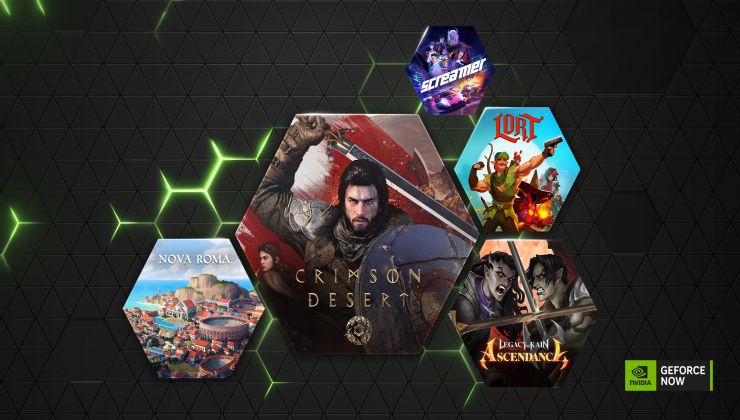
Read the full article on GamingOnLinux.
 KDE neon is a Ubuntu-based Linux distribution and live DVD featuring the latest KDE Plasma desktop and other KDE community software. Besides the installable DVD image, the project provides a rapidly-evolving software repository with all the latest KDE software. Two editions of the product are available - a "User" edition, designed for those interested in checking out the latest KDE software as it gets released, and a "Developer's" edition, created as a platform for testing cutting-edge KDE applications.
  SmartOS is an open-source UNIX-like operating system based on illumos, a community fork of OpenSolaris. It features four technologies - ZFS (a combined file system and logical volume manager), DTrace (a dynamic tracing framework for troubleshooting kernel and application problems), Zones (a lightweight virtualisation solution), KVM and bhyve (two full virtualisation solutions for running a variety of guest operating systems, including Linux, Windows, BSD and Plan9). SmartOS is designed to be particularly suitable for building clouds and generating appliances.