Amazon is noticeably stepping up its game in February 2026. Amazon is using Prime Gaming and the Amazon Luna cloud service to kill several birds with one stone: strengthening customer loyalty, normalizing cloud gaming, and further expanding its own gaming footprint. Ten PC games will be given away over the course of the month, accompanied […]
The global race for supremacy in artificial intelligence is reaching a new level of intensity. The major US technology companies are planning investments for the current year on a scale that stands out even in an industry accustomed to superlatives. Together, Alphabet, Amazon, Meta, and Microsoft want to invest around $650 billion in AI-related infrastructure, […]
Valve continues to use Steam as a low-threshold ramp for indie experiments. Four new games are currently completely free to play, with no subscription and no time limit. No marketing fireworks, no blockbusters, just deliberately small-scale projects that seek reach rather than revenue. The selection follows a clear pattern: retro visuals, manageable production costs, experimental […]
Artificial intelligence is currently changing almost all areas of work, from public administration and contract management to human resources. Automated processes, accelerated document processing, and more precise classifications promise significant efficiency gains and open up new opportunities to simplify complex processes. At the same time, however, regulatory pressure is growing, because with the increasing use […]
The clues from the latest iOS 26.3 beta have brought new momentum to the discussion about Apple’s upcoming M5 chip generation. While clear references to M5 Max and M5 Ultra can already be found in the system files, the M5 Pro is completely missing so far. This gap is unusual, as Apple has always positioned […]
It is no longer a secret that Microsoft is gradually shifting the classic console toward a PC-like platform; rather, it is an openly communicated strategy. What is new, however, is how concretely external partners are already factoring this development into their plans. According to Steve Allison, head of the Epic Games Store, plans to integrate […]
Today’s edition of LeakWatch systematically reviews all verifiable cases of data leaks, IT breaches, and structural security problems that have become public in the current calendar week. Only incidents that have been confirmed by the affected organizations themselves, law enforcement agencies, or established media outlets are taken into account. Pure allegations from forums or darknet […]
We also cover the upcoming Steam Machine, sad GPU trends, and the arc of the Arc B770. We've got our review of the Thrustmaster T248R and rapidly dive into AMD's glorious financial…
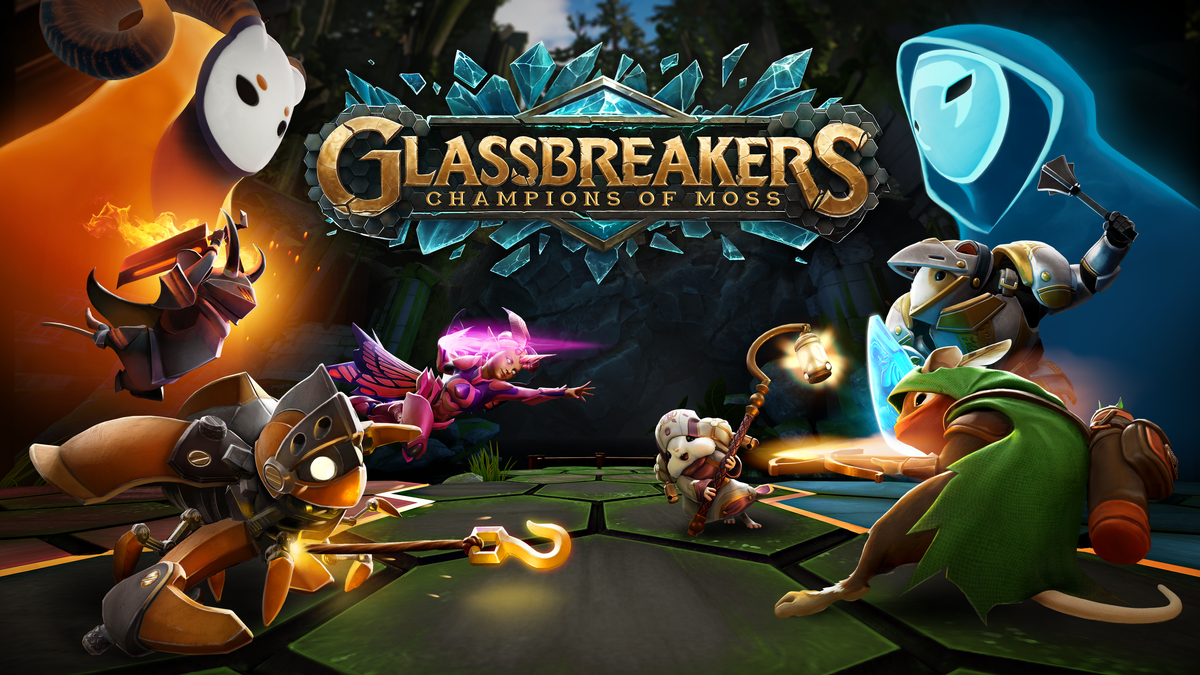
Glassbreakers: Champions of Moss and Clay Hunt VR are this February's Horizon+ monthly games on Quest.
February 2026 brings a number of new games to the Horizon+ Monthly Games Catalog, including one of the best strategy games in VR, and an engaging target practice shooter. In addition, previously redeemed games will remain in your library while subscribed to the service.
Here's what you need to know about this February's offerings.
Glassbreakers: Champions of Moss
0:00
/1:35
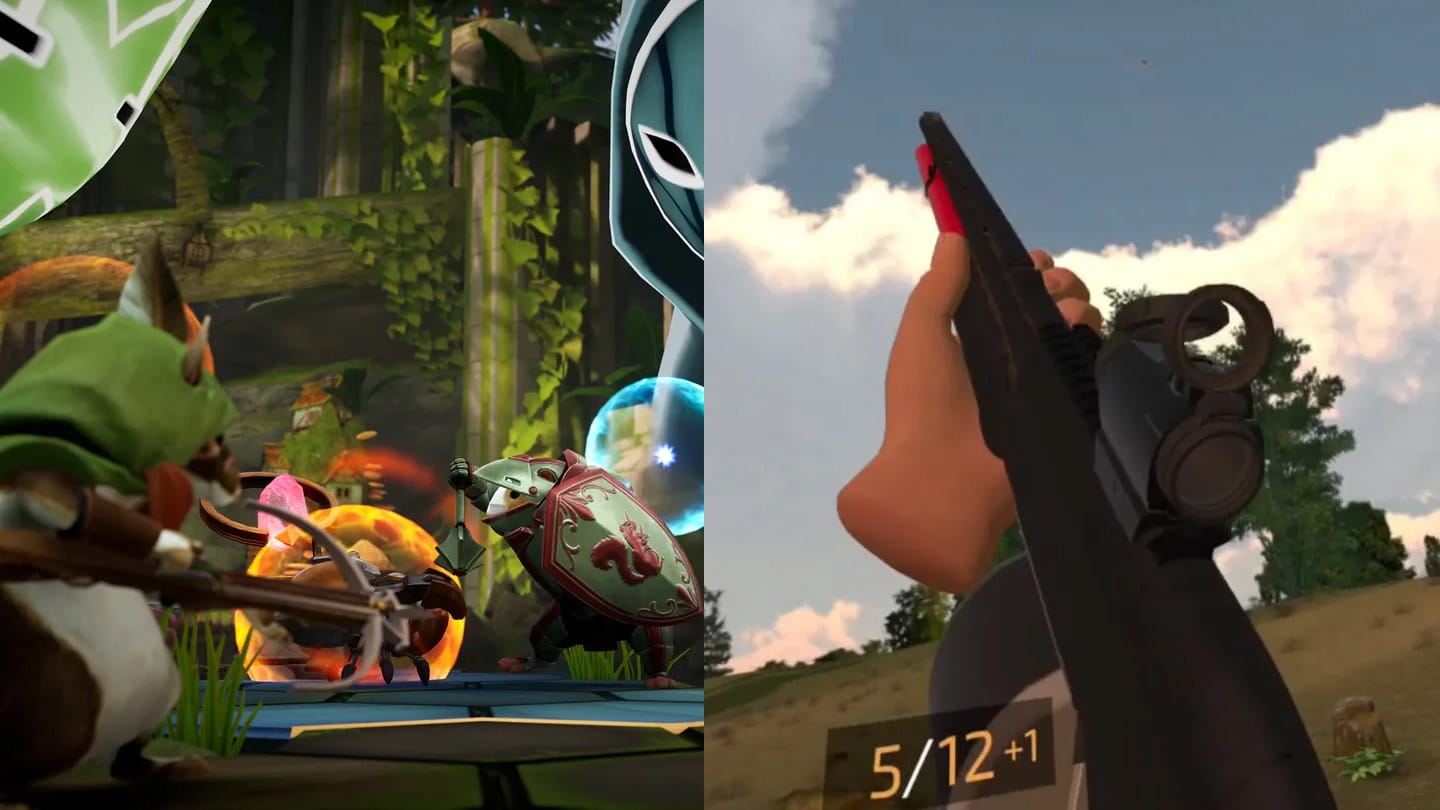
The star of February's Horizon+ Monthly Games, Glassbreakers: Champions of Moss is, as our review put it, a "smart, competitive, and [...] one of the best strategy experiences available in VR." The tabletop strategy game, which features characters and lore from the Moss and Moss 2 game universe, blends the strategic depth of RTS games with the character personality and squad mechanics of the best MOBAs.
Clay Hunt VR is a relatively simple shotgun shooting game which challenges you to hone your aim against clay targets, ducks, and other game animals. A multiplayer mode allows shooting with friends in public or private rooms, and customizable weaponry allows players to tune their favorite guns.
Horizon+ Games Catalog Games
Horizon+ continues offering a Games Catalog of Quest titles that any subscriber can access. Meta can add new games to and remove games from the catalog at any time. Here is the current Horizon+ Games Catalog in the US:
Angry Birds VR: Isle of Pigs
Asgard’s Wrath 2
Assassin’s Creed Nexus VR
Bartender VR Simulator
Blacktop Hoops
Cubism
Deisim
Demeo
Demeo Battles
Dungeons of Eternity
Eleven Table Tennis
Final Fury
Fruit Ninja 2
Ghosts of Tabor
Green Hell VR
Grimlord
Human Fall Flat VR
iB Cricket
I Expect You To Die 3
In Death: Unchained
Into Black
Into the Radius
Job Simulator
Kingspray Graffiti
LES MILLS BODYCOMBAT: Fitness workouts
Maestro
Medieval Dynasty New Settlement
Moss
Pets & Stuff
Pistol Whip
Premium Bowling
Project Demigod
Puzzling Places
Racket Club
Real VR Fishing
Red Matter
Red Matter 2
Starship Home
Synth Riders
Tetris Effect: Connected
The Climb 2
The Light Brigade
The Thrill of the Fight
Thief Simulator VR: Greenview Street
Titans Clinic
Townsmen VR
War of Wizards
Zero Caliber: Reloaded
Horizon+ Indie Catalog Games
Meta continues to add new games to the separate Indie Games Catalog, and you can see the entire list here.
Alvo
Apex Construct
Arcade Paradise VR
Battlenauts
Bocce Time!
Cactus Cowboy - Desert Warfare
Chess Club
Coffee Quest VR
Crumbling
Cybrix
Darksword: Battle Eternity
Disc Frenzy
Discovery 2
Elysium Trials
Espire 1: VR Operative
Final Overs - VR Cricket
Galaxy Kart
Ghost Signal: A Stellaris Game
Gravity League: Galactic Football
Iron Guard
Ironlights
Killer Frequency
Laser Thief
LAX VR
Make it Stable
Motion Soccer PRO
Mythic Realms
Noun Town Language Learning
Operation Serpens
Retropolis 2: Never Say Goodbye
Rogue Ascent VR
Rogue Pinatas: VRmageddon
RUNNER
Shooty Fruity
Slot Car VR
Space Elevator
Squingle
Stupid Cars
Sushi Ben
Tactica
Taiko Frenzy
The Curious Tale of the Stolen Pets
The Pirate Queen: A Forgotten Legend
The Secret of Retropolis
The Wizards
Tiny Archers
Towers and Powers
Ultimate Swing Golf
Underworld Overseer
Vibe Punch
Windlands 2
Meta Horizon+ is a subscription service that gives players access to a monthly selection of games for $7.99 USD per month, or $59.99 USD a year. New users can give Meta Horizon+ a try for a month.
The Khronos Group is aiming to standardize Gaussian splatting by proposing a release candidate for an integration into the widely adopted glTF 3D format.
Khronos is a non-profit industry consortium that manages OpenGL, Vulkan, and WebGL. In the context of XR specifically, it pioneered OpenXR, an open industry-standard API for XR application development and runtimes. OpenXR provides developers with access to a single standardized API, allowing them to build an app once and then easily port it to other platforms, facilitating cross-platform availability. OpenXR is supported by most major stakeholders in the XR industry, including Meta, Valve, HTC, ByteDance, Epic Games, Unity, Nvidia, and Qualcomm. A notable exception is Apple, which maintains its own proprietary APIs.
In 2015, Khronos introduced glTF (Graphics Language Transmission Format), a standard for the efficient transmission and loading of 3D scenes and models by game engines and applications. Often framed as the “JPEG of 3D,” it provides a streamlined, universal format that allows creators to export high-quality 3D assets from any tool while ensuring consumers can view them instantly and consistently across any device or web browser. Today, glTF is the most widely adopted 3D asset format on the web.
Standardizing Delivery: Why glTF Is Key To Mainstream Adoption
While capturing Gaussian splats has become easier, sharing them remains the primary hurdle, an issue Khronos is now directly addressing. The new glTF extension enables the storage of 3D Gaussian splats directly within glTF files. By doing so, Khronos is standardizing the delivery of Gaussian splats within an already established and widely adopted 3D ecosystem, paving the way for the technology to move into the mainstream.
“Instagram made it easy to share photos; TikTok brought about an explosion in short-form video social sharing. Until now, 3D has lagged behind 2D media formats because 3D models are so much harder than photos or videos to create and share. With Gaussian splatting, you can easily imagine an app that enables a mobile user to move their phone to quickly capture a scene or object to create a splat-based 3D model. As an open standard, glTF makes it possible to share that model. A splat stored in a glTF file could be shared on social media and displayed with full interactivity on any client device,” explains Neil Trevett, president of Khronos, in a written statement to UploadVR.
Khronos’s decision to formally embrace Gaussian splatting sends a clear message that lifelike 3D is here to stay, says Michael Rubloff, Managing Editor of Radiance Fields, a news blog specialized in Gaussian splatting and similar technologies.
“With that level of impact approaching, it becomes critical to build the foundations carefully. A glTF extension, built on the most widely adopted 3D asset format, helps derisk fragmentation as industries shift from 2D to 3D while giving developers confidence that what they build today can ship across ecosystems rather than remain locked to a single platform,” says Rubloff.
Gaussian Splatting: A New Form Of 3D Graphics Representation
Gaussian splats represent a fundamental departure from traditional mesh-based graphics. While standard 3D modeling relies on connected triangles to define an object’s surface, Gaussian splatting treats a scene as a dense cloud of volumetric data points, with each point defined by properties including position, scale, rotation, color, and opacity. The benefits over traditional 3D graphics rendering include the ability to capture complex geometries like hair or smoke and highly realistic lighting effects, such as reflections and refractions, that are notoriously difficult to achieve with polygonal meshes.
The new glTF extension acts like an instruction manual, telling the software to render these points as smooth, overlapping shapes, creating a realistic 3D image rather than the flat, jagged surfaces usually seen in video games.
Still, there is work to be done. The extension is currently in a release candidate phase, with the Khronos 3D Formats Working Group inviting feedback from engine developers, creators, and artists to test the specification ahead of a formal ratification targeted for the second quarter of 2026. So far, companies such as Autodesk, Bentley Systems, Huawei, Niantic Spatial, and Nvidia have contributed to the extension.
The release candidate was developed with the rapid and ongoing evolution of Gaussian splatting in mind. For example, it does not yet define a standard compression approach, which is crucial for making Gaussian splatting performant on mobile devices. To maintain flexibility, the specification is intentionally designed to be extensible, leaving room for future additions as Gaussian splatting techniques evolve and eventually become standardized within the glTF ecosystem.
Overclockers are arguably known for their lack of restraint, but the latest RTX 5090 experiment feels like a particularly vivid illustration of that point: BIOS files from MSI's absurdly overbuilt RTX 5090 Lightning Z—a card that technically exists, costs around $5,200, and is limited to roughly 1,300 units worldwide—have made their way onto
You're here for our Super Bowl TV picks, but do you want to know my favorite Super Bowl pick of all time? It's when Malcolm Butler intercepted a goalline pass in Super Bowl XLIX to secure the victory for the New England Patriots. Now more than a decade later, the Seahawks are getting a rematch, and you can catch the big game on a new TV. The
Ayaneo is expanding its growing range of PC gaming handhelds by opening up preorder availability of its Konkr Kit, a premium handheld console with a 7-inch OLED display sporting a 1920x1080 resolution and fast 144Hz refresh rate, powered by a choice between AMD's Ryzen AI 9 HX 470 (Gorgon Point) or Ryzen AI 9 HX 370 (Strix Point) processor.
It has been just two days since the live broadcast of the latest PCPer podcast and it seems Microsoft and Satya Nadella finally took our advice. We have been stressing the need…
Wenn Elon Musk eines zuverlässig beherrscht, dann ist es das Verschieben von Engpässen. Kaum wird ein Flaschenhals identifiziert, wird er nicht umgangen, sondern gleich in den Orbit verlegt. Im wörtlichen Sinne. Laut Musk wird das derzeitige Expansionstempo der KI-Infrastruktur unausweichlich dazu führen, dass Rechenzentren im Weltraum wirtschaftlich attraktiver werden als auf der Erde. Nicht aus […]
Qualcomm is once again facing a familiar challenge with its upcoming top-of-the-line Snapdragon 8 Elite Gen 6 platform. With each new generation, not only do performance expectations rise, but so do thermal design requirements. Rumors from the supply chain suggest that Qualcomm could focus more on advanced cooling concepts this year to prevent overheating problems […]
Intel has a structural problem, and Panther Lake in the handheld segment is just another symptom of it. Although Intel has officially confirmed that dedicated Panther Lake SoCs for gaming handhelds are coming, the now rumored postponement to the second quarter of 2026 fits conspicuously well into the familiar pattern. Announcement early, delivery later, details […]
Expectations for Nvidia’s next generation of gaming graphics cards have been high for a long time, but new evidence suggests a significantly longer wait. Internal plans and consistent reports from within the company suggest that the upcoming Geforce RTX 60 series, including a possible top-of-the-line RTX 6090 model, could be released in 2028 at the […]
Anthropic hat mit Claude Opus 4.6 eine neue Ausbaustufe seines leistungsstärksten KI-Modells vorgestellt und richtet den Fokus dabei klar auf professionelle Entwicklungs- und Analyseaufgaben. Im Zentrum stehen deutlich verbesserte Coding-Fähigkeiten, ein massiv erweitertes Kontextfenster sowie erstmals sogenannte Agent Teams, die komplexe Aufgaben parallel bearbeiten können. Damit positioniert Anthropic das Modell klar im Umfeld hochautomatisierter Softwareentwicklung […]
What previously felt like regional diversification is now clearly taking on aggressive traits. TSMC apparently plans to significantly upgrade its Japanese operations and also manufacture 3 nm chips in the region in the future. This is not a cosmetic upgrade, but a clear change in strategy. Until now, Japan was intended for more mature processes, […]
As expected, the first contact is with packaging that is more reminiscent of a small piece of furniture than a graphics card. The box stands there with the confident calm of a safe, subtly announcing that this is no middle-of-the-road product. At this point, at the latest, it becomes clear that the real challenge will […]
Valve says it needs to "revisit our exact shipping schedule and pricing" for Steam Frame and Steam Machine amid the global memory and storage shortage.
When announcing the headset and consolized PC back in November, Valve said they would ship in "early 2026". For pricing, it told UploadVR it was "aiming" to sell Steam Frame for less than the $1000 Index full-kit, and suggested that the Steam Machine would be competitive with building a PC with similar parts.
Now, in a blog post on Steam, Valve says that while it had originally planned to share prices and release dates by now, the "limited availability and growing prices" of memory and storage mean it "must revisit" its plan for both.
"When we announced these products in November, we planned on being able to share specific pricing and launch dates by now. But the memory and storage shortages you've likely heard about across the industry have rapidly increased since then. The limited availability and growing prices of these critical components mean we must revisit our exact shipping schedule and pricing (especially around Steam Machine and Steam Frame).
Our goal of shipping all three products in the first half of the year has not changed. But we have work to do to land on concrete pricing and launch dates that we can confidently announce, being mindful of how quickly the circumstances around both of those things can change. We will keep you updated as much as we can as we finalize those plans as soon as possible."
The company says its goal is still to ship in the first half of this year, but has "work to do" to "land on" concrete prices and launch dates.
"We will keep you updated as much as we can as we finalize those plans as soon as possible", Valve promises.
Snap spun its Specs AR glasses into its own subsidiary, and reconfirmed that it plans to launch the consumer product this year.
"Establishing Specs Inc. as a wholly-owned subsidiary provides greater operational focus and alignment, enables new partnerships and capital flexibility including the potential for minority investment, allows us to grow a distinct brand, and supports clearer valuation of the business as we work towards the public launch of Specs later this year", the company behind Snapchat says.
The new Specs Inc subsidiary is currently hiring for nearly 100 open roles globally, it says, in preparation for the launch.
What Are Snap Spectacles & Snap Specs?
The current Snap Spectacles are $99/month AR glasses for developers ($50/month if they're students), intended to let them develop apps for the Specs consumer product the company intends to ship this year.
Spectacles have a 46° diagonal field of view, angular resolution comparable to Apple Vision Pro, relatively limited computing power, and a built-in battery life of just 45 minutes. They're also the bulkiest AR device in "glasses" form factor we've seen yet, weighing 226 grams. That's almost 5 times as heavy as Ray-Ban Meta glasses, for an admittedly entirely unfair comparison.
But Snap CEO Evan Spiegel claims that the consumer Specs will have "a much smaller form factor, at a fraction of the weight, with a ton more capability", while running all the same apps developed so far.
As such, what's been more important to keep track of, to date, is Snap OS, not the developer kit hardware.
Snap OS is relatively unique. While on an underlying level it's Android-based, you can't install APKs on it, and thus developers can't run native code or use third-party engines like Unity. Instead, they build sandboxed "Lenses", the company's name for apps, using the Lens Studio software for Windows and macOS.
In Lens Studio, developers use JavaScript or TypeScript to interact with high-level APIs, while the operating system itself handles the low-level core tech like rendering and core interactions. This has many of the same advantages as the Shared Space of Apple's visionOS: near-instant app launches, interaction consistency, and easy implementation of shared multi-user experiences without friction. It even allows the Spectacles mobile app to be used as a spectator view for almost any Lens.
Snap OS doesn't support multitasking, but this is more likely a limitation of the current hardware than the operating system itself.
Since releasing Snap OS in the latest Spectacles kit in late 2024, Snap has repeatedly added new capabilities for developers building Lenses, and late last year launched Snap OS 2.0, adding and improving first-party apps like Browser, Gallery, and Spotlight to bring the AR platform closer to being ready for consumers.
On Google Pixel 10 devices, Android Quick Share functionality is compatible with Apple's range of AirDrop-enabled devices, including iPhones and Macs. Just months after Quick Share gained that ability, Google is set to spread Android Quick Share-to-AirDrop compatibility across other Android devices, no longer limiting the feature to Google
 Connexion