Connexion
How To God Early Access Review: A Hands-On God Complex

This week marks the early access arrival of How to God, a deity simulator that encourages you to nurture your followers – or ruin them emotionally.
I played through the full campaign, taking me through a story of deities building alliances – or facing off against one another. Inspired by the gods of real-world civilizations, How to God is a decent, well-paced entry in the god game genre, though you may want to turn off the AI-generated voicework.
What is it?: Become a great deity in the sky, convert humble villagers to devout followers (through faith or fire), and uncover the mysterious powers threatening your lands.
Platforms: Reviewed on Meta Quest 3. Also available on Quest 2.
Release Date: Out now (coming soon to Steam)
Developer/Publisher: Thoughtfish GmbH
Price: $29.99
How to God feels similar to Townsmen VR due to its narrative-driven campaign, villager-care mechanics, and ability to drop right into the action – or rule from the heavens. While the two games share a similarly cute, stylized aesthetic, some surprisingly dark themes may emerge from How to God. No spoilers, but I loved the spiciness these surprises added to my playthrough.
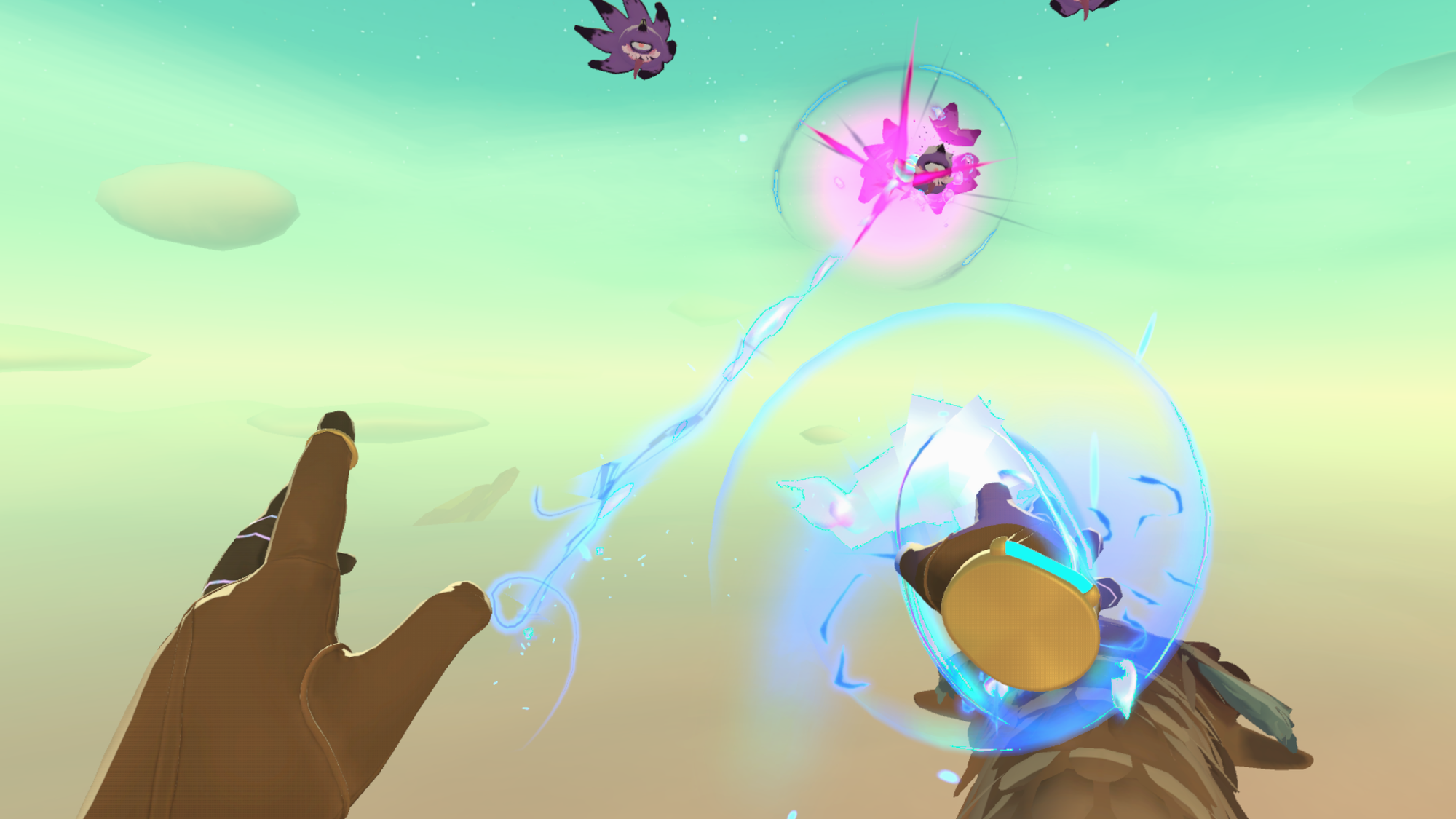
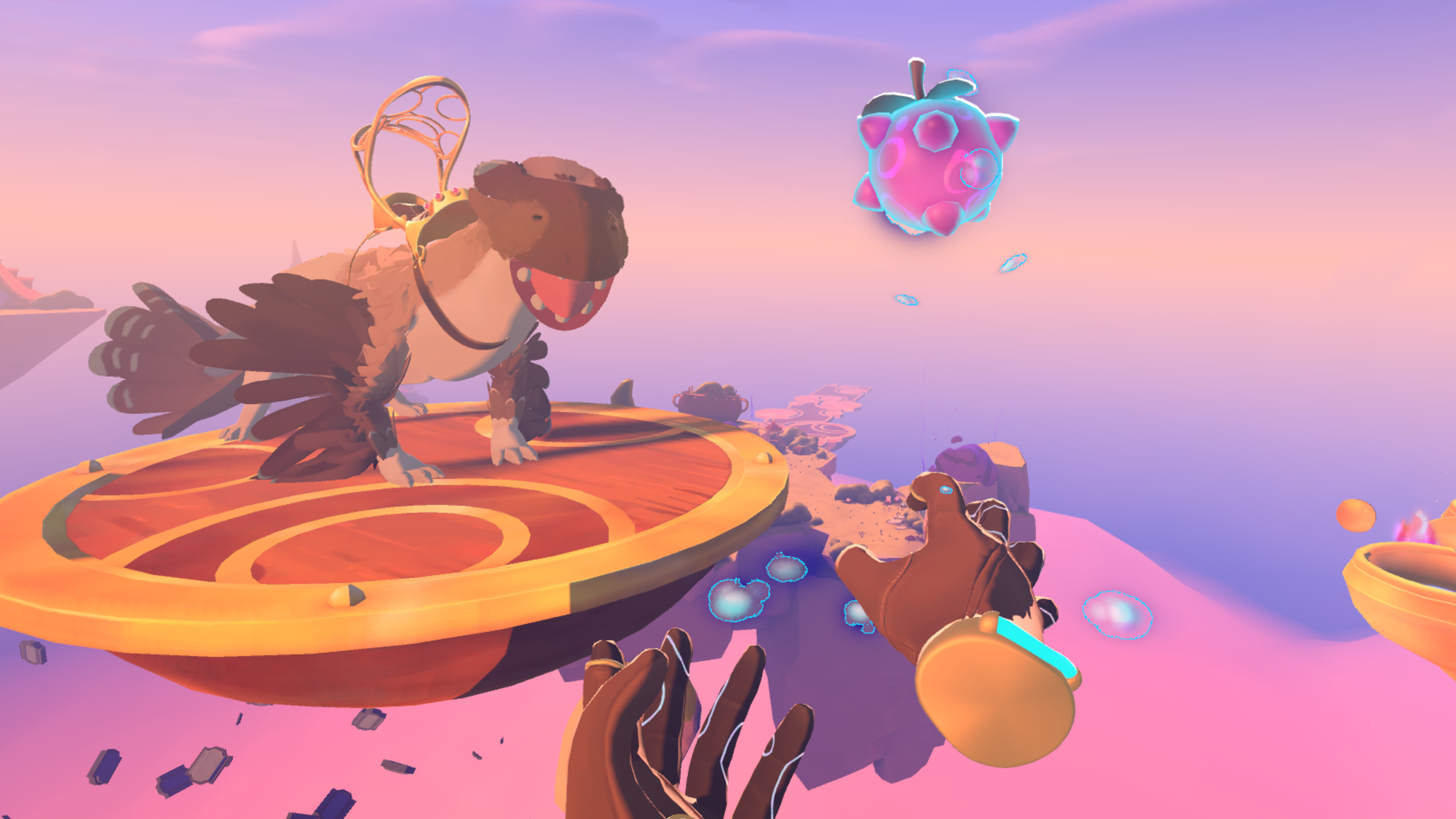
How to God also differentiates itself from Townsmen through a couple of more mystical features, such as “miracles” (hand-tracking gestures to create balls of water, or open portals back to your God Room) and Creatures.
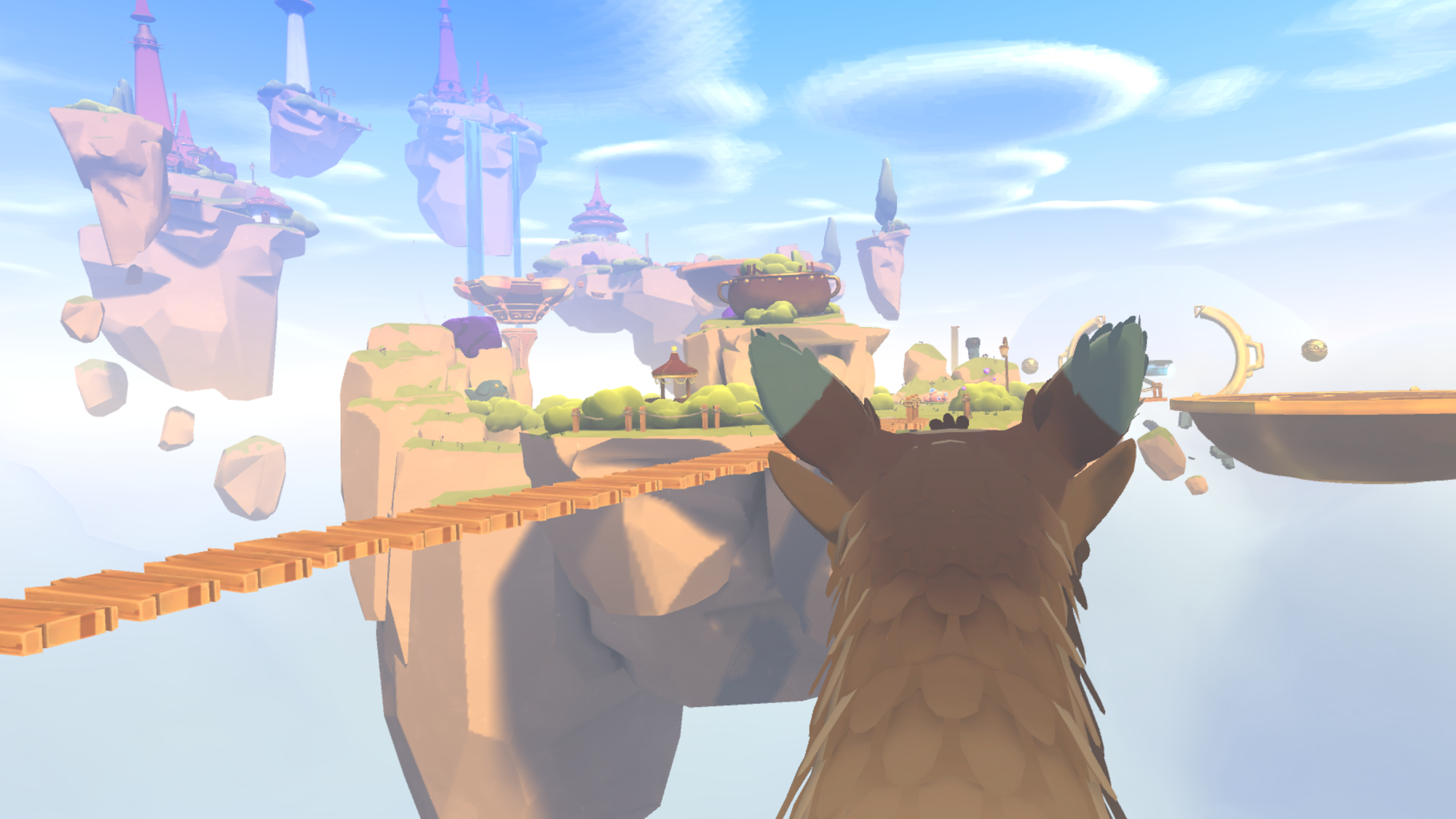
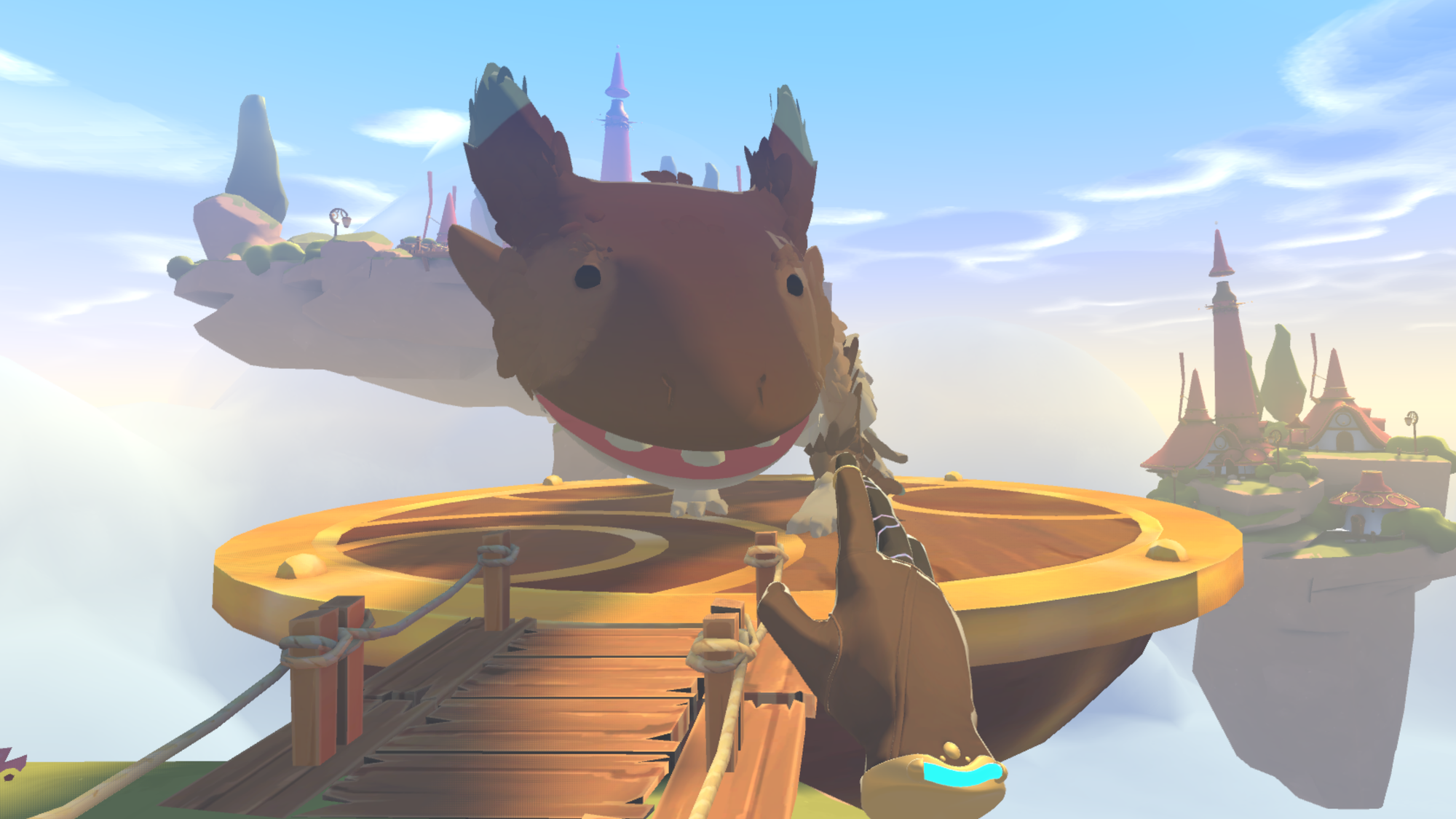
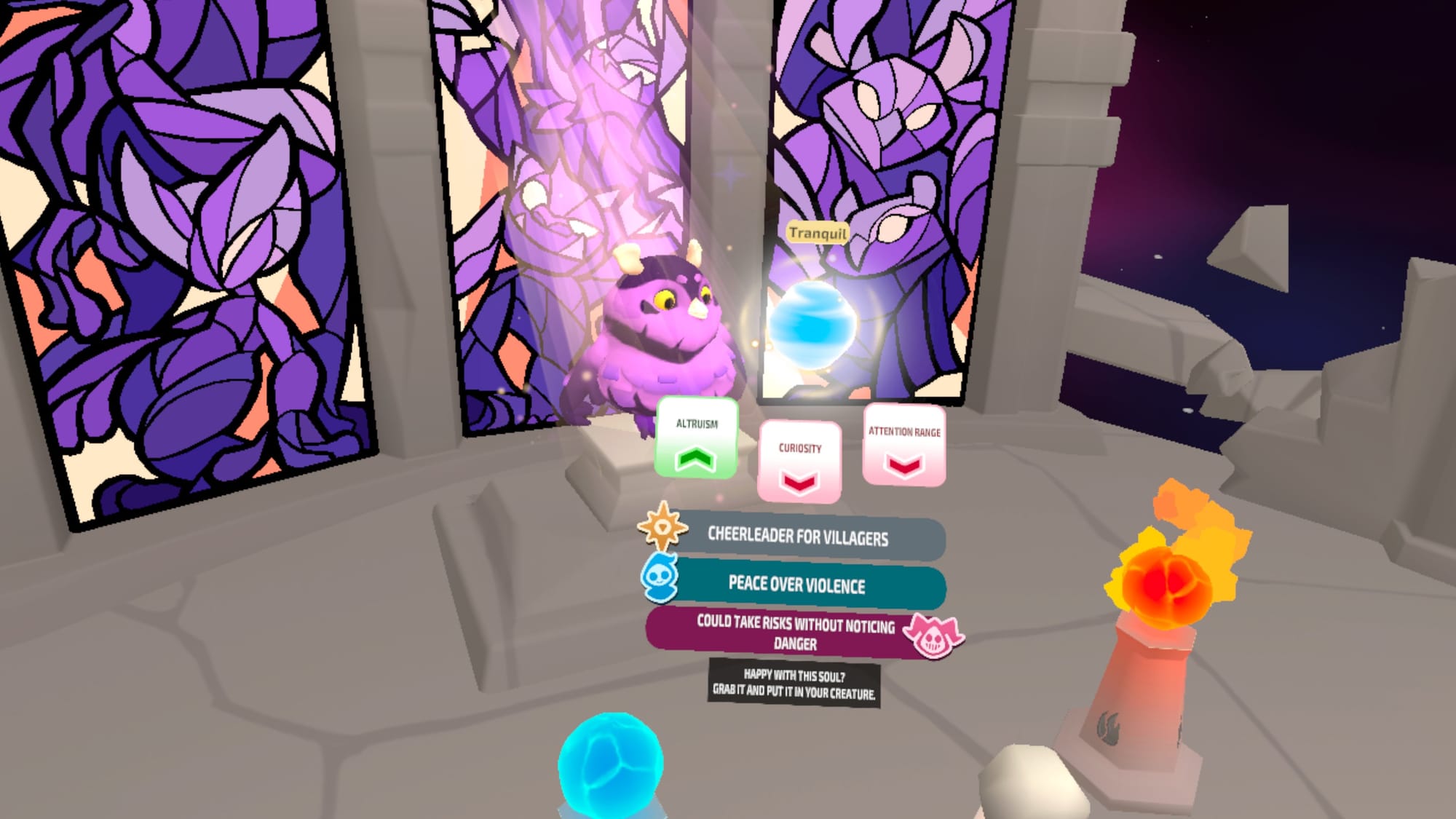
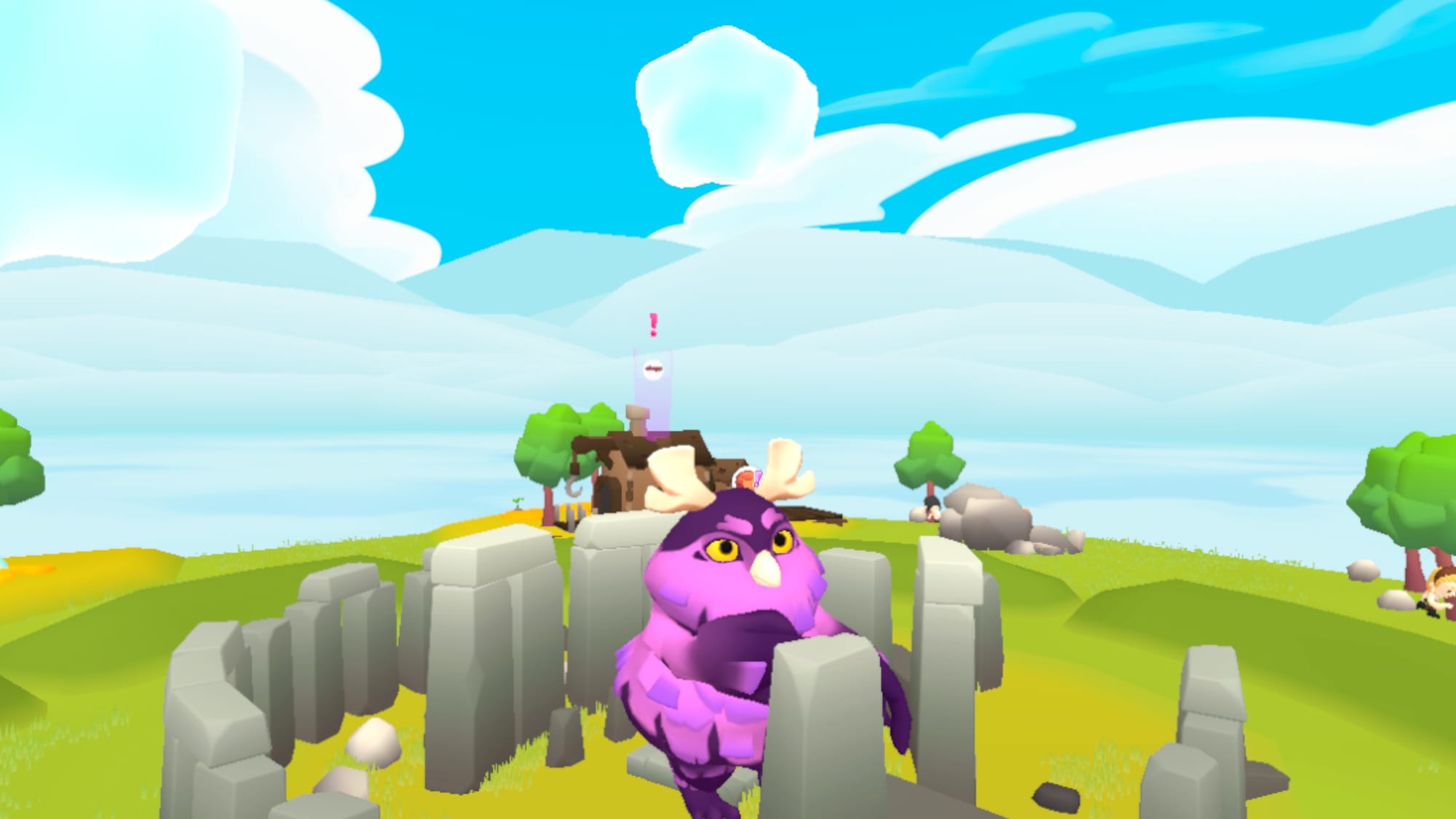
You’ll first meet your Creature – a semi-autonomous conduit for your godly intentions – in the Godroom (a fancy term for “main menu”). I chose a cute, fat owl, but there are two other options as well: one looks like a horned, contorted Labubu doll and an off-brand canine Pokémon.
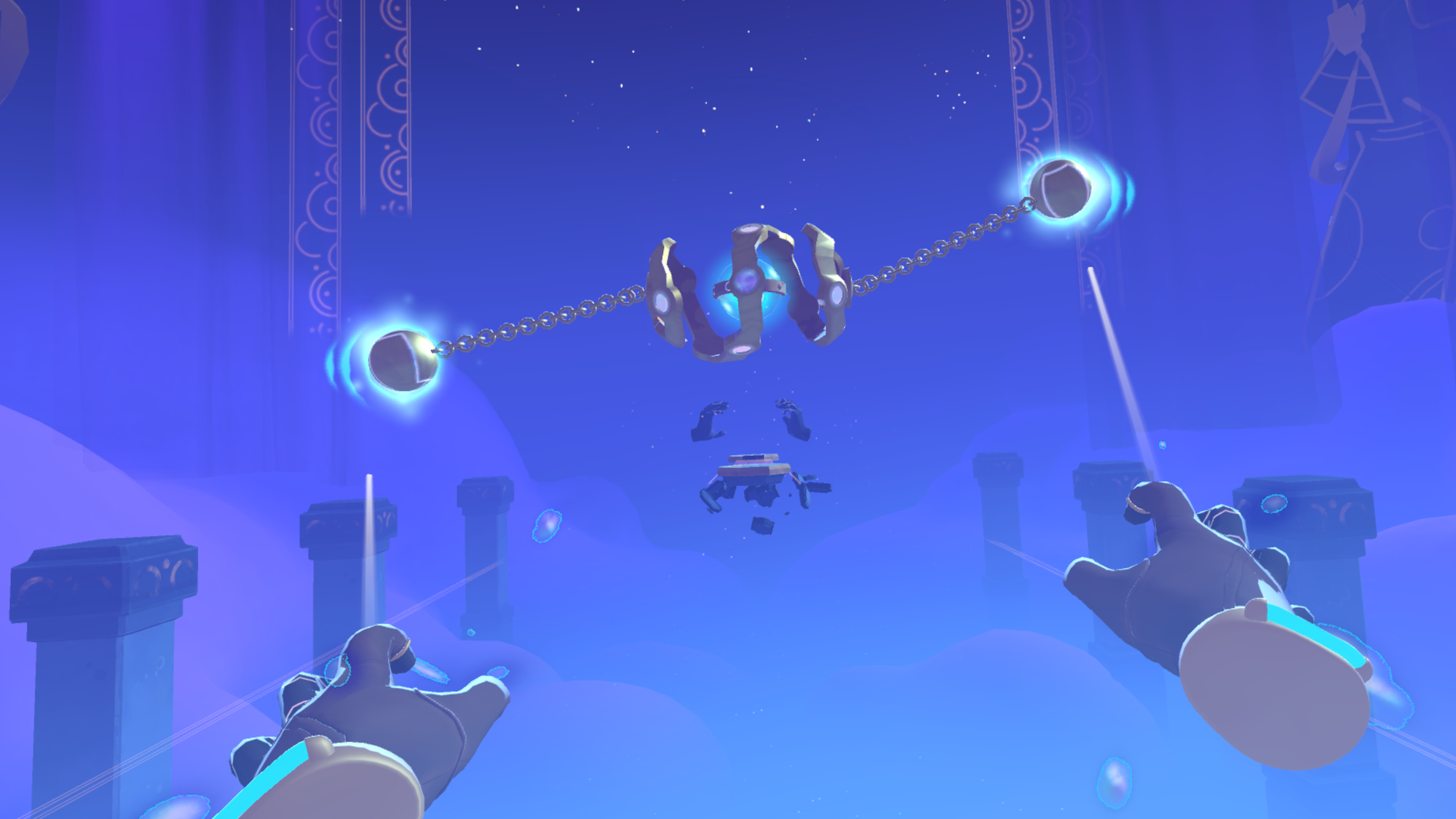
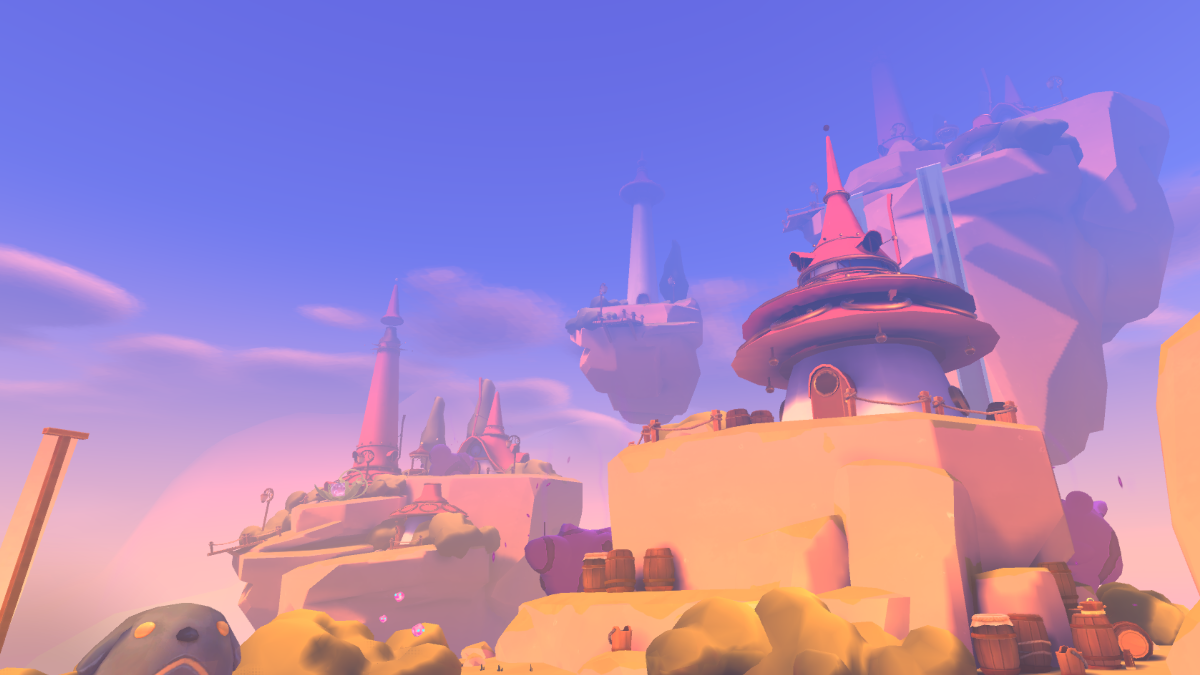
Once you’ve conjured your preferred Creature into existence, it’s time to drop into the world. Literally. Like most other games within the genre, you’re an invisible, omniscient force in the sky, able to see everything at once and interact with anything beneath you. The tutorial is simple but comprehensive – in fact, there’s a whole archipelago dedicated to teaching you, well, how to god, and you don’t stop learning stuff even when you advance to the next location.
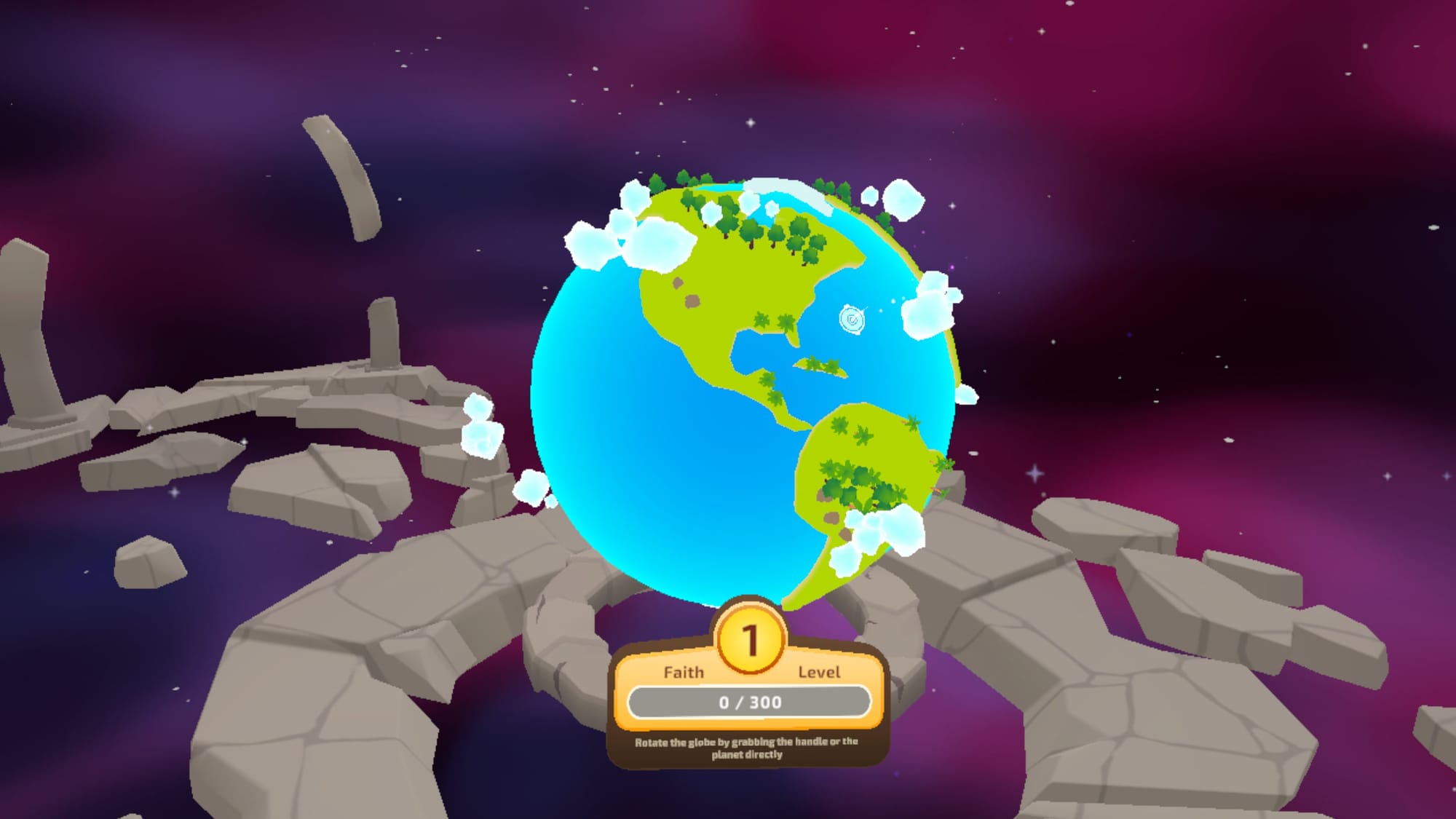
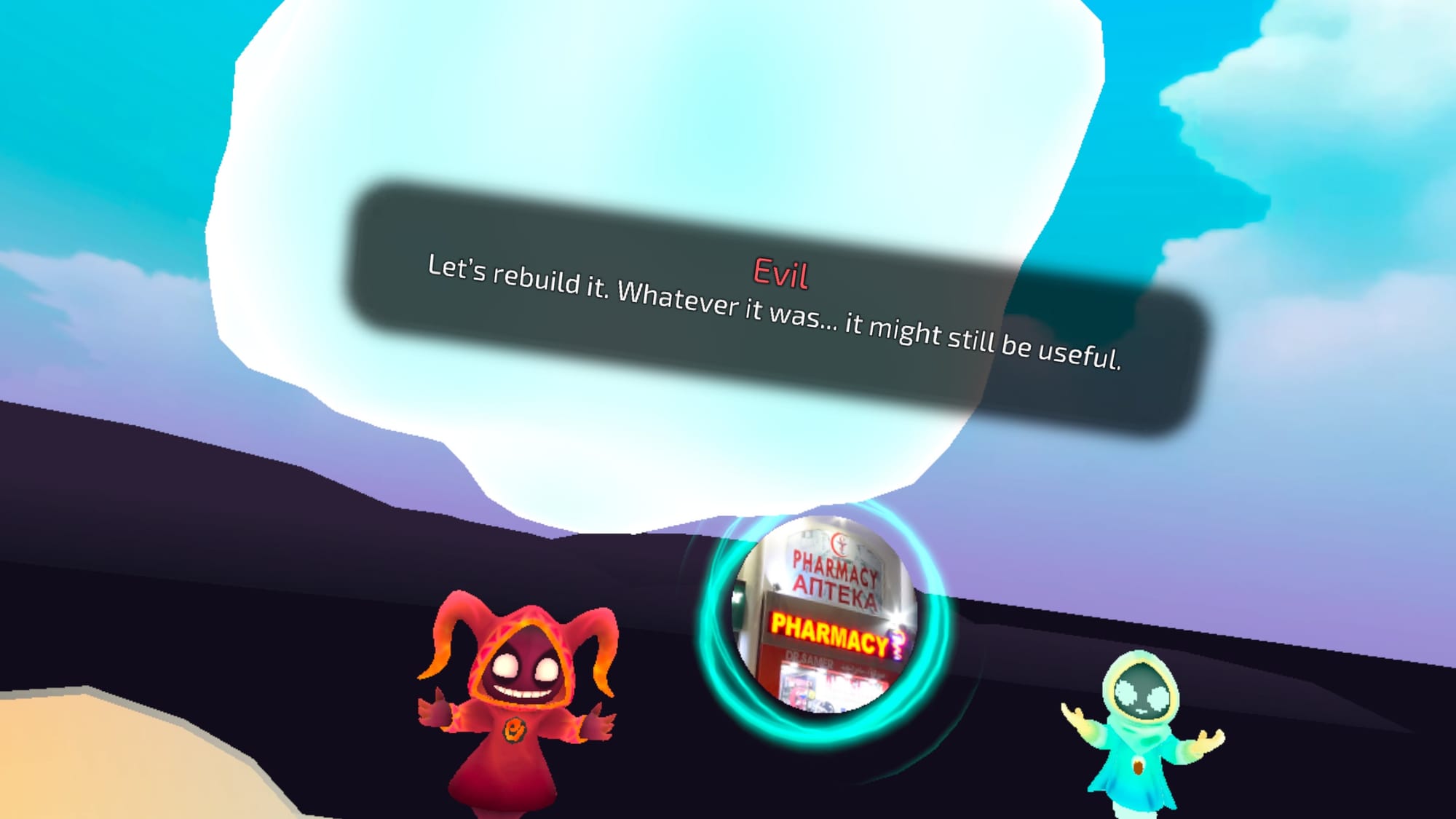
You’re helped throughout the tutorial by your divine advisors Good and Evil, who are basically the angel-and-demon-on-the-shoulders trope personified (er, spirit-ified). In later levels, they become drivers of the narrative, too – more on that in a bit.
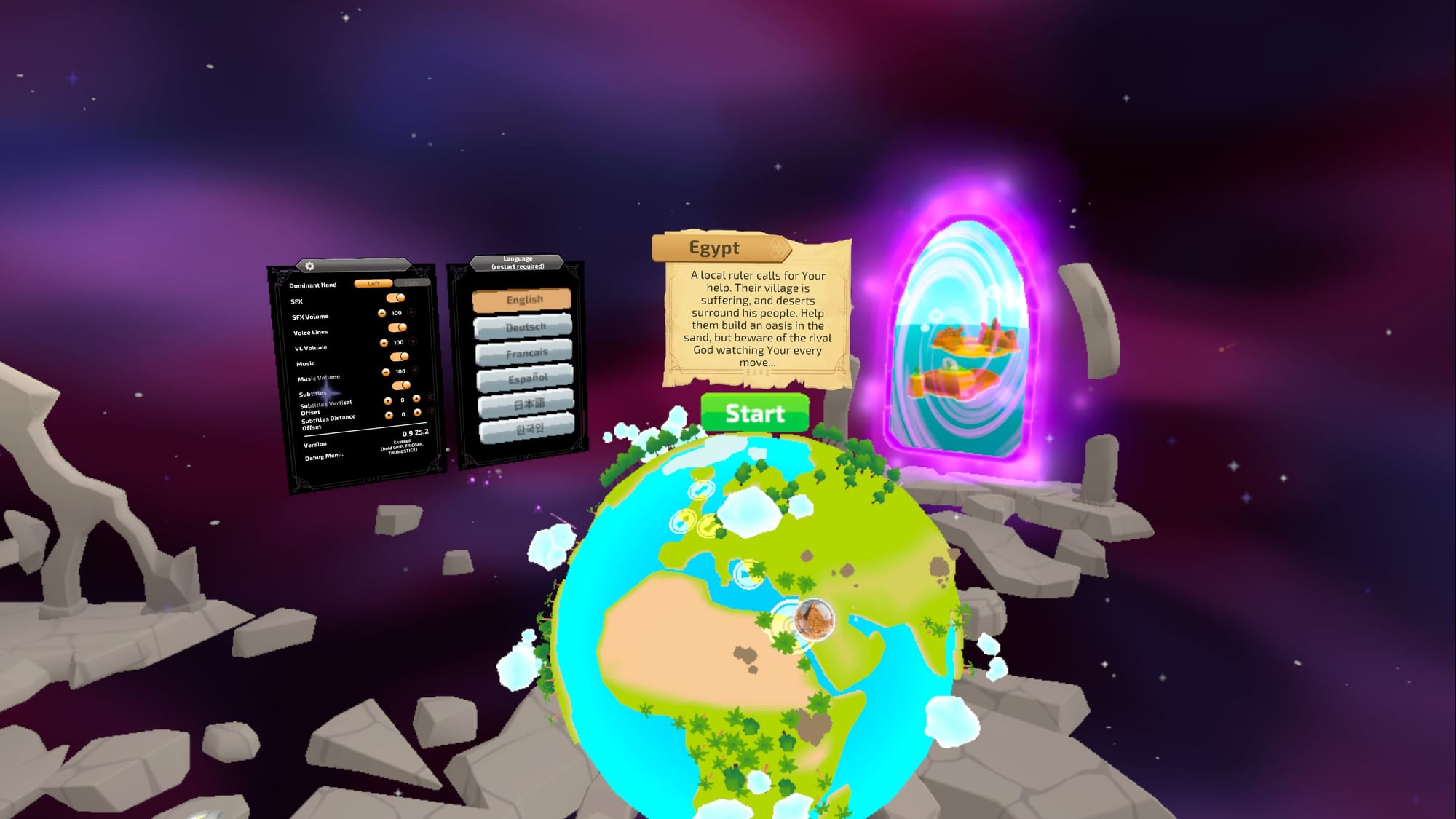
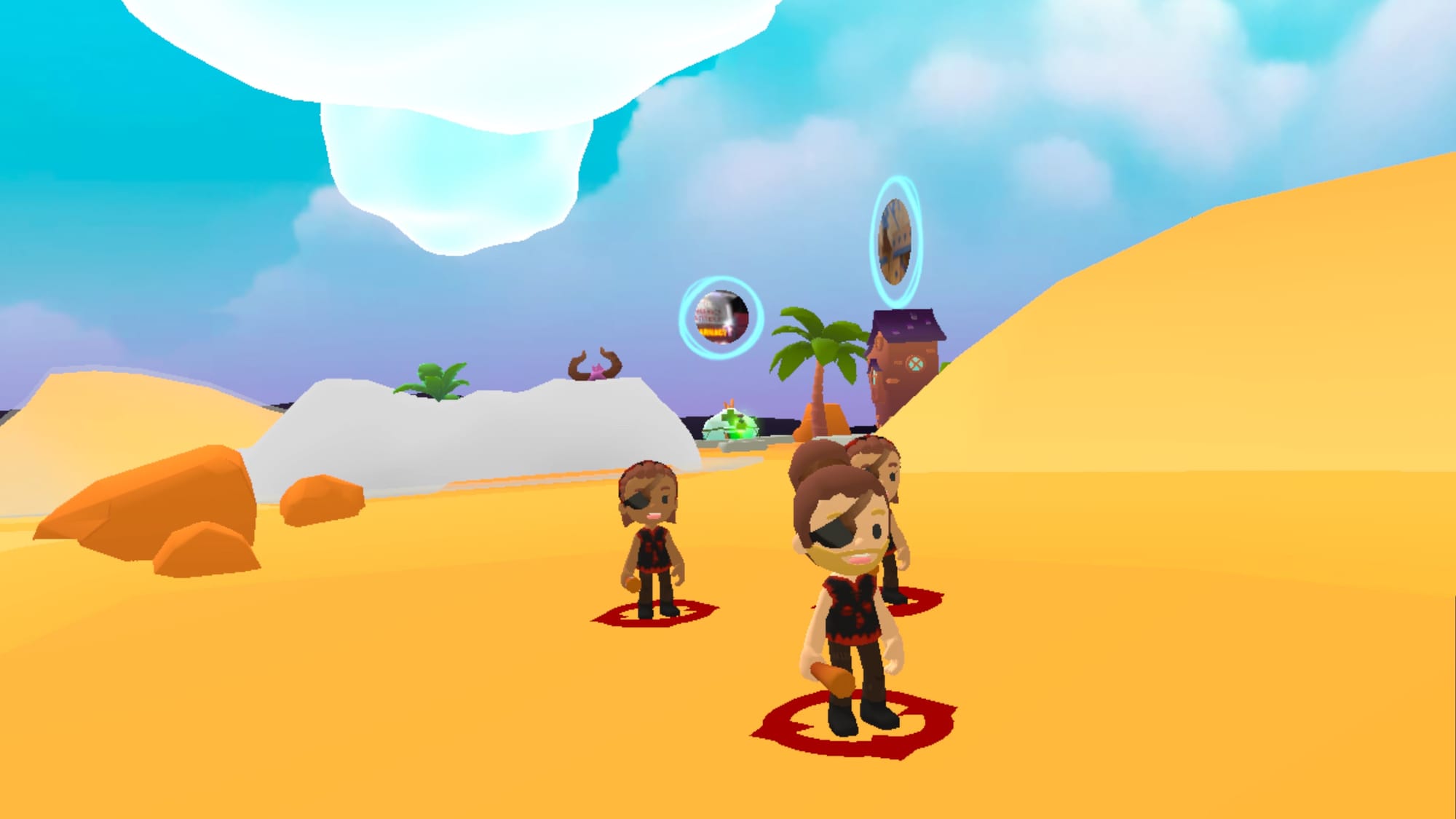
Interestingly, every post-tutorial level is a real-world location such as Egypt or Paris. This affects both the physical appearance of buildings and what rival/friend gods you might encounter. Poseidon hangs out in Greece, for instance. Nearly half of the levels were clustered in Europe, which is where the “cool” gods originate, I guess, but I would like to see locations like South America or India represented too.
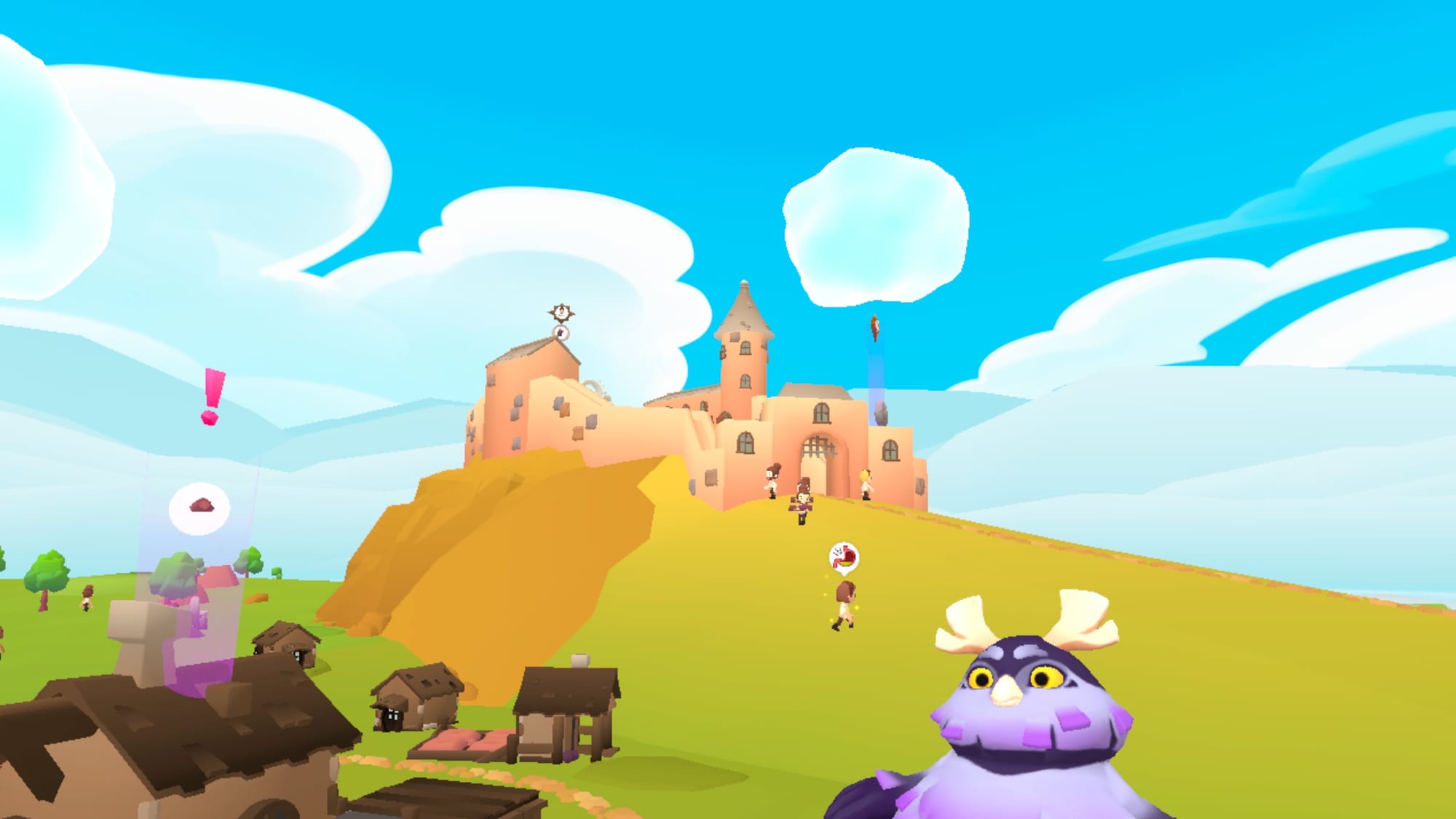
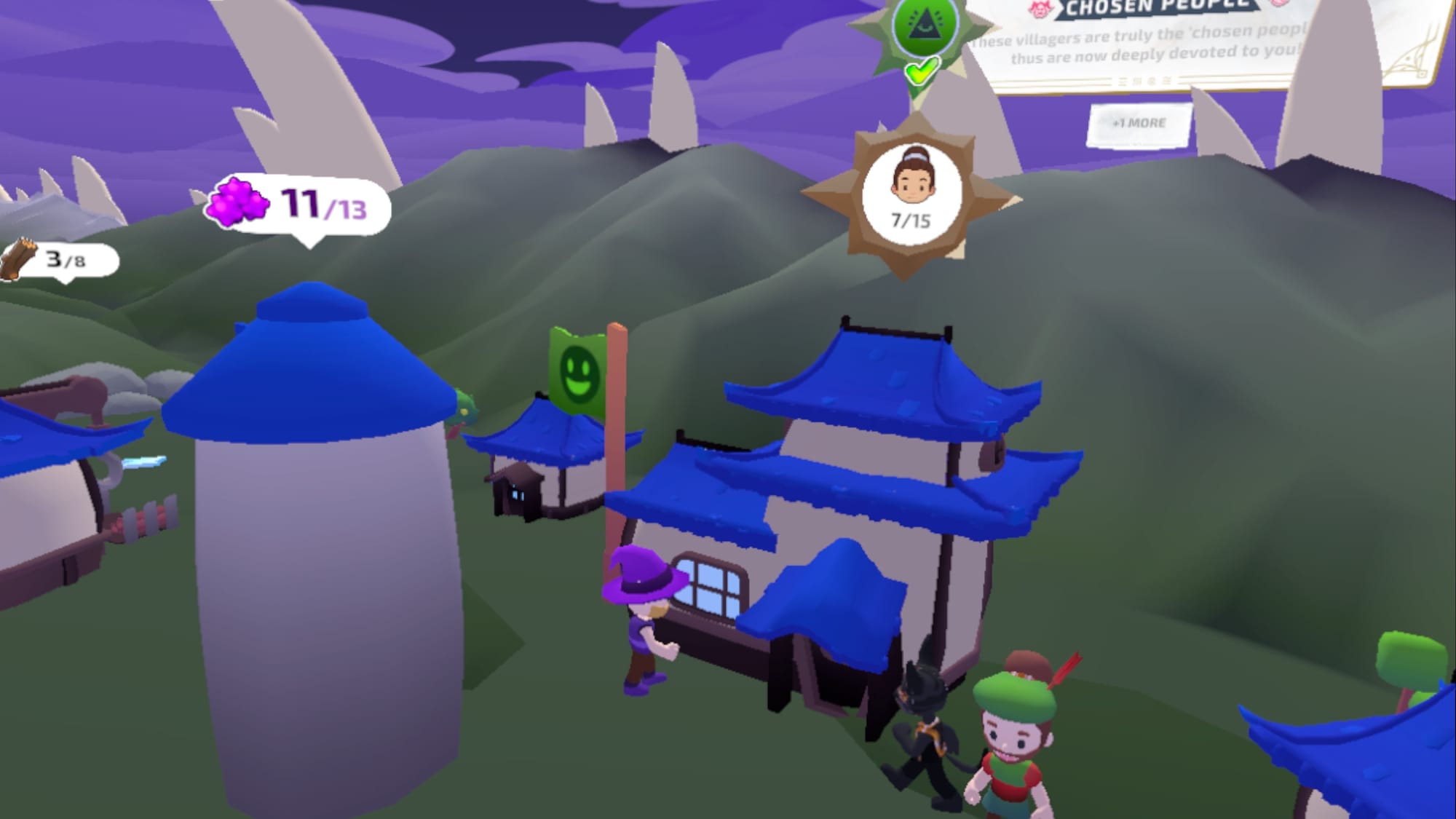
So who are you lording over, anyway? Your world is dotted with hamlets, and you’ll need to build them up, so citizens eventually support you as you go at loggerheads with other spiritual beings and mysterious forces. Turns out there’s truly no such thing as a selfless good deed.
Comfort
You move about by holding and grabbing “the world,” pulling yourself to your desired location. That makes How to God one of those games you can play on your couch – nausea is minimal and no real-world movement (or even standing) is needed.
Accessibility options are limited to selecting left-handed controls and turning on subtitles.
Nobody wants to pray to you while they’re hungry and homeless, and without their worship you’re not going to gain any “faith energy,” which you need to power any action supporting their most basic Maslow needs. In that sense, you can never be 100% evil; you’ll at least need to ensure villagers are fed and housed if you want to get anywhere. Setting fire to their houses may be fun momentarily, but will hamstring your progress.
Crafting is the other main mechanic, and it's one of my favorite parts of How to God. You can combine two elements or materials to form new items. Fire + wood = coal is an early example, but it gets more complex – you’ll even end up combining villagers with, say, iron to create troops for your little army.
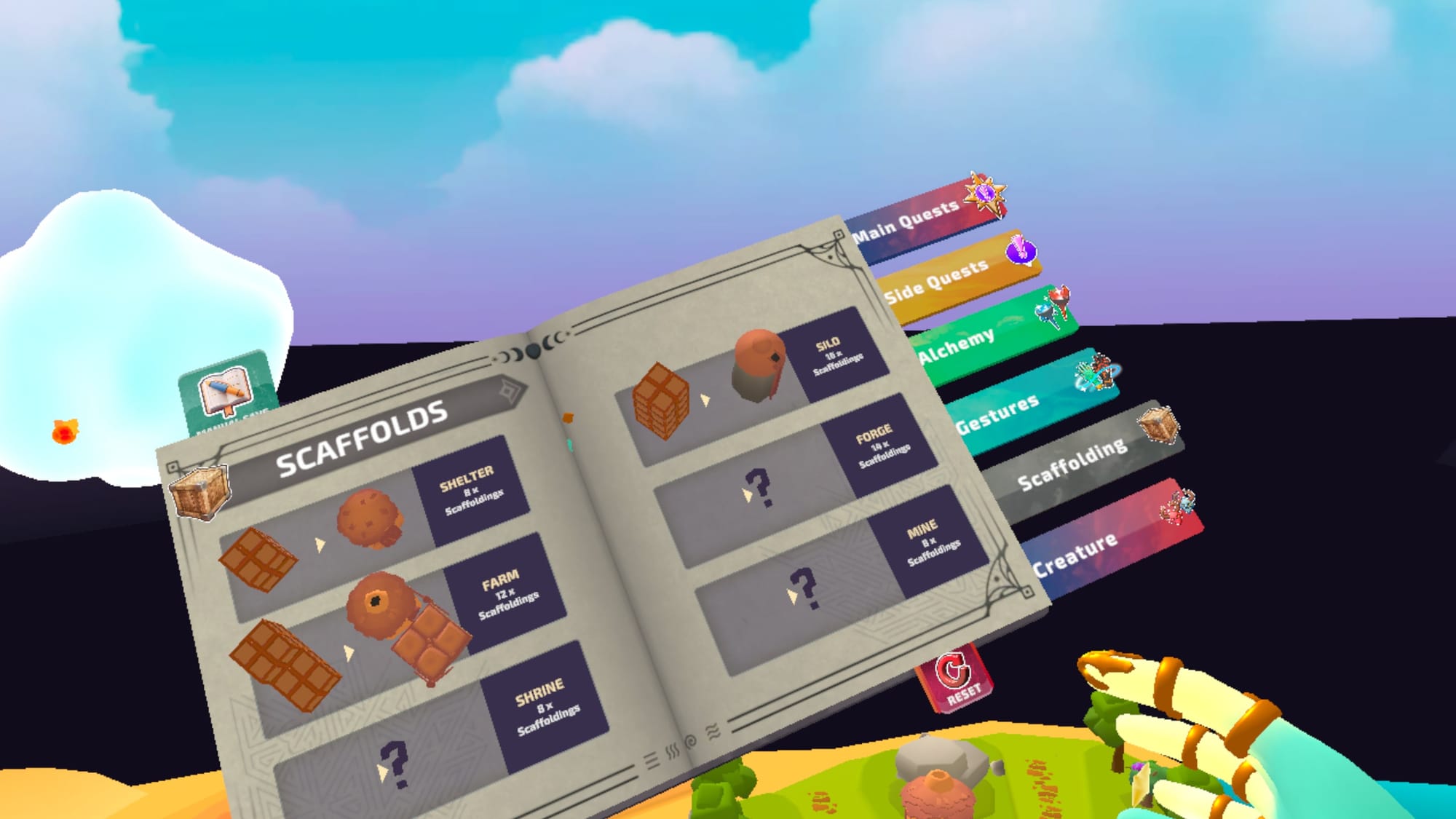
Recipes are helpfully stored in your Godbook, a convenient and well-designed compendium of information you’ll collect through your playthrough – from crafting formulas to details on your Creature’s moral alignment. There’s an impressive number of recipes to uncover; I hadn’t even unlocked them all by the time I was done with the campaign.
You’ll also need to build scaffolding for the village’s structures, from farms and lumber mills to new shrines. Think of it like an extremely simple Lego kit: snapping boxes together into vague shapes, like a tall scaffold approximating a silo. It’s nothing challenging by any means, but it’s a cute use of VR that differentiates How to God from god games on other platforms.
You can micromanage your Creature, ordering it to pick berries – or shake a hapless villager for no reason. Mostly, though, it’ll wander about like an errant child, trying to eat rocks or kick logs. There’s a handy brush and spray bottle on your wrist to discipline it in the same way that you would to train a cat; stroke your Creature with the brush to reinforce desired behaviors, or squirt to discourage. Of course, the definition of a “desired behavior” is up to you.
And as for your own behavior… The allure of any god game is being able to lean either way in the good/bad binary. I had good intentions in my first playthrough, vowing to earn my villagers’ respect through noble deeds, but as the campaign’s challenges intensified, I found that it is simply easier to be a bad guy.
For instance, in one situation I faced some aggressive neighbors; as a benevolent god, I could invest time “crafting” some disciples to go over and reason with them…. But it was honestly just easier to smite them with fireballs. Clouds aren’t just cute, by the way: rub them to create some static discharge and carpet-bomb a rival village with lightning. Or squeeze some rain out of them to blanket-water some trees, if you’re feeling more magnanimous.
How to God is heavily narrative-driven, with your advisors Good and Evil playing off each other as they guide you through objectives. The script is promisingly humorous, but numerous characters are dragged down significantly by AI voiceovers. Whatever your thoughts are on AI content, How to God’s characters are distractingly monotonous and emotionless from the very beginning.
Good and Evil are less egregious examples of the AI voicework, but even they often awkwardly emphasize the wrong syllables, forming a very jarring experience. With so many characters shepherding your objectives, this becomes a real bummer – it often feels as though they are simply reciting chores for you to complete, rather than offering engaging challenges and objectives.
It would also be good to at least see these voices more accurately reflect the regions I heard them in. For instance, I only heard one approximation of a Scottish accent in Scotland, with nearly every other speaking character affecting a generic English accent or American drawl.
Mercy or Mayhem: Win Either Way
I didn’t get a sense of how much my choices mattered – or whether there are even alternate endings. Maybe that’s a good thing (finding out adds replayability!) but having been a more neutral deity myself, I didn’t really have much motivation to go back and try leaning more into the naughty-or-nice extremes.
Robot voices aside, How to God is a solid addition to the god game genre across any platform – and a must-buy for VR enthusiasts of the genre especially. I enjoyed my time in the campaign, and I’m especially hoping for some major post-release content updates – bring on Shiva!
UploadVR normally uses a 5-Star rating system for our game reviews – you can read a breakdown of each star rating in our review guidelines. As an early access release, this review is unscored.