Vue lecture
Three insidious usage habits that shorten the service life of SSDs and practical countermeasures
Microsoft puts the brakes on speculation about a full Rust port of Windows
HWMonitor 1.61: Support for Zen 6 Medusa Point, Ryzen 9850X3D and Arrow Lake Refresh, a sober update with a signal effect
CES Expected To Usher In Game-Changing TV Tech For 2026
CES 2026 will be the launching pad for lots of new hardware, including a new wave of enhanced Mini LED TVs, which manufacturers are branding in a variety of ways. Some companies will call them "true color TVs", while others are being more literal -- like Hisense -- and calling out RGB Mini LED technology specifically, or using the Micro RGB Year In Review: 5 Biggest Tech Wins Of 2025, Plus Two Epic Fails
It's been quite a year. We came into it struggling with a massive GPU shortage, and we're coming out of it with a brutal memory shortfall. Microsoft largely lost the plot with both Windows and Xbox, and the President of the United States was at the center of one of the most notorious vaporware announcements of all time.
It wasn't all bad, ASUS ROG Swift PG32UCDM Gen 3 Tackles Annoying OLED Issue With BlackShield Film
ASUS is evidently so excited about its new ROG Swift OLED PG32UCDM Gen 3 gaming monitor that it's not waiting around for the Consumer Electronics Show (CES) in Las Vegas for its big unveiling. What has ASUS so geeked about the Gen 3 panel is a new BlackShield film that, according to the company, is a "game-changer for contrast connoisseurs."
It's KitGuru Advent Calendar Day 27: Win an ASRock B860I Lightning motherboard!
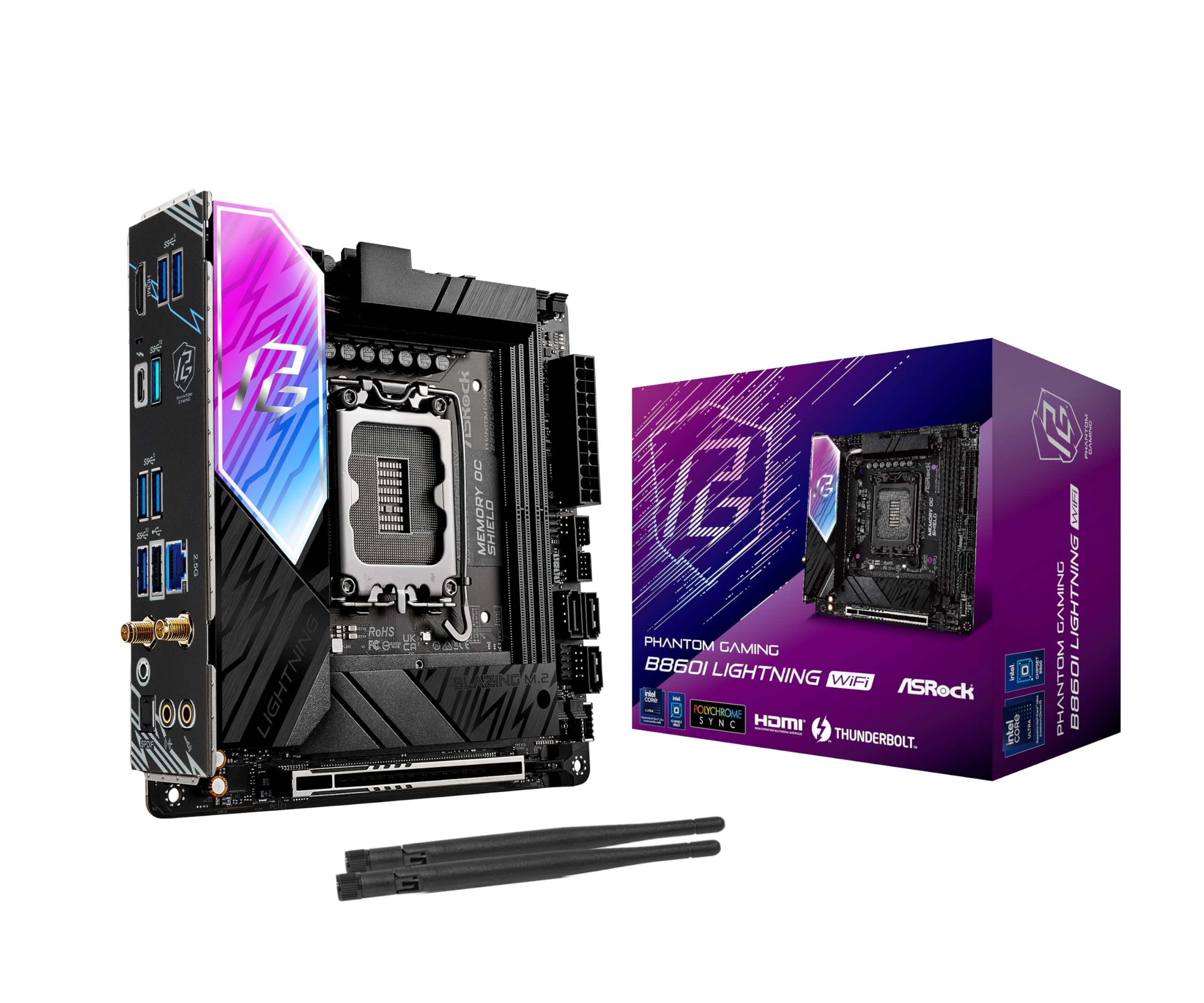
For Day 27 of the KitGuru Advent Calendar we have teamed up with ASRock to offer up a B860I Lightning motherboard, perfect for anyone looking to build a small but powerful Intel-based PC.
The ASRock B860I Lightning is a compact Mini‑ITX motherboard built for Intel’s LGA1851 processors, offering a surprisingly robust feature set for its size and price. It delivers strong power delivery with a 14‑phase design and active VRM cooling, supports high‑speed DDR5 memory, and includes modern connectivity such as PCIe 5.0 for graphics, a PCIe 5.0 M.2 slot, Thunderbolt 4, 2.5 GbE, and Wi‑Fi 6E.
How to Enter:
To enter this giveaway, all you have to do is head over to our competition announcement post on Facebook, HERE. In the comments, leave an answer to the following question – Have you ever built a Mini ITX PC?
This competition is open in the UK and EU.
The winner will be picked randomly shortly after 11AM GMT December 28th, and a new competition will be announced for Day 28. The chosen winner has 48 hours to respond, if we do not hear from them, a new winner will be picked.
Terms and Conditions: This competition is open in the UK and EU, starting at 11AM GMT on December 27th and ending at 10:59AM GMT on December 28th. Due to the busy Christmas season, prize deliveries could take longer than usual, and some prizes may not ship until January. In compliance with GDPR, we will not collect or store any personal information as part of this competition. Once the winner has been contacted and their prize received, personal details will be deleted from our email servers. Your details will not be shared, we respect your privacy.
KitGuru Says: Good luck to all who enter, we'll be back tomorrow morning to announce a winner and turn the calendar over to Day 28!
The post KitGuru Advent Calendar Day 27: Win an ASRock B860I Lightning motherboard! first appeared on KitGuru.AMD’s next generation RDNA5 will probably not arrive until mid-2027
Crazy: Hobbyists rely on self-soldered DDR5 RAM for the first time
Unusual Amazon misdelivery, Reddit user reports massive oversupply of PCIe 5.0 SSDs
RTX 5090: 16-pin connector burnt beyond recognition
Postponed farewell to DDR4, Samsung reacts to extreme market distortions
20 nice things you don’t need for Christmas | Picture story
New Motherboards With PhantomLink Seen Powering A Radeon RX 9070 XT Without Cables
Ahead of CES 2026, Sapphire is showing off a pair of "PhantomLink" (its equivalent to ASUS' BTF) AMD Radeon RX 9070 XT GPUs and motherboards. Both will come in white or black colorways and are (for now) China-exclusives.
This launch from Sapphire shows a continued push from AIB GPU partners and motherboard manufacturers to minimize cable Microsoft's Hardware-Accelerated BitLocker Promises A Huge Performance Boost
For Windows' BitLocker drive encryption, performance has been a long-standing pain point, especially as high-speed NVMe drives have become more dominant in the market. Fortunately, Microsoft has taken note and will soon be introducing hardware-accelerated BitLocker drive encryption and decryption on supported hardware, with future updates AMD Ryzen 9 9950X3D2 With 192MB L3 Cache Spotted In Multiple Benchmarks
The long-awaited "double X3D" CPU, which AMD once denied would ever happen, has finally confirmed its existence with new leaks over at Geekbench and Passmark. We'll cut to the chase: neither benchmark result is particularly interesting, as both show performance nearly identical to the extant Ryzen 9 9950X3D in these specific benchmarks. However, AMD's Next-Gen RDNA 5 Radeon GPUs Rumored For TSMC N3P And 2027 Launch
Over on X, Kepler_L2, one of the more trusted leakers in the industry, claims that AMD's next-generation RDNA 5 graphics architecture is slated for a mid-2027 release date, with chips being built on TSMC's N3P process. This claim emerged as a direct response to a quote tweet where another leaker, Jukan05, claimed AMD RDNA 5 would be made on PS5 Is $100 Off And More Top Gaming Deals Still Available After Christmas
Santa is back at the North Pole kicking back and relaxing before getting started on next year's batch of gifts. A year is a long time to wait if you didn't get what you hoping for, but the good news is you can take matters into your own hands with several deals that are still in effect the day after Christmas. That includes a $100 on selection LG's New UltraGear Evo Gaming Monitors Include A 5K2K OLED With AI Upscaling
LG is rolling out a brand new UltraGear evo (stylized with a lowercase 'e'), which it will show off in more detail at the Consumer Electronics Shows (CES) in Las Vegas early next month. In the meantime, LG is providing a few details about three upcoming models, one of which is a 39-inch curved OLED display that it's pitching as the world's SODIMM to DIMM adapters could help gamers work around DDR5 memory shortage
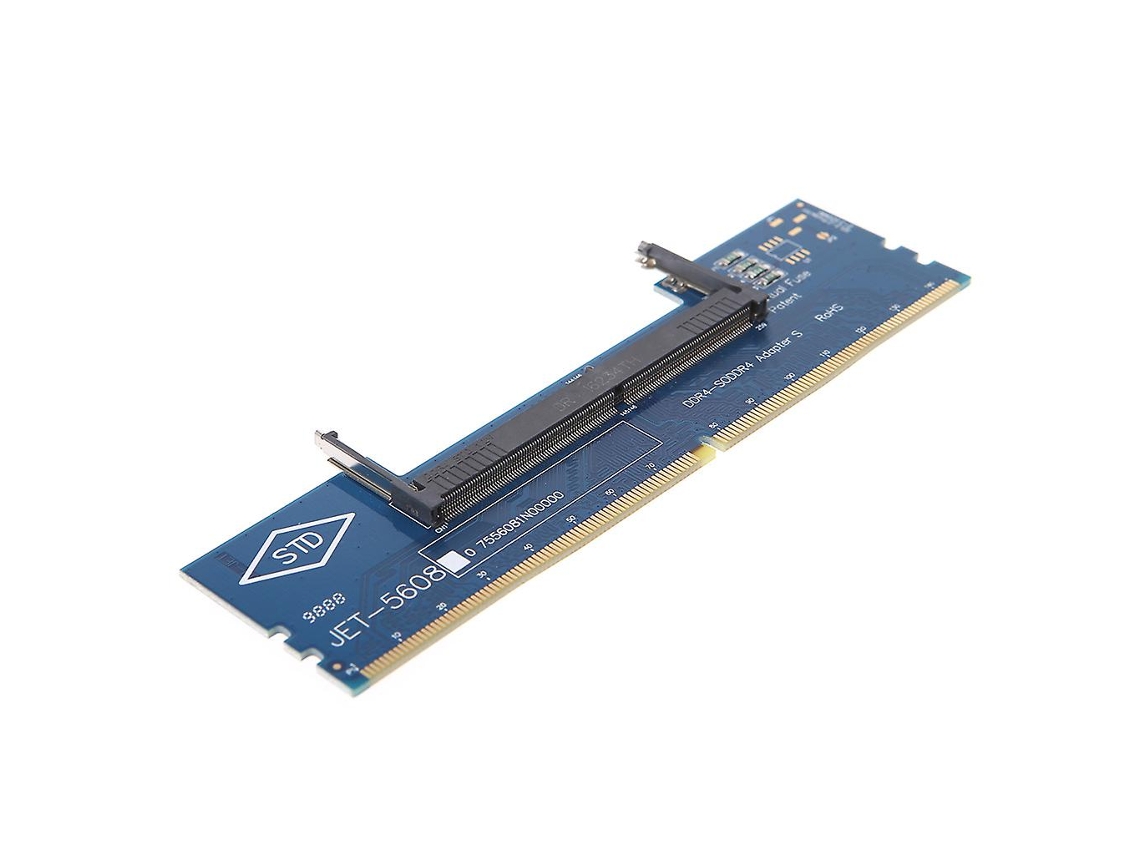
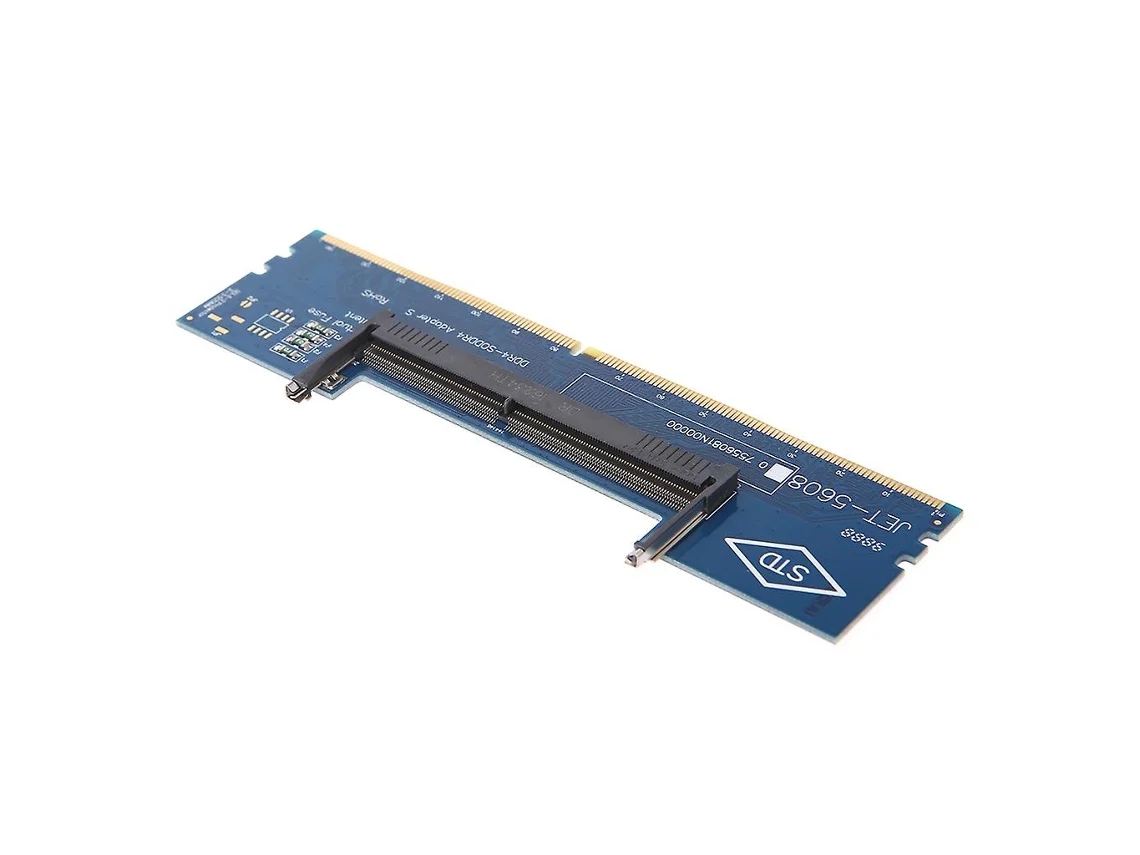
In recent weeks, DDR5 memory prices have begun skyrocketing due to a shortage brought about by AI companies buying up the majority of available DRAM supply. Gamers may be able to work around the shortages with a little ingenuity though, as desktop RAM can be replaced by SODIMM modules with the use of an adapter.
Hardware Canucks (via Videocardz) put this idea to the test in a recent video to see how viable it is. By going to the used SODIMM memory market, PC builders can save a decent amount of money compared to current desktop RAM prices. As 3DCenter points out, these adapters are currently very cheap as well, so an end user would be looking at a 30% saving when buying 16GB of DDR5 SODIMM memory, plus an adapter, versus buying the equivalent amount of desktop memory at current prices.
However, this cost-saving measure is not without technical caveats. These adapters are fundamentally a hack, designed for repurposing spare hardware. Desktop motherboards are engineered for specific trace lengths and signal integrity, and introducing an additional physical interface via a passive adapter inherently degrades the quality of that signal path. Consequently, users should expect to lose some performance. Laptop modules typically operate with much looser timings and lower clock speeds than desktop kits from the likes of Corsair or G.Skill. To maintain system stability, further downclocking may be necessary to compensate for the electrical noise introduced by the adapter's additional circuitry.
This trend follows other DIY measures we've seen, such as the rise of “solder-it-yourself” memory kits. While these SODIMM adapters are a far more accessible solution that doesn't require specialised electronics knowledge, they represent a similar level of desperation in the current market. For gamers who have spare SODIMM sticks from an old gaming laptop or access to cheaper mobile stock, the adapter offers a viable bridge to a functional PC, even if it means sacrificing the low-latency performance of desktop modules.
KitGuru says: This may be a good workaround in a pinch, but we wouldn't necessarily recommend running your PC this way.
The post SODIMM to DIMM adapters could help gamers work around DDR5 memory shortage first appeared on KitGuru.NuPhy unveils new Node 100 keyboards
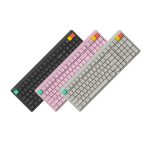
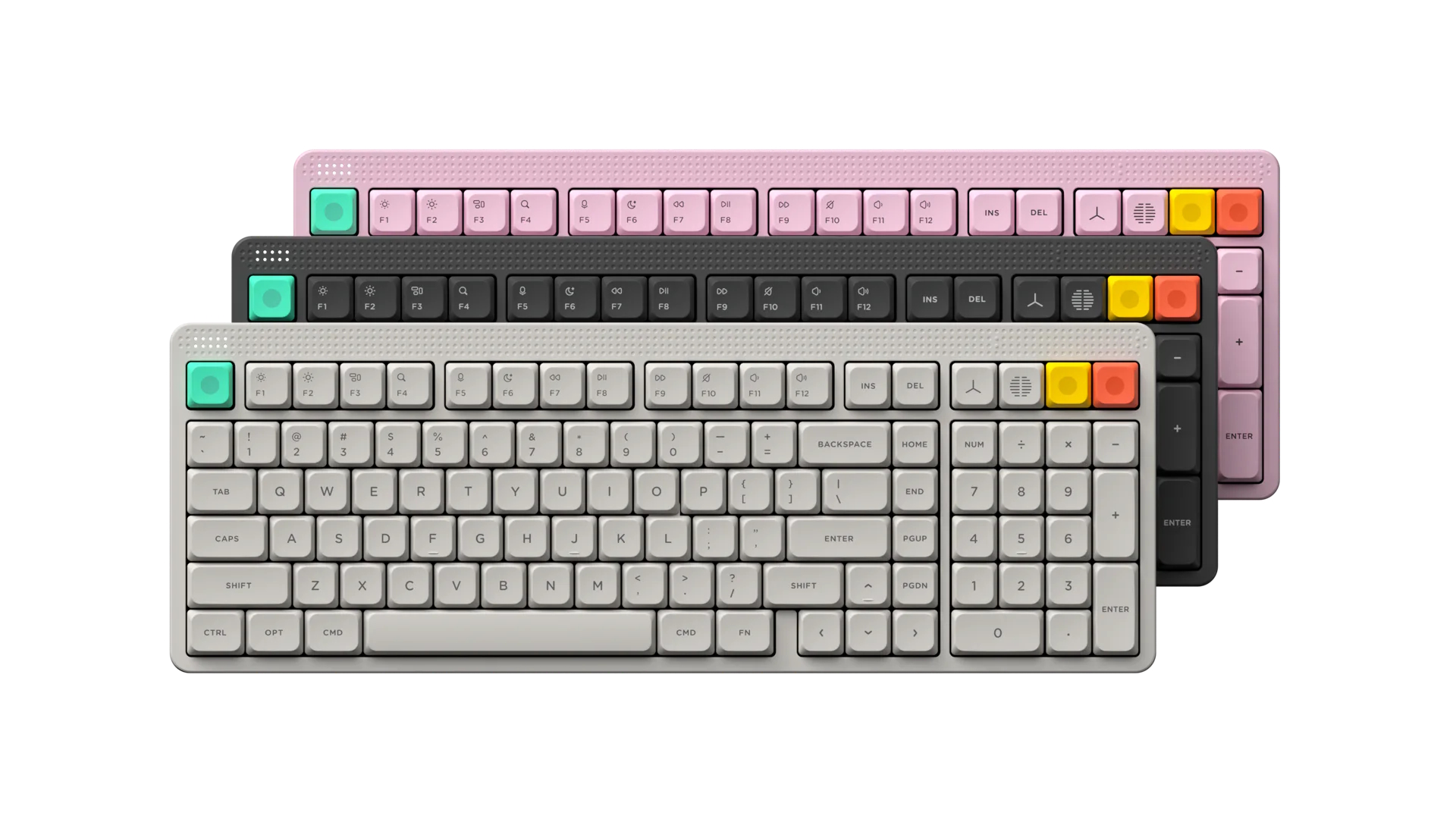
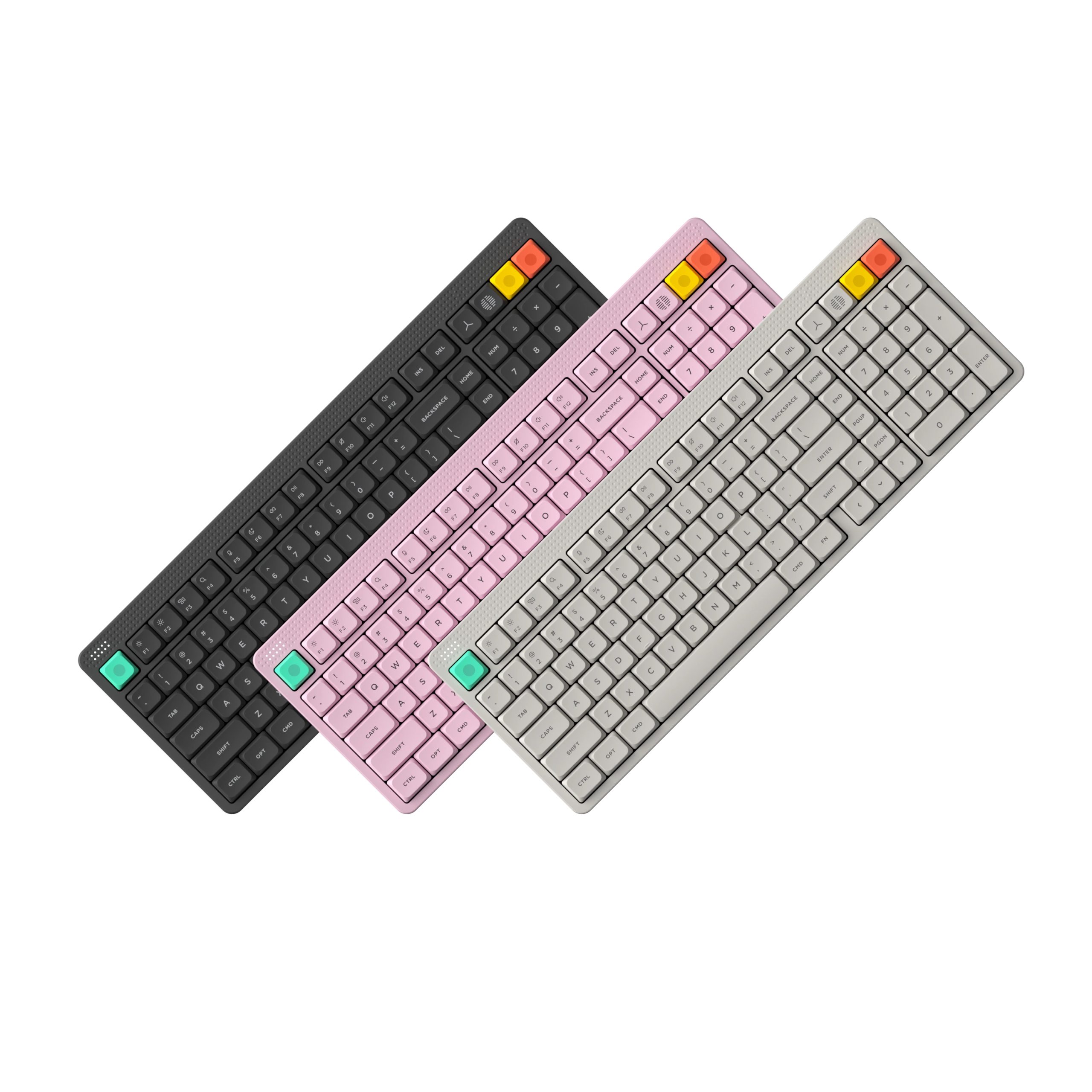
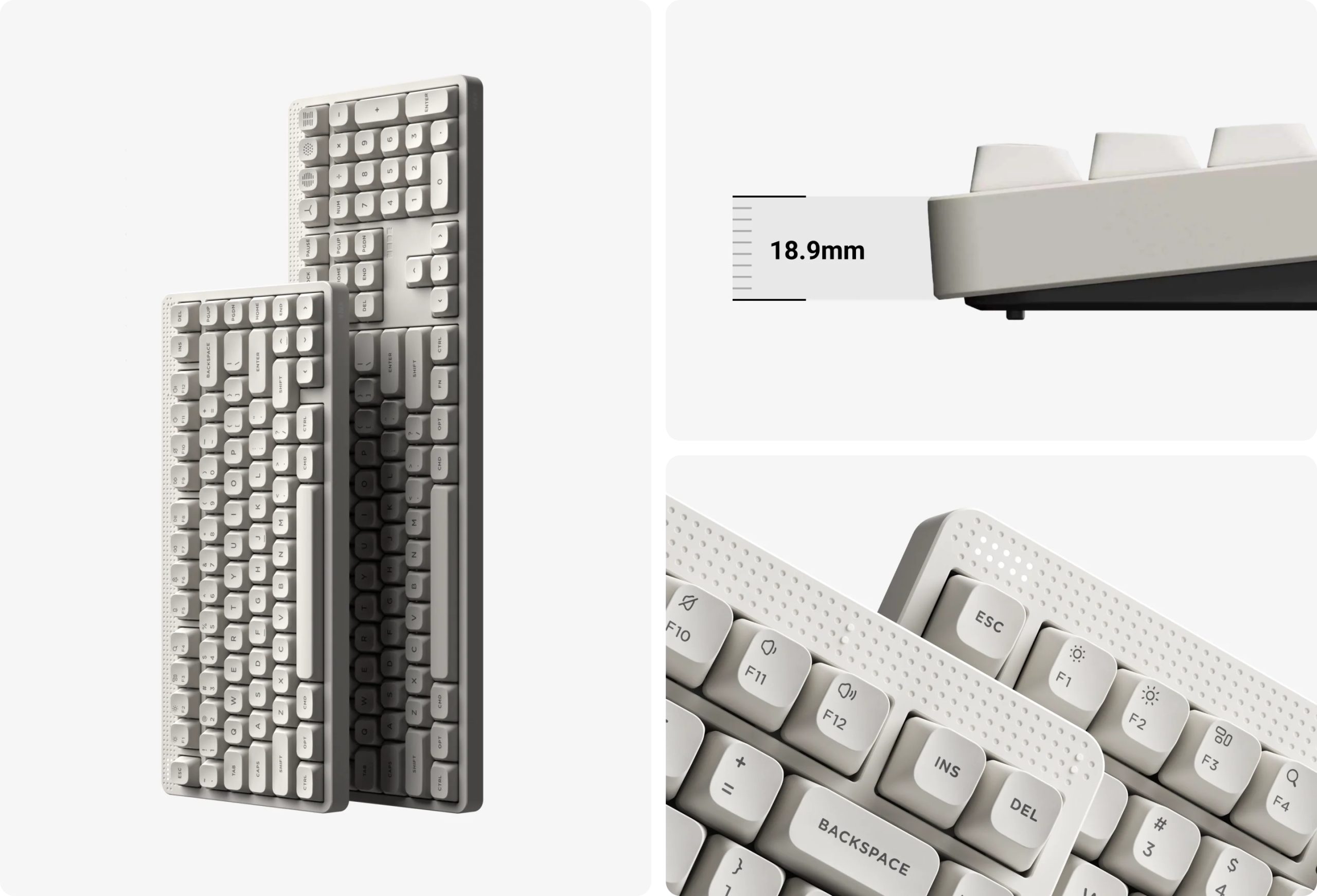
After launching the compact Node 75, NuPhy has officially unveiled the Node 100, a new low-profile mechanical keyboard with a retro minimalist design and an 1800 layout. Designed for users who need a full numpad without the desk-consuming footprint of a standard 104-key board, the Node 100 is available in three colours and three switch options.
The Node 100 retains the design elements of its smaller sibling, most notably the dot-matrix LED indicators on the left and the touch-sensitive strip on the right, which allows intuitive shortcuts and media controls. Despite its premium features, NuPhy has kept the price competitive, starting at $99.95 (with a $10 discount). This is achieved through a high-quality plastic construction with a PCB gasket mount system, ensuring a bouncier typing experience.
NuPhy is launching the Node 100 in two distinct configurations. The low-profile variants are aimed at the “productivity on the go” crowd, featuring a slim front height of just 13.8 mm and weighing in at 787 g. It uses NuPhy's Low-Profile Nano switches (based on Gateron's LP 3.0 tech) and dye-sublimated nSA profile PBT keycaps. The high-profile options are for the traditional desk setup, with a front height of 18.9 mm and double-shot PBT keycaps in the mSA profile.

Both versions feature two-stage adjustable feet, offering typing angles of 6°, 9°, or 12°, and support tri-mode connectivity: Bluetooth, 2.4 GHz wireless, and wired USB-C. Moreover, the two versions can be acquired in dark gray, pink, or white with linear, tactile, or silent mechanical switches.
Under the hood, the Node 100 runs on NuPhyIO firmware, which is fully programmable through a web interface. Battery life promises to be quite good: with south-facing RGB lighting disabled, the low-profile model (3,000 mAh) and the high-profile model (4,000 mAh) last up to 1,000 hours on a single charge. Even with the lights on, users can expect roughly 100 hours of wireless use.
Moreover, NuPhy is releasing the 3D reference files for the keyboard. This allows users with 3D printers to create custom accessories for the Node 100's top rail. Pre-designed files include everything from pen holders and phone stands to LEGO-compatible mounts, making the keyboard a literal playground.
KitGuru says: The Node 100 looks like a perfect blend of minimalism, enthusiast features, complete layout, and a decent price point. While you may find equivalent or even better standard/high-profile keyboards at this price, in the low-profile market, it can be challenging to find one this promising.
The post NuPhy unveils new Node 100 keyboards first appeared on KitGuru.Buckshot Roulette hits 8 million sales, console port gets delayed
The horror hit Buckshot Roulette continues to defy the typical trajectory of indie titles. Developer Mike Klubnika and publisher Critical Reflex have announced that the game has officially surpassed 8 million copies sold on PC, an impressive figure for a project that began as a small-scale experimental release.
To put that 8-million-unit milestone into perspective, the game has now outpaced several major AA and AAA releases of the year, including Clair Obscur: Expedition 33 and the lifetime sales of the entire Octopath Traveler franchise. Perhaps most impressive is that these numbers represent actual sales of a PC-exclusive game, as Buckshot Roulette has never been part of a subscription service like Xbox Game Pass or PlayStation Plus. The game's success seems to stem from its mechanical hook: a high-tension game of Russian roulette played with a 12-gauge shotgun in a grime-streaked basement.

On not-so-bright news, fans waiting for the promised console versions will have to wait a bit longer. Initially slated for a late 2025 release, the ports have now been pushed back to 2026. Critical Reflex cited “technical difficulties” as the primary reason for the delay. The game was built in the Godot engine, and the team is reportedly working through specific optimisation hurdles to ensure the console experience matches the PC original's atmosphere and responsiveness. Despite the delay, the franchise is expanding into the physical realm, but not as a release. Over the next year, fans can expect a physical release of the game's soundtrack, along with new merchandise.
For now, the only place to play Buckshot Roulette is on PC via Steam and Itch.io. With a multiplayer update already proving popular throughout 2025, the game appears well-positioned to maintain its momentum until it finally hits consoles next year.
KitGuru says: Eight million copies for a game about shooting yourself in a basement is a testament to how much “vibes” and a strong mechanical hook matter in the indie space.
The post Buckshot Roulette hits 8 million sales, console port gets delayed first appeared on KitGuru.How To Pitch Articles To UploadVR
Last Updated: December 26, 2025.
At UploadVR, we regularly publish articles from freelance writers and if you're looking to write for us, here's what you need to know.
Our regular duties often involve considering pitches from freelance writers. As a leading voice across XR media, our goal is to deliver informative articles filled with expertise, original reporting, fresh perspectives and other insights across VR/AR/MR. While the biggest stories and games will be covered by our internal staff, we're open to suggestions elsewhere too.
With that said, here are some key details to keep in mind.
How To Pitch Us In The Email
Here are some general guidelines we recommend following when pitching UploadVR.
- Clearly label your email subject as a pitch - To avoid your email getting lost, we'd normally advise adding “Pitch:” to your email's subject line while mentioning the game's name.
- Include your headline - Headlines are ultimately reflective of your wider article. We want to know which game is this referring to and what's the hook of your piece. We don't enforce a strict character limit, so you don't need to make these too short, but we're also not after headlines that read like an entire paragraph. You don't need to put the headline in the subject line either, as long as it's in the main body.
- Outline your pitch - Tell us how you plan to follow through with your pitch. Summarize your angle, how you intend to approach the article, and the structure you expect to follow.
- Keep it concise - If you need four or five paragraphs to explain your pitch, we advise reframing it. We don't need you to outline every individual aspect providing the key points are addressed, brevity is an art form in itself. Ideally, keep your pitch within one or two paragraphs when sending an email over.
- Sell the idea to us - This effectively comes down to two points. Why are you the best person to tell this story, and why do you believe this will interest our audience?
- Do not use Generative AI - Please do not use generative AI to write your email pitch in any form. It's incredibly obvious, we will not respond to these emails, and this will significantly impact our likelihood of working with you. We also reserve the right to remove any articles written using generative AI without prior disclosure.
- Link your previous work - If we haven't worked together before, please include links to a portfolio, personal blog, or author profiles for other outlets. We're open to working with new authors, but it always helps to have a sample of your previous work.
Where To Send Your Pitch
There are two ways to send your pitch. While our Contact Us page goes to the whole team, we'd normally suggest directly emailing our Editor-in-Chief, Ian Hamilton.
- Ian Hamilton: ian@uploadvr.com
You can also use our general inbox, tips@uploadvr.com, which goes to the wider editorial team. However, we generally suggest directly contacting editors instead, since that inbox is where we recommend readers/developers/publishers/PR etc. to send in relevant news stories and updates.
What We're Interested In Commissioning
- Original reporting and interviews - If you've got a high-interest story where you've directly spoken with different sources, we're always willing to hear your pitch. If you're pitching interviews for a game that's not publicly launched, we'd ideally need you to have gone hands-on with it first.
- Community-driven features - Do you have an intriguing tale you'd like to share about an existing VR community? Whether that's social VR platforms like VRChat or more traditional multiplayer games, we're interested in hearing these stories.
- Reviews, impressions, previews - Reviews and impressions are the most commonly commissioned articles by UploadVR. Though we work with an existing freelance pool of writers, we're open to hearing from more people if you've got a specific interest in any niche genres.
What We Currently Aren't Looking For
- Anything that isn't related to VR/MR/AR/XR - This may sound obvious, but we regularly receive pitches that have nothing to do with the XR industry. We won't cover more traditional gaming unless a game has VR support, or anything outside XR technology. If your pitch only peripherally relates to XR, we probably won't accept it.
- Op-eds - While we welcome unique perspectives, op-eds (that aren't interview-driven) about big games or new hardware are largely matters UploadVR prefers to keep to its staff.
- Q&A interviews - We're open to interview pitches, but we don't want these features presented in a standard question and answer format. Here are some examples of our preferred approach.
- Stories you've already written - This rule is mostly to avoid wasting your time. Editors may agree to a pitch while also requesting changes to your approach, which could involve significant rewrites if you've already completed your article. We'll always aim to help you shape these stories if guidance is needed.
- Articles about Web3/Crypto/Generative AI/Gambling - Though UploadVR has covered how select XR apps use generative AI in the past, this is not a subject we'll ever commission.
Our Rates
As of December 13, 2025, UploadVR pays the following USD rates for these types of articles with the following suggested word counts.
- News - $50 (200–300 words)
- Previews/Impressions - $150 (500–700 words)
- Reviews - $250 (minimum 900 words)
- Review-in-progress - We pay an extra $60 minimum for a one-off update. This is negotiable depending on the scope.
- Features - Rates are negotiable due to how varied they can be, but we start from a minimum rate of $175. Please note that feature pitches are not a current priority for us, though we'll still consider them.
Other Details
We occasionally take unpaid guest articles or editorials from XR experts like developers, researchers, and engineers looking to share something of broad interest to our community.
- Devin Reimer: Why Every VR Developer Needs A Hand Tracking Plan
- Don Carson: Cultivating Magic: The Art And Principles Of Walkabout Mini Golf Course Design
- Yacine Salmi: Sweet Surrender: A PlayStation VR2 Post-Mortem
Guest articles like this are not something that would apply to freelance journalists. However, if you're an industry expert looking to share your insights, you can email Ian Hamilton (ian@uploadvr.com) about this.
We also have a separate marketing department with a different pool of writers producing labeled “Sponsored” content adhering to our public guidelines. We do not commission writers who have worked on editorial articles with us for sponsored content. Potential marketing partners can email Beck Gibson (beck@uploadvr.com) with inquiries, this is not something handled by Ian.
For everything else that's not been addressed above, please email Ian or use the Contact Us form.