↩ Accueil

Vue lecture

Detroit: Become Human hits new milestone with 15 million copies sold

Detroit: Become Human is the latest game from French studio Quantic Dream. Released back in 2018 for PS4 (and PC one year later), the story-focused title saw a mixed reception, with many loving it and others not so much. Despite this, the game has gone on to be a big success for the studio. While fans continue to wait for the studio’s Star Wars Eclipse, Detroit: Become Human has quietly been selling millions more copies – with the title having now surpassed 15 million units sold.

Making the announcement via LinkedIn, the official Quantic Dream page wrote: “We are proud to announce that Detroit: Become Human has surpassed 15 million units sold worldwide;” confirming that the title is now “Quantic Dream’s best-selling game to date.”

Detroit
15 million

For context, Detroit: Become Human reached 8 million copies sold back in January of 2023. This then rose to 9 million by December of the same year – with the game hitting the 10 million mark in October of 2024. Finally, the most recent figures put the game at 11 million copies sold as of February 2025 – meaning it sold a further 4 million copies in less than a year.

Given the game’s relatively mixed reception, it is interesting to see Detroit: Become Human continuing to sell this well so many years later. That said, considering the fact that we are still waiting for the next project from Quantic Dream to be released, it is fortunate for them that the now 7 year old title is continuing to find millions of new players.

KitGuru says: What do you think of Detroit: Become Human? Are you surprised by its continued success? How many more years do you think we’ll have to wait for Star Wars Eclipse? Let us know down below.

The post Detroit: Become Human hits new milestone with 15 million copies sold first appeared on KitGuru.

  •  

Copper, Silver, And Tin Price Spikes Trigger PSU And CPU Cooler Cost Warning

Copper, Silver, And Tin Price Spikes Trigger PSU And CPU Cooler Cost Warning The rumor mill is spinning once again, and if what we've heard is true, we could soon see a pricing increase of 6-10% for CPU coolers and power supplies. While this thankfully isn't in the same ballpark as the ongoing RAM crisis or developing NAND shortage, it's still not great news if it proves true. That's still a huge if, though, since
  •  

Apple's Open-Source On-Device AI Instantly Turns Images Into Volumetric Scenes

Apple's open-source on-device AI model instantly turns images into scenes, and Vision Pro owners can try it out in the app Splat Studio.

Since visionOS 26, Apple's own Photos app has included a one-click feature to almost instantly turn any image into a 'Spatial Scene'. It's essentially a volumetric photo with a limited area of viewing freedom, which you can slightly lean around to "peak" into.

Meanwhile, over the past year or so multiple open-source and proprietary AI systems emerged that can go much further, turning a photo into a scene that you can freely explore, even walk around. For example, Marble lets you do this in your headset's web browser and explore the scene in WebXR.

Marble Turns An Image Into A WebXR Volumetric Scene In Minutes
Marble, an AI model from World Labs, can turn a single image into a volumetric scene that you can view in WebXR in a matter of minutes.
UploadVRDavid Heaney

Marble is a computationally expensive server-side model, however, that takes minutes to produce its result. And that's what makes Apple's SHARP particularly interesting.

SHARP runs on typical consumer devices, with general CPU support as well as Nvidia CUDA and Apple Silicon Metal hardware acceleration, taking less than a second to complete on most hardware.

In a rare move from Apple, SHARP is free and open-source, with the code available on GitHub. You can easily download and run it on a Mac, for example.

As with almost all of the remarkable advancements in 3D reconstruction over the past few years, it generates a Gaussian splat, fitting millions of semitransparent colored blobs (Gaussians) in 3D space so that arbitrary viewpoints can be rendered realistically in real-time. You receive the result as a .ply file that can be rendered in any standard 3DGS viewer.

For Apple Vision Pro owners, Portugal-based developer Rob Matwiejczyk built a visionOS app that integrates Apple's SHARP model into an easy-to-use graphical interface and eliminates the need to use a Mac or PC.

0:00
/0:35

UploadVR testing out Splat Studio, the visionOS app powered by Apple's SHARP.

Called Splat Studio, the app is available for free on the App Store, and runs entirely on-device. Just choose any image from your Photos library and it instantly gets turned into a 3D scene floating in front of you, which you can rotate, move, and scale with your hands.

I tested Splat Studio on the M5 Apple Vision Pro, using the same Steam Dev Days 2014 VR room I used to test Marble. For comparison, I also turned the same image into a Spatial Scene in the visionOS 26 Photos app. You can see footage of the Splat Studio result above, and of the Spatial Scene below.

The Splat Studio app turned the image into a scene in around 20 seconds, compared to the near-instant result of Apple's Photos app, but it's unclear how much of this is truly due to the SHARP model compared to any overhead the Splat Studio app may add.

0:00
/0:32

The Spatial Scenes feature of Apple Photos in visionOS 26, for comparison.

As for the result, while the Apple Photos Spatial Scene lets you peer into the scene, the degree to which you can move in each direction is relatively limited. Meanwhile, the SHARP result in Splat Studio lets you freely move around the scene. The tradeoff, as with many generative AI results, is some detail loss, as well as hallucinated details the further you go from the original perspective of the image.

  •  

Larian confirms Baldur’s Gate 3 won’t be coming to Switch 2

One of the biggest video game successes in recent years has been Larian Studios’ Baldur’s Gate 3. Released back in 2023, the RPG took the industry by storm, winning countless awards and selling over 20 million copies. With the Switch 2 launching last year, many have been hoping to see the RPG come to Nintendo’s platform at some point. Unfortunately, Larian have given a seemingly definitive answer.

As part of a recent AMA conducted by Larian Studios on Reddit, roughly a dozen developers from the studio were present to answer fan questions regarding Baldur’s Gate, Divinity or whatever else came to mind.

Responding to one user who asked “Baldur’s Gate 3 for Switch 2? Is it even possible?” Larain’s CEO Swen Vincke offered some disappointing yet interesting details, stating: “We would have loved to but it’s (sic) wasn’t our decision to make.”

Larian Switch

Though we unfortunately did not get any further details, Vincke’s wording seems to suggest that the decision to not make a Switch 2 port came from higher-up the ladder – namely the D&D IP owners Wizards of the Coast / Hasbro.

Of course, that’s not to say that a port for Switch 2 could never happen. After all, money talks and assuming the IP owners think that a port of BG3 would make them more money then it could still materialise down the line – perhaps when the Switch 2 has further matured.

We will have to wait and see, but don’t expect Baldur’s Gate 3 to come to the Switch any time soon…if ever.

KitGuru says: Are you disappointed by this confirmation? Would the Switch 2 be able to handle BG3? Why do you think Hasbro / WotC said no? Let us know down below.

The post Larian confirms Baldur’s Gate 3 won’t be coming to Switch 2 first appeared on KitGuru.
  •  

Fable reportedly launching day-one on PS5 according to insider

Following some slight teasers, Microsoft officially confirmed that they would be hosting their annual Xbox Developer Direct Showcase this month – with the stream set to go live on the 22nd of January. Said to focus on Forza Horizon 6, GameFreak’s Beast of Reincarnation and the highly-anticipated Fable reboot, the latter is reportedly planned to launch day-one on PS5 according to insiders.

In the lead-up to 2026’s Xbox Developer Direct, known industry insider Andy Robinson of VGC offered some early details on the upcoming showcase, claiming that the long-awaitied Fable will be announced as a day-one release for PS5 alongside its expected Xbox launch – stating:

“Fable is day and date (on PS5), that's what I've been told[…] I know they have been targeting PS5 for a while.”

Fable Forza

Given that Forza Horizon 5 was only ported to PS5 relatively recently, there was not much of an expectation that its sequel would arrive day-and-date with the Xbox release. Even so, Robinson offered some additional details on this matter, claiming: “As for Forza the explanation I was told by someone who was there was it just wasn't ready.”

Between Forza and Fable, having the latter as a day-one release makes the most sense, not only due to the fact that Horizon 5 is still relatively new to the PS5 platform, but also due to the upcoming RPG likely needing as much help as it can get sales-wise (especially compared to Forza).

Regardless, we should hopefully learn all about these two upcoming titles when the Xbox Developer Direct goes live on the 22nd of January.

KitGuru says: Are you looking forward to the Direct? Which of the confirmed games are you most excited to learn more about? Would you rather Fable or Forza launch day-one across multiple platforms? Let us know down below.

The post Fable reportedly launching day-one on PS5 according to insider first appeared on KitGuru.
  •  

Steam breaks concurrent player record with over 42 million users

While Steam is easily the biggest platform for gaming on the PC side of things, Valve’s storefront continues to find new players on a consistent basis. Just a few months on from their last major milestone, Steam has officially reached a new peak concurrent player count of over 42 million users.

As published by the tracking site SteamDB, Sunday the 11th of January saw Valve's platform reach a new milestone figure, with over 42 million users all online at the same time (42,042,778 to be exact).

As mentioned, this marks a notable increase over the previous record, which saw Steam hit 41 million back in October of last year. That said, the platform has been growing quite quickly for the past few years now, with it hitting 34 million concurrents for the first time back in March of 2024.

Since then, Steam seems to have been on a roll, with the platform hitting 36 million just a few weeks later; surpassing 37 million by August 2024 – and reaching 39 million by December.

Steam 42 million

While 2025 was slightly slower, we still saw record player numbers multiple times, with Steam hitting 40 million concurrents in March of 2025 and then 41 million by October.

Of course, concurrent users is but one metric which can be used to determine a service’s success – with daily active users, monthly active users and more being arguably more useful metrics. Still, having over 42 million people active on Steam at the exact same time is impressive. It will be curious to see whether the platform ever manages to reach 50 million concurrents.

KitGuru says: Were you online this past Sunday? Is concurrent players a useful metric? How long do you think it’ll take for the platform to hit 50 million? Let us know down below.

The post Steam breaks concurrent player record with over 42 million users first appeared on KitGuru.
  •  

The Division 3 is “shaping up to be a monster” according to Ubisoft

The Division is one of Ubisoft’s more interesting franchises. While the first game disappointed many due to a number of visual downgrades when compared to its pre-release materials, the series did find a dedicated audience who enjoyed the gameplay loop. That said, it’s now been almost 7 years since The Division 2’s launch and while fans await the previously-announced 3rd entry, Ubisoft have offered some slight teasers, claiming it to be “shaping up to be a monster.”

During the New Game+ Showcase, The Division 3’s executive producer Julian Gerighty offered an update on the long-awaited threequel.

While we did not get any footage of the title, according to Gerighty: “It’s shaping up to be a monster. I can’t really say anything more than that. But this is within these walls in Massive. We are working extremely hard on something that I think will be as big an impact as Division 1 was.”

The Division Ubisoft

As mentioned, while The Division as a series does have its problems, the first game did indeed make a big impact back in the day – especially in its pre-release period where the game served as a bit of a then-next-gen showpiece.

Given that we’ve seen nothing from The Division 3 yet, it is possible that Ubisoft are planning to line the title up with the next-gen PS6, which would make for quite a notable upgrade over 2019’s Division 2. Regardless, here’s to hoping that when The Division 3 is shown off that Ubisoft are more honest in their presentation of the title.

KitGuru says: Are you excited for The Division 3? How different do you expect it to be when compared to the previous two entries? Will it be a next-gen launch title? Let us know your thoughts down below.

The post The Division 3 is “shaping up to be a monster” according to Ubisoft first appeared on KitGuru.
  •  

Microsoft Ends This Decades-Old Offline Activation Method For Windows

Microsoft Ends This Decades-Old Offline Activation Method For Windows Microsoft has officially retired the traditional phone-based activation system for Windows and Office that served as a reliable fallback for users for over two decades. Indeed, the "slui 4" command has up until now been served PC builders, privacy advocates, and IT administrators well since the days of XP. It allowed users to activate a
  •  

Lenovo Leads PC Market Boom As Shipments Rebound But Will 2026 Be A Bust?

Lenovo Leads PC Market Boom As Shipments Rebound But Will 2026 Be A Bust? Panic over soaring memory costs in the second half of last year didn't stop the PC market from rebounding in a big way, with global shipments of desktops, laptops, and workstations surging 10.1% to 59 75 million units in the fourth quarter of 2025, according to Omdia. The last-quarter surge propelled the full-year tally to 279.5 million units
  •  

Instagram Denies Breach After 17 Million Account Leak Sparks Panic

Instagram Denies Breach After 17 Million Account Leak Sparks Panic A massive database purportedly containing the personal information of over 17 million Instagram users has surfaced on a popular hacking forum, sparking widespread concern over the security of the social media giant’s infrastructure. Meta denies this "leak" is anything to be concerned about and says it's merely from a compilation of older data. Forum
  •  

Nintendo's First Colorful Joy-Con Refresh For Switch 2 Is Up For Preorder

Nintendo's First Colorful Joy-Con Refresh For Switch 2 Is Up For Preorder Switch 2 owners now have access to Nintendo's first alternate color scheme for its Joy-Con 2 controllers. For those looking to change things up, Nintendo and its retail partners are now offering a set of Joy-Con 2 controllers in light purple (left Joy-Con 2) and light green (right Joy-Con 2). However, like the original red and blue Joy-Con
  •  

Micron Defends AI Pivot And Rejects Claim It Abandoned Consumer Market

Micron Defends AI Pivot And Rejects Claim It Abandoned Consumer Market As far as Micron is concerned, the prevailing narrative about its recent strategy shift to focus more heavily on AI customers gets one *ahem* Crucial detail wrong. Actually more than one, though the biggest misconception from Micron's vantage point is that it's abandoning the consumer market in favor of AI, when in reality it's simply serving
  •  

Obsidian Entertainment’s Avowed officially launches on PS5 next month

While Obsidian Entertainment’s Avowed failed to live up to the high expectations which some fans had for the title upon its release last year, the Xbox console exclusive was a solid title in its own right – even if it wasn’t the Skyrim successor which many were hoping for. With updates to the game still planned for 2026, a PS5 port for Avowed has now been officially announced – set to launch exactly one year on from its Xbox release.

Announced during the recent New Game+ Showcase, Obsidian Entertainment’s Avowed has been officially confirmed to be launching on PlayStation 5 next month; arriving on the 17th of February 2026 (almost exactly one year on from its Xbox release).

Available to pre-order now for £39.99 (£49.99 for the Premium Edition), the PS5 release will arrive alongside the game’s long-awaited ‘Winter Update’ (which was initially planned to release late last year).

Avowed PS5

Now labelled as the Anniversary update, the patch is set to include the long awaited new game+ mode alongside a new weapon type; character presets; appearance modifiers; new races; a photo mode and more.

As mentioned, Avowed was a decent game in its own right though was held back due to fans expecting it to be the next Skyrim-like experience. With a pretty fun first-person magic combat system and solid exploration however, Avowed could be worth checking out when it launches on PS5 next month.

Discuss on our Facebook page HERE.

KitGuru says: What did you think of Avowed at launch? Have the updates released so far improved the experience? Let us know your thoughts down below.

The post Obsidian Entertainment’s Avowed officially launches on PS5 next month first appeared on KitGuru.
  •  

Noctua updates roadmap, Pulsar Feinman mouse & Seasonic Prime PX PSU pushed back

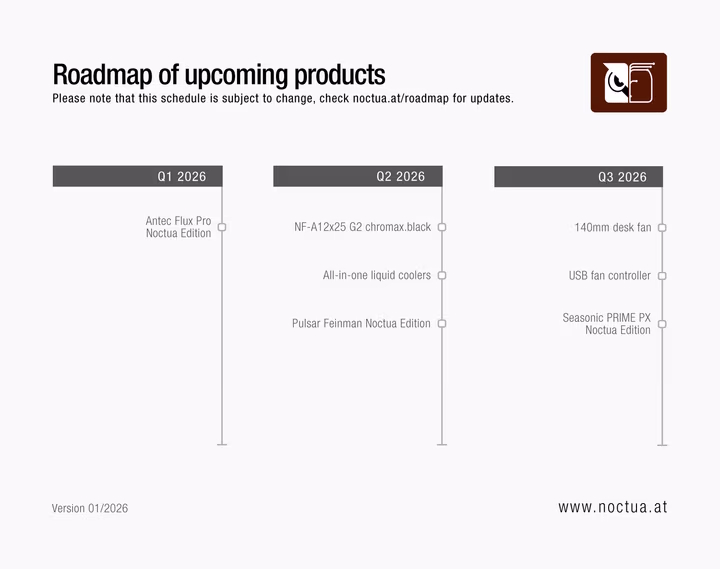
Noctua has opened the new year by updating its public product roadmap. As some might've guessed, the January 2026 schedule is defined primarily by shifting deadlines. While the list of upcoming hardware remains identical to the last version published, Noctua has moved the majority of its near-term releases further back into the year.

The first quarter of 2026 was initially slated to be a busy period for the brand, but the updated roadmap (via Hardware&Co) sees two out of three major launches slip. The Antec Flux Pro Noctua Edition chassis remains the sole survivor of the Q1 window, standing as the only product currently on track for an immediate release. Meanwhile, the Pulsar Feinman Noctua Edition gaming mouse and the much-requested NF-A12x25 G2 chromax.black fans have both been pushed into Q2. Also in Q2, there's the company's first AIO liquid coolers.

Moving on to Q3, we have the Seasonic Prime PX Noctua Edition PSU, which has been a staple of Noctua's trade show booths for over a year. The PSU is joined by the 140 mm desk fan and the dedicated USB fan controller, both originally slated for Q2.

This latest update is perhaps most significant for what it doesn't include. No new product entries have been added to the roadmap, suggesting Noctua is currently prioritising the completion of its existing projects over new experimental designs.

KitGuru says: For those waiting on the Seasonic collaboration or the all-in-one liquid coolers, it seems you'll have to wait a bit longer. If these new targets hold, the Prime PX PSU series will finally arrive more than twelve months after its initial public presentation, continuing Noctua's reputation for prioritising “quality optimisation” over strict adherence to a calendar.

The post Noctua updates roadmap, Pulsar Feinman mouse & Seasonic Prime PX PSU pushed back first appeared on KitGuru.
  •  

CES 2026: ASRock showcases new AIO coolers, QD-OLED monitor

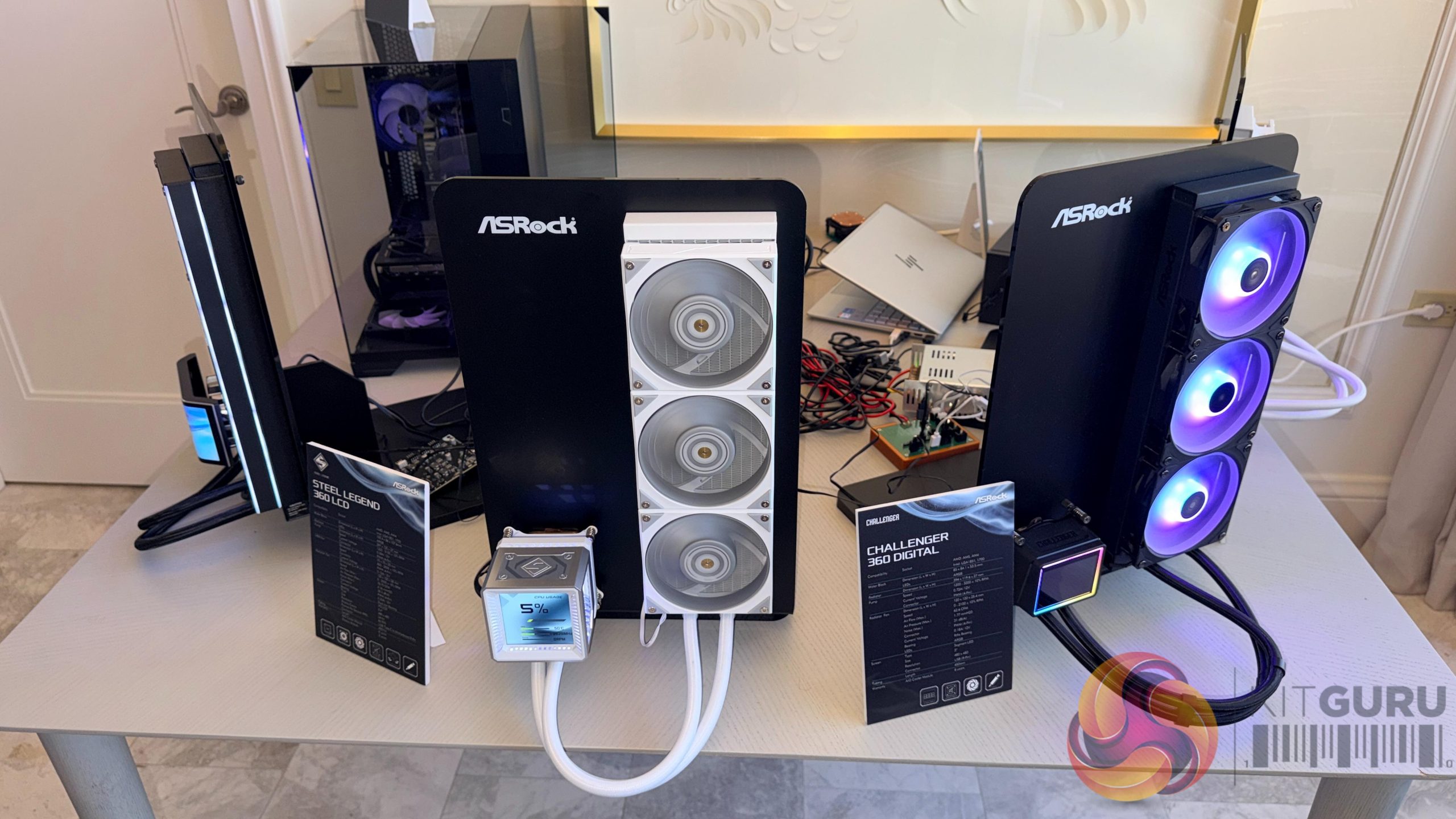
At CES this week, we caught up with ASRock to get a first-hand look at their new line-up of AIO liquid coolers, a new QD-OLED monitor and new compact PCs.

Watch via YouTube below:

Timestamps:
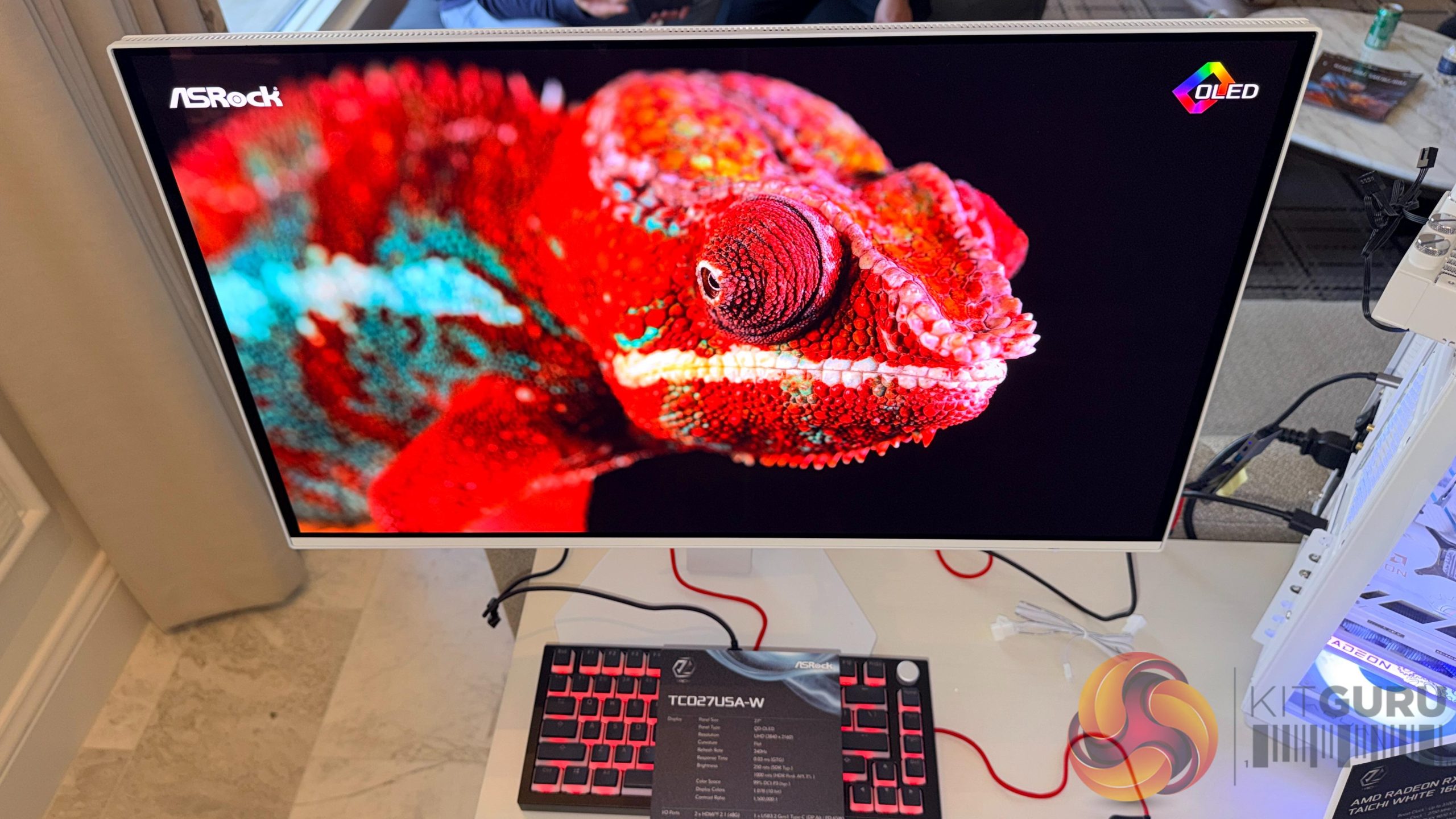
00:00 New 27in 4K QD-OLED
00:44 Mini PCs and NUC systems
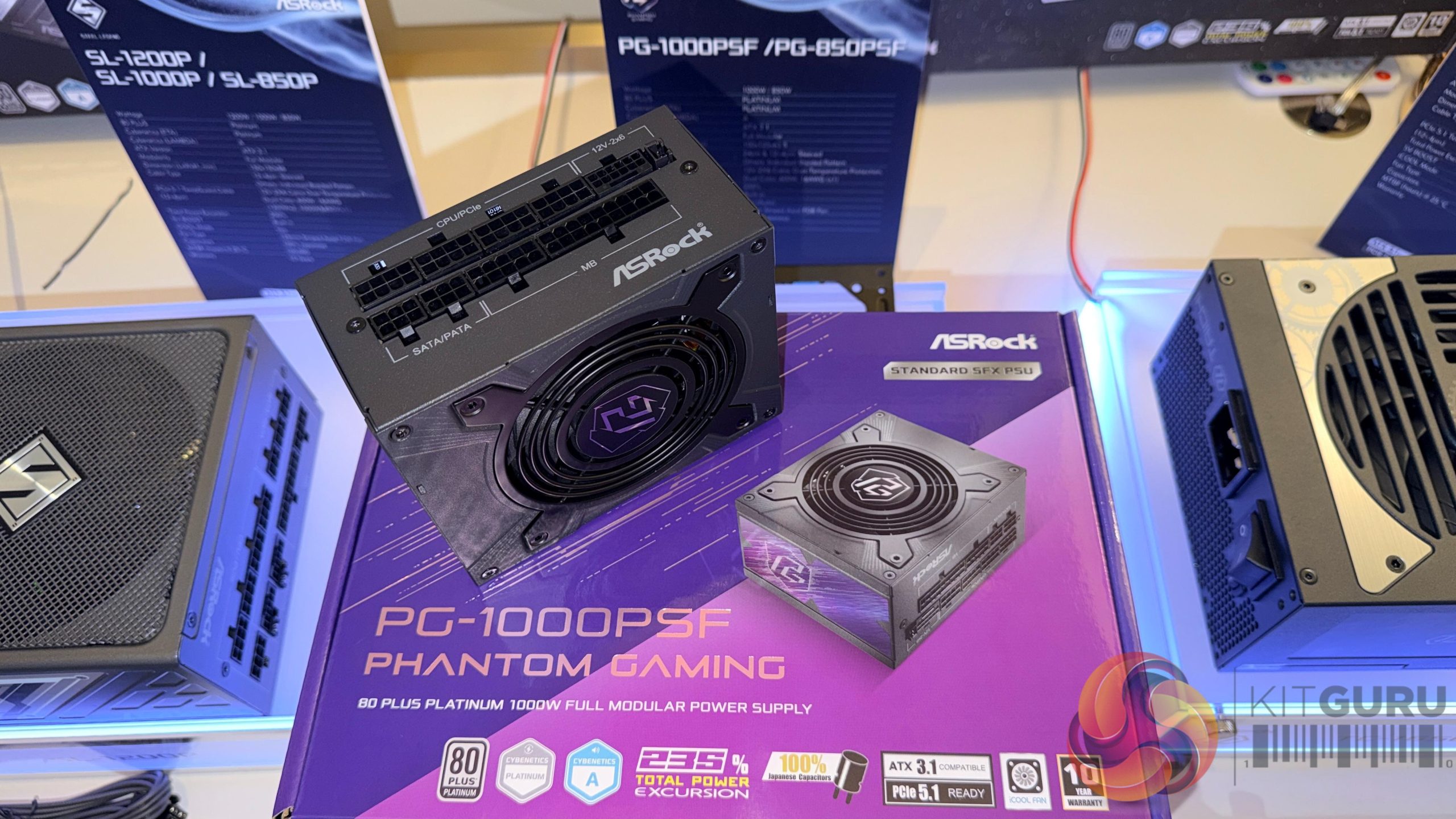
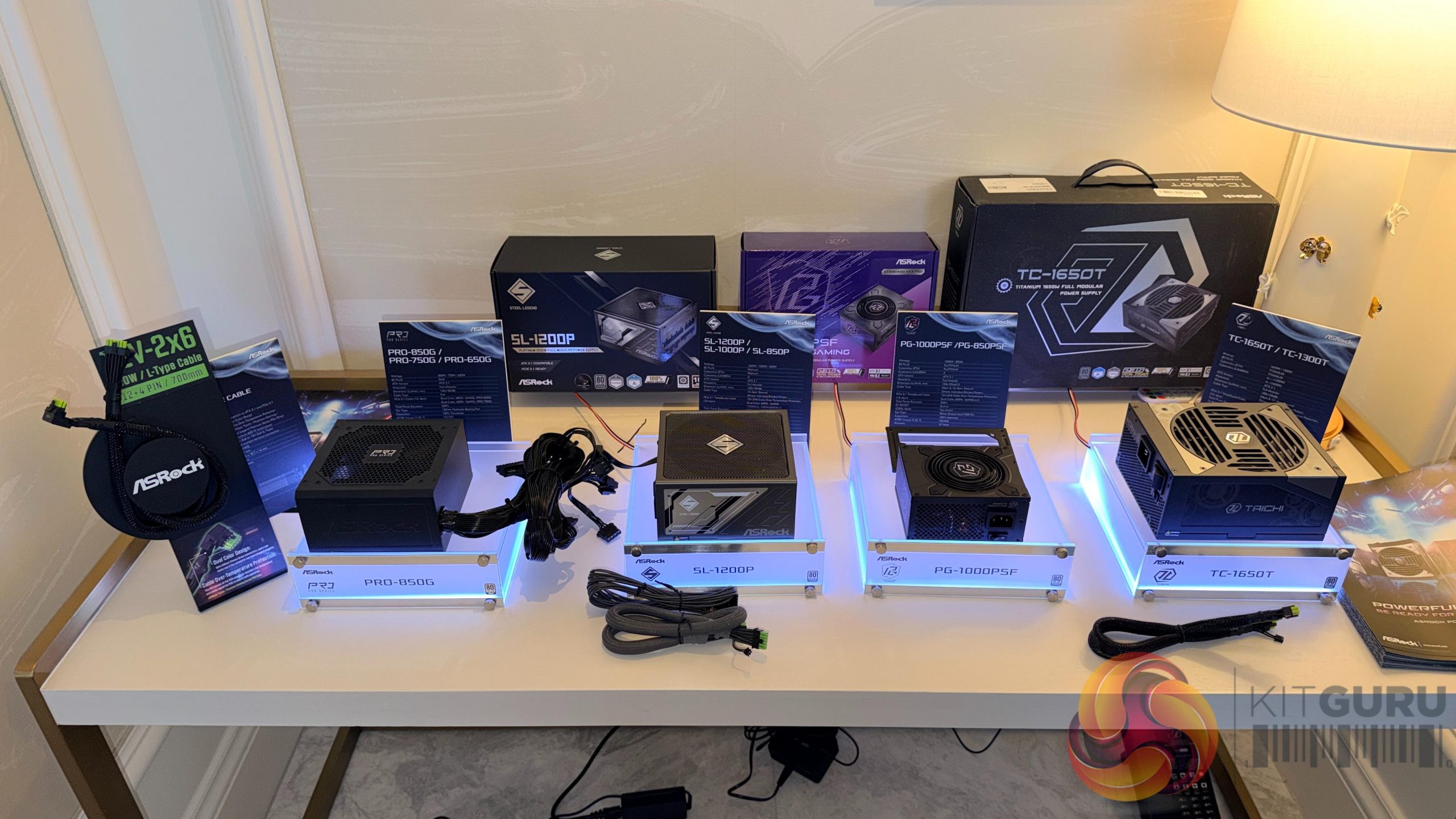
01:19 Full range of PSUs
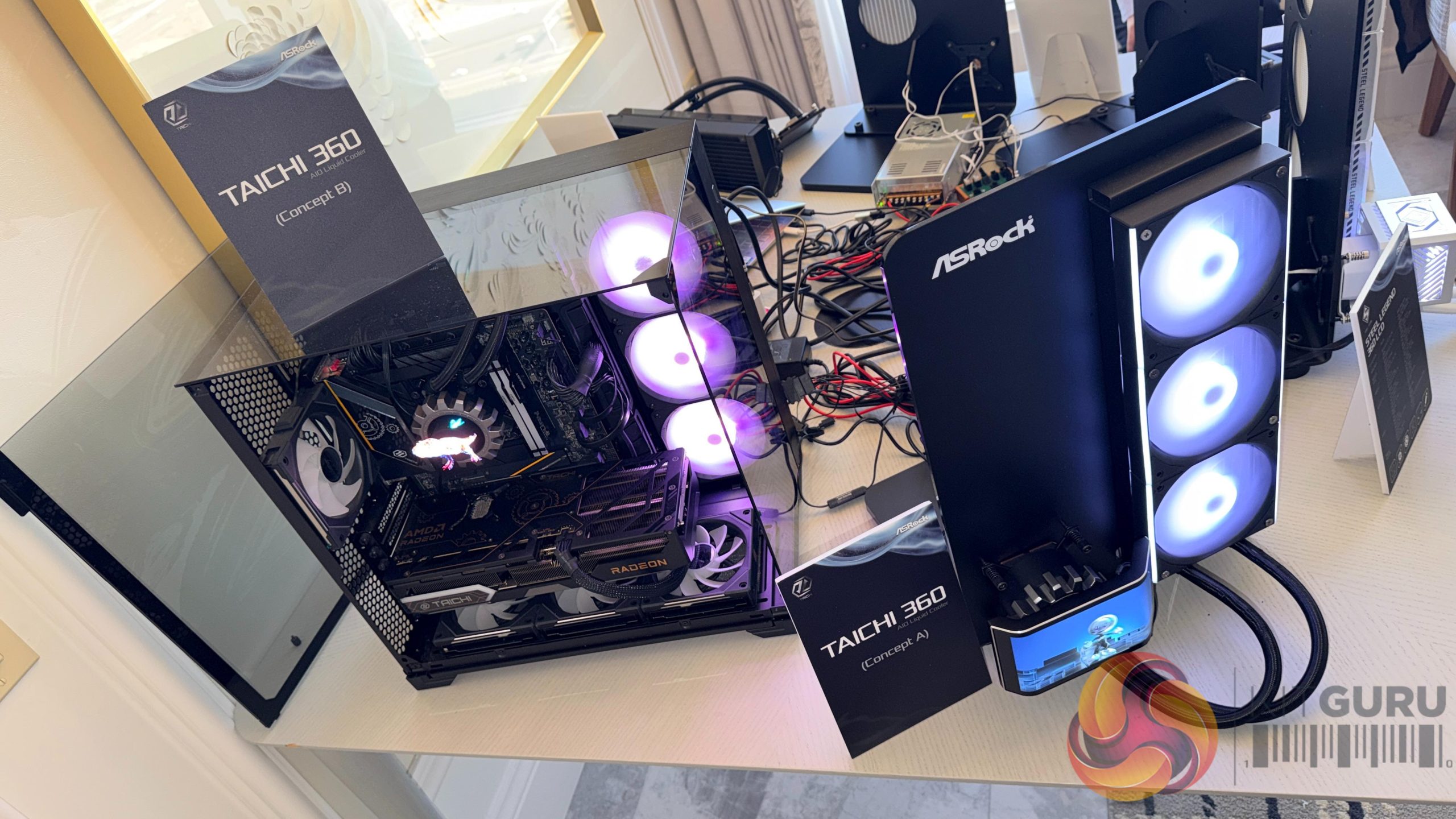
03:09 ASRock’s new AIOs too
04:28 and finally the mobos: Rock + Challenger

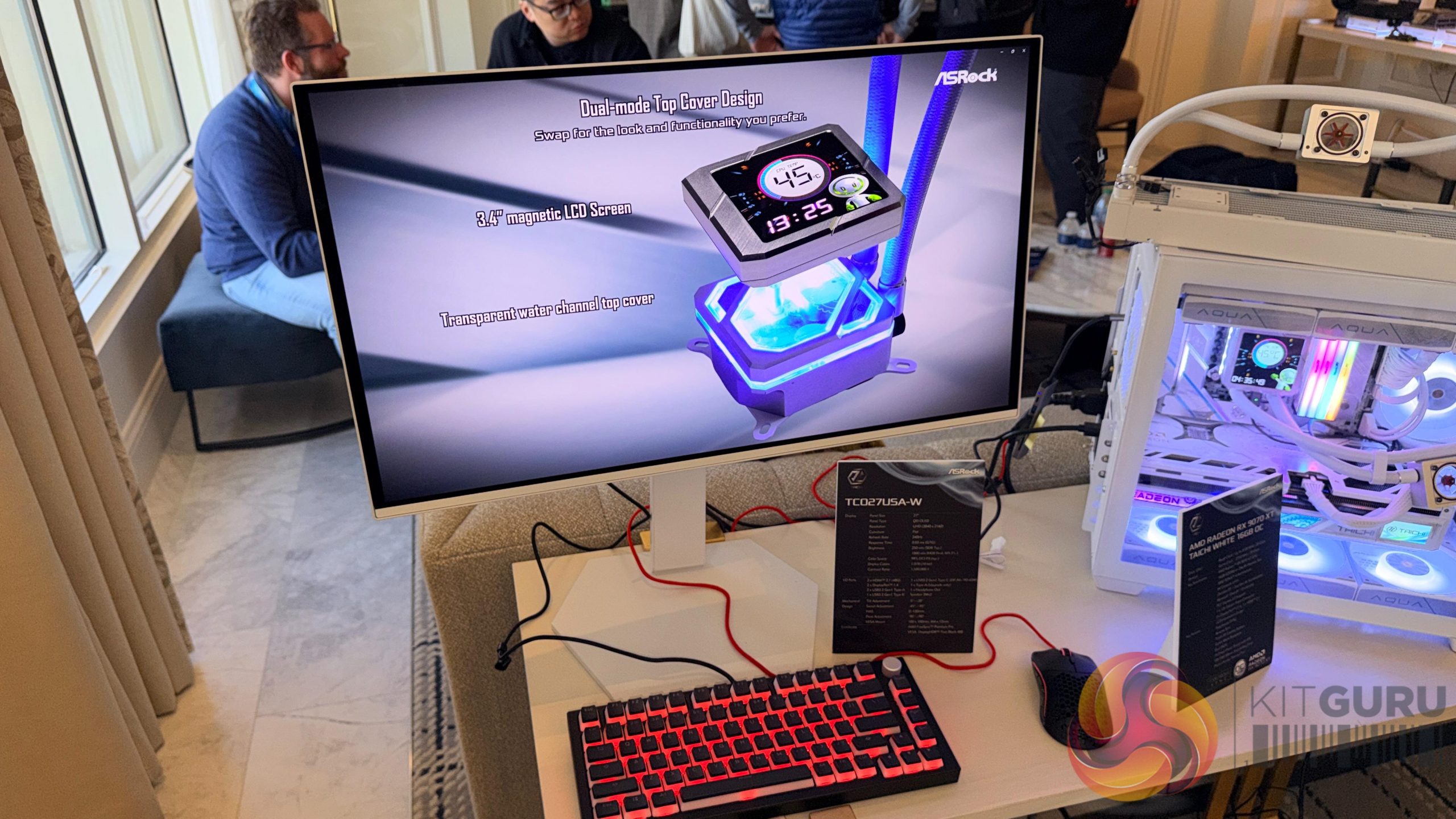
ASRock’s 2026 liquid‑cooler lineup is led by the Taichi AQUA series, which features a dual‑mode top cover that switches between a magnetic 3.4‑inch LCD and a transparent window for viewing coolant flow. The Taichi AQUA 360 LCD uses a dual‑pump design rated for 500W+ workloads, paired with a 38mm radiator, an integrated flow indicator and LCP fans with dual‑ball‑bearing construction and IP54 protection.

For workstation platforms such as AMD sTR5 and Intel LGA4677, the WS series carries over the same dual‑pump 500W+ architecture but adds a full‑coverage cold plate sized for high‑core‑count CPUs. ASRock positions it for sustained, heavy‑load operation.

The Phantom Gaming 360 LCD targets gaming systems with a 3.4‑inch display, 32mm radiator and a 3‑phase, 6‑slot pump. A VRM cooling module assists around the socket, supported by high‑output fans and a Halo ARGB frame. Steel Legend offers a more durability‑focused variant with the same LCD, pump and VRM module, backed by LCP fans. For mainstream builders, the Challenger and Pro series prioritise ease of installation. Challenger models include a 3‑inch smart display, pre‑installed fans and a quick‑release bracket, while the Pro series adds ARGB lighting and tuned fans for balanced cooling and noise.

On the monitor front, ASRock is showing the TCO237USA-W. This is a 240Hz QD-OLED monitor arriving in Q2, so we expect more details in the coming months.

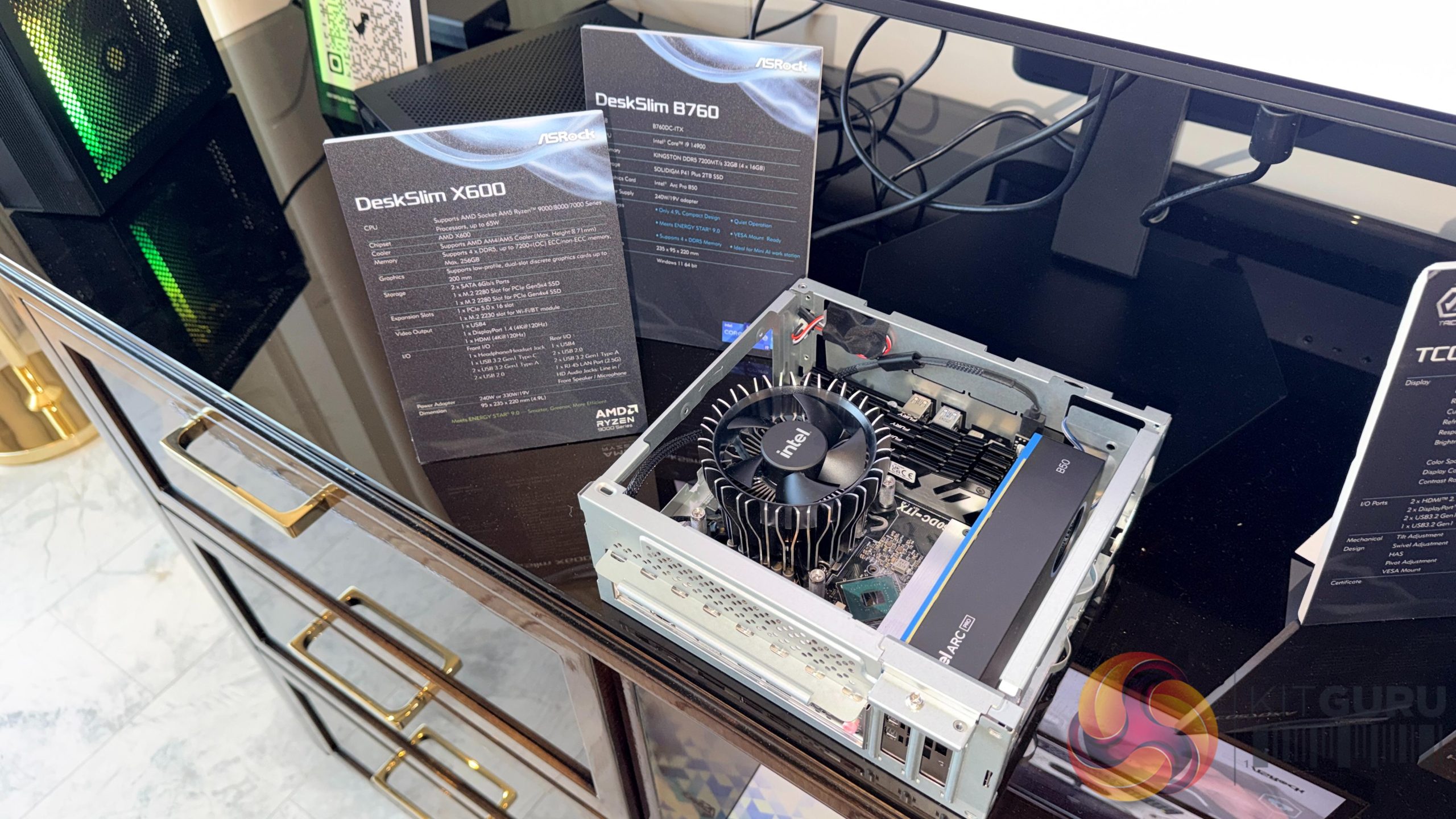
The ASRock DeskSlim returns in 2026 with new models packing both Intel and AMD hardware. Despite being an ultra-small NUC system, a DeskSlim can pack in an Intel Arc Battlemage discrete graphics card, so you can get some extra graphical horsepower beyond integrated graphics.

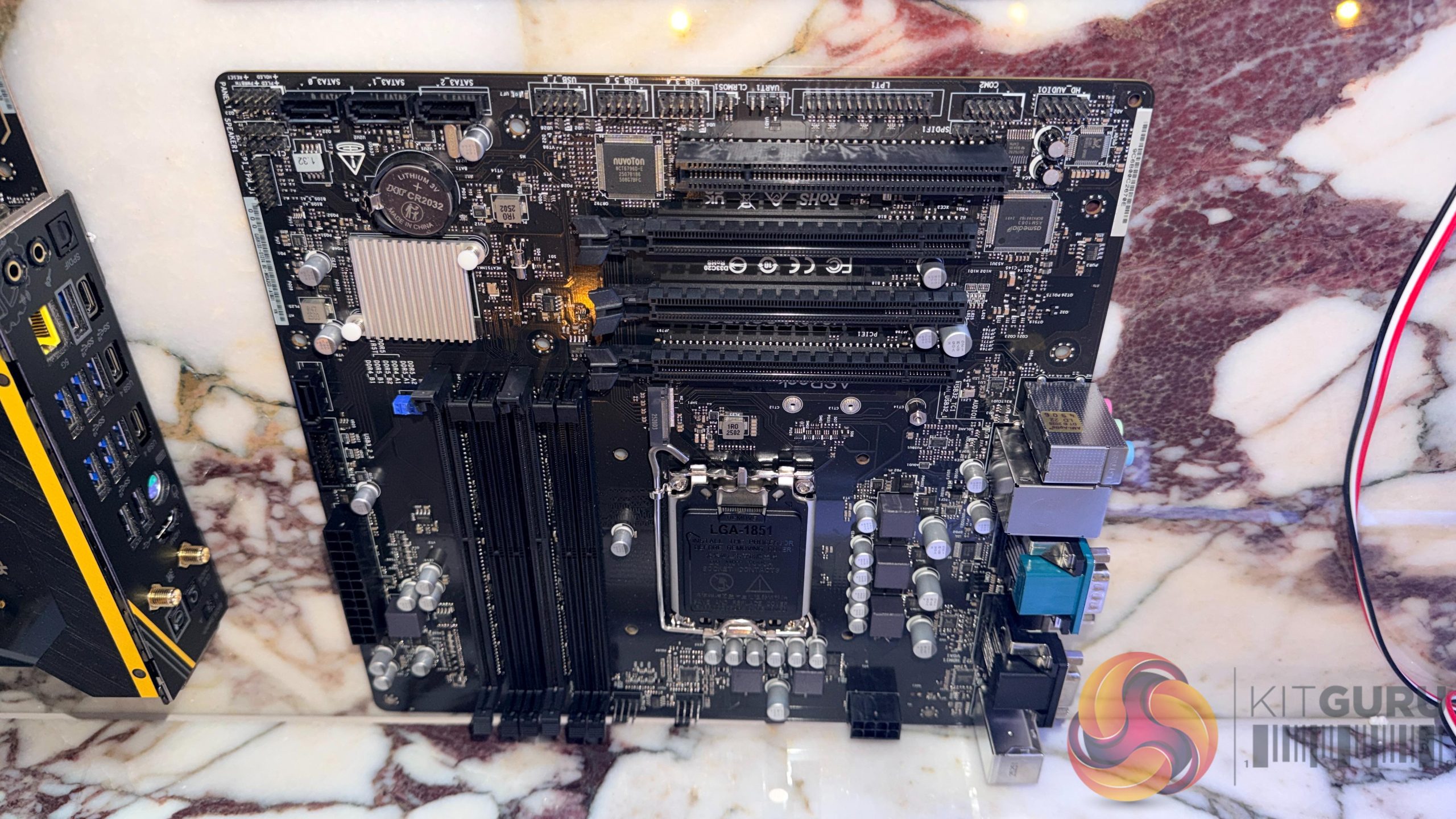
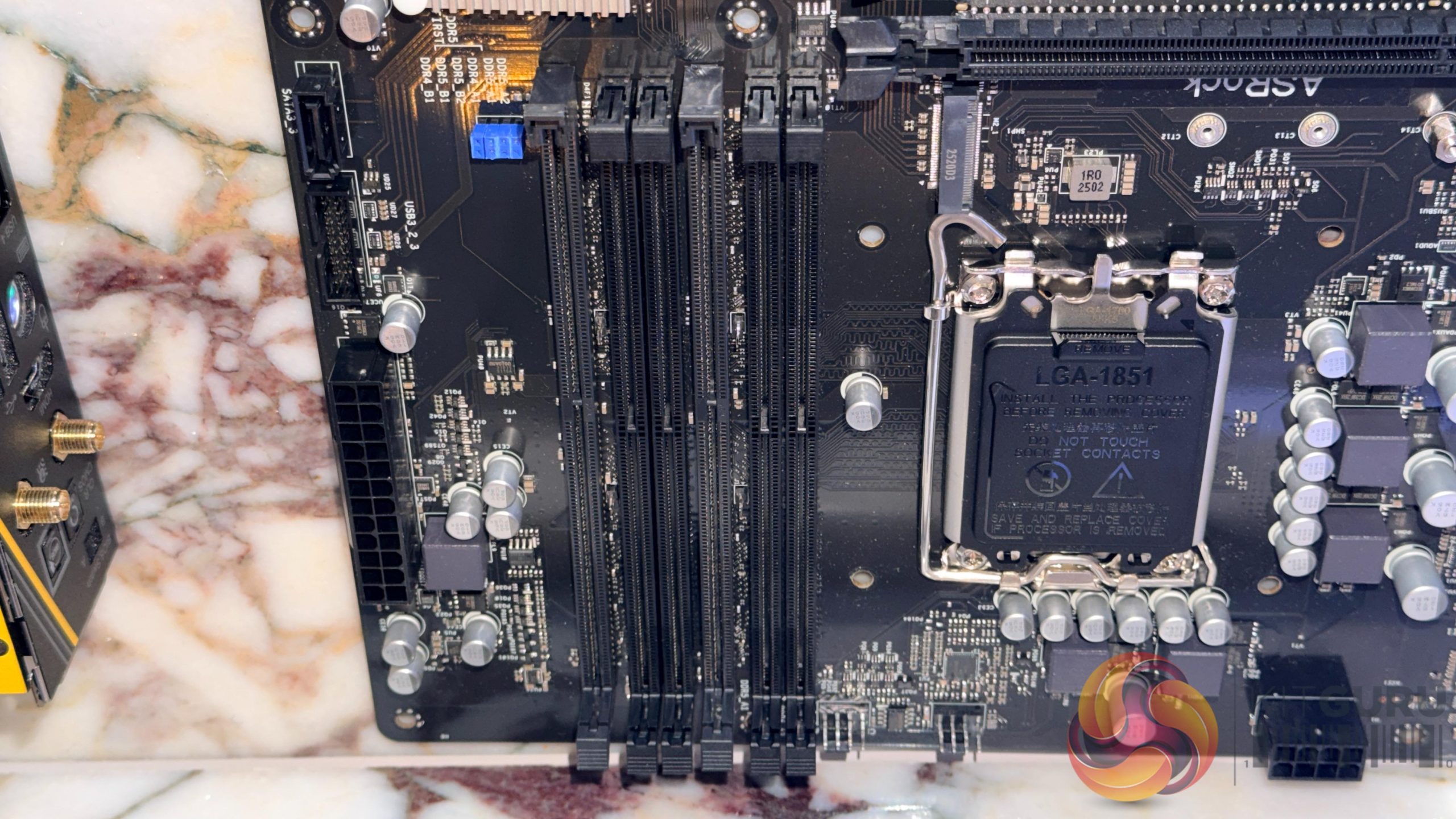
In our full video you can also get a look at ASRock power supplies, alongside a range of motherboards – including a very peculiar board that has both DDR4 and DDR5 RAM slots. With the way the DDR5 market has been going in recent months, we may need to see more of those on the market.

KitGuru Says: What did you make of ASRock's CES showing this year?

The post CES 2026: ASRock showcases new AIO coolers, QD-OLED monitor first appeared on KitGuru.
  •  

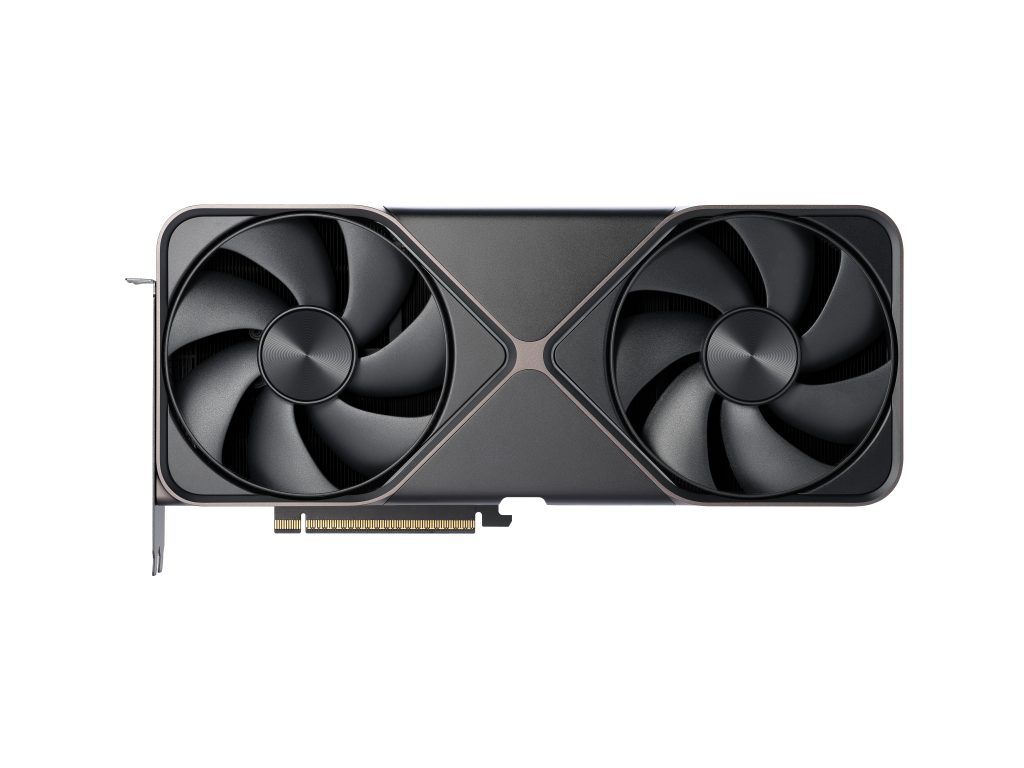
Nvidia RTX 60 series: ‘Rubin’ expected to release in 2H 2027

With CES 2026 now firmly in the rearview mirror and no new desktop GPUs to show for it, the hardware community has started to wonder when we'll get new GPUs. The RTX 50 Super refresh is nowhere to be seen, so all eyes are now on the GeForce RTX 60 series, which is rumoured to adopt the “Rubin” architecture currently dominating Nvidia's enterprise roadmap. However, according to the latest leaks, gamers should settle in for a long wait, as the next generation isn't expected to break cover until the second half of 2027.

The “Rubin” name is already official in the data centre space, where Nvidia has discussed the Rubin CPX platform (GR) as the successor to Blackwell. While Nvidia has not confirmed that this branding will extend to the GeForce gaming lineup, historical patterns suggest a consumer adaptation is highly likely. The latest technical breadcrumbs come from kopite7kimi, who has shared the silicon that will power the RTX 60 series. According to the leaker, the consumer Rubin cards would follow a “GR20x” naming convention, with the GR202 likely being the flagship consumer GPU.

The leaker also pointed out the expected release date for the new series, claiming it would only be available in the second half of 2027. This aligns with AMD's rumoured RDNA 5 timeline, setting the stage for a massive showdown next year.

This release date and the absence of the RTX 50 Super series make us believe that the current RTX 50 series lineup will be the best you can get for some time. If the RTX 60 series is still nearly two years away, Nvidia likely feels the current Blackwell stack has enough longevity to maintain market dominance, especially given the lack of competition in the high-end segment. Rather than incremental hardware refreshes, the next 18 months will likely be defined by software progress, of which we've already seen a bit with the release of DLSS 4.5.

Discuss on our Facebook page HERE.

KitGuru says: If Rubin is indeed a late-2027 product, the RTX 5090 is set to become the longest-reigning flagship in Nvidia's modern history. For those who bought into Blackwell early, your investment looks safer than ever, but those waiting for a “mid-cycle” deal may want to temper expectations.

The post Nvidia RTX 60 series: ‘Rubin’ expected to release in 2H 2027 first appeared on KitGuru.
  •  

Towerborne ditches free-to-play for 1.0 launch coming this February

Stoic, the developer behind The Banner Saga, has officially announced that its side-scrolling action RPG Towerborne will exit Early Access on February 26th. However, the 1.0 release arrives with a massive change: the game is completely abandoning its original free-to-play, always-online model in favour of a “buy once, own forever” approach. In a surprising move for an Xbox-published title, Stoic also confirmed that Towerborne will land on PlayStation 5 on day one.

The shift to a premium model is a direct response to community feedback during the game's stint in Xbox Game Preview. By moving to a paid structure, Stoic has been able to gut the “live service grind” and re-engineer the game to support full offline play. The 1.0 update will retail for $24.99 for the Standard Edition and $29.99 for the Deluxe Edition. For those already playing in Early Access, the transition is seamless: your account will automatically upgrade to the Standard Edition for free, and all existing Founders Pack rewards will remain exclusive to your account.

In addition to the transition to the business model, the 1.0 release will also introduce a significant content drop that completes Belfry's narrative arc. That includes a complete campaign culminating in a previously locked final showdown, as well as two new bosses, additional lieutenants, and a “Brutal” difficulty tier. The world is also expanding, now featuring a new coastal biome alongside a reimagined Forge system that allows for stat re-rolling and advanced gear modification. Lastly, all microtransactions have been removed, as every cosmetic in the game, including those previously in the premium shop, is now earnable through the game.

Existing players who accumulated “Belfry Bucks” (the old premium currency) will see their balances converted into Stepstones on launch day. This exclusive transfer currency can be redeemed for high-level crafting materials and “Big Bags of Writs” to jumpstart progression in the 1.0 economy. While character progression carries over, Stoic is encouraging veterans to start a fresh save to experience the reworked narrative flow from the beginning.

The experience is rounded out by a orchestral score from Grammy-nominated composer Austin Wintory. Towerborne will be available on Xbox Series X|S, PC (Steam and Windows Store), and PlayStation 5 on February 26th. The game is also available on Xbox Game Pass (Premium and Ultimate).

Discuss on our Facebook page HERE.

KitGuru says: Stoic is making an incredibly pro-consumer move here. In an industry currently struggling with “live service fatigue”, pivoting a game from an always-online F2P model to a premium offline-capable title is a breath of fresh air.

The post Towerborne ditches free-to-play for 1.0 launch coming this February first appeared on KitGuru.
  •  

Phison expands aiDAPTIV+ at CES 2026: can it fix AI’s memory bottleneck?

We all know that AI is booming at the minute, and that has had a huge knock-on effect for the PC industry. First the discrete GPUs market was hit, and – more recently – DRAM prices have been rocketing skywards. You may not initially think that a NAND flash manufacturer would have the solution, but Phison's aiDAPTIV+ technology could help shift the AI burden away from memory constraints.

At CES 2026, we stopped to visit Phison and hear about how the company's aiDAPTIV+ tech – what it is, and how it works. While initially announced last year, it's not something we've covered before, so we wanted to share the low-down given the technology makes a good deal of sense.

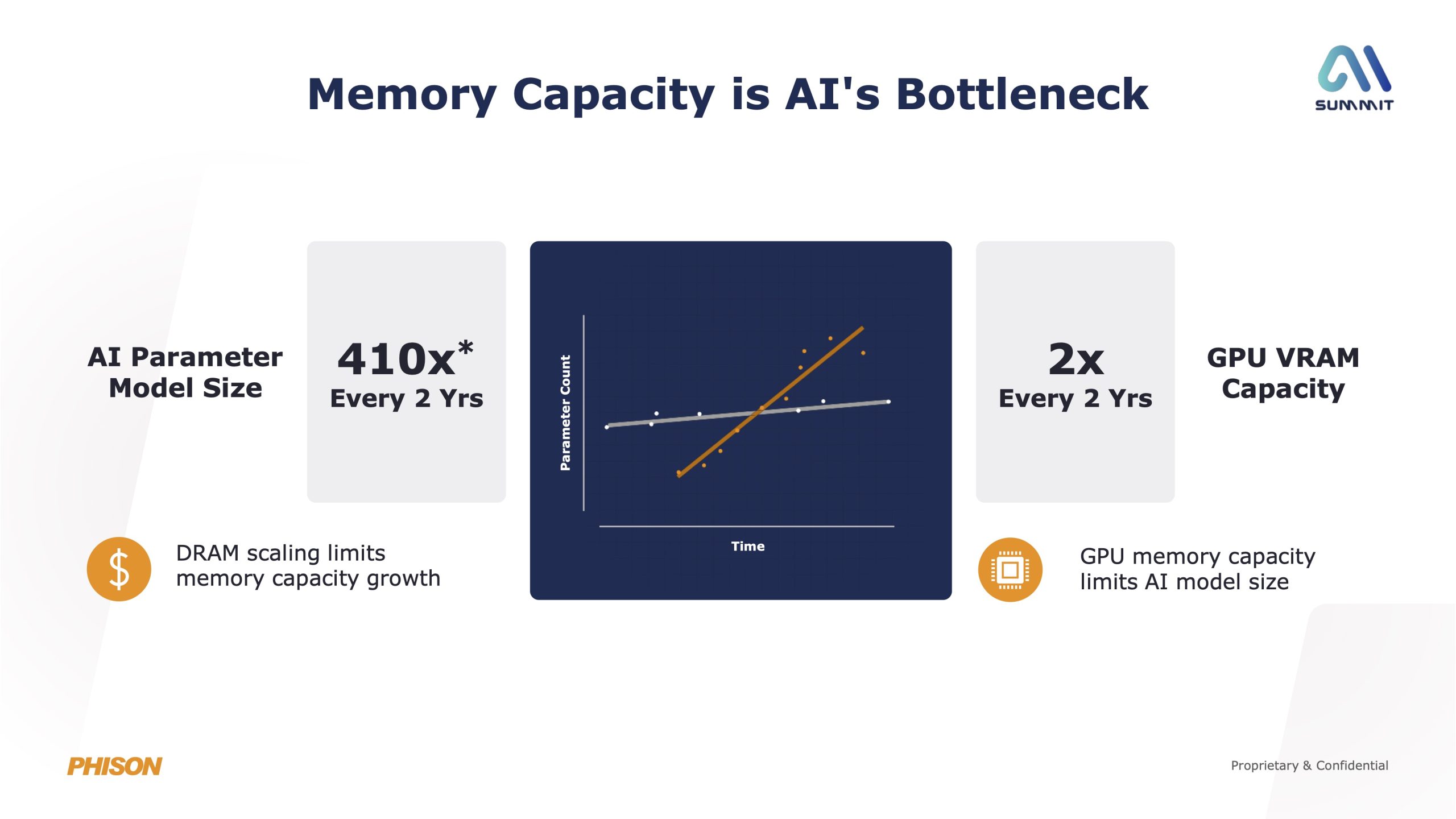
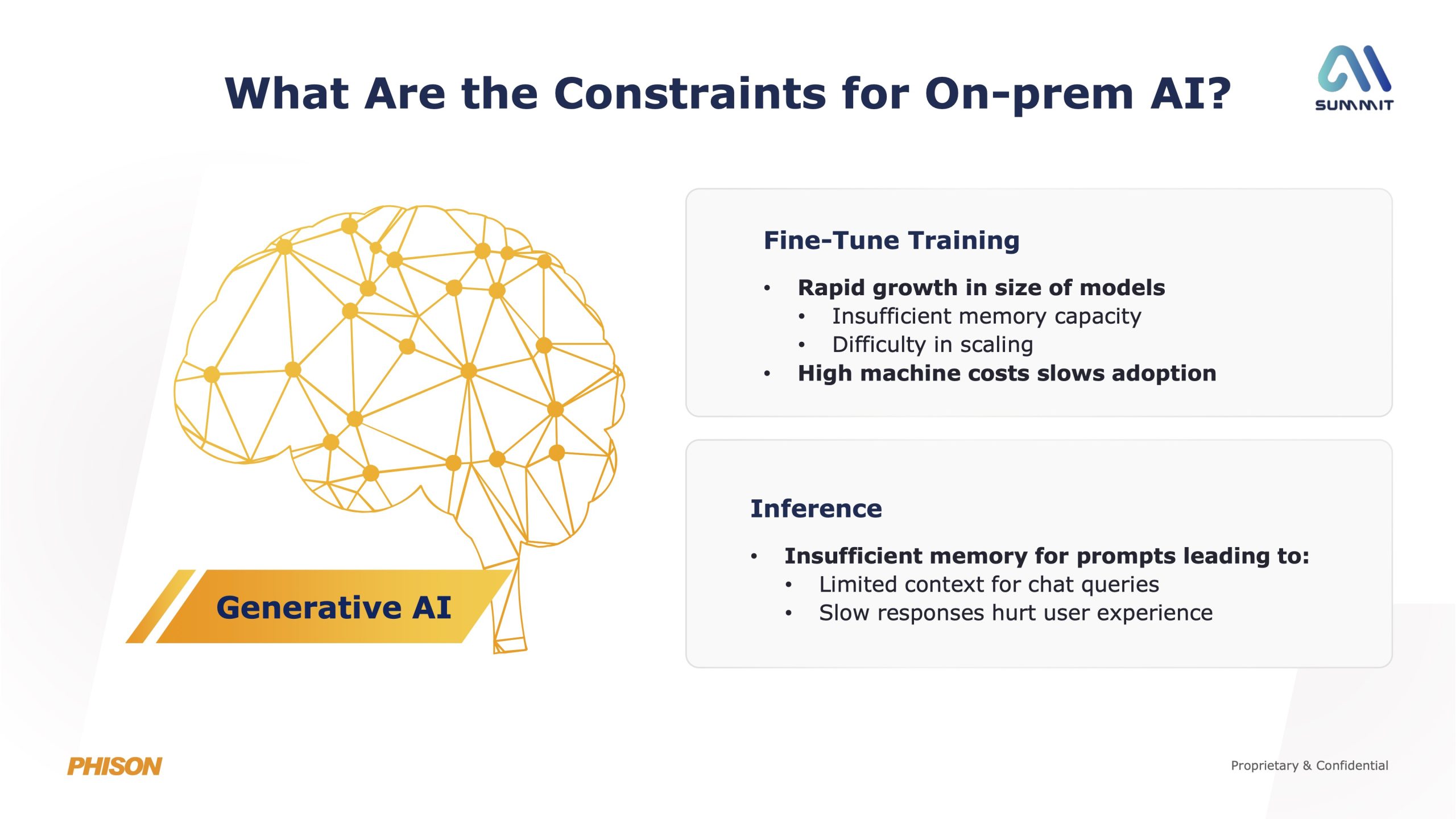
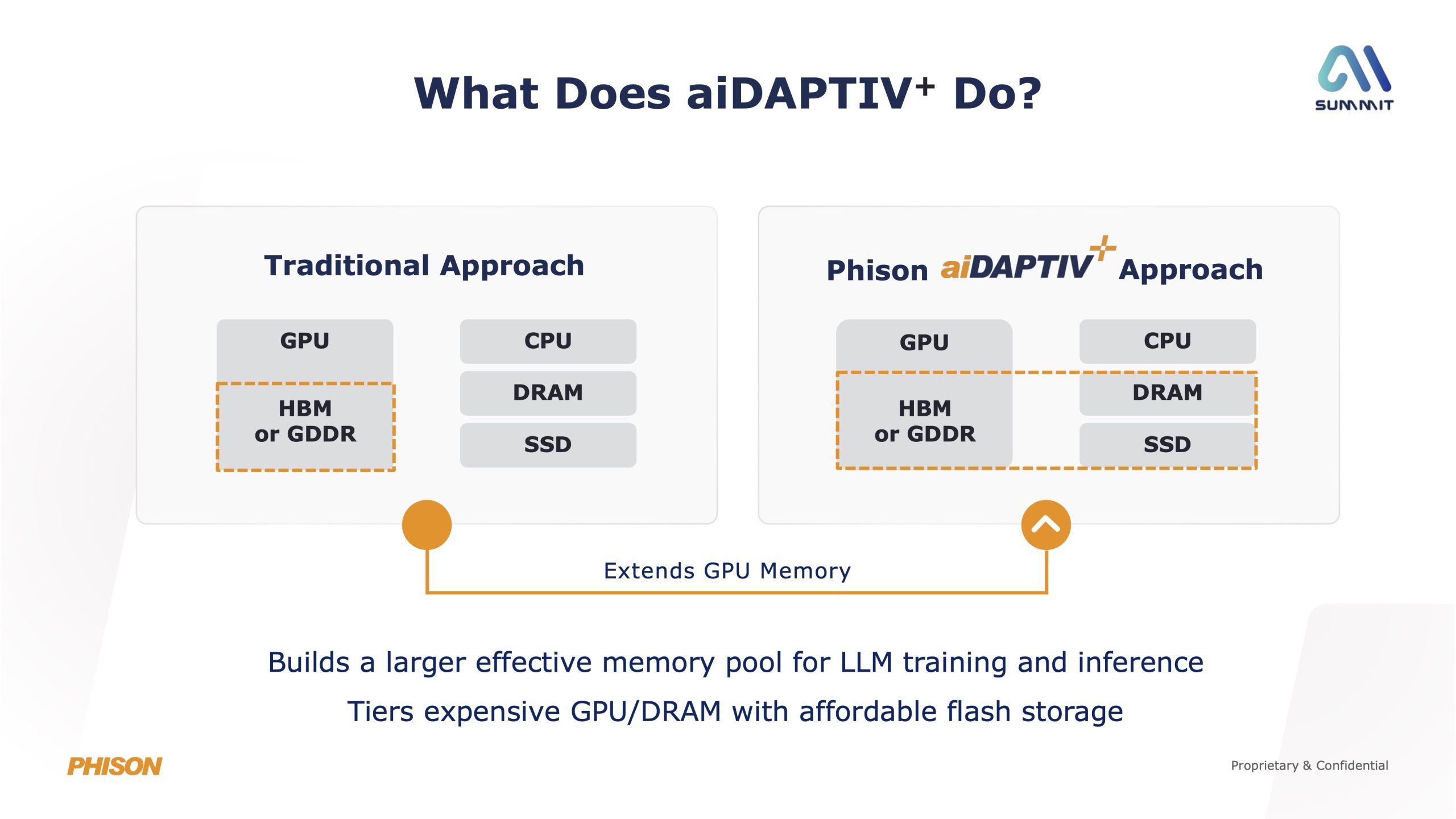
In a nutshell, Phison's aiDAPTIV+ technology is designed to mitigate one key problem area for current AI workflows – limited GPU memory. The company points out that AI models are growing far faster than what VRAM or system DRAM can keep up with, so memory capacity, rather than raw compute, has become the primary bottleneck for local AI training and inference. That, in turn, has implications for both AI model size and performance on your typical PC.

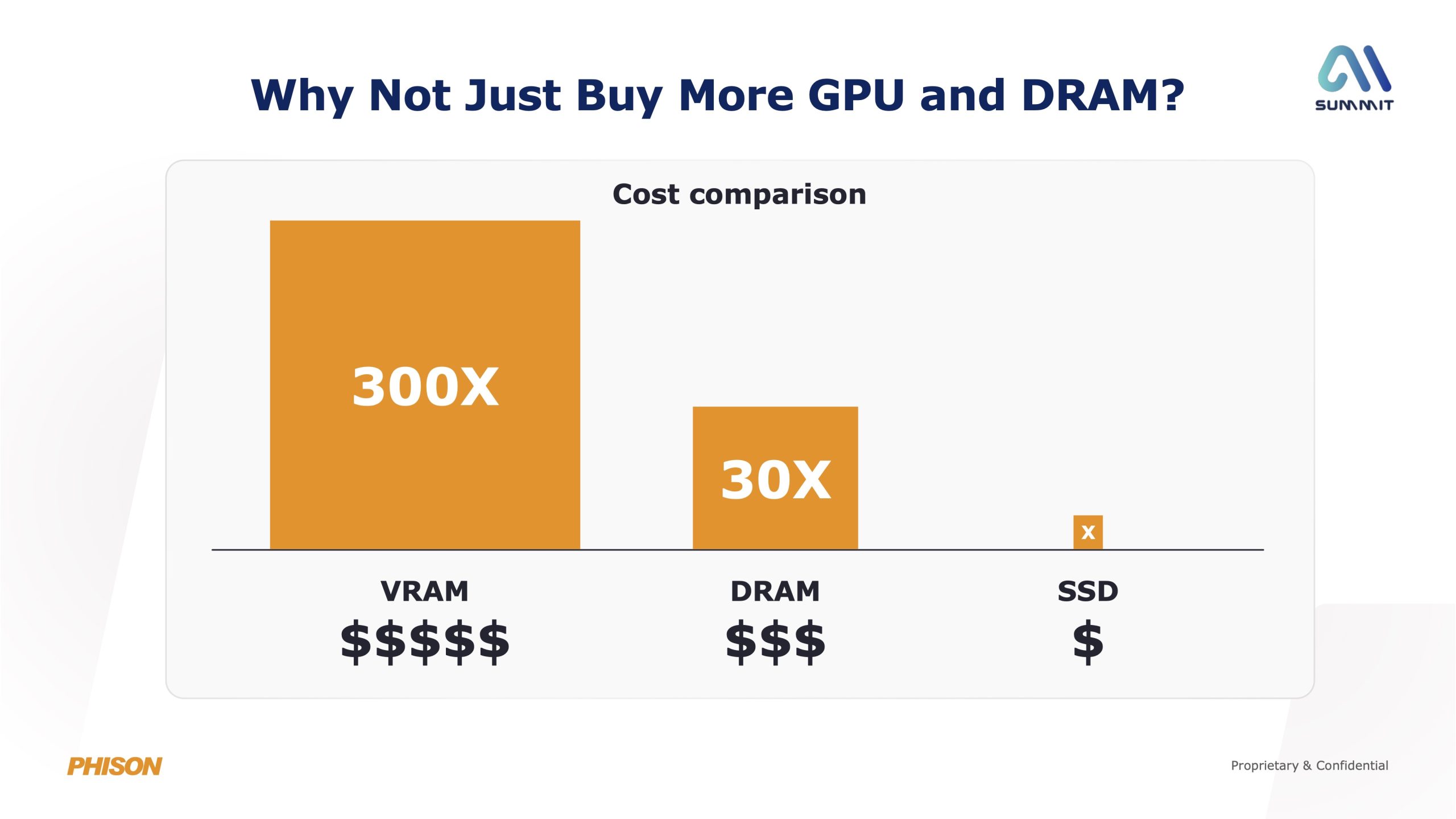
So, rather than relying on ever larger and more expensive GPUs – something we've already become well accustomed to in the gaming segment over the last few years – aiDAPTIV+ effectively builds a much larger memory pool by ‘tiering' GPU VRAM and system memory with NAND flash storage. This allows inactive AI data to be offloaded to SSDs, freeing up the properly fast memory for active workloads, while also significantly reducing cost compared to scaling VRAM or DRAM alone.

Now, at CES 2026, Phison has expanded aiDAPTIV+ beyond high-end AI workstations, making it a much more viable technology, given support has been added for ‘integrated GPU architectures', so mobile platforms –  including laptops, desktops, workstations and small-form-factor PCs using both discrete and integrated GPUs – can now make use of the tech.

Phison claims that, for Mixture of Experts (MoE) inference processing, ‘a 120B parameter can now be handled with 32GB of DRAM' rather than 96GB that would otherwise be required with, what the company calls, ‘traditional approaches'.

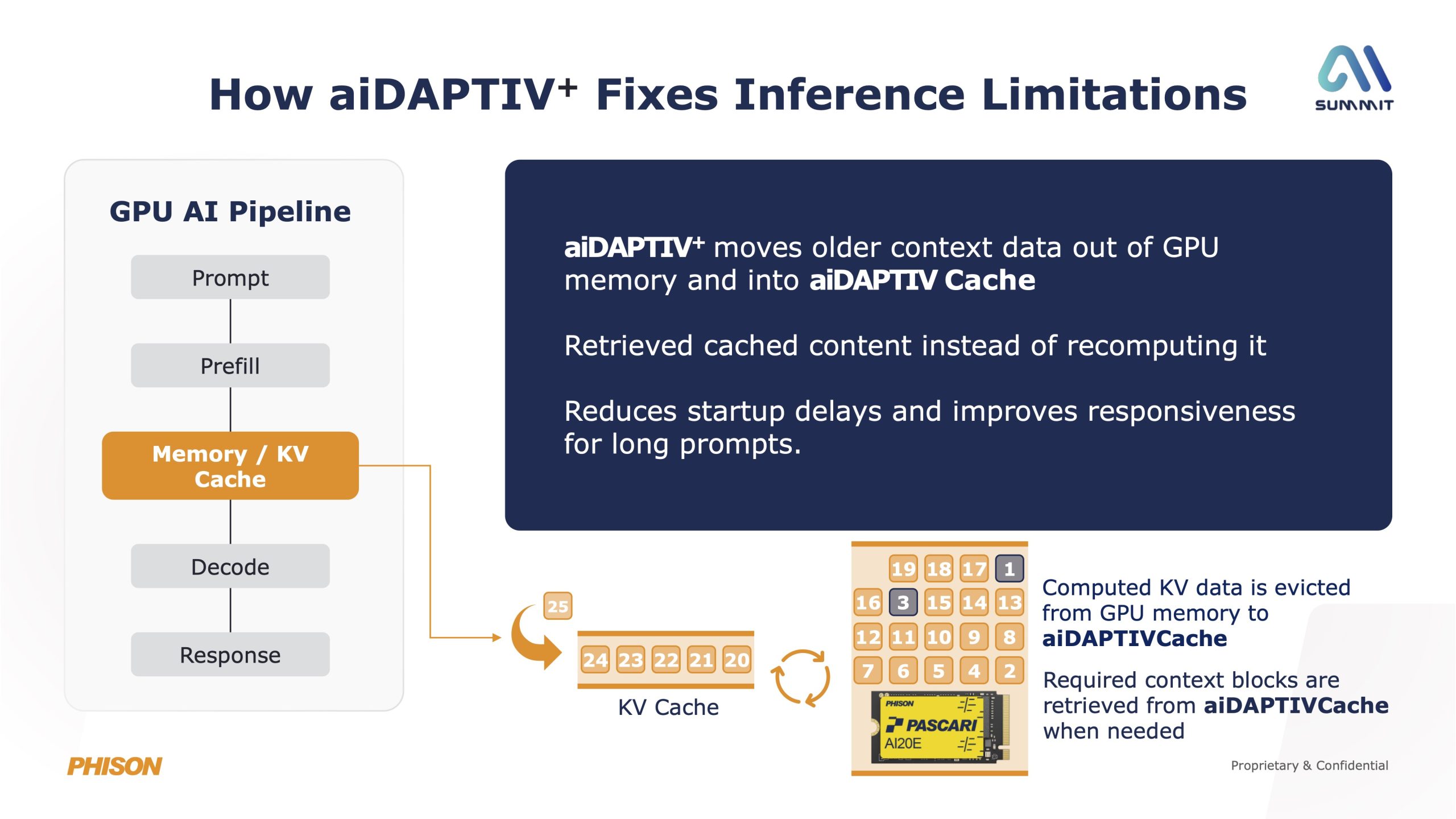
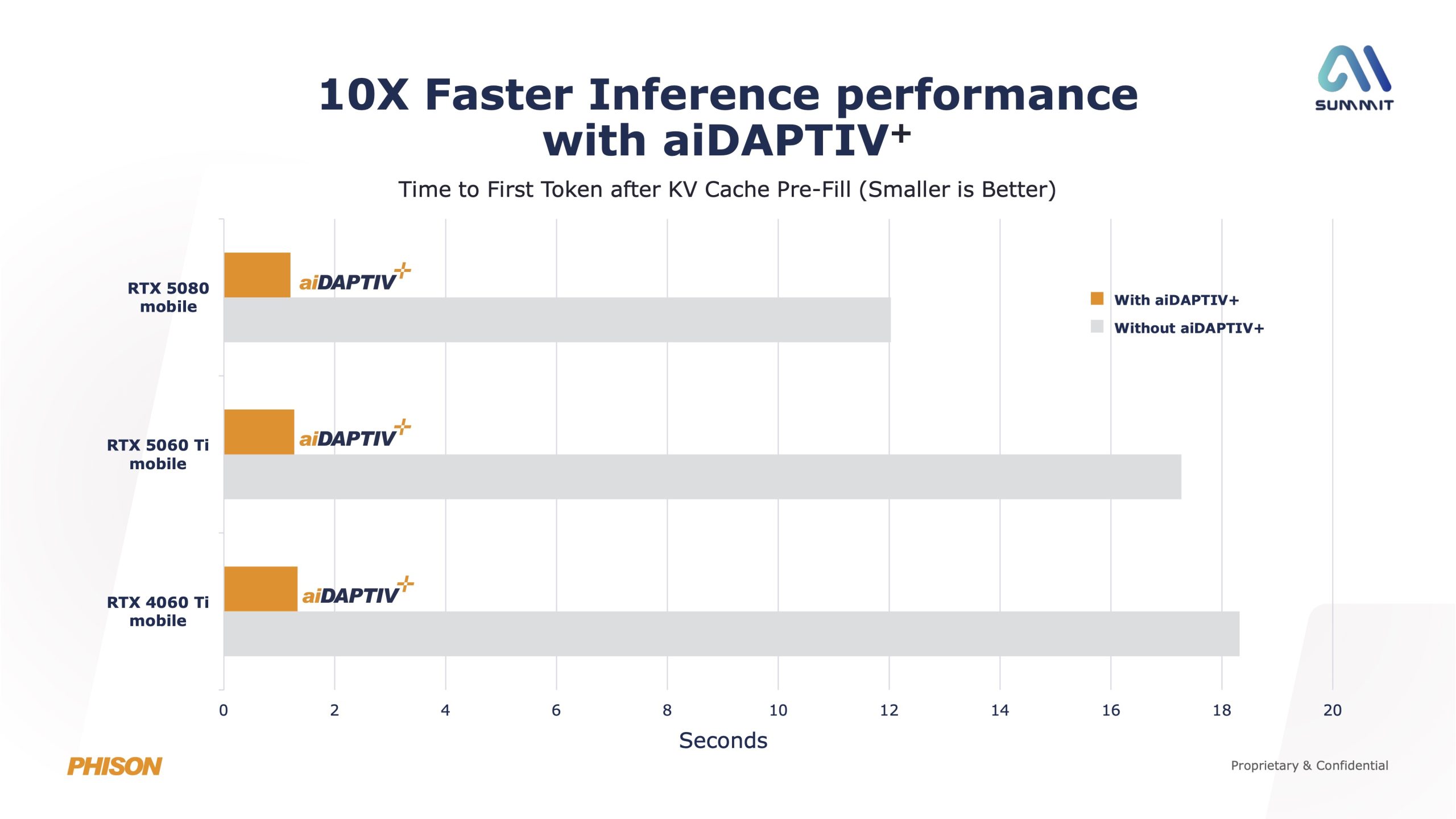
On top of that, aiDAPTIV+ addresses GPU KV cache limitations by moving older context data out of VRAM and into flash-based cache, allowing it to be reused instead of recomputed. According to Phison's presentation, this can deliver up to a 10x improvement in time-to-first-token for long prompts, improving responsiveness across a range of AI workloads.

Finally, Phison showed off a number of aiDAPTIV+ concept demos at CES 2026, including systems from brands more familiar to the typical KitGuru reader, including Acer, ASUS, MSI and Corsair. While there is clearly still work to be done, the demos give us a glimpse of what it would mean to bring practical AI acceleration to more mainstream systems, rather than relying on cloud-based solutions.

KitGuru says: It's an interesting technology that makes a lot of sense on paper. Let's see how things develop over the next few months.

The post Phison expands aiDAPTIV+ at CES 2026: can it fix AI’s memory bottleneck? first appeared on KitGuru.
  •  

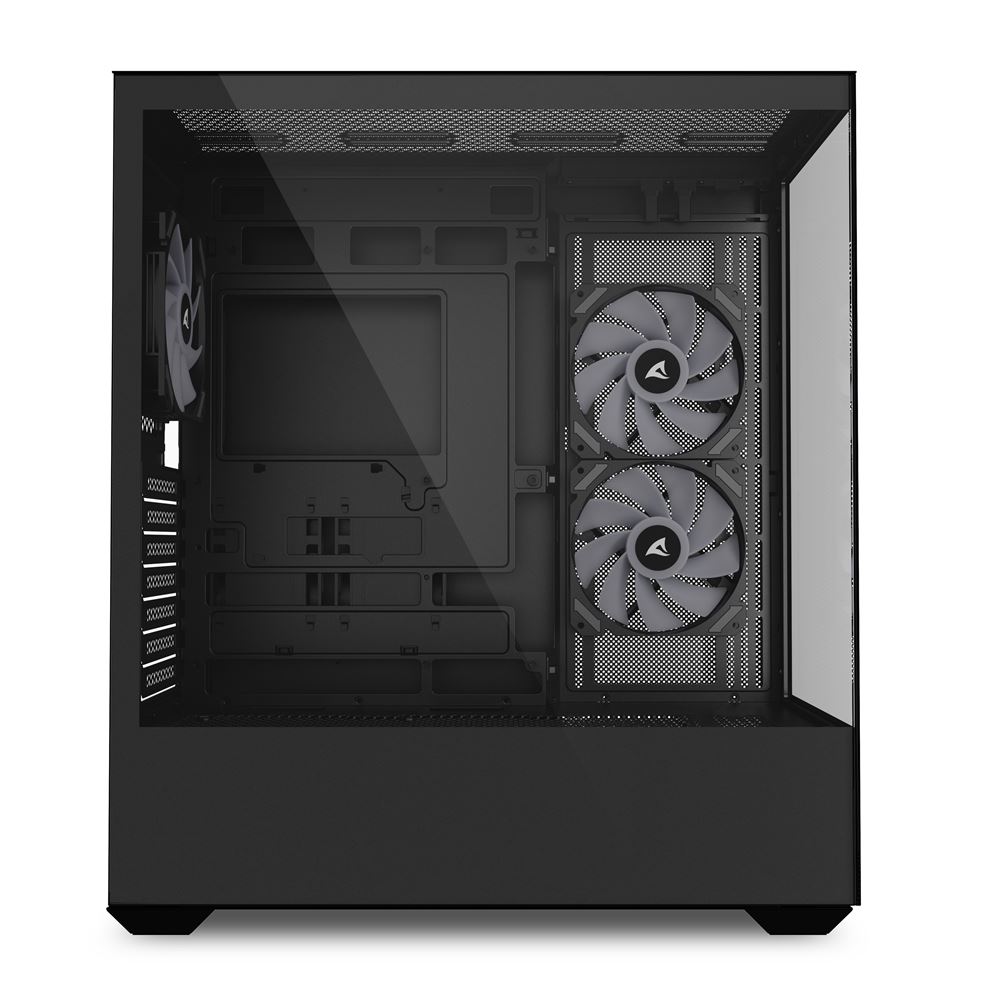
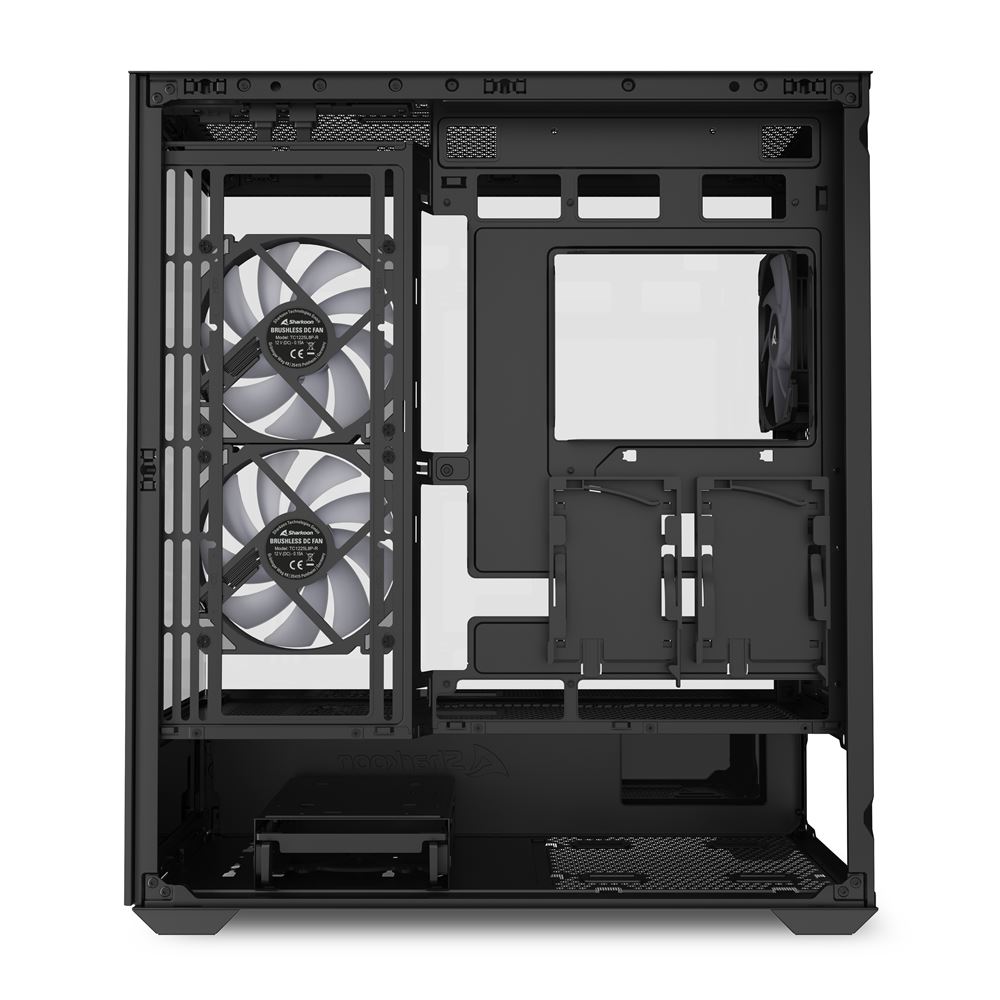
Sharkoon debuts SK6 ARGB with pillarless fish tank design and BTF support

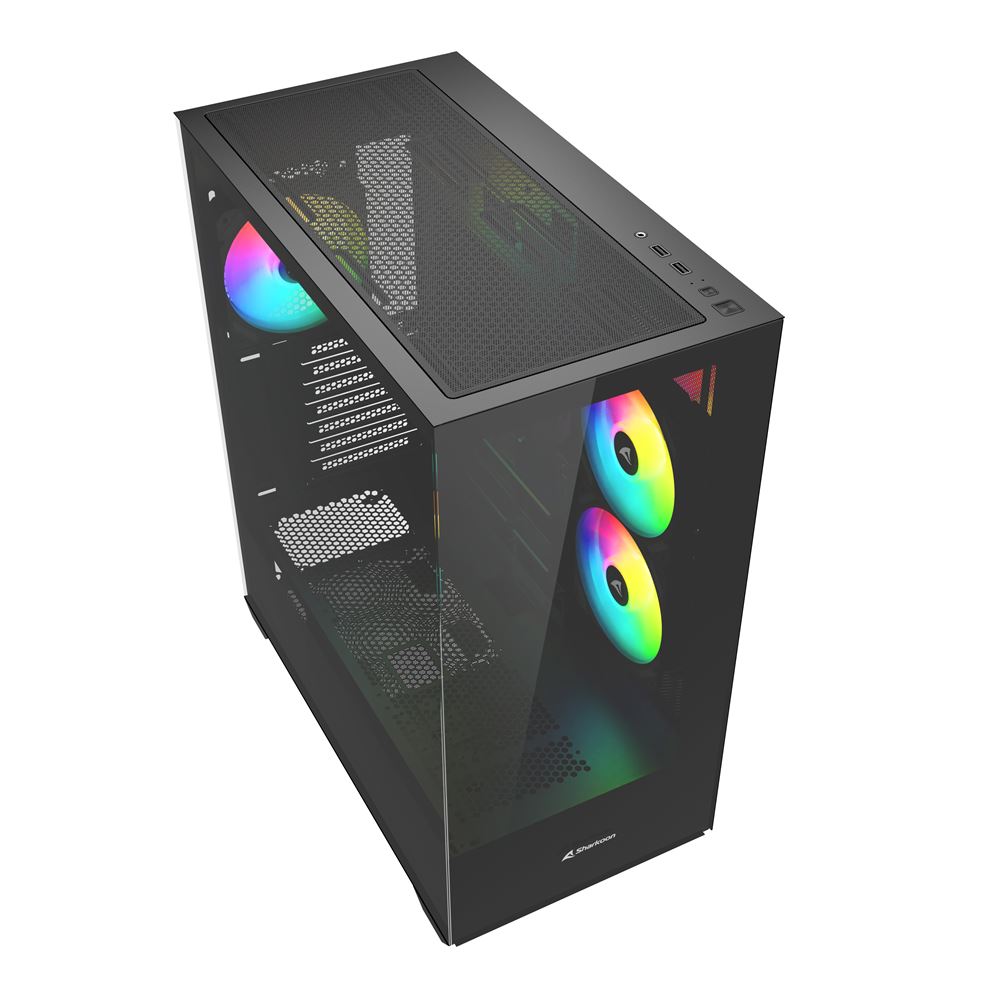
Sharkoon has launched the SK6 ARGB, a mid-tower chassis that aims to bring the “fish tank” aesthetic to a more accessible price point. While the dual-panel tempered glass design is clearly the focus, Sharkoon has engineered the internal layout to support the rising trend of back-connect (BTF) motherboards, positioning the SK6 as a budget-friendly foundation for ultra-clean builds.

The aesthetic appeal of the SK6 ARGB centres on its uninterrupted tempered glass front and side panels, providing an unobstructed view of the internal components. To maintain this look without suffocating the hardware, Sharkoon has opted for a side-panel intake strategy rather than a traditional mesh front. Out of the box, the case includes three pre-installed 120mm ARGB PWM fans. Two of these are “reverse-blade” models mounted on the side tray.

The interior can accommodate up to 9 fans. For those leaning into liquid cooling, the SK6 ARGB provides a primary 360 mm radiator mount at the top and a secondary 280 mm position on the side, allowing for dual-radiator setups typically reserved for much larger chassis. This flexibility is complemented by a main chamber that can house graphics cards up to 410 mm in length and CPU air coolers up to 170 mm tall. High-capacity power supplies are also supported, with a length limit of 235 mm.

As vendors like Asus and MSI move power and data connectors to the rear of the PCB, case manufacturers have had to adapt their tray designs to include the necessary cutouts. The SK6 ARGB is fully compatible with these standards, enabling a build that is virtually devoid of visible cabling. Storage options are equally practical, with the drive cage supporting two 3.5-inch HDDs or four 2.5-inch SSDs. The I/O panel is side-mounted and features dual USB-A ports and an audio jack. The Sharkoon SK6 ARGB is entering the market priced at €59.90.

Discuss on our Facebook page HERE.

KitGuru says: Considering its relatively low price, we wouldn't expect touches like reverse-blade fans to maintain a clean intake look. Still, Sharkoon now offers an interesting option in the entry-level segment for those who want to show off their systems and maintain a clean build.

The post Sharkoon debuts SK6 ARGB with pillarless fish tank design and BTF support first appeared on KitGuru.
  •  

Nvidia’s RTX 50 Super series could be indefinitely postponed

Following the conclusion of CES 2026 without a single discrete GPU announcement, industry sources have confirmed that Nvidia has indefinitely postponed, and potentially cancelled, the GeForce RTX 50 Super series. Originally intended to bridge the VRAM gaps in the Blackwell lineup, the refresh has been sidelined by AI dominance, a global memory crisis, and AMD's lack of competitive pressure.

According to the Board Channels forum (via VideoCardz), this delay in the RTX 50 Super series can be attributed to three key reasons. The first is that the surge in demand for compute GPUs has forced Nvidia to “cut corners” on consumer allocation. As production lines shift to the Vera Rubin NVL72 and H200 systems, the silicon intended for mid-cycle gaming refreshes is being diverted to more lucrative markets.

Moreover, there's also the ongoing GDDR7 shortage, as a severe DRAM supply crunch currently affects the industry. Costs for GDDR7 have skyrocketed, and the 3 GB modules required for the rumoured 24 GB and 32 GB 50 Series Super variants are in critically short supply. As such, releasing these cards now would force an MSRP so high that they would be DOA for most gamers.

Perhaps the most pragmatic reason is that AMD has also pushed its next-generation RDNA 5 architecture to 2027. With the Radeon RX 9070 XT unable to challenge the RTX 5080 or 5090, Nvidia sees no strategic necessity to refresh its stack. Even Intel's rumoured B770 was a no-show at CES, leaving the current RTX 50 series to almost dominate by default.

Discuss on our Facebook page HERE.

KitGuru says: With the Super cards on ice and memory prices still climbing, the RTX 50 series you see on shelves today might be the only high-end options we get for the next 18 months.

The post Nvidia’s RTX 50 Super series could be indefinitely postponed first appeared on KitGuru.
  •  

CES 2026: CPS PCCooler shows off huge new PC case, new coolers

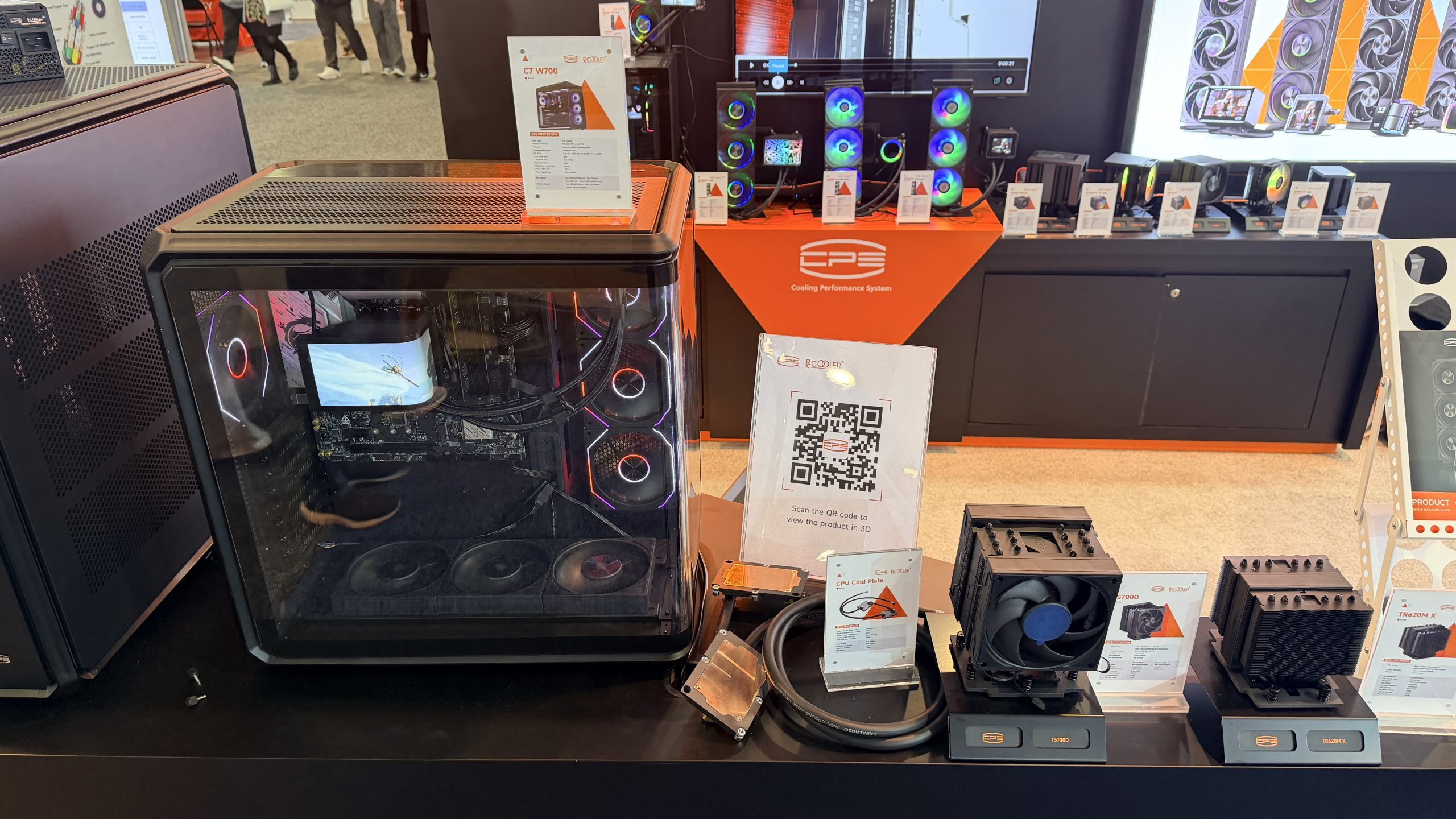
In our latest CES video, we head over CPS PCCooler to check out a wide range of new hardware on show, including air coolers, liquid coolers, ATX and workstation cases, and refreshed ATX 3.1 power supplies. 

Watch via YouTube below:

Timestamps:
00:08 SR 700 monster chassis and C7M 700
01:33 Air cooler lineup for Threadripper
01:52 The new AIO range
03:05 Air coolers

On the air‑cooling side, CPS PCCooler introduced several new models. The RZ700D is a 159.5mm single‑tower cooler with seven 6mm heatpipes, a nickel‑plated copper base and the company’s F5 dual ball‑bearing fan. It uses a magnetic top cover, clip‑free fan mounting and offers full RAM clearance. Above that, the RT720TC brings a dual‑tower layout with seven 6mm heatpipes, an integrated top cover, an anti‑deformation bracket and hydraulic‑bearing fans capable of up to 2200RPM speeds. The RZ620 Pro TC follows a similar design with six heatpipes and dual ball‑bearing fans, along with a clip‑free centre fan for easier installation. All three coolers support Intel LGA1851 and AMD AM5.

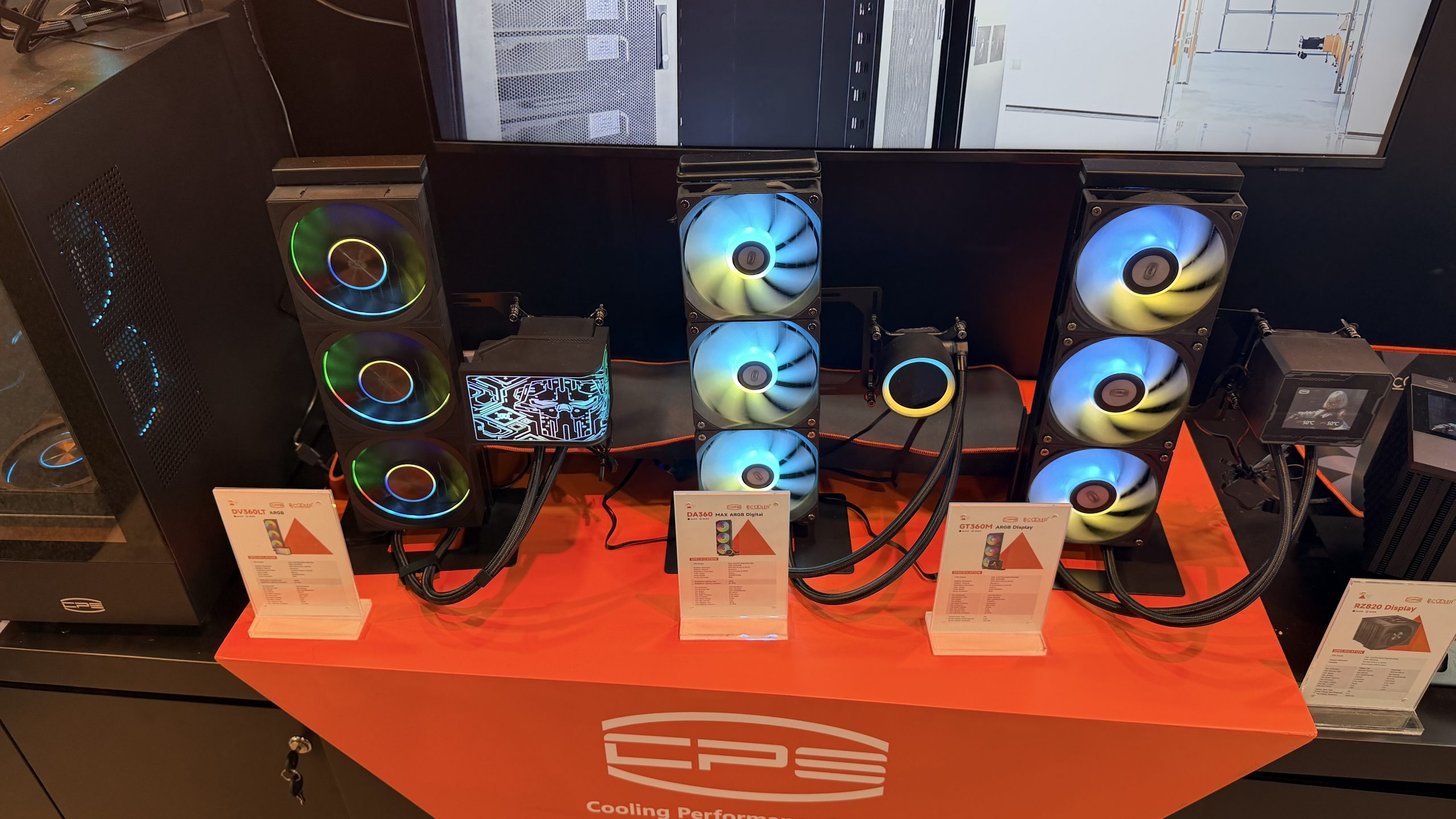
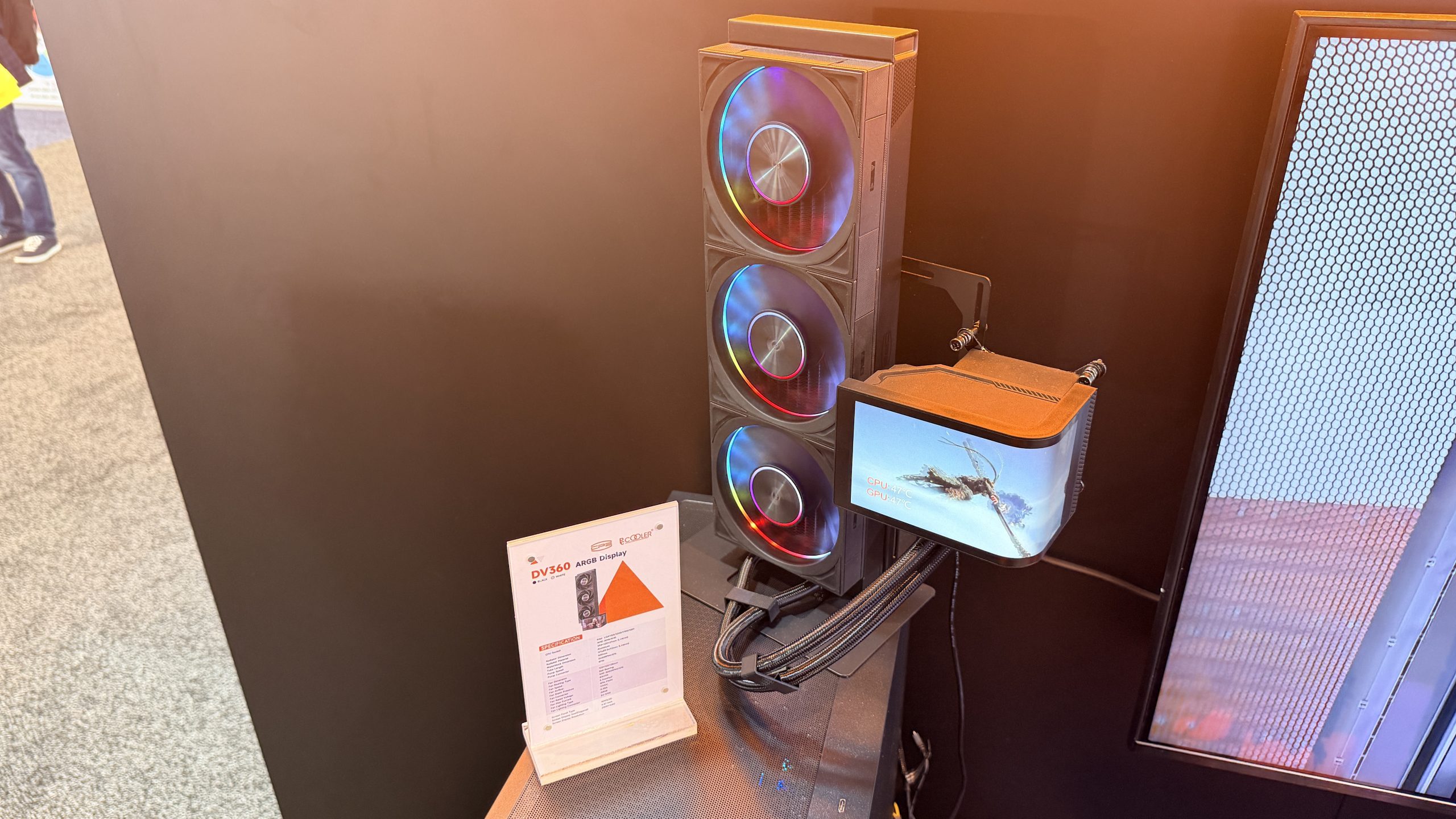
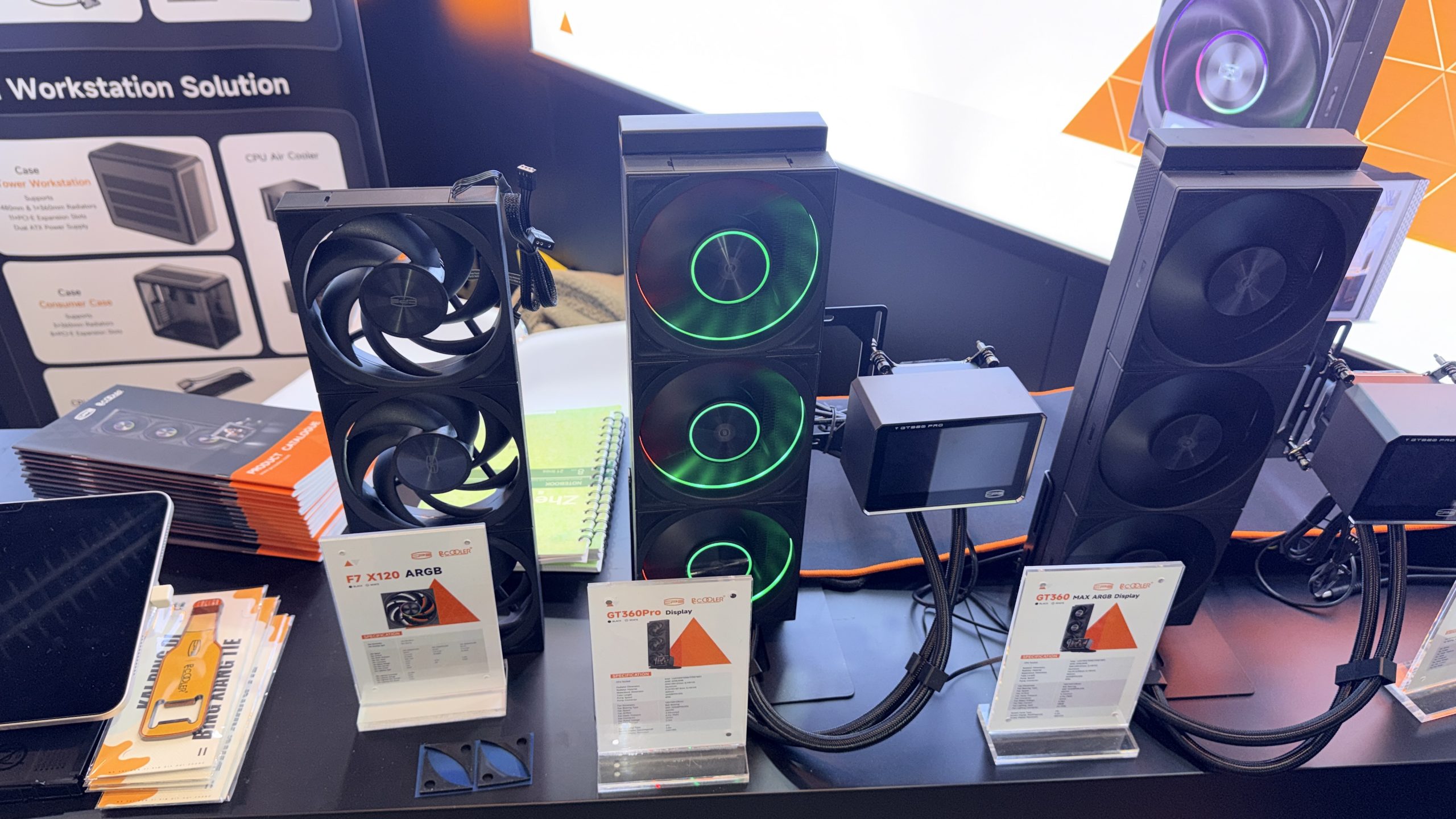
The company is also expanding its display‑equipped AIO range. The DV360 ARGB Display pairs a 360mm radiator with a 6.67‑inch curved AMOLED screen running at 2400×1080 resolution and 60Hz refresh rate. The screen mounts magnetically and can be angled, while cooling is handled by a ceramic bearing pump and F7 X120B fans that scale up to 3000RPM. For builders wanting a smaller display, the GT360M ARGB Display uses a 2.8‑inch IPS LCD with the same 360mm radiator size, a ceramic‑bearing pump and pre‑installed daisy‑chain fans.

On the chassis front we have the C3Q500, a new ATX panoramic chassis with 270° tempered glass, support for 360mm liquid coolers and GPU clearance up to 420mm. Tool‑less side panels and up to nine 120mm fan positions target mainstream builders. For workstation users, the C5Q700 supports dual GPUs up to 450mm, E‑ATX motherboards and up to 15 fans, along with 420mm radiator support. Above that, the C9Z700 is a full‑tower aluminium model designed for multi‑GPU and server‑grade boards including HTPX and SSI‑EEB. It supports up to 30 fans, dual PSUs and radiators up to 480mm.

CPS PCCooler’s PSU lineup has also been refreshed. The SU Series sits at the top with Cybenetics Titanium certification, silicon‑carbide MOSFETs, full Japanese capacitors and up to four native PCIe5.1 12V‑2×6 connectors, scaling from 1350W to 2500W. The KN Series targets mainstream builders with 80Plus Gold efficiency, full‑modular cables and models from 650W to 1000W. The YS Series, powered by Seasonic, offers 80Plus and Cybenetics Gold ratings, full Japanese capacitors and a 12‑year warranty in 850W to 1200W capacities.

CPS PCCooler also showed updates across its fan portfolio, including the dual‑halo F7 X120B, the industrial‑grade F9 R120 with liquid‑crystal‑polymer blades, and the airflow‑focused F5 R140. Two workstation coolers were also on display: the FW700, a 7‑heatpipe design for Intel 4710 and AMD SP5/STR5 platforms, and the compact FW620, a 4U‑compatible dual‑tower cooler with 100mm fans.

Discuss on our Facebook page HERE.

KitGuru Says: What did you make of CPS PCCooler's CES showing this year?

The post CES 2026: CPS PCCooler shows off huge new PC case, new coolers first appeared on KitGuru.
  •  

DeepSeek prepares new cutting-edge AI model with a focus on programming

Chinese AI company DeepSeek is working on the next generation of its flagship model. After a period of relatively low public visibility, there are now signs of a new product launch that could once again attract international attention. According to internal plans, a model called V4 is to be positioned as the direct successor to […]
Source

  •  
❌