↩ Accueil

Vue lecture

Netflix on PS3 is finally shutting down next month

While consoles are of course first and foremost used to play video games, their utility as an all-round media player is not to be dismissed, starting with support for DVDs, then Blu Rays and streaming services. With the console now over 20 years old, Netflix has announced they are officially dropping support for the PS3 next month.

As discovered by one ResetEra user, in going to the Netflix app on PS3 subscribers are now met with the message “Unfortunately, Netflix will no longer be available on this device after March 2, 2026.”

Netflix PS3

While not too much of a surprise given the age of the console, many users have expressed disappointment with the announcement, especially as the PS3 version allowed for native 4:3 content support (and did not feature any ads).

Still, while unfortunate to see, it was only a matter of time. Given the continued popularity of the PS4, it will be interesting to see how many more years of support it will receive.

KitGuru says: Did you stream Netflix on your PS3 back in the day? How many people do you reckon were still using the console in 2026? Let us know your thoughts down below.

The post Netflix on PS3 is finally shutting down next month first appeared on KitGuru.
  •  

Build a Rocket Boy to end partnership with IO Interactive according to insiders

MindsEye was easily one of 2025’s biggest fumbles, with the ambitious title from ex-Rockstar president Leslie Benzies and studio Build A Rocket Boy receiving less-than-stellar reviews upon its initial launch last year. Being the first title released via IO Interactive’s publishing division, MindsEye was not the greatest of starts for this partnership – with studio Build a Rocket Boy now reportedly set to cut ties with its publisher.

As reported by known leaker Tom Henderson via Insider-Gaming, Build a Rocket Boy “are planning to announce soon that they have decided to part ways with their publisher, IO Interactive.”

According to the report, this decision is being made in order to “bring its publishing in-house and gain more control over its future. That includes faster decision-making, simpler communication, and greater control over the player experience.”

Build a Rocket MindsEye

As per the report, the choice to part ways was supposedly made by Build a Rocket Boy and not IOI. That said, back in September of last year IO Interactive revealed that they would be backing away from publishing other studios’ titles – and so Build a Rocket Boy’s desire to part ways likely came as a relief to IOI.

Regardless, with the MindsEye x HITMAN crossover said to no longer be happening, it will be interesting to see what Build a Rocket Boy has planned for the game – and whether it can ever become more than what it currently is.

KitGuru says: What do you think of this decision? Is it for the best? Can MindsEye ever become a game worth playing? Let us know your thoughts down below.

The post Build a Rocket Boy to end partnership with IO Interactive according to insiders first appeared on KitGuru.
  •  

Microsoft reportedly planning to bring more Windows games to Steam

For a while, Microsoft was pushing its Xbox PC app quite heavily, with the promise of Game Pass and Xbox Play Anywhere giving users a reason to purchase their PC titles through Xbox as opposed to other storefronts. With Steam continuing to dominate the space however, it appears as though Microsoft might be conceding to the platform – with insiders claiming that more PC titles are set to make their way over to Steam.

As reported by known Xbox insider Jez Corden (via Windows Central), Microsoft “wants to bring more of its experiences to Windows and Steam alike” claiming to have “heard some heavy-hitting Xbox first-party experiences, presently not on Steam, will show up there in the coming months.”

No further details were provided, but given the fact that most of the first-party Xbox games from the past generation launched day-and-date on Valve's platform, Corden is likely referring to older releases.

Microsoft Steam

With Microsoft owning the likes of Zenimax and Activision, there are dozens of games no longer available on Steam – either due to them never appearing on the platform in the first place, or were eventually delisted for whatever reason.

Of course, there have been various leaks and rumours claiming that older Transformers titles published under Activision back in the day could make a return. Similarly, older Wolfenstein and Prey titles were delisted from Steam years ago.

By far the biggest deal however would be if Microsoft were to bring Minecraft and World of Warcraft to Steam – though this is little more than speculation.

Regardless, having more titles available on as many platforms would be welcome to see, for the sake of preservation if nothing else.

KitGuru says: What do you think of this rumour? What titles do you think Corden is referring to? What older/delisted Xbox games would you like to see brought over? Let us know down below.

The post Microsoft reportedly planning to bring more Windows games to Steam first appeared on KitGuru.
  •  

SEGA offers updated sales stats for Sonic Racing Crossworlds

2025 was a great year for kart racers, with the latest entry in the Mario Kart series launching alongside the Nintendo Switch 2, and SEGA’s Sonic Racing series returning in all its glory after some less-than-stellar entries. Following the announcement that Sonic Racing Crossworlds had sold 1 million copies in its first month, SEGA has now offered updated sales data.

As part of the company’s latest Fiscal earnings report, SEGA’s Koichi Fukazawa spoke on the ongoing performance of their latest Sonic game: Sonic Racing Crossworlds, stating:

“We recently announced that worldwide cumulative sales have surpassed 1 million units. However, initial performance did not meet our expectations, and we are aiming to sell approximately another 1 million units within this fiscal year.”

Fukazawa continued, “We aim to sustain long-term sales by encouraging players to enjoy the game over time through the continued support of the title including ongoing release of additional downloadable content.”

Crossworlds Sonic Racing

It is interesting to see that the 1 million figure has not been to SEGA’s satisfaction, especially as Crossworlds represents the most expensive Sonic game yet – retailing initially for $70. Of course, unlike Nintendo’s Mario Kart, Crossworlds has already had multiple sales and so it will likely continue to slowly but surely push more units.

Additionally, Crossworlds still has plenty of previously-announced post-launch content to drop, which should further bring in more players as and when they are released.

Even so, despite being far superior to its last entry, Crossworlds still has quite a ways to go in order to surpass the sales of 2019’s Team Sonic Racing.

KitGuru says: What do you think of Sonic Racing Crossworlds? How does it compare to Mario Kart? Is it the best Sonic Kart racer yet? Let us know your thoughts down below.

The post SEGA offers updated sales stats for Sonic Racing Crossworlds first appeared on KitGuru.
  •  

Gamdias Notus M1-1201 ARGB Fan Review

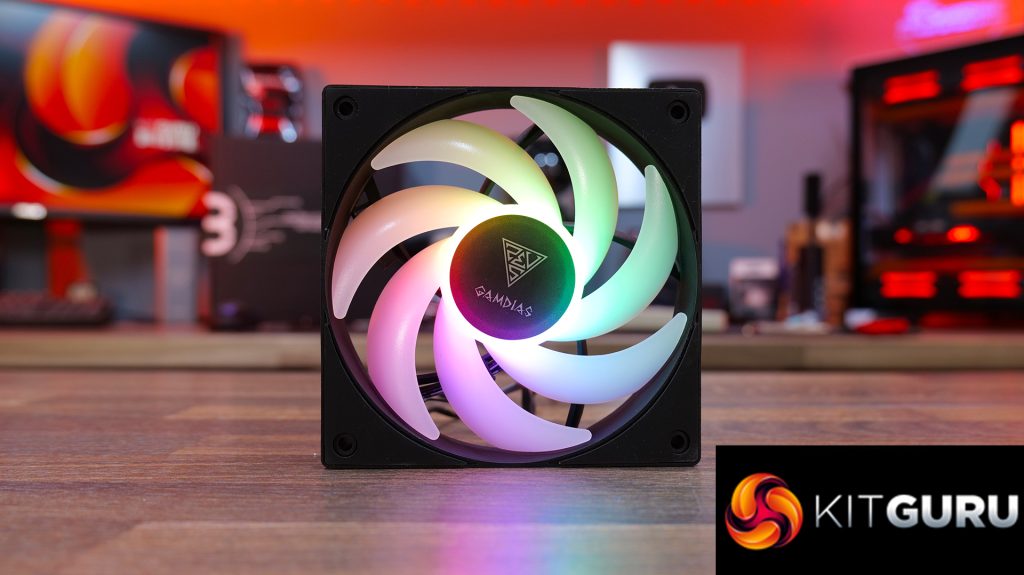
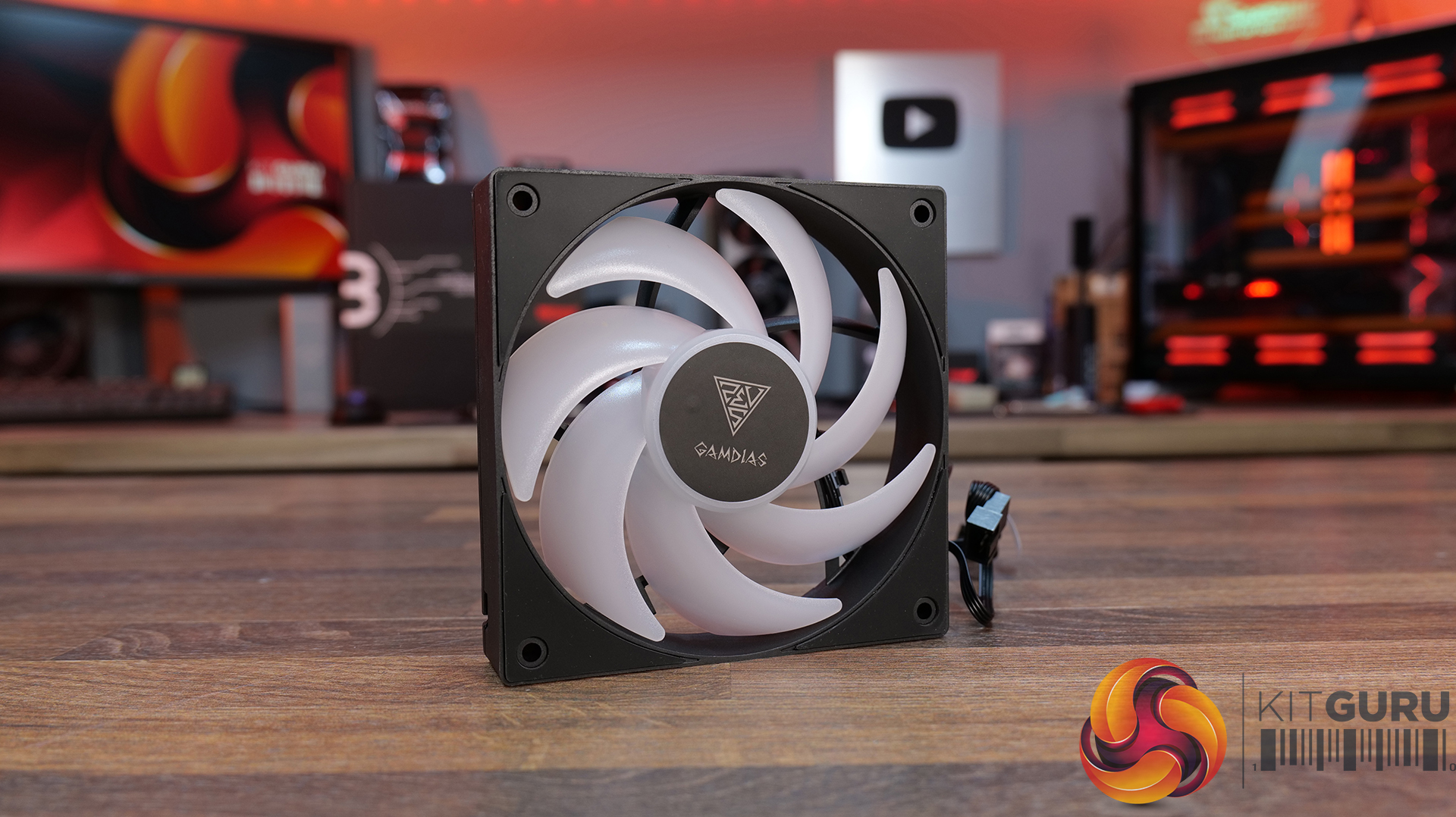
Today we are taking a look at some budget 120mm fans with reversible blades. The Gamdias Notus M1-1201 ARGB fans take the pain out of selecting forward and reverse blade fans for your build, with both forward and reverse blades included in the kit that can be quickly swapped out to suit fan placement in your case. We’ll test noise, CPU/GPU temperature and case thermals in this review to see if they represent good value or just another noisy budget fan.

Features:

  • Clean ARGB implementation – Notus M1-1201 ARGB is equipped with addressable RGB lighting that connects directly to a standard 3-pin 5V headers, allowing simple synchronisation with motherboard software.
  • Optimal cooling performance – Featuring a speed range of 400–1600 RPM, maximum airflow of 57.56 CFM and 1.75 mmH₂O max static pressure, making it suitable for both case ventilation and use on radiators and heat sinks.
  • Refined acoustics and operation – A hydraulic bearing and narrow blade-tip clearance help keep noise levels under control, to provide a sensible balance between airflow and acoustics rather than prioritising one over the expense of the other.
  • Useful design choices – Anti-vibration pads and the inclusion of interchangeable forward and reverse blades adds flexibility for different airflow setups without overcomplicating installation.

Specifications:

  • Model: Notus M1-1201 ARGB
  • Package contents: Fan x1, Reverse fan blade x1, Lubricant x1
  • Fan size: 120 mm
  • Dimensions: 120 × 120 × 25 mm
  • Lighting effect: Addressable RGB (ARGB)
  • LED count: 8 LEDs
  • Bearing type: Hydraulic bearing
  • Connectors: 4-pin PWM fan connector, 3-pin ARGB connector
  • Fan speed: 400–1600 RPM (±10%)
  • Maximum airflow: 57.56 CFM
  • Static pressure: 1.75 mmH₂O
  • Rated voltage: 12 V (fan) / 5 V (LED)
  • PWM support: Yes

Gamdias Notus M1 fans come in two different pack sizes, either single or 3 packs, branded 1201 or 1203, respectively. They are essentially the same fans, just the quantities inside the boxes determine the model name.

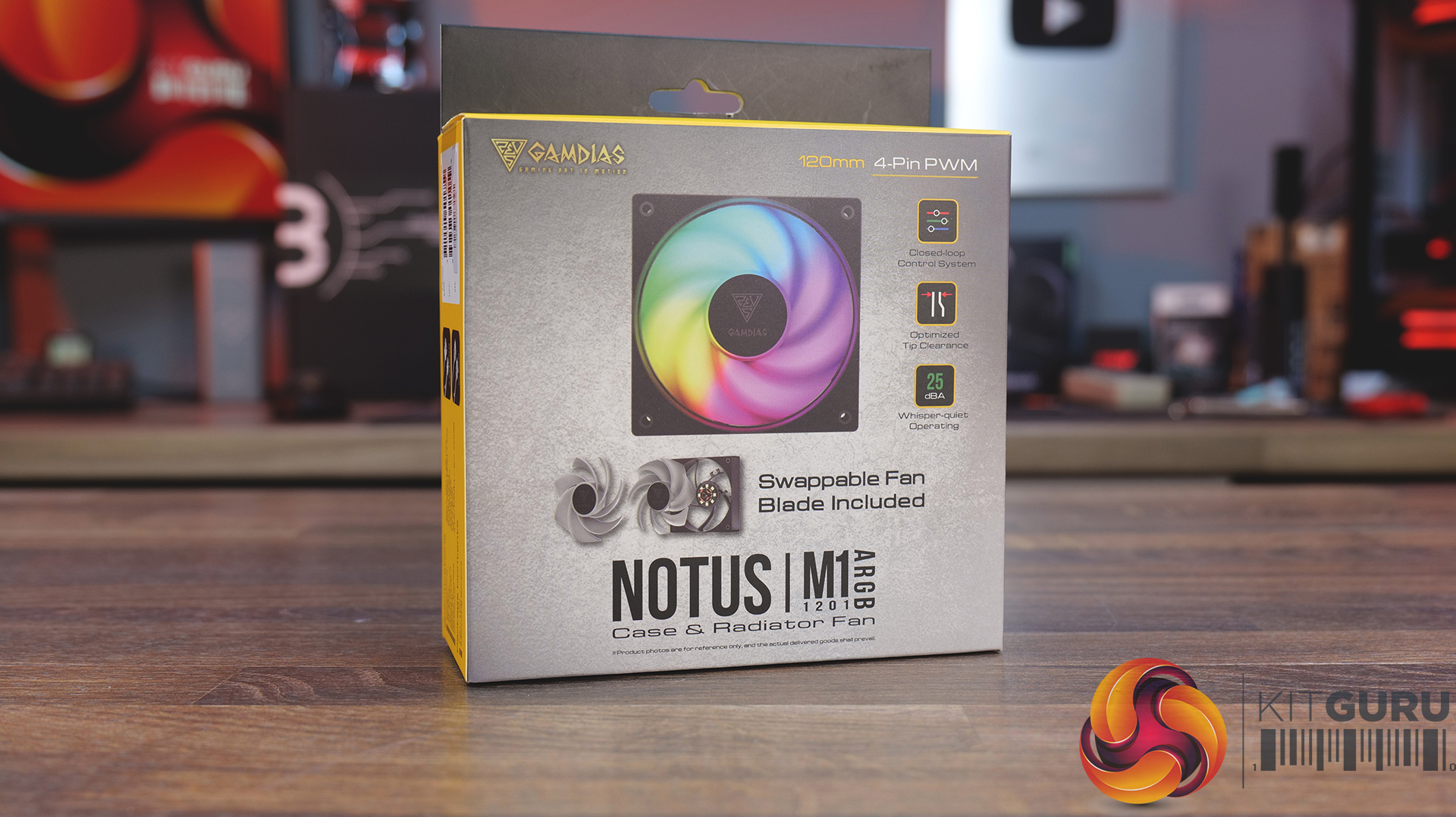
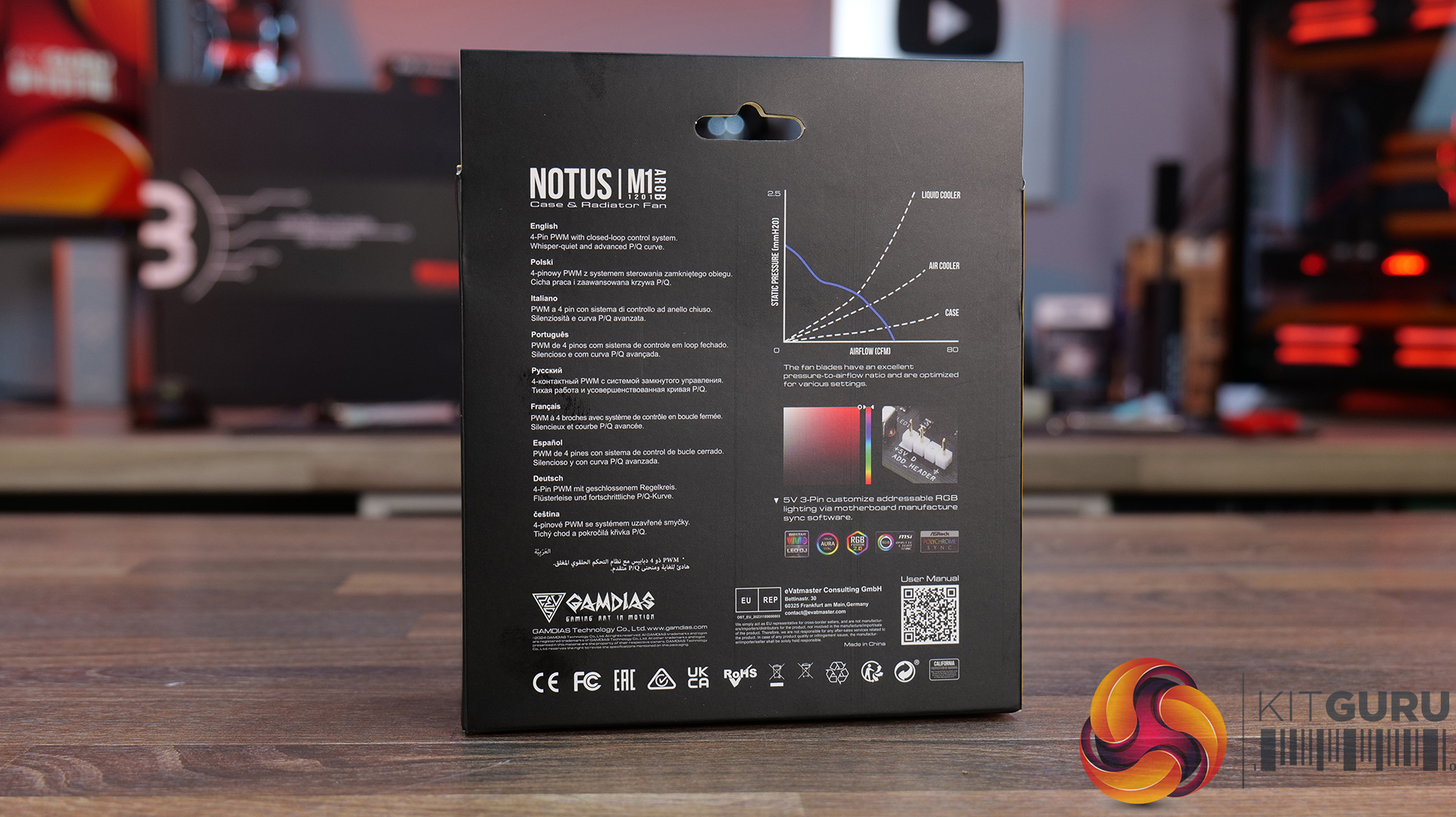
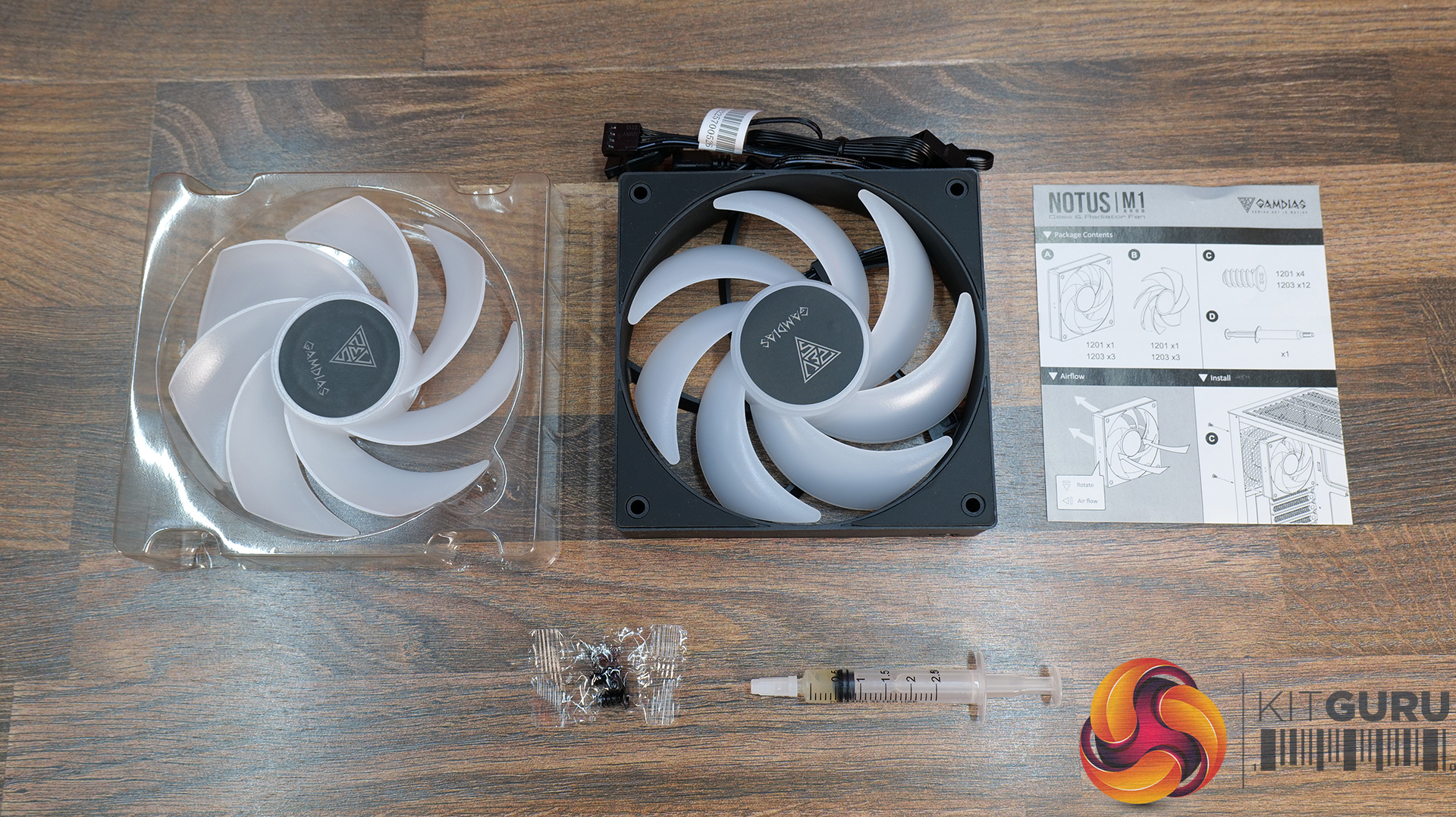
We are looking at the single pack, so 1201 branding, which comes with a single fan packed in a cardboard box. On the front of the box are several images of the fans and some key features listed. On the rear are the specifications and performance charts. Inside is the fan, an extra reverse blade, a user manual, mounting screws and some bearing lube.

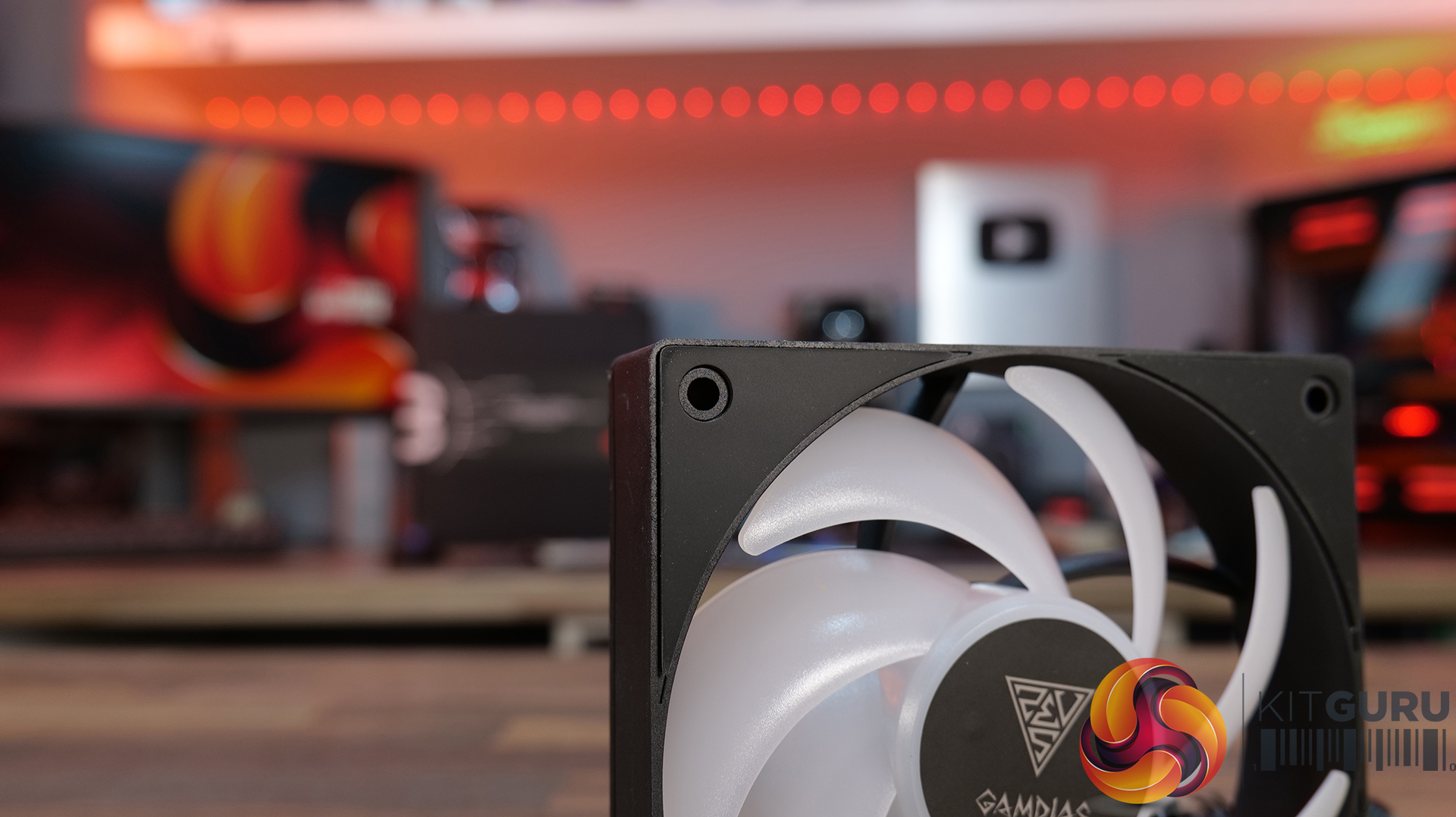
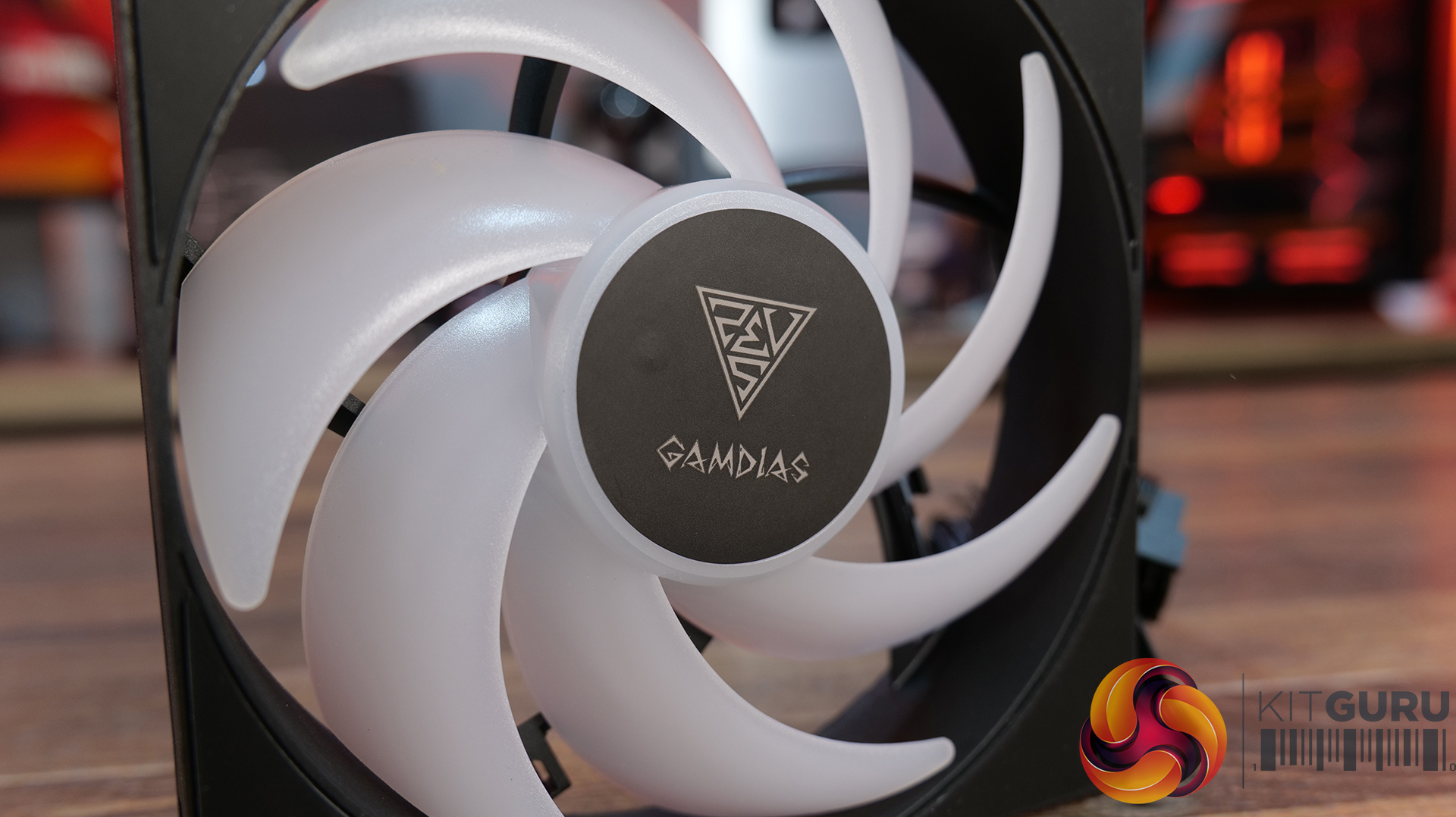
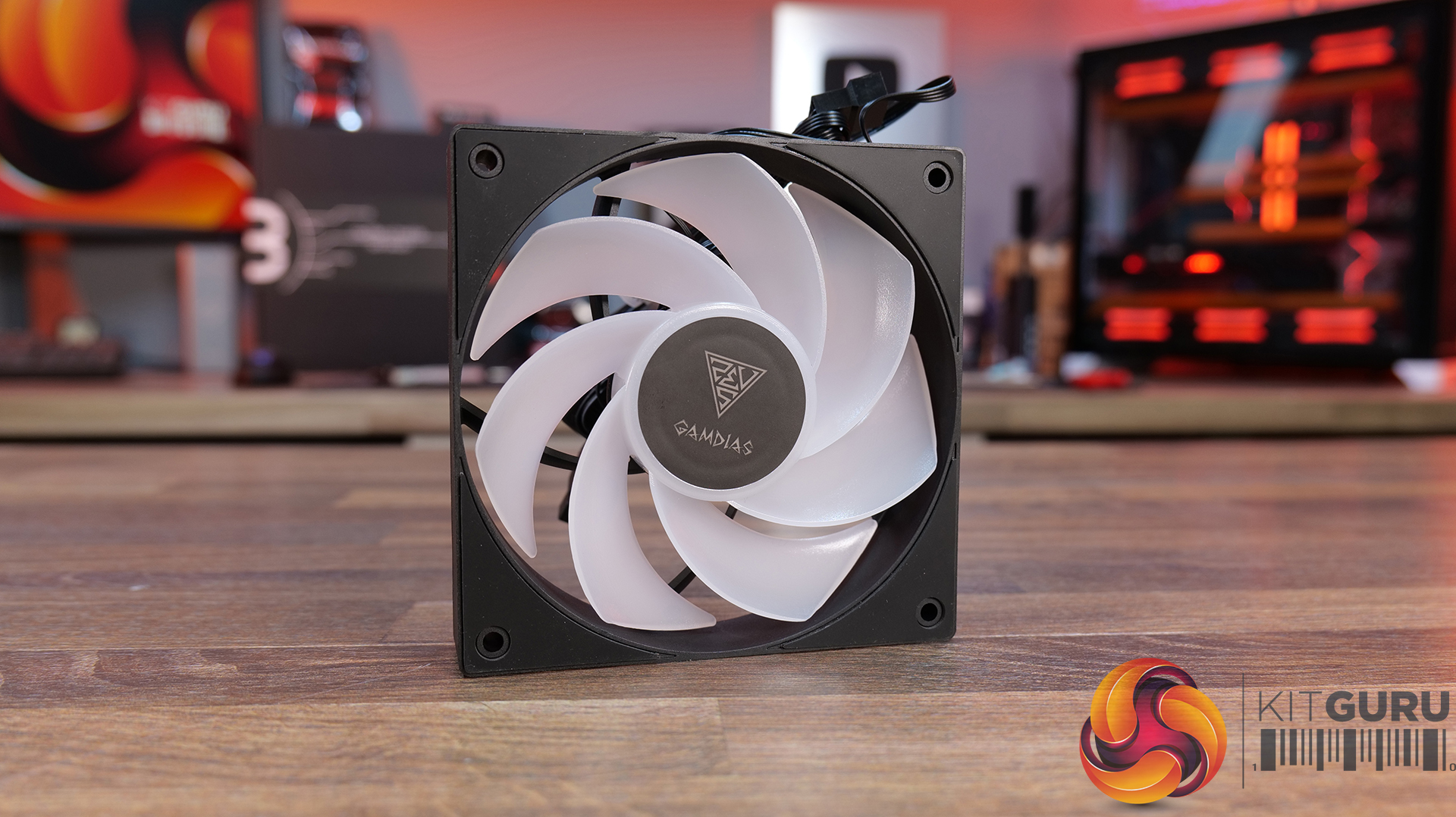
The fan frames are built from PBT (Polybutylene Terephthalate) material, which is widely used in electronic equipment due to its strength and durability. There are rubber anti-vibration pads fitted to the mounting points and the fan blades are opaque in colour to display and diffuse the RGB lighting.

The rear frame of the fan has strengthening bars to mount the motor, there's anti-vibration rubber pads on the rear of the mounting points, as well as a label showing some brief information and the Gamdias branding.

All wiring uses standard headers. There's a 4-pin PWM cable that has a daisy-chainable tail so users can interconnect fans and use a single motherboard header to connect multiple units. RGB lighting can also be interconnected and uses a 3-pin 5V connection that can be connected to the motherboard or an ARGB hub. Interestingly, the PWM cable has a warranty void sticker on it, which seems like an odd thing to attach to a cable.

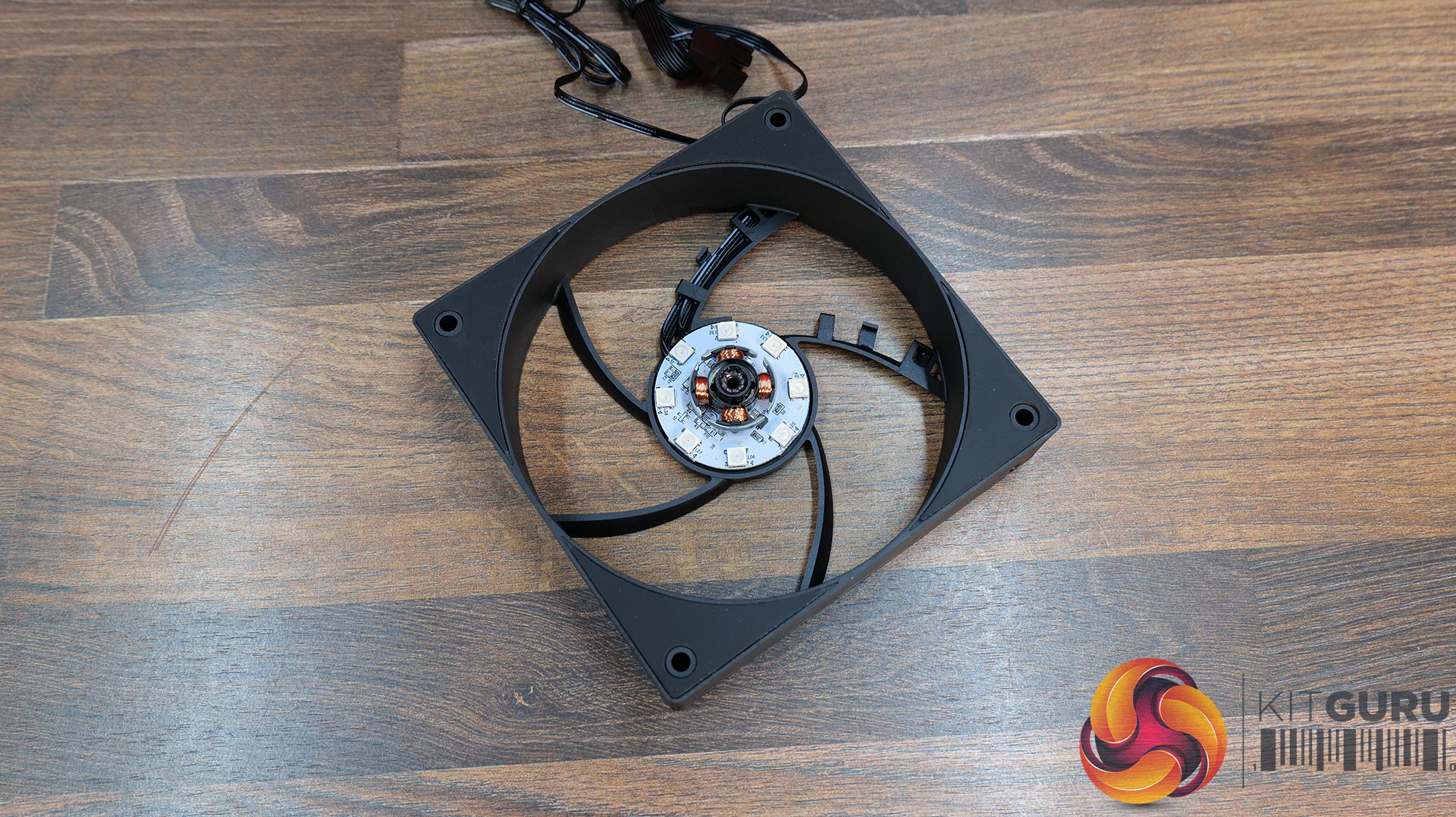
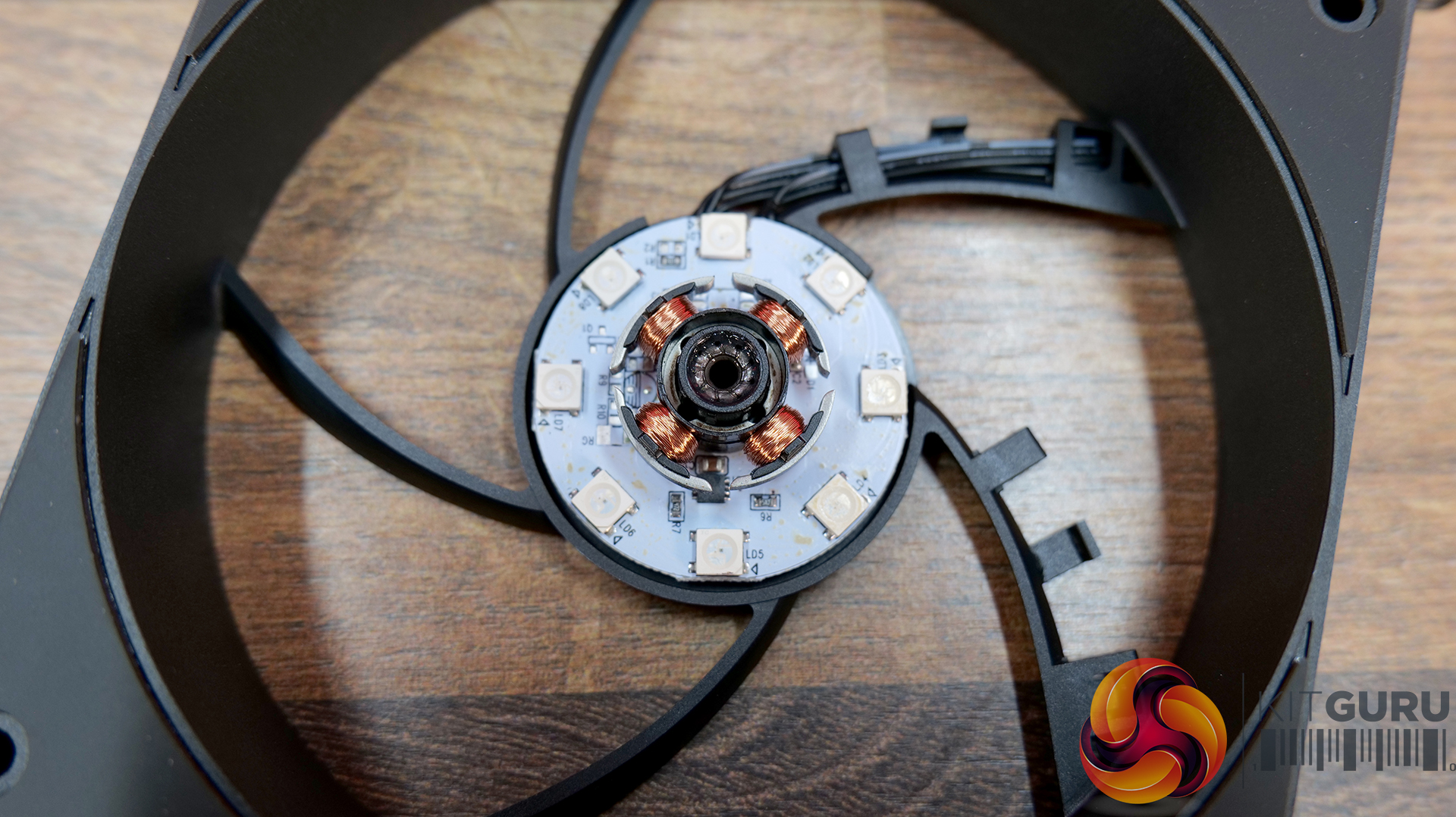
A key feature of the fans is the option to change the fan blade. Forward and reverse blades are included in the pack, and it’s a simple case of pushing one blade off and clipping the replacement blade in place. When the blade is removed, you can see the motor windings, the PCB and LEDs for the ARGB lighting, too.

The post Gamdias Notus M1-1201 ARGB Fan Review first appeared on KitGuru.
  •  

be quiet! Light Base 500 LX Review

The be quiet! Light Base 500 LX is not just a more compact dual-chamber case when compared to the 600 series, but is designed completely differently from the ground up. It focuses on functionality while bundling four retail-grade ARGB fans at a price that makes it easy to overlook some of the shortcomings.

  •  

Apple is testing a clamshell-style foldable iPhone, with market launch dependent on the success of the iPhone Fold.

According to recent reports, Apple is evaluating the development of a foldable iPhone in the so-called clamshell format. Internally, this project is apparently referred to as iPhone Flip, although this is not an officially confirmed product name. The considerations are closely linked to the planned launch of the iPhone Fold, which is positioned as the […]

Source

  •  

Linux-Gaming auf dem Weg aus der Patch-Hölle

Linux-Gaming leidet seit Jahren nicht an fehlender Leistung, sondern an struktureller Selbstsabotage. Zu viele Distributionen, zu viele Sonderlösungen, zu viele Kernel-Patches, die irgendwo zwischen GitHub-Repo und Maintainer-Burnout versanden. Genau hier setzt das Open Gaming Collective an und das ist der entscheidende Unterschied zu früheren gut gemeinten Initiativen.   Bislang kochte jede Gaming-nahe Linux-Distribution ihr eigenes […]

Source

  •  

The impossible cooler? 185 watts in a low-profile format and why skepticism is warranted

185 watts of power dissipation, dissipated by a low-profile CPU cooler. This sentence alone sounds like marketing folklore from the “PowerPoint thermodynamics” department. This is precisely why the concept presented in the video attracts attention, but at the same time requires sober assessment. After all, there is a world of difference between theoretical feasibility, practical […]

Source

  •  

30 years of DDoS: why a structural problem persists

The first publicly documented denial-of-service attack occurred in 1996, when New York-based internet service provider Panix was rendered inaccessible for several days by a relatively simple SYN flood attack. A few hundred manipulated connection requests were enough to overload the infrastructure at the time. At that time, the term cyber resilience was hardly established, nor […]

Source

  •  

Windows 11 surpasses the billion mark significantly faster than Windows 10

Microsoft announced in its latest quarterly figures that Windows 11 has surpassed the one billion user mark. According to the company, this milestone was reached 1,576 days after its market launch. This puts the current operating system around 150 days ahead of the previous record holder, Windows 10, which took 1,706 days to reach the […]

Source

  •  

Intel unveils new Xeon 600 series processors with up to 86 P-Cores

During a recent pre-briefing, we learned about the new Intel Xeon 600 series processors. The new generation of workstation-grade chips will be launching very soon, with ‘budget' options around the $500 mark, moving all the way up to massively powerful $7,699 versions.

The new Xeon chips are based on Intel's new Granite Rapids architecture and is designed to replace the previous Xeon W-2500 and W-3500 series, which were divided up into two distinct tiers. The new line-up offers a single, scalable line-up, simplifying things for those looking to go with Intel for their next workstation upgrade.

You can see the full specifications for each new Intel Xeon 600 series SKU in the table below:

SKU P Cores Turbo Boost Max (GHz) All-Core Turbo (GHz) Base Frequency (GHz) L3 Cache (MB) Base TDP (W) Unlocked Memory Channels MRDIMM Speed PCIe 5.0 Lanes RCP Price
698X 86 4.8 3.0 2.0 336 350 Yes 8 8000 128 $7699
696X 64 4.8 3.5 2.4 336 350 Yes 8 8000 128 $5599
678X 48 4.9 3.8 2.4 192 300 Yes 8 8000 128 $3749
676X 32 4.9 4.3 2.8 144 275 Yes 8 8000 128 $2499
674X 28 4.9 4.3 3.0 144 260 Yes 8 8000 128 $2199
658X 24 4.9 4.3 3.0 144 250 Yes 8 128 $1699
656 20 4.8 4.5 2.9 72 210 No 4 128 $1399
654 18 4.8 4.5 3.1 72 200 No 4 128 $1199
638 16 4.8 4.5 3.2 72 180 No 4 80 $899
636 12 4.7 4.5 3.5 48 170 No 4 80 $639
634 12 4.6 3.9 2.7 48 150 No 4 80 $499

While not noted in the table, every single chip in the line-up supports DDR5 memory speeds of 6400MT/s and supports Intel vPro Technology. Only a handful of these CPUs will be offered in boxed form as well, including the Xeon 696X, 678X, 676X, 658X and the Xeon 654. As always, the chips listed as ‘unlocked' are overclockable for those with the necessary cooling to squeeze out the extra performance.


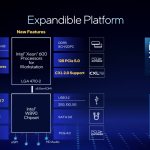
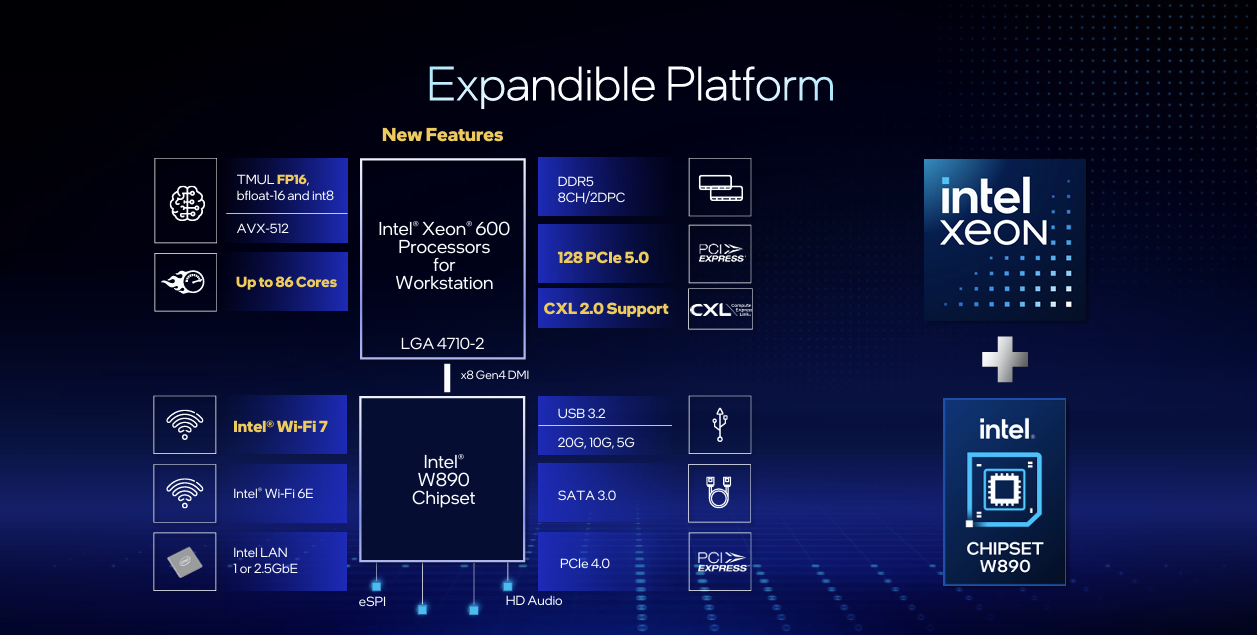
In the slides above, you can get a closer look at all of the new features Intel announced.

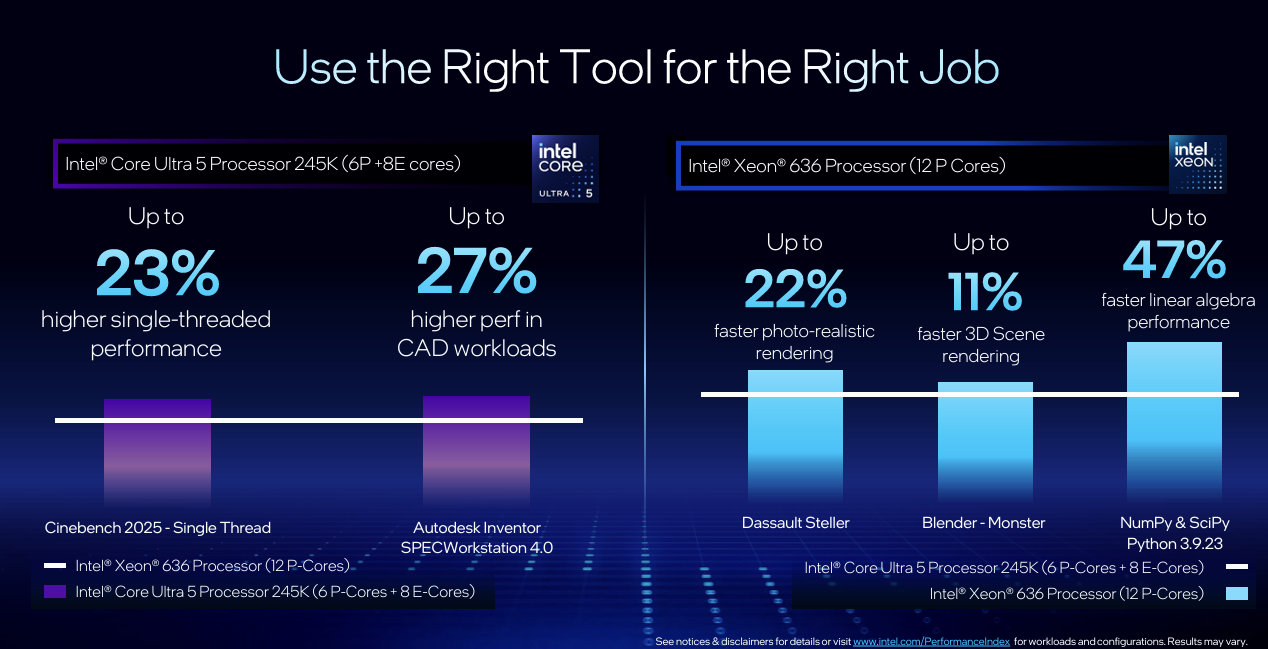
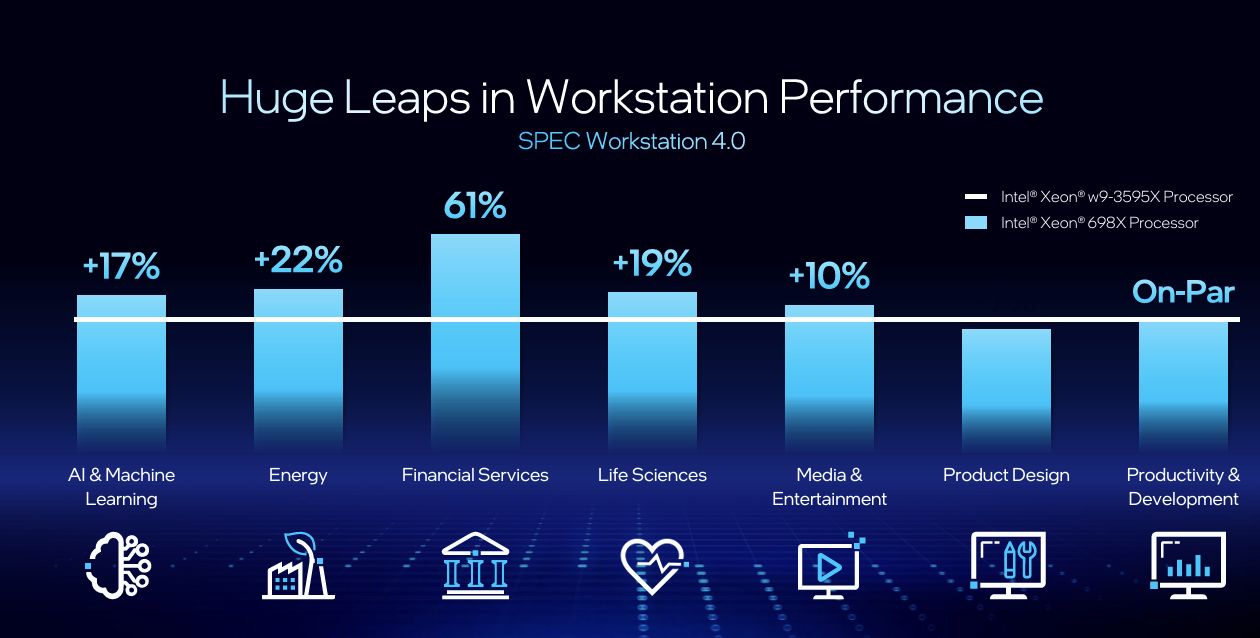
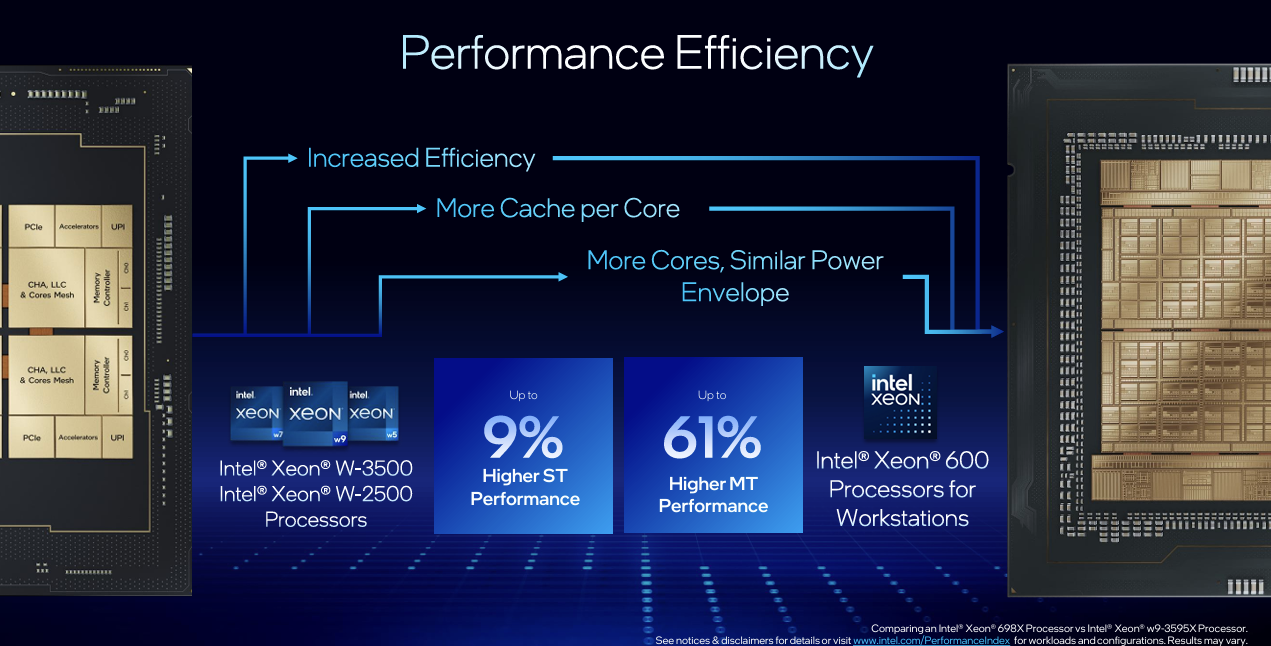
Each new Xeon 600 CPU is built using the new Intel 3 manufacturing process, as well as Redwood Cove cores. Intel says this has led to improved power efficiency versus the previous generation Sapphire Rapids Xeon processors. Compared to the 60-core Xeon W-3595X, Intel reports up to 9% higher single-thread performance and up to 61% higher multi-thread performance, depending on workload.

Intel is also introducing MRDIMM (Multiplexed Rank DIMM) support with this new line-up, enabling memory speeds of up to 8000MT/s on select SKUs. While MRDIMMs trade maximum capacity for bandwidth, Intel says they deliver meaningful gains for memory-bound workloads such as simulations and data analytics.

Alongside the new Xeon 600 series CPUs is the W890 chipset, which adds new features like WiFi 7, faster USB, PCIe Gen 4 expansion and more.

Systems based on Xeon 600 processors are expected to become available from major OEMs and system integrators starting in March 2026.

KitGuru Says: What do you think of Intel's new Xeon line-up? 

The post Intel unveils new Xeon 600 series processors with up to 86 P-Cores first appeared on KitGuru.
  •  

Intel’s Xeon 600 Brings Granite Rapids Muscle To High-End Desktops

Intel’s Xeon 600 Brings Granite Rapids Muscle To High-End Desktops Some folks act as if Intel and AMD have killed off the "high-end desktop" or HEDT market, but that's never really been the case. Instead, what happened is that mainstream desktops went from a maximum of four cores to 16  - 24 cores basically overnight, propelling HEDT systems out of reach for most enthusiasts. If you want a processor with
  •  

1994 Sega Saturn Pulls Off Real-Time Ray Tracing In Stunning Homebrew Demo

1994 Sega Saturn Pulls Off Real-Time Ray Tracing In Stunning Homebrew Demo The Saturn was Sega's fifth generation fully-3D console, launched in 1994 to compete with the PlayStation 1 and Nintendo 64—and all these years later, homebrew developer XL2 has managed to create a functioning ray tracing demo on the hardware. The first video of the demo is a single room without any static lighting sources and all ray tracing


  •  

Notepad++ Confirms Hackers Hijacked Update Infrastructure To Push Malware

Notepad++ Confirms Hackers Hijacked Update Infrastructure To Push Malware Notepad++ reported that its built-in auto-update feature had been hijacked by Chinese state-sponsored hackers from June to September of 2025, and the credentials gathered by the bas actors enabled further exploits until December 2nd, 2025. In an effort to thwart similar issues moving forward, Notepad++ has moved to a hosting provider "with
  •  

Raspberry Pi Details Memory-Driven Price Increases Of Up To $60

Raspberry Pi Details Memory-Driven Price Increases Of Up To $60 The Raspberry Pi has been one of the most affordable ways to jump into single-board computing, but even these devices haven’t been able to avoid price increases due to the current DRAM shortage. A mere two months after announcing an initial price hike, the organization is having to raise prices yet again because of an “unprecedented rise in
  •  

First iPhone Fold Could Crush Rivals In Battery Life, Second One May Be A Clamshell

First iPhone Fold Could Crush Rivals In Battery Life, Second One May Be A Clamshell Apple has reportedly been exploring new designs to invigorate sales of its ubiquitous iPhone. Even though sales of the sleek iPhone Air didn't set any records, Apple doesn't seem to be changing course and still plans to release totally new designs. It has long been rumored that a foldable iPhone, similar to the Samsung Galaxy Z Fold, is on
  •  

Noctua NH-D15 G2 chromax.black Review

With the NH-D15 G2 chromax.black, Noctua has taken their flagship cooler to the next level. It retains the high performance and build quality of the original while introducing a clean all-black aesthetic, creating the ultimate version of their flagship air cooler.

  •  

Sony patent points to new PlayStation controller with passive buttons and gesture controls

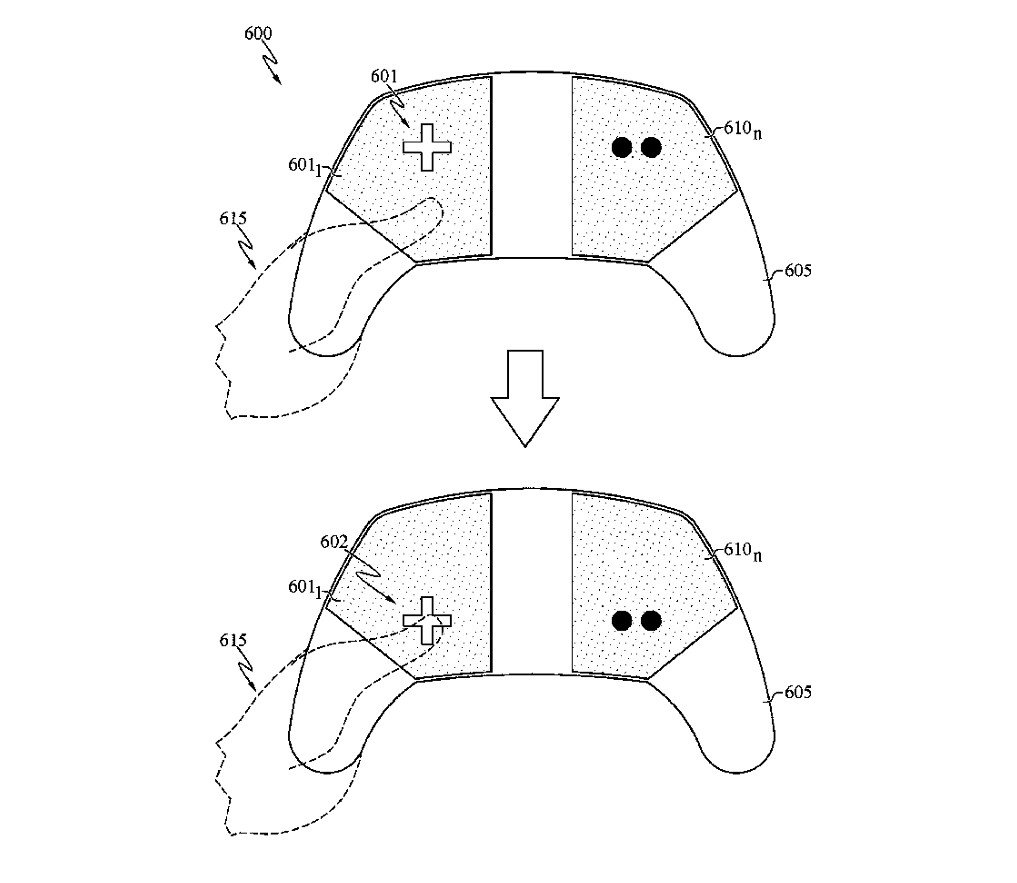
Sony has filed a new patent in the US that describes a departure from traditional gamepad design, envisioning a controller in which a large touchscreen replaces a significant portion of its front. This proposed interface would, in theory, allow users to reposition, resize, and entirely reconfigure digital versions of the D-pad, thumbsticks, and face buttons to suit their specific ergonomic or accessibility requirements.

According to the patent description (via VGC), the current static nature of inputs is a drawback for modern gaming peripherals, as a one-size-fits-all approach inevitably leaves some users struggling with reach or placement. This patent tries to solve that by allowing the input buttons to be dynamically allocated and configured.

Image credit: Sony

By utilising displays, the controller could change its layout based on the game's genre and even resize its buttons, adapting to the user's needs. The patent also mentions temperature and pressure sensors for these displays, which might allow users to have different outputs based on pressure or create a dead zone to ignore inputs.

While the prospect of a screen-based DualSense successor with dynamic layouts might interest some, it is important to remember that companies often patent experimental technology that never reaches mass production. Assuming Sony does move forward with this concept, it would likely result in a premium optional accessory rather than a standard controller for a future console.

KitGuru says: Sony's patent filings are often a window into its R&D lab rather than an indication of an upcoming product. While a fully customisable surface would be exceptional for accessibility, the idea of playing a high-intensity action game on a flat touchscreen doesn't seem all that exciting.

The post Sony patent points to new PlayStation controller with passive buttons and gesture controls first appeared on KitGuru.
  •  

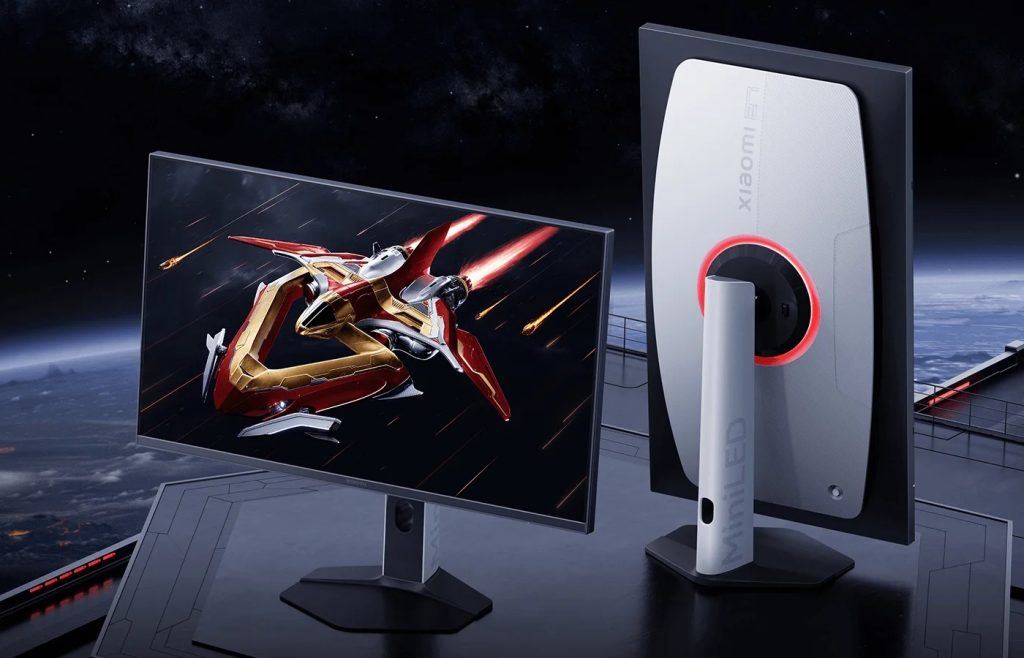
Xiaomi launches G Pro 27Qi monitor with Mini LED backpanel with 1,152 dimming zones

Xiaomi has expanded its display roster with the global release of the G Pro 27Qi (2026). While its predecessor was already a sought-after entry in the budget Mini LED segment, the 2026 refresh increases luminance and colour coverage.

Already available at a few retailers and appearing on Xiaomi's global site, the G Pro 27Qi (2026) (via NotebookCheck) maintains the sweet spot 1440p resolution and 180Hz refresh rate but pushes the hardware envelope in ways rarely seen at its price point. The standout feature of this new revision is the Mini LED backlight, which features 1,152 local dimming zones, nearly double the count of many competitors in its class. This dense array allows the monitor to hit a claimed peak brightness of 2000 nits, earning it a VESA DisplayHDR 1000 certification.

Xiaomi has included a “custom engine” that utilises AI scene recognition and a proprietary local dimming algorithm to minimise blooming and preserve shadow detail down to a claimed 0.0001 nits. The G Pro 27Qi (2026) covers 99% of the DCI-P3 and Adobe RGB gamuts, with a factory calibration ensuring Delta-E values below 1. Connectivity is varied enough, with two DisplayPort 1.4 and two HDMI 2.0 ports. A nice touch is the flip-out headphone holder integrated into the top corner, paired with a fully ergonomic stand and a subtle RGB ring on the rear.

On the official website, the monitor is listed at $475 (£347). However, at this retailer, the same monitor is much cheaper at just €285 (£247), suggesting there might be a launch promo.

KitGuru says: Do you think the G Pro 27Qi has what it takes to stand out from its competitors?

The post Xiaomi launches G Pro 27Qi monitor with Mini LED backpanel with 1,152 dimming zones first appeared on KitGuru.
  •  

Highguard gets requested 5v5 mode, but only for a limited time

When Highguard launched last week with its 3v3 PvP mode, many players were quick to complain that the map feels like it was designed for larger-scale battles. Now just days later, the developers have put out an experimental 5v5 mode. 

Highguard now has a 5v5 mode, allowing larger teams to better cover the game's large map. The new mode was well received, and the growing sentiment seems to be that this should have been the launch mode. Unfortunately, it won't last for long.

While 5v5 is available for now, it is listed as a limited-time mode, so it is just a matter of time before it goes away again. The developers have also not yet addressed complaints around the loot-farming phase of matches, which many players say is a trivial and boring part of the game.

It is unclear if 5v5 will end up becoming a permanent mode in Highguard, or if the developers will just introduce smaller maps in the future, but it seems quite clear that 5v5 is a mode that players want to stick around.

KitGuru Says: Have you tried Highguard's 5v5 mode? 

The post Highguard gets requested 5v5 mode, but only for a limited time first appeared on KitGuru.
  •  

Escape from Tarkov studio unveils trailer for new sci-fi project

Nikita Buyanov, the creator of Escape from Tarkov, has further fuelled speculation regarding his next project, Cor3, with a teaser trailer that seemingly confirms a leap into the sci-fi genre. Following a month of cryptic social media teases and an interactive terminal set in the year 2251, the latest video, titled ‘PRJRPNT_BLUEMARS_FO', gives us the clearest look yet at what could well be “Tarkov in space”.

The trailer begins with a familiar sight for Battlestate fans, with a first-person perspective of a PMC-like operative holding a futuristic ‘Kalash Corp' rifle. The video also includes various other references to Escape from Tarkov, namely a patch for the “Bogatyr.bs First Navy Squad”, suggesting a connection to the BEAR special squads in Escape from Tarkov. The setting, however, is far from what you would expect from the streets of Tarkov. Instead, it shows a destroyed city (apparently named Mariner) on a planet that doesn't look like Earth.

You can find some lore of the game in the Cor3.gg interactive site, but besides that, not much more is known about the game. As expected from a teaser trailer, it's light on concrete gameplay details, leaving fans to wonder if this will be a hardcore extraction shooter like EFT or something else entirely.

Battlestate Games has been notably quiet about this game, leading some to wonder whether Cor3 will be a single-player title or something more familiar to Tarkov's studio. The heavy emphasis on first-person military hardware alongside space-bound “Navy Squads” suggests a connection to Tarkov, but it isn't enough to be sure it's yet another extraction shooter.

KitGuru says: What do you think Cor3 will be like? Will it be more of the same in space or a game completely different from Tarkov?

The post Escape from Tarkov studio unveils trailer for new sci-fi project first appeared on KitGuru.
  •  
❌