Kena: Bridge of Spirits was the impressive debut title from studio Ember Lab. Released back in 2021 for PlayStation and PC, the game resonated with many thanks to its gorgeous visuals, fun combat and overall vibes. Eventually finding its way to Xbox, the title is now set to complete its multi-platform journey as Kena: Bridge of Spirits officially comes to the Switch 2 this Spring.
Making the announcement via a brief trailer, the team at Ember Lab confirmed that Kena: Bridge of Spirits is officially coming to the Switch 2 some time this Spring, though no concrete date was provided.
That said, when it does arrive, the game will feature all of its previously-released Anniversary DLC alongside other prior post-launch updates such as its New Game Plus mode.
In terms of technical specs, the team did not disclose any specifics. That said, the trailer was released in just 1080p and 30fps and so it’s possible that the title will be limited in this regard.
For context, the PS5 version offered two modes, a 30fps option running at 4K (for the most part) and a 60fps option landing around 1440p – then reconstructed up to 4K. For a more apt comparison, the PS4 Pro version of Kena was limited to 30fps while operating at a dynamic 1440p.
Regardless, Kena: Bridge of Spirits is a fun and pretty game worth playing irrespective of what platform you’re on, and so it is exciting to see the title finally coming to Nintendo’s platform. It will be interesting to see whether the recently-announced sequel ‘Kena: Scars of Kosmora’ will find its way to Switch 2 eventually.
KitGuru says: What do you think of Kena: Bridge of Spirits? Does framerate matter for a game like this? Let us know your thoughts down below.
In recent days we’ve heard a ton of insider leaks and rumours claiming that Sony is moving away from its multi-platform strategy, with its first-party single player games no longer being ported over to the likes of the PC. One of the most interesting multi-platform releases was for LEGO Horizon Adventures – a title which was launched day-and-date on the Nintendo Switch alongside PlayStation. Though seemingly an out-of-character decision at the time, it appears as though the Switch port was mandated by LEGO, and was not Sony’s choice.
Following the recent reports which claimed that Sony would no longer be bringing its first-party PlayStation titles to additional platforms (live-service games excluded), game dev interviewer ‘Kiwi Talks’ took to Twitter to reveal some behind the scenes details on the LEGO Horizon Adventures deal, claiming that: “Lego Horizon only released on Switch because it was mandated by the Lego Group.”
When asked whether this was speculation or based on obtained knowledge, Kiwi claimed “no it's not an educated guess, it's info I know. Sony views Nintendo as direct competition.”
As mentioned, the release of LEGO Horizon Adventures on Switch was interesting, with it being the only non-live-service title from the company to land day-and-date on another platform – with most of its previous ports coming years after their PlayStation debut.
What this means for future potential collaborations such as this is unknown, with Sony reportedly wanting to go back to full PlayStation exclusives. Regardless, while bringing LEGO Horizon Adventures to Switch did make sense, its release was still quite novel at the time. It seems we now know why.
KitGuru says: What did you think of LEGO Horizon Adventures? Does this mean we are unlikely to get more PlayStation-LEGO projects? Let us know your thoughts down below.
Ever since the launch of the PlayStation 5 and Xbox Series X|S, Ubisoft has slowly but surely updated a large majority of its last-gen titles with support for higher framerates on current hardware. The most recent title to receive such a benefit was Assassin’s Creed Unity. Interestingly, while the update only advertised a boost to 60fps, fans have noticed that the title appears to also include a couple other notable enhancements.
For context, the original AC: Unity ran at just 900p on last-gen consoles, and so it was expected that this would remain the case. That said, while not confirmed, many users have since claimed that the game is running at resolutions far exceeding the aforementioned 900p.
Unfortunately, it’s not all good news, with a similar issue seen in AC: Syndicate’s current-gen patch finding its way into Unity – that being the fact that cloth physics are still limited to 30fps. Given that the playable characters themselves are dripped out in various cloaks and hooded outfits, the disparity between the 60fps world and 30fps physics can be distracting.
Still, this update has been long-awaited, and with the game seeing more than just a 60fps boost, playing Assassin’s Creed Unity on current-gen consoles should be a rather refreshing experience.
KitGuru says: What do you think of Ubisoft’s current-gen support? Would you prefer to get proper next-gen versions as opposed to more rudimentary patches? Let us know down below.
Last night Bungie officially launched Marathon, its first brand new game in close to a decade. The game appears to be off to a good start with positive user reviews on Steam, but has it been enough?
Marathon has launched to a 91% positive user score on Steam, based on just shy of 5000 English language reviews. This is a great sign for Bungie, as there were concerns of a mixed or negative rating for the game, but it appears the studio has managed to stick the landing. As always with a live-service game though, launch is just the beginning, and Bungie will need to keep the pressure on with regular content updates to stop the player base from dropping off, as it has with Destiny 2 over the past year.
At launch last night, Marathon managed to peak at just under 90,000 concurrent players on Steam and will have had many more players logging in on Xbox and PS5. While these are pretty good numbers for a launch, Bungie will be looking to see growth over the weekend as more players get time off work and school to play.
If that growth spurt doesn't hit, then Marathon will be quite a bit behind its closest rival, Arc Raiders, which had a peak player-count of over 460,000 players on Steam during its launch month, and still regularly brings in close to 200K concurrent PC players monthly.
KitGuru Says: Marathon didn't exactly get a burst of momentum over its server slam test last weekend, but that could have been down to progress not carrying over to the launch this week. It will be interesting to see how Marathon does over its first week now that the game is officially out.
Just a few weeks ago, Capcom's next shooter, Pragmata, received a lengthy gameplay showcase during a Nintendo Direct, followed by the announcement of an April 24th release date for all platforms. Now, Capcom has decided to release the game a little earlier, bringing the release date forward.
Pragmata will no longer release on April 24th like originally planned. Instead, the game will now arrive a week earlier, on April 17th, for all platforms including PC, PS5, Switch 2 and Xbox Series X/S.
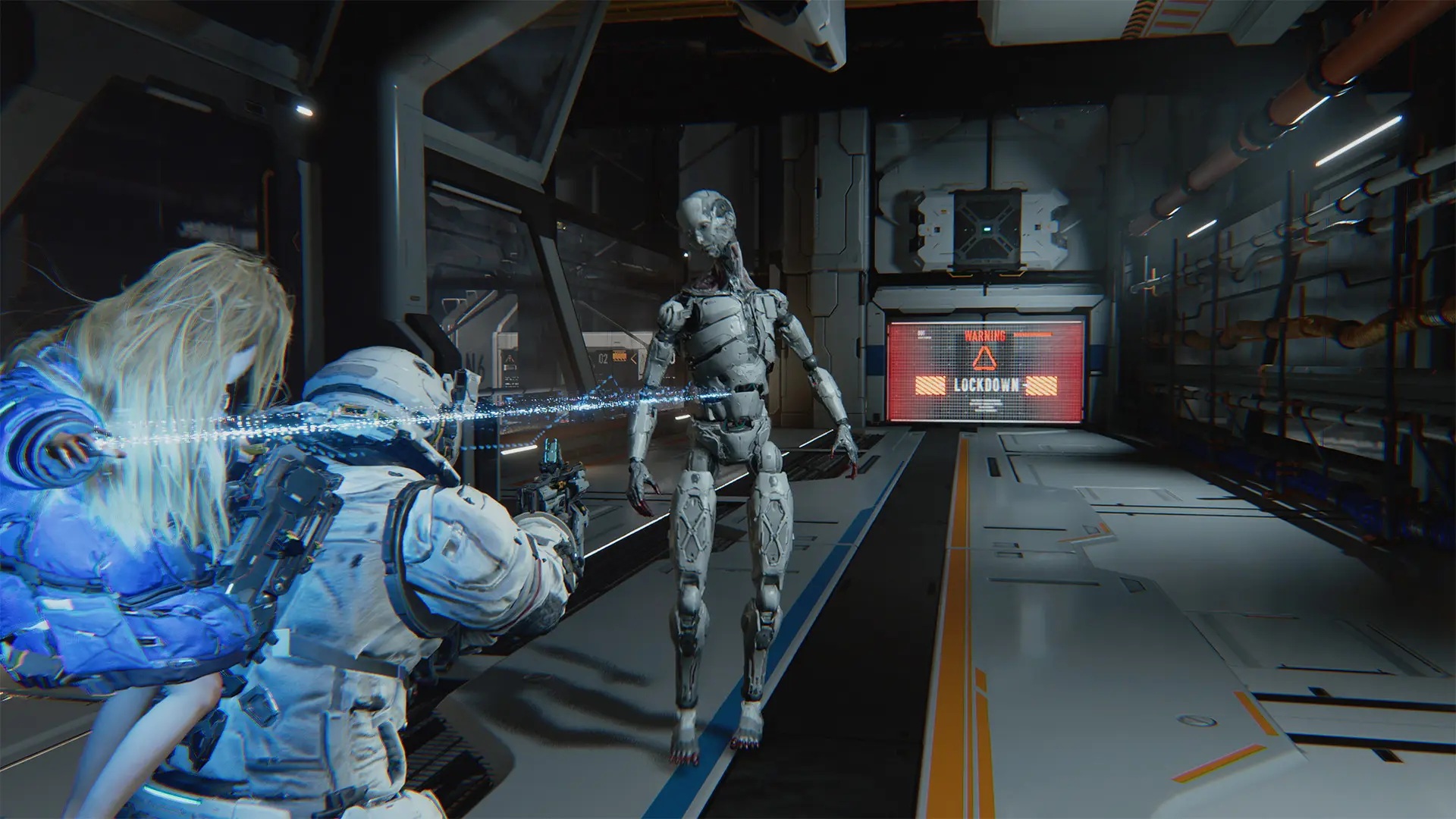
Pragmata stars Hugh Williams, who has been tasked with investigating a lunar research station. As you might expect, things don't go to plan and he ends up injured. In an effort to figure out what is going on and return home safely, he teams up with an Android, Diana, to take down dangerous AI-controlled security bots.
The combat involves a mix of hacking mini games and shooting, with different hacks giving different buffs so you can take down enemies faster, or take down even bigger bosses.
KitGuru Says: Are any of you planning on picking up Pragmata?
Microsoft has quietly announced its next-generation Xbox console, teasing exactly what we've been hearing for months in rumours – that it will be a PC hybrid with the ability to play Windows games.
Project Helix is the official codename for the next generation Xbox, following up from Project Scorpio (Xbox One X) and Project Scarlet (Xbox Series X/S). The new console will “lead in performance and play your Xbox and PC games” according to Microsoft.
Unfortunately, we do not yet have a look at the console, its technical specs, or official details about the new custom AMD chip powering it. However, this does mark the first major Xbox announcement from Microsoft under new CEO, Asha Sharma, who took over from Phil Spencer in February.
The next Xbox console is still targeting a 2027 launch, amid a growing memory and storage shortage. This current shortage is believed to be behind a delay for Sony's next console, the PS6, so it looks like Microsoft is hoping to beat them to market by pushing ahead with new hardware anyway.
KitGuru Says: With the next Xbox becoming a PC and devices like the Steam Machine and Steam Deck gaining popularity, it is starting to make sense why Sony suddenly wants to stop shipping its single-player games on PC.
Cyberattacks on companies are increasingly shifting from direct attacks on individual organizations to complex attacks on digital supply chains. Instead of targeting a single infrastructure, attackers are increasingly using shared software components, platforms, or service providers as entry points to simultaneously reach a large number of downstream systems. An analysis by cybersecurity company Group-IB shows […]
Sometimes a driver is just a driver. Sometimes it’s a little lesson in how quickly a seemingly routine update can turn into a performance debacle. That’s exactly what happened recently with NVIDIA, specifically with Resident Evil Requiem and a whole series of GeForce drivers that caused each other more problems than they were supposed to […]
Semiconductor and IP provider Rambus has unveiled a new memory controller for the upcoming HBM4E standard. The solution is primarily aimed at future AI accelerators, high-performance computers, and modern GPUs, which require ever-increasing memory bandwidths. According to the manufacturer, the new controller represents a significant leap in performance over previous implementations and is set to […]
Intel Foundry is expected to break even in 2027. Not to “get rich” or “scare TSMC,” but simply to stop treating every quarterly financial statement like a burst pipe. And suddenly, this goal seems less like investor theater and more like a plan that, at least on paper, has a chance of success. The triggers […]
Apple is expanding its Mac portfolio with a new entry-level model. With the MacBook Neo, the manufacturer is launching its first significantly more affordable Mac laptop, which also features several unusual design choices. The new computer combines a colorful design with iPhone technology inside, clearly targeting price-conscious buyers, students, and first-time users. The MacBook Neo […]
Introduction and Unboxing With the GMMK PRO 3 HE, Glorious expands its portfolio with a magnetic Hall effect keyboard that is clearly aimed at ambitious gamers and individualists. The compact layout meets a CNC-milled aluminum case, while modern magnetic switches inside ensure particularly precise and freely configurable actuation points. Instead of classic mechanical contacts, Hall […]
Microsoft's new CEO of Gaming and head of Xbox, Asha Sharma, shared the first concrete details about the company's next-generation game console, essentially confirming reports that it will be a hybrid system of sorts, focusing on both console and PC gaming. She also teased a major performance uplift and, in the process, may have taken a shot
As the buildout of AI infrastructure continues, the availability of everything from DRAM to hard drives has been affected, but Seagate may have an answer. As data-intensive AI generated video becomes more common, massive storage arrays are required, which are often cost prohibitive with solid state storage. Seagate is looking address those
We've already reported a few times on SOCAMM2 memory, so if you're not familiar, check out one or all of these stories. The last of those links goes to a story about Micron sampling 192GB SOCAMM2 modules. Well, as you've already read in the headline, the US memory firm is now able to make 256GB SOCAMM2 modules thanks to new 32-Gigabit LPDDR5
LastPass is informing users of an active phishing campaign that started at the beginning of this month, which spoofs official LastPass emails and directs users to a false login page. While directing to a false login page is a common phishing tactic, this new LastPass scam adds an additional layer of deception by creating entire fake email
The Asustor AS1202T is a budget friendly NAS that delivers surprisingly good storage performance while being quiet and power efficient. It does have some interesting quirks though and it might also be a sign of things to come considering component pricing trends.
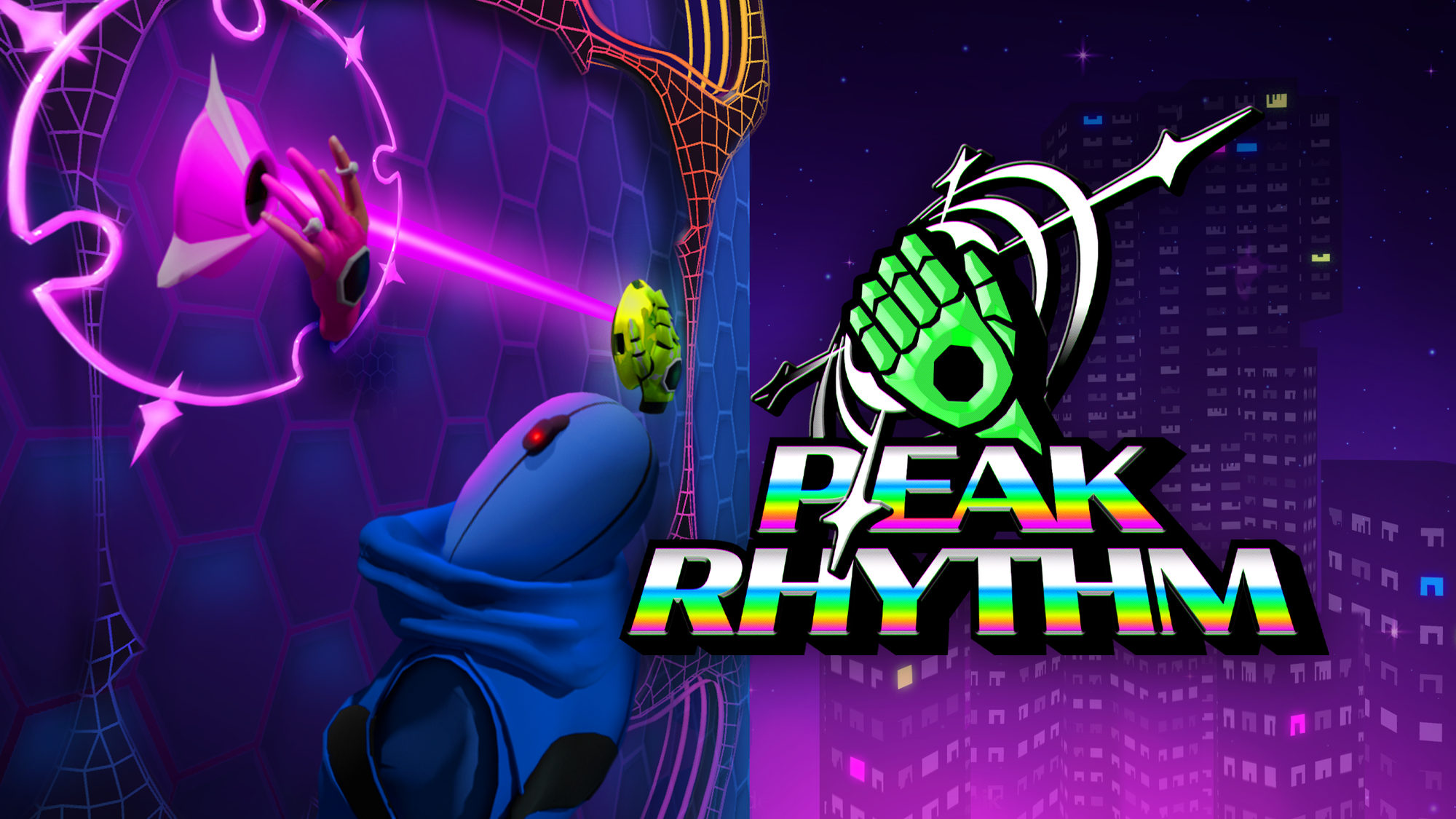
Launching in Early Access today on Quest, Peak Rhythm seeks to refresh the rhythm genre with pulse-pounding music set against a unique climbing mechanic.
To say I like Rhythm games is a cosmic understatement.
I've poured thousands of hours into the genre. I helped localize the English release of the Dreamcast cult classic Cool Cool Toon, and spent nine months hounding Masaya Matsuura, creator of PaRappa the Rapper, for an interview. When I had the opportunity to speak with Shawn Layden, former President of Sony Interactive Entertainment America, all we talked about was Vib Ribbon.
There's no other way to say it. I am obsessed with rhythm games.
So when I say that Peak Rhythm is a very good musical rhythm game, you've simply got to trust me.
The Facts
What is it?: Musical rhythm game in VR, where you climb to the beat. Platforms: Meta Quest (reviewed on Quest 3S) Release Date: March 5, 2026 Developer: Zeitlos Interactive Publisher: Impact Inked Price:$12.99
0:00
/0:53
It's the Climb
As is typical of many rhythm games, the gameplay hook behind Peak Rhythm is somewhat hard to describe. Despite the developers' somewhat obtuse explanation that Peak Rhythm is "a VR rhythm-climbing game where music drives momentum," I wasn't really sure what to expect. Once I'd spent a few minutes in the game, however, it all began to make sense.
The simplest way to describe Peak Rhythm is to say it's a game in which you climb in time with the music. You begin each stage standing face to face with a bare climbing wall, upon which handholds appear at various times and in various places. These handholds are color-coded, and surrounded by a ring which closes in time with elements of the game's music. The goal of Peak Rhythm is to grab the various handholds with the appropriate hand at exactly the right time (when the ring finishes closing).
Pink handholds are meant to be grabbed with your pink (left) hand, while green handholds are meant to be grabbed with your green (right) hand. Handholds may appear above, below, or to your sides, and on more advanced stages, reaching them may require complicated crossovers, leaps, or drops. Blue handholds can be grabbed with either hand, and it's important to be mindful of what handhold is coming next, after the blue one, so that you have the appropriate hand available when needed.
Grabbing a handhold with the wrong hand or with criminally poor timing will cause you to fall off the climbing wall onto a platform that follows closely beneath (think of it as a rope that doesn't allow you to fall too far). When this happens, you have to scramble your way back up the wall and grab the next available handhold. The music never stops, so getting back into the groove as quickly as possible is important.
Special handholds also exist to spice things up. There's a twist mechanic, in which certain handholds require rotation in time with the music. It's an interesting wrinkle that feels much better in practice than I expected.
The goal of each stage is to grab the handholds at the right time with the correct hand, to scramble yourself along the wall in time with the music. The better you do, the higher you climb in both the game world and on the game's leaderboards.
0:00
/3:45
More Than a Feeling
With music and rhythm games, especially in VR, it's all about feeling. How does the game make you feel? Does the action match with the rhythm? Do you feel like you're experiencing the music in a meaningful way, and does the gameplay support this?
When I saw Peak Rhythm's first gameplay trailer, I had doubts. I couldn't imagine how effectively what I was seeing would translate to a gameplay experience. To be honest, I thought it looked tiresome. By the end of my first climb, I realized I had been wrong.
Peak Rhythm's gameplay is tight and refined, distilled down to an essential core that feels perfect. The act of lifting and placing your hands to the beat of a song is intuitive and instantly rewarding. The songs are well-designed to complement the gameplay, which is intelligently balanced and consistently interesting. There's an intangible element here which exists in all of the best rhythm games, which allows you to ebb into and out of a sort of flow state, where the music and gameplay becomes so well-linked that playing the game feels the same as listening to a great album.
The built-in soundtrack features original tracks spanning several genres, including drum & bass, dubstep, and house, with tracks from FEISTLING, Killin' Void, Ion Diary, and funiel, and while I admittedly hadn't heard of these artists prior to my time with Peak Rhythm, their tunes are consistently great and the entire set list suits the game perfectly.
On top of all that, Peak Rhythm will get you moving. We're not talking about Beat Saber levels of activity, but you will burn a few calories, and that's at least a happy side-effect of playing a fun game.
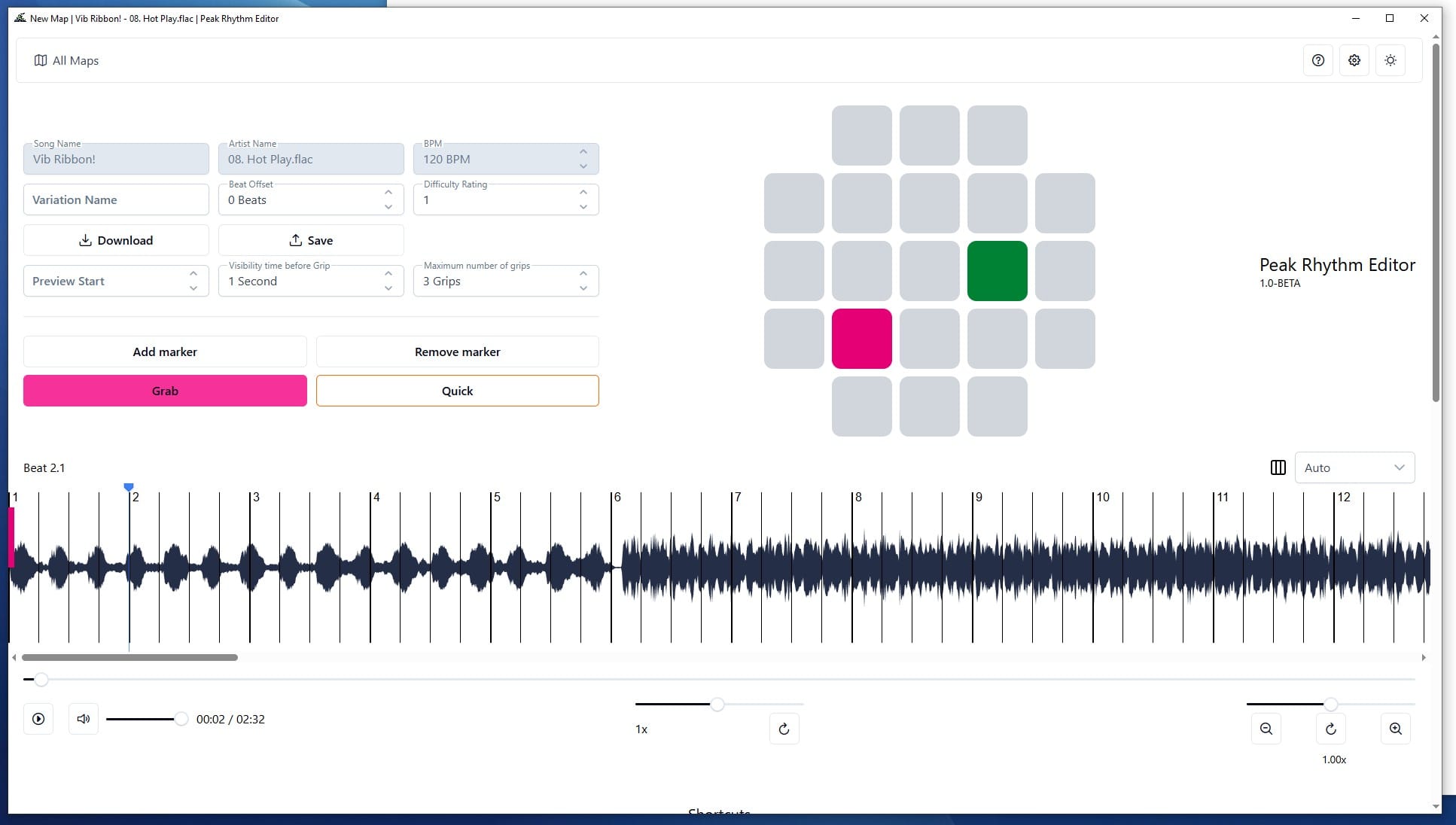
In addition to the game's native tracks, Zeitlos Interactive has also developed a beatmap editor with which users can create their own custom stages using their own music files.
This feature immediately puts me in mind of Sony's Vib Ribbon, which I previously mentioned, a PlayStation game released in 1999 that invented and patented a method for creating custom levels based on the audio files from any CD that the player might insert into the system. While that now-ancient PlayStation game could automatically generate levels from any music file on its own, Peak Rhythm's custom song system relies on human users to do the work of creating a beatmap and custom stage.
Still, user-generated content hypothetically gives the game near-infinite replayability, plus a sort of custom soundtrack perfectly suited to each players' unique taste.
The developers have let me know that "the custom song feature works through a standalone desktop app." And while this hasn't been published during my pre-release play period, I'm told it should be available at launch, and that a "work-in-progress version is currently circulating within Impact Labs (QA and playtesting)."
Screenshot of Peak Rhythm's custom level maker desktop app.
Comfort
Peak Rhythm is playable in sitting, standing, and room scale configuration. In addition, there are numerous options for audio levels, comfort, and accessibility, including input adjustments, and selectable offset for player height.
Trouble
All that said, no game is perfect and Peak Rhythm is no exception. The visuals are uninspired. While this graphical simplicity makes the rhythm gameplay more legible, I can't help but be disappointed by the general lack of visual interest present in the immediate environment, in the backgrounds, in the central starting hub and menus... essentially, everywhere.
We're supposed to be climbing a skyscraper at night. This should be the coolest looking thing I've ever seen. But as it exists today, it's bland.
0:00
/2:56
And while the soundtrack is great, as mentioned, it's still quite limited. This can be forgiven, perhaps, on account of the game's Early Access status and its allowance for custom songs. But I'm reaching. There simply needs to be more music in this musical rhythm game.
Lastly, there's no multiplayer. While a multiplayer mode is planned for an upcoming update "shortly after launch," I can't review features that don't yet exist, nor do I know what shape the game's multiplayer will take. For now, the omission is a notable strike.
It's the End of the Review As We Know It (And I Feel Fine)
On balance, Peak Rhythm is a very good game, and with further development beyond its Early Access period, it could easily become a great one. The team's planned roadmap is ambitious. We'll just have to see how closely and quickly they stick to it.
After spending a few days scrambling up its skyscrapers, leaping, reaching, and scampering along with its eclectic (though limited) soundtrack thumping in my ears, Peak Rhythm feels like a favorite album, a game that I'll return to again and again.
Peak Rhythm is out now in Early Access on Quest for $12.99.
UploadVR uses a 5-Star rating system for our game reviews – you can read a breakdown of each star rating in our review guidelines.
The built-for-Quest puzzle game allows players to piece together full-scale fossils of iconic dinosaurs.
Le Dino Labo is a mixed reality puzzle builder in which players reconstruct fossils of dinosaur skeletons bone by bone. The game uses full hand tracking interaction, allowing fragments of iconic dinosaurs to be examined, rotated, and assembled into complete creatures all within the player's real-world environment. When a dinosaur is completed, it springs to true life size, driving home the sheer enormity of these ancient creatures.
0:00
/0:39
The base game is available now and includes five dinosaurs: Tyrannosaurus Rex, Spinosaurus, Parasaurolophus, Styracosaurus, and the airborne Pteranodon.
In addition to today's release, the game's developers have announced an upcoming DLC, "Jurassic Giants," which includes three species from the Jurassic era, and a roadmap for future updates that includes new themed packs, deeper skeletal manipulation, enhanced environmental integration, and more.
Current rumors indicate that the NVIDIA GeForce RTX 3060 may be due for an imminent restock. Considering the effect the current DRAM shortage is having on the market, such a move would be very welcome to budget PC gamers.
The GeForce RTX 3060 may not be ideal for cutting-edge titles at ultra high settings, but it does still have support
Barring any special offers in the future, your current device's trade-in value will never be worth more than it is right now. The reason this matters is because Samsung has launched its Galaxy S26 series and is offering a free upgrade from 256GB to 512GB of storage when you preorder one, saving your $200 right off the bat. On top of that,
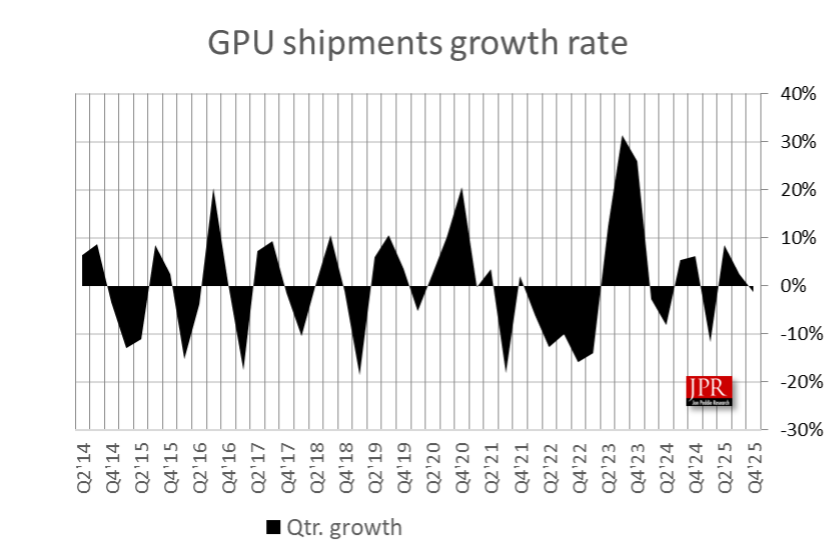
The global PC-based GPU market reached a massive 756 million units in the fourth quarter of 2025, even as the industry prepares for what analysts describe as “rough sailing” in the year ahead. While the total installed base is projected to grow to 2,867 million units by 2029, the current climate is marked by significant volatility. Year-to-year total GPU shipments across all platforms decreased by 3.3%, with the notebook segment taking the hardest hit, down 5.2%. On the other hand, desktop graphics saw a modest 1.1% increase.
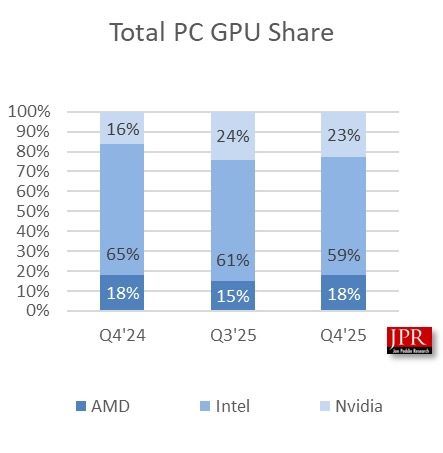
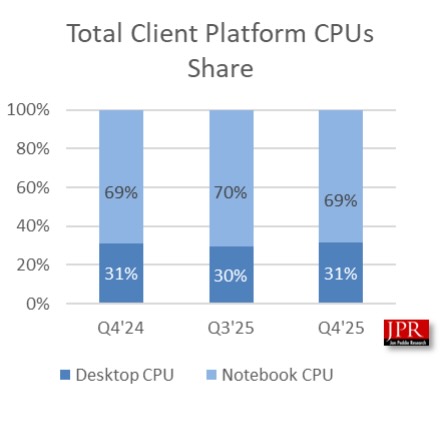
According to JPR, the quarter's most striking movement came from the shifting balance of power between the “Big Three” silicon giants. AMD emerged as the clear winner in terms of momentum, growing its overall GPU market share by 2.6% from the previous quarter. This growth was mirrored in the CPU space, where AMD shipments surged by 11%. In contrast, Intel saw its GPU share dip by 1.2%, and its CPU shipments fall by 1.1%, while Nvidia experienced a 1.4% decline in GPU market share. Despite this dip, the green team remains the only supplier forecasting a strong upcoming quarter, though notably, that optimism is anchored almost entirely in the AI sector rather than consumer gaming.
Looking ahead, the outlook remains clouded by a combination of geopolitical and economic stressors. JPR points to a “perfect storm” of rising memory prices, fluctuating tariffs, and the impact of the newly launched Middle East conflict as primary drivers of instability. While the 10-year average for fourth-quarter growth is typically around 4.7%, this quarter fell short of that benchmark. Market forecasters now warn that the total PC market could decline by as much as 10% in 2026, as memory availability continues to tighten and consumer purchasing power is squeezed by global inflation.
The long-term forecast remains cautiously optimistic, with GPU shipments expected to grow at a compound annual rate of 2.4% over the next four years. Another interesting bit is the projected penetration of discrete GPUs (dGPUs), which is expected to hold at 25% of the PC market through 2029. This suggests that while integrated graphics continue to serve the bulk of the mobile and office segments, the demand for dedicated gaming and workstation hardware remains a stable pillar of the industry, even as manufacturers navigate the logistical nightmare of a transitioning global economy.
KitGuru says: Have your plans to upgrade been put on hold due to current pricing issues?
Nvidia is reportedly preparing a new variant of the GeForce RTX 5050, which will feature an unconventional 9GB memory capacity. According to the report, this new model is designed to sit alongside the existing 8 GB version, offering a slight bump in both VRAM and speed.
As per MEGAsizeGPU's post, while the original 8GB model uses 20Gbps GDDR6 memory on a 128-bit bus, this newer 9GB variant will shift to faster 28Gbps GDDR7 modules. Despite moving to a narrower 96-bit memory bus, the higher clock speeds of the GDDR7 memory result in a total bandwidth of 336GB/s, a roughly 5% improvement over the 8GB model's 320GB/s.
The core specifications for the RTX 5050 9GB are expected to remain consistent with the original model. It will likely leverage the GB207 GPU, which is the smallest die in the Blackwell family. This chip is expected to feature 2,560 CUDA cores and a 130W TDP, making it a prime candidate for compact builds and systems with standard PSUs.
Beyond the 5050, the MEGAsizeGPU also stated that Nvidia will change the GPU die for the GeForce RTX 5060. Due to a reported shortage of GB206 chips used to produce the RTX 5060 Ti, Nvidia is reportedly allowing board partners to use defective GB205 dies (the same as the ones used for the RTX 5070) for standard RTX 5060 production.
KitGuru says: The move to 9GB is an oddity in GPU history – if this proves to be true that is. We've seen plenty of rumours about Nvidia GPUs with odd amounts of memory over the past few generations and they have rarely panned out.
Bungie's Marathon has officially launched today, marking a new beginning for the studio as it branches out into handling multiple live-service games simultaneously. While much of Destiny 2's monetisation was built around FOMO with expiring season passes and limited-time items, Marathon will be going in a different direction.
Bungie has detailed more about its post-launch plans for Marathon. For starters, all seasonal gameplay content will be free for all players. If you want the cosmetics from the premium rewards pass, then you will have all the time in the world to earn them, as rewards passes will not expire and previous seasonal passes will remain purchasable.
This means that you can pick and choose your rewards in a similar fashion to Helldivers 2, or Halo Infinite. Bungie also says there will be no ‘pay for power' elements in the game, which is pretty important for a competitive PvP title.
The in-game premium currency for Marathon, LUX, can also only be used on cosmetic items, with no gameplay items to be purchasable. If you want the high value items, you will have to earn your normal in-game credits the old-fashioned way.
KitGuru Says: Marathon has managed to become the top-selling game on Steam this week following its server slam weekend. Now we'll have to wait and see how it stacks up against the likes of Tarkov and Arc Raiders.
 Connexion