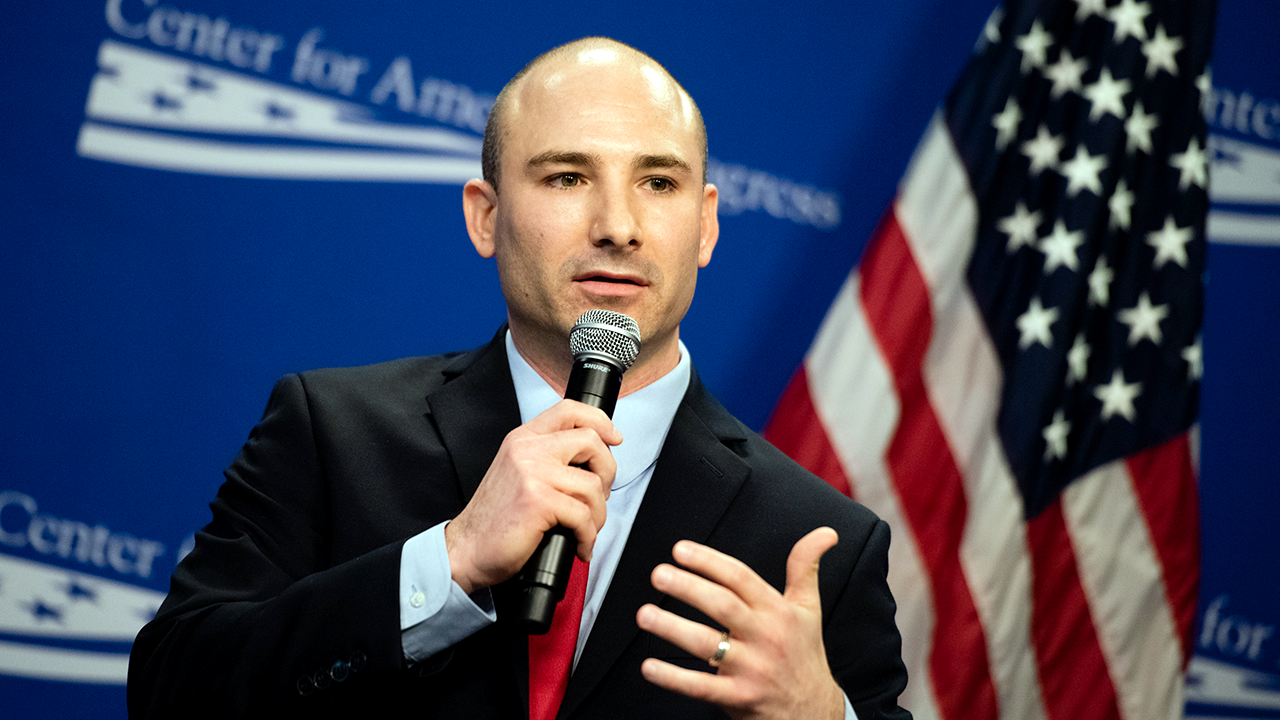
Biden says 'we're the United States of Amerigotit' in latest gaffe at DC conference


The desperate search for economic growth is pushing the party to confront the issue that dare not speak its name
For much of the last week, Keir Starmer’s government has been suggesting that a closer relationship with Europe will be a more prominent part of his agenda in the future.
But it was a little-noted personnel change that might prove the most telling shift: Nick Thomas Symonds, the minister in charge of EU negotiations, was promoted to full cabinet rank.
Continue reading...
© Composite: Guardian Design/Getty Images/iStockPhoto

© Composite: Guardian Design/Getty Images/iStockPhoto

© Composite: Guardian Design/Getty Images/iStockPhoto
This documentary on the musician interviews everyone from Flea to … Rowan Williams. It’s a thoughtful take on his songs and Christianity
Devouring the new Nick Cave documentary on Sky, I am reminded how critics go wild for arty musicians who constantly change direction and dabble in everything. This is its own kind of myth. I know plenty of artists who keep moving – one week they’re sewing fish scales on to jackets, the next they’re painting mirrors or putting seahorses in samovars. The problem is, no one cares. If poet and ceramicist Nick Cave didn’t also write classic songs, he’d just be a local weirdo. I definitely wouldn’t buy a hardcover transcription of conversations he’d had with a mate about God. I’m glad I did, though.
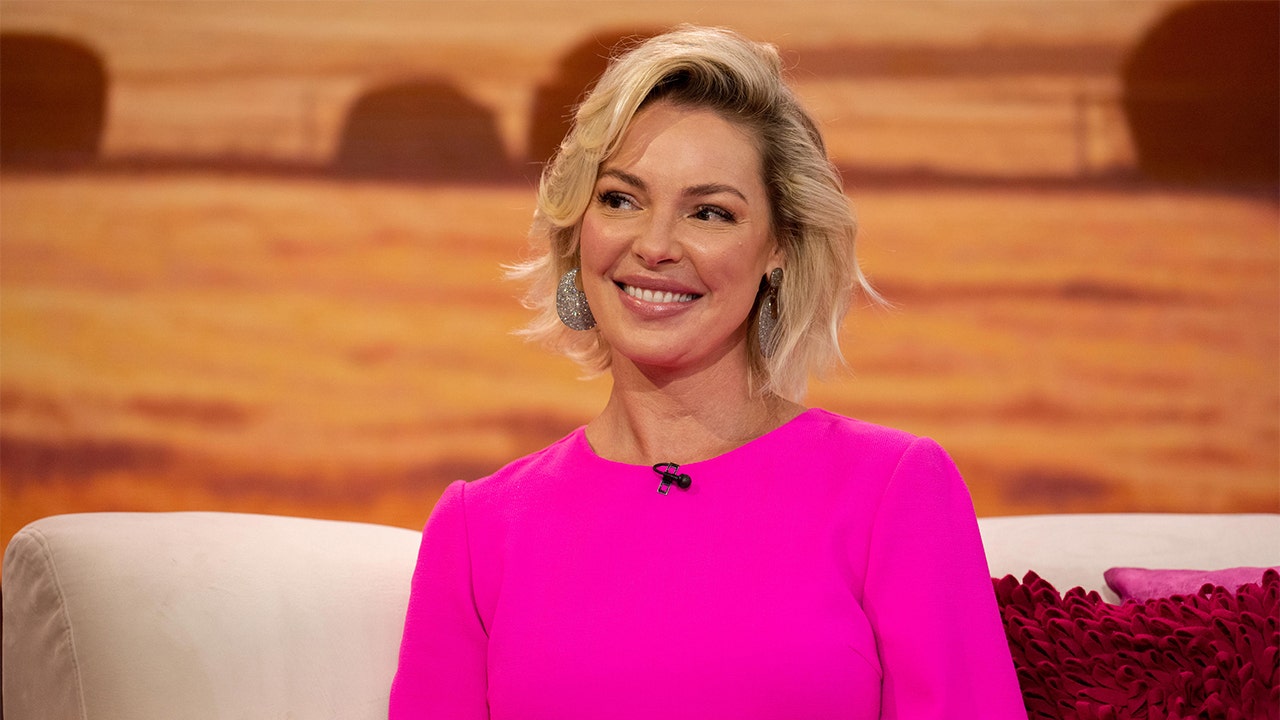
The documentary, Nick Cave’s Veiled World (Saturday 6 December, 9pm, Sky Arts), is timed to promote the TV adaptation of his filthy novel The Death of Bunny Munro. It’s a glorious opportunity to revisit his early, intense masterpieces: electric chair confessionals, murderous duets with pop princesses, profane love songs. They’re still in my head, days later. It’s also a reminder that, in a joyfully perverse career, the assertion of his Christian faith has been his most divisive move. Audiences love biblical imagery in rock songs, provided the singer doesn’t actually believe.
Continue reading...
© Photograph: Samir Hussein/WireImage

© Photograph: Samir Hussein/WireImage

© Photograph: Samir Hussein/WireImage
From Cecil at Waitrose and Slinky at Tesco to an app designed to be deleted, test your knowledge with the Saturday quiz
1 In 1932, Australia declared war on which bird?
2 What became the world’s tallest church in October?
3 Matthew Streeton is the voice of which much-maligned rail announcement?
4 Which recent US president’s mother was called Stanley?
5 In which country has the TV crime drama Tatort run since 1970?
6 Which football club’s new stadium contributed to a loss of world heritage status?
7 Which app’s makers claim it is “designed to be deleted”?
8 Four-month-old Spencer Elden appeared on which album cover?
What links:
9 Amy Adams; Kate Bosworth; Rachel Brosnahan; Teri Hatcher; Margot Kidder?
10 Boardwalk; Rue de la Paix; Schlossallee; Shrewsbury Road?
11 Hasbani, Banias and Dan rivers; Sea of Galilee; Dead Sea?
12 Dian Fossey; Biruté Galdikas; Jane Goodall?
13 Christopher Wren; John Houblon; Matthew Boulton and James Watt; Alan Turing?
14 Cecil at Waitrose; Cuthbert at Aldi; Slinky at Tesco; Wiggles at Sainsbury’s?
15 King John (2); Henry VIII (3) and (2); John Mortimer (2); Ben Affleck (2)?

© Photograph: Yvonne Hemsey/Getty Images

© Photograph: Yvonne Hemsey/Getty Images

© Photograph: Yvonne Hemsey/Getty Images
Moscow ‘continuously reinforcing’ its presence in the region, says Swedish chief of operations Capt Marko Petkovic
The Swedish navy encounters Russian submarines in the Baltic Sea on an “almost weekly” basis, its chief of operations has said, and is preparing for a further increase in the event of ceasefire or armistice in the Ukraine war.
Capt Marko Petkovic said Moscow was “continuously reinforcing” its presence in the region, and sightings of its vessels were a regular part of life for the Swedish navy. Its “very common”, he said, adding that the number of sightings had increased in recent years.
Continue reading...
© Photograph: Russian Defence Ministry Press Service Handout/EPA

© Photograph: Russian Defence Ministry Press Service Handout/EPA

© Photograph: Russian Defence Ministry Press Service Handout/EPA
Watching the Broadway actor’s joyous energy, along with his calmness and openness, I was convinced that I could step out into the world and be myself
My first encounter with Broadway actor Jonathan Groff was innocuous. Stuck in the wilds of Donegal for two weeks as part of teacher training, I listened to Broadway musicals while the rest of the lads watched the Gaelic fixtures and got drunk. I stumbled upon the recent production of Merrily We Roll Along with Jonathan Groff and Daniel Radcliffe and like most of the internet, I became obsessed.
Afterwards, I went down a Groff rabbit hole tracking down interviews and cast recordings. I was drawn to how bubbly he was, how smiley he was. Groff had a joyous energy that was infectious. His voice was like melted chocolate. I both loved – and envied – his calmness and his openness to the world.
Continue reading...
© Illustration: Martin O'Neill/The Guardian

© Illustration: Martin O'Neill/The Guardian

© Illustration: Martin O'Neill/The Guardian
New novels from Ian McEwan and Chimamanda Ngozi Adichie, a high-concept debut and remarkable short stories are just some of the best new titles of the year
There aren’t many giants of 20th-century literature still writing, but 2025 saw the first novel in 12 years from American great Thomas Pynchon, now in his late 80s: Shadow Ticket (Jonathan Cape) is a typically larky prohibition-era whodunnit, set against rising nazism and making sprawling connections with the spectre of fascism today. Other elder statesmen publishing this year included Salman Rushdie with The Eleventh Hour (Cape), a playful quintet of mortality-soaked short stories and his first fiction since the 2022 assault that blinded him in his right eye; while Ian McEwan was also considering endings and legacy in What We Can Know (Cape), in which a 22nd-century literature scholar looks back, from the other side of apocalypse, on a close-knit group of (mostly) fictional literary lions from our own era. In a time of climate terror, the novel is both a fascinating wrangle with the limits of what humans are able to care about – from bare survival, to passion and poetry, to the enormity of environmental disaster – and a poignant love letter to the vanishing past.
But perhaps the most eagerly awaited return this year was another global figure: Chimamanda Ngozi Adichie, whose first novel in more than a decade, Dream Count (4th Estate), follows the lives of four interconnected women between Nigeria and the US. Taking in love, motherhood and female solidarity as well as privilege, inequality and sexual violence, it’s a rich and beautifully composed compendium of women’s experience.
Continue reading...
© Composite: Debora Szpilman

© Composite: Debora Szpilman

© Composite: Debora Szpilman


The school has provided us with a whistle, which we can add to the long list of noises that the dog is afraid of
It’s dark by the time my wife and the dog return from dog school.
“How was it?” I say.
Continue reading...
© Illustration: Selman Hosgor/The Guardian

© Illustration: Selman Hosgor/The Guardian

© Illustration: Selman Hosgor/The Guardian
A documentary so damning it surely marks the end for Diddy, and grotesquery of a different kind in a Palme d’Or-winning film. Here’s the pick of the week’s culture, taken from the Guardian’s best-rated reviews
Continue reading...
© Composite: LANDMARK MEDIA / Alamy Stock Photo

© Composite: LANDMARK MEDIA / Alamy Stock Photo

© Composite: LANDMARK MEDIA / Alamy Stock Photo
The term ceasefire ‘risks creating a dangerous illusion life is returning to normal’ for Palestinians squeezed into the remaining 42% of their land behind Israel’s ‘yellow line’
When Jumaa and Fadi Abu Assi went to look for firewood their parents thought they would be safe. They were just young boys, aged nine and 10 and, after all, a ceasefire had been declared in Gaza.
Their mother, Hala Abu Assi, was making tea in the family’s tent in Khan Younis when she heard an explosion, a missile fired by an Israeli drone. She ran to the scene – but it was too late.
Continue reading...
© Photograph: Eyad Baba/AFP/Getty Images

© Photograph: Eyad Baba/AFP/Getty Images

© Photograph: Eyad Baba/AFP/Getty Images
Die Hard isn’t a Christmas film, claims the British public. But Pillion reminds us that the finest festive films reflect the complexities of the season
Can Die Hard – the 1988 action movie starring Bruce Willis as an NYPD detective hoping to reconcile with his estranged wife on Christmas Eve – be called a Christmas film? The annual debate had officially reached my street WhatsApp group when a happily married couple decided to launch a poll. With 18 votes against four, the result from my road was a landslide “yes”. One neighbour even shared a picture of their Die Hard tree baubles to prove the point.
But an official poll by the British Board of Film Classification has now asserted the contrary – with 44% deciding that Die Hard should not be designated a Christmas movie, against 38% in favour. To some, even with the odd tinsel-strewn tree thrown in, the gun fights, violence and hostage-taking just don’t feel festive. For an admirable 5% of respondents, it remains their favourite Christmas film of all time.
Continue reading...
© Photograph: Element Pictures/BBC Film/BFI

© Photograph: Element Pictures/BBC Film/BFI

© Photograph: Element Pictures/BBC Film/BFI
The diminutive Derry Girls star isn’t afraid to speak her mind, even if it costs her fans and followers
Back in 2008, when Nicola Coughlan was at drama school, a guy in her class swaggered over and, with all the brimming confidence of young men in the noughties, asked her, “Do the Irish think the English are really cool?” Coughlan, born in Galway, mimes processing the question. “Well,” she said, “it’s quite complicated. Like, there’s a lot of history there, between the two countries. Like, there’s a lot going on.”
Today, people are more knowledgable about the history of the English in Ireland. Coughlan is happy about that. She’s also happy about the explosion of Irish storytelling in popular culture – Normal People, Trespasses, Small Things Like These, not to mention the series that made her name, Derry Girls. And she’s proud of young Irish actors – Paul Mescal, Barry Keoghan and Lola Petticrew, to name a few. She listens to bands such as Fontaines DC, CMAT and Kneecap. “It’s such a small country and the amount of creativity that comes out of Ireland is really extraordinary.”
Continue reading...
© Photograph: Rosaline Shahnavaz/The Guardian

© Photograph: Rosaline Shahnavaz/The Guardian

© Photograph: Rosaline Shahnavaz/The Guardian
When you try these festive, chewy German almond biscuits, you’ll see why people have kept making and gifting them at Christmas for more than 500 years
The thing I love most about these chewy, crisp, star-shaped, cinnamon-and-almond Christmas biscuits from Germany is that they date back to the 1500s. Which, much like spotting Mars in the night sky or visiting the pyramids of Egypt, makes me feel hugely insignificant in the grand scheme of things, but simultaneously awe-inspired by the power of a simple biscuit to provide joy and underpin celebrations across centuries. This particular recipe belongs to my friend Friede’s grandma, Hadmuth, and is worth continuing, I think, for at least another 500 years.
Continue reading...
© Photograph: Robert Billington/The Guardian. Food styling: Loïc Parisot Prop styling: Anna Wilkins. Food styling assistant: Sophie Pry.n Photo assistant: Kate Anglestein.

© Photograph: Robert Billington/The Guardian. Food styling: Loïc Parisot Prop styling: Anna Wilkins. Food styling assistant: Sophie Pry.n Photo assistant: Kate Anglestein.

© Photograph: Robert Billington/The Guardian. Food styling: Loïc Parisot Prop styling: Anna Wilkins. Food styling assistant: Sophie Pry.n Photo assistant: Kate Anglestein.
British fertility clinics raise scientific and ethical objections over patients sending embryos’ genetic data abroad for analysis
Couples undergoing IVF in the UK are exploiting an apparent legal loophole to rank their embryos based on genetic predictions of IQ, height and health, the Guardian has learned.
The controversial screening technique, which scores embryos based on their DNA, is not permitted at UK fertility clinics and critics have raised scientific and ethical objections, saying the method is unproven. But under data protection laws, patients can – and in some cases have – demanded their embryos’ raw genetic data and sent it abroad for analysis in an effort to have smarter, healthier children.
Continue reading...
© Photograph: Dean Lewins/AAP

© Photograph: Dean Lewins/AAP

© Photograph: Dean Lewins/AAP
Amanda, 56, a performance assessor, meets Paul, 53, a networks manager
What were you hoping for?
An adventure, engaging company, good food.

© Photograph: Gary Calton/The Guardian

© Photograph: Gary Calton/The Guardian

© Photograph: Gary Calton/The Guardian

© Illustration: Becky Barnicoat/The Guardian

© Illustration: Becky Barnicoat/The Guardian

© Illustration: Becky Barnicoat/The Guardian
Drone attack that Ukraine blamed on Russia blew hole in painstakingly erected €1.5bn shield meant to allow for final clean-up of 1986 meltdown site
The protective shield over the Chornobyl disaster nuclear reactor in Ukraine, which was hit by a drone in February, can no longer perform its main function of blocking radiation, the International Atomic Energy Agency (IAEA) has announced.
In February a drone strike blew a hole in the “new safe confinement”, which was painstakingly built at a cost of €1.5bn ($1.75bn) next to the destroyed reactor and then hauled into place on tracks, with the work completed in 2019 by a Europe-led initiative. The IAEA said an inspection last week of the steel confinement structure found the drone impact had degraded the structure.
Continue reading...
© Photograph: Gleb Garanich/Reuters

© Photograph: Gleb Garanich/Reuters

© Photograph: Gleb Garanich/Reuters
Escape of three inmates in Louisiana comes after 10 broke out of another prison in same state this year by crawling through a hole behind toilet
Two inmates accused of violent crimes including attempted murder went on the run after escaping from a Louisiana jail by removing pieces of a deteriorated wall and using sheets to scale another wall, officials said.
A third inmate from the breakout killed himself after he was tracked down.
Continue reading...
© Photograph: Rawf8/Alamy

© Photograph: Rawf8/Alamy

© Photograph: Rawf8/Alamy