The Saudi-led coalition said its strike, at a port in southern Yemen, targeted weapons bound for a separatist group backed by the United Arab Emirates.
China flew bombers and fired long-range artillery during a second day of exercises designed to show its ability to claim the island-democracy by force.
The American and Israeli leaders showed few signs of disagreement after meeting in Florida, giving no public indication of their growing strains over Gaza, Syria and other issues.
China fired rockets toward Taiwan on Tuesday and deployed new amphibious assault ships alongside bomber aircraft and warships to encircle the island on the second day of its most extensive war games aimed at rehearsing a blockade.
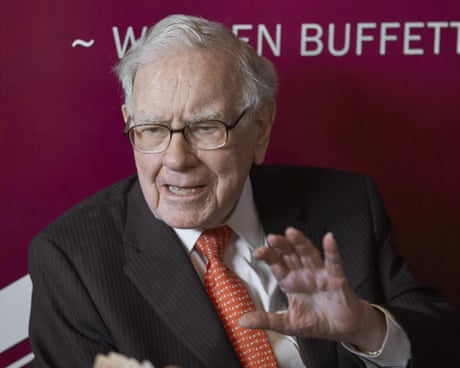
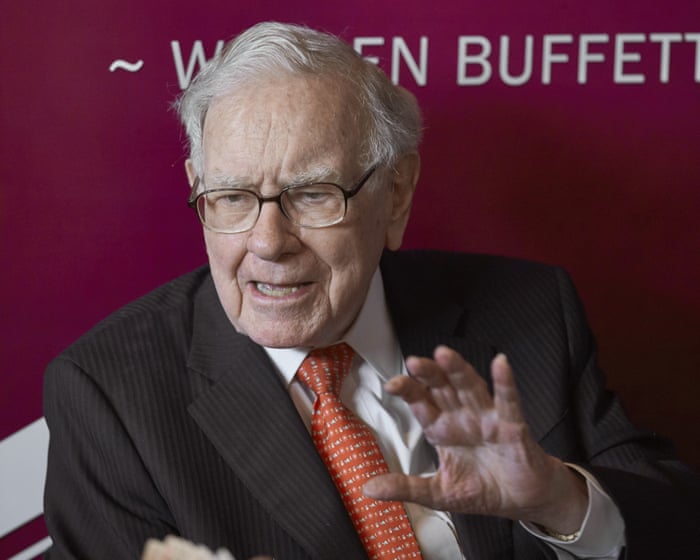
As the billionaire retires, he leaves memorable advice from his annual letters that include pithy takes on bubbles, discipline and long-term goals
Warren Buffett, the billionaire investor who is retiring at the end of 2025, has entertained and educated shareholders in his Berkshire Hathaway conglomerate for many years with his pithy annual letters outlining the firm’s performance.
Every year since 1965 he has updated his investors on the journey as Berkshire morphed from a “struggling northern textile business” with $25m of shareholder equity when he took over, to an empire worth more than $1tn.
Though the price I paid for Berkshire looked cheap, its business – a large northern textile operation – was headed for extinction.
My error caused Berkshire shareholders to give far more than they received (a practice that – despite the biblical endorsement – is far from blessed when you are buying businesses).
Woody Allen once explained why eclecticism works: ‘The real advantage of being bisexual is that it doubles your chances for a date on Saturday night.’
When such a CEO is encouraged by his advisers to make deals, he responds much as would a teenage boy who is encouraged by his father to have a normal sex life. It’s not a push he needs.
Andrew destroyed a few small insurers. Beyond that, it awakened some larger companies to the fact that their reinsurance protection against catastrophes was far from adequate. (It’s only when the tide goes out that you learn who’s been swimming naked.)
In our view, however, derivatives are financial weapons of mass destruction, carrying dangers that, while now latent, are potentially lethal.
Participants seeking to dodge troubles face the same problem as someone seeking to avoid venereal disease: it’s not just whom you sleep with, but also whom they are sleeping with.
From this irritating reality comes the first law of corporate survival for ambitious CEOs who pile on leverage and run large and unfathomable derivatives books: modest incompetence simply won’t do; it’s mind-boggling screw-ups that are required.
When downpours of that sort occur, it’s imperative that we rush outdoors carrying washtubs, not teaspoons. And that we will do.
Naturally, I was delighted to attend Mrs B’s birthday party. After all, she’s promised to attend my 100th.
She sold me our interest when she was 89 and worked until she was 103. (After retiring, she died the next year, a sequence I point out to any other Berkshire manager who even thinks of retiring.)
The candidates are young to middle-aged, well-to-do to rich, and all wish to work for Berkshire for reasons that go beyond compensation.
(I’ve reluctantly discarded the notion of my continuing to manage the portfolio after my death – abandoning my hope to give new meaning to the term ‘thinking outside the box’.)
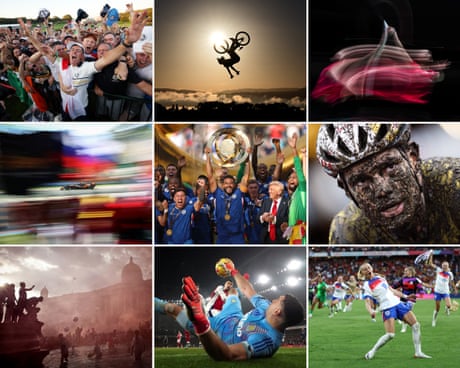
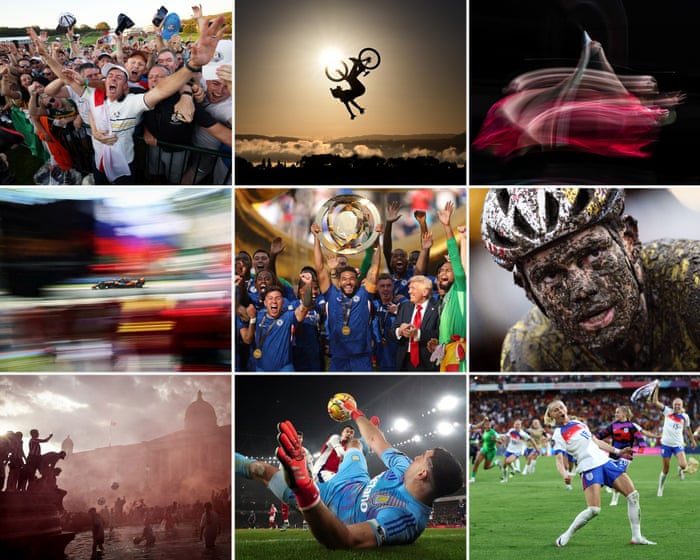
We’ve received more than 500,000 sports photographs in the past year, with some absolute belters among them. Here are some of the fleeting moments, wild celebrations and creative compositions that caught our eyes – accompanied by explanations and technical info from the photographers themselves.
Chloe Kelly celebrates by Florencia Tan Jun (1/200th sec, f/2.8, ISO 2500)
Either say you can’t make it well in advance or keep stumm
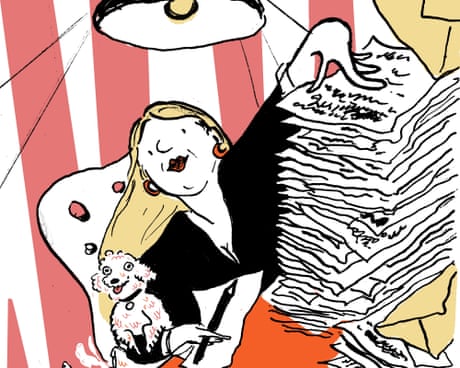
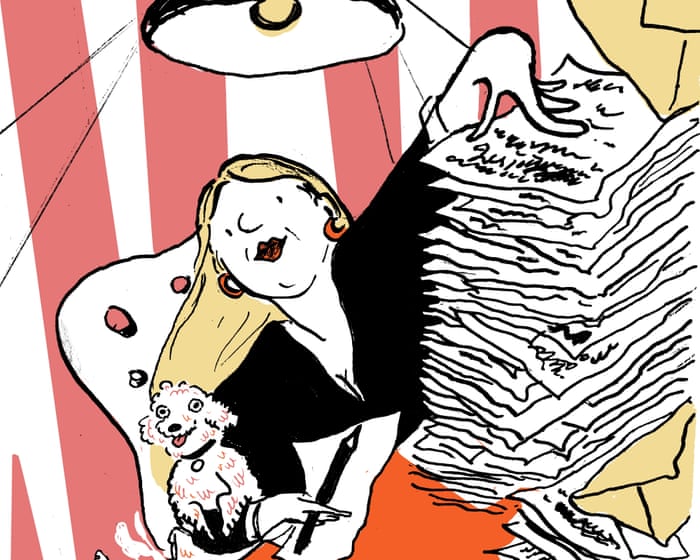
As New Year’s Eve looms, I implore you to heed this party etiquette advice.There are only two correct times to decline a party invitation: well in advance or not at all. The last thing any stressed-out host wants to receive, in the moments before their big event begins, is a sudden flood of 11th-hour RSVPs from guests announcing that they’re not coming. And yet, as anyone who regularly organises large parties in Britain knows, that’s exactly what they tend to be sent. It needs to stop.
Having an invitation turned down in advance stings a little, but it is genuinely helpful. It provides a sense of potential turnout to help gauge catering and expectations. A decline on the day, however, is infuriatingly useless. Food and booze will already long since have been ordered, and it’s way too late to invite another friend to make up the numbers.
The best and worst of 2025 – featuring devotion in DC, late-night tweeting and the fly that sank a birdie
The White House,issuing a communique to reporters covering April’s global market meltdown over tariffs as US losses hit $6.6tn (£4.9tn) in two days. “The President won his second round matchup of the Senior Club Championship today in Jupiter, FL, and advances to the Championship Round tomorrow.”
The Rams lost to the Falcons just seconds after Joe Buck and at least one other on the "Monday Night Football" broadcast insisted refs missed a key penalty on the game's final drive.
Officials were first alerted to Garza in mid-October when an undercover NYPD employee noticed a social media account that had followed several pro-ISIS accounts and penned a post in support of the terrorist group.
The Guardian’s sex advice columnist has answered countless questions over the last two decades. As the column ends, here’s what has struck and surprised her
People find it so hard to talk about sex, so if someone takes the time to sit down and write a question, then send it to the Guardian for me to answer, I always regard that as a great privilege. In the 20 years of writing the column, I have been reminded how many people are still out there, living their lives in quiet desperation about something that’s really troubling them sexually. Often the solution is more education; they just need to learn something, or be helped to be more open about a problem.
So many people grow up without the message that sex is healthy and important for a person’s quality of life, and they feel guilty every time they have sex, or think a sexual thought. They haven’t been able to enjoy sexuality and discover who they really are. Sometimes, it’s not the sexuality that is causing someone’s problem, it’s societal notions – prioritising monogamy, for instance – that makes life difficult. One of the things I would have liked to have addressed more was sexuality when people have serious disabilities or illness. Many people think they can’t continue to be sexual beings, and often that idea is pushed by people around them – that, to me, is tragic.
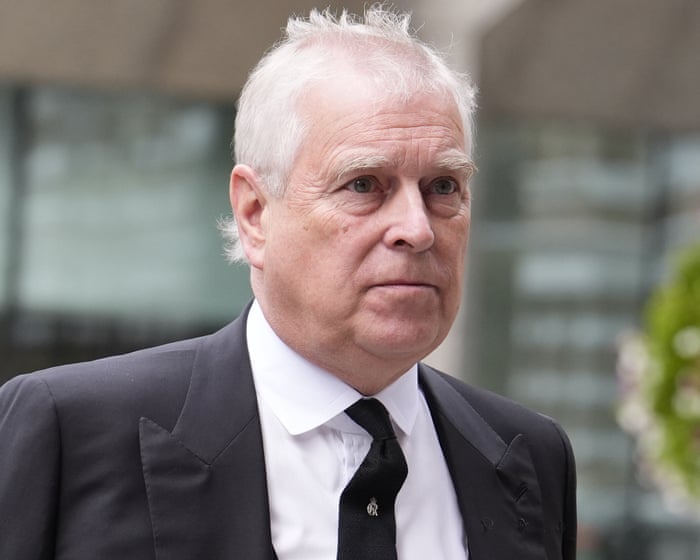
The Cabinet Office has been accused of covering up for the royal family after the release of documents including some relating to travel expenses for the former Duke of York as UK trade envoy were withheld at the last minute.
Files released to the National Archives include documents relating to the death of Diana, Princess of Wales, and a grovelling apology from John Major’s office after an official birthday telegram to the Queen Mother was addressed in an “improper manner”.
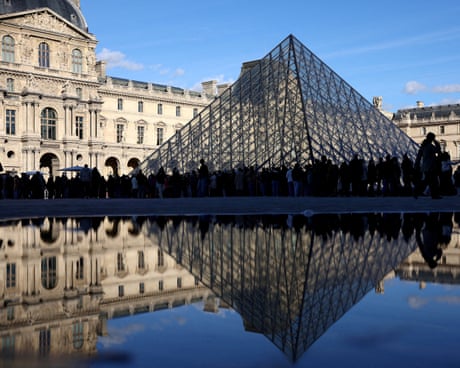
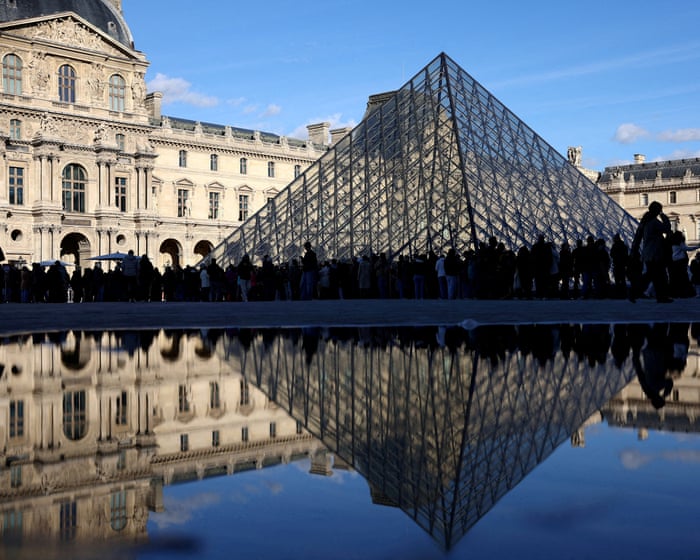
From a jewel heist to crumbling galleries, it’s been a dire year for the world’s most visited museum. At least France has woken up to its predicament
Long before Versailles dazzled the world, the Louvre rose from the banks of the Seine as a royal residence. Charles V kept his celebrated library here; Henri IV installed his cabinets of paintings, objets d’art and arms, and created within its walls a veritable city of artists, where cabinetmakers, tapestry-makers, painters and armourers lived and worked. Under Louis XIII, coins, medals and the Louvre’s printing press were added; under Louis XIV came casts, antiquities and the academies of architecture, the arts and the sciences.
The Enlightenment demanded that the masterpieces of the art world be made public; the revolution answered. On 8 November 1793, ordinary citizens were admitted to the Louvre’s Salon Carré and Grande Galerie for the first time, transforming a royal palace into a national art museum. Continually evolving through redesign, reconstruction and reinvention, it has survived revolutions, arson and Nazi occupation. Within its labyrinthine galleries, audacious thefts have unfolded in broad daylight, while secret acts of bravery left barely a trace in history. The Louvre is a place of enduring mystery and fantasy, belonging to both France’s collective memory and the world’s imagination. This year, however, a succession of thefts, leaks and infrastructure failures has forced the French to look again at what the Louvre has become – and what it risks losing.
Agnès Poirier is a political commentator, writer and critic for the British, American and European press
Exclusive: Scientists uncovered biological strands using artificial intelligence and hope discovery will revolutionise treatment
Scientists have discovered two new subtypes of multiple sclerosis with the aid of artificial intelligence, paving the way for personalised treatments and better outcomes for patients.
Millions of people have the disease globally – but treatments are mostly selected on the basis of symptoms, and may not be effective because they don’t target the underlying biology of the patient.
The caller display flashes up: “Derek in the K6” it reads. On the line is Derek Harris, ringing from the red phone box he saved for his village. When he saw, on the agenda for the parish council meeting, that BT had earmarked it for closure, Harris knew he had to fight it. “It’s fighting for what is valuable, cherished,” he told me when I went to meet him in February, sitting over coffee in a cafe near Sharrington, the Norfolk village that has been his home for more than 50 years, and the phone box for longer. It’s a K6, for Kiosk No 6, designed in 1935 by Sir Giles Gilbert Scott.
For a few weeks, Harris, then 89, became a media star. One of the criteria for keeping a phone box in use is that at least 52 calls have to be made from it in a year (fewer than 10 had been made in 2024). As the campaign picked up speed, one day a queue of people made more than 230 calls from the K6. Harris sparked a national conversation about the continuing need for kiosks in an age of mobiles. Behind the scenes, he was a tenacious activist, sending constant emails to his MP, councillors, and of course, BT. Some of them included photographs he had taken of BT vans whose engineers were working nearby, as proof the phone box could be easily maintained. In March, BT decided to reverse its decision.
 Connexion