Princess Santiago, an event director in Los Angeles, filed the suit on Jan. 12, according to TMZ Sports. She is demanding DNA testing from the 48-year-old former Celtics and Nets star to prove whether Pierce is the father.
The Los Angeles Rams fell short in the NFC Championship Game, but their 2025 season was defined by growth, bonds, and memories that will last a lifetime.
Reports earlier in the month seemed to indicate that the Steelers are not expecting Rodgers to return following the departure of former head coach Mike Tomlin.
After getting beat 5-0 by the Sabres on home ice Saturday, all four lines were switched up Monday against the Flyers, and Cal Ritchie was out due to a lower-body injury.
Quick had been pulled on two different occasions with Shesterkin out, but he bounced back after allowing two goals early in the second period Monday that gave the Bruins a 3-2 lead.
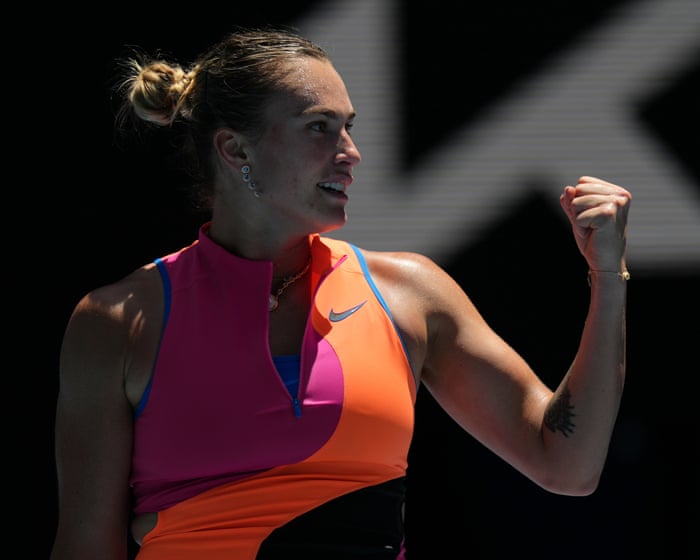
Women’s No 1 survives soaring temperature to defeat teenager 6-3, 6-0
Melbourne Park enacts extreme heat protocols on way to 45C
By the second set of Aryna Sabalenka’s 13th consecutive grand slam quarter-final, it was quickly becoming clear that the best tennis player in the world had reached flow state and she could do anything she wanted with the ball. Up 2-0 and mercilessly hunting a double break, Sabalenka swept forward to the net and executed a sickly sweet forehand half-volley winner that would have satisfied even the legendary volleyers of yesteryear.
There was once a time when a great performance from Sabalenka meant the Belarusian pummelling every ball, aiming for every line and praying that her shots would happen to land in. She has worked herself into such a well-rounded player today, who suffocates her opponents through the completeness of her game and has so many options at her disposal. Despite a valiant effort from her young opponent to simply prolong their high-quality opening set, Sabalenka bulldozed Jovic 6-3, 6-0 to continue her run through the draw.
Newsom launched a review of the platform, despite TikTok saying a systems failure was responsible for the issue
California governor Gavin Newsom has accused TikTok of suppressing content critical of president Donald Trump, as he launched a review of the platform’s content moderation practices to determine if they violated state law, even as the platform blamed a systems failure for the issues.
The step comes after TikTok’s Chinese owner, ByteDance, said last week it had finalised a deal to set up a majority US-owned joint venture that will secure US data, to avoid a US ban on the short video app used by more than 200 million Americans.
Testimony from medics, morgue and graveyard staff reveals huge state effort to conceal systematic killing of protesters
On Thursday 8 January, in a midsize Iranian town, Dr Ahmadi’s* phone began to buzz. His colleagues in local emergency wards were getting worried.
All week, people had taken to the streets and had been met by police with batons and pellet guns. With treatment, their injuries should not have been too serious. But emergency room staff believed many wounded young people were avoiding hospitals, terrified that registering as trauma patients would lead to their identification and arrest.
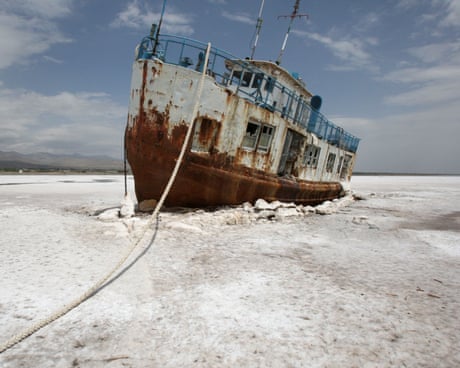
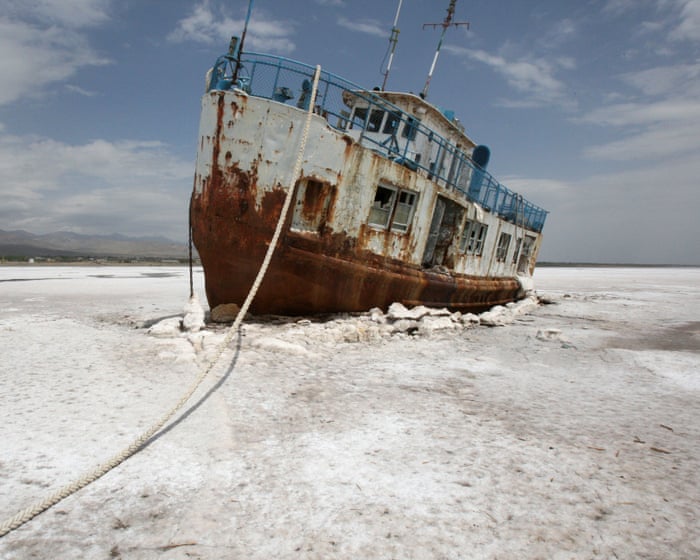
Last week, a UN report declared that the world has entered an era of ‘global water bankruptcy’ with many human water systems past the point at which they can be restored to former levels. To find out what this could look like, Madeleine Finlay speaks to the Guardian’s diplomatic editor, Patrick Wintour, who has been reporting on Iran’s severe water crisis. And Mohammad Shamsudduha, professor of water crisis and risk reduction in the department of risk and disaster reduction at University College London, explains how the present situation arose and what can be done to bring water supplies back from the brink
The mysterious Cornish electronic music pioneer has gained an extraordinary second life in the TikTok era. Writers and musicians explain why his glitchy slipperiness is so in tune with life today
QKThr, an obscure cut from Aphex Twin’s 2001 album, Drukqs, sounds like an ambient experiment recorded on a historic pirate ship. Shaky fingers caress the keys of an accordion to create an uncanny tone; clustered chords cry out, subdued but mighty, before scuttling back into dreamy nothingness.
This 88-second elegy has always been overshadowed by another song on Drukqs, the Disklavier instrumental Avril 14th, which alongside Windowlicker is the Cornish producer’s best-known track. But QKThr has become a weird breakaway success, featuring on nearly 8m TikTok posts, adorning everything from cute panda videos to lightly memed US presidential debates, and a fail video trend dubbed “subtle foreshadowing”.
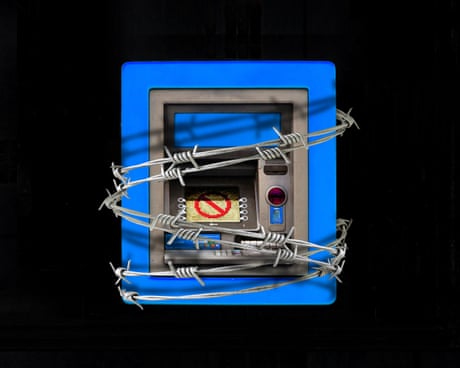
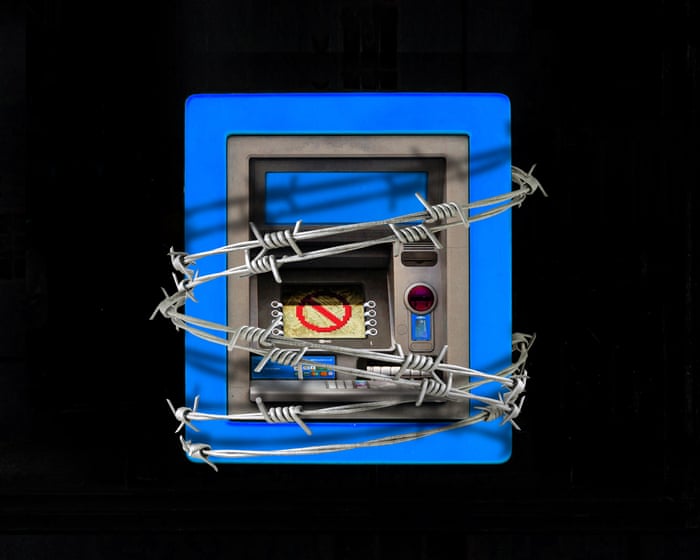
Innocent people are being frozen out of basic banking services – and it all traces back to reforms rushed through after 9/11
Hamish Wilson lives a few miles away from me, in a cosy farmhouse in the damp hills of mid Wales. He makes good coffee, tells great stories and is an excellent host. Every summer, dozens of Somali guests visit Wilson’s farm as part of a wonderfully wholesome project set up to celebrate their nation’s culture, and to honour his father’s second world war service with a Somali comrade-in-arms.
Inadvertently, however, the project has revealed something else: a deep unfairness in today’s global financial system that not only threatens to ruin the Somalis’ holidays, but also excludes marginalised communities from global banking services on a huge scale.
How best to portray the evil of Stutthof camp witnessed by my grandfather? The Zone of Interest and Twin Peaks could have the answer
When I was nine years old, my grandfather took me to the museum at the former Stutthof concentration camp near Gdansk, in northern Poland. Established by the Nazis in the German-annexed territory of the Free City of Danzig, he had been imprisoned there as a teenager. It was his first visit since the second world war. When we went through the gate, he began to cry, to shout, to reconstruct scenes. The past returned all at once and he fell into a state of trauma. During his imprisonment he had been responsible, among other things, for carrying bodies from the camp infirmary.
Most of the most infamous Nazi death camps have been turned into memorials like Stutthof, in the hope that they can teach something to future generations and avert a repeat of this darkest of chapters in Europe’s history. But it is a fact that few visitors to Auschwitz-Birkenau, Dachau or Stutthof are shaken like my grandfather was. Sites of memory increasingly fail to reach new generations. Visitors learn facts, dates, perpetrators. But knowledge of past crimes does not automatically prevent future ones. Many institutions still teach a reassuring lesson: there were evil people once, they were defeated, we are different. Evil is placed safely in the past. The visitor leaves morally intact.
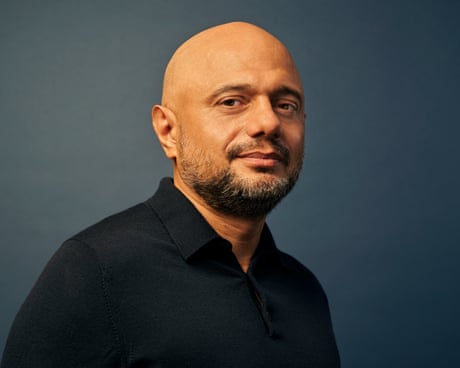
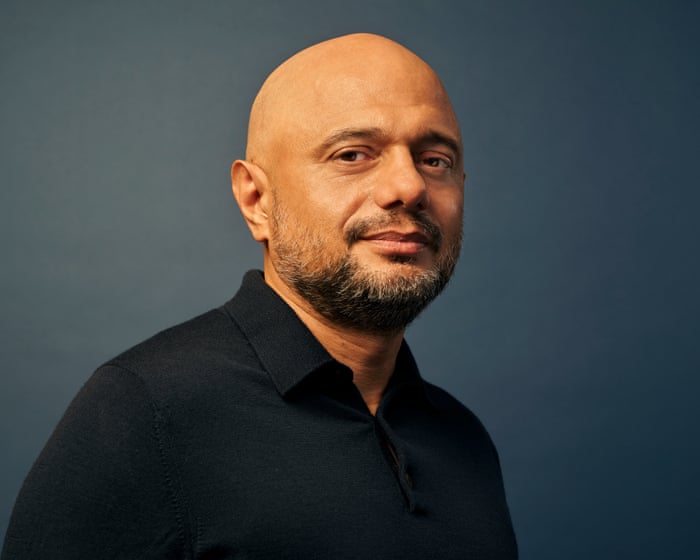
As a young teenager, Javid and his brother were caught stealing from slot machines, arrested and held in a cell. His future hung in the balance. How did he get from there to the top of UK politics?
In 2019, when Sajid Javid was home secretary, he spoke about growing up on “the most dangerous street in Britain” and said how easy it would have been to fall into a life of crime. Fortunately, he said, he managed to avoid trouble. But it turns out that Javid was being a little economical with the truth. He did get into trouble. Serious trouble.
Now 56, he has just published his childhood memoir, The Colour of Home. It’s crammed with incident – arranged marriages, savage beatings and boys behaving badly. I think there’s one key moment in your story, I tell him. “What, just one?” he hoots. Javid is not lacking for confidence.
French port’s green energy push, evoking second world war spirit of resilience, is seen as a testing ground for reindustrialisation
A new cargo and passenger ferry service directly linking Scotland and France could launch later this year as the port of Dunkirk embarks on a €40bn (£35bn) regeneration programme it claims will mirror the second world war resilience for which it is famed.
The plans could include a new service between Rosyth in Fife and Dunkirk, eight years after the last freight ferries linked Scotland to mainland Europe, and 16 years after passenger services stopped.
Some are trapped in a vicious cycle: rising rents, rising energy bills and falling standards. But this is not inevitable
Australians are struggling through one of the most brutal heatwaves and hottest summers on record. Day after day, temperatures into the high 30s are turning homes into ovens, workplaces into hazards, and everyday tasks into endurance tests.
All of us are feeling it. But spare a thought for the millions of renters trying to survive this heat in homes that were never designed to cope with it.
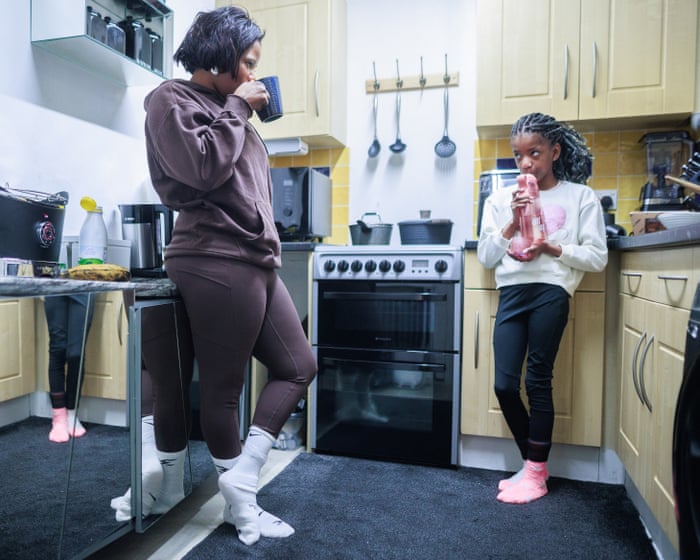
Exclusive: Parents said their children had become withdrawn or hypervigilant because of uncertainty, unsafe environments and removal of support
Neurodivergent children living in temporary accommodation (TA) in England are subjected to conditions that amount to “torture”, and the harm it causes them is “psychologically excruciating” and a form of “child cruelty”, a report has found.
The report by King’s College London through the all-party parliamentary group (APPG) for households in temporary accommodation, found that while living in TA was damaging for any child, it had a particularly severe impact on neurodivergent children and those with special education needs and disabilities (Send).
Only one ticket sold for premiere of film about US first lady at Vue’s flagship London branch as insiders question launch strategy
As film exhibitor strategies go, counter-programming is one of the most reliable. It worked for The Dark Knight and Mamma Mia!, released in the US on the same day in 2008, as well as for Dunkirk and Girls Trip in 2017. In 2023, Barbie and Oppenheimer leveraged the tactic to the tune of $2.5bn in combined box office takings.
This week we could see another example as Amazon releases its authorised documentary about Melania Trump in more than 100 UK cinemas. There it will compete against an already-eclectic slate of releases including the Jason Statham action film Shelter, the ape horror Primate, Bradley Cooper’s comedy-drama Is This Thing On? and Richard Linklater’s Jean-Luc Godard fictionalisation Nouvelle Vague.
Twice-sacked former home secretary is ‘not a team player’ and may limit attempts to expand Reform’s appeal
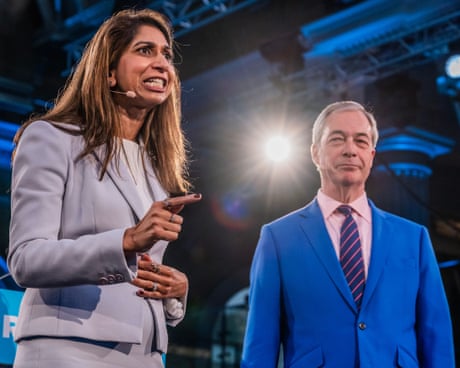
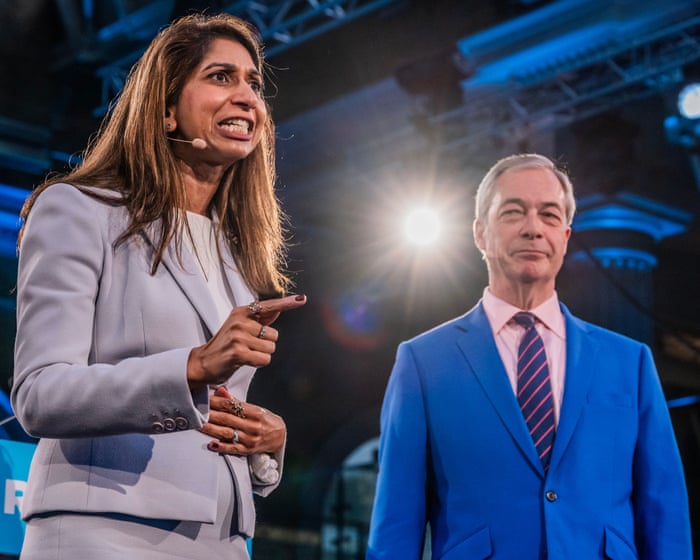
It was a full 90 minutes into the Reform UK rally – and 10 minutes into Nigel Farage’s speech – when the surprise guest who was also not a surprise at all came bounding on to the stage: ah, Suella Braverman, we were expecting you.
If ever there was a definition of a high-profile yet semi-detached Conservative, Braverman was it. Although twice the home secretary, and also attorney general, she has been on the backbenches for more than three years and had precisely zero chance of advancement under Kemi Badenoch.
Most of those at Monday’s event had to remind themselves that Braverman hadn’t defected long ago
That noise? The sound of the barrel getting scraped. Only last summer, Reform insiders were briefing the rightwing media that the party would never welcome Suella Braverman into its ranks. Too much baggage. Too out of control. Reform wasn’t a convalescent home for disgraced and failed Tory MPs. Surely not? Heaven forbid.
So it was only a matter of time before the MP forced to resign from Liz Truss’s cabinet as home secretary for breaking the ministerial code – imagine the shame of being sacked by Liz – and then fired by Rishi Sunak for criticising Scotland Yard’s policing of protests was welcomed by Nigel Farage. Let’s face it: if Kemi Badenoch weren’t already leader of the Tory party, she’d almost certainly be next in line to defect.
 Connexion