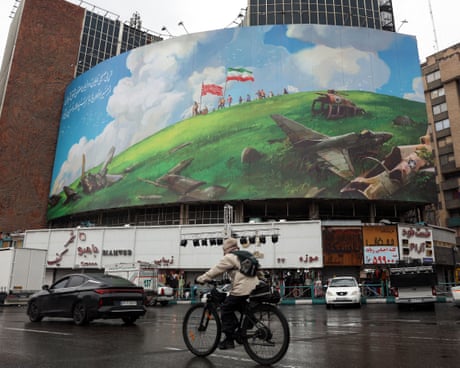
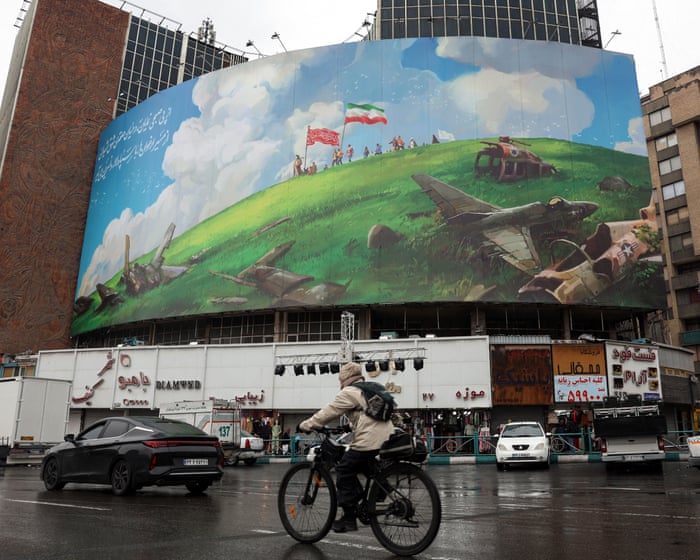
It is the first time the US and Iran have sat down for face-to-face negotiations since June last year, when Israel launched attacks on Iran that sparked a war marked by tit-for-tat airstrikes, with the US also joining the fray. What became known as the 12-day war raised fears of a broader regional conflict.
More recently, Donald Trump has been threatening to strike Iran for more than a month and just last week warned that an “armada” of US warships had reached the Persian Gulf. This recent clash began after Trump said he would strike Iran if it killed protesters during mass antigovernment demonstrations that swept the country last month. Human rights groups say thousands of people were killed during the brutal government crackdown on those protests.
Iran’s Islamic Revolutionary Guard Corps (IRGC) navy said it intercepted the two ships near Farsi Island, claiming they were carrying about 1 million liters of smuggled fuel, Reuters reported.
The Department of Justice (DOJ) said Thursday that Sainz Salazar, also known as "Mantecas," is charged with fentanyl trafficking and weapons offenses tied to an alleged conspiracy to manufacture the drug for the Sinaloa Cartel and smuggle it into the US.
She was raised as part of a prodigy-breeding psychological experiment, took on the chess patriarchy and beat her idol Garry Kasparov. So why isn’t there more depth to this documentary?
Judit Polgár won her first chess tournament in 1981 when, at the age of six, she marmalised a string of middle-aged Hungarians and toddled off with a swanky Boris Diplomat Bd-1 Electronic Chess Computer. “I was a killer,” says the amiable 49-year-old in Netflix documentary Queen of Chess. “I wanted to kill my opponents. I would sacrifice everything to get checkmate.” Archive footage captures the bloody aftermath of Polgár’s inaugural victory; a roomful of solemnly jumpered victims looking on, dazed and ashen-jowled, as the vanquishing Hungarian scowls at photographers from beneath a bowl cut that could confidently be described as “ferocious”. The triumph put paid (at least temporarily) to Polgár’s painful shyness, making her feel “exceptionally powerful. After this, it was so obvious for me that I’m going to be a chess player. And if you want to become the best,” she says with a wry smile, “it’s very important to have the challenges.”
Ah, yes. The challenges. But with which to start? Queen of Chess – a rhapsodic account of the life of the greatest female chess player of all time – is spoiled for choice. There is the punishing chess-training regime, designed as an experiment by Polgár’s educational psychologist father László to prove “geniuses are made, not born”. (School and weekends were banned so “every day was a working day.”) There is the communist regime so threatened by the family’s ambitions to compete in the west that it confiscated their passports.There is the relentless sexism that trailed the tiny trailblazer and older chess-playing sisters Susan and Sofia, outraged at the temerity of their insistence on taking on the male-dominated sport’s grandmasters while delivering pronouncements of the “women lack the pure mental ability needed to understand chess” variety. It’s all here, and Queen of Chess throws its arms wide in an effort to capture the frequently depressing reality of Polgár’s experiences. Not quite wide enough, though. There is throughout the documentary’s 90 minutes the persistent sense that there’s more to Polgár’s story; that if only Emmy-winning director Rory Kennedy had been steadier with her magnifying glass the results might not feel so emotionally underdeveloped. Instead, we get a garish, skittish account of Polgár’s youthful ascent to chess superstardom, with grainy scenes of strategic prowess accompanied by jarring neon graphics and an aggressively irksome soundtrack by various female-fronted post-punk types.
With 13 clubs punished, Chengdu are the only Super League top six side that will start the upcoming new season on zero points, but China’s U23s and provincial sides are lifting spirits
When Keir Starmer met Xi Jinping recently, reporters said the British prime minister was shocked at his Chinese counterpart calling Crystal Palace “Palace”, liking Manchester City and Arsenal and supporting Manchester United. The reasons can be guessed. Fan Zhiyi was popular at Selhurst Park in the late 1990s, Sun Jihai was a cult hero at Maine Road and Manchester United had Dong Fangzhuo. The president of the world’s second most populous country and second biggest economy didn’t, however, mention Everton.
Li Tie spent four seasons at Goodison Park, playing the most in his first, 2002-03, with 29 Premier League appearances. The Chinese international moved into coaching on returning home and managed the national team from 2019 to 2021. Since December 2024, he has been in prison, serving 20 years on charges of taking bribes. Since last Thursday, he has been banned from all football activities for life.
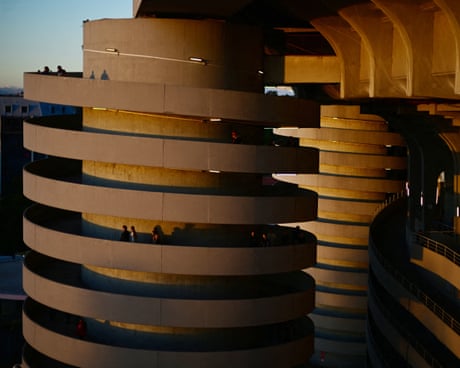
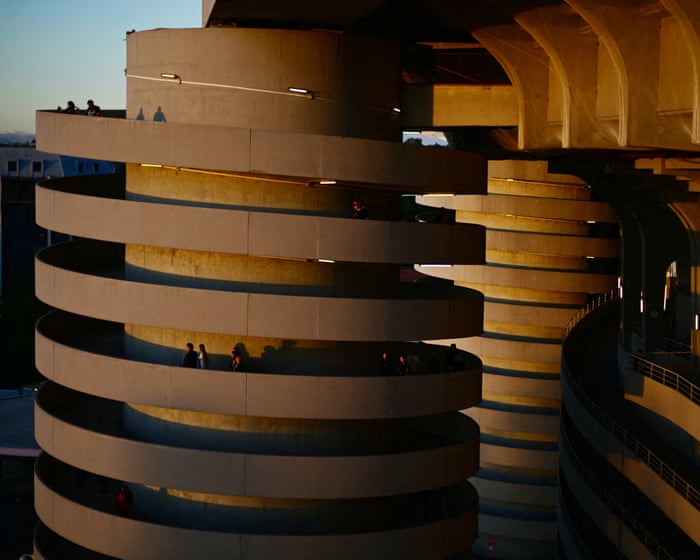
What to look out for as the action continues and the historic home of Milan and Inter hosts Friday’s opening ceremony
As the Olympic torch reached Milan on Thursday, anticipation rippled through the city in waves, both jubilant and uneasy. Pride at hosting the Winter Olympics sits alongside quieter anxieties about rising costs, tightened security and geopolitical tension.
Milan is no stranger to spectacle. Fashion Week routinely transforms the city into a runway for the world. The Salone del Mobile design fair floods hotels each spring. Hosting the Games is meant to be a natural extension of that international identity – proof the city can blend culture, commerce and sport on the grandest stage.
The duo from Tashkent took first and second prizes at the traditional Netherlands New Year tournament, while the favourites from India ended up near the bottom
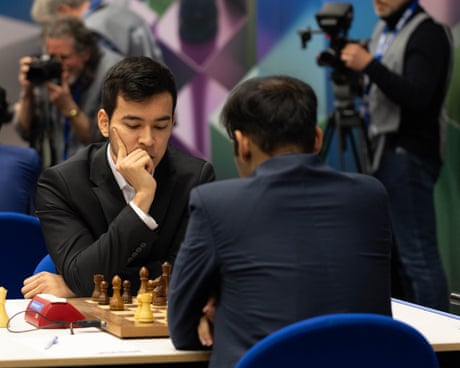
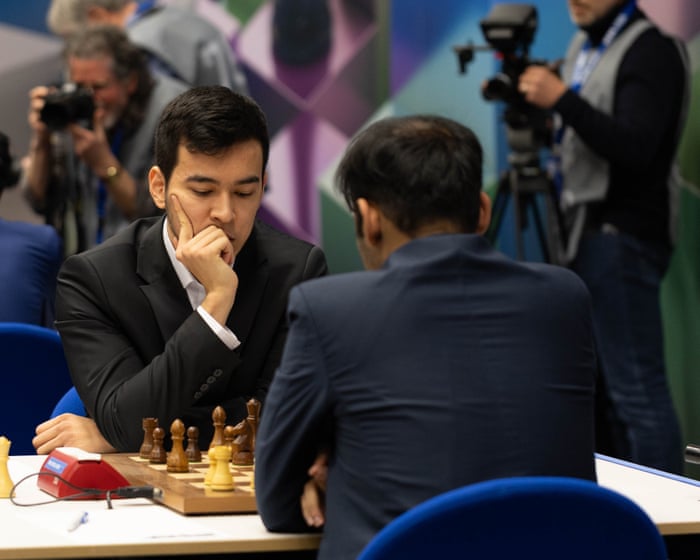
Nodirbek Abdusattorov added to his growing reputation as one of the world’s top players last weekend when the Uzbek grandmaster, 21, triumphed in the “chess Wimbledon” at Tata Steel Wijk aan Zee, with his compatriot Javokhir Sindarov a close second.
On his previous three attempts Abdusattorov, who has now surged to No 5 in the live ratings, had missed out in the final decisive rounds. This time he led early, had a wobble with three draws and a loss, but was strong in the final two rounds. “It was a long way for me,” he said. “I was very close every time and I failed year after year. I’m extremely happy to finally be able to win this tournament and to win in a very nice style.”
Styles is playing a record 12 nights at Wembley stadium and 30 at Madison Square Garden, as demand for big artists soars – and audience expectation along with it
Selling out a venue such as London’s O2 Arena used to be considered a high point of an artist’s career. Now, selling out just one night there might seem a bit underwhelming. Raye and Olivia Dean will play six nights apiece at the 20,000-capacity hall this year; Dave is playing four, Ariana Grande is playing a whopping 10. Harry Styles, never one to be outdone, last month announced a staggering 30 dates at New York’s Madison Square Garden, with more than 11 million people applying for presale access, as well as a record-breaking 12 nights at Wembley stadium: the most on a single leg of a tour. Taylor Swift managed a mere eight.
Swift’s Eras tour, which made more than $2bn (£1.6bn), doesn’t seem a complete outlier any more: Coldplay’s Music of the Spheres tour has lasted four years and made $1.5bn, and the Weeknd’s After Hours Til Dawn tour is also four years deep and has crossed the $1bn mark. It’s even de rigueur for world leaders to get involved in the fight for tickets, with the Mexican president, Claudia Sheinbaum, asking the South Korean president, Lee Jae Myung, to help book more BTS shows in her country, just as the then Canadian prime minister, Justin Trudeau, publicly asked Swift to come to Canada. Meanwhile, the Singaporean government paid for Swift’s six shows in the country to be a south-east Asia exclusive.
"Demarco stated he wanted to die due to Trump being elected as president," the complaint read. "Demarco advised that he had created a manifesto and that once it was completed he would kill people."
US Southern Command said on social media that the boat “was transiting along known narco-trafficking routes in the Eastern Pacific and was engaged in narco-trafficking operations.”
Queer self-discovery drives this powerful coming-of-age debut set in a bohemian 1970s school
It might sound like a potentially familiar narrative: a queer coming-of-age story, charted across one single heat-crazed summer in the 70s. From its very first paragraphs, however, this debut novel feels different. Madeleine Dunnigan immediately takes us inside the head of her rather scary protagonist, and makes his adventures in teenage lust and self-awareness as involving as they are immediate. The writing is constantly surprising, as unafraid of sensuality as it is of the story’s repeated eruptions of brutality.
We first meet Jean, our eponymous hero, as he is about to take his O-levels. He is sitting them at the unusually late age of 17; later, we will find out that this is because he has a history of violence, and has been excluded from every school he’s ever attended. To the despair of his teachers, Jean seems completely unable to learn. He is also a Jew in a school full of gentiles, the lone child of a single mother, a county-funded scholarship boy whose friendship group is unanimously monied and privileged. This is not, however, the story of a queer outsider battling to find himself in a setting of dreary conformity. Perched high on the Sussex Downs, Jean’s school specialises in colourful nonconformists; known to its pupils as The House of Nutters, its regime mixes high-risk bohemianism with the occasional dash of old-school protocol. Crucially, it is isolated, and its pupils are all male. It is a classic microcosm; a petri dish alive with potentially dangerous experiments in masculinity.
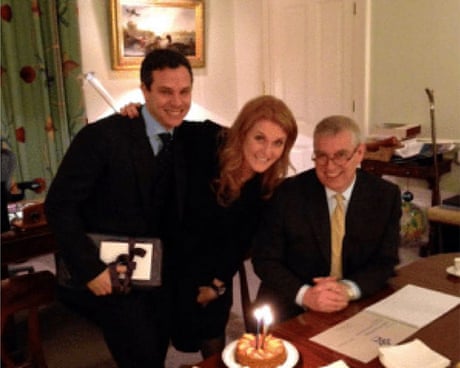
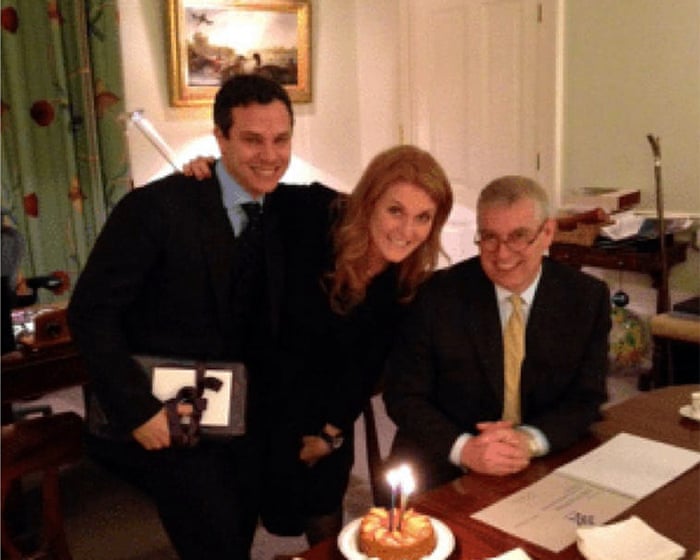
Files suggest David Stern was Jeffrey Epstein’s ‘man in the palace’, passing messages to the former prince until 2019
Jeffrey Epstein wanted his 26-year-old Belarusian girlfriend, Karyna Shuliak, and her friend, Jen, to have a good time in London – and he knew just who to ask.
“Karyna – my girlfriend, and Jen, the tall girl who you’ve met will be London Tues and Wed,” the 63-year-old disgraced financier apparently wrote in April 2016 to an aide to the then Prince Andrew. “They have never been there before. If you are around, I’d appreciate any help you can give them.”
With plans to sell off over a million acres of natural habitat for oil and gas development, the Trump administration is ignoring the dire impact on its fragile ecosystem
This week, the Trump administration took a key step towards opening new leases for oil and gas drilling across millions of acres in the Arctic National Wildlife Refuge – a pristine and biodiverse expanse in northern Alaska and one of the last wildlands in the US still left untouched.
Ruby Hughes / JonasNordberg / Mime YamahiroBrinkmann (BIS) Joined by lutenist Nordberg and Brinkmann’s viola da gamba, the mezzo-soprano’s homage to the Renaissance composer is captivating and persuasive
John Dowland died 400 years ago this year, and we’ll be lucky indeed if there are many other tributes as captivating as this one from the mezzo-soprano Ruby Hughes, lutenist Jonas Nordberg and viola da gamba player Mime Yamahiro Brinkmann. The music is by no means all Dowland – in fact, the recording takes its title from a song by Purcell, and one of its most memorable tracks is a spellbinding version of the Corpus Christi Carol as set by Britten – but everything is steeped in the delicious Elizabethan melancholy that Dowland distilled so very effectively.
Hughes’s voice retains a natural quality, for all its refinement, which has been skilfully captured – the recording is close enough for her to be able to be soft and confiding, but there’s still a sense of space around the sound. She’s more vocally demonstrative than some, colouring each word individually: when in Dowland’s Flow, My Tears she sings of “fear, and grief, and pain”, we’re left in no doubt that these are three different but equally terrible emotions. And yet she, Nordberg and Brinkmann hold all this in balance, maintaining a persuasive sense of line and focus so that the expressivity registers not as indulgence but as communication. This is just as evident in the music by Dowland’s contemporaries and in Purcell as it is in the four new or recent compositions based on Shakespeare’s song lyrics at the end, by Deborah Pritchard, Errollyn Wallen and Cheryl Frances-Hoad.
Five years after a fire destroyed most of the cathedral, the artist explains how her designs will give the landmark a modern makeover and the ‘contemporary gesture’ Emmanuel Macron promised
Claire Tabouret can draw a clear line between before and after Notre Dame. Before she was chosen from more than 100 artists to design six new stained-glass windows for the cathedral – reopened in 2024, five years after it almost burned to the ground – Tabouret had a select group of admirers (one of them the French tycoon and art collector François Pinault), but she was hardly a household name.
That has changed – for better and for worse. At the end of last month, the first major solo retrospective of her work opened at the Museum Voorlinden outside The Hague. In Paris, Tabouret’s window designs are on display at the Grand Palais, before being installed at Notre Dame later this year at an estimated cost of €4m (£3.3m). The French president, Emmanuel Macron, and Paris’s archbishop have been enthusiastic in their support, but the plan to integrate a modern artist into a historic landmark has also provoked protests, petitions and claims of cultural and spiritual vandalism.
 Connexion