Their bodies were discovered in a room at Rio Hotel & Casino on Sunday alongside an apparent suicide note after the pair failed to show up for a cheer competition.
Austrian director Markus Schleinzer’s captivating film follows a woman passing herself off a man in 17th-century rural Germany
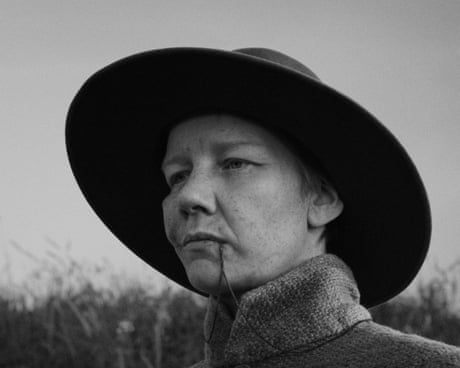
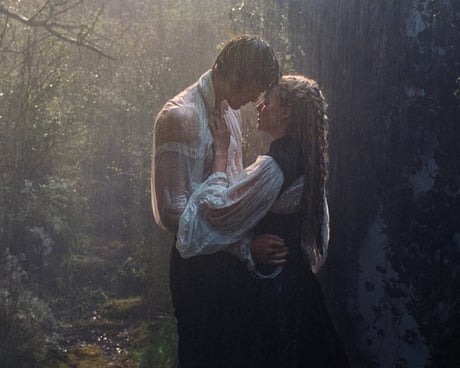
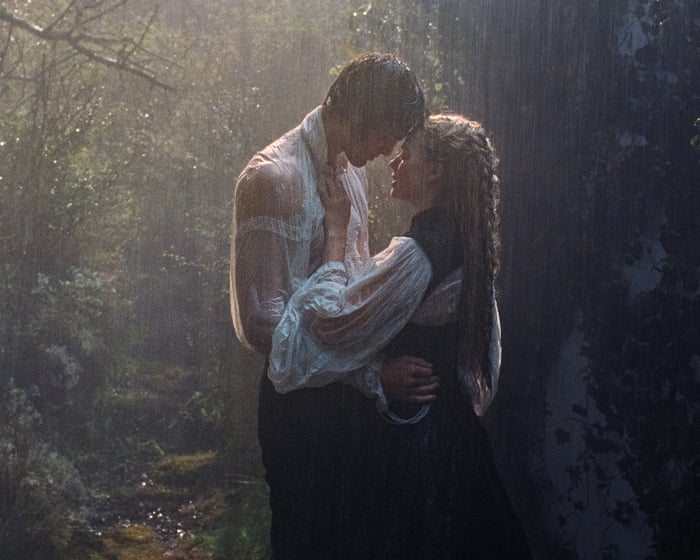
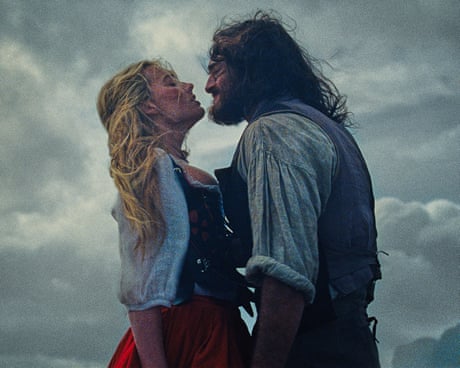
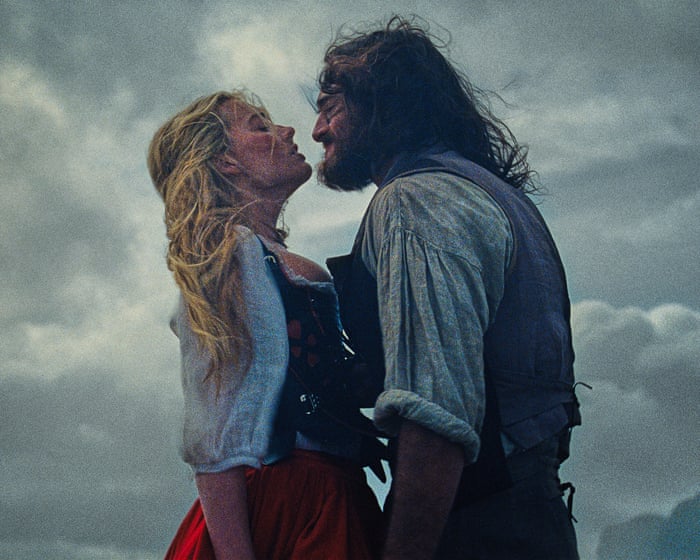
Austrian director Markus Schleinzer brings a chill to his eerie new movie, a stark monochrome period drama set in rural southern Germany in the aftermath of the Thirty Years’ war. It is a film which, for all its grimness, is beautifully shot and as engrossing as a lurid soap opera. It’s a story of gender stereotypes, satirising the central mythic tenet of patriarchal Christianity and depicting humanity’s self-invention through violence and stealth. The chief influence is clearly Michael Haneke’s icy black-and-white film The White Ribbon from 2009, on which Schleinzer worked as casting director; Schleinzer shares with Haneke an interest in leaving the audience with an intractable, insoluble mystery: a problem that won’t tie up.
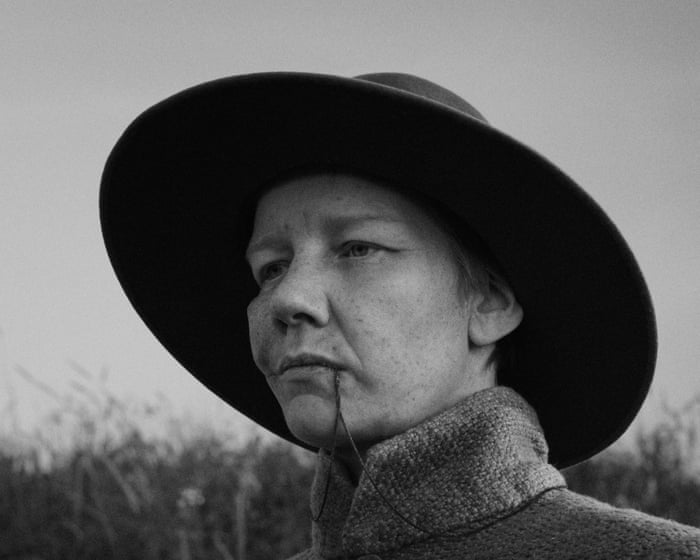
The drama effectively conflates real-life cases of women passing themselves off as men in early modern Europe with the well-known case history of the French false claimant Martin Guerre. Sandra Hüller gives a superb performance as Rose, a young woman who has been posing as a man all her life and has been a soldier in this guise. She wears dour shapeless clothes, and has the brisk, brusque, economical physical movements of an old soldier; a livid scar that has transformed her face into a worldly and conveniently unfeminine grimace. She says it is the result of a bullet that she now wears around her neck on a cord, a kind of unlucky charm, a reminder of her survival.
Lauren James shows what Chelsea have been missing, Villa get a ‘cruel’ crushing and the leaders bounce back
If there were any questions around how Manchester City would respond to seeing their unbeaten league run end, they were quickly put to bed. Andrée Jeglertz’s side were back to their free-flowing attacking best, putting six past Leicester. Dominant seems to be a bit of an understatement when describing this performance. The league leaders created 31 chances, with 15 on target; had an xG of 4.63; registered 66 touches in the opposition box; and made 600 of 660 passes (91%). The front four of Lauren Hemp, Bunny Shaw, Kerolin and Vivianne Miedema is formidable and they were all involved, to some degree, in five of the six goals. Hemp starred down the left, creating 11 chances that include two assists; Shaw sent home a trademark header for her 15th league goal of the season; Miedema pulled the strings and grabbed herself a brace; and Kerolin scored the pick of the bunch and registered an assist. Sophie Downey
With audiences fatigued by endlessly interconnected mashups, studios are reverting to movies with one storyline that ends in a natural conclusion – what a radical idea
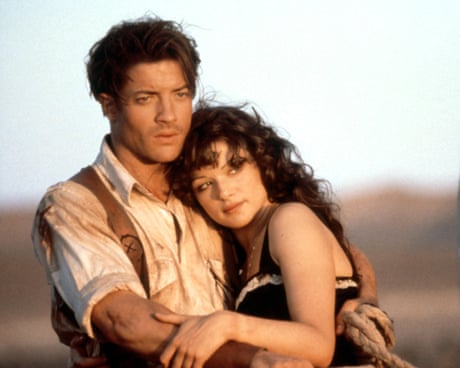
The news this week that Brendan Fraser and Rachel Weisz are to return in a new Mummy film for the first time in a quarter of a century feels a bit like Hollywood stumbling out of a very long house party it doesn’t entirely remember attending. The last time the pair appeared together was 2001, when The Mummy Returns (itself an insipid sequel to 1999’s much better The Mummy) hit multiplexes. Since then we’ve had a spin-off (2002’s The Scorpion King, featuring an early turn from Dwayne Johnson) and a second sequel that didn’t feature Weisz, 2008’s forgettable The Mummy: Tomb of the Dragon Emperor.
And then, of course, there was the ill-fated “Dark Universe”, forever immortalised by that solemn publicity photograph of Russell Crowe (Dr Jekyll), Javier Bardem (Frankenstein’s Monster), Tom Cruise and Johnny Depp (The Invisible Man) staring into the middle distance like an ageing goth supergroup. The plan was to launch an interconnected saga in which Jekyll would act as a sort of monster-movie Nick Fury, corralling Dracula, Frankenstein and assorted undead assets into a synergised Marvel-style cinematic ecosystem. Fortunately it rapidly fell apart: 2017’s Cruise-led The Mummy landed with all the grace of a cursed sarcophagus dropped down a lift shaft. And that, as far as the Dark Universe was concerned, was that. Universal pivoted to smaller films such as Leigh Whannell’s The Invisible Man, while Bardem’s Monster and Depp’s Invisible Man never materialised at all.
Prime minister says outcomes of consultation on social media ban should be implemented quickly as technology minister says Australia-style ban is not inevitable
In his Q&A with journalists, Keir Starmer was also asked to respond to a report by the BBC’s James Landale saying he is looking at plans to raise defence spending to 3% of GDP by the end of this parliament. In the past Starmer has just said that he would like to do this at some point in the next parliament.
In his reply, Starmer said that at the Munich Security Conference over the weekend he was arguing that the UK, and Europe as a whole, needs to “step up”.
We want a just and lasting peace, but that will not extinguish the Russian threat, and we need to be alert to that, because that’s going to affect every single person in this room, every single person in this country, so we need to step up.
That means, on defence spending, we need to go faster.
As her Women’s prize-winning novel heads to the Oscars, we rate the author’s best work – from tales of new motherhood to a life-affirming memoir of mortality
The ghost of a previous lover is always a challenge, particularly if you (mistakenly) believe that she’s actually dead. This is the unenviable situation for Lily, the protagonist of O’Farrell’s second novel, who is swept off her feet by dashing architect Marcus and in short order moves in with him. Lily takes his assurances that her predecessor Sinead is “no longer with us” to mark a more permanent absence; in fact, Sinead has simply been thrown over, and it is in the details of the collapse of her relationship with Marcus that the novel most engages. Hints of the gothic ghost story deepen one of the main takeaways, which is that Marcus consists almost entirely of red flags.
Files show convicted sex abuser messaged with Ken Starr and others about Kavanaugh accuser Christine Blasey Ford
Jeffrey Epstein sympathized with Brett Kavanaugh during the then-supreme court nominee’s contentious 2018 confirmation and even suggested Republicans should have been harder on Christine Blasey Ford, who had accused Kavanaugh of sexual assault.
Emails and text messages released by the Department of Justice show Epstein was closely monitoring the confirmation and seemed to believe that Ford’s allegation of sexual assault could derail the process.
The former Ireland hooker on his rugby family, why Andy Farrell’s side need to rebuild and the physical toll of touring with the Lions
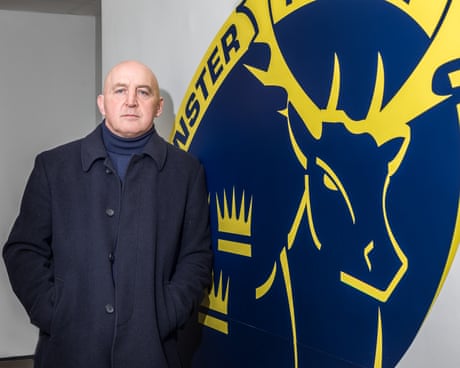
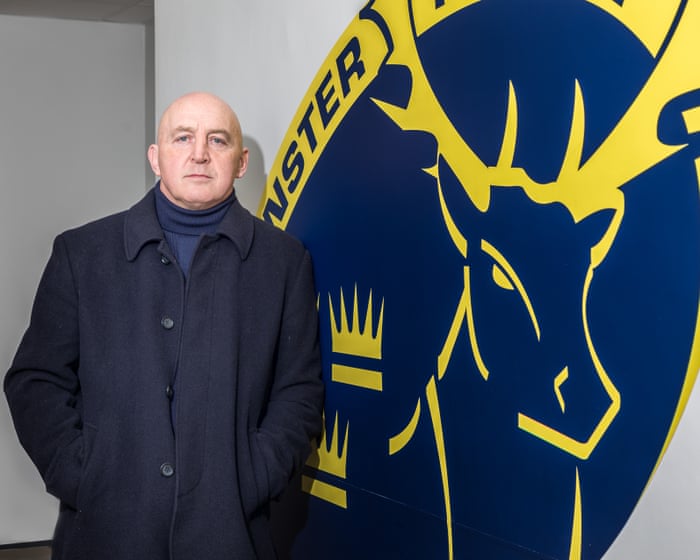
I have known Keith Wood for nearly 30 years and so it’s easy to talk about life and death long before we move on to rugby. But the game always provides context and, last Friday afternoon, the 54-year-old former Lions hooker and Irish captain drove to Cork to watch his youngest son, Tom, play for Ireland against Italy in the Under-20 Six Nations.
The previous weekend Tom made his first-team debut for Munster to match his dad and the grandfather he never met. Gordon Wood played for Munster, as well as Ireland and the Lions, before he died, aged 50, in 1982. Keith was only 10 when that first tragedy occurred but he went on to play for the same three teams as his dad.
The Congo River basin is one of the planet’s most biodiverse ecosystems. But it is also home to a growing population and relentless trade in timber and charcoal
“You can’t be scared of the storms,” says Jean de Dieu Mokuma as the sun sets on the Congo River behind him. “With the current, once your voyage has begun, there is no turning back.” Mokuma, along with his wife Marie-Therese and their two young children, is piloting a cargo of timber downstream lashed on to a precarious raft and tied to a canoe.
Families wake up at dawn on rafts of logs and merchandise that are being transported down the Congo River by boat to Kinshasa, the DRC capital
Packed cinemas testify to the allure of Emily Brontë’s tale, even if this latest retelling is not to everyone’s taste
It’s hard to think of any book with a stronger hold on its admirers than Wuthering Heights. Almost 200 years after publication, Emily Brontë’s tale of forbidden love and ruthless revenge inspires a devotion that makes any reinterpretation feel like a personal and proprietary affront.
Into this sea of sensitivities has plunged the director Emerald Fennell, whose new adaptation has become one of the year’s most debated films. Dubbed “50 shades of Brontë”, everything about it has been scrutinised: from the casting of Aussies Margot Robbie and Jacob Elordi as Cathy and Heathcliff to the anachronistic costumes and music, and the overt sexualisation of the plot.
MILAN — Canadian speedskater Courtney Sarault won the silver medal in the women’s 1,000-metre individual race in short-track on Monday at the Milan-Cortina Games. Read More
The maximalist adaptation of the gothic romance shows great interest in production design but very little in character
It does not take long into Wuthering Heights, Emerald Fennell’s adaptation of Emily Brontë’s English lit classic, for one to detect the film-maker’s true faith. It is not to the challenging and beloved gothic novel of emotional repression and inheritance; as with many other cinematic adaptations, Fennell dispenses with the unruly latter half of the book, along with most of its conventions. In Fennell’s emphatically maximalist vision – she has explained that the quotation marks in the film’s marketing are a note of humility, to her singular and limited interpretation – the tortuously connected Cathy (Margot Robbie) and Heathcliff (Jacob Elordi) swoon about the Yorkshire moors in extravagant, anachronistic formalwear, flagrantly unbound by period decorum.
Over three features, the English writer-director has demonstrated a penchant for sticky visuals; arguably the most-discussed scene from 2023’s Saltburn, her discourse-driving sophomore feature, involved the licking of cummy bathwater from the drain. Wuthering Heights is not to be controversially out-soaked. In closeup, sweat beads and drips down a spine; snail slime indolently streaks a window; freshly poured pig blood mucks Cathy’s dress. Desire, less suggested than enforced, stains everything. Early in the film, just after the abrupt ageing of Cathy and Heathcliff from boundless children (played by Charlotte Mellington and Adolescence’s Owen Cooper) to unspecific adults, Elordi’s brooding, beastly Heathcliff catches Robbie’s blonde Cathy, furiously horny after a bit of light voyeurism, pleasuring herself against the windswept rocks. She tries to hide her hand in her dress; he picks her up by the bodice strings, and licks her fingers clean.
OTTAWA — Transportation ministers from across the country will meet quietly this week with an agenda that is expected to include a possible update of the contentious safety rules that govern flights to remote communities. Read More
On Jan. 26, the University of Alberta embarked on the process of ridding diversity, equity and inclusion from its hiring policy, at least in name. Identity is still a core part of the school’s ethos, but this is still a step in the right direction; the proposed change would have been unthinkable in 2021. Read More
Growing up in a turbulent household taught me to expect the worst. Then one day I found £20 in the street and shifted my thinking
Growing up, I was envious of one type of person. It was never the kids who were smarter, sportier or more popular. My awe was reserved for a rarer breed of people: optimists. I was hypersensitive to the ease with which they sailed through exams, social gatherings or teenage milestones with a sunny conviction that things would more or less work out. To me, they were the chosen people. “It’ll be fine,” one such friend would reassure me. “Or you could embarrass yourself,” my mind would purr like a villain. “Be rejected. Fail.”
I was a chronic worrier. A negative Nancy. I couldn’t fathom that people’s brains weren’t hardwired to compulsively fear things might go wrong. I grew up as the eldest daughter in a turbulent household where my father’s moods would plummet quickly and I walked on a knife-edge. Every morning, the second my eyes opened, I would force myself to accept it was going to be a bad day – an act of self-preservation so the rug could never get pulled from under my feet hoping for better. My thinking was that if you always expected the worst, things had a tendency to turn out better than you imagined.
 Connexion