"We were just wanting a smoothie and you literally looked at us ... and you said 'We don't feel comfortable serving you' because of my husband's [Trump] hoodie. That is discrimination," Erika spat.
Iran’s Revolutionary Guards have targeted a US air base in Bahrain, the Islamic republic’s elite force said in a statement carried on Tuesday by the official Irna news agency.
“The IRGC announced that ... its naval forces carried out a large-scale drone and missile attack at dawn on the US air base in the Sheikh Isa area of Bahrain,” Irna posted on Telegram, using the acronym for Iran’s Islamic Revolutionary Guard Corps.
U.S. forces have destroyed Islamic Revolutionary Guard Corps command and control facilities, Iranian air defense capabilities, missile and drone launch sites, and military airfields during sustained operations. We will continue to take decisive action against imminent threats posed by the Iranian regime.
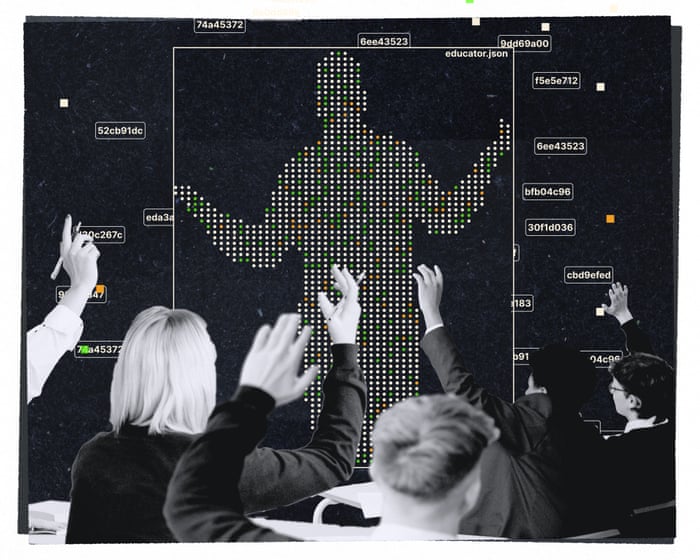
I was a newcomer, negotiating all of usual classroom difficulties for the first time. Throwing AI into the mix felt like downing a coffee in the middle of a panic attack
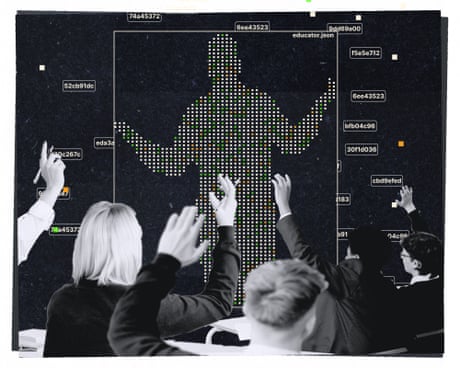
Two years ago, at the age of 39, I began training to be a school teacher. I wanted to teach English – to help young people become stronger readers, writers and thinkers, with a deeper connection to literature. After 15 years of working as a freelance writer and as a novelist, I felt confident that I had something to offer. But the further I progressed in my training, the more uncertain I felt. One particular question taunted me for my lack of an answer. What to do about artificial intelligence?
The immediate dilemma: what does it mean for English instruction that all pupils now have access to free online chatbots that can produce fluid, fairly complex prose on demand? This question sits atop a teetering pile of timeless pedagogical quandaries: What are we actually trying to do in school? How should we go about doing it? How do we know if we’ve succeeded? I was a newcomer, negotiating all of this for the first time. Throwing AI into the mix felt like downing a coffee in the middle of a panic attack.
An American pilot appeared to beam at Kuwaiti rescuers after being accidentally shot down by the country's air defenses during assaults on Iran, purported footage shows.
NEW DELHI — Foreign Affairs Minister Anita Anand said Monday the Liberal government still wants to see a "diplomatic solution" to resolve the war in the Persian Gulf days after the prime minister said he supported the attack on Iran by the U.S. and Israel. Read More
The Supreme Court made the right decision Monday to block Gavin Newsom’s insane law barring schools from informing parents whose children say they want to change genders.
The twisted "satirical" comedy provides a "bold, campy and unafraid" take on the accused assassin's life in lockdown while on trial for the muder of the dad of two.
Steak 'n Shake says it is giving its hourly employees a bitcoin bonus — a move the fast-food chain is touting as a first for the industry, and one that’s drawing strong reactions online.
As Los Angeles Unified School District leadership huddled in private on Monday, critics accused them of once again putting politics over students -- and keeping parents in the dark.
Many residents of Tehran managed to get out of town when the U.S. and Israel attack began, but others who could not described living under bombardment.
People are standing behind a yellow line after a police station on Niloufar street was hit by US-Israel attacks and damaged the next door buildings in Tehran on Monday.
Former Secretary of State Hillary Clinton was defiant. Former President Bill Clinton spoke of President Trump’s ties to Epstein. A Republican raised a conspiracy theory.
Hillary Clinton speaking to reporters after her closed-door deposition before the House Oversight Committee, as part of its investigation into Jeffrey Epstein, in Chappaqua, N.Y.
“It’s critical to protect the civil liberties of Americans, and there was so much focus on this, that we wanted to make this point especially clear,” OpenAI’s chief executive, Sam Altman, center, wrote on social media.
 Connexion