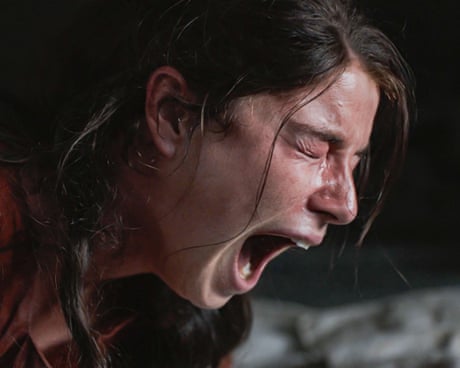
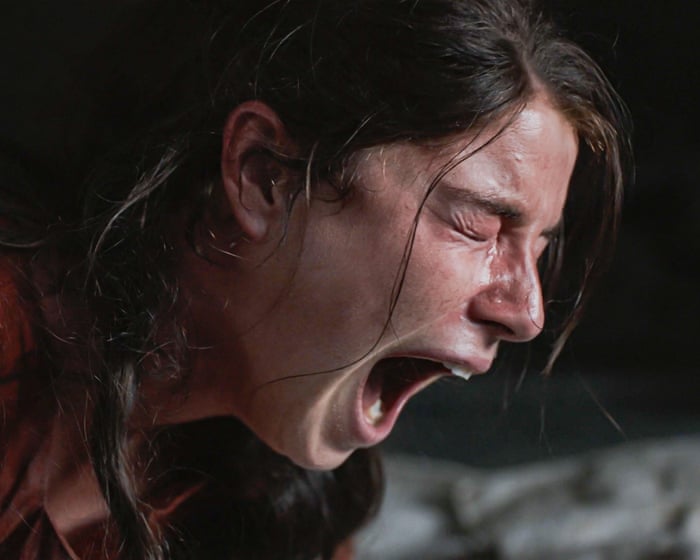
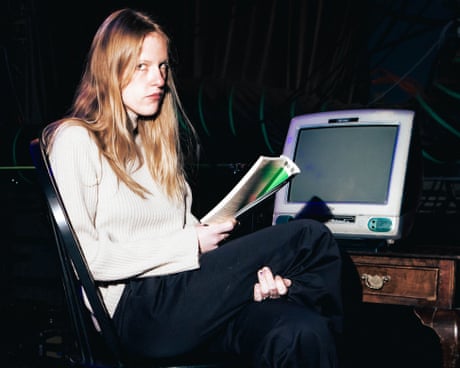
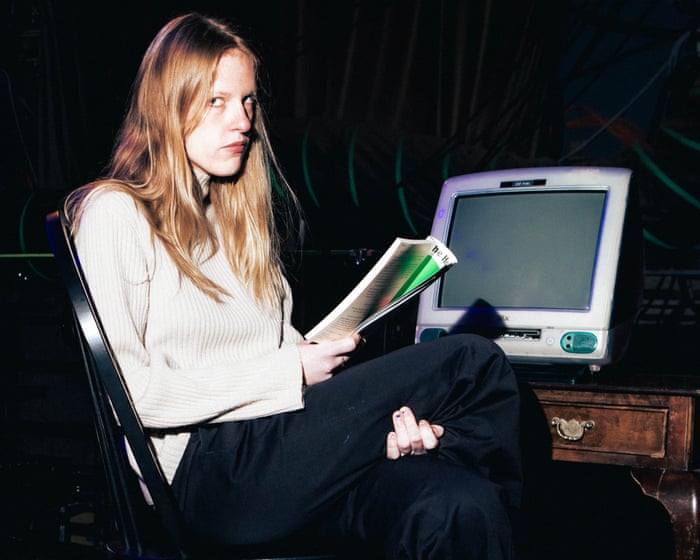
The character “Daryl Hannah” in “Love Story” is not even a remotely accurate representation of my life or my conduct — and these kinds of lies don’t go away.
Hezbollah supporters gathering in the southern suburb of Beirut, Lebanon, on Sunday to mourn the death of Iran’s supreme leader, Ayatollah Ali Khamenei.
The battle for AI supremacy heats up as China deploys tactics to challenge US technology leadership and reshape global artificial intelligence standards.
Federal appeals court delivers legal victory for Trump administration's immigration enforcement in Chicago, lifting restrictions on Operation Midway Blitz.
Two men whose wives did not return from a hike in Utah's south-central desert arrived at the trailhead Wednesday to find both women dead and a car missing, spurring a multi-state search that led investigators to a third body before they arrested a suspect Thursday in Colorado.
The Iranian war has also led to a sharp increase in the amount of crude stored on tankers at sea, as this chart from RBC Capital Market shows.
RBC Capital Markets explain:
This week’s Strait of Hormuz closure has driven a scramble for alternate supplies and supported the dramatic surge in tanker rates, Brent-Dubai EFS spreads, and oil-on-water in the region.
Asian markets are some of the most exposed to the ongoing disruption, with the lion’s share of both crude and product cargoes in the Strait historically heading to APAC (though Europe also relies on the Middle East for major portions of its jet and diesel imports).
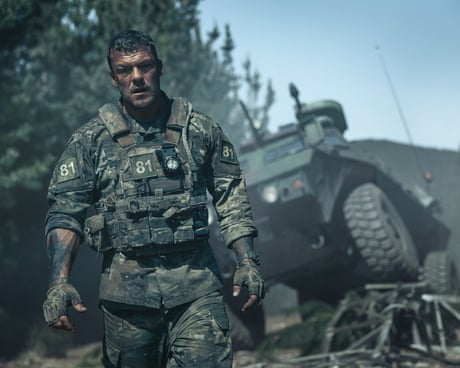
Reacher’s Alan Ritchson takes on alien robots in an action thriller that benefits from some better-than-usual streaming special effects
You’d be forgiven for skipping past Netflix’s gory, militaristic action thriller War Machine at this particular moment. There is, after all, an actual war raging on (is there ever a good time, one could argue?) but those behind the film would likely use its sci-fi bent as a differentiation defense. The war being raged here is not between the US and a foreign earthly entity but rather one from somewhere above, our umpteenth soldiers v aliens matchup. It’s a clear “if you like” column filler for fans of Predator, Edge of Tomorrow or, if they exist, Battle: Los Angeles, yet unlike the many films it’s clearly inspired by, the extraterrestrials here are designed to resemble machines that could have originated from another country rather than another planet, robotic whirring over tentacle slithering.
It gives the film a slightly generic sheen, like a cheaper Transformers spin-off, but it’s also thankfully devoid of the dreaded Netflix murk, that flattening filter that reduces most colours to grey, the film an acquisition from Lionsgate. Set in Colorado but shot in Australia from native writer-director Patrick Hughes, and granted a theatrical release there last month, it makes for a slicker-than-usual streaming premiere, an easy, drink-your-way-through-it Friday night option for those who wish to remain entirely unchallenged.
The city was portrayed as an aspirational place to live, but now those who moved there are realising the precarity that comes with being an economic migrant
To be fooled by a mirage, you needn’t be lost in the desert. Sometimes, the illusion is strongest just when you thought you were safely home, posting from the pool about your teenage daughter’s spa party and your own glittering life in a city where “the possibilities are endless”, as they tend to be for billionaires’ daughters living in tax havens. Only then does the fantasy explode in a puff of intercepted missile smoke, leaving just another woman in her pyjamas telling Instagram (as Petra Ecclestone did at the weekend) that she moved to Dubai “to feel safe” and war was never mentioned in the small print.
Who could have guessed that living a few hundred miles as the drone flies from Tehran might have risks? Certainly not the anonymous hedge funder who fumed to the Financial Times that “the trade was not that you were getting exposed to geopolitics”.
More athletes than ever, new nations, old favourites and breakout stars: here are all your questions about the Milano Cortina Paralympics answered
This is the 14th edition of the Winter Paralympics, to be held on the 50th anniversary of its first. It will be bigger than ever before, with more than 600 athletes from 56 countries expected to take part. El Salvador, Haiti, Montenegro, North Macedonia and Portugal will compete for the first time. There will be 79 different medal events in six different sports, with mixed doubles in wheelchair curling a new addition since Beijing 2022. The president of the International Paralympic Committee, Andrew Parsons, said the Games would deliver “world-class sport [that is] highly competitive. Sport that will surprise you. And most importantly, sport that will have a life-changing impact on everyone who witnesses it.”
By forefronting Jessie Buckley’s Agnes at the expense of her megastar husband, this female-directed feminist fest gives voice to the anguished howls of disenfranchised women everywhere
On paper, it already sounds the most Oscary film ever. A movie about a visionary man whose genius made him one of the greatest figures in literature. William Shakespeare is played by Paul Mescal, an actor who leaves no demographic unravished by his outrageous levels of magnetism. And yet Hamnet is a film that sidelines both of these men to supporting roles. The film is about Shakespeare’s wife, Anne Hathaway, long viewed as a dumpy, illiterate woman unworthy of attention – abandoned by Shakespeare in Stratford-upon-Avon when he swanned off to London.
Anne is referred to in Hamnet as Agnes, as she was also known, and played by Jessie Buckley, the Irish actor who could take on the role of a lamp-post and make you feel its pain. We meet Agnes curled asleep in the roots an ancient tree. She may be illiterate, but she is gifted herbalist who makes medicines from plants and a keeps a falcon. She is her own woman – fierce, intelligent, more than match for the man she calls “the Latin tutor”. Shakespeare’s mother warns him that his bride-to-be is a forest witch.
She co-wrote Gracie Abrams’ hit album then struck out solo, winning a fervent cult for her funny, wordy songs. As her tour hits the UK, she explains why imperfection is so important in pop
Backstage at the Berlin venue Huxleys Neue Welt, Audrey Hobert is showing me around her dressing room. On the 27-year-old pop star’s second time outside the US, the novelty of having local snacks on the rider hasn’t dimmed, although her enthusiasm for chocolate thins can’t distract from what’s going on across the room. A comically overlong beige trenchcoat hangs on a rail, the excess length puddling on the floor. Two sets of joke-shop Groucho Marx glasses sit on the dressing table, the original black brows and moustache replaced with orange fluff to blend with Hobert’s vivid strawberry blond. “Those glasses are not flattering,” says Hobert. Having matching hair under the giant plastic nose, she says, “makes it more flattering”.
In a few hours, Hobert will start her set standing on a ladder that is concealed by the coat, wearing the glasses, miming on a prop banjo and singing a peppy song about charming strangers called I Like to Touch People. After it ends, the lights dim, Hobert climbs down and swaps to a regular-sized trenchcoat. Despite the changeover being entirely visible, the lights come back up as if to say “Hey presto!” – the trompe l’oeil of high-budget pop stagecraft remade as slapstick.
What are Polymarket and Kalshi? What are the odds on US-style exchanges taking off in the UK? Here’s the lowdown
As ballistic missiles and kamikaze drones rained down on the Middle East, one of the world’s most talked-about businesses was inviting wagers on whether nuclear Armageddon might be imminent.
Polymarket is a prediction market, a relatively new breed of betting company that has burst on to the scene, particularly in the US, often seducing customers with little previous interest in gambling.
A decaying gothic mansion tells the story of the family who once lived there, in this pitch-perfect debut of disappearances, betrayal and despair
Angela Tomaski’s debut novel is a delicious comfort read about loyalty and despair, and a gentle questioning of the nature of progress. Crumbling stately home Thornwalk is on the verge of becoming a luxury hotel. The ancestral owners are all dead – with the exception of a pair of rapacious cousins, naturally – and the only person left to mourn is the loyal valet (and maybe more?) of the old master.
Maximus, last guardian of the house, guides the reader on a final tour through Thornwalk, and the lost lives, loves and brass buttons of the titular Gilberts: Lydia, the eldest girl, desperate to fall in love; Hugo, the stubborn eldest son; “poor little Annabel”, dreaming of writing; quiet runaway Jeremy; and unstable actor Rosalind. He takes us, room by room, trinket by trinket, stain by stain (blackcurrant to blood) through 100 years of family life before it is all lost for ever.
 Connexion