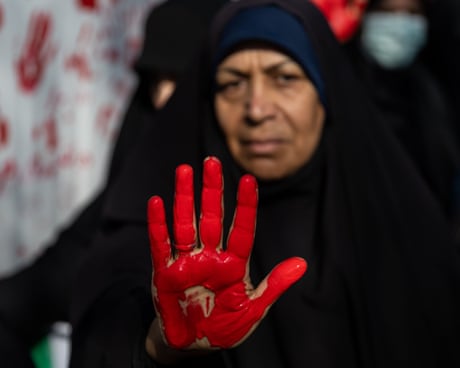
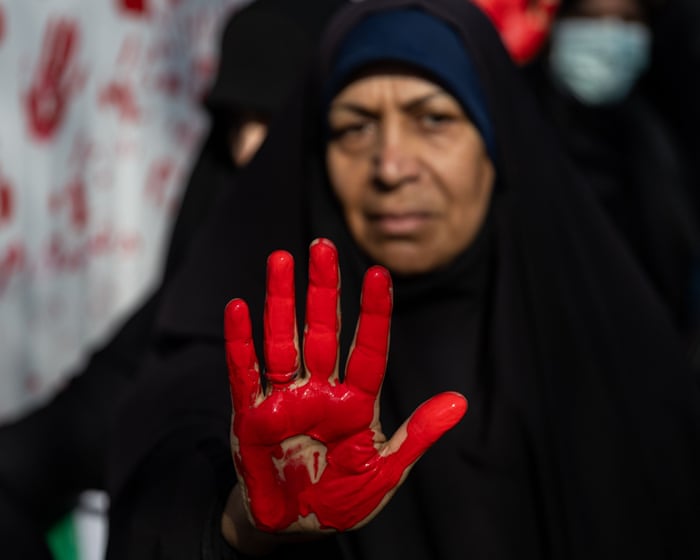
US president says war is ‘very complete’ and threatens worse strikes if passage of oil via strait of Hormuz is blocked; IRGC says it will not let out ‘one litre of oil’
Iran’s foreign minister has said his country is prepared to continue attacks for as long as necessary and has ruled out talks with the US after Donald Trump said the war with Iran would be over “very soon”.
Abbas Araghchi also told US broadcaster PBS News on Tuesday that Iran was prepared to continue missile attacks and that negotiations with the US were no longer on the agenda, AFP reports.
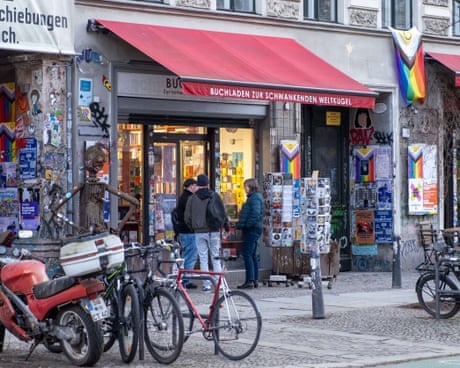
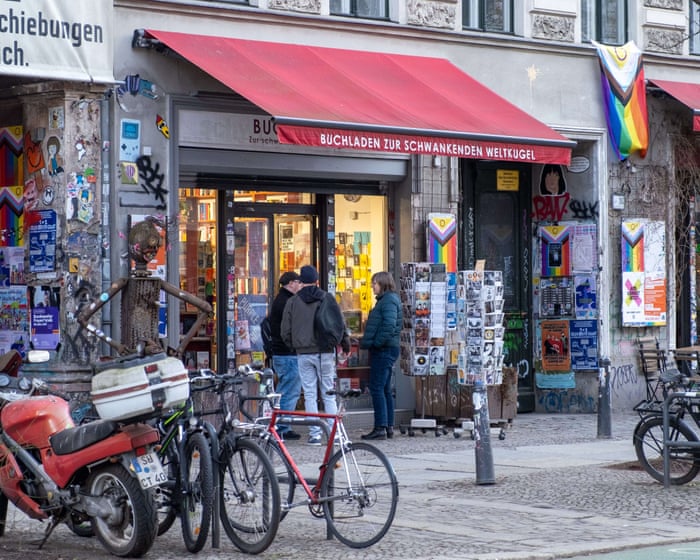
First he came for Berlin’s film festival. Now it’s books. Wolfram Weimer seems to be on a mission to curb progressive thinking
There is a particular kind of danger that smells like paper and dust. You find it in independent bookshops. Those with uneven wooden floors and handwritten staff recommendations, where someone has shelved Audre Lorde next to Karl Marx and a debut novelist from Neukölln. Places where no algorithm is trying to guess who you are before you have the chance to change your mind.
I walk in for a novel and walk out with a theory of the state, a pamphlet on housing struggles, a Palestinian poet I had never heard of. No “for you” page in an online store would have suggested it. The bookseller did. Independent bookshops are dangerous because they interrupt us. They do not optimise our curiosity. They derail it. Is that the reason why Germany’s culture commissioner, Wolfram Weimer, is now consulting the domestic intelligence agency before approving funds to bookshops?
Fatma Aydemir is a Berlin-based author, novelist, playwright and a Guardian Europe columnist
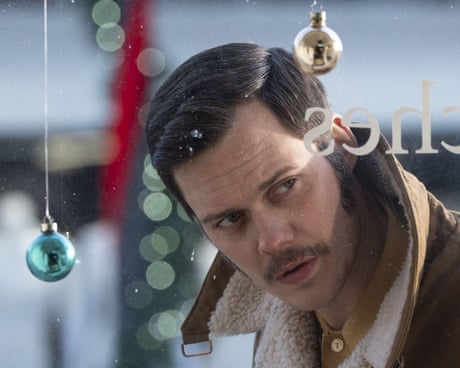
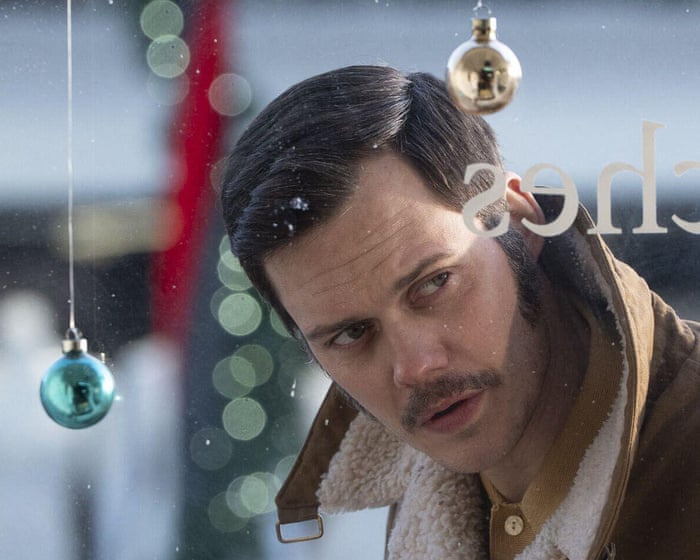
The Milk and Good Will Hunting director’s new film is about ‘a little guy’ taking violent revenge against the system. He talks about the parallels between Dead Man’s Wire and the homicide case currently dividing Gen Z and boomers
In February 1977, a middle-aged Indianapolis businessman named Tony Kiritsis took hostage an employee at his local mortgage brokers, who he was convinced had cheated him out of the profits of a piece of real estate. The system was weighted against the little guy, Kiritsis decided, and he was going to be the one to make it pay. He attached one end of a wire to the trigger of a shotgun, the other to the hostage’s head, and demanded $5m and an admission of guilt from the brokers’ boss. The final moments of the standoff, which lasted 63 hours, were broadcast live on TV.
It has already been the subject of a 2018 documentary (Dead Man’s Line) and a 2022 thriller podcast (American Hostage) which starred Jon Hamm as the DJ who broadcast an interview with Kiritsis live from the crime scene. Now Gus Van Sant, whose 40-year-plus career incorporates queer landmarks (My Own Private Idaho, Milk), mainstream crowdpleasers (Good Will Hunting) and arthouse award-winners (the Columbine-inspired Elephant), is dramatising the events in Dead Man’s Wire. This wry thriller cuts between the volatile captor (Bill Skarsgård) and the media circus swirling around him, which includes the DJ, played here by Colman Domingo, and a female TV journalist (Myha’la) fed up with being fobbed off. Al Pacino has a cameo as the boss of the mortgage company, sunning himself in Malibu and unconvinced he has anything much to apologise for.
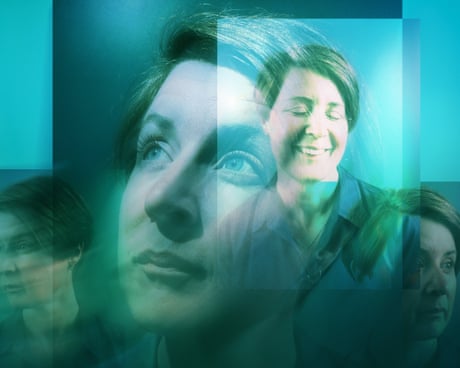
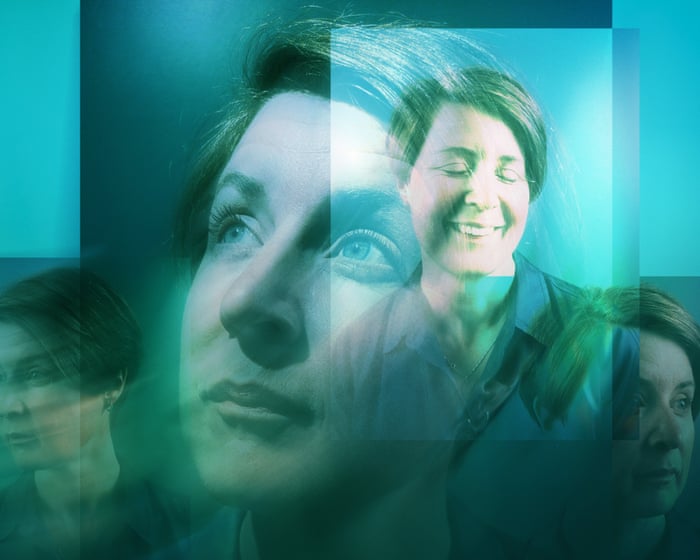
Psychologist Leanne ten Brinke has spent decades studying toxic personality traits. What are the red flags to look out for among workmates, politicians and potential partners?
Coming face to face with a probable psychopath was enough to make Dr Leanne ten Brinke rethink her career choices. Early in her 20s, while studying forensic psychology in Halifax, in the Canadian province of Nova Scotia, Ten Brinke was volunteering at a parole office, which would hold weekly group meetings for released sex offenders. “Most of the men showed contrition,” says Ten Brinke. “They really seemed to recognise the damage that they had done.” Except for one. The treatment programme seemed “like a game to him”, she says. One week, in a discussion about the impact their crimes had on victims, this rapist stared at Ten Brinke and, smiling slightly, started to say how much his victim looked like her, “and how I was ‘his type’. Clearly he was trying to scare me, and he did.”
It put her off a career working with convicted criminals, but she remained fascinated with “dark personalities” – psychopathy, mainly, but also narcissism, machiavellianism (manipulating and exploiting others) and sadism. From politics to business to the media, it wasn’t as if there was a shortage of people to study. There were selfish, callous, impulsive and manipulative people everywhere, often presenting as gregarious and charming. “It started to occur to me that these traits aren’t just confined to an underworld. These traits appear in all aspects of our lives,” she says.
When Trump granted white South Africans refugee status, he was echoing a falsehood about Black people taking revenge for years of brutality. But no one flourishes in a repressive police state
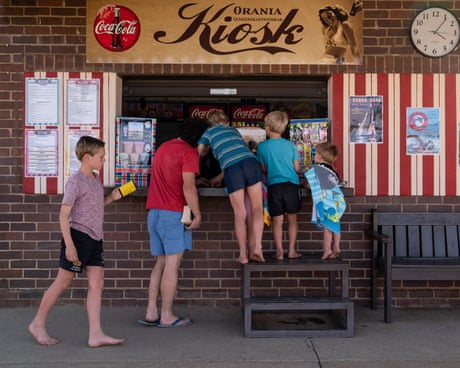
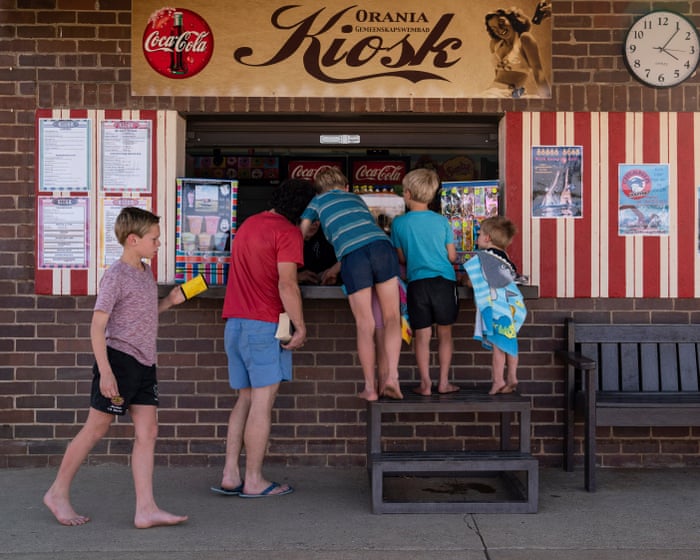
There’s a little town in the scrub in South Africa – a full day’s drive from the country’s big cities – that has become perhaps the most scrutinised place on earth, given its size. It is 9 sq km (3.5 sq miles) of suburban-style houses harbouring about 3,000 people, with a main drag, a municipal swimming pool, one gas station and some pecan farms. Nothing of consequence ever really happens there, a fact the townspeople take as a point of pride. And yet over the past three decades, dozens of English-language news outlets have made a pilgrimage to it, often more than once. The New York Times alone has run four dedicated profiles. The essays have kept pace year after year, quoting the same people over and over, even as nothing of note occurred. There’s been no war, no disaster.
That changelessness is the point. No people of colour are allowed to live in the town, called Orania. The name is a nod to the river that runs nearby – and to the Orange Free State, the apartheid-era designation for the province in which it lies. Orania’s founders established it in 1991, the year after South Africa’s best-known Black liberation leader (and future president), Nelson Mandela, was freed following 27 years in prison.
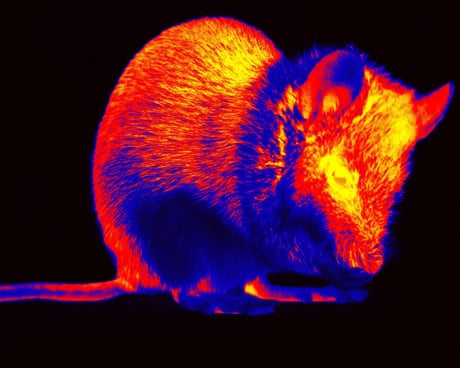
Scientists hope results analysed after the mice watched video footage will help them understand their perceptions
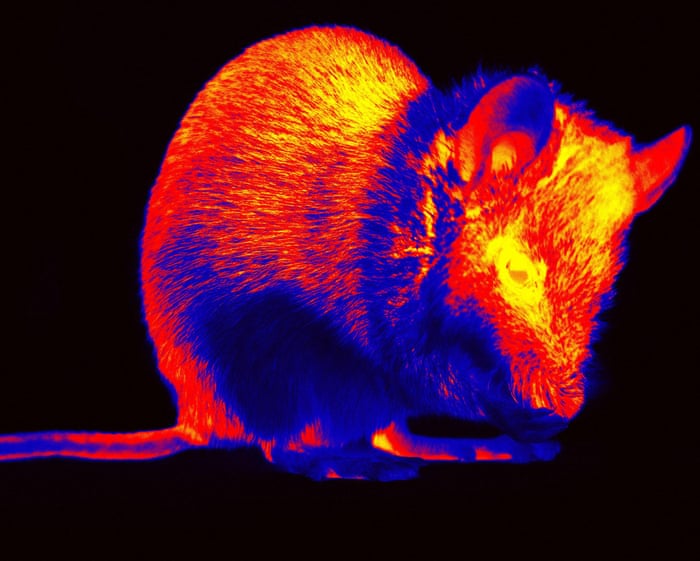
Scientists have reconstructed short movies from the brain activity of mice that watched videos for a project that aspires to lift the veil on how animals perceive the world.
The brief movie clips are grainy and pixellated, but provide a glimpse of how mice processed footage that featured people taking part in various sports from gymnastics to horse riding and wrestling.
The Jets drafted Vera-Tucker in the first round in 2021. He played 16 games in that first season but suffered season-ending injuries in 2022, 2023 and 2025.
The Warriors failed to replicate the effort from the opening two games of their road trip and will return home with a sour taste in their mouths after a bad loss to the Jazz.
Wives and girlfriends clung on for dear life as their partners carried them up and down a hillside for one of the country's quirkiest annual sports events.
Yamaha Motor Corp. USA is packing up its Orange County headquarters — trading Cypress, California for Kennesaw, Georgia in a sweeping corporate shift that will impact about 250 workers.
A solar field in Riesel, Texas, in 2023. Solar power is projected to account for just over half of the new power projects that will be added this year.
Iranian state media posted mangled remnants it claims were from the Feb. 28 attack in Minab. An analysis shows they have the markings of a missile made by American manufacturers
 Connexion