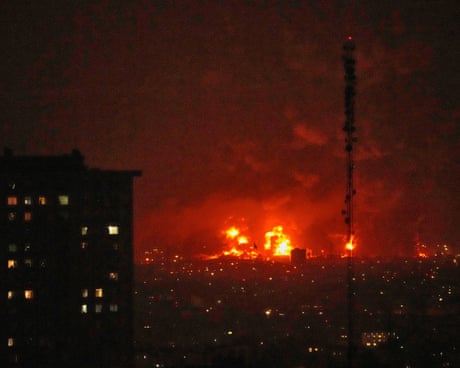
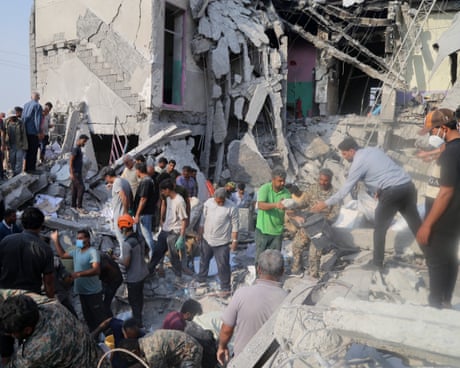
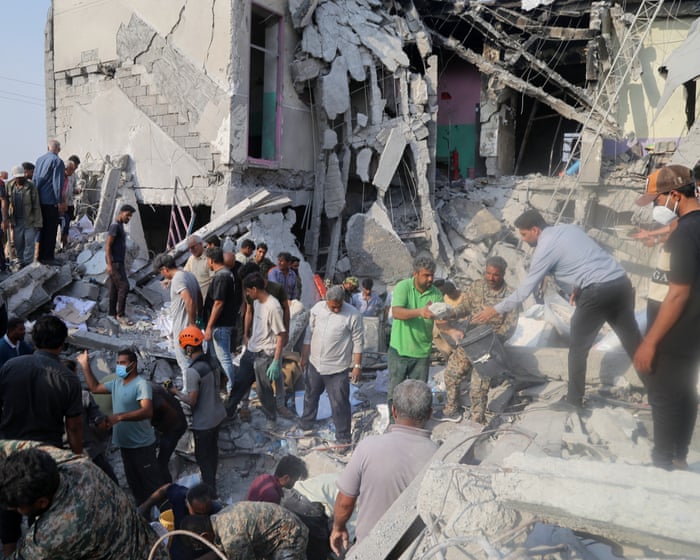
Vice President JD Vance joined the grieving family of a Kentucky man who was the seventh US service member to die in combat during the Iran war as his remains were brought back to the US Monday evening.
Experts argue sensor and satellite data reveal targeted attacks on farming communities by the Rapid Support Forces were intended to prevent villages producing food
There is strong evidence that the Rapid Support Forces (RSF) committed a war crime by depriving the villagers of north Darfur of the means to produce food, legal experts argue in a new analysis published today calling for the Humanitarian Research Lab’s (HRL) revelations to be used in international courts.
The destruction of the villages, farming equipment and infrastructure all provide strong evidence of a “starvation strategy” against a population already struggling with food insecurity because of the war, says Tom Dannenbaum, a professor at Stanford Law School and a leading expert on the use of starvation in war.
This sappy and ill-conceived tale about a father, his autistic son and a lifesize toy bear suffers from sanctimonious religious messaging and dreadful dialogue
Anyone with autism or close to someone with the condition might feel inclined to be forbearing of this family drama about a father and his autistic son, given its plea for acceptance and love. But yikes – it is so sappy, ill-conceived and bloated with sanctimonious religious messaging, it is a slog to get through. If, however, you feel that watching it is almost an act of charity in itself (apparently some of the proceeds will go toward supporting carers), admire this at least for being one of the few feature films that tries to depict more challenged autistic people who need support (also known by the now-contested label of “low functioning”). Also to its credit, the film opens with a disclaimer that acknowledges that “the autism spectrum is wide and varied” and that “this film reflects the individual experiences of two characters and is not intended to represent every autistic story”.
The main character here is Elijah (played as a child by Reece Turley and then as an adult by Caleb Milby), a young man first met just after a violent meltdown that has ravaged the family’s Christmas decorations. Elijah’s father Ty (John Wells) attempts to comfort the distraught teen, with help from Elijah’s favourite stuffed toy, polar bear Nook. Flashforward seven years, and Elijah is now in some kind of secure hospital, barely distinguishable from a jail, partly because his mother Pam (Layla Cushman), divorced from Ty, just wants to offload him on the state and wash her hands of him while Ty struggles to maintain his career as an architect.
From jazz in Rotterdam and hip-hop in Paris to brass bands on the beach in Blackpool, the Guardian’s music editor chooses the best European festivals that can be reached by rail
Paris has some great festivals, such as Cercle (22-24 May), with dance music stars against the backdrop of planes and rockets in an outdoor aerospace museum, but the most accessible and democratic is Fête de la musique, which began in Paris in 1982 but is now popular across the country. It is a loose event encompassing dozens of free, semi-impromptu outdoor performances all over each host city, including plenty in Lille, which is even cheaper and quicker to get to than Paris on the Eurostar from London.
Both campaigns have been framed differently at different times, with dubious claims of defensive action and a curious reluctance to label it war
Shifting goals, unclear timelines and a flimsy pretext: at times, the US-Israel campaign against Iran carries curious parallels of Vladimir Putin’s invasion of Ukraine.
The comparison is far from exact. In 2022, Putin sent a massive army across Ukraine’s borders in an unprovoked invasion of a democratic state, a campaign that quickly resulted in heavy losses. The United States has so far largely limited its involvement to airstrikes against Iran’s authoritarian regime.
I can’t get enough of cabbage right now, and it’s the perfect wrap for this warmly spiced picadillo filling
I love stuffed vegetables. When I was young, I came across a recipe for stuffed aubergines in an old book of my mother’s and must have cooked it a score of times. Later, in the early 1990s and to the echoes of nouvelle cuisine, Delia Smith showed us how we could work similar magic with peppers and tomatoes. Then the technique went deeply out of fashion, but I stayed loyal, and continued quietly stuffing tomatoes, pumpkins and courgettes, all no doubt influenced by my travels in Mexico. Thoday’s stuffed cabbage is inspired by the most delicious tongue in a tantalisingly light escabeche that I once had at Nicos in Mexico City, and also because I can’t get enough of cabbage at the moment.
Calls for a popular uprising and empty promises of help are reckless in the extreme – and no answer to my country’s plight
Nasrin Parvaz is a women’s rights activist and torture survivor from Iran
I have been watching the news from inside Iran, unable to hold in my sorrow. As an Iranian who was imprisoned and tortured by the regime, I have been pleading with the world’s human rights organisations and media to keep a focus on the country’s plight. But now I see US-Israeli bombs falling on Iran, and some Iranians celebrating this war while innocent people die. My heart is breaking for my country.
Let us be clear: when Donald Trump and Benjamin Netanyahu conspired to launch their war, it was not out of a desire to free the Iranian people from the tyranny of the regime. Netanyahu said on the second day of the war: “This coalition of forces allows us to do what I have yearned to do for 40 years.” He has named this operation “Lion’s Roar”. Meanwhile, Iranian monarchists celebrate the carnage, waving the shah’s version of the country’s flag with its crowned lion and sun.
Nasrin Parvaz is a women’s rights activist and torture survivor from Iran. Her books include A Prison Memoir: One Woman’s Struggle in Iran, and the novel The Secret Letters from X to A
Trump has blamed Iran for the mass killing at Shajareh Tayyebeh primary school but geolocation, videos and satellite imagery indicate otherwise
The bombing of a primary school in Minab on 28 February killed scores of people, most of them seven- to 12-year-old girls. The strike is the worst mass killing of the US and Israel’s war on Iran so far – and has been described by Unesco as a “grave violation” of international law.
On Saturday, the US president, Donald Trump, declared that Iran was responsible for the school bombing. “In my opinion, based on what I’ve seen, that was done by Iran … they’re very inaccurate, as you know, with their munitions. They have no accuracy whatsoever. It was done by Iran.”
About 10,000 writers including Kazuo Ishiguro, Philippa Gregory and Richard Osman join copyright campaign
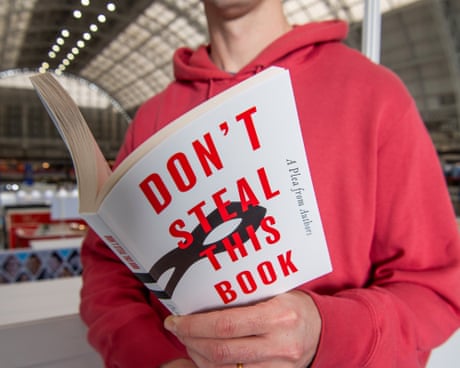
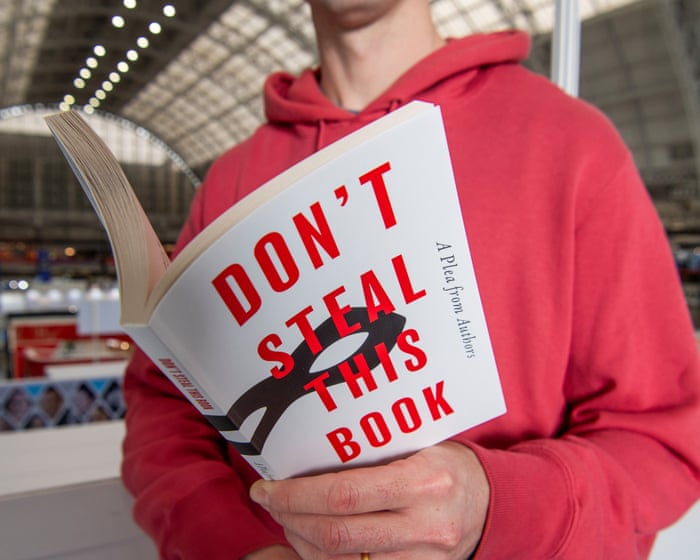
Thousands of authors including Kazuo Ishiguro, Philippa Gregory and Richard Osman have published an “empty” book to protest against AI firms using their work without permission.
About 10,000 writers have contributed to Don’t Steal This Book, in which the only content is a list of their names. Copies of the work are being distributed to attenders at the London book fair on Tuesday, a week before the UK government is due to issue an assessment on the economic cost of proposed changes in copyright law.
To some it was a reckless experiment but scientists hope the dispersal of 65,000 litres of sodium hydroxide into the Gulf of Maine could ease the climate crisis
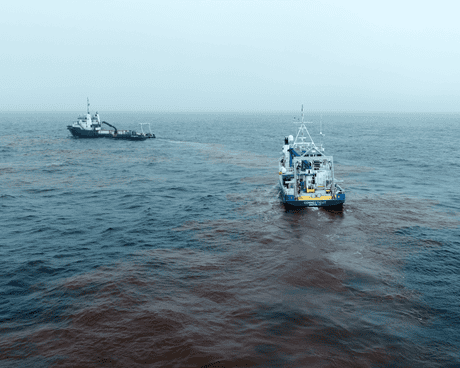
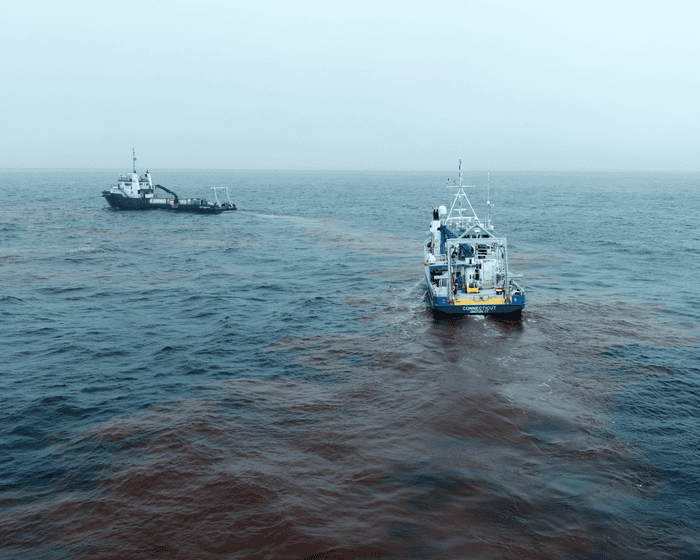
For four days last August, a thick slick of maroon bruised the waters of the Gulf of Maine. The scene, not unlike a toxic red tide, was the result of 65,000 litres of an alkaline chemical, tagged with a red dye, that had been deliberately pumped by scientists into the ocean.
Though it sounds perverse, the event was part of a scientific experiment that could advance a technology to combat both global heating and ocean acidification. Ocean alkalinity enhancement (OAE), as the approach is called, acts like natural weathering, but on human – rather than geological – timescales.
The unidentified rider is wanted by authorities after fleeing officers from the Pasadena Police Department and tearing down the freeway in a brazen getaway--blatantly disregarding life, limb and law.
Notably, the lawmakers raising concerns previously voted to approve the legislation in September that re-authorized the cap-and-invest program, which directed regulators to update the rules--the very process CARB is now carrying out.
Among the many justifications Donald Trump has presented for the US and Israel attacking Iran has been the supposedly imminent threat posed by its nuclear weapons programme. But how close was the country really to developing an atomic weapon? Ian Sample hears from Kelsey Davenport, the director of non-proliferation policy at the Arms Control Association. She sets out why many experts don’t believe the country even had a structured nuclear weapons programme, and explains what she thinks the impact of the war could be on nuclear proliferation around the world.
As speculation mounts that Kim Jong-un and Trump could meet this month, analysts say Pyongyang will continue to see nuclear weapons as a matter of survival
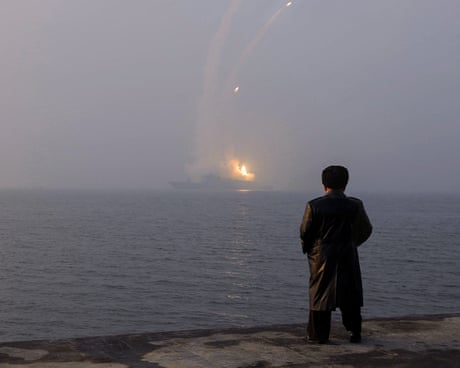
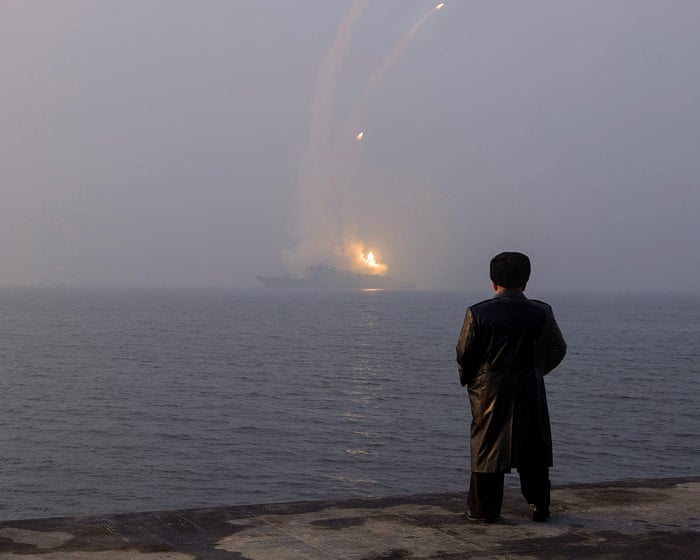
North Korea’s launch last week of a missile from a naval destroyer elicited an uncharacteristically prosaic analysis from the country’s leader, Kim Jong-un. The launch was proof, he said, that arming ships with nuclear weapons was “making satisfactory progress”.
But the test, and Kim’s mildly upbeat appraisal, were designed to reverberate well beyond the deck of the 5,000-tonne destroyer-class vessel the Choe Hyon – the biggest warship in the North Korean fleet.
Lady Gaga and David Gest are among those who get ferocious dressings-down in this brutally candid memoir
Liza Minnelli’s father, the film director Vincente Minnelli, used to joke that his daughter’s career in show business was preordained. She was certainly familiar with the dark side of the industry from a young age through her mother Judy Garland, who was on the MGM payroll aged 13, before shooting to fame as Dorothy in The Wizard of Oz. Garland was famously depressive and addicted to prescription drugs and alcohol. When her daughter was six, she shut herself in the bathroom and made the first of many suicide attempts. Minnelli soon learned to monitor her mother and hide her pill bottles when she saw darkness descending. By 13, she was “my mother’s caretaker – a nurse, a doctor, pharmacologist and psychiatrist rolled into one … Just as the MGM studio system robbed Mama of her childhood, she robbed me of mine.”
In her memoir, Minnelli – who turns 80 this month – recounts how she broke free from her dysfunctional family at 16 and moved to New York to make it as a singer and actor. Little surprise, given her parentage, that her ascent was swift. “I was the original nepo baby,” she observes, gleefully. But if show business was in her DNA, so was addiction. In her 20s she became hooked on Valium, diet pills, cocaine and alcohol. Later, as her career faltered and her private life imploded, her sister Lorna staged an intervention and got her into the first of many rehab programmes.
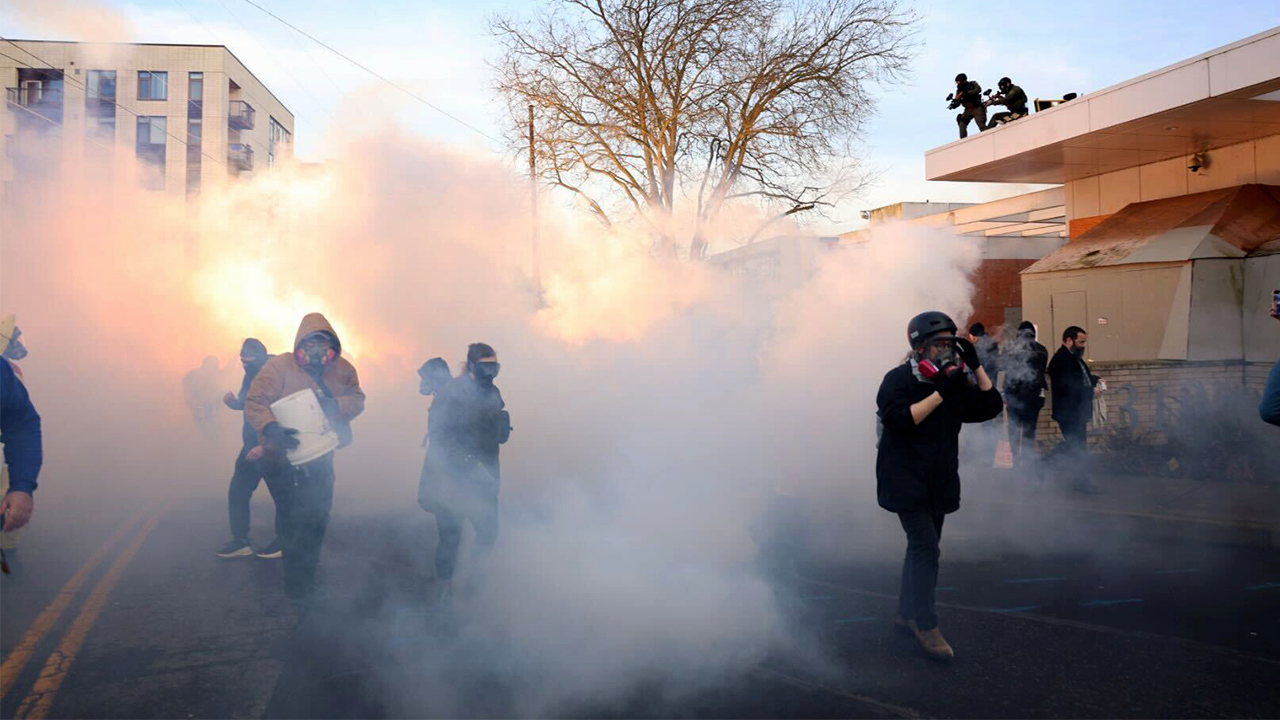
A federal judge restricted federal agents from using chemical munitions at protests at the ICE building in Portland unless there is an imminent threat.
As the Pentagon continues churning out videos of bombs wreaking havoc in Iran, an important question arises: how high a price are Americans willing to pay for this war?
“You can lie about many things in American life, but one thing you can’t lie about is gas prices,” Late Night host Seth Meyers said. “Everyone sees it.”
 Connexion