 Connexion
Nonesuch by Francis Spufford review – a dazzling wartime fantasy

Dark magic, fascism and romance in blitz-stricken London: this exuberant novel is a popcorny delight
When I teach creative writing, I often find myself insisting upon the essential importance of fun: that while the process of writing can and should be challenging, there’s no benefit to be had in martyrdom, and actually a level of relish is neither an indulgence or a distraction, but pretty compelling evidence of an author having found her proper form and subject. It’s what keeps you coming back. If you aren’t bent gigglingly over your manuscript, like a stock photo model alone with her salad, then what’s the point of any of it? There’s a stable of classics I draw on to evidence this claim, great novels where a big part of the appeal is feeling as though you’ve stumbled into a very interesting person’s exact idea of a very good time: Woolf’s Orlando, Nabokov’s Pnin, Poor Things by Alasdair Gray, The Pisces by Melissa Broder. A lot of Austen, but maybe most of all Emma. And from now on, I’ll be adding Francis Spufford’s Nonesuch to the list.
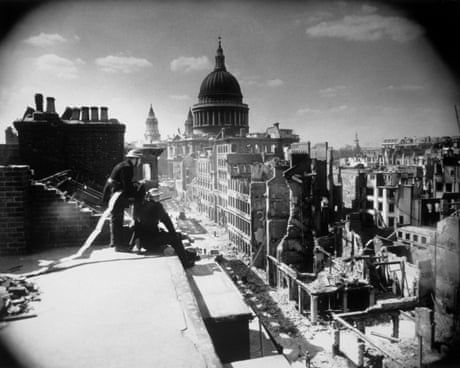
His fourth work of fiction in a genre-spanning oeuvre, Nonesuch is a historical fantasy set during the second world war, every paragraph of which is packed with authorial zest. The novel opens in London, August 1939: war has been declared, but hasn’t yet made its reality felt in the city’s streets, and Iris Hawkins, an ambitious office clerk, makes her way through the sun-baked West End in a slinky dress. One half of a disastrous date later, she’s being whisked away to a DIY surrealist film club in bohemian Bloomsbury – not her scene at all – and two extremely fateful introductions: the first to Geoffrey Hale, a sweetly apprehensive BBC television engineer; and the second to the object of Geoffrey’s guileless infatuation, one Lady Lalage Cunningham, an icy aristocratic beauty with amazing hair and worrisome political sympathies. Cue chaos. Nonesuch follows the bolshy Iris from her seedy summer’s night through a regrettable Hampstead hook-up, and, eventually, neck-deep into a time-travelling plot by “magical fascist lunatics” to assassinate Winston Churchill. The novel is a pleasing pasticcio of romance, occultism, non-Euclidean geometry and airborne adventure across the blitz-stricken rooftops of London. It is difficult to imagine it would hold together quite so well in other hands than Spufford’s.
Continue reading...
© Photograph: Fox Photos/Getty Images
© Photograph: Fox Photos/Getty Images
© Photograph: Fox Photos/Getty Images
