Connexion
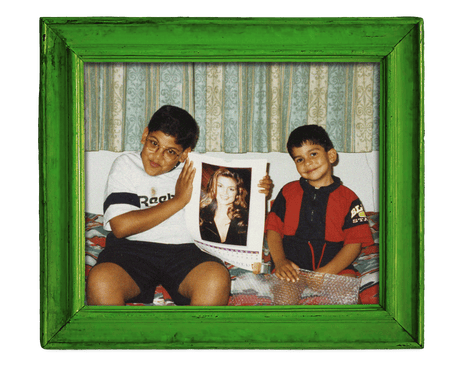
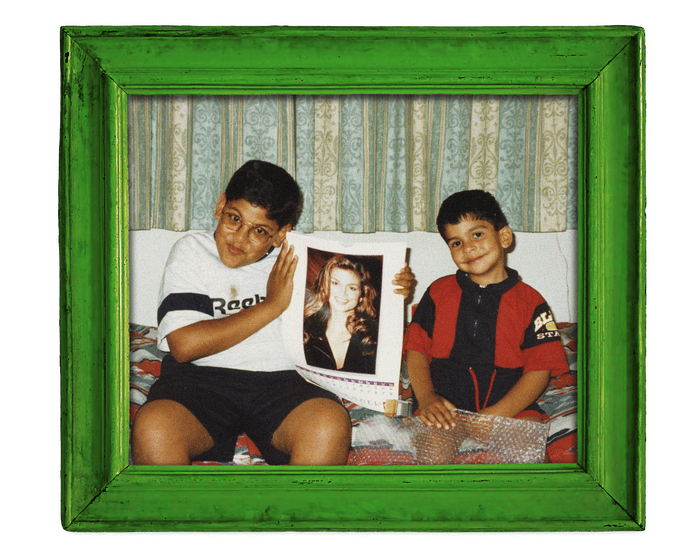
My favourite family photo: ‘It’s a snapshot of our goofy bond’

Since my mum died, family photos can be painful to look at. But this one of me and my brother is a reminder we still have each other
My only sibling is seven years older than me. That means he has forever been seven years ahead of me in life, sitting somewhere between a willing co-conspirator and knowledgable surrogate parent – protective but fun, and always aware of the secrets of existence I am yet to discover. It was his aside that spoiled the secret identity of Santa Claus; he who laughingly revealed the mechanics of sex; he who gave me my first sip of beer. Yet, when he found out I was sneaking cigarettes from my dad’s stale dinner party supply, he chastised me before either of my parents could, and when my mum was diagnosed with cancer and I was just 15, he was already a 22-year-old medical student, able to speak in a doctor’s shorthand and advocate for her care while my father and I floundered.
Ever since my mum died in 2013, family photos have been a source of bittersweet pain. In the pictures where she is present, I’m reminded of her wide smile, appetite for fun and her loving presence. In the images without her, all I see is her absence – the mum-shaped silhouette where she should be, either because she was outside the frame or because she was no longer alive.
Continue reading...
© Composite: Guardian Design; Tomekbudujedomek/Getty Images; handout
© Composite: Guardian Design; Tomekbudujedomek/Getty Images; handout
© Composite: Guardian Design; Tomekbudujedomek/Getty Images; handout