Editorial: If the PM is to rebound from this disastrous result and fend off Zack Polanski from Labour's left flank, he must drop every distraction and ‘deliver, deliver, deliver’
Hannah Spencer’s win was more than protest. It signalled that Labour’s moral language and coalition are up for grabs in its safest terrain
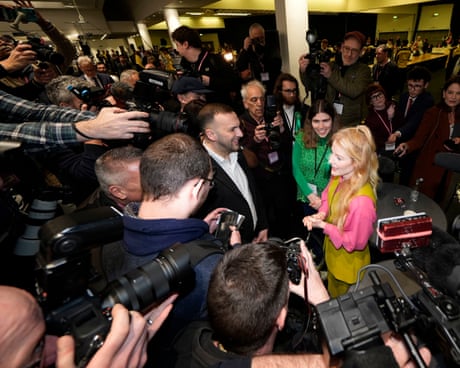
The Greens have every reason to celebrate their victory in the Gorton and Denton byelection. From a standing start in a Manchester constituency, Zack Polanski’s team tripled his party’s vote to capture a seat that had effectively voted Labour in every election but one since 1906 – the year Labour was born. Labour coming third behind Reform UK is not routine midterm turbulence. A 20-point collapse in the party’s vote is extraordinary.
Sir Keir Starmer was abandoned by a coalition of young progressives, working-class former Labour voters and Muslims. May’s Scottish and Welsh parliamentary as well as English council elections will paint the map in many colours. Not a lot of it will be red if this result is anything to go by. Labour’s vaunted ground game can’t save it if the ground has shifted. The party can’t turn out voters who’ve already tuned out.
Do you have an opinion on the issues raised in this article? If you would like to submit a response of up to 300 words by email to be considered for publication in our letters section, please click here.
The president’s cuts have defunded and alienated thousands of American scientists. Europe can benefit, if it makes the right offer
Donald Trump has spent much of his second term at war with science and scientists. He is cutting staff at institutions such as the Environmental Protection Agency (EPA) by a third, and has cancelled or frozen up to 8,000 federal research grants. This hasn’t just hurt individual research programmes, it has damaged America’s credibility as a reliable partner in the scientific community. It is not surprising that many researchers – one poll last year by the journal Nature gave the number of 75% – say they are considering leaving the US entirely.
However, it is one thing to express dissatisfaction, and quite another to up sticks and leave. If the UK and EU want to attract elite scientific talent, their approach must be twofold: appealing directly to scientists concerned with political interference in their research, and offering stable, ringfenced money.
Do you have an opinion on the issues raised in this article? If you would like to submit a response of up to 300 words by email to be considered for publication in our letters section, please click here.
The imminent release of child molester David Allen Funston is a disgrace — for which Gavin Newsom and his party are responsible. Democratic presidential primary voters should take note.
Editorial: Beset by backlogs and sclerotic bureaucracy, David Lammy must employ extraordinary measures to fix an ‘inhumane’ system that is so broken it is no longer fit for purpose
The state budget director, Blake Washington, just made a mockery of Mayor Zohran Mamdani's claims to face a fiscal crisis by pointing out that New York City's social-service outlays have exploded 50% since the pandemic.
If your subway ride wasn’t annoying enough today — between delays, packed cars, “Showtime!” dancers and homeless people who plague the system — get ready for ads blaring at you on the platform while you wait for your train.
Democratic Socialists aim to tax-to-the-max for ideological reasons; unions are motivated by greed, and as it turns out, labor’s been a driving force behind the “tax the rich” movement.
Gavin Newsom's widely-mocked high-speed rail isn't the only "train to nowhere" in California. In fact, the Golden State is a virtual graveyard of near-empty "ghost" trains and buses.
The US president fights 1970s battles in a financialised age. America faces not a payments crisis but a slow erosion of industrial and technological power
When the US supreme court voted 6-3 last Friday to strike down Donald Trump’s tariffs, he was incandescent. Two judges he had elevated – Neil Gorsuch and Amy Coney Barrett – were suddenly recast as traitors to the cause. Both were, he insinuated, under the sway of foreign interests. The court ruled that the tariffs overstepped the powers the US Congress granted under the 1977 International Emergency Economic Powers Act. Mr Trump responded by reaching for a 1974 trade law, invoking “international payments problems” to slap on a 10% tariff for 150 days.
Mr Trump was moulded by the 1970s. His political DNA was formed in that era’s crises and he governs as if America were still in the Nixon era of shock politics. In some ways there are parallels. The political mobilisation around economic insecurity echoes that period, as does distrust in elite authority. This explains why many populist politicians on the right reach for the 1970s, which fits the mood of decline and rivalry and offers a narrative of “restoring strength”. Internationally, Mr Trump also sees the world through the 1970s lens of industrial rivalry and trade grievance. But the world today is in a far more financialised and interdependent state.
California Democrats failed to agree on a candidate for governor at their party conference — and it’s no wonder why: There is no clear leader in the bunch.
 Connexion