Part 2 of our Understanding the SpaceX-Era Economy series examines how Starlink’s explosive growth is reshaping connectivity in an increasingly connected world, pushing satellite broadband from a niche service into the mainstream and redefining expectations for ubiquitous access.
Welcome, Jared Isaacman. We who love NASA, or at least the idea of NASA, wish you the very best in taking leadership of the great American space agency. You seem to be an agent for change and NASA sorely needs that. Its human spaceflight program, which garners most of its public attention and financial support, […]
HOUSTON, TX – December 3, 2025 – For more than three decades, Celestis, Inc. has transformed remembrance into exploration, sending the names, ashes, and DNA of pioneers and visionaries into […]
This episode of the Physics World Weekly podcast features Tim Hsieh of Canada’s Perimeter Institute for Theoretical Physics. We explore some of today’s hottest topics in quantum science and technology – including topological phases of matter; quantum error correction and quantum simulation.
Our conversation begins with an exploration of the quirky properties quantum matter and how these can be exploited to create quantum technologies. We look at the challenges that must be overcome to create large-scale quantum computers; and Hsieh reveals which problem he would solve first if he had access to a powerful quantum processor.
This interview was recorded earlier this autumn when I had the pleasure of visiting the Perimeter Institute and speaking to four physicists about their research. This is the third of those conversations to appear on the podcast.
From step count to hydration, there are several popular health goals we’ve been told to achieve. Read more about these 5 health goals to find out where exactly they came from.
In this episode, former NASA commercial space division chief Phil McAlister sits down with host David Ariosto for a wide-ranging conversation about the future of human spaceflight, NASA’s internal culture, and the explosive growth of the commercial space sector.
Roscosmos has replaced a cosmonaut assigned to the next Crew Dragon mission to the International Space Station for reasons neither it nor NASA will disclose.
U.S. Space Command’s push for “dynamic space operations” — the ability to maneuver in orbit without worrying about running dry — demands logistics the military has never had.
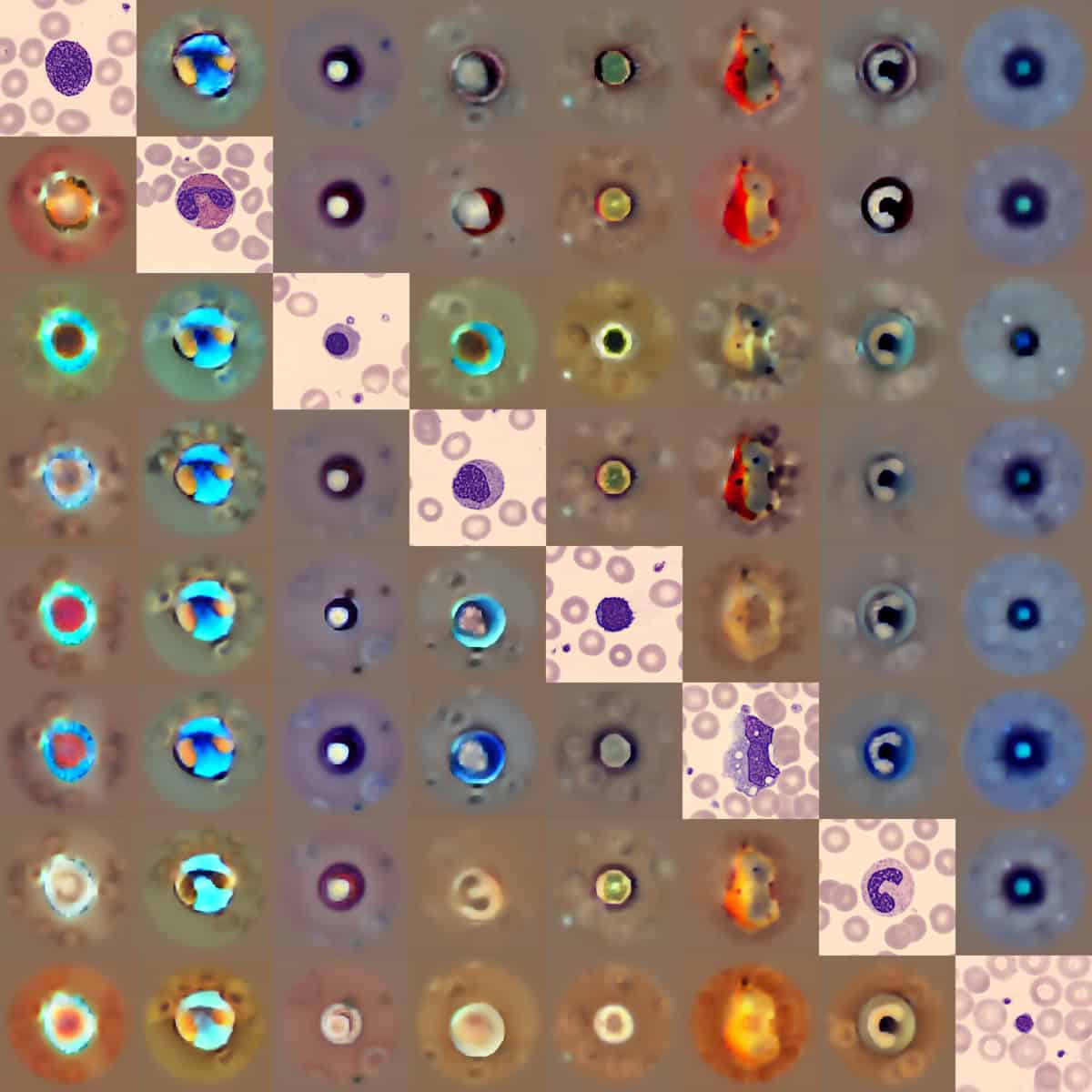
Generative classification The CytoDiffusion classifier accurately identifies a wide range of blood cell appearances and detects unusual or rare blood cells that may indicate disease. The diagonal grid elements display original images of each cell type, while the off-diagonal elements show heat maps that provide insight into the model’s decision-making rationale. (Courtesy: Simon Deltadahl)
The shape and structure of blood cells provide vital indicators for diagnosis and management of blood disease and disorders. Recognizing subtle differences in the appearance of cells under a microscope, however, requires the skills of experts with years of training, motivating researchers to investigate whether artificial intelligence (AI) could help automate this onerous task. A UK-led research team has now developed a generative AI-based model, known as CytoDiffusion, that characterizes blood cell morphology with greater accuracy and reliability than human experts.
Conventional discriminative machine learning models can match human performance at classifying cells in blood samples into predefined classes. But discriminative models, which learn to recognise cell images based on expert labels, struggle with never-before-seen cell types and images from differing microscopes and staining techniques.
To address these shortfalls, the team – headed up at the University of Cambridge, University College London and Queen Mary University of London – created CytoDiffusion around a diffusion-based generative AI classifier. Rather than just learning to separate cell categories, CytoDiffusion models the full range of blood cell morphologies to provide accurate classification with robust anomaly detection.
“Our approach is motivated by the desire to achieve a model with superhuman fidelity, flexibility and metacognitive awareness that can capture the distribution of all possible morphological appearances,” the researchers write.
Authenticity and accuracy
For AI-based analysis to be adopted in the clinic, it’s essential that users trust a model’s learned representations. To assess whether CytoDiffusion could effectively capture the distribution of blood cell images, the team used it to generate synthetic blood cell images. Analysis by experienced haematologists revealed that these synthetic images were near-indistinguishable from genuine images, showing that CytoDiffusion genuinely learns the morphological distribution of blood cells rather than using artefactual shortcuts.
The researchers used multiple datasets to develop and evaluate their diffusion classifier, including CytoData, a custom dataset containing more than half a million anonymized cell images from almost 3000 blood smear slides. In standard classification tasks across these datasets, CytoDiffusion achieved state-of-the-art performance, matching or exceeding the capabilities of traditional discriminative models.
Effective diagnosis from blood smear samples also requires the ability to detect rare or previously unseen cell types. The researchers evaluated CytoDiffusion’s ability to detect blast cells (immature blood cells) in the test datasets. Blast cells are associated with blood malignancies such as leukaemia, and high detection sensitivity is essential to minimize false negatives.
In one dataset, CytoDiffusion detected blast cells with sensitivity and specificity of 0.905 and 0.962, respectively. In contrast, a discriminative model exhibited a poor sensitivity of 0.281. In datasets with erythroblasts as the abnormal cells, CytoDiffusion again outperformed the discriminative model, demonstrating that it can detect abnormal cell types not present in its training data, with the high sensitivity required for clinical applications.
Robust model
It’s important that a classification model is robust to different imaging conditions and can function with sparse training data, as commonly found in clinical applications. When trained and tested on diverse image datasets (different hospitals, microscopes and staining procedures), CytoDiffusion achieved state-of-the-art accuracy in all cases. Likewise, after training on limited subsets of 10, 20 and 50 images per class, CytoDiffusion consistently outperformed discriminative models, particularly in the most data-scarce conditions.
Another essential feature of clinical classification tasks, whether performed by a human or an algorithm, is knowing the uncertainty in the final decision. The researchers developed a framework for evaluating uncertainty and showed that CytoDiffusion produced superior uncertainty estimates to human experts. With uncertainty quantified, cases with high certainty could be processed automatically, with uncertain cases flagged for human review.
“When we tested its accuracy, the system was slightly better than humans,” says first author Simon Deltadahl from the University of Cambridge in a press statement. “But where it really stood out was in knowing when it was uncertain. Our model would never say it was certain and then be wrong, but that is something that humans sometimes do.”
Finally, the team demonstrated CytoDiffusion’s ability to create heat maps highlighting regions that would need to change for an image to be reclassified. This feature provides insight into the model’s decision-making process and shows that it understands subtle differences between similar cell types. Such transparency is essential for clinical deployment of AI, making models more trustworthy as practitioners can verify that classifications are based on legitimate morphological features.
“The true value of healthcare AI lies not in approximating human expertise at lower cost, but in enabling greater diagnostic, prognostic and prescriptive power than either experts or simple statistical models can achieve,” adds co-senior author Parashkev Nachev from University College London.
Zanskar uses AI to identify hidden geothermal systems—and claims it has found one that could fuel a power plant, the first such discovery by industry in decades.
The highlight of the year, the Geminids are the most active and colorful meteor shower, offering the chance to see hundreds of shooting stars every hour when they peak in mid-December.
Almost every image that will be taken by future space observatories in low-Earth orbit could be tainted due to light contamination from satellites. That is according to a new analysis from researchers at NASA, which stresses that light pollution from satellites orbiting Earth must be reduced to guarantee astronomical research is not affected.
The number of satellites orbiting Earth has increased from about 2000 in 2019 to 15 000 today. Many of these are part of so-called mega-constellations that provide services such as Internet coverage around the world, including in areas that were previously unable to access it. Examples of such constellations include SpaceX’s Starlink as well as Amazon’s Kuiper and Eutelsat’s OneWeb.
Many of these mega-constellations share the same space as space-based observatories such as NASA’s Hubble Space Telescope. This means that the telescopes can capture streaks of reflected light from the satellites that render the images or data completely unusable for research purposes. That is despite anti-reflective coating that is applied to some newer satellites in SpaceX’s Starlink constellation, for example.
Previous work has explored the impact of such satellites constellations on ground-based astronomy, both optical and radioastronomy. Yet their impact on telescopes in space has been overlooked.
To find out more, Alejandro Borlaff from NASA’s Ames Research Center, and colleagues simulated the view of four space-based telescopes: Hubble and the near-infrared observatory SPHEREx, which launched in 2025, as well at the European Space Agency’s proposed near-infrared ARRAKIHS mission and China’s planned Xuntian telescopes.
These observatories are, or will be placed, between 400 and 800 km from the Earth’s surface.
The authors found that if the population of mega-constellation satellites grows to the 56 000 that is projected by the end of the decade, it would contaminate about 39.6% of Hubble’s images and 96% of images from the other three telescopes.
Borlaff and colleagues predict that the average number of satellites observed per exposure would be 2.14 for Hubble, 5.64 for SPHEREx, 69 for ARRAKIHS, and 92 for Xuntian.
The authors note that one solution could be to deploy satellites at lower orbits than the telescopes operate, which would make them about four magnitudes dimmer. The downside is that emissions from these lower satellites could have implications for Earth’s ozone layer.
An ‘urgent need for dialogue’
Katherine Courtney, chair of the steering board for the Global Network on Sustainability in Space, says that without astronomy, the modern space economy “simply wouldn’t exist”.
“The space industry owes its understanding of orbital mechanics, and much of the technology development that has unlocked commercial opportunities for satellite operators, to astronomy,” she says. “The burgeoning growth of the satellite population brings many benefits to life on Earth, but the consequences for the future of astronomy must be taken into consideration.”
Courtney adds that there is now “an urgent need for greater dialogue and collaboration between astronomers and satellite operators to mitigate those impacts and find innovative ways for commercial and scientific operations to co-exist in space.”
Katherine Courtney, chairs the Global Network on Sustainability in Space, and Alice Gorman from Flinders University in Adelaide, Australia, appeared on a Physics World Live panel discussion about the impact of space debris that was held on 10 November. A recording of the event is available here.
Louisiana’s hunting and wildlife authority is one of more than 1,000 state and local agencies that have partnered with US immigration authorities this year alone.
Physicists have obtained the first detailed picture of the internal structure of radium monofluoride (RaF) thanks to the molecule’s own electrons, which penetrated the nucleus of the molecule and interacted with its protons and neutrons. This behaviour is known as the Bohr-Weisskopf effect, and study co-leader Shane Wilkins says that this marks the first time it has been observed in a molecule. The measurements themselves, he adds, are an important step towards testing for nuclear symmetry violation, which might explain why our universe contains much more matter than antimatter.
RaF contains the radioactive isotope 225Ra, which is not easy to make, let alone measure. Producing it requires a large accelerator facility at high temperature and high velocity, and it is only available in tiny quantities (less than a nanogram in total) for short periods (it has a nuclear half-life of around 15 days).
“This imposes significant challenges compared to the study of stable molecules, as we need extremely selective and sensitive techniques in order to elucidate the structure of molecules containing 225Ra,” says Wilkins, who performed the measurements as a member of Ronald Fernando Garcia Ruiz’s research group at the Massachusetts Institute of Technology (MIT), US.
The team chose RaF despite these difficulties because theory predicts that it is particularly sensitive to small nuclear effects that break the symmetries of nature. “This is because, unlike most atomic nuclei, the radium atom’s nucleus is octupole deformed, which basically means it has a pear shape,” explains the study’s other co-leader, Silviu-Marian Udrescu.
Electrons inside the nucleus
In their study, which is detailed in Science, the MIT team and colleagues at CERN, the University of Manchester, UK and KU Leuven in the Netherlands focused on RaF’s hyperfine structure. This structure arises from interactions between nuclear and electron spins, and studying it can reveal valuable clues about the nucleus. For example, the nuclear magnetic dipole moment can provide information on how protons and neutrons are distributed inside the nucleus.
In most experiments, physicists treat electron-nucleus interactions as taking place at (relatively) long ranges. With RaF, that’s not the case. Udrescu describes the radium atom’s electrons as being “squeezed” within the molecule, which increases the probability that they will interact with, and penetrate, the radium nucleus. This behaviour manifests itself as a slight shift in the energy levels of the radium atom’s electrons, and the team’s precision measurements – combined with state-of-the-art molecular structure calculations – confirm that this is indeed what happens.
“We see a clear breakdown of this [long-range interactions] picture because the electrons spend a significant amount of time within the nucleus itself due to the special properties of this radium molecule,” Wilkins explains. “The electrons thus act as highly sensitive probes to study phenomena inside the nucleus.”
Searching for violations of fundamental symmetries
According to Udrescu, the team’s work “lays the foundations for future experiments that use this molecule to investigate nuclear symmetry violation and test the validity of theories that go beyond the Standard Model of particle physics.” In this model, each of the matter particles we see around us – from baryons like protons to leptons such as electrons – should have a corresponding antiparticle that is identical in every way apart from its charge and magnetic properties (which are reversed).
The problem is that the Standard Model predicts that the Big Bang that formed our universe nearly 14 billion years ago should have generated equal amounts of antimatter and matter – yet measurements and observations made today reveal an almost entirely matter-based universe. Subtler differences between matter particles and their antimatter counterparts might explain why the former prevailed, so by searching for these differences, physicists hope to explain antimatter-matter asymmetry.
Wilkins says the team’s work will be important for future such searches in species like RaF. Indeed, Wilkins, who is now at Michigan State University’s Facility for Rare Isotope Beams (FRIB), is building a new setup to cool and slow beams of radioactive molecules to enable higher-precision spectroscopy of species relevant to nuclear structure, fundamental symmetries and astrophysics. His long-term goal, together with other members of the RaX collaboration (which includes FRIB and the MIT team as well as researchers at Harvard University and the California Institute of Technology), is to implement advanced laser-based techniques using radium-containing molecules.
Learn how genomes from 28 ancient individuals show that Homo sapiens lived in southern Africa in near isolation for hundreds of millennia — preserving rare genetic variants that still exist today.
Senate Commerce Committee leaders said they hope to swiftly confirm Jared Isaacman as NASA administrator as he delivered a “message of urgency” about returning astronauts to the moon before China.
 Connexion