NATO has picked 150 companies from 24 of its member countries to join its Defence Innovation Accelerator for the North Atlantic next year, including more than two dozen with ties to the space sector.
As on-orbit capabilities grow more advanced, ground systems are undergoing a transformation of their own. Ground network specialist ST Engineering iDirect, with headquarters in Herndon, Virginia, is investing in new […]
Two defense technology companies from Norway and Germany have joined forces to bolster Europe’s sovereign intelligence and communications capabilities, with plans to start deploying small satellites in about three years.
China continued a surge in launch activity with a pair of missions Tuesday, adding to an opaque satellite series and launching new remote sensing satellites.
GOLDEN, CO — A university team has found that small orbital debris could emit radio bursts as they collide or approach each other in space. The signal can be detected with large radio dishes on Earth, as well as satellites in orbit. This new intelligence agency-funded research is focused on gauging the interaction of orbital debris […]
SAN FRANCISCO – British startup Odin Space raised $3 million in a seed round to begin commercializing tiny sensors to map and analyze sub-centimeter orbital debris. With its first sensor launched in 2023 on D-Orbit’s ION orbital transfer vehicle, Odin demonstrated its ability to detect debris that’s generally too small to track but still capable […]
Two major experiments have found no evidence for sterile neutrinos – hypothetical particles that could help explain some puzzling observations in particle physics. The KATRIN experiment searched for sterile neutrinos that could be produced during the radioactive decay of tritium; whereas the MicroBooNE experiment looked for the effect of sterile neutrinos on the transformation of muon neutrinos into electron neutrinos.
Neutrinos are low-mass subatomic particles with zero electric charge that interact with matter only via the weak nuclear force and gravity. This makes neutrinos difficult to detect, despite the fact that the particles are produced in copious numbers by the Sun, nuclear reactors and collisions in particle accelerators.
Neutrinos were first proposed in 1930 to explain the apparent missing momentum, spin and energy in the radioactive beta decay of nuclei. The they were first observed in 1956 and by 1975 physicists were confident that three types (flavours) of neutrino existed – electron, muon and tau – along with their respective antiparticles. At the same time, however, it was becoming apparent that something was amiss with the Standard Model description of neutrinos because the observed neutrino flux from sources like the Sun did not tally with theoretical predictions.
Gaping holes
Then in the late 1990s experiments in Canada and Japan revealed that neutrinos of one flavour transform into other flavours as then propagate through space. This quantum phenomenon is called neutrino oscillation and requires that neutrinos have both flavour and mass. Takaaki Kajita and Art McDonald shared the 2015 Nobel Prize for Physics for this discovery – but that is not the end of the story.
One gaping hole in our knowledge is that physicists do not know the neutrino masses – having only measured upper limits for the three flavours. Furthermore, there is some experimental evidence that the current Standard-Model description of neutrino oscillation is not quite right. This includes lower-than-expected neutrino fluxes from some beta-decaying nuclei and some anomalous oscillations in neutrino beams.
One possible explanation for these oscillation anomalies is the existence of a fourth type of neutrino. Because we have yet to detect this particle, the assumption is that it does not interact via the weak interaction – which is why these hypothetical particles are called sterile neutrinos.
Electron energy curve
Now, two very different neutrino experiments have both reported no evidence of sterile neutrinos. One is KATRIN, which is located at the Karlsruhe Institute of Technology (KIT) in Germany. It has the prime mission of making a very precise measurement of the mass of the electron antineutrino. The idea is to measure the energy spectrum of electrons emitted in the beta decay of tritium and infer an upper limit on the mass of the electron antineutrino from the shape of the curve.
If sterile neutrinos exist, then they could sometimes be emitted in place of electron antineutrinos during beta decay. This would change the electron energy spectrum – but this was not observed at KATRIN.
“In the measurement campaigns underlying this analysis, we recorded over 36 million electrons and compared the measured spectrum with theoretical models. We found no indication of sterile neutrinos,” says Kathrin Valerius of the Institute for Astroparticle Physics at KIT and co-spokesperson of the KATRIN collaboration.
Meanwhile, physicists on the MicroBooNE experiment at Fermilab in the US have looked for evidence for sterile neutrinos in how muon neutrinos oscillate into electron neutrinos. Beams of muon neutrinos are created by firing a proton beam at a solid target. The neutrinos at Fermilab then travel several hundred metres (in part through solid ground) to MicroBooNE’s liquid-argon time projection chamber. This detects electron neutrinos with high spatial and energy resolution, allowing detailed studies of neutrino oscillations.
If sterile neutrinos exist, they would be involved in the oscillation process and would therefore affect the number of electron neutrinos detected by MicroBooNE. Neutrino beams from two different sources were used in the experiments, but no evidence for sterile neutrinos was found.
Together, these two experiments rule out sterile neutrinos as an explanation for some – but not all – previously observed oscillation anomalies. So more work is needed to fully understand neutrino physics. Indeed, current and future neutrino experiments are well placed to discover physics beyond the Standard Model, which could lead to solutions to some of the greatest mysteries of physics.
“Any time you rule out one place where physics beyond the Standard Model could be, that makes you look in other places,” says Justin Evans at the UK’s University of Manchester, who is co-spokesperson for MicroBooNE. “This is a result that is going to really spur a creative push in the neutrino physics community to come up with yet more exciting ways of looking for new physics.”
Space missions are entering a new era defined by complexity: more sensors, more software-driven behavior, more tightly coupled subsystems and more interactions between spacecraft and orbital infrastructure. As these systems evolve, the number of potential failure modes grows — ranging from thermal drift and aging hardware to configuration errors, environmental disturbances, and unfamiliar system behavior. […]
SAN FRANCISCO – Benchmark Space Systems’ ASCENT-fueled Macaw thruster performed a 10-minute continuous burn, clearing the way for an on-orbit application of the propulsion technology, the company announced Dec. 10. “Because ASCENT has 50% greater impulse density than other monopropellants, mission planners and spacecraft designers can get the similar delta-v [change in velocity] with less […]
NASA has lost contact with a Mars orbiter that has circled the planet for more than a decade, collecting science data and serving as a key communications relay.
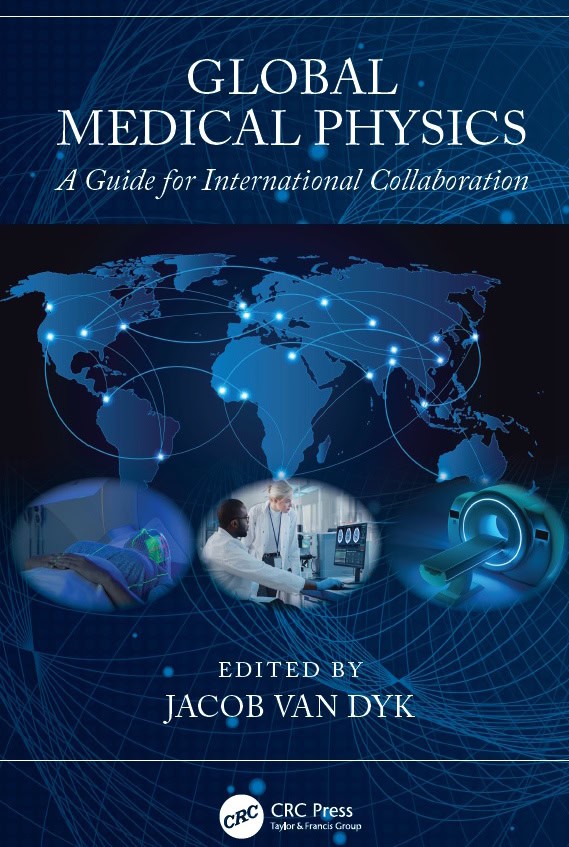
Educational aid Global Medical Physics: A Guide for International Collaboration explores the increasing role of medical physicists in international collaborations. The book comes in paperback, hardback and ebook format. An open-access ebook will be available in the near future. (Courtesy: CRC Press/Taylor & Francis)
As the world population ages and the incidence of cancer and cardiac disease grows alongside, there’s an ever-increasing need for reliable and effective diagnostics and treatments. Medical physics plays a central role in both of these areas – from the development of a suite of advanced diagnostic imaging modalities to the ongoing evolution of high-precision radiotherapy techniques.
But access to medical physics resources – whether equipment and infrastructure, education and training programmes, or the medical physicists themselves – is massively imbalanced around the world. In low- and middle-income countries (LMICs), fewer than 50% of patients have access to radiotherapy, with similar shortfalls in the availability of medical imaging equipment. Lower-income countries also have the least number of medical physicists per capita.
This disparity has led to an increasing interest in global health initiatives, with professional organizations looking to provide support to medical physicists in lower income regions. Alongside, medical physicists and other healthcare professionals seek to collaborate internationally in clinical, educational and research settings.
Successful multicultural collaborations, however, can be hindered by cultural, language and ethical barriers, as well as issues such as poor access to the internet and the latest technology advances. And medical physicists trained in high-income contexts may not always understand the circumstances and limitations of those working within lower income environments.
Aiming to overcome these obstacles, a new book entitled Global Medical Physics: A Guide for International Collaboration provides essential guidance for those looking to participate in such initiatives. The text addresses the various complexities of partnering with colleagues in different countries and working within diverse healthcare environments, encompassing clinical and educational medical physics circles, as well as research and academic environments.
“I have been involved in providing support to medical physicists in lower income contexts for a number of years, especially through the International Atomic Energy Agency (IAEA), but also through professional organizations like the American Association of Physicists in Medicine (AAPM),” explains the book’s editor Jacob Van Dyk, emeritus professor at Western University in Canada. “It is out of these experiences that I felt it might be appropriate and helpful to provide some educational materials that address these issues. The outcome was this book, with input from those with these collaborative experiences.”
Shared experience
The book brings together contributions from 34 authors across 21 countries, including both high- and low-resource settings. The authors – selected for their expertise and experience in global health and medical physics activities – provide guidelines for success, as well as noting potential barriers and concerns, on a wide range of themes targeted at multiple levels of expertise.
This guidance includes, for example: advice on how medical physicists can contribute to educational, clinical and research-based global collaborations and the associated challenges; recommendations on building global inter-institutional collaborations, covering administrative, clinical and technical challenges and ethical issues; and a case study on the Radiation Planning Assistant project, which aims to use automated contouring and treatment planning to assist radiation oncologists in LMICs.
In another chapter, the author describes the various career paths available to medical physicists, highlighting how they can help address the disparity in healthcare resources through their careers. There’s also a chapter focusing on CERN as an example of a successful collaboration engaging a worldwide community, including a discussion of CERN’s involvement in collaborative medical physics projects.
With the rapid emergence of artificial intelligence (AI) in healthcare, the book takes a look at the role of information and communication technologies and AI within global collaborations. Elsewhere, authors highlight the need for data sharing in medical physics, describing example data sharing applications and technologies.
Other chapters consider the benefits of cross-sector collaborations with industry, sustainability within global collaborations, the development of effective mentoring programmes – including a look at challenges faced by LMICs in providing effective medical physics education and training – and equity, diversity and inclusion and ethical considerations in the context of global medical physics.
The book rounds off by summarizing the key topics discussed in the earlier chapters. This information is divided into six categories: personal factors, collaboration details, project preparation, planning and execution, and post-project considerations.
“Hopefully, the book will provide an awareness of factors to consider when involved in global international collaborations, not only from a high-income perspective but also from a resource-constrained perspective,” says Van Dyk. “It was for this reason that when I invited authors to develop chapters on specific topics, they were encouraged to invite a co-author from another part of the world, so that it would broaden the depth of experience.”
The costs of a hail damage have ballooned over the past two decades, prompting researchers to resort to extreme measures to understand how these storms destroy buildings.
Born in 1898, Lysenko was a Ukrainian plant breeder, who in 1927 found he could make pea and grain plants develop at different rates by applying the right temperatures to their seeds. The Soviet news organ Pravda was enthusiastic, saying his discovery could make crops grow in winter, turn barren fields green, feed starving cattle and end famine.
Despite having trained as a horticulturist, Lysenko rejected the then-emerging science of genetics in favour of Lamarckism, according to which organisms can pass on inherited traits to offspring. This meshed well with the Soviet philosophy of “dialectical materialism”, which sees both the natural and human worlds as evolving not through mechanisms but environment.
Stalin took note of Lysenko’s activities and had him installed as head of key Soviet science agencies. Once in power, Lysenko dismissed scientists who opposed his views, cancelled their meetings, funded studies of discredited theories, and stocked committees with loyalists. Although Lysenko had lost his influence by the time Stalin died in 1953 – with even Pravda having turned against him – Soviet agricultural science had been destroyed.
A modern parallel
Lysenko’s views and actions have a resonance today when considering the activities of Robert F Kennedy Jr, who was appointed by Donald Trump as secretary of the US Department of Health and Human Services in February 2025. Of course, Trump has repeatedly sought to impose his own agenda on US science, with his destructive impact outlined in a detailed report published by the Union of Concerned Scientists in July 2025.
But after Trump appointed Kennedy, the assault on science continued into US medicine, health and human services. In what might be called a philosophy of “political materialism”, Kennedy fired all 17 members of the Advisory Committee on Immunization Practices of the US Centers for Disease Control and Prevention (CDC), cancelled nearly $500m in mRNA vaccine contracts, hired a vaccine sceptic to study its connection with autism despite numerous studies that show no connection, and ordered the CDC to revise its website to reflect his own views on the cause of autism.
Of course, there are fundamental differences between the 1930s Soviet Union and the 2020s United States. Stalin murdered and imprisoned his opponents, while the US administration only defunds and fires them. Stalin and Lysenko were not voted in, while Trump came democratically to power, with elected representatives confirming Kennedy. Kennedy has also apologized for his most inflammatory remarks, though Stalin and Lysenko never did (nor does Trump for that matter).
What’s more, Stalin’s and Lysenko’s actions were more grounded in apparent scientific realities and social vision than Trump’s or Kennedy’s. Stalin substantially built up much of the Soviet science and technology infrastructure, whose dramatic successes include launching the first Earth satellite Sputnik in 1957. Though it strains credulity to praise Stalin, his vision to expand Soviet agricultural production during a famine was at least plausible and its intention could be portrayed as humanitarian. Lysenko was a scientist, Kennedy is not.
As for Lysenko, his findings seemed to carry on those of his scientific predecessors. Experimentally, he expanded the work of Russian botanist Ivan Michurin, who bred new kinds of plants able to grow in different regions. Theoretically, his work connected not only with dialectical materialism but also with that of the French naturalist Jean-Baptiste Lamarck, who claimed that acquired traits can be inherited.
US Presidents often have pet scientific projects. Harry Truman created the National Science Foundation, Dwight D Eisenhower set up NASA, John F Kennedy started the Apollo programme, while Richard Nixon launched the Environmental Protection Agency (EPA) and the War on Cancer. But it’s one thing to support science that might promote a political agenda and another to quash science that will not.
One ought to be able to take comfort in the fact that if you fight nature, you lose – except that the rest of us lose as well. Thanks to Lysenko’s actions, the Soviet Union lost millions of tons of grain and hundreds of herds of cattle. The promise of his work evaporated and Stalin’s dreams vanished.
Lysenko, at least, was motivated by seeming scientific promise and social vision; the US has none. Trump has damaged the most important US scientific agencies, destroyed databases and eliminated the EPA’s research arm, while Kennedy has replaced health advisory committees with party loyalists.
While Kennedy may not last his term – most Trump Cabinet officials don’t – the paths he has sent science policy on surely will. For Trump and Kennedy, the policy seems to consist only of supporting pet projects. Meanwhile, cases of measles in the US have reached their highest level in three decades, the seas continue to rise and the climate is changing. It is hard to imagine how enemy agents could damage US science more effectively.
 Connexion










.jpg)

