↩ Accueil

Vue lecture

New sensor uses topological material to detect helium leaks

A new sensor detects helium leaks by monitoring how sound waves propagate through a topological material – no chemical reactions required. Developed by acoustic scientists at Nanjing University, China, the innovative, physics-based device is compact, stable, accurate and capable of operating at very low temperatures.

Helium is employed in a wide range of fields, including aerospace, semiconductor manufacturing and medical applications as well as physics research. Because it is odourless, colourless, and inert, it is essentially invisible to traditional leak-detection equipment such as adsorption-based sensors. Specialist helium detectors are available, but they are bulky, expensive and highly sensitive to operating conditions.

A two-dimensional acoustic topological material

The new device created by Li Fan and colleagues at Nanjing consists of nine cylinders arranged in three sub-triangles with tubes in between the cylinders. The corners of the sub-triangles touch and the tubes allow air to enter the device. The resulting two-dimensional system has a so-called “kagome” structure and is an example of a topological material – that is, one that contains special, topologically protected, states that remain stable even if the bulk structure contains minor imperfections or defects. In this system, the protected states are the corners.

To test their setup, the researchers placed speakers under the corners that send sound waves into the structure and make the gas within it vibrate at a certain frequency (the resonance frequency). When they replaced the air in the device with helium, the sound waves travelled faster, changing the vibration frequency. Measuring this shift in frequency enabled the researchers to calculate the concentration of helium in the device.

Many advantages over traditional gas sensors

Fan explains that the device works because the interface/corner states are impacted by the properties of the gas within it. This mechanism has many advantages over traditional gas sensors. First, it does not rely on chemical reactions, making it ideal for detecting inert gases like helium. Second, the sensor is not affected by external conditions and can therefore work at extremely low temperatures – something that is challenging for conventional sensors that contain sensitive materials. Third, its sensitivity to the presence of helium does not change, meaning it does not need to be recalibrated during operation. Finally, it detects frequency changes quickly and rapidly returns to its baseline once helium levels decrease.

As well as detecting helium, Fan says the device can also pinpoint the direction a gas leak is coming from. This is because when helium begins to fill the device, the corner closest to the source of the gas is impacted first. Each corner thus acts as an independent sensing point, giving the device a spatial sensing capability that most traditional detectors lack.

Other gases could be detected

Detecting helium leaks is important in fields such as semiconductor manufacturing, where the gas is used for cooling, and in medical imaging systems that operate at liquid helium temperatures. “We think our work opens an avenue for inert gas detection using a simple device and is an example of a practical application for two-dimensional acoustic topological materials,” says Fan.

While the new sensor was fabricated to detect helium, the same mechanism could also be employed to detect other gases such as hydrogen, he adds.

Spurred on by these promising preliminary results, which they report in Applied Physics Letters, the researchers plan to extend their fabrication technique to create three-dimensional acoustic topological structures. “These could be used to orientate the corner points so that helium can be detected in 3D space,” says Fan. “Ultimately, we are trying to integrate our system into a portable structure that can be deployed in real-world environments without complex supporting equipment.,” he tells Physics World.

The post New sensor uses topological material to detect helium leaks appeared first on Physics World.

  •  

Encrypted qubits can be cloned and stored in multiple locations

Encrypted qubits can be cloned and stored in multiple locations without violating the no-cloning theorem of quantum mechanics, researchers in Canada have shown. Their work could potentially allow quantum-secure cloud storage, in which data can be stored on multiple servers, thereby allowing for redundancy without compromising security. The research also has implications for quantum fundamentals.

Heisenberg’s uncertainty principle – which states that it is impossible to measure conjugate variables of a quantum object with less than a combined minimum uncertainty – is one of the central tenets of quantum mechanics. The no-cloning theorem – that it is impossible to create identical clones of unknown quantum states – flows directly from this. Achim Kempf of the University of Waterloo explains, “If you had [clones] you could take half your copies and perform one type of measurement, and the other half of your copies and perform an incompatible measurement, and then you could beat the uncertainty principle.”

No-cloning poses a challenge those trying to create a quantum internet. On today’s Internet, storage of information on remote servers is common, and multiple copies of this information are usually stored in different locations to preserve data in case of disruption. Users of a quantum cloud server would presumably desire the same degree of information security, but no-cloning theorem would apparently forbid this.

Signal and noise

In the new work, Kempf and his colleague Koji Yamaguchi, now at Japan’s Kyushu University, show that this is not the case. Their encryption protocol begins with the generation of a set of pairs of entangled qubits. When a qubit, called A, is encrypted, it interacts with one qubit (called a signal qubit) from each pair in turn. In the process of interaction, the signal qubits record information about the state of A, which has been altered by previous interactions. As each signal qubit is entangled with a noise qubit, the state of the noise qubits is also changed.

Another central tenet of quantum mechanics, however, is that quantum entanglement does not allow for information exchange. “The noise qubits don’t know anything about the state of A either classically or quantum mechanically,” says Kempf. “The noise qubits’ role is to serve as a record of noise…We use the noise that is in the signal qubit to encrypt the clone of A. You drown the information in noise, but the noise qubit has a record of exactly what noise has been added because [the signal qubits and noise qubits] are maximally entangled.”

Therefore, a user with all of the noise qubits knows nothing about the signal, but knows all of the noise that was added to it. Possession of just one of the signal qubits, therefore, allows them to recover the unencrypted qubit. This does not violate the uncertainty principle, however, because decrypting one copy of A involves making a measurement of the noise qubits: “At the end of [the measurement], the noise qubits are no longer what they were before, and they can no longer be used for the decryption of another encrypted clone,” explains Kempf.

Cloning clones

Kempf says that, working with IBM, they have demonstrated hundreds of steps of iterative quantum cloning (quantum cloning of quantum clones) on a Heron 2 processor successfully and showed that the researchers could even clone entangled qubits and recover the entanglement after decryption. “We’ll put that on the arXiv this month,” he says.

 The research is described in Physical Review Letters and Barry Sanders at Canada’s University of Calgary is impressed by both the elegance and the generality of the result. He notes it could have significance for topics as distant as information loss from black holes: “It’s not a flash in the pan,” he says; “If I’m doing something that is related to no-cloning, I would look back and say ‘Gee, how do I interpret what I’m doing in this context?’: It’s a paper I won’t forget.”

Seth Lloyd of MIT agrees: “It turns out that there’s still low-hanging fruit out there in the theory of quantum information, which hasn’t been around long,” he says. “It turns out nobody ever thought to look at this before: Achim is a very imaginative guy and it’s no surprise that he did.” Both Lloyd and Sanders agree that quantum cloud storage remains hypothetical, but Lloyd says “I think it’s a very cool and unexpected result and, while it’s unclear what the implications are towards practical uses, I suspect that people will find some very nice applications in the near future.”

The post Encrypted qubits can be cloned and stored in multiple locations appeared first on Physics World.

  •  

Cosmic time capsules: the search for pristine comets

In this episode of Physics World Stories, host Andrew Glester explores the fascinating hunt for pristine comets – icy bodies that preserve material from the solar system’s beginnings and even earlier. Unlike more familiar comets that repeatedly swing close to the Sun and transform, these frozen relics act as time capsules, offering unique insights into our cosmic history.

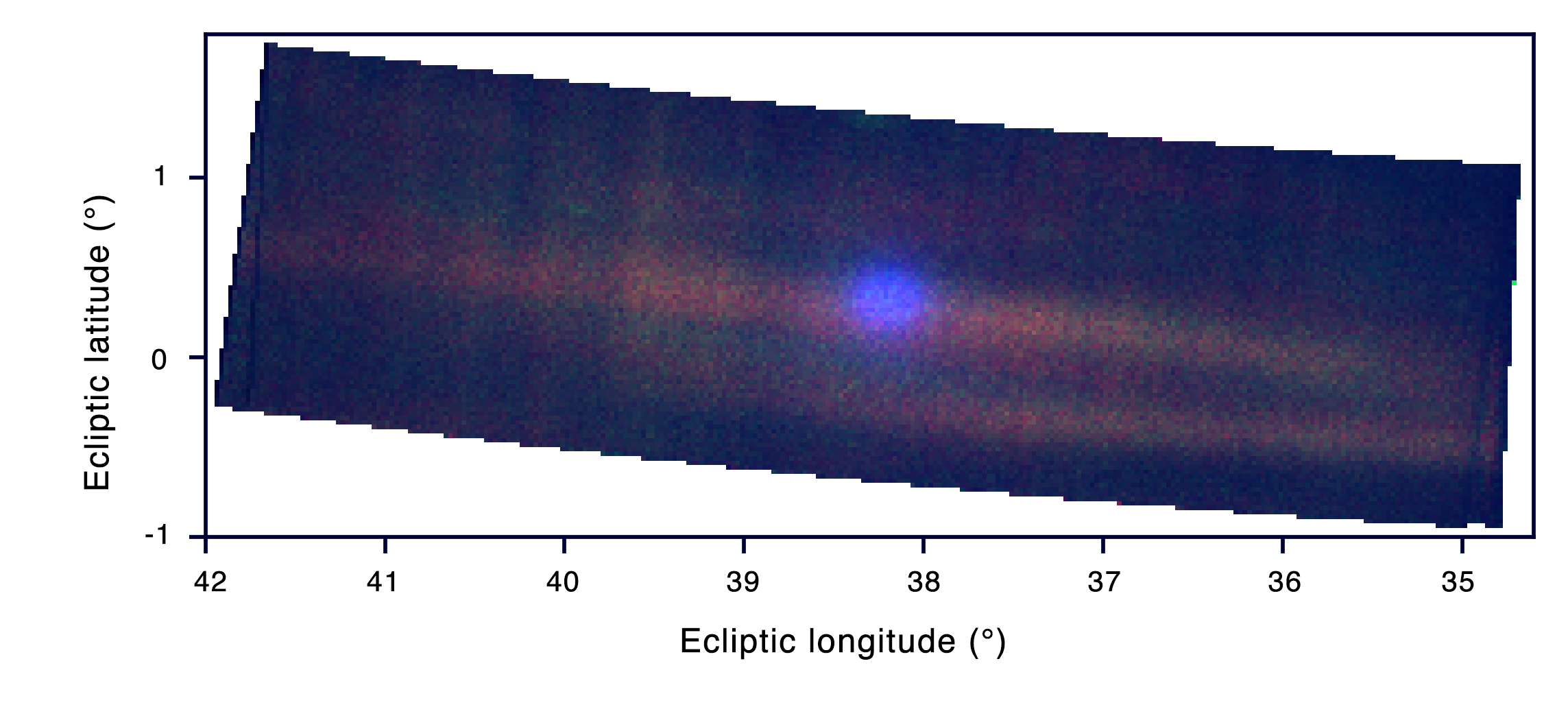
Pale blue circle against red streaks. composite image of interstellar comet 3I/ATLAS captured by the Europa Ultraviolet Spectrograph instrument on NASA’s Europa Clipper spacecraft
Interstellar comet 3I/ATLAS is seen in this composite image captured on 6 November 2025 by the Europa Ultraviolet Spectrograph instrument on NASA’s Europa Clipper spacecraft. (Courtesy: NASA/JPL-Caltech/SWRI)

The first guest is Tracy Becker, deputy principal investigator for the Ultraviolet Spectrograph on NASA’s Europa Clipper mission. Becker describes how the Jupiter-bound spacecraft recently turned its gaze to 3I/ATLAS, an interstellar visitor that appeared last July. Mission scientists quickly reacted to this unique opportunity, which also enabled them to test the mission’s instruments before it arrives at the icy world of Europa.

Michael Küppers then introduces the upcoming Comet Interceptor mission, set for launch in 2029. This joint ESA–JAXA mission will “park” in space until a suitable comet arrives from the outer reaches of the solar system. They will deploy two probes to study it from multiple angles – offering a first-ever close look at material untouched since the solar system’s birth.

From interstellar wanderers to carefully orchestrated intercepts, this episode blends pioneering missions and cosmic detective work. Keep up to date with all the latest space and astronomy developments in the dedicated section of the Physics World website.

The post Cosmic time capsules: the search for pristine comets appeared first on Physics World.

💾

  •  

Launch operators are the rocket fuel required to galvanize spaceports in Europe

RFA ONE launch SaxaVord

Europe stands on the precipice of launching a satellite from the mainland. Until now, the Guiana Space Centre in South America has operated as Europe’s “gateway to space” but spaceports in SaxaVord and Andøya offer the tantalizing prospect of launches much closer to home. Yet infrastructure alone will not get us there. A launchpad is […]

The post Launch operators are the rocket fuel required to galvanize spaceports in Europe appeared first on SpaceNews.

  •  
❌